Tag: Energy infra Lawyer

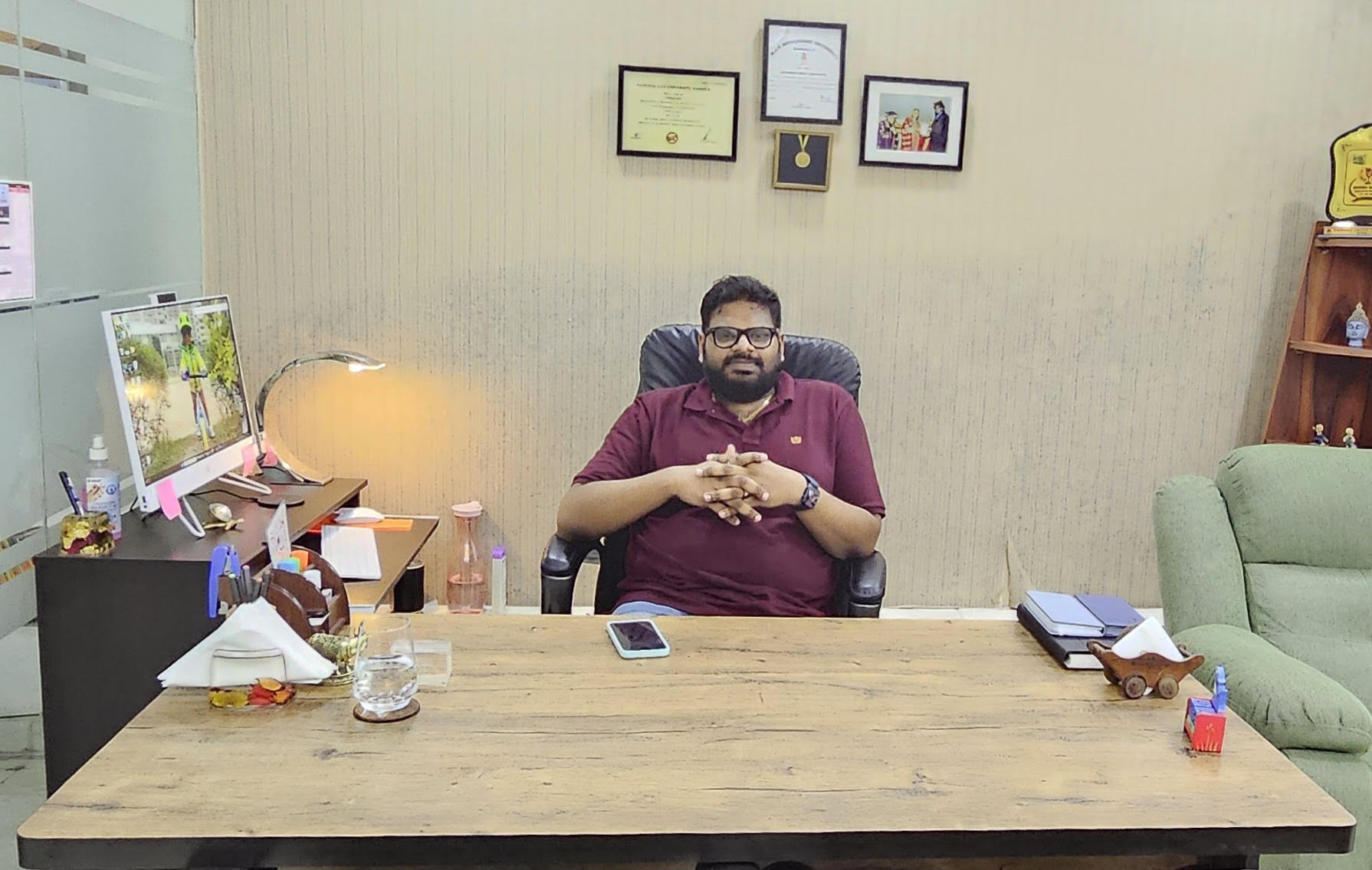
  • “Starting my independent practice felt like a calling, but it was like graduating all over again. The learning curve was steep, the hours long, but the support I received was overwhelming.” – Mohit Mudgal, Independent consultant at Mudgal Law Chambers

    “Starting my independent practice felt like a calling, but it was like graduating all over again. The learning curve was steep, the hours long, but the support I received was overwhelming.” – Mohit Mudgal, Independent consultant at Mudgal Law Chambers

    This interview has been published by Namrata Singh and The SuperLawyer Team

    Could you please share what inspired you to pursue law, and how your journey from a student to an established advocate shaped your perspective on the legal profession?  

    I am an accidental lawyer. I come from a background of a wide array of professionals, including engineers, doctors, academicians, and armed forces veterans. During my school days, I was keen to serve in the armed forces growing up in a defence household. However, as a turn of fate, I could not take the NDA examination since I was severely unwell on the day of the exam. Luckily for me, at that time, the curriculum for the NDA entrance examination and LLB courses used to broadly overlap, so I could sit for the LLB examinations and qualify for the 5 year integrated law course at Amity Law School, GGSIPU. The thought of pursuing law as a profession, without any familial guidance, was both daunting and at the same time, exciting. As my college was based in Delhi, throughout the tenure of my course, I interned at various law offices practising diverse spheres of law after college hours. This developed my interest in the profession while giving me invaluable exposure to real practice outside of classrooms and an understanding of the legal profession in its practicality. 

    At the inspection of your career, you started working with the magic circle firm –  Clifford Chance. What motivated you to shift your focus to active litigation and dispute resolution in India? How did this transition add a new dimension to your understanding of the law?  

    Around the time of my graduation in 2009, the global economic crisis was going on and the future seemed uncertain. In this background, opportunities and recruitment offers were few and far between. When I got an offer from Clifford Chance’s Indian office (now known as Clifford Chance Business Services) as a campus placement, I decided to take it up – even though it departed from my conventional choice of work –litigation and disputes. Working here provided an entirely new exposure where I was part of international transactions while interacting with top legal brains across the globe. Apart from the learnings in the field of law, this role helped me understand various global professional standards and work etiquette. After having honed my skills in this role for a year, I decided it was time to explore litigation & dispute resolution (my most preferred area of interest during my internships) and don robes!

    In 2018, you established the Chambers of Mohit K. Mudgal. Could you share the story behind starting your independent practice?  

    During my formative years in litigation and dispute resolution, I was fortunate to come across offices that provided great mentorship, a wide array of work and ample opportunity.

    From 2013-2018, I worked in Karanjawala and Co. where I gained invaluable exposure while advising and representing some of the biggest corporate houses and public figures. The issues involved in my work there ranged from complex high-value commercial disputes to matters of public importance being heard by constitutional benches of the Supreme Court. A large part of my work was briefing prominent senior advocates on complex issues which required one to be very thorough – not only with the brief but also with the law. 

    In 2018, I mustered the courage to venture into independent practice. Being a first-generation lawyer, the decision was not taken lightly. Having my practice felt like a calling to me, something I had wanted to do since day one. However, starting independent practice was like graduating all over again – the learning curve was steep and the hours were (and still are) long and exhausting. I was blessed to receive support from all corners – my previous employers, seniors at the bar, and even my peers. I am grateful for the trust bestowed upon me by these people in those initial years of independent practice. 

    As an expert in electricity laws, what challenges do you face in this niche area? How do you see the evolution of energy law in India in the coming years? 

    Electricity law is complex work that requires you to have a keen sector-specific expertise. It needs one to unlearn everything one knows about general legal principles and approach the field with a fresh perspective. The usual tricks of the trade do not always work in these forums, as the subject matter is very technical and the judges/ adjudicators are very clued in to these nuances. There is also a lack of organized dissemination of information when it comes to Electricity Laws. Some of senior lawyers provide

    When I started electricity work in 2018, there were very few established names in this sector. However, the last 6 years, it has seen a mushrooming of both work and lawyers in these tribunals. Given the vision of the country towards electrification of rural India coupled with the transition to green energy from conventional sources,  I believe that the sector shall continue to expand at a rapid and exponential pace over the next 10 – 15 years, at the very least. 

    Alongside your work, you are actively involved in providing legal aid to the needy. How important do you think pro bono work is in the legal profession, and how has it influenced your approach to justice and fairness?  

    I always tell my junior friends at the bar and my office – to be thankful for their privilege and what they’ve received, and always dedicate some time to those who can’t afford to pay for legal services. We make it a point to try and help every such person who knocks at my door and encourage the same in my office. It is a service to society and makes you a better lawyer and human being.  

    With the evolving legal landscape, what advice would you give to young lawyers and law students who aspire to excel in litigation and dispute resolution? What skills should they develop to succeed in today’s competitive environment?  

    While embracing technology in today’s time, the young lawyer can churn out results like never before and in record time. However, in this endeavour, it is paramount not to lose sight of the old-school ways of taking up the rigour and hard work to be well-read and researched.  The gestation period in mainstream litigation is long and young lawyers should not give up easily or early. Do not look at others and yearn for more or feel like you’ve been dealt an unfair hand- the comparator is always yourself. You set your standards and those are the only markers you have to live up to. 

    As someone who has transitioned from a global law firm to running your practice, how do you approach mentorship within your team? What qualities do you look for in budding lawyers, and how do you help them develop their skills and careers?  

    Mentorship is one of the hardest and most rewarding aspects of this profession. It gives me immense pleasure to see my junior colleagues thriving and learning to problem-solve on their own. 

    Ownership and responsibility are something I always look for in budding lawyers. I always throw them in the deep end and give them all the tools and resources they need to do a good job, including guidance from me. I want their ambition and drive to be so high, and their performance so good, that they should be able to replace me on a brief. That is when I know I am doing a good job!

    What qualities do you observe in current law graduates, and where do you think they might be lacking in skills? 

    Current law graduates are mostly worldly wise and confident. However, often this confidence is misplaced owing to the lack of the basic understanding and reading of the law. The practice of law is hard work and dedication which requires one to have immense patience and perseverance. This is a taxing profession and gets the best out of us. Unless we put in the hours, we can never reap the rewards. 

    Given the demanding nature of your work in litigation, arbitration, and mediation, how do you unwind and manage stress? Are there any particular hobbies or activities you enjoy that help you relax and maintain a work-life balance?  

    Music is a part of my daily routine which helps me unwind. I’m catching a live gig over most weekends given the time! I enjoy sports and am a fairly outdoorsy person. I particularly enjoy trekking, boxing, cricket, badminton and the occasional poker game!

    Get in touch with Mohit Mudgal-
  • “My journey has been one from experiment to passion. As a business lawyer, it’s not just about saying ‘yes’ or ‘no’—it’s about providing solutions that operate in the best interest of the business, while also mitigating risks.” – Puneet Vyas, Lead Legal Counsel at Hitachi Energy

    “My journey has been one from experiment to passion. As a business lawyer, it’s not just about saying ‘yes’ or ‘no’—it’s about providing solutions that operate in the best interest of the business, while also mitigating risks.” – Puneet Vyas, Lead Legal Counsel at Hitachi Energy

    This interview has been published by Namrata Singh and The SuperLawyer Team

    Could you share the story of how you began your career in law? What motivated you to pursue this path, and how has your journey evolved from your early days at Gujarat State Petroleum Corporation Ltd to your current role at Hitachi Energy?  

    It has been a journey from experiment to passion. Although I had opted for Science and Maths when I was doing higher secondary in School, I was clear I would not pursue engineering and wanted to try my hand at something different. I tried getting admitted to a few merchant navy schools. Thereafter, found law to be an exciting upcoming career choice. 

    Pursuant to taking exams at various law schools (pre-CLAT era), I was admitted to the National Law University Jodhpur. The Hon’ble Vice Chancellor, Mr. N L Mitra, had a truly inspiring vision for the law school. It was my first meeting with Mr Mitra, post-admission, that gave me confidence that I had made an excellent choice. 

    I had done my specialization in IPRs and however fate had other plans. I opted to join a company as an in-house counsel.  My first job at GSPC Legal Department, taught me the 3 most relevant capabilities, an in-house lawyer should possess (1) Attention to detail (2) Reading the facts at hand, meticulously (3) Research skills. 

    From GSPC I moved to BHEL at their Corporate Office in New Delhi. BHEL is a mammoth organization, with numerous law officers. The variety of work and the exposure at BHEL was incomparable. I handled numerous disputes along with International arbitrations as well. I had the opportunity to brief and to interact with Senior Counsels quite frequently. 2016, I moved to the Industry Sector Division of BHEL, which was more focused on new businesses and I got to work on agreements pertaining to renewables and e-mobility. This gave a new insight, wherein the focus shifted from being a lawyer to becoming a Business lawyer. Business lawyers are not only supposed to provide opinions in ‘YES’ or ‘NO’, but to provide solutions that can operate in the best interests of the Business. 

    Same journey of developing self as a specialist Business Lawyer continued to my current role at Hitachi Energy. With the varied experiences of working and Government organisations as well as Private firm, the perspective as a lawyer has improved and the focused attention is on Business requirements, at the same time highlighting the risks involved and providing mitigation solutions to the said risk. Therefore, a journey which had started as a student looking for career choices, to an experienced In-house counsel is enriching and could not have asked for better experience 

    After completing your law degree, you joined Gujarat State Petroleum Corporation Ltd. Was that simply an opportunity that came your way, or had you already decided that you would focus on corporate legal work rather than pursuing a career in litigation? What factors influenced your choice at that stage?  

    As I have already mentioned, I chose to join a company as a Corporate Lawyer. I did not want to get into litigation since I don’t belong to a lawyer’s family. During Campus recruitment I got offers from Zydus Cadila and GSPC. GSPC being energy sector, seemed a more lucrative choice. The factors that influenced my choice were (1) Getting a career choice, wherein Litigation is not involved (2) GSPC being in Petroleum/energy sector, which is most promising sector even as on date. (3) Getting to know nuances of working a public sector.

    Reflecting on your experience representing NLU Jodhpur in the 12th Inter-American Human Rights Moot Court Competition, how did this experience shape your approach to real-world legal challenges? Do you see any parallels between moot court competitions and your work today?  

    I went as a researcher and obviously, the experience was outstanding in terms of providing an exposure to interact with teammates from all across the globe. Also, exposure of knowing perspective of international judges and panellists was more than what anyone could have asked as a student. A moot court competition cannot be compared to and real life work, however, if it’s a real life situation or a competition, practice and preparation are the key to be successful in your deliverables. 

    Given your vast experience in contract negotiations and dispute resolution, what are some of the most significant lessons you’ve learned that you believe could benefit the next generation of legal professionals?  

    Contract negotiations are not yet that developed in India as compared to Cross jurisdictional negotiations. The opportunity of Legal to Legal interaction is comparatively lesser. From the other party the person negotiating can be Contract Manager, Procurement head or even a Marketing person. Therefore, the key is patience and also translating your legal acumen into a language that is understood by the other person, irrespective of his field. Logical and clearly articulated reasons are the key to successful negotiations. 

    In case of negotiations with Lawyers, the key is to stick to your course of argument and to provide a reasoning which cannot be denied. Opposite side lawyers are also generally more focussed on resolving the deadlock because that is what is expected in a business organization. Cross Jurisdictional negotiations are generally based on other factors such as culture etc. that can influence the negotiations. 

    Your experience includes handling both domestic and international arbitrations. How do you approach the complexities of these cases, and what advice would you give to young lawyers aspiring to specialize in arbitration?  

    It is sad that arbitrations have neither proven to be cost effective, nor do they save on time. We are defending a Section 37 application in respect of arbitration award that was passed 10 years back. As a business organization, the huge costs incurred in Arbitration can be huge hit to the business. Therefore, emphasis should be more on pre-arbitration dispute resolution mechanisms such as mediation/conciliations. The contractual conciliations are also given more importance and the decision of the conciliation panel is also given relevance. All these mechanisms have grown in importance because of the costly resolution that arbitration offers. 

    How important is it for legal professionals to have a global perspective in today’s interconnected world?  

    Global perspective is most important for lawyers these days. This not only opens up opportunity for cross jurisdictional hiring, however in a managerial role the expectation is to be conversant with laws of Jurisdictions the business operates. Therefore, it is not an additional qualification but mandatory expectation in a business firm working in different jurisdictions. 

    Along with the above, India offers a talent HUB who can cater to different Jurisdictions. Like engineers and other professionals, Lawyer Hubs are also being developed across organizations who can cater to different jurisdictions. Young aspirants therefore having cross jurisdictional expertise have good chances of being absorbed in MNCs. 

    Recovery proceedings and insolvency cases are critical areas of your expertise. How do you navigate the intricate legalities involved in these proceedings, and what role does innovation play in resolving such disputes effectively?  

    Litigation strategy formation is the key for any success. Once a dispute/situation is at hand, the key is to analyse all the pros and cons and to evaluate best course of action. This analysis includes reviewing the costs involved, the time a probable action would take and also will the desired objective be met if a proceeding is opted. The insolvency although not a recovery proceedings, has been proven to be a very effective measure to deter companies to pay genuine dues. Interim injunctions also have proven to be a effective coercive measure against the parties, so that desired results are obtained. 

    The legal profession can be demanding and stressful. How do you maintain resilience and mental well-being in such a high-pressure environment? Any hobbies you pursue that help you to unwind?

    Mindfulness is key for every lawyer. “We live in times where we forget the Present” . Lawyers are poor listeners and also with the ever increasing pressure, the mind is constantly at work. Therefore, overthinking cannot be avoided. Mindfulness activities such as meditation and other mindful activities can help train the mind to be focussed on the problem at hand. Stress is caused when you are thinking about a problem or for issues you have no control. Once mindfulness is inculcated as part of daily practice, stress can be reduced tremendously. There is also no stress when you actually love what you are doing at work. 

    Disclaimer – Views expressed are personal to Puneet Vyas and does not represent views of Hitachi Energy.

    Get in touch with Puneet Vyas-

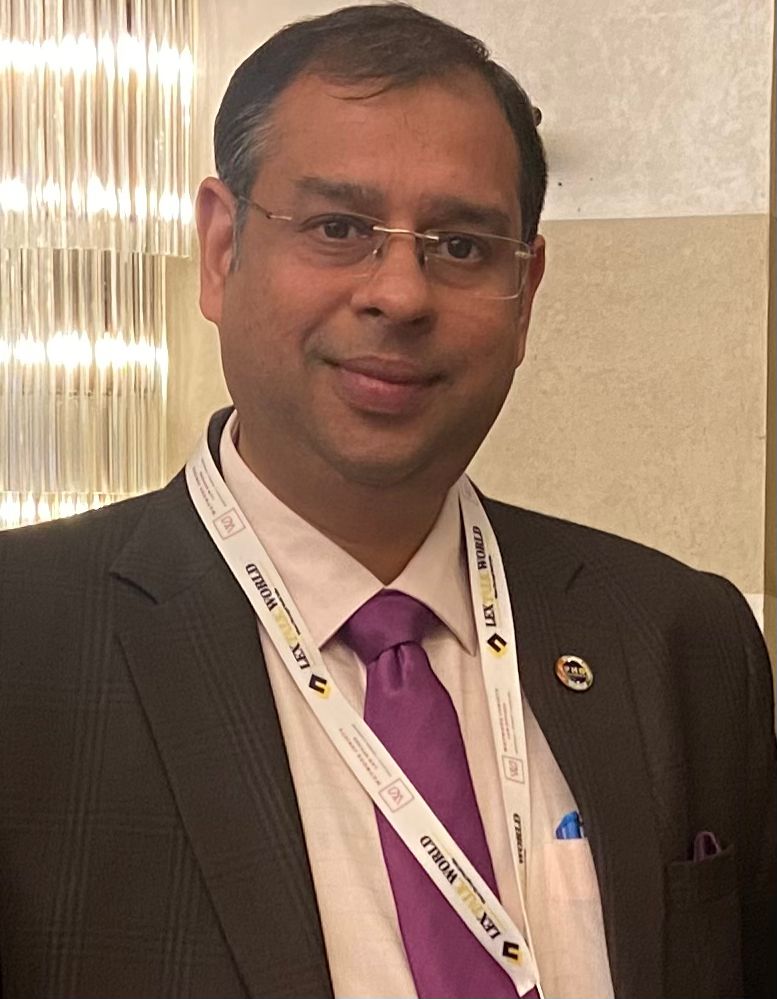
  • “We believe that everyone deserves access to legal representation and justice, and we are dedicated to helping those who face significant challenges.” – Tushar Jain, Advocate-On-Record at the Supreme Court of India the Managing Partner of TJA Law Chambers

    “We believe that everyone deserves access to legal representation and justice, and we are dedicated to helping those who face significant challenges.” – Tushar Jain, Advocate-On-Record at the Supreme Court of India the Managing Partner of TJA Law Chambers

    This interview has been published by Namrata Singh and The SuperLawyer Team

    Can you share the journey of how you started your career in law and the key experiences that have shaped your path to becoming the Managing Partner at TJA Law Chambers?  Please walk us through your journey starting from selecting Law as a career and your time at NLU, Jodhpur.

    My journey in law is deeply rooted in my upbringing in Nagina, a small town in District Bijnor of Uttar Pradesh. Despite our humble background, my parents ensured that we received a quality education from the best convent school in the district. As the youngest of three siblings, I was greatly influenced by my father, a dedicated lawyer practising at the trial Courts. Since the court premises were within walking distance from our home, I spent my summer vacations at my father’s chamber captivated by watching him argue in Court. My father noticed my fascination with court proceedings and envisioned me following in his footsteps, aspiring to become a lawyer in the Supreme Court. 

    Early Challenges and Decision to Pursue Law: Tragically, I lost my father when I was in the 12th standard. This loss left a significant void in my life and threw my future into uncertainty. Until I completed my 12th standard, I had no clear direction for my career path. Although I was a student of science, the influence of my father’s legacy and my desire to honour his dreams led me to opt for a career in law after completing my 12th

    Academic Achievements: I pursued 5-year law degree with determination and dedication, earning a gold medal for being the University Topper. This achievement not only solidified my passion for the field but also opened doors for further opportunities. In my final year of law school, I also enrolled in a postgraduate diploma course in Cyber Laws at the Indian Law Institute, New Delhi, which required me to travel to Delhi every alternate day. The travel experience in UP Roadways and retuning hometown by train was a time to remember.  After completing my law degree, I worked briefly at the Allahabad High Court before deciding to further my legal education by pursuing an MBA-LLM at National Law University, Jodhpur. 

    Time at NLU, Jodhpur: Choosing to pursue an MBA-LLM degree at NLU, Jodhpur, was a pivotal decision. My time there was transformative, providing me with a comprehensive legal education and shaping my professional outlook. The diverse exposure to life experiences, meeting people from across India, and engaging in various activities significantly transformed my personality. Being from a small town, this meant a lot to me. The rigorous academic environment, coupled with opportunities to participate in competitions and internships, honed my analytical and advocacy skills. These experiences were instrumental in building a solid foundation in legal principles and practice, helping me build my practice and learn to read people better.

    All these experiences of highs and lows in life left a fathomless mark on me and somewhere encouraged to make a bold decision to start my own law firm.  

    You began your career from High Court and subsequently held various managerial roles in legal departments before taking the Advocate-On-Record (AOR) exam and founding your firm. How have these diverse experiences across different legal roles and sectors contributed to your approach to managing and running TJA Law Chambers? What insights did you gain from each phase of your career that have shaped your current practice?

    My journey in law has been marked by a series of diverse and enriching experiences that have collectively shaped my approach to managing and running TJA Law Chambers. Each phase of my journey has provided me with unique insights and skills, which I have integrated into my current practice. 

    I began my legal career at the Allahabad High Court, where I initially did my judicial clerkship under the able guidance of Mr. Justice R.K Agrawal, who was later elevated to become a Supreme Court Judge. This initial experience exposed me to the fundamentals of courtroom procedures, legal research, and the importance of meticulous preparation. It also taught me the value of strategic thinking and the complexities involved in litigation. 

    After completing my post-graduation, I joined various reputed companies as an in-house counsel like GMR Energy, Indus Towers Limited and Sterlite Power Limited to name a few. Working in-house was a distinct experience compared to practising law in courts. Supporting the organization and other departments from a legal perspective taught me a lot about corporate governance, compliance, and risk management. It also highlighted the importance of effective communication, teamwork, and aligning legal strategies with business objectives. 

    Before founding my law firm, I had a short stint at a law firm called Advaita Legal. My distinct experiences allowed me to understand the nuances of private practice, client management, and the importance of building a professional network. It reinforced the need for thorough research, strategic thinking, and delivering client-centric legal solutions. 

    Founding TJA Law Chambers: It was always my dream to have an independent practice, but being from a small town and without a godfather in the profession, it was challenging. Nevertheless, I took the plunge and founded TJA Law Chambers in late 2019 with no significant clients in hand. Shortly after, the pandemic hit, which for my legal practice turned out to be a blessing in disguise. Despite the global challenges, I received work directly from foreign clients, which kickstarted the firm’s growth. There has been no looking back since then, and we are now catering to companies like ONGC, NTPC, EESL etc. 

    Advocate-On-Record (AOR) Exam: With my dream to establish my law firm, I also aspired to establish my practice in the Supreme Court, fulfilling my father’s dream. To this end, I started preparing for the Advocate-On-Record (AOR) exam last year and cleared it on the first attempt. This credential not only enhanced my credibility but also deepened my understanding of Supreme Court practices and procedures. The rigorous preparation for the AOR exam honed my analytical abilities and reinforced the importance of staying abreast of legal developments. 

    What motivated you to pursue the Advocate-On-Record (AOR) examination, and how did your mentor or any influential figures support you through this process? What are your thoughts on the significance of the AOR exam in a legal career?  

    Establishing a practice in the Supreme Court was a way to pay tribute to my father and the values he instilled in me. 

    Self-Guided Journey: Unfortunately, I did not have the benefit of a mentor or any influential figures to guide me through the journey of the AOR exam. This made the journey more challenging but also incredibly rewarding. I had to rely on my self-discipline, determination, and resourcefulness. I meticulously studied the Supreme Court rules, procedures, and landmark judgments. I sought out study materials, attended relevant workshops, and engaged in self-study to ensure I was thoroughly prepared for the exam. Achieving success on my first attempt was particularly gratifying and reinforced my belief in the power of perseverance and self-reliance. 

    The AOR exam’s significance in a legal career cannot be overstated, as it enhances credibility, provides exclusive rights, contributes to professional growth, instils client confidence, and opens up numerous career opportunities. I am now reaping the benefits of becoming an AOR. 

    As the Managing Partner and Founder of TJA Law Chambers, what were some of the significant challenges you faced while starting the firm? Now, after five years, how has the firm’s approach evolved in handling complex cases, and what types of cases have become a focus for your team?

    Challenges Faced While Starting the Firm: Starting TJA Law Chambers came with significant challenges, primarily due to the absence of a godfather or established network and the onset of the COVID-19 pandemic. These factors made business development and client acquisition particularly difficult. The pandemic restricted our ability to engage in traditional business development activities and necessitated a shift to remote operations. One of the initial breakthroughs was receiving our first assignment from clients in London and Luxembourg. This opportunity was crucial, as it involved negotiating and drafting high-stakes agreements across various jurisdictions, including China, Hong Kong, the UK, Russia, and Europe. This international work was a ray of hope, helping to establish our reputation on a global scale. 

    Adaptations and Strategies: Despite the pandemic’s constraints, working from home allowed us to save on office expenses, which was a critical advantage during the early stages. By focusing on delivering the best results for every assignment, we demonstrated our commitment and capability. This dedication paid off as our reputation grew, leading to subsequent opportunities and an influx of work. As a result, we were able to secure empanelment with prominent organizations such as ONGC, EESL, DERC, and Kolkata Port. These empanelments were pivotal in solidifying our presence in the legal market. 

    After five years, TJA Law Chambers has evolved significantly. Holding the prestigious Advocate-On-Record (AOR) designation, we are now well-positioned in the legal landscape. Our approach to handling complex cases has matured in several ways. 

    Our firm has developed deep expertise in representing corporate clients and handling complex legal matters across various sectors. Enhanced Services: We provide comprehensive legal services in areas such as energy law, regulatory compliance, dispute resolution, contract management and advisory services. Our practice now spans several key forums, including Arbitration, the Appellate Tribunal for Electricity (APTEL), various Electricity Regulatory Commissions, the National Consumer Disputes Redressal Commission (NCDRC), the National Company Law Appellate Tribunal (NCLAT), and the National Company Law Tribunal (NCLT), in addition to various High Courts and the Supreme Court. 

    Strategic Growth: The firm has strategically focused on building a strong client base and expanding our service offerings. Our growth is driven by a commitment to excellence and adapting to the evolving legal landscape. 

    Client-Centric Approach: We have refined our approach to ensure that we meet the unique needs of each client, providing tailored legal solutions and maintaining strong, transparent relationships. 

    Do you engage in any pro bono work or community service? How does this aspect of your career influence your professional perspective and personal satisfaction?  

    While we prefer not to disclose specific details, I want to emphasize that TJA Law Chambers is committed to supporting those in need. Our office is open to assisting individuals who are unable to afford legal services, regardless of their financial situation. We believe that everyone deserves access to legal representation and justice, and we are dedicated to helping those who face significant challenges. 

    It enhances our professional perspective, provides personal satisfaction, and strengthens our commitment to justice and community service. 

    The legal field is constantly evolving. What are some emerging trends or challenges in commercial litigation and corporate law that new lawyers should be aware of?  

    The evolving landscape of legal practice increasingly emphasizes the growth of Alternative Dispute Resolution (ADR). Mechanisms such as arbitration and mediation are gaining preference over traditional litigation, primarily for their cost-effectiveness and efficiency. Lawyers must grasp these processes to effectively navigate and resolve disputes, harnessing the benefits of ADR to better serve their clients. 

    Additionally, the impact of technology and artificial intelligence (AI) on the legal field cannot be overstated. AI tools are revolutionizing legal research, document review, and case outcome predictions, providing unprecedented accuracy and efficiency. Lawyers are encouraged to leverage these advancements to enhance their practice, embracing the future of legal technology.

    Staying current with new judgments from the Supreme Court and High Courts is also crucial. As laws, such as the Insolvency and Bankruptcy Code (IBC), continue to evolve, understanding the latest judicial decisions is essential for grasping the development and application of the law. Regularly reviewing these judgments ensures that legal professionals remain informed and adept in their practice.

    Could you share some of the landmark cases you’ve handled throughout your career and discuss the key challenges you faced in those cases? How did these experiences contribute to your understanding of the legal field and what lessons can current and aspiring legal professionals draw from them?

    I have had the opportunity to be part of several landmark cases involving important questions of law. However, one case in particular stands out to me. While it may not be a landmark case, handling it independently had a profound impact on me.       

    This was at the inception of my independent practice. An elderly woman had her pension stopped due to a mismatch in her name in government records. This pension was her lifeline, provided due to her late husband’s job. I took up her case, but unfortunately, she passed away before it was resolved. Despite my repeated requests for an early hearing, citing her dire financial and health conditions, the court did not give serious consideration to expediting the case. This was a disheartening moment for me as it felt like our judicial system failed her.

    The second notable case was my first as an Advocate-on-Record (AOR) in the Supreme Court. It involved the rights of homebuyers in the context of insolvency proceedings under the Insolvency and Bankruptcy Code (IBC). The issue was the denial of rights to homebuyers who did not file a claim form. The Supreme Court has issued a notice in this case, and its outcome could become a landmark judgment for homebuyers’ rights. This case is particularly challenging as current IBC provisions and Supreme Court judgments support the exclusion of those who haven’t filed claims. We are eagerly awaiting the court’s decision as it could introduce a new legal precedent.

    With my limited experience in the legal field spanning over 14 years, I could say that every day presents new challenges, and as legal professionals, we must embrace and welcome them. You strive to achieve the best outcomes for your clients, but sometimes, due to court delays or other reasons, you might not get the desired relief. The important thing is to continue fighting for your clients with the same zeal and dedication.

    There will be cases where you face strong opposition. If you have worked on the minute details and thoroughly prepared your brief, even if the law is not on your side, you will earn respect and recognition in the court.

    Beyond your legal career, what are some of your hobbies or interests? How do they contribute to your overall well-being and professional performance?  

    I am an avid adventurer, thriving on the thrill of exploring the great outdoors. I have summited peaks reaching 16,000 and 14,000 feet, embracing the challenges of high-altitude trekking. My passion extends to biking, swimming, and playing cricket, as I constantly seek new ways to stay active and connected to nature. As a true nature lover, I find immense joy in travelling and discovering new places, immersing myself in the beauty and wonder of the natural world. This blend of physical and mental challenges has enriched my professional outlook, enhancing my ability to tackle complex problems and adapt to various situations with a fresh and dynamic approach.

    With your vast experience, what advice would you offer to current legal professionals and law students who aspire to make a significant impact in their careers? 

    Though I feel I am still on my journey if I were to offer advice, it would be this: Embrace life-long learning, clearly define your goals, create a structured plan to pursue them and always be ethical. With dedicated focus and determination, you can achieve anything.

    Get in touch with Tushar Jain-

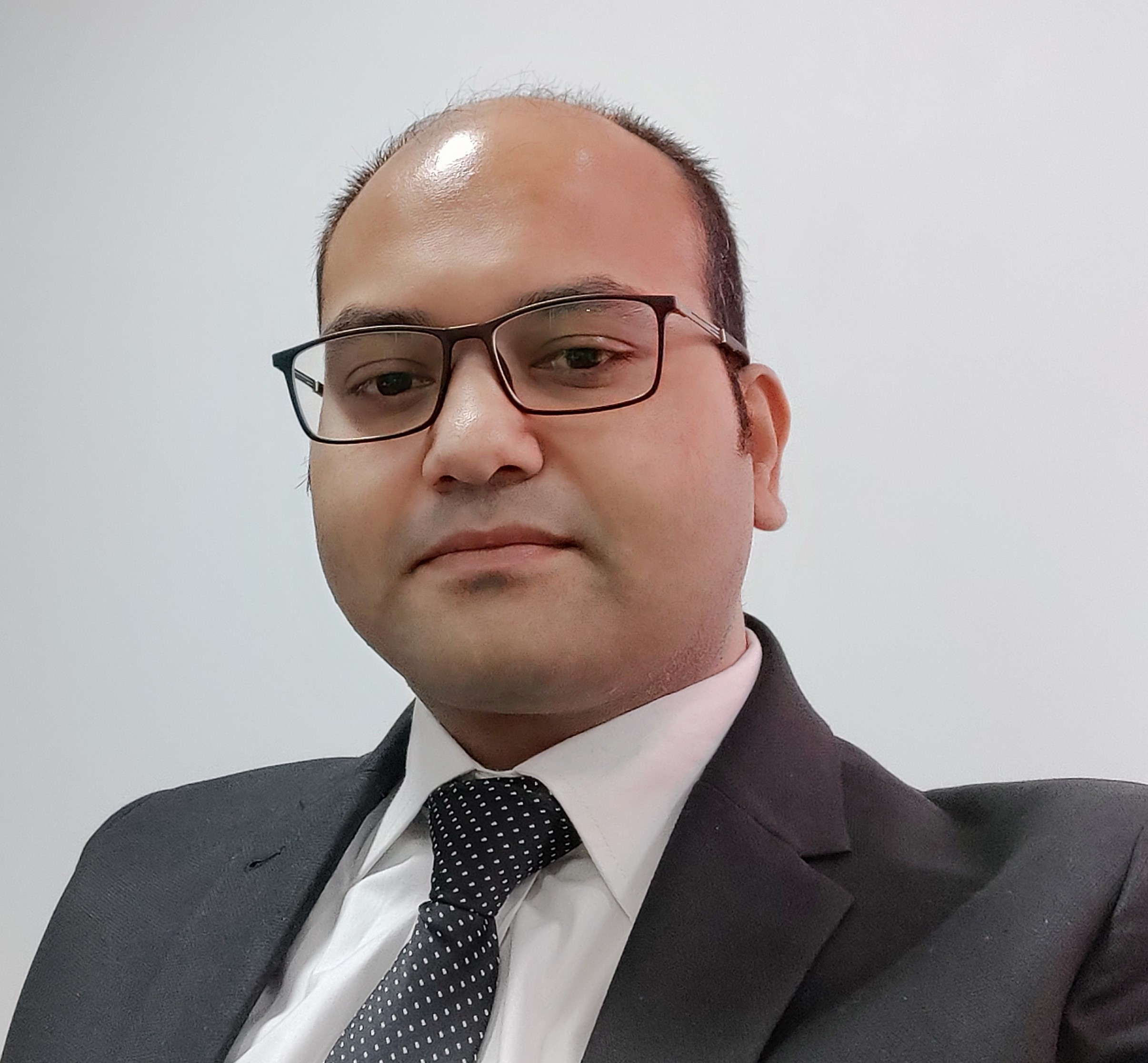
  • “There are no shortcuts in this profession, reading reading and reading.. is the only mantra to be successful, whatever be the circumstances, don’t compromise with your integrity” – Madhup Singhal, Founder & Managing Partner, MSA Legal.

    “There are no shortcuts in this profession, reading reading and reading.. is the only mantra to be successful, whatever be the circumstances, don’t compromise with your integrity” – Madhup Singhal, Founder & Managing Partner, MSA Legal.

    This interview has been published by Namrata Singh and The SuperLawyer Team

    Your academic background includes a BSc in Science before pursuing law. What inspired your shift from the Sciences to a Legal Career, Could you walk us through the challenges you faced during the initial stages of your legal career and how you overcame them?

    To answer this, I will have to take you through my early life which is quite interesting and of course would become inspirational once I establish a successful international law firm of repute for which I am endeavouring.  

    I was a good student of Science and I was preparing mainly for JEE along with my 12th Board exams. In the Board exams,  I could not even secure First Division as my complete focus was on clearing JEE. The only reason for not securing the First Division in my Boards was getting very less marks in Physics and Chemistry practical for the reasons best known to my then respected teachers of respective subjects, though I scored very good in theories. At that time it was a major setback for me which shattered  my confidence and (gave me a huge blow)caused a big depression as well. After that I dropped a year for JEE preparation but could not succeed again. Next year, I took admission in B.Sc. but kept preparing for JEE. Just before one and half months from JEE exams I had a fever which turned into Typhoid and later on into Measles , which ruined my entire preparation and so I could not get through the JEE exams again. Since I took admission in B. Sc. Therefore, at least my year did not get wasted and with overnight studies, I could manage a score of around 70% in BSc first year. Getting this kind of marks with very less studies was a big boost to my confidence and again I prepared for JEE. My preparation was good but unfortunately that year I along with my family had met with a very severe accident due to which I could not appear in my JEE exams. The accident was such severe that I lost my memory for more than 20 days. After this I decided to leave the Science stream and decided to join the CA course. After starting the CA course, everything was going very well. In my first year of article ship, I had started conducting audits of Banks and Companies Independently. My first CA attempt was in November 1998, my preparation was good but suddenly in the last week of September 1998, I started feeling severe pain in my hand while writing. I thought it was because of over studying as at that time I used to study for around 14-15 hours in a day. I took lots of medicines but no relief and the result was my first CA attempt went futile. After that I consulted many Orthopaedic Doctors but no relief. Then one of my uncles who was an Orthopaedic Surgeon suggested consulting a Neuro physician. I consulted one of the renowned Neuro Physicians who diagnosed it as WRITER’s CRAMP (a disease wherein a person can do all works except WRITING). I took his medicines for a long time but no relief. In the meantime I lost my May 99 and Nov 99 attempt of CA course. I also tried all the therapies but I could not get relief from any. Since this problem was not curing, therefore, I could not see but a dark tunnel through my future. Then one fine day I read in the newspaper that CCS UNIVERSITY has introduced an LLB course with an objective pattern. I joined the same and because of the objective pattern I could manage to complete the LLB course despite the acute problem of Writer’s Cramp, which still has not cured. To be honest, I wanted to do LLB since beginning but along with CA and never thought that I will practise Law. Therefore, shifting to a legal career from Science was not by choice but then prevailing circumstances as enumerated. I will always remain indebted to CCS University for introducing the LLB Course in an objective pattern during those days, due to which I could complete Law and achieve this success being a first generation lawyer.

    In the initial days of my career I faced almost all the challenges which a first generation lawyer from a small town of India faces like rejection by big law firms as I did not have any God Father and I was passed out from CCS University, sometimes insult from near and dears as they used to think that I was wasting my time and I should join my father at his small pharmacy shop. My father never wanted me to sit in his pharmacy shop because he, himself started the pharmacy shop after losing his big Oil Business to his uncle and their son who fraudulently took over the same from my father, frustrations of my earlier failures and obviously monetary challenges. Therefore my early days of my career were full of challenges but I kept patience all the time and never accepted defeat from defeat. 

    Your firm, MSA Legal, offers a full range of legal services, including corporate advisory work, litigation, and arbitrations. Could you tell us more about the ethos and mission behind MSA Legal, and what sets it apart from other law firms? Additionally, what types of interns do you typically take, and what opportunities do they have to learn and grow within your firm?

    Being a small town guy,  I was not aware about the Legal Profession and used to think that CA profession is very big as compared to Legal Profession, but after joining The Chambers of Law, as an Intern, I came to know about the Legal Profession in a real sense. I found that it is no lesser than the CA profession. After completing the LLB I joined Gagrat & Company and started my career at the Supreme Court. In the initial days of my career while with Gagrat & Co. I handled Bofors Case on behalf of Hinduja Brothers, briefed almost all renowned Senior Advocates of India independently and leant about  all renowned law firms of India. Then only I dreamt of establishing my own Full Service Law Firm. After working with Gagrat where I did majorly Supreme Court & High Court Litigation and Construction Arbitrations, I joined Mr Atul Chitale, Senior Advocate. At that time he used to run his Corporate Law Firm. There I did lots of Corporate Work like Merger & Acquisitions, JV Agreements and Corporate Litigation before the Company Law Board. After working with him, I started my own company along with working with one US Company where I did a lot of work on US laws but because of some financial reasons I had to join the Corporate Houses. I joined Jubilant Energy, an Oil & Gas Company, after that Monnet Group a mining, power & steel Company, then GMR Energy a Company involved in Thermal, Hydro, Renewable and Transmission and finally Vedanta Cairn, an oil & gas company. While working in these  big Corporate Houses,  I understood business very well and while dealing with lots of Law Firms as an In House Counsel, I realised that Lawyers understand Law but not the business and therefore applicability of law in the given business scenario always remain a challenge even for a lawyer who has good understanding of law. Though since the beginning of my career, I always wanted to start my firm but when I noticed this scenario, my determination got stronger and I took a plunge of starting my own law firm. 

    I have the business knowledge of certain sectors like Oil & Gas, Power, Mining, Steel & Infrastructure besides me there are business experts of all these fields in our firm, our approach always remains very practical & solution oriented and we believe in continuity of business. That’s how our Law Firm is different from other firms. 

    I always prefer to take interns who are first generation budding lawyers, having a humble background and willing to devote time to the profession without seeking any short cuts. Being a (comparative)small full service law firm, exposure in our firm is much more as compared to other big law firms as in our firm everyone gets an opportunity of doing all kinds of matters. Therefore, in our firm, a person gets all kinds of exposure. 

    Your expertise includes contract negotiation, arbitration, and legal documentation across industries like IT, energy, and mining. What drew you to such a broad spectrum of sectors, and how do you navigate the unique legal landscapes of each?

    At the outset, I would like to state that I am not an expert and still learning from my daily experience. Advocacy is an ongoing learning process. It’s correct that I have done a lot of work relating to negotiating the high value contracts with parties situated in different geographical regions of the world. It’s just because I have worked in  different industries and could come across the nuances of the business which help a lot in negotiating agreements. As I understand the flow of transactions & steps involved in the entire cycle of the project due to which it becomes easier to find the loopholes and the same can be mitigated while negotiating a contract. Same thing applies in the  arbitrations and litigation since you are already aware of the flow of the transaction, you may anticipate questions or arguments encountered by the other side or bench. This gives an edge to you over other lawyers and you can provide better solutions to your clients.

    In addition to your professional achievements, you mentioned involvement in cooperative societies and chambers of commerce. How do you balance your legal career with community engagement, and what role do you believe lawyers should play in society?

    I am on the Advisory board of some Co-operative Societies one of them is NQOCN i.e. a society funded by WHO for creating awareness for the new born babies. My philosophy of life is that besides your professional duties you owe to the society as well and one has to give it back to the society irrespective of his family or professional commitments. I am an active member of various Chambers of Commerce like ASSOCHAM, PHD Chamber of Commerce, IOFGE and others wherein my role remains to create legal and compliance awareness among the  industry. I divide my day into several activities. I want to allocate more time for social activities but due to my other commitments, I spare a minimum 7 hours in a week. The only key is time management. Besides my already fixed commitment, for the rest of the day. I always plan my day one or two days in advance.

    A lawyer can play a very important role in society as he is aware of his duties in an equal manner as he is aware of his rights. There is one major problem in our country that here everyone is aware of his/ her rights but no-one bothers to know his/her duties towards nation and society. A lawyer can make the public aware of their duties towards the nation and society and make them more vigilant about their rights.

    Your profile highlights involvement in drafting agreements for large transactions and acquisitions. Could you walk us through the process of negotiating such complex deals and ensuring favourable outcomes for your clients?

    While starting drafting agreements for large transactions or even for small transactions, the foremost thing is the wish of your client. One has to understand in a very clear manner what exactly is the client’s requirement. After understanding the requirements of the Client, the process needs to be identified through which the transaction will go through. After understanding of the process, one has to see which laws and provisions thereof will impact the transaction. All these laws and provisions are required to be read in a very thorough manner including the precedents available as on date so that all mitigation strategies can be decided. Contract Negotiation is an art which develops over a period of time and there are no set rules for the same. It  is different in all the matters and depends on your client’s wishes and how hard it is the other side.

    Your career spans across different roles, from in-house counsel to managing your own law firm. What motivated you to transition into entrepreneurship, and what challenges did you face along the way?

    As I told you in my earlier answers after joining the profession in 2003 and joining Gagrat & Co then only I decided that one day I have to start my own law firm but being the first generation lawyer, not belonging to Delhi, not having any Godfather, I had lots of challenges to face. I always wanted to do good work for the big corporates and in the starting phase of your career, it’s very difficult that any big corporate will assign you any work, I could not get entry in any big law firm so that I could do the niche work moreover my financial position was not that I could survive in the city on my own therefore I took a cautious decision to first work as an In House Counsel to understand business, to do the niche work from the other side of table and also to collect some amount so that after starting my own practise, I can have some time to sustain in the market easily and do the quality work even on the lower rates. So that I can work for big companies and gain their trust. With the grace of God, it’s happening in a nice way.

    Considering your involvement in policy advocacy and corporate affairs, how do you perceive the evolving regulatory landscape in India, and what implications does it have for businesses and legal practitioners?

    According to me, the kind of environment this Government has created in the entire world about the INDIA and the target which the Government has put before everyone to reach up to 5 Trillion Economy in next few years and to be a developed nation by 2047, there would be lots of investment in India in next two decades. This Government, has simplified lots of things but simultaneously to maintain transparency in the business, has introduced lots of regulatory compliances (checks and balances). With the liberal policies of the Government lots of investment is coming to India due to which Indian local businesses are also growing. In case the business will grow, there would definitely be more work for the lawyers particularly who are into corporate advisory. In the present regime the involvement of a Lawyer is equally necessary and required as of CA for finance function.  

    Your experience includes working with multinational companies and startups alike. How do you adapt your legal strategies to cater to the diverse needs and scales of these organizations?

    As explained earlier, my approach to every assignment remains very unique. There is no straight jacket formula which applies to all the situations, it’s all based on the requirement of clients be it an established multinational or a start up.  The bottom line is to understand the needs of the client, understand his business, apply the prevalent law in the given scenario, that’s it.

    Apart from your legal career, what are some of your personal interests or hobbies that you find equally fulfilling? How do you manage to balance your professional life with your personal passions?

    My foremost personal interest is to serve my nation but for that it’s not the correct time as at this stage I have my other commitments.  After sometime when things will be settled, I will start giving my maximum time in serving the nation. As far as my hobbies are concerned, I used to like watching movies but in the last five years I watched very few movies and in most of them I slept. I like cooking and driving and am fond of listening to music of  Mukesh, Jagjit Singh’s Ghazals and songs of the 90s. To relax myself while cooking or driving alone I listen to songs or ghazals.

    Given your extensive experience, what advice would you offer to young professionals aspiring to build a career in law, especially in today’s competitive landscape? 

    I would like to advise following to the young professionals especially who are first generation lawyers and belong to a humble background:-

    1. There are no shortcuts in the Profession;
    2. Reading, Reading and Reading is the only mantra to be successful;
    3. Whenever you start working don’t see the time . I’m not saying that time management is not important but not at the cost of quality. and not fix any time to complete any task. Keep on working till the time you are not satisfied with your work. After submitting your work, you should not have any regrets like  if I had put in some more effort ,results could be different. Therefore always give your best;
    4. Be a good listener;
    5. Always read judgements in its entirety not the relevant para or head notes;
    6. In the initial days of the career don’t run after the money;
    7. Don’t compare yourself with your other friends who are in different professions especially in engineering or in management as they start earning very good from day one while in Legal Profession money comes late. After 20 years when you will compare you will find that you are on equal footing and after 30 years you will find yourself much ahead. Obviously some exceptions always remain;
    8. Whatever be the circumstances, don’t compromise with your integrity;
    9. This is the profession where Sky is the limit but with continuous hard work and labour. You can’t take anything lightly at any point of time when you are in this profession.

    Get in touch with Madhup Singhal-