Tag: Ernst & Young

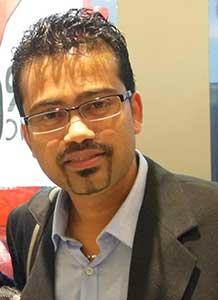
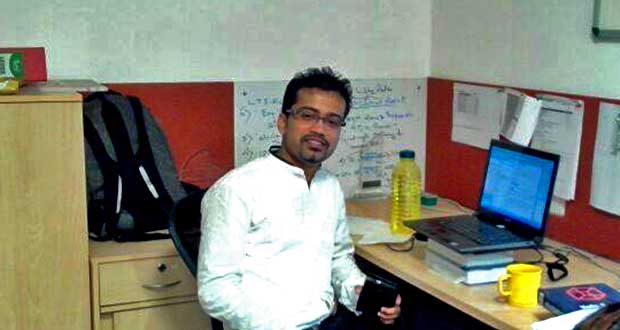
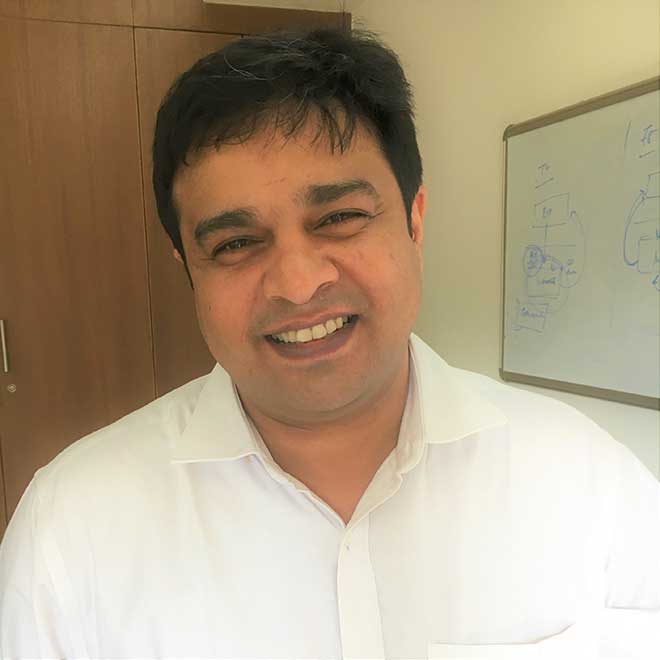
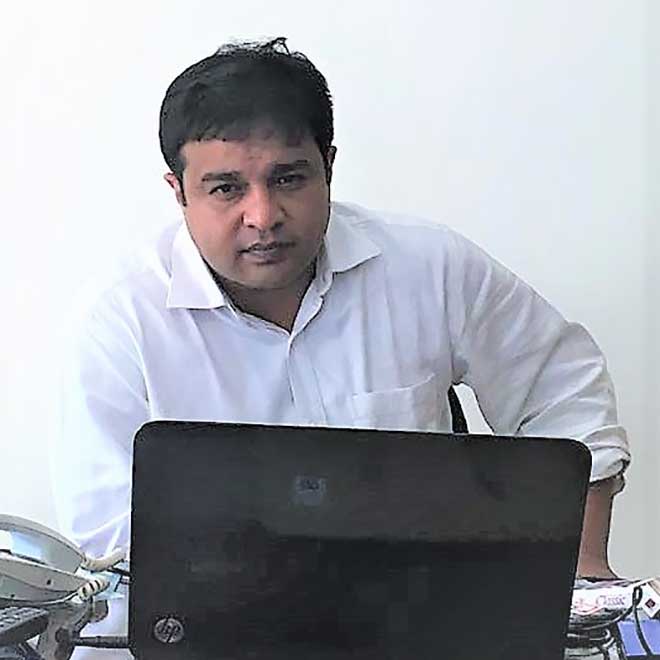
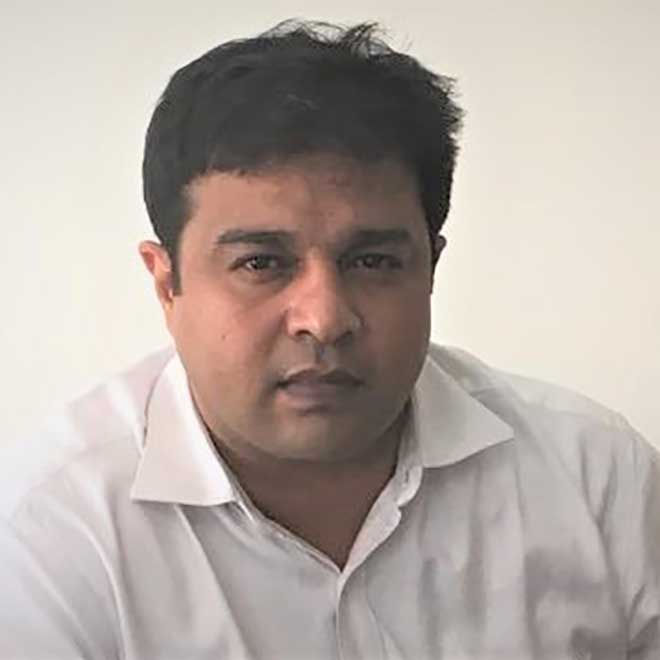
  • Abhishek Dutta, Founding and Managing Partner, Aureus Law Partner, on arbitration, taxation law, and starting his own practice

    Abhishek Dutta, Founding and Managing Partner, Aureus Law Partner, on arbitration, taxation law, and starting his own practice

    Abhishek graduated from NLSIU, Bengaluru, in 2002. He is the Founder and Managing Partner of Aureus Law Partners. He has been in the consulting industry for most of the last decade and a half. Having worked in Ernst & Young, he decided to move with the founding team of BMR Advisors, and worked with BMR Advisors till 2011. After a long stint in BMR, he founded the tax team of HSA Advocates, which saw HSA Advocates being ranked in International Tax Review rankings for the first time as a tier two practice.

    In this interview we speak to him about:

    • His time at NLSIU
    • The Indian tax regime
    • Working for Ernst and Young, and HSA

    Given that most of our readers are law students and young lawyers, how will you introduce yourself to them? 

    I am the first lawyer in my extended family. And a first generation Delhiite, if there is such a term. My introduction to any young lawyer at this stage of my career would perhaps be that I am just like you, with self-belief, courage of conviction, and aspirations. For me, starting a law firm and working as a Partner in Aureus Law Partners is as new as a career in law would be for you. The quest to perform and succeed would be your constant wingmen. But do remember to savour the small successes, and take failure of any kind in your stride.
     

    What was it that got you interested in the legal field?

    Three factors really – at the time when I was completing my school, the only two ‘career choices’ were medicine or engineering. I did not want to pursue either.

    The second reason is perhaps more contextual. My father had been embroiled in litigation ever since he was a very young. I wanted to help him out, and studying law was one of the ways in which I could.

    The third reason being – I got through NLSIU. Had it been any other institution (and at the time the only other choices were the three year courses which were not really an option immediately out of school), I would have probably pursued chartered accountancy, and definitely cricket.

    How was your experience in NLSIU? 

    We end up spending five of our formative years in a residential course in NLS. You go in as an eighteen year old greenhorn and come out as a 23 year old qualified lawyer. The world that you had left behind in your small town, has in the meanwhile, completely changed. This is bound to shape your future years as a professional and a person. The experience in law school instils a certain kind of confidence. The five years in law school makes you see the other point of view. This is important in several ways, as the ability to see the other point of view and choosing to agree or disagree with it depends on reasons that you give yourself for doing so. The ability to reason conflicting positions out is at the heart of understanding the role that you play later. I played cricket  for the university team through my five years– internships and moots were limited to coursework only! Playing a part in taking NLS to the second round of the South Zonal Inter Varsity Tournament in my first year, and being the captain of the cricket team in the third year, perhaps contributed the most to my identity in law school. Law School taught me how to research, provided me with an analytical bent of mind and to express myself. This is important in real world practice of law as well.


    What were your areas of interest in law school? How did you recognise and cultivate such interests?

    I used to participate in a lot of sporting activities and some inter class cultural events. Other than that, I did wish to write, and perhaps would do so yet. And as of other areas of ‘interests’ – I met Nimisha in NLSIU, who I am now married to and have twin daughters with! So that turned out well.


    Have you ever considered pursuing further studies? 

    I had certainly thought about further studies, but circumstances back home would not have allowed me to take another year before I got into a career. I think in today’s context higher education is desirable. However, I feel that getting a prestigious scholarship is what one should be aiming for.


    How did you secure an appointment with Ernst and Young?

    I got to know that there was a vacancy through Gaurav Malhotra, a senior from law school who used to work in EY at that point of time. I then applied via the regular channels with my CV and got called for an interview.  After being selected as an executive, bulk of the work assigned to me was to do with Value Added Tax advisory services – fairly niche work.  I left EY upon, and  perhaps because of, the beginning of BMR Advisors which was founded by Bobby Parikh, Mukesh Butani, Rajeev Dimri and a host of other partners and seniors from EY.  


    What motivated you to join BMR Advisors instead? 

    I joined BMR Advisors due to the promise of exposure, the opportunity to work directly with top notch professionals in the indirect tax space like Rajeev Dimri and Sujit Ghosh (who also is an NLSIU alumni), and the certainty of bone crushing work schedule – the latter of which almost always ensures a very steep learning curve, which is something I was aiming for. At BMR I dealt with all indirect taxes and worked on client assignments which only a few others would have at that stage of one’s career. Notably, I worked as the only senior associate in Delhi on jobs to transition some of the biggest companies to Value Added Tax back in 2005. I have the privilege of claiming that I played a (big?) role in transitioning business like GSK, Nokia, Cargill, etc. to VAT. My experience in BMR was tremendous throughout to say the least.  BMR taught me a lot of what I know today. It also gave me the confidence to strike out on my own – and I did that, which I guess some of my seniors in BMR may still not be very happy about! 


    You founded the tax team at HSA Advocates. How did you go about doing this? 

    The decision to join HSA Advocates was based on an idea to render tax and legal services together as a seamless offering. Rashmi Chaudhury, our partner in Aureus, contributed to and developed this idea with me at the time.

    Essentially, in accounting firms, one did not provide legal services along with tax advisory. Drafting assistance, for example, would not be provided by an accounting firm, even though one may know an arrangement inside out having advised the business on the tax implications of such transactional arrangements. This, I felt, was limiting. I got the opportunity to speak to Hemant (through Utsa Shome who was working for HSA at that point of time) and got to present a business plan to the then partners at HSA. It was the indulgence of the Partner team in HSA at the time that allowed us to work with them. I am deeply thankful for that. I’d like to think that we managed to meet the business plan. We also got HSA to rank in the International Tax Review rankings at tier three.

    Taxation law is a bit of everything really. The best part about tax practice is that it allows you to learn about virtually all industries, and interact with business, legal and finance teams alike. Of course there is another aspect of the practice (more particularly seen in Big Four, etc.) that dictates that a tax professional be a niche area advisor. This may have its merits at an organisational level, but could be a limiting factor at a professional / personal level.
     

    Can you please share your opinion on the GST Bill?

    GST is a bit of two things really; it is continuity in several aspects that relates to service tax, while revamping the entire taxation regime in relation to goods. The most important change – which the common man does not really focus on – is that it has taken excise duty away. Common understanding aside, from a ‘doing business’ stand-point GST changes everything for most businesses. More importantly it changes the manner in which compliances are done, and brings is some amount of certainty in several areas where there was no certainty earlier.  

    The tax regime of any country is typified by the administration. I like to think that I am a keen observer and a student of tax administration in India. I have contributed an essay in an HSA sponsored publication that I had edited entitled “Perspectives: On certain aspects in Indian taxation” where I had commented at length on tax administration, having studied various authorities on the subject.


    What motivated you to leave HSA and found Aureus Law Partners? 

    Again, leaving HSA was more of a strategic decision to expand beyond infrastructure practice. As I already noted, tax work gives you a unique perspective into a transaction, and the industry as a whole. You end up working closely with the commercial and business team, which always helps to structure a deal, while keeping in view the possibility of litigation on account of positions taken. This is the idea which gave birth to Aureus,  which provides end to end solution across industries. I got lucky in that I had a tremendous team with me – we had very good rapport and the attorneys who became the first few Aureuseans, were all willing to share the risk.  Some of these associates are still with the Firm and have gone on to open our branches in various locations. For instance, Chinmay and Suresh handle our Uttarakhand presence having been there since day zero in the Firm.  Some of the others have gone on for further studies, and / or are placed with larger firms. Both these developments are a matter of pride for me and the Firm.

    The other reason for starting a new firm was that I got an opportunity of being able to work with Mr. Kantawala who is senior partner at Aureus. I had interned with him when I was a student, and worked on some of his matters later as a litigator from an associated chamber. That’s another story – I started my career as a litigator under Ajit Warrier, who is now a partner at SAM. Our chambers (NN Agarwal & Associates) used to work quite closely with Mr. Kantawala at the time.  I always felt that a firm should have a very strong litigation practice, which Mr. Kantawala has ensured for Aureus Law Partners.


    What is your current role as the Founding and Managing Partner?

    As the Chief Executive & Partner at Aureus, the responsibilities range from executing engagements, to developing business to office administration and managing the attorneys in the firm. As a professional matures in career, expertise becomes wider. This is where I find myself now. I am called upon to render strategic advisory assistance to clients – which may have to do with corporate criminal matters to M&A advisory to targets and investors alike, and even business and legal advice to promotor groups as and when called for. Taxes, and therefore by extension GST, remains a focus area, having worked in the area for the better part of my professional life. I have had the opportunity to work on some very big ticket matters for large industry majors, including the likes of Indorama, Nike, Lanco, Wipro, etc. to name a few. We have managed large litigations and arbitrations where I have been involved on a hands on basis along with our litigation team. We have provided strategic advisory to offshore entities in setting up presence in India, and continue to manage their operational compliances in India.  We are attempting to establish our presence in various new industries, including defence, insurance and the like. So the hands are quite full.

    In addition to these, one needs to manage the office infrastructure. From day one in the Firm we had time sheet, accounting and invoicing systems. In fact, I also was hands on in developing our website and the client outreach programs. These are tough jobs – and need to be done. The responsibilities are varied. There is no dearth of work.  


    Can you give law students some advice on how to go about researching and drafting their work? 

    Research, content, language, prose, and formatting. I think these are the things that you need to focus on to be able to be published.
     

    Do you think arbitration is the future of dispute resolution in India? 

    Our litigation and arbitration practice is a well-established practice and this shows in the fact that  we have succeeded in getting some big ticket matters in arbitration.  We have achieved success in international commercial arbitration out of London in the first year of our founding itself when we secured costs from the Arbitrator towards legal expenses to be paid by the offshore claimant. The claimant had to pay damages to our client as well. All this without even leaving Delhi to attend the arbitral proceedings.

    Recently, we achieved closure in an arbitration matter in insurance, by virtue of an opinion that we had given and are representing a client in relation to a D&O insurance policy. Arbitration would be the recommended course of action for these and many other such newer areas of law, for which precedents are few and far between. Of course, traditional areas of law also benefit from an arbitral process. There are very good arbitration centres in India now. These can be used for the purposes of effective, cost efficient and quick resolution of disputes.


    How do you stay up to date about the recent developments in all the fields you work in and have an interest in?

    In today’s day and age literary and professional resources are much more easily available thanks to the net. I would suggest that students and professionals alike maintain a hunger to read. Given a chance, read anything you can lay your hands on. Also, I find that certain internet resources are very good sources of primers on various areas which a student may not be familiar with. These could help in a base level understanding and serve as a launch pad for further reading and understanding of a particular subject. However, net based knowledge should be verified with the actual statutes and verified sources.


    What advice do you have for our readers?

    College is a time when you should focus on all aspects of your personality. Try to ensure that you do what you like and not just what you are told. This is the time when you form views, when you establish an identity, and when you try to give direction to your career. You should keep an open mind and try to learn as much as possible. And yes, don’t forget to have fun.


  • Arijit Bhattacharyya, Assistant Manager/Senior Consultant, PricewaterhouseCoopers India, on working for the Big Four, and his diverse experience

    Arijit Bhattacharyya, Assistant Manager/Senior Consultant, PricewaterhouseCoopers India, on working for the Big Four, and his diverse experience

    Arijit Bhattacharyya graduated from Symbiosis Law School, Pune, in 2010. After successful stints with Softcell Technologies Ltd., and AXA Business Services Pvt. Ltd., he went on to work in the capacity of Consultant- Risk Advisory Services (TMT) at Ernst & Young LLP. Currently, he is a TMT Lawyer and a Business Consultant currently deployed in the Risk Advisory Services LoS of PwC specialising in providing ITeS clients advisory services overlooking areas of Overseas Expatriate Taxation, Employee Mobility strategy and policies. He regularly advises clients on regulatory compliance of employment, payroll tax and mobility laws of predominantly Americas and Europe region.

    In this interview we speak to him about:

    • Working at two firms out of the coveted Big Four
    • Striking work-life balance
    • His experience thus far

    What inspired you to take up law? 

    While there was no such resistance from my family and acquaintances, there was a lot of doubt / suspicion regarding the career path I would eventually follow. I am a first generation lawyer in the family and no one in my immediate family is associated with law or legal practice. However, when I was starting to prepare for my 12th board exams, I was specialising in commerce, two of my seniors were trying for national law schools through various entrance tests. There was no CLAT back then and each law school conducted their own entrance tests. One of my seniors cracked NALSAR and I was bit by the curiosity bug. I researched about the five year integrated law course and the diverse career options it comes with. My parents were supportive of the fact that I took one whole year off just to prepare for the entrance exams and after a year of preparation I finally got into Symbiosis, Pune. Symbiosis was a good and established brand and thus I went ahead with the admission formalities.


    Tell us a bit about your time studying law as an undergraduate student at Symbiosis Law School, Pune.

    I hail from a small town in West Bengal, and as such soaking up the popular Pune culture took time. Law as a discipline was new to me. Nevertheless, I managed to stay afloat academically while participating in various extra-curricular activities throughout the first two years of college. During my first year, I participated in a cultural exchange programme titled “Lexus Nexus Symphony” and went on to participate in fests such as Mood Indigo – IIT Bombay. My grades improved drastically third year onwards as I got a foothold on the exam pattern as well as when specialised subjects were introduced like International Law, Corporate Finance, Accountancy and Taxation. I took a general liking towards the specialised subjects in which I scored more.


    What were your areas of interest during your legal education? 

    My areas of interest during my law school days were a mix of subjects. I took general liking towards International law, Company law and Taxation. Naturally, my interest in Company law paved the way for my inclination towards regulatory compliance. However, in practice, my short traineeship in Legasis Partners opened up Regulatory Compliance as a viable practice area. Nevertheless, it has taken me seven years to gain a foothold in the Regulatory Compliance domain. While on the domestic front Regulatory Compliance is seeing frequent enforcement now, the scenario is very different in global markets with enforcements being conducted by enforcement agencies frequently. Hence, subsidiaries of Indian companies run the risk of getting pulled up by enforcement agencies quite often. Very few people know that Regulatory Compliance as a career choice is equally rewarding.


    Could you tell us about the internships you took up, and what you learnt from those experiences?

    Of all the organisations I interned with, my memorable experiences are when I had interned with Victor & Moses, a full service law firm based out of Kolkata, and Tata Steel, Mumbai. Both the internships were very enriching and taught me the everyday nuances of a corporate lawyer’s life that I am leading now. More than expertise, these internships taught me the schedule of a corporate lawyer and the various roles you need to juggle with when at work. I would not be honest if I mentioned that the above internships imparted expertise in the truest manner, as, you need to intern with a particular law firm twice or thrice to gain a foothold in any particular subject matter.

    What advice would you give students in avoiding a decision paralysis?

    Rather than choosing to study further immediately after completion of graduation, I would suggest students to focus on choosing the right place of work where for the first three years, one would learn from their seniors thereby acquainting themselves to a particular service area. Any further study should be taken up by an individual only when he/she has a foothold over an area of specialisation and want to probe more into the subject matter. Further, in light of the present day recession, the pros and cons should have been measured by the individual regarding the return on investment. This according to me is the practical choice, however, choices differ and ambitions vary from person to person, hence this is very much subjective to individual choices.


    From a law student to a lawyer, how will you describe the transition?

    The transition from a law student to a lawyer has not been smooth. Each day was a learning for me. Law schools invest heavily on the theoretical knowledge and do not prepare you with the practical knowledge of advocacy as well as advisory. Time and again the in-house counsel roles have changed to include popular business skills such as risk evaluation, risk management, data analysis, excel skills and cost evaluation.

    When it comes to a career in a Big Four advisory firm, the gamut of skills that you should be equipped with change drastically. Apart from soft skills, one should be very skilled in evaluating numbers and should at least have a basic idea of data analysis. I had to invest a lot of time in learning number crunching, excel analytics, advanced excel and data analytics for my roles in EY and PwC. As assignments in Big Four advisory are shorter in nature, one has to be very through and precise with knowledge pertaining to the regulatory risk area, its impact and the enforcement risk.

    What are some of the key nuances that are often overlooked in drafting and research?

    There is only one guideline to drafting and research and that is “attention to detail”. Any research work or drafting assignment should be properly thought through, comprehensive in nature and should not end in a rush. Remember, that even after checking the document n number of times there can be improvements made in the document and mistakes discovered.


    What prompted you to take up a position at the Ernst & Young LLP?

    The Brand itself was a deciding factor. EY is a leader in consulting, tax and audit not only in the global arena but in India, it tops all the other Big Four firms in terms of revenue, ranking, growth and employee strength. Moreover, EY was always a dream job for me. Bagging EY gave me recognition amongst my peers and even boosted my confidence. I owe my practice area and specialisation to my learning in EY. A regular year at EY would constitute of specialised trainings, business simulations and learning academies for honing business consulting skills.

    In EY I was part of the TMT team overlooking Technology sector and occasionally Telecommunications. I was part of the largest Technology team servicing a client list of who’s who of ITeS industry, NYSE listed organisations and Fortune 500 Companies. As a consultant, my primary job was to conduct third party regulatory assessments of overseas subsidiaries of ITeS companies in the areas of Employment, Immigration, Payroll tax and Data Protection laws, highlighting red flags, suggesting process improvements and cost saving initiatives. This aside, there were other assignments as well which kept me busy, such as compliance framework services for ITeS clients and contract risk review projects for Telecom clients.


    What was the experience of meeting with the Global CEO of Ernst & Young and sharing stage with him like?

    Typically, throughout school and college extracurricular activities have always kept on interesting me. Similarly, in EY I got the opportunity to be a founder member of an in-house rock band named RAAGA. Being a self-taught guitar player I play electric guitar mostly in my leisure time, and had the opportunity to participate in college fests during my early college days. However, when there was an announcement by a HR team member in the induction regarding registrations being sought for musicians, I couldn’t help but register myself. Over the next year and a half, the Partners at EY were supportive enough to invest in full studio equipment for us and we did host some of the memorable in-house rock shows in EY. One such in-house performance was scheduled specifically for the visit of the Global CEO and on completion of our show, we were greeted by him personally. He literally spent two minutes talking with us on stage. That was a priceless moment for me and would always remain etched in my heart. Meeting and talking to the Global CEO of an organisation like EY doesn’t happen everyday.


    Tell us about your present role at PricewaterhouseCoopers.

    The core service area and target clients I cater to has not changed much from my stint at EY. As an Assistant Manager / Senior Consultant, I now have got the opportunity to delve more in the practice areas that interest me. I am a subject matter expert of Overseas Expatriate Taxation and primarily specialise in leading third party regulatory compliance assessments of overseas subsidiaries of ITeS companies in the areas of Expatriate Taxation, Employee Mobility strategy and Regulatory compliance with employment, payroll tax and mobility laws of predominantly Americas and Europe region. PwC has offered me the opportunity to diversify my industry expertise to include Pharma clients as well. A routine yet significant part of my role also covers training of junior resources as well as taking part in sales pitch and other business development activities for my practice.


    What does a typical working day look like for you?

    A typical working day would start at 10:00 in the morning and go on till 10:00 / 11:00 in the night during peak season. However, there are regular shorter days at work during the lean season. My work profile includes meeting and interacting with clients, understanding their business needs, their business model, operations and business functions in order to add value to my services.

    Every single day at work is unpredictable which is why working in a Big Four is severely competitive and interesting as well. There are lots of multitasking required on a daily basis as one may be working on multiple projects/assignments at the same time. Time management, attention to detail and soft skills are of essence as there are stringent deadlines to be met more often and you have to be on your feet constantly.


    Did you have a mentor or guide during the formative years of your career? 

    I did have a mentor and guide during my college days and also during the early days of my career. In my college days it was my senior at college Adv. Boudhayan Bhattacharyya. While on the career front it was Apurva Amitesh who helped me develop my core expertise in regulatory compliance. It is certainly important for anyone to have a role model and a mentor to guide you during the early days of your career. It helps you to learn important skills from your mentor as well as prepare you for future roles.

    How do you manage your time between your professional and personal interests? 

    My interests outside law are motorcycle touring and playing guitar. Though time available is very limited during a working week, I do follow my interests and hobbies on weekends. I strictly take an annual vacation of ten days at the end of the year to strike a balance between leisure and work.


    Where would you like your career to take you five years down the line?

    Well I sincerely want myself to be regarded by my clients as one of the finest TMT lawyer and Business Consultant in the global employee mobility space.


    Is there any other suggestion you would like to give to our budding lawyers and Corporate law enthusiasts?

    Once you have chosen law as your career, at least by your fourth year be certain of the line of practice that you would want to pursue after graduating (advisory, academia, law firm, in-house counsel). Be sure to intern in a law firm more than once and keep exploring lines of service which interest you. Chances of landing a pre-placement offer with any law firm increases once you have interned with the law firm at least thrice and have been able to demonstrate keen interest in a specific area coupled with commitment to better your prospects in that area. In any case internships should be strictly limited to law firms as you learn more in a law firm. And like I said earlier, be focused on choosing the right place of work where for the first three to four years, you would learn from your seniors and get acquainted to a particular service area.

  • Paushali De Roy, Senior Consultant, Strategic Business Alliance, on LPO, her passion for writing, and working for a start-up

    Paushali De Roy, Senior Consultant, Strategic Business Alliance, on LPO, her passion for writing, and working for a start-up

    Paushali De Roy graduated from NALSAR University of Law, Hyderabad in 2011 and joined Ernst & Young (EY), Hyderabad as a campus hire. She has worked as a Consultant for their Indirect Tax practice. She later moved back to Kolkata and there she joined a legal process outsourcing start up – Strategic Business Alliance, as an associate. Paushali is currently located in Amsterdam, Netherlands where her organisation is intending to expand their business. Apart from law, she takes an active interest in creative and literary writing. She is a blogger and a published author.

    In this interview we speak to her about:

    • Her time in NALSAR
    • Her writing experience
    • Working at a startup

    Tell us about your time at NALSAR.

    I graduated from NALSAR in 2011 and I had my fair share of fun and frolic during the five years that I spent there. NALSAR was a melting pot of cultures, opinions and world views. I had the opportunity to interact with some of the best minds in the legal fraternity at NALSAR and that too at a very young age. Being a student of such a prestigious academic institution unquestionably gives you an advantage over your peers in the initial stage, but you also must justify the presence of such a brand name on your resume with your hard work.

    In my opinion, what matters in the long run is your dedication and expertise over your chosen area of work. I have worked with several brilliant people who are not from any national law university (NLU) and that has not been a hindrance towards their growth.


    What kind of internships did you undertake during your student years?

    I interned with NGOs, the State Human Rights Commission, advocates and individual practitioners, corporate legal departments and law firms during my student years. I enjoyed most of my internships and took them as an opportunity to learn even if it was about working on small odd jobs. They taught me how things worked out in the real world.


    Is it absolutely necessary to moot or undertake paper publications in order to be a successful advocate?

    I believe that every law student should have the freedom to chart out their own law school experience and things cannot be termed “necessary” or alike to be successful. One of the obligatory parts about the NLU culture was that one had to try out their luck in moot court activities but I did not enjoy the experience. I was more interested in legal research and related activities. I liked working on my semester projects and converted a few of them in research papers. They were published in reputed law journals like the Labour Law Journal and official University publications.


    Give us some insight into your blog and your work which you regularly publish there.

    I was always interested in creative writing and participated in various writing competitions and workshops during my school and college days. I started my blog when the concept of ‘blogging’ was at a very nascent stage in India. My blog is called – “The Big Bong Theory” and I write about everything – daily mundane chores, literary fiction or travel stories, in there. I write primarily in English but also in my mother tongue – Bengali.

    The blog’s Facebook page is also quite popular among my readers. Though I do not get to write often nowadays due to a very busy schedule, it is my window to the world ‘beyond law’. Apart from that, my blog has also given me the platform to be featured along with other famous bloggers and authors in various newspaper and media reports.

    My literary articles and stories have been published in several magazines and newspapers. In 2015, I also became a contributing author for an anthology of stories selected through a nationwide writing competition.


    Tell us about your experience with Ernst & Young.

    My stint with Ernst & Young (EY) will always remain special as it was my first job. I was selected through the campus recruitment process during my final year at college. I joined the EY, Hyderabad office as a Consultant for their Indirect Tax practice. My work primarily revolved around appearing for Indirect Tax hearings and drafting advices and memorandums for clients. I worked closely with a team of Chartered Accountants and it also involved a lot of number crunching. It was also a client facing job and I learnt my first essentials of client communication at EY.


    What motivated you to make the transition from a reputed establishment such as EY to a start up in Kolkata?

    As much as I loved the work environment at EY, I was gradually getting wary of being labelled only as an Indirect Tax practitioner. I wished to explore new things and the start up boom had just begun in India. I was taking a risk and it involved a lot of brainstorming since I was relocating back to Kolkata, which by popular perception, was not the perfect place for start ups. It also involved work in the Legal Process Outsourcing (LPO) or legal services sector, which was still then not considered to be the exact white collar job that a NLU graduate ventured into. But due to some personal reasons, coupled with an urge to do something in my own city and the promise of rapid growth in a very young work environment, I took the plunge.

    I must say my belief paid off and from a merely eight to ten members team when I joined in Strategic Business Alliance (SBA) India has not only grown in the number of head count or clients, we have also recently moved into a large and plush new office in Kolkata.


    Tell us more about the nature of work at an LLP, especially Strategic Business Alliance.

    SBA is a fully functioning Knowledge Process Outsourcing (KPO) firm and apart from our vibrant LPO division there are other divisions like Accounting and Legal Transcription. All the teams work in close proximity with each other and often there is a requirement of coordination between the teams as there is an overlap of scope of work.

    In the legal division, there are different sub teams working on different projects some of which require specific tool based knowledge or due diligence skill.

    I lead the legal drafting and research team and we often work on projects which require an application of mind along with balancing tight deadlines. On any given day, you may be drafting entire memos or reviewing multiple contracts and leases to prepare advices for clients while with using various research tools.


    What is the position you currently occupy at Strategic Business Alliance?

    I am presently working as a Senior Consultant with SBA and I am stationed in Amsterdam, Netherlands. In addition to my regular work responsibilities, I am presently getting involved in a lot of business development work as we are trying to set up a new office in Europe.

    My regular work day is a mix of daily calls and meetings with my core team members discussing work scenario. There are trainings and client calls also to be attended while keeping in mind the time zone differences. I am involved in a lot of client communication along with day to day hands on work which often needs to be completed on a strict deadline.


    What is the common misconception that keeps law students from taking up placements with LPOs?

    I believe there is no ‘perfect’ or tailor made fit for anybody in any profession or industry. Each one of us need to find what is the ‘better’ option for oneself by exploring all avenues. For me, the option of working at a start up worked out, but there was also risk of it not working out too.

    In regard to the misconception about working in LPOs, I have encountered junior team members coming in and thinking that we work only on tool based projects or ones where application of mind is nil. It is not necessarily so. From my experience, I can say that SBA has a very vibrant multi domain work culture where as a lawyer, your intelligence, coordination and time management is put to test, every day.


    Do you offer internships at Strategic Business Alliance, and how does one go about securing internships at LPOs?

    Yes, we offer internships at SBA. We have a simple application process whereby you can apply to the HR by emailing at – hradm@sbain.com.

    We have recently started offering permanent positions to interns who are in final year or just out of college, if we are happy with their performance during the internship period.


    What are the qualities sought after by LPOs in their prospective employees?

    I cannot speak about LPOs in general, but at SBA we look forward to recruit prospective employees who come in with an open, alert mind, are eager to learn and work in a team and have integrity.


    What other message would you like to put across to our readers?

    If you are a law student, do not run after that ‘perfect job’, as there is none. Explore opportunities, weigh in your personal choices and see for yourself what suits you the best. When you are working too, take breaks, travel often and do not ignore your family or personal commitments for professional ones. In my opinion, finding the right balance between the personal and professional, is supremely important.

  • Nilanjan Banerjee, Senior Consultant, Ernst & Young on being a research assistant at SC, work at CPA Global and Lexplosion

    Nilanjan Banerjee, Senior Consultant, Ernst & Young on being a research assistant at SC, work at CPA Global and Lexplosion

    Nilanjan Banerjee pursued his LL.B degree from Hazra Law College (Department of Law at Calcutta University). Thereafter, he pursued his LL.M from WBNUJS, Kolkata. After graduation, he worked at the Supreme Court as a Research Assistant. He then worked at CPA Global followed by Lexplosion. Currently, he is a Senior Consultant at Ernst & Young.

    In this interview, he talks about:

    • Studying at Hazra Law College, Kolkata
    • LL.M from WBNUJS, Kolkata
    • Being a Research Assistant at the Supreme Court
    • Working at CPA Global, Lexplosion and Ernst & Young


    Tell us a bit about your childhood and pre-college life. Did you have lawyers in your family?

    Well, my childhood was like that of any other kid of my generation. Being born in the early part of the 80’s had its own share of advantages and to some extent some minor glitches too. We were not from the internet generation which guys born in the 90’s had access to. Our access to knowledge and the outside world were initially limited to the classroom teachings imparted in our school and through news series like “The World This Week” aired on Doordarshan during those days.

    Having said that, I did my schooling from one of the best schools in my hometown in Durgapur, St. Michael’s School and was among the rankers in my school. Passing the ICSE in 1999, I was still not sure about my future and did my Higher Secondary in Science in 2001. It was then that I was at crossroads, with very few people at that time sticking to higher studies in Bengal and opting for Engineering and Microbiology courses (which was a craze at that time) from states like Karnataka and Maharashtra, my dad asked me to pursue law. I am the first lawyer in my family and initially I was sceptical about the idea of pursuing law


    nilanjan-banerjee-3

    What brought you into legal studies? Did you face stiff opposition from your friends about becoming a lawyer? What were your objectives while still in the preliminary years of Law College?

    Well as highlighted in the previous para, my foray into legal education was not planned at all. My parents felt that it would be the ideal educational background for me since I was always good in elocution and analytical skills from my childhood days. They thought that potentially I could be a good lawyer and hence I went by what they suggested like any other typical kid during my days in early 2000.

    While most of my friends went outside to places like Bangalore and Aurangabad to do their further studies in the field of science and engineering, I joined a traditional college to do my law which was one of the least coveted professions during my time. It was more so since there were no good law schools (recall NUJS had only started in 2000 and no one could predict the prospects of doing law from the same since it was early days for the institution), and law as a profession was meant for people who had no other option during those days. My friends and relatives were apprehensive about my decision and so was I.

    To be honest, I could not figure out what I wanted to do after completing my five years of legal studies during the first three years of the LL.B. course. I was not sure about the entire course structure, about the way it was taught and about the career prospects since most of the people doing law during those days were not aware of the law firms and law was supposed to be meant only for practicing advocates who were in the field of litigation. But I was sure of one thing, that I would not be a part of the struggling litigation community in Kolkata.


    In Kolkata, universities are always charged up with a political atmosphere. How was your experience as a student of Calcutta University?

    My initial few days in the college where I studied law was more of a cultural shock coming from the background where I belonged to. I studied in a convent co-ed school in Durgapur where things were well planned and structured which was quite opposite to the scenario I faced in Hazra Law College which is the Department of Law of Calcutta University. The college had an active Union affiliation and all the newcomers in the First year were forced to be a part of the same. I dreaded going to college for the first few days since I always avoided political affiliations during those days. To be honest, my experience as a student of the college was not so good during the first couple of years. But I stood my ground and I was firm about the fact that studies were a priority for me since I had come away from my hometown to do the same. Things fell in place from the third year of my college life and seniors could understand that I could never be a part of their group and join in the political discourses that they wanted me to join.


    nilanjan-banerjee-2

    What were your plans after graduation? Did you think of joining the Civil Services or litigation ever? How did you decide to pursue LL.M?

    As I previously mentioned, I had no plans or intention of joining the domain of litigation. My father though wanted me to give the Judicial Services examination but I did not want to join the same. Hence, I decided to do my LL.M since by that time I had developed an active interest in the field of law and wanted to pursue my higher studies from a reputed institution to sharpen my understanding and skills in the same. Somewhere at the back of my mind, I knew that I might want to pursue Ph.D and settle in the education sector at a later stage of my life. Hence, the decision to do my LL.M course.


    How valuable would you say your legal education was?When did you actually experience the learning curve? Would you agree with people who say that all that they have learnt is in their years of practice?

    Well, not all was bad in Calcutta University. We had subjects which were quite elaborative in nature and there were some good professors who would take the pain and effort to teach us law in the way it should be taught. Further, owing to the fact that the college where I studied had its own tradition and history behind it, I got to know some legal luminaries and gained valuable insights from them.

    I do believe that what you learn in your college days is just a small part of it. The actual learning is on-the-job learning that you gain while either during your years of practice or in the sector that you work in when you start your career. It is true that the college helps you to build your base and foundation and helps you to decide where you want to head after your education is over. But true learning and potential is realised once you start working.


    nilanjan-banerjee-1

    How difficult would you say it was cracking the CLAT for Masters at WBNUJS, Kolkata? Which universities did you consider for your post-graduation?

    Well for me, it was not difficult at all to be honest. I knew I had to do masters and I also knew I was not in a position to move out of the state at that time. So the only good option for me was NUJS and I did give the CLAT during that time. Luckily for me, I fared well in the entrance and during the interview and group discussion that we had and the rest followed.


    How do you recall the academic setting of NUJS? How was your experience with the faculty and facilities of NUJS?

    For us, being a part of the LL.M fraternity in NUJS, things were easier for us vis-a-vis our interactions with the faculty members and easy access to them. What I could realise during my early days in NUJS was that the university wanted us to be a part of them after we passed out and we were treated accordingly. The set up was completely different from what I had experienced during my LL.B at CU. The library, the infrastructure, the course structure, classroom lectures were of the top notch and far different from my previous college. It was only during that time that I really enjoyed going to the college and attending the lectures of the faculty members of NUJS.


    Right after your post-graduation you started work at the Supreme Court as a Research Assistant. How did this happen? What was the application procedure and profile requirement?

    Well, I would say that I had been lucky throughout all these years. I got the right break at the right time and maybe that helped me get the little bit of success I have achieved so far. I remember that we were the first LL.M batch of NUJS to have framed our own Placement Committee and I was the co-ordinator of the same. Initially, the University was a bit apprehensive of the idea since LL.M students were supposed to join the University as faculty members and we were asked to do the same. But thankfully all my batch-mates were of the similar opinion that they did not see their future in litigation. It was during that time that we got to know of this opportunity that the University had received from the Supreme Court Registry for LL.M. candidates who were willing to join the Registry as a Research Assistant. We were asked to apply for the same after which our profiles were shortlisted. I was the lucky one to have got a chance and I happily accepted the opportunity that came through


    After serving the Supreme Court how did you get appointed at CPA Global? How did you adjust to a different work profile? What were your typical workdays at CPA like?

    My LL.M dissertation was on Intellectual Property Rights. To be precise, my dissertation paper was on the non-obviousness or inventive step requirement which is one of the patentatibilty requirements for a successful patent application. It was during my days at Supreme Court in Delhi that I got this opportunity from CPA Global which is the largest Intellectual Property Service Provider in the world. Knowing very well that I did not see my future in the domain of litigation and that I always had interest in IP, I happily took up the offer that I got from CPA.

    CPA was an out an out professional organisation. It was my first major corporate experience. The work culture, colleagues, set up and everything was so different from that of Supreme Court and I thoroughly enjoyed my experience. Adjusting to the set up was not difficult majorly owing to the team and colleagues I was working with. Having a good background and knowledge in Intellectual Property helped me as well. Working with CPA was fun and enriching. The work life balance was amazing with holidays on weekends. Typical workdays were from 9 am to 6 pm and we had all the facilities that we wanted.


    You have also worked at Lexplosion for about two and a half years right after quitting CPA. How did this transition take place? What did your work profile consist of at Lexplosion?

    The major turning point of my career came when I was forced to shift back to Kolkata due to family obligations. It was then that Lexplosion happened. Lexplosion, by that time, had developed into a major player in the Legal Compliance sector and was one of the few good companies in Kolkata. Lexplosion helped me to use my analytical and legal skills to their complete potential and the clients that I was catering to further helped me to grow myself as a lawyer in the legal domain.

    My major responsibilities included among others:

    1.  to maintain and manage the regulatory legal compliance of major Indian Clients through extensive research on existing laws and preparation of an extensive and comprehensive compliance inventory;
    2. To work closely with the in-house legal teams of client and their legal counsel on matters relating to labour disputes, appeals to the appropriate forum and guide them on the future course of action;
    3.  Leading the process of end to end compliance management for top Indian companies and MNCs through the dedicated compliance management software of Lexplosion- “Komrisk”.


    Currently you are a Senior Consultant at Ernst & Young. Would you say your experience at CPA and Lexplosion helps you at your current job?

    EY is a different ball game altogether. At EY you always have to be on the money and perform at your highest competence level. Obviously working with a brand like EY has its own major advantages. The exposure that one gets, the learning opportunities and the challenges that you face all put you in good stead as an individual and a professional. The professionalism and international exposure that I gained working with CPA has immensely helped me deal with the MNC clients at EY. Further, my knowledge of Indian laws and regulatory compliance matters which I have carried forward from Lexplosion is a niche skill set required of my job responsibilities at EY.


    How did your appointment at E&Y take place? Were there traditional interviews and short-listing procedures?

    I had got a call from a recruitment consultant who had mentioned about the opportunity with EY. I accepted the opportunity, interviews were scheduled and it was a smooth process thereafter. Since my resume was forwarded by the recruitment consultant to EY from the job portal, I would not be able to comment on the shortlisting part of it, because I am not aware of the same. But the entire process was smooth and did not take much time.


    Many young lawyers at corporate firms complain about the work being too exhausting, and that maintaining a work-life balance is just not possible. Could you share any tips on this?

    I personally believe that it all depends upon you, how you approach your career and where you want to head. I believe that if you are confident of your abilities, and have the experience required, the organisation would recognise your abilities and you can have your say when required. Work-life balance is a matter of perspective and there can be no straitjacket formula or answer on how to tackle issues pertaining to the same. But you have to be focussed and realise that organisations which provide you with the right opportunities and have the right learning curve for your career would expect you to deliver. When there is more work, there are more opportunities, and when there are more opportunities there are more ways to progress in your career. It’s a matter of choice for an individual.


    Do in-house counsels have it easier than lawfirm employees?

    I personally don’t feel that it makes any difference now in the competitive market that we are in. Law is no more a profession limited to the area of litigation and there are so many opportunities and versatility this domain has now. Thus, it provides equal opportunity to all. If you are good in what you do, the companies would hire you since there is a requirement at every level for good, competitive lawyers. While in-house counsels typically bring their experience working on issues pertaining to a specific industry they cater to, lawyers from law firms have their own versatility since they are not limited to a specific industry or domain. Further, I believe law firms owing to their structure teach you to absorb pressure and challenges. Again, as I mentioned, I would want to reiterate that it all boils down to one’s own abilities and skill sets.


    Do you offer internship opportunities at E&Y? What are the elements you would look for in a cover letter and C.V.?

    We have internship opportunities at EY, but to be honest it is not explored to that extent owing to the confidentialities and ambit of operations that we have.

    A resume should highlight your strengths, the areas that you have worked on and your professional experience. I have noticed that many a time a typical resume focuses too much on your academic laurels and publications. While I believe those are necessary, but in a professional set up like EY we focus more on the work experience and versatility of work profile of a candidate.


    Lastly, what would be your message to an Indian law student who wishes to have an illustrious legal career after the five years of law school?

    I would suggest that once a person decides to invest his five years for studying law, it is of paramount importance to indentify the institution from where he wants to study. There is no short cut to success as everyone says and that is more so correct for this profession. Law is a coveted profession now and there are multiple opportunities in the legal domain. Owing to the complexity of an organisation and the transactions/business opportunities that it caters too, there is an ever increasing need of legal professionals to deal with intricate and complex issues that these organisations face. Hence, any budding law student must focus on the area of law that interests him/her and accordingly must prepare for achieving the success that he/she dreams of.