Tag: E&Y

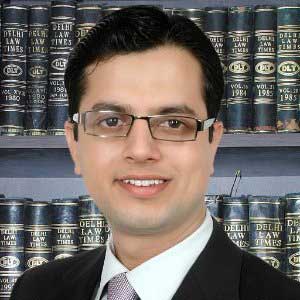
  • Amit Sachdeva, Associate E&Y, USA, on double-LL.M from LSE and NYU and being a noted tax practitioner

    Amit Sachdeva, Associate E&Y, USA, on double-LL.M from LSE and NYU and being a noted tax practitioner

    Amit Sachdeva completed his BA.LLB from GGSIPU after which he went on to pursue an LL.M in Corporate and Commercial Laws. On the successful completion of his degree he worked with Vaish Associates. Thereafter, he pursued his second LL.M from NYU. At present he works an associate at Ernst & Young, US.

    His two most cherished achievements are: successfully taking the Diploma in Private international Law from the Hague Academy of International Law – one of the youngest to do so since 1950 and one of the four in India to have it; and getting recognised in Legal500.com and in Tax Directors’ Handbook as an “up-and-coming lawyer who specializes in tax litigation”.

    In this interview with Amit, he talks about:

    • Completing his bachelors in law from GGSIPU.
    • Being a part of the LSE curriculum as an LL.M student.
    • His working days at Vaish Associates.
    • His Diploma in Private international Law from the Hague Academy of International Law – one of the youngest to do so since 1950 and one of the four in India to have it.
    • His experience of studying at NYU, from where he did his second LL.M.
    • Working at Ernst & Young Associates, USA at present.


    Say Hi! to our readers!

    Hello! I am Amit Sachdeva. I was born and brought up in Faridabad, a suburb of New Delhi. Currently, I work as an M&A Tax attorney at Ernst & Young US. I am an alumnus of GGSIPU, LSE and NYU.


    What motivated you to gravitate towards law, as a discipline and a career? Why did you decide to study law at GGSIPU?

    Law for me was a natural career choice. My father, Mr. Madan Lal Sachdeva, was an advocate. I idealize him. I was always inspired by the respect he commanded in the society, by his ability to reason everything and by his natural passion—which was professionally crafted—to defy “aisahi hotahai” (this is how it works) attitude. These early childhood impressions took full shape when I began to realize the difference a lawyer can make to the society.

    While in Class XII all my friends were aspiring to be doctors, engineers and chartered accountants, I wanted to something that was intellectually stimulating, financially rewarding and socially empowering; something that was constant and dynamic at the same time, something that needed patience and excitement simultaneously. Law was like a perfect blend!

    GGSIPU, in 2002, was the only law school in New Delhi that offered a law course straight after high school. I didn’t want to move out of New Delhi—that’s the place we have the Parliament, the Supreme Court and the Ministries. I thought there couldn’t be a better place to study law than in New Delhi. And, as I reflect on it; I don’t disagree.


    Please tell us about your time at GGSIPU. What experiences during these five years would you think particularly helped you shape as a law professional?

    GGSIPU School of Law and Legal Studies was a treat. My experience was very fulfilling. The fact that ours was the second batch had its own challenges and fun. The challenge was that we had to steer our own way. And the fun was exactly that. There is no better way of learning than pioneering. Each day was an experience. Classroom discussions, moot court competitions, summer internships, cricket matches, canteen time, all of them had a part to play in how I got shaped. I think GGSIPU was an experience in itself.


    You have been an outstanding student throughout your school and college years. It’s not every day that someone achieves an academic laurel in each year of school! Please give us a few actionable tips on managing good grades.

    Well, I think there is no mantra to good grades. Quite honestly, I think while grades aesthetically matter, it is the passion for your work that matters more. If you ask me for a tip, it will be this: try to understand a rule for a lifetime, not commit it to memory for an exam. There is a reason behind why a rule is what it is. If you try following the reason, law school exams are not hard to score on.


    Soon after graduation, you went on a full tuition scholarship to London School of Economics and Political Science for an LL.M in Corporate and Commercial Laws. What was the decisive factor that prompted you to choose LSE from amongst the options available?

    As I grew up at law school, I realized the relevance of a fuller education and an international experience to our profession. It was in the early part of the fourth year of law school that I decided to apply for an LL.M. degree. Of the various options, the ones that I was seriously considering were Oxford University and LSE. Although Oxford has an impeccable legal tradition, I decided to join LSE primarily for the very reason I got drawn to GGSIPU five years ago: what better place to study law than the capital city. LSE is in London. Besides, LSE also has, I think, a better reputation for corporate, commercial, and international business laws than Oxford does. Of course, there is an element of subjectivity around it. But that is what I thought. The other reason was that Oxford offered me a partial-scholarship; LSE, a full. I didn’t apply to any law school in the US.


    What should one do differently in college if he/she wants to pursue higher studies after graduation? What according to you is a good profile for securing scholarships and funding?

    Following an LL.M straight after school, or spending a little time at work and then pursuing a master’s degree, is really a matter of personal choice. A lot of factors play in, such as availability of finances, family commitments, etc. Having pursued an LL.M directly after school and then another one after some work ex, I would second that work experience does put a lot of things in perspective.

    As far as admissions are concerned, I think finding an admission in a top LL.M program is hard. And, finding a scholarship is harder. I think the trick is to demonstrate two things. First, an all-round personality and, second, a commitment to the field you want to pursue. Participating in moot court competitions, debates, mock parliaments, summer internships, besides good grades and writing articles should go a long way. Publications are often viewed as synonymous with academic excellence and commitment. A handful of international publications and I think you jump the queue of applicants for a place at a top LL.M program. I must however hasten to emphasize that a reviewer spends a few minutes reviewing a case for a scholarship. So, if you get one, thank your stars; if you don’t, there is no reason to be disheartened… the decision may not be a reflection of your potential. There is just no exact science out there.

     

    amit-sachdeva-3

    Please tell us about your time at LSE. Tell us about the academic pressure, faculty and campus life. What differences did you find between the education systems of India and the U.K.?

    The UK system is as close to the Indian as it can be. An overwhelming majority of our statutes and court decisions are based on or drawn from those of the UK. So, adjustment was not much of an issue. What was however a surprise—a pleasant one of course—was to first-hand experience the level of legal scholarship. I had the opportunity to be a student of some of the most respected scholarsacross the globe. Prof. Paul Davies (author of Gower and Davies, Principles of Company Law), Prof. Trevor Hartley (Private International Law) or Prof. Christopher Greenwood (since appointed as Judge, ICJ), the list is endless; they are scholarship-personified. I think the Indian education system needs two things—sincerity and funding.


    Meanwhile, you were also awarded a Diploma in Private International Law from The Hague Academy of International Law. How did you go about achieving this? Please tell us about the procedure to apply and the course.

    Yes, and I was also one of the youngest persons in the world to achieve this feat since the Diploma was incepted in 1950 and one of the only four Indians to hold this Diploma.

    Every year The Hague Academy of International Law organizes a summer school. The school has two sessions: one in Public International Law and the other in Private International Law. The sessions are taught by some of best professors and practitioners in the world. Each session attracts about 300 students. The applications are announced on their official website. Based on the performance of the students, some of the students sit for the Diploma exam. Although there is no cap, roughly about 10 students take the exam each session. There is a written test and then take an extempore oral test on a topic of international law. This is followed by the panel interviewing the student with questions, some related and some unrelated to the assigned topic. At the end, one or sometimes two students are awarded the Diploma.


    After coming back to India, you started your career at Vaish Associates. How did your appointment take place? Please walk us through your work profile.

    I joined the Direct Taxes team of Vaish Associates in September 2008. I had emailed the HR there. Vaish was one of the most welcoming law firms I came across. They acknowledged my email—something we don’t see too often. I had two rounds of interviews. After the interview with partner I was extended an offer to join their tax litigation team. I grabbed the opportunity.

    As a member of the tax litigation team, I attended client meetings, drafted petitions and appeals, appeared before tax officers and represented matters before the courts. I had the opportunity to handle work for many of the Fortune500 companies. In my first year, my work was more domestic tax focussed, but as I spent more time with the practice, international tax occupied my plate more and more. My partners often engaged me on assignments that involved intensive research into dense regulations, engagements that required knowledge and understanding of laws other than tax law, and matters that challenged constitutional validity of tax statutes. I handled a large number of writ petitions challenging the validity of reassessment proceedings. In addition, I would write tax opinions for our clients and render other advisory services.


    Tell us what did you like the most about your days at Vaish Associates.

    I had some of the best time of my life at Vaish. I worked long hours, made great friends, learnt tax law and partied. Besides, I helped the firm organize conferences, published papers, conducted team trainings, etc. It was a wholesome experience. What I liked the most about the place was the open-door policy. This meant that professionals at all levels, starting from associates and all the way up, had full access to all the partners at all times. Mr. Ajay Vohra, Mr. Rupesh Jain and Mr. Neeraj Jain personally ensured that this work ethic percolated all the way down. Mr. Rupesh Jain continues to be my mentor. I do reach out to him even today for discussions—both at personal and professional levels.
     

    amit-sachdeva-2

    In 2013, you were noted in Legal500.com and in Tax Directors’ Handbook as an “up-and-coming lawyer who specializes in tax litigation”. How did you feel about it?

    “It must be a misprint!” were the first words that I uttered when a colleague of mine at Vaish Associates came to my desk and broke the news to me. I had no idea about it. There was no application process … no submission … no request from my side. I understand that Legal500 and TDHB undertake an independent survey of the market and clients, and report their findings impartially. Once it sank in that my name was noted, I was overwhelmed. On the lighter side, I continue to believe that it was a misprint! By far, this and The Hague Academy Diploma are two achievements that are closest to my heart.


    You were briefly a Visiting Faculty at NLU, Delhi where you taught a semester-long Certificate Course on Direct Taxation. How did you manage to eke out time?

    I have a passion for teaching. I have always wanted to be an adjunct professor. NLU Delhi offers semester long certificate courses. I think these students were some of the most self-motivated ones I have come across. In order to accommodate my professional commitments, my students sometimes sat in classes starting 9 in the evening and going well past midnight. One weekend they travelled all the way from Dwarka to the Vaish office in central Delhi. I think they managed, I did not. All I did was: talk! If any of my former students is reading this interview, I want to say: thank you!


    You left your job to pursue a second LL.M. degree., this time at NYU. Considering that you had already earned an LL.M degree, what prompted you for this?

    My first LL.M was in Corporate and Commercial Laws. But, as it turned out I began practicing tax law. So, the primary motivation was to understand the theoretical underpinnings of the rules I invoked so often in practice. I always believed that there is much to learn from the US and the UK systems, and knowing their laws would boost my practice. Besides, I also wanted to develop an international network of professionals working in the same field as I was. So, that led me to apply for another LL.M. I already had an LL.M. from the UK, I decided to cross the Atlantic and try my luck at some US universities. With God’s grace, I was offered an admission with a scholarship I couldn’t turn down. My mother and my elder brother supported my decision to go.


    Currently you work as an Associate at Ernst & Young, Houston, USA. Which events led to your induction into EY, USA?

    NYU School of Law makes a significant investment in its careers office. There are a couple of job fairs that NYU organizes. The careers office also invites employers from across the country to the law school to interview NYU students. I applied for a number of job interviews, had call back interviews with a few. EY Houston office had also participated in one such interview program. I had a telephonic interview followed by an on-campus interview, and a round of four interviews during office visit. Shortly after the office visit, I was offered a position. The entire recruitment process spanned over three/four weeks.


    What does your current work profile at EY consists of? Share with us a few of the most challenging problems you have faced thus far?

    I work with the M&A Tax team at EY. My practice entails conducting tax due diligence, writing tax memoranda and tax structuring. Typically, a tax DD is like a health check-up from a tax perspective. Tax memoranda are a narrative of what the legal position on an issue is. Tax structuring, which is my favourite, involves informing clients of the different structuring options in which a transaction may be done.

    The complexity of the US tax law is the most challenging part of my work. But, that is also the part I enjoy the most about my practice.


    Tell us a bit about work culture in USA. How is EY, USA different from an Indian company/firm in terms of their working?

    I think as we brisk walk more into this millennium, our practices, behaviours, languages, cultures, ethics are converging. I don’t see too much of a difference between the work culture in the US and India. My friends and colleagues who work EY India endorse this. My personal experience at Vaish was no different.


    Lastly, what would be your parting message for our readers?

    Law School is perhaps the best time one can have in a lifetime. Enjoy it to the fullest. At the same time, be mindful of your goals, and of what you want. Also remember that lawyers are never out of work. If the economy is doing well, there is more corporate activity like M&A, IPOs, project finance, etc.; if it slows down we get involved in a different type of legal work like distressed debts, reconstructions, hedging, asset management, etc. The problem is that our education system focuses so heavily on traditional legal courses, and so little on these more modern ones. My suggestion would be that students should focus on these areas too.


  • Prachi Vijay, Associate Consultant, Ernst & Young, on law school, internships and work experience

    Prachi Vijay, Associate Consultant, Ernst & Young, on law school, internships and work experience

    Prachi Vijay is an Associate Consultant at Ernst & Young. She graduated from Government Law College, Mumbai in 2013. While in college, she explored various areas of law and has interned in several places including law firms such as DH Law & Associates and Ernst & Young, tax firms, consultancy firms and the Court. Soon after graduation she joined Intellistay Hotels Pvt. Ltd. as a Legal Executive where she worked for over a year before joining Ernst & Young. In this interview she talks about:

    • Law school experience at GLC, Mumbai
    • The importance of doing varied internships
    • Interning and working at Ernst & Young


    How would you introduce yourself? Could you please share a little bit of what motivated you to pursue law as a career?

    I graduated from Government Law College in 2013 and am currently working with Ernst & Young as an Associate Consultant. I come from a very small town where there are only three types of career options available- Government job, Medicine and Engineering. Anything apart of these is pursued only when you are not good enough to secure one of the three jobs.

    Not wanting to follow the conventional course and clueless about what to do, it was actually my late grandfather who motivated me to pursue law. While studying for 12th Boards, I was staying at my grandparents place. He kept on telling me how honourable the legal profession is. The seeds of legal studies were sown then. Consequently, I entered law school and by the end of first year, I was certain that this is what I was meant to do. So, what started as an experiment became a passion in no time.


    Tell us about your college life at GLC. What all activities did you partake in?

    Government Law College was an experience par excellence. Most of the times, students were involved in the co-curricular and extra-curricular activities. Committee meetings were frequent and it was there that the best friendships were made. Throughout the year, GLC holds a wide number of activities including moot court (national and international), debates, sports, study tour, guest lecture, etc. I was in the organizing team of most of the events that the college used to organise; Students Council ad hoc, Magazine Committee, Placement Committee, Alumni Association, to name a few.

    As far as academics were concerned, the practical exposure was immense. The classes would finish by 10:30 a.m. and I was interning full time throughout the year. So, whatever was being taught in class, I had already worked on them at the law firm where I was interning. The concept became clearer. I managed to inculcate theoretical as well as practical knowledge at the same time. This made studying easier and interesting. Five years passed in no time and voila! I was a lawyer already.


    What were your areas of interest during your graduation? How did you go about developing expertise and knowledge in these areas?

    My areas of interest were Company law, IPR and Arbitration and they still are. During my internships, I worked extensively on these areas. When you are in your 2nd year of law school, you are not taken too seriously and you end up photo copying, scanning and at the most researching, for the entire duration of your internship. So, I would go around the law firm asking people to give me work involving Company law or IPR or Arbitration. As a result I not only researched on the cases at hand but started drafting notices, giving legal opinions, making and filing trademark applications and drafting opposition.


    prachi-vijay-2

    What kind of internships did you do in your law school? Which internships will you consider to be right at the top and why?

    I am originally from Patna. The first time I came to Bombay was when I got admitted to GLC. So going back home for vacations were the only thing I looked forward to in those days. As a result, my first 2 internships happened back home.

    For 2 months, I interned with a Senior Advocate at Patna High Court, Mr. Keshav Srivastava. I learnt the basics there: Court proceedings, researching, etc. Also, it completely shattered the picture I had in my mind about the Court.

    My second internship was at a CA firm. It was a CA firm but it taught me the intricacies of taxation. As a result, my interest in taxation grew manifold and this helped me in getting an internship at a later stage at TLC, which is a taxation firm based out of Bombay which specialises in Tax litigation.

    However, the internships that played a major role in grooming me and preparing me for my legal career were DH Law & Associates and Ernst & Young. I joined DH Law when I was in my 3rdyear and was subsequently promoted from an intern to a paralegal. Consequently, I was there for more than a year and worked mainly on corporate law, IPR and arbitration. This internship by and far clarified the confusion of most law students: whether to pick corporate law or litigation.

    In the last year of my college, I started interning in Ernst & Young where I dealt with extant state, national and international laws. All in all, I explored almost all the areas of the legal field during my college years.

    I don’t come from a law background. So getting the first internship was difficult. I was dependent upon my grades in college for that. However, after much try once I secured the first one, all others followed quite smoothly.


    Did you find that your law school education had prepared you sufficiently for internships and your job?

    Law school is an experience in itself. In GLC everything is student driven. Whether you are organising an event or helping your seniors to get placed. Everything is taken care of by the student bodies which are headed by professors. All the execution work is handled by the students. From getting the bouquets for welcoming the guests at the event to going to law firms to invite them to take part in the placement program, everything was managed by the students. So, GLC ingrained in me a sense of responsibility. And the moment you become responsible and answerable for your work, half the battle is won. Practice years teach you the nitty-gritties of the legal field. But the basics, the concept, the root is learnt during the years of college.


    Did you learn any skills while interning? What are these skills and how did you acquire them?

    The top things that I learnt while interning were patience and how to work under pressure with stringent timelines without compromising on the quality of work.

    If you don’t have a legal background, the only thing that might help you in securing your first internship is a good CGPA.

    When you have contacts, it becomes easier to get into a good law firm for internships from the very initial days of law school. Having said that, contacts may land you into a good internship but whether the law firm is going to retain you or not depends upon your willingness to work hard.


    What do you have to say about mooting at law school and legal writing for journals?

    Mooting gives you a picture of what it would be like when you finally step into the legal field as a professional. It improves your researching and your ability to put your arguments in front of others. While mooting improves your verbal skills, legal writing improves your writing skill. Both of these are extremely important for your overall development as a lawyer. I cannot comment on whether they add bonus value to your CV or not but they certainly enhance your capabilities.


    How did your appointment take place at Intellistay Hotels Pvt. Ltd.? What worked for you in securing the job? What kind of responsibilities you were entrusted with?

    I’d interned in all possible areas-Court, Law Firm, Consultancy, Tax firm. The only area that was left to explore was a Company. The initial years are the only time when one can experiment and explore so when I got to know that there is a vacancy in a hospitality company for legal post, I jumped at the opportunity. I applied directly through their website and after the telephonic interview, I was called for personal interview. Within a week’s time, my appointment got confirmed and I had to join the following week. I worked there for a little more than a year. I was mainly responsible for the day to day legal issues of the company; for e.g.:- drafting and reviewing legal documents like lease, Contracts, MOUs, etc.; hospitality laws and regulations, liaisoning with various departments like Municipal Corporation, Excise Department, Police, etc. for acquiring various licenses including liquor license, trade license, etc.


    What would you suggest a fresh law graduate should do to hold spirit and utilise the opportunities available during the first year of graduation?

    The initial years of a law graduate play the most important role. You are no longer a law student and neither are you an established legal professional. This is the time to learn, to grasp, to get involved and make the most of it. Once you are well equipped with the work at hand, success becomes inevitable.


    You currently work as an Associate Consultant at Ernst and Young. What prompted you to make this choice and what made this shift possible?

    I worked at IntelliStay Hotels for over a year. It will always be special because it helped me become independent. While I was very happy with the work entrusted in IntelliStay, when an opportunity came along from EY, I knew I had to take it. The basic aim is to grow. The initial years are the best time to grow.


    How did your appointment at E&Y take place?

    I had already interned at EY for almost a year during college days. One of my seniors approached me when there was vacancy. While recruitment happens through the traditional method in EY, since I had worked there before, I only had to go through the telephonic interview. The recruitment was smooth.


    We would love to hear about your work profile. Being an Associate Consultant, what are your responsibilities?

    My basic work at EY is to help the clients in executing their plans and business. A normal work day starts with a cup of tea and a briefing of what a particular client wants. Once briefed, time lines are set and everyone gets to work. At EY, no one hovers over your head watching whether you are working or not. Everyone is just concerned about the quality of work and its completion within the stipulated time. So, responsibility comes right from the junior most post. You are responsible and answerable for your own work.


    What have been your failures and successes? What were the biggest hurdles and challenges in the first few months?

    Shifting from a Company (where the work is limited to the matter concerning the company) to a Consultancy (where work revolves around the requirements of the client and you are expected to work on a number of issues at the same time) is in itself the most challenging task. The first few months at EY were difficult for the simple reason that people here are very particular about providing nothing but the best service to clients and for that you are expected to go beyond your comfort zone. Fortunately, my seniors were always there to help. The healthy work environment made this transition very easy.


    What are the primary professional ethics you follow while at work? How do you deal with mistakes or errors?

    EY has a code of conduct and you are not expected to breach it. Client’s information is confidential and in no circumstances it can be discussed with people that have no business. Social media is to be handled with responsibility. There is absolutely no compromise on the integrity of the firm. At EY, there is hardly any scope for error or mistake.


    How do you keep yourself abreast with latest industry news and trends?

    Social media today is so strong that it is not at all difficult to reach the nook and corners of latest industry news.


    Many young lawyers at corporate firms complain about the work being too exhausting, and that maintaining a work-life balance is just not possible. Could you share any tips on this?

    It’s all about the priorities. Once out of law school, the priority is to work in a good firm or a company. The basic idea is career growth. During the initial years, the question of whether one would be able to maintain work-life balance should not seep in. Once the initial years are done and dusted with, there is always a choice to work at your own terms. The career growth in legal field is comparatively fast if you are willing to give your 100%. When I got my first job, I was willing to look beyond the work load and the time schedule. I just wanted to learn and work. I compelled my bosses to give me tasks that no one was willing to take. Within no time, I became indispensable to my company.

    There can never be a work-life balance. You either work or you manage your life. Work is my priority right now too. Five years down the line, may be life will be my priority and I’ll work accordingly.


    What is the procedure to apply for an internship and recruitment at E&Y? What do they look for in their prospective employees?

    Recruitment at EY happens through the traditional way of interview.

    It’s a three stage process-

    1. a) shortlisting your CV;
    2. b) telephonic interview including HR round; and
    3. c) personal interview.

    EY looks for people who are responsible and responsive and are willing to take charge of things.


    Is there any other tip you would like to give to our budding professionals?

    Patience is a virtue. I was rejected by a number of recruiters before being finally employed. And a year and a half later, I am at a happy place. I look back and I thank them for not hiring me. There is no substitute for hard work-whether you are litigating or joining corporate. Just be passionate about whatever you are doing or don’t do it at all.

    Like Charles Bukowsi said: “Find what you love and let it kill you.”

  • Anjali Sheoran on work at LPOs, Ernst & Young and LL.M in Commercial Laws from York University

    Anjali Sheoran on work at LPOs, Ernst & Young and LL.M in Commercial Laws from York University

    Anjali Sheoran graduated from Army Institute of Law in 2010.She then went on to work with an LPO and later worked with LexCounsel and Ernst & Young. She is currently pursuing her Masters in Corporate and Commercial Law from University of York. We asked her to share her experiences and strategies she used over the years.

    In this interview, Anjali talks about:

    • Work experience at UnitedLex, LexCounsel and Ernst & Young
    • Choosing Masters in Corporate and Commercial Law at University of York
    • Writing an SOP and getting recommendation letters


    Though it’s one of the most asked questions but yet, why law?

    I believe the best decisions of one’s life are the ones that are spontaneous. Going to law school was one such decision for me. I did not pre-plan my future in law at all even though my maternal grandfather was an advocate. However, once in law school, I adapted quickly to the field and it stuck with me ever since. What I love most about law is its ability to create a ripple effect; of course a lot of laws in the society are influenced by the needs of the society but it still fascinates me how one regulation or law has repercussions across different sectors, be it social or economic or even political.

    So, in answer to your question why law, the answer is simple; law is anything but boring. Its dynamic nature keeps you on your toes all the time and there is something new to learn every day.


    How would you describe your time at Army Institute of Law, Mohali?

    Army Institute of Law is still a fairly new law school and I believe it has much potential that is yet to be exploited. Having said that, my time at AIL was one of the best experiences of my life. Academics wise, it was mostly DIY (which is the case with most law schools) but nevertheless, combined studies and rigorous note-taking got us all through to the other side. Also, staying at one place for five years in a hostel was a fascinating journey for me; it is true what they say about college friends. They are indeed friends for life.

    The internships I did during college ranged from litigation to corporate laws and from advocates and law firms to companies in the end. These internships were extremely instrumental in shaping my legal career when I look back now. My first internship was with a Supreme Court advocate and although I worked with him only for about 3 weeks, I understood that litigation was not for me. Although I did not give up that easily and did two more internships in litigation before I decided it was not something I see myself doing in the future. Corporate and commercial laws always attracted me since the beginning. However, the most important thing I learnt from my internships was that it was not easy to make a mark for yourself in law firms. This is because the partners take a long time in trusting a resource and more often than not their commitment to the job is measured by the hours they spend in the office instead of their work. Also, in my experience, young lawyers or interns are not given the respect or the space to work. This is the reason, I chose to intern with Bharti Realty in my last year of college. Companies have a process of doing everything and it keeps everyone in check. In addition, seniors are much more willing to delegate their work to their junior colleagues. I say colleagues because that is how interns and young lawyers are treated in companies.


    anjali-sheoran-2

    After graduation, you started working at UnitedLex Corporation where you worked for one year. What had contributed towards this appointment? How was the experience working there?

    UnitedLex is an LPO (Legal Process Outsourcing) and unfortunately in India LPOs are taboo for young lawyers; or at least that was the reaction my friends gave me when I told them. However, LPOs provide a great exposure to international laws and dealing with overseas clients. It also enhances your cultural quotient on the whole and exposes to international working and quality standards. While my internships during law school helped me decide I wanted to work for companies, working with ULx made me realize my natural potential and interest in commercial law. This is where I realised and decided I want to specialise in commercial law.

    ULx specialises in contract management and litigation support and has its headquarters in UK. I was part of the contract management vertical and worked with the global counsel team of British Telecom. I’m not exactly sure what contributed to my appointment with the organisation, as I was a fresher and had no experience, so to say, in commercial law. However, once I joined the team, I worked hard and with the support, training and encouragement provided by my manager, Karma Bhutia (who is now working with GM), I was able to exceed expectations and carry out my own assignments with minimal supervision and received many great reviews from my clients.

    My experience with ULx gave me a professional foundation, in terms of both technical and transferrable skills that I used and built on in all other endeavours ever since. Working with overseas clients was a great experience as well because their style of working and the space and trust they provide to their employees and service providers is absolutely amazing. Also, working with international and UK commercial laws gave me a unique edge over my counterparts as it enabled me to comment and compare laws from different jurisdictions to advise my clients. I brought the exposure to international and EU law in my next job with LexCounsel as well and was appreciated many times for my valuable inputs on commercial law matters.


    After having worked at UnitedLex for one year, you joined LexCounsel, Law Offices as an Associate. How did you secure your appointment? How would you describe your experience working there?

    After having worked with ULx for more than a year, I thought it would be a different experience to work for a mainstream law firm as one of the main issues with securing a job with the law firms (without a reference) was that I did not have any experience. I applied to many law firms and secured my position at LexCounsel Law Offices in 2011. Because I already had work experience the interview was very straightforward because I had already gone through the process before and was also much more mature, in terms of my conduct during the interview.

    My experience at LexCounsel, to say the least, was a reality check. Although I excelled at contract management (which was recognised as my niche area), I had no experience in other commercial laws, like customs and excise laws, SEC regulations, FDI policies, etc. that affected commercial decision to such a great extent. Hence, LexCounsel was the organisation where I learnt a great deal about the research and interpretation of law that goes into making the final decisions that businesses make. In addition, I also dealt with many smaller businesses (as I first client in ULx was a well-established organisation) and the legal and commercial issues that they deal with in the current scenario of Indian laws.


    How did the shift to E&Y’s Global Counsel Office as a Senior Associate take place? Did you get an offer or did you apply for EY? Tell us about the nature of work you were entrusted with therein.

    My shift to Ernst & Young or EY (as the current brand name of the organisation stands) came about as a personal choice that I made between working with a law firm and a company. Law firms are a great place to work but over the eight months I spent with the firm, I realised there was no work life balance. Companies are much more structured and have a process or procedure for everything which makes the employees’ lives much easier and as a result provide better work life balance; which is extremely important for me.

    I was invited for an interview by EY as one of my previous managers was able to circulate my resume to the organisation. The role with EY was quite similar to my role with ULx but the difference was that, although it was outsourcing, but instead of a third party, the outsourcing was done in-house. EY global shared centre is a part of the EY organisation but our team was outsourced to other EY entities which represented the organisation in the global setup. Our team was considerably new and was handling contract management for different departments’ vendors. These vendors ranged from website and online tool development companies to event managers to companies seeking EY’s sponsorship of their events. In addition, we were also responsible for all the contracts that had to be finalised for EY’s re-branding project that was launched last year. This project was important and a great professional experience as the organisation’s entire identity (including its virtual identity) were set to be overhauled right from its logo to tagline and its mission statement.

    I had a great experience working with the UK GCO team and was appreciated by many clients for being a proactive and dedicated resource. I also received many appreciation certificates for providing consistently high quality services to my clients. I was, not only given the space to work but was also entrusted with many important projects, like overhauling of the standard form contracts of the organisation and developing a new process that we had added to our portfolio. I was also responsible was training the team in the new process; in fact, our first delivery of the project was completed in record time and the clients were extremely so pleased with our performance that they even proposed giving us more work.


    Recently, you’ve joined University of York for Masters. Why did you prefer Masters over your job? How did you choose University of York over others? How did you go about choosing a university?

    After I left EY, I did look for other jobs. However, I felt that my resume was slightly limited because, though I had international exposure, I did not have much experience in working as an in-house counsel for an organisation; this limited my options in terms of the kind of jobs that were being offered. Therefore, after going through a series of interviews for similar profiles, I decided to take a break from work and come to the UK for further studies. I chose UK because I have always worked with UK organisations and have a fair experience with UK and EU laws; that exposure has in fact added value to my course as well. Also, because I had worked, I knew exactly the subject I wanted to do my masters in, which was commercial law.

    To be very honest, when I started researching the options I had for masters in corporate and commercial law, my first choice was the University of Edinburgh. However, my consultants, The Chopras, helped me a lot through this process and gave me several options so that I make the best choice available to me. I think, when choosing a masters course, on must keep in mind what he/she wants out of that course. For me, it was to enhance my current professional skills set but I was sceptical about going back to school and being a law student again. Therefore, when I looked at the modules offered by various universities, University of York made the most sense. Not only is York Law School among the most highly regarded law schools in the UK, its unique Problem Based Learning (PBL) programme sets it apart from the rest of the law schools in UK. Yes, other law schools as well have some or the other form of PBL in their courses, but what is unique about YLS is that students are treated as colleagues, instead of students and we are given our space and time to get used to the process. We all had different experiences with PBLover the last term but one thing common to all of us is the environment that PBL provides to learn from each other. Even the seminars and plenary sessions by the lecturers are open to all kinds of discussions and critical analysis of the issues at hand, which is something, at least I did not experience when I was in law school and a lot of my classmates share my views on this.

    I think the most common mistake students make when selecting a University is to look at the location of the University instead of the modules available. I made the same mistake too when I initially looked at the options available to me; and this is why it important to talk to a consultant, like The Chopras, when one is thinking about overseas education. The consultants will guide you through the options that are available and the ranking of different Universities; but most importantly being experts in education consultancy so they make your life so much easier in terms of completing your applications (including advising you on the quality of your SOPs and recommendation letters) and taking you step by step in the visa process.


    How did you go about writing your SOP? Could you please share your SOP with our readers? Please give few tips to make one’s SOP standout. What about recommendation letters?

    My consultants provided me with most of the tips for the SOP and recommendation letters and in fact even reviewed them before they were finalised to ensure their quality. There is no set format of writing an SOP and it’s really something that reflects your personality. I believe what Universities are looking for in SOPs is how well a person can articulate themselves on paper and how or why the person will be a welcome addition to the University’s portfolio. The point is not to list all your achievements but articulate your achievements in such a manner that the positive attributes of your personality shine through. So it’s not enough for you to write that you were a hostel prefect in college or school but rather write about what qualities put you in that position of responsibility and what you learnt from the experience. Also, personal statements must include the extracurricular activities you participated in as overseas Universities are inclined towards people with a well-rounded and grounded personality.

    As for academic SOPs, what needs to be highlighted are your academic achievements, again in a manner that your professional personality shines through. For example, you may say you were a topper of your batch in your undergrad but they might prefer if you write about the qualities you possess that aided you in topping your batch (like your ability to critically analyse legal issues or your class participation, etc.). Similarly, you might want to talk about any certificates or awards you may have received while working but highlight your professional attributes that lead to you receiving the appreciation.

    Recommendation letters are usually upto the lecturers or previous employers and students have very less or no say in what they will write about them but many a times, they might not have time (especially lecturers) an they might ask the students to prepare a rough format for them which they modify on their own.


    Which non-academic activities make the biggest difference to an applicant’s chances? With a record number of students applying for Masters in Law, how can a candidate distinguish himself/herself in a crowd of applications?

    Non-academic activities or extracurricular activities form the most important part of a student’s personal statement when applying to an overseas University. However, the nature of extracurricular activities does not make much difference; what is important is your role therein. For example, you may just have been a coordinator in an event and another time you may have led an event organisation or be part of a larger team with a small role to play. The different roles you may have played in these activities, big or small, may show your adaptability to different situations. I talked about my training experience while I was working and my experience as a trainer, actually helped me in securing a teaching assistant position with my department. Therefore, it’s not the activity but your role in the activity that is most significant for Universities because your role and how you handled and completed reveals your qualities and that is what they are interested in.

    Further, as for distinguishing yourself in a crowd, the only thing I can suggest is “be yourself”. If one tries to follow the crowd in how to write the SOPs or recommendation letters, you would probably be selected just out of luck instead of merit. If the student wants to be selected on merit, the student must fully participate in the application process and complete all stages (like the IELTS exam, running around for the visa application, etc.) themselves instead of depending on their parents and siblings. It is only when you experience this phase that you will be able to pour out your heart and soul when writing the SOPs because you will appreciate how important that statement is for you.

    Also, some Universities have a requirement of providing an academic writing piece with the applications so it is worthwhile to research on the referencing style used by the law school and also possibly research some tips on academic writing. If you already have work experience though, this might be quite easy but it is still extremely impressive if provide them with a written piece living upto their standards of academic writing, especially in terms of paraphrasing, referencing and variety of sources.


    What is your topic of research for LL.M? Why did you choose that subject for research?

    I’m pursuing LLM in Corporate and Commercial Law and although we have not finalised our topics for our research dissertation, since I specialise in contract management, my research topic would most probably around the limitation of liability under contracts or the role of negotiations and standard form commercial contracts between a global organisation and a smaller vendor. The reason why I would like to look at these research topics (which will obviously have to be further developed than these rough ideas) is so that I can draw on my professional experience and tie that up with academic evidence.


    What advice would you give to people that are trying to decide which area of law to specialise in?

    Whenever my younger colleagues ask me this question, I always advise them to work for some time and then revisit that question. Like me there are many freshers who have no idea what field of law they are interested in when they look for work and that awareness can only come after working for at least 3-4 years. You might find your niche in the first job itself or you might have to change your job more than once to see what you want to specialise in and what kind of organisation you would want work with. So, my advice would be to take a step back, work and gain some professional experience and then think the area you might want to specialise in. One strong piece of wisdom I would like to pass down is not to follow the herd; I know of people who have done a masters in IPR just because it is a popular course and right now they are dealing with civil and criminal cases that have no connection with IPR. Hence, instead of rushing into your decision, take some time to work and then decide.

    Skills-based learning and specifically writing is as an important skill that young lawyers need. What are some of the other concrete skills that students should look to develop, both as they go into their law school and during  law school, as they prepare for their legal career?


    One of the most critical skills that every law student and lawyer must possess is critical analysis. Academic/legal writing is a crucial part of your legal career but if you are unable to critically analyse issues and provide quick and innovative solutions, you cannot excel at what you are doing. The other very important skill is that of reading; I know it sounds like a basic requirement but it is an acquired skill. Be it at work or during law school and masters level, law is about reading and researching and if you take more than an hour to find an answer (you usually get only about 15 mins if you are working), you have already lost the opportunity. You must know exactly where to start your research and develop the skill of skimming through bulky documents (like cases and articles) at an efficient speed. This is the one skill (if you are able to develop it) that will be especially very beneficial at masters level.


    Is there anything else you think a law student should know before applying for Masters or that you wished you’d know before joining University of York?

    First step is to get in touch with an education consultancy. Thereafter, research as much as you can about the University you are joining and the city where it is located and ask your consultants about every possible scenario before you come here. If you are coming to UK, be sure to open your bank account as soon as possible and get pocket money for at least the first term because finding part time job may be challenging. Also, arrange for a local number before you reach (Matrix is a good service) but change the number into some local service ASAP and you must get a railcard if you want to travel around UK (it gives you 30% discount all year round and if you play it right, you might be able to secure it at a discounted price in the freshers week).

    York Law School is one of the best and the most innovative law schools I have come across and I’m glad I made this choice even though some people did suggest London is a better place for masters.


    How is your experience so far? Tell us about the faculty and facilities. Anything memorable that is stuck in your mind?

    As I said earlier, York Law School is an unconventional schools I have come across and what has really stuck with me here is that not only do they say but they also treat students like young colleagues. This culture is absolutely amazing because it sheds the junior and senior and student and lecturer barriers and just encourages creativity and critical awareness about each other. The law school teaches and learns from its students simultaneously and its process of reflective writing once a module or term is over and feedback on each module after its completion provides room for constant improvement. In fact, that is the culture all around this University, every department conducts feedback surveys to constantly improve the experience of the students here.

    The faculty here is young and vibrant and very approachable; there are no constraints in walking up to the lecturers and have a chat with them about any issues you may be facing. Every student has a dedicated personal advisor who helps them throughout the course, be it academically or personally. There is a centre for English language which provides tips and workshops on how to improve your communication (especially when in an inter-cultural group) and improving your academic writing skills, including technical errors with regard to referencing and plagiarism.

    The facilities at the University are endless. It has a separate area for postgraduate students in the law school as well as the library, which is great for group study sessions. Also, the library has a wide range of books available and there are dedicated subject guides for each field where you can access over a million journals, legal websites, international law websites, local jurisdictions, and so on and so forth.


    What are your long term objectives?

    Although I don’t plan that ahead but since I’m a hardworking and driven individual, I see myself as an expert in commercial lawyer and an exceptional manager. I will of course eventually, if the time is right, move into starting my own company where I will not only provide exceptional client service but also be responsible for shaping young legal minds and providing them with international professional environment that I wish I had when I started working.


    Lastly, what would be your parting message for our readers?

    I would like to wish everyone, freshers and working professionals, all the very best for their careers and just hope they can be themselves. I hope they try something different and do something innovative in their careers and shape bring the Indian legal community up to international standards. No doubt, many Indian law firms are already setting international standards in India, but I believe it is on us, the younger and present generation, to take those standards to a whole new level such that our law schools, degrees and experience is taken into account at an international platform as well.