Tag: Faculty of Law

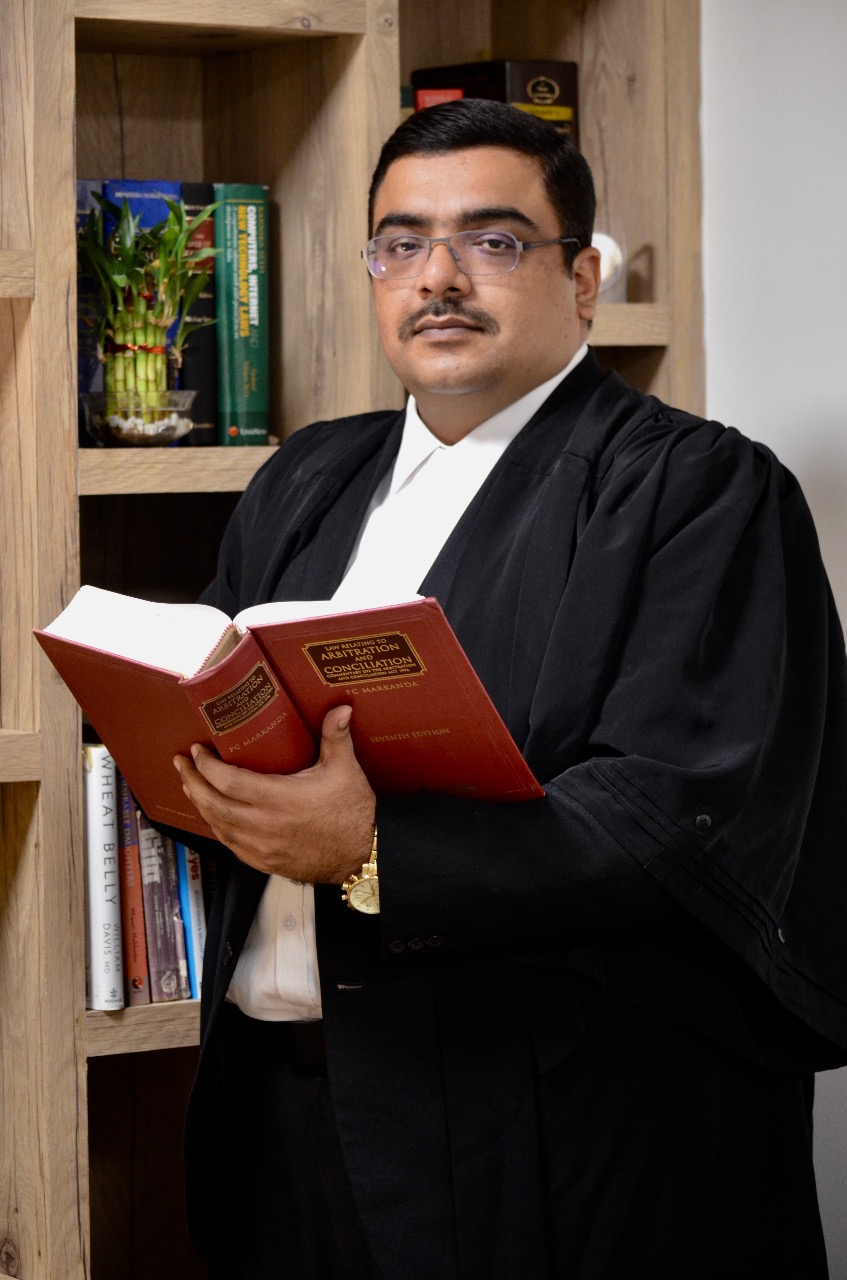
  • “The allure of working at the apex court and daydreams of arguing before a Constitution Bench inspired my aspiration to become an AoR.” – Shivank Pratap Singh, Advocate on Record at the Supreme Court of India.

    “The allure of working at the apex court and daydreams of arguing before a Constitution Bench inspired my aspiration to become an AoR.” – Shivank Pratap Singh, Advocate on Record at the Supreme Court of India.

    This interview has been published by Anshi Mudgal and The SuperLawyer Team
    Becoming an Advocate-on-Record is a notable milestone. How has this role influenced your practice, and what added responsibilities and opportunities has it brought with it?

    At the felicitation event for the Advocate-on-Record (AoR) cohort I was part of, one of the office bearers remarked on how many current Supreme Court judges and successful senior advocates once held the AoR designation. I fully agree, it is indeed a significant milestone. From the very beginning of my legal career, I have been involved in matters before the Hon’ble Supreme Court. Even as a law student, while interning with a Senior Advocate who was then the Additional Solicitor General of India, and another renowned Advocate-on-Record, my interest in practicing at the Supreme Court grew substantially. The allure of working at the apex court and daydreams of arguing before a Constitution Bench inspired my aspiration to become an AoR. Professionally, becoming an AoR has had a profound impact on my practice. A significant portion of my clientele comprises corporates, PSUs, and government bodies, many of whose matters ultimately reach the Supreme Court. Knowing that I am an AoR provides them the assurance that I can seamlessly handle their cases from initiation to conclusion. Furthermore, the AoR designation has opened new avenues, particularly access to appeals originating from courts outside Delhi, which make up a large portion of the Supreme Court’s docket. This has allowed me to engage with unfamiliar legal terrains, such as matters relating to mining or religious endowments, that are not commonly litigated in Delhi, thereby broadening both my exposure and expertise.

    You began your career with some of the top law firms in the country. What were some of the most impactful experiences during that time that significantly shaped your professional trajectory?

    Looking back, I feel quite lucky to have started out at some of the leading law firms in India. Making the shift from law school to a Tier-1 firm was a bit of a shock to the system at first. One day you’re attending lectures and the next you’re handling serious matters for big companies, many of them multinationals with huge stakes involved. There was a real sense that everything had to be perfect from the get-go, especially when it came to drafting and research. As a junior associate, that kind of pressure can either rattle you or sharpen you.

    In my case, I think it did the latter. The fast-paced, high-stakes environment taught me to be meticulous and put in the work, right from day one. That habit stuck, and it’s something I still carry with me, no matter what kind of matter I’m dealing with.

    One memory that stands out from those early days was when I was asked within my first week to brief Mr. P. Chidambaram, Senior Advocate, on a writ petition related to service tax. I won’t lie, I was nervous. I stayed up most of the night going over every detail of the case so I’d be ready. It was a trial by fire, but somehow, it went well and gave me a real boost of confidence.

    Beyond individual moments, what really shaped me was the overall work culture particularly during my time at AZB & Partners and Cyril Amarchand Mangaldas. I got to work with international clients and interact with foreign lawyers, which gave me a fresh perspective. One thing that really stood out was how structured and transparent their approach was; frequent updates, clear timelines, and detailed billing were the norm. I’ve tried to bring some of that structure into my own work now, and it’s definitely helped in building better client relationships.

    Having worked with both reputed law firms and Senior Advocates, what key differences have you observed in terms of work environment, nature of responsibilities, and overall approach to legal practice?

    The common aspect of both law firms as well as senior advocates is that as associates/juniors there is an expectation of high level of professionalism. Working in a dispute resolution team at a law firm entails a lot of team work and coordination. Law firms also have a hierarchical structure and within a few years an associate upon getting promoted is expected to lead, guide and train junior members of the team as well. It is also noteworthy that in full service law firms we often worked with lawyers from corporate, transaction and tax teams where their clients got into matters of litigation. This is an advantage of working at full service law firms where even though you may be in a litigation team, there are instances where you get to experience and work along with peers from different practice areas which broadens your horizon. In contrast, when you are working with a senior advocate, there is no hierarchy as such and juniors are expected to directly assist the senior. In turn, however, you get to learn directly from the senior who has decades of experience in the field. There is also no expectation or requirement to lead or supervise other chamber members as each of them would assist the senior in their individual capacities. As far as the responsibilities are concerned, there is a clear distinction in role one plays as a lawyer at a law firm in contrast to a junior in the chamber of a designated Senior Advocate. Most of your readers would already know that Senior Advocates do not engage with litigants directly and the solicitors are their clients essentially. Further, Senior Advocates chambers do not draft pleadings and do not file matters. The aforesaid tasks are to be executed with great sincerity and precision in a law firm. I was lucky to have incredible mentors like Ms. Roopali Singh, Former Senior Partner AZB and Partners and currently the head of dispute resolution at Vritti Legal. I learnt the basics and nuances of drafting under her tutelage. In the initial years of practice at law firms, all filing related tasks are handled by the junior members of the team in collaboration with the court clerks. It is an art to file a petition with minimal or no defects and in cases which are time sensitive and urgent in nature, it can be a make or break thing. I think my experience in law firms also helped me gain proficiency in filing procedures dealing with the registry which is often overlooked as a rudimentary task. 

    In contrast, working with a senior advocate is totally focussed on mastering the facts and the law of the case and working with the Senior to bring out the most impactful and precise arguments for addressing the court. My Senior, Mr. Prashanto Chandra Sen, Senior Advocate is a product of Dr. AM Singhvi’s chamber and the first thing I learnt from him was a particular style of preparing a note for arguments which he had learnt from his senior, Dr. Singhvi. This consists of a list of relevant dates, submissions and response to contra points. I still follow this format for matters that I argue on my own and even for briefing other Senior Advocates in my matters. Working in a senior’s chamber also means more number of cases to deal with on a daily basis for hearings as compared to a big law firm where the number of hearings per day would be significantly lesser. 

    With a background in Computer Science (BTech), what inspired your transition to a career in law? How did your experience in law school shape your journey, and in what ways has your engineering education contributed to your legal practice? 

    A career in law was never on my list. I had started preparing for MBA exams like CAT in my final year of engineering and scored well in my first attempt. I decided to improve my score to get into a top IIM and dropped a year after completing Btech to reappear in CAT. In the meanwhile, on a friend’s suggestion, I gave the Delhi University, Faculty of Law entrance and cleared that. I enrolled and started attending classes out of curiosity. As fate would have it, I liked what was being taught in law college and jettisoned the plan of doing the MBA, leading to a switch in a career to law. 

    The Delhi University 3 year course experience is quite different from 5 year BA LLB residential programs. Even though we had excellent professors, there was a lack of guidance regarding career options post law school. So I decided it was best to intern as much as possible and get a taste of different practice areas and offices. Being in Delhi helped because there were several options from law firms to reputed chambers where one could look to land an internship. After interning extensively in various offices, I felt that being a first generation lawyer, the best option for me was to join a law firm preferably a tier one firm which pays well ;). I was lucky to intern a couple of times at the AZB and Partners Delhi Office and had offers to join the capital markets team and dispute resolution team. Given my interest in litigation I chose the latter. That was the formal start of my journey in litigation which I thoroughly cherish. 

    My science and engineering background has helped me immensely in practice. This was felt particularly while working on matters of interstate river water disputes where I was on the legal team from the State of Andhra Pradesh, led by Mr. R Venkatramani, Sr Adv and presently Attorney General of India. Water disputes require advocates to understand highly technical concepts related to hydrology, cropping etc. which in my humble opinion can be grasped better, faster and deeper by a student of science and technology as compared to someone who hasn’t received training and education in sciences. Even in my construction arbitration practice I have reaped the benefit of my science background, particularly on disputes arising out of issues relating to design and specifications in a construction contract. 

    You’ve advised and represented construction and project management firms in high-stakes arbitration involving contractor and subcontractor disputes. What are some of the recurring challenges in such matters, and how do you approach them to secure effective outcomes?

    A lot of claims in construction and infrastructure disputes arise out of delays. Delays can be on many accounts,  Invariably, when there is a dispute between a private party and government entity, it is the latter who is blamed to cause delay. Delays could arise on various counts such as lack of statutory approvals, late handover of site, change in scope of work and delay in delivery in drawings and designs, which are out of the contractor’s control. On the other hand, if a contractor defaults in its obligations and causes a delay, claims for liquidated damages (if already specified in the contract) or damages for breach can be made against the contractor by the principal. These are situations which should be handled tactically at an early stage before an aggrieved party precipitates the issue to become a legal dispute. A lot of these disputes can even be avoided by careful drafting of contracts which eliminates ambiguity. Proper contract management and risk mitigation is another aspect that parties must consider to avoid and reduce potential liabilities in the event a dispute arises. Once a dispute has been referred to arbitration, the first thing I would try to achieve, in case I am representing a claimant, is to identify if there are special equities in its favour which might result in getting interim relief in the form of stay on bank guarantees and forfeiture of security deposits. This is extremely difficult, albeit, not impossible and can go a long way in securing some level of financial relief for a party at the very inception of a dispute. I also believe that bringing on board experts can prove critical for the outcome in complex arbitration matters. The impact that experts make is greater in cases where there is a sole arbitrator who is trained judicially as a judge or an advocate. Expert reports along with oral testimonies can often bring the desired clarity to an arbitrator’s mind which can tip the scales in such disputes. 

    Another great challenge that counsels may face is the ‘Arbitrator’. Today we have a lot of talks, conferences and events centred on the arbitration practice. Every month something would be organized where lawyers, judges, in-house counsel, people from the law ministry come and give speeches about making India a hub for international arbitration, how challenge to awards and court interference should be limited etc. However, a topic which is often overlooked is the quality of arbitrators we have in our country, particularly with respect to their integrity. Unfortunately, if a party is pitted against an arbitrator who is deciding the matter for extraneous reasons, an effective immediate solution may not always be on the cards. In such cases it may be wise to come to a reasonable settlement. 

    Representing the Union of India and UPSC before various judicial forums, including the Supreme Court, involves complex litigation. How do you manage the legal and strategic dimensions of handling high-stakes public and service law matters on behalf of the government?

    In my humble opinion, the most important part about litigating on behalf of the government is to get proper instructions from the concerned officers. I have been lucky to have worked with incredibly competent and energetic officers during my tenure as a panel counsel with various government entities which has helped me in effectively representing them before Courts. In the Supreme Court, the critical cases involving the Union of India are led by the Additional Solicitor Generals, the Solicitor General and the Attorney General. Briefing such stalwarts on matters which involve questions of interpretation of the constitution, issues related to national security, legality of policy decisions which has implications of thousands of crores is like doing a masters of law on these subjects with real life implications. Working closely with these Seniors on 300 + matters in the Supreme Court, often handling 5 fresh cases a day has helped me develop an instinct to identify what is most important in a petition to highlight and show to the Court. This experience has helped me with the skill to manage client expectations and offer better advice regarding the reliefs that are likely to be granted in their favor, rather than what is initially requested and prayed for. This is an essential part of advocacy whether you are representing the government or a private party. Sometimes our instincts may not be accurate enough, and the client may benefit from providence and get the relief they expected rather than the conservative outcome predicted by their advocate, however, such victories also taste sweet. 

    Looking back, what has been one of the most challenging cases in your career so far, and how did you approach and resolve the complexities involved?

    Well, every case is challenging and has a certain degree of complexity involved, we wouldn’t be in Court otherwise ! I will, however, talk about a couple which came first to my mind when I read this question. This is a recent one where I was appointed as an amicus by the Supreme Court for an accused to whom notice could not be served and accordingly, he didn’t appear before the court. As we know, criminal matters cannot proceed ex parte, so I was appointed to assist the court on behalf of the accused. The allegations in this case were very grave which attracted provisions of POCSO. The challenge here was that I was representing a client who I never interacted with, which was a first for me. Upon thorough and meticulous examination of the trial court record, I successfully presented a defence that was accepted by the Court, resulting in the confirmation of his acquittal against the prosecution’s case.

    A second very challenging case was one where I appeared on behalf of the revenue authorities before the Supreme Court and the question of interpretation of a customs and excise circular was involved. The other side was represented by Mr. Arvind Datar Sr Adv. After Mr. Datar’s arguments were concluded, the bench was convinced that I had no case, in fact the question put to me was – “what is left to argue now ?”. It is only because I had extensively prepared the matter, made a comprehensive note for arguments which had all the relevant page numbers cross referenced and had a compilation of judgments which was again numbered with an index which indicated the relevant paragraphs, that I could persuade the court to consider my submissions which lasted for around 45 minutes. It involved rigorous grilling from the bench as well. The judgment was reserved and the opposite party got the relief sought, but the experience I gained was something remarkable and gave me the confidence to have faith in myself irrespective of the stature and calibre of the counsel on the opposite side.  

    Given your diverse expertise across litigation and arbitration, what guidance would you offer to young lawyers who are just starting out, especially those aspiring to build a robust career in litigation?

    Today a fresh graduate who wishes to pursue litigation has 3-4 different kinds of workplaces to start out. It could be the chamber of an advocate or senior advocate, a law firm, an in-house role where substantial litigation work exists or as a research associate/law clerk with a High Court or Supreme Court Judge. Out of these, 3 roles are transitory and one cannot continue in that position or establishment for their entire career. Law firms are one such place where you can start as an associate and rise up the ranks in a fairly structured and predictable manner. I would suggest someone who is a first generation lawyer without significant financial support from their family who does not have a great appetite for risk and uncertainty (which is certain in private practice), should try and join a law firm. It will give them financial stability, reasonable exposure to courts along with other advantages of working in law firms which I have already touched upon in some earlier questions. People who are passionate about law and want to build their own practice in the future should join a busy chamber and then look for a good senior’s chamber to polish and sharpen their skills further. Another thing worth noting in litigation is that one should be ready and available to work everyday of the week for long hours on a consistent basis under mentors and bosses who are strict and demand the highest standards. Going through such rigours is the best thing that a budding litigator can do for themselves. A quote attributable to a great figure- Abraham Lincoln may give my suggestion more context, which goes – “You can’t sharpen your razor on velvet”

    Is there a core philosophy or guiding principle that you’ve followed throughout your legal career? Looking ahead, how do you envision the growth of your practice in the evolving legal landscape in India?

    I have been a lawyer for a decade now. A core philosophy or guiding principle which has been there through and through is absent as far as I am concerned. But along the way I have learnt a few things which guide me now and I view them as beneficial generally. 

    There is one quote that I picked up from a book called “The 38 Letters from JD Rockefeller to his Son”. In one of the letters JD Rockefeller tells his son that – “To eat an elephant, you need to eat one bite at a time. The same goes to when you are doing something. If you want to accomplish everything in one go, you will only let the opportunity slip away.”  

    So, this field is a big elephant, you have to eat it one at a time. We cannot be an expert in every field of law or build a great network or have a great team or accomplish several other things which are essential for a successful practice, all at once. If we attempt that, there will be chaos which would lead to anxiety and nothing will be accomplished. Therefore, my 2 cents on an approach to a career in law would be to gradually advance, be patient, and take actions which are planned, structured and precise. This will slowly build into something very impressive and worth cherishing.  

    The second would be to be bold and ready to get outside your comfort zone. When I observe, read and hear about the great individuals who have been in this profession, the thought which comes to my mind is that if they could do it, why not me. This thought keeps me going when the chips seem to be down and doubt arises. 

    Third and last one is – to prioritise learning and upskilling. Look out for the latest trends and take the first mover advantage in this highly competitive market. 

    We are a rapidly growing firm led by two partners and one tax consultant. Apart from the conventional practice areas we are also looking at the future and emerging fields such as law and regulations surrounding AI, its impact on intellectual property, cybersecurity, energy law and data privacy. These fields are interesting from an academic as well as practice stand point. Jurisprudence on these subjects will rapidly develop in the future. As I have said before, there are opportunities for the early entrants which is golden for new firms like ours as the entry barriers are less. It goes without saying that we will build upon our strengths and continue serving our existing clients with top notch tier one level service in a cost effective manner, while we strive to grow by expanding our teams and clientele.  

    Get in touch with Shivank Pratap Singh –

  • “In the coming years, I aim to contribute significantly to both the academic and practical discourse on international arbitration through publications, speaking engagements, and participation in global forums.” – Abhilasha Vij, Associate at Allen Overy Shearman Sterling LLP, Germany.

    “In the coming years, I aim to contribute significantly to both the academic and practical discourse on international arbitration through publications, speaking engagements, and participation in global forums.” – Abhilasha Vij, Associate at Allen Overy Shearman Sterling LLP, Germany.

    This interview has been published by Anshi Mudgal and The SuperLawyer Team

    Coming from a commerce background, what inspired you to transition into law as a career? Were there any specific experiences or moments that steered you in this direction and set you on this remarkable path?

    During my later years at school, I was inclined towards commerce and economics. However, once I started pursuing a Bachelor of Commerce degree at the University of Delhi, I realised that I was particularly fascinated by business and company laws. I delved deeper into the subject and spoke with individuals who were pursuing careers in law. It was then that I knew this was the field I wanted to study. 

    In the second year of my LL.B. at the Faculty of Law, University of Delhi, I encountered arbitration for the first. While interning at a law firm in Delhi, I was asked to assist with an ongoing arbitration case. Beyond providing access to an early resolution of commercial disputes, arbitration offered systematic and streamlined processes and neutrality. I was immensely impressed by the concept of an alternative forum for dispute resolution, especially in a country like India where the courts are burdened with pending litigation. This initial experience sparked my interest in becoming an arbitration practitioner.  

    With guidance from my mentors, I gained further experience in this field and began working as a disputes lawyer at Luthra & Luthra Law Offices.  

    You completed a degree of Master of International Economic Law, Business, and Policy from Stanford Law School, USA. How has this specialized education enriched your career? What aspects of the program at Stanford were particularly valuable for you, and did you encounter any challenges during your studies? How would you describe your overall experience there?

    When I applied for an LL.M. at Stanford, I saw it as an option to broaden my horizons. I did not want to limit my exposure to only international arbitration. I had read about a variety of innovative courses at Stanford, such as International Business Negotiations, Regulating Artificial Intelligence, Data: Privacy, Property and Security, Facilitation, etc. I wanted to take these courses in addition to the traditional subjects and have a well-rounded experience. I am glad that my instincts paid off. For instance, International Business Negotiations involved teams from Stanford and another law school in a simulated corporate transaction over a period of three months. As an arbitration practitioner, I had never experienced the negotiation aspect of a transaction. This course provided insight into the commercial aspects of the contractual clauses that I regularly encounter in my work.  

    In addition to offering versatile courses, Stanford’s small class-size offered numerous opportunities to engage in rich and meaningful discussions with a brilliant set of individuals and learn more about their experiences in their respective jurisdictions. However, it was also challenging to be there. When surrounded by brilliance, it is natural to experience self-doubt at times. Fortunately, Stanford has an excellent faculty and counselors who helped me navigate these challenges. 

    Overall, my year at Stanford was the best investment of my life. I thoroughly enjoyed being on campus, attending classes and guest lectures, socialising with peers, and occasionally taking small trips to the beautiful parts of California!

    In the early stages of your career, you worked as an associate with various firms in India. What key learning experiences from that time played a pivotal role in shaping your career trajectory? Can you recall any specific instance that was especially impactful for you?

    A great benefit of studying law in Delhi was the access to full-time and part-time internships throughout most of the year. I interned at several law firms during my LL.B., which taught me many skills that are highly valued in junior lawyers. While education is crucial, having the right mentor is equally important. I was fortunate to be mentored by some of the nicest and most talented lawyers in Delhi. 

    I began my career as an associate with Mr. Gaurav Bahl, an excellent mentor who significantly shaped my professional path. Working with him prepared me for the next step in my career: joining a law firm. I joined Luthra & Luthra Law Offices and worked with the disputes team for the next three years. During this time, I handled arbitration matters, commercial litigation cases, and occasionally argued smaller cases in court. While it was fascinating to work on a variety of legal issues in office, it was exhilarating to argue cases before judges. Sometimes, hard work paid off in the form of favourable judgments and orders. At other times, there were invaluable lessons. To this day, working in the field of law brings me immense joy, and I would not trade it for the world.

    One of the most enriching experiences at the law firm was when my partner encouraged me to handle an appeal before the Supreme Court in a matter involving complex securities law. Before addressing the legal issues, it was crucial to work closely with technical experts to understand the intricacies of the futures and options market and the role of their business. Looking back, I vividly remember how much I enjoyed working outside my comfort zone on complex legal issues and resolving them. However, achieving a favourable judgment would not have been possible without deep diving into the commercial aspects of the case. As a disputes lawyer, I believe the best results for your client can be achieved by understanding their needs and the needs of their business. Whenever I get a new case, I invest a considerable amount of time in understanding the client’s business and what a desirable outcome looks like for them.

    After your time in India, you transitioned to an international practice, working with Freshfields in Dubai. How did you manage the cultural shift and navigate the complexities of international law, especially in the realm of dispute resolution? How do the legal environments in Dubai and India differ, particularly in handling arbitration and cross-border disputes?

    During my LL.M., my career counsellor at Stanford encouraged me to explore global opportunities alongside my job search in the United States. The US market is challenging, and only a few firms are interested in international law graduates. I connected with several professionals, meeting arbitration practitioners over coffee in San Francisco and New York, and through virtual meetings via Zoom. During one such interaction, I came across Freshfields’ six-month trainee programme. I applied and was accepted after a couple of interviews. The programme served as a springboard for my international career.  Freshfields sometimes hires from their pool of trainees, and that’s how my six-month stint turned into a full-time associate position.

    Dubai is truly an international legal market. The international arbitration team comprised lawyers from different parts of the world and advised clients from several jurisdictions. The style of working was unlike what I had experienced in India, but I was fortunate to find kind and patient mentors and teammates. I worked on multi-jurisdictional arbitrations, which offered the opportunity to collaborate with local counsels from India, England, the Middle East, Australia, and other regions. On several matters, the teams included colleagues from different jurisdictions, making networking and collaborating within the firm quite easy. 

    It was a challenge to unlearn the traditional Indian style of drafting and embrace the US-style simple and succinct legal drafting. Moreover, the scale of the matters necessitated the use of technology, so I learned how to utilise emerging legal-tech tools to make my work more efficient. I believe it was important to approach my job with an open mind – it really makes your life easier.

    A great aspect of working with an international law firm was that my work was not limited to commercial arbitration. From time to time, I engaged in investment arbitration, investigations, and non-contentious legal work. My favourite part, though, was working as a tribunal assistant in several alternative dispute resolution cases involving the International Tennis Integrity Agency and the Basketball Arbitral Tribunal.   

    Currently, in your role at Allen Overy Shearman Sterling LLP in Germany dealing in International Dispute Resolution, you handle complex international commercial arbitration and cross-border disputes. What do you find to be the most challenging aspect of managing such disputes, and can you share a specific case that stands out as a significant learning experience?

    I have been working at A&O Shearman since February 2024. My decision to move to Germany was motivated by personal reasons, and it was a difficult choice. I was seeking to join a team with an international practice, not limited to commercial arbitration. Over the past 14 months, I have already worked on post-M&A disputes, energy disputes, investor-state issues, and investigations. 

    A challenging aspect of working in the German legal market is dealing with the German language. Many contractual disputes are governed by German law, and important commentaries and case law are only available in German. Moreover, Germany is a civil law country, and the concepts can be quite different from common law. Therefore, as an arbitration lawyer, I work closely with German law experts. This collaboration provides me with an opportunity to dive into a different legal system and learn more about civil law. It is quite fascinating! 

    Recently, I advised on claims under a warranty and indemnity insurance in an M&A transaction. This has been a great learning experience, as I had not dealt with this issue before. It is an emerging area of disputes, and there is only limited literature on its practical aspects. As a lawyer, you must read all you can and trust your instincts. I am doing that, and it is helping me develop expertise in a niche area of law.        

    As someone who has built an illustrious career in international arbitration, what advice would you give to young professionals aspiring to follow a similar path? How can they position themselves early on to excel in this competitive field, and are there any specific resources or strategies you would recommend for deepening one’s knowledge of international arbitration?

    First and foremost, I highly recommend gaining internship experience during your LL.B. Reading books and writing exams at law school is very different from how law functions in practice. My internships helped me realise that I wanted to specialise in dispute resolution, with a focus on arbitration. 

    Then, pursuing an LL.M. is a significant financial commitment. It should be viewed as an investment that may or may not yield immediate results, so it is important to remain open to all possibilities. I cannot emphasise enough on the importance of networking during your year abroad. An LL.M. is not just about studying law; it is also about developing and refining skills that will help you grow as a professional. Invest considerable time in researching law schools to find the one that meets your individual needs. 

    For students, I would highly recommend participating in moot court competitions. There are several arbitration-specific moot courts held both in and outside India (e.g. VIS Arbitration Moot, Frankfurt Investment Arbitration Moot, Sports Arbitration Moot). These competitions not only provide an opportunity to learn about arbitration in practice, but also to network with students and professionals from other cities and countries. 

    For young professionals, the easiest way to deepen your knowledge of international arbitration is by reading journal articles and blog posts on arbitration cases (e.g., Kluwer Arbitration, GAR) and staying updated with the developments in this field. Attending lectures and conferences on arbitration is also highly beneficial – not only for learning more about the law but also for engaging in meaningful conversations with arbitration practitioners. LinkedIn often features opportunities and scholarships to attend conferences abroad, offering a great chance to broaden your horizon before committing to an LL.M. or a job with a law firm abroad. 

    Given your demanding role, how do you maintain a healthy balance between your professional and personal life? Are there any hobbies or activities you engage in to relax and recharge?

    Maintaining a work-life balance is a significant challenge in the legal profession. As a young professional, I often overlooked this crucial aspect. However, in recent years, I have started to take it more seriously. I greatly appreciate the work culture in Germany, where there is strong emphasis on both physical and mental well-being. This supportive environment has encouraged me to take better care of myself while continuing to excel as a lawyer. 

    For relaxation, I enjoy reading fiction and listening to music. Occasionally, I take holidays and plan weekend trips with family or friends to the mountains or other European cities. I also try to exercise regularly and eat healthy. Most importantly, I ensure that I take a break on weekends, unless an urgent matter requires my attention.       

    With such an impressive and diverse career, what do you see as the next challenge or opportunity you would like to pursue? How do you envision your career evolving over the next few years, and what legacy would you like to leave in the field of international arbitration?

    As an India-qualified lawyer working with international law firms, I have had the privilege of navigating diverse legal landscapes and engaging with a variety of complex cases. The next challenge I am eager to pursue is acting as an arbitrator. In the past, I have thoroughly enjoyed being a tribunal assistant, and I am excited to experience the decision-making aspects once again. 

    In the coming years, I aim to contribute significantly to both the academic and practical discourse on international arbitration through publications, speaking engagements, and participation in global forums. Additionally, I aspire to mentor young lawyers, particularly those from underrepresented regions, and provide training to help them navigate the complexities of international arbitration.  

    Get in touch with Abhilasha Vij –

  • “Justice should not only be done, it should also be seen to be done” – Vishal Khattar, Founder at Patine Law Offices, Additional Advocate General, State of Haryana

    “Justice should not only be done, it should also be seen to be done” – Vishal Khattar, Founder at Patine Law Offices, Additional Advocate General, State of Haryana

    This interview has been published by Namrata Singh and The SuperLawyer Team

    Hello and welcome to another episode of Super Lawyer. Today, we have with us esteemed advocate Vishal Khattar, who is the founder of Patine Law Offices in New Delhi. He is also the Additional Advocate General for the State of Haryana at the Supreme Court of India. Welcome, sir, to our episode. Thank you for accepting our invitation and for being here.

    Let’s start our journey of questions and answers in a more conversational manner. Sir, I would like to begin with a very basic question. When you decided to become a lawyer, how was that journey? What kind of challenges did you encounter when you started focusing on this career for yourself?

    Just a small correction: the office goes by the name of Patine Law Offices. Now, I understand it’s a unique name. I attended a school where the alumni are called Patines, so out of dedication and affection for my school, I decided to name the office after it.

    I’ve been a debater throughout my time in school and college, participating in several debates and declamation competitions. I earned some good distinctions and ranks in those competitions. As a result, one day, my principal—Mr. BBS Pathania, a great man—told me, “You will become a good lawyer.” However, being from a small town, the challenge was that I scored high marks in my matriculation exams, and since I was among the top students in the state at that time, my father’s expectations shifted. He wanted me to become a doctor.

    I was a medical student in school, but despite my best efforts, I couldn’t make it to medical college. There were three colleges in my city, Rohtak: one for B. Pharmacy, one for MBA, and one for law. To avoid wasting a year, I applied to all three. When I didn’t get into medical college, I was accepted into all three of these institutions. Initially, I planned to pursue an MBA, but after discussing it with my principal, who advised me to go to law school, I decided to study law. He assured me that I wouldn’t regret the decision, and I believe he was absolutely right.

    So, I chose to study law because I had an interest in it from the beginning, and it turned out well. I completed my five-year law degree at Maharshi Dayanand University in Rohtak. From my third year, I started interning in Delhi, and since then, I’ve been working here.

    Sir, it definitely worked out for you. It seems the path was paved by your faculty, but you’ve made a huge name for yourself.

    I was fortunate to be taught and guided by such learned teachers, my professors, and lecturers. I frequently visit my college to mentor students. They often ask, “Vishal, why don’t you come here more often?” I jokingly reply, “It’s because of all the extra blessings you’ve given me that I’m so busy. If you reduce your blessings, I’ll start coming more often.”

    I did my final-year internship with a very good organization—sometimes called the most preferred employer in the world—General Electric (GE). They have a finance division here called GE Countrywide, and after my internship, they offered me a job. At that time, it was quite rare for my college to receive such offers, so it was a big deal.

    In fact, it was the first campus placement offer received by our department. I joined GE as a legal analyst, though it was a contractual position. During one of the court proceedings, I was noticed by a professional who referred me to ICICI Bank. Early in my career, I joined ICICI Bank as the State Head Legal for Punjab and Chandigarh.

    I gained experience with corporates, working at ICICI Bank and later with Tata Capital, where I was responsible for their North India legal operations. However, I never intended to pursue a lifelong career in the corporate sector, so I eventually decided to return to practice.

    Sir, with such a trajectory in your career, when did you decide to start Patine Law Offices? What was the inspiration behind its establishment? What exactly sets it apart from others in the legal landscape? Additionally, if possible, we would request you to share some of the challenges and successes you’ve encountered.

    See, If I talk about motivation, it always comes when there is a loophole in the system that you want to fill or a need in the industry. In the legal fraternity, we don’t use words like ‘market’ or ‘industry,’ but obviously, the driving and limiting factors are the same. However, I always believe in focusing on the positive aspects. There were good things happening, and we were part of those good things. So, we wanted to start something good on our own. It’s time that we should get independent. I should get independent.

    So, we decided to start Patine Law Offices. The name ‘Patine’ and the email ID for Patine Law Offices were things I had already created during my final year. It was clear in my mind that every lawyer wants to be independent. We were just waiting for the right time, when we had some clients who could entrust us with work.

    We started Patine Law Offices with a small 300 square foot office. Slowly, we have been able to serve clients from both corporate and non-corporate. We have a reasonable number of practice cases from non-corporate clients, as well as from corporates. In the corporate sector, we are involved in finance, banking, Fintech, and then also in the automobile industry. We have some e-commerce clients, and now we’ve started working in FMCG as well. Being a first-generation lawyer, I had to hustle for every client and for every bit of learning.

    About six months ago, we started some operations in the UAE as well. We’re working for two clients in Dubai—one is a Fintech client, and the other is in renewable energy. So, we’ve started working for them as well. Every benchmark we’ve reached has been a story of hustle for us.

    But I believe every first-generation lawyer has to go through that. You have to keep learning, reading, and seeking references every time. You’ll face rejections because clients tend to go for big names. This is a trend in our industry.

    It’s like when you want to go for a bypass surgery, you’ll always ask who’s the best doctor. No one asks for a doctor who’s available; they want the best. The same principle applies to some extent in our profession—clients want big lawyers. But you have to find those who can trust you.

    We were fortunate to find some clients who trusted us. Some corporate officers who had worked with me at that time knew how I performed, and somehow, things worked out.

    So, sir, given this fact, you are holding currently, a very esteemed office of being an Additional Advocate General for the state of Haryana, at the Supreme Court of India, which in itself is one of the very prestigious things.

    We would request you to shed some light on this particular role and the insights related to the responsibilities and how do you face the challenges, what kind of things do you do over there because that also will become an aspiration for learners as well.

    For a litigation lawyer, it’s a very important milestone to have the opportunity at some point in their career to work for a public undertaking or the government.

    When we talk about government panels or government cases, the documents, orders, laws, working methods, protocols, and hierarchy—these are things you can only learn when you start working for them. Like any other litigation lawyer, I was also looking for such opportunities.

    So, when this position was advertised, I applied for it. I was fortunate enough to be appointed as one of the nine Additional Advocates General (AGs) for Haryana. My role involves handling cases in the Supreme Court.

    So in these cases, in government work, there is a well-organized structure. Duties are well-defined, protocols are clear, and there is a very detailed bureaucratic structure. The protocols, documents, and their implementation are all clearly laid out. This makes it a great learning experience for any litigation lawyer working on a panel. Every case comes with its own challenges.

    Sometimes, students or juniors who are close to us ask very genuine questions. They often ask, ‘What is the main challenge? How long will it take for me to become a good lawyer? How long will it take to become an independent lawyer?’ I remember something I learned from a senior at the Delhi High Court.

    When I used to sit in the canteen, feeling worried, he would come up to me. Once, I remember discussing my concerns with him. He asked me, ‘What happened? You look very upset. What’s on your mind?’ It was 5:30 p.m. at the Delhi High Court. I told him, ‘I’ve been working so hard for two years, and though I’m earning, it’s not what I hear from seniors—about getting many cases, high fees, and having a good office.

    He told me, ‘Look, our legal profession is not like an aircraft; it’s like a train. In a train, you have to stay on track. There’s no provision for overtaking. If you try to overtake, you’ll have an accident. There’s no going faster than your schedule, because if you do, you risk an accident. And if you slow down, someone will hit you from behind. All you can do is stay on time and keep moving. This is how a train operates, and this is how our profession works too.

    Every day, you need to start at the same time, reach the courts on time, meet your clients properly, meet your deadlines, and do your research timely. If there’s a new law coming in, give extra time to study it. You need to keep improving. If you follow this schedule, just like a train, that’s how you’ll succeed in this profession.

    And believe me,’ he said, ‘believe me, Khattar, every station will come. If you stay on track, you’ll reach every station.’ From this, I understood that perseverance is essential in this profession. You need to be consistent, regular, sincere, and disciplined. Whatever benchmarks are set for any professional lawyer, you will achieve them.

     You know, my first mentor in Delhi was a Special Public Prosecutor. He used to speak to me in Punjabi and would say, ‘Khattar, you should know how to work, and then you should get work too. So these are the raw standard things we have learned from our seniors.

    Absolutely beautiful standards and tried-and-tested tracks. The way they have taught you— ‘Kaam aana bhi chahiye aur kaam milna bhi chahiye’—is an absolute gem. Even running like a train is fascinating. But sir, you were ready to accept that as well, which is very important when someone is teaching or guiding you.

    You took it as a challenge to follow this, and I believe that has probably been a key factor in your success. Sir, with all of this in mind and knowing that you specialize in constitutional law, what kind of thought process do you observe in the current generation? Since you encounter many individuals joining you as interns or juniors, how do you guide, train, or mentor them to contribute meaningfully to legal reforms and societal progress, particularly through constitutional law matters?”

    Over time, as we began receiving more work related to commercial and marketing law, our main focus shifted to handling contractual and commercial cases—what we often refer to as ‘bread and butter.’ However, constitutional law has always been my favorite subject.

    Whenever we receive a brief involving a constitutional issue or aspect, I make sure to keep that brief on my table and not delegate it to anyone else. This is a very good question and one of my favorite topics of discussion with new joiners in my firm. This perspective is something I learned from one of the great mentors I had.

    He once quoted some lines from the Bhagavad Gita, telling me, ‘You are part of a bigger system. This bigger system means you are contributing to something larger.’ Let’s consider it in a straightforward way: A person whose rights have been infringed—whether by a family member, a government agency, or a private company—is unable to get what he rightfully deserves. He goes to a lawyer, and what does the lawyer do? The lawyer ensures that his case is presented correctly before the judge, and that justice is delivered to him. And not just justice, but meaningful justice—justice that is also executable.

    As they say, justice should not only be done; it should also be seen to be done. So, justice shouldn’t only be on paper. This is what a lawyer does for such a person. If society is suffering from injustice, it is you who are ensuring, through your professional advice and service, that justice is imparted.

    When justice is imparted, it restores balance. A society only survives and sustains itself when balance is maintained. Without balance, society will not survive for long; it will become chaotic. Therefore, young lawyers must understand that you are not entering this profession solely for its glamour or money.

    You are not entering this profession just to become a good advocate. You must also realize that you are becoming part of a bigger system, and you will contribute to maintaining balance in society. The key to that balance, in this country, is our Constitution. You need to have trust in our Constitution.

    You need to have trust in your country. Cursing the Constitution or the country won’t help. What helps society is having trust in the Constitution. The best thing the Indian Constitution provides is balance in society.

    For the weaker sections of society, it strengthens them. For those who wish to speak for themselves, it empowers them. For those with different opinions, it empowers them as well. For state authorities and bodies that wish to work, it gives duties to the citizens toward those authorities.

    It is a balance: you have rights, and you have duties. So, trust the Constitution. If you are able to work on and win some constitutional cases in the form of writs or public interest litigations, and make a difference through the orders you obtain from these petitions, you will be performing your duties in a more meaningful way.

    Unlike many other constitutions that focus primarily on rights without emphasizing duties, ours strikes a balance. I may be wrong, sir, but that’s my understanding of our Constitution. The passion you’ve shown is overwhelming for me, especially when you discuss these matters with young lawyers. They also need to connect with societal progress as you do, giving back to society.

    Sir, how do you involve or engage young lawyers, and how do you advise them on handling cross-border litigation or cross-border cases? Since you are involved in many domestic and international cases, I’m sure there must be some learnings that differ from how we work in India compared to how international entities operate in the legal field.

    What insights or learnings would you like to share with the learners?

    One thing I always make clear to anyone joining my firm is that you’ve entered a profession where, mark my words, the hard work required is extraordinary. When I say extraordinary, it is extraordinary. So if you want to run away, run away now, because you will never like yourself to be a kind of lawyer, wherein you will be spoiling cases of your clients, or him suffering losses because of your mistakes.

    You might recall the recent NEET issue where memes were circulating about doctors who graduated that year making such mistakes. You don’t want to become that kind of lawyer. So, the first thing I make them realize is that today is your first day, and this is your first file.

    There is no point keeping them busy for another year, just doing research, so that by the time they are in actual practice, they’re 28 or 29 years old and considering switching careers to pursue an MBA or GMAT. No, the only practice that we do here is different from other firms, and I have been a junior in many other firms also, so we allocate cases on day one only.

    If not the entire case, then at least a part of it, so they have something to work on right from the start. Every day, you’ll find all my associates attending court, either virtually or physically, carrying the files. We are a pure litigation firm.

    Another thing that I felt was missing in my previous experience with firms is the lack of interactive sessions. My associates expect me, as their mentor, to guide them on how a case should be handled. While I can’t do every time, I make sure that every seven to ten days, or every two weeks, we sit down together. I pick up one case or a specific issue, and we all gather in the conference room. I then explain the case, discuss how it’s being handled, and how it should be handled, along with some standard rules of drafting, pleading, and convincing—essentially, how these cases should be done.

    Sometimes, I do this on an individual basis as well. This kind of one-on-one teaching and interactive session was missing during my junior ship at other firms. I always felt that if I’m working with a successful lawyer, I should benefit fully from their experience, rather than just being impressed by their performance.

    So that’s what we are doing. And one thing we’ve noticed across all litigation firms is the new kinds of assignments we’re receiving. Corporates have now started thinking that since we are the lawyers handling their cases in court, where their agreements, contracts, and other documents are being interpreted by the honorable courts, we should be the ones drafting those agreements as well.

    I believe it was around six years ago when we received an assignment from one of our leading passenger car manufacturers. They asked us to come to their office in Pune, stating that the redrafting of their agreement had to be done there. We were surprised because such assignments typically don’t come to us; they usually go to specialized drafting lawyers. But they explained that what needs to be included or excluded in the agreement is something we only learn in court. Since we’re the ones who defend and argue these points in court, they felt we should be the ones drafting the agreements as well. So, we conducted a two-day workshop and began the drafting process.

    Now, this has become an additional task for my associates, who, while primarily focused on litigation, are also learning the art of drafting contracts.

    And believe me, with both drafting and litigation coming under one banner, the outcome will likely be fewer litigations in the future. If you have a well-crafted agreement, it leads to fewer disputes, which will directly and positively impact the health of businesses in the country. This approach will also help reduce the burden on the courts.

    As a small, first-generation law firm, we are committed to this idea. I believe there isn’t a single associate in our firm who doesn’t have a client assigned to them. Each associate handles at least one client, either independently or as part of a team of two to three people.

    Wow! Sir. You are such an amazing law firm and the strategy is so good. Actually, the thing which you are talking about is absolutely innovative and it will rise to a standard where there will be lesser litigations related to it.  You being so busy with all of these commitments, professional, and obviously your office commitment, then being an AAG as well is a bigger commitment.

    How do you recharge yourself or unwind yourself from this kind of commitment centric approach?  And are there any hobbies or activities which you keep on doing with your law office as well? Because obviously everyone is going through some of the other stress for sure. So how do you unwind yourself?

    What kind of activities do you follow?

    The way our schedule is, ma’am, this is a tricky question to ask a lawyer. Most of us might tell you that we play golf, but honestly, we don’t even have time for that. Let me share an incident I learned from one of my principal associates, Vandana. That day, someone was accompanying me, and I had a sudden change in the timing of a meeting.

    I was back from court and was supposed to meet someone at 12:30 PM. The meeting got rescheduled to 2:00 PM, and this associate of mine was with me. When she returned, she was asked, “What does he do when sir’s meeting gets postponed by an hour?” She replied, “He goes to Connaught Place, takes a full round on foot, and buys some books.” The person then asked, “What happened? Why do you ask?” She said, “He took me with him, and we went walking for a full round.”

    So, that’s what I do. If a meeting gets delayed and I have some time, I go to Connaught Place, take a full round, and visit some bookshops. It’s also a learning experience for young lawyers.

    Read as much as possible. You never know when a topic will come up, and if you’re well-read, you’ll be ready with a response. The more confidently and content-rich you respond, the more it adds to your personality as a lawyer. The more books you read, the better you’ll evolve in your career.

    In my free time, I read books. I still prefer older authors—I’m yet to be impressed by any new ones—and I hardly get any time. Although I have plans for the future, I’m not sure if they’ll happen. The best way to cool your mind and relax is to meet some friends at the High Court lobby and talk about this and that. After some time, we’ll end up talking about our children and how they’re growing up.

    Other than that, we mostly talk about watches and pens.

    Absolutely amazing and honest answer from your side.Yes, reading should be a favorite pastime for everyone. It’s a very new thing that everyone talks about everything around books. But if all of us will start sharing those wisdoms as well, it will help the people who work with us, although we talk about it, but somehow the books are not there in hands and I feel like that is something which I see only in High Courts and Supreme Courts that all our learned friends, they definitely carry books now. Earlier also it was the reality and now also. 

    Sir, given this particular inclination towards books and you’re always interested in reading and finding new books, many a times juniors or the new entrants, they have this particular point that we do not have this much to invest in this. How should we go ahead and do it? Sir, I would request you to answer this because we all have gone through this particular phase where we do not have enough to immediately buy so many books.

    So how can we garner that particular reading habit? Probably you will be able to guide us through that as well.

    When I started reading, I was in school and had access to a library. Later on, I realized that I could ask the librarian for a book I had heard about, even though there was no Google at that time.

    All the new books’ information used to get published in Hindustan Times usually on the second or third page. I would tell my librarian about the book I wanted, and he advised me to write an application to the principal requesting it. When I went to university, I had access to a much larger library.

    Then I began studying international law, but there wasn’t enough material in the central library at my university. So, I started coming to Delhi. I would take a bus from Rohtak to Delhi or a train that dropped me at Tilak Bridge, and from there, I would walk to the Indian Society of International Law (ISIL), which has an excellent library for international law. I also had friends who helped me access the Indian Law Institute (ILI) library. Delhi has some great libraries, and although books can be quite expensive, libraries are invaluable resources.

    You know, if you start buying 10 books, for example, I can read around 10 books over a period of one to three months, it can cost around 3,500 to 4,000 rupees, which is not feasible for a young lawyer. We have WhatsApp groups, so why don’t we have a system for sharing books? My daughter does it.

    I’ve noticed that my daughter, even though she’s a growing teen and doesn’t share everything with me, but I’ve seen that she shares books with her friends. Though there is an old saying, my father used to tell me in Punjabi: One who lends the book is a fool.

    The one who returns that book is an even bigger fool. So, if you truly want books to be your friends, you have to follow one rule. I can’t recall the author’s name, but he once said, ‘Before buying a new coat, buy a new book.’ I think youngsters should understand this old-fashioned diversion of funds. If they grasp its importance, it will significantly benefit their careers. Especially considering those Gen Z slangs—they’re getting into them, and I wonder where these slangs will be useful. God bless them all

    Books offer a profound way to understand the art of storytelling and the essence of contentment. They teach you how to balance a paragraph, a line, and how to learn from experiences that took place thousands of kilometers away from where you live. When you choose an author with the skill of storytelling, you can feel those experiences as if you were there. You can realize that this is so much richer than the 10- or 20-second reels or shorts we often watch, which are only made perfect after 20 or 30 retakes, right?

    And the beauty of learning a language can bring so much. You’ve learned the language, you bought all the beads and threads from the market, and you made a necklace out of it. This is how a book is written. The author or the writer learns the language, gains experience, and talks to people. You know, writers are a different kind of species.

    So they do wonderful things, beautiful things. If you get to see that beauty in a book, then let it imbibed inside you. Tomorrow, you will start performing more effectively because of those books. This proves the saying: before buying a new coat, buy a new book.

    Sir, this brings me to ask you about your views related to technology. How is it helping us and our future grow in terms of legal practice considering everyone is skeptical about the disruption that technology has brought in. It has reduced our reading time and everything about technology’s impact on us is questioned.

    How do you see it affecting legal practice as well? And what kind of future do you foresee that may help us grow? How do you get acquainted with technology better?

    As far as litigation and other allied services in the legal industry are concerned, we have tried most of the technologies, including ChatGPT and research tools, as well as references provided by some companies. However, I have yet to find a satisfactory solution. I share this opinion with many of my friends and colleagues as well.

    We have yet to find a truly helpful technology that would effectively bring about or disrupt this industry. The reason, I believe, is that a more humanely touch is required in handling matters and preparing briefs. Initially, when we started using ChatGPT, we realized that the volume and number of contracts processed even in a particular region are so vast that even an AI might fail. The main issue is that if you cannot properly customize a contract for a client, it is of no use. Even one small mistake can turn the entire agreement into a disaster.

    The same goes for drafting your cases as well. So when it comes to technology, particularly the technology that is often discussed, I believe the real game changer is yet to come, if it is coming at all in the future. I have spoken to many AI lawyers and some AI experts, and it seems the transformative impact is still awaited. The good thing is that we started using resources like Manu Patra and SCC since college.

    This paperless approach, which has emerged, has significantly reduced the burden of maintaining a law office. My office is almost paperless. As for law reporters, the new generation of lawyers never really used physical law reporters or books. Our fathers, who were not lawyers, had different practices.

    So we never inherited those practices from them. The only difference I now see is that when we used to do research from books, we often ended up reading something extra as well. However, if a new associate or lawyer adapts to this modern method of research and also does extra research in their free time, these tools like Manu Patra, SCC, and other websites are very nice, well-organized, and their search functions are excellent. They are also widely accepted in courts. Technology helps everyone—it helps you, it helps me. We saw during the COVID days how technology kept the courts functioning. Now, we take all our briefs on our iPads and tablets, and we have many software tools that help us with note-taking.

    As a practice, we often hold a pencil rather than a pen. But one thing, I don’t know why sometimes I think if, in another four or five years, when the next junior associates come to us, they might call me old school. However, believe we should not leave the habit to write, read, and read randomly also, anything.

    Somehow, I have this belief in my mind that if you are using technology, you should not leave the habit of writing. Whenever a client comes, we take notes, we have journals. Even today I keep a journal in my own handwriting. So new lawyers who are joining this profession or are very much new to this profession should know, do not lose the habit of writing.

    Do not lose the habit of reading and do not lose the habit of maintaining a file also if it is required. Let technology grow. I believe that tomorrow it can help us even more because today it’s only partly helping us.

    Thank you, sir, for taking us back to that era of reading, writing, and taking journals. Sir, we are already towards almost the end of the interview.

    We would request you, sir, to share some of your insights that you believe are essential for the new entrants or the interns who are seeking opportunities at Patine Law offices as well as others. And if you could share some insights as well about characteristics or attributes that you prioritize while selecting or taking the candidates to join your team.

    One thing I always tell them is that lately, as you’ve also noticed, a lot of law colleges have emerged. I don’t know whether I should say this or not, but if you look at the quality of teaching, it has declined in these law colleges. You need to inform a law student about what the profession will look like so that they can start preparing themselves accordingly.

    Students will come to us after completing 12 internships, and then I would ask them 10 questions, but they cannot answer 11 of them. The reason is that the idea being circulated to these students is that they need to do an internship at a prestigious place, but they are not asked what they have actually learned. Whenever I ask, they just say they’ve done an internship with this or that judge.

    So what did you learn? They never used to tell us anything. If you don’t have anything to share, don’t include it on your resume. The first question I ask anyone applying to my firm is, How much did you score in your matriculation exams? Now, people will tell me, even my daughter, why marks are important? But they are important. It’s not that the subjects of matriculation and 12th grade are important.

    What’s important is whether you were able to work hard and move forward. The academic performance you show us will help us understand if you can perform when given an assignment or not. A student who scored 65 percent in 10th grade but achieved 75 percent in 12th grade is more impressive to me than a student who scored 90 percent both times, because it shows that the student was able to improve and turn things around.

    This is what he will be doing in this profession as well—interacting with police officers, district-level judges, high court judges, bureaucrats, and public prosecutors. He should not, however, say that he can only communicate with certain types of people and not others.

    All students should understand that academics are very important. The second thing is that you need to work on both your written and spoken language skills. This is a profession where you cannot compromise at all. When I say language, I mean both Hindi and English. When you are talking about working in North India, you cannot compromise by saying I don’t know how to read Hindi Just because you learned in a convent. We have been taught by ex-army and navy officers. But one thing we know is that every language has its own glory and you have to learn it. Even today, there will be many drafts which will be coming across which will be in Hindi. So you cannot come tomorrow and say, I want an English version of it. 

    This is how I make the assessment for any associate or a young student who is applying for an internship or a job with our firm.  I want this message to go to all young students: stop saying academies do not matter. The people who are motivating you on Instagram or those featured in shows like Shark Tank are often from IITs and IIMs.

    You are law students, and IITs and IIMs are often the first choices for many. If you are starting in this profession, remember that it requires extraordinary hard work. You have to read extensively, work diligently, and be consistent. You also need to take care of both your mental and physical health. If you can manage all this, you are entering one of the world’s most wonderful professions.

    From any point of view—whether it’s learning, building confidence, or earning—this is the best profession you can be in. The only condition is that the hard work required will be extraordinary. There is no compromise. It’s a railway track: you cannot overtake it or jump over it

    Thank you for such an honest opinion and a beautiful enriching experience we have had so much learning today. Thank you, sir, once again, for being here and accepting our invitation at SuperLawyer I hope our learners will understand the critical importance of you saying all these things that you can not only depend on online learning, you have to get into the field and you have to be like railways where you cannot jump and race. 

    You just have to be on time and keep on moving. That’s the best possible advice you can get. Thank you so much, sir. Thank you once again.

    Thank you!

    Get in touch with Vishal Khattar-