Tag: Family dispute

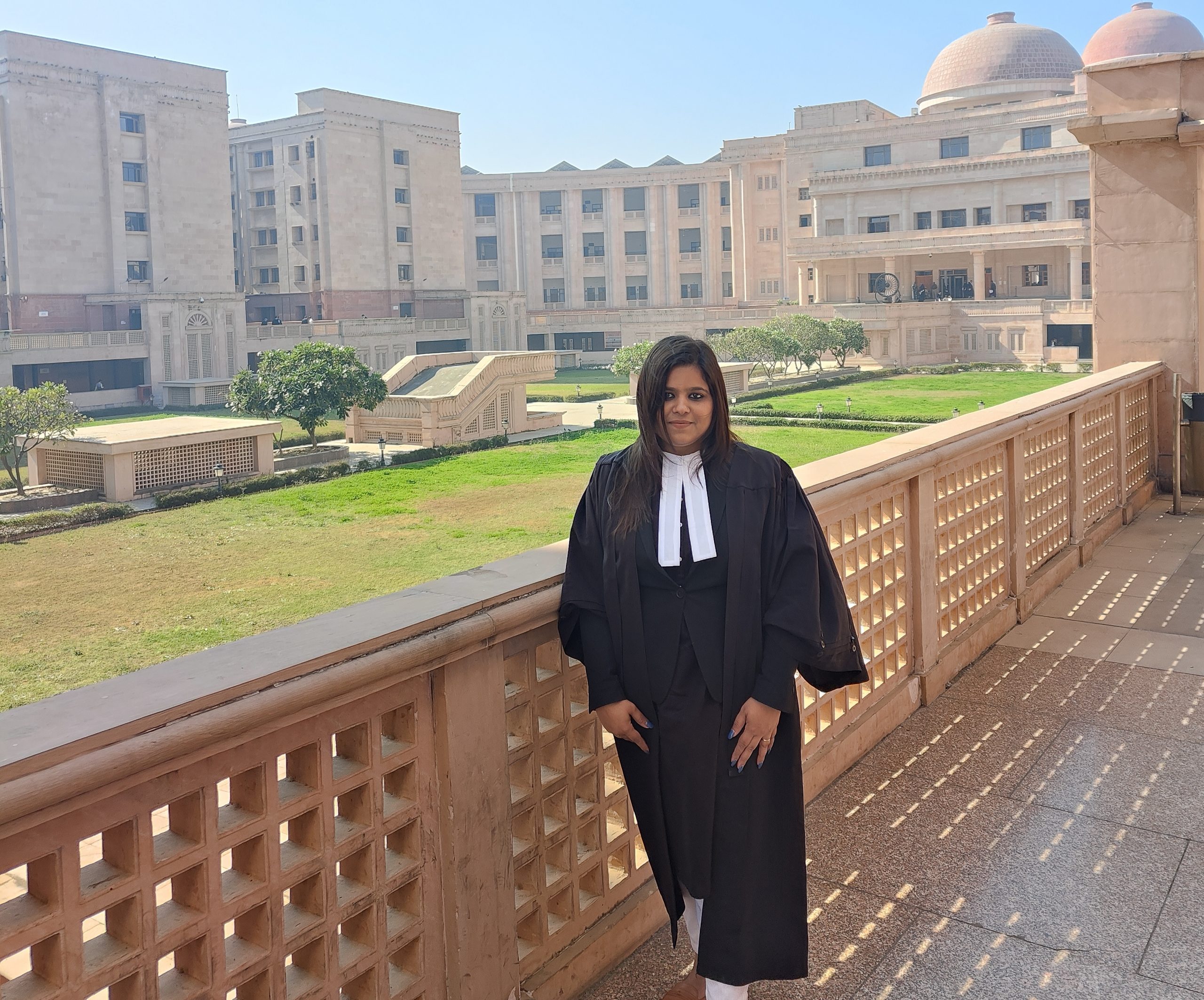
  • “At the end of the day, I truly believe that we become lawyers in the real sense only when we stand beside those who genuinely need us.” – Priyanka Borana, Advocate at Rajasthan High Court, Jodhpur.

    “At the end of the day, I truly believe that we become lawyers in the real sense only when we stand beside those who genuinely need us.” – Priyanka Borana, Advocate at Rajasthan High Court, Jodhpur.

    This interview has been published by Anshi Mudgal and The SuperLawyer Team

    You began your academic journey with a background in commerce and CS before pursuing your LL.B. What inspired this transition, and how did your early education shape your understanding of law?

    Honestly, law wasn’t something I had planned from the beginning. I was sitting with my mother one day, completely confused about what to do next. I told her I wasn’t really interested in commerce, and she laughed and said, “Hamare ghar mein koi lawyer nahi hai, aur tumhara toh waise bhi ladai-jhagde ka dimag chalta hai — law kar lo.” It was said jokingly, but somehow it stayed with me. The very next thing I knew, I had taken admission in Madhusudan Law College.

    Once I started studying law, I realised how naturally it connected with the way I think — questioning, reasoning, and standing up for what feels right. My commerce and CS background gave me a habit of thinking logically and paying attention to detail, which later helped a lot in legal drafting and understanding case records. Looking back, that light-hearted moment with my mother actually became the turning point of my life.

    During your initial years of college and early practice, what key lessons or experiences prepared you for active litigation? Was pursuing litigation something you had always envisioned for yourself?

    To be very honest, during college I was never one of those overly serious law students. I used to bunk classes quite often and sit under the neem tree with friends. I was very active in co-curricular activities- debates, events, organizing functions, but attending regular lectures was never really my thing. At that time, I hadn’t even imagined that I would actually take up litigation one day.

    Things changed when I moved to Jodhpur in 2016. In 2018, I joined the trial court, and honestly, it was a tough beginning. I had no friends here, no contacts, and I didn’t know how I was going to find my place in a completely new professional circle. Those initial months: almost eight to nine, were all about learning by observing and surviving through small but meaningful experiences.

    Later, I shifted to the High Court, and that’s when I realised that maybe this was exactly where I was meant to be. Looking back now, I feel choosing litigation was one of the best decisions I’ve made. It challenged me, shaped me, and made me value the strength that comes from starting all over again in a new city, purely on your own effort.

    You have been practicing at the Rajasthan High Court across diverse areas such as commercial law, property disputes, arbitration, and criminal matters. How did you build versatility across these domains and manage all matters effectively?

    Over time, I’ve handled a variety of matters, from commercial and property disputes to arbitration and criminal cases, but if I’m being honest, criminal litigation is my real zone. It naturally suits my personality. I’ve always been someone who believes in standing firm, not getting intimidated, and saying things as they are. That fearless side of me connected very well with the criminal side of practice.

    In criminal law, you learn to read people, their behaviour, mindset, and what drives them. Understanding how a criminal thinks or reacts is not just about law; it’s about human psychology, and that’s what makes it so fascinating. It gives you a different kind of edge and maturity as a lawyer.

    For female lawyers especially, criminal litigation adds a certain strength to your personality, it teaches you how to hold your ground in tough spaces. Over time, I’ve realised that while I enjoy working across different branches of law, criminal litigation brings out the most fearless and analytical version of me.

    You have also been actively contributing as a pro bono lawyer. What motivates your involvement in public service, and how have these experiences shaped your understanding of access to justice?

    I’ve always felt that the purpose of being a lawyer shouldn’t just be limited to luxury litigation or earning money. Somewhere, we tend to forget that the law was made for people who actually need its protection the most. Around my own neighbourhood, I’ve seen so many individuals who quietly suffer because they don’t even know their rights, they simply don’t have the awareness or resources to seek help.

    That’s why I take my legal aid work very seriously. The Legal Services Authority often appoints me in such cases, and I consider it both a duty and an honour. One case that really stayed with me was an MTP (Medical Termination of Pregnancy) matter involving a minor rape victim from a very difficult background. She was completely unaware of the legal process, and time was crucial. Managing that case made me realise how powerful our profession can be when used with empathy and urgency.

    At the end of the day, I truly believe that we become lawyers in the real sense only when we stand beside those who genuinely need us. The real purpose of this profession lies in restoring someone’s faith in the law. When people see that justice can actually protect them, their trust in the system grows stronger, and that trust, once earned, is the most meaningful reward a lawyer can ever receive.

    As a panel advocate for the Rajasthan State Legal Services Authority, what has been one of the most challenging cases you’ve handled, and how did you navigate it?

    Every legal aid matter has its own challenges, but one case that I will never forget was before a Division Bench. I was representing the respondent father in a matter involving a 9-month-old baby who had been given in adoption without informing the natural mother.

    Even though I was appearing for the respondent, the case affected me deeply. When the court finally directed that the baby be handed back to the natural mother, the entire courtroom turned emotional. On one side stood the mother who had given birth, and on the other, the woman who had cared for the baby and nurtured her for months. Watching both of them break down was heart-wrenching.

    That day reminded me that law isn’t always about right or wrong, sometimes it stands between two truths, two emotions, and two lives. Even the Hon’ble Bench remarked that while everyone felt the pain, law is law. That moment taught me that as lawyers, we must carry empathy with firmness, to feel the human side of justice while still upholding the legal one.

    Alongside your legal practice, you have written articles for reputed publications on issues such as gender equity and the experiences of women in law. What inspired you to explore these themes, and how do you see the role of women evolving within the legal profession?

    Whatever I’ve written so far has come from what I’ve actually seen and felt inside courtrooms, not from theory, but from daily experiences. I’ve seen how small things, which often go unnoticed, slowly create barriers for women in this profession. Everyone talks about gender equity, but very few actually address the uncomfortable truths behind it.

    Through my writing, I’ve tried to reflect what many women advocates silently feel but don’t say out loud. These are thoughts that belong to all of us — I’ve just tried to put them into words. Because if we don’t speak, how will anyone know where the problem truly lies?

    Yes, things are changing, but the pace is slow. Still, I genuinely believe that women are no longer just part of the legal system — we’re shaping it, questioning it, and giving it new meaning. And if my articles can make even one person pause and think about these realities, I feel I’ve done something worthwhile as both a lawyer and a writer.

    You have represented clients before multiple forums, including the Rajasthan High Court, Commissions, and Tribunals, and have also appeared in various Public Interest Litigations. What is your perspective on the evolving scope of PILs and their significance for the legal community?

    Public Interest Litigation, in its true sense, is a beautiful concept — it allows the court to hear those who otherwise have no voice. I’ve been fortunate to work as amicus curiae in matters like the Nari Niketan case and the suo motu matter related to stray animals, both of which dealt with genuine issues that directly impacted public welfare. These cases made me realise how meaningful PILs can be when handled with sincerity — they push real change, bring accountability, and ensure that the law reaches beyond individuals to society at large.

    But the truth is, over time, I’ve also seen how this concept is being diluted. Many people now file PILs without proper groundwork or genuine cause — just to gain attention or to keep their names in circulation. Because of such misuse, even genuine petitions sometimes don’t get the seriousness they deserve. That’s the sad part — when the noise of the unnecessary hides the voice of the necessary.

    As lawyers, we carry a responsibility to preserve the sanctity of PILs. If we treat it with respect and care, it can remain one of the strongest instruments of justice in our system. For me, being appointed amicus and working on causes that truly matter has been both humbling and grounding — it reminds me that law is at its best when it serves humanity, not headlines.

    With experience spanning civil, criminal, and commercial practice, what moments have most shaped your perspective toward the practice of law?

    When I look back, I feel even small incidents can shape your entire perspective as a lawyer. I still remember one moment from my early days in practice. I had just joined my senior’s office, and one day, my matter was listed before a Division Bench. I requested an adjournment because I didn’t have the file — the staff had taken it, assuming it wouldn’t be listed.

    But the court refused and said, “No adjournment. Madam Borana, how long will you keep asking for adjournments?” For a second, I went blank. I said, “My Lords, I have no instructions to argue.” The Bench replied, “We’ll give you the file, you argue.”

    That moment hit me hard. I gathered courage and said, “My Lords, it’s not that I don’t argue — I just never got the opportunity in your court. You may ask me any facts from the file, and I’ll answer.” That one push changed everything. Later, I realised the judges weren’t being harsh — they were motivating me. And interestingly, the same judge today appreciates my work the most.

    That incident boosted my confidence and reminded me that sometimes the courtroom itself becomes your best teacher. Every tough moment, every unexpected challenge — they all prepare you quietly for what’s next.

    What core principles have guided you throughout your career, and what advice would you offer to young lawyers aspiring to build an independent practice in the High Courts?

    This profession tests you in every possible way, emotionally, mentally, and even morally. What has always guided me through it all are three simple principles: honesty, preparation, and patience.

    Honesty — because in the end, the court can always sense your intent.
    Preparation — because confidence in the courtroom doesn’t come from personality alone; it comes from the hard work you put in behind the scenes.
    And patience — because growth in litigation doesn’t happen overnight. You have to show up every single day, learn, observe, and keep your calm even when things move slowly.

    My advice to young lawyers is simple — don’t wait for confidence; build it through preparation and persistence. Read your files as if they’re your responsibility, not just your assignment. Respect the court, stay consistent, and never let rejections shake your foundation.

    As for myself, I wish to continue strengthening my independent practice and focus on matters that hold both legal and human value. Law, for me, is not about fame or success — it’s about ensuring that justice is not just delivered but also felt.

    Get in touch with Priyanka Borana –

  • “Technology today is the key source to research and development, a way by which people can now know, read, understand the aspects and issues in real estate and business transactions.” – Deepanshu Garg, Founder of Legal Assist.

    “Technology today is the key source to research and development, a way by which people can now know, read, understand the aspects and issues in real estate and business transactions.” – Deepanshu Garg, Founder of Legal Assist.

    This interview has been published by Anshi Mudgal and The SuperLawyer Team

    With your specialization in real estate transactions and property registration, what initially drew you to this niche area of law, and how has your interest evolved over the years?

    I have grown up in a family of lawyers, who are involved in this niche practice of law for the last 40 years. I am 4th generation in this side of practice. The environment, the discussions in family and social gatherings, watching of news roam around real estate and the law; the knowledge amongst citizens on the aspect of “how important is legal consultation before dealing in real estate transactions”; the growing real estate disputes in the family as well as in the market; the challenges faced by the citizens in the property registration process; the lack of future estate planning; etc., which gave me a good kick to enter into law, focus on this side and to scale up the practice to new boundaries.

    Through your practice, you have often highlighted the gap between property registration and ownership rights. What are the most common misconceptions people have when dealing with property transactions in India?

    From the very starting, I have strongly believed that people are unaware or ignorant of about the most important aspect when dealing with property transactions i.e. “Title Legal Due Diligence”.  This is the “laying foundation”. The money which people pay to buy a property, what exactly is that money for – is it the physical structure or the land on spot? Practically speaking, for people these are the two aspects only but wait, that value is actually weighed from “title ownership documents” which people execute and get registered. And that’s the major misconception prevailing amongst people. Even law clearly says, “Buyers beware”. If there is a discrepancy in the documents, the value you paid for that property is nothing more than a zero. 

    Another related misconception is that people believe drafting a document when dealing with property is “basic and regular and can be drafted on a set performa”, but no, there is no set performa prescribed anywhere in law. Any such document is a “contract” amongst the parties which govern their transaction and has to be drafted on case-to-case basis and on specific circumstances surrounding the entire transaction, overall considering the law.

    As the Founder of Legal Assist, a digital platform dedicated to property and business legal services, what inspired you to establish your practice, what were the key challenges you encountered in building it, and how do you envision technology transforming the future of property law practice? 

    Since many years now, the property registration appointment process has been made online, which is not only cumbersome but time taking too. It is not easy for a layman to take an appointment for registration. Further, we daily see the growing disputes arising in real estate transactions and business running. We further see the irregularities and unprofessional surroundings in the conveyancing field of practice of law.

    All this triggered me to develop an online platform where I can render my knowledge on the issues circumventing the real estate industry & transactions, property registrations, business industry & transactions, to help them and to make them cautious of their legal rights, obligations and safeguards. The major key challenges were to not be able to cover “all aspects/ issues” since they are vast in nature and the other was to actually make people believe in “what are the most important aspects” in real estate and business transactions. 

    Technology today is the key source to research and development,  a way by which people can now know, read, understand the aspects and issues in real estate and business transactions. Moreover, technology is the source to transparency and accountability, as by way of technology, things are not far away to come under one roof and better control of the government, assuring people more safety, trust and “ease of doing business”.

    Your work involves complex areas such as estate planning, inheritance, wills, and succession disputes. What are the most pressing issues clients face in matters relating to inheritance, and how do you guide them through emotionally sensitive cases?

    The most pressing issues I see are the disputes arising among the legal heirs after the death of deceased person who died intestate or without any future planning or without informing about his/ her assets to his/ her legal heirs and further, disputes arising in cases even where a deceased  left a WILL/ any other testament.

    Our approach of guidance is focussed initially on amicable settlement through mediation and consultation and if not this, by suggesting an equitable outcome, after considering the law from all four corners and the circumstances in hand, in a manner which rules out future disputes.

    Estate and succession planning is often overlooked until a dispute arises. What practical steps do you believe individuals should take early to avoid future litigation?

    Life is so uncertain these days. The most important aspect which I feel today is for a person to have a must is to initially have a broad family discussion amongst all members and align amicably whatever a person owns amongst his/ her family members. Then I believe in an equalization policy amongst members. If all the members accept this discussion, the family shall execute an Memorandum of Family Settlement incorporating the contents of such amicable understanding. Further, members, in such case or otherwise if family amicable understanding is not arrived at or possible, shall compulsorily make a testament/ WILL for writing down their wish in “clear terms” to be followed by each member after the death of the testator.

    If there’s less tunning amongst the family members and the above aspect cannot be worked out, then the best possible way is to distribute the assets during the lifetime only so that the respective beneficiary holds the same without any claim or objection from others.

    As someone who started with internships at leading law firms and later built independent practice, what lessons from those formative years still influence your approach to law and property related disputes?

    Clear understanding of law and being upgraded with current legal precedents; using the tool of mediation and conciliation; not merely focussing on making money but alongside guiding the client with result oriented approach. However small the matter or dispute may be, 100% efforts and hard work shall always be put.

    Property and inheritance laws are constantly evolving with new judicial precedents and legislative changes. How do you stay ahead of these developments, and what recent trends do you see shaping this field in India?

    My approach is to give daily an hour or more in watching the news, studying current market scenarios, blogs, judgments. By this, I am able to incorporate and utilize this knowledge in my practice practically.

    The upcoming centralized digitalized unique platform where property registration, all connected data such as data from Municipal Corporation/ Development Authority etc. will be inter-connectedly available and will be incorporated with ease of doing business policy of the government. The development of digital courts for NI Act cases, MSME Samadhan Portal, Pre-litigation process in commercial cases, Mediation Act, etc. are great initiatives of the government for early disposal of recovery matters. By such initiative and upcoming legal developments, people are becoming more aware about their rights and obligations.

    With such a diverse practice covering real estate, inheritance, litigation, and consultancy, what advice would you give to young lawyers who want to build a specialized yet well-rounded career in property and succession law?

    Thorough understanding of the real estate market and laws covering this industry is a must. The initial aspect is to be able to practically understand the “trends” of “disputes” in industry, thereby doing research in the light of actual circumstances and find out all the possible solutions to the problem and then picking up the best reasonable one. What is the best approach “practically” must be the concern always.

    Get in touch with Deepanshu Garg –

  • “I have learned that in matrimonial litigation especially highly contested and long-pending matters mediation is often the most effective tool.” – Rajiv Rajpurohit, Family Law Practitioner at the Courts of Ahmedabad & Pune.

    “I have learned that in matrimonial litigation especially highly contested and long-pending matters mediation is often the most effective tool.” – Rajiv Rajpurohit, Family Law Practitioner at the Courts of Ahmedabad & Pune.

    This interview has been published by Anshi Mudgal and The SuperLawyer Team

    You’ve mentioned that your advent into the field of law was almost accidental, as you initially planned to pursue an MBA in Pune but were influenced by friends studying law. How did that unexpected shift shape your career path and your approach to the profession?

    I completed my schooling at a Government school in Rajasthan. In 2006, I moved to Pune for further studies. As everyone knows, Pune is often referred to as the “Oxford of the East.” At that time, Business Administration was in high demand, so after completing my schooling, I pursued a BBA in Pune. During those days, I had a few friends and acquaintances who were studying at various law schools. In the evenings, we would often meet for tea or simply hang out. They would share their experiences about academic activities, court visits, and legal studies. Listening to them gradually developed my interest in law, and I began considering admission to the field. Before enrolling in law school, I worked with the Symbiosis Group for a few months. However, when the time came to make a final decision whether to pursue an MBA or law. I was not fully confident and remained unsure. It was then that my father guided me towards pursuing law. With his approval and encouragement, I finally decided to enroll in law school. Most importantly, till date, my father has been a constant source of motivation and support, especially during a difficult phase when I felt like giving up legal practice and considering another career path. His encouragement has always kept me going.

    You have conducted highly contested divorce cases, resolved long-pending disputes through mediation, and handled matters ranging from custody to NRI divorces. How challenging is it to navigate cross-border family disputes, particularly NRI divorces, and what key stakeholders are usually involved?

    I have been practicing law since 2013, Over the years, I have handled hundreds of matrimonial disputes and cases in Ahmedabad, Pune and Mumbai, and have also appeared before several Hon’ble High Courts in India also before the Hon’ble supreme court of India. One common aspect in matrimonial disputes whether contested or mutual consent, whether involving NRIs, is that they often revolve around key issues such as claims of alimony, division of immovable assets, child custody, and other financial considerations. In such matters, the role of a lawyer is not limited to representing a client in court; it is also about guiding all stakeholders toward what is reasonable and achievable. In NRI divorce cases, the first challenge is often the logistical aspect ensuring the presence of parties or enabling their participation through virtual hearings, which most courts now facilitate. In mutual consent divorces for NRIs, the process can be straightforward once formalities are understood and complied with as per the law and procedure. From my experience, NRIs are usually clear about their terms, conditions, and settlement formulas, but it becomes the lawyer’s job to draft, execute, and present those terms in a legally sound manner so that there are no future disputes, particularly regarding child custody or financial obligations, another is regarding the if any joint property in foreign country and one of the spouse is in India and not looking for forward to go back., when I talk about long pending divorce cases I recall one particular case where a client had been contesting a matter for years. And later after a few years he came to me with the mindset of “ that he would only like to contest” rather than resolving it. After understanding his case history, I advised him that litigation should be the last resort, and that he should first try to settle the matter through communication either directly, via lawyers, or through mediation. Initially hesitant, he eventually followed my advice. Within three months, the matter was resolved amicably, something that could have been achieved years earlier had proper guidance been given. From my practice, I have learned that in matrimonial litigation especially highly contested and long-pending matters mediation is often the most effective tool. The key is to fully understand the facts, the parties’ financial capacities, the complexity of the issues, and the emotional aspects, and then to guide the stakeholders toward a reasonable middle ground. I firmly believe there should never be a point where a lawyer loses hope of settlement. Keeping that hope alive until the very end, unless a final order is passed, is essential in family disputes.

    With over a decade of experience before the Family Courts and High Courts in both Gujarat and Maharashtra, what procedural differences have you observed while practicing in these jurisdictions?

    This is indeed a very important question, because understanding procedural differences is crucial when practicing in different jurisdictions. Yes, there are significant differences between Gujarat and Maharashtra, and I have learned a great deal from working alongside lawyers in both states. When it comes to procedures, there are differences in the prescribed formats for filing applications, the method of preparing compilations, and the specific documentation requirements. The process for exhibiting documents also varies slightly between the two jurisdictions. In family matters, I have observed differences in the conciliation and mediation processes. The filing procedure itself also differs. For example, in Maharashtra, one can file a matter without physically going to court; everything can be done virtually through the court portal. Even the administration of an oath can be completed virtually by uploading a video, which is not the same in Gujarat. These procedural nuances highlight the importance of adapting to local practices while ensuring compliance with the law.

    Your practice emphasizes amicable, reconciliation-focused solutions. What trends have you noticed in the growing use of ADR in matrimonial disputes, and how do you see it shaping the future of family law?

    Yes, I strongly believe that there should be amicable solutions in matrimonial disputes because it is ultimately a question of precious time of life. If one is able to take a timely decision and resolve the dispute, it is far better than letting it remain in court for years, which rarely leads either party anywhere. However, it is important that both parties are willing to be reasonable with each other, even while keeping their differences, and remain focused during mediation. Nowadays, I see that even the Hon’ble Supreme Court actively promotes mediation in many matters. In my experience, Family Court judges also often take the initiative to speak with both parties, understand their concerns, and encourage amicable settlements. If the parties show willingness, mediation can be a highly effective tool. Such solutions can be facilitated by any authority through various methods, including formal mediation or counselling. Sometimes, emotions run high and parties are initially unable to take rational decisions. However, after proper counselling, they are often in a better position to make fair and reasonable decisions. Therefore, irrespective of the situation, I always advise that Alternative Dispute Resolution (ADR) and amicable settlements should be explored, as they are often the best way to ensure a fair and lasting resolution.

    You began your career as a Legal Associate under senior advocates before founding your own firm. What lessons from those early years continue to guide your courtroom strategy today?

    Yes, I began my career working with a lawyer who had many years of experience. I learned a great deal from advocates during my time in Pune and later in Ahmedabad. One of the key lessons I have learned is that if you wish to succeed as a litigation lawyer particularly in matrimonial matters, which often involve divorce, custody disputes, alimony, maintenance, and domestic violence, the first and foremost skill you need is to listen carefully to your client. You must understand where the real problem lies, while also respecting the emotional circumstances of the parties. I have also learned that you should never be judgmental when listening to clients. Instead, your role is to ensure you understand their circumstances fully. From my seniors, I learned the importance of proper drafting and being thoroughly prepared with arguments. I recall that when I was assisting senior lawyers, they would take detailed notes point-by-point and spend hours preparing final arguments for divorce cases. Contrary to the perception that matrimonial litigation is straightforward, I have found it to be complex, involving significant factual and legal research, especially since family disputes often involve many incidents that form the grounds for divorce. As per High Court and Supreme Court judgments, it is essential to keep updating oneself on recent case law. I have made it a habit to learn continuously from court proceedings, by listening to arguments and closely studying judgments.

    What motivated you to establish your own practice, and what vision did you have for it in the beginning? How did you overcome the initial challenges?

    It is always a challenge to choose litigation as a career after completing law. Initially, I opted for corporate work, but later my father motivated me to practice in court. He advised me to go to the court every day, whether I had a brief or not. I had no contacts who could help me enter the field of litigation, so I followed my father’s advice. I began visiting the court daily and interacting with lawyers. Eventually, I met one of my professors from my graduation days, who was also a practicing lawyer. I sought his help and asked if I could join his office. He told me that he didn’t have many matters at that time but could refer me to someone else. He gave me a reference to another advocate in Pune. When I went to meet this advocate, he asked me just one question: “When do you want to start?” My answer was, “I can start right now.” He immediately agreed and told me I could join and start working. I didn’t even go back home. I began working on the brief that very day. The second thing he told me was, “You will have to work hard, I will take care of your basic needs and concerns.” That assurance gave me the confidence I needed, and that is how my journey began. And this is how my journey started for my first client. One thing I learned early on is that you never know where clients will come from. They may walk in from anywhere, even from the court corridors. Sometimes, they may watch you argue in court, be impressed with your performance, and later ask for your contact details. In this profession, your performance is what pays you both in the form of clients and valuable contacts.

    What inspired you to choose matrimonial and family litigation as your primary specialization, and how has working in this niche shaped your perspective on law?

    Yes, my interest gradually shifted towards matrimonial law. Since I started my practice, I used to accompany my senior in family court matters assigned to me. Most of these cases, particularly matrimonial disputes, involved domestic violence and divorce. Slowly and gradually, this became my primary practice area. Although I have also handled other matters, over time my focus has increasingly been on matrimonial disputes and family matters. While I would not call it a specialisation, with experience I have gained significant exposure in this field. As I have already stated, dealing with matrimonial matters is not easy. It requires a great deal of skill, patience, and the ability to handle sensitive human emotions. I believe this area of law has immense potential, and one should continue to explore, understand, and work in depth within family and matrimonial matters

    Having such a diverse practice now and over a decade of experience, what advice would you give to new entrants in the field of law?

    All entrants in the field of law must be prepared to work hard, especially in the initial stages. One should not assume that any particular branch of law is not worth exploring. If an opportunity comes your way, it should be accepted and explored, as it may eventually lead to your mainstream practice. Therefore, do not make up your mind too early or immediately after graduating from law school. Take up different matters, handle them diligently, and if needed, seek guidance from experienced senior lawyers or practitioners in that particular area. Learn from each experience, as this gradual exposure will help you discover your true area of interest and expertise.

    Managing a practice across two jurisdictions can be demanding. How do you balance professional commitments with personal life, and what activities help you unwind and recharge?

    Yes, certainly, sometimes it requires motivation, but right from the beginning I chose to practise in two jurisdictions. As far as personal life is concerned, it goes without saying that law is a profession where, especially in the initial years, one has to compromise on personal life and carry the pressures of professional responsibilities. Being a noble profession, law demands complete dedication and 100% commitment. There is no other option but to prioritise professional life first. After a certain number of years, personal life also finds its balance, as family members begin to understand the efforts and challenges of a lawyer’s journey. Eventually, it becomes a routine. So yes, whether personal or professional, at the end of the day, life goes with the flow, and with time one learns how to manage both.

    Get in touch with Rajiv Rajpurohit –

  • “Across every area I’ve worked in, the core principles have remained the same: preparation, clarity of thought, and a deep sense of responsibility toward the client’s case.” – Ankita Tiwari, Founder and Managing Partner at T&P Law Offices.

    “Across every area I’ve worked in, the core principles have remained the same: preparation, clarity of thought, and a deep sense of responsibility toward the client’s case.” – Ankita Tiwari, Founder and Managing Partner at T&P Law Offices.

    This interview has been published by Anshi Mudgal and The SuperLawyer Team

    You’ve worked extensively across multiple domains, from white-collar crime and NDPS litigation to cross-border family law, commercial disputes, and arbitration. What core principles have guided you in navigating such varied legal landscapes?

    Across every area I’ve worked in—be it white-collar crime, international family disputes, or commercial arbitration—the core principles have remained the same: preparation, clarity of thought, and a deep sense of responsibility toward the client’s case. I believe in knowing the facts better than anyone else in the room and staying practical about how the law will operate in real-world scenarios.

    While each domain comes with its own nuances, I’ve found that a strong foundation in legal reasoning and the discipline to prepare thoroughly are what make the difference. Over the years, I’ve had the opportunity to work on complex and sensitive matters, and it has reinforced my belief that there’s no substitute for sincerity and strategic thinking. I may not always take the loudest approach, but I make sure my work speaks for itself—and that has taken me further than I had imagined when I started.

    Handling high-profile matters such as securing bail for a well-known actress in an NDPS case, and assisting in matters like the 2G and Satyam scams, must have come with immense pressure. How do you prepare for such sensitive and high-stakes cases? 

    High-stakes matters bring added pressure, but the key is to focus on the preparation. I had the opportunity to assist in the 2G and Satyam Scam matters early in my career, which helped me understand the scale and complexity of such prosecutions. In sensitive cases, I try to build the legal strategy step-by-step—starting with a solid understanding of the record, anticipating the likely challenges, and keeping the client well-informed throughout. When media or public attention is involved, it’s even more important to stay disciplined and avoid unnecessary noise.

    I was also fortunate to have assisted in landmark matters including Vijay Madanlal Choudhary vs Union of India, where the Supreme Court upheld key provisions of the Prevention of Money Laundering Act (PMLA), and Madras Bar Association vs Union of India, which clarified the framework for the functioning and independence of tribunals in India. These cases shaped critical areas of law, and being part of the teams working on them gave me a deeper understanding of constitutional interpretation and statutory design.

    Moreover, no matter how big or small the matter is, a good lawyer has to put everything into the case. That’s something I’ve always believed in and something I’ve learned from my father. Every case deserves the same level of sincerity and attention, whether it’s a high-profile matter or an everyday dispute.

    As the Founder and Managing Partner of T&P Law Offices, how do you balance your responsibilities as a practitioner, team leader, and mentor particularly in a firm that handles complex, multidimensional disputes?

    Balancing these roles requires careful time management and trust in the team. I try to remain hands-on in most matters while giving space to younger lawyers to take responsibility. I’ve realized that mentoring is as much about listening as it is about guiding. I also make sure we have systems in place that support efficient work—clear division of tasks, regular check-ins, and open communication. Ultimately, if the team works well together, things run more smoothly across the board.

    Representing NewSpace India Ltd., ISRO’s commercial subsidiary, places you at the unique intersection of law, science, and national interest. What legal challenges or insights have stood out to you while working in the space-tech sector?

    It’s a sector that’s still evolving, and every assignment brings new issues to think through. Working with NSIL has required understanding not just the legal aspects but also the technical and policy background. One major insight has been the importance of anticipating regulatory changes and making sure legal advice aligns with broader national objectives.

    You’ve successfully mediated complex cross-border child custody disputes involving countries such as the US and UK. How do you navigate these high-stakes international matters, and what steps do you take to prepare for cases involving multiple jurisdictions?

    My experience as a panel counsel for the National Commission for Protection of Child Rights (NCPCR) has given me practical exposure to cross-border custody matters, which are often both emotionally intense and legally complex. The first step is to develop a holistic understanding of the jurisdictional interplay—knowing when Indian courts will assume jurisdiction, understand the Hague Convention framework, and coordinating with foreign counsel where needed.

    In several matters, I’ve worked closely with the US and UK embassies, and in collaboration with NCPCR, where the legal systems of both countries were able to align in support of the child’s welfare. In such cases, the legal frameworks often coincide in a way that strengthens cooperation between authorities and facilitates effective remedies.

    I also prioritize mediation and alternative dispute resolution, especially when the well-being of children is involved. Each case demands cultural sensitivity, awareness of international norms, and the ability to negotiate without losing sight of legal enforceability.

    One of the practical tools I’ve used successfully is drafting parental plans that outline shared responsibilities and structured arrangements—covering education, visitation, healthcare, and communication between the child and both parents. These plans, drafted keeping the child’s best interest at the core, have often helped in reaching settlements that are acceptable to both parties and enforceable across borders.

    Ultimately, while the legal strategy must be sound, the focus in such matters must always remain on the child’s welfare, not just the legal outcome.

    Having worked with prominent lawyers and leading firms, what were the most important lessons or values you carried forward into your own independent practice? Additionally, what was your motivation to establish your own practice?

    Working with Senior Advocate Mr. Sidharth Luthra taught me how important precision and clarity are—both in how you present a case and how you think about it. At Saraf and Partners, I learned how to handle complex matters that involved a lot of moving parts, and how to function effectively as part of a structured team. Both experiences shaped the way I approach work even today.

    But at some point, I felt the need to build something of my own—something more personal and meaningful. I’ve always wanted to contribute to society in a real way, and that was one of the reasons I joined the Delhi Legal Services Authority early on in my career. That experience reinforced for me that law isn’t just a profession—it can be a tool to help people, to solve problems, and to make space for fairness.

    Starting my own practice was a step toward aligning my work with what I care about. I wanted more control over the kind of matters I take up, and the kind of environment I create for the people I work with. Law has its challenges, but for me, it’s something I’ve genuinely grown passionate about—it gives me a sense of purpose, even when the day-to-day is tough.

    As a practitioner who actively engages with legal education through guest lectures and mentoring, how do you view the relationship between academic involvement and courtroom practice? In what ways has this engagement shaped your growth as a legal professional?

    Academic engagement has always been an integral part of my professional growth. It provides the space to reflect more deeply on legal principles beyond the immediacy of courtroom pressures. Delivering guest lectures or judging moots requires distilling complex legal concepts into accessible ideas, which in turn sharpens my own clarity of thought and argumentation. It’s also intellectually refreshing—interacting with students often brings unexpected questions and fresh perspectives that challenge rigid thinking and encourage a broader view of the law.

    Mentoring, both within and outside the office, has been equally meaningful. I’ve benefited from strong mentors myself, and I try to carry that forward by offering honest, practical guidance to younger lawyers. Teaching and mentoring remind me that legal practice isn’t just about individual success—it’s about contributing to the growth of the profession as a whole.

    Given your specialization in white-collar crime, how do you approach ethical dilemmas, particularly in cases involving allegations of financial misconduct, corruption, or money laundering? Additionally, what drew you to a career in law and led you to focus on this area of practice?

    I was drawn to law because I’ve always appreciated how structured, purpose-driven, and outcome-oriented the profession is. Over time, I naturally gravitated towards white-collar crime because it brings together the two things I find most intellectually engaging—analytical reasoning and investigative problem-solving. The issues are layered, the fact patterns are rarely linear, and the stakes—both reputational and legal—are incredibly high.

    What I enjoy most about working in this space is the challenge of navigating complex regulatory frameworks and making sense of large volumes of financial or digital evidence. Each matter demands a deep dive, not just into legal precedent but also into operational realities—whether of companies, public institutions, or individuals in leadership roles.

    Ethical dilemmas are inherent in this space, and they require a calibrated approach, one that balances legal strategy with integrity and foresight. My role is not just to respond to allegations, but to anticipate implications across forums—criminal, regulatory, and reputational. I believe clients come to you in such situations not only for legal defence, but for clarity, discretion, and a roadmap forward. That’s what I strive to deliver.

    With nearly a decade in the legal profession and diverse exposure to litigation, advisory work, and international law, what advice would you offer young lawyers, especially women, who aspire to build resilient and independent practices like yours?

    My first piece of advice would be: be patient, and keep showing up. There really is no substitute for consistency. A practice isn’t built overnight—it’s the outcome of sustained effort, credibility, and doing the work well, matter after matter.

    For women in particular, the legal profession can present both visible and invisible challenges. It helps immensely to develop a strong support system—whether through peers, mentors, or collaborators. Equally important is to be assertive in taking up space: seek opportunities, ask the questions, and don’t hesitate to say no when something doesn’t align with your professional values or direction.

    Most importantly, don’t let self-doubt become part of your inner vocabulary. The law is demanding, but it’s also deeply rewarding for those who stay committed. With time, clarity, and hard work, your practice will evolve in ways that are both sustainable and fulfilling.

    Get in touch with Ankita Tiwari –

  • “The legal world is smaller than it seems, and your name carries weight even when you’re not in the room.” – Meenal Duggal, Founder of Meenal Duggal Law Offices.

    “The legal world is smaller than it seems, and your name carries weight even when you’re not in the room.” – Meenal Duggal, Founder of Meenal Duggal Law Offices.

    This interview has been published by Anshi Mudgal and The SuperLawyer Team

    You’ve worked across diverse areas of law. Which ones have you found most intellectually stimulating, and how do you stay updated with developments?

    I’ve had the opportunity to work across a wide spectrum of legal matters, and each area has contributed uniquely to my growth as a litigator. However, I find economic offences and corporate litigation particularly stimulating. These fields are intellectually rigorous—they demand deep strategic planning, constant engagement with evolving jurisprudence, and the ability to navigate complex factual and legal matrices. They keep you on your toes because no two cases are ever truly alike. At the same time, handling matrimonial disputes and IPR matters has been deeply fulfilling, as these areas bring me face-to-face with the human, emotional, and creative dimensions of law.

    To stay current, I treat learning as a non-negotiable part of my routine. I regularly follow recent judgments, legislative updates, and expert commentaries. I attend bar association seminars, workshops, and informal discussions with peers and seniors. In this profession, the law is a living organism—it evolves constantly, and staying attuned to its rhythm is essential.

    In the early stages of your career, what were some of the key skills or insights you gained while assisting senior counsel on these high-stakes cases?

    Starting my legal journey with matters involving serious criminal offences—ranging from economic frauds to murder trials—was a transformative experience. These cases taught me the irreplaceable value of clarity, precision, and presence of mind. Every word matters, every fact must be double-checked, and your ability to stay composed under pressure can be the difference between success and failure in court.

    Assisting senior advocates during those formative years gave me a masterclass in legal strategy. I learned how to dissect a case, anticipate counterarguments, and build a narrative that is both factually robust and legally sound. Most importantly, I absorbed the discipline of courtroom conduct—how to be persuasive without being aggressive, how to command attention while respecting the court. These early lessons still guide me every time I step into a courtroom.

    You’ve handled a broad spectrum of civil and criminal matters, particularly matrimonial disputes which have a high emotional quotient. How do you craft a legal strategy that balances the emotional complexity with the legal rigor these cases demand?

    Matrimonial litigation is unlike any other—it’s not just about statutes and precedents but about people, emotions, relationships, and often, pain. As a lawyer, I believe our role here extends beyond legal representation—we’re also emotional anchors during what can be one of the most vulnerable periods of a client’s life.

    I begin by listening deeply and without judgment. It’s important to understand not just the legal facts, but the emotional currents underlying the conflict. From there, I work to create a strategy that is empathetic yet firm—one that protects my client’s rights while also guiding them toward resolution, not escalation. Wherever possible, I advocate for amicable settlements, particularly where children or long-term emotional repercussions are involved. At the same time, I stand resolute when legal intervention is necessary. It’s a delicate balance—but one that can lead to outcomes that are both just and healing.

    You’ve credited your experience with Mr. Viraj R. Datar as foundational. Could you tell us more about that influence?

    Working under the mentorship of Mr. Viraj R. Datar at the Delhi High Court was one of the most formative chapters of my career. It was in his chamber that I first witnessed what it truly means to practice law with purpose. He wasn’t just a brilliant legal mind—he was deeply ethical, humane, and committed to justice in its truest sense.

    From him, I learned that legal practice is not merely a profession—it’s a service. He taught me the importance of integrity, thorough preparation, and above all, empathy. His approach was never transactional; he cared about the impact of every case on the people involved. Those values left a lasting imprint on me. To this day, I try to uphold those same principles in my independent practice—doing my best not just to win cases, but to ensure fairness, compassion, and dignity are never compromised.

    Starting your independent practice in 2020 must have come with its own set of challenges and opportunities. What inspired you to take that step, and how did you navigate the early phase of building your clientele and case portfolio?

    Starting my independent practice in 2020 was a leap of faith—but one rooted in conviction. After years of chamber work and rich mentorship, I felt ready to take ownership of my legal path and build a practice that reflected my values. I wanted to be more hands-on with clients, more accountable for outcomes, and freer to choose matters that aligned with my sense of purpose.

    The timing, however, was far from ideal—courts were functioning in a limited capacity due to the pandemic, and the entire legal system was undergoing a digital transformation. But adversity became my teacher. I focused on being highly accessible, responsive, and consistent in my work. I relied heavily on referrals, built a network through online legal forums, and made it a point to stay visible within the legal community. Slowly but steadily, the practice grew. Each case taught me something new—not just about the law, but about resilience, adaptability, and faith in one’s own journey.

     You’ve represented several corporate entities, including private limited companies and firms. What are some recurring legal challenges you’ve noticed in business litigation and how do you think they can be avoided at an initial stage?

    One of the most recurring issues I see in business litigation is the prevalence of poorly drafted agreements. Many of the disputes that land in court could have been prevented with a little more legal foresight. Vague clauses, inconsistent terms, and the absence of dispute resolution mechanisms often create avoidable friction between parties.

    Another major challenge is the lack of organized documentation and communication records. In today’s fast-paced commercial environment, businesses sometimes neglect formalities—which leads to evidentiary gaps when disputes arise. My advice to businesses is simple: invest early in sound legal structuring, contracts, and compliance. Preventive legal care is much more cost-effective than reactive litigation.

    Managing a diverse litigation portfolio is demanding. How do you maintain consistency and balance?

    Indeed, litigation can be all-consuming. But over time, I’ve realized that consistency stems from mindful planning and being fully present in each task. I rely heavily on structured routines—prioritizing my week based on urgency, court appearances, and client needs. I carve out time for drafting, case review, and quiet research without distractions.

    Outside of work, I make a conscious effort to reconnect with my roots—be it through time with family, spiritual reading, or simply being in silence. These little rituals ground me and allow me to show up with focus and clarity. I also try to maintain strong professional boundaries, where possible, to avoid burnout. It’s still a work in progress, but I’ve learned that sustainable success comes not from doing everything at once, but from doing each thing with presence and purpose.

    Having worked in reputed chambers and now leading your own firm, what advice would you offer to young lawyers who aspire to develop a well-rounded litigation career spanning multiple areas of law?

    My advice would be: begin with curiosity and carry it with commitment. Don’t pigeonhole yourself too early—explore various domains of law, because each one strengthens a different muscle. Seek out mentors who challenge you to think deeper and work harder. Watch court proceedings, learn how judges think, and observe how experienced lawyers argue—that exposure is invaluable. 

    Focus on building your core skills—research, drafting, procedural clarity, and client interaction. But more than anything else, build your reputation—for reliability, professionalism, and ethics. The legal world is smaller than it seems, and your name carries weight even when you’re not in the room. A well-rounded career doesn’t happen overnight—it’s built over years, with patience, self-discipline, and a genuine love for the law.

    What initially drew you to law, and how did your education shape your decision to pursue litigation?

    What drew me to law was its power to resolve real-world conflicts through reasoning, dialogue, and structured thinking. I was always fascinated by how law could bring order to chaos, how a well-argued case could lead to justice, and how legal tools could be used to empower the voiceless.

    My education laid the foundation for this journey. Moot courts, legal research assignments, and internships gave me a taste of courtroom dynamics early on. I found myself naturally drawn to litigation—it challenged my intellect, honed my articulation, and gave me a platform to engage with real people and their stories. From there, building my own practice felt like the most organic next step—a space where I could not only argue cases but shape my path on my own terms, in a way that resonated with my values and aspirations.

    Get in touch with Meenal Duggal –

  • “ADR is the present and also the future, and the earlier we understand this, the chances of growth will be faster. ADR is not only efficient but also cost-effective.” – Nivedita Shree, Founding Partner of Shree & Associates

    “ADR is the present and also the future, and the earlier we understand this, the chances of growth will be faster. ADR is not only efficient but also cost-effective.” – Nivedita Shree, Founding Partner of Shree & Associates

    This interview has been published by Namrata Singh and The SuperLawyer Team

    You’ve had a diverse and extensive career in law. Could you share with us how you ventured into the legal profession and what inspired you to specialize in litigation? Could you please walk us through your journey from your college days to where you are today?

    As I was pursuing my high school in Bhavan’s Gandhi Vidyashram, Kodaikanal, like any other family, I was also asked to pursue my career in engineering. However, I was clear I wanted to be a lawyer and fancied those black gown and the band. Pursued my B.A.LL.B from Bangalore University and LL.M from Hidayatullah National Law University. I was placed in a law firm dealing with international trade. Despite the work being amazing, somehow it did not satisfy my desire for the band and those “My Lord” moments. I later on switched my job but finally I started with my career in litigation and since then there has never been a day that I have regretted my decision.

    Shree & Associates is renowned for its expertise in Civil, Corporate, and Family Law among other areas. What motivated you to establish this boutique law firm, and how do you differentiate your services from larger firms?

    When I started my career in litigation, I was overwhelmed by the work and pay disparity. And then while practicing I realized that only two things work:- Dedication and timely delivery of solutions to the client. Clients need to be satisfied and we being lawyers have to be very good listeners. I remember while dealing with matrimonial disputes, I have even acted and taken up a title as a marriage counselor. Just having knowledge of law will not suffice. One has to be lawyer with empathy and should also be ready to understand the agony of client. It has also taught me to be resilient.

    While practicing in district court, one should be ready to face a high profile client and also a client from village who speaks only the local dialect. The spectrum of clientele is big and so is the paying capacity. Having a fixed fees does not work in lower courts and to start the career, fees should not be priority. Number of cases matters as you get to research and learn and present the best you can at that moment of time.

    When I started practicing the big advantage I had was the knowledge of local language and the local history pertaining to land, So when somebody referred to a particular document I knew what exactly did he want to say. In Jharkhand a lot of old documents pertaining to land is written in “Kaithi” which is in devangiri script but tough to understand and read. So knowledge of that helped to gain a lot of civil matters. It is very surprising that even today in few district courts computer literacy of lawyers is quiet low.

    Client nowadays need speedy disposal of their cases and if we are in a position to convince the parties to go for mediation or arbitration, it is a win win for all.

    Shree & Associates is a boutique firm and the lawyers in the firm are very well versed with the local laws and also updated with technology and ready to work and settle the dispute by alternative methods.

    Your involvement in Corporate Law, particularly with the Real Estate Regulatory Authority and the National Company Law Tribunal, suggests a broad scope of legal expertise. How do you manage to navigate such diverse legal landscapes effectively?

    Firm assists clients in establishing sound corporate governance structures, ensuring compliance with regulations, and fostering ethical business practices. Our team is very closely knitted and takes care of needs and specific details of the client while dealing with the boards of directors and executive teams. We can relentlessly work to create a framework in a company to enhances transparency, accountability, and overall organizational effectiveness. We have been very fortunate to not have lost any matter in NCLT so far. NCLT

    With the growth in Real estate sectors in form of apartments, even  in small town, it has opened new avenues. Before RERA, matters were usually sorted out amicably wherein a lot of time the buyers were not very satisfied with the service provided by builders or the land owners, but with new laws in force, the scenario has changed and the buyers are now more vigilant pertaining to their rights. Real estate litigation is complex and involves multiple parties, extensive discovery, expert testimony, and specialized legal issues. It’s essential for parties involved in real estate disputes to seek experienced legal representation to navigate the complexities of the legal process and protect their rights and interests. We at our firm have specialized team working specifically in this field to provide the best remedy and solutions to the client.

    Our team has been very dedicated team of young energy and expertise of senior lawyers. Despite being a firm working at grassroot level and growing upwards, our sole moto of client satisfaction has also been taken care of.

     In addition to your professional achievements, you’ve presented papers on Corporate Governance and participated in international conferences. How do you balance your legal practice with academic pursuits?

    I am also a Guest Faculty in University Law College, Vinoba Bhave University, Hazaribag, where I (when time permits) take classes on the practical application of procedural laws, usage of evidence act in trial and also in civil matters and the importance of Local land laws for proper understanding of  roots of the civil dispute.

    One must invest in continuing legal education and be updated with current development in laws. This will definitely give a niche above others.

     Your bio indicates a passion for mediation and arbitration. How do you believe alternative dispute resolution methods contribute to the legal landscape, and what advantages do they offer over traditional litigation?

    ADR is the present and also the future and the earlier we understand this, the chances of growth will be faster. ADR is not only efficient but also cost effective. In today’s time, nobody wants to get “tarikh pe tarikh”. One is ready to spend a little higher to get quick, easy and effective solutions to their problem. In such a situation, the best option is that of mediation and arbitration. Best part of ADR is that it can be tailored to the specific needs and preferences of the parties involved.

    Given your vast experience in the legal profession, what do you believe the current generation of aspiring lawyers can do to carve out successful and fulfilling careers in law amidst evolving societal and technological landscapes?

    I have also recently posted on my Linkedin profile regarding the same. There are a lot of  pointers but the few are hard work, professional ethics, managing client expectations, being resilient, being updated with new laws and cases are important for learning and growing. The current generation are technologically way more advanced and this will help them to work smartly. Aspiring lawyers needs to have at least few pointers mentioned above to have a positive trajectory of growth in field of litigation.

    You’ve been actively involved in legal practice across different regions of India. How do you adapt your approach to suit the unique legal environments and cultural contexts of each location?

    I alongwith the team, travel a lot and appear in various courts all over India both physically and virtually. Every court has its own way of working and pace to resolve the cases. One important point is to always have a local team or a lawyer to understand the local scenario of courts and work culture, until we branch out to various places. It has also given our firm cases and matters which would not have been accessible otherwise.

     Apart from your legal expertise, what are some personal hobbies or interests that you enjoy outside of work, and how do they contribute to your overall well-being and professional effectiveness?

    I spend my time exploring new places, spending quality time with my kids and paint when ever I can. I love cooking  as well so when ever I am not loaded with work I try allocating time and enjoy my fullest. It is more like setting a reset button. I love the work I do so there is no “job stress” and thus makes me little more efficient in the work I do.

    Your educational journey has taken you to various parts of India, including Nepal. Could you share how these diverse experiences have shaped your perspective, and what factors led to your decision to settle in Jharkhand, establishing your practice there?

    Well, my father was an employee in State Bank of India. I pursued my primary and middle school education in various small towns in Jharkhand. Later since my father was being transferred every 3 years, I was put in boarding School, Delhi Public School situated in Dharan, Nepal, where I completed my 10th std. While in 10th std. I came to know about Bhavan’s Gandhi Vidyashram located in Kodaikanal, Tamil Nadu through a brochure given by my parents. I was very keen in joining for many reasons but one most important being my love for south Indian cuisine. Pursued my High School in Kodaikanal. Thereafter, since, I wanted to pursue B.A.LL.B, Bangalore was my first preference then. Got my degree from Bangalore Institute of Legal Studies, Bangalore.

    I always had desire to earn a specialization in corporate and also have a masters degree, I applied for few Universities in United Kingdom. I got offer letters from Edinburgh University, Manchester University and also from Cardiff University. However, that was the year when CLAT(PG) had also started for the first time and I like any other law graduate aspiring for masters, appeared in the test. Got AIR 162 and got into Hidayatullah National Law University, Raipur. Since I could not get a scholarship and the fees being high in Universities in U.K., I preferred joining HNLU, Raipur and I think it was a great decision. Got placed before completion of my course and since then I have never looked back.

    While travelling to different places, I learned various languages and I am now proficient in Nepali, Tamil, Kannada and ofcourse my mother tounge, Maghi. Since I have travelled so much in India, it has expanded my horizon. Experiencing different ways of life and witnessing socio-economic disparities has lead to perspective shifts and introspection and these factors affect positively, while we deal with clients in the firm.

    Since, Jharkhand is my home state, I wanted to establish my practice base in Jharkhand. Staying close to family and loving the work I do, is nothing less than bliss and I am filled with gratitude.

    With your extensive experience and expertise, what qualities or characteristics do you typically look for in students who apply for internships or seek training opportunities at Shree & Associates? How do you nurture and mentor aspiring legal professionals to help them thrive in the field?

    Well, the firm has been very open in getting interns every now and then. We have a selection process wherein we look into the academic background and  schedule an interview via meet or if possible personally in the office. The most important aspect that we look is the desire to learn. A person has to have a desire to learn and grow and then ofcourse the mundane questions of reason for joining the firm etc.

    The new members joining us as an associate, are firstly provided with clear objective as to what are motive and vision is and the work ethics and environment in the firm. Emphasis is given on continuous learning and by providing constructive feedback so that they can self assess and learn.

    Beyond your primary areas of legal practice, such as Civil, Corporate, and Family Law, are there any specific niche areas or emerging legal domains that particularly pique your interest or passion? How do you see these areas evolving, and what draws you to explore them further?

    With the advancement in technology and advent of Artificial Intelligence in law, Technology law along with AI  and Robotics law is one evolving area which I would like to explore and have a dedicated team for this.

    Get in touch with Nivedita Shree-