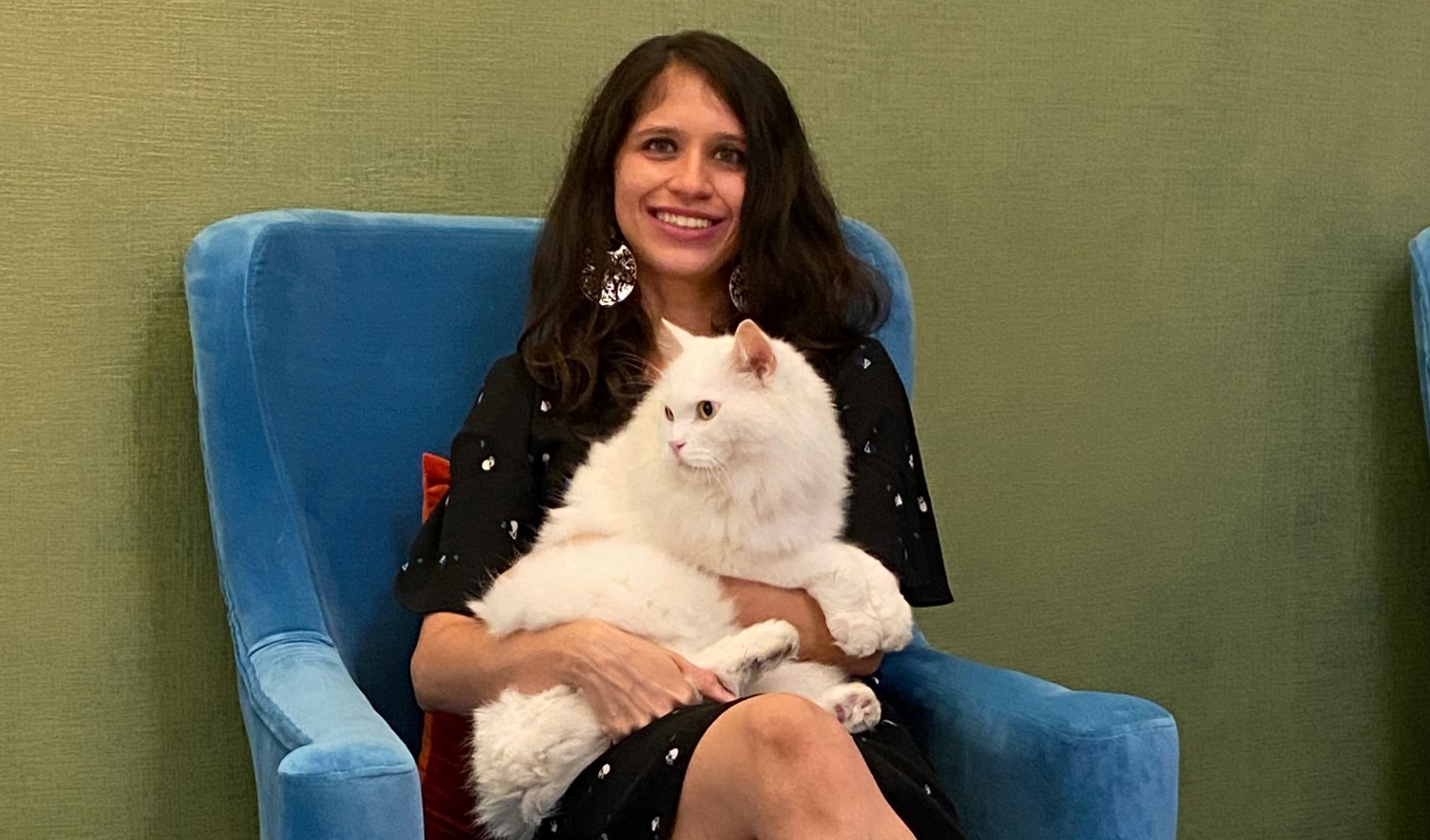
Tag: female lawyer

  • “International arbitrations and cross-border litigations might be incredibly challenging, especially if a counterparty is not acting in good faith, falsifies documents, and abuses its rights”- Mariana Antonovych, Foreign Lawyer at Linklaters

    “International arbitrations and cross-border litigations might be incredibly challenging, especially if a counterparty is not acting in good faith, falsifies documents, and abuses its rights”- Mariana Antonovych, Foreign Lawyer at Linklaters

    This Interview has been published by Pragya Chandni and and The SuperLawyer Team

    Mariana, we are delighted to have you for this interview. To start, could you please introduce yourself, providing a glimpse into your professional journey and the factors that led you to specialize in investment arbitration and cross-border litigation?

    It had been my dream to become an arbitration lawyer since university. I am grateful to my professor at Kyiv-Mohyla Academy, Dr. Lyubov Logush, for raising my interest in arbitration. My path was not always smooth. During the first two years after graduating from Kyiv-Mohyla Academy I worked as a journalist and in parallel was doing my LL.M in International Dispute Resolution at Humboldt University of Berlin. Only afterwards I managed to start practicing arbitration in Ukraine. For this, I am grateful to Prof. Dr. Gerhard Wagner as the university not only accepted me to the programme but also granted me a tuition fee waiver without which I would not have been able to pursue my studies. It was very difficult to obtain any scholarship in Ukraine as Russia had just started its war of aggression against Ukraine in 2014 and Ukrainian scholarship funds were focused on priority development areas for Ukraine. During my studies, I always planned to come back home and practice arbitration in Kyiv. 

    Your experience includes significant roles at reputable firms like Linklaters, Avellum, and Kinstellar. Can you share some key moments or cases that have shaped your career as a foreign lawyer, particularly in the realm of international dispute resolution? 

    When I came back to Ukraine in 2016, I applied to two dispute resolution vacancies for junior associate positions in two international firms. One of those firms – Kinstellar – which had just opened its office in Kyiv believed in me and took me on board. It was the beginning of my arbitration career. For the next, roughly 5 years, I worked on various commercial arbitration and cross-border litigation projects involving Ukrainian elements, culminating in my first cross-examination of witnesses before the LCIA tribunal at the remote hearing in 2020. After my boss left Kinstellar in 2021, I left after him to be able to assist the client going forward. 

    On the first day, when I joined Avellum, the tribunal rendered a 250-pages award in that matter ruling in our favour. Avellum added investment arbitrations to my CV. I am very proud of the opportunity to work for the Ukrainian government in those arbitrations in the months preceding the war and afterwards. 

    When the war started, many Ukrainian law firms took drastic measures to ensure that the firms would stay afloat. This was a key reason why I applied for a part-time job in Linklaters Warsaw in July 2022. I had been working at two jobs until October 2023. At present, I work only for Linklaters focusing primarily on business development and pro bono activities in the areas of international arbitration and cross-border litigation. 

    Having represented clients in various jurisdictions, including Ukraine, Cyprus, Belize, France, Liechtenstein, Switzerland, and the UK, how do you navigate the complexities of cross-border disputes? Are there unique challenges that arise, and how do you address them?

    International arbitrations and cross-border litigations might be incredibly challenging, especially if a counterparty is not acting in good faith, falsifies documents, and abuses its rights. Furthermore, these projects may take years. One of my projects lasted for seven years and one of its “branches” still continues. It takes time to get to the truth and, therefore, it is important to stay patient, not to give up when you fail and focus on the end game. With various parallel proceedings, sooner or later, the untruthful counterparty always makes a mistake. So it is very important to keep an eye on various developments happening in other proceedings, keep your position consistent and straight-forward and, when the time comes, use the inconsistencies in the other party’s case to your advantage. As my former colleague once told me and I continue repeating this to others “This is a long run”, so one needs to be prepared for everything, including, as it turned out, COVID and war. This is not a resilience they teach at school or university. 

    In your current role at Linklaters, you’re actively involved, among other things, in business development and pro bono assistance. Please elaborate.

    Both during my last year at Avellum and now at Linklaters, I spend more time than usual on business development and pro bono activities. When the war started and especially before the Kyiv region was liberated, there were days when I would not receive a single email to my email box, which was frightening. The situation improved towards the end of 2022 and 2023 was very active again. At the same time, it was and remains clear that it is not sufficient to focus exclusively on billable projects. More needs to be done for the community. I am very proud of certain pro bono projects I have had a chance to pursue since February 2022, including collecting evidence of russia’s war crimes in Ukraine, suspending russia’s membership in the Financial Action Task Force, assisting Gateway Ukraine with its activities aiming to boost investment in Ukraine, helping Ukrainian refugees and so forth. On the business development side, it is great that many international firms worldwide set up Ukrainian desks in anticipation of Ukraine’s victory and seek to strengthen their relationship with the Ukrainian market. I am happy to facilitate this process. 

    Your publications cover a range of topics, from legal professional privilege to sham agreements. What drives your interest in legal writing, and how do you balance this with your demanding professional responsibilities?

    Unlike other lawyers, I do like writing. As I mentioned, I worked as a journalist for a few years in 2015-2016. My primary task was to choose content and prepare it for Kyiv Post’s supplement, Legal Quarterly. I also helped fact-check Panama Papers for Organized Crime and Corruption Reporting Project (OCCRP). As Ukraine was undergoing major reforms in 2015, it was very interesting to follow this process by interviewing the high-ranking Ukrainian officials in charge of those reforms.

    Frankly, I never understood senior lawyers and partners who make their associates write articles for them. As a junior and after seven years as a managing associate I always wrote articles on my own based on the experience I obtained in arbitrations and cross-border litigations. This is why my publications cover a broad range of topics.

    Having interned at Wegnerpartner and the German Institution of Arbitration, how did these experiences contribute to your understanding of international arbitration, and what cultural insights did you gain?

    Those internships, which were part of my master programme at Humboldt University, cemented my belief that I want to work in the area of arbitration. I am grateful to Korinna von Trotha, the former head of Berlin office of German Institution of Arbitration (DIS), and my professor, Dr. Adrian Müller-Helle, the partner at Wegnerpartner, for giving me an opportunity to become acquainted with arbitration from institutional and counsel perspectives during my studies. Of course, there are differences between Ukrainian and German approaches to arbitration, but, in my view, they are minor. 

    Juggling a demanding legal career and coaching moot court competitions must require a delicate balance. How do you manage your time effectively, ensuring success both in your professional and coaching endeavours?

    Indeed it is very demanding and challenging. Last time, I acted as a coach in 2019-2020. Overall, I coached various moots for six years. I was heartbroken when my team did not go to Washington in 2020 to compete in Jessup due to COVID-19. This year, I advise the Kyiv-Mohyla Vis Moot team and plan to arbitrate the moot in Vienna. It is still time-consuming, but much less than coaching. Despite various burdens that come with coaching, I treat this as a community investment. I believe that students deserve to have good mentorship and I am proud that students I coached now also act as coaches and succeed in their careers. 

    Away from the legal arena, what are your favourite hobbies or activities? How do you unwind and recharge outside of the legal world?

    At first, I was focused only at work and moots, but then it became clear that it could not continue that way. I am passionate about sports – gym, swimming, hiking, cycling – and languages. Unfortunately, in my case, learning each language requires a lot of time and effort, but I am happy I am slowly progressing and hopefully, soon I will be able to say that I speak five languages – Ukrainian, English, Russian (unfortunately), German and Polish. And I assure you it will not be the end of my language journey.

    Given your journey from being a junior associate to your current role, what advice would you give to young professionals aspiring to build a successful career in international dispute resolution and foreign law practice?

    I would advise you to follow your passion. If you love arbitration, certainly do it. But don’t have any illusions. Legal world is extremely demanding and competitive; the world we live in is extremely challenging and unpredictable; arbitration projects are getting only more complex; co-counsels and clients are not always easy to deal with. Make sure you realise that when you start your career. And when you do – make sure you remain the best version of yourself down that road.

  • I believe that to best serve a client and the business industry you operate in you must be well versed in all the aspects of law that impact on that client and business industry- Andrita Maharaj, Head of Legal – Middle East & Africa at TMF Group

    I believe that to best serve a client and the business industry you operate in you must be well versed in all the aspects of law that impact on that client and business industry- Andrita Maharaj, Head of Legal – Middle East & Africa at TMF Group

    This interview has been published by  Priyanka Karwa and The SuperLawyer Team

    You’ve had a remarkable career journey, receiving accolades and recognition for your work in the legal field. Can you share with our audience how you initially became interested in pursuing a career in law and what motivated you to excel in this field? 

    As a young child I was bullied quite a lot and at the age of 9 my then primary school teacher asked me to participate in a debate competition. During my participation in the competition my passion for arguing a case sparked within me. Thereafter I found that despite what topic I had been given to argue for I was able to succinctly argue same even if the topic given to me seemed to have all the odds stacked against it. My passion and desire to convey the message I argued translated into confidence that I had built up. It is safe to say that I was no longer bullied, I found my voice and I was able to stand up for myself. From the tender age of 9 I knew that I wanted to be a lawyer, I wanted to be a voice to those that felt they did not have one. As the years progressed, I joined my high school debate team and later I joined a toast master’s program in which I progressed to the final round. I competed with esteemed learners from other schools within the Kwa-Zulu Natal province, in South Africa. I scooped the best speaker award on numerous occasions, and I was a finalist at the United Nations Model Debate in Durban. I have never considered myself to be naturally gifted or talented and I owe my success to the hard work and sacrifices that I have made in my life. Personally, if I want to achieve a goal, I work toward it by setting my sights on it and taking the necessary steps to obtaining my desired goal. Having witnessed my hard work being rewarded further motivated me to keep setting goals and working toward achieving them.

    Your experience spans various aspects of law, from compliance and litigation to intellectual property. Could you highlight a pivotal moment or project in your career that significantly shaped your professional development? 

    This would have to be successfully closing my first Mergers and Acquisitions transaction, in 2013, with a team of highly talented lawyers. I worked tirelessly for months on end (including weekends and public holidays) with little to no sleep at times to read, understand and draft various transaction documents. As an M&A lawyer there is nothing as gratifying as popping that bottle of expensive champagne once a deal closes. Very early in my career I was afforded the opportunity to manage an M&A transaction. This exposed me to different facets of the law and taught me invaluable lessons which in turn resulted in me being offered an associate position at one of the top legal firms in South Africa. I learnt from some of the best legal minds and, this undoubtedly shaped my career.

    As Head of Legal and Director of TMF Corporate Services, you’ve been involved in mergers and acquisitions, contract negotiations, and managing legal risks. What advice would you give to young lawyers looking to navigate the complex world of business law successfully? 

    Sacrifice. Go the extra mile. Ask tons of questions and read, plenty! Especially as a candidate attorney. I was usually the first person to arrive at the office around 5h00am to get a kick start to my day and the last to leave. I made it know to the senior partners that I was willing and eager to learn. I took the initiative of pre-reading and preparing for meetings with clients in advance. I made notes and asked many questions and that is where I learnt the most. I also made lots of mistakes however I learnt from them and this equipped me to blossom into a well-versed lawyer. Despite being a mergers and acquisitions lawyer, I ensured that I learnt more about other aspects of the law. I believe that to best serve a client and the business industry you operate in you must be well-versed in all the aspects of law that impact on that client and business industry.

    Given your extensive experience in legal compliance, what strategies or practices do you employ to ensure businesses align with statutory and regulatory principles while still achieving their goals?

    I attend courses, webinars and have subscribed to legal resources which I read to ensure that I keep abreast with the ever-challenging laws that affect businesses. I also make it my duty to find out if colleagues have attended courses that could be useful to me in carrying out and best supporting an organization and clients and of course the “old fashion way”, legal research.

    Intellectual property is a critical area in today’s business landscape. Can you provide insights into how you’ve effectively managed and protected intellectual property portfolios during your career?

    As an in-house legal advisor, you need to ensure that you thoroughly understand the industry in which you operate. When I join an organization, I make it my duty to ask questions and enquire about the where, when, what, how and why. This early foundation affords me great insight into what the company does/sells and where (jurisdiction). Once I have established this I speak to the various divisions at the company and create an excel spreadsheet that allows me to track all existing intellectual property rights, including the logos’ renewal dates, whether they are still required etc. Whilst this seems like a simple and mundane task – it works for me and has enabled me to best manage IP portfolios in various organizations.

    You’ve also been involved in legal research and writing. Could you share a memorable research project or legal writing experience that challenged your skills and knowledge?

    A memorable research project involved me scrutinizing several legal textbooks and online legal platforms to find a legal precedent for a client. Almost 13 years later, I clearly remember the task was to establish whether quiescence amounts to acquiescence. In the case of Collen v Rietfontein (1948) “it was expressed that quiescence is not necessarily acquiescence and one party cannot, without the assent of the other, impose upon such other a condition to that effect.” After hours of research, I was convinced that there was no answer to assist our client however I continued to peruse case law and legal tools such as Lexis Nexis and I honestly felt like I hit the jackpot when I found a legal precedent that our client could rely on. This research project proved to be memorable for me because four other juniors and I were tasked with finding a precedent and I was the one who found it. I certainly scored brownie points with the senior partner I was working with at the time and the sense of self accomplishment was rewarding.

    Balancing a variety of tasks within a challenging environment governed by deadlines and stringent regulations is undoubtedly demanding. How do you maintain your efficiency and professionalism under such pressure?

     I have a systematic way of working but if you speak to any lawyer, they will tell you that whatever you plan to get done on any given day usually does not go as planned. The life of a lawyer is unpredictable. I work of lists with the aim of completing certain tasks within my workday, often something urgent crops up and I must amend my list. Personally, and I believe that all lawyers should follow suit, I manage expectations. When I receive a task, I enquire about the urgently of the matter for me to plan my workload efficiently and effectively but like I previously started most days do not go as planned. I have found that it is of utmost importance to be transparent with your client and business stakeholders. Communication is key! Once you build and maintain strong relations with your clients and business stakeholders by ensuring that when you commit to getting something done you do so and deliver on or before the proposed turnaround date, it becomes easier to ask for some grace if something more urgent pops up.

    Finally, for our audience who may be fresh law graduates aspiring to achieve success in the legal field, what valuable advice or words of wisdom would you offer to help them kickstart their legal careers on the right path?

    Never give up. The legal fraternity is cut-throat and people can be ruthless. I speak from firsthand experience when I say this however if you want to succeed in the legal profession you need to drown out the noise, put your best foot forward at all times and do not get deterred especially when it seems as if you are drowning and believe me it is so easy to fall down the rabbit hole and easier to throw in the towel but if you want to be a lawyer and a successful one at that then I advise you to persevere. Never lose sight of the fact that we serve as advisors, professional experts and knowledge leaders to our clients and the organizations we work in and as, we must endeavor to deliver our responsibilities with the highest level of ethics and integrity.

    Get in touch with Andrita Maharaj-

  • With technological advancement, the access to justice and quality education is more probable now then ever- Dr. Charu Mathur, Independent Counsel, Supreme Court of India

    With technological advancement, the access to justice and quality education is more probable now then ever- Dr. Charu Mathur, Independent Counsel, Supreme Court of India

    This interview has been published by  Priyanka Karwa and The SuperLawyer Team

    Ma’am,  please introduce yourself to our listeners and provide an overview of your current role as an Advocate-on-Record at the Supreme Court of India?

    Hi! I’m a mom, wife, daughter, sister and also a lawyer and a lifelong learner. I’m deeply privileged to practice as an Advocate-on-Record before the Supreme Court. AORs as original envisioned have a deep role in efficient functioning of the apex court. An AOR is personally responsible to the court; there’s reason why close proximity to Supreme Court complex is provided in SC Rules. The idea is an AOR must be available to assist the court. Since the inception we have around 3000 lawyers who became AOR. The year I cleared my AOR Exams, some 20-25 people made the cut. Earlier only 3 or 4 people could clear AOR Examination. I’m particularly not happy that since past few years over 250 people are made AORs. It is good that so many people are able to clear the examinations but then it also speaks volume about the quality of assessment and nature of question paper set. It is actually disheartening to see that some of the speakers who conduct the lecture series on behalf of SCBA/SCAORA actually give out complete paper. This to me lowers the sanctity of examinations.

    Coming back to my own journey, I come from a family of lawyers and some of them were elevated as judges as well. I did my LLB from LA Shah Law College, Ahmedabad. Right from my student days I worked under my senior Sh SN Shelat, Sr Adv and former AG of Gujarat. In my entire professional life, I have just one enduring motive that whatever I do or not do should bring glory to my senior- Sh SN Shelat and my father Justice NN Mathur; I pray that even accidently I should not do something that blemishes their fair name.

    Post marriage I moved to Delhi. My husband is a fellow AOR and represent few States before the Hon’ble High Court. He has also penned a book on GST, one of the earliest. I’m particularly proud of that. His book explains conceptual GST soundly. He is a man of few words but probably the sharpest person I have come across.

    You have an impressive academic journey with degrees in law, business laws, and even a Ph.D. in Legal Aspects of Pharmaceutical Patents. How did you find your way into the field of law and what motivated you to pursue such a diverse range of qualifications?

    I think the answer to this lies in my gender and role attributed by the society. As long as I can remember, I always wanted to be a lawyer. Constitution of India is my only sacred book. My mother retired as a Professor from Jai Narain Vyas University, Jodhpur. So, I believe I have received some academically genes from her. As for my PhD and even AOR examinations I cleared while being a young mother. I absolutely believe in spending quality as well as quantity time with family. For me spending time with my son, reading to him was very important. I have read him many books multiple times. So, yes, at one point of time in my life reading to him and searching for books for him was my number one priority. I’m glad that our initial efforts turned him into a lifelong reader. He was judging MUNs at St Stephen’s and Hindu while he himself was a school kid. He did us proud by securing place to read Undergraduate law at Trinity College, University of Cambridge and topping the University in the 1st year. As for my own academic journey, I could devote time because I was master of my own time. I was privileged that as I was working with my husband I could decide on my own working hours and even choosing what I will work on what I will not. Saying all that, I do miss the fact that I could have advanced my litigation professional profile at better speed but it was the choice I made, so that it is.

    With over 20 years of experience as a practicing lawyer before the Hon’ble Supreme Court, you’ve handled a wide range of legal matters. Could you share some highlights or cases that have been particularly memorable or impactful in your career?

    Some of the memorable cases I can rattle is- my 1st appearance before the Supreme Court. It was a bail matter. My SLP was dismissed but not before the judge (Justice Rajender Babu) narrated the story of Bruce, the spider- try try again until you succeed.

    I remember arguing murder reference of Purshottam Dashrath Borate before the three judges bench headed by the Chief Justice. One case which I particularly remember was fighting for an old father against her daughter. I could secure win for the father. It was emotionally charged matter. We have been doing medical entrance examination matters fairly regularly. We have seen pre and post NEET era. We have got relief in many of these matters. However, seeing these matters closely, I really question our medical education. Just like AOR exams the bar is getting lower and lower. I do educational matters also. I’m counsel for some of universities as well. I’m happy that relying upon an earlier judgement (where I was part) in a subsequent Writ under Article 32 could change the way seats are allocated in PG AIIMS.

    You’ve also been involved in advisory work for various corporates and organizations. Could you elaborate on your role in providing legal counsel to corporate clients and startups?

    I’m fortunate to get the diverse work. I believe, startups need hand holding. Legal issues are complex and to navigate this maze they need some guidance. Sometimes only discussing the point help them see the point with greater clarity. I do help them on transaction side as well as in drafting and vetting agreements, and even in arraying partners for them.

    Your list of appearances before different high courts and your engagements as a speaker on various legal topics are extensive. Could you tell us about your motivations behind sharing your expertise through speaking engagements and publications?

    I have started taking out station matters. I derive great satisfaction by arguing before various High Court. Recently, we could persuade a High Court to quash demand notice worth Rs 12 Crores, in another High Court could persuade the court that the fault was not of the tax official but the assessee and could get notice issued against his discharged. Likewise in Delhi High Court could persuade the court for relief in arbitration matter.

    As for speaking engagement, I enjoy interacting with young law students and absorb their worldview.

    You’ve also been involved in e-learning content development and have written books on legal topics. Could you elaborate on your experience in creating educational content and how it helps in disseminating legal knowledge?

    Legal education is something close to my heart. With technological advancement, the access to justice and quality education is more probable now then ever. As a continuous lifelong learner, this is my way of giving back to society. 

    Lastly, what advice would you give to fresh law graduates who are just entering the legal profession? Are there any key lessons you’ve learned that you believe would be beneficial for them to know?

    Like each successive generation, this generation is far smarter than the previous one. It has more resources at its disposal. However, there is no substitute for in-depth understanding, reading and introspection. You must have sometime to reflect, assimilate knowledge. We are not machines who keep on downloading information, idea is to read and reflect. In my opinion, running around for internships is meaningless. First, have conceptual clarity, read case laws, read provisions. Now, with live streaming you can witness finest oral advocacy. 

    Get in touch with Dr. Charu Mathur-

  • In colleges your professors will teach you different laws but to know the procedure of court of law and to be master  in it, you must know the court procedure very well- Priyanka Matlane, Founder of Matlane & Grewal Legal Associates LLP

    In colleges your professors will teach you different laws but to know the procedure of court of law and to be master in it, you must know the court procedure very well- Priyanka Matlane, Founder of Matlane & Grewal Legal Associates LLP

    This interview has been published by  Priyanka Karwa and The SuperLawyer Team

    What inspired you to establish your own law firm? What challenges  did you face in the initial stages? 

    After completing my LL.B. I joined the chamber of Sr. Advocate C.A.  Ferreira was the then Assistant Solicitor General of India practicing before the High court of Bombay at GOA. Working with him in actuality, triggered a  thought to have a settled practice like him and to establish a law firm.  Before starting my law firm ‘Matlane & Grewal Legal Associates LLP’,  the journey of 10 years as an individual advocate was not so easy. There  were many difficulties as theoretical knowledge is completely different  from the practical procedure. In colleges your professors will teach you different laws but to know the procedure of court of law and to be master  in it, you must know the court procedure very well. As an advocate you  will learn new things on a daily basis. When you start your practice as an  individual advocate at a very young age is not such an easy task. Profession of  advocates used to be considered as the profession of old ones and not of  youngsters. I do remember on completion of my 6 months internship with  Ferreira sir, I shared my views to start independent practice with my family  members, frankly, telling no one was so convinced with my thought to start an independent practice as everyone thought I don’t even know the  ABCD… of the complete court procedure. Many said ‘do you know how  to draft a case? How would you give consultation to your client? What if  you lose the case? You should spend at least 5/7 years with a senior advocate  then only you can practice independently, Bla bla ssss…..  

    But it was my Guru/Mentor Mr. Vikas Lathar (Professor of Govt. College  of Safidon) and my mother who always trusted and had faith in my  abilities. They both supported me to start my journey and see I am here  today before you. 

    To have a reputed own law firm was always a biggest dream of mine. Many times I spoke to my husband about my dream to form a law firm. My  husband Navdeep Singh Grewal, who is also a part of our law firm, encouraged me to establish “Matlane & Grewal’s”. Working as an  independent advocate and running a law firm is completely different from  each other. As I am a fast learner and love to explore, I feel that working as  an independent practitioner is restricting the growth, learnings and  controlling the case types. But a firm can become one roof to offer all legal  services. Hence, ‘Matlane & Grewal Legal Associates LLP’ came into  existence.  

    Team of our law firm works passionately as a single soul without  compromising on professional ethics. Our Law firm is growing by giving  growth to our junior advocates as well as to our interns.  ‘Different brains and different abilities will work together and will grow  together’, with this mind set up I have started my own law firm.  

    With almost 10 years of experience in the field of law, what have been  some of the most memorable cases or achievements in your career? Could  you share a particularly challenging case that you successfully handled? 

    If I tell you the truth , my every case is unique and  definitely, I have achieved and learnt something or the other from my every  single case during this decade. There are many and all the cases on which I can share working experience but as you know time is limited and I can’t go on…. But I can Yes still, share my such a memorable and wonderful  experience in my 2 cases which are very much close to my heart. The first  case is of property case i.e., the Second Appeal filed before the High Court  of Bombay bench at Aurangabad and another was a criminal case filed by  the parents against their son. I personally feel both the cases were difficult  for me to handle. As in both the disputes the emotions of parties were  ultimately affected. I won a second appeal and it was a reportable judgment.  My client got his disputed land back after spending his 30 years of life in  court. The matter earlier was handled by many lawyers but when it came to me and after filing my VP on record, I ended the matter in just 1 year.  And winning a second appeal is itself an achievement and a milestone in  one’s legal career. Talking about my second case, this was a criminal  application for maintenance filed by the 80yrs old age parents against their  55yrs old son. The parents just filed the application to see their son due to  courts dates as he was separated from his parents due to past fights and  all… when on the first date of the court hearing I tried to reconcile and I succeeded , you know what the 80yrs old parents said me, ‘ beta, tum  humare ghar me humari devi maa ban ke ayi ho, tumhari wajah se humara  bichda hua beta hume wapis mil gaya.’ The matter ended happily and the parties are still living a happy family life.  

    You mentioned being highly effective at developing creative case  strategies and writing persuasive briefs. Could you share some insights into  your approach and how it has contributed to your success in the legal field? 

    Yes, we have effective strategies and we do adopt the same  strictly while dealing with the cases.  

    Firstly, we are good listeners. We listen peacefully to our clients and we  believe in transparency and keeping client’s secrecy. Secondly, we guide and consult them according to their legal requirements  and as per available legal provisions.  Thirdly, we draft our case patiently and appropriately as per court  guidelines.  Fourthly, we prepare our strategy to have effective cross, chiefs,  arguments, etc. we prepare our whole case before filing it in actual before  the court. Fifthly, we keep on doing research on landmark cases. Simply, we keep  updated our knowledge on a day-to-day basis.  

    The legal field is known for its dynamic nature and ever-changing  demands. How do you stay updated with the latest developments and  ensure that you can adapt to the evolving legal landscape? 

    As we are the generation of the 21st Century and as the technology is  developing and upgrading rapidly. Being a law practitioner, we too adapt  and adopt the use of technology and for the same my husband cum my firm  partner always supports us to maintain the balance between the old practice era and use of new technology.  

    To stay updated with the latest developments I do read newspaper on daily basis and also, we have opted for several paid subscriptions and  applications for the same. We follow SCC, MANUPATRA,  INDIANKANOON, DIGILEGAL, ETC., We are also very much active on  social media.  

    Could you share any valuable lessons or insights you have gained  throughout your career that have contributed to your professional growth  and success? 

    For me my success mantras are: keeping legal knowledge updated,  being truthful to your profession, ethical to your clients and consistency in your  working and learnings, time management, team management, leadership  and last but not least knowing the basic laws deeply.  

    How have public speaking skills helped you in your legal practice?  What tips would you give to aspiring lawyers who want to improve their  communication abilities? 

    I’m a very talkative person. and this has always helped me to make a bridge between me and my client. With ability to have proper  communication, my client never hesitates to share his/her problems with me, no matter how the situation is worsened or the facts are sensitive. To improve the communication skill, one should have good vocabulary,  one must know our basic laws and principles, keeping updated knowledge  and lastly read, read and read. Reading always helps to grow vocabulary and knowledge.  

    Lastly, what message or advice would you like to give to fresh  graduates who are considering a career in law? What qualities or skills do  you believe are essential for success in the legal profession? 

    It is the only law which ensures and gives the balance to live a happy  life. Every single individual should know their basic and fundamental  rights. Our Constitution has always safeguarded us in every manner. At least  one member of every family should have a person from the legal profession. To pursue a career in law, according to me skills such as being a hard  worker is not the only key. But you should be smart enough. You must  have the ability to take the risk factors. Your confidence should be greater.  You should keep your legal knowledge updated always, you should be a public speaker, multitasker and presentable and definitely you should be tech savvy. 

    Get in touch with Priyanka Matlane-

  • Develop the skill that makes you special than your counterparts and focus on that skill- Janki Hemani, Criminal Lawyer at Bombay High Court

    Develop the skill that makes you special than your counterparts and focus on that skill- Janki Hemani, Criminal Lawyer at Bombay High Court

    This interview has been published by  Priyanka Karwa and The SuperLawyer Team

    Ma’am, please tell us about your journey and how you ended up practicing law, specifically in criminal litigation and domestic violence matters?

    I started my journey as a litigator in 2007, when I passed out of Government Law College. I started my practice as a corporate lawyer, however, my passion towards criminal law took me to Bombay High Court. In 2010, I started my journey as a criminal lawyer and since then I have never looked back. I started my practice as a junior associate lawyer to Counsel Mr. Niranjan Mundargi, who has been practising in Bombay High Court since the last 25 years.

    Thereafter, my marriage took me to the beautiful country of Oman, where I continued my legal practice in disputes and arbitration in an American law firm in Muscat.

    Just before Covid struck, I relocated to Mumbai and joined Advocate Harish Shetty, a famous criminal lawyer at the Andheri Metropolitan Magistrates Court, where I gained exposure in domestic violence cases.

    Throughout your career, you have worked in various courts and with different types of cases. Could you share some of your experiences and challenges while representing clients in criminal matters?

    My experience is wide and varied as I have worked in international law and domestic law. However, there are some cases that profoundly impact every lawyer’s life. I still learn from my clients and empathize with them, whether it is the Accused or the Victim, fighting a legal battle is not easy for anyone. I had once worked on a case where an innocent young girl was  falsely accused of abetting a suicide of a man who was only a collegaue of hers. Eventually, she was discharged from the case, but had to spend some weeks of her life in jail. Similarly, there was another case, where a man was falsely accused of mixing some substance in the tea of a woman, who was merely an acquaintance. We succeeded in the trial and the man was acquitted. 

    In both these case, the people who were accused of committing a serious offence were actually victims themselves. It is painful to see such innocent people suffer and their families suffer too. As a lawyer, I have always tried to show empathy and patience to my client.

    You have also gained expertise in will drafting and legal notices. How do these skills contribute to your overall practice, and what advice would you give to individuals who may need assistance in these areas?

    COVID has taught us that life is unpredictable and having a WILL, secures our loved ones so they do not have to go through the procedural issues that the legal heirs of a person who dies intestate has to suffer. Sometimes, people delay in making payments despite delivery of products or services, and legal notices help in recovering such amounts. 

    You have experience in commercial and international arbitration. Could you elaborate on the significance of arbitration in today’s legal landscape, particularly in resolving disputes related to tax cases, agency disputes, labor cases, and construction claims?

    My major experience in arbitration has been at an international level. However, in India also most contract have an arbitration clause. It is a faster, easier and more effective way of resolving disputes and may even lead to settlement in some cases. 

    As a senior associate and mid-level associate attorney, you have worked in different law firms and legal environments. How have these experiences shaped your approach to representing clients and handling legal cases?

    Whether it is an Indian client or an international client, as a lawyer, I am of the view that every client wants three things, i.e. a patient ear, solution to the problem and empathy. If you can give these 3 things to your client, they will always be satisfied. I strive to provide excellence at work, whether it is a small matter or a big case and my goal is customer satisfaction. 

    In your previous roles, you have drafted various pleadings, conducted trials, and represented clients in court hearings. Can you share a memorable case or achievement that you are particularly proud of?

    There have been cases which looked absolutely irreconcilable, but with a will to help people, I have been able to reach settlement in such matters especially domestic violence. I feel proud and satisfied when the truth prevails, like the example of the cases cited above.       

    As a criminal lawyer with extensive experience, what do you consider the most important qualities or skills that aspiring lawyers should develop to excel in this field?

           1. Punctuality and Discipline

           2. Knowledge of the law

           3. Attitude of accepting whatever work comes your way

           4. Confidence and Simplicity in submission.

           5. Being precise in submissions, short is sweet as it saves time.

           6. Honesty and Integrity towards your client and the court. 

    In your current role as a senior associate, what are your responsibilities and how do you balance the demands of your caseload while maintaining strong client relationships?

    My mantra is to be keep the focus on the issue at hand, examine the law and judgments and accordingly advise the clients. I believe that good legal research is the key to satisfy the clients and the courts and to maintain the equilibrium.

    What advice would you give to law students or fresh graduates who are interested in pursuing a career in criminal litigation or any other specific area of law?

    Focus on experience to gain expertise and knowledge, money eventually follows. Develop an attitude towards developing an eye for research and skill for drafting. These days, respect is a rare quality, but that is the only quality that makes a person succeed. Most lawyers who are doing well today are doing well because they get work through reference and you get referred only if you are cordial in your behavior with your colleagues.

    Finally, based on your experiences and insights gained throughout your career, what advice would you like to give to fresh graduates who are just starting their legal journey?

    Work hard and never give up. Develop the skill that makes you special than your counterparts and focus on that skill. Never refuse any work and don’t go after money. When in Court, remember that the only thing in your hand is to give your best shot.

    Get in touch with Janki Hemani-

  • In Conversation with: Nikita Mamtani, Creativepreneur, Writer & Legal Professional

    In Conversation with: Nikita Mamtani, Creativepreneur, Writer & Legal Professional

    This interview has been published by Prabhjot Singh, Priyanka Karwa and The SuperLawyer Team

    It has been 8 years since we last took your interview, which we are sure has been an inspiration to many young lawyers and entrepreneurs. Can you please tell the readers how the journey has been so far?

    First of all, Thank You so much for doing this again. And yes, while answering, I too realise 8 years it has been; feels like “once upon a time”

    Well, past 8 years have been amazing, an extensive learning experience full of self-discovery & awareness.

    When I last interacted with SuperLawyer, it was just 2 years in the Legal Industry.

    Since then, there has been a lot of transitions & yes, transformations.

    So along with Legal Hire India, i.e., my former Legal HR Consultancy & Litigation in one hand, I had also tried my hands on a Cloud Kitchen start-up in 2017.

    Thereon, from 2018, I was completely involved in Chamber Practice & Extensive Legal Drafting for our law firm, Legacy Law Associates.

    Meanwhile, I had also started writing a lot, just for my own-self.

    Amidst the Lock-down in 2020, I started putting up my writings on Social Media Platforms. The term ‘Life Coach’, had always fascinated me. That’s how I started my journey in Neuro Linguistic Programming after a lot of forethought’s.

    You have managed to build a very dynamic portfolio comprising of both legal and non-legal work, can you tell us how it has benefited you in your career

    Professionally yes, I have actually left no stone unturned till now.

    And that’s just to seek connectedness in whatever I do. ‘The work shouldn’t feel like work’ is what I strongly believe in.

    We are moving towards an era where work & passion can completely complement each other & be in absolute alignment.

    The dynamic working profiles have definitely enhanced my overall journey.

    For a major amount of time, I have been a solopreneur, and that makes one learn a lot about different segments of the business & industry, like marketing, accounts, HR, PR etc.

    One also gets to experience first-hand, the evolution & connectedness of different professional industries.

    Congratulations on your book publication- Modern Moral Science. What was your idea behind the book?

    Thank You so much, Modern Moral Science is a collection of my writings, precisely in the form of quotes & Musings. These are the projection of personal transformation, experiences & understandings in Life’s Journey till now. The idea behind this book was striking a balance between the feeling of overwhelm & underwhelm.

    The transitional times lately have been either overwhelming or underwhelming for most of us. This has resulted in lack of balance, & also delay in achieving one’s day to day outcomes.

    The quotes here, in Modern Moral Science, serve as shots of Self-Help.

    Open any page, and I am sure it will help you to move a step closer in becoming more self-aware & ultimately, self-transform.

    Do you think writing is an important skill in the legal profession?

    Absolutely! We all know that drafting is an integral part of the Legal Proceedings.

    A Lawyer needs to put up the Law, facts & client’s case not only verbally in the court, but also in the form of Pleadings.

    Having better writing skills is always an edge over others when practicing law.

    Writing is a form of expression and that’s what a Lawyer actually has to do, express the client’s case in a structured manner.

    Please share with us your experience as the founder of Legal Hire- an online recruitment consulting firm? Moving forward, what ventures do you plan on exploring?

    Legal Hire India was my first ever start-up. It was a thorough learning experience of more than 6 years. I got to understand Legal Recruitment in different segments of the industry more closely.

    There weren’t much of such firms involved exclusively in legal industry’s recruitment. The working model of Legal Hire India was more like headhunting.

    As I was managing most of it single-handed, it gave me a closer view of the perspective of employers in different tiers of law firms & independent practitioners.

    Also during the process, it was very interesting to know the aspirations of all the young aspirants in the Legal Industry. Moving forward, I have completely shifted to the Personal Development & Life Skills Education space now. Currently, majority of my focus is on creative writing & training in the NLP Industry. Contributing as an Inspirational Storyteller is also one of my major aspirations.

    It would also be exciting to work in the Legal Industry as a Coach & Trainer whenever & however the two spaces align.

    Law is all about communication. So combining the Linguistics from NLP with the communication skills required as a Legal Professional, shall definitely work wonders.

    To sum it all, my life’s purpose is just to make the life’s ride of whomsoever I cross paths with, a bit more smoother & easier by supporting them with clarity of thoughts.

    What according to you does it take to be a good entrepreneur? Any advice for Lawyers who wish to venture into entrepreneurship?

    With whatever experience I have, & summing up my learnings as an entrepreneur till now, I truly believe an entrepreneur must know the basics of all the segments involved in a business, like sales, accounting, HR, PR, marketing, etc.

    There are times initially when you start something of your own, the team isn’t that big. Even at times, you are just the one managing everything. Having the basic knowledge & capabilities to run a business really helps you to move forward a little more smoothly then. Also being receptive to new learning & feed forwards definitely gives an advantage.

    Being a Lawyer & having that attitude gives an upper hand when you wish to venture into entrepreneurship as most of the times, you are practicing independently.

    So handling the whole work alone is what Lawyers know & have done most of the times.

    I am sure just giving a little more structure & maintaining that attitude of managing things & being patient will definitely help someone who wishes to become an entrepreneur.

    You are an Internationally Certified Master Practitioner of Neuro-Linguistic Programming (NLP) and are now an internationally certified NLP Trainer; please tell us more about it?

    It’s been more than 2 years now in the field of Life & Behavioural Skills Education.

    I truly believe that NLP is a New Living Perspective.

    This tool can enhance life’s experience, both personal and professional, of every human being.

    Neuro Linguistic Programming is one the most tangible and fantastic modalities which helps an individual to break certain behavioural patterns & beliefs. The most amazing part is that majority of this happens only through linguistics.

    If people can actually learn even the basics of NLP, their life’s ride can become much smoother. They can not only help themselves, but also people around them as communication is a major part of Human Beings, be it verbal or non-verbal.

    Humans are surrounded by fellow human beings right from the moment they get up in the morning to the moment they go off to sleep.

    NLP is all about what works for an individual to achieve the desired outcome. It’s all about eliciting the answers from within and not installing the solutions of a problem.

    You are an ardent believer in self-awareness and self-transformation which motivated you to venture into your start-up- ‘Unlock your Unique’. Please can you tell us more about it?

    One thing which I have experienced, learnt, felt, heard & seen is the Power of Self, the Authentic Self. 

    And to be an Empowered Authentic Self, You need to apply all the Jargons having Self as a prefix, to Your Own Self first.

    Love YourSelf to spread Love 

    Take Care of YourSelf to take the Best Care of People around You 

    Be Kind to YourSelf to actualise Kindness around 

    Be Self-Aware to have External Awareness

    Accept YourSelf to get the meaning & feeling of Acceptance 

    And last but not at all the least,

    Believe & Work on YourSelf to make things around Work 

    I truly believe whatever one is seeking outside is all within their own self. The creator has given all of us the same start, the same resources, internal & external. One just needs to look within, dig out & enhance them.

    That’s the reason Unlock your Unique, as you already have your Unique within.

    What would be your word of advice to young lawyers and law students looking to do something different?

    Two things:

    If this feeling is quite new, and in the initial phase of your career then hold on.

    To feel this way is sometimes natural as there has been a transition from being a student to stepping in the Industry as a professional.

    Specially, segments like Litigation in the Legal Industry require a lot of patience and hard work to set your mark, so it’s again natural to feel overwhelmed. But, if such thought process & feelings are frequent, there seems to be a disconnection in what you are doing regularly, then take a pause and ask yourself, if not law, then what?

    Because a lot of times, it’s actually not about the answers we want to get, but the kind of questions we ask ourselves.


    Get in touch with Nikita Mamtani-

  • Jyoti Kakatkar- Senior Legal Counsel with Eight Roads Ventures- an international VC/PE firm and an ardent animal lover breaking ceiling in the Investment sector

    Jyoti Kakatkar- Senior Legal Counsel with Eight Roads Ventures- an international VC/PE firm and an ardent animal lover breaking ceiling in the Investment sector

    This interview has been published by Tanmaya Sharma. The Interview was taken by The SuperLawyer Team.


    How smooth is it to be an in-house counsel? Or is it the other way round?

    In my view, neither the in-house counsel role nor the law firm role is completely devoid of challenges and hurdles. Having been a part of both legal worlds I can safely state that each role comes with its own set of challenges and privileges.

    However, it is extremely incorrect to assume that in-house counsels are just “glorified paper-pushers”. There is a lot of responsibility that comes attached to an in-house role. When you hire an external law firm, its role and liability are limited to the ‘scope of work’ and ‘exclusion’ clauses elucidated in its engagement letter. My employment contract as an in-house counsel is devoid of any such sections. The legal liability of the organisation/transaction rests on your shoulders; even simple human errors can sometimes cause you sleepless nights due to the potential repercussions they may have. Even if you hire an external counsel, they have limitations either on bandwidth or the complete know-how regarding the commercial dynamics of the deal. There are many matters which are done/resolved without any external help. 

    So many assumptions have been made over the years regarding my move to an in-house role; that I left the law firm life “to retire”. With quality legal work coming my way at Eight Roads, I feel anything but retired. I can say that the work of an in-house counsel is exciting as well as challenging. Unfortunately, in-house roles are not always given due recognition or respect.

    People may have come across some in-house lawyers who may take their role lightly but people equally come across some law-firm counsels who may shirk responsibility. I believe that the generalization of any work role — legal or otherwise, is unfair; it’s honestly up to each individual on how they want to make the best use of the opportunity they have been presented with. I truly hope I am!

    You worked in the most renowned law firms like Cyril Amarchand Mangaldas & Khaitan & Co for about 5 years and now working as a Senior Legal Counsel with Eight Roads Ventures (an international VC/PE firm). What major changes have you found in the working approach between the three?

    It was an absolute honour to start my career with the likes of Cyril Amarchand Mangaldas and Khaitan. Both the firms are filled with some of the most reputed lawyers, and I had the chance to train under some of the very best.

    As a junior, I had the opportunity to work on some complex, high-stake transactions; and even if I wasn’t lead counsel, I got to do the groundwork, research on obscure legal points, and observe and learn from all parties involved.

    As the years progressed, so did my responsibilities, direct exposure to clients, and the learning curve was steep. However, as a part of a law firm, my daily work interactions were primarily with other lawyers. While it is the best way to garner more legal knowledge and stay abreast with the constant change in-laws, it also limited my views on how the corporate world truly applied our legal advice to their business. 

    Within the Eight Roads ecosystem, I am interacting with persons from different spheres globally — investment, finance, HR, communications, founders, company CFOs and so forth daily.

    Listening to their various conversations has given me a better understanding of how businesses operate and how best to curate my legal advice. As an in-house counsel, you don’t work “for” the client but “with” the client. You are part of the same team and are equally responsible alongside the investment members for the success or failure of any investment/project. Knowing the law is important but it is meaningless if not practically applied in any given situation. More often than not, I am aware of the commercial nuances of each deal and this helps me negotiate the key legal points, take commercial calls, and reach a mid-way understanding on other issues. There is a more holistic approach to my legal review which goes beyond just the transaction at hand. While the work of an external counsel ends once we close a deal, my work continues well beyond. I must help maintain ongoing collaborations. 

    Now we know that you work as a Senior Legal Counsel with Eight Roads Ventures, could you highlight your role in the firm?

    The role at Eight Roads is a multi-faceted one. I deal with a range of legal issues right from investment agreements, exit documents, tax matters, confidentiality concerns, debt financing, vendor documents, legal notices, insurance, corporate governance to employment contracts.

    As part of the Eight Roads’ Ventures India team (ERVI), I help strategize, negotiate and close investments in the early/growth stages of companies operating in fields of healthcare, technology, consumer, and financial services.

    I also play an important role in negotiating and implementing fund exits. The legal work at Eight Roads is not merely transactional but also relates to internal fund compliances and portfolio management. Given that Eight Roads is a part of a global platform, my work goes beyond Indian law issues. I regularly encounter matters concerning international jurisdictions and it is very interesting to compare how people commercially and legally view and assess risks associated with VC/PE deals in different jurisdictions.

    ERVI also endorses CSR activities and I am honoured to have been given a chance to spearhead these.

    A very important aspect of my role is balancing commercial considerations and relationships with founders/partner companies while ensuring I negotiate in the best legal interests of Eight Roads. Many times, I am also required to chase law firms (sometimes even my ex-peers). There may be some commercial implications, which are highly confidential if a deal does not close within certain timelines. 

    I often joke with my colleagues that the founders and law firms must equally dislike me! Unfortunately, that is the nature of my job and I can only hope that the industry can know me beyond my in-house counsel role — I am not that bad a person (at least that is my view!). I strive to the best of my ability to be practical under the given circumstances and help cultivate lasting partnerships. 

    Not many young female lawyers reach the height you achieved, what was the story behind your success? Were you the privileged child or had to dig in deep to quench the thirst? 

    I was extremely privileged to have loving parents who were supportive of my education and career decisions. Having said that, I am a first-generation practising lawyer in my family and had to find my own feet in the legal profession.

    I have no godfather in the legal industry. Before joining the three-year law course in Government Law College, Mumbai (GLC), I had completed my graduation in Mass Media from Jai Hind College. It was an altogether different field.

    While many of my media classmates had already secured jobs and earned their first salaries, I was studying hard, with no promise of a job and limited financial means.

    During my law school days, it was difficult to secure internships with law firms if you weren’t from an N-law school or had influence with a law firm partner. Having been rejected by several internship programs, I remember wanting to give up on my legal profession dreams. I nevertheless studied hard and made the most of the few internship opportunities I did manage to secure.

    My real break came on 22 September 2011 (yes, the date is imprinted in my mind) when I secured a job with the Mumbai office of the then Amarchand Mangaldas through the GLC campus placement program. After all the rejections I had faced till then, I was absolutely over the moon to have been selected by one of the best names in the industry based purely on merit. My years of hard work and my family’s faith in me had finally paid off. I couldn’t wait to treat my family to a lavish dinner with my first salary (it was Konkan Café at the President Hotel — my mother’s favourite). The rest, as they say, is history.

    In India, working females still have a responsibility to maintain their household. You are on the next level of achievement, how do you balance your professional and personal life? 

    A lot is written about working mothers and their struggles (rightfully so!). However, there is an unspoken challenge being faced by many working women in India — balancing professional lives while also being the caregiver of aged parents. With age come many illnesses, and unfortunately, India’s professional caregiver services are very expensive and unreliable. Further, not every Indian woman is a part of a large joint family with several helping hands at home. After everything our parents do for us, we would be unjust in abandoning them in their hours of need. Invariably, the caregiving duties fall on the women of the house.

    My mother was extremely ill and constantly in and out of hospitals for about a decade which spanned through my law school and the formative years of my career. At that time, we were not working from home, but I feigned sickness and worked from home, hospital, and everywhere else.

    I will not lie that it was a struggle to balance my stressful work hours, caregiving responsibilities, and just finding time to unwind; I came close to having a nervous breakdown. However, with the support of my immediate family members, I dragged myself through the hard times and found normalcy in mundane tasks.

    Today work from home has helped me find a better balance between my professional and personal life.

    During my mother’s caregiver journey, I rarely asked for help and kept my situation under the wraps at the office to continue with the image of normalcy. I have now learned that it is important to be open about any difficulties you are personally facing and not fear being judged or professionally reprimanded — especially women. Even if people return to their office full time, they should be more than encouraged to seek any assistance if needed. After all, each office colleague also has her/his own family and we can make it a safe working space by supporting each other.    

    Apart from being suit up, what interests you in your leisure time? 

    The two things I love the most and help with my stress management — spending time with animals and exercising.

    For several years, I have fostered and helped with the adoption of stray animals. In the coronavirus-induced lockdown, stray animals in my locality (and all over India) were cut off from their daily food source and were going hungry. With work from home, I was able to feed and take care of the strays in my area every day. This has now become a part of my routine and I feel incomplete without greeting my furry friends. Lately, I have also been researching animal protection laws (or lack thereof) in India. All life forms need to be equally respected and protected by law. My work and views about speciesism, animal rights, and preserving the natural environment would make for a whole separate interview!

    Exercise and the endorphins released as a result have helped me emotionally cope with some of the toughest phases in my life. I would especially recommend it to lawyers; our work can be extremely overwhelming. Physical fitness does not necessarily mean an hour of HIIT session or pumping heavyweights at the gym; it may be a brisk walk for 30 minutes around your colony. If you do not exercise, please do not wait for the New Year or a Monday! Please start slowly and you will notice positive differences — physical and mental.  

    We found that you are an active social worker. Would you like to mention your beliefs about the same?

    Jyoti Kakatkar

    Many years ago, I had read a quote by American actor Lily Tomlin which stuck with me — “I always wondered why somebody doesn’t do something about that. Then I realized I was somebody.”  It dawned upon me that I had the power to help those in need myself and did not have to wait for NGOs to do the work; NGOs are already inundated with the work pressure.

    A small act of compassion can go a long way in improving someone’s life. The act can be as simple as buying Diwali lights and giveaways every year from NGOs instead of an established brand.

    As lawyers, we do hold a certain position of power in society and legal aid is one of the most useful services we can offer to non-profits. I have had the privilege of helping a few with their legal affairs; the work is challenging and only improves my legal acumen. There are several causes out there, be it children’s education, women empowerment, poverty, terminal illnesses, environment, and so forth. If each of us picked one cause that we felt passionate about and donated our money and time towards it, our future generations will experience a kinder world. 

    The covid-19 pandemic was tough for all of us and we can still find its traces now and then. Do you want to suggest anything specific to the readers concerning the same?

    Covid-19 has been surreal and its effects devastating globally. Many people have lost livelihoods and many more loved ones. In this light, the pandemic has brought about discussions on an extremely pertinent and unspoken topic in India — grief. The Oxford Learners Dictionary defines grief as “a very sad feeling, especially when somebody dies.” I never felt the need to research the meaning of grief until my mother passed away pre-pandemic pursuant to her illness. To me grief is undefinable.

    Fully being aware of my mother’s oncoming death and having mentally prepared for the same, grief took me by surprise after a month of her passing and punched me hard in my gut. I was on my way to the airport for a work trip abroad when it hit me that I will never again receive the hundred “annoying” calls/messages from my mother asking me if I had gone through security, landed safely, had eaten well, and have enough jackets to brace the cold. It was the most damning feeling in the world.

    Since then grief continues to hit me in waves, even at some of the most inappropriate occasions with varying intensities. The reason I was so surprised at feeling grief is that none of my close friends or relatives who had lost loved ones ever warned me or confided in me how hard it is to lose someone. Every single person experiences their own, highly curated version of grief, and each version is hard. 

    While the circumstances are extremely unfortunate, it has been encouraging to see more people come forward and speak about their encounters with grief. Reading other people’s experiences with grief had helped me feel less alone, and I hope to spread more awareness on this issue. In India, Bhavana Issar’s organisation, Caregiver Saathi has created a safe space for family caregivers to exchange stories on caregiving and grief, and I am extremely happy to be associated with it. Mental well-being is necessary to be able to perform well at your job. There is no shame in asking for help. If anything, you will be doing your job and yourself a disservice if you don’t.      

    Where can we see you in the next 10 years? Are you planning for something big or staying low at the moment?

    Hopefully still be alive, healthy and happy — a decade is a long time away! Experience over the years has taught me to take one day at a time. Too many of my plans have been foiled due to unseen circumstances. Then there were plans I never made, and still, life fell into place. I do hope to continue making a positive difference — whether in the lives of animals or human beings (several or even one). 

    Any career tips to the young minds in the investment sector?

    Foremost, I would like to give a general but a very important tip to every young professional out there —please do not compare your career trajectory to others and ever feel less worthy. Yes, it is important to draw inspiration from success stories, but success again is a relative term. Each of us comes from varying backgrounds, societies, support systems (or lack thereof) and we can only try our best. 

    For young lawyers looking to start/move in-house and particularly enter the investment sector — it is a very exciting space to be in and there is ample opportunity to do good challenging legal work.

    Even the pandemic could not dampen the ever-buzzing VC/PE activity in India. India is filled with talented founders and ambitious teams, and it gives great joy to be a small part of this thriving ecosystem. However, move in-house for the right reasons — there is also hard work involved and timelines to meet. Instead of verbose paragraphs, please learn to put legal advice in simpler words. Even I am learning to better my skills every day; learning is a continuous process without an expiration date. Enter the field with an open mind. As stated earlier, in-house is less about interacting with other lawyers and more with persons from different career backgrounds. It is a great opportunity to learn different topics from them while sharing your legal expertise. In the end, find joy in the work you do, and the rest will follow (and if it doesn’t, do not be disheartened, your time will come!).


    Get in touch with: