Tag: Franklin Pierce

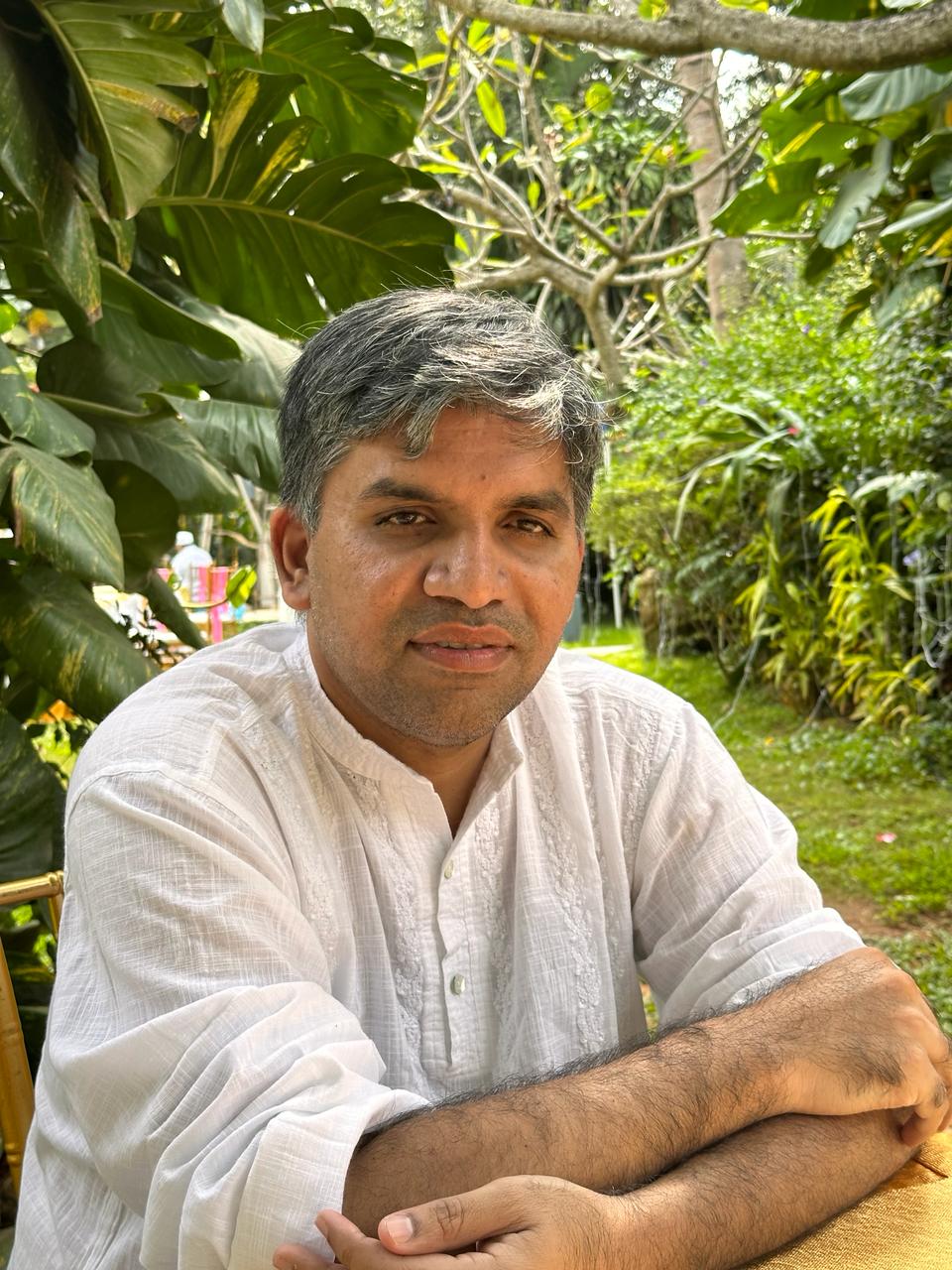
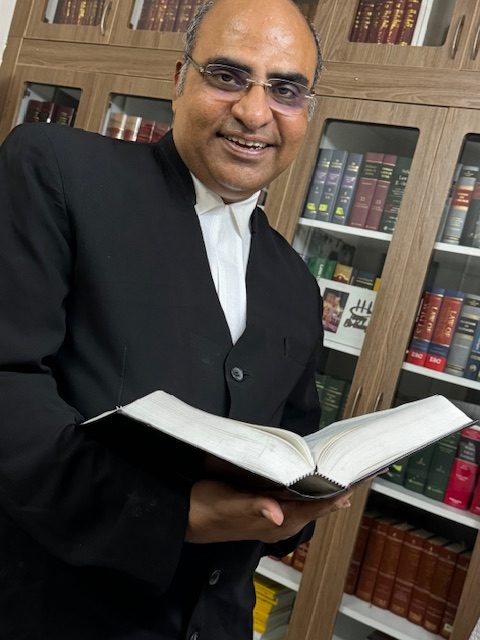
  • “A good cross-examination has the potential to turn litigation in your favor. Every day in a lawyer’s life is an experience and a learning.” – Rajesh Ramanathan, Partner, Factum Law

    “A good cross-examination has the potential to turn litigation in your favor. Every day in a lawyer’s life is an experience and a learning.” – Rajesh Ramanathan, Partner, Factum Law

    This interview has been published by Namrata Singh and The SuperLawyer Team
    What motivated you to pursue a career in law, and could you walk us through your journey from your early days in law school to becoming a partner at Factum Law? Additionally, could you share some of the challenges you encountered during the initial stages of your career and how you overcame them?

    The Question should be ‘Who?’ and not ‘What?”. I owe my professional life to my grandfather Mr. V.V. Ramanatha Iyer who was a prominent Lawyer in the Vellore District. As a school going kid, I used to accompany my grandfather to the Munisiff Court at Ranipet where he predominantly practised. It was his wish that I take after him. I joined Law School much against the wishes of my mother who like many others at that time thought that I would end up a Lier to be a successful lawyer. It took a while to convince her and she reluctantly agreed after I promised her that I will not Lie. It was my grandfather who sowed the seed in me to be a Lawyer and it was he who taught me that a Lawyer can be honest, truthful and successful. Legal education in those days were more theoretical unlike today and we hardly ever stepped into a Court during our Law School days. Of course there were quite a few exceptions to this and a few of my friends started interning quite early. 

    But I was a Reluctant Lawyer, when for the first time I set foot in Court almost 29 years ago.  Growing up, I was very quiet, reserved and had all qualities uncharacteristic of a Litigating  Lawyer. When I started my practise as a junior to my grandfather at Ranipet, I was just happily  going around the corridors of the Subordinate Courts as a privileged grandson but without actually knowing the fundamentals of being a Lawyer. I  felt I was in the middle of a jungle with  my eyes tied shut. I did not know what was happening.  I became a lawyer because of my  Grandfather and also because I did not know what else to do with my life.

    What inspired you to specialize in contentious and non-contentious litigation in areas such as IP, corporate, and commercial laws?

    When we started our careers as lawyers, we had only two options. Either to litigate or go inhouse. Since I followed my grandfather’s footsteps, contentious and non-contentious litigation was the obvious choice. But to sustain and keep up with that choice is a completely different challenge. I would say, Intellectual Property Rights and Commercial Laws chose me rather than me choosing them. A year into practice, my illustrious grandfather advised me to relocate and start afresh with a good Senior Practitioner at the Madras High Court. He felt that the Subordinate Courts were being bifurcated and it would be difficult for me to run around from one Court to the other in the Vellore District of Tamil Nadu. I am glad I took his advice and moved to the High Court where I was given the opportunity to join the chambers of Mr. V. Veeraraghavan, one of the most prominent Lawyers in the field of Intellectual Property Law in Chennai then.  It was more like an institution where we got to learn the practice of IPR and commercial Litigation. Mr. Veeraraghavan was instrumental in tutoring many other stalwarts like Mr. Prabhakara Reddy and Mr. Perumbulavil Radhakrishnan who were also my mentors and still continue to guide me in my journey.  All these mentors inspired me and continue to inspire me to do well. And IPR as a subject is so unique and different from all the other areas of laws, it is but natural to be drawn to this area of specialization.  

    We noticed you’re a senior panel lawyer for ‘The Institute of Chartered Accountants in India.’ How did this collaboration come about, and what does your role entail?

    I have been a Senior Panel lawyer for ICAI  the past few years. The collaboration started after a process of application and selection through an in person interaction. As a Senior panellist, I am entrusted with representing ICAI before the Madras High Court in select matters of complex legal issues. It has been both a learning and a rewarding experience representing one of the premier Statutory Bodies of the Country. 

    Given your extensive experience, what advice would you give to aspiring lawyers looking to specialize in intellectual property law?

    The Legal profession generally is a very noble profession which is also very satisfying and rewarding to all the genuine practitioners. I would most certainly tell all the youngsters who are looking at Law as a career, that honest, sincere hard work would make you very efficient and successful. It is imperative to believe that a lawyer is allowed to interpret a law but not facts. 

    Our profession has spread its wings far and wide now in terms of the avenues for a lawyer to get into. Earlier a lawyer had no other alternative but to either choose litigation or become an inhouse Counsel. But the options that are now available are much more. However,  It is my firm view that every lawyer on their enrolment should litigate in any Court of their Choice and convenience for a minimum of three years before choosing any other option. Because Litigation teaches us everything that one needs in life including Man Management. Right from just seeking an adjournment, to substantial arguments it is just an art. I always believe that the lessons a young lawyer learns from litigation in the first three years, would keep him/her in good stead for the rest of his/her life in whatever they choose to do.  So my first advice, if I may call it, is to gain experience as a litigator for a minimum period of three years before they decide to opt for any other avenues of the profession. 

    As for Intellectual Property Rights, this is the only area of law whose value stems from the public perception of such IPR (except Patents of course) and therefore every case would be different from the other. This is also a subject that just keeps evolving with every new invention and/or creative work. This to me is the unique aspect that makes it even more interesting than any other areas of law. The entry of AI now is taking to  different heights and it would be interesting to see where else it goes. 

    Can you share any insights into the legal landscape in India, particularly in terms of intellectual property rights and brand protection strategies?

    The Legal landscape is pretty promising as I believe that India of all the Major economies of the World has the best IPR protection in terms of Statutory Laws. Having said that, I also believe that we have to improve a lot in its implementation. Our Judiciary has been doing a lot to improve/ fasten the time for delivering Justice which by itself is no mean feat considering the population and the number of Judges we have. 

    As for strategies, I keep thinking that the brand owners take a long time to realise the potential value of their IPR’s and more often than not, the time delay in seeking Statutory protection by way of registering one’s brands or Patenting their new invention results in them losing value. Statutory protection of IPR’s should be the first on the agenda for a brand to be valuable. Registering a brand alone is not enough but maintaining it and protecting it from infringement at the right time is also equally important. In my little experience, I have come across quite a few brands losing their brand value just because they did not take action at the right time. It is also imperative for brand owners to understand that the cost and expenses for protecting and maintaining their brand is more of an investment than just an expense. 

    Looking back at your career journey so far, what are some key milestones or turning points that have shaped your professional growth and approach to law?

    Looking back, It just amazes me that I am able to sustain in this competitive field and quite well. I would like to think that the entire Universe comes to your aid if you just keep working without thinking about the result or the consequences. I take this opportunity to thank all my Seniors who nurtured/ mentored me and who still guide me in my journey. There are quite a few turning points since the day I started my career as a lawyer. I very vividly remember my Grandfather’s loving advice to relocate to the High Court and the day I joined the Chambers of my Senior Mr. V. Veeraraghavan who helped me transition into a High Court Practitioner. 

    The year I spent at the Franklin Pierce Law School in the USA would be the turning point or a milestone in my career. It is not only the Legal Skills I acquired there that made it a milestone, but the people I met there and the multi-cultural life that I was introduced to, changed me as a person. I went in as an Indian and returned as a true International. I still am in touch with most of my friends and teachers and I will always cherish my year at my alma mater. This camaraderie with all these people in a foreign Country for one full year taught me to be affable and friendly to all and guides me in my approach to the Legal Profession even today. Starting our own firm ‘Factum Law’ in the year 2017 was another key turning point in my professional life and with the right people to work with, this has been a very interesting and rewarding journey so far. 

    The International Trademark Association of which I have been a member since 2008, has also shaped my knowledge throughout. The Annual Meeting every year and the opportunity to meet thousands of IP practitioners from around the world in one place is always satisfying. This also helps me and my colleagues in keeping ourselves updated with all the developments of Law around the world. 

    None of this would have been possible if we did not have the right team to depend on. I am eternally grateful to all my team members for being with me through thick and thin. Thanks to them I am certain of many more milestones in my Professional life. 

    Reflecting on your time at UNH Franklin Pierce School of Law, could you share your experience and highlight any notable differences you observed between the educational approach there and the legal education system in India? How do you think these differences have influenced your practice of law?

    The life I spent at Pierce Law is the most memorable and life changing. I would be failing in my duty if I don’t credit Pierce Law for all of my achievements so far in my life and whatever I am destined to do more in this professional life. The Education system is more pragmatic whereas we in India still focus on theory. I am however told that it is changing here as well. There are no lectures in the US education system but only discussion. Which means you have to be prepared to be part of the discussion in every class. And you will be tested in the exams only on the discussion you had in the class. So it is imperative that you are well prepared even before attending the class and you get to participate in the discussion. This I believe is the most pragmatic way of teaching subjects and I hope Law Schools in India follow suit on this kind of pragmatic education. This has greatly influenced my thinking and my preparation for a case. 

    As a faculty member at EBC Learning and an alumnus of the Franklin Pierce Law Centre, do you incorporate your international experience and the teaching methodologies you encountered during your LLM into your approach to teaching? If so, how do you adapt these methods to suit the needs of your students and the legal education landscape in India?

    Whenever I get the opportunity to address  the students on some topic of interest, I make sure I follow the lessons learnt at Pierce Law. That of being pragmatic in my approach. So I try to make it an interactive session rather than just a lecture. This certainly aids in the students improving their thought process and their knowledge. This approach is imperative for Lawyers. I am also of the view that no Law school or college in India produces  Lawyers. They can only produce a good Law Student. It is the legal practice that moulds a student into a lawyer and that takes a minimum of three years. So a pragmatic approach would equip the students better in their transition to a professional lawyer. 

    Could you walk us through what a typical workday looks like for you, and how do you ensure you stay updated on the latest developments in the legal field amidst your busy schedule?

    Life of a lawyer is very demanding and unless we are prepared to sacrifice that ‘me time’, it will be very difficult to succeed. There are times when one feels overburdened but that comes with the territory. A typical day for me starts at 9.30 AM if not earlier. That depends on my Court work. Evenings are spent in preparing for the next day’s work and so on and so forth. Law journals and commentaries accompany me many times even in my travels. There can never be a day where a lawyer can say or feel he knows everything and the day one feels as such, would either be his last day of practice or after his retirement. Since Law is something that keeps evolving and changing with times, we as lawyers have to keep updating all the time. So I would only say ‘keep working’ to keep updated. 

    Do you remember the first time when you fought a case? Please tell us some anecdotes that happened in the courtroom.

    Very Vividly. That was my second day at the Madras High Court. I was asked to appear for a contemnor in a Trademark Infringement case against a formidable and successful lawyer who later became a Senior Counsel. I remember struggling to even mouth ‘May I please your Lordship” and the Judge had to lean forward to hear me. I was so nervous that I didn’t even know how I reacted in a room full of stalwarts. Within a few months, I became better at it and started enjoying my appearances in the High Court. Full credit to my senior who constantly encouraged me. It is those opportunities that I got from my seniors that exposed me to successful litigation early in my life. 

    Could you share with us one of the most interesting and challenging cases from your career that still resonates with you, and walk us through the complexities you encountered and how you navigated them? 

    There are quite a few. Particularly at the beginning of my career where I was assisting a Senior Counsel in a Trademark case. It was an appeal and the Senior Counsel appearing for the Appellant swayed the Bench completely in his favour. It looked as though we wouldn’t even have a chance to argue. 

    When it was our chance, all we did was to pick some errors in the Appellants documents and in no time the Division Bench turned in our favour. It showed me what presence of mind and a thorough knowledge of every single piece of paper filed in Court could do. That was a lesson I carried all through my life and I still make it a point to thoroughly study the files. You never know where the spark would come from. 

    I have also enjoyed my experiences in appearing in trial Courts and conducting cross examinations. One can never be fully prepared to cross examine a witness and a presence of mind is most essential to be a successful trial Lawyer. Conducting trials is an art by itself and every Law Student should expose himself/herself to the art of cross examination. A good cross examination has the potential to turn litigation in your favour. I will end by saying that every day in a Lawyers Life is an experience and a learning. I most certainly love the challenges that this profession throws at me every single minute.

    Thank you 

    Get in touch with Rajesh Ramanathan-

  • “If you’re committed to making a positive impact, integrating accessibility into your daily interactions and engagements is essential.” – Dr. Kalyan C. Kankanala, IP Attorney and Managing Partner at BananaIP Counsels

    “If you’re committed to making a positive impact, integrating accessibility into your daily interactions and engagements is essential.” – Dr. Kalyan C. Kankanala, IP Attorney and Managing Partner at BananaIP Counsels

    This interview has been published by Namrata Singh and The SuperLawyer Team

    Dr. Kalyan, as a founder, could you  give us an overview of BananaIP Counsels and describe your current responsibilities within the  firm?

    Absolutely. At BananaIP Counsels, we pride ourselves on being a forward-thinking IP firm that is not only technology-driven but also champions diversity, with a strong emphasis on women leadership and inclusivity of persons with disabilities. Our combination of technological specialization, legal expertise, and business insight allows us to  provide high quality IP services to clients.

    Our firm has specialized departments led by experienced partners in various technology sectors.  Additionally, we also have focused departments dealing with Trademarks, Copyrights, E-commerce Law, Entertainment Law, Open Source Law, and Technology Law, some of which are integrated IP divisions.

    In my current role, I lead the innovation, consulting, and strategy department of the firm. Our department focuses on the strategic IP needs of our clients, and the professional growth and knowledge development of our associates. We handle strategic and complex IP projects that cover a broad spectrum, from IP mining and audits to devising IP protection strategies, and from resolving disputes to facilitating licensing and commercialization efforts. 

    Interesting! We noted that this year marks the 20th anniversary of BananaIP Counsels. Could you share some insights into the firm’s evolution and highlight some of the key milestones achieved along the way?

    BananaIP Counsels is marking its 20th anniversary this year, having initially taken root in IIM Bangalore’s entrepreneurship cell (NSRCEL) back in 2004 as Brain League IP Services. Our journey through the years has been a tale  of survival, stabilization, and success. Despite the hurdles and destabilizing events encountered along the way, we have achieved at least part of what we set out to do. We believe that our efforts have   contributed to the current IP ecosystem in India at different levels. Overall, our endeavors over the past 20 years have fostered IP knowledge development, human capital growth, policy and legislative advancement, and the enhancement of IP service standards.

    From your experience, what is your assessment of the current IP landscape in India? Additionally, can you tell us your predictions for its development over the next decade?

    Over the past twenty years, the Intellectual Property (IP) system has witnessed considerable advancements in terms of IP filing numbers, the processes and systems introduced by the IP office, enforcement mechanisms, and the judiciary’s responsiveness. As of now, the IP system in India can be described as ‘reasonably friendly’.

    Despite these advancements, there remains substantial work to be done to cultivate an IP ecosystem in India that is both business-friendly and equitable. Currently, the system faces challenges such as limited accessibility, inconsistency and diversity in Court processes and speed, difficulties in digital IP enforcement, an underdeveloped licensing framework, and low hygiene levels. Over the next five to ten years, I anticipate progress in these areas, and I also expect a significant rise in IP filings and registrations.

    I believe the upcoming decade will be a ‘golden era’ for IP in India.

    With the ongoing discussions around Artificial Intelligence (AI) and its influence across sectors, what impacts do you foresee AI having on the field of IP, specifically regarding IP management and practices?

    Today’s discussions on AI encompass a range of IP issues, including protectability, ownership, enforcement, and dispute resolution. While important, these topics will not be the focus of this response. Instead, I will briefly touch upon how BananaIP is leveraging AI in our operations and our future plans for its use.

    BananaIP has always been an early adopter of technology, and we have developed several tools to enhance the quality and efficiency of our work. Currently, we utilize AI to assist us in reviewing and refining our work products, and to supplement some of our file management  and communications.  Due to concerns over confidentiality, we do not use AI for drafting patents and designs at this time.

    Additionally, we have developed complementary tools that aid in file management and the review of competitor filings. We are also in the process of creating predictive and analytical tools aimed at automating audits, portfolio management, and project documentation.

    While General AI has the potential to draft legal documents, the quality of its current output does not yet meet our firm’s standards. However, we anticipate significant advancements in this area, and believe that AI will soon be capable of producing first drafts that exceed the quality produced by our new recruits. Although we do not foresee AI replacing IP professionals in the near future, we do expect a notable adjustment in the distribution of tasks and responsibilities.

    Looking ahead, our goal for the next three years is to develop proprietary tools that will assist us in creating certain deliverables, reviewing projects, and automating manual processes.  Whether we like it or not, I believe that the IP profession has to adapt to the advancements in AI technology, and we must reconsider some of our current  practices. 

    Based on your experience, do interdisciplinary teams having technology, law and business experts work well together? What has your experience been?

    Our experience with interdisciplinary teams has been excellent. The interdisciplinary approach at BananaIP fosters a stimulating and intellectually rewarding work environment. Our operational model blends the openness of research labs with the structured discipline of law firms. Our team comprises technology specialists, many of whom are also qualified patent agents or attorneys with a deep understanding of  the law. Our lawyers   specialize in IP, and have an open mind to learning the science and technology relevant to their work. They   bring unique perspectives and contributions to each project, which  add significant value to our work products.

    We have learned that  BananaIP does not function like a typical law firm, and has  a unique culture. Can you tell us about your culture and values?

    BananaIP offers a welcoming, intellectually stimulating and open work environment. We value balancing work and life as much as we value our clients’ IP and business needs. Unlike many IP law firms, we don’t have a strict hierarchy and rigid structures. Our structure is mostly flat. Diversity, equity, and inclusion are  integral to our culture and values.

    Honesty, integrity, and dedication to our client’s cause form the core of  all our services.

    You have been talking a lot about accessibility off late, why do you believe accessibility is crucial for the IP system?

    One of the primary objectives of the IP system is  the benefit of the public. It  promotes creativity and inventive activity, and grants exclusive rights over inventions and creations with the objective of   eventually benefitting the general public. This objective is achieved through access, disclosure and publication of ideas and creations, and unless  these are fully accessible, a large portion of the public will not be able to benefit from them. In other words, accessibility of the IP system and   disclosures plays an important role in achieving the ultimate goal of  public benefit, and if there is no accessibility, the very purpose of the IP system  will not be served. Therefore, it is important to make the IP system fully accessible to everyone, and to ensure that no one is left   behind.

    In your interactions, you have often highlighted the suitability of the IP profession for individuals with disabilities. Could you explain your perspective on this?

    Certainly, to start with, let me state that I am a person with blindness, and  I have been able to  successfully practise as an IP attorney. This of course would not have been possible without the help and assistance of my colleagues, and confidence reposed in me by my clients. From my experience in the field, I strongly believe that the IP system is very suitable for persons with disabilities. Many reasons led me to this belief, and I will tell you three of them:

    A. Firstly, IP  filing and prosecution is today fully online, and one can practise   this without the  barriers  relating to physical movement and inaccessible premises. Several Courts have also gone online, and  have    taken some steps to facilitate accessibility of documents and materials.

    b. The IP Office  has issued accessibility guidelines, and has established a system to seek  reasonable accommodations. While there is much to be done to make its online systems fully accessible, the IP Office has shown the intent to do so. This makes it relatively easy for persons with disabilities to  overcome accessibility hurdles, and participate fully/equally  in the IP process.

    c. To get into this profession, a person with a disability need not be a lawyer. Persons with any degree can qualify as trademark agents, and  persons with a technical background can get into the patent profession.

    Overall, the IP profession is welcoming, and companies are not too uncomfortable in working with persons with disabilities. In my opinion, if a person with a disability is looking for an option that provides independence, autonomy, and respectability, the IP profession is a good  choice.

    You have been  interacting with  the Indian IP Office to improve accessibility to persons with disabilities. What  do you think the IP Office must do to make its systems and processes accessible to persons with disabilities? 

    The IP Office has taken an important step by releasing guidelines to improve access for all. However, this intention needs to be put into practice effectively. The IP Office  must take the following steps:

    a. The IP Office should organize training sessions to educate their staff about the needs of individuals with disabilities and highlight the importance of providing access. Currently, many officials believe that they have the right to refuse accessibility requests, thinking that the rules in IP laws are more important than the requirements of the Rights of Persons with Disabilities Act. Changing this mindset will make it easier for individuals with disabilities to engage with the IP Office.

    b. It is also important for the IP Office to enhance the accessibility of its online platforms. Despite some progress, their systems do not meet essential accessibility standards. Improving the accessibility of their filing systems and documents would be significantly beneficial.

    c. Furthermore, the IP Office has to consider issuing guidelines or circulars that require the submission of documents in an accessible format. This will ensure that everyone, including those with disabilities, can access these documents easily. Many High Courts have already required documents to be submitted in a format that is readable by optical character recognition (OCR), and the IP Office should follow this example.

    By implementing these measures, the IP Office can facilitate full and equal participation of all individuals, including those with disabilities, in the IP process.

    These steps do not seem very complex, and we hope the IP Office will look into them seriously. We noted that you recently published a book on accessibility entitled ‘Understanding Accessibility’ in which you  have  pointed out that everyone can contribute to accessibility. Can you tell us how we can do that?

    Well, if you have the intent and willingness to make a difference, you may consider  the following simple steps:

    1. Share any document or information you file or distribute in accessible formats. This is easy, and you may consider doing this for   all types of documents you share in general, or file before Courts or Tribunals. Here is a link that gives accessibility guidance for word documents, PDFs, and PPTs: https://www.adcet.edu.au/inclusive-teaching/accessible-content/accessible-documents
    2. Whenever you  share something on social media, ensure that  you include alternative text, image descriptions, video captions, etc. Most social media and messaging platforms have enabled these features, and all you need to do is spend an extra minute to make your post, photo, video, or document, accessible. You will find some accessibility tips at this link: https://disabilityin.org/resource/creating-accessible-social-media-content/

    I hope you will consider  incorporating these as a part of your day to day interactions and engagements.

    Thanks a lot for giving me this opportunity.

    Get in touch with Dr. Kalyan C. Kankanala–

  • Sanjeeth Hegde, Partner, BananaIP Counsels and his diverse working experience in both US and India

    Sanjeeth Hegde, Partner, BananaIP Counsels and his diverse working experience in both US and India

    Sanjeeth Hegde graduated with a Juris Doctorate from the University of New Hampshire School of Law in 2004. Thereafter, he went on to qualify for a Masters in Intellectual Property, Commerce and Technology (MIP) from the same institute. He is a Partner at one of India’s leading IP consultancies, BananaIP Counsels, where he heads the licensing, commercialization and also IP for start-ups practice. He regularly counsels clients such as Samsung, Mahindra & Mahindra, Yash Raj Films, IIT Madras and start-ups out of IIM Bangalore. He is also the co-founder and Managing Partner of the BIP Group, a technology transfer and IP commercialization firm.

    He is entrusted with the responsibility of client engagement, client relationship management, some aspects of operations such as HR, Marketing and IT for the firm.

    In this interview, we speak to him about:

    • The differences between the working environments between the US and India.
    • His role as Managing Partner of the BIP Group.
    • How to avoid a decision paralysis in career options.
    • The importance of mentors in the legal fraternity.
    • The key attributes that one must develop in order to excel as an IP lawyer.


    Hello Sanjeeth, how would you introduce yourself to our readers?

    I consider this interview by SuperLawyer to be a great opportunity to talk about my somewhat unique legal background.  I’m a Senior Partner at BananaIP Counsels (BIP) where I focus on IP licensing, commercialization and strategy.  All of my higher education has been in the US, including my Juris Doctorate, which after completing I worked for several Fortune 500 companies before returning to India.  I’m passionate about teaching and hope to share some my experience with SuperLawyer’s readers.


    Are you a first generation lawyer? What inspired you to take up law as your choice of career?

    Yes, it is true that I am a first generation lawyer from my family.  I happened to relocate to the US during my school years.  Being raised in the US, the two most respected professions that you learn to aspire towards are Medicine and Law.  In fact, I went to college to pursue Medicine but within a short time realized I wasn’t cut out for the rigors of medical school in the US.  So the next best choice, Law. I foolishly left believing law school would be easier.  I was in for a big surprise.


    How would you describe your time at New Hampshire School of Law?

    I pursued my Juris Doctorate from the University of New Hampshire School of Law (then know as Franklin Pierce Law Center), and a Masters in Intellectual Property, Commerce and Technology.  Law school in the US is three years after your graduation.  I found the first year, when the foundation courses in law are taught such as Contracts, Torts, Civil Procedure, etc. to be incredibly difficult.  But as the years progressed I became more comfortable and started to excel.  At my law school senior students are chosen to assist professors as Teaching Assistants.  I had the privilege to be a Teaching Assistant for courses such as Technology Licensing and Alternative Dispute Resolution.  I was a Member of the Licensing Executives Society an intellectual property club and also served as the President of the Indian Law Student Association.


    What is your advice to students to avoid a decision paralysis in career options?

    I strongly believe that nothing beats practical experience.  One of the biggest weaknesses that I find when hiring new law graduates is legal analysis and writing.  Our law programs unfortunately do not adequately prepare our law graduates for the legal profession’s realities.  First, I would advise students to take maximum advantage of internships, not hop from one month internship to the next, you can hardly learn anything in a month.  Pick a firm or an attorney who is willing to invest their time in you and spend at least three month with them.  If at all possible return to the same firm for additional internships as you progress through law school. This progression in your legal learning and experience will pay rich dividends as compared to multiple one month internships.  Second, I would tell students that a post graduate degree such as an LLM immediately following your basic law degree absolutely doesn’t make you any more attractive a hire than a basic LLB graduate.  Grab a job after graduation even if on an apprentice basis and get the necessary exposure to various areas of practice.  After a couple of years you’ll have a good sense of what specialization you like and would like to make a career out of, then pursue a full time, or my recommendation, a part time graduate degree to specialize.  Why part time? Unless you get admission into a top graduate program either in India or abroad, pursuing a full time program at the cost of work experience adds almost no value to your resume.  So if you are one of those who isn’t lucky enough to get into a top graduate program, then continue working and building your portfolio, and pursue a part time or distance education specialization degree in an area of your interest.


    What are the differences you find in the working environments between the US and India?

    Having lived abroad for many years I had this yearning to return home and make something of myself here. I did my homework and felt there were greater opportunities in India than anywhere else.  Though financially I would have to take a step back in the beginning, in the long run I could more than make up for it.  The sophistication and professionalism of the Indian legal practice improves year on year.  I don’t think it is fair to compare the conditions here with any other country as the working environment can vary drastically based on local circumstances.  India’s legal industry is in a constant evolution as a result of the fast growing economy and continues to reshape itself every day.  This is great for all of us in the legal fraternity as we are the ones determining what our environment looks like.  This however might not be the case in places like the US which as a developed economy has a more stable legal working environment.


    What inspired you to choose IP law as your area of expertise?

    My choices were either International Law or Intellectual Property Law.  I chose to specialize in Intellectual Property Law as University of New Hampshire School of Law (formerly Franklin Pierce Law Center) where I got admission, had one of the leading IP faculty in the world and was a highly ranked program.  So if you ask me honestly, though I went to Franklin Pierce to just study law, my interest in IP grew and I ended up doing a second degree specializing in IP, because I was surrounded by some passionate IP professors and fellow students.


    Tell us about your early professional experiences.

    The economy was quite poor when I was graduating and there weren’t many legal jobs to be had.  I was one of the few lucky ones in my batch, I ended up with a contract position with a large multi-national organization working on financial securities though I had no background in this area.  You had to take what you could get.  Luckily within a few months I was able to move into a full time position with the same organization working on IT and technology licensing.  This started my career and I decided to focus on this area for the first several years.


    How important is to have a mentor or guide during the formative years of one’s career?

    Unfortunately I did not have an appropriate mentor during the formative years of my career.  I’m not sure now, looking back, if I just couldn’t find one or if I was not open to having someone as a mentor.  Nonetheless, it is very critical to have someone play this role in a young lawyer’s career as the journey can be professionally and personally complicated.  During the initial years of my career my primary focus was financial advancement.  I was constantly looking for the next opportunity that would pay me more.  This I realize now was at the cost of some good jobs, with good bosses and colleagues, and great learning opportunity.  Nobody was there at the time to tell me this. When I mentor young attorneys or students today, the first thing that I ask them to do is to choose the right boss and not chase pay.  If you learn the right things in the formative years of your career then pay will automatically follow.  Be patient.


    On what parameters do you choose the projects you work on?

    My focus areas at BananaIP Counsels (BIP) are IP licensing, commercialization, and strategy.  This applies to various sectors such as Media & Entertainment, IT/Software, E-commerce and Manufacturing.  We have a very collaborative approach at BIP and a flat hierarchy.  It isn’t uncommon at our firm to have our associate attorney’s lead projects with support from Partners unlike some firms where the Partner is always at the front.  Therefore a good amount of my time is spent on mentoring associates on projects rather than actually working on them.  I do consciously build a specific body of work and this is dictated by what our clients ask us.  The last few years the sophistication of IP in the Entertainment and E-commerce industries has drastically increased and we at BIP have made the conscious effort to up-skill ourselves to meet the demand and capture the opportunity.


    What are the roles and responsibilities that you are entrusted with as a Senior Partner?

    Most people assume that as an attorney you spend all your time on researching, writing and advising clients on legal matters.  That is partially true.  I spend about half my time on client matters. The other half, I have been entrusted with the responsibility of client engagement, client relationship management, some aspects of operations such as HR, Marketing and IT for our firm.  For me it is a balancing act between client projects and operations, one cannot be ignored for the other.


    Could you share with us some of your experiences from the high profile entertainment litigations you have worked on?

    We at BIP have had the opportunity to represent and advice some of the leading film studios of India.  In their business of content creation and monetization it isn’t uncommon to deal with mis-use and infringement on a daily basis, especially with the prevalent options available to infringers through digital media.  Litigation is a very small part of our work in the Entertainment industry; most of our efforts go into contracts as related to engagement of talent, licensing, merchandizing, distribution, and the provision of legal opinion.


    What are the challenges you have faced in building up your career as it stands today?

    IP is an evolving area of law in India and has gained prominence over the last decade.   When we started out we were somewhat ahead of the times, there wasn’t much of a demand for our specialized legal services.  However in time, we have come to be recognized as one of the pioneers of IP in India.  It has taken a lot of effort, and we have probably spent equal amounts of time in educating the client and industry about IP, as much as working on their projects.  Over the next five years I see myself focusing further on areas such as Entertainment and E-commerce and building a steady set of key clients for this practice.  I also see great opportunity in IP valuations and commercialization and this is an area that I will dedicate time to exploring.


    What are the key attributes that one must develop in order to excel as an IP lawyer?

    IP has the ability to transcend beyond mere interpretation and application of the law.  The commercial and strategic elements of IP practice in my opinion play a larger role.  For example, in a software licensing deal, an IP lawyer has to not only think about what laws to apply to the transaction, but also consider how best to get the business deal through without being a legal show stopper.  For many IP lawyers looking beyond law becomes a challenge.  I fortunately through my first few jobs had the role of a deal maker rather than just a lawyer.  As a part of these roles I had to learn to represent an entire organization’s requirements, from Sales, R&D, Finance, and Legal while negotiating and putting win-win technology licensing and collaboration deals in place.  I still rely heavily on these skills in my practice today.


    How has your experience been as a visiting faculty at Alliance University and IIM Bangalore?

    Based on my experience of having taught IP at various law schools and having hired many law graduates, I would say our legal education should get a little more practical.  There should be a stronger emphasis on teaching students legal research and writing as well as create greater opportunities for first-hand experience.  As I had addressed in a previous answer, I had indicated that multiple one month internships, which is the norm in Indian law schools, practically serves no purpose other than getting you to see the nice chairs and tables at a firm, and before you know it, the internship is over.  Rather, students should be given the opportunity to intern for a minimum of three months at the same firm or company during each year of law school.  Secondly, law schools should create law clinics, which are credited full term courses in areas such as IP or Criminal Law, etc…  Clinics are led by a professor and the students would work as associates managing real cases on a pro-bono basis.  I was lucky enough during my law school days to counsel real clients as a part of my IP and Commercial Transaction Clinics.  Yes, I do have plans to spend more time in academia once certain goals that we have been set for BIP Counsels are achieved.


    How do you manage to maintain a work-life balance as a busy legal professional?

    It becomes easier to achieve work-life balance when you gain some seniority in your profession.   If you don’t break away from thinking about work during some point in the day, for example I stop checking work emails once I reach home in the evening, over time you tend to get worn out and your interest in your work starts to diminish.  These days however it is very difficult to achieve this because of smart phones where you are constantly connected and always reachable.  Sometimes I just make a conscious decision not respond to an email or answer a call when I know that it can wait till tomorrow.


    How do you keep yourself abreast with the latest legal developments and industry news?

    This is a very important aspect of the legal profession, the learning can never stop and if it does you are no longer of value to your clients or your colleagues.  We at BIP Counsels address this in a couple of ways, we actively teach at leading institutions, and we regularly write and publish.   Teaching forces you to keep up with a subject through research and preparation of course materials for smart and inquisitive students who will keep you on your toes.  We also manage one of the world’s top 10 IP publication’s, Intellepedia – IP News Center , where we actively write about IP matters and news.


    What advice would you like to give our readers?

    Your legal career is a marathon and I can guarantee you it will never go just as you planned.  Be flexible and open to new opportunities.  Remember the legal profession in India is still evolving, and the demand for qualified legal professionals is constantly increasing.  We have more options today beyond traditional practice.  Be open to in-house positions, LPOs, academia and others.  The first five years of your legal career should be dedicated to learning.  While a decent salary is very important please don’t make it your primary priority in choosing a job.  In the long run, the bosses and colleagues th

  • Kalyan C. Kankanala, Managing Partner, Banana IP Counsels on building a career in IPR and writing novels

    Kalyan C. Kankanala, Managing Partner, Banana IP Counsels on building a career in IPR and writing novels

    Dr. Kalyan C. Kankanala pursued law at Osmania University, graduating in 2001. From there he went on to do an LL.M in Intellectual Property from Franklin Pierce Law Center and a PhD. in Patent Law from the National Law School of India University in 2006. Kalyan is a renowned Intellectual Property attorney in India. He specializes in helping clients maximize business value from their intellectual assets. He is the founder of Brain League IP Services and BananaIP Counsels. He is also the founder of the popular IP Blog, SiNApSE.

    Kalyan is a prolific writer, with several fiction and non-fiction books and publications to his credit. He teaches at premier institutes like National Law School, Bangalore and IIM, Bangalore. He worked as a consultant for the United Nations Industrial Development Organization and is at present a trustee for the Cane Foundation, and a member of the editorial board of the Journal of Intellectual Property Rights, NISCAIR.

    In this interview, Kalyan speaks to us about:

    • His days as a student and motivations during his academic journey.
    • His tryst with Intellectual Property Law and his work as an IP Attorney.
    • His passion for researching, writing and publishing.
    • The future of IP practice in India.
    • The challenges faced while establishing his start up Brain League, and later BananaIP and his views on social welfare.
    • How he balances his personal and professional life.
    • His Legal Thriller novels and other IP works.


    How would you introduce yourself, given that most of our readers are law students, law aspirants or professionals in the legal arena?

    I am an Intellectual Property attorney, who loves to work with creators and inventors. The merger of law, Science/Technology and Business excites me, and I am glad to have chosen this profession. Apart from practicing IP Law and helping clients realize business value from their intellectual assets, I also teach at institutions like National Law School, Bangalore and the Indian Institute of Management, Bangalore.

    I enjoy writing and have published several articles and books. In addition to academic publications, I also write legal thrillers on socially relevant themes. Right now, I am finishing my third book in the IP Law Thriller Series, The Dravidian, a traditional knowledge thriller. Earlier, I published Road Humps and Sidewalks, a Patent Law Thriller, and Pirates of Bollywood, a Copyright Law Thriller.


    What would you say motivated you to take up law as a career, given that it was not a very popular option in India?

    I was never motivated to pursue a career in law. In fact, I never considered it as an option. My entry into law happened by accident. I wanted to be a medical doctor, and therefore, joined a medical school. After six months in school, I had to leave due to the rapid progress of retinal degeneration, which led to a loss of working and reading vision. Then, on a well-wisher’s advice, I joined a law program in Hyderabad.


    How well did your experience in Hyderabad prepare you for a life of academic prestige and professional success?

    Though I did not study at one of the best law schools in the country, my law college at Hyderabad gave me the foundation and encouragement to pursue higher education and research in Intellectual Property. Some of my Professors at the law college were a great source of knowledge and inspiration, and continue to be so even today. Hyderabad was in fact the starting point of my IP career – both academic and professional.


    What were the influences behind your decision to pursue an LLM in Intellectual Property Law from Franklin Pierce?

    The convergence of Science and Technology with law played a major role in influencing me to pursue an LLM in IP. In those days, Franklin Pierce was rated as the best IP School in USA, and therefore I decided to study at that law school. I was fortunate to not only get a good scholarship from Franklin Pierce, but also funding from the Tata Foundation for my LLM program.


    Were you always as fascinated by the field of IP law or was it an acquired passion that set in through your college years?

    As I mentioned earlier, I joined the LL.B. program by accident, and throughout the course, I was looking for an interesting career subject. Intellectual Property Law caught my attention in my fourth year and I was convinced by the end of the academic year that IP would be my area of specialization. Two factors led me to this decision: the role of IP in creativity and the involvement of Science and Technology in IP Law, especially Patent Law. The fascination started only after I started delving deeper into the subject.


    While most opt to end their education at an LL.M, you pursued a PhD in Patent Law from National Law School of India University. What drove you to higher education in your field of interest?

    Initially, I aspired to have a career in academic research and teaching, and therefore, joined the Ph.D. program at NLSIU, Bangalore. In light of my medical background, I chose Genetic Patent Law as my research theme. However, certain circumstances drove me into IP practice. In fact, I co-founded my first firm, Brain League, now BananaIP, when I was at National Law School, pursuing doctoral research.


    Between founding Brain League (now BananaIP Counsels) in 2004, while pursuing a PhD at NLSIU, and subsequently teaching at NLSIU as visiting faculty from 2005 onwards, how did you manage all of these time intensive tasks together, all while publishing research papers in domestic and foreign journals, and writing novels?

    Well, I love to write and teach, and have never faced issues with managing my time between practicing IP, teaching, and writing. Teaching and writing in fact help me do well in my profession as they drive me to learn continuously and keep abreast of IP developments. I enjoy creative writing, and have found time to write at least one novel every year during the last three years.


    Would you attribute any of your success to the types of internships you were exposed to? How would you advise current students to go about the process of finding and targeting internships?

    During my days at law school, interning was not very prevalent. I did not intern anywhere and missed the opportunity to learn the nuances of legal practice during my student days. Internships are a great way of learning the dynamics of legal work and choosing the right field that fits one’s goals. Students must look to intern at firms and companies specializing in different areas of law to get a flavour of the various fields of practice.


    Where does your love for writing come from? What motivates you to write?

    I do not need motivation to write. I write because I thoroughly enjoy writing. Reading and writing give me great happiness. Sometimes, writing helps me learn and understand a concept/issue better.


    What kind of research and work goes into your publishing?

    Normally, to write 500 words I spend at least five hours on research. Having said that, some topics require much longer, and some others, much less time based on my familiarity with the subject. For example, I take much longer to write on Medical Law when compared to patent law.

    Also, there is a difference between fiction and non-fiction writing. While my fiction is largely driven by experiences and observations, non-fiction is based on law, facts, case laws/studies, etc.


    How would you advise students to go about their careers with respect to research and writing, publishing-grade academic papers?

    I wrote my first article during the second year of LLB. It was not published but it taught me a lot about the topic. My first publication came along only during my LLM Program. It required one full semester of research to be eligible for publication. Nowadays, it is not very difficult to get published if one writes a well-researched, articulate paper on a contemporary issue.


    kalyan-kankanala-2

    What sort of an effort did it take to get published by world-renowned publishing houses like the Oxford University Press, Japanese Innovation Foundation, Thomson West, etc.?

    It was quite challenging to get my first book published. I started by identifying appropriate publishers and writing to them. All publishers send you a proposal form, which asks for much more than details of your book. It is basically a pitch document through which one must make a case for acceptance of his work for publication. In addition to book details and sample chapters, it includes market data, marketing and promotional information, author profile, etc.I sent proposals to six publishers and got offers from three of them. Then, I weighed their stature and published with the one that I felt had the best visibility and reach. Once my first book was published with a reputed publisher, it was easy to get good publishers for my subsequent works.


    What are your upcoming novels? Are they also related to IP?

    Two of my books are set for release in 2016. Both of them do not relate to intellectual property. The first novel, The Oath, is a medico-legal drama. The second one, DogMafia, is a short thriller on the dog abduction mafia in Bangalore.

    My next IP Law Thriller is ‘The Dravidian’. This book is expected to hit the stands in 2017 if I finish it as per schedule.


    In setting up Brain League (now BananaIP), what were the challenges and obstacles you faced as a legal start up in the Indian market?

    Unlike start-ups in other areas, legal start-ups cannot market, advertise, and scale up through standard channels. While incubating out of IIMB’s entrepreneurship cell, we ran around the campus brainstorming for different strategies, only to realize that none of them would apply to us. To make matters worse, I was a fresher out of law school, with very little experience. My partner had some technology experience, but no legal experience or background whatsoever. We were probably in the sixth month when the first opportunity came our way. Sasken Technologies, a company based out of Bangalore, was looking for large-scale IP training and we managed to get the contract. Thereafter, for reasons we cannot really pin point, clients got in touch with us at IIMB and wanted to work with us. At that time, most patent lawyers lacked technology backgrounds and we provided that value to clients. By virtue of the said uniqueness, several newspapers and magazines carried stories about us, and things started falling in place.To cut a long story short, I think we were at the right place at the right time. Also, we were fortunate to get the backing of reputed Professors like Prof. Pavan Mamidi (IIMB), Prof. Ramakrishna (NLSIU), Prof. Anil Suraj (IIMB), Prof. Damodaran (IIMB), Prof. Murali (IIMB) and several others.


    What are your views on career choices other than mainstream corporate or litigation streams such as teaching, etc.? How, if at all, have your views on the same been affected by your time spent as visiting faculty at NLSIU and teaching at IIM, Bangalore?

    Today’s law graduates have more choices than before. The practice of law is getting more specialized, and many new opportunities are opening up on a daily basis.

    I once wanted to be in academic research and teaching, but could not take that path owing to certain circumstances. Unlike those days, the salary scale for teachers is now quite decent and it surely is a very good career option. In addition to teaching, students may also consider options like public interest advocacy, policy level lobbying, government positions, judicial services, etc. Starting up is also a very good option for law graduates. When we started Brain League in 2004, joining a corporate was an attractive proposition, and most of my friends preferred to join law firms or companies. Though we initially made several sacrifices by starting up, we were able to build the third largest IP Firm in India by 2012. Today, BananaIP is one of the fastest growing firms in India, and in hindsight, I feel I made the right decision. At present, the ecosystem in India is very conducive for entrepreneurship, and there is a higher probability of success for legal startups.


    What are your views on Intellectual Property as a lucrative and growing area of legal practice in the global scenario today?

    Intellectual Property is one of the fastest growing fields of law in India. Several areas of IP like licensing, open source, portfolio management, technology transfer, valuation, IP Management and even litigation are still in their early stages, and have a long way to go. These areas will have great growth potential in the coming years.

    IP Practice in India has progressed substantially from the filing, prosecution and registration perspectives, both qualitatively and quantitatively, and I foresee some kind of equilibrium in these areas by 2020. Having said that, if the Indian IP filing scenario grows like that of China, there will be tremendous growth in these areas as well.

    Moreover, there are several areas of law, where IP forms a very important component. Such areas include Entertainment Law, Sports Law, Technology Law, Ecommerce Law, Art Law, etc. These areas of law are still largely unexplored, and I foresee great growth potential in the said areas of practice.


    Having spent nearly three years as a National expert on IP at the United Nations Industrial Development Organization, how did your experiences there affect you as an individual and as a lawyer?

    Working with the United Nations Industrial Development Organization (UNIDO) taught us many things. I took up this work in association with my colleague, Soma Shekar, who is a leading Mechanical Patent Expert, and also, a good friend. At some level, we can say that working with UNIDO changed us as individuals. The work with UNIDO cluster companies in machine tools, plastics, and foundry gave us great insights about the said sectors, and how SMEs in those sectors operate. Today, this experience not only helps us understand SMEs better, but also enables us address their needs effectively. During our fieldwork, we met some very special, yet humble individuals, who have been making telling contributions through their innovative activities for more than thirty years. They taught us a lot about their work, and life in general. We feel privileged to have met them and treasure the knowledge they have given us.


    As a Trustee at the Cane Foundation, what motivated you to participate in social welfare for the disabled?

    Well, I always find it difficult to put this across. I am visually disabled, and had to fight the system for almost everything ranging from getting a scribe to travelling on a flight. We started the Cane Foundation to ensure that other disabled persons do not face the same problems and also, to take disability support to the next level. We were fortunate to get support and funding from people like Prof. Ramakrishna (NLSIU) to get the trust going.


    What advice would you give students looking to build a career in Intellectual Property Laws?

    Intellectual Property is a great field to be in. If you like to work with creators and inventors, have the ability to understand business, science and technology, and can adapt to change quickly, go for it. But, note that working with creators is not the same as creating. You will mostly be at the back end of creativity, helping your clients protect, manage, enforce and make money out of their intellectual assets, and may not get the visibility creators get.


    Amongst so many things do you find enough time for a personal life or does that have to be managed separately?

    Time for family and fun has never been a problem. I enjoy doing most things I do, and do not necessarily manage my personal life separately.


    What factors, facets, or traits would you attribute your success to? What, if at all, do you believe still needs work?

    Intellectual Property as a field is vast, and continuously evolving. To be competitive, you must learn on a daily basis and swiftly adapt to change. Over the years, I have been fortunate to work on some cutting edge projects, and learn from some of the best in the field. So far, I have merely touched the tip of the IP iceberg, and have a long way to go before I can call myself successful.


    What would be your parting advice to our readers?

    Pick a career path you enjoy and give it your best, the rest will fall in place.

  • Sumeet Malik, Director, EBC, on studying at Franklin Pierce, the publishing business, and his experience

    Sumeet Malik, Director, EBC, on studying at Franklin Pierce, the publishing business, and his experience

    sumeet-malik-2Sumeet Malik graduated from NLSIU in 1999. Thereafter he worked briefly for nine months in Mr. K K Venugopal’s chamber and then decided to pursue an LL.M in Intellectual Property from Franklin Pierce. With his legal training and specialisation in Intellectual Property Law, he joined his family-run Eastern Book Company. Currently he is the Director at EBC and manages overall Content and Editing for EBC. We asked him about:

    • Graduating from NLSIU and from Franklin Pierce
    • Work and typical day at EBC
    • Integration of a ‘lawfirmite’ in a publishing house


    Tell us a bit about your childhood and pre-college life as well as educational background.

    I did my schooling from La Martiniere College, Lucknow, an over 150 year old institution. Law was very much in my blood – I was born in a law publishing family. My grandfather, Shri P.L. Malik who was educated only till class X, had by the dint of hard work and perseverance, compiled a book called ‘Industrial Law’ in 1950. It is today the most authoritative book relied on by Industries and Industrial houses in India. My father completed his law from the law faculty, Delhi as a gold medalist and went to do his LL.M. from Columbia University, New York. So yes, there was quite a lot of law in my background.


    The image of a lawyer back in ’94 was neither inspiring nor attractive for most students. What motivated you to choose law for a career?

    Coming from a law publishing background one would imagine studying law to be the choice, but it was an informed decision.


    How was your experience in NLSIU?

    It was a great learning experience. I met many wonderful people but everyone whom I interacted with taught me something. It would not be out of place to mention Prof. Menon and Prof. NS Gopalakrishnan to have had the most influence on me. My biggest academic takeaways from law school were my ability to research the law and how to think like a lawyer and this is what I try and tell all law students today. The law that you study while in law school will change but if you have the skills I mention then you are prepared for the rest of your life.


    Right after graduating from NLSIU you went for an LL.M. in Intellectual Property from Franklin Pierce. How was your experience with faculty and academics there?

    Actually, I worked in Mr KK Venugopal’s chamber for nine months before I went for my LL.M. Those nine months too were a great learning experience. Franklin Pierce has a great faculty. The teaching style is a little different from NLS. There is a greater emphasis on writing papers and class room discussion. The level of academics is quite high in Franklin Pierce. I would say most definitely so. My class had so many people from all over the world and I think I learned from all of them, some a little, others more.


    Would you recommend an LL.M. from Franklin Pierce to people who want to work in the Legal Publishing Industry?

    I think doing an LL.M. or a Masters programme helps in the overall development of a person. You gain a lot of exposure. An LL.M. at Franklin Pierce or any other US law school should be an added bonus for working in the Legal Publishing Industry.


    What does a Director at a publishing house like EBC do?

    EBC is a family run and managed business so each of us have our own responsibilities. My most important responsibility is content development, so whether it is enhancing content for SCC Online or co-ordinating with Authors for new titles. I edit/compile/write fifteen books in a year. Human resources for one division of the group is also looked after by me. It’s a little difficult to tell you about a typical day since each day brings different challenges. In the last year I have also travelled extensively, so there is something new that happens daily.


    What are the top three challenges you faced as a Director of EBC?

    I think that the greatest challenge is in the implementation of systems. Other challenges include the hiring and retaining of the right talent. There is a lot of expectation from the EBC group for making available high quality legal resources and quickly too. So it is important to meet those expectations.


    What would you say are the primary similarities between a conventional law firm and a publishing house?

    I would think that there is little similarity between a conventional law firm and a publishing house. The pace, expectations and deliverables are completely different. A lawfirmite can integrate into the EBC work environment but they will have to readjust all three – the pace, the expectations and the deliverables. Each project on which legal editors work has something new to offer. Learning and personal satisfaction and fulfilment are placed at a premium when working at EBC.


    When you hire law graduates, what kind of skills and profile do you look for?

    When hiring law graduates it is important to gauge their compatibility to the work i.e. of being a legal editor. Good analytical and research skills are needed to work as legal editors and since English is the medium through which this knowledge is communicated good English skills are a must. Some of the requirements are part of a person’s nature and others can be developed through practice and effort.


    What kind of effort should a young associate put in to work to get it appreciated?

    It’s hard to point out the kind of effort required to be appreciated, but honest hard work cannot remain unnoticed for long, so the emphasis should be to complete the task to the best of one’s ability and for the personal satisfaction of one’s self. No one can ever take that away from you. A young associate will usually perform tasks that have been allotted to them and a director will usually be involved in policy formulation and implementation of that policy.


    What is your impression of the current crop of young lawyers?

    There is a lot of casual attitude towards the learning process. A lot of students believe that having got into a prestigious law school is enough to land them a job or success in their lives. That’s not how it works. Develop your legal research skills. The law is ever changing. Also, get the basics right. Always think in first principles.


    Do you offer internships opportunities at EBC?

    We welcome internships at EBC. Those interested can send in their CVs to hr.manager@ebc-india.com. For us if you are willing to learn and utilize the internship for learning you are welcome to EBC.


    What would be your message to a student aspiring to join a publishing house?

    My advice to all such law students shall be: Take your learning seriously.