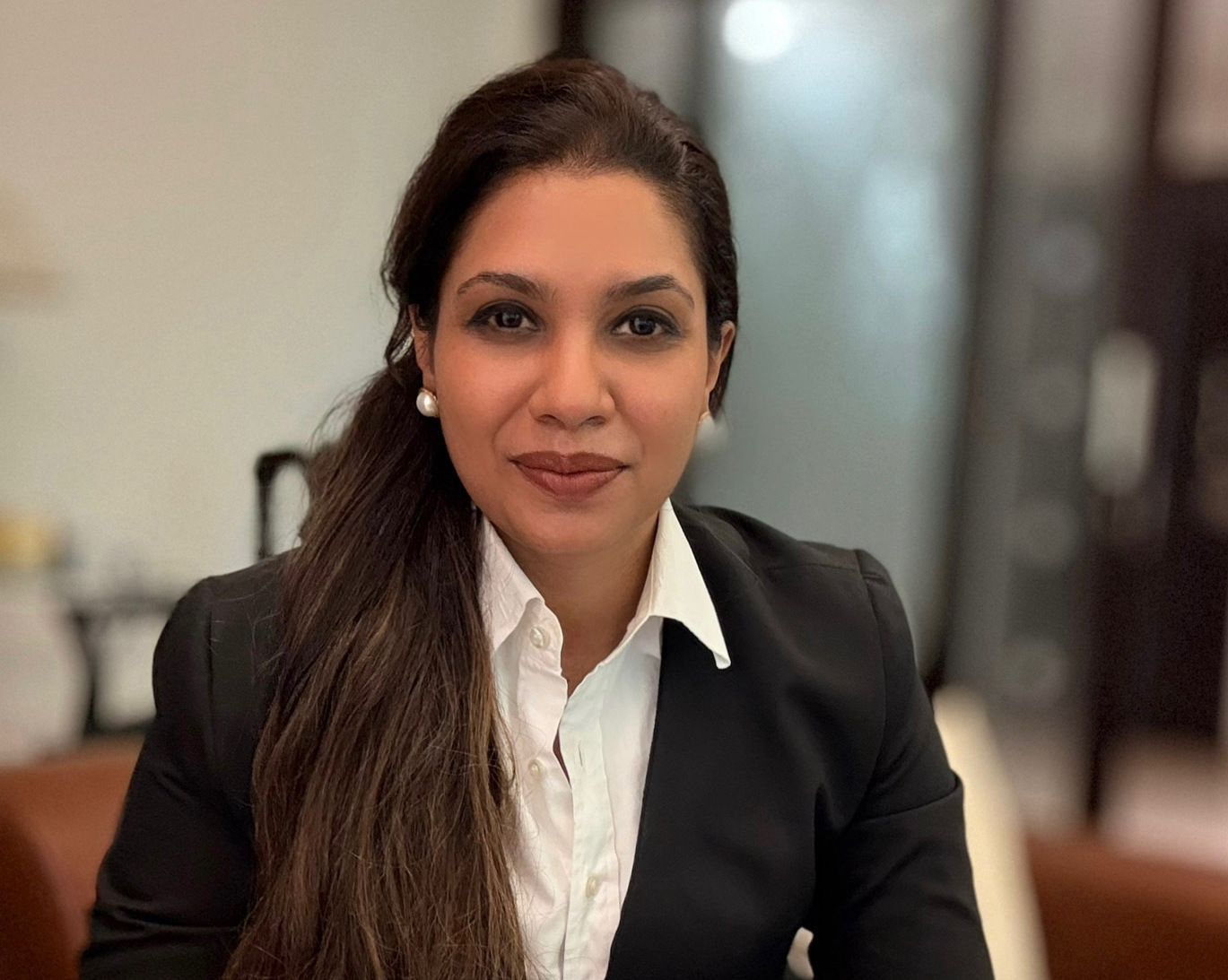
You began your independent practice right after law school, at a time when structured platforms for women litigators, especially in criminal defense, were limited. What inspired you to take that bold step so early in your career?
While studying law I realised that in Mumbai there were few structured opportunities for young women who wanted to build a career in criminal defence. Starting my own practice straight after graduation was a risk, but I wanted to create the kind of ethical and professional environment I had hoped to find. With strong support from my family, particularly my father, I began with pro bono work and built it one brief at a time. Those early choices continue to define our commitment to transparency and high professional standards.
Having completed a decade in the profession, what initially motivated you to pursue law, and how did your experiences in law school deepen your understanding of the subject and shape your decision to take up litigation as a career?
In high school I was active in debate and attended a Youth Conference at the United Nations in New York. Those experiences sparked an interest in advocacy and public affairs. I once considered becoming a commercial pilot but soon realised I wanted a career that allowed me to think critically and work closely with people. By the time I completed my law degree, litigation felt like a natural fit.
Criminal defense, particularly white-collar crimes and complex litigation, is often regarded as one of the most demanding areas of practice. What drew you to this specialization, and how has your experience in this space evolved over time?
Litigation is demanding but deeply rewarding. In criminal defence, defending rights and ensuring due process is both challenging and meaningful. Some of the most intellectually engaging matters have involved clients who cannot pay, where the work is driven entirely by principle. The hours are long and the stakes are high, yet the practice remains fulfilling. Persistence is key to sustaining a career in this field.
You have handled high-profile and complex matters involving banking fraud, narcotics, and serious criminal charges. Could you share an experience that was especially challenging, and how you prepared yourself to handle it effectively?
Early in my career I learned that knowledge of the law is only one part of effective practice. Litigation is about people, strategy and navigating systemic realities. The unpredictable nature of the justice system taught me to create internal processes that bring order to a naturally chaotic environment. We built systems to manage complex briefs while staying client focused and transparent. These lessons continue to guide how our team approaches every case and every client. Because we are active litigators, we bring a trial-tested perspective to all our non-litigation work. Our courtroom experience sharpens the way we draft contracts and structure transactions, and our work in criminal defence makes us particularly attentive to compliance and risk. This combination of skills allows us to offer advice that is both practical and strategically sound.
As the founder and managing partner of Khemka & Associates, your practice has grown far beyond criminal defense into areas like consumer law, insolvency, family law, and cross-border matters. How do you manage these wide-ranging responsibilities while balancing your personal life?
Balancing a litigation practice with personal life is never simple. I have been fortunate to have the support of family and friends from the very beginning. A turning point came when my younger sister, who trained with us while still in law school, formally joined the practice. Her distinct skill set enabled us to expand confidently into areas such as arbitration, consumer law, insolvency and family matters. With a strong team culture and shared values we have been able to grow while staying true to our commitment to professionalism and client service.
You have also dealt with cases involving immigration law and cross-border issues. How have these experiences influenced your practice, and what unique challenges have you faced in handling such matters?
Cross-border matters require working across jurisdictions and cultures. My early international exposure helped me collaborate effectively with foreign lawyers, but the real challenge lies in understanding different legal systems, managing clients across time zones and coordinating procedures. These experiences have strengthened our ability to handle complex briefs and positioned us as a practice that combines local expertise with a global perspective.
Mentorship has been an important part of your journey, particularly in creating opportunities for young women lawyers. What values guide your approach to mentorship, and how do you envision the next generation of litigators evolving in India?
More young women are entering the legal profession, but those who stay the course in litigation, particularly in Mumbai, are still relatively few. Many leave for personal reasons or because of a lack of sustained professional support. At our firm we make mentorship a priority, passing on the values that define our practice: open communication, an insistence that no task is too small or too big, and a belief that consistent effort and hard work are irreplaceable. As technology transforms courts and practice management, it will be inspiring to see how the next generation of litigators shapes this changing landscape.
Having appeared before diverse forums ranging from trial courts to the Supreme Court and specialized tribunals, what key differences have you observed in the way proceedings are conducted in every forum, and how do you adapt your strategies to navigate these differences effectively?
Each forum has its own rhythm and expectations. Trial courts require agility and a deep command of procedure. Higher courts demand precision and a focus on legal principles. Specialised tribunals often call for technical expertise. Every judge manages their docket differently. Success, apart from the merits of the case, depends on quickly understanding these nuances and adapting advocacy accordingly. Clarity, professionalism and thorough preparation remain the constants across every forum.
Finally, after building an independent practice and establishing a recognized firm, what advice would you give to law students and young advocates who aspire to follow a similar path? What has been your source of motivation over the years, and how do you continue to stay inspired for the future of your practice?
Litigation has some significant barriers to entry and starting independently is not easy. Whether you begin on your own or under the guidance of a senior, the training demands focus, resilience and discipline. We are all human and we will make mistakes; the more you practise, the more you learn and the better you become. Patience is key. Over the years I have found motivation in building a practice that combines the rigour of an international firm with a commitment to accessibility. We take on matters across a wide spectrum, sometimes at reduced fees or even pro bono when circumstances require, while maintaining the highest ethical standards. This blend of professionalism and service continues to guide the future of our practice.
With extensive experience in law, you specialize in financial offences, particularly under the PMLA and the Prevention of Corruption Act. What initially drew you to this area, and how have you seen the landscape of white-collar crime evolve in India over the years?
What drew me to this space and what keeps me here is the fact that financial crime enforcement sits at the crossroads of criminal law, regulatory risk, and constitutional rights. As I see it, financial offences are not just a regulatory issue. They are a fundamental rights issue. When assets are attached, when accounts are frozen, or when public notices are issued, it’s not just compliance at stake, it’s the right to property, the right to reputation, and sometimes the very ability of a client to run their business. Even the presumption of innocence can become collateral in financial crime enforcement. These are fundamental protections under the Constitution, but they get tested in the financial crime context more often than we like to admit.
Over the years, I’ve seen the enforcement landscape shift from reactive prosecution to preemptive intervention. There’s more focus on pattern recognition, on tracing funds, re-examining legacy transactions, and questioning ownership structures. Regulatory triggers have become anticipatory. Regulators are now looking at patterns of conduct, structures of ownership, and financial relationships that may give rise to perceived risk, even before a clear offence has been proven. This means that perfectly legitimate business activity can still lead to enforcement action, especially when cross-border elements or financial opacity are involved. For businesses and individuals, it creates exposure not just to penalties, but to loss of control, reputational damage, and prolonged regulatory entanglement. For lawyers, it demands a different toolkit: you need to defend the transaction, secure the property, and protect the client’s constitutional rights all at once. It requires precision, discretion, and the ability to respond both to immediate crises and long-term structural risks.
Your early career included serving as a law clerk to two Chief Justices of India. How did that exposure shape your understanding of judicial reasoning, and in what ways does it continue to influence your litigation strategy today?
Anyone who clerks with a judge of a constitutional court will have fundamentally altered how they approach litigation because they realize that judicial reasoning is not simply how judges think about the law, but also policy implications, social impact, and the architecture of fairness. At the Supreme Court level, the court is not just applying precedent; it’s balancing competing rights, institutional considerations, and long-term consequences. My clerkship experience trained me to think in layers that while there’s the technical legal argument, there is also the judicial perspective on control, liberty, propriety, and fairness, all of which come into play when dealing with any legal issue, but especially when dealing with financial offence litigation. Enforcement cases aren’t just about statutes like the PMLA or the Prevention of Corruption Act, they often raise underlying constitutional questions, particularly when asset security or personal liberty is at stake. So I always prioritize anticipating what the judicial priority is with any issue. Is it asset preservation, regulatory deterrence, or protecting fundamental rights? My strategy is calibrated accordingly whether that means structuring a case for early intervention, limiting collateral damage, or helping courts find a middle path that resolves the issue without setting unintended precedents.
Having assisted Mr. K. K. Venugopal during your tenure in the office of the Attorney General, what were some of the key takeaways from working closely as a counsel?
Working with Mr. Venugopal has been an exercise in legal craftsmanship. He is someone who can reduce the most complex matters into their simplest legal propositions, without losing nuance. The biggest takeaway was learning how to balance legal acumen with diplomacy. As the Attorney General, you are not just an advocate but also a constitutional advisor. That role requires restraint, judgment, and an ability to see the larger picture.
I also observed the value of preparation. No argument was ever made lightly. Everything was tested, refined, and stress-tested again before being presented in court. That level of rigor has stayed with me.
What are some common blind spots or legal risks that founders and corporations often overlook?
One of the most common blind spots is transactional tunnel vision that founders and boards are often focused on growth and deal-making, but not on the legal structures underpinning that growth. This leads to risks in areas like regulatory exposure, anti-money laundering compliance, or cross-border taxation.
Another overlooked area is relationship risk. Founders may underestimate how interpersonal disputes with co-founders, partners, or family members can evolve into full-blown legal conflicts affecting control, governance, and even asset security.
There’s also the misconception that having a legal team on payroll automatically means risk is covered. Often, the most sensitive risks i.e. reputational damage, regulatory inquiries, or intra-group conflicts require a different layer of strategic legal counsel.
What advice would you offer to young lawyers aiming to build a similar niche in litigation and compliance?
Financial crime, compliance, and regulatory defense are multidisciplinary. What would help is to understand not just statutes but also market behaviour, regulatory intent, and enforcement trends. So one would have to look beyond the black-letter law.
Secondly, building both litigation and advisory skills. The best compliance lawyers understand how enforcement happens, and the best litigators understand where risk begins. That dual perspective is valuable.
Finally, cultivating relationships of trust. In sensitive practice areas, clients don’t just need legal expertise; they need discretion, judgment, and someone who can help them think several steps ahead.
What influenced your decision to pursue law in the first place? Was it a long-standing goal, or did your interest develop over time through specific experiences?
For me, law was a natural choice because it sits at the intersection of language, strategy, and problem-solving. I was always drawn to fields that involve analyzing systems and human conduct. That said, my interest in financial crime and regulatory law evolved over time. The more I saw how deeply legal structures shape real-world outcomes especially for businesses and individuals operating in grey zones, the more I realized this was the area where I wanted to focus.
After working across diverse legal roles, what inspired you to set up your own independent practice? What initial challenges did you face, and how did you navigate them?
It was more a gradual recognition that the kind of legal work I wanted to do was strategically complex, often preventive rather than reactive and didn’t quite fit within the traditional firm or counsel structure. I realized that clients didn’t just need courtroom representation or compliance checklists; they needed someone to map their risk, help them anticipate legal exposure, and work across silos: private, regulatory, reputational. The decision to go independent was more about alignment. I wanted to design a practice that allowed for deep thinking, selective work, and long-term relationships. That came with its own challenges and one of the core challenges has been that the Indian legal and business ecosystem isn’t entirely ready for this kind of role. Many still see legal advisors in binary terms either courtroom litigators or compliance officers. My practice doesn’t fit neatly into either box and it will only be over time that businesses in India will begin to see the difference strategic legal foresight makes. That means only a select group of clients who value discretion, long-term thinking, and trust truly understand its value. But that’s also what makes the work meaningful. I get to work closely with people at critical junctures helping them retain control, preserve reputation, and structure around risk.
How do you balance the intensity of your practice with personal life?
Balance is always a work in progress, especially in a high-stakes advisory role. For me, the key is boundaried availability i.e. being there for clients when it matters, but also carving out space for rest, reflection, and personal growth.
I also find that writing provides a different kind of professional engagement that’s both fulfilling and restorative.
Why is legal writing and scholarship important to you?
I find that legal writing sharpens practice. It forces you to distill complex legal issues into clear arguments, and in doing so, you refine your own thinking. For me, writing is not just about sharing insights with peers, it’s about contributing to a culture of clarity of thought in the legal profession. Besides, practitioners have a duty to engage with emerging issues, test ideas publicly, and contribute to the evolving landscape of legal interpretation. That’s how the profession grows, and how we serve clients better.
Law is often considered both an intellectually stimulating and socially impactful profession. Could you share what initially inspired you to pursue law as a career? Was there a defining moment or a personal experience that deeply influenced your decision to enter this field? Furthermore, how did your early experiences during law school help shape your long-term career goals and aspirations?
After completing my senior secondary education in 2010, my father encouraged me to pursue a career as a Chartered Accountant, given my background in Commerce. However, I was drawn to the legal profession, which I regard as one of the most esteemed and impactful fields. The study of law not only offers an opportunity to contribute meaningfully to society but also provides a comprehensive understanding of its various facets.
I pursued a five-year integrated B.A., LL.B. (Hons.) degree from Amity Law School, Delhi, affiliated with Guru Gobind Singh Indraprastha University, Delhi and my academic journey was enriched by the institution’s distinguished faculty, participation in inter-college competitions, and engagement in various legal seminars. Additionally, I undertook internships every year, gaining substantial practical exposure by working with Advocates and Law Firms across diverse practice areas. These experiences were instrumental in shaping my professional aspirations and provided valuable insights into the legal profession.
I firmly believe that internships play a pivotal role in a law student’s career. Exposure to different legal domains and organizational structures is essential in making informed career decisions. Without such practical experience, it would be challenging for a student to identify the most suitable area of practice.
After completing your law degree, you worked with several senior advocates, law offices, and law firms. During the initial phase of your career, when you were just starting out, what were some of the key learning experiences or challenges that left a lasting impact on you? How did these early professional encounters enhance your understanding of the law and propel your career trajectory forward?
After gaining diverse experience through internships at various law offices and firms, I decided in the final year of my legal studies to pursue a career in litigation with the ultimate goal of establishing myself as an independent practitioner.
In August 2015, I commenced my professional journey at the Law Office of Mr. Vibhor Verdhan, Advocate, and Mr. Shwetank Sailakwal, Advocate-on-Record, based in Jangpura Extension, New Delhi. As their first and sole Associate at the time, I had the privilege of receiving extensive exposure to litigation practice. Subsequently, I joined the chambers of Mr. Manohar Malik, Advocate, where I once again worked as the only Associate, gaining significant hands-on experience in different fields of law.
In 2018, I transitioned to a full-service Law Firm, Sondhi Narula Dalal & Associates, Law Offices, where I worked under the guidance of the Firm’s Partners – Mr. Sunil Dalal, Ms. Sangeeta Sondhi and Ms. Ruchi Gour Narula. During my tenure, I was actively involved in handling complex and high profile litigations, further honing my legal acumen.
In 2021, following the designation of Sunil Sir as a Senior Advocate, I had the distinct opportunity to assist him and continued working in his office for an additional year.
I remain deeply grateful to all my seniors for their invaluable mentorship, trust, and the opportunities they provided, which have significantly contributed to my professional growth and shaped me into the legal practitioner I am today.
As the Founder and Managing Partner of Bhadauria & Associates, Law Offices, what motivated you to establish your own legal practice? Were there any specific challenges or obstacles you faced in the initial stages of setting up the firm? What is your long-term vision for the firm, and how do you plan to navigate its growth and success?
From the outset of my legal career, I aspired to establish my own law practice after gaining substantial experience in litigation. In pursuit of this goal, I commenced my independent practice in April 2022 and co-founded a Law Firm in East of Kailash, New Delhi, along with my wife, Ms. Sristi Sengupta, who is also a Partner. She leads the Firm’s Intellectual Property prosecution and litigation practice.
I am deeply grateful to my seniors for their unwavering support and guidance in establishing the Firm. This milestone would not have been possible without the blessings and encouragement of my parents, who have been my pillars of strength and motivation.
Transitioning to independent practice was a significant shift, but I was able to adapt within a few months, and I have not encountered any major challenges in managing the Firm. I firmly believe that the cornerstone of any successful legal practice is client satisfaction. I have always maintained transparency and fairness in my dealings with clients, ensuring they have confidence in their counsel. Regardless of the outcome of a case, I am committed to diligent advocacy, which fosters trust and long-term professional relationships with my clients.
Your appointment as Senior Panel Counsel for the Union of India is a significant milestone in your career. Could you elaborate on how this appointment came about and the responsibilities it entails? Additionally, being empanelled with prominent Government of India Enterprises such as PEC Ltd., NBCC, EESL, how has this shaped your legal practice?
Pursuant to my application, I was appointed as a ‘Senior Panel Counsel’ in March 2024 to conduct Central Government litigations and appear for Union of India before Hon’ble High Court of Delhi. This appointment entails significant responsibility, as I am entrusted with matters involving various government entities, including the Central Industrial Security Force (CISF), Indian Railways, Delhi Police, Directorate of Revenue Intelligence, and several Ministries.
Additionally, my empanelment with several Government of India Enterprises, such as PEC Ltd., NBCC (India) Ltd., Energy Efficiency Services Limited (EESL), and Telecommunications Consultants India Ltd. (TCIL), has been instrumental in strengthening my independent practice. These engagements have provided me with extensive experience in handling government litigation and further solidified my expertise in the field.
Clearing the Advocates-on-Record Examination on your first attempt is a remarkable achievement. Could you share your experience of this rigorous process and what it means to you personally and professionally? How has this accomplishment impacted your career and opened up new opportunities for you in the legal field?
Although I was exposed to the practice before the Hon’ble Supreme Court of India from the very beginning of my legal career, I had not initially considered pursuing the designation of Advocate-on-Record (AoR). However, after establishing my independent practice in 2022, I sought to expand my professional engagements before the Apex Court. Recognizing that obtaining the AoR designation would enable me to effectively handle matters before the Hon’ble Supreme Court of India, I appeared for the Advocates-on-Record Examination in June 2024 and successfully cleared it on my first attempt.
This achievement has opened new avenues in my legal practice, allowing me to independently file, argue, and appear before the highest Court of the country, further strengthening my ability to represent clients at the top level of the justice delivery system.
In your work with prominent clients like The Times of India and Mankind Pharma Limited, especially when handling complex intellectual property (IP) cases before the High Court of Delhi, and District Courts, what are some of the primary challenges you face regarding IP protection? With the digital age advancing rapidly, how do you foresee the evolution of IP law, particularly in light of the growing trends in digital technologies and online platforms?
I have been retained by Corporates like The Times of India Group and Mankind Pharma Limited since 2024, for whom I am working as their panel counsel and representing them before various Courts and Forums. The protection and enforcement of intellectual property (IP) rights in today’s rapidly evolving digital landscape present several challenges. The proliferation of digital platforms has significantly increased instances of copyright and trademark infringement. Unauthorized reproduction, counterfeiting, and domain squatting have become prevalent, making enforcement more complex. Identifying and holding infringers accountable, particularly when they operate from foreign jurisdictions, poses a significant legal hurdle. With the rise of e-commerce and social media platforms, determining the liability of intermediaries in cases of IP violations has become a contentious issue. Companies face significant challenges in protecting their brands from counterfeit goods, particularly in the pharmaceutical and consumer goods sectors. The enforcement mechanisms, though robust, often require swift legal action, including Anton Piller orders, John Doe orders, and cross-border enforcement strategies.
The legal fraternity, along with policymakers and stakeholders, must work towards an adaptive and robust IP framework that aligns with technological advancements while ensuring adequate protection of rights of holders. As Counsel, my focus remains on providing strategic legal solutions to clients to safeguard their intellectual property assets in this dynamic landscape.
Given your wealth of experience, what advice would you offer to aspiring lawyers and law students looking to build a successful and fulfilling career in law and especially cracking the AOR exam?
The cornerstone of a successful and fulfilling career in litigation lies in unwavering dedication, perseverance, and relentless hard work. There are no shortcuts in this profession, and a ‘never say no’ attitude is indispensable. I have consistently prioritized my professional commitments and embraced new challenges with the belief that each experience contributes to my growth and new learning. Furthermore, maintaining a respectful and collegial approach towards seniors and colleagues at the Bar is essential.
For those aspiring to become an Advocate-on-Record (AoR), practical exposure to proceedings before the Hon’ble Supreme Court is invaluable. The mandatory one-year training under an AoR provides critical insights into Supreme Court practice. Additionally, the official website of the Hon’ble Supreme Court offers extensive academic resources, including video lectures, notes, and other reference materials, which are instrumental in guiding and strategizing for the AoR Examination.
Balancing a demanding and dynamic legal career with personal well-being is a challenge many face. How do you manage to maintain a healthy work-life balance, ensuring that both your professional responsibilities and personal life thrive without one compromising the other?
Maintaining a healthy work-life balance remains a significant challenge for legal professionals engaged in litigation. Given the nature of litigation practice, there are no fixed timings for a legal practitioner and there are times when a person has to work even after returning home or on weekends. As integral members of the justice delivery system, we are expected to be accessible to our clients at all times, ensuring their legal concerns are addressed promptly and effectively.
In my case, I am fortunate to have a spouse who is also a legal professional and fully understands the complexities and demands of this profession. This mutual understanding has been invaluable in navigating the challenges associated with a career in litigation. Since establishing my independent practice in 2022, I have been able to exercise greater control over my schedule, allowing me to manage both professional and personal commitments more effectively. While the demands of litigation remain rigorous, having the autonomy to structure my work has enabled me to maintain a more balanced approach to my professional responsibilities while fulfilling other personal obligations.
How and when did you decide to become a lawyer and specialize in fraud detection, especially because this is something that influences almost all the communities, be it corporate, private, or public? It depends on which sector you are from.
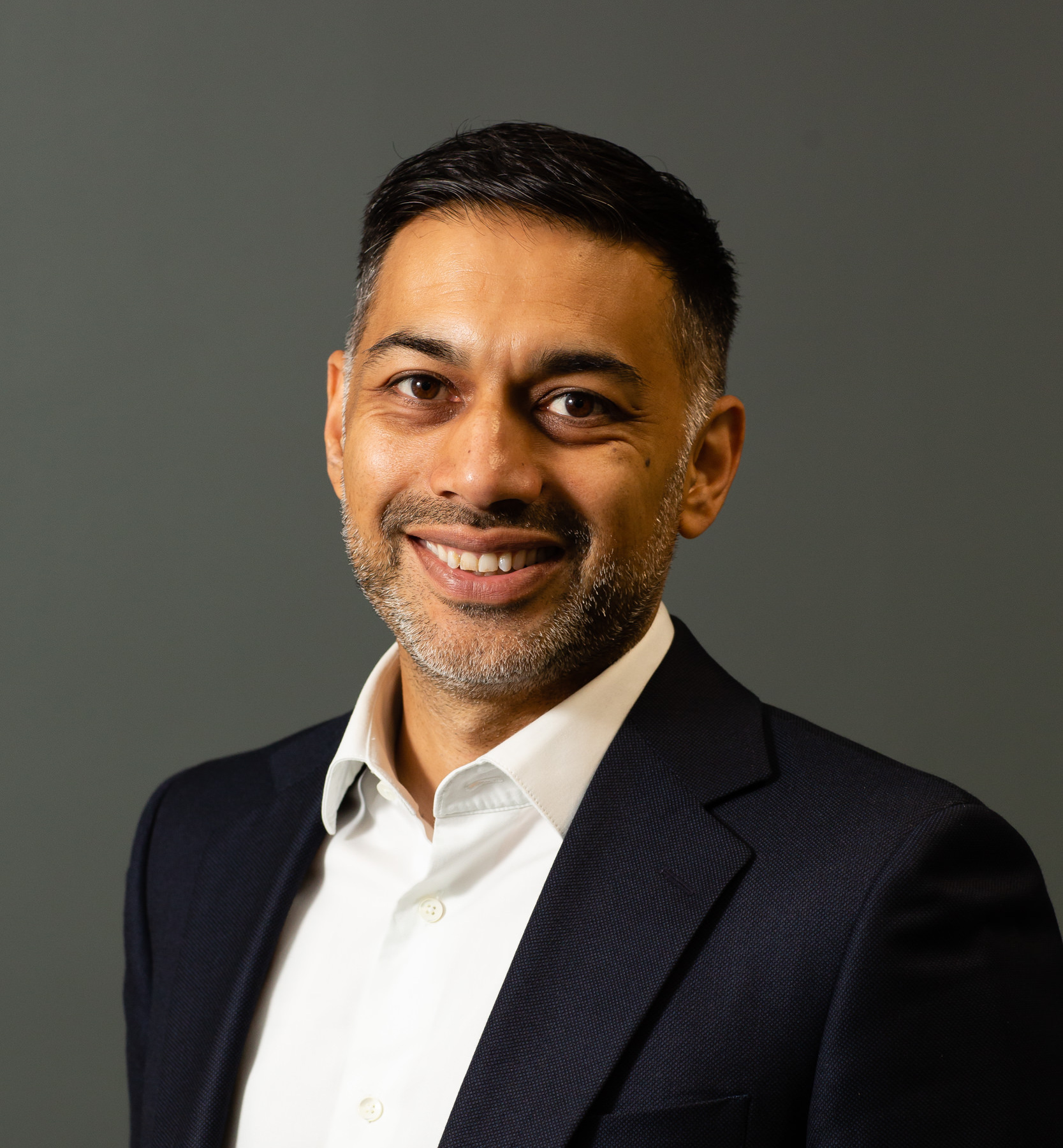
So my Baba moved here from India in the 1960s over to England. And so I was born and raised here. So I grew up with British and American television. And I grew up watching a lot of television in the 1980s, so, you know, I’m 48 years old now. And during that time, there were some films which were starting then, the Indiana Jones series of films, which was Harrison Ford. And there was an American investigation kind of program called Magnum P.I. with an actor called Tom Selleck. And I was really fascinated with history, with Indiana Jones, and unraveling what the truth of history was, what the true state of affairs was, and learning from things that have happened. To try and piece together a jigsaw of a picture of what really has happened and investigation. So I started to get intrigued about just digging into things, looking into history, looking into working out what’s really going on. And at the same time, there were a few legal dramas coming around and again, US programs, a few UK programs. And that just drove my interest. I have no other lawyers in the family. My Baba was an engineer, and my sister’s an accountant. And there were no lawyers in our family. And I just took an interest in it. I gradually found the opportunity to study law, and right after I qualified, I got interested in some of the criminal side, some of the commercial contract side. And I always liked the idea of working out where there’s been wrongdoing in the workplace and wrongdoing to an individual or to a community and saying, right, how do we solve that? And how do we fix it? And it comes from watching programs like that in the 1980s.
So, sir, we can call you the first-generation lawyer who has made a big name for himself. Way back in 2016, you parted ways with a large international law firm and decided to start your own law firm, Tenet. You have also won recognition for actually disrupting how law firms operate because what I have learned about Tenet is it operates without financial targets, billable hours, or office presentisms. How has this impacted the teams that have joined you, the way the client relationships have been built, and how you have made a whole name for yourself and the firm?
Yeah, it’s interesting. I mean, if I go back to what took me to making those decisions, it was quite simple. So I worked at a large firm called DWF, an international firm, as you mentioned, and I was a partner there and I dealt with the civil fraud disputes and investigations team. That was my role. And I had a really nice time there. They are really wonderful companies to work for, a wonderful law firm to work for. And my boss who I worked for was really supportive, but at the time for me, I left because of burnout issues. My children were young, and work was quite demanding, my Baba was quite ill, in and out of hospital. And I wanted to just have more time to myself, to really manage the family issues more than anything. But I thought I’d been working in this area of law since about 2006, 2007. So by that time, 10 years, I thought I’d go and be a consultant and I set up Tenet to deliver consultancy services, but work quickly found me and I needed lawyers to join. And my wife, who’s not a lawyer, she’s a pharmacist, she said there are lots of women who’ve had children with their families. And they have left their place at work. Lawyers have left their place, but they can’t go back to work part time. And so a couple of my former colleagues were in that situation, and I contacted them about whether they could give me some support and just some extra hours to help me as work started to develop in the practice. And this was all in 2016. I started it in March of 2016. And I realized a few things quite early on. I had probably a chip on both shoulders that I didn’t think you could get the best out of people by driving them towards numbers and taking them away from thinking about the solution of their clients. And I also didn’t think you need to be seeing people in the office or always watching people to know that they were working. We’ve all grown up to be responsible adults. We’ve all invested many hours in our careers to get to a certain point. If we want to do well in our careers, that requires self-discipline. It doesn’t require someone telling you what to do. So I developed the concept around let’s have a firm without targets, without presenteeism. So it’s a traditional litigation law firm. We’ll have billable hours, financial targets, before COVID everyone would be in the office. Our business as usual was to come to the office if you need to, work where you want to, work when you need to, around the client’s demands. But just get the work done. Let’s not worry about the numbers. And what we did was we built a model, which was broadly people first, then the product, and then the profit. And what that means is, if we get the best for our people, ahead of our clients, and create an environment where they’re not distracted. The only focus they have is the solution for the clients. They’re not distracted by, have I made my numbers this week, this month, today. They’re only focused on sorting out the solution. They’re not driven by getting profit out of a client. So they focus on the product and you get the product right. The amazing thing that happens is people recommend you and refer you. So we developed that model of no targets because it gave the best chance for, I guess, creating the art of what’s possible for a client. If we just focus on sorting out that issue for a client, anything is possible. If we start to think about ourselves as part of that journey for a client, it’s a distraction. So my job here is to make the best environment for people, so they can get the best for the clients. And then hopefully life takes care of itself. And we make enough money along the way to be safe and everyone’s secure. Culturally it’s been really fascinating because lawyers are institutionalized in most of the law firms. You probably have experienced it where you think you’ll have lawyers who have a certain number of hours done in a month and then they’ll be asked by their management, what’s your recovery plan? You are behind track. And so what could that lead to? It could lead to bad behaviors. Do you spend more time on work than you need to? I’m not saying that happens, but it’s a risk. Do you hold on to work? Because you need to make up the hours, but that work is getting delayed if it was put in the hands of a colleague. So the client could have their work done quicker if you just passed it over. Well, if you’ve got a target and you hold on to it yourself, you delay the work product for the client. So there are lots of lateral benefits, but for the people themselves, it meant they could just be trusted to get on with their job. And we all just want to be lawyers, don’t we? We just want to be lawyers. And so it just allows people to be lawyers. Yeah, I guess that’s broadly how we’ve done it.
Sir, keeping all that in mind, you already have built a name for yourself, but in a very specialized field of fraud, and especially the fraud cases, they involve sophisticated scheming and all those processes. With the rise of the digital space, with the rise of crypto and everything, how have you seen fraud evolve in the cyberspace and what kind of investigations or cautions have you suggested your clients, especially the ones who are HNIs or who are in fintech or who are SMEs and nowadays startups as well?
So, I mean, we have to go a step back when we think about fraud because one person’s definition of fraud is not the same as somebody else’s. And when you think about cyber, people talk about cybercrime and cyber fraud or cryptocurrency fraud, where there’s not legitimate cryptocurrency, but ultimately cyber or digital age. Or digital mechanisms for committing fraud are just that—they’re just the mechanism for committing the fraud. It’s not the fraud itself. The fraud isn’t cyber, the fraud isn’t crypto, it’s the mechanism used. So the first thing is going back to what is fraud. For some people, fraud is very black and white. It’s misappropriation, it’s diverting assets, it’s breaching duties. For others, it can be more subtle. So, for example, you could have a very simple scenario that you’re in a restaurant with your family or friends, and at the end of the evening, an employee at that restaurant brings out the bill. And if they bring out the bill, and then you notice on that bill that they’ve forgotten to charge you for a drink or some food. And I ask people in training sessions. How many people would own up and would confess that they’ve been undercharged? And typically about 30 percent of people will say they would own up in the restaurant. And then I ask people, look, you know, just this definition of fraud, if your employer overpaid you and it was obviously a mistake, like the restaurant, how many of you would own up? And everybody owns up. And then you have to delve into why, and people don’t realize that taking money from your employer when they’ve overpaid you by mistake or taking the benefit of the restaurant food when they’ve undercharged you are both the same species of fraud. It’s called unjust enrichment, but they’re both fraudulent events, but people’s interpretation of fraud may be in one instance with the employer, but not with the restaurant. So your first concept is understanding, you know, fraud is about interpretation. And then that’s something that has to be a constant in your mind as a lawyer dealing with fraud is how people interpret that because as we’ve moved to this digital age, as you talked about, We are driving all our communications and we’re driving all of our purchases, acquisitions, investments, thought processes around how to utilize our money online, and how we engage with people, how people sell things to us, or how people invite us to invest. It comes down to our interpretation of fraud. What is that area of gray? If someone is optimistic about selling you an investment product, that crypto will get you a certain level of returns. Are they being fraudulent or are they being optimistic in telling you something to invite you to invest? So you have to think about how you interpret fraud? Because from the recipient’s point of view, you have to really be quite clear, the communications you want digitally. What you’re told digitally before you make a decision. Crypto space and cyberspace is really interesting. So in the digital world, now we’re in the situation were certainly around banking and fintechs, all our transactions are online. So in the UK, we have payment services, firms, fintechs, main retail banks. And there is new law that came in in October of last year, 2024, which makes it almost compulsory for banks to refund domestic transaction victims of fraud, if they’ve been tricked into making a transfer. And that law will probably spread as an idea around other Commonwealth countries in time. But we’re driven to do everything online. We’re accustomed to doing everything online in this digital age. And we don’t have enough digital literacy, certainly for the elder generation. And the younger generation think too quickly because they have too much digital access. So they don’t have time to stand back and think, is this behavior consistent? Am I being tricked? Is this too good to be true? So let’s take cyber. You mentioned cyber and I’m sorry, I’m giving quite long answers, but I’m trying to pick up all the points you raised. In the UK, there are three, sorry, crypto. There are three types of cryptocurrency you can think about and being duped on or being defrauded on in the UK. The first level is unlikely to be tricked. That’s where you’ve got a provider, a cryptocurrency exchange platform that is regulated by the Financial Conduct Authority in the UK for money laundering purposes. They are a legitimate enterprise engaging in selling and purchasing cryptocurrency. You are likely to be safe in their hands. The only risk is the fluctuation of the market. Then you have those cryptocurrency exchanges, which are in other countries. They are legitimate in that they are exchanges, but they are not regulated. So it’s slightly more loose and it’s very hard to recover from overseas. And then you have those, which are just smoke and dust. Those criminals that create the impression through very good digital tools that they have a platform for you to invest in. But the platform doesn’t exist. It’s all smoke and dust. It’s all fresh air, and your money is gone. And with any fraud situation, be it in procurement, be it with employees, be it with investments, be it with cryptocurrency, unless you educate yourself about what you’re about to invest in or the party you’re about to contract with, and really understand it yourself and verify independently, you’re having more fraud. And that’s the problem. The digital is the biggest enabler of fraud now, because it is so good at imitating legitimate organizations and people and transactions. And we are as humans, we’re short of time now, we’re all time poor. So we make transactions quicker without thinking, you put those two together, and you’ve got more friction and more risk. So for us, there’s a lot to unravel every time we get an investigation because there are
so many moving parts. You have to check what’s real and what isn’t, and the growing number of fraudsters playing with these new technologies, it’s harder and harder to prevent. As a business, as a law firm, we are constantly looking out for those kinds of things. For instance, we work with financial institutions, and it’s really important for us to make sure we understand everything behind what’s happening, everything behind the platform, everything behind the person and always verifying every step of the way. That’s how we go about it.
At Tenet, you specialize in this particular niche area. Let’s say, we would like to understand if new entrants are interested in this field and how they might navigate their way into the fraud and investigations space. Since you have mastered this area, how would you suggest they move forward, perhaps with a checklist? This could benefit learners, especially in India, who may be looking to qualify for SQ exams and practice in the UK. Is it possible for Indian lawyers to work in this field in the UK, or is there another path they can take to learn and practice there? Yes, on both counts. So, to anyone interested in fraud, I always say it’s important to build a foundation. Whatever you do in life, it should be something that interests you. It could be fraud, sports, or any subject at all. Once you have found something you are passionate about, you need to invest in yourself. This means dedicating time to learn and surround yourself with people involved in that subject.
In the UK, fraud is not just limited to law. There’s a whole financial crime compliance and counter-fraud community across the UK, Europe, Asia, the US, and Africa, dealing with various aspects of financial crime—illicit funds, wildlife trafficking, people trafficking, money laundering, and fraud investigations. This is the ecosystem I love and work in.
When I started showing an interest in this subject in 2006 or 2007, I joined a charity called the Fraud Advisory Panel in England. Anyone worldwide can become a member of this charity. It works to promote best practices for countering and combating fraud and financial crime. There are other organizations like the London Fraud Forum, the Midlands Fraud Forum, and more, but the Fraud Advisory Panel is where I focused my attention.
By becoming a member, I learned about events in the industry, which could be anywhere in India, Asia, or wherever. This allowed me to connect with people who were passionate about fraud. I volunteered countless hours and met senior people from the big four accountancy firms, PwC, and law enforcement. They began trusting me with cases, and that helped me build my career.
So, for anyone entering this field, I recommend joining charity organizations, volunteering, and surrounding yourself with people who have experience in fraud. In the UK, there are many firms that specialize in fraud, and even as a foreign-qualified lawyer, there are opportunities here. Fraud has existed for centuries and will continue to do so, requiring people who are dedicated to unraveling it.
I’d like to ask about your role as a trustee director for the Fraud Advisory Panel, and how public awareness plays a role in combating fraud. You also frequently speak in the media, so what impact do awareness programs have, particularly in your area of work?
Education plays a crucial role in combating fraud. Much like road safety, if we understand the risks and threats, we can be prepared. Awareness about fraud helps people recognize potential risks and avoid falling victim.
I’ve been involved in media campaigns about fraud for years. One such campaign started in 2016, advocating for a law that requires UK banks to refund customers tricked into making transactions to fraudsters. After eight years of media engagement, the law was introduced in 2024. This law was necessary because, years ago, people didn’t think fraud would happen to them. Now, fraud and cybercrime account for 38% of all crime in the UK, though only 1% of the policing budget is allocated to economic crime.
Raising awareness is critical because people tend to think fraud won’t affect them. If we can educate the public, businesses, and government bodies about fraud risks, we can help mitigate the harm. In India, for instance, fraud awareness is still in its early stages, especially when it comes to cybercrimes. It’s an ongoing challenge everywhere, but awareness is the key to fighting it.
Unfortunately, fraud is still under-discussed in India. People may have heard of cybercrimes, but awareness has not fully caught on. This conversation itself is vital for combating the issue. Moving on, you studied law at King’s College, London. How did your college experience shape your thoughts on awareness and your approach to building a community through your work?
King’s College London was a privilege. I wish I had worked harder, but it definitely shaped my understanding of the law. Before law school, I thought law might be dry, but I soon realized it’s about interpretation and human behavior. At King’s, I found that law is not just about rules but understanding the actions behind those rules.
Criminology and tort law were key subjects that sparked my interest in fraud. It was here that I learned how criminal behavior can influence business conduct, particularly in fraud investigations. The diverse international student body at King’s also showed me how law transcends borders, which shaped my global perspective on legal practice.
After qualifying in 2002, I spent 14 years in private practice before founding Tenet. For me, specializing in one area was important, so I chose fraud and financial crime. I decided to focus exclusively on fraud investigations, disputes, and compliance, helping individuals and businesses resolve issues stemming from dishonesty.
Our firm, Tenet Compliance & Litigation, isn’t huge—only 11 people—but we’re highly focused. We’re recognized for our expertise in fraud and financial crime, which is why we win most of our work through recommendations. We make it relatable to clients, focusing on their concerns rather than just the financial aspect.
Cultural aspects certainly influence change, and it’s clear your diverse college experience helped shape your perspective. Sir, outside of work, you are also a guitarist and into fitness. How do you balance these hobbies with your work, and how do you encourage your colleagues to do the same?
Well-being is crucial. It’s not always easy to balance work and personal life, but I encourage my team to have hobbies and time for themselves. We have a “family first” policy, meaning if something comes up for family, you take care of it. I believe in making time for family, especially during the years when children are young.
For me, fitness is a priority. I exercise three or four times a week, and I know that staying healthy improves my performance at work and at home. While I may not always have time to play the guitar or exercise as much as I’d like, I believe it’s important to have hobbies outside of work.
I encourage my team to do the same. If you want your people to perform at their best, they need to have time for themselves. It’s hard to find that time, but it’s essential. We work to live, not live to work. It’s a reminder to experience life, see new places, enjoy theater or movies with friends, and take moments to appreciate life outside work.
In the end, if you’re not living your life, work will lose its meaning. The balance between work and personal life is key to both professional and personal growth.
Your educational journey is quite diverse, transitioning from becoming a Chartered Accountant first and then an LL.B. What motivated you to pursue a diverse career in accountancy and law, and how has this multidisciplinary background influenced your approach to risk, forensics, and dispute advisory?
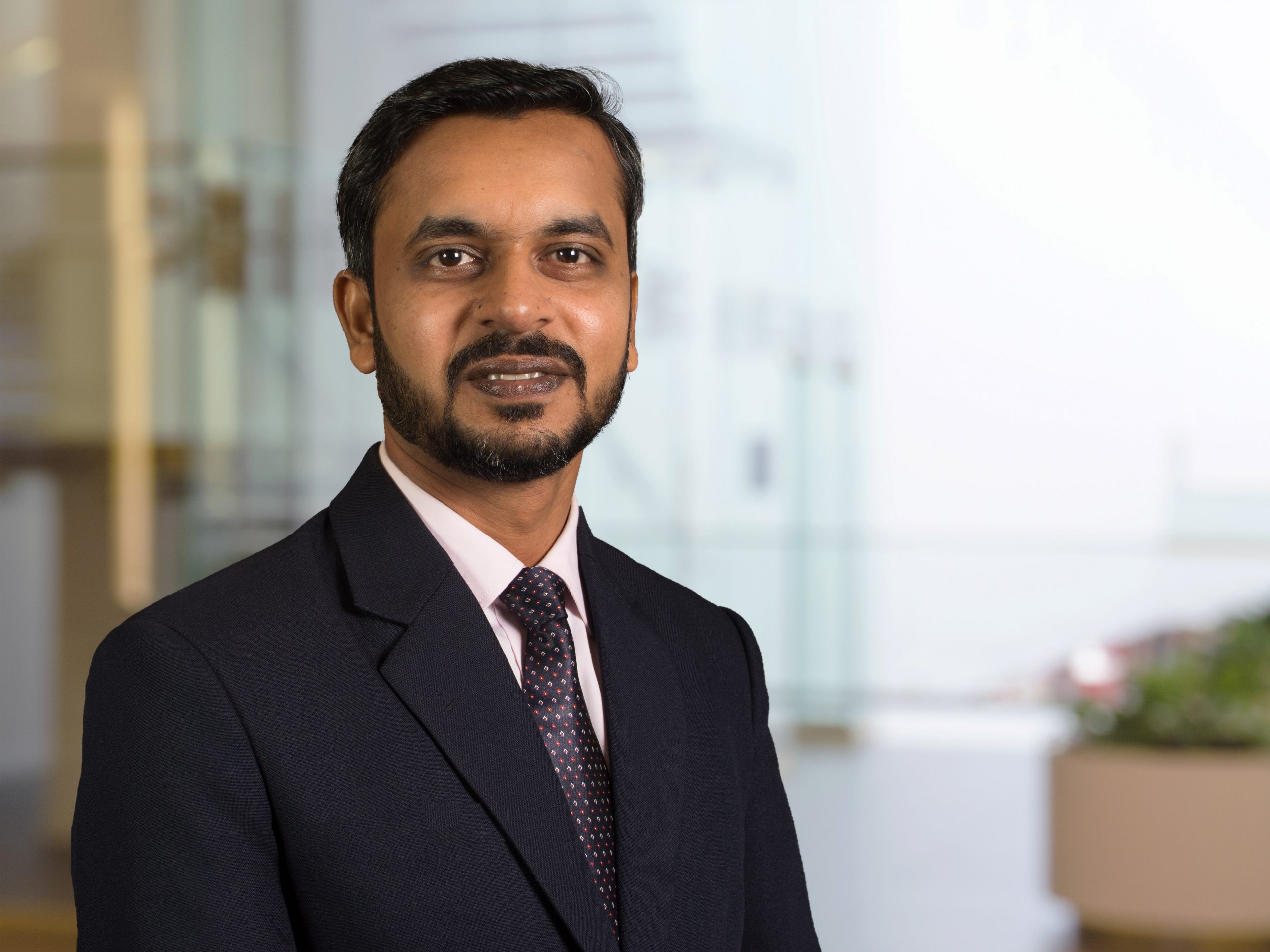
Though I have qualified as both, I have not practiced as either of them. I have been in consulting for all my professional career, right since my internship days back during 2002-05. I started with a lot of risk advisory and corporate governance work, working with various consulting firms. But it was when I started conducting forensic investigations and when I interacted a lot more with lawyers, I was intrigued enough by their role and wanted to, if not practice as one, but think from their perspective as well.
What this has done is that while I am conducting the investigations, it helps me wear a lawyer’s hat also and foresee, of course in my limited knowledge and capacity, certain aspects which are distant to someone who is just a forensic accountant. And needless to mention the extra help I get to interpret various documents in my dispute advisory work as well.
In this context and as an accredited arbitrator and an empanelled mediator, what unique insights do you think you bring to the table to resolve disputes effectively?
Globally, the arbitration practice as such is led by the legal fraternity and rightfully so. Having said that, in my view, there is good space for technical professionals other than lawyers. Technical experts like accountants, engineers, doctors, architects, etc. can immensely contribute as a neutral to resolve disputes.
If a technical professional is an appointed neutral on a case, be it as a sole arbitrator or as a co-arbitrator, I think there is a lot of merit in the process. Imagine a complex commercial dispute or a construction dispute, where you have a chartered accountant or an engineer as one of the arbitrators respectively; not to mention if they additionally are qualified lawyers as well. Not only is the arbitrator adept in the legal aspects but also aware of the complex technical aspects of the case, which may lead to a better conclusion on the case. It is also better to understand the prevailing entitlement, causation and quantum of a case.
With your extensive experience in forensics and dispute advisory, what are some common pitfalls you’ve observed in organizations regarding risk management, and how do you help them navigate these challenges?
The most common and critical one that I have observed is to not have a risk management framework at all or to have it led by a risk champion who is relatively inexperienced in the role or function.
Another pitfall is that a lot of corporates have failed miserably in integration of data, systems and people. Multiple fragmented systems and processes lead to inconsistencies and non-standard procedures.
Over emphasis on financial risks with no or limited attention to operational, reputational and strategic risks are leading corporates to last minute surprises and resort to course corrective actions.
Policies and procedures are often poorly drafted and hence lead to multiple gaps and loopholes being exploited by the perpetrators.
In my experience, we are usually brought in largely when there is a crisis in the company and our support is sought to investigate and course correct the situation. However, in a growing number of cases, management does realise that a proactive approach to have a robust fraud risk assessment will be more effective to save money, time and the huge energy that they are drained off of in a reactive approach. So, I would recommend that risk and fraud management frameworks are of utmost importance. These frameworks also help avoid various disputes and compliance issues that may crop up due to identified procedural shortcomings.
Founding Konvêrj-Zeûs represents a significant milestone in your career. What inspired you to establish your own consulting firm, and what unique approach does Konvêrj-Zeûs bring to the table?
Yes, it is. Back in September 2021, I thought that the timing was just right. Things were just starting to recoup post the Covid-19. After working with various well-known accounting / consulting firms of global repute, I thought it made sense to take the plunge and explore new avenues. As a budding professional, you have always dreamt of having something of your own someday. I think the entrepreneurial bug bites you really hard.
At Konvêrj-Zeûs, we offer multiple consulting services to corporates, banks, other non-banking entities and law firms, which include Risk Advisory, Forensic Investigation, Dispute Advisory, Financial Advisory and Transformation Advisory Services.
I think being brought up professionally in some of the large consulting firms does develop a professional approach and attitude that is appreciated by clients globally. So, even though Konvêrj-Zeûs is still in its nascent stages of its journey to expand, the kind of work we do is acknowledged to be at par, if not better, with some of the leading consulting firms around.
I think the ‘attention to detail’ that we pay on each of our projects helps us give our clients exceptional service experience. At the end of the day, we immensely value the trust that our clients place on us.
Could you elaborate on the intersection between forensic accounting and economic damages assessment, and how this expertise aids in resolving disputes and providing expert witness testimony and also uncovering financial irregularities and providing expert testimony in legal proceedings?
Forensic accounting is actually a combination of accounting and investigative techniques used to discover financial crimes and as Forensic accountants; we explain the nature of a financial crime to the courts. Many cases, where we are on-boarded, require us to quantify the damages due to certain breaches, for example, or quantify the losses due to fraud or misrepresentation, or value IPs like Trade Secrets / Brands in cases of IP infringements or data theft and so on. So, the investigation does not end at authoring a report and concluding whether a fraud was committed or not, but also goes ahead and quantifies the losses / damages.
Likewise, in case of disputes, the Tribunal relies more upon and takes into consideration an expert’s report than that from the parties to a dispute, while they decide and award the damages or lost profits as it is from a neutral standpoint. Once the legal tenability is proven, often the question of ‘How Much’ is core to the Tribunal to decide upon, which is where our quantification helps them.
So apart from the economic analysis, I think the forensic accounting skill set does play a crucial role in setting right the facts and figures of the case and eventually also limiting the assumptions and extrapolations used in the quantum exercise.
Similarly, in cases where financial irregularities are concerned, we analyse financial data and identify discrepancies that may indicate fraud or other financial crimes. We work closely with law enforcement agencies, attorneys, and other professionals to investigate financial irregularities and provide evidence to support legal proceedings. For doing the same, we use different techniques, tools and technologies to unearth the financial irregularities.
Your role as a mediator at the High Court of Bombay indicates your involvement in alternative dispute resolution mechanisms. How do you see the role of mediation evolving in the legal landscape, particularly in complex commercial disputes?
We all know that mediation can be one of the quickest, cheapest, effective and sustainable methods to resolve disputes. It adds advantages to the case, for being informal and of a flexible nature while maintaining confidentiality.
While a lot of parties do attempt mediation on the first go, a lot of courts have also resorted to mediation before litigation. Also, for a majority of people, the prospect of going to court is daunting both emotionally and in terms of the financial strain it can pose, and it can mean that proceedings take a considerable time.
When widely accessible, mediation can be a successful way of keeping cases away from the stress and expense of court. This saves numerous hours of court’s time, which can be useful for cases that are not resolvable through mediation.
Even in complex commercial disputes, it may sometimes be at the parties’ advantage to use mediation as a channel to resolve the dispute. The complex nature of dispute can be simplified by seeking help of technical experts, while the legal aspect can be taken care through mediation. This not only saves the parties huge amounts of effort and money, but it can also give the parties that critical time to decide and make critical decisions after the resolution that they would have lost in a long-standing dispute.
Given your wealth of experience in the field, what advice or suggestions would you offer to the upcoming generation of professionals aspiring to make a mark in risk management, forensics, and dispute resolution?
I genuinely believe that there are numerous avenues where one can practice and expertise apart from the traditional fields of professions of a Chartered Accountant and a Lawyer.
A dual qualification or skill set is always going to be an added advantage, be it of any specialized profession. So, I would always advise one to be on the lookout for opportunities where one can expand the horizon to add the necessary skill set to one’s profile.
In my case, internal audit led me to risk and corporate governance, which led me to forensics, which led me to expert report & evidence and currently I also support resolving disputes. So, one has to hold on to the leading strings to explore new avenues of consulting.
Branching out to this particular niche practice area has worked for me until now. For someone else, it can be a different combination. But one has to explore into various formats and see for themselves what suits them. We often are bound to one particular field observing our mentors or seniors or partners around us, but in my view, one has to take some risks in early years to establish a strong foundation.
For practicing in forensics and dispute resolution, I would finally advise to be qualified or acquire the requisite skill set where one understands the legal and one technical side of things.






 Allow notifications