Tag: Goa University

  • Justice Sayonara Telles Laad, on bringing justice to the people, legal education and the Indian Judicial System

    Justice Sayonara Telles Laad, on bringing justice to the people, legal education and the Indian Judicial System

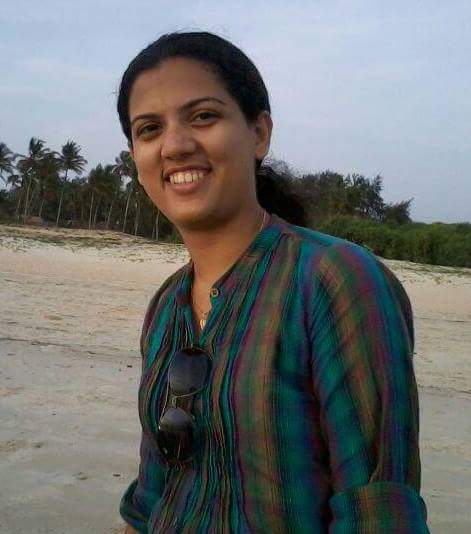
    Justice Sayonara Telles Laad is the Ad-hoc District Judge and Assistant Judge, North Goa, graduated in law from G.R. Kare College of Law in the year 1987. She joined practice in the same year went on to become an Assistant Public Prosecutor in 1992. In 1996, she answered her Judiciary Examinations and has been a judge for the past 20 years. This Interview was conducted by Dietrich Almeida of GR Kare College of Law

    IN THIS INTERVIEW SHE TALKS ABOUT:

    • Importance of Extra curricular activities
    • Criminal practice
    • Changes which have impacted the legal profession


    HOW WOULD YOU INTRODUCE YOURSELF TO OUR READERS?

    I am an Ad-hoc District Judge-1 and Assistant Judge Sayonara Telles Laad. I graduated from G.R. Kare College of Law in 1986-87. I started practise as an advocate in 1987 before I joined as the Assistant Public Prosecutor in 1992. I joined the judiciary in 1996 as Civil Judge Junior Division and Judicial Magistrate First Class at Vasco, Sanguem, and Ponda and was later promoted as Senior Civil Judge and Judicial Magistrate First Class at Bicholim, Quepem, and Ponda. It’s been 28 years since I’ve done law.

     TELL OUR READERS A BIT ABOUT YOUR CHILDHOOD AND PRE-COLLEGE LIFE AS WELL AS EDUCATIONAL BACKGROUND. DO YOU HAVE LAWYERS OR BUREAUCRATS IN YOUR FAMILY?

    I have done my schooling at Guardian Angel Higher Secondary at Sanvordem, Curchorem. Then did my Higher Secondary Schooling in Arts and completed my B.A through Parvathibai Chowgule College. I come from a family of bankers and teachers. There are bureaucrats but no lawyers in my family.

     HOW DID YOU DECIDE TO OPT FOR THE FIELD OF LAW?

    Opting for law was not planned, nor was it my ambition to join the legal profession. It just happened, and I went with the flow. I was not focused like the kids now-a-days. I always wanted to study as I had the fever for answering examination. After I completed my graduation in B.A, I thought of doing M.A but in those days to pursue M.A one had to go to Panjim as it had to be done through University of Bombay. Goa University came to be established much later. As G.R. Kare college of Law was closer to home, I opted for LL.B.

     HOW HAVE EXTRA-CURRICULUM ACTIVITIES HELP YOU IN ACHIEVING YOUR GOALS?

    I have always been actively involved in extra- curricular activities like sports and cultural activities and see that I keep myself active. Extra -curricular activities helped me in developing my personality, helped me in adjusting to various situations, developed patience and confidence to be a better human being and it keeps you active and your mind alert.

     DESCRIBE YOUR EXPERIENCE WHEN YOU APPEARED IN THE COURT FOR THE FIRST TIME?

    Well, I guess it was like any other newcomer to any profession- mixture of surprises, apprehension, awe of the judges, the legal luminaries, the imposing atmosphere of the court, nervousness, awkwardness and a feeling of satisfaction to be associated with such a noble profession.

     TELL US ABOUT YOUR EXPERIENCE AS THE ASSISTANT PUBLIC PROSECUTOR.

    I had the opportunity to deal with a number of criminal cases during my tenure as Assistant Public Prosecutor which was for about 4 years before I joined judiciary. Handling criminal cases exposed me to human tendencies, human psychology, the mind-set of victims, offenders. I felt that the victims needed much more justice than they were actually getting as there was no victim compensation awarded to the victims then as per the recent amendment which has introduced victim compensation to the victims.
    rsz_sayonara_laad_2

     WHAT MADE YOU GRAVITATE TOWARDS JUDGESHIP?

    I was an Assistant Public Prosecutor when the opportunity came to apply for the post of Civil Judge Junior Division and Judicial Magistrate First Class in Goa Judiciary. I thought that opting for judiciary would be ideal as I would be exposed to handling Civil matters besides criminal cases and a variety of cases as compared to only handling criminal cases which were limitations of the post of an APP.

     WAS, THERE ANYONE, IN PARTICULAR, WHO INFLUENCED YOU WHILE DECIDING ON JUDGESHIP?

    There was no one that influenced me but I felt that judgeship is a better option for a lady in all ways as it is the next step after being an APP and a privilege to be appointed as a judge considering the nobility of the profession.

     BRIEFLY TELL US ABOUT YOUR INTEREST IN JOURNALISM.

    I dabbled in journalism prior to my legal career as I had always been a voracious reader and had a flair for writing and wanted exchange of views. I wanted to change the mind-set of society to a large number of unjust social norm and superstitious beliefs. It feels wonderful to reach out to a whole group of people out there through this medium. It’s a wonderful feeling when someone says I have read your write-up or article and it was nice and thought provoking.

    DO YOU FEEL THAT THE LEGAL PROFESSION HAS SIGNIFICANTLY CHANGED FROM THE TIME WHEN YOU DECIDED TO STUDY LAW?

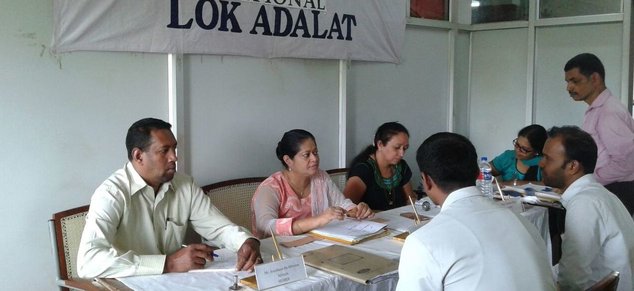
    Yes of course there are a lot of changes in this field. There is computerization and upgrading of infrastructure, newer laws like Domestic Violence Act has come, Sensitization of women Gender Acts, introduction of Alternate Disputes Forum for settling cases, Plea bargaining, appointing of Paralegal Volunteers to work from grass root level, establishing front offices with Retailer Advocates on panel for those who want free legal Aid/Advice, introduction of the mobile van for creating legal awareness and disposing matters through LokAdalats by taking justice at your doorstep.

     THE BAR COUNCIL OF INDIA IS CONTEMPLATING ON THE FORMATION OF A NEW RULE WHICH WILL REQUIRE LAWYERS TO PRACTICE IN LOWER COURTS, BEFORE ARGUING BEFORE THE HIGH COURTS AND THE SUPREME COURT. IF THIS RULE IS MADE CONCRETE, DO YOU THINK IT WILL HELP?

    I think it’s a very good move indeed as the lawyers will have a good insight and in-depth knowledge of the actual practice and procedures of law and the working of the lower courts.

     WHAT DO YOU THINK ABOUT THE INDIAN JUDICIAL SYSTEM? HOW CAN IT IMPROVE ON DELIVERING JUSTICE?

    I would advocate the Common Civil Code as applicable in this state to the rest of India.

     TELL US WHICH SPECIFIC ROLE WOULD YOU LIKE TO SEE YOURSELF AFTER 10 YEARS?

    I would be retired by then and would like to create legal awareness and crusade for settlement of cases through Alternate Dispute Redressal Forum which is introduced under section 89 of the Code of Civil Procedure through means like Arbitration, Conciliation, Judicial Settlement through Lok Adalat and Mediation.

     FINALLY, WHAT PARTING MESSAGE WOULD YOU LIKE TO GIVE OUR READERS?

    I would like to stress that litigants and Advocates should be more open minded to refer matters to Alternate Dispute Redressal Forums and make sincere efforts to settle the cases as settlement of cases is cost effective and time saving and bring about peace and happiness.
  • Mr. Surendra Naik, Additional Collector and Additional District Magistrate, North Goa, on his experience at law school and mantra for success.

    surendra-naik

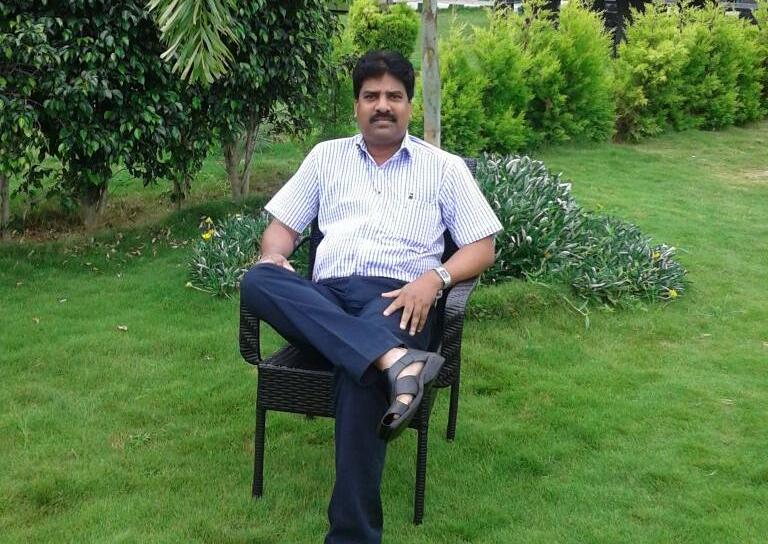
    Mr. Surendra Naik, Additional Collector and Additional District Magistrate, North Goa, graduated in law from V. M. Salgaocar College of Law in the year 1999 and shares his views and experiences in his long and successful career. This Interview was conducted by AJAY BORKAR of GR Kare College of Law

    IN THIS INTERVIEW HE TALKS ABOUT:

    • Being part of Government setup

    • His responsibilities as a Magistrate and

    • Views on retirement


    1. What could be a short introduction of yourself?

    A humble ordinary citizen of India, with zeal for social work and to contact with common people, to work for their cause.

    2. Please elaborate on the motivating factors which helped you in choosing legal studies?

    Right from my childhood, I always dreamt of being part of the Indian judiciary since my father always wished that I either become a lawyer or a judge.

    3. How would you describe your academic career while at V. M. Salgaocar College of Law, Goa?

    I did my three years degree course in law in V. M. Salgaocar College of Law. I was privileged to have good faculty, who introduced me to the various legal aspects and assisted me in understanding them. I was ranked 1st in all three years at the Goa university.

    Further, as the institution was located in Panaji which is a hub for lawyers, I had the opportunity to intern with advocate F.E. Noronha in Panjim, wherein I gained some practical knowledge of dealing with the clients and attending cases in court.

    4. What role do you think mooting plays in a law student’s life?

    I hold moot courts at a very high esteem. I think each and every student of law should compulsorily participate in moot court. It enhances their power of understanding and analysing legal situations and enhancing their power of arguments and plays a major role in their overall personality development and legal ethics.

    5. Please tell us about how you decided to pursue your career in civil services? Were you considering any other opportunities?

    After completing by graduation in law, I applied and received Sanad from the Bar Council of Maharashtra and Goa. Also, I joined the chamber of Adv. F.E. Noronha in Panjim, who was basically practicing in various Civil Courts, Tribunals, Revenue Court and also in the High Court of Bombay at Goa. I had an opportunity to work with him for about 7 months. During this time, there appeared an advertisement for post of Mamlatdar, Joint Mamlatdar and Asst. Director of Civil Supply through GPSC, for which I casually applied.

    Thereafter I received a letter for written examination for which I appeared and then I received a letter for oral interview by the GPSC and subsequently I topped the said examination and oral interview and was ranked first in the selected candidates and immediately thereafter I received appointment letter as Mamlatdar. I always wanted to be a Civil Judge or Judicial Magistrate First Class, but during that time there were no advertisement of civil judge. The requirement was 3 years practice as lawyer which I could not fulfill.

    6. What has your experience with legal education been like and how relevant do you feel it has been to your profession after graduating in law?

    As per me, my legal education has helped me immensely. It changed my attitude and my way of looking towards everything. Qualification in Law was the basic requirement for the post of Mamlatdar. It also helped me immensely in discharging my duty as Presiding Officer of the Revenue Courts and also for performing many other quasi-judicial functions.

    7. What are your main responsibilities as the Additional District Magistrate of North Goa?

    Presently I am posted as Additional Collector and Additional District Magistrate, North Goa. My primary functions are mainly Administrative and I also carryout Quasi-Judicial functions under numerous Acts like the Mamlatdar Court Act, Land Revenue Code, RTI Act, etc. The criminal jurisdiction includes maintenance of law and order and various other preventive actions. I also have a duty of granting arm licenses under arms Act.

    8. Do you think the level of law studies has gone down as compared during your time?

    I don’t agree with this. However I think that as the time progresses, the law colleges are becoming more and more professional and training its students in various aspects. Even the introduction of 5 year course is a great step towards legal education. I think compared to our time, there is a lot of improvement in legal education and imparting of professional training to law students.

    9. How do you manage your personal and professional life? Do you keep both separate?

    Apart from professional life, one’s personal life is equally important. And one has to strike a perfect balance between both of them, if your personal life gets disturbed it also adversely affects your professional life. So you should also give time for your family.

    10. Where do you see yourself after your retirement?

    I think there is nothing like retirement in life. One should always keep on continuously contributing to society. Government service is just one phase and there are various opportunities for a competent person to contribute to the society, even after attaining the age of superannuation. One must always keep his body and mind healthy to live life to its fullest satisfaction.

    11. Do you have any advice to all our readers out there?

    It is only hardwork which is the key for success in any field and there are no shortcuts. Shortcuts are only for short term benefits. It is only hardwork which gives you success on long term basis. Overall apart from your hardwork there should always be honesty in whatever you do.


  • Justice Desmond D’ Costa, on bringing justice to the people, legal education and the Indian Judicial System

    desmond-dcosta

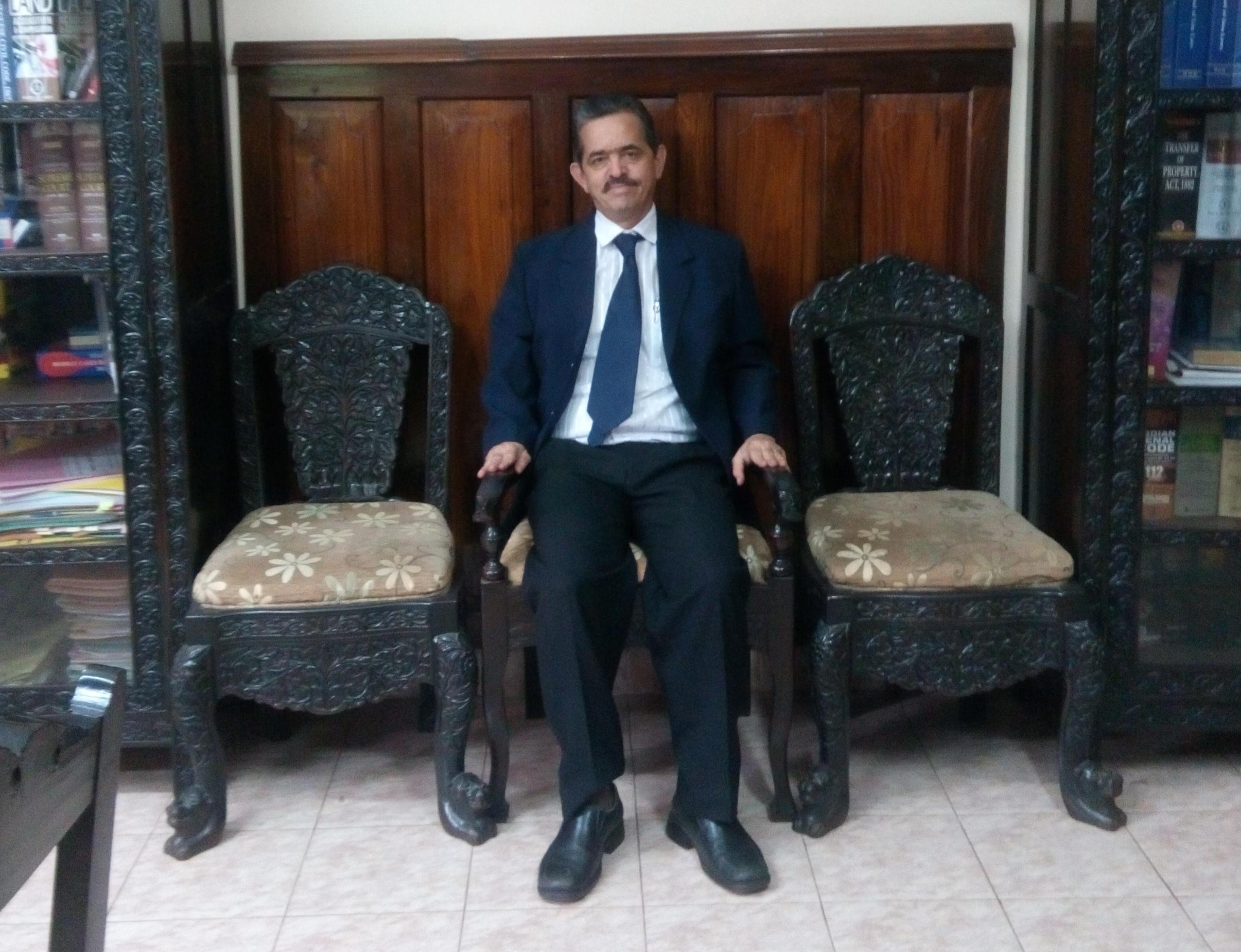
    Justice Desmond D’Costa is the Principal District and Sessions Court Judge, South Goa, graduated in law from G.R. Kare College of Law in the year 1982 and answered his Judiciary Examinations in 1992 and has been a judge for the past 24 years. He possess an experience of over 34 years in the legal industry and encourages the students participate in various activities in order to get more experience. His main goal is to serve the society. This Interview was conducted by Dietrich Almeida of GR Kare College of Law

    IN THIS INTERVIEW HE TALKS ABOUT:

    • What motivated him to become a judge

    • Serving for the cause of justice and bringing justice to the people

    • Legal Education

    • The Indian Judicial System and

    • His advice to law students intending to join the Judiciary

    1. HOW WOULD YOU INTRODUCE YOURSELF, GIVEN THAT MOST OF OUR READERS ARE ASPIRANTS OF LAW AND SERVICES, LAW STUDENTS AND PROFESSIONALS?

    I am the Principal District and Sessions Court Judge Desmond D’Costa. I graduated from G. R. Kare College of Law in the year 1982. I’ve been an advocate for 10 years before I answered the judiciary exams in 1992. From 2002 to March 2016, I was an Additional District Judge. I’ve been a judge for the last 24 years. So you can say I’m a follower of law. It has been 34 years since I’ve done my law. In a way you can say I live law, I breathe law, we don’t eat law but we live and breathe law.

    2. WHAT WAS YOUR LIFE LIKE AFTER GRADUATING AND HOW DID YOU BEGIN FOCUSSED PREPARATION IN ORDER TO ACHIEVE YOUR GOAL?

    Like I said I graduated in 1982 and my objective was to serve the cause of justice. So I practised as a lawyer for several years and then when there was an opportunity to join the judiciary I applied for the post of a judge. And I was selected as a judge in 1992. And ever since that time I’m trying to see in what way I can serve the society such as deciding cases as quickly as possible and not keeping matters pending. We always criticize the system, but in joining the system and doing my contribution that’s the way I achieved my goal.

    3. ALONG WITH YOUR HARD WORK AND CAPABILITY, WHICH INDIVIDUAL WOULD YOU LIKE TO ACCORD CREDIT TO IN ATTAINING YOUR GOAL?

    When I became a judge I and my fellow colleagues used to interactions among ourselves and at the end of the day we would sit together and discuss our problems. So you can say my fellow colleagues, my fellow judicial officers are the people I give credit to. Like we always used to share as the saying goes “Knowledge is only a drop in the ocean”, you can read books but sometimes you might not be able to grasp it or remember it but what you get from discussions with your colleagues and sometimes even with lawyers is entirely different. We used to share experiences and in this way improve and sharpen our focus and sharpen our law.

    desmond-34. WHAT WERE YOUR AMBITIONS BEFORE JOINING LAW AND WHAT LED TO YOUR INCLINATION TOWARDS LAW?

    Firstly, I don’t come from a family of lawyers. So when we were students we used to always see injustices all around us. So many students used to fight against injustices. Once you get involved in society, advocates now make you go for legal aid clinics so you see the trouble that people face. And sometimes cases don’t get over and people are frustrated with the system. There’s a lot of distrust and disgust in the system, that is what we felt and thought, let us see in what way we can contribute to put faith in the system. My experience with the student’s movement and tackling different social issues at our level as students made us interested in seeing in what way we could mould the law to bring justice to the people.

    5. DO YOUR FEEL THAT IN INDIA THERE IS STILL A BIT OF RESISTANCE TOWARDS LEGAL EDUCATION?

    So what they say is that the legal profession doesn’t have green pastures, like a student who does his engineering or medicine they start earning immediately. But now of course in Indian law schools such as national universities, students who study there get very good positions. But in Goa, advocacy implies once you are qualified in law and start practicing, for 4- 5 years you have to attend the courts and see the how it functions. Thereafter, by the time people have confidence in such a lawyer, which is very important as no one will entrust a case to you unless he is sure that you’ll win the case for him, it is what’s called a long gestation period. No doubt that some new graduates who come out of law are well experienced by attending courts and they know most procedures and that is why they are able to start practicing immediately but then you have to be with a senior counsellor. Nowadays judgements are easily accessible over the internet but then to win people’s confidence you have to chisel or polish yourself into a well rounded professional which only experience gives you.

    6. WHAT MOTIVATED YOU TO APPLY FOR JUDICIAL EXAMS?

    Well, I never had a wish to be a judge. As they say life is an accident. So, along the road of life, after I became a lawyer, I continued supporting people for the causes of justice as I’ve said before instead of throwing stones at the system as I felt that it is better to join the system and try to be the change. That’s when I applied for the judicial post and completed my exams. I think that I cannot be a judge by myself but I am a part there in the judiciary.

    7. PEOPLE HAVE A TENDENCY TO IGNORE MOOTS, DEBATES AND EXTRA CURRICULAR ACTIVITIES IF THEY WANT TO GO INTO JUDICIARY OR CIVIL SERVICES. WHAT DO YOU THINK ABOUT THIS?

    This is very true because ultimately what happens is that the lawyer has to develop self-confidence. Further, knowing the law by heart and having academic knowledge but not being able to put it into use is of no utility because ultimately law is to be applied in day to day events and to solve the problems and issues in regards to which your clients will come to you. You have to know the remedy and tell them how to tackle their problems. And all this comes partly from experience by participating in moots, debates and extra-curricular activities makes you an all-round citizen.

    It also gives you a social exposure and makes you more practical. There’s a vast difference between the law written in the books and law in practice. Only when you take part in moots, debates, only then your skills sharpen and your outlook broadens. Take the example of a frog in the well in this regards, the size of the sky for the frog is only the small blue part that he can see. So in order to see the whole blue sky he has to come out of the well. In other words, every student should come out of the well and have a broadened approach. He should not be confined to the walls of his room or library but he has to go out and take part in skits, legal aid clinics, speak to people and also learn their language because in the classroom we speak in English but with clients you have to speak in the local language. Therefore, moots, debates and extra-curricular are very important.

    justice-desmond-dcosta8. HOW IS A TYPICAL DAY AT WORK LIKE?

    A judge’s life is 24×7. We hardly have time. And at the end of the day I try to finish the work I have for the day by reading the files and avoiding postponing the dates of judgment. We have to keep on reading. There’s no time to breathe but of course I enjoy it. I would try to do what’s best for the system. The better equipped you are with knowledge the greater use you can put into society. A gain in our knowledge helps us to be more efficient in our work.

    9. DO YOU FEEL THAT THERE IS A NEED TO IMPROVE ON THE SYSTEM OF DELIVERING JUSTICE?

    The Indian judicial system is a system which is so overburdened, the backlog of cases are clogging the wheels of justice. That’s why people say once you enter into the court your life is finished. In India we have a lot of law commissions which keep on saying that the proportion of judges in India presently is 50 per million. So a number of law commissions have recommended that they increase the number of judges and increase the number of courts. This is one of the main reasons for the big backlog of cases. In the last few years, the Supreme Court on their own have been taking the initiative and has been acting as a motivating factor. That is why we have bought in arbitration, mediation, conciliation and negotiation. We also try to have more lok adalats. Now every month we have got a national lok adalat. We are trying to use alternate dispute resolution techniques, (ADR). So in this way we can at least convince people and try to settle disputes. So delivery in justice in the system can occur only if there’s quick delivery of justice, now because of the back log in cases, because of shortage of courts, there’s more and more cases that are piling up. Then the procedures that we have are so lengthy and every order is challenged in the higher court and this is also one of the reasons for delay in justice. So now we have fresh blood coming into the system and the country itself is a country of youth let us hope that they bring a change.

    10. WHAT WILL BE YOUR SUGGESTIONS TO OUR READERS WHO WISH TO JOIN JUDICIARY? WHAT ARE THE ESSETIAL QUALITIES ONE SHOULD CULTIVATE?

    To join the judiciary is in itself very challenging. A judicial post is not so lucrative, so, if you’re looking to becoming a millionaire than you shouldn’t be a judge but if you want to live and feel like you have some responsibilities to the society and want to give back to the society then it is the proper choice.

    To be a judge you have to develop and be balanced in your approach, be open to criticism, put in a lot of hard work and you have to have qualities of being a good human being, believing in good values such as honesty. These days not only in India but throughout the world there is a lot of corruption in public life. Corruption in public life in India is becoming a major challenge. So a judge is supposed to be an epitome of honesty and have good basic values because ultimately we are all social animals, so we have to see in what way we can improve our society. That’s what I tell some of my friends. If you remember that famous poem by Robert Frost, Standing in the woods of a snowy evening, in which he says “the woods are lovely, dark and deep, but I have promises to keep, and miles to go before I sleep and miles to go before I sleep…” this is very inspiring as he says we have a lot of promises to keep. Keep this as you’re motive and you will be a big asset to the society because ultimately everyone thinks about himself first but it is not that we should be selfish but also think about others.

  • Mr. Dileshwar Naik, Prominent advocate and President of Vasco Bar Association, on his two decades journey in the legal field and advice to aspiring legal professionals

    dileshwar-naik-2

    Mr. Dileshwar Naik, Prominent advocate and President of Vasco Bar Association, graduated in law from V. M. Salgaocar College of Law in the year 1997 and shares his views and experiences in his long and successful career. This Interview was conducted by SWITZY BRAGANÇA of GR Kare College of Law.

    IN THIS INTERVIEW HE TALKS ABOUT:

    • His inspiration to enter the legal profession

    • Importance of Academics Writing

    • His views on Human Rights Advocacy

    • His advice to law students

    1. CAN IT BE SAID THAT COLLEGE STUDIES PREPARE YOU FOR REAL LIFE PRACTICE IN COURTS?

    Well, College years are full of fun, however studies are or atleast during my college days were limited to academics and it did not help much in real life practice in courts. Even mooting with academic interest just to score marks doesn’t help law students to succeed in legal field. The subject and the cases which are chosen should be with an eye on legal practice and more and more mooting with the help of expert lawyers will definitely help students when they join practice.

    The best way to prepare for real life practice is to actively take part in the functioning of the court by perhaps joining a practicing lawyer and even through internships. The Practical knowledge and training which I received from my senior Mr. Ulhas Shetye helped me a lot in practice as I got lot of exposure from him.

    2. WHAT SHOULD A LAW STUDENT DO IN YOUR OPINION TO SHAPE HIS/HER PROFILE IN THE LAW FIELD?

    A law student should during their academics if keen to join practice should join some lawyers office or firm and take practical training which will help them to choose their specialization and also make them more confident and ready to take up the challenges when they join real practice in courts.

    3. HOW IMPORTANT YOU THINK ACADEMICS WRITING IS FOR A LAW STUDENT WHO WANTS TO BE AN ADVOCATE?

    Academic writings, as it is practiced currently, I believe are limited to examination and marks and a student who wants to be an advocate needs practical training more than academic writing. Exposure in various courts and learning the procedures in courts helps a person to be a better advocate than the one who concentrates only on academics.

    4. WHAT INSPIRED YOU TO BECOME AN ADVOCATE?

    My late father, who was a police officer always wanted dileshwar-naik-3me to be a professional rather than taking up service though I was more keen to become a police officer like my father. However, as time went on, I realized that I had an interest in the subject that is collectively known as law and this interest slowly tilted me towards the profession.

    5. IS THERE ANY SKILL OR SECRET YOU PICKED UP OVER THE YEARS THAT YOU BELIEVE IS CRITICAL TO A LAWYER’S SUCCESS?

    I would say your devotion and experience automatically improves your skills as a lawyer and more importantly a lawyer should agree with the merits of his or her case and prepare for the case. Similarly is your discipline and behavior in the courts and with your clients. One needs to be sincere to the client and the courts and follow the ethical values for success and it does not need special skills.

    6. TELL US HOW YOU HAVE MANAGED TO HANDLE YOUR FAMILY AND LAW SIMULTANEOUSLY?

    It’s a very tough question, because once you take up the legal profession you are a lawyer 24 hours a day and that very often makes it difficult to handle your family but that again depends upon your time management. A lawyer needs to plan the timings and that is how I have managed both family and law.

    7. WHAT IS YOUR IN HUMAN RIGHTS ADVOCACY IN INDIA OVER THE NEXT DECADE?

    There is definitely a change and a positive change in India and for lawyers to only depend on human rights advocacy, only time will tell. No doubt people are getting aware about their rights and privileges and education is playing a big role. So human rights violations are taken note by everyone.

    8. DO YOU HAVE ANY PARTING ADVICE FOR ALL OUR READERS OUT THERE?

    A lawyer who wants to make legal profession his ultimate goal then has to undergo hardships for at least the first five years, get well versed with the procedures of courts and educate himself and keep track of the latest developments in the legal field. Similarly lot of reading and being sincere to your clients, courts and to your colleague. Follow the legal ethics and prepare your case well in advance before you put up the case in court rather than last minute preparation like we are used to do for academical exams.


  • Gautami Raikar, Founder and CEO, Lawmate, on her journey from practice to entrepreneurship and the challenges faced by entrepreneurs

    Gautami Raikar, Founder and CEO, Lawmate, on her journey from practice to entrepreneurship and the challenges faced by entrepreneurs

    Ms.Gautami Raikar, founder of lawmate.in, graduated in law from G. R. Kare College of Law in the year 2013 and thereafter she started working as a project Coordinator at the Centre for Incubation and Business Acceleration (C.I.B.A) and is currently pursing her Masters in law. In 2016, she launched the website www.lawmate.in which provides services to entrepreneur and business startups to navigate the law and set up their businesses.This interview has been taken by ANANT DABHOLKAR of G.R KARE OF COLLEGE OF LAW

    IN THIS INTERVIEW SHE TALKS ABOUT:

    • What motivated her to enter the legal industry

    • Entrepreneurship skills

    • Challenges faced by Entrepreneurship and

    • The need to reform Law

    1. COULD YOU TELL US SOMETHING ABOUT YOURSELF AND YOUR JOURNEY INTO THE LEGAL INDUSTRY?
    I am born and brought-up in Goa and have graduated from G.R. Kare College of Law in the year 2013. The reason I joined law is because I always wanted to be an advocate since my childhood.

    I always thought of doing something different than getting into the routine practice, and so soon after my graduation I joined practice for some considerable time but it didn’t interest me much so I started getting into various other sectors which would get some interest in my profession. That is how where I am today.

    2. WHAT COMPELLED YOU TO STUDY LAW?
    I always thought of law as something good. I always had the passion to do law and I wanted to study laws which govern us so that’s a major reason. Further, I did evaluate my qualities as well and found that I am much of an outspoken person and I thought I will be able to deliver well for people considering the problems faced in the society, so that’s one reason why I always felt that I will do something in the field of law.

    3. HOW WAS YOUR LIFE AT THE LAW COLLEGE?
    Fantastic, right now I am more into dual job, where I am also an Alumni of G. R. Kare College law and I am currently working here as a junior executive, besides being a student of L.L.M course pursuing my second year in this college. The experience has been really good; I think the place where I’m today is only because of the faculty of the college, who have always given me the backing and motivation.

    4. DO YOU THINK MOOT COURT COMPETITIONS THAT ARE ORGANIZED BY LAW COLLEGES, REALLY DO HELP THE LAW STUDENTS IN MAKING UP THEIR CAREER AS AN ADVOCATE?
    Yes it does help and it does play a big role. Particularly in respect of the skills that are involved in advocacy, moot courts do play a very important role in polishing them. I think the students from first year itself should get themselves exposed to various national and international level moot-court competitions, since you gain a lot of experience.

    gautami-raikar-25. DO YOU FEEL SUCH EVENTS ARE REQUIRED FOR ENTREPRENEURS?
    Yes indeed, events such as not only moot-court but also other events like elocutions, essay writing also play a vital role when considering entrepreneurship skills. You need to know what are the possibilities and the problems the sectors are facing around you that is something where entrepreneurs play a major role.

    So being a legal entrepreneur, it does play a very important role because you not only learn the skills required to be an entrepreneur but also you know the problem that are faced which helps a lot and really good to scale up the business in future.

    6. WHAT MOTIVATED YOU TO ENTER INTO THE FIELD OF ENTREPRENEURSHIP?
    Well, last year in 2015, I was working with Centre for Incubation and Business Acceleration (C.I.B.A), Where I worked as project coordinator and I was helping entrepreneurs with workshops and was also helping them understand various legal concepts there.

    During that journey I felt that the entrepreneurs did not have a platform where they would get all these legal requirements and that was a major hurdle which everyone faces but none of them knew what was the best and suitable form of entity for their business.So that’s how I started doing research and I felt that in Goa there are engineering colleges that have entrepreneurship cells so I thought why not device the same in G.R. Kare College Of Law.

    Right now G.R. Kare College of Law is the fourth institute if I am correct in India which is having an e-cell, so that’s how again it motivated me to initiate this in the year 2015 itself and by November 2015 I was ready with my business plan in C.I.B.A itself when I was working there and soon when I joined Kare law college as junior executive, I participated at Gujarat National law university for a business plan competition in the domain of law , where I won 2nd runners up, that was the motivational factor and in the month of may I launched my Business lawmate.in.

    7. WHAT ACCORDING TO YOU ARE THE CHALLENGES THAT ARE FACED BY NEW ENTREPRENEURS WHILE BUILDING UP AND ESTABLISHING THEMSELVES IN THIS CAREER?
    Various challenges that would be you identifying various problems that are faced in the legal sector in Goa or anywhere which you want to focus on and getting the research done for that area. Then the investment involved in it, what are the business plans , what will be your marketing segment all that plays a very Important role once when you start up.

    But once you actually enter the line, I think it is pretty comfortable to go ahead as you have planned to do it, though scaling-up the business is quite a challenge considering the market and how you pick-up the clients.

    8. WHAT IS YOUR OPINION ABOUT THE LAWS RELATING TO ENTREPRENEURSHIP? IS THERE A NEED TO REFORM THEM?
    Yes definitely. I have taken the same topic for my dissertation in L.L.M. Lesser legal compliance by M.S.M.E in Goa due to inadequate state section.

    Now M.S.M.E laws are dependent on states, who do not have central legislation like micro medium and Large scale Enterprise Act, Factories Act are there, I do agree with that but In Goa I also noticed that though we have a Goa Investment Promotion Board, which solely looks into the Business sector for giving them the investment for their business but that’s more into a large scale enterprise.When you consider the micro or the small medium enterprises they are not given much support by the government I terms of schemes as well as understanding the legal compliance.

    Now if you consider in Goa, I think if you ask any of the entrepreneur what is the difference between a sole proprietorship and one person company or L.L.P and partnership none of them are able to understand it because most of the senior advocates and C.S or C.A they do not give them this information so law mate will play this one query as an important role on Goa’s part to help the entrepreneur.

    9. WITH RESPECT TO THE PRESENT STATE OF LAW AND MOST SPECIFICALLY THE JUDICIAL SYSTEM, DO YOU THINK THAT THE JUDICIAL SYSTEM HAS BEEN COMPROMISED?
    Yes, I do agree with that and that is one major reason why I left my practice because I thought that law is pretty well compromised in India.

    I do not blame the judiciary for that, as a lawyer I have to respect it, but it doesn’t fall into my conscience to get adjournment when the matter could have been resolved within time so that is one major reason why I left my practice and I thought of getting into sectors which can do well in legal industry. So that is how I thought of becoming an entrepreneur.

    10. WHAT IS YOUR MESSAGE FOR NEW AND UPCOMING YOUNG ENERGETIC LAWYERS?

    There are lot of problems faced by people particularly in the legal field so new upcoming lawyers have to think and focus in that particular area too.I would say they as students of law should not only restrict to practice, you need to think out of the box. I think there are many avenues which law students can do. The concept is being coming up in national law schools and I really want this to come up in Goa, I am looking forward to more legal entrepreneurs from the state of Goa.