Tag: Gold Medalist

  • “A Journey from Pharmaceuticals to Patents: Clearing the Patent Agent exam with All India Rank – 1”- Sachin Bindal, Partner and Patent Attorney at K&S Partners Unveils His Path to Success

    “A Journey from Pharmaceuticals to Patents: Clearing the Patent Agent exam with All India Rank – 1”- Sachin Bindal, Partner and Patent Attorney at K&S Partners Unveils His Path to Success

    This interview has been published by Namrata Singh and The SuperLawyer Team
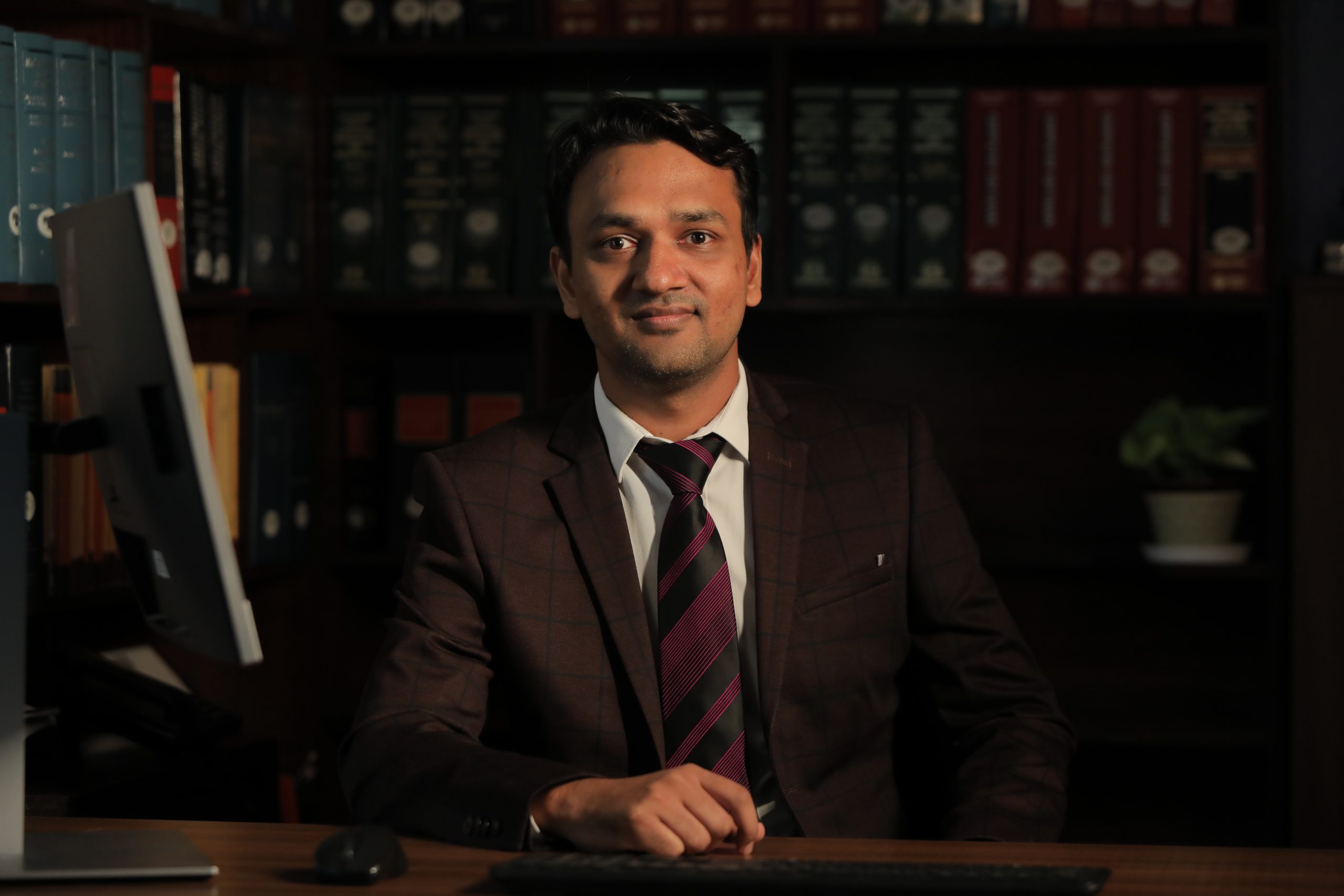
    Sachin, your professional journey is quite impressive, spanning the realms of pharmaceuticals, law, and intellectual property. What sparked your curiosity in Intellectual Property, eventually leading you to become a partner and patent Attorney at K&S Partners? 

    My first exposure to Intellectual Property is in my academic life when I was pursuing M.Tech. (Pharmaceutical technology) from NIPER, Mohali. We had a course curriculum that also includes a 6-month course on Intellectual Property (IP) conducted by the head of the IP cell of NIPER Mohali. There, I got to know about Intellectual Property rights and general patent laws across the world. My first-hand experience in patent drafting was from my research project on anti-cancer molecules. I myself conducted prior art patent searches and drafted two patent applications at that time in the institute, which were also granted by the Indian Patent Office later on during the examination of the applications. I think that was the time that sparked my curiosity towards Intellectual Property rights, particularly patents and the intersection of science and law.

    Achieving All India Rank – 1 in the Patent Agent exam is a significant accomplishment. Can you share some thoughts on the perspective on patent law and the role it plays in innovation?

    Indeed, clearing the patent agent exam that too with AIR-1 is a memorable achievement for me. I think patent law motivates innovators to create something new for the benefit of society at large. Patents drive innovation and create a significant impact on the ground. Innovators disclose their inventions in return for an exclusive monopoly for 20 years. After 20 years, the invention is open to the public for its use. This way, both are benefited, and the innovation cycle keeps on evolving. 

    Being recognized as a Rising Star and Notable Practitioner by Managing Intellectual Property is a significant achievement. How do you balance staying at the forefront of your field?

    I thank all my colleagues at K&S Partners for guiding me and making me what I am today. I think the IP landscape in India is changing at a fast pace. All the stakeholders in IP – government/private are really contributing to the country’s evolving IP landscape. I try to keep abreast of the latest developments in Intellectual property, particularly patents and any policy updates in this area. Importantly, I also learned a lot of things related to the peculiarity of patent matters of my clients during prosecution before the Indian Patent Office. Overall, as usual for other law subjects, this field also requires regular upgradation of knowledge/understanding of patent laws.

    Your research on the anti-cancer domain earned you the Best Poster Award from a Nobel laureate. Can you tell us a bit about the research and have you patented this anywhere?

    The research was on an improved process for preparing some anti-cancer compounds. Normally, preparing said anti-cancer compounds at that time was very tedious and time-consuming with very little yield in previously known methods. We, as a part of the research team, developed certain new efficient processes and validated the same in labs. Finally, we presented a poster at a scientific conference in CDRI, Lucknow. Fortunately, my poster was selected for the best post award from a Nobel Laureate Dr. Grubbs who pioneered in olefin metathesis chemistry. We did file the patent application in India for said new processes and secured the grant from the Indian Patent Office.

    In your 13 years of professional experience, what challenges have you encountered, and how have you innovatively addressed these challenges for the benefit of your clients?

    As I practice in the pharmaceutical/chemical area, I have handled numerous contentious issues that arise during prosecution of patent applications in India. I have also dealt with several patent oppositions filed by Opponent by way of pre-grant or post-grant opposition. I always make sure to inform my clients timely and my recommendations for any case and seek their inputs. Sometimes, experimental data/additional information is required for defending patent applications and I accordingly try to strategize the case based on the facts/merits of each matter.

    Beyond your professional life, what are your personal interests, and how do you ensure a balance between your demanding career and personal pursuits? Additionally, how do you stay updated on the latest developments?

    I love travelling and like to explore new places. In any demanding career, it is also equally important to take out some time for your mental well being. I personally always try to balance work demands and personal goals and take breaks as and when required.

    To stay updated with the latest development in IP, I strongly recommend cultivating a habit of reading. I personally mark the important articles/judgements in my area of interest and read in my available time.

    Given your extensive experience in patent prosecution and enforcement, what advice would you offer to aspiring patent attorneys or those considering a career in intellectual property law?

    IP is a lucrative field and I am noticing that a lot of law/science graduates are willing to pursue IP as a career option. For aspiring patent attorneys, I would strongly recommend having strong technical expertise in scientific research in the first place and at the same legal acumen to comply with the Indian Patents Act. It is important for them to have a basic understanding of the Indian Patents Act.

    Case laws are really helpful to know beyond the legal language of Patents Act and to be able to provide practical advice in each patent case. Particularly for students of pharmaceutical/chemical background, I strongly suggest having a general understanding of Section 3 of the Patents Act since lot of objections from Indian Patent Office falls within this category and how they can deal with the same.

    Government conducts patent agent exam every year and a thorough understanding of the Indian Patents Act and rules thereof is required to pass the exam to become eligible to practice as a patent agent before Indian Patent Office.

    Get in touch with Sachin Bindal-

  • As a first-generation young litigator, it is always hard to have a clientele flowing in clinically and to be substantial enough to learn and grow-Ilam Paridi, Advocate-on-Record, Supreme Court of India, and Founding Partner, Vox Populi Legal

    As a first-generation young litigator, it is always hard to have a clientele flowing in clinically and to be substantial enough to learn and grow-Ilam Paridi, Advocate-on-Record, Supreme Court of India, and Founding Partner, Vox Populi Legal

    This interview has been published by  Priyanka Karwa and The SuperLawyer Team

    Can you share with us your journey from your undergraduate studies in law at Christ University to pursuing an LL.M. at Tilburg University in the Netherlands and O.P. Jindal University, Sonepat? What inspired you to take this path?

    Growing up in a household where both my parents are Ph.D. holders, my fondness for academics was always subconsciously ingrained. Having chosen law professionally, I was exposed to various philosophies and jurisprudences, which shaped my interest towards academia. Having said that, it was also important for me to not jump into LL.M. right after my undergrad and approach it like just another degree or as an exercise of CV building. It was really important for me to enjoy this process. So I decided to work for a minimum of three years and see for myself where my interest organically built. Even in my undergrad, I had the opportunity of being the Convener of Model United Nations Society and had consciously chosen to only do international moots like Oxford Price Moot- South Asia rounds and Jessup India Qualifiers, upon realising that I might not be able to learn much international law once I graduate and start litigating. Once I started practising, just like any other fresher, I had engrossed myself in learning law and court craft. With the unfortunate onset of COVID-19 pandemic in India, where courts and offices were operating in virtual mode, I was able to give space to my academic interests. It was then that I enrolled and completed various certificate courses on contract law, anti-discrimination and citizenship laws from Harvard Law School, Stanford Law School and the University of London respectively. In the meantime, I had also applied to O.P. Jindal University to pursue an LL.M. and was fortunate enough to get ERASMUS+ Scholarship and was sent as an exchange student for a semester to Tilburg University, Netherlands. The semester exchange at Tilburg University is certainly one of my fondest experiences, both personally and academically.

    Your academic achievements, including the Gold Medals and Rank 1 recognition, are impressive. Could you tell us about some of the key experiences or strategies that contributed to your success during your LL.M. studies?

    Personally, I think that one cannot and should not plan to top the course or win Gold Medals, at least while doing LL.M. At the cost of sounding preachy, it should be a natural outcome of one’s inclination, understanding and efforts put into that course. Having said that, what I personally think helped me to achieve Nani Palkhivala Memorial Trust Gold Medal, Savitri Jindal Merit Scholarship, Gold Medal for Academic Excellence and Rank 1 in Outstanding All-Round Performance in LL.M. was certainly the maturity that I garnered with my 4 years of practice, as against jumping into LL.M. right after undergrad. I was able to see the visible difference in my approach to law subjects in my undergrad and those in my Masters. Since I had chosen my area of interest to be human security and dispute resolution, it fell right in the midst of my prior work experience and academic interests. I was able to connect the dots much better than I could in my undergrad, which gave me an edge over the majority of the students who enrolled in Masters right after their UG.

    You’ve worked on a wide range of cases in the Supreme Court of India, including some landmark ones. Can you share a memorable case or experience that had a significant impact on your legal career?

    For this, I certainly have to thank Hon’ble Justice Ms. Neela Gokhale, with whom I was working, prior to her elevation as a Justice of the Hon’ble High Court of Bombay. Justice Gokhale had a wide range of matters from the lowest court to the highest court with an experience of over 30 years. Under her guidance, I worked on a variety of matters ranging from civil, criminal, and arbitration to matters of constitutional importance. One such case was Sakshi Bhattacharya v. Union of India where we had challenged various provisions of the Hindu Minority and Guardianship Act, 1956 since the Act did not deem the mother as a ‘natural guardian’ as against the father, amongst various anomalies. The research for this matter was astounding since a huge amount of literature had to be read and understood to get a perspective of the legislative intent, though archaic and colonial. This matter did have a significant impact on my understanding and approach to law as a young litigating lawyer. This did teach me that I did not have to be bound by the constraints of law if it is principally in breach of one’s fundamental rights. This also taught my younger self that I could and should question everything, including the laws in force to secure ends of justice. This certainly enhanced and nuanced my approach to every dispute, more so the ones before the Hon’ble Supreme Court since the aspect of substantial questions of law was involved in every appellate filing.  

    Your experience also includes internships and chamber experience with notable legal figures. How did these experiences shape your perspective on the legal profession, and what valuable lessons did you learn from them?

    As a first-generation aspiring lawyer, I did intern in different offices with a variety of work. I interned with Mr. Amit Anand Tiwari, Advocate-on-Record, followed by World Wildlife Fund and Nishith Desai and Associates, Delhi to get a first-hand idea of how chamber practice differs from a corporate practice. It was only thereafter did I started interning with Justice Gokhale in my third year and continued to work with her until I started my own Firm and independent practice. Working with Justice Gokhale has been the biggest influence on my perspective on litigation and the justice delivery system. As an intern, I used to take dictation and would often be given a blank document to draft an affidavit/petition, without the benefit of a format to merely fill in. The biggest takeaway from the said exercise was that the template formats should be used for convenience and not in substitution for actual learning. It should not be the case that if a template format is not available, one is not able to draft. This is a practice I till date put my junior colleagues through. Despite having done a certain type of matter a few times, we were still made to re-read the same provision every time I did a new matter. As redundant as it might sound, but it always does wonders as one would interpret a certain word/ingredient of a section differently in light of the peculiar facts of the case. It was the aforementioned that made it easier for me to crack the Advocate-on-Record examinations on my first attempt.

    As a founder partner of Vox Populi Legal, what motivated you to start your own law firm? Could you tell us about the focus areas and goals of your firm?

    The idea of starting Vox Populi Legal [meaning Voice of the People] was long pending. It really grew in shape while I was doing my Masters in the Netherlands. As a first-generation young litigator, it is always hard to have a clientele flowing in clinically and to be substantial enough to learn and grow. To overcome this, I along with my friends from my UG started Vox Populi Legal, so that we could pool our resources to run our office and at the same time work together on a variety of matters to grow. Once we started working with each other, the influx of matters automatically increased and we were able to manage offices in three different cities- now grown to five. Vox Populi Legal is primarily a litigation firm which specialises in civil and criminal dispute resolution, arbitration, insolvency proceedings, intellectual property rights etc. from the lowest to the highest courts. Apart from the objective of rendering services to people throughout the country, we are also attempting to change how a law firm ought to work. We attempt to prioritise better work-life balance and mental health, while not compromising with the quality of service. We also strive to fairly compensate our junior associates and also our interns so that they remain motivated to perform optimally.

    In addition to your litigation work, you have experience in arbitration. Can you explain the differences and challenges between litigating in court and handling arbitration cases?

    Personally, I see arbitration and litigation in courts as two strong pillars of dispute resolution in India, though with its own limitations. While arbitration is predominantly founded on the principle of consent, litigation in courts may not necessarily revolve around consent- arbitration clause, appointment of arbitrator, seat of arbitration etc. That being said, arbitration is more flexible in terms of schedule and also spends more time on each claim made by the Claimants than what courts generally do. So essentially, arbitration demands a lot more attention from determining the timeline of proceedings, and schedule of fees to the smallest of the arithmetic detail to justify one’s claim. Though the general principle is to ensure least interference by courts in arbitration, one would often find themselves being in court against every order passed by the Arbitrator. The said ping-pong between the arbitrator and the courts would often lead to delay, which is antithetical to the idea of arbitration as an alternate dispute resolution itself. Thus as a practitioner, it is of utmost importance to constantly evaluate the needs of one’s client and choose forums and strategies accordingly.

    You’ve published several research papers on various legal topics. Could you highlight one of your research findings or publications that you’re particularly proud of and explain its significance in the legal field?

    Though I have had the privilege of having my work considered worthy of publication in esteemed journals, but the one I thoroughly enjoyed working on was ‘Report on Legal Assistance at the stage of Pre-Arrest’ for National Legal Services Authority [NALSA]. Having worked in cases involving criminal law from the stage of pre-arrest, the need for effective legal assistance became more glaring and obvious. For effective functioning of a vibrant democracy, equal access to justice is a sine qua non, not just after proceedings have been initiated, but also at the stage of pre-arrest. So essentially, legal aid serves as the contact point between law and people who are living in poverty and is a catalyst for social change. By way of the said report, various structural, qualitative, policy-based reforms were suggested to ensure prompt access to legal advice and assistance to guarantee a fair trial and the rule of law, keeping up with the latest technological advancements.

    Finally, what advice would you give to fresh law graduates who are just starting their legal careers? What key principles or strategies should they keep in mind as they embark on their professional journey?

    As a fresh law graduate in litigation, it is reasonable for one to feel ‘not sure’ about the field of law or type of practice one intends to partake in. But what is important is that one should not close themselves to learning new things constantly. In my opinion, a common mistake fresh law graduates often make is that they pre-define their area of specialisation, even before they try new fields. Though people might differ on this, I strongly feel that one’s specialisation should be determined organically wherein one ends up doing/enjoying a certain kind of matter a lot more than other. As a fresh law graduate, the best thing that one can do for themselves is that one has to be the ‘Master of their Brief’, without any exception. It is a non-negotiable that one ought to know every fact, every page, every document, and every law involved in the said matter, better than anyone else on the given day in the said courtroom. This will not only help a fresh graduate to be more confident but will also help one grow consistently. There is no shortcut to hard work in litigation. When the same is coupled with consistency and integrity, one would find results visibly quicker than the rest of the legal professionals. Having said that, one also needs to strive to maintain a healthy work-life balance and mental health to enjoy the journey of life-long learning.

    Get in touch with Ilam Paridi-

