Tag: GWU

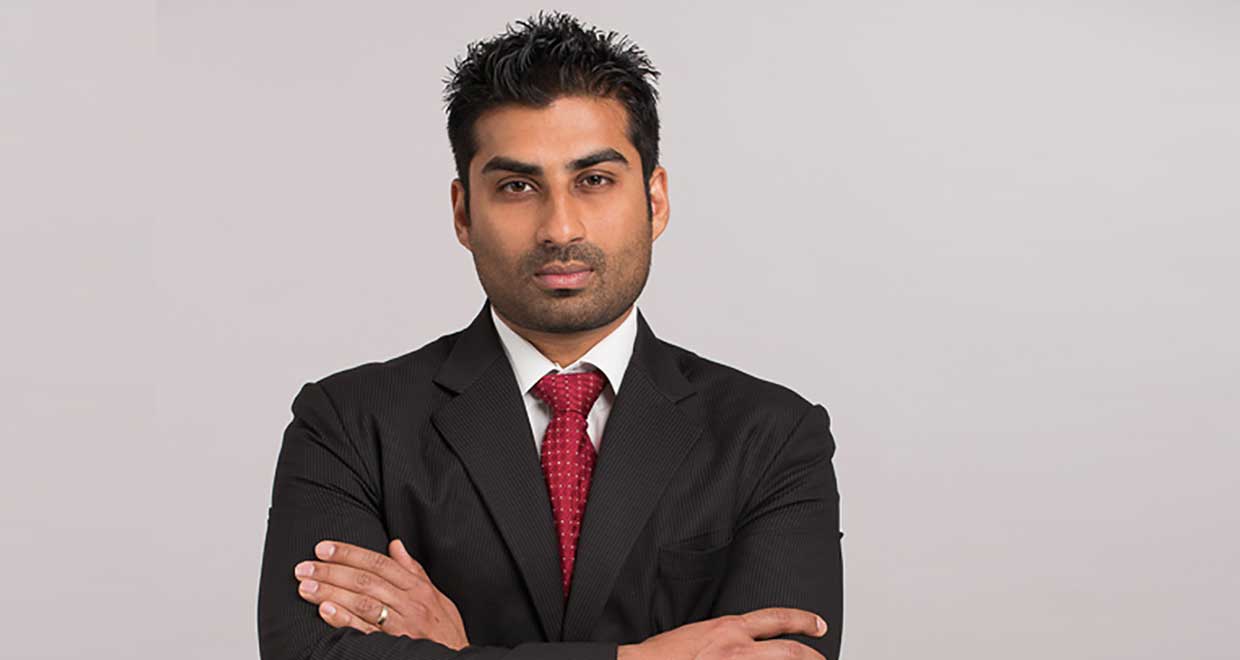
  • Anirban Sen, Litigation Attorney, on bridging the gap between technology and policy, and IP Law

    Anirban Sen, Litigation Attorney, on bridging the gap between technology and policy, and IP Law

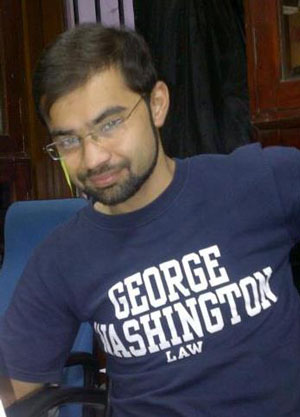
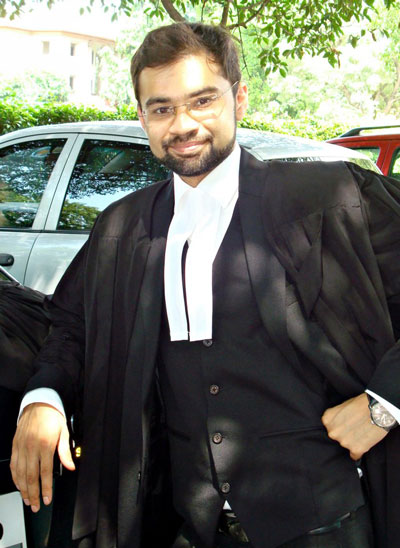
    Anirban Sen graduated from Symbiosis Law College, batch of 2004. After serving at the Calcutta High Court as Advocate for three years, he went on to purse his Masters from George Washington University Law School, specialising in Intellectual Property Law. He is admitted to the New York State Bar Association as well as the American Bar Association. He is currently Advocate at the Courts of Delhi.

    In this interview we speak to him about:

    • Marrying technology with law
    • Studying in the US
    • His experience in IP Law

    How would you like to introduce yourself to our readers?

    I am an all-round general litigation lawyer although I have specialised in both IP and Technology laws as well as Media and Privacy laws.  My hobby had been to build electronic gadgets since my early school days, and later to write computer code.  In some ways I think I still know more about computers and technology than I know about law. However, having actually studied and practised law for so many years, I enjoy the opportunity to explain one field of knowledge to people from the other field. Usually, technical persons do understand the law to some extent, but usually lawyers fail to move beyond the basics of technology.  Hopefully, this will change soon.


    What is unique about the B.S.L., LL.B course that you undertook, and how did it contribute to your career in law?

    The B.S.L., LL.B. course is a 3+2 year course which was available at Symbiosis Law College under Pune University. There was a two-fold advantage to this course.  As a science student in 12th standard, I had never studied subjects like Sociology, Political Science or Economics which create a good base in the understanding of law. Secondly, there was an option to just get a B.S.L. course and then study a different postgraduate degree.  The unique advantage in studying towards a B.S.L. degree is that the subjects help your understanding of the law and its social implications.
     

    To what extent does one’s GPA affect one’s chances of landing jobs in top firms?

    Grades are unfortunately very important.  It doesn’t matter if you get good grades, but very bad grades will make you look poor in the corporate law world.  Of course a better grade may just get you that interview that you have been eyeing, but internships hold more value in deciding who would be hired.  Of course, if you interested in a career in litigation and want to start apprenticeship under an advocate, what matters most is your understanding of the courts, followed by knowing how and where to look up the relevant law.

    What subjects did you take particular interest in during your law school days?

    As far as law school (LL.B.) degree goes, I did not take particular interest in any one subject. Of course, I found Constitutional and Administrative Law to be the bedrock of litigation, but subjects such as Evidence and the Indian Penal Code were interesting too. Interest in a subject may not affect career choice in India but rather how much of what you know.


    What were the activities, academic or otherwise, that you undertook in your law school days which in your opinion have shaped you and your career?

    For me it was having a keen mind that shaped both me and my career.  Those days there weren’t that many options. I wasn’t particularly interested in mooting.  But I did read, a lot.  Mostly news and current affairs.  Those days there was no Google or Facebook or Twitter. News sites and periodicals kept the interest alive.  I also kept up my interest in building electronic gadgets and writing computer programs which later helped in realising that lawyers and technophiles are largely a mutually distinct group. During my Masters’ degree, I wrote a paper on governing virtual reality given the speed with which immersiveness of artificial, interactive media was increasing. Yes, in India this may take some time to evolve, but once the prices come down, there would be rapid adoption and the law would be far behind.


    Who was your mentor, or main source of inspiration who motivated you all along the way?

    I did not really ever have a mentor or single source of inspiration. I have worked with many different lawyers with different philosophies towards life.  However, I found my father’s way of working to be the most balanced in terms of both working hard and enjoying life. Although he is a Barrister-at-law and Senior Advocate, he can mix with anyone with ease and regularly takes out time to visit new and interesting places every year and I am happy to accompany him.


    What kind of internships did you engage in during your student years?

    I did only three internships in my last two years of college, each in a different city.  The different environments of different cities also contribute towards one’s career.  Since each was a different type – firm, individual, and Delhi litigation (Supreme Court), and offered me a unique perspective at the time and age, I wouldn’t trade one for the other.

     

    Would you say higher studies are relevant for a career in litigation?

    LL.M.s per se really don’t have much value in litigation. However, a good college (at least in the U.S.) imparts far more knowledge than a five year course in law here does and I would highly recommend one as a course which can help a person grow. Also, in later life, the Master’s degree helps.  Add to this the thrill and the opportunity to study with international students is something to look forward to. And when it’s all over, it’s simply great to have friends from all over the world.


    Which universities in your opinion, offer a worthwhile L.L.M program in IP law?

    There are many universities offering good programs, but The George Washington University Law School is one of the best in IP law.  That said, a candidate has to marry their interests with what a law school offers and this requires an in-depth, time consuming research – both online and through students of those colleges.


    Which is the ideal time to do an LL.M?

    An LL.M. should ideally be done after two or three years of practicing law in courts.  It gives one better focus and the habit of addressing courts goes a long way in posing critical questions to professors in class.  For someone in corporate law or in-house practice, an LL.M. can be done even after five or six years while on a planned sabbatical. That said, if one is so inclined, there is no set age limit for broadening your educational horizon.


    Tell us about your work experience at Anand & Anand where you’d held the position of Senior Associate.

    This position helped me understand how Delhi courts worked and  acquainted me with the Delhi style of practising law. Although short, I really enjoyed my time there.



    Between Calcutta and Delhi, which city do you feel is more receptive to a newbie in litigation?

    Each city has its pluses and minuses.  Delhi is commerce driven and works well in set schedules.  Calcutta allows juniors to address courts easily and the financial stakes of cases are not as high, making it better for a newbie to argue and learn drafting.  The Calcutta style drafting follows more traditional methods and is probably more sound. However, Delhi drafting is more flexible and is focused more on the objective than form.  For a newbie, I recommend working in Kolkata for a few years to gain sufficient experience in addressing courts and arguing matters alone.


    Is there any other suggestion you would like to give to our budding lawyers and IPR enthusiasts?

    Budding lawyers these days are much better prepared than we used to be.  However, I would advise that future lawyers must understand not just the law, but the history and tradition of the profession from seniors.  Law is not a money-making business, but a profession (although many lawyers, especially in Delhi, are amongst the highest paid).  Read up about the life histories of different lawyers or spend time with lawyers you know. Get to know their schedules and how they conduct their lives.  This will help you appreciate the responsibility of not just being a lawyer, but also help you understand how to carry yourself in public. For an IPR enthusiast, get to know the underlying subject as well. To understand copyright, understand how the music business works.  For patents, know the underlying physics or biochemistry. For technology, go to the basics and understand how and where it evolved and why. This will give you an edge over an otherwise simply bookish lawyer and this practice will hold you in good stead throughout your life.

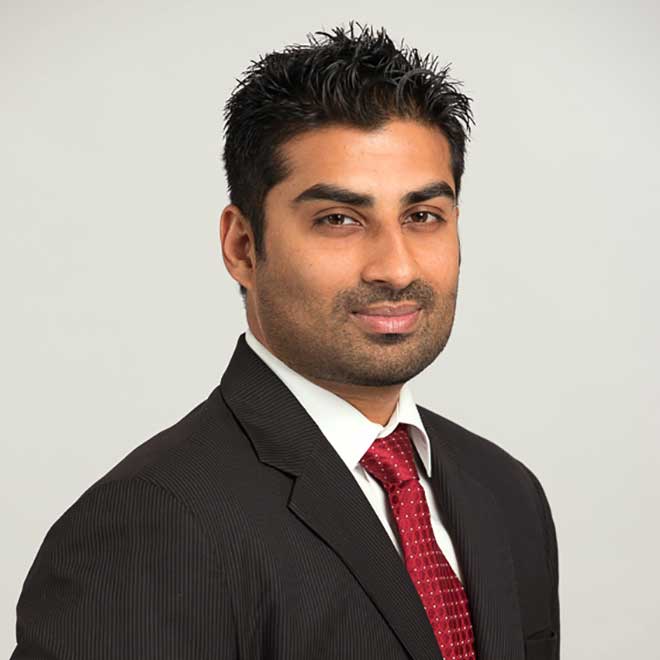
  • Abhinav Lohia, Partner, Davies and Associates, on immigration law, qualifying the NY Bar, and being a legal entreprenuer

    Abhinav Lohia, Partner, Davies and Associates, on immigration law, qualifying the NY Bar, and being a legal entreprenuer

    Abhinav graduated in law from Guru Gobind Singh Indraprastha University in 2007. He is a dual qualified attorney, admitted to the practice of law in the State of New York and the Republic of India. He was admitted in the Bar Council of Delhi in 2007. From 2007 to 2010, he was involved in mixed litigation including criminal defense, defamation, corporate criminal and intellectual property litigation at all levels of Judiciary including the Supreme Court of India. In 2010, Abhinav decided to concentrate solely on Intellectual Property litigation. In 2012, in order to pursue LLM from George Washington University School of Law, he moved to the United States. After graduating from the law school, he passed the New York State Bar Exam in 2013 and got admitted to the New York State Bar. In early 2014, he joined Davies and Associates, LLC, a full service immigration law firm headquartered in Manhattan. In 2015, Abhinav became a partner in the firm and the Head of India and South East Asia practice group. 

    Abhinav is a lawyer by profession and a traveler by passion. He is a member of Royal Beasts Motorcycle Club in New Delhi. He has traveled from Delhi to Mumbai, Hyderabad, Bangalore, Chennai, and Ladakh on his Royal Enfield motorcycle.

    In this interview we speak to him about:

    • His experience in IP Law
    • Studying in the US
    • His plans for the future

    What inspired you to take up law? 

    Like many other Indian children I was pushed to take up science in high school. My parents and I soon realised it was a big mistake. My sole motivation to work hard and graduate from high school was not studying science for an additional year. After graduating from high school, I decided to be as far away from science as possible and got admitted to a five year law program.


    Tell us a bit about your time as an undergraduate.

    I did not enjoy studying at my law school. It seemed like an unending marathon where we had to chew up the course work every day for five years and spit it out on the exam sheets. That to me seemed pointless. Courts are not interested in knowing how good your memory is, they care about precedents and arguments. A successful attorney needs good research skills, logical and quick thinking. Unfortunately, law schools fail to develop these skills. I did enjoy my internships though.


    Did you take part in co-curricular activities while in college? 

    I was part of the law school’s choreography club, basketball and soccer team. I am a strong advocate of co-curricular activities. It is great to spend time with like-minded people. Outside of law school I was an avid motorcycle rider. I traveled from Delhi to Chennai and Ladakh on my motorcycle. I think I covered around twenty states on my motorcycle. Motorcycling was my escape from everything. It is how I define freedom.


    What books, judgements that you have read, would you say have played an integral role in shaping your legal philosophy?

    I liked anything and everything to do with criminal law. Indian Penal Code was like a novel for me. The most memorable experience of my law school was drafting my research paper on Constitutionality of Brain Mapping and Narco-Analysis. At the time Telgi Scam was a hot topic. What made it challenging was that there were no Indian precedents. The matter was sub-judice in the Supreme Court of India.  I was forced to research on American Case Laws. This exposure was valuable on many levels.


    What were you areas of interest during your legal education? 

    As mentioned above, Criminal Law was my passion. I always wanted to be a litigator. I started my career as a criminal defence attorney. It was exciting at first and also gave me a sense of power. But soon that faded away. The long delays in court and the slow progress of cases killed my passion. I still wanted to be a litigator though. I researched and found out most intellectual property cases in Delhi are filed directly in the High Court of Delhi owing to pecuniary jurisdiction. They are fast paced as compared to Criminal and Civil Cases. I quit my job, took a pay cut and joined an I.P. law firm. For the first time in my legal career I was seeing the end of cases that I was filing instead of countless adjournments for questionable reasons.


    Could you tell us about the internships you took up, and what you learnt from those experiences?

    Internships are very valuable if you take them seriously. I primarily interned at Karanjawala & Co. It was a fruitful experience. My mentors were great, they pushed me to research all the time. The skills I picked up during my internship gave me a head start when I became an attorney.


    What motivated the shift from Chambers of Ankur Chawla to Lex Infini? 

    I moved to Lex Infini to pursue intellectual property litigation. It is here I found another mentor, Mr. Sushant Kumar Thakur.  He took me to the next level, professionally. He made me a fearless litigator and helped me transition to intellectual property. He gave me the freedom to work on matters from scratch to finish. He encouraged me to develop my own practice. It is here I started transitioning from a lawyer to a legal entrepreneur.

    What led you to decide to focus specifically on IPR litigation?

    (Abhinav’s diverse repertoire includes cases pertinent to areas of litigation including criminal defense, defamation, corporate criminal, among others.)

    I wanted to be a litigator and wanted a speedy disposal of cases. I also wanted to deal with corporate clients but never wanted to practice corporate law. Also, I.P. law was considered a niche field a decade ago.


    Tell us a little bit about your life a student of law at George Washington University School of Law. 

    Studying at G.W. Law was a great experience. It was the first time I saw the professors and students engage in a discussion as equals. The lectures were well structured and the course material made sense. We were not pushed to memorize everything; 90% was practical application. Most of our exams were open book and some were research based. The university also emphasized a lot on networking- they pushed us to meet lawyers and arranged a lot of networking events. There were a lot of social events within the school for students to interact and network with each other. I was on the board of Student Bar Association as a representative for LLM students and was also on the board of South Asian Law Students Association. Both these positions required a lot of student and faculty interaction and organizing events. I enjoyed every bit of it.  


    What was your experience with the Bar Exam in New York? 

    New York State Bar exam is one of the hardest exams I have taken in my life. As an international LLM student I attended only a year of American law school. I had to learn two years of law school courses in ten weeks during the bar prep course. Almost every day my friends and I questioned our decision of signing up for the bar exam. It was twelve to fourteen hours of torture every day for ten weeks.


    Can you please share with the readers your work profile so far at Davies & Associates, LLC? 

    I am a Partner at Davies & Associates, LLC. I head India and South East Asia for the firm. I represent corporates and high net-worth individuals from India and South East Asia who want to establish a presence in the U.S. I am one of the rain makers for the firm. A typical day for me starts with responding to queries of all the attorneys and paralegals that I supervise. I have a client facing role so most of the time is spent interacting with clients and scheduling meetings with them. I visit India and South East Asia every 40 days for client meetings. I meet with clients, explain the immigration process to them, tell them about our firm, and sign them up.

    Can you shed some light on the kind of work you and your firm are doing considering the current immigration crisis in the US?

    The immigration system is broken and needs an overhaul, however some of the suggested measures may make it very hard for some nationalities to immigrate to the United States. The change that impacts our practice the most is increase in investment amount to get investment based green card (EB5 Visa) from $500,000 to $800,000. This jump will make it very hard for a lot of people from India and other developing countries to get an investment green card owing to the week currency. We are part of various organizations that lobby against such changes. Also, I am on the Board of South Asian Bar Association, we run a pro bono immigration clinic to help immigrants who have limited or no access to legal representation.

    How do you manage your time between your professional and personal interests? 

    After a decade of working I have been able to find a work life balance. I love traveling, and fortunately some of it is satiated by the nature of my job. In order to spend time with my family I start my day early so that my evening are free. I try not to take client calls when I am at home. I figured clients will respect my personal life if I respect it.


    Where would you like your career to take you five years down the line?

    I achieved professional success in a short period of time since I moved to the States. Having become a partner at my firm, I cannot get promoted further. I joined a fairly new law firm that grew rapidly. I want to continue riding this wave and grow the firm. I also want to author publications and become an adjunct professor in a university, preferably George Washington University.


    What advice would you like to give our readers, who are mostly law students and young lawyers?

    Be fearless, it is never too late to change your career path. I found my calling after seven years of practicing law, changing my fields thrice and moving to a different country. Also, this is the age of being a legal entrepreneur instead of just being a lawyer. Develop networking skills, gain some knowledge regarding marketing and sales.

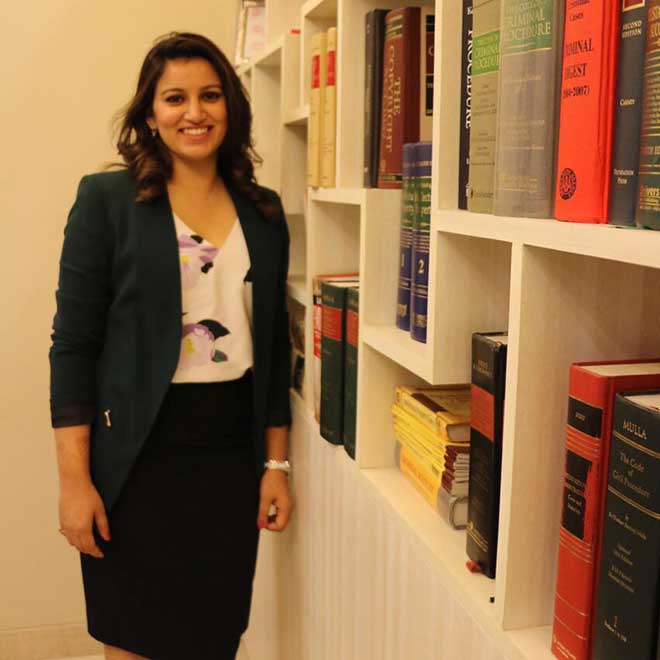
  • Atika Prasad, IP Attorney, Wahl Clipper Corporation, on studying in America, practising internationally and striking work-life balance

    Atika Prasad, IP Attorney, Wahl Clipper Corporation, on studying in America, practising internationally and striking work-life balance

    Atika Prasad graduated from Symbiosis Law School in 2012. She subsequently went on to pursue her Masters from George Washington University, with a focus on Intellectual Property Law. She worked at a boutique patent law firm for about six months, following which she returned to India. She is currently IP Attorney at Wahl Clipper Corporation, where she handles the company’s world-wide IP enforcement.

    In this interview we speak to her about:

    • Being a first generation lawyer
    • Building a strong IP Law practice
    • Managing time between work and personal interests

    Were you always fascinated by the field of IP law?

    IPR is a field that is vast and constantly evolving. The prevalent laws are reformed from time to time in order for it to be in sync with the advancement of technology. In the early years of law school, I was inclined to pursue litigation and was more interested in civil procedural and substantive laws. Soon after, I was introduced to IP and Corporate Law. I was immediately drawn towards the connection between law and the dynamics of innovation. I realized that IP is one such branch of law that forms part of every transaction and has several relevant consequences.


    How did you build up your expertise in IPR?

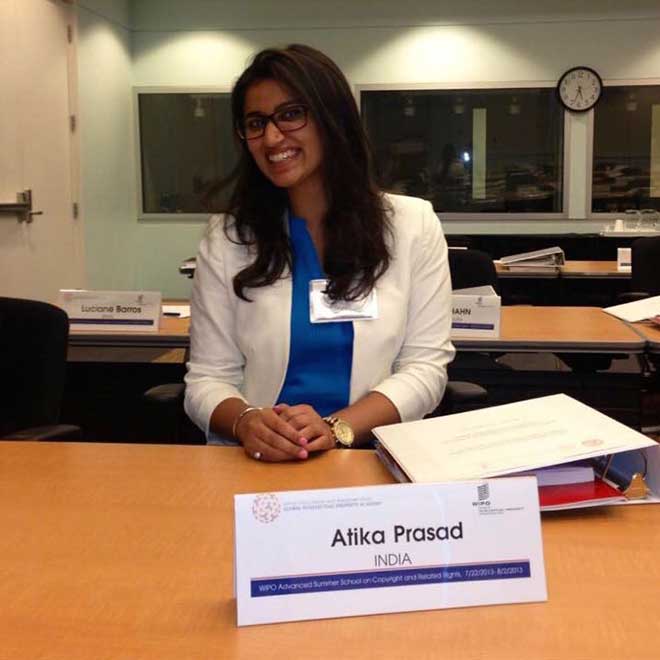
    To keep my knowledge in the field of IP abreast with ongoing changes, I try to take up IP specific short-term courses from time to time. After completing my LL.M., I undertook a two-week course conducted by the WIPO at the USPTO on Copyright and related rights.  Over a period of two weeks, 40 young professionals, selected from across the globe, deliberated over the intersection of International and domestic IP laws of their respective countries. Thereafter, I worked at Hershkovitz & Associates, a Patent Law Firm in Alexandria, Virginia, for a brief period. In February 2014, I started working as Wahl’s IP attorney to handle their IP portfolio and my responsibilities predominantly included enforcement and border protection measures in India. Wahl provided me with the option of combining my understanding of the laws of India and that of the US. I have also been afforded the opportunity to represent Wahl at different platforms across the globe, INTA being one of them. Wahl encourages their employees to continue learning by means of short-term distance learning courses. While being at Wahl, I have completed a few certificate courses conducted by organisations such as FICCI and WIPO.


    Tell us about your schooling and early life. What, according to you, sparked your interest in law?

    To be the daughter of an eminent orthopedic surgeon (my father) and a renowned histopathologist and former president of IMA (my mother), life has been a sine wave. On one hand you get everything, the right advice, the right resources, and the right environment; on the other hand, living up to the expectations is certainly not easy.

    In school, I lived in the shadow of my elder brother (now a neurologist in USA) and teachers would always compare me with him and his achievements. All that did was to encourage me to put my best foot forward in whatever task and assignment I undertook. Come to think of it, choosing law as a profession was not that difficult of a decision. I had made up my mind when I was thirteen. I was amazed with the idea that throughout my entire life I can continue to be creative in my thought process, read every day, write, get introduced to new people, think and analyze issues and put forth my opinion.


    How important are internships for a law student?

    I feel law schools in India mostly provide theoretical knowledge rather than providing a practical insight. The practical aspect of legal system in India is too distinct from the theoretical aspect. This is where internships play an imperative role in enabling a law student to gain firsthand experience of court practice and understand the practical application of legal theory better. I think varied options of pursuing internships under Advocates practicing at different levels of court in different cities, law firms and corporations, widens the prospects of possible practice fields for a law student. Hands on experience in so far as the practical implications that the profession demands, is an added factor which assists a law student in making one of the most important decisions of being a litigator or a corporate attorney.


    How do you maintain your work-life balance?

    Working for a multinational company not only requires an individual to possess legal acumen but also entails certain added responsibilities. My work profile demands extensive travel to different countries every month. As they say, the transition phase in one’s life is the most important and the sooner one is able to achieve a balance between the conflicting interests of work and life, the better it is for one’s own development in the longer run. Personally, I feel lucky to be married to a workaholic lawyer who not only understands the level of commitment which this profession demands but also encourages me on a regular basis to deliver to the best of my capabilities. Moreover, Wahl gives me a great amount of flexibility, which in effect helps me manage work and personal life.

    How did you decide to pursue an LL.M.?

    Pursuing an LLM was a well thought out decision, which was taken after much consideration and strongly encouraged by my family. While I was studying IP, I realized that the various treaties and conventions to which the country in question is a signatory, govern domestic IP laws. Apart from the various domestic issues involved in this area of law, it also has far reaching international and commercial implications. These factors reinstated my decision to have an in depth knowledge in the subject and specialize in the same. I was convinced that international exposure in the field of IP law via comparative analysis of a developed jurisprudence would be helpful and it actually was.


    What are the essential skills required to be a corporate lawyer?

    Every corporation/law firm/company has a completely different work culture. As a corporate lawyer, one needs to understand the work culture of the corporation for which one works. As far as my experience goes, I believe inter-personal skills are to be given far more credence while representing a corporation. If an individual chooses to practice as a corporate attorney then a conscious effort from the very beginning in grooming communication skills would certainly be advisable. One needs to constantly understand the concerns of the company.  Apart from that, it is always helpful to be aware of general commercial development with respect to the relevant industry practices and also be updated on the same.  Primarily, every corporate lawyer should always have a result-oriented approach, should be able to think on one’s feet and improvise when needed.


    What are the primary professional ethics you follow while at work?

    While prioritizing the interests of the company, I ensure that I listen and understand what the other person has to say and wants, without interjection. Also, management of time is crucial and I make sure that I am clear on the deadlines of any work that is to be done and accordingly, if need be, prioritize. One needs to be mindful that timely adherence to the deadlines while being the face of the corporation reflects not only on the attributes of an individual but also the corporation.

    It’s perfectly human to make mistakes while executing any task; the key is to learn from it as soon as you commit them. Apart from this, it is of utmost importance that an attorney religiously follows the internal code of conduct and other policies of the corporation.


    Where do you see yourself ten years down the line?

    When I was doing my law, I just thought that I would be the country head of a multinational company in ten years. Three years ago, when I joined Wahl as a young attorney who handled their IP portfolio only for India, I did not know that within three years I would be handling their worldwide IP enforcement.

    While working towards one’s goal, one has a better understanding of the opportunities that come along and one’s own capabilities. With the support of my family and the opportunities given to me by my superiors, I can say without a doubt that I have all the determination to be a sprightly attorney, a finisher who has the eye for detail and a manager who takes initiative. I believe my ultimate aim after ten years is the coveted YPO membership, an organization which needs no introduction and its membership would truly be a dream come true.


    What is the role of an In-House/General Counsel in India?

    As of now, my role as the IP attorney of Wahl Clipper Corporation is multifold. I began with handling the IP enforcement of the company with respect to India, in 2014. A few more jurisdictions including the Asia Pacific, Africa, Russia, and UAE were added to my work profile last year and now I handle their worldwide IP enforcement. The job is as challenging as it sounds. Being responsible for so many different countries with different time zones definitely leads to a great deal of travelling and efficient time management.

    As part of the global IP enforcement of the company, I handle IP infringement related lawsuits and negotiations, Trademark and Copyright Customs registrations and also supervise online enforcement. With the laws and regulatory procedures becoming more complex, I believe it is the foremost responsibility of an in-house counsel to secure the interests of the Company from any present or future impediments.

    What would be your parting message to our readers?

    Every day is a learning process. I think willingness/eagerness to learn, skillful time management along with creatively strategizing on the issues at hand, are the most important qualities that one can possess. One should consider failures as stepping stones to success.


  • Anirudh Rao, Legal Counsel, Infosys London, on LL.M from GWU and job at the World Bank

    Anirudh Rao, Legal Counsel, Infosys London, on LL.M from GWU and job at the World Bank

    Anirudh Rao is a London-based Legal Counsel for Infosys Limited. He graduated from University Law College, Bangalore in 2009. Thereafter he pursued an LL.M from The George Washington University Law School, Washington, DC. He joined the World Bank Group as an Associate before shifting to his current job. In this interview he talks about:

    • LL.M from George Washington University
    • Tips on SoP, scholarships, interviews with foreign law firms/companies
    • Working at World Bank Group and Infosys, London


    Our readers are mostly lawyers and law students, how would you introduce yourself?

    I am Anirudh Rao, a London based Legal Counsel for Infosys Limited. Prior to joining Infosys, I worked for the World Bank Group as an Associate in Washington, DC. I graduated from The George Washington University Law School, Washington, DC in 2010 and University Law College, Bangalore University in 2009.


    What motivated you to gravitate towards law, as a discipline and a career?

    I was keen on doing something that involved the right mix of problem-solving, analysis and creative thinking. Although it did flutter the dovecotes, the one thing I knew for sure was that I did not want to touch math with a bargepole! Having been driven towards humanities from my high school years, pursuing a degree in law therefore seemed to be a natural progression as a career choice for me.


    Please tell us about your time at University Law College. What experiences during these five years would you think particularly helped you shape as a law professional?

    I attended University Law College (ULC) from 2004 to 2009. One of the key advantages I felt about attending ULC was that it allowed me adequate time to participate in moot court competitions, contribute to law journals and gain practical knowledge through internships. At the end of each semester during the course of my degree I interned at both law firms and companies, and during the year I was able to leverage my research skills to write papers that eventually got published in both print and online law journals. It was these experiences that helped bring a lot of perspective in to what I wanted to do as well as shape my career as a lawyer.


    What was the decisive factor that prompted you to choose George Washington University Law School from the plethora of options available? Did you always have higher studies in your mind? If not, what motivated you to go in for the same?

    I always wanted to be able to savour the experience of being an integral part of a multi-cultural, ethnic and linguistic class of creative and persevering minds from around the world sharing more than just the need for scholarly advancement.

    Washington, DC being the seat of power of the US government and major international organisations is also a cosmopolitan center for international commerce and business. I felt being in DC and attending GWU located in the heart of DC would put me at a distinct advantage to expand my professional network. I was also awarded the Thomas Buergenthal Scholarship on the basis of academic merit which covered my tuition for a semester.


    anirudh-rao-2

    Would you suggest having a brief work experience before applying for LL.M.?

    I had no work experience when I went to pursue an LL.M. Personally, I have no regrets looking back at my decision because it did not impede my career progression. However, I also recognise that having some work experience certainly helps in building perspective on taking a decision regarding the preferred area of study and shaping one’s career path.


    How did you structure your SoP? Please share some tips for a successful application. What according to you is a good profile for securing scholarships & funding?

    I don’t think I was alone in writing the first draft of my SoP and feeling like I got it wrong. A law school receives hundreds of applications and the evaluators are tasked with the arduous responsibility of reading all of them. What one needs to avoid is stating the obvious, being extraneous or generally lacklustre. A strong opening paragraph will keep the evaluator’s interest to read the rest of the SoP with a positive mindset.

    With regards to scholarships and funding, I feel that having the right mix of consistent academic performance with moot court achievements, publications and internship experience will be able to propel applications further. Highly ranked universities look for more of well rounded CVs; highlighting any outstanding sporting achievements, social volunteering and/or any other stellar achievements goes a long way in securing coveted seats and hopefully scholarships to go with it.


    Please tell us about your time at GWU. Was it difficult for you to adjust to a US based education system? What differences did you find in the educations system of India and US?

    GWU Law School was a fantastic experience. The faculty ranged from a former judge in the International Court of Justice, a former Register of Copyrights to subject matter experts who have testified before the US Congress. My campus life ranged from attending socials, intramural and intercollegiate sports, live music concerts and town hall meetings. My fellow students were from 30+ different countries around the globe; people ranging from former judges to a South Korean guard who previously manned the De-Militarized Zone between the two Koreas. It was a perfect opportunity to make lasting friendships in the legal fraternity across the globe.

    The LL.M program at GW is designed to allow international students to settle into the US learning system through specific coursework and breakout sessions; as such, it was not difficult to adapt to the changed circumstances. I was also fortunate to have great professor-mentors.

    Education systems in India and US are as different as chalk and cheese. As one would expect, classes were interactive rather than lecture based which meant one would have to go prepared to class. The culmination of the course at the end of the semester did not always end up in taking a routine exam to regurgitate what one had memorised through the past months. We had a repertoire of assessments including presentations, research paper submissions and theses. Students were also graded on the quality of interactions in class through the semester.


    How did your induction into the World Bank Group as an Associate take place? Were there any interviews or selection processes?

    The World Bank is located next to GWU Law School in Washington, DC. In fact, I took classes where I would look out the window and dream about crossing the street and working there after graduating! The US economy hadn’t fully recovered from the recession in 2010, jobs were few and far between; being based in DC certainly played a major role in securing a job at the World Bank. I would show up at World Bank hosted events and spent considerable time and effort networking with officials and engaging in conversation about their work while expressing my willingness to collaborate with them in their projects.

    Initially I was offered a short term contract. I continued to network which eventually led me to the Head of Operations and Business Strategy at the Global Environment Facility (GEF) who requested me to apply for an advertised posting through the World Bank’s job portal. Few weeks later I was called for a formal interview that was lead by a panel of four. I was asked questions about my background, competencies and how I would be a fit to the role. I came out feeling positive about my answers, a few days later, I got an email from then offering me a full-time staff position. My time there was exceptional, one experience that stands out for me was a project mission to Liberia and travelling across the country to pristine Lake Piso along the border with Sierra Leone to oversee a land degradation project.


    Currently you work as a Legal Counsel at Infosys, London, UK. Which events led to your induction into Infosys, London? How did your appointment take place?

    I was introduced to the then General Counsel of Infosys, through a friend, whom I later met at a World Bank hosted event in Washington, DC. I was looking to transition to the private sector and we discussed briefly about my interest in a contracts and commercial transactional role that Infosys was looking to fill. I wanted to have the benefit of a multi-jurisdictional profile and felt that crossing the Atlantic over to London would exemplify a vibrant work experience. After a round of interviews in Bangalore and working there for a year, London has been home to me and I am thoroughly enjoying it.


    What does your current work profile at Infosys consists of? What is a typical workday like? Are there new challenges everyday or has work settled into a predictable pattern?

    My profile is that of a commercial transactions counsel with a responsibility to lead negotiations, draft and review contracts for the provision of IT services and deliverables. I work with a vast array of customers both in the UK and in continental Europe across industries including but not limited to finance, retail, energy and utilities and manufacturing.

    A typical work day includes liaising with internal teams, negotiations with clients and assisting the business with both contracts and compliance related legal support.

    Everyday brings with it a new set of challenges and that is the way it should be to keep oneself intellectually stimulated.


    Tell us a bit about work culture in UK. Would you say that there exists a difference in the working environment of UK and USA?

    Both the UK and the US in general are very accepting and cosmopolitan societies to expatriates. I felt that differences between the UK and US’s working culture revolves around communication styles, sense of humour and emotional expressiveness. Especially while working in a client facing role as a lawyer where one gets the opportunity to work with people across cultures, I think it is critical to pay attention to one’s surroundings and take ample time to reflect on other people’s behaviour as well as one’s own.


    Can you give us advice on applications and interviews, especially with foreign law firms/companies?

    When applying to foreign companies and organisations, students are competing against local graduates who by no means are in short supply both in terms of quantity and talent. It is especially crucial to stand out and exceed expectations. The humble resume is expected to tell a student’s story in one or two pages and may be able to open the first door. One can benefit from getting their resumes peer reviewed for substance and consistency. Interviews can be daunting, however, one must manifest hunger, drive and confidence to convince why they are the right fit for the job.


    Any plans to come back to India?

    No fixed plans yet. There is an excitement in playing it by the ear. But who knows what the future holds!


    Aside from work, we understand that you are a running enthusiast, can you tell us more?

    Running gives me a nonpareil high and is also a stress buster. I started running long distance as a student and haven’t looked back since. I run both for pleasure and competitively. The two personal triumphs that stand out for me are the Auroville Half Marathon in Pondicherry in 2014 where I finished in the top 10% with about 500 runners competing and the Coorg Escapade half marathon also in 2014 where the relay team that I led finished third overall. The former was a trail run in the wilderness starting before sunrise in low visibility and the latter was a challenging high gradient uphill trail run in a tea estate setting with twists and turns across waterfalls, streams and green pastures.


    What are the three activities on a scale of priority, you would recommend?

    It is important for students to carve out an individualistic identity. At the same time, one should not forget to enjoy one’s time as a student. Personally, I benefited greatly from the following activities:

    1. internships
    2. law review publications and
    3. moot courts.


    Lastly, what would be your parting message for our readers?

    In the words of Muhammad Ali “He who is not courageous enough to take risks will accomplish nothing in life”. Getting cocooned in a comfort zone is always easy but getting off the beaten track and persevering will always pay off, sooner or later.

  • Ajay Chandru, Associate, Nishith Desai Associates, on LL.M from George Washington Univ and specialising in IPR

    Ajay Chandru, Associate, Nishith Desai Associates, on LL.M from George Washington Univ and specialising in IPR

    Ajay Chandru graduated from GNLU in 2009 with a B.Sc.LL.B. degree. During his days at GNLU, he attended various summer schools including George Washington University Summer Program, Munich, Franklin Pierce Summer Program, Cork, Ireland, Intellectual Property Summer Program, Macau, World Intellectual Property Organization’s Summer program at Bangkok, Thailand. Soon after graduation, he joined Lakshmikumaran & Sridharan as an Associate and worked there for two years. Thereafter, he went on to pursue Masters in IPR law from George Washington University. Currently, he works as an Associate at Nishith Desai Associates.

    In this interview, he talks about:

    • Summer schools during under-graduation
    • Work experience at LKS
    • LL.M experience at The George Washington University
    • Induction and work at Nisith Desai Associates


    What brought you into studying law? Was it fate or planned?

    I had taken up Science as my stream in eleventh and twelfth standard. Like all science students I followed the herd and joined coaching classes for IIT. However, I and my parents realised after my coaching class IIT test results, I was definitely not cut out for IIT. My dad then spoke to the director of HR at his company to discuss what will be the most in-demand professionals in the next five to ten years. One of the professionals in demand he said would be corporate lawyers.

    I had no clue at that time what corporate lawyers were. I actually wanted to be a pilot and was keen on going to flying school but I realised while looking at the job market in India for pilots back in 2004 that it was not practical. I then googled for the best law schools in India and then I came across the ever so misleading India Today rankings.

    I also came across Law School Tutorials (“LST”) and started solving the entrance exam papers, I found it very easy as compared to IIT entrance exam papers, so I thought law entrance exam would be pretty easy to crack. I used to solve the law school entrance papers even in my free time because I especially loved the General Knowledge section. My Mom thought I was spending too much time in solving these papers and not focusing on my twelfth exams, so she hid the LST prep material and did not give it to me until two weeks before the law school entrance exam. In conclusion you can say that me being a lawyer was a mix of fate and plan.


    Did you take part in moots when at GNLU or indulge in academic legal writing?

    I was never an avid mooter. However, I did take part in a couple of moot courts. I was always focused on Intellectual Property Rights law since the first year of my law school. I never bothered to concentrate on a moot court which was not related to Intellectual Property Law. I think it was in the third year that we first had an internal moot on an Intellectual Property Law issue. I took part in it and actually topped the whole law school in that internal round.

    Looking back, I do feel that I should have taken part in more moot court competitions, especially the international ones because they give you a lot of exposure and you do hone your oral and drafting skills.

    When it came to writing I did end up writing some articles on the subject of Intellectual Property Law. I do think writing academic articles is important. However, it has to be done the right way. The article should contribute or develop the existing legal jurisprudence on a particular subject. Articles should not be written just for the heck of putting that in a resume. It can actually backfire against you. All the big law firms and even companies have started asking for writing samples or published articles for recruitment purposes. It is very easy to identify the quality of the article by briefly reading it on the first go itself. Plus, if you have written an article on a subject, it is presumed your fundamentals on the subject including the leading case laws are within your knowledge off hand.


    During your days at GNLU, you attended various summer schools. What was the reason behind pursuing these programs?

    I attended George Washington University Summer Program, Munich, Franklin Pierce Summer Program, Cork, Ireland, Intellectual Property Summer Program, Macau, World Intellectual Property Organization’s Summer program at Bangkok, Thailand. All these Summer Programs were on the subject of Intellectual Property Rights. I pursued these summer programs mostly from an academic standpoint. It also helps from a recruitment point of view as it shows that you have command on the subject.


    How do you think such summer schools are beneficial for a law student?

    The method of teaching in these summer programs is different. They are very practical and assignment oriented, which make you think on these subjects. This kind of academic exposure I did not get in GNLU. Further, you tend to meet a lot of people from different countries with the same kind of academic mind set. This exposes you to a different kind of thinking, which results in expanding your cultural and academic horizons.


    ajay-chandru-2

    Right after graduating, you joined Lakshmikumaran & Sridharan as an Associate where you worked for two years and then went for LL.M. Why did you decide to go for higher studies?

    I honestly wanted to go for my LL.M right after college. However, I realised it made more sense to go for LL.M after gaining some work experience because I would have a better grasp on the subject by then. This was important, if I wanted to make the most out of my LL.M. Also, work experience gave me a different practical perspective of the subjects I undertook in my LL.M. I ended up taking a lot of practical and very specific interest oriented subjects within Intellectual Property Law and did not undertake a lot of foundation courses on Intellectual Property Law, as I was already familiar with fundamentals on the subject.


    Tell us something about your LL.M year at The George Washington University. How did this influence your career?

    It was an exciting and probably one of the best years of my life. I did study a lot because I was genuinely interested in the subjects I undertook. I did also party a lot I have to confess. Plus, the LL.M programmes are structured in such a way that you so many events to party and most of which are actually funded by the Student Bar Associations of the college, this is apart from the partying that you would do with friends.

    I think if you want to pursue LL.M in Intellectual Property Law, George Washington is the best place to study. One, because of its reputation in Intellectual Property Law and second, is because of its location in Washington DC. The Federal Circuit Court (the appellate court for patent matters), USPTO, the US Copyright Office and the Supreme Court are all located in Washington DC. Because of this most law firms and institutions dealing with Intellectual Property have a presence in Washington DC. This gives George Washington unparalleled access to a lot of resources including excellent part time lecturers.


    Do you think it makes sense to students to go overseas to study law when they want to work/practice in India?

    Honestly, I don’t think so. If you are thinking of doing an LL.M from overseas just to get a job overseas, it’s a bad idea. You need to have a genuine interest in the subject that you want to focus on. The chances are pretty slim that you will get a job overseas. It might be still possible to get a job overseas but the question is what kind of job you want to do. If you have worked in a law firm in India and worked on high profile litigations and transactions or a law firm in India is giving you that opportunity then would you want to do work for a contract management firm or discovery firm overseas, if you are okay with doing this kind of a job chances are you might ending up getting a job overseas, if you try.

    However, what an LL.M does is irrespective of your job prospects, the exposure that you get in an LL.M when you make friends and hang out with people from different countries is extremely invaluable that can’t be quantified by any amount of money. This exposure makes you so culturally aware and shapes your personality, which is very important in your professional careers.


    You have also worked as an intern at Boehmert & Boehmert, Germany. What kind of work did you come across?

    Boehmert & Boehmert, Germany is a law firm specializing in Intellectual Property Law. The kind of work I came across was patent prosecution, trademark related litigation research, European Pharma regulatory research work and trademark prosecution work.

    Working in a German law firm is very different than working in an American or Indian law firm. The working atmosphere was very relaxed. People generally never stayed longer than 6.00 p.m. in the firm. However, people did not waste a single minute while working in the office. The efficiency of the associates, interns, secretaries and paralegals in time management was extremely good.

    The interns in the law firm were treated almost like associates. We had our own cabin and even secretaries assigned to us to help with the backend work and you directly reported to a partner and the work was assigned to you by a partner and not an associate. The responsibility that you are given is also equivalent to an associate. In this way it was completely different than an internship in an Indian law firm.


    You are working as an Associate at Nishith Desai Associates. Tell us about the nature of work you’re entrusted with therein.

    At Nishith Desai Associates (“NDA”) I primarily focus on Patent prosecution, Intellectual Property litigation, Intellectual Property centric transactions, Pharma regulatory litigation, General commercial law litigation and General Commercial Law related documentation.

    At NDA we have 70:20:10 philosophy; wherein you need to spend every year 70 percentage of your time in your core area, 20 percentage of your time in related core area and 10 percentage of your time in an entirely non-related core area. So I do end up doing work, which is not related to Intellectual property law.

    NDA being a research oriented firm, a substantial amount of my time is also spent on drafting research articles and hotlines that get circulated to the NDA external mailing list or get published in national and international publications.


    ajay-chandru-3

    How do you say one can gain expertise in IPR? What does it take to be a good IPR lawyer?

    The first and foremost thing you need to decide if you want to gain expertise in IP is whether you are genuinely interested in the subject, does it excite you, does it make you want to read more and gain knowledge in the subject. If the answer is yes, then you should decide to gain expertise in the subject. As, a student the best way to again expertise in IP would be to intern with a law firm specializing in IP. I think this is one of the best ways of gaining exposure and experience on the subject and it also increases your chances of recruitment. Another is attending summer programs to gain exposure and to have comparative understanding of the subject, which is very helpful as it gives you a broader perspective on the subject. You should also be abreast with the latest development in the subject area by reading blogs and major case laws on the subject.

    To be a good IP lawyer, you need the same qualities as any other lawyer. However, it does help very much if you have an inclination to understand and better grasp the fundamentals of science especially if you want to do patents. Plus, if you have science degree even if from National Law School such as GNLU you are eligible for giving the Patent Agent Exam in India. Having this qualification is also very helpful, if you want to focus on patents.


    Nishith Desai Associates takes on interns as well. What do you feel makes an intern stand out and is very important for him to do to have a chance of getting a call back or even a PPO?

    Interns at NDA generally work across teams. So it is important to have a mindset where you are open to work across subject areas. You should be able to work anywhere, be it in Intellectual Property or corporate or tax or litigation. Dedication to your work, time management, meeting deadlines and consistency in the quality of work are also important. In addition to NDA being a research oriented law firm, we also look for good drafting and analytical thinking skills in a potential recruit. Analytical skills are essential; for example, if you are drafting an article on the latest case law, you need to understand the broader implication of the judgment on the jurisprudence and the industry and your critical analysis of the judgment.


    Is there any success mantra that you follow which you would like to share with our readers?

    I think be it any field or any kind of work, according to me, if you need to be successful, dedication, hard work and time management are the most important. You can’t achieve success without possessing any of these qualities.


  • Faisal Sherwani, Senior Associate, Parekh & Co., on breaking the NLU myth, studying in the US, and his work experience

    Faisal Sherwani, Senior Associate, Parekh & Co., on breaking the NLU myth, studying in the US, and his work experience

    Faisal Sherwani graduated from the Faculty of Law, Aligarh Muslim University, in 2009. Thereafter he received the prestigious Thomas Buergenthal scholarship and completed his LL.M. from George Washington University Law School, USA. Since then, he has served as Counsel in the chambers of Mr. Rakesh Dwivedi, Senior Advocate. He is currently working as a Senior Associate at Parekh & Co.

    In this interview we speak to him about:

    • Graduating from a non-NLU
    • Studying in America
    • His experience at Parekh & Co.


    What motivated you to pursue law?

    Part of my early schooling was in Blackburn, England, where my father worked as a doctor. Thereafter, my family moved back to my hometown in Aligarh and I completed my schooling there. After my basic schooling, I developed an instant fascination  for Political Thought, History, and Economics. I was drawn towards writings which advocated freedom of speech, religion, thought and life of the individual. Before I knew it, I was drawn towards law. Though not my immediate family, but a large part of my extended family was in the legal profession. Many of such family members mentored me into going to law school and taking up law as a career.


    Tell us something about your life at Aligarh Muslim University.

    I have fond memories of my university. It was an extremely lively place to study law in and it helped me and grow up into a young man. I remember it to be one of the most multicultural and diverse places. We had students from troubled parts of the country as well as those who were from abroad. Such students, often did not necessarily agree with your point of view, your beliefs or the policies of our Governments. It is here that I became an ardent advocate of freedom of speech and of the individual (this often landed me up in trouble with more popular and conventional groups). Probably the best thing that I learnt there apart from law, is that even as friends, we can disagree. During my time as a law student at AMU, I interned at the National Minorities Commission, at Fox Mandal & Little, Advocates & Solicitors, and at the Chambers of Mr. Rakesh Dwivedi, Senior Advocate.


    Would studying in a National Law University have helped you in any way?

    Not at all. In fact, if asked, I would do it all over again. My strongest inclination was always to practice law and the Faculty of Law, at Aligarh, provided the perfect platform. We had the opportunity of meeting judges from the Allahabad and Lucknow Benches of the High Court, law officers serving in the Government and young aspirants of the Judicial Services. The University, gave me an opportunity of addressing and speaking to large groups of students (who I remember would give you a hard time, for reasons of divergent views, different ideals or just out of plain boredom) this removed any stage fright which I might have ever had. I also participated in various moot court competitions and would often meet students from the National Law Schools at such events. They were bright and often better organised than us, but that apart I realised we were all the same lot of law students.


    What was your motivation behind doing an LL.M.?

    In the final years of my studies at the Faculty of Law at Aligarh, I realised that I was not done with my academic pursuits. By this time, I had developed an interest in foreign legal systems and a taste for Property and Corporate Law. I had the opportunity of meeting the Dean and Associate Dean from the George Washington University Law School, Washington DC, who were travelling to India at the time. I invited them to visit the Faculty of Law at Aligarh. They instantly showed an interest in me. I had applied to several other foreign Universities by this time but then, I applied to GWU too. I remember receiving an acceptance letter from my Dean with a personal note, which I cherish to this day and before I knew it, I was packing my bags for Washington, D.C.


    How should one go about choosing a university for their masters?

    I had applied to various other law schools throughout the USA and UK. The idea really should be to ask yourself what you want to study rather than pick a college which has a great name for itself, but does not necessarily match your requirements in terms of modules you would like to study or credits you would want to earn from them. It is common knowledge that some law schools are just better for some specific subjects while that might not be the case for subjects that one might want to concentrate on.


    faisal-sherwani1Tell us about your experience in George Washington University.

    The experience at GWU was a once in a lifetime kind. The faculty was warm and just as interested in the diverse experiences of its foreign LL.M students as we were in what the law school and its faculty had to offer. The best thing about studying at GWU is the fact that it sits in the Nation’s Capital and all important Government establishments are just around the bend. One can attend hearings at the Federal Circuit and speak to Ambassadors from different countries, lawyers and important functionaries who visited the law school for talks with the students. The faculty was great at what it did, courses were taught by professors who were noted academicians in their field, one by a sitting judge and another by the former Register of copyrights for the United States.

    I lived just ten minutes walking off-campus at Massachusetts Avenue in a rented apartment. It provided for a healthy walk every morning, walking past the White House, IMF Building and World Bank.


    Anything memorable that is stuck in your mind?

    The most memorable moment has to be a few days before I was scheduled to leave DC and be back in India. I got a call from my Dean asking me jokingly, “When would you get the hell out of his country and go do some good in the courts in India?” I then met him, shook hands and promised to stay in touch. It was an emotional moment.


    How was the academic schedule?

    It was a rigorous course schedule and I remember we were required to complete 28 credits in order to graduate. Course sessions were interactive, loaded with food for thought and always challenging. Though there was a lot of course work, organisation and belief in yourself ensures that one sails through.


    What did you study?

    As stated earlier, by the time I had decided to go abroad for further studies, I had developed an interest in Property Law and Corporations. Though I had studied a lot of the conventional property law back home in India, including the statutory and codified aspects of the same, I wanted to study Intellectual Property. This interest had been garnered by earlier internships where I had had the opportunity to work on such subjects. I also studied Corporations and Legislation, which amounted to extra credits for me. Apart from these courses, which I officially studied, I would often attend course sessions such as Government Contracts, International Business Law etc.


    How’s the Indian fraternity over there?

    My batch of LL.M students had quite a few Indians. They are the same old lively lot, we celebrated festivals like Diwali together and talked about the affairs back in the home country.


    Are there any scholarships available specifically for Indian Students?

    I had applied for and was awarded the Thomas Buergenthal Scholarship. This covered my tuition fees. There are various scholarships available for foreign LL.M aspirants at the law school, though not specifically for Indian students.


    What would be your advice to law students who plan to go for higher studies?

    Pin point your interests and ask yourself why you want to study a particular specialisation and then go about short listing your desired Law School.


    How do you expect this experience to influence your career?

    I have always believed that any experience is better than none. GWU was a rich experience and the interactive sessions which I was exposed to there have helped me till date to better analyse, understand and help real life clients which I entertain today as a lawyer.


    faisal-sherwani2 What does a regular workday at Parekh & Co. entail?

    Parekh & Co. has been the perfect platform to practice hardcore law. We handle complex and high stake litigation for major business houses, consortia and even for Government Institutions. I had been working in the Supreme Court for about couple of years and I would often meet the Partners at the firm in Court. They have been generous enough to make a place for me here. A normal day starts with a drive to the Bengali Market Office, which is just ten minutes from the Supreme Court. We have a 9:30 AM meeting in order to ensure who is handling what and who is going to attend early morning court hearings. This is rather essential, I believe, as a litigation office can often prove to be a frantic place, with court room items swiftly passing by and often boards collapsing. Thereafter, depending upon schedules, I usually find myself entertaining clients during the early part of the afternoon. The late evenings are reserved for conferences with Senior Advocates and briefings for matters scheduled for the coming morning.


    Do you accept interns at Parekh & Co?

    We most certainly do accept interns. It wouldn’t be the same without them! I am sure I speak for all the Associates at Parekh & Co. that working with interns is the most refreshing part of a hectic day and it takes us back to our early days. All applications can be sent to parekhco@parekhco.com. We are interested in interns who have an urge for learning and who can bring their own experiences to the firm.


    Based on your interaction with the law students, what do you think they should do in order to excel in their internships?

    The greatest favour that a young law student can do for oneself is to have an urge to learn from the experiences of others who are on the job. One should always feel free to ask questions. We appreciate it when interns concentrate their thoughts and take the initiative. After all, that is how we all started.


    What would be your parting message for our readers?

    Believe in yourself and your capabilities. Work hard and everything else will follow.