Tag: Hague

  • “When one is doing relatively better in their career, it is easy to set a certain “effortless” narrative for their story. However, it is neither fair nor honest if they don’t acknowledge the years of struggle they endured to be wherever they are today.”- Stutee Nag, Dual-qualified Attorney, International Family Law Office of Jeremy D. Morley

    “When one is doing relatively better in their career, it is easy to set a certain “effortless” narrative for their story. However, it is neither fair nor honest if they don’t acknowledge the years of struggle they endured to be wherever they are today.”- Stutee Nag, Dual-qualified Attorney, International Family Law Office of Jeremy D. Morley

    This Interview has been published by Pragya Chandni and The SuperLawyer Team

    Could you please share with us the story of how you chose to pursue a career in law, especially focusing on international family law and child custody matters between India and the U.S.?

    Being a lawyer is tough. 

    Being a young lawyer is tougher. 

    But being a first-generation, young lawyer – well, that’s just pure chaos!

    I received my law degree in India in 2012, and it has been quite the journey from a fresh law graduate to an international family law practitioner. From being a law clerk at the Punjab and Haryana High Court, to a litigation associate in New Delhi, to an LL.M. candidate in New Hampshire, to a duly licensed New York attorney, to a wife, and, most importantly, to a mother – I have had the good fortune to evolve at every step.

    My initial connection to this area of law and my continued interest in this field is a sum total of several factors. I stumbled upon this particular practice area by chance when I started working for one of the most renowned international family law practitioners in the world, I am based in one of the most diverse cities in the world with a high number of internationally born population, I come from a country that has the world’s biggest diaspora, I am a dual-qualified attorney, and I am a young immigrant mother in an international marriage. In essence, I can relate to the challenges faced by international families, not just as their attorney but also on a much more personal level.

    As someone deeply involved in international family law, could you shed light on what are some of the most significant challenges that your clients face after the breakdown of an international marriage/relationship, particularly concerning issues like International Parental Child Abduction (IPCA)?

    I think the biggest challenge for a person stuck in the middle of an international divorce or custody dispute is to secure effective and timely legal advice. It is challenging enough to figure out the laws and the public policy of one jurisdiction but throw in a whole other continent, and it’s a different ball game altogether. From the financial aspects of a divorce to child custody laws, there are different advantages (or disadvantages) that come with a particular jurisdiction. This often ends up in parties initiating multiple parallel proceedings against each other and then ensuing a judicial tug-of-war, especially in child custody cases. Thus, one wrong step in an international family law dispute can have an everlasting impact on a person’s custodial rights over his or her children, financial rights upon a divorce, immigration status, professional goals, and overall life.

    International Parental Child Abduction (IPCA) is an example of one of the many challenges which a parent might face when an international marriage/relationship breaks down. IPCA is the removal or retention of a child by one parent, outside the child’s country of habitual residence, in breach of the other parent’s custody rights (often done without the knowledge or consent of the other parent). It is a federal crime in the U.S.

    Could you provide our listeners with an overview of the Hague Abduction Convention and its significance in resolving cases of international child abduction?

    The Hague Convention of 25 October 1980 on the Civil Aspects of International Child Abduction (the “Hague Convention” or the “Convention”) is an international treaty that aims to prevent IPCA and protect children from the harmful effects of such wrongful removal or retention. The Convention establishes a legal framework (a “shared civil remedy”) among partner countries for the prompt return of internationally abducted children to their country of habitual residence. A court functioning under the Convention does not settle a child custody dispute. It merely decides whether or not a child should be returned to the country of his habitual residence, so that the custody dispute can then be settled by the courts in that country. 

    Keep in mind that just because a country has signed the Convention does not mean that an internationally abducted child would have to be ordered to be returned under all circumstances. The Convention provides six defenses when a court may deny the return of an abducted child. These defenses concern a “grave risk of harm” to the child upon return, the child’s age and opinion, the one-year-and-settled rule, violation of fundamental principles of human rights, consent of the left-behind parent, and the fact that the left-behind parent was not actually exercising rights of custody at the time of wrongful removal.

    More than one hundred countries have signed the Hague Convention. India is not one of those countries.

    You’ve been actively advocating for India to sign the Hague Abduction Convention. Can you explain why you believe this is crucial and the potential impact it could have on resolving international parental child abduction cases involving India?

    I will keep it as short as possible!

    India’s need to accede to the Convention has been underscored by various concerned authorities in the past, including the Hon’ble Indian Law Commission. However, in April 2018, India refused to sign the Hague Convention. It was primarily because the Indian government felt that signing the Convention would deprive the Indian courts of the discretion to refuse the return of a child in a Hague case where such a return is not in the “best interest of the child” (BIOC). The BIOC is the basic principle that all Indian courts apply in all disputes concerning a child’s custody (or even return). The Hague Convention, on the contrary, implies that a court that is merely hearing a return petition should not apply the BIOC principle because it is for the courts in the country where the return is sought to make a rights-of-custody determination under that principle. The second reason for the Indian government to decide against the Convention was that it had concerns about gendered domestic violence against mothers of Indian origin in a foreign country. 

    At that time the Indian government also introduced a Bill titled the Protection of Children (Inter-Country Removal and Retention) Bill, 2018, to tackle the menace of IPCA. Additionally, a “Proposed Authority” was ordered to be set up to handle inter-country parental child removal disputes, and a “Mediation Cell” was established in 2018 to mediate international custody disputes.  It has been almost six years since the Proposed Bill was introduced, but it has since been tabled. The Proposed Authority is yet to come into existence, and the Mediation Cell has not resolved any abduction cases. Not to mention that even if the Proposed Bill had become a law, it would have still lacked the required international backing or the proverbial teeth. However, even without factoring in the issues concerning the Proposed Bill or the Proposed Authority, there still are several independent reasons why the Indian government should consider signing the Convention.

    Firstly, the concerns of the Indian government regarding the BIOC appear to be unfounded because the BIOC is almost a universally applicable standard in child custody disputes. Thus, no matter which court gets to decide the custody dispute, the applicable standard will always be BIOC.

    Secondly, while India’s concerns about gendered domestic violence are not unfounded, it is not an issue specific to women of Indian origin. It is a sensitive and grave issue worldwide, irrespective of the gender or nationality of the victim. Most Hague countries have effective mechanisms in place against domestic violence. This help is available irrespective of the victim’s race, gender, nationality, or immigration status. For instance, all the U.S. States have such programs and helplines in place which offer assistance to domestic violence victims. Such services are usually free of cost, and attempts are even made to provide such assistance in the language that the victim speaks. A victim of domestic violence can initiate a police complaint against the preparator, secure a restraining order, file for a divorce, and initiate a custody case before the concerned foreign court.

    Thirdly, instead of causing an unauthorized removal of the child from another country to India and facing criminal charges, the taking parent has the option to seek the permission of the foreign court to relocate internationally with her children by initiating an international child relocation petition.

    Fourthly, authoritative statistics confirm that India has the world’s biggest diaspora, and all the top countries to which Indians move are Hague signatories, barring the UAE.

    Fifthly, India’s current system of handling a return petition through the writ of habeas corpus and the governing factors in such a writ are strikingly similar to the defenses in a Hague case (as in the situations where the Hague court may not order the return of the child to the country of his habitual residence). Some of these factors/defenses include the age and opinion of the child, the time spent by the child in India since the time of the abduction, the grave risk of harm to the child (or the taking-parent), and the association of the left-behind parent with the child.

    Fifthly, if the taking parent is a mother who decides (in an impulsive moment) to return to India with the child, she may then be prevented, forever, from claiming what is rightfully hers upon divorce in a foreign country because her husband has not only initiated a criminal complaint against her but there is an international arrest warrant out against her. Under such circumstances, the Indian wife’s right to be maintained upon divorce will be hard to enforce through an Indian order, given that the husband is living in a foreign country. On the other hand, the wife would likely not get what she deserves from the foreign court because she willingly flouted a serious law against IPCA and possibly defied a foreign court’s return-of-the-child order.

    Not to mention the burden it puts on an already overburdened Indian judiciary. Once the taking-parent is in India, there is no way to predict what they might do/assert in order to be able to retain the child in India. From filing made-up domestic violence charges to initiating false cases under the infamous Section 498-A of the Indian Penal Code in some cases to filing for restitution of conjugal rights, both sides take whatever steps they feel are necessary to exert pressure on the other side. 

    Furthermore, in today’s rapidly changing economic climate and given India’s bid to be seen as a key player in the current global settings, it does not bode well for India’s international image when the Indian legal system is referred to as “less developed” or as a “safe haven” for child abductors.

    In your experience, what are the usual legal avenues available for a left-behind parent seeking the return of their child from India, considering India’s current stance as a non-signatory to the Hague Convention?

    As I mentioned in my previous answer, the usual way to secure an internationally abducted child’s return from India is to file a writ of habeas corpus before the concerned Indian High Court. However, it is an extraordinary writ and is usually available only under exceptional circumstances. Moreover, from the voluminous (and highly divergent) Indian case law, it is hard to deduce a set of favorable factors that might cause the Indian High Courts to order the return of a child in such cases. The uncertainty of the left-behind parent is not as to the outcome alone; this uncertainty also remains with respect to the correct procedure to follow. Whether to approach the foreign court for an interim custody/return order or whether to approach the Indian writ court directly – there is no clear answer. On the one hand, the existence of a foreign custody order is considered as one of the several factors that Indian courts consider while ordering the return of the child, on the other hand, it seems necessary for the left-behind parent to secure an emergency custody order from the child’s country of habitual residence in the hope to prevent the taking parent from initiating a regular custody case in India based on the concept of ‘ordinary residence’ of the child (and this is just one such example).

    Understandably, a left-behind parent (especially one of Indian origin) might feel cheated by the system because of the lack of proper recourse.

    Given your extensive experience and expertise, what advice would you offer to fresh graduates aspiring to specialize in international family law or pursue a career in law with a focus on cross-border issues?

    Dear fresh graduates, I’d like to start with a bit of general advice. Don’t be afraid to make mistakes (as long as you learn from them). And please don’t be afraid to share. Whether it is your special knowledge or skills, your initial insecurities regarding this profession, or even your occasional failures- whatever it is- learn to share. 

    When one is doing relatively better in their career, it is easy to set a certain “effortless” narrative for their story. However, it is neither fair nor honest if they don’t acknowledge the years of struggle they endured to be wherever they are today. I had my share of struggles during my initial years, and sharing those struggles with people close to me only made things better. By sharing your struggles with others, you are telling the other people (who are also struggling) that they are not alone and that it gets better. This is generally true for any profession, but it is spot on for fresh-out-of-law-school lawyers. There is a learning curve to this profession, and there is no one defined way to master it. So truly, what matters is your journey (and detours), not the destination. Don’t be afraid to network and reach out to other people if you have doubts (in fact, my US journey started by reaching out to a wonderful attorney who was featured by Superlawyers back then).

    For any kind of international law practice, you should be prepared to learn (from scratch) the legal system of another country (sometimes you may even be required to unlearn the things you did in your home country); you will be required to take the Bar exam once again (easier said than done); you must learn to network, and lastly, as with everything in life, luck is a huge factor (especially with immigration-related issues).

    It is possible when you shift gears in your profession, that you will find that your carefully honed skills from your previous position do not necessarily translate into your next position. However, they are never rendered useless. It is entirely up to you to collate your bundle of skills and offer something unique to the world.

    Finally, considering your advocacy work and professional journey, what message or advice would you like to share with our listeners, especially those who might be facing international legal challenges or navigating the complexities of international family law?

    Get the right attorney ASAP! 

    The first step in many international family law cases is the most important one, and one must not mess it up by receiving incorrect (or impractical) advice.

    Get in touch with Stutee Nag-
  • What does it take to become a partner? Sahil Narang, Partner at Khaitan & Co and AOR, Supreme Court shares his 8-year-long journey at Khaitan: from junior associate to a distinguished Partner.

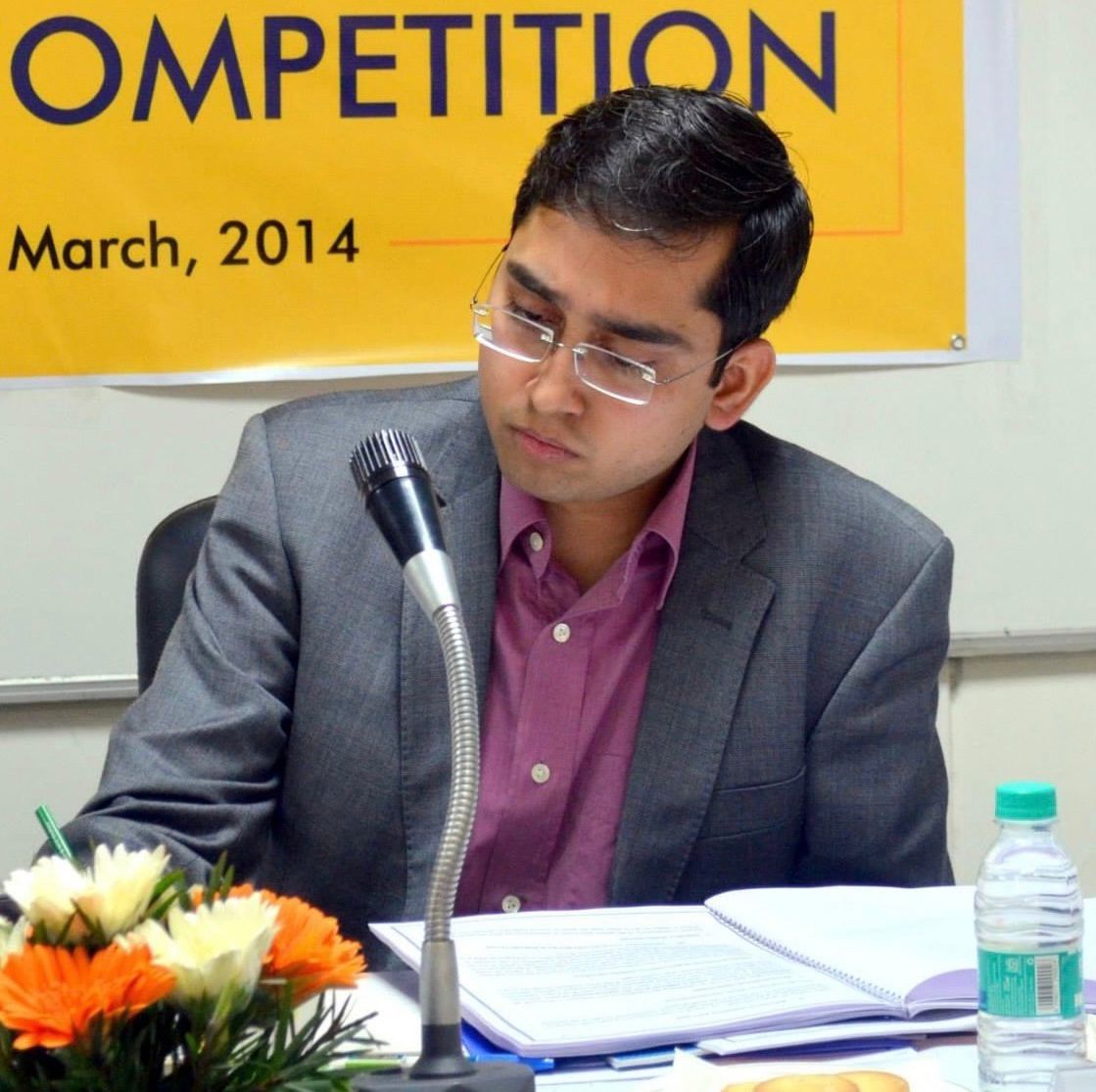
    What does it take to become a partner? Sahil Narang, Partner at Khaitan & Co and AOR, Supreme Court shares his 8-year-long journey at Khaitan: from junior associate to a distinguished Partner.

    This interview has been published by Sonali Parashar and the SuperLawyer Team


    Let us begin with the most important question, did you always dream of becoming a lawyer or, did it happen by chance? Also, tell us about your journey.

    Before coming to what led me to become a lawyer- a little bit about me. I hail from Abohar, a small town, about 30 km from the India-Pakistan border, in the State of Punjab. My grandfather was a local politician and social worker, and my father was a lawyer practising at the city civil courts, Abohar who, quite often, also used to attend and appear before the District Courts at Ferozepur (later at Fazilka, a border town). So, I was exposed to the field of law at a very young age. 

    Since I grew up looking at my father, working diligently as a lawyer and collecting hundreds of books for his library every year, the curiosity towards law was imbibed in me by default. However, I had a huge interest in the field of science during my school days and wanted to become either a doctor or an engineer given the trend prevalent at that time.  I went on to study science in the 11th and 12th standard and gave competitive exams such as the IIT, AIEEE, etc. to get admission into engineering courses back then. I had an option to continue that pursuit and become an engineer, however, the innate affinity towards law imbibed within me from childhood, looking at the meticulous way my father used to practise law, pushed me to pursue the study of law. Therefore, rather than getting admission in some renowned engineering college, I enrolled in the B.A.(Hons.) program at DAV College, Chandigarh affiliated to the Panjab University, Chandigarh. I passed BA with a distinction in Political Science in 2005, post which I got selected in the three-year law course at one of the oldest institutions in the region, the Department of Laws, Chandigarh, my father’s alma mater.

    Since I was inclined to continue the study of law and give competitive examinations including the judicial services exam, I got admitted to the LL.M course at NALSAR University of Law, Hyderabad through CLAT. I was actively involved in research, pro bono work and co-curricular activities at the university during the LL.M course

    During my days at NALSAR, I was introduced to various opportunities in the field of law. I also got an opportunity to attend the Private International Law Course at the Hague Academy of International Law at, the Hague, the Netherlands in 2009. Eventually, I joined Khaitan & Co. and a decade later – here we are. 

    The present focus is on advising on regulatory issues, commercial litigation, and the representation of various clients from the entertainment and multiplex industry across India. If we draw a comparison between the global and Indian entertainment and multiplex industries, were you able to predict these advancements in the legal arena?  

    The advancement in the legal arena surrounding a sector depends upon the growth of that sector. I have been blessed to get exposure to and advise and represent clients in various sectors including in the entertainment and multiplex industry during my career. The Indian entertainment and multiplex industry caters to a very different demographic as compared to the western world. Although we receive some guidance from other countries when it comes to legal issues surrounding this sector. While there is a significant amount of autonomy and minimal regulation in western countries in the sphere of entertainment and cinemas, jurisprudence is still evolving in India. We still see heavy regulation by the government in these spheres and archaic laws which are dealing with these fields. The Indian cinema industry is faced with archaic laws which need to be updated given the fast-paced development in this area. The liberalisation of Indian cinemas and the recent shift to OTT has been a game-changer on how people consume entertainment in today’s world. The recent years have witnessed a massive influx of OTT giants such as Netflix and Amazon foraying into the Indian market. This has led to an increased reliance on Indian lawyers to assist them to find their way into the Indian space and steer clear from legal repercussions. The real challenge is for the regulation to catch up with the development of this sector.    

    You were named as one of the lawyers for Legal Era’s 40 under 40 list in the field of law for the year 2020, and you also served as the Co-Chair of Competition Law & Consumer Affairs Committee of PHDCCI for Presidential Year 2021-22. Congratulations on adding another feather to your cap. What is your next goal? Is there anything you’d like to tell us about?

    I had started with Khaitan & Co as an intern in the year 2009, got a PPO and became a Partner with the Dispute Resolution practice group, New Delhi in the year 2018. I have learnt a lot during this time. Currently, I lead a team of lawyers working on the dispute resolution side with a primary focus on commercial litigation and arbitration. The year 2020 was a very challenging year given the outbreak of the COVID-19 pandemic. It brought the best out of many of us. I was very lucky to have worked on a variety of matters despite the disruption in the legal sector because of the pandemic. It was because of the wide variety of work and the client’s recommendations that helped me get recognised in recent years. 

    However, I wish to be mindful that it’s a sea out there and there is still more to be achieved. I would want to expand my commercial litigation and arbitration practice, both domestic and international, and engage more in highly complex and challenging disputes. 

    Besides this, I would also like to contribute to the development of jurisprudence in various nuances of laws including beneficial legislations made for ease of trade and commerce.

    Having received so much from the legal fraternity, I would like to take out time to render legal advice to individuals and organisations that are unable to afford legal advice and/or cannot access legal aid. Various organisations are doing good work in this sphere. However, it is particularly overwhelming to see young law students very effectively running legal aid clinics in their colleges and effectively using social media to educate people and spread legal awareness. It would be a privilege to be associated with such benevolent activities.  

    At this juncture of my career, I would want to engage with law students and young lawyers to share the experiences and learnings, which I have received in my career to date. In fact, in furtherance of this endeavour, I have been actively participating in such webinars and would certainly like to keep that going. 

    I would conclude with a famous quote – ‘Big tasks are still out there and a lot of hard work yet to be done.

    You are involved in research and have authored some extensive research on a variety of topics. How has research work helped you stay updated with the academics as well as policy and legislative changes that we see occur from time to time?

    I think the most important tool in a lawyer’s toolbox is his / her ability to research, read and write. During my time at NALSAR University of Law, while pursuing the masters’ course, I realised that one of the best things one could invest in is books, be it academic or otherwise. This habit of reading will inculcate a life-long habit of curiosity and research.  

    This helped me immensely during my preparation for the coveted Advocate-on-record exam of the Supreme Court of India. Getting admitted is a major achievement as very few lawyers qualify in this annually held examination conducted by the Supreme Court of India.

    In addition, knowing and being abreast of the current position of law gives one confidence in dealing with and correctly advising a client.  

    Further, research methodologies would generally include comparatives analysis of legislation across jurisdictions and critique of legislation and policy prevalent in various jurisdictions. This would in turn give one perspective of laws of developed countries and what legislative changes our country may see. 

    Mr. Sahil Narang, Partner at Khaitan & Co.

    Can you give our readers a brief idea of what they need to prepare for if they want to climb the corporate ladder based on your experience representing international commercial arbitration in a variety of matters?

    There is no shortcut to hard work, perseverance, and commitment. I would add that in the initial years, a young lawyer must remain open to all kinds of work whether he/she chooses to join a law firm, a senior counsel or a chamber practice for his/her training. At a later stage, one may discover their interest in a particular field of law.  

    Further, for one to excel and climb the corporate ladder, it is important to be client-centric, innovative, detail-oriented, and prolific. These virtues will not only make one solution-oriented but also will give them an edge over other contemporaries.

    In the field of arbitration, it is important to refer to commentaries of various celebrated authors on arbitration and keep abreast of recent judgments by the courts.  

    What was the one learning experience throughout your entire career that you’d credit to have shaped your career and brought you to this point?

    My family, I would say has been my greatest motivator, and has shaped my career. Seeing my father practising law at the city civil courts, Abohar, working hard, day in and day out, motivated me at a very young age to work hard and excel in academics. Further, having roots in a very small town has made me grounded but at the same time meaningfully ambitious.

    Can you take us through a typical day in your life? Is it possible to carve out time for your other interests or hobbies given your hectic schedule as a renowned Partner at Khaitan & Co?

    In pre-covid times, most parts of my day were spent either in courts or in office. Substantial time used to be spent commuting from court to office or conferences and venues for arbitration. Travelling used to take a fair share of my time, however, with most courts and tribunals going virtual, I could save a lot of time. Consequently, efficiency increased. During covid times, my day is usually spent on reviewing drafts, attending conference calls with my colleagues in the team, clients, and senior counsel. I also make it a point to read the latest case laws of the Supreme Court and other courts on dispute resolution and arbitration. Even in my hectic schedule, I make it a point to take out time for my family. I love to read books on weekends. My favourite pastime since my college days has been to watch movies in multiplexes and the latest series on OTT platforms. I have recently picked up badminton as a sport and would also like to learn to play the piano soon.  

    What career advice do you have for our readers? In my opinion, to be successful in the field of law one must inculcate a habit of reading at a young age. One thing that has helped me in being thorough in my work is that I read every document in full, irrespective of any preconceived notions. I would advise law students to read, read and read everything you can get your hands on. To put this in perspective, my favourite quote is by Walt Disney- “There is more treasure in books than in all the pirate’s loot on Treasure Island.”


    GET IN TOUCH WITH SAHIL NARANG:

  • Aman on pursuing BCL from Oxford, working with International Organisations and getting higher grades

    Aman on pursuing BCL from Oxford, working with International Organisations and getting higher grades

    aman-cb-4Aman, a graduate of National Law University, Jodhpur, of the 2012 batch, talks about his spectacularly awe-inspiring journey as a Law student. Not one to be charmed by the glamour of law firms, as most University-toppers admit to be guilty of, Aman chose to pursue his academic instincts further, by completing his BCL degree from Oxford University, with a focus on International Law, and then moving onto complete a prestigious internship at the International Criminal Courts, The Hague. All set to join Palestinian Center for Human Rights in Gaza, he shares with all Law Students, the following :

    • What went into winning the Trilok Chand Mangilal Sancheti Gold Medal.
    • The importance of balancing academics, moot courts and extra-curricular activities
    • The significance of choosing the appropriate internships
    • Why one should choose to pursue higher education
    • The experience of studying at Oxford, and of interning at the ICC.


    Most of our readers are law students and young lawyers. How will you introduce yourself to them?

    I am yet to figure out a good response to this question! Anyway – going the conventional way – I finished my undergraduate studies in law and policy sciences from the National Law University, Jodhpur in 2012. Pursuant to that, I proceeded to Oxford where I completed my BCL with a focus on Public International Law, Equality Law, Jurisprudence and Political Theory. Post Oxford, I had been interning at the Trial Chambers at the International Criminal Court, The Hague till March this year. I am preparing to join an organization called the Palestinian Center for Human Rights in Gaza this month.


    How did you gravitate towards law? What interested you most about the subject at the time? Is that interest still intact?

    I have grown up in an environment – both at home and school – where I have been exposed to and sensitised about various social issues. I wanted an education that helped me do something about such issues. Law was one such option (along with Medicine and Journalism)! However when I decided on pursuing Law, I did not have a very clear understanding of how the study of law would be directly instrumental in working towards the issues that motivated me. It was perhaps the interest in gaining more familiarity with social policies and laws; the attraction of the inter-disciplinary approach to legal education that the five year law schools promised; and discussions with a few people who studied/were studying law that convinced me to pursue it.

    The motivation is intact today (though the focus is on fewer issues!). In fact, the interest is much stronger since I have grown to know how the study and the practice of law, through litigation, policy and academia, help in dealing with a variety of problems plaguing the society.


    You have won the Trilok Chand Mangilal Sancheti Gold Medal. Surely a lot of effort must have gone into coming first in BA.LL.B (Hons.). Please provide us with some actionable tips on how to get good grades.

    To be honest, to top the class was never a primary motivation and the effort was never directed towards that. I really enjoyed what I did and, possibly, that was the reason I put in effort in making projects, working on court room exercises, and making assignments/presentations. There were also moments where I did not sit for tests, missed classes (and consequently lost marks that used to be allocated for classroom attendance in the first few semesters at law school) to work on things/participate in events that I enjoyed! Though it did cost me a few grades, I don’t regret it. I just feel it’s best to put in effort and explore the things that we enjoy – the results will automatically follow!


    How did you keep your law school life exciting? Share some memories with us.

    Luckily, I was involved with a lot of things in law school and never really sensed the monotony some of us complained about. Besides dealing with regular tests and assessments, extra-curricular activities like mooting (both as a participant and as an advisor), debating kept me busy. From my first year, I was involved with college committees and editorial boards which also kept me occupied. With time, the responsibilities in these committees also increased! I also found myself actively involved in the organisation of intra university sports fest, literary fest, and cultural fest and moot court competitions at the University. There were also a couple of initiatives by some of us – some of which I had to discontinue my association with because of the time crunch! Basketball was an excellent source of recreation – especially in my fifth year! I also enjoyed taking part in the regular cultural, literary, sports events organised in college.


    You have participated in moot competitions as a participant, advisor and even as a judge. How do you feel a student should go about a moot in order to reap the maximum benefit from it?

    From the time I had been introduced to moot courts, I found it to be an excellent learning experience. Not only does it help one in getting a good grasp over the area of law on which the moot proposition focuses but it also helps one develop researching, drafting and advocacy skills. It won’t be incorrect to say that being a participant at moot court competitions was probably the most rewarding experience! It is perhaps the things that I picked on the way as the participant – through my experience or the wisdom of others – that helped me serve as an advisor or judge moots now! Even as an advisor or a judge I continue to feel the same about moot court competitions and still find it to be a learning experience for me!

    As to how students should go about moots – I am not sure if I am in a position to suggest anything but I always felt that one should take up a competition if they are really keen on mooting. It is definitely not something that has to be mandatorily done in law school. However, if one picks it up – it is essential that one takes it up with all sincerity and gives the proposition the due time it demands – for research, drafting and oral practise. By my experience, I also feel that having someone to guide you in the area of law, drafting and for the oral rounds also helps a lot.

    I also did a bit of debating and played a bit of basketball.


    As an undergraduate student, you have done a variety of internships. Did these happen by chance or did you consciously choose to pursue such internships?

    No, all of the places were consciously chosen. However the guidelines of the placement cell (i.e. to work with X institution at the end of Y semester) was kept in mind. HRLN was an obvious choice when I was looking for NGO options to work around home at the end of the first semester. The internship here introduced me to the MGNREGA. The legislation sparked a lot of interest in me and was the reason that I participated in the said survey under the supervision of Professor Jean Drèze and Dr. Reetika Khera.

    At the end of my third semester, I was keen on working with an advocate practising in appellate courts and ended up working with Mr. Prashanto Sen in New Delhi. The choice of a relatively small office was again a conscious one – it helped me get exposed to a variety of matters and be directly involved at every step. Despite my age back then, the internship helped me gain a great familiarity with the work of a practising lawyer.

    I was also keen on working with a judge at an appellate court and hence the clerkship. Since I stay in Allahabad, the working of the Allahabad High Court was also something I wanted to see.


    You had worked as a Student Teaching Assistant and later with Professor Jean Drèze. These were definitely a bit unconventional. How did your experiences at these places help with your skill development and shaping you as a person?

    I was always very keen about teaching and have given it very serious thought as a long term career option. In fact, the revival of the Student Teaching Assistant Programme in college was with the efforts of some of us. I really enjoyed the experience of teaching public international law to my juniors. This also helped me realise some of the challenges one can face as a teacher in a law school like mine!

    Working with Professor Jean Drèze again was very rewarding. Post my internship with HRLN, I had developed an interest in the Right to Food Movement. After law school when I got the chance to work on a study related to Pubic Distribution System (of food grains), I readily took it up. This involved a field study on the drawing up and the management of BPL lists used for distribution and also focused on the problem of the leakage of grains. This greatly helped me understand some of the problems at the ground level; and the reach, working and the shortcomings of PDS in dealing with hunger. This is one area that I really wish to continue working on!


    When and how did you decide to pursue higher studies?

    I was very keen about pursuing higher studies right from the beginning of law school. I had heard that it opens more avenues – which I later found to be true. Like most people, I was also attracted to the prospects of studying in some of the dream institutions! However, it was only by the end of my third year that I gave it a very serious thought. By then, I had a discovered my inclination for public international law and some areas of public law; I also had some sense of what I wanted to do in life (academics, policy, diplomacy, politics and developmental work). These factors necessarily led me to consider higher studies. By this time, I also had an idea about which institutions were reputed for the courses I was eyeing.


    aman-cb-2

    What was your motivation behind pursuing BCL? Would you say the purpose was well served?

    As I pointed earlier, I was very keen on developing stronger foundations in the areas of law that interested me. Oxford was definitely one of the places high on my list considering the extensive focus BCL offers in the four courses one chooses to study through the year. This was a great motivation and I was very happy to have studied courses like equality law, international law and armed conflict in such detail. Also, as I mentioned earlier, I was looking at postgraduate course with the hope that it would openavenues that were not open or visible to me otherwise. This purpose was also duly served as I do not think it was possible to know of/get internships at the ICC or the PCHR without Oxford. In fact, grants/awards by Oxford Law Faculty also helped/are helping in funding these internships.


    Many law students would want to pursue higher studies from abroad. What would be your suggestions to them?

    If one is interested, I feel it’s good to start considering the LL.M. option at the start of the penultimate year of law school and also take a call if one wishes to apply in the final year (or subsequently). A good way is to talk to seniors who are pursuing/have pursued higher studies abroad and read about the Universities one wishes to apply to. This gives a good understanding about i) the law school – renowned faculty and courses, prospects pursuant to an LL.M from a particular University; ii) what the selection entails and how should one go about the specific application for a particular University; iii) any specific requirements like TOEFEL etc.;  iv) and even scholarship opportunities.

    As for what it takes to get in – it’s difficult to give suggestions! Every LL.M. candidate I met had different experiences and approach towards the application. Perhaps the connecting factor would be a good academic background! Speaking for myself – besides maintaining decent grades, I put in effort in doing all the things I enjoyed all through law school.  I tried to reflect the same through my application. I guess, broadly, every person tries to do the same.


    Does Oxford provide students with scholarships? Are there any other institutions which provide scholarships?

    Oxford offers a couple of scholarships – some are offered by the University, some by the Law Faculty and some by the Colleges at Oxford. A list of such scholarships is available on the website of the law faculty (click here).

    Besides the ones by Oxford there are a few other funding avenues. The popular ones like Rhodes, Felix, Inlaks and Commonwealth are known to all. There are a few less known options which give partial scholarships/ soft loans which one should also explore. These include – KC Mahindra Scholarships for Postgraduate Studies Abroad, Aga Khan Foundation Scholarship, Narotam Sekhsaria Scholarship, Oxford and Cambridge Society of India Scholarship. One must research more on these funding avenues – especially the smaller ones!


    Did you undergo a rigorous academic schedule? How was that different from your under-graduate course?

    Yes, BCL was very demanding. Unlike most classes during my under-graduate course, one had to necessarily prepare for the classes which involved completing a reading list assigned for the said class/seminar. It is difficult to appreciate, and at times follow the discussions in the class hours if one does not complete one’s readings (thus making the limited amount of class hours futile). Besides the regular preparation for the seminars, we also had tutorials spread through the three terms. These were sessions beyond the regular class hours where students discussed their essays/ specific topics with their tutors and a small group of students who had also taken the course. Though it was difficult to work on these tutorials along with the regular readings for class, these tutorials were academically rewarding. Also, unlike law schools back home, Oxford grades depend solely on an end-of-the-year, closed-book examination which makes the preparation for it quite rigorous. In fact, I never felt that there was a concept of a break – as one is busy with reading during both term breaks!


    Oxford is well renowned for its brilliant faculty. How was your experience with the faculty?

    One of the primary motivations to study at an institution like Oxford was to get the chance to interact, and even brainstorm with some of the most renowned scholars in the areas you are studying. Besides the interaction in classes, I greatly benefitted from the one-on-one interactions during tutorials, or the feedback received on my work from my teachers like Dr Dapo Akande, Prof. Sandra Fredman, Prof. John Gardner, Dr. Nicos Stavropoulos, Dr. Tarunabh Khaitan and Dr. Antonios Tzanakopoulos. It was also great to see how they received my ideas and encouraged me. Some of the faculty members had also helped me take some career decisions!


    How difficult was studying abroad in terms of finding accommodation, finances and settling in?

    Not to sound intimidating, but all three were indeed a bit difficult for me.

    I had not got College accommodation and was slightly apprehensive about finding a place in the beginning. Eventually, I did manage to find a great place offered by the University Accommodation Offices (the next best alternative to on-site college accommodation) before the start of the term, but it was slightly far off from the Law Faculty.

    Finances were another issue. Since I could not manage a full scholarship, I had to rely on a student loan.

    Settling in was not that big a problem as compared to the other two. However, it took me some time to adjust with the academic pressure, weather, lifestyle, and also to get used to cooking etc.


    What difference did you find in the pedagogy of Oxford relative to an NLU?

    There is a huge difference! As mentioned earlier, one was expected to read extensively for the seminars – which were more discussion oriented. At NLU the focus was more on class room lectures as opposed to discussions. However, I find the comparison a bit unfair. Though I have my reservations about the way legal education is administered in many Indian law schools, I feel the focus of undergraduate education is to develop an interest in law and should involve more lecturing and it’s not very wise to expect all students to read as much for classes as we were expected to at Oxford. A postgraduate course like BCL is designed on the premise that the candidates have an interest in the study of that area of law and aims towards developing an advanced understanding of the chosen area. That said, it would be nice if the reading component is given some focus which is largely absent in many law schools today.


    How do you think the BCL programme will help you in your career?

    It is difficult to predict how it will help me in my career! I can just say that I feel that I have developed a stronger foundation in some of the areas that interest me and will definitely help me if I am to pursue a career that involves an understanding and application of these areas. BCL has also helped in developing my analytical and writing skills – something that will be useful in whatever I choose to pursue. Besides academic foundations, I also feel that Oxford has made visible, and, in situations, accessible, options that were not visible/accessible otherwise – be it international firms or international courts and originations. For example, it would not have been possible to get an internship at the Trial Chambers ICC without BCL, where I had taken up specific courses on dispute settlement and armed conflict.


    There has been a recent trend amongst Indian law graduates to pursue higher education abroad. Why do you think this is happening?

    Another tough one! There could be multiple motivations. However, I feel that to some extent it’s a result of the exposure that students get these days. A few years back, pursuing LL.M was not really a well-known/advertised option. With more people opting for it, a lot many get exposed to the prospects of an LL.M, and now think of it as another feasible option after their undergraduate studies. Also, the breaking of the myth that an LL.M. is necessarily for those who wish to pursue academics has led many to aim towards specialisation in their practise areas. Many of my friends intend to take up higher studies for this very reason. Some are also interested in exploring opportunities abroad.


    You have recently completed a clerkship at the International Criminal Court, Hague. How did you get it and what prompted you towards it? How was the experience?

    I had applied for this clerkship while I was at Oxford. Desirous of building a career in international dispute resolution, I was looking at some international courts/tribunals back then. Besides the ICC, I had also applied for the ‘ICJ Traineeship Programme’ that is offered to graduates from of a select few universities around the globe (Oxford being one). However, I was unable to get the final offer despite making it to the final shortlist from Oxford. The other option was the ICC. Having taken up a course on International Law and Armed Conflict at Oxford, I was especially keen on working there.

    For the same, I had to make an application which involved completing the application form available on their website. I was also required to send a sample of my written work, a statement of purpose, a copy of my resumé and arrange for two referees who had to send their recommendation letters. This was followed by an interview by the Judge who I eventually worked with.

    I really enjoyed my stay at the ICC. I worked with Judge Eboe-Osuji (Trial Chambers) and the set of legal officers assisting him. While I was at the Court, I assisted the Judge in drafting a number of decisions and separate opinions; prepared memorandums; assisted in the preparation of witness summaries; and helped the judges and the legal officers in other trial procedures. Besides the feedback on my work, I greatly benefitted from the discussions with my judge and the legal officers.


    You have recently taken a series of lectures at NLU, Jodhpur in the subjects of Jurisprudence and Constitutional Law. Can we say you may gravitate towards an academic career in the future?

    I am quite keen! As I mentioned earlier, I was always very keen about teaching and have given it very serious thought as one of the options I wish to pursue in future.


    You are joining the Palestinian Centre for Human Rights in Gaza. Tell us something about this.

    The Centre is a non-profit company, dedicated to protecting human rights, promoting the rule of law and upholding democratic principles in the Occupied Palestinian Territory. It also supports all the efforts aimed at enabling the Palestinian people to exercise its right of self-determination.

    I am expected to be assigned to the International Unit at PCHR which has experts on international law, fundraising and advocacy. The Unit supports other Units of the PCHR in carrying out their work as well as producing reports, position papers and press releases.  Staff in the Unit are often involved in conducting field-visits as part of their advocacy programme or field-research as part of the research programme, and are involved in building relationships between Palestinian, Israeli and international NGOs who work on human rights issues.  The International Unit also produces interventions to international bodies – including the UN. Interns are involved in all these tasks. Considering the small size of the organisation and my background, I am informed that I might also be involved with the work of the Legal Unit (composed of a team of lawyers who give free legal aid and counsel to individuals and groups, especially Palestinian prisoners in Israeli or PNA custody), Democratic Development Unit, Economic and Social Rights Unit and Women’s Unit.

    However, things are still in the pipeline. Though I have been offered the position, I am still waiting for all the clearances that are needed to enter Gaza. I hope things work out soon!


    What are your long term objectives? Where do you see yourself in 5 years’ time?

    It is very difficult to say whereI see myself in 5 year’s time! I am quite keen about pursuing a career in a number of areas and am not blocking any option at this stage. However, if I am to broadly categorise – there is a good chance that in the long run I will be associated with academics, policy making, diplomacy, politics, developmental work, international/domestic dispute settlement or even a combination of a few of these. A lot depends on the opportunities that come my way!


    What would be your message to law students who want to pursue a BCL from Oxford?

    There is not much that I can say to people who wish to go to Oxford! They probably know about the place and all that it has to offer. I suppose it is best for this motivation to stay alive (right till the application stage which can be pretty daunting!) while one continues doing whatever they enjoy doing, with all sincerity!