Tag: Head corporate affairs

  • “This is the era of technological dynamism where the web, blockchain, and AI are making a lot of changes in the world. The legal field is not an exception to this and a lot of things are happening in legal profession” – Ajmal Khan Nadakkal, Managing Partner at ABS Partners

    “This is the era of technological dynamism where the web, blockchain, and AI are making a lot of changes in the world. The legal field is not an exception to this and a lot of things are happening in legal profession” – Ajmal Khan Nadakkal, Managing Partner at ABS Partners

    This interview has been published by Namrata Singh and The SuperLawyer Team
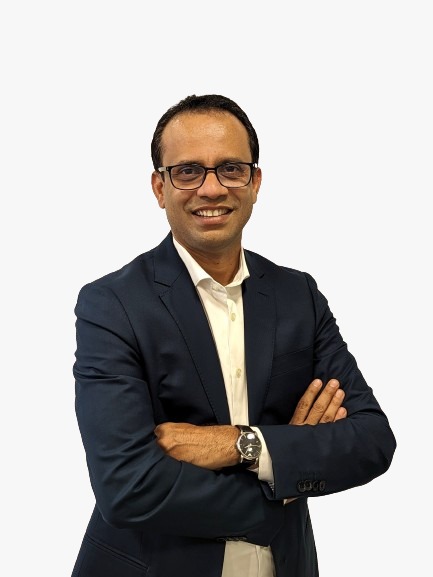
    “This is the era of technological dynamism where the web, blockchain  and AI  are making a lot of changes in the world. The legal field is not an exception to this and a lot of things are happening in both the legal world as well in the legal profession. So, obviously the lawyers who are the forerunners in this  profession are adopting this technology induced change and they can only survive by doing that.My advice to the young generation of lawyers would be to adopt this technological change very fast. They should be the fastest runners, otherwise, they will be out of the race. Especially AI is causing a lot of job loss in the legal profession..”

                                      – Ajmal Khan Nadakkal, Partner & Head of Corporate Khalifa Bin Huwaidan Alketbi.

     Mr.Ajmal Khan Nadakkal  is based in Dubai and he has more than two decades of experience with a wealth of expertise in setting up regulated and non-regulated firms all across Europe, Africa and the Far East, as well as in major cities and states in India.  He has a proven track record of handling complex corporate issues, including compliance and anti money laundering policies, taxation matters, and real estate transactions to name a few.

    We would like to start our journey of question answers by asking you what inspired you to pursue  a career in law, and please share your story of reaching to the top.

    I’m a first generation lawyer. There are no other lawyers in my family and my family circle. From my school days, I had a passion to become a lawyer. I don’t know exactly what  the reasons are, but there was definitely one teacher who really influenced me and he is the person who persuaded me to become a lawyer. So from those days, I was always thinking about how to become a lawyer. Then after my pre-degree, I tried my law entrance exams and got into a law college. It was definitely not an accident. I should be honest about the fact that I came to this profession by choice.

    So when this was an inspired choice and you made it with all the diligence, what prompted your decision to transition from practicing law in India, then to Dubai as well?

    After college, I started my career in the local courts- District Court, Manjeri. I practiced for almost six to seven years there, in Manjeri and other  Courts and then I got an opportunity to switch to an  in-house legal counsel role  in Bangalore. In fact, that is the reason I got to a different domain of legal field. When I took up that opportunity, I got a lot of exposure. I traveled a lot across India to handle various complex legal issues for the group, to meet regulatory authorities. Also, I traveled outside India for investment facilitations. regulatory setting ups, then also got the scope of  liaison with various international law firms for handling their legal issues. This gave me a really good exposure and then I felt, international legal opportunities are bigger and I should explore more if I can get an opportunity.Luckily again I got an opportunity in the UAE. Then I took up that assignment and came to Dubai. That is how I shifted.

    What difference have you seen in the kind of practice we do in India as lawyers and the kind of practice you may have seen in Dubai? And  when you compare these two how do you support this transition? Let’s say if someone obviously wants to move, what kind of lookout they should have in making that transition because you have smoothly sailed this. 

    The Indian legal system is more traditional, which is derived from different customs and different complex laws. It took centuries to evolve that legal system. So it has its plus and minus also. We always carry that baggage of our history, even in the legal system, which causes a lot of, you know, delay in the legal proceedings and complexities. Even though now we are trying to make big changes by technology ventures and all, but still the Indian legal system is too complex and people are facing a lot of difficulties, especially the delay in the litigation, dispute resolution, then red tapism everywhere. 

    We cannot avoid this and that is the problem.When I switched to UAE, I realised that this system does not carry much history. It is a new law and new entities, a new legal system. It was a Sharia backed legal system, but when the international business opportunities came to UAE, the rulers were really pushing the business opportunities and trying to be the global hub. During this time, they developed the legal system and the laws also to that standard, very fast developing and, technologically advanced and which always cater the needs of the business people. They gave priority to the business people who are going to come to the UAE and invest. So accordingly they made rapid changes and that favours  a person who is making  strong decisions, as  there is nothing to curtail that speed. This is because one person can take the decision here without being impacted by  many complexities.

     That is the major difference. It’s all new and transparent, moving at a very fast rate, which makes the legal dispute resolution effective.  People get a quick solution to their problem when they are approaching the courts and dispute resolution authorities. This helps them to continue with their business further. In our place, sometimes it even takes decades, especially in case of family disputes. So these are major differences I could feel in the two domains. So for somebody who wants to shift from India to Dubai, my advice is that there are a lot of opportunities here, and you can cater to the world and you can feel the international legal complexities here because of the presence of almost all the nationalities, whose  disputes range from personal issues to business disputes. Now because of the estate planning and foundation trust systems here,people from different parts of the world are setting up the foundation and trust here taking advantage of the easy environment,giving a lot of opportunities to new lawyers.

    The only thing is they have to be very fast in upgrading themselves and follow the new developments in the legal field, especially, with the help of technology. Technological advancement is also very much required, which is something the Indian legal system is still not that advanced for which even the law colleges in India are also lagging  behind in this. So these are the things they should always keep in mind when they are planning to switch to Dubai.

    You have talked quite a bit about dispute resolution mechanisms as well, and you specialize in managing these disputes, especially related to commodity derivative trading, investments, forex, gold, and bullion trading as well. We would request you to elaborate a little bit about these areas and their significance in the legal field, because it is an absolute niche of the niche field and most of us are eager to understand these fields and try and see the future in it.

    I was also very new to this domain when I joined the in-house team in Bangalore, but that group I was associated with was into online trading, forex, commodity derivatives, securities, and that kind of a domain. So, obviously I happened to handle a lot of that kind of complex issues, disputes, crisis management and  learned about trading -forex trading ,leverage trading And futures trading. I had  to learn all these things. In fact, I would say I started an  account   and lost some money and learned from that experience too because without practical training this is almost impossible. After a year or two I realised that I was really struggling to cope up with this environment so I decided to start an account in trade because that gave me a lot of insights, how the positions have to be taken, how the leverage trading happens, how the margins are called for.  This gave me a lot of input when I switched to Dubai and started my legal career. The legal profession here really helped me because UAE is also a place of online trading, leverage trading and all people sitting here are trading across different platforms across the world and also here.

    In India, though there is a clear regulation about online trading licensing and regulation which all has to happen, still people are using shortcut methods and opening up phishing companies to fraud like taking people’s money and then vanishing. Many people lose their money because they don’t know what this regulation is, they are just fantasized with this leverage trading and the opportunity to make big money swiftly.

    The marketing people always give them the positive and never the negatives. So they open the account and start trading. Then in the demo, they will show some profits while in real time they will lose. They can’t even pump in for the margin calls, so obviously they will lose the money.

    So many such disputes came and which came to me. So as a person who understands this domain, whenever a client comes and discusses this with me, we will get the synergy. And I have managed a lot of such disputes. In many of the issues, I managed to get back their money and in some of the cases,  the accused were convicted, definitely in many of the cases, the people who vanished, we cannot do much, but still we can educate the people and also the companies who wanted to regulate and do it in a streamlined way.

    They also started approaching us because of their domain knowledge. So this has become a real opportunity for me and also my team members to learn about this leverage trading and domain. Now we have started a division where we are setting up regulated entities in UAE and abroad because of this domain knowledge.

    What kind of critical factors do you consider while dealing in corporate structuring and restructuring? Because they are definitely out of reach of most of us. We don’t understand that, or it is not taught in schools or colleges. Now, how do you see that platform can be built in order to make sure that these subjects reach to most of the students so that you also get a little workforce because as I can understand having that kind of the niche, you end up having very limited number of people with that understanding? So how do you see that happening anytime sooner in future?

    Corporate structuring is a very important aspect of the business. Especially when somebody is starting a business, they should structure their business in a proper legal manner. What entity they should start, where is the destination they should start the business, what kind of license they should take up, and how the shareholding has to be allotted, and how the control mechanism has to be managed.All these kinds of things are very, very crucial when somebody starts a business. So, since we have a lot of this experience, we are able to advise all the entrepreneurs properly how to structure their business in the initial phase. Here, one thing, in UAE, most of the people who came here in seventies, eighties and nineties. Most of them are not very educated. They came here chasing their dreams. They faced a lot of struggles, hardships in the initial phase. They worked and then they started small businesses  with whatever available corporate sector at that time was available, the legal corporate sector, then they started it like a civil company or a sole establishment and so on.

    Then their business ventures grew really  fast, beyond their imagination. Many of the big businesses here have all started like that and after reaching this stage of growth ,they are apprehensive about the fact that  when the next generation is going to be onboarded the legal sector would not be intact and that it should be rectified as well. This is a very critical position because already the business is loaded and there is a lot of exposure . From here if they want to restructure their existing legal corporate system, this needs real advice, a proper advice with experience which only experienced persons can do because they need real time solutions.

    It is in this area that we advise a lot of clients now who are passing their business to the next generations -How to structure the holding company, create foundation and trust to manage their will and wish in the subsequent generations and if the next generation is not interested in the business and a working partner is onboarded, how to sector the company in that way.

    We also advise on creating an ESOP by stimulating the business through that channel.These are all things in which we really need proper advice and  here liesour experience, that we gathered from the last 10 to 14 years of having real time experience in Dubai.

    You started as a first generation lawyer, and now you own a company which works for all these corporate structuring, restructuring and licensing agreements. We would request you to elaborate on that as well.

     I was part of a local law firm as a partner for the last 10 plus years and then recently, last year, we got a license of a legal consultancy in Abu Dhabi, which is named ABS Partners Legal Consultancy, otherwise the mainland was not allowing legal consultancy licenses.  This is a recent development and we are one of the very few lawyers who got this license in our own  names. In that we strategize these kinds of activities, especially this corporate structuring, estate planning, regulatory licensing, trademarks and intellectual laws, all these specific areas, especially the central bank licensing, Crypto licensing, VARA and other regulatory ESCA. So those kinds of activities we do in that legal consultancy license, which is based in Abu Dhabi.

    Sir, about the ABS partners, which is doing this kind of work and you are one of the very first lawyers you have got in Dubai, the kind of transition you have seen when you were doing it in India as an Indian lawyer and when you are doing it in Dubai, when has it started? Because if I remember correctly, very recently, Dubai introduced its legal system in January this year. So would you care to elaborate on that as well, please?

    In the UAE, Dubai and Abu Dhabi are the major hubs. Dubai is still very strict on issuing legal consultancy licenses in the mainland to foreign lawyers. They have a regulation, but it is a bit stringent. It is not easy to get a license there, unless we have three international branches and all. But Abu Dhabi relaxed it a bit in the last year. We got a license almost a year back now. It was last year they introduced this and maybe the second or third license is issued in our name and  we should have 10 plus years standing in the UAE. Since me and my partners had this eligibility criteria  we applied and got it and  now we are developing that to a different level, towards a niche area.

    I have to cater to the niche area, which is not much explored by the other lawyers and law firms.

    So while you are doing all these things, which are very much corporate centric,  you must be going through a lot of mediation and conflict resolution techniques also. How do you make sure that you employ effective techniques for these and what kind of further assistance do you provide?

    Because in mediation, it’s not only the end of the case, it’s like, it is just a kind of start if there is any conflict over there. So how do you cater to such clients? And there are clients who must be very, very, very big and not that approachable. How do you make sure that everything is done in the best manner possible for them?

    Basically, we are business lawyers and we have a very good connection in the business world. So obviously when some issues happen, some disputes happen, they will ask us for solutions. Obviously always the first method is to try and  amicably settle the dispute.

    While getting into an amicable settlement area, I always try to understand the client psychology. We need to understand the client’s situation as of now. What is his financial capacity or whether he’s really in a bad shape or this dispute is derived from the ego of the business people. This kind of initial knowledge is what we need to gather, only then can we  effectively mediate a dispute.  When it comes ultimately, what I realized is everybody, if we can convince them properly to avoid a lengthy litigation and a time consuming process, they will always try to find a way for mediation and settlements. 

    Only in mediation and settlement, we should not have any agenda. We should try to resolve the matter in accordance with the requirements of both the people. So there, our expertise and experience again, we can give different options. If one option is not comfortable for the person, we can give another option.This is all by experience that we can now give different options and scenarios where we can effectively do dispute resolutions. And we have done quite a lot of such dispute resolutions as  well.

    Can you share any kind of case which can be very educating for learners as well. If at all you can.

    Yeah. Recently, one scenario is where a local stake was involved. The locals were very adamant while the other people were the actual investors. But the local was just a sponsor, with some agreed terms. This was a big business house, and this was almost on a deadlock because both were fighting.As it came to me, I tried to understand the actual reason behind this local person’s issues and  then I realized that he has a genuine cause for this as whatever the investors agreed with him initially, this was not honored.

    Conveniently, the locals were not asking, not demanding, so they were not giving as well. But when they are parting from the partnership, obviously he asked for his latkes to be honoured. Then I convinced the other party, instead of losing the entire business for a small amount, honour the right because all these years, almost 20, 25 years, he did justice. It was in his name, but still he helped the investor in all ways to build the empire. So with this kind of convincing, the dispute was settled very smoothly and they are still good friends now.

    I’m just a reason for it as actually there is not much difference between them. This is where sometimes a mediator is required so that the roles can be effectively played by knowing the psychology of the people. That’s it!

    Sir, in all this, there is a lot of technology disruption happening even in the legal field worldwide. How do you see it is going to work out for us lawyers on national and international platforms both, as well as what kind of  areas do you see are going to come up or are already there, which are bringing a different kind of practice, even in business laws or in business entities?

    This is the era of technological dynamism where the web, blockchain  and AI are making a lot of changes in the world. The legal field is not an exception to this and a lot of things are happening in both the legal world as well in the legal profession. So, obviously the lawyers who are the forerunners in this profession are adopting this technology induced change and they can only survive by doing that.My advice to the young generation of lawyers would be to adopt this technological change very fast. They should be the fastest runners, otherwise, they will be out of the race. AI is causing a lot of job loss in the legal profession.

    But to me, as I have realized, AI is also giving a lot of opportunities to lawyers in terms of precedence search, the formats, many of the things, especially the legal research, everything is made very easy now because of the AI advancement and these kinds of things, the new lawyers should learn. They should be very fast in learning the new technologies, especially the blockchain, the web.  Now, it is going to be a different era than the web. So with these technology adoptions they should do and then cope with the new trends in the law and in the technology.

    Sir, how have you driven your life with these kinds of philosophies? And would you care to share some of them with us for us to get inspired as well? How have you lived your life and how have you achieved all this in your legal career?

    I’m very savvy with technology, but what I do is I employ associates with good knowledge of technology and I learn from them.There is no hesitation in learning from the juniors when it comes to technology because they are my masters and there’s no ego on this. We should learn from the new generation. My son teaches me about new technology. My daughter teaches me about this. This should be our approach when we are not good in something we should learn from who is good in this. 

    Then about the philosophy of my career, we should be very transparent and we should not compromise our professional ethics. However, rewarding the other opportunity is there. We should not compromise our professional ethics. If we compromise, that will give you some gain, short term gain, but it will never give you a long term mileage.

    Your professional  advancement is possible only when you build a reputation. That is very crucial, which I always try to stick on

    How do you make sure that you have your own time for your mental health, for your personal life and obviously for other activities as well?

    Yes,  the personal space is for my family and  my small entertainments. I always kept that space, from the beginning itself. I like traveling. I like Hindi songs, then family time. I always try to find time for this. Even though my family will always complain but still,  I’m always trying to find some time, especially two days in a week. I always try to give my  family time.

    Sir, thank you so much for such positive thoughts and sharing it with us. And it has been a learning experience that there are certain niche fields which our learners can look up to and can reach out to you as well.

    And once again, thank you for agreeing to be on SuperLawyer YouTube channel. And it has been a pleasure, sir. Thank you so much for being here. Absolute pleasure

    Get in touch with Ajmal Khan Nadakkal–

  • “Passion is key, and success comes from enjoying what you do. Invest time in learning about the industry, attend training sessions, and network with peers. As you climb the ladder, mentor and guide juniors with patience.” – Shagoofa Rashid Khan, Group General Counsel & Head Corporate Affairs at National Investment and Infrastructure Fund (NIIF)

    “Passion is key, and success comes from enjoying what you do. Invest time in learning about the industry, attend training sessions, and network with peers. As you climb the ladder, mentor and guide juniors with patience.” – Shagoofa Rashid Khan, Group General Counsel & Head Corporate Affairs at National Investment and Infrastructure Fund (NIIF)

    This interview has been published by Namrata Singh and The SuperLawyer Team

    Looking back at the journey from your CA articleship to becoming the Group General  Counsel at NIIF, how did you initially decide to pursue a career in law, and what pivotal  moments shaped your decision to specialize in corporate law and investment funds?  

    My career path has been a case of pure serendipity. I chose the CA course as my group of  friends collectively decided this was the path forward for us. After qualifying as a  chartered accountant, I thought of giving civil services a shot. Hence, I picked “law” as a  second subject. I joined Government Law College (GLC), as it was convenient to attend  morning college and get to work at my chartered accountancy firm by 11 am. I had  encountered Nishith Desai Associates (NDA) in my work-related research, and hence  when they came to GLC for campus recruitment, it was a no-brainer to sit for their  interview. From what the interviewer told me later, I came across as a no-nonsense nerd,  and when they made an offer, I accepted. That’s how my journey in the professional field  of law started.  

    In those days, NDA was a leading firm in India in the fields of international tax and  investment funds. I joined the tax team and being a CA-and-lawyer, I got pulled into the  funds team. I thoroughly enjoyed my time at NDA and lapped up every challenge /  opportunity thrown at me, be it international tax advisory, international tax policy, fund  formation, fund documentation, corporate transactions work, pro-bono advisory etc.  

    Looking back, I can only conclude that whenever I was at the fork of a decision in my  career path, I took that leap of faith and successfully ploughed my way with self-belief  and hard work as my tools. And as for the challenging days, I had the blessings and  patience of my family and guidance from friends and well-wishers to pull me through.  

    As the Group General Counsel at the National Investment and Infrastructure Fund  Limited (NIIF), what are some unique challenges and exciting opportunities you  encounter in your current role? 

    When I joined NIIF, I already had over two decades of experience behind me. The niggling  feeling was, what next. I had been an external lawyer as well as in-house, so what more  could I look forward to. In NIIF I found the next chapter in my professional life.  

    During my interview for the post, my boss-to-be asked: what is it that makes NIIF an  appealing opportunity to you? My answer was, NIIF as a sovereign anchored fund is a  unique experiment in the history of India and it would be an honor to be a part of this  history.  

    As Group General Counsel and Head Corporate Affairs (GGC-CA) at NIIF, the unique task I  had to dive right into was ‘stakeholder management’. NIIF is 49% owned by the Government of India and balance 51% by sovereign, quasi sovereign, and other institutional investors (domestic and offshore). The Board is a representative of these diverse stakeholders as  well as independent directors. Hence, as GGC-CA being trusted advisor to the  stakeholders is key. A routine day is a combination of being the voice of reason, providing  clear legal advice, addressing compliance challenges, providing guidance on governance  matters, being sounding board for new ideas, and supporting business teams in executing  strategic decisions. As fiduciary for investors’ monies, it is imperative to approach every  legal/compliance conundrum with thorough technical analysis, test alternate outcomes,  closely monitor execution and reporting.  

    NIIF offers exciting opportunities for professional growth and intellectual curiosity as we  continue to scale our various investment platforms (across various infrastructure sub sectors), expand our private markets footprint, roll out new fund products (including our  maiden India-Japan Fund) and much more.  

    From your extensive experience in structuring funds to managing acquisitions and  joint ventures, you’ve covered a wide spectrum of legal aspects. Is there a specific area  within your expertise that you find particularly fascinating or enjoy working on the  most?  

    My first love has, and continues to be, taxation. As a student, I aced the subject and had  penned “be a core member of the team to re-write the Indian income-tax act” on my  vision board! Well, I haven’t achieved that goal but I have enjoyed my tryst with various  taxation matters. Researching on and writing tax opinions has been tremendously  rewarding, tax structuring of funds, managed accounts, fund investments, strategic  ventures and other collaborations helped me to deftly leverage my passion and expertise.  Through my focus on ‘policy advocacy’, I have also made representations (and drafted  proposed amendments) on tax, legal and regulatory issues.  

    Another fascinating aspect of my professional life (which am sure, other deal junkies like  me will also confess) is negotiating complex contracts. On the execution day of any  transaction, it is absolutely satisfying to check your score card and find that the deal  breakers were addressed suitably and the terms of the resultant contract have emerged  as clear and unambiguous, thus being capable of performance as well as enforcement.  

    In one of my early transactions, when I ended up being chosen as the common counsel  for the buyer and seller of a large real estate transaction, I asked the seller-client (who  had approached me first) that aren’t you worried a common lawyer may find a middle  path rather than fight for your side? His reply has stayed with me since: there is never a  good contract with a bad counterparty and never a bad contract with a good counterparty.  A clever lawyer is one that doesn’t miss the woods for the trees. Stay focused on why that  transaction is important for your company and thereby make the right legal calls for the  longevity and success of the business.  

    As a seasoned counsel, my approach is not to treat the negotiation room as a war zone.  Rather take it as an opportunity for parties on both sides to negotiate in good faith and  with the objective of finding the best workable solution for any deadlock in the commercial imperatives. Having worked on several transactions in my career, I have  realised that a deal can take a life of its own and it is very easy to get caught in the vortex  to make the deal happen. However, knowing when to keep going and when to back off  from a transaction is a critical skill to cultivate. “Sometimes your best investments are the  ones you don’t make”1.  

    As a jury member for awards recognizing Alternate Investment Professionals in India, what qualities or achievements do you look for in professionals that make them stand  out in the field of investments and legal advisory? 

    When Aditya Gadge of Equalifi reached out to me to be a member on their jury for “40  under 40, Alternative Investment Professionals in India”, it felt like coming of age and as if  we the jury members were handing over the baton to the next generation stars. The  nominees definitely lived up to this expectation. The nominees had dedicated years to  their respective fields with passion and had strived to make a mark for themselves.  

    The qualities that I appreciate are: consistency in performance, staying focussed when  faced with a challenge, ability to spot opportunities and own the space, and bias towards  quality in execution. For professionals in the legal and compliance function the qualities  that will make them stand out are: solid foundation (educational / practical training),  ability to navigate the grays, a strong backbone to withstand pressures/not take short  term calls, foresight to spot legal/regulatory changes on the horizon and impact on the  company/business and having an affable personality.  

    Being a member of SEBI’s Working Group on AIF Regulations and other regulatory  committees, how do you see the evolving landscape of investment regulations in India,  and what role do you think legal professionals play in shaping these changes?  

    There is no doubt that we are functioning in a complex and dynamic legal and regulatory  environment. Change is the only constant. Laws are being redrawn, regulations are being  upscaled and regulators are being conferred with enhanced powers. It is no surprise that  in such a scenario, the experienced senior and her freshly minted lawyer are reading the  new law at the same time!  

    Legal professionals play a pivotal role in such times. Legal acumen and clarity in drafting  are the two key skill sets that a legal professional brings to the expert group / committee.  With her experience, the legal professional can also help the ministry / regulator sift  through the clutter and narrow down the mischief that needs to be addressed through  the new law or regulation. The new law / regulation needs to address the ostensibly  contradicting objectives of keeping the industry in check (from malpractices) and support  growth of the industry. Thus, being effective through the policy drafting process becomes  very important.

    Unfortunately, clear drafting is becoming a dying art. Have encountered many lawyers  accessing the myriad library options and walking the easy ‘copy-paste’ path. There was a  time when our seniors would dictate complicated clauses off the top of their heads. The  technological advancements and legaltech solutions have unfortunately stymied the  creativity and thinking on your feet skills of young lawyers.  

    You transitioned from working at a law firm, Nishith Desai Associates, to joining Kotak  Investment Advisors Limited. What factors or considerations influenced your decision  to make this switch, and what notable differences did you experience in working with a  firm versus working directly with a company like Kotak? 

    My primary reason for the transition was to learn the industry from the inside. As an  external counsel, you are sometimes like an ‘armchair advisor’. You provide the advice,  give the pros and cons of each option and you move on. What makes your client chose  one option versus the other, how the risk chips stacked up for each scenario and finally  did the option yield the desired result or not – are all unknown to you as you have already  shut that file and moved on to the next deliverable on your to-do list.  

    Joining Kotak gave me that opportunity to learn the business side of asset management  industry. Building and growing the business by standing shoulder-to -shoulder with the  leadership made me the business lawyer that I am today. I am privileged to have worked  across multiple business / economy cycles impacting this industry. There are lawyers I  have heard say, “in my experience….” but most of these have not had any practical  experience and are merely shooting off theoretical knowledge as experience. If one is  serious about dedicating their professional life to a particular specialisation it is  imperative that one sees that industry from the inside-out.  

    “When you come out of the storm, you won’t be the same person who walked in. That’s  what this storm’s all about.”2 – so is the case with going in-house. You come into your  own – you are a sharper lawyer and decision-maker, you can provide 3600 analysis of the  issue at hand (legal, tax, regulatory, compliance, governance, risk and probability of  success if challenged), and you eventually build your own name/brand within your  company and the industry. For all those who have asked me the question, should they try  an in-house role, my answer has always been – just do it, you won’t regret the decision.  

    Having navigated through prominent roles at Cyril Amarchand Mangaldas and IDFC  Alternatives, what unique insights or perspectives have these experiences offered you,  shaping your journey and imparting valuable lessons to enhance your growth as a legal  professional? 

    I joined Cyril Amarchand Mangaldas (CAM) after 10 years of being in-house. Hence, I will  admit I had my apprehensions. However, I buckled up for the ride, decided not to look back until I had achieved a short-term goal that I had set for myself and thereafter it was  as easy as getting the hang of building your Lego masterpiece! Through my stints at each  of my law firms and employers, the learnings I have gathered are:  

     Hire wisely: Take your time to find the right mix of professionals to be on your team.  A team is as strong as its weakest link. When you hire right, the members will up the  game for each other, will learn from each other, will work collaboratively and create  a lasting professional camaraderie. The corollary also implies that you need to let go  of the one that don’t make the cut, bring the morale down or don’t work as one team.  

     Be generous with your time: not just with your clients but also your team. The clients  and team are your twin responsibility as the team head. You need to make time and  effort to understand them well in order to succeed.  

     Learn-Unlearn-Relearn: keep an open mind. There are learnings to pick up from every  interaction. When tackling a challenging matter, empty your cup and restart to find  the right solution for the client. When juniors are going through personal challenges,  be kind and patient. If the junior is a sound and committed lawyer you don’t want this  talent to get lost, be supportive and collaborate with her in navigating the path.  

     Don’t indulge in a race to the bottom: Don’t compete on price. When you know your  expertise and experience lead to a superior output then command that premium.  Work with the people who will pay the value for your worth.  

     Clarity and forthrightness: Provide clear view based on fine reading of the law and  supported by appropriate underlying research. The number of “should” opinions are  increasing, so what is the client getting from such opinions. Another one of my favorite  quotes is: contradictions don’t exist, check your premises.3 Do your best in navigating  the greys and narrowing down to the right answer / solution. Stay your ground and  don’t compromise.  

     Don’t get complacent: “On a stone that doesn’t roll, moss grows certainly”. Keep  investing in yourself and your intellectual growth.  

    With over 25 years of experience, you’ve witnessed the evolution of the legal  landscape. Could you share some challenges you faced during your early career, and  how do you perceive the changes in the education system and internship opportunities  for aspiring legal professionals today?  

    I neither came from a family of lawyers/judges nor did I spend enough time at law college  as I had to hurry back to work post lectures. I remember bungling my first (and only) moot  court appearance! I learnt the ropes along the way. From education system wise, some of  the law schools are doing an excellent job at building the foundation of sound legal  knowledge in students. However, the ‘business’ of education comes in the way at times  and churning out graduates in large numbers takes over. Law firms too hire 100-200  students from law schools and throw them at the deep end of the pool. The legal  fraternity then loses talent as either the young minds burnout or leave the profession due  to lack of mentors, sponsors or support in carving their own niche. 

    Currently, there is an  evident short supply of talent in the middle (5 to 10 years PQE) segment. Most corporates are hesitant as in the short internship stints one is neither able to extract value nor make  effective use of an additional resource. However, it is imperative for corporates to take  on the ownership of providing more internship opportunities and these opportunities  could be created not just in legal and compliance functions but also in the business teams  as it would be a wonderful opportunity for the young minds to be exposed to a ring side  view of corporate India. To the students, my advice is to do as many diverse internships  as possible. Don’t box yourself too soon, in one field or another. Try out multiple  fields/businesses/practices, you may or may not choose that field eventually but the  learnings you will gather would be transportable and will stand you in good stead.  

    You’ve been recognized in various lists, including BW Legal World’s Top 100 General  Counsel Power list. What does such recognition mean to you, and how do you think it  contributes to the representation of women in leadership roles in the legal domain?  

    Being named on the BW Legal World Top 100 General Counsel Power List 2022 was a very  humbling and rewarding experience. When one’s work is validated by a jury of eminent  seniors from your field and you stand amidst peers that you hold in high esteem, it works  like a booster shot and makes you power on with renewed energy. The women comprised  ~ 35 out of the Top 100. Surely, there is scope for many more women professionals to  make their mark in leadership roles. May our tribe increase!  

    Improving the representation of women in leadership roles in the legal domain requires  concerted efforts to not lose talented women. To begin with, recognising that most  women professionals still carry a disproportionate burden for domestic deliverables despite  both spouses having similar demanding jobs. She goes through phases where going the family way, rearing the kids and providing elder care will raise demands on her time. So long as the woman professional is committed to career, it would be helpful to provide flexible options / customised solutions with respect to role, office timings or pace of  career growth. Another solution would be to provide a path for women to return to  fulfilling roles post their career breaks.  

    Apart from your professional achievements, we’re curious to know if you have any  hobbies or interests outside of the legal world. How do you unwind and recharge  outside of work? 

    While my professional work satiates the left side of my brain, my hobbies leverage the  right side of my brain. Hence, if I wasn’t a lawyer, I would have been an artist. I enjoy  dabbling in acrylic and oil painting (on canvas) and generally indulge in creative projects  around my house. I enjoy music and in fact when tacking a badly drafted document, I  switch on my playlist and hack through the document at the beat of my favorite songs!  Being a Mumbaikar has also been a boon, as I love going for longs walks along the sea face  after a tiring work-day as the cool sea breeze and hum of the city immediately recharge  my batteries.

    The legal profession is constantly evolving. What advice would you give to young legal  professionals who are just starting their careers, especially in navigating the  complexities of corporate law and investment funds?  

    A lawyer’s life is not easy. It is a demanding career and my first piece of advice is don’t  venture in this field unless you are passionate about law. Choosing to be a lawyer because  it is a safe financial bet will lead you to disengage very soon and you will end up dragging  yourself to work unhappy and bored. You will achieve your true potential only when you  enjoy what you do. If you are a good lawyer, you can distinguish yourself from your herd  of fellow lawyers by being curious, reading the text of law / regulation thoroughly,  challenging the premises, researching underlying legal principles and absorbing from the  conversations when participating in clients meetings / leadership meetings.  

    There is no textbook / handbook on the funds industry. So, the more time you invest in  learning about the industry the better lawyer you will be. Invest time reading about the  industry players (there are many corporate biographies / founders biographies),  understand the business of investing, research the legal structural options in India and  across the globe, study the commercial clauses of fund documents closely, understand  the trends / preferences of capital allocators (investors), get an exposure to work in other  jurisdictions, and research on laws/regulations (and their evolution) in relation to the  funds industry in other countries. When in doubt, ask for help. Reach out to your partner  and request time to discuss and understand better your work, your work output and ways  in which you can improve and grow. Further, attend training sessions conducted by  industry bodies (e.g. IVCA, CII, FICCI etc.) and above all network and interact with lawyer peers as well as peers from within the industry. Lastly, when you become successful and  reach the top, remember to send the elevator back down for the others i.e. be a patient  mentor and guide to your juniors. 

    1Donald Trump, in the article available at https://www.niveza.in/stock-news/learn-investing/sometimes-your-best-investments-are-the-ones-you-dont-make-donald-trump#:~:text=Sometimes%20your%20best%20investments%20are,don%27t%20make%20%2DDonald%20Trump

    2Haruki Murakami.

    3Atlas Shrugged, Ayn Rand.

    Get in touch with Shagoofa Rashid Khan

