Tag: Henry Dunant

  • Pritam Ghosh, Assistant Professor, IFIM Law College, Bangalore on his journey and receiving the Henry Dunant Research Fellowship

    Pritam Ghosh, Assistant Professor, IFIM Law College, Bangalore on his journey and receiving the Henry Dunant Research Fellowship

    Pritam Ghosh graduated from Symbiosis Law School in the year 2008. His deep interest in Political Science and Sociology made him gravitate towards law. Pritam always believed in understanding the nuances of any subject and by thinking beyond the text in a critical and analytical manner which led him to the field of academics. Currently, he is the Assistant Professor of Law (Senior Grade) with IFIM Law College, Bangalore and also a  recipient of the HENRY DUNANT RESEARCH FELLOWSHIP awarded by the INTERNATIONAL COMMITTEE FOR THE RED CROSS (ICRC), South Asian Regional Delegation. With seven years of academic and research experience Pritam has also been the Legal Editor for LexisNexis Butterworths Publications.

    In this Interview, Pritam shares his insights with Rounak Biswas of SLS, Pune on:

    • Henry Dunant Research Fellowship
    • His interest in academia
    • Being a prolific writer


    TELL US A BIT ABOUT YOUR CHILDHOOD AND PRE-COLLEGE LIFE AS WELL AS EDUCATIONAL BACKGROUND.

    Growing up in a nuclear family I was brought up by my parents in a liberal yet traditional manner. They made it a point to inculcate all the basic Indian as well as Bengali traditions, values and intellect in me and above all taught me to be a good human being. I was educated in Calcutta Boys’ School and Sri Aurobindo Institute of Education which happen to be two of the best english medium schools of the city even today. I was also taught how to maintain a balance between academics and personal life which helped me to have my fair share of fun and frolic along with studies as well. My pre-college background in Humanities at the 10+2 level was one of the major reasons that was going to influence my decision to study law later in life.


    HOW DID YOUR INTEREST GRAVITATE TOWARDS LAW?

    It needed a suggestion from my father and his bringing the prospectus of WBNUJS, Kolkata home that sparked my interest towards law and made me deviate from my original choice of studying Psychology (Honours) at the undergraduate level. Also, my interest in Political Science and Sociology in school and orientation from my teachers who told me that these two subjects which I had already done form the basis of law, was another major factor influencing my decision to do law.


    WHICH AREAS OF THE LAW FASCINATED YOU THE MOST AS A LAW STUDENT?

    (Pritam completed his BBA., LL.B (5 years integrated) from Symbiosis Law School, Pune in 2008.)

    During my undergraduate education, I was extremely fascinated with information technology law, international law, criminal law and constitutional law which are areas of teaching and research interest for me even today. I went into the in-depth study of these areas of law by referring to some of the best books and articles written on these subjects including the diploma material on cyber law prepared by the Asian School of Cyber Laws, Pune. Referring to such scholarly materials helped me to understand the nuances of these subjects and also to start thinking beyond the text in a critical and analytical manner.


    DO YOU FEEL THAT THE LEGAL PROFESSION HAS SIGNIFICANTLY CHANGED FROM THE TIME WHEN YOU DECIDED TO STUDY LAW?

    Indeed, the legal profession has changed significantly as compared to my times. The average law student today possesses a sound basic understanding of law right from semester I of the LL.B course and does not take time to find his feet unlike our times. Also, today’s law students are extroverts who realise the importance of networking in the legal industry as well as the positive effect of staying updated on current legal profession. This has changed the way law students study law both inside and outside the classroom. As a result, the boundaries of the teaching-learning process are constantly stretched which requires even teachers to update themselves even more than what was the case fifteen years back during my times.

    Two other positive changes that have come about in the legal profession during the last few years is the use of Information and Communication Technology (ICT) in law teaching and the legal profession generally. Legal information is available these days in digitised format either on the internet or in research databases in a soft format which helps lawyers find instant solutions to their problems online as well as helps teachers like me in making a law teaching session more lively and interesting. The use of ICT has ensured that law teachers can no longer afford to be one-dimensional as apart from teaching what the law is, they also have to teach students the places where the law can be found such as websites, search engines and research databases.

    The other most important change in the recent times in this profession has been the opening up of newer avenues and job profiles such as that of legal editors, legal journalists and startup lawyers who constitute the seemingly off-track branch of the legal profession. This has ensured more job opportunities for fresh pass outs at the entry level as opposed to the conventional practice in the courts of law or law firms that were the only two options during our times.


    BEING THE INTERNSHIP AND PLACEMENT COORDINATOR FOR THE LAST TWO YEARS, HOW RELEVANT ARE INTERNSHIPS FOR A PRESENT LAW STUDENT?

    Internships are extremely important for any law student as they help all law students to get exposed to the practical side of law and also to find out the application of law in real life. However, internships should be planned and executed very carefully by all law students as they help a student to decide about the future options for employment after completion of one’s undergraduate or graduate studies.


    HOW DID YOU DECIDE TO GO INTO ACADEMICS? WHAT WOULD BE YOUR ADVICE TO THOSE LAW STUDENTS WHO WISH TO GO INTO ACADEMIA BUT ARE INSTEAD FORCED TO OPT FOR OTHER FIELDS THAT ARE CONSIDERED MORE LUCRATIVE?

    (Currently, he is the Assistant Professor of Law (Senior Grade) with IFIM Law College, Bangalore.)
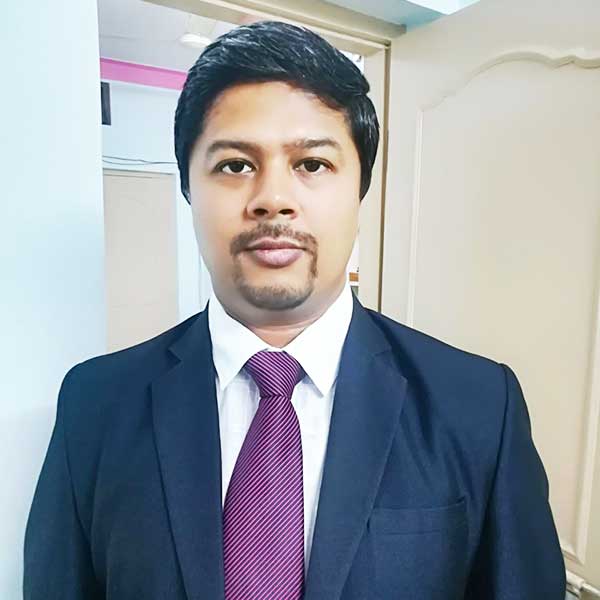
    I was oriented and influenced towards making a career in academics during my stint as an LL.M. student at the West Bengal National University of Juridical Sciences (WBNUJS), Kolkata as I discovered that I have the happy knack of discovering new and innovative information in research and also liked delivering presentations and seminars before a large audience which happens to be the basic method and characteristic of law teaching.

    To aspiring law teachers and academicians, my message would be that it is a popular misconception that teaching is not a lucrative profession as long gone are the days of being paid peanuts in academics. Moreover, the 21st century law teacher has several options of earning a fortune by expanding their horizons, acquiring additional skills and knowledge outside one’s basic area of specialisation and trying out new avenues of legal research as well as business such as venturing into online legal education. Academics is a profession which does not leave one exhausted at the end of the day and depending on personal interests, allows law teachers to take up additional employment and business opportunities on a part-time basis as well thereby ensuring good inflow of income as well as substantial contribution to the society.

    However, all law students aspiring to take up academics as a full-time profession need to possess the right kind of attitude and aptitude and also need to realise that teaching is the most difficult profession on this planet earth as this is the only profession where right from day one, teachers have to assess the work of people who are much junior to them in terms of age, experience and maturity. Therefore, this profession is only meant for people who are confident that counselling and orienting is their passion and who have loads of patience to deal with teenagers and adolescents of immature age and understanding. For instance, at times a question asked to a teacher by a student of the first year of an LLB course may seem very childish and foolish, but the teacher should never forget that the question is important for the student as it was posed to clear a doubt and gain knowledge about something.


    HOW DO YOU FIND TIME TO WRITE SO MANY SCHOLARLY ARTICLES?

    (Has also authored a book titled “Prevention of Torture on Detainees by Armed Forces Personnel: Global and Indian Perspectives with Special Reference to the efforts of international organisations” which was released from Germany by LAMBERT ACADEMIC PUBLISHING CO.)

    One of my teachers told me that a teacher who does not publish is no teacher at all. Keeping this important lesson in mind, I always make it a point to read up more and publish my personal opinion on all contemporary issues of law as it helps me to build on the knowledge base and thereafter encourages me to take the additional knowledge gained, to the classroom to be disseminated to students who are always hungry to acquire more knowledge. Personally, I prefer publishing rather than engaging in plain debate and discussion which at times knows no end. So far, I have always used up the time I got during the mid-year semester breaks and vacations at my workplaces to publish at least one research paper on a contemporary issue. Also, this book is a refined and upgraded version of my LL.M dissertation thesis, the publication of which will help me in future to gain more leverage on my work and is also a basic requirement to get international exposure relating to the subject areas involved in the publication. This advise was given to me by a senior colleague of mine for which I am extremely thankful.


    HAVING A  TOTAL OF SEVEN YEARS OF ACADEMIC AND RESEARCH EXPERIENCE INCLUDING LEGAL EDITOR FOR LEXISNEXIS BUTTERWORTHS PUBLICATIONS; PLEASE SHARE SOME OF YOUR EXPERIENCES.

    My experience can be broken up into six years of teaching and one year of corporate experience which has given me exposure to both the theoretical and practical sides of law. Working as a legal editor was particularly beneficial for me as I developed a habit of reading everything with a hawk’s eye and has helped me to take editorial positions with law school journals later on in my life. My professional experiences have taken me across the length and breadth of India into six different cities thereby giving me the opportunity to interact and build on my professional network and a chance to teach students from diverse backgrounds thereby allowing me to gain popularity and make a lot of friends among the student community. I have enjoyed every bit of my career so far and have earned a lot of respect and good wishes of people which has taken me higher in life. I have particularly enjoyed my role as an internship and placement coordinator and career counsellor as this additional responsibility has helped me to discover another side to my personality. I have realized that the more confused students are, the better it is for me as I love to orient and motivate people who are the so called underdogs or the confused lot. I can proudly say that to this point I have successfully oriented and helped many towards making a good CV and choosing the ideal career option.


    WHEN WOULD YOU SAY THAT AN ACADEMICIAN IS SUCCESSFUL?

    The answer to this question has to be given in a different manner. An academician may consider himself successful only when his or her work and contribution to the society as well as to the existing literature is remembered even after his or her death. They may not live to see the effect of their pioneering contribution, but people will always remember them and they will be revered and respected in academic circles. For this, the primary aim of an academician’s career should be to invent or discover something which no academician would have done before and also to constantly get their new scholarly work published for the world to know. Academicians should aim to make pioneering contributions to their areas of expertise so that people remember them as authoritative figures and their scholarly contribution leads to more fruitful research.

    In order to achieve the above objectives, teachers should constantly think about personal development and skill development rather than only restricting their activities within the classroom. A law teacher especially should think about ways in which to get practical exposure and to utilize the knowledge gained through such exposure to enrich the student community as well as to be known as an academician who has the ability to turn academic debate into action.


    WHEN WOULD YOU SAY A LEGAL ACADEMICIAN IS READY TO START WRITING BOOKS?

    A legal academician should not attempt to write books without gaining at least five years of work experience and also sufficient exposure to the theory and practice of law as writing a book involves exercise of one’s intellect at an extremely advanced level, a solid understanding of legal research methodology and the technique of compiling information in hard format by penning down one’s thoughts and personal opinion. Moreover, one needs to possess sufficient amount of critical thinking ability to go beyond the existing literature and formulate new opinion for it to find proper place in a book.


    YOU ALSO APPEARED BEFORE THE HON’BLE KARNATAKA HIGH COURT IN A WRIT PETITION UNDER ARTS.14, 19(1)(G) AND 21 OF THE CONSTITUTION OF INDIA CHALLENGING THE IMPOSITION OF GST BY THE CENTRAL GOVERNMENT ON HIGHER EDUCATIONAL INSTITUTIONS WHO OUTSOURCE THEIR AUXILIARY SERVICES. HOW IMPORTANT WAS THIS MOVE IN THE CURRENT SCENARIO?

    I am extremely thankful to the management at my current workplace for giving me this opportunity to get hands-on experience of the practice of law for a brief period while being on the job. The current result of this petition is that the finance ministry of the Central Government is now thinking about imposing GST on all private educational institutions as a whole without making any sub-categories or discriminating among private higher education institutions only on the basis of who outsources their auxiliary services and who does not. Thus, looking back now, the filing of this petition was an extremely important bold and timely move as well, as it has now got the government thinking and has created awareness among other private higher education institutions. The cause has also been supported by the Education Promotion Society of India (EPSI) which has been pursuing the matter with the Central Government for quite some time now.


    YOU ARE A RECIPIENT OF THE HENRY DUNANT RESEARCH FELLOWSHIP AWARDED BY THE INTERNATIONAL COMMITTEE FOR THE RED CROSS (ICRC), SOUTH ASIAN REGIONAL DELEGATION. PLEASE GIVE US AN INSIGHT TO THIS PRESTIGIOUS MILESTONE.

    I am thankful to my guide Prof. Manoj Kumar Sinha, who is currently working as the director of the Indian Law Institute in New Delhi for encouraging me to apply for the fellowship and also Dr. Sanoj Rajan who is currently working as the director of the School of Law, Ansal University, Gurgaon. He was the then head of the academic division at the ICRC, New Delhi Office and helped me in securing the fellowship. The addition of the fellowship in my CV has helped me to realize my aspiration of specializing in a new and contemporary branch of Public International Law, i.e. International Humanitarian Law and has helped me to publish in the area in combination with the other area of interest I have, i.e. information technology law/internet law.


    WHAT WOULD BE YOUR MESSAGE TO THOSE HARDWORKING LAW STUDENTS WHO DID NOT MAKE IT TO A TOP NLU BUT WANT TO EXCEL IN THE PROFESSION?

    My message to such students would be not to lose hope as all is not lost. Having studied in both the private law school and national law school systems and after having analysed both systems thoroughly as an academician, I have understood that the only criteria that distinguishes national law school and private law school students is exposure and fluency in English. Therefore, all law students studying in private institutions should constantly strive to keep enhancing their CV by participating in more co-curricular and extra-curricular activities, attend seminars and conferences on contemporary issues and most importantly have 2-3 publications during their undergraduate study on various issues of law that they may like to read and research about. They need to identify the areas of law that they like the most and build on those areas with publications and other activities focusing on those areas. Also, these students need to take their internships very seriously and try to repeat their internships in the same organisation, in case if they get through into an organisation that makes students learn the basics of court procedures and the general practice of law.

    Apart from reading the textbooks of law, every student studying in a non-NLU institution should try to improve their fluency in English by completing at least one novel or story book in every semester of the law course which means that they would have read ten good books by the end of the five years integrated LL.B course.




  • Sneha Thakur, Law Graduate, on winning Best Researcher at Henry Dunant, writing for journals and LL.M from QMUL

    Sneha Thakur, Law Graduate, on winning Best Researcher at Henry Dunant, writing for journals and LL.M from QMUL

    sneha-thakur-2Sneha Thakur graduated from the first batch of RMLNLU, Lucknow in 2006. While at Law School her team won the Henry Dunant Best Researcher spot. As a law student she has been quite active and participated in many debates, MUNs and conferences. Soon after graduating from RMLNLU she was awarded the “Centre of Commercial Law Scholarship” from CCLS at Queen Mary University, London and thus she pursued an LL.M in Corporate Governance and International Comparative Commercial Arbitration from there.

    She is currently preparing for one of the toughest Bar Exams in the world: The California State Bar Exam.

    We asked her about:

    • Importance of mooting and collaborating for Best Researcher at Henry Dunant
    • Writing for journals and publications
    • LL.M experience, faculty and facilities at QMUL


    Given that most of our readers are law students and young lawyers, how will you introduce yourself to them?

    Firstly, I would like to congratulate you and your team for this endeavor. Launching such a website is indeed an innovative and creative step. It is certainly a breath of fresh air. Your website provides a complete ladder to a law student to understand their career path in law. Reading the interviews of top notch people in the legal field would certainly be an intellectually stimulating experience for a young lawyer who would gain first hand insight into the legal profession.

    Law happened to me by choice, it’s one field that has always fascinated me. I completed my law degree from RMLNLU Lucknow. After completing my degree I had an opportunity to work as a corporate lawyer in one of the biggest life insurance (Max Life Insurance) companies in India for a year. Then I was fortunate to be awarded the Centre of Commercial Law Scholarship from CCLS at Queen Mary London and completed my LL.M in Commercial and Corporate Laws with a focus on Arbitration.


    How did you gravitate towards law?

    Being a lawyer was my first occupational choice after careful consideration. Law for me is like a passion that runs in the veins of my family. My dad has always acted as my role model. Being a Senior Advocate, he had influenced me to a great extent to choose the profession. He has been my guiding beacon of light, always encouraging me and also gave me the freedom to take up the profession that interests me the most.

    Five years in RMLNLU has played a very important role in grooming me as I stand today. They were the most fun filled years of my life. It was like a family where you grow and develop yourself. The lesson that a law school teaches is that the end is not nearly as important as the means. I believe law school is a platform where a student is groomed to practice law rather than learn it. For being a successful lawyer always remember to be confident but not arrogant.


    What does it take to be a great researcher?

    (Sneha had won the Best Researcher Award and her team was also one of the quarter finalists at Henry Dunant Moot Court Competition.)

    Being the pioneer batch of RMLNLU we had faced some grave problems as we had no seniors or experienced mooters to guide us through the journey. The whole process of preparation and reaching the quarter finals among 65 teams when we were just in our second years and then bagging the Best Researcher award has been a momentous experience for me. We had put our body and soul for this moot and had spent the whole vacation in ISIL and ILI libraries. We even went to NLSIU and ILS Pune for the research work.

    The key to be a great researcher is to dissect the whole case, a researcher needs to be like a encyclopedia of the case at hand. A good researcher should also have excellent writing skills and should have clear knowledge of citing cases and references in preparation of memorials.

    The real problem faced in law school is to balance your academics with mooting as preparation takes almost as good as six months. In this regard our professors were helpful who provided us some project exemptions. Mooting is like a nerve cracking passion, as much honestly you put in, so shall be the result.


    Share some of your memorable mooting experiences.

    Mooting has been my passion ever since I joined college. The whole feel to argue your case in front of real judges, the period of preparation, research, long hours in library and team work prepare us for those few days in which we get practical insight to the real life of the law profession. The most memorable mooting experience was the one I gained during Willem.C.Vis International Arbitration Competition in Vienna. Arbitration is different form of mooting and competing against 260 teams around the world is indeed a nail biting experience. I have realized that few universities have libraries which have complete set research books for arbitration. In this regard I must say that now RMLNLU, NLSIU, NALSAR and ILS pune libraries are well equipped for arbitration research.

    The second experience I’ll always cherish is the team management skills which I developed when I organized several Moot Court Competitions in my college. Being the Convenor of the MCC one needs to delicately balance the work on hand bracketed with your ability to hold on to your position as a leader. It groomed me to work under timelines and develop the organizational skills which are very important for personal and professional development.

    The mooting tips I would like to share firstly is for the stage of preparation which tends to be the most time consuming part of mooting. You will need to ensure you know what you are expected to argue and read the fact pattern thoroughly and begin assimilating your relevant authorities for discussion. Make sure you know all the cases or authorities you are citing inside out, along with the general area of law on which the moot is based. For mooters always be prepared with your skeleton arguments and question yourself on it no matter how small and irrelevant the fact it may be on. This will prepare you for the final day.

    Secondly, as for the day of the moot, I know your stomach is full of butterflies. But don’t panic! Rehearse your speech in advance and familiarize yourself with the layout of the court room in advance. Secondly don’t write your full speech on paper, indeed write the bullet points on a small number of cue cards. Another thing to remember is to have soft speaking skills and pause while speaking so as to give time to judges to deliberate. Also remember that don’t be very anxious to finish your submissions and do so in a rush. There’s nothing worse you can do when it comes to finishing your moot. Make sure that you end it appropriately; by finishing with a conclusion and by telling the court what you want it to do.


    How helpful do you think is mooting for a law student?

    Mooting is the closest experience that you can get as to appear in a real court.  It a process of learning the Law differentlyand provides a holistic approach of learning by developing research skills, advocacy skills or even just plain old teamwork skills. Mooting boosts up the confidence level of the student and also serves as bolster addition to your C.V. and make oneself more attractive to potential employers. If one harbours any desire to become a practicing advocate then it is safe to say that employers can only look favourably on those who have mooting on their C.Vs, as this is a sure-fire sign that you possess these important attributes needed.


    How important is it to publish articles being in a law school?

    Writing papers serves several important purposes. First, it develops one’s research skills. Second, it provides us with an intensive writing experience in preparing one or more papers of an analytical nature. Third, it provides us with an opportunity to deliberate on the subject and provide our thoughts on the same.

    Publishing articles also serves an attractive point in your CV. As a good internship strikes a gold point this one serves as an additional star. It attracts recruiters as it showcases one’s drafting skills and the ability to research.

    It is rightly remarked that the written word is one of the most important tools of the legal profession. Words are used to advocate, inform, persuade and instruct. Although mastering legal writing skills takes time and practice and are essential to success. But all this depends on you interest and writing skills. One should always aim to analyse the law and add something from their own thought process rather than dissecting the analysis and history written by other authors.


    Do you think participating in extracurricular activities like MUNs, Debates, Seminars and Conferences proves to be of help to law students?

    Participating in such international conferences, seminars and paper presentations provides a firm base to law students to go beyond the books and help students to analyse topics and realms of international and national law which are not taught in law schools. It helps to develop and hone their research skills and provide a platform wherein they can present their own thoughts and insight to the critical legal issues. The ISIL and ILI libraries in Delhi have a huge collection of legal writing and articles which help for the preparation. Also the whole presentation provided me with a confidence to speak freely in public and I am sure these experiences help in professional practical career afterwards.


    How did you go about securing internships at various law firms?

    To secure good internship please be cautious to apply well in advance and keep a track of your application with frequent reminders. These days several national essay competitions are also providing internships as a prizes. Be sure to keep a track of it. Also some of your seniors might help you to get through some good internships.

    It is important to plan out your internship. Start from interning with Counsels and then opt for law firms. You should also mix governmental corporate internship. You don’t need to be specific in law school; try out different platforms so that you are sure at a later stage. While interning everyone has to go through the phase of trivial work. Even researching some basic points or finding case laws should be taken as an opportunity to learn. If you take interest and work diligently and quickly brief your seniors about your work, I am sure you would attract the firm’s attention for a PPO.


    What do you feel about the importance of a good CGPA and contacts when attempting to secure an internship?

    I think your CGPA does play a role in securing an internship and later college placements. As a member of placement committee I had observed most of the top tier law firms has one of the requirement to interview candidates who are among top twenty in their batch. For students who have no contacts in the law firm, it is necessary to secure good CGPA. College is fascinating and it a fun life but my only advice is that they shouldn’t ignore their studies. Even if you are not a topper but it is important to stay focused. Be aware of the happening in the legal world and try to gain more practical experiences.


    What was your motivation behind pursuing an LL.M.?

    I always wanted to pursue LL.M. Initially I was confused from where I should do it. It’s important to know the area one wants to cover in their LL.M program. LL.M provides a path to develop one’s skill and knowledge in a particular field of law. Once I was sure about the course I wanted to take, I decided to pursue an LL.M.


    How did LL.M. from Queen Mary, University of London happen?

    I always had an inclination for studying arbitration in depth, as in recent times the commercial world is taking a path towards dispute resolution mechanisms such as arbitration and mediation. Through my extensive research I found out that Queen Mary is one of the few universities which has also a well-known School of International Arbitration and is a well-respected member of the Arbitration community. The courses are designed in such a manner that they would provide an excellent foundation to the professional career in arbitration, focusing on both practice and procedure.

    I was fortunate enough to get through UCL, LSE, Kings College London, Newcastle University, Leeds University, Edinburg University and Glasgow University. In USA I got through NYU and Georgetown University. I was about take up the arbitration course in combination with commercial law from UCL but was awarded “Centre of Commercial Law Scholarship” from Centre of Commercial Law Study at Queen Mary which covered the entire waiver of tution fees and then Queen Mary happened.


    Please tell our readers about the application procedure and other requirements?

    The application procedure of Queen Mary requires high academic result combined with at least 105/120 TOEFL score. This year as per the Guardian’s Ranking Queen Mary School of Law is at third position after Oxford and Cambridge.

    Queen Mary offers two School of Law Scholarships (full tuition fee waiver) and two Centres of Commercial Law Scholarship (full tuition fee waiver). Queen Mary offers 2 partial scholarships each worth 50% of the tuition fee for the new LLM s –LLM in Energy and Natural Resources Law and LLM in International Shipping Law. Among other scholarships are Commonwealth Scholarships, Chevening Scholarships, Queen Mary Drapers Scholarships, Jean Monnet, CCLS/FGV Rio, Brazil, CCLS/University of Lagos, Nigeria, CCLS/School of Economics and Finance joint M.Sc Law and Finance and LLM in Law and Economics bursaries.


    Please tell our readers a bit about the course of Corporate Governance and International Comparative Commercial Arbitration from QMUL.

    The most attractive part of my academic module was studying International Comparative Commercial Arbitration from the likes of Professors Loukas Mistelis (Winner of Global Arbitration Review Award), Julian Lew and Dr. Stavros Brekoulakis. Studying from the stewards in the fields who are pioneer and leading authors of International arbitration books and leading contributor to the science of international arbitration and litigation. They have close links with major arbitration institutions and international organizations working in the area of arbitration and also conduct frequent research projects in this field. The classes are very interactive and one needs to be prepared to participate in the discussions. This module is designed in a manner to provide a deep understanding of the special characteristics and needs of international arbitration.

    The Module Corporate Governance is especially designed to provide an depth knowledge of financial regulations, impact of globalizations, various corporate governance systems in the world and corporate accountability. Prof Alan Dignam is a renowned writer in commercial law books and is also an advisor to Amnesty International’s Business Group on their corporate accountability.

    The tutorial classes in each module have been fruitful as it gives an insight and one to one chance to interact with the Professors and to know the correct methodology in solving the problem. It has provided me with a chance to study legal issues in classes composed of graduate students from numerous countries, who would resolve these issues differently and provide me with a completely different angle to look at.  Frequent seminars organized by the School of Law regarding the emerging and controversial issues are also very beneficial and useful. There is an abundance of e-resources to research upon and the libraries are well equipped with almost all the possible journals, reports and books.

    Studying in an international environment at Queen Mary, with students of various ethnic and cultural backgrounds has provided me a chance to know and understand different people and cultures which in itself is a wonderful and enriching experience and to add London as a location is perfect as a seat of Arbitration for all the global exposure and experience that one needs as it is the most inspiring and culturally rich city.


    How was the academic schedule?

    You need to study hard before the class. That is it. Every class is not confined to books and preparatory materials. The academic schedule is such that you need to prepare the basics before you enter the class. The classes are interactive and discuss the practical aspects of every subject and how it is dealt in different jurisdictions. Regular reading materials are provided along with reference to different books which the library is well equipped with. Frequent tutorials help in solving the question paper. For dissertation support each mentor guides you through the entire journey from selecting your topic to the division of titles, recommending books for references, guiding you through the current trend, insights to the major cases. One to one interaction with the mentors generally helps one to a clear idea about how to write the perfect dissertation


    How difficult was studying abroad in terms of finding accommodation, finances and settling in?

    Unfortunately, by the time I decided to go for Queen Mary, there was no hostel accommodation available. I stayed in London in a house shared by some of my friends. It must be acknowledged that rental prices are the highest in the capital, and students should be prepared for this even with the extra loan on offer, though you have range of options such as student houses which includes Nido, Mansion Tower and Urbanest as the best options. One also has an option of renting a house, wherein students are exempted from the local tax. And if you feel like earning a bit of extra money, generally part-time work is pretty easy to come by.  The major lifestyle benefits of living and studying in London, ranging from nightlife to food markets and culture, all are located in the centre. London is a student friendly city and there are a lot of activities to do and to enjoy your life in London. Ultimately everyone falls in love with this dynamic city.


    How’s the Indian fraternity over there?

    London is known to be the hub of cultures from students from all over the world. Queen Mary has a vibrant student community. The Indian Student community at Queens frequently organizes parties and get togethers for the celebration of festivals. Everyone is very interactive and helpful in each aspect. The Student Union at Queens also help the new students in settling down and also develop their skills and interests.


    Where do you see your career in the next five years?

    Right now I am living in San Francisco and preparing for California Bar Exam. In next five years I see myself as a commercial lawyer and develop my skills in the field of arbitration, I have been working with a firm based in Dubai which is establishing itself in USA and provides legal help to the companies who have their work base in UAE and Asia.


    Lastly, what would be your message to law students interested in going for higher studies from India?

    My message would be that you should do complete research on the law schools from where you want to pursue their LL.M. Every University has its specialisations in particular legal fields. Make sure you shortlist your choices. Also there are many scholarships given to support your post-graduation from Commonwealth, Chevening Scholarship, Tata Memorial scholarship and individual scholarship of every University.


  • Naman Joshi, Law Graduate, NLUD, on induction into Karanjawala & Co., mooting, debating, and litigation

    Naman Joshi, Law Graduate, NLUD, on induction into Karanjawala & Co., mooting, debating, and litigation

    Naman Joshi graduated from NLU, Delhi in 2014. He is currently an associate at an illustrious litigation firm, Karanjawala & Co. He has been quite involved in Debating and Mooting as a student, and coached the NLU Delhi Team which went on to win the 12th Henry Dunant.

    His engagement in sport, community service, and extra-curricular activity has also been recognised by the H. R. H. Duke of Edinburgh, Prince Philip.

    We asked him about:

    • Being the Best Debater at Outlook SpeakOut North Rounds
    • Coaching the NLU Delhi team to success at 12th Henry Dunant
    • Receiving the Gold Standard of the International Award for Young People

    How would you like to introduce yourself to our readers?

    I am a lawyer who in my free time, likes to read, watch reruns of Friends and Two and a Half Men, and play FIFA.

    I do have lawyers in my family. My mother is one, but she did law late as an afterthought and partly out of boredom. She was working earlier as a consultant and decided she needed something new to do. Apart from that on my paternal side I have two lawyers.


    What brought you into legal studies?

    I did not consider engineering as a career. It never appealed to me. Medicine on the other hand did sound fascinating, especially because I read up a substantial amount about the human body when my father underwent a bypass.I was in 6th Class then and being a surgeon sounded nice. But to be very honest, I neither had the math skills nor the scientific acumen to pursue it at the highest level. It’s not just about being a doctor or an engineer. It’s about being good enough to rise to the top of your game. Law was a conscious choice from quite early on. I’d say about 9th Class onwards. When it came to second language options, I chose Hindi instead of French (lot of lower court proceedings are in Hindi). When it came to choosing subjects in 11th, chose History, Political Science, Economics, and Maths (these subjects barring maths, are taught in law school and are actually helpful when practicing law). Law also gelled with the other things I was doing in school – debating, writing, hosting a TV show on DD Bharti, community service etc.


    naman-joshi-3

    What would be your advice to someone who has never debated earlier?

    (Naman has been awarded the Best Debater spot the Outlook SpeakOut Debate.)

    Honestly, I can think of at least three debaters better than me in my own class from college itself. In fact, I have never even won a debating tournament since I have stepped into college.

    Partly, because the Parliamentary Debate format didn’t feel as comfortable as Oxford-Style did and partly, because I didn’t work on it because I was mooting extensively. So no advice as far as acing a debating tournament is concerned. As far as someone who has never debated earlier is concerned, my only advice would be, give it a shot. What’s the worst that could happen? It is a fun activity where you get to travel along with a couple of your college mates and the downside is missing college for three days or so and the upside is winning some serious cash!


    What separates a good mooter from an average mooter?

    (Naman has represented India at the 53rd and 54th Philip C. Jessup International Law Moot Court Competition. You have been also been ranked the 30th Best Oralist at the 54th Jessup.)

    A good mooter is one who masters not only the brief he or she has prepared but also everything around it and is ready to have a conversation with the judges. An average mooter prepares a brief and goes ahead and argues it. The former understands the context in which the arguments are placed. The reason they are being made at all. The latter looks at the last page, sees the questions of law and opens up a book to cite authorities.

    Mooting is not just an activity you should participate in because it is a check box in your ‘things to do in law school’ book. Do it because you like the activity. Do it because you want to read, write, and talk about a particular thing. For me that happened with international law. Even though I am not mooting anymore and my work is far divorced from international law, I like to stay in touch with the subject because I like it.


    What would you say contributed to the huge success of the team that you coached for the 12th Henry Dunant rounds?

    I think what contributed to the huge success of the team that I coached was the very hard work they all put in. Dhruv, Utkarsh, and Natasha were absolutely dedicated to the cause of winning and they did everything they had to, to do so. Including roping me in as coach, which can be a decision one can later regret (I am sure they all did at some point or the other) because I can be very unpleasant to work with. I expect people to function in a particular way, am extremely pedantic about minute things and easily lose it. Thankfully the team took it all in their stride and it worked out well. They went on become the first Indian team to have ever won the Red Cross Moot and I am extremely happy that I was a part of that. Plus, it has always been a wish of mine to do an international criminal law moot. I never found time for it myself, so vicarious pleasure.

    As far as the difference between them and the teams they faced in each of the finals, I’d say fine margins. At the highest level, everybody works incredibly hard. But if I had to split hairs, I’d say:

    1) the team was better prepared for the questions. They knew what was coming and they had already practiced how to knock a particular question out of the park.

    2) They had contextual understanding. I remember this issue of hate speech coming up in the India rounds and how the team answered the question not only with the international criminal law standard but also how hate speech is understood by national and international human rights courts and adjudicatory mechanisms.


    Tell us about being the Recipient of the Gold Standard of the International Award for Young People, 2009 awarded by H.R.H. Duke of Edinburgh, Prince Phillip.

    Essentially the programme requires you to fulfil certain mandatory hours of engagement in a sport, community service, and extra-curricular activity. There are three level – Bronze, Silver, and Gold.

    As you keep excelling in the respective activities, you keep rising through the levels. So in my case, I played tennis, was President of Interact Club in my school (the Club is affiliated to Rotary International), and was an avid photographer. It is a fulfilling experience and I’d say if your school is a part of the programme, you should definitely participate.


    Tell us about your summer school experience.

    The courses were extremely helpful. There were three:

    – Corporate Law at LSE,

    – International Criminal Law at Leiden University, and

    – Comparative Constitutionalism and European Competition Law at Trinity College, Cambridge.

    I can assure you that anything I know about corporate law is more likely from the three weeks at LSE with Prof. David Kershaw than two semesters of corporate law in college. International Criminal Law, of course, doesn’t get much attention in college. But it came in handy while coaching the aforementioned team. The Cambridge courses were partly academic curiosity and partly a way to test if I want to pursue a LL.M immediately after college. The answer was in the negative for now. But both of them have definitely enhanced my understanding of how I look at constitutional law and competition law.

    Application procedure is fairly simple. These universities have extremely user friendly websites. You can just log on. Complete the form. Scan and attach the relevant documents. And you are good to go.

    The question of institutional support (parent institution) didn’t arise because all these courses were in the vacation. Though the Vice-Chancellor did appreciate what I had learnt abroad and allowed me to use what I have learned abroad effectively by allowing me to coach a team officially. Until then no team had had a university appointed coach.

    I already said before how highly I rate Prof. Kershaw’s corporate law classes. And I think the same applies across to board to all the classes I took abroad. There is no doubting that those classes beat most of the classes that are being taught in any university in India. That said, I did have some seminar classes (elective courses) where the quality of teaching was at par if not better. So I guess it comes down to

    1)      teacher’s understanding of the subject;

    2)      ability to get that understanding across; and

    3)      class size.

    Class size I think is a huge factor so we can’t really blame our teachers. They are doing the best in the situation. In fact I’d say my college is doing better than most considering the recent faculty recruitment and the very serious qualifications these teachers come with National Law University, Delhi.


    How did you manage funding for these courses?

    My parents have been extremely kind. They will not buy me a Playstation or plan a trip to Thailand, but if it comes to down education or professional development, they have never said no, regardless of the amount of money involved. But for those looking for alternate sources of funding, these universities sometimes do have funding available. Getting in touch early on with them is a good idea.


    Did you ever plan to join a corporate law firm?

    No, I did not plan on joining a corporate law firm. One of the reasons is I don’t frankly like corporate law as much. Can I work in the litigation department of a corporate law firm? Sure. Can I standout in an M&A team? No. Moreover, I need the thrill of the courtroom. I need to put on the gown and stand before a judge and argue a case. So litigation was always the thing that I had in mind; that is why I never even interned with a corporate law firm. Plus my first real legal internship was with Mr. Gopal Subramanium when he was the Solicitor General of India. The experience that I left with a month later assured me that this is what I want to be doing. Future plans are fairly straightforward – practice law in the courts and hopefully be recognized for it.


    How did your appointment at Karanjawala & Co. take place?

    My appointment at Karanjawala & Co. was actually a last minute one. While I had interned with them earlier in the summer of 2013, I was already placed at the Chambers of Mr. Gopal Subramanium, Senior Advocate and had never applied for a job at Karanjawala. When Mr. Subramanium’s name came up for elevation to the apex court, I decided to look elsewhere because I assumed that Sir would be elevated to the Supreme Court pursuant to a recommendation of the Collegium (Of course there were certain unbecoming actions of certain persons and entities which rightly led him to withdraw his name.)

    When I started looking for a job I didn’t want my parents or for that matter even Mr. Subramanium to just make a call on my behalf. I wanted to get a job on my merits. So I asked Mr. Trideep Pais who is an advocate in the Delhi High Court and who has taught me criminal law in college to let me know if anyone is hiring so that I could send them my CV and seek an interview. I also asked other persons I knew from college like Mr. Alok Prasana, Mr. Rishabh Sancheti and Mr. Rajshekhar Rao. All of them were extremely helpful and gave me leads about persons they knew who were looking to hire.

    One lead that Trideep Sir gave me was Karanjawala & Co. I went and interviewed with Ms. Meghna Mishra who is a Partner at Karanjawala. Luckily for me she had seen my Karanjawala worksheet and had spoken to other people at the office, all of whom had said kind things about me. She told me she’d get in touch with me soon and that it looked good. I didn’t get a call for few days and I was getting anxious. A few days later I got a call saying Mr. Karanjawala wanted to meet me. I met him, he saw my CV and previous certificates of work, looked at me and asked me if I wanted to work at Karanjawala and when I said yes, he told me told me I am hired. Now I have been working at Karanjawala for a month and it is a great office with a lot of great people plus the office undertakes huge volumes of litigation. In my first month here I have been working on a couple of arbitrations, drafting pleadings, appearing in the High Court, and have even made a solo appearance before the Debt Recovery Tribunal.


    Do you think your experience in mooting shall help you in your litigation career?

    It already does. Mooting teaches you how to critically analyse a legal problem, building up a story using the facts you have around it, pruning out the negative facts or figuring a way of colouring them positively, researching, drafting a brief, arguing it, and answering any questions a judge might have. That’s pretty much what you do when a client comes to you with a problem and wants you to argue for him or her in court.


    Would you consider pursuing an LL.M from a reputed university?

    I would love to go study at Oxford or Cambridge. But let me be very honest. With a CGPA of 4.9/8, I am not very high on their list of prospective candidates. Moreover, I don’t want my parents to pay for it. So, maybe in a couple of years after I have some money of my own and my work experience can supplement my CGPA.


    What would be your message to law students who want to ace in moots?

    Choose a moot for the area of law and not the area of the world where it is held. A lot of students, unfortunately even in my university, want to do a particular moot because the college is paying for the trip abroad. That’s the wrong kind of attitude to begin with.

    Start reading up on that area way before the moot problem comes out.

    Put your fingers to the keyboard from Day 3.

    Start writing based on whatever you understand. You can always polish later.

    In fact you might not even use an argument you thought of early on, in your final brief, but that junked argument is very essential. Either it will tell you what not to say and take down an opponent, who has unwittingly said it, or it will provide you a way out when the argument you actually used didn’t work and you need a Hail Mary pass.

    Whatever research you have done, make notes so that you later remember you read what where. A lot of research is recyclable in a moot problem. You might not need it but that’s exactly what your teammate does.

    Lastly, think of it as real. You have to believe you are the agent/counsel for a particular state/party. If you don’t believe in the cause of a nation bombing another to establish democracy and promote peace or a nation that is sinking because of climate change, you can bet the judge won’t either.