Tag: IAS

  • Tapasya Parihar, AIR 23, UPSC, shares her experience and advice on cracking the Civil Services Exam

    Tapasya Parihar, AIR 23, UPSC, shares her experience and advice on cracking the Civil Services Exam

    Tapasya Parihar is a graduate of ILS Law College, Pune in the Batch of 2015. After graduating from one of the most premier law schools in the country, she decided to pursue a career in Civil Services. She shares her valuable insights with our readers on her experience with the UPSC  along with advice on how to crack the toughest exam in the world.

    In this interview, we talk to her about:

    • Her reasons for choosing law
    • Advantages of having law background in CSE
    • Her advice for our readers on cracking the CSE.


    HOW WOULD YOU LIKE TO INTRODUCE YOURSELF TO OUR READERS?

    I hail from a small village in Madhya Pradesh. My father is a farmer and my mother is the Sarpanch of the village. I did my schooling from Kendriya Vidyalaya Narsingpur. Thereafter, I did my graduation in Law from ILS Law College, Pune.


    PLEASE TELL US ABOUT YOUR PRE-COLLEGE LIFE. DID YOU ALWAYS PLAN ON PURSUING CIVIL SERVICES?

    I decided to pursue civil services after I got my 12th board exam results. I had got a good rank in the merit list and that is when I decided that I would prepare for UPSC CSE.


    HOW DID YOU DECIDE TO PURSUE LAW?

    My stream was science in twelfth std., but I didn’t want to go for engineering. Moreover, one needs to be a graduate to appear for the CSE. Therefore, I chose law keeping in mind my long-term goal of joining civil service, as I believed the study of law would facilitate better administration.


    WOULD YOU SAY YOUR BACKGROUND IN LAW HELPED YOU IN PREPARING FOR CIVIL SERVICES?

    Yes, it definitely did. Basically, there is an overlap between the law syllabus and the GS subjects. Also, understanding of law helped me understand the newspaper articles better, especially the polity related issues and international affairs. Moreover, a study in law develops a different attitude, which makes a person more aware of the Constitution, rights and duties of the people and various other social issues, which come in handy during the preparation for civil services.


    WHEN DID YOU START PREPARING FOR CIVIL SERVICES?

    I started preparing immediately after finishing law school, i.e., in 2015.


    HOW DID YOU START PREPARING FOR THE CIVIL SERVICES EXAM? DO YOU THINK COACHING IS A PREREQUISITE TO CRACK THIS EXAM?

    I came to Delhi to prepare for the exam and I joined a coaching class therefor. However, I would not say that coaching is a prerequisite to clear this exam. It actually depends on the person and his/her level of understanding of the basic subjects. And after having a bad experience with the coaching class, I would suggest the aspirant to go for self-study, as the reading material required to study for this exam includes NCERT books and graduation level reference books, which need not be taught in any class.


    WHAT WAS THE ROUTINE YOU FOLLOWED EVERYDAY THROUGHOUT THE COURSE OF YOUR PREPARATION?

    My everyday plan was part of a bigger plan wherein I had divided the syllabus into different subjects, which were to be completed in a certain number of days. Then, every day I would make a to-do list of all the topics to be covered from that particular subject on that day. Also, to study effectively, I had divided my day into different sessions of 45 minutes each with a break of eight minutes. This I did with the help of an application that has the Pomodoro Clock (I used the Goodtime app, but many more apps like this are available on Google Play Store).


    WHAT WAS YOUR STUDY PATTERN, THE MODE OF STUDY (ONLINE, OFFLINE ETC.,) PLEASE MENTION SOME OF THE BOOKS YOU REFERRED TO AND HOW DID YOU GO ABOUT PREPARING FOR EACH STAGE OF THE EXAM?

    My study pattern was a mix of both. Some topics I did from the NCERT books and the reference books, the remaining I did from various online sources which include online portals like www.insightsonindia.com, www.iasbaba.com and www.mrunal.org

    Some of the books I referred are as follows:

    • Polity- NCERT (std XI and XII), Laxmikanth and books by Shubhra Ranjan on model questions and answers
    • Geography- NCERT (std XI and XII), GC Leong and Atlas for maps
    • Modern Indian History – NCERT by Bipan Chandra and Spectrum publication’s book
    • Ancient and medieval history- book by NIOS and Tamil Nadu State board book
    • Art and Culture- Nitin Singhania
    • Environment and ecology- Shankar IAS
    • Economy- Vision IAS notes and Ramesh Singh
    • Science and technology- book by Vajiram and Ravi
    • Current affairs- newspaper, monthly current affairs booklets by Vajiram and by Vision and PT365 by vision and revision modules by insightsonindia
    • Security issues – vision notes
    • Social issues- Internet
    • International affairs- monthly current affairs booklets
    • World history – vision IAS notes

    Now, the exam has three stages, which need different approaches.

    • The preliminary examination is objective in nature, thus the focus has to be on conceptual clarity and question-solving aptitude. I suggest one must solve two to three test series and revise the test solutions and take the same tests again.
    • Mains need an analytical approach and the ability to interconnect the various aspects of the topic. Here, answer-writing practice is very important, as that is the only way to fetch more marks and secure a good rank. For this, one again needs to join 1- 2 test series. I also suggest writing daily answers, for which the questions are available on insights and iasbaba and various other websites. I suggest the answers to be written in the pattern wherein it contains the introduction, body and conclusion.
    • For the interview, one needs to know oneself well, keeping in mind the DAF and practice speaking the answers in a coherent and logical manner.


    WHAT DID YOU DO TO KEEP YOURSELF MOTIVATED ALL THE TIME DURING THE COURSE OF PREPARATION?

    Motivation is a very important part of this exam, as the time period of this exam itself is long which makes the whole process tiring. I used to motivate myself by writing a diary, talking to my parents, by thinking about my goal and how important it was to keep going, by thinking about my journey and last but not the least, the idea that I didn’t want to regret not giving my best to this exam.

    However, I generally enjoyed the whole process as I was getting to learn so much and I guess due to this, I did not have too many low points in the preparation.


    WHAT IS YOUR EXPERIENCE WITH THE PREPARATION THAT IS REQUIRED FOR THE CIVIL SERVICES?

    I believe the preparation that is required to clear this exam needs to be according to the syllabus and one needs to have the conceptual clarity and ability to analyze issues from different perspectives. Preparation requires hard work with complete dedication and honesty.


    COULD YOU PLEASE GIVE SOME TIPS TO THOSE ASPIRANTS WHO ARE PREPARING FOR THIS EXAM? HOW SHOULD THEY GO ABOUT PREPARING DIFFERENT SUBJECTS LIKE GENERAL AWARENESS, OPTIONAL PAPER OF LAW?

    The first step is to go through the syllabus and the previous years’ question papers. Then, I would suggest that one should watch a few videos of toppers about their strategy and book sources and then make a customised plan keeping in mind her strengths and weaknesses. For every stage of the exam, revision and test series are the most important factors that need to be given equal weight in the plan. Thereafter, the plan needs to be executed properly.

    For general awareness, newspaper reading is a must. I suggest reading the Hindu and the Indian Express daily.

    For the optional paper, I recommend making notes on all the subjects in the syllabus from the books the law graduate refers to in the college. Along with that, notes on legal current affairs also need to be prepared as the questions are generally related to current affairs.


    WHAT DID YOU DO TO KEEP YOURSELF ABREAST OF ALL DOMESTIC AND INTERNATIONAL CURRENT AFFAIRS? HOW DID YOU STUDY FOR STATIC GENERAL KNOWLEDGE?

    The NCERT books cover the basic static general knowledge. Some parts of the syllabus can be covered by making use of the vast variety of material available online. I followed the websites like www.insightsonindia.com and www.iasbaba.com, which have been very helpful in the entire duration of my preparation. They have various free of cost initiatives to cover the current affairs, which complement the newspaper reading.


    PLEASE TELL US ABOUT YOUR INTERVIEW? HOW SHOULD A LAW STUDENT APPROACH THE INTERVIEW FOR THE CIVIL SERVICES EXAM?

    There are three important things to be done to prepare for the interview.

    • Thorough preparation of DAF related questions
    • Revision of basic mains syllabus, current affairs and the graduation subject
    • Mock interviews

    Interview preparation must be focused on the way one structures her answer and presents the same.


    WHAT WOULD BE YOU MESSAGE TO THE LAW STUDENTS WHO WANT TO PURSUE THEIR CAREER IN THE FIELD OF CIVIL SERVICES?

    Be thorough with your optional subject, prepare notes keeping in mind the previous years’ papers and revise accordingly. Work hard with complete honesty and the exam becomes easier to clear. All the best!



  • Pratik Tayal, IAS Officer, on cracking the UPSC, and achieving AIR 92

    Pratik Tayal, IAS Officer, on cracking the UPSC, and achieving AIR 92

    Pratik Tayal graduated from National Law University, Delhi in 2016. Right after graduation, he appeared for the Union Public Service Commission Examination and secured an All India Rank of 92 in his first attempt. He is the all India topper in civil services with law optional. He also secured the highest marks in GS IV Ethics Paper. During his law school days, he participated in various international moot court and client counseling competitions.

    In this interview, he talks about:

    • His experience as a law student at the National Law University, Delhi.
    • His strategy for the preparation of the Civil Services Examination.
    • Advice to prospective law students aiming to make a career in Civil Services.

    How would you like to introduce yourself to the readers? 

    I was born in Dehradun and brought up in Delhi. I have done my schooling from The Banyan Tree School, Lodi Road where I was an academically inclined student who was engaged in many extra-curricular activities and also served as the Vice Head Boy. I completed my law degree from National Law University, Delhi. As regards my background, my father and brother are in the civil services and my mother is an entrepreneur.   


    Why did you opt for the field of law? 

    My decision to pursue law was borne of an interest that I developed in the subject. I came across the Constitution and other law books during class XI, which stimulated my interest in this field. I do not have any legal background in my family.


    How did a law school education in NLU help you in achieving your dream?

    Law school has an impact on one’s personality, in both direct and indirect ways. The curriculum and pedagogy helps you to broaden your horizons and ponder over societal issues; an emphasis on extra-curricular activities ensures a brilliant exchange of ideas; and staying in a multicultural environment with people from different backgrounds enhances your sensibilities and your appreciation of diversity. At the same time, law school presents different challenges for different people, which at the time may be daunting, but eventually help you introspect and become a stronger individual.

    Having learnt and benefited from these experiences, I was also fortunate to have had a batch full of achievers, from whom I could learn a lot. The atmosphere of excellence shaped me to become serious in life, helped me to develop a goals based attitude towards work, to be focused, ambitious and determined, and most importantly, it taught me the value of hard work.


    Did you focus only on the academics in college life? 

    Since my elder brother had been selected for the Indian Police Service in 2011, I was fairly determined about preparing for the UPSC exam. I tried to balance both academics and preparation throughout, with the balance shifting in either direction at different times. In NLU Delhi, the work load is reasonable. It can be managed along with preparation. The pressure, similar to other things in life, depends on how much you want to take on.   


    What extra-curricular activities did you take part in that helped you in overall development?   

    A lawyer, I was once told, has to master two aspects of his profession: advocacy and client counselling. With this in mind, I tried my hand at mooting and client consultation competitions during law school and these experiences helped me immensely. In mooting, I represented my college in the Oxford IPR Moot Court Competition in 2014. Mooting, as an activity, helps in developing the ability to structure things well, to study a topic from different dimensions, and to be able to effectively answer questions – all of which is extremely advantageous in CSE. In client counselling, I represented India in the Louis M Brown Client Consultation Competition in Nebraska, USA. This experience helped me hone my abilities to appreciate the problem, evaluate different options effectively, and to come up with innovative solutions on the spot. These qualities are important as an administrator and are also tested in GS paper IV (Ethics) in CSE.

    Apart from these two activities that I treasure, I was involved in other pursuits such as research publications, projects, cricket, etc.


    Please tell us about the places you’ve interned at and whether these were all planned or happened on the go?

    I sought to gather wide ranging experiences through my internships. Some experiences were planned while some happened due to opportunities available in the college. I was involved in an RTI internship in DoPT, in UNDP, in NHRC, under a criminal lawyer and in AMSS. Internships are one of the most enriching experiences for a law student. Not only do they help in gaining theoretical and practical knowledge and myriad other benefits, they also, as happened in my case, help to explore uncharted territories and to conclusively decide upon the career path one wishes to follow after law school. Therefore, I would sincerely recommend everyone to not miss out on chances of experiencing different work environments, even if you’ve decided on civil services as your dream career. These will help definitely you understand and appreciate the surroundings better. 


    Did you not get tempted by fancy corporate jobs?

    I don’t believe corporate jobs are a temptation per se. It all depends on what one wants to do and what interests as a calling and professional pursuit. I have always wanted to work for public welfare and contribute to the interface between administration and the public, and I believe that the best possible way in which I can do this is as a civil servant.   


    When did you start preparing for the civil services? 

    I have been intermittently preparing since my second year for this exam. However, my intensive preparation began from my fourth year of law school i.e. 2015, during which time I left my college hostel and became a day scholar.   


    How did you start preparing for the Civil services Exam? 

    I began my preparation by studying, and researching on, previous papers thoroughly. I believe that, to prepare for Civil Services, given the vastness of its syllabus, it is more important to know ‘what not to study’ than to know what to study. Therefore, past year papers should be used to understand the expectations of this exam and then prepare accordingly. As regards coaching, I do not think that it is a prerequisite to this exam. I, for instance, did not take any formal coaching from any institute. However, guidance or the right direction is essential and that is something which is difficult to get. While coaching may help in this, it can be substituted by learning from peers, selected candidates, topper interviews and from sites like mrunal.org. Coaching has its benefits in material and momentum, while its disadvantages include loss of autonomy in your preparation since you are have to compromise your approach to accommodate their schedule.   


    What was the routine you followed everyday throughout the course of your preparation?

    I firmly believe that preparation for this exam is a job in itself and therefore, tried to spend eight hours a day on it, like any other job would require me to do. Beginning from January, 2015, on a usual working day, I would try to get up at 6, study for a bit, commute to and fro college, and resume studying by 12 noon to finally sleep by 11 PM.   


    What was your optional subject?  

    My optional was law.


    Do you think law students might have an edge while preparing for the UPSC exam?

    Law has a significant overlap with the GS syllabus, especially GS paper 2 and 4. However, subject overlap is not the ‘edge’ law students get, I would say. The edge we get is that we have an orientation towards policies and social issues and develop a knack of examining issues from different perspectives. So, while law makes the syllabus easier; law school makes the preparation easier. 


    What did you do to keep yourself motivated all the time during the course of preparation?

    One of the most difficult questions to answer.  Preparation can become overwhelming at times, where one has to be battling with failure, uncertainty, and monotony. To add to this, the cycle of the exam itself is of one year, which raises the stakes for a person. To remain motivated, one needs to have an inner drive and a clear sense of reason as to why he/she wants to be a part of civil services. One additional thing that kept me motivated and helped me to continue studying was the idea that I should not have regrets after the exam about my lack of efforts.    


    Could you please give some tips to those aspirants who are preparing for this exam? 

    The preparation can be divided into four phases: reading, understanding, retaining and reproducing. Emphasis should be given on each one of them separately. The idea should not be to complete the source books as have been recommended, but to understand the concept holistically. Therefore one can be innovative with the sources. Secondly, having understood the concept, it is important to put an extra effort in memorizing which can be done through notes, discussion with peers, etc. Most importantly, it is important to work on answer writing since content alone with not make it possible to score well in the Civil Services Exam. Therefore, devoting time on this aspect is as important as all others combined. Lastly and most importantly, it is important to refer to the past year papers continuously to build an orientation towards the exam and then prepare accordingly.


    Could you tell us in brief what are the skills required to crack prelims and mains exams?

    This exam requires a skill set which is beyond just intelligence. There is a need for emotional intelligence where one is able to identify and manage his emotions. There is a need for introspection and self-awareness where one is able to identify one’s strengths and weaknesses and work upon them. There is a need for humility, which allows you to learn from everyone as everybody has something to offer. Consistency, hardwork, dedication and a drive and passion for this exam are important virtues. For prelims, the ability of calculated guess work is one of the most important skills that can be developed, and can be done through practicing of questions. For Mains, the skill of brevity and clarity of thought should be honed.


    How should a law student approach Interview for the Civil Services Exam?

    Owing to the exposure a law student gets in terms of an ability to formulate and articulate arguments, interview is a relatively easy stage in the whole process. In my experience, my interview entirely revolved around the subject of law. More often than not, the interview does have a component of questioning on the field of one’s graduation, which is done to generally test a student’s general understanding and sincerity towards a thing that he/she was involved in for five years. Therefore, it would be prudent to a) study law well in the five years or b) brush it up before the interview. Apart from that, I think the biggest tip would be to stay calm throughout the process. It reflects on your composure, mental strength and ability to tackle difficult situations – traits that are important for a civil servant.


    What is your experience in preparing for civil services?

    It is a test of one’s temperament, as I already have mentioned. My journey was enriching and made me more knowledgeable, wiser, empathetic and, all in all, a stronger individual. This journey will always be a cherished experience.


    What would your message be to law students who want to pursue their career in the field of Civil Services?

    I firmly believe that there is no formula or one particular way of preparing for this exam. Just have confidence in your abilities and formulate your own strategy keeping in mind your strengths and weaknesses. You can, and should be, innovative in your preparation. Lastly, there is no substitute for hard work which this exam has a keen eye for and consequently, rewards it commensurately.

  • Paramvir Singh, IAS, AIR 29, on all about preparing for the UPSC

    Paramvir Singh, IAS, AIR 29, on all about preparing for the UPSC

    Paramvir Singh graduated from National Law University, Delhi in 2013. After graduation, he appeared for the Union Public Service Commission Examination and secured an All India Rank of 619. He decided to appear again for this exam and in the year 2014, he was successfully ranked AIR 29 and he is currently undergoing his training period at the Lal Bahadur Shastri National Academy of Administration, Mussoorie. He will be soon joining the Punjab Cadre after the completion of the training.

    In this interview, he talks about: –

    • His experiences as a law student at the National Law University, Delhi.
    • His strategy for the Preparation of this exam
    • Advice to Prospective candidates of Civil Service Examination.


    How would you like to introduce yourself to the readers? Please tell us a bit about your childhood and background.

    I belong to a typical middle class family from Haryana which moved to city from a village only some 20 years back. My father and uncles are first generation graduates and lawyers who all moved to city breaking away from the traditional occupation of farming. Being unfamiliar with the city I received my primary and secondary education at very modest schools in the city, even though academically I performed decently throughout. At senior secondary level I opted for science with a view to get into one of the engineering institutions, blindly imitating others around me. However, the turn of events diverted my plans to take me where I am now stationed.


    Why did you opt for the study of law? Did you find any legal professional in your family and friends?

    I was least career conscious till my senior secondary level; neither had I understood the importance of choosing a career path nor did I put serious efforts to get into top engineering institutions, so at the end of my board exams I was directionless as to the path forward. My father, a lawyer, prodded me to write for law entrance exams which I found required much less time and sustained effort than the sitting for engineering entrance and took up the idea readily. Even though initially it was an accidental choice, as I went through the law school I really enjoyed the kind of environment and exposure it could provide for me.


    What were your objectives and plans in the preliminary years of the law school?

    I really had no elaborate plans or any particular expectations from the law school apart from a degree in law. I did not focus on any particular aspect like aiming for a brilliant CGPA or building a great CV, because I was not much aware of their value in the first place. This lack of focus towards my career path gave me the freedom to explore areas of my interest, and did not weigh me down with making career oriented choices such as choosing a particular kind of internship etc. My singular target was to focus on areas of learning where I lacked behind my peers due to differential and inadequate nature of my education in school. The maximum learning happened not because of the teachers or lectures but from influence of peers who represented diverse backgrounds and carried with them a diverse kind of learning, a little of which I was able to partake over the years in law school.


    Did you focus only on the Academics in the college life? How did you excel in the Academics? How’s the Academic Pressure in NLU Delhi?

    No, as I said there was no particular clarity in my mind on what I wanted to get out of law school, I tried to participate in as many things as possible like mooting, debating and even some research projects. In academics my performance was to my satisfaction and I was generally ranked in the top order. Academic pressure wasn’t all that much except with some courses where the professors sincerely put in effort and expected a good amount of self study from us; the others did not really demand much hard work and were engaged in only a formality of teaching.


    What extra-curricular activities did you take part in that helped you in overall development?

    I took part in many extra-curricular activities which presented to us in the law school such as mooting, some debating, legal courses in other universities, one research project for drafting a law, and a UNDP project. I did not have many publications to show for it, but I was able to learn a lot in terms of my legal acumen and drafting skills to be a successful lawyer if I chose to be.


    What were your areas of interest while you were in Law School? And how did you go about developing expertise and knowledge in these areas?

    As law is a very diverse field comprising of totally disparate kind of subjects, my focus was on gathering as much familiarity with these as the college could offer. The kind of subjects in which I developed more interest were dependent upon the ability of the teachers to make them more interesting and effort worthy. Some of the subjects I had more inclination to study because I found them more fundamental than others were Jurisprudence and Constitution.


    Please tell us about the places you have interned at and if these were all planned. How is an internship helpful for a law student?

    As for internships I was not able to do many and only worked for Delhi Legal Services Authority once. It was because of lack of focus as to what I wanted to do after graduation as also my liking to spend the limited time of vacations at my home. However, I think that internships are a great way for the students to see different work environments for themselves and also for many prospective employers to see their working firsthand.


    Did you not get tempted by fancy corporate jobs?

    My focus during law school was mainly on absorbing whatever learning I could, and had relegated career choices to the very end of law school. I actually was not much attracted by corporate jobs which I thought would not suit my temperament requiring similar kind of work being done over and over, however, to be fair to them I have actually not even interned in a corporate firm. But it was this impression which kept me away from them, as also my inclination not to run after money when I did not much for the kind of life I wanted.


    paramvir-singh-3

    When did you start preparing for the civil services? Did you start preparing for it when you were in college?

    I had heard a lot of good things about civil services from my colleagues and the kind of opportunities it offered in terms of career. However, neither did I have any family member in the services nor any definite guidance, so I did not consider it seriously until the final year of the law school. With very haphazard information at my disposal, but other career paths seeming very tumultuous and long I decided to join a coaching, which was not difficult being in Delhi. The initial preparation was quite unplanned and a probe in the dark. However, after the notification of the exam, which had suddenly slashed the number of optional subjects to be taken to one, I became excited and prepared sincerely for the prelims with another friend to offer me company.


    How did you start preparing for the Civil Services Exam? Do you think coaching is a prerequisite to crack this exam?

    It was a very unplanned and unfocused preparation in the beginning where I was trying to read everything I could get my hands on and remotely related to the exam. In hindsight I think that only served me in good stead as I did not narrow down my focus too much on the syllabus and did not get bogged down by reading only what was being taught at the coaching institutions. I joined a coaching institute only after writing my prelims, and used it as a option to use for guidance whenever I needed any and for some writing practice. With the kind of pattern which is being followed recently Coaching has lost a good deal of relevance in cracking the exam, with focus required on understanding and being able to analyse the current events happening around us. It can be as well got from newspapers and internet and coaching institutes do not have monopoly over the reading material or expertise anymore.

    Most coaching centres do not cater to the specific weaknesses or strengths of the individual student, which can only be understood and worked upon by the individual themselves


    What was the routine you followed everyday throughout the course of your preparation?

    My effort was towards being able to put minimum 6 hours of study everyday which changed from random readings initially to syllabus specific readings just before the exam. Not only reading, but being able to make adequate notes for remembrance and writing skills to reproduce it is equally important for the exam, so I focused on these 3 things.


    What were your optional subjects?

    There was but obvious choice of taking law as the optional subject when there was only one optional to be taken.


    Do you think law students might have an edge while preparing for the UPSC exam?

    Yes, especially because they are well adept through their study in law of filtering out and understanding the real issues involved in any question or problem. As also a student of law is generally familiar with lot of areas which overlap with the exam such as polity as also some familiarity with basic philosophical schools etc which help in the ‘Ethics’ paper. ‘law’ as a optional has performed better than most, with around 6 people being with law optional in top 50 this year. I would definitely recommend it as a much accessible career option for the law students.


    What was your study pattern, the mode of study (online, offline etc). Please mention some of the books you referred to and how did you go about preparing for each stage of the exam?

    My main focus was to free myself of general distractions and to be able to devote at least 6 hours every day to study for the exam. The primary mode of study was through books and newspapers for which I made notes in my laptop. I also referred to some magazines such as Frontline etc which I read online or after printing. For the preliminaries and general studies it is difficult to give a book list as there is a choice of books on every topic, but NCERTs are a good starting point for almost all topics. As for the Law, I referred to Starke for International Law, Bangia for Contracts and Torts, Gaur for IPC, MP Singh for Contracts which were the major topics in Law optional.


    What did you do to keep yourself motivated all the time during the course of preparation?

    Even though my focus on the exam, but I kept on doing a lot of other things to keep myself occupied as well as physically and mentally fit for the exam. I used to go cycling in the hills around my home everyday, would go for music classes and spend a lot of time in learning some new hobby or other everyday which allowed me to be focused on preparation without getting bored or distracted.


    Could you please give some tips to those aspirants who are preparing for this exam? How should they go about preparing different subjects like general awareness, Optional paper of law?

    While preparing a candidate should first have a detailed look at the past year question papers, to understand the mind of the UPSC examiners which can provide a direction in separation of chaff from grain while reading for it. Even though the questions are different every year but they point to a trend which can be helpful in deciding how to prepare. For Law as a optional subject the kind of questions are more or less similar every year which therefore should definitely be looked at.


    Every year lakhs of people attempt this exam and only a thousand people get selected? Could you tell us in brief what are the skills required to crack prelims and mains exams?

    According to me, there are basically three skills required for cracking the exam, reading skills—being able to sit continuously for extended period to read, analytical skills—ability to understand the crux of an issue from what you read and writing skills—being able to express yourself lucidly through your answer writing, which in combination with adequate hard work and dedication can make the person stand out from the hordes of people sitting for the exam every year.


    Mussoorie
    Mussoorie

    How should a law student approach the interview for the Civil Services Exam?

    For interview, there is no special approach or preparation which is desired. The interviewers are generally only looking for the confidence level and communication skills of the candidate which most of the law students are good at and thus interview is mostly the easiest part of the process for a law student.


    What is your experience with the preparation that is required for the civil services? Undisputedly, it requires a huge mental strength and hard work.

    More than anything else it requires a confidence in your ability and the dedication to put in the level of hard work required to achieve it, that is prerequisite for being successful in the exam. To plunge into preparation without adequate mental temperament can inturn be counterproductive.


    You secured Rank 619 in the year 2013 and got through in your first attempt. Why did you decide to take drop of a year? What was your preference of services and why?

    I was working in High Court as a litigation lawyer after taking my first attempt and work was very pleasing to my nature. When I did not get the choice of my service and being confident enough that I will make it to IAS the next year, I decided to not go through the unnecessary hassle of joining one service and leaving it when not inclined to continue in it.


    What would be you message to the law students who want to pursue their carrier in the field of Civil Services?

    The best advice I can give to the aspirants is that there is no set formula or strategy or a list of books/materials which can guarantee you success in the exam. There is a diverse set of very important factors such as your initial level of learning, your reading habits, your writing skills, your retention power, which should guide you in your strategy for preparing for the exam. Most coaching centres do not cater to the specific weaknesses or strengths of the individual student, which can only be understood and worked upon by the individual themselves. The differentiating element between successful and non-successful students is not the kind of coaching they took but their individual effort and their ability to understand their own weaknesses and strengths. I would also advice not to start the preparation too early, as in right after 12th standard. A candidate should use the initial years of graduation to build a solid base, so that the process of specific studies for the UPSC exam can be much smoother. I would also strongly recommend that preparation be done in a group of aspirants who can act as strong motivators to each other. It would relieve the stress of looking for best reading materials to a large extent as the discussion with other companions would sort out the best materials.

    As a career option, civil services, from my limited experience of the field, has a lot to offer and especially IAS offers the diverse exposure which probably no other job can offer to fresher graduates right out of graduation. It offers a lot of autonomy and creativity in the working environment which much more than compensates for the lesser salaries on offer. The service calls for the best minds of the country to the deal with the complex issues facing it today and law students are particularly suited for it.


    This interview was taken by: Shubham Gupta, III year, NLU Delhi

  • Abdaal Akhtar, IAS, on NALSAR, work at ITC, cracking UPSC, and experience at National Academy of Administration

    Abdaal Akhtar, IAS, on NALSAR, work at ITC, cracking UPSC, and experience at National Academy of Administration

    Abdaal Akhtar graduated from NALSAR, Hyderabad, in 2013. He has previously worked with ITC, Calcutta. He had attempted the UPSC exam twice, and this year with an all India rank of 35 he made it to the IAS. He is currently undergoing the Foundation Course at Lal Bahadur Shastri National Academy of Administration, Mussoorie.

    In this interview he talks about:

    • His years in college, and working on a passion for quizzing.
    • Working in ITC, Calcutta as an in house counsel.
    • Cracking the UPSC exam.
    • Experience at Lal Bahadur Shastri National Academy of Administration, Mussoorie.


    Given that most of our readers are law students and young lawyers, how will you introduce yourself to them? Do you come from a family of lawyers?

    I was the first lawyer in my family. My father is a Civil Servant who works for the Indian Railways and my mother is a homemaker. Taking up law, that too in 2007, was a rather unconventional choice. This was more so since I then lived in Hyderabad where Engineering and Medicine ruled the roost as preferred career options. However my parents had heard of the National Law Schools and were very supportive of my decision.


    What was it that got you interested in the legal field? How did you prepare to get into NALSAR? Was it rigorous preparation or was some luck involved?

    There was no single incident as such. Probably some of it had to do with my dislike of Math and Science. But I always had a deep interest in politics, current affairs and modern Indian history. I do not think there is any other field apart from Law that so beautifully marries these areas. Credit must also go to the erstwhile LST. Their website, and the peer group they introduced me to, went a long way in making me aware of law as a career, the various choices that I could pursue in Law School and also assuaged any lingering concerns that I had. My preparation was hardly rigorous. I was studying Political Science in Class 12th and that covered a lot of the Polity syllabus for CLAT. My GK has always been good-largely due to the excellent quizzing environment in Hyderabad. So it is fair to say I approached CLAT with a strong base. Of course there had to be a large dollop of luck involved since I had not bothered to apply elsewhere.


    Please do share with us some memories from your five years in college. Did you participate in extra curricular activities?

    The five years at NALSAR were not only the best years of my life but also fundamentally changed me as a person. It introduced me to a range of ideas, opinions and people and taught me to respect opposing points of view. I was again very lucky as far as my friends circle was concerned-all extremely bright, well read and smart individuals who helped me grow as a person. Law School was also a lot of fun-dhaba trips, mass bunks, quizzes and the good times from the hostel. Some of it had to do with the fact that NALSAR is a self-contained eco system far away from Hyderabad-so at some level you get to know your college mates much better.  Quizzes were the only extra curricular activity I participated in and a couple of us went to great lengths to take part in whatever quizzes were being held in the city.


    What according to you can make law students more interested in studying constitutional law and public policy in comparison to, the much sought after, corporate law?

    Constitutional Law and Public Policy are not subjects that you can force somebody to develop an interest in. I do tend to think, and I may be wrong, that if you have chosen Law for the right reasons, a fascination with these two subjects is a given. As lawyers, we all read the Constitution but few tend to appreciate the beauty of this document that, to quote Granville Austin, is the ‘cornerstone of a nation’. It offers none of the monetary incentives that taking commercial law courses can, but one must realise that if he/she intends to make a career in public life or litigation, a thorough knowledge of the Constitution is an absolute must.


    Did you ever take part in moots or indulge in academic legal writing? Do you feel these are activities that should be left to the discretion of students or something that students should partake in mandatorily as well?

    The great advantage of Law School is that it opens multiple doors for you. You can do absolutely anything-from activism to entrepreneurship; and Law School would equip you for it. This is because learning the Law makes you a generally better informed and smarter person. I would not wish to circumscribe this freedom by making legal writing or moots compulsory. This will only worsen the pressure that the sometimes overly competitive law school peer group engenders. For instance, moots never held any interest for me and I stayed clear of them throughout college. Yet, I have seen plenty of my friends becoming better lawyers (or law finders) just by participating in moots regularly. So to each their own.


    Were you interested in quizzing from school itself? Or was it something that developed in law school? What advice would you give our readers, to follow the love for quizzing?

    Quizzing was something I took up in school and continued throughout Law School. Quizzing is fun, informative and doesn’t make too many demands on your time. NALSAR has a very active quizzing culture and my juniors have left us far behind in the field. I am sure all law students can take a Sunday off every month and attend any of the quiz clubs in their cities. It would be totally worth it.


    You’ve had a wide variety of internships during your time as a college student. Do tell us about the places you’ve interned at and whether these were all planned or happened on the go?

    I had absolutely no guidance regarding internships. So I picked whatever I could-mostly to explore different facets of the profession. I especially remember my internship with Mr Raju Ramachandran, Sr Advocate, with great fondness. He treated me just like he would treat one of his own juniors. He was kind to a fault and liberal with his time. For a third year student, it was the best initiation into the world of litigation.


    After graduating from NALSAR you had worked with ITC Ltd in Calcutta. How did the appointment take place? How helpful do you think a CGPA is to get recruited?

    I had interned at ITC during my fourth year, liked what they did and applied for a job there largely because everybody else was taking part in the Placements process too. While my CGPA did play a role, ITC has an intensive recruitment process that comprises of a written test to check your basics in Law followed by an Interview.


    Could you please elaborate on the experience of practicing litigation in the High Court and District Courts, during your tenure with ITC?

    ITC’s in-house Legal Department is one of the best in the country as far as exposure is concerned. In litigation, for instance, we were involved in the entire process right from the cause of action to briefing the senior counsels. The bosses expect you to shoulder responsibility, take initiative and largely give you the freedom to choose your course of action. It was baptism by fire and I am thankful for it. It taught me more law than I probably learned in five years of college.


    How was the work environment at ITC? What prompted you to quit in 2014?

    I thoroughly enjoyed my stint with ITC. If I resigned, it was only because Civil Services was a long cherished ambition and one that would just pass by if I did not devote my full time and attention to it. My parents did have some reservations as I was leaving an excellent job but again they came around when they saw that I was insistent on giving a serious shot at the Civil Services Exam. I reckoned that if I were to have any regrets a decade down the line, they better be about the fact that I tried and failed at what I wanted to, rather than that I never even tried.


    You attempted UPSC twice. What was the routine you followed everyday till you cracked the exam? How long did you spend preparing for it?

    I had my first shot at UPSC while working full time at ITC. The fact that I could make it to the Railways without any serious preparation emboldened me to give another, better prepared shot at it. I resigned and moved to Delhi as my father is posted there. In the five months that followed, I spent no more than 4-5 hours daily preparing for the exam. I must add a note of caution that I could make it with this amount of preparation only because I had a strong base in GK from regular newspaper reading. I did not feel the need to join any coaching institution. A large part of the UPSC General Studies syllabus is nothing but basic Constitutional law that college had already equipped me for. The rest of it was easily managed through regular self study over half a year.


    What did you do to keep yourself abreast of all domestic and international current affairs? How did you study for static GK?

    There is no better source than newspapers and the Internet for current affairs. An Indian Express or a Hindu is an absolute must. Some people make notes. I did not. You have to choose your own approach. Static GK is best done from NCERTs and certain standard textbooks. I must add that a regular reading habit also helps your immeasurably. It does not matter what you read, as long as you do.


    Lakhs of people attempt the UPSC prelims and only a thousand get selected for the main written exam. Which are the prime skills and expertise required to crack the prelims?

    A broad and eclectic reading habit is the surest guide to cracking the Prelims. This is not something that can be mastered in a few months and only comes with a genuine interest in the broader world around you. One must be updated with the important events happening both in India and abroad-a task that the Internet makes very easy.


    What made you pick IAS over the other service such as IFS, IRS or IPS? How do you want to serve the nation?

    The IAS is the supreme generalist service. It expects you to become a Master of all Trades. Thus the challenges it throws up are varied and never ending. I thought it would be an exciting way to spend the next three decades of my life. This takes nothing away from the specialization that an IFS or IPS career expects. These two approaches have their own merits and drawbacks. Serving the nation is a misleading term. As Pt Nehru said in his Tryst with Destiny speech, the service of India is actually the service of her hungry and poor millions. That should be the primary motive of anybody aiming for a career in the Civil Services. If you cannot take the rigours of serving in the remotest corners of the country, trying to make sure that the Government’s welfare schemes benefit those they were intended for, then this career is not for you. Honesty, integrity and strength of character are today much abused and frequently bandied about terms, but one must attempt to live these ideals every day during his/her time in the Civil Services.


    Where is your training for IAS being held? What is the duration? Do give us some insight on the experience so far.

    As a probationer in the IAS, I am currently undergoing the Foundation Course common to All India and Central Services at Lal Bahadur Shastri National Academy of Administration, Mussoorie. This is a four month long course that seeks to expose you to certain basics of law, economics and political science that are a must for all Civil Servants. It also seeks to build your character and expose you to varied influences through regular treks, group activities, cultural events, village visits and lectures by eminent personalities. It is an extremely hectic yet rewarding time of any Probationer’s career.


    Do you think law students might have an edge while preparing for the UPSC exam?

    Law students have a great edge while preparing for the UPSC. As I have already mentioned, close to half of the GS syllabus is nothing but basic Constitutional Law. The ability to think logically, write crisply and present multiple sides of an issue are some other traits that lawyers cultivate and UPSC rewards in its exams.


    What would be your message to law students and lawyers who aspire to become a civil servant?

    The Civil Services as a career is extremely challenging. You have to balance your personal and professional lives with the onerous duties that are placed on your shoulders. You are accountable not to a mere boss but to the people of India. Your indiscretions and mistakes will not lead to a mere delayed promotion but will have real, lasting consequences on the lives of millions. The pay is enough for a comfortable living but is obviously nothing compared to what commercial law firms pay. So do keep these factors in mind when you decide to take the plunge. As I have already mentioned, there is only one good reason to take this up-a genuine desire to serve your country and its people with Constitutional values as your sole guide. If your reasons are different, then you will never be able to see the rewarding side of being a public servant.


  • Prashant Mishra on being ranked 64th at UPSC while drifting away from the mainstream legal career

    Prashant Mishra on being ranked 64th at UPSC while drifting away from the mainstream legal career

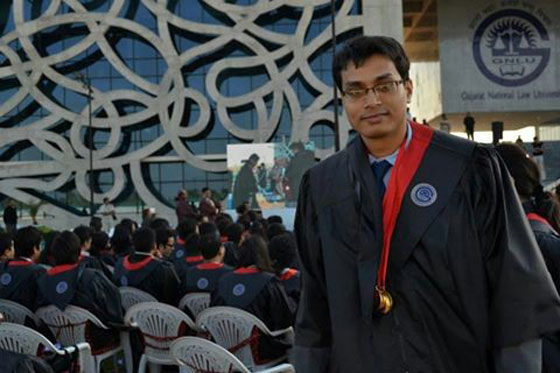
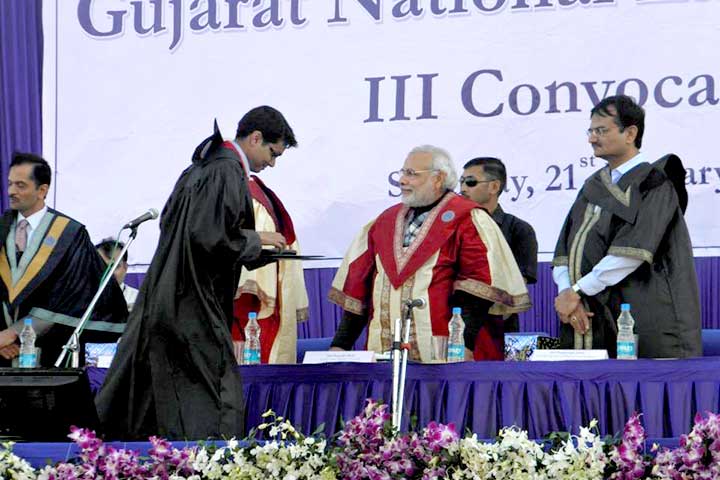
    prashant-m5Prashant Mishra graduated from the Gujarat National Law University in 2011, after which, he spent a year working at Universal Legal. However, he decided to quit his comfortable lifestyle instead and pursue the UPSC. After two years of training, he scored the 64th rank in the All India Civil Services Examination, 2013. We have taken this opportunity to ask him about:

    • His experience as a law student at the Gujarat National Law University.
    • His time as an employee at Universal Legal.
    • Circumstances that prompted him to give up his secure job and pursue the UPSC instead.
    • Tips on clearing one of the toughest examinations in the country.


    Tell us a bit about yourself as an introduction. Do you come from a family of lawyers?

    Hi! I am Prashant. I come from a middle class family. My father is a government servant and my mother is a home maker. I did my schooling from Patna and went on to join GNLU after that. I do not come from a family of lawyers. I am the first lawyer from my family.


    What got you into legal studies? How did you get through to GNLU? Was it all planned or something that just happened by chance?

    It was in class tenth that I was introduced to law by my father. I did some basic internet research about law schools and decided to pursue law after the twelfth. I appeared in entrance tests for almost all law schools and got through to GNLU (3rd Rank) and HNLU (5th Rank). So, yes it was all well planned out and with quite a bit of preparation.


    prashant-m3

    Please share some of the memorable experiences from your GNLU days. What made your college life exciting? What were the various activities you partook of?

    I enjoyed every bit of my stay in GNLU. I partook of various moots, conferences, etc. Hostel life was real fun and the fact that we lived in a campus which was in the heart of Gandhinagar made our lives really easy as everything was accessible.

    I remember our group ‘addas’ with lots of dear friends. There are so many memorable moments; it’s difficult to pick one out.


    What were your major interests as a student of law? Did any specific legal subject interest you more than others?

    I liked legal studies a lot. It never got me overburdened with lots of academic work. Unlike science or humanities, corporate laws, arbitration and jurisprudence were the kind of subjectsthat I knew would interest me.


    You were awarded four gold medals on graduation, which is a goal for many students. Please share some tips on scoring well.

    All the four gold medals which I was awarded were not a result of meticulous or competitive planning. I got those medals in the subjects that I loved to read (quite the subjects mentioned earlier).

    I would suggest that students should enjoy what they read, instead of studying simply for the sake of passing; also one shouldn’t study simply with the intention of becoming the topper.

    It’s important to study at one’s own pace; recognise subjects which are your favourites.

    I was also lucky to have a friend who used to make wonderful notes and more importantly, share all of those notes with me before the exams.


    You were also the Managing Editor of The GNLU Law Review. How was your experience as the Managing Editor of such an academic journal? What did you get to learn from this experience?

    Being a part of TGLR was a wonderful experience. I had the duty of reviewing articles of my peers. I came across some extremely well written pieces which helped me to learn and emulate the art of writing.

    Along with learning teamwork and multi-tasking, I also learnt how to refuse people politely.


    Almost all your internships were at top-notch law firms. Were you expecting to join a law firm even as a student or did these just happen on the go?

    As a matter of fact, I hardly thought about civil service during law school. I was interested in corporate laws and I was also pursuing the Company Secretary course, so that was what I expectatedto do and also, it made perfect sense for me to join a law firm. I used to plan my internships and enjoy the experiences that came along with them.


    prashant-m1

    After graduating from GNLU you had worked at Universal Legal for almost a year. How did the appointment take place? How helpful do you think CGPA is when it comes to getting recruited?

    I applied to UL on my own and got recruited after thorough interviews with them.

    I don’t think law firms use CGPA as a benchmark anymore to select a group of prospective employees.

    It is the interview and substance in the student which actually makes the difference.


    How difficult would you say it is for freshers to get recruited in law firms now,given the increased number of law students graduating every year?

    I do not agree with the proposition that with more number of law students graduating, there shall be an increased difficulty in finding jobs. There are plenty of opportunities for good people in the legal field.


    How was your work environment at Universal Legal? Could you maintain a proper work/life balance? What prompted you to quit it in August 2012?

    The work environment at UL was pretty balanced. I never missed any deadlines and the work pressure was quite sustainable and reasonable. Even as a fresher, I could directly interact with clients which helped in creating a lot of confidence in myself.

    Time was still the luxury that I enjoyed the most and as compared to other law firms, it was quite different.

    I decided to quit because I realised that the work was settling into a predictable pattern and that life had stopped testing my limits.


    Leaving a comfort zone with a secured lifestyle to study and prepare for the UPSC must have been quite decisive on your part. What made you want to study for the UPSC?

    It wasn’t about leaving a comfort zone. I never considered studying to be a difficult task, and most importantly I had all the support I needed from my parents. So, it was not that difficult to decide on studying for the UPSC.

    I also never thought I would have come along this far. At the outset, the idea was to take a whole hearted attempt and give it my best. And in any case I was a lawyer, I had my legal career to bank upon.


    You came to Delhi for your Civil Services preparations. Were you looking for good Civil Service Coaching institutions? Why Delhi and why not your hometown Patna?

    Delhi has a lot of coaching institutes which provide professional guidance. Also, accessing study materials was never a problem for me.

    In any case, after being accustomed to staying away from home for 6 years, I would not have returned to Patna.


    How valuable do you think coaching institutions can be for UPSC preparation?

    Some of the coaching institutes are really good. They provide you with a platform which you can quickly build on. However, it is not indispensable and with proper guidance, one can clear without taking any coaching.


    You prepared for the UPSC for almost two years. What was the routine you followed everyday throughout these years?How did these two years work out for you?

    I did not follow any set routine. At least that was the whole plan – to stay away from routine. Initially, I did not study much. With exams approaching, the study hours automatically increased. These two years went in a jiffy. At times you tend to get bored, you feel like your competitors are taking great strides, while you are stagnated. However, now I can say that it was all worth it.


    It invariably requires huge mental strength and focus to pursue one goal single-mindedly. What is your experience preparing for the UPSC?

    As has been rightly pointed out by you, the examination process is a long drawn affair and it takes minimum one year for it to get over. In retrospect, I think having a strong will-power and motivation is the key to maintain your sanity.


    What did you do to keep yourself abreast of all domestic and international current affairs? How did you study for static GK?

    For domestic and international current affairs I solely relied on The Hindu, and I used to  religiously read it every day. The current exam pattern of UPSC has very little reliance on Static GK.

    I also subscribed to Yojana, Kurukshetra and Frontline apart from my regular reading of standard text books.


    Lakhs of people attempt the UPSC prelims and only a thousand get selected for the main written exam. Which are the prime skills and expertise required to crack the prelims?

    Even though lakhs of people may attempt it, I think there are only 50,000 who take it seriously. Being a competitive exam, it is the relative knowledge that matters. You need to cover a vast syllabus in a limited period of time and retain and analyse a lot of information.


    Could you please share your views on the questions asked in the prelims?

    In the prelims, questions were asked mostly from Indian history, geography, polity, art & culture, science & tech and economics. I did not read on Science and Tech much, those you can say were difficult for me.


    What kind of posts have you opted for in the UPSC enrolment form? How do you want to serve the nation?

    My preferences for the civil services were:

    IAS – IFS – IPS – IRS in the decreasing order.

    I would like to do the kind of things that I always expected from the people who were already there. I would use my knowledge of law to play a major role in administration.

    Right now, I have not planned much. I intend to assimilate as much as I can and give my best in whatever capacity I am put into.


    What would be your message to law students and lawyers who aspire to become a civil servant?

    Purely from an examination perspective, I think law as an optional has a lot of potential. It helps a lot in civil service. I think it is not as difficult as people project and with intelligence, diligence and hard work, it is possible to clear the so called ‘mother of all exams’.