Tag: IBC

  • “It is one of the privileges of being a litigation counsel to have the opportunity to contribute directly to the evolution of the law through arguments addressed in court.” – Kumar Sudeep, Founder & Principal at Chambers of Kumar Sudeep.

    “It is one of the privileges of being a litigation counsel to have the opportunity to contribute directly to the evolution of the law through arguments addressed in court.” – Kumar Sudeep, Founder & Principal at Chambers of Kumar Sudeep.

    This interview has been published by Anshi Mudgal and The SuperLawyer Team
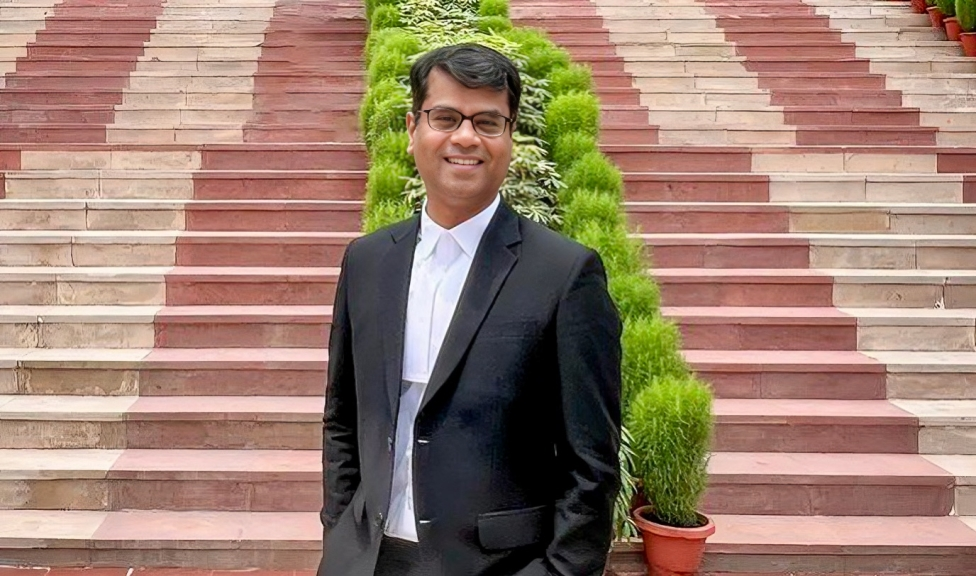
    Sir, your journey is truly inspiring. After completing a B.Tech in Computer Science & Engineering, you made a noteworthy shift to the field of law. What inspired this transition? 

    I finished schooling from Delhi Public School, R.K. Puram in 1999. At that point I had an offer for a B-Tech degree in Computer Science & Engineering from GGSIP University in New Delhi. Not being very clear about where I wanted to be in the long term, I decided to take up the offer and figure things out with work and life experience. Various opportunities came my way after graduation of which the most noteworthy was a startup called Montalvo Systems with offices in Bengaluru and Silicon Valley, California. This company was acquired by SUN Microsystems in 2008. The feeling of being a bird of passage in engineering came to a head for me at that point in time. I was not feeling very keen on repeating the technology cycle all over again. I joined Nvidia in Bengaluru and while working there started thinking from first principles about a long-term career best suited to my interests and inclinations. This process culminated in my returning to Delhi and joining Campus Law Centre, Delhi University for an LLB degree.  

    In school I rather enjoyed languages and the acts of reading, writing, and argumentation. It was a delightful and easy-going kind of engagement with the use of language; and  it never occurred to me that it could be the basis for any full-fledged career. It was like breathing. It is only after work experience and self-examination that I let these instincts guide me to law as my long-term career. The peace of mind that comes from working alongside, and not too far away from your natural inclinations, is priceless and an abundant source of mental energy. 

    How has your engineering background continued to inform or benefit your legal practice? How has your technical education influenced the way you approach complex cases before the Intellectual Property Division and Commercial Courts of the Delhi High Court?

    A technical degree in a subject like Computer Science or Electronics can enable one to appreciate and analyze a technical system in its entirety: from the top-level algorithm, to the software that implements the algorithm, through the hardware that executes the software, down to the circuits which constitute the hardware, and even the underlying semiconductor materials on which the circuits are etched.

    As a lawyer one can then pause at the required depth in this chain, depending upon the requirements of the case at hand, and synthesize and elucidate the matter in appropriate legal terms to assist the court in reaching a decision. Ultimately technology lawyering is a synthesis of the science of understanding and the art of communicating.

    Further, the general analytical rigour typically imbibed in the study of engineering and technology also seems to carry over naturally to law where precise and accurate analysis of legal and factual propositions is of value. 

    In the initial stages of your legal career, you must have encountered a variety of formative experiences. Could you share a few experiences that deepened your understanding of the law and shaped your approach?

    After LLB., I had the opportunity to work in the chambers of a very experienced and encouraging lawyer at the Tis Hazari courts. Thereafter I joined a law firm and came to the High Court of Delhi and practised primarily in IPR and media law related matters. In 2017 I moved out from the firm and helped set up a new law firm with some of my friends and colleagues from Bengaluru and Chennai —this was the genesis of my Supreme Court practice. I was appointed an Advocate-on-Record by the Supreme Court in 2020. Presently I work as an independent chamber counsel engaged by clients, lawyers, and law firms for their matters at the Supreme Court, High Court of Delhi, and the NCLT/NCLAT.

    Working in the trial courts as a fresh graduate, I recall, gave a feeling of both empowerment and emancipation: empowerment in terms of getting hands-on experience in practice, and emancipation in terms of a mindset shift that with due effort one could learn and practise any branch of the law in any forum available. I therefore usually recommend experiencing the trial courts to law students and lawyers starting out in the profession.

    Another formative experience was listening to other matters being argued in court while I waited for my own matter to be called. This was an easily accessible and enriching source of learning, and it improved my approach to the drafting of pleadings (it was sobering to see experienced lawyers sometimes being put on the spot by the judge for not having impleaded necessary parties, or not having pleaded the cause of action properly, jurisdiction etc.). It also taught me about speaking more, speaking less, and speaking to the point in court.  I still like to listen to the back-and-forth between the bench and the bar while waiting for my matters. 

    What motivated you to take the leap and establish your own legal practice? What were some of the significant challenges you encountered while building your Supreme Court practice, and how did your long-term vision help you navigate the journey particularly leading up to becoming an Advocate-on-Record?

    It was clear to me during LLB. that I wanted to have an independent chamber practice in due course. I was fortunate in getting the work experience and the work opportunities (which sometimes came through sheer happenstance) that enabled me to eventually graduate, as it were, into chamber practice. 

    It also helps to keep in touch with colleagues from the various High Courts who may call upon one for assistance with their appeals to the Supreme Court. Practising in New Delhi provides one the opportunity of being of service to lawyer colleagues from across the country.

    As a salutary reminder of the role of time and chance, along with human effort, I have this quote from Ecclesiastes written in my personal notebook of quotations:

     “I returned, and saw under the sun, that the race is not to the swift, nor the battle to the strong, neither yet bread to the wise, nor yet riches to men of understanding, nor yet favour to men of skill; but time and chance happeneth to them all.” 

    On a lighter note, some practice of writing with pen on paper helps in surviving the Advocate-on-Record examination. I had numb fingers by the end of each three-hours long paper!

     Which are some of the areas of law where you have had an opportunity to make a contribution to the evolution of jurisprudence through the matters you have handled so far?

    My practice has been primarily in commercial litigation, involving: appeals to the Supreme Court from the various High Courts; suits and petitions before the IP Division and the Commercial division of the High Court of Delhi; IBC and Company law matters before the NCLT/NCLAT (New Delhi).

    Accordingly, some of the reported judgements that come to mind also pertain to these areas of law.

    The High Court of Delhi decided a trademark matter where interpretation of the prior-use defence under S.34 of the Trade Marks Act, 1999 was at issue. The court explained the operation of S.34 and laid down elaborate tests for the applicability of the section in trademark disputes.

    In another commercial suit, the High Court of Delhi elaborated the law on the intersection of a counter-claim under the Civil Procedure Code, 1908 with the provision for moratorium under S.14 of the  Insolvency & Bankruptcy Code, 2016. 

    The Supreme Court in an appeal from NCLAT, New Delhi under the Insolvency & Bankruptcy Code, 2016 clarified the law that when a large number of invoices are unpaid by the corporate-debtor, and some of these invoices are older than three years, then the whole claim under S.9 cannot be dismissed as time-barred so long as the invoices that are within limitation together constitute the threshold amount for initiating insolvency resolution.

    A matter, somewhat atypical to my usual practice, was recently decided by the Supreme Court. The matter pertained to retrospective appointment of candidates as medical officers in the State of Karnataka. The court dismissed the appeal filed by the State of Karnataka against such retrospective appointments. I had the opportunity to address arguments as Advocate-on-Record and lead counsel for the respondent.

    There are various ongoing matters where interesting points of law are at issue, and where I am looking forward to the eventual pronouncements. It is one of the privileges of being a litigation counsel to have the opportunity to contribute directly to the evolution of the law through arguments addressed in court.

    What advice would you offer to budding lawyers, especially those looking to transition into the legal field from other professions? Are there specific resources or skills you would recommend they focus on to successfully make this shift?

    Law has traditionally been open to and accepting of graduates from many fields through the three-year LLB. courses. This is reflective of the importance that the field of law has placed upon different streams of knowledge and experience.

     It was only after the introduction of five-year integrated LLB. degrees that interested students had the opportunity to join a law college directly after school. I understand that one of the most reputable of such colleges offering five-year courses now also offers a three-year LLB. course open to graduates from various fields. This seems to me to mark the coming of a full circle in legal education. 

    The decision to transition into law ultimately is a personal decision driven by the individual’s aspirations and motivations. A thorough self-examination is necessary to determine these motivations and aspirations. As the Oracle of Delphi says: Know Thyself.

    In terms of studying the law and then practising it, I only remind the interested of the three-step classical formula which, in my subjective opinion, leads to good outcomes: 1) attentive reading, 2) careful reasoning, and 3) lucid communication —both written and oral.

    Litigation can be mentally and emotionally taxing. How has your long-standing involvement in martial arts, particularly its focus on discipline and mental resilience, helped you maintain balance, composure, and clarity under pressure in your professional life?

    I have trained actively and intensively in the martial arts from the age of eight. I hold a black-belt in Karate, and used to teach pro bono in self-defence workshops during halcyon undergraduate days, and also later, when finding free time used to be easier. More than delivering blows it is a particular kind of mental resilience that comes from the practice of martial arts that I encourage people to explore. I have personally found it beneficial in many aspects of life.

    Sports generally seem to have a good effect on building discipline and mental resilience. Hobbies too are a great source of engagement, entertainment, and the occasional succour when circumstances may seem too much. In due course everything passes, and it is largely about staying busy and positive in the meantime! 

    Get in touch with Kumar Sudeep –

  • “Law has always intrigued me because of its power to shape businesses, resolve disputes, and create order in an otherwise complex world.” – Ishaan Duggal, Associate Partner at HSA Advocates.

    “Law has always intrigued me because of its power to shape businesses, resolve disputes, and create order in an otherwise complex world.” – Ishaan Duggal, Associate Partner at HSA Advocates.

    This interview has been published by Anshi Mudgal and The SuperLawyer Team

    What initially inspired you to pursue a career in law?

    Law has always intrigued me because of its power to shape businesses, resolve disputes, and create order in an otherwise complex world. While I did not have a predetermined path toward law, I was drawn to its logical reasoning, problem-solving, and impact on society. As I began to explore the legal field, I was drawn to the idea of working within a law firm environment, where I could help clients navigate complex legal challenges, whether in business, litigation, or personal matters. The opportunity to collaborate with skilled professionals and offer practical, strategic solutions to clients was something that truly inspired me. Ultimately, I saw a career in law as a way to apply my skills in critical thinking and problem-solving to advocate for clients and create lasting, positive outcomes. Over time, I developed a keen interest in commercial and financial laws, which eventually led me to specialize in insolvency and restructuring.

    What motivated you to pursue an LLM (Professional) in Banking and Financial Studies from NLU Delhi?

    After completing my law degree and practicing for a few years, I understood that it is crucial for legal professionals to stay ahead of the curve, and hence I wanted to deepen my understanding of banking, securities, insolvency and investment laws. The LLM (Pro.) in Banking and Financial Studies at NLU Delhi provided a strong foundation in areas like banking and finance, securities and investment laws, arbitration, insolvency and financial restructuring—topics that are highly relevant in today’s economic environment. This specialization has been instrumental in my practice, particularly where financial acumen is as critical as legal expertise.

    What were some key learning experiences in the early years of your career?

    The initial years of practice were a mix of excitement and steep learning curves. I quickly realized the importance of building strong client relationships. At first, I focused heavily on legal research and analysis, but I learned that a successful practice also requires understanding clients’ needs, building trust, and communicating complex legal issues in a way that is clear and actionable for them. Another key experience was learning to manage multiple cases and deadlines simultaneously while maintaining attention to detail. I also had the opportunity to work closely with senior attorneys, where I learned the value of mentorship, strategic thinking, and how to approach complex legal problems creatively. It was through these experiences that I developed a deeper understanding of how to balance legal expertise with client service, and how to work effectively as part of a team in a fast-paced law firm environment. 

    As far as my practice area is concerned, one of the most valuable experiences was understanding the practical application of insolvency laws, especially how different stakeholders—creditors, resolution professionals, and debtors—navigate the process.
    One key moment that stayed with me was working on a case where a corporate debtor’s revival depended on strategic negotiation rather than just legal arguments. This reinforced my belief that law is not just about statutes but also about commercial awareness and strategic thinking.

    What are the key challenges in insolvency proceedings in the Renewable Energy and Automobile sectors?

    Both industries present unique challenges. In the renewable energy sector, insolvency cases often involve long-term power purchase agreements (PPAs), regulatory approvals, and government policies, which can complicate resolution. In contrast, the automobile industry faces issues like supply chain disruptions and asset-heavy structures, making liquidation complex.
    One of the biggest challenges is finding resolution applicants who see long-term value in distressed assets. In such cases, we work closely with financial institutions and potential investors to structure resolution plans that align with industry-specific constraints.

    What was the primary legal issue in the ARCIL vs Bishal Jaiswal judgment, and what impact did it have on insolvency law?

    The Hon’ble Supreme Court vide judgment dated April 15, 2021 in the matter of Asset Reconstruction Company (India) Ltd v. Bishal Jaiswal & Anr. decided a crucial question of law pertaining to whether entries in the Balance Sheet would amount to an acknowledgment of debt for the purpose of extending the period of limitation as provided under Section 18 of Limitation Act, 1963 (Limitation Act) as far as the IBC is concerned.  

    In this landmark judgment which is undoubtedly significant to all stakeholders under the Insolvency and Bankruptcy Code, 2016 (IBC), the Apex Court took cognizance of the fact that although the filing of a Balance Sheet is a statutory requirement as per the provisions of the Companies Act, 2013, however, doing the same can amount to an acknowledgment of debt depending on the facts of the particular case as to whether an entry made in a Balance Sheet qua any particular creditor is unequivocal or has been entered into with caveats. These caveats could be in the form of notes to accounts or other qualifications made in the Balance Sheets.

    This judgment also set aside the majority decision of the Hon’ble National Company Law Appellate Tribunal (NCLAT) in the matter of V. Padmakumar v. Stressed Assets Stabilisation Fund wherein the majority opinion of the five-member bench was that entries in Balance Sheets would not amount to an acknowledgment of debt to extend limitation under Section 18 of the Limitation Act.

    In addition to the above, the Hon’ble Supreme Court relied upon its decisions in Sesh Nath Singh & Anr v. Baidyabati Sheoraphuli Co-operative Bank Ltd & Anr. and Laxmi Pat Surana v. Union Bank of India & Anr8 and observed that it is not possible to accede to the arguments that Section 18 of the Limitation Act cannot be made applicable to proceedings under the IBC.

    What advice would you offer to aspiring lawyers?

    • Hone your research and drafting skills, as the best arguments stem from well-researched positions.
    • Understand the commercial impact of legal proceedings—clients seek solutions, not just legal opinions.
    • Develop a strong foundation in commercial and financial laws, as they are critical for corporate litigation.
    • Stay patient and persistent—the legal profession demands continuous learning, adaptability, and strategic thinking.

    How do you maintain a work-life balance in a demanding legal career?

    Balancing work and personal life in the legal profession can be challenging, but I make a conscious effort to manage it effectively. A few strategies that work for me include:

    • Prioritizing tasks and setting clear timelines for completing them.
    • Taking short breaks and staying engaged in non-legal activities to maintain perspective.
    • Most importantly, understanding that while work is demanding, personal well-being is equally important for long-term success in this profession.

    Additionally, I’ve learned that there are certain periods, especially during high-stakes cases, when work demands more attention, and I adjust by being more strategic about my personal commitments during those times. The key is knowing that it’s a cycle—some weeks will be more intense than others, but I always make time to recharge when I can. In the end, it’s about being proactive in managing my time and knowing when to push and when to step back.

    Get in touch with Ishaan Duggal –

  • “For young professionals aspiring to establish a career in commercial litigation and high-stakes legal matters, my foremost advice would be to develop a strong foundation in key legal areas and cultivate the appropriate mindset to navigate the complexities of this profession.” – Pranav Gupta, Founder of PG Law Offices.

    “For young professionals aspiring to establish a career in commercial litigation and high-stakes legal matters, my foremost advice would be to develop a strong foundation in key legal areas and cultivate the appropriate mindset to navigate the complexities of this profession.” – Pranav Gupta, Founder of PG Law Offices.

    This interview has been published by Anshi Mudgal and The SuperLawyer Team

    With your remarkable expertise across multiple areas of law, including Insolvency & Bankruptcy Code, White Collar Crimes, and Real Estate Laws, what initially inspired you to pursue a career in law? Looking back, could you also share how your internship experiences and time in law school influenced and shaped your decision to delve deeply into these complex legal fields?

    My inspiration to pursue a career in law stems from a deep-seated passion for justice and the dynamic nature of legal practice. However, my journey into the intricate fields of Insolvency & Bankruptcy, White Collar Crimes, and Real Estate Laws has been profoundly shaped by the remarkable mentors and experiences I have had along the way.

    I have been fortunate to have Mr Sumant Batra as my guru, under whose guidance I had the privilege of working at Kesar Das & Associates. Learning the nuances of the Insolvency and Bankruptcy Code under his tutelage was a transformative experience, reinforcing my commitment to mastering this ever-evolving field. His intellectual acumen and visionary approach continue to inspire me.

    Additionally, Senior Advocate Mr Abhimanyu Bhandari has been a role model for me, and I greatly admire his exceptional legal acumen and courtroom presence. The invaluable guidance of Mr Pulkit Deora & Mr Aditya Shankar Prasad has also played a pivotal role in my professional growth, particularly in navigating the complexities of IBC.

    My formative years in law school were further enriched by exceptional internship experiences under some of the finest legal minds in the country. I had the privilege of working under Senior Advocates such as Mr Salman Khurshid, Mr KTS Tulsi, and Mr Vivek Tankha, among others. Their mentorship not only honed my legal skills but also instilled in me the discipline, diligence, and perseverance required to excel in this profession. Their unwavering commitment to the law has always motivated me to strive for excellence.

    Looking back, these experiences have not only shaped my legal career but have also reinforced my belief that law is not merely a profession but a lifelong pursuit of knowledge, advocacy, and justice. I remain committed to contributing meaningfully to the legal fraternity, continuously evolving with the ever-changing landscape of law.

    During the early stages of your career, as you worked with various prominent law firms, what key experiences helped refine your understanding of specialized areas like Intellectual Property, Insolvency & Bankruptcy, and other subjects? How did these formative years contribute to honing your skills and preparing you to tackle high-profile cases in these areas?

    During the early stages of my career, I was privileged to work with some of the most esteemed legal professionals, and these experiences played a pivotal role in refining my understanding of specialised areas such as Intellectual Property and Insolvency & Bankruptcy.

    My interest in Intellectual Property law was sparked during my time at the chamber of Mr Salman Khurshid, where I had the distinct opportunity to work on a personal legal matter of his. This exposure provided me with invaluable insights into the intricate nature of IPR disputes and their strategic nuances. I was particularly fortunate to have the guidance of his associates, including Mr Aadil Singh Boparai, former Additional Advocate General of the State of Punjab, who ensured that I remained actively engaged in complex IPR matters. Their mentorship deepened my appreciation for the field and solidified my interest in intellectual property rights.

    Similarly, my passion for Insolvency & Bankruptcy law developed during my tenure at IVY Law Offices. It was there that I had the privilege of briefing and observing stalwarts such as Mr Abhimanyu Bhandari and Mr Sumant Batra on IBC matters concerning prominent real estate giants. This first-hand exposure to high-stakes insolvency proceedings not only enhanced my technical knowledge but also sharpened my strategic thinking and advocacy skills in this domain.

    These formative years were instrumental in shaping my legal acumen, allowing me to develop a structured, analytical approach to handling complex cases. They provided me with a strong foundation, preparing me to navigate high-profile matters with confidence and precision. Looking back, these experiences have not only influenced my career trajectory but have also reinforced my commitment to excellence in these specialised areas of law.

    After working with esteemed law firms, what motivated you to establish your own practice? Were there any significant hurdles or challenges that you faced while setting up your firm, and how did you overcome them? Additionally, what was your vision behind taking this significant step in your career?

    From the very outset of my legal career, I harboured a strong desire to work for myself, but I was conscious that before taking such a step, I needed to gain a thorough understanding of the law in specific areas. My time with esteemed law firms provided me with invaluable exposure, but I always knew that establishing my own independent practice would allow me to shape my professional journey in a way that aligned with my aspirations.

    One of my foremost motivations for starting my own practice was my ambition to establish myself as an arguing counsel. I believed that stepping into independent practice was the ideal way to hone my advocacy skills and take on more significant litigation roles. Throughout this journey, I have been fortunate to have the unwavering support of my seniors, including Mr Aaditya Shankar Prasad, and my loved ones, who have always encouraged me during challenging times.

    Of course, the decision to leave a well-salaried job to venture into independent practice was not an easy one. The financial uncertainty that comes with such a transition is daunting, but I was fortunate to have a few clients from my very first job, which provided me with a foundation to build upon. Instead of being deterred by the challenges, I remained focused on specific areas of law—particularly Insolvency & Bankruptcy and Real Estate disputes—that would allow me to generate work and grow my practice strategically.

    My vision has always been clear—to establish myself as one of the finest litigation lawyers in the fields of IBC and Real Estate disputes. I am committed to continuous learning, refining my advocacy, and making a meaningful contribution to these specialised areas of law. The journey so far has been demanding yet deeply fulfilling, and I look forward to further strengthening my expertise and reputation in the years to come.

    Your extensive expertise in Insolvency and Bankruptcy (IBC), particularly in cases involving companies such as Earthcon Universal Infratech and Unity Group, UNIBERA CIRP,  and other CIRP cases have been widely recognized. From your experience, what are the most common challenges that businesses and creditors face in these proceedings? How do you adapt your approach to each unique case to ensure the best possible outcome for your clients?

    My experience in handling Corporate Insolvency Resolution Processes (CIRP) for companies such as Earthcon Universal Infratech, Unity Group, UNIBERA CIRP, and several other real estate insolvency cases has provided me with deep insights into the challenges faced by various stakeholders, particularly creditors.

    In real estate insolvencies, homebuyers and operational creditors often emerge as the primary victims of the litigation process. The insolvency framework, both legislatively and judicially, has traditionally prioritised financial creditors, leaving operational creditors in a precarious position. One of the most pressing challenges they face is their exclusion from the Committee of Creditors (CoC), which consists predominantly of financial creditors. This exclusion severely limits their ability to influence resolution plans, often resulting in minimal or, at times, no recoveries at all. The disparity in treatment has led to persistent concerns regarding the fairness of the insolvency resolution process and calls for reforms to ensure a more equitable distribution of assets among all stakeholders.

    Each case presents its own set of complexities, and my approach is always tailored to achieve the best possible outcome for my clients. For operational creditors, the key lies in strategically asserting their rights within the existing legal framework while pushing for a more balanced interpretation of insolvency laws. This often involves challenging unfair treatment before tribunals and courts to ensure that their interests are not completely disregarded. For homebuyers, the focus remains on maximising recoveries through structured legal strategies and advocating for resolutions that safeguard their investments.

    Navigating insolvency proceedings requires a combination of legal expertise, strategic foresight, and a deep understanding of financial intricacies. My goal is always to bridge the gap between legal provisions and practical realities, ensuring that my clients—whether operational creditors, homebuyers, or other stakeholders—receive the strongest possible representation to protect their interests in an otherwise complex and often unfavourable system.

    You have handled several high-profile money laundering cases before the PMLA. Could you share the most challenging white-collar crime case you’ve dealt with and how you navigated the intricate legal challenges involved? What strategies did you employ to ensure a successful defense?

    As a legal practitioner handling complex white-collar crime cases under the Prevention of Money Laundering Act (PMLA), confidentiality and discretion are paramount. While I cannot disclose specific details due to the sensitive nature of these matters, I can broadly share that I have worked on several high-profile cases, including a widely publicised airline scam, two major bank fraud cases, real estate-related laundering matters, and a case involving a prominent political figure who was a former Chief Minister of a state.

    Each of these cases presented unique challenges, particularly due to the interplay of multiple statutes, cross-border transactions, voluminous financial records, and the rigorous scrutiny of enforcement agencies. Navigating such intricate legal complexities required not only a deep understanding of PMLA but also a strategic, multi-faceted defence approach.

    Under the guidance of my esteemed seniors, I gained invaluable experience in tackling these high-stakes matters. The key to an effective defence in PMLA cases often lies in meticulously dissecting financial trails, challenging procedural lapses, and ensuring that the fundamental rights of the accused are upheld throughout the proceedings. A proactive approach—combining thorough legal research, forensic financial analysis, and strategic litigation—was instrumental in mounting a strong defence.

    Beyond the legal technicalities, these cases reinforced the importance of adaptability and precision in white-collar crime litigation. Each matter provided a profound learning experience, further honing my expertise in handling intricate financial crime cases and reinforcing my commitment to delivering the highest standard of legal representation in this challenging domain.

    As a legal advisor to CREDAI and with your extensive experience in real estate advisory, what do you consider to be the most pressing legal challenges facing the real estate sector in India today? How do you foresee the sector evolving, especially in terms of legal reforms and challenges in the coming years?

    As a legal advisor to CREDAI and someone who has been deeply involved in real estate advisory and litigation, I have witnessed first-hand the evolving legal landscape of the sector. From the outset of my legal career, I was drawn to real estate law, and my expertise in this domain led to independent advisory roles for several prominent developers. Today, I have the privilege of advising over a dozen builders, guiding them through the intricate legal framework that governs this critical industry.

    The real estate sector in India faces a myriad of legal challenges, many of which stem from regulatory uncertainties, compliance burdens, and financial complexities. One of the most pressing issues is the interplay between multiple laws—such as the Insolvency and Bankruptcy Code (IBC), the Real Estate (Regulation and Development) Act (RERA), the Arbitration and Conciliation Act, the SARFAESI Act, the Negotiable Instruments Act, and various criminal laws—each of which plays a significant role in real estate disputes. Developers often find themselves entangled in prolonged litigation, particularly in insolvency matters, while homebuyers and other stakeholders struggle with delays in project delivery. Ensuring a balanced approach that protects consumer rights while providing a viable legal framework for developers remains a crucial challenge.

    In my role as an advisor to CREDAI, I have handled high-stakes cases worth billions of rupees, appearing before the Hon’ble High Court and the Supreme Court of India. These experiences have reinforced my belief that the real estate sector holds immense potential for growth, provided that both developers and policymakers work in tandem to create a more transparent and efficient regulatory environment. The government must take proactive steps to streamline approval processes, enhance dispute resolution mechanisms, and promote investment-friendly policies. At the same time, developers must ensure strict compliance with legal frameworks to build credibility and sustain long-term growth.

    Looking ahead, I foresee significant legal reforms aimed at strengthening investor confidence and addressing the structural bottlenecks that often hinder real estate development. Countries like the UAE, particularly Dubai, have demonstrated how robust legal frameworks and government support can drive infrastructure growth and urban development. India must follow a similar trajectory by fostering a legal environment that encourages both domestic and foreign investments while ensuring fair treatment of all stakeholders.

    For young lawyers, the real estate sector presents a strong foundation in the early years of practice. Given its interdisciplinary nature, I strongly recommend mastering key legal areas such as IBC, RERA, arbitration, SARFAESI, the NI Act, and criminal law, all of which are extensively utilised in real estate litigation. The sector is not only financially rewarding but also offers immense opportunities for those willing to navigate its complexities with diligence and expertise.

    With your extensive and diverse experience in the legal field, what advice would you offer to young professionals who aspire to build a successful career in commercial litigation and high-stakes legal matters? What skills or mindset do you believe are crucial for excelling in these challenging areas of law?

    For young professionals aspiring to establish a career in commercial litigation and high-stakes legal matters, my foremost advice would be to develop a strong foundation in key legal areas and cultivate the appropriate mindset to navigate the complexities of this profession. Building meaningful professional relationships, working diligently during law school, and dedicating oneself to internships are essential elements in laying the groundwork for a successful legal career. Engaging in continuous internships, contributing to legal scholarship through writing, and staying updated with the latest judicial developments are indispensable practices for any law student. These endeavours not only refine legal skills but also provide a competitive edge in an ever-evolving field.

    To young lawyers, including those at the early stages of their careers, I would offer similar guidance—work with diligence and identify an environment where your skills and aspirations align. Understanding one’s own strengths and capabilities is crucial, as is recognising when and where to apply them effectively. Strategic application of one’s abilities at the right stage can make a significant difference in professional growth and success.

    For those entering this field, I strongly recommend gaining proficiency in statutes that frequently intersect with commercial disputes, such as the Insolvency and Bankruptcy Code (IBC), the Real Estate (Regulation and Development) Act (RERA), the Arbitration and Conciliation Act, the SARFAESI Act, the Negotiable Instruments Act, and relevant provisions of criminal law. A thorough command of these statutes not only enhances legal acumen but also equips aspiring litigators with the requisite tools to handle complex financial and contractual disputes with confidence and precision.

    Furthermore, it is imperative to acknowledge that, in the legal profession, financial success should not be the primary objective. Instead, establishing a strong reputation through dedication, resilience, and unwavering commitment to the practice of law is of paramount importance. Recognition and professional success follow those who invest in their craft with sincerity and perseverance. It is through consistent effort, integrity, and expertise that one truly distinguishes oneself in the legal profession.

    Commercial litigation and high-stakes legal practice present immense opportunities for those willing to embrace the challenges. With the right mentorship, a commitment to continuous learning, and a strategic approach, young lawyers can carve a distinguished career in this demanding yet highly rewarding field. True success, recognition, and a lasting reputation are achieved not by seeking shortcuts but by consistently demonstrating excellence, ethical integrity, and an unwavering dedication to the law.

    Given the demanding nature of your legal career, balancing professional responsibilities with personal well-being can be challenging. How do you manage to strike a harmonious balance between your professional and personal life, and what strategies do you use to ensure both aspects thrive without compromising either?

    Balancing professional responsibilities with personal well-being is indeed a challenge in the legal profession, given its demanding nature. However, I firmly believe that a good lawyer must not only excel in their practice but also take care of every aspect of life to ensure long-term success and fulfilment.

    For me, achieving this balance starts with mindful time management and setting clear priorities. While my professional commitments require unwavering dedication, I make a conscious effort to nurture my personal life as well. Travelling is something I truly enjoy, as it allows me to disconnect from the routine, gain new perspectives, and return with renewed energy. Spending quality time with my parents and staying in touch with loved ones are also essential aspects of my life, as they provide emotional support and grounding amidst a busy schedule.

    Additionally, I have always been eager to meet new people and engage in social interactions, as I believe that meaningful conversations and diverse perspectives contribute immensely to both personal and professional growth. Beyond work, I ensure that I dedicate time to my physical well-being through regular exercise and sports, which help in maintaining focus, reducing stress, and enhancing overall productivity.

    Ultimately, I believe that a well-rounded approach to life is key to excelling in the legal profession. By staying connected with loved ones, pursuing interests beyond work, maintaining a healthy lifestyle, and embracing new experiences, I strive to ensure that both my professional and personal life thrive without compromise.

    Get in touch with Pranav Gupta –

  • “Laws are always changing and something new or the other is coming up always which will keep you on your toes irrespective of however many years you may have spent in this profession.” – Amrita Panda,  Advocate-on-Record at Supreme Court of India.

    “Laws are always changing and something new or the other is coming up always which will keep you on your toes irrespective of however many years you may have spent in this profession.” – Amrita Panda,  Advocate-on-Record at Supreme Court of India.

    This interview has been published by Anshi Mudgal and The SuperLawyer Team

    With over a decade of experience in the legal field, what initially inspired you to pursue a career in law? How did your time at National University of Juridical Sciences, Kolkata, influence your understanding of the law and shape your career path?

    In school I used to love reading Perry Mason and John Grisham. Perry Mason navigating through difficult witnesses with elan and convincing the jury of the innocence of his client caught the fancy of a dreamy eyed teenager, and thus, with no family background in the subject I went to write the NUJS entrance exam. In college I actively participated in tons of moot court competitions and the adrenaline rush I got every time I was bombarded with questions from moot court judges (who are never kind!), made me realise that litigation was my calling. Every single internship of mine was a litigation internship and quite a few with Mr. Satish L. Maneshinde, Sr. Adv. in Bombay who in my eyes, was and still is, the real life Perry Mason. 

    My time at NUJS widened my horizons and gave me an insight into perspectives about litigation in other parts of the country, and then also globally. Ranking as one of the top institutions for law, NUJS saw a lot of talent from across the country. Being exposed to such versatile talent taught me to become open-minded not just about the profession, but also about life in general. And then of course the exposure I received from participating in several moot court competitions and internships, ultimately helped me realise my calling and shaped my career path. 

    After completing your law degree, you chose to pursue an LL.M. in Commercial and International Dispute Settlement at Queen Mary University in London. What drew you to this specific area of specialization, and how did your experience there differ from studying in India? Can you share some memorable experiences from that time?

    From my second year in college, I started participating in leading moot court competitions in international commercial arbitration. So my exposure to the subject started as early as second year of college, and now about 60% of my practise is commercial arbitration. Arbitration is a relatively new subject, at least in India which has grown at a jet speed in the last decade. In India we learnt the foundation of the subject, its origin in India, etc, but I chose the course at Queen Mary, University of London since it offered a very practise-centric course. We were taught by leading practitioners in the field and about 80% of our evaluation was hands-on training by the doyens in the field globally. While participating in the Vis East Moot we had read articles authored by Prof. Julian Lew and Constantine Partasides who were demi gods in the field for me. So imagine being taught by them at Queen Mary where they would teach a topic through real life experiences and anecdotes. My time at Queen Mary gave me the assurance I needed to remain in practise. 

    What motivated you to start your own practice, and what were the key challenges you encountered in those early stages? How did those formative experiences help shape the direction of your career? Additionally, how has your role as an AOR influenced your professional journey?

    Being a first generation lawyer, litigation was of course no cake walk, and that too in Delhi where I started in 2012, in a city that was absolutely new to me. I was fortunate to be mentored by Mr. Rajshekhar Rao, Sr. Adv. during my initial days in Delhi. After my time in his chamber, Debesh, my husband, pushed to start my own practise. With his support and encouragement, I decided to take the plunge, and since then I have not looked back. Setting up a practise in Delhi has been an uphill task, but I am blessed with very good seniors and mentors who have always looked out for me. I have also had very supportive clients who have been the best reference for me, and slowly yet steadily I managed to establish a very very tiny foothold in this city. 

    Becoming an AoR in 2022 was a good decision. I feel the AoR badge opens up more avenues, especially as a first-generation lawyer. You become acceptable and eligible for certain empanelments as an AoR and in Supreme Court, as young counsel, if you are arguing your own brief, judges definitely acknowledge that. 

    When preparing for complex cases before the Supreme Court of India, what is your approach? What has been one of the most interesting cases you’ve handled, and how did you approach it especially if you could share insights that might benefit young readers?

    Usually by the time a matter reaches the Supreme Court, it has been through several rounds of litigation and all possible issues would have been thrashed multiple times in the Courts below. In such a scenario, identifying that one point which will convince the Supreme Court to interfere in the matter, is the real challenge. 

    In 2017 – 18 I was doing a Civil Appeal before the Hon’ble Supreme Court of India which was arising from the Satyam Scam issue and it involved interpretation of SEBI’s Insider Trading Regulations. This matter involved analysing the securities law aspect as well as connect criminal law aspects arising from the alleged transactions. This was probably one of the most challenging, yet rewarding matters in my career so far, not just because of the complexities involved in the matter, but also because final arguments before the Supreme Court took place in this matter happened in about 2 weeks after I had delivered my son. Because of the complexities involved, we were not in a position to take adjournments in the matter and having prepared the matter with so much labour with leading senior advocates over the last few months, I was reluctant to give up on this matter. 

    Ten days after closing final arguments in the matter, the judgment by the Supreme Court has probably been a victory in my career that I cherish the most purely because I know the kind of odds I faced not just dealing with the complex legal issues within a very short timeframe, but also dealing with my personal situation. This matter taught me that hard work is always rewarded irrespective of the odds, and if you have been dedicated with your work, the universe conspires in miraculous ways to fulfil your dreams. 

    You’ve handled numerous outstation cases across various High Courts and Tribunals throughout the country. What motivates you to take on cases beyond your local jurisdiction, and how would you describe your experience working in different courts?

    As a first generation lawyer, I always joke about the fact that I am ready to argue a matter even before a lamp-post! I was just delighted to get the opportunity to argue, the location of the Court mattered little to me. Being an outsider to Delhi, I started getting some briefs before the Calcutta High Court, Bombay High Court, etc in the initial days of my career. Gradually my practise developed in such a way that I have appeared before most high courts of the country, I have also appeared in several district courts and Tribunals outside Delhi. I feel out-station appearances gives you an insight into peculiar cultures of different courts and enriches you as a lawyer. Also, arguing matters before different high courts as a young counsel has given me recognition with judges who have later been transferred to other High Courts or the Supreme Court, and with counsels of those Courts who have thereafter referred matters to me in Delhi. 

    Given your trial experience before the Competition Commission of India, how do you see the role of the Competition Act in regulating business practices in India, and what challenges do various entities face in ensuring compliance with its provisions? 

    The Competition Commission of India has been playing a very active role in monitoring business enterprises in India irrespective of their size and spread of operations. In fact in 2023 the Hon’ble Supreme Court held that all Public Sector Undertakings also come within the purview of the Competition Act, 2002. In recent times CCI has passed ample orders and judgments in different cases in relation to the alleged anti-competitive conduct by Google. Upon coming to a finding of anti-competitive conduct, CCI is imposing large penalties on business giants like Meta. All of this I think goes on to infuse a sense of predictability and certainty in the market. With the regulator playing such a pro-active role it goes a long way in gaining the confidence of the business community and provides a secure and encouraging environment for smaller new and emerging business entities. 

    As an arbitrator appointed by the Delhi High Court, what has been one of the most challenging arbitration cases you’ve handled? In your opinion, how do you foresee the future of Alternative Dispute Resolution (ADR) evolving, particularly with the increasing integration of technology into the legal field?

    I have been most fortunate to have been appointed as an Arbitrator by some judges of the Hon’ble High Court of Delhi. Sometimes as counsel, we do not realise the challenging task that judges shoulder day in and day out, coming prepared for so many matters and then listen to both counsels contend their sides and then arrive at a conclusion which is sound in reasoning and backed up by authorities so as to minimise the prospect of a challenge. The role as an Arbitrator is a mini trailer of what the judges do everyday and it makes you realise how difficult and daunting it can be to sit in that chair. 

    As a counsel in the latest 7 judge bench matter of the Supreme Court in the field of arbitration, I was witness to the Hon’ble Supreme Court overturning its decision of the 5 judge bench in less than a year in In Re: Interplay between Arbitration Agreements under the Arbitration and Conciliation Act, 1996 and the Indian Stamp Act, 1899, and playing a pro-active role in upholding India on the global stage as the new hub for commercial arbitration. What was most stunning is that for the hearing which continued over a week, with voluminous submissions made by the stalwarts in the field, there was not a single paper in the courtroom. The room did not seem inundated with reams of paper which is what used to be the normal in every courtroom until even a few years back. All judges and counsels were relying on their respective devices and the matter continued seamlessly over a week. I think a silver lining at the end of Covid 19 has been the openness to technology which has surely made the legal fraternity more environment friendly. 

    Representing doctors in matters related to the constitutional validity of the West Bengal Clinical Establishments Act must have been a demanding experience. Could you elaborate on your approach to the case and the challenges you encountered while navigating the constitutional aspects of the matter?

    Considering that public health and medical profession as a field are adequately regulated by parliamentary legislations being an Entry under List 1 of the Constitution, this Act had been challenged on various grounds as being repugnant to parliamentary legislations and being violative of the Constitution. Being a daughter of a practising doctor, this matter was more of a personal matter for me. When a writ petition had been filed before the Hon’ble Supreme Court by the group of doctors, the Supreme Court sent the matter back to the High Court for the High Court to take a preliminary look at the constitutionality of the Act. Before Calcutta High Court the constitutional aspects were very well appreciated, the enactment much watered down and in fact, as on date in fact the Hon’ble High Court has passed several orders where the powers of the Regulatory Commission under the Act has been significantly watered down and several Orders and Advisories passed by that Commission are repeatedly quashed by the Hon’ble High Court on inter alia on grounds of being unconstitutional. 

    With your diverse roles as an AOR, Arbitrator, and counsel in high-stakes constitutional cases, what do you believe is the most important quality law students should develop to succeed in the legal profession? Additionally, can you recommend resources that would help them stay updated on the latest legal developments?

    I think the most important asset in litigation is patience. I have seen many talented legal minds quit the profession due to lack of patience. This profession is a slow burner, so you will always have a slow start. But if you have the patience and the family support to struggle through the initial few years, this profession is also very rewarding. I don’t think you can ever feel that you have reached your peak in the profession. Laws are always changing and something new or the other is coming up always which will keep you on your toes irrespective of however many years you may have spent in this profession. I keep joking that the Supreme Court is probably one place where you will find the fittest grey hair running around like teenagers all day. In my early years in the profession, I had the opportunity to assist Mr. Fali Nariman, Sr. Adv. in a few matters. The twinkle in his eyes every time we would find an argument to counter the other side was no different from a 5 year old who has just figured out all the pieces in his jigsaw puzzle. 

    One thing I always keep learning from the younger lawyers is the ease with which they embrace technology. I have benefitted hugely by gracing technology into my daily work life, but I can also say that it would have been impossible without the tutoring from my very able younger colleagues in the office. These days all resources are available online and now with AI coming in, soon legal research will probably become even easier than what it is now. But a word of caution for younger lawyers, to always verify content generated by AI. At least till now AI has not been able to replace the human excellence and inter-personal nature which I think is the bedrock of our profession. 

    Given the intense nature of your professional commitments, how do you manage to maintain a balance between your professional responsibilities and personal life?

    I don’t think it is possible to balance the two. I feel we are always juggling between professional responsibilities and personal life and struggling to ensure that the ball does not drop. At all points of time, you need to prioritise one over the other and make a decision which you can justify, at least to your conscience. As a mother to a 6 year old, I realise the importance of being present for my son. But what I am most grateful for is that he realises that his mother is a happier person, hence a happier mother (who he finds easier to mould!) if she has had a good day at work. Our profession allows us to take vacations at fairly regular intervals and luckily most of our vacations coincide with school holidays giving us ample opportunity to enjoy quality time with family. That is how we manage to keep the circus going! 

    Get in touch with Amrita Panda –

  • “There is no fixed formula and everyone may face their own challenges, however, hard work, perseverance and consistency are some of the key ingredients for everyone to succeed in the legal profession.” – Rohit Jolly, Partner at Hammurabi & Solomon Partners.

    “There is no fixed formula and everyone may face their own challenges, however, hard work, perseverance and consistency are some of the key ingredients for everyone to succeed in the legal profession.” – Rohit Jolly, Partner at Hammurabi & Solomon Partners.

    This interview has been published by Anshi Mudgal and The SuperLawyer Team

    With over a decade of experience across various areas of law, did you always see yourself pursuing a legal career, or were there specific events or influences that led you to choose this profession?

    I grew up in a family of lawyers and therefore, law seemed to be the automatic choice of profession to me from a young age. I was often privy to legal discussions at home, which involved interesting yet complex propositions which too ignited my interest in the field of law. Lastly, at a personal level, I find this profession fulfilling, as it involves helping people navigate difficult and challenging situations.

    Beginning your career as an associate at a law firm, what were some of the formative experiences that shaped your understanding of the law and sparked your interest in the field?

    In law school, we were taught the theoretical foundations of law, but when you enter the profession, you begin to understand how theory translates into real-world legal practice. As an associate at a law firm, I was exposed to the importance and intricacies of drafting and the practice of putting in all your effort for every brief in an attempt to achieve the perfect solution for the client. Law firms also provide you the exposure of working with the big clients and senior counsels on high stake matters right from a young age and teach you the art of dealing with pressure and deadlines. When the stakes are high, you automatically take more responsibility on the brief.

    Personally, apart from gaining the confidence to work under pressure and to meet the harshest deadlines, I learnt the importance of effective communication and attention to detail from the law firms that I worked with. Working closely under such great mentors, Mr. Mahesh Agarwal & Mr. Vijay Sondhi in my formative years and now with Ms. Shweta Bharti has offered invaluable learning opportunities as they provided insight into how they approach cases, their reasoning behind legal strategies, and showed how to think out of the box while navigating through complex legal issues. Their mentorship further ignited a passion for the intellectual rigor of law and gave confidence to tackle complex issues.

    Reflecting on your time as an Independent Litigation Counsel, can you highlight a pivotal learning moment or turning point that significantly influenced your approach to legal practice?

    After working in law firms for almost 9 years, the experience I gained working independently was completely different. Initially, it was quite tough as the nature and type of work that comes to you as in independent counsel is very different from the kind of work you are used to in a law firm. Further, in a law firm, you have a lot of support staff while as an independent counsel, even most of the clerical work is your responsibility. 

    Apart from learning the approach to working on a diverse range of matters, the most pivotal experience I learnt from independent practice was the ability to take complete ownership of the brief from managing client expectations to drafting, filing, getting the matter listed, arguing etc. 

    Coming to the turning point that significantly influenced my approach to legal practice, I learnt that eventually, what matters is the client’s ultimate goal. What we need to work towards is to give the client a practical and feasible solution to its problem, most times, the client is not looking to win a case or set a precedent. Therefore, the art is to achieve the client’s goal and it may not be relevant if you win or lose a case.

    In your representation of clients in the 2G spectrum case and matters related to the Prevention of Money Laundering Act (PMLA), what were the most challenging aspects, and how did you navigate those challenges?

    These cases involve complex legal issues that can be very challenging for any legal professional. These cases require an understanding of both substantive law and procedural nuances, as well as the ability to navigate intricate factual situations and government policies. Further, the intense public scrutiny in the 2G spectrum case created additional pressure on the lawyers. Hence, maintaining a clear communication with clients and stakeholders about the legal strategy, while also working closely with senior counsels to ensure these cases are handled effectively was a challenging task. Therefore, these cases reinforced the importance of attention to detail, strategic thinking, and a multidisciplinary approach to legal practice.

    What are the key legal obstacles that real estate companies face in consumer disputes, and how do you manage litigation across various forums such as the NCDRC and RERA?

    The Indian real estate sector operates within an intricate regulatory landscape that is fraught with inherent difficulties and delays. As seen first-hand, many times frivolous complaints are filed by such unscrupulous persons who are cognizant of these difficulties and delays and exploit them by alleging deficiencies in service, often citing delay in delivery of possession to exert undue pressure on developers and compel them to grant concessions or monetary compensation. As such, vindicating developers by demonstrating how delay in delivery of possession was beyond the control of the developer becomes the key obstacle. 

    To manage the litigation across diverse forums, the use of proper planning, proper use of technology, case management, and data storage play an important role. I have mentored my team to ensure that they possess the requisite skills to effectively represent clients before different forums and actively encourage my associates to appear in proceedings. Finally, I also try to formulize a proactive plan by maintaining daily and weekly schedules for task prioritization and time allocation for all court appearances so that the work is streamlined.

    In your current role, could you elaborate on your involvement in advising a multinational technology company on the implementation of data privacy laws within its Indian entities? What were the primary legal challenges in ensuring compliance with India’s data privacy regulations, particularly the Personal Data Protection Bill (PDPB)?

    The Digital Personal Data Protection Act, 2023 has cross-sectoral applicability and enjoys primacy over sectoral regulations in the event of any conflict. As such, to advise the company it was vital to identify whether the different types of data processed by the company qualify as “digital personal data” under the Act, the internal flow of such data within the company, and evaluate the data storage technology used by the company in order to design consent mechanisms, data principal right mechanisms, data breach mechanisms, and define data retention periods for different categories of data. 

    A significant challenge encountered during this engagement revolved around the provisions governing cross-border data transfers. As a multinational technology company, the seamless flow of data across international borders is critical for service delivery. Restrictions or prior approvals imposed on data transfers to specific jurisdictions can significantly impede operational efficiency. Furthermore, drafting a unified compliance framework that harmonizes the Act with international regulations such as the GDPR presented a considerable challenge, since varying data processing and security standards across jurisdictions can create conflicts and necessitate careful management to avoid non-compliance. 

    High-stakes cases must be incredibly demanding. How do you maintain a work-life balance, especially during intense periods of work and tight deadlines?

    As a lawyer, there cannot be a straightforward answer to this. This profession is very challenging, where you must burn the midnight oil and work on most of your weekends and sometimes you will feel there is no work-life balance. However, the key to managing this is setting clear priorities—both in terms of work tasks and personal time. I try and evaluate tasks based on urgency and importance, making sure I allocate time for essential activities while also recognizing when to delegate certain responsibilities. Secondly, effective collaboration with my team allows me to focus on high-priority tasks while ensuring that the workload is evenly distributed. Lastly, to maintain my mental sanity and make sure there is no burnout, I try and travel even if it is for a weekend to refuel and reenergize myself.

    What advice would you offer to young lawyers aiming to specialize in dispute resolution, particularly in areas like white-collar crime, commercial, and real estate disputes? Additionally, what resources do you rely on to stay informed about emerging legal trends?

    First of all, I still think I am a young lawyer. Having said that, I would strongly advise my younger colleagues to master legal research databases, practice drafting pleadings with precision and clarity, cultivate excellent communication and interpersonal skills, understand the intersection of law with finance and accounting since it is crucial for complex commercial disputes such as white-collar crimes, observe seasoned litigators in court to learn from their strategies and courtroom demeanour, participate in conferences and seminars to network with other professionals, and cultivate a strong work ethic to manage multiple tasks effectively.  There is no fixed formula and everyone may face their own challenges, however, hard work, perseverance and consistency are some of the key ingredients for everyone to succeed in this profession. 

    In order to stay informed about emerging legal trends, I rely on legal journals, real estate journals, corporate magazines, online news portals, and participate in continued legal education programs by professional organizations where I have memberships. 

    Get in touch with Rohit Jolly –

  • “I firmly believe that by embracing these two principles: maintaining patience during the foundational years and being open to diverse cases, young litigation lawyers can build a successful and fulfilling career in law.” – Amit A. Tungare, Managing Partner at Asahi Legal.

    “I firmly believe that by embracing these two principles: maintaining patience during the foundational years and being open to diverse cases, young litigation lawyers can build a successful and fulfilling career in law.” – Amit A. Tungare, Managing Partner at Asahi Legal.

    This interview has been published by Anshi Mudgal and The SuperLawyer Team

    You completed your Law degree while also pursuing a CS qualification. What inspired you to undertake both of these courses simultaneously and how has CS qualification helped you in your career?

    My interest in corporate law first sparked during my 12th standard commerce studies, specifically through the organization of commerce subject. But the real turning point came during my law school admission day at ILS Law College. While waiting in the long admission queue, a chance conversation with a fellow aspirant introduced me to the Company Secretary (CS) program and its potential to enhance a legal career. This serendipitous encounter proved to be life-changing.

    What made pursuing both qualifications simultaneously possible was the supportive environment at ILS Law College, which actively encouraged students to pursue additional professional qualifications. My hostel mates who were also pursuing their CS qualification became my support system and study partners. Their presence and mutual encouragement created an atmosphere of healthy competition and motivation. Looking back, I realize that the company you keep during your academic journey plays a crucial role in achieving your goals.

    The combination of these qualifications has proven invaluable in my litigation practice. I draw upon my CS knowledge almost daily while handling corporate cases. For instance, in one significant case, I had to cross-examine a company director regarding shareholder interests. My CS background provided me with deep insights into directorial duties and corporate compliance, enabling me to conduct a thorough and effective examination. In another case, I successfully defended an independent director by demonstrating that they weren’t involved in day-to-day operations, leveraging my understanding of corporate governance structures and directorial responsibilities.

    Today, I view both my law degree and CS qualification as equally vital to my career. They complement each other perfectly, providing me with a comprehensive understanding of both legal principles and corporate governance, which has significantly enhanced my effectiveness as a litigator.

    After enrolling as an advocate, how did your early career experiences help you navigate the challenges of becoming a prominent legal professional?

    After enrolling as an advocate, I made a strategic decision to first gain experience in a corporate legal environment before committing to litigation. This led me to join ESSAR’s legal and company secretarial department, where I simultaneously completed my mandatory 15-month company secretary articles. This dual experience proved invaluable, as it provided me insight into the workings of an in-house legal counsel while fulfilling my professional requirements. My time at ESSAR actually reinforced my original inclination toward litigation, with my senior colleagues strongly encouraging me to pursue this path despite its initial challenges.

    Following my stint at ESSAR, I began my litigation career under the mentorship of my father, Mr. Atul Tungare, who has established a respected practice in civil and criminal law at the Mumbai City Civil Courts. Working alongside him, I gained comprehensive exposure to both civil trials and criminal law. This apprenticeship was instrumental in teaching me the nuances of case management – from gathering client instructions and developing litigation strategies to representing clients from trial through appeal. Perhaps most significantly, working directly with clients from day one helped me understand their expectations and taught me an invaluable lesson: sometimes, the best service we can provide isn’t necessarily litigation, but rather counseling clients and helping them find alternative dispute resolution methods they might not have considered.

    What factors have motivated you to establish your own practice and what were the initial challenges you faced while establishing Asahi Legal?

    My journey as an independent practitioner has been deeply rewarding, particularly because it has allowed me to pursue a diverse range of legal matters without being constrained by conventional fee structures. This flexibility has enabled me to expand my expertise across multiple domains – from criminal and civil litigation to corporate law and cooperative societies.

    While I’ve thrived as an independent practitioner for the past decade, the decision to establish Asahi Legal stemmed from a desire to provide my existing clients – including corporate NBFCs, banks, and individuals – with comprehensive, tier-one legal services through a structured firm environment. In fact, the impetus to transition from an individual practice to a law firm came largely from my existing clients, who recognized that a formal firm structure would enhance the professional services they were already receiving.

    Looking back at the six months since establishing Asahi Legal, I realize this transition could have been made earlier. However, I’m gratified to see how the firm has evolved exactly as envisioned. With the invaluable support of my team and colleagues, we’re successfully meeting the needs of our growing clientele while maintaining the high standards of service that have always been central to my practice.

    You have significant expertise in handling cases under the Insolvency and Bankruptcy Code (IBC). Could you discuss one of the most challenging cases you’ve worked on in this field and the strategies your team employs to navigate the complexities of the IBC?

    One of my most challenging cases involved representing a Resolution Professional in the early days of the IBC, around 2016-17. The case centered on a resolution plan that had been approved by the Committee of Creditors but included several unusual requests – specifically, relief and concessions from prosecution by various government authorities.

    The primary challenge we faced was the relative novelty of the IBC at that time. With minimal precedent to draw upon – there were few reported judgments from either appellate benches or coordinate benches in other cities – we had to craft innovative legal strategies. This scarcity of case law required us to think creatively about how to present our arguments.

    Our breakthrough came when we decided to deeply examine the parliamentary debates that preceded the IBC’s implementation. These debates proved crucial in demonstrating Parliament’s true intent behind the legislation. Our key argument was that denying these concessions would effectively revert us to the previous Companies Act regime, where government dues took precedence over creditors’ claims – precisely the situation the IBC was designed to reform.

    Initially, we faced considerable skepticism from the bench, as courts were traditionally reluctant to grant such broad concessions. However, we successfully demonstrated how approving these reliefs aligned with the IBC’s core objectives of maximizing asset value and ensuring efficient resolution. We also emphasized the potential precedential value of this decision for similar cases across the country.

    Ultimately, the NCLT approved the resolution plan with all requested reliefs and concessions intact. This case was particularly significant for my team, as it later became a valuable reference point for similar matters we handled before the NCLT.

    This experience reinforced a crucial lesson in legal strategy: when dealing with novel legislation where precedents are scarce, parliamentary debates can serve as powerful tools to illuminate legislative intent. Sometimes, the most compelling arguments lie not in the letter of the law, but in understanding and articulating its underlying purpose.

    Given your experience with the Companies Act, how do you approach corporate disputes and regulatory matters, especially when dealing with large corporate entities? Could you share a case where your legal strategy resulted in a significant outcome for your client?

    In my legal practice, I maintain a fundamental principle: every client deserves equal dedication and professional expertise, regardless of whether they’re an individual from a modest background or a listed corporate entity. This approach has been crucial in building trust and delivering consistent results.

    My methodology for handling corporate disputes and regulatory matters follows a structured approach. First, I conduct a thorough analysis of each case’s merits and challenges. I believe in absolute transparency with clients from the outset. Before taking on any case, I ensure the client fully understands the potential outcomes, legal precedents, and applicable regulations. This upfront honesty serves two purposes: it allows clients to make informed decisions and enables me to proceed with complete ethical clarity.

    Let me share a particularly illustrative case. We handled an appeal for a corporate client where the stakes were significant. What made this case successful wasn’t just the favorable outcome, but our approach to it. Because we had established clear expectations with the client from the beginning, our team could focus entirely on the legal merits without the burden of managing unrealistic expectations. This strategic transparency allowed us to channel our entire energy into developing and executing a robust legal strategy.

    I’ve found that this approach – combining thorough preparation, transparent communication, and unwavering professional dedication – consistently leads to optimal results, whether we’re dealing with complex corporate disputes or regulatory challenges. It allows us to maintain both ethical integrity and peak performance throughout the litigation process.

    As an advocate with experience in both civil and criminal law, how do you balance representing clients across such different legal domains, and how do you stay updated with developments in each area?

    In my experience, civil and criminal law are more complementary than different. While there are distinct procedural aspects to master, having expertise in both areas has actually enhanced my ability to develop comprehensive litigation strategies for my clients. This dual perspective often allows me to identify innovative solutions that might not be apparent when viewing cases through a single lens.

    I often hear from law students who believe they must choose between civil and criminal practice. However, I strongly disagree with this perspective. As a litigation lawyer, having a thorough understanding of both areas is invaluable. A narrow focus on just one domain can potentially limit the solutions we can offer our clients, preventing them from achieving the best possible outcomes.

    As for staying current with legal developments, the digital age has made this task significantly more manageable. Our firm subscribes to several national legal publications, and I actively encourage our associates to make use of these resources. Staying informed about the latest precedents isn’t just good practice – it’s essential to effective advocacy. Missing a recent ruling relevant to a client’s case could significantly impact the outcome, regardless of how strong the underlying position might be.

    With the wealth of legal information now freely available online, there’s really no excuse for not staying current, whether you’re a seasoned practitioner or a newly qualified lawyer. I believe this commitment to continuous learning is fundamental to providing excellent client service and maintaining high professional standards.

    Having represented clients at some of the most prestigious forums in the country, what personal values and principles have guided your career, and how do you ensure that these values are reflected in the work done by Asahi Legal?

    When I began my litigation practice, my primary motivation wasn’t financial gain but rather the opportunity to gain diverse experience across various legal forums. I deliberately kept my fees minimal, just enough to cover costs, because I was driven by the chance to represent clients in different jurisdictions and forums across the country. I’m deeply grateful to my clients who trusted me with their cases, as these opportunities have been instrumental in building my practice.

    This fundamental value – prioritizing experience and growth over immediate financial rewards – is something I actively instill in every associate at Asahi Legal. We emphasize that regardless of a client’s size or the fee structure, each case presents a unique learning opportunity. As litigation lawyers, we believe that the chance to appear before a new forum or handle a novel type of case adds invaluable experience to our professional growth, something far more precious than immediate monetary compensation.

    This philosophy continues to guide our firm’s approach today. At Asahi Legal, we remain enthusiastic about taking on unusual or challenging cases, including matters in forums where we haven’t previously appeared. We view such opportunities as chances to expand our expertise while delivering favorable outcomes for our clients. This openness to new challenges, combined with our commitment to excellence, has been crucial in shaping both our firm’s culture and our success in the legal field.

    What advice would you give to young law students and aspiring lawyers who wish to excel in the field of law?

    Based on my experience, I believe patience is the most crucial attribute for young lawyers starting their careers in litigation. Whether you’re practicing independently or working under a senior lawyer, it typically takes 4-5 years to truly gain mastery over your field. These initial years can be challenging, but it’s essential to embrace this period with optimism because it fundamentally shapes your entire career trajectory.

    During this phase, you might notice your peers in corporate law or working as in-house counsel earning significantly higher compensation. However, maintaining faith in your chosen path is crucial. Once you successfully navigate this learning period, litigation becomes an incredibly rewarding career. Unlike more routine legal work, litigation offers the excitement of handling diverse cases daily, challenging you to think creatively and keeping you intellectually stimulated.

    Additionally, I strongly advise young litigation lawyers to diversify their case portfolio, even if some cases don’t offer substantial fees initially. Each case, regardless of size, provides valuable courtroom experience and opportunities to develop your advocacy skills. Often, these seemingly modest cases can lead to connections with larger clients and more lucrative opportunities. Therefore, I encourage young lawyers not to dismiss cases solely based on immediate financial returns, provided they cover basic costs.

    I firmly believe that by embracing these two principles – maintaining patience during the foundational years and being open to diverse cases – young litigation lawyers can build a successful and fulfilling career in law.

    Get in touch with Amit A. Tungare –

  • “The most important to excel in the legal field is to seek mentorship by connecting with experienced lawyers. Also, be open to changing your mind as you gain more experience” – Monika Bhatelia, Associate Partner at Singhania & Co LLP.

    “The most important to excel in the legal field is to seek mentorship by connecting with experienced lawyers. Also, be open to changing your mind as you gain more experience” – Monika Bhatelia, Associate Partner at Singhania & Co LLP.

    This interview has been published by Anshi Mudgal and The SuperLawyer Team

    Can you tell us about how you began your career in law and what led you to do law and specialize in commercial litigation, arbitration, and maritime law? Please allow us to walk through your journey.

    During my undergraduate law studies, I discovered a fascination with the legal aspects of business. An internship at a law firm provided invaluable practical experience, sparking a passion for advocating justice. As I explored various legal areas, my conviction grew. Commercial litigation, arbitration, and maritime law perfectly merged law and commerce, captivating me. The dynamic nature of commercial disputes and solving complex problems drew me in. Specializing in arbitration enabled efficient conflict resolution outside the courtroom, benefiting businesses. Maritime law’s international trade and unique challenges further solidified my interest. My journey toward specialization was driven by curiosity and a passion for justice. Working on diverse cases reinforced my dedication to honing skills in these fields.

    Maritime law is a unique area of practice. What drew you to admiralty and maritime matters, and what are some key insights you’ve gained from dealing with ship arrests, maritime liens, and international arbitration?   

    My fascination with admiralty and maritime law has been sparked by the intricate and global nature of this field. The convergence of law with international trade, shipping, and commerce presents distinctive challenges and opportunities. Through my involvement in ship arrests and maritime liens, I understood the critical role these legal mechanisms play in safeguarding the interests of creditors in a swift, high-stakes environment. Grasping the intricacies of jurisdiction and the interaction between various legal systems is essential, given that maritime cases often span multiple countries. 

    Given your extensive work with the Insolvency & Bankruptcy Code (IBC), what challenges have you encountered in insolvency matters? How do you think the IBC has transformed the legal landscape in India?  

    Let me tell you, working with the Insolvency & Bankruptcy Code can be quite a rollercoaster ride. One of the major challenges I’ve encountered is navigating through the complex legal framework and understanding all the intricate details of insolvency proceedings. The code is quite extensive and can be tricky to navigate, especially when it comes to interpreting certain provisions and their implications. It’s like diving into a maze sometimes, trying to figure out what steps to take next. There’s always pressure to meet tight deadlines and adhere to strict timelines laid out in the code, which can be stressful at times. 

    The Insolvency and Bankruptcy Code (IBC) has been a game-changer in India’s legal landscape by providing a more structured and efficient framework for dealing with insolvency cases. With the introduction of the IBC in 2016, companies now have a more streamlined process for resolving insolvency matters, which has significantly reduced the time taken to complete such proceedings. 

    The lBC has also brought about increased transparency and efficiency in insolvency proceedings, creating a more favourable environment for both creditors and debtors. Additionally, the IBC has encouraged a culture of accountability among businesses, as it mandates timely resolution of insolvency cases to prevent financial losses for creditors. Overall, the IBC has transformed the legal landscape by providing a faster and more effective mechanism for resolving insolvency cases efficiently.

    Your work involves representing cases in various courts, including the Bombay High Court, City Civil & Sessions Court, NCLT/NCLAT, and Family Court. How do you prepare differently for civil suits versus arbitration or family law matters?  

    Preparing for civil suits, arbitration, and family law matters requires tailored approaches due to their distinct legal frameworks and procedural requirements.

    When it comes to civil suits, my focus is on gathering comprehensive evidence, drafting detailed pleadings, and understanding the applicable laws and precedents. Court procedures, such as discovery and witness preparation, are crucial aspects that require meticulous attention. This often involves extensive research and documentation review to build a strong case.

    In the case of arbitration, the emphasis shifts towards confidentiality and efficiency. I prepare by thoroughly reviewing the arbitration agreement and focusing on procedural rules specific to the chosen institution. Developing persuasive arguments and preparing for a more informal setting are essential, as well as strategies for cross-examining witnesses.

    Family law matters involve emotions and relationships along with legalities so preparation may involve counselling clients about potential outcomes and helping them navigate complex personal dynamics. While documentation remains important, the approach often leans towards mediation and negotiation to resolve disputes amicably, with a focus on the best interests of any children involved.

    Although the core legal principles may overlap, the strategies and considerations for preparation differ significantly based on the context and desired outcomes. Each area of law requires a unique approach to ensure the best possible outcome for clients.

    As a visiting faculty and someone who frequently interacts with students and freshers entering the legal field, what are your thoughts on the current generation of aspiring lawyers? In your experience, what strengths do they bring to the profession, and in which areas do you think they need to improve or focus more on for their personal and professional development?  

    The current generation of aspiring lawyers is incredibly driven and passionate about making a difference in the legal field. They are eager to learn, and open to new methodologies, which can enhance efficiency in legal practice. Their familiarity with technology and innovative approaches to problem-solving brings impressive strengths to the profession. 

    I am impressed by their passion and dedication to the field, these students genuinely care about making a difference in society through their work. They are tech-savvy, well-informed, and have a strong sense of social justice, which is very encouraging to see. However, there are areas for improvement. One key aspect is the development of practical skills, such as negotiation and client management, which are essential for success in real-world legal practice. I also notice that they struggle with time management skills due to the heavy workload and pressure to excel. Encouraging internships and hands-on opportunities, enabling students to put their theoretical knowledge into practice and cultivate the essential skills needed for their future endeavours. Furthermore, I have observed a deficiency in practical experience among certain students when it comes to real-world legal environments, a crucial element in shaping a holistic comprehension of the field. 

    I am impressed by the dedication and enthusiasm of these aspiring lawyers as they have the potential to bring about positive change in the legal professional no doubt that they will go on to achieve great things in their careers.

    For young lawyers aspiring to build a strong foundation in litigation, what key steps or practices would you recommend they focus on during the early stages of their career to establish themselves in this competitive field?  

    For young lawyers aspiring to build a strong foundation in litigation, several key steps can help establish a successful career

    1. Gain Practical Experience: Seek internships and clerkships with litigation-focused firms. Hands-on experience in courtrooms and exposure to case preparation are invaluable.

    2. Develop Strong Research and Writing Skills: Mastering legal research and effective writing is crucial. Focus on drafting pleadings, motions, and legal briefs to enhance clarity and persuasion.

    3. Understand Court Procedures: Familiarize yourself with the rules and procedures of the courts where you plan to practice. Knowing the ins and outs can significantly impact case management.

    4. Build a Professional Network: Attend legal seminars, join bar associations, and connect with experienced practitioners. Networking can lead to mentorship opportunities and valuable insights.

    6. Stay Informed: Regularly read legal journals, case law, and various updates to remain current on developments in litigation and related areas.

    7.Learn Continuously: Be open to constructive criticism and use it to improve your skills. Learning from both successes and failures is key to growth.

    By focusing on these areas, young lawyers can create a solid foundation for a successful career in litigation.

    With such a demanding career in law, how do you unwind and relax after a challenging day? Do you have any personal routines or activities that help you maintain a healthy work-life balance?  

    Maintaining a healthy work-life balance is essential in a demanding legal career. After a challenging day, I find it helpful to unwind through several activities:

    1. Spending Time with Family and Friends: Engaging in quality time with loved ones helps me recharge and provides a supportive network. I am a mother of a toddler so my little one helps me to recharge my energy completely after a hectic day at work.
    2. Hobbies: I also dedicate time to hobbies like cooking and shopping which provides a creative outlet and distraction from work.

    These routines help me maintain perspective and stay grounded, enabling me to approach my work with renewed energy and focus.

    You’ve worked with renowned legal minds like former justices and senior counsels. Can you share a memorable experience or piece of advice from a mentor that has profoundly influenced the way you approach your practice?

     One memorable experience with my mentor Mr. Pradeep Kumar Jain, the Managing partner of Singhania & Co LLP, He often reminded me that the legal profession is not just about winning cases but also about upholding justice and serving clients with honesty.

    His advice to always consider the broader impact of our work—on clients, the legal system, has profoundly influenced my approach. It reinforced the idea that every case is an opportunity to contribute positively to the legal field. This perspective has guided me in making thoughtful decisions and striving for fairness, rather than merely focusing on outcomes. It’s a principle I carry with me in every aspect of my practice.

    With such a broad spectrum of specializations within the legal field, what advice would you give to young lawyers on the best ways to decide which area of the legal industry they should enter? How did you navigate this decision in your own career? 

    Deciding on a specialization in the legal field can be challenging, but there are several strategies young lawyers can use to find their path:

     The young lawyers should get exposure through internships, clerkships and court work. This hands-on experience can help identify what interest the individual the most. The most important to excel in the legal field is seek mentorship by connecting with experienced lawyers in different specialities. Consider what aspects of law excites you be it advocacy, negotiation or analytical work. The last piece of advice that I would like to share with all budding lawyers is, be open to changing your mind as you gain more experience. Many lawyers find their niche evolves over time. 

    In my own career, I navigated this decision by engaging in diverse experiences early on, which helped me discover my passion for commercial litigation. I was fortunate to have my mentor who guided me, allowing me to make informed choices about my interest. Ultimately combining passion and dedication with practical experience has been key to my journey. 

    Get in touch with Monika Bhatelia-

  • I believe that legal compliance and tax efficiency are not mutually exclusive, but rather complementary aspects of deal structuring- Prateek Goyal, Partner (Taxation) at MVKini

    I believe that legal compliance and tax efficiency are not mutually exclusive, but rather complementary aspects of deal structuring- Prateek Goyal, Partner (Taxation) at MVKini

    This interview has been published by  Priyanka Karwa and The SuperLawyer Team

    Can you tell us about your educational background and how you ended up pursuing law after completing your CA and BCom degrees?

    I have always been interested in law and used to look up to my seniors/mentors in the family circle who are in this field. As I was pursuing CA, I simultaneously started my law course post my graduation. I believe that my educational background has given me a unique perspective and a competitive edge in the legal field.

    You have an impressive range of experience in various sectors, from Fintech to Energy and Infrastructure. What drew you to work in such diverse industries in the field of taxation?

    I have always been interested in taxation as a way of understanding how different sectors of the economy operate and interact. I enjoy learning about the specific challenges and opportunities that each industry faces, and how tax policies can affect them. These are dynamic and innovative sectors that have a significant impact on changing the way economy functions and society. I mean we can see the kind of fintech’s getting registered in GIFT City (IFSC) and huge impact that they have in breaking stereotypes, changing the way people understand personal financing or personal investing. It is fast capturing the huge market potential and I think would continue doing that for the time to come.

    You’ve handled M&A transactions and tax due diligence for several clients. Could you share a memorable experience where your tax expertise played a critical role in the success of a deal?

    It was the most challenging and a steep learning curve of my career when we helped a client acquire a company that had significant tax liabilities. Client wanted to buy the company, but they did not want to inherit the tax problems.

    We conducted a thorough tax due diligence on target and identified main areas of exposure and potential solutions. We also assisted in obtaining a clearance certificate that would protect the client from any future claims. We also advised on optimal tax structuring alternatives for the acquisition, taking into account the tax implications thereof.

    As a result of our months of hard work, client was able to close the deal with confidence, and saved millions in taxes and penalties. I was very proud of my contribution to this deal, and I received positive feedback from my partners.

    I also cherish receiving a commendation from our partner for conducting an internal training on new joinees  on several aspects of M&A.

    As a Partner at MVKINI Law Firm, you lead the tax department and manage a team of lawyers and CA’s across multiple offices. How do you ensure effective collaboration and coordination among team members?

    It is challenging when team is spread across multiple offices and has different areas of expertise. I try to set clear goals and role profiles of team members, setting the priorities right and most importantly leveraging technology tools, such as video conferencing and cloud platforms, to facilitate effective communication and real time collaboration among team members. It is also important to continuously develop their skill sets through regular trainings particularly in our dynamic and evolving field of taxation.

    During your time at Ernst & Young, you worked on advising prospective resolution applicants on acquisitions under the IBC regime. What were some of the most challenging aspects of dealing with distressed undertakings in terms of taxation?

    One of the most challenging aspects of dealing with distressed undertakings in terms of taxation was the uncertainty and complexity of the tax implications arising from the resolution process. For instance, we had to assess the tax impact of various structures to implement target acquisition, such as debt restructuring, asset sale, merger or demerger etc. We also had to consider the tax implications of any write-off or waiver of debt, as well as the tax treatment of any losses or unabsorbed depreciation carried forward by the corporate debtor. Furthermore, we had to keep abreast of the evolving regulatory and judicial developments in this area, as there were many unresolved issues and conflicting interpretations regarding the taxation of distressed undertakings under the IBC regime.

    From your experience in handling tax litigation and representation before various authorities, what are some key strategies you employ to achieve favorable outcomes for your clients?

    It is already well emphasized and there are no two views about it. What is of paramount importance is thoroughly digging and understanding facts of the case. It is also an art to get complete set of facts out from a client and once a lawyer is aware of facts, I would say half the battle is won. Certainly researching and preparing legal arguments and presenting effectively is other part of the coin.

    I also prepare clear and persuasive arguments and evidence to support my client’s position and challenge the opposing party’s claims. Also, I believe litigation is not all about fighting only for the sake of it. What I have learnt from my seniors is to not force clients into prolonged litigation and wherever possible seek to resolve the dispute through negotiation or settlement.

    You’ve also been involved in assisting FPI clients with Indian tax compliances. Can you share some insights into the specific challenges and considerations that foreign investors face while navigating the Indian tax landscape?

    One of the main aspects of my work was to help FPIs comply with the Indian tax laws and regulations be it advisory, compliances or litigation. Some of the challenges and considerations that FPIs face while investing in India are:

    – The classification of FPIs into different categories given their unique structures in their home jurisdiction and navigating the same into Indian jurisprudence based on tax treaties

    – The withholding tax obligations on various types of income, such as dividends, interest, capital gains, and royalties, and the availability of tax treaties and lower rates for certain jurisdictions.

    – The reporting and documentation requirements for FPIs, such as filing of tax returns, furnishing of certificates, and maintaining of books of accounts and records. I witnessed how EY was a flagbearer in implementing automated processes for doing these tasks and the amount of effort and investment that went into doing so.

    – The risk of tax audits, assessments, and disputes by the Indian tax authorities, and the options for resolution and appeal.

    With a substantial background in IBC litigation and commercial arbitration, what advice would you give to businesses or individuals who may find themselves in insolvency situations?

    Insolvency situations are complex and challenging for any business or individual, and they require careful planning and professional guidance. My advice would be to seek legal assistance as soon as possible, and to explore all the available options for resolving the insolvency, such as restructuring, settlement, liquidation, or bankruptcy. I would also advise them to cooperate with the creditors and the insolvency resolution professionals, and to comply with the relevant laws and regulations. Additionally, I would suggest them to consider the benefits of alternative dispute resolution methods, such as arbitration or mediation, which can help them avoid lengthy and costly litigation, and achieve a more satisfactory and amicable outcome.

    Having worked in both corporate law and tax advisory roles, how do you strike a balance between legal compliance and tax efficiency when structuring deals for clients?

    As a legal and tax advisor, I always aim to provide solutions that are both compliant with the relevant laws and regulations and efficient in terms of tax implications for the clients. I believe that legal compliance and tax efficiency are not mutually exclusive, but rather complementary aspects of deal structuring. To achieve this balance, I follow a few principles:

    – First, I always start with a thorough analysis of the client’s objectives, needs and preferences, as well as the specific facts and circumstances of the deal. This helps me to understand the scope and complexity of the issues involved and to identify the potential risks and opportunities.

    – Second, I research and evaluate the applicable legal and tax frameworks, both domestic and international, that govern the deal. I also keep abreast of the latest developments and trends in the relevant fields, such as new legislation, case law, guidance and best practices.

    – Third, I design and propose solutions that are tailored to the client’s situation and goals, taking into account the legal and tax implications of each option. I also communicate clearly and effectively with the client, explaining the pros and cons of each solution, as well as the assumptions, limitations and caveats involved.

    – Fourth, I collaborate and coordinate with other professionals, such as lawyers, accountants, bankers and consultants, who may have different perspectives and expertise on the deal.

    – Fifth, I monitor and review the implementation and execution of the deal and provide ongoing support and advice to the client, in case of any changes or issues that may arise after the deal is closed.

    Throughout your career, you’ve worked with clients from various sectors and industries. How do you stay updated with the ever-changing tax laws and regulations to provide the best possible advice to your clients?

    That’s a great question but I am afraid my answer not any different. It is 3R’s – READ, READ and READ

    I think it’s very important to keep up with the latest tax rules and trends, especially in this dynamic and complex environment. You need to subscribe to knowledge databases, newsletters and podcasts from reputable sources that cover tax news and analysis, follow some influential tax experts on social media and blogs, attend regular webinars and workshops that offer updates and insights on various tax topics and issues. What is also understated is consulting with fellow colleagues or mentors if you have any doubts or questions who are always welcoming and provide different perspectives which you might have just not thought about. In fact, I also sometime try to find time to share my knowledge with extended family on LinkedIn by sharing my analysis on latest tax controversies and new legislations.

    As someone who has achieved considerable success in your field, what advice would you like to give to fresh law graduates who are just starting their careers in the legal profession, especially those interested in taxation?

    Don’t stop asking questions and learning new stuff. Tax law is tricky and always changing, so you gotta keep your curiosity and your brain sharp. Look for ways to learn more, like taking courses, going to events, and reading a lot. Get your hands dirty, try to get as much real-world experience as you can, through internships, jobs, or whatever. This will help you improve your skills and meet people who can help you out.

    Money should be secondary as your career just starts and I strongly discourage  this tendency nowadays to switch jobs in name of ‘climbing the ladder’ or taking a ‘steep curve’.

    A good mentor can help you navigate the tough times (which very often comes in this field), so find one and discuss whenever in doubt. Also, I do believe, everyone has their own set of challenges and pace, so relax and avoid self-comparing tendencies. There is this poem which was introduced to me by our CA-IDT class professor, Mr Ajay Jain – DON’T QUIT

    “When things go wrong, as they sometimes will,

    When the road you’re trudging seems all uphill,

    When the funds are low and the debts are high,

    And you want to smile, but you have to sigh,

    When care is pressing you down a bit,

    Rest, if you must, but don’t you quit.”

    (Read on, if you must..)

    Get in touch with Prateek Goyal-

  • Nikhil Mathur, Senior Associate at Shardul Amarchand Mangaldas & Co In a FireSide Chat With SuperLawyer On Corporate Litigation, IBC & Opportunities In Same

    Nikhil Mathur, Senior Associate at Shardul Amarchand Mangaldas & Co In a FireSide Chat With SuperLawyer On Corporate Litigation, IBC & Opportunities In Same

    This interview has been published by Prabhjot Singh, Priyanka Karwa and The SuperLawyer Team

    How would you describe yourself?

    I am a litigation lawyer who got into Law School wanting to be a corporate lawyer, took up science in my 10th standard to become an engineer (like my father) and aspired to be a sportsperson throughout my life. While I stand at risk to be deemed as ‘fickle minded’, I have been blessed to have the constant support from family members and the necessary guidance from mentors which eventually led me to my field of interest-litigation, that not only gets me excited to go to work every morning, but also pays the bills!

    Why did you decide to pursue law? Is there any specific reason for opting to choose litigation? Kindly share with our readers.

    The decision to pursue law was never planned. My poor performance in academics, especially in the subjects such as science/math and interest in subjects such as English and love for reading (coupled with my talent for providing detailed arguments at home) made it clear that engineering would not be the ideal way forward and pursuing law could be an exciting alternative.

    I credit my decision to opt for litigation, more specifically practicing the field of corporate litigation and IBC to Mr. Vivek Kohli, currently designated as a Senior Advocate and Advocate General, State of Sikkim and formerly the founding partner at Zeus Law Associates.

    As a fresher, I approached him for work in the field of corporate law at his firm. However, his passionate and almost bullish love for the field of litigation and my insistence on doing something in the field of corporate law led me to have the best of both worlds-i.e., the field of corporate litigation and subsequently the mandate of figuring out IBC which was very kindly offered to me at Zeus Law Associates by him.

    As rightly pointed out by him in our first meeting, litigation has the ability to not only consume a person but also give an adrenaline rush on a daily basis which would not make ‘work’ feel like ‘work’.  I feel like waking up with this feeling on a daily basis fully justifies decision to opt for this field.

    Which specific advice has helped you come thus far in law? Could you describe the role of mentors in your professional career?

    An advice I resonate with the most was actually framed in the form of a very simple question- “how bad do you want it?” I feel like this question encapsulates all the key ingredients required to be undertaken behind the scenes to achieve anything in life including forming a vision of your goals and possessing the necessary resolve and determination to continue despite failures and sacrifices.  

    I have been fortunate enough to have many wonderful mentors. As highlighted above, the entire credit and opportunity to practice in a field I love was due to my mentor Mr. Vivek Kohli.

    The very basics of the field of litigation was taught to me by my immediate senior Ms. Anubha Singh and my fellow colleagues Mr. Aishwarya Kaushiq and Ms. Sanjana Mohanty at Zeus Law Associates who still remain extremely close to me.

    The chance to work at Shardul Amarchand Mangaldas & Co. and be involved in such critical litigations which have huge impacts across various sectors was given only because Ms. Misha, Senior Partner, placed her trust on me to be part of her team at Shardul Amarchand Mangaldas & Co. Our professional careers are also dictated by one’s immediate seniors who act as mentors on a daily basis such as Mr. Vaijayant Paliwal and Mr. Siddhant Kant who being my immediate seniors at Shardul Amarchand Mangaldas & Co. have always been extremely supportive, patient and willing to offer their advice on managing situations on a daily basis.

    How did you come to work with Shardul Amarchand Mangaldas & Co.? What are some of the qualities you believe makes Shardul Amarchand Mangaldas & Co. one of the top tier firms of India?

    During my time at college, the brand name of Amarchand Mangaldas was synonymous with excellence and having a job at the firm was the most sought after by various students, including me. Thereafter, as an advocate practicing regularly before the NCLT, NCLAT and the Supreme Court, I would always notice that Shardul Amarchand Mangaldas & Co. and Ms. Misha’s team in particular always had the high stake matters which would often shape the interpretation of the law and be declared as precedents in the field of insolvency.

    From the outside, I would often notice the lawyers of Shardul Amarchand Mangaldas & Co. would always have an edge over their counterparts. The desire to be a part of such a team eventually led to my sending a hopeful email to Ms. Misha, seeking for an interview without any personal contact or reference. To my surprise and to her complete credit, not only did Ms. Misha notice my CV but also called me for an interview and gave me an opportunity to work in her team. 

    I feel Shardul Amarchand Mangaldas & Co. adopt a client centric approach working towards outcomes which not only legally but also commercially cater to clients that have huge stakes in matters.

    I believe the willingness to go above and beyond in managing deadlines, meeting Client expectations and generating true value for Clients in addition to the vast resources that the firm possesses comprising of the best lawyers in their respective fields gives Shardul Amarchand Mangaldas & Co. the edge in the market.      

    How do you maintain work-life balance Nikhil?

    While maintaining a work-life balance is crucial, I personally feel like instead of putting efforts to maintain that balance, more effort needs to be put in making sure one truly stays in the present. By this I mean, one should ideally not be thinking about their work pressures while spending their free time and vice versa.

    However, practically speaking, working at a tier-1 firm is extremely demanding and I admit it is difficult to do the above. While I do struggle with this, I have consciously worked towards implementing it.

    What are some of the challenges you have faced while representing a variety of clients before the Supreme Court, NCLAT and NCLT in the field of IBC?

    The entire field of IBC is centred around ensuring speedy and effective resolution. Any client we represent (whether it be Banks/Financial Creditors, Resolution Professionals/Liquidators, Corporate Debtors/Ex-Promoters or any other party seeking to protect their rights during the process) is usually on a deadline which requires us to constantly manage tight deadlines while delivering the high standards that the firm is known for.

    Additionally, another challenge I have sometimes faced is that due to the reputation of the firm in the market, clients which usually come to us have high expectations and unrealistic demands which sometimes are not plausible. Providing a realistic expectation of possible outcomes to clients and explaining how courts work and deal with matters from a legal standpoint is sometimes challenging with clients who only look at matters from a commercial perspective.

    How do you see corporate litigation and the field of IBC developing and creating new opportunities for lawyers?

    The field of corporate litigation is vast and involves any type of legal proceeding having anything to do with a company including disputes between inter-se management as well as incorporating measures to manage such business disputes. The field requires an intricate studying of not only corporate laws but also an understanding of the commercial aspect behind disputes.

    The field of IBC is ever evolving and dynamic with the law constantly attempting to adapt in line with the demands of its stakeholders thus necessitating the need for lawyers to not only be fully updated but also constantly strive to be ahead of the curve while advising their clients.

    Thus, there are always going to be opportunities in the field of IBC and corporate litigation and if one is interesting in merging the corporate and commercial side while also practicing disputes/litigation, these fields have huge opportunities for future lawyers.

    Any tips on how one should go about framing a CV and preparing for an interview?

    I have learnt the hard way that it is not the guy with the longest CV that gets the job. The CV should be to the point, clear and should have a purpose demonstrating to the interviewer that your core competence suits the firm and relevant team you are applying for. 

    For the interview, it is critical to know your CV. Any possible technical questions which can emanate out of your CV need to be fully prepared for in advance including any updates in the law since you last worked on that particular work item. One needs to have confidence and certainty in any statement being made. Also a sense of humour may sometimes work as well.

    Lastly, a few tips that you would like to share with our readers?

    I would say choose your mentors wisely and always have your family/support system around. My family is my biggest source of strength and it’s important to have such a strong support system in your corner specially on the tough days. 

    Also, irrespective of years of experience, actively believe and work as if you are the best in your field. Take yourself and the work you send out seriously and put yourself on such a pedestal that you are obliged to give it your best.


    Get in touch with Nikhil Mathur-

  • SONAL ALAGH, PARTNER AT ALAGH & KAPOOR LAW OFFICES, ON BEING A FIRST-GENERATION LAWYER, HER LITIGATION EXPERIENCE AND ESTABLISHING HER LAW FIRM

    SONAL ALAGH, PARTNER AT ALAGH & KAPOOR LAW OFFICES, ON BEING A FIRST-GENERATION LAWYER, HER LITIGATION EXPERIENCE AND ESTABLISHING HER LAW FIRM

    This interview has been published by Maaz Akhtar Hashmi and The SuperLawyer Team.


    When did it dawn unto you that Law is the correct pathway? Could you walk us through your journey in the field of Law?

    During my high school days, I was very passionate about my extempore and debate competitions. At that point, I decided to be a lawyer who argues in court (I was introduced to the terms litigation only during law school days). However, since my school days, “stage fright” was unknown to me. Therefore, it was not much of an effort game for me to put across my point of view in an easy, convincing, and assertive manner.

    Consistency, persistence, and the go-getter attitude has been a game-changer for me, as I fixed my dream to have my own law firm during my law school days itself. One important lesson that I have been learning all along my journey is never to ignore any opportunity (even the smallest) that comes across your way, as you don’t know what lies on the other side of it.

    You graduated with B.A.LL.B. from Vivekananda Institute of Professional Studies and went on to pursue your masters in Insolvency, Securities, and Investment Law from Government Law College, Mumbai, after litigating for a few years. What prompted you to pursue your masters in Insolvency, Securities and Investment Laws?

    Firstly, in my final year of law school, I opted for banking laws as my specialisation, which helped develop my interest in various RBI schemes of debt resolutions. Subsequently, I was fortunate enough that my graduation was the same as the year of commencement of the Insolvency and Bankruptcy Code, 2016. My interest was further developed in this subject while handling the first mandate in December 2016 while working with the dispute resolution team of Desai & Diwanji.

    In the year 2016 itself, I realised that the insolvency laws provide a fair playing field for all the lawyers and the way the Insolvency Code consolidated various legislations was very intriguing for me. Additionally, I thought it was a perfect combination of commercial litigation and debt resolutions, which made me pursue my masters in this field. During my masters, I realised that insolvency laws could not be seen in isolation without the entire cloud of all the commercial laws. In order to excel in commercial litigations, dispute resolution and debt resolution, insolvency laws seen in isolation are a very small part of it.

    You have multiple titles and achievements credited to your name, from working with Desai and Diwanji, Khaitan Legal Associates, being a consultant to the Oyo Group, to starting your law firm Alagh & Kapoor Law Offices. If you were to introduce yourself in a word or two, how would you do it?

    I am definitely a “Go-Getter Apologist”.

    You have also pursued a diploma in GDPR from Henley Business School, United Kingdom. How do you think GDPR helps in guiding and regulating the way companies across the world handle their customer’s personal information and protect individual’s data?

    Though India does not fall within the circuit of the European Union, and thus, even today, GDPR compliance is highly underrated amongst Indian entities. However, keeping in mind the global approach of all the MNCs and even the Indian entities having their offshore offices, all of them have to comply with the GDPR guidelines. Therefore, in today’s time, any entity has to be very sensitive towards protecting their Client’s data as the Client has provided the same under strict confidentiality.

    Learning about GDPR was very important for me from a long-term view of managing and running your own law firm. Because of this learning graph, today, We – Alagh & Kapoor Law Offices handles its Client’s data with the utmost sensitivity. Often, the team at Alagh & Kapoor Law Offices provides training sessions to Corporates, assisting them in being GDPR Compliant by providing training sessions.

    You joined Desai and Diwanji as Associate Lawyer immediately after law school. How has that experience shaped you and contributed to your interest in the field of litigation?

    While I was interning with Desai & Diwanji during the final year of my law school, I was given a preplacement offer by the dispute resolution team of Desai & Diwanji to join them as an Associate. That has been the biggest stepping stone for me as I cannot stress enough how amazing the Dispute Resolution team of Desai & Diwanji is. Starting from teaching me that how a list of dates has to be drafted to giving me opportunities to even appear before the Supreme Court of India at a very young age has shaped me into what I am today. Therefore, I would take this interview as an opportunity to show my gratitude towards the Desai & Diwanji team (Delhi) as I would not have reached where I am today if they would not have shown confidence in me during my early years.

    During the formative years of your legal practice in Indian Law Firms and Courts, proper guidance and the right tools are required to manage each step of the process. How important is it for someone to find a mentor when a lawyer sets foot into litigation?

    It is one of the most important factors in litigation, especially if you are a first-generation lawyer. I cannot emphasise enough on how important it is to have a good mentor who is ready to invest in you. I have been very fortunate indeed and have utmost gratitude towards all my seniors who have invested their time in teaching me the nuances of the law and the important surviving skills required for the field of litigation.

    You have also been involved in multiple non-performing asset (NPA) accounts referred for the insolvency resolution process under the Insolvency Bankruptcy Code (IBC) mandated by the Reserve Bank of India. How has your experience been working under the tenets of the IBC, 2016?

    The first assignment that I started working on, under tenets of the Insolvency and Bankruptcy Code, was in the month of December 2016 (with Desai & Diwanji’s Team), when the law was too new for anyone to have a grasp on it. The journey of reading the code from scratch, interpreting the same, enhancing my knowledge along with the judicial interpretation of the code, being updated with the innumerable amendments, notifications, precedents and being vigilant on all the developments, all of it together has been one unforgettable bliss.

    To gain an in-depth knowledge of the legal demands of companies, you decided to advise corporates and entered a retainership with the OYO Group as a litigation consultant, wherein you had handled dispute resolution & strategic advisory for contentious litigations. How did this experience help you cater to a larger and more diverse clientele in the future?

    Working with law firms gave me an in-depth understanding of the procedural functioning of the courts, the judicial forums of India. It helped me enhance my efficiency in delivering my assignments. However, working as a litigation consultant for a corporate made me privy to the direct demands of corporates and their expectations when they outsource work to a Law Firm. It has also helped me enhance my knowledge about the working of the corporates, including the backhand operations, which further helps me today to better understand my clients’ needs.

    Alagh & Kapoor Law Offices is a full-service law firm representing various clients ranging from beauty & healthcare, hospitality, infrastructure, banking & finance to real estate. What piece of advice would you like to give to people aspiring to establish their firm?

    My one advice would be to be competitive while quoting the fees and provide the utmost efficient services to the best of your capabilities, which would justify the trust that your client has shown in you while giving you the assignment. Please be open to taking any and every kind of mandate that comes your way. Keep in mind to work consistently on enhancing your networking skills. In the end, it is non-negotiable to be updated on current affairs/precedents/legal developments and to keep brushing your drafting skills.

    The pandemic has not only affected the way we work but also the way we manage our clients. What are the top three leadership challenges you have faced while working amid the COVID crisis?

    I might sound a little unrealistic in my approach towards my work, but the pandemic has been another stepping stone for me. With deep cuts in the pockets of the corporate sector, boutique law firms with competitive fee quotes and equally efficient services were need of the hour. During the pandemic, the advice I received from my seniors in the legal fraternity has also played a very important guiding factor for me. Starting my own youtube vlog on insolvency laws (during lockdown) was very challenging as well as knowledge enriching for me.

    All the challenges that I have faced, from building the trusts of corporates (being young and new market players) to adopting the new litigations technologies of virtual hearings, all have been a very knowledge enriching and learning experience for me; and it continues to be. My top three would be:

    1. Networking by virtual meetings;
    2. Making sure that your team does not lose motivation; and
    3. Being consistent in your efforts, focusing on long terms goals.

    How do you take care of your mental health and strive towards a good work-life balance? Do you still get time to pursue your hobbies amid a busy schedule?

    To be honest, the only thing that has made me conscious about my mental health is the outbreak of the pandemic. And to cope up with the same, the only successful habit I could develop is reading a lot of good books (for example the 5 AM club), that motivates you to further develop efficient habits and help you in being more organised. One thing that we will have to ensure on our own is striving a work-life balance and making sure to leave few hours of your day just for yourself. I prefer it to be early morning. The amount of change a 20 mins early morning workout can bring to your day is highly underrated.

    What would your advice be to all the young lawyers and law students who are deeply passionate about making a career in Law?

    Being a smart worker does not mean you can escape being a hard worker. The only prerequisite to excel in the legal profession is to really have a passion for excelling and achieving in it. Choose law only if you are passionate about it. Don’t expect easy and quick money without having your decent share of struggle. Be open to learning from the experience of your seniors in the fraternity. At last but definitely not the least, be updated.

    In the end, I would like to mention that you might come across a lot of people who might demotivate you or may question your career decisions. However, if you are passionate about your work, do not listen to anyone and follow your heart.


    Get in touch with: