Tag: IFS

  • Seema Pujani, Indian Foreign Services Officer, AIR 37, 2014, on cracking the UPSC, preparation, and preferring Foreign Services

    Seema Pujani, Indian Foreign Services Officer, AIR 37, 2014, on cracking the UPSC, preparation, and preferring Foreign Services

    In this interview, we talk to Seema Pujani, a graduate of NLSIU, Bangalore in the Batch of 2011. After graduating from one of the most premier law schools in the country, she decided to pursue a career in Civil Services. She talks about her double training experience, firstly at the Indian Institute of Foreign Trade after being assigned the Trade Services initially, and secondly at the at Lal Bahadur Shastri National Academy of Administration for the Foreign Services. She shares her valuable insights with our readers on her experience with the UPSC and her fascinating career graph along with advice on how to crack the toughest exam in the world. This interview includes:

    • Her reasons for choosing the UPSC exam and rejecting an LL.M opportunity.
    • Her reasons for joining the Foreign Services over the Trade Services.
    • Experiences and training at the Lal Bahadur Shastri National Academy of Administration.
    • Her advice for our readers on cracking the UPSC.


    How would you like introduce yourself to our readers who are mostly law aspirants, law students and young lawyers?

    A simple person who with some determination finally made diplomacy her calling. A lawyer by education and training but not at heart.  Also enjoys books, music and movies.


    Tell our readers a bit about your childhood and pre-college life as well as educational background. Do you have lawyers or bureaucrats in your family?

    My father retired from the Haryana Civil Services. He was a lecturer in English in D.A.V College, Amritsar prior to joining the services but completed his graduate and post-graduate studies in law during the course of his career. Currently, he is a legal consultant in Gurgaon. There are some other lawyers as well in my extended family. One of my cousins is a Professor of Law at Osgoode Hall Law School, Toronto, Canada.

    I received most of my schooling in Faridabad. Before the pressure of Board examinations and academics made its headway into life, I used to actively participate in all extra-curricular activities organised in school. To name some: quiz, elocution, recitation, declamation, art and ‘mehendi’ are some of those. Though I never excelled in any sport, I enjoyed swimming. However, academics had always been a priority in the household. Both my elder sisters are doctors specialising in Pathology. Gearing to be an engineer, I had chosen the science stream after class 10th. However, I soon realised that my interests lay in the social sciences and languages that helped me make sense of the world around me. Words also held a peculiar appeal. Thereafter, the decision to appear for law entrance examinations was made in class 12th. A family friend bought me the course material from ‘lawentrance’ and with some preparation, I made it to my dream college.

    You graduated from National Law School of India University, in the year 2011. How would you describe your experience as a student aspiring to study at an NLU? How would you describe your academic life in NLSIU?

    Like the story of the blind men and the elephant, each person has a unique experience in law school to share with others. NLSIU and all other reputed NLUs have a very wide range of opportunities on offer to engage students and hone their personalities. While some take to mooting and debate, others enjoy reading and writing for different journals. Event management, lively interactions, book discussions and movie reviews ensure the plate remains full for all.

    The training here is not just rigorous but the process and content of study deeply influence a person in ways other institutions may not have. Staying in a multicultural environment away from home sharpens one’s sensibilities. I am pretty sure today that the single biggest event of my life so far has been my selection into this premier institute. Owing to the challenging experience, I ended up with such strength and endurance I barely knew myself to be capable of. It is true that most people acquire valuable skills like critical thinking and analysis that can be put to use in a wide range of disciplines. It is rightly said that if you survived law school, you will survive anywhere!


    Did you apply abroad for masters?

    I applied only in the Masters of Law and Business program at the Bucerius Law School, Germany and got through the course that was to start in August, 2011. However, three months before joining I took the decision to defer studies in order to appear for the Civil Services entrance examination. It was a painful and difficult decision that haunted me for a long time to come.


    You were allotted the Indian Trade Service initially. Why didn’t the Trade service appeal to you?

    The only motivation for me to put my life at a standstill, reject all opportunities that came my way over the long duration of preparation and put in hard work was the dream of entering into India’s diplomatic corps. Therefore, no other service but the IFS appealed to me. I had given a high preference to the ITS while filling out the form in 2013 owing to its job content. It was a rich learning experience.


    How was the training at the Indian Institute of Foreign Trade?

    It was great to be trained at a reputed academic institution bustling with energy by experienced faculty and practitioners. Under the aegis of Vijaya Katti Ma’am, Chairperson, Management Development Programme we were exposed to varied aspects of macroeconomics, trade, customs’ procedures, Indian Foreign Trade Policy and law. We even acquired basic skills in French.


    What were your Service Preferences?

    Both in 2013 and 2014, I had filled IFS as my first preference followed by IAS.


    When and why did you decide for the civil services?

    As a child, I had changed my plans for the future as freely as my imagination let me. Since I grew up with dogs and loved playing with them, I had first set my eyes on becoming a veterinary doctor. Thereafter, I thought of becoming an administrator like my father but growing up, I had come to dislike routine transfers. Joining the civil services was not on my mind as a young law school student. I was interested in social reform, international and humanitarian organisations. In 2009, two seniors happened to visit campus. One of them an IAS officer, Mr Srikar Sridhar and another an IFS officer, Ms Aparna Ray. It was then that the idea popped back in my head. There did not seem to be any equivalent to the job and life of a diplomat. To my mind, it wasn’t just a great career to have but truly an honour to serve the nation as part of the hallowed Indian Foreign Service.


    You have secured a very high rank in the UPSC Exam. Tell us a bit about your preparation routine.

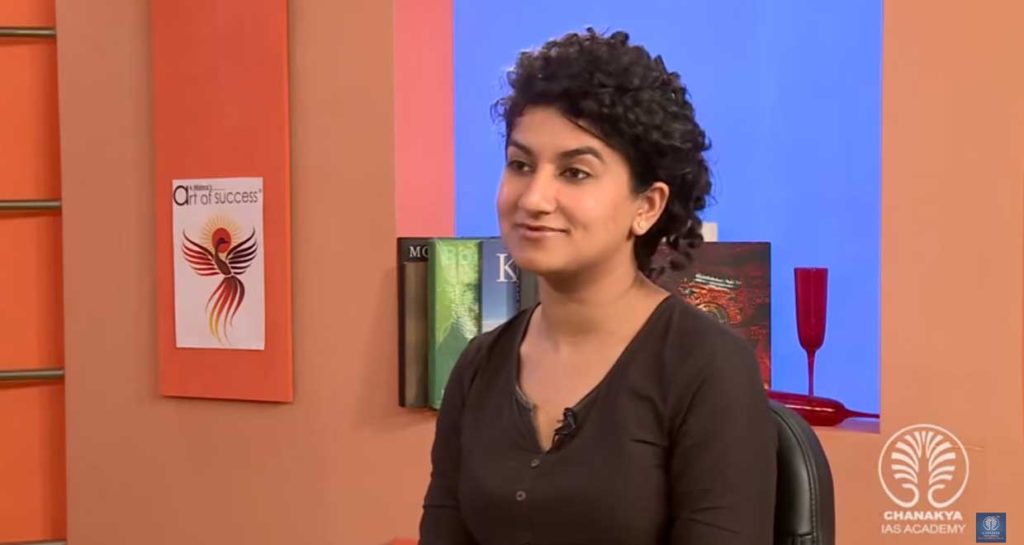
    Phew. More than a year after the results came, this is a tough one to answer. There is an interview of mine on YouTube where I elaborately speak on the subject and it is best the readers watch that. I believe one does not plan for or work aiming at a particular rank. The idea is to figure out where one is making mistakes, to correct those and give one’s best. A well informed strategy, reading list and persistence help.


    Tell our readers about your current training experience at Lal Bahadur Shastri National Academy of Administration.
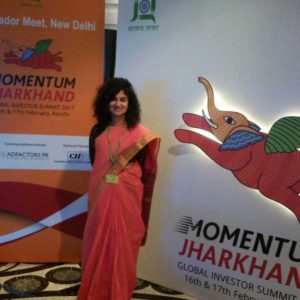
    seema-pujani-3It was an amazing time spent at the Academy. The place is very professionally run and the curriculum is carefully planned in advance. The emphasis in the Foundation Course is on interaction between Officer Trainees who come from different civil services. Officers from Royal Bhutan services also undergo training along with us. I never thought I would go on a nine day Himalayan trek or be a coordinator for a big cultural event in the course of my 3.5 month stay there. The course and the Academy pushes everyone’s limits and inspires excellence. We were kept on our toes from the time we woke up at 5 for morning PT till we dropped dead at night.


    What is the job profile of the Indian Foreign Service?

    The most inspiring and also the most onerous of a diplomat’s duties is to be a representative of the country and its people abroad. One needs to be mindful of her actions, words and behaviour. Today our job involves the entire spectrum of work ranging from political, cultural, consular to commercial and economic diplomacy. We are the spokespersons for the government and its people on any matter of foreign policy. In countries torn by violence, rescue operations such as ‘Operation Raahat’ to ensure safety of our nationals have brought succor to the stranded.

    In a globalised world with significant Indian footprint abroad, any matter that involves the country’s interests is our concern. Be it negotiating agreements, pitching for investors to come to India or doing marketing for different states abroad, the importance and functions of a diplomat are on a constant rise in today’s world. We also come up with useful publications, organise events in India and abroad on a range of issues that come under the purview of the Ministry. As budding diplomats, we report back on developments of political, economic and strategic significance in the host country.
     

    seema-pujani-2

    How has your training as part of IFS been so far and what is the work assigned to you in the MEA?

    Upon completion of the Foundation Course in Mussoorie, Officer Trainees belonging to different services report to their respective Academies. Ours is the Foreign Service Institute situated very close to IIT and JNU in South Delhi. Starting with the batch of 2015, the duration of our training has been significantly reduced. Therefore, the entire duration of our association with FSI has been reduced to about five and a half months. In this period, not only did I go through classroom training in international relations, foreign policy, international law and the like but also travelled the length and breadth of the country as part of Bharat Darshan and attachments with Army, Navy, Air Force. I also travelled to Myanmar to learn about the working of the Indian Embassy and Consulates.

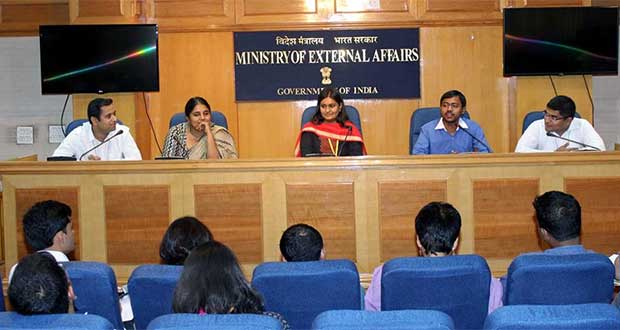
    In the first week of June, we joined the Ministry of External Affairs as Under Secretary (Officer Trainees). I was allotted the Investment, Technology Promotion and Energy Security (ITP & ES) division therein. My Head of Division is Mr. K. Nagaraj Naidu, IFS batch of 1999. I am fortunate to have been associated early in my career with an officer of his work ethic and sense of duty. Under his able guidance, the division facilitates foreign investment flows and handles all issues relating to energy security in close coordination with other central government Ministries and departments. The Division represents MEA on all issues relating to agriculture (including food processing), civil aviation (including bilateral ASAs), energy (coal, oil, gas and renewables), investments (BIT), social service agreements (SSAs), shipping, ports, highways, railways, telecommunications, electronics, services, tourism, pharmaceuticals etc. The Division supports activities of leading business chambers, media houses and consultancy firms. It works closely with other respective state governments in their international outreach activities. On 30th of July, the Division organised the 6th Pravasi Bharatiya Divas Panel Discussion on the theme “Diaspora: Transferring Knowledge and Encouraging Innovation (Science & Technology, Education, Start-Up India)” that was chaired by the Honourable Minister for External Affairs, Smt Sushma Swaraj. It saw participation from eminent educationists in the country and leading NRIs in these fields. Meaningful discussions held here would form part of a report with recommendations that would be released on Pravasi Bharatiya Divas in January, 2017.


    Finally tell us in which specific role you would like to see yourself after 10 years.

    It is hard to say if any role necessarily stand distinct from each other 🙂 I would just want to be alive and kicking and be doing meaningful work.


    Please give our young readers and followers some tips to help them face the mighty UPSC.

    Each person is unique. Know yourself well and play to strengths. It is not the number of hours one puts in but the quality of output that matters. Neither success nor failure in this exam is the end of the world. One can contribute immensely to the society in multifarious ways. Wishing everyone all the very best! Rise and shine!

     

  • Sucheta Chatterjee, Indian Foreign Service Officer, on the UPSC and work experience at SEBI

    Sucheta Chatterjee, Indian Foreign Service Officer, on the UPSC and work experience at SEBI

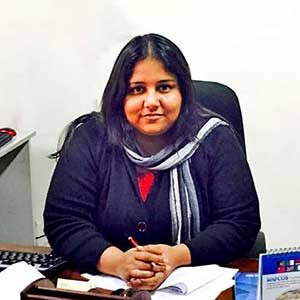
    Sucheta Chatterjee is a graduate of WBNUJS, Kolkata (2007 Batch). Soon after her graduation she joined SEBI as a Legal Officer and had been working there for six long years, before challenging herself to the formidable UPSC.

    For her, taking the UPSC was more of an aspiration to serve the nation as an IFS Officer. She had determined that she would either serve India in the Foreign Service or continue in SEBI.

    In this interview she shares with us:

    • Work experience at SEBI
    • Deciding to take the UPSC plunge
    • Taking the UPSC prelims and the mains
    • Training period and posting


    How would you introduce yourself to our readers who are mainly young and enthusiastic lawyers?

    I would firstly like to congratulate them for taking up law as a career. As far as introductions go, I’m a law graduate from the National University of Juridical Sciences, Kolkata, and I subsequently worked in SEBI in the very niche field of capital markets and securities law, specifically in enquiry and adjudication matters. Thereafter I stumbled into the Indian Foreign Service. My first posting abroad will be in Moscow.


    What inclined you towards the field of legal education? Did anyone among your family and friends suggest you to choose alternate career options?

    Growing up as an adolescent in Calcutta’s politically charged atmosphere left me well coloured with a burning idealism and a fierce intolerance of injustice. At eighteen, I felt as if I could change the world and fight for the rights of the underprivileged and [sociallocker]marginalized. Therefore, I joined law school with starry eyes and I was rather disconnected from reality.

    My family and friends were very supportive and never tried to impose any course of action upon me. I remain grateful to my parents for their unflinching support even in the face of some unconventional decisions that I’ve made.


    How was your experience at NUJS? What activities were you involved in apart from the regular academic curriculum?

    NUJS was a wake-up call in many ways. My years there taught me some very hard lessons about the legal system. My very first encounters with the bureaucratic mode of functioning happened in NUJS, leading to several bitter-sweet incidents. All things considered, it was a very extensive learning experience that enriched my life and I feel a sense of gratitude towards my alma mater. I would specifically like to mention Professor D. Banerjee who was always an inspiration in my life. He had always told me that he felt that the civil services would be the best option for me and that he was confident that I would get selected.  I kept telling him that I couldn’t possibly get selected. Had he been alive, he would have been very happy. I miss him so much.

    As far as co-curricular activities are concerned, I can only remember a controversial monograph I’d written about the AFSPA in Manipur, which won me the first prize, to my greatest astonishment. Otherwise, I was essentially a loner and did not participate in any activity if I could help it. I was rarely in the campus after class hours and spent most of my time reading really amazing books (borrowed from the library) that had nothing to do with our academic curriculum.


    After graduation, you joined SEBI (Securities and Exchange Board of India) as a Legal Officer. How did you go about the appointment? Please tell us about the recruitment process at SEBI.

    I was selected by SEBI through the campus recruitment programme. I chose SEBI over law firms because I felt that working in the government sector has certain specific advantages that are not available in the private sector.


    You have worked with SEBI for a considerably long time as an Assistant Legal Advisor. Please tell us about your experience there.

    I worked at SEBI for about six years! SEBI is an outstanding employer. My years there were a continuous learning experience, albeit in a very niche sphere. SEBI, and especially my colleagues there, will always remain special to me. I will always feel a sense of gratitude to them for making my debut into the legal world such an enjoyable experience.


    sucheta-chatterjee-2

    When and what inspired you to appear for UPSC after having a secured career at SEBI?

    Will you believe me if I tell you that I appeared for the UPSC exam because I wanted to get away from my boss?! That was indeed a major factor.

    Another reason was pure wanderlust and I felt that joining the Indian Foreign Service would be a great way to live in various parts of the world, immersed in alien cultures. The fact that I have always been keenly interested in international affairs further strengthened my resolve to give it a go.


    When did you start preparing for the exams? When should a person ideally start preparation for the UPSC exam?

    I had severe time constraints because I was handling a full-time job while preparing for the exam. I started practicing a lot of mathematics about a few months before the preliminary examination. I focused entirely on mathematics because I felt that my performance in the quantitative aptitude part of the paper would make or break my attempt to clear the civil service exams. I studied for the main examination only after the results of the preliminary exam was declared and I was sure that I had qualified for the main exam.

    I suppose ideally a person ought to start preparing a year in advance but then I firmly belong to the school of thought that maintains that the amount of time you study is irrelevant. How you do it is what counts.


    Did you enrol in a coaching institute? How valuable do you think coaching institutions can be for UPSC preparation?

    No, I did not enrol myself in a coaching institute because of time constraints. Thus, I am not competent to opine about the value of coaching institutions.


    How many hours did you put in for your preparations every day? Is it important to have a fixed schedule or weekly targets important according to you?

    It varied from two hours to none at all. I did not maintain a fixed schedule and studied in fits and starts.

    I am sure fixed schedules and monthly targets are useful for those inclined to study in that manner. It is important to know what suits you as an individual and to create your own style of preparation. I don’t believe there is a fixed formula for success.

    What did you do to keep yourself abreast of all domestic and international current affairs? How did you study for static GK?

    I relied on The Hindu and the Indian Express to give me a fair idea of how events were playing out in local and international politics. But this isn’t something that can be started a year before the exam. It is a lifelong process and one has to keep reading all the time. I strongly believe that in the UPSC, it is accumulated knowledge that makes all the difference.


    Did you regularly read newspapers? How did that help you? How should one strategically use newspapers for preparation?

    I have always read newspapers regularly. It has become a habit. With time, one can instinctively pick out what’s important and what is of relatively less importance. My personal favourites are the editorial section and the opinion page. It is a mistake to cram up facts because the pattern of the UPSC paper is heavily analytical.


    Which books/materials did you rely on while preparing?

    A CSAT book published by Tata McGraw Hill on quantitative aptitude helped me to conquer my fear of mathematics to an extent. For the mains, NCERT textbooks were my bible, so to speak. I also highly recommend The Economic and Political Weekly as well as The Frontline magazine. Wikipedia should also not be underestimated, no matter what the pundits tell you. It also helps to choose one’s own subject for the Main Exams as it saves the trouble of learning an entirely new subject. The myth that some subjects are more “scoring” than others has effectively been busted. I stuck to my strengths – law and political science.


    Lakhs of people attempt the UPSC prelims and only a thousand get selected for the main written exam. Which are the prime skills and expertise required to crack the prelims?

    I will spare you a lecture on hard work and dedication because that would be an insult to lakhs of candidates who studied very hard with tremendous dedication and still did not make it. The role of chance is a big factor that is seldom mentioned by successful candidates. You have to do your best and hope that by chance you get to attempt questions which you have prepared for.

    Besides, those who have good time management skills have an obvious edge over those who do not.


    Please share with us your insight of attempting the prelims.

    You are interviewing me more than two years after I appeared for the preliminary examination. I cannot remember much except for the fact that most of the multiple choice questions were very tricky and designed to make one choose the wrong answer so I attempted only those questions that I felt reasonably sure about in order to avoid negative marking.


    What kind of posts had you opted for in the UPSC enrolment form? How do you want to serve the nation? Didn’t you think of applying for the IAS?

    In my DAP (detailed application form), I chose the Indian Foreign Service as my one and only option. I could have easily got IAS with my home cadre but I was determined to join either the IFS or remain with SEBI.

    As a diplomat, I would like to contribute to the formulation of a rational, enlightened foreign policy in consonance with the spirit of the constitution and the ideals of Panchsheel.


    How would you rate the main exam question paper on difficulty?

    The main examination paper was rather difficult, at least by my standards. The GS papers especially had some very tough questions that compelled a lot of thinking and planning before writing, leading to a time crunch.


    Did you appear for mock interviews? What are your views on taking mock interviews?

    No, I did not appear for mock interviews. So, I can’t comment on that too.


    Any specific strategy you would recommend us for the interview?

    I decided to be frank and forthright in my interview and not pretend to be someone I am not. The board members were all experienced bureaucrats who could easily see through all attempts at falsehood. Therefore one should respect their intelligence and not try to fool them. I was asked several highly controversial political questions and I answered all of them with candour and made no attempts to be evasive. Thankfully, I was also asked a lot of legal questions. There was one question to which I did not know the answer and I admitted my ignorance.

    “Bullshitting” is absolutely useless in the UPSC interview. Interestingly, I was even made to recite some Bengali poetry and sing a few lines of Rabindra Sangeet. I am sure the board members regretted asking me to sing the moment I opened my mouth!


    sucheta-chatterjee-3

    How would you describe your training period? Please share some memorable moments of your training programme with our readers.

    The training at Lal Bahadur National Academy of Administration, Mussoorie, was a saga of never-ending hardship for a laidback, unorganized person like me because there is a lot of emphasis on discipline, order and method. The fun parts were the treks, village visit and weekend parties in the Officers’ Lounge. But apart from having to get up at 4:30 a.m. in the freezing cold for P.T., I think we all had a stellar time.

    The training provided at the Foreign Service Institute was excellent. We especially enjoyed ‘Bharat Darshan’, the attachments with all three wings of the armed forces and the mission attachment at Dhaka. It is a cliché to say that training is the best part of the service bit it is very true, nonetheless.


    After the training period, where was your first appointment?

    At present, I am undergoing desk attachment at South Block in the Eurasia Division. My first posting will probably happen around August, 2015 in Moscow, Russian Federation.


    Please tell us a little about your work profile working as a Foreign Services officer. What are the responsibilities you are entrusted with?

    As a Foreign Service Officer, we are entrusted with nearly everything that involves a foreign relations component, from writing concept papers, to vetting treaties and MoUs to organizing visits of heads of states etc. Our division successfully handled the recently concluded Indo-Russia Annual Summit in New Delhi. We get to learn something new every day and compared to other services, political interference in the IFS is minimal.


    How is a typical workday like? How has your experience of being an IFS officer been so far?

    A typical workday involves getting up early and rushing to South Block by 9, dealing with little mountains of files, attending numerous phone calls and meeting a wide variety of people from all over the world. While working abroad, the experience is bound to be different.


    What would be your message to law students and lawyers who aspire to become a civil servant?

    It is always an asset to the civil service to have legally literate officers and I personally believe that law students and lawyers have an edge over others in the civil service exams because of the five years of rigorous training that we undergo at law schools. So if you think that the civil service is where you aim to reach, there is absolutely nothing to stop you! All the very best!

     [/sociallocker]