Tag: IIMB

  • “It’s not just about legal knowledge; it’s about fostering a sense of dignity, self-worth, and the belief that they deserve justice” – From Courtroom to Community: The Inspirational Journey of Advocate Trishla Malik, Director, AmicusLegal Consultancy

    “It’s not just about legal knowledge; it’s about fostering a sense of dignity, self-worth, and the belief that they deserve justice” – From Courtroom to Community: The Inspirational Journey of Advocate Trishla Malik, Director, AmicusLegal Consultancy

    This interview has been published by Namrata Singh and The SuperLawyer Team

    Your journey reflects a unique blend of legal excellence and entrepreneurship. As a first-generation advocate, how did you decide to carry forward the legacy of your late grandfather, an Honorable District Judge, and establish Amicus Legal Firm and Consultancy LLP?

    I am a follower of law and so was my Nanaji, but with a prolonged illness of dementia and then his demise, my Grandfather left me to forego my legal career as my journey. To which I took it as a challenge and A will to serve the nation through the law. This gave me a vision to enact and carry forward the legacy of law through a different medium which included both entrepreneurship and Advocacy. My entrepreneurial spirit craved innovation, a desire to bridge the gap between legal acumen and real-world solutions. It was then that Amicus Legal Firm & Consultancy LLP took shape in 2019, with my Partner Amol Chitravanshi AOR– a firm built on the unwavering principles of legal excellence, infused with the dynamism and client-centricity of a modern consultancy. We registered our offices in Delhi NCR and commenced our journey of Advocacy in Supreme Court litigation and other country courts. Things come up as challenges when you become a First Generation Advocate, but at the same time makes us proud to be going strong at this young age of not even 30 yrs. Each challenge makes us stronger and much more learned than before, so now we become some of the few law firms in the country delivering legal services beyond the courtrooms. AmicusLegal Consultancy LLP isn’t just about winning cases; it’s about forging partnerships with clients, understanding their needs, and crafting custom-tailored solutions. We go beyond legal counsel, offering strategic guidance, risk management expertise, and proactive solutions to navigate the complexities of the legal landscape. 

    Beyond your legal practice, you’re the Co-Founder and Managing Director of Amicus Legal Firm and Consultancy LLP. What led you to venture into entrepreneurship, and how do you balance your roles as an advocate and a business leader?

    It is not wrong to say that the legal profession is not easy for females. There is a hustle every day. During the initial years, I faced a lot of bias from my seniors who through different means let my motivation down. Especially in States like Uttarakhand, UP and Delhi, the mindset of Seniors is not very progressive for Women lawyers, especially those with no background from the same industry. But this did not stop me, this gave me the motivation to have an enterprise of my own. While advocating for clients in a court filled me with purpose, a part of me craved the challenge of building something, of shaping a space where legal expertise could transcend the confines of traditional practice and truly empower clients. This dream came true, when I and my firm’s Co-Founder Amol Chitravanshi Advocate -on- Record (AOR), who was my batch mate in law school, decided to have a law firm of our own. This was a very challenging journey for both of us, as we both do not belong to the family of advocates in fact both-of us were first-generation lawyers but together came up with a goal of a new-generation law firm in India, which was not just stick to court works but aimed in delivering all kind of legal services to the society. In a short span of 4 years we could achieve, make our presence in elite cases across the High Courts and the honorable Supreme Court. 

    My motivation is my will to deliver the society through law which helps me keep creating a balance in practical approach and legalities in the society. My journey of becoming woman entrepreneur and balancing roles as an Entrepreneur and Advocate could not have been possible without the support of family, close friends, efforts of my Team at the workplace and especially My Partner Adv Amol Chitravanshi, as we worked towards a common goal of uplifting the society and a positive and a constant vision of uplifting the legal industry and giving it a new face. AmicusLegal allows me to extend my impact beyond individual cases, shaping a legal landscape where accessibility, innovation, and client empowerment take centre stage. And that, for me, is the true reward – the satisfaction of building a legacy that extends far beyond the walls of the courtroom.

    Being a certified and recognized woman entrepreneur, you’ve achieved certifications from IIM Bangalore and the National Commission for Women. How has your entrepreneurial spirit influenced your approach to practising law, and what challenges have you encountered as a woman entrepreneur in the legal industry?

    It was challenging to understand the essentials of growth for women at a workspace, due to a patriarchal society.  women, though being talented, have been somehow suppressed over the years. But It was in 2021, luckily I got an opportunity to enrich my expertise when the very first time Indian Institute of Management, Bangalore in collaboration with the National women commission of India conducted A Women’s entrepreneurship Course, in which I was selected on merit and was offered a fully funded course after which I was entitled with the tag of woman entrepreneur by IIMBx. The impact of this course from the Indian Institute of Management Bangalore was crucial for me as a female entrepreneur, I was able to recognise the importance of women entrepreneurs in India not only on the social front but also on the economic front for the country. I was inspired by all the women who were actively participating in different fields which also helped me have a vision of a clear progressive career ahead in life and face different challenges that women go through in their daily lives, but the course helped me enrich my self-belief and confidence. The legal industry, like many others, is not devoid of its gendered challenges. Being a woman entrepreneur in this space has meant navigating. After this, not only did I train women for their entrepreneurship journey but I also awarded them with certification which was of utmost importance to them and their career ahead.

    The journey hasn’t been easy, but it has been deeply rewarding. I’ve learned to navigate the intricate dance between advocating for my clients in the courtroom and leading a dynamic legal firm. Through it all, I’ve remained committed to empowering other women entrepreneurs and redefining what it means to be a successful woman in the legal field. This educational qualification also helped me to understand the challenges as a women entrepreneur in India especially in the legal industry where even today there is a lack of professionalism and gender bias when it comes to female advocates, but evolving each day helped me achieve the desired goals over the time and the journey is still on.

    Apart from your legal pursuits, you are a national medalist in pistol shooting and a certified mountaineer. How do sports and outdoor activities contribute to your personal and professional life? How has this experience influenced your approach to challenges, both in your professional and personal life?

    I have been a believer and promoter of sports all my life. The world of sports and outdoor activities offers me a different terrain for challenge, growth, and a unique perspective on overcoming obstacles. My national medal in pistol shooting and experiences as a certified mountaineer has instilled in me qualities that extend far beyond the physical feats, shaping both my personal and professional life in profound ways. They equip me with the resilience, adaptability, focus, and leadership skills that empower me to navigate the challenges of the legal world with greater confidence and a sharper perspective. They remind me to celebrate the journey, find solace in the stillness, and approach every obstacle with the unwavering spirit of a mountain climber, always aiming for the summit, be it in the courtroom or on the next personal Everest. And in this ongoing journey, the lessons learned on the shooting range and the slopes of the mountains or in any field will forever remain my compass, guiding me towards a future of success, fulfilment, and, most importantly, a relentless pursuit of the next peak, both in the courtroom and in life.
    Your involvement with Apoorvarambh Foundation and various NGOs showcases your commitment to social causes. Could you share a memorable experience or initiative that had a significant impact on the lives of individuals or communities you’ve worked with

    My commitment to social causes finds expression through my collaborations with the Apoorvarambh Foundation and various NGOs, allowing me to use my legal expertise to make a tangible difference in the lives of individuals and communities. One such experience, etched forever in my memory, resonates with the transformative power of law intertwined with social service. 

    I have been actively involved in Prisoners’ Rights and activism through it. Not just ensuring Mental health and value for life, we also conduct different types of literacy events, entertainment events etc to make them feel connected to life and living. Apart from this, I encountered a community grappling with the aftermath of cybercrime, Child Sexual Offences, Youth Development, and Education etc., Young lives were devastated by both online and offline stalking, financial fraud, and the emotional scars of abuse. Witnessing their despair ignited a fire within me, a determination to utilize my legal knowledge to empower them. We identified cases where individuals had been physically or emotionally traumatized. Under my NGO we undergo various disciplines of education and provide wholesome education for living eg. Mental health precautions, financial security, Hygiene, Adolescent Development, Art and Culture awareness, Career guidance etc. I took the cases pro bono, navigating the complexities of crime legislation and fighting for compensation and accountability against perpetrators. We also conducted awareness sessions and literacy sessions in Rural India, helping them give some value addition to life and empowering individuals to navigate the complexities of the world around them. 

    One of my such experiences was when a minor girl was sexually assaulted and her Miss-fortune was that her mother was not able to support and fight with her for her justice. It was then that we stood and fought to the best of the US and provided justice to that family and that minor girl. To which, I under Apoorvarambh Foundation NGO have made a short film on Child Sexual Offences which is around the corner to be telecasted soon. 

    As a legal educationist and awareness trainer, specializing in POCSO and Juvenile Justice, how do you approach educating underprivileged women and children on legal matters, and what motivates you to contribute to their empowerment?

    It’s not just about legal knowledge; it’s about fostering a sense of dignity, self-worth, and the belief that they deserve justice. Through education and awareness, I hope to contribute to a society where underprivileged women and children are not just protected by the law, but empowered to claim their rightful place and live lives free from abuse and injustice. As a legal educationist and awareness trainer specializing in POCSO and Juvenile Justice, my approach to educating underprivileged women and children on legal matters is built on understanding and empowerment.  I try and simplify complex concepts using local languages, everyday examples, and interactive activities. Storytelling, role-playing, and visuals become powerful tools to demystify laws and empower individuals to recognize their rights. I work closely with NGOs, community leaders, and local authorities to raise awareness, create referral networks, and ensure access to essential legal and psychosocial support services. 

    My motivation? Witnessing the spark of understanding in a child’s eyes, the newfound confidence in a woman’s voice, or the courage of a survivor seeking justice – these are my rewards. Knowing that my work empowers individuals to navigate complex legal systems, access their rights, and seek redressal fuels my passion to keep doing more. 

    Your media presence is notable, with appearances on national platforms, national media and news channels.” How do you use these platforms to bring attention to important social issues, and what topics do you find most crucial for public discourse, through being in the legal industry? 

    The legal industry isn’t just about interpreting statutes and winning cases. It’s a powerful platform for advocating for societal change and championing vulnerable communities. My national media presence has become a valuable tool in this mission, allowing me to amplify crucial social issues and spark actionable conversations. Not just my episodes of “Reality check with Adv Trishla Malik” on Facebook, but my inputs on National Media like Times of India, News18, Amar Ujala, Sahara Samay, Bharat Express etc, gravitate towards areas where access to justice is skewed and public awareness can bridge the gap. I use these platforms to demystify the legal system, making it more approachable and empowering for the public.

    Championing ethical practices in the society. The legal profession isn’t immune to ethical lapses. I use my media voice to hold the legal system accountable, highlight issues like corruption or judicial bias, and advocate for reforms that uphold the integrity of the justice system. This is what drives me to keep using my platform as a lawyer and media figure – to ensure that the law doesn’t just serve the privileged few, but becomes a tool for empowerment and a catalyst for positive change for all.

    You’ve been recognized with numerous awards, including the Professional Excellence Award by FICCI Ladies Organisation. What achievements are you particularly proud of, and how do these accolades motivate you in your multifaceted career?

    Ans. I have been an achiever since a very young age not just in academics but I have been a national medalist in sports and have won multiple awards in all aspects of life. In a profession as demanding and competitive as the legal field, recognition isn’t just an honor; it’s a vital source of fuel for the long journey towards justice. While I’m humbled to receive multiple accolades like the prestigious Uttarakhand State Achiever award, the Women Influence Award by multiple organisations, International Medals, the Professional Excellence Award by FICCI Ladies Organisation etc., true pride lies in the tangible impact my work has on communities and individuals. But foremost, Witnessing the relief and empowerment in the eyes of a client who finally found justice after years of fighting against abuse is a feeling and accolade unmatched. My professional fulfilment doesn’t stem from awards, but from the privilege of witnessing lives transformed and justice served. Every case taken and every case won, every policy reform achieved, every community empowered through legal awareness – these are the real treasures, the true markers of success in a multifaceted legal career.

    Having received national recognition and awards for your socio-legal awareness training, what advice do you have for young lawyers aspiring to make a positive impact on society beyond their legal practice? 

    My national recognition for socio-legal awareness training highlights a crucial truth: a lawyer’s impact can extend far beyond the courtroom. For young lawyers passionate about making a positive change, here are some nuggets of wisdom gleaned from my journey:

    1. Champion a Cause: Find a cause close to your heart, something that ignites your passion and compels you to act. Immerse yourself in the issue, connect with grassroots organizations, and understand the legal landscape surrounding it.
    • Advocate Beyond the Courtroom: Public education is key to driving societal change. Organize workshops, participate in panel discussions, or write articles raising awareness about your chosen cause. Use your legal knowledge to break down complex issues into digestible chunks for the public, empowering them to advocate for themselves and their communities.
    • Practice Self-Care: Advocacy can be a demanding journey. Prioritise your well-being by setting boundaries, managing stress, and seeking support from your network. Remember, a burnt-out advocate cannot create sustainable change.
    • Celebrate Small Wins: Don’t wait for landmark victories to celebrate. Acknowledge the incremental progress, the lives touched, and the voices amplified. Every step you take, every positive change you achieve, is a testament to your commitment to making a difference.

    Get in touch with Advocate Trishla Malik-
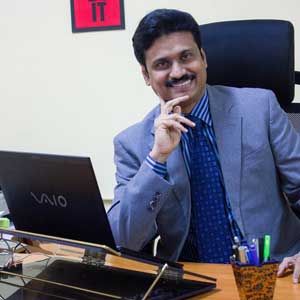
  • Sibichen Mathew, Advisor (Joint Secretary level), TRAI, on the role of a Senior IRS officer and being an author

    Sibichen Mathew, Advisor (Joint Secretary level), TRAI, on the role of a Senior IRS officer and being an author

    Dr. Sibichen K Mathew is an Indian Revenue Service (IRS) officer of the 1992 batch. An alumnus of the Indian Institute of Management- Bangalore and the Jawaharlal Nehru University, he currently serves as Advisor to the Telecom Regulatory Authority of India (Joint Secretary Level). Apart from his role as a Senior Civil Servant, he is also a leadership trainer, blogger, author, sociologist, and a policy researcher.

    He is the recipient of the UGC Research Fellowship and has been awarded gold medals from the National Police Academy and National Academy of Direct Taxes. He is the author of the books, “Making People Pay: The Economic Sociology of Taxation” and “When the Boss is Wrong”. He was also the college topper of the Bachelor of Law degree from the Karnataka State Law University.


    What brought you into legal studies after having extensive experience in Academics?

    (Sibichen holds a Bachelors in Chemistry, Masters in Sociology from Kerala University, an M.Phil from Jawaharlal Nehru University and a Ph.D from Bharathiar University, Coimbatore.)

    I believe that learning is a continuous process. It never stops if we are in search of wisdom. The more I learn, I understand that how ignorant I am. That shatters my ego.

    Of all the courses I pursued, one that gave me immense satisfaction was my LLB course. Law is one discipline which instantly gives the student a feeling of empowerment. I always felt that a formal schooling in law can give us tremendous confidence in dissecting the social reality sensibly and will give the necessary courage to fight for justice. Law and justice are inextricably intertwined.


    Being a topper in LL.B please give us a few actionable tips on scoring higher grades.

    (Sibichen has received his LL.B degree from Karnataka State Law University in 2012 where he was a college topper and a rank holder.)

    Once you enrol for an LL.B course, the first thing you need to do is to connect and approach whatever you see, read and hear with a legal perspective. Even when one reads the daily newspaper, an alert and keen law student would link the facts and incidents narrated there with the extant legal provisions and judicial positions he learnt. For example, a typical newspaper contains a number of reports about crimes happened across the world. An easy way to learn the discipline is by linking each such incident of crime with the corresponding sections of IPC, Cr PC, etc and other specific Acts. You will not forget the sections later-on.

    The second tip is to cultivate a habit of quickly glancing at the important decisions of the Supreme Court, various high courts and tribunals reported in the online and offline sources at least once a week if not on a daily basis. By subscribing to various news aggregators, you can get instant access to your chosen fields in your smart phones.

    Thirdly, liberally quote the case laws and the gist of the decisions while answering your questions during the examinations.

    Please note that there is no alternative to bare Acts. One has to read and understand every word used in a particular section. Commentaries can be read later. And, refer the guides only for revision. Prepare your own notes after reading the bare Acts and the commentaries. Include the latest case laws in the answers you prepared. Please quote connected incidents and the judicial observations reported recently by media to illustrate in your answers.


    sibichen-mathew-3

    Tell us about your B-School experience and also give some highlights of your course which you pursued from IIM-B.

    (Sibichen has also pursued a full-time post-graduation in Public Policy and Management (PGP-PM) from Indian Institute of Management, Bangalore (IIM-B).)

    The course at IIM-B really opened up my world view beyond what I learned and did before. It was a course that inducted me deeply to various areas such as international trade, global public policy, international regulatory institutions, public finance, decision making models, business laws, business process flow and human resources management. The teaching methods and evaluation were extremely rigorous but of very high quality.


    Was it a professional requirement to pursue courses in Public Policy and Taxation to enhance more in your career?

    (Sibichen has pursued courses on International Public policy and Corporate Taxation & Advocacy Skills from the Syracuse and Duke Universities respectively.)

    Though it was a professional requirement, I could use the opportunity to gather data on some of my pet subjects such as transnational tax evasion, money laundering and white collar crimes. I could interact with experts during my stay in the universities and there are vast resources available in the libraries of these universities. Law students should try to pursue a post graduate degree in any of the best universities abroad.


    Please comment on the quality and structure of these courses. How much practical knowledge did you gain from it?

    The learning happens in a very liberal academic environment. The process is not one way, from teacher to student. The students learn from each other. The teachers also learn from the insights shared by the students. The nature of evaluation is also based on the choice of the students. One can give weightage to the assignments, projects, written examinations and oral presentations as per their choice. The global exposure is essential for a law student in an increasingly globalized world where businesses and entities function without borders.


    After your graduation, which are the competitive exams you have taken?

    While pursuing my graduation, I started writing many competitive examinations. I qualified a few examinations for jobs offered by the state government. I qualified for the UGC-JRF in my subject and I was the only student to get the fellowship in my subject from my university that year. Though I started preparing for the Civil Services Examination after I completed my graduation, the real push came only when I got admission in JNU as I saw many students studying more than 16 hours every day for it.


    What motivated you to appear for UPSC? How was it cracking the UPSC in the early 90s?

    (Sibichen is an Indian Revenue Service (IRS) officer of the 1992 batch, he is now in the ranks of Commissioner of Income Tax.)

    To pass the civil services, one has to be jack of all trades, but master of none. That means, one should have some idea about all subjects under the sun. One has to open his eyes and ears to whatever happening across the globe. Read whatever you get. Have your own view on the affairs and policies of the institutions and the governments. Be systematic in the preparation. Be focussed while writing the answers.


    Tell us about your experience working with the Income Tax Department of Government of India, in various capacities starting from Assistant Commissioner of Income Tax, which was your first post.

    Indian Revenue Service offers challenging assignments to all the officers. There are diverse jobs within the career: Assessment, Criminal Investigation, Judicial roles, Administration, Systems Management, etc. One will get exposure to all types of businesses, tax laws, economic offences, innovative techniques of investigation, transnational tax practices etc. The job gives tremendous satisfaction and there is a culture of very high level of professionalism within the department. I could succeed in busting large rackets of organized tax evasion and received recognition from the Central Board of Direct Taxes, Ministry of Finance, Government of India consecutively for five years for contributing to the department by way of best practices at work.


    In the meanwhile, you have authored two books titled “Making People Pay: The Economic Sociology of Taxation” and ‘’When the Boss is wrong’’. Please give a brief insight of these two books to our readers.

    My first book, ‘Making People Pay: The Economic Sociology of Taxation’ is the result of about six years of research. My second book, ‘When the Boss is Wrong: Making and Unmaking of the Leader within You’ took about three years to write. It was difficult to get a good publisher for the first book, as it happens for any first time authors. The going was easy once the first book did extremely well in the market.


    Why do you think “Making People Pay” attracted the readers so much? What kind of feedback you are getting regarding this book?

    (Sibichen’s book “Making People Pay: The Economic Sociology of Taxation” has been reprinted thrice and very widely circulated across the globe.)

    It was not clear for me why a country with considerable tax elasticity and tax potentiality found it difficult to attract more people to its tax rolls and gain more money to the direct taxes kitty. So I started my search for the answers and I realized the need for a systematic macro analysis of the issues. I was in fact plunging myself to what many call ‘research’ on the subject. Is tax aversion unique to some countries? My analysis proved not. There are several historical, political and sociological factors that deter people from paying taxes globally. It is not just economic factors that determine tax compliance as it is widely thought off. Attempt in this book was to analyze those factors. It threw open certain valid questions. Why people in some countries comply better than others? Why tax evasion is not frowned upon in some countries and disgraceful in some other countries? Any theoretical analysis on the behaviour of people is incomplete without analysis of primary data. Therefore a unique attempt was also made here to understand tax evasion and tax enforcement through a study of tax evaders (or who were branded so) themselves.. The interviews and case studies with them have, without exception, cumulatively and intellectually enriched me as they helped me to understand the behavioural pattern, attitudes, perceptions and expectations of taxpayers in general.


    sibichen-mathew-2

    Are you planning to publish more books in future? Do you think your books will influence and attract young readers as well?

    (Sibichen’s books were appreciated by M.N. Venkatachaliah, Former Chief Justice of India, Mr. Cyrus P. Mistry, Chairman Tata Sons; Mr. N.R. Narayana Murthy, Chairman Infosys Ltd; Mr. Abhinav Bhaduri, Chief Learning Officer at Wipro Limited; Mr. Anand Surana, Director Micro Labs for your published books.)

    I have got appreciations not only from very eminent people but also from many young persons, students and retired people for both books. In the book, ‘When the Boss is Wrong’, I have presented 50 different dimensions of bad leadership and their ramifications for the people and the organization. There is also an attempt to suggest certain precautions and prescriptions for persons (both in their roles as a team member and a boss) and some precepts for the organizations concerned.

    I have a blog named ‘Cyber Diary’ and I will be focussing on writing more articles in that for popular reading. Many times, blog posts are more powerful than published books.


    How did you go about so many awards in your career?

    (Sibichen is the recipient of a Gold medal from the University of Kerala for topping the Post Graduate Examination, a Gold medal from the National Police Academy, a Gold Medal from the National Academy of Direct Taxes for extracurricular activities, for securing “A” Grade for the post graduate courses which he completed from Jawaharlal Nehru University and Indian Institute of Management, for recognition for his work at Central Board of Direct Taxes for five years consecutively, UGC Research Fellowship and he was also nominated for Commonwealth fellowship and ICSSR /ISEC Fellowship.)

    I don’t know. Maybe it’s a little bit of hard work, some strategic planning and a lot of blessings.


    How was your experience serving as a Deputy Commissioner of Coimbatore as well as the Deputy Director (Investigation), in the Investigations Directorate working in the Tamil Nadu cadre?

    The key duties in the above roles were to investigate tax evasion, detect black money and raise tax demands and penalties. I was successful in unearthing a few complex and organized tax evasion practices.


    Can you share any memorable or interesting experiences in your stint as a Senior Authorized Representative at ITAT?

    (Sibichen has worked mostly on money laundering and tax evasion cases while he was serving as the Senior Authorized Representative of the Department at the Income Tax Appellate Tribunal, Bangalore and as the Additional Commissioner of Bangalore (Investigations))

    More than the opportunity to defend cases for the government, I got benefitted from the unique experience as a counsel. It sharpened my skills in advocacy and acquisition of legal knowledge, and gave tremendous confidence in arguing cases against the submissions of acclaimed legal experts.


    What kind of cases you are dealing with at TRAI? Give some insights on those matters.

    (Currently Sibichen is working as a Regional Head and Advisor in the Telecom Regulatory Authority of India (TRAI).)

    My duties include monitoring of regulatory compliance by telecom, broadcasting and cable companies. I am also in charge of conducting regular meetings with all stakeholders in the states of Maharashtra, Goa, Karnataka and Kerala. Currently, the focus is on digitization of cable TV. We also collect feedback from the public on various policies and issues. Current discussions on platform services and net neutrality are some examples of such consultations with public.


    You have so many landmark achievements in your life. Now, tell us what have been your failures and successes? What were the biggest hurdles and challenges in your life till date?

    If I have failed anytime the blame should go to me only. Proper utilization of time, prioritization, sincerity and devotion to work, and goal setting are the keys to success. I feel that a person can become a successful individual and an acceptable personality in society by acquiring emotional intelligence, social intelligence, communication intelligence and cultural intelligence. These are the four pillars of success. I have mentioned this in detail in my latest book, ‘When the Boss is Wrong: Making and Unmaking of the Leader within You’.


    If someone does not go to a top law school, would you say he still has a shot at a great career in law? What should such a person do to develop necessary skills and profile?

    Please understand that the last time the name of the institution you studied your law matters is only when you get placed for the first time. From the second day of your career, your background is immaterial and irrelevant for all. They look at your: technical competence, professionalism, attitude, managerial and social skills and willingness to learn.

    I am sure, a student who is not from a top national law school can get recognized and excel with the above in right proportion. If you are not from a high ranking law school, you may try to participate in national level law seminars, debates and moot courts and also write a few research papers in national or international journals. You will definitely get good placements.


    What would be your advice to our readers who are budding lawyers and law students?

    Never stop reading articles that can not only enhance knowledge, but also inspire you to achieve your goals. Prioritize your time.

    My motto is ‘Promise Less; Deliver More’. I urge you also to earn a reputation of fulfilling the promises and sticking to deadlines.

    My contact details:

    FB: Sibichen Mathew

    Website: sibichen.in