Tag: ILNU

  • Yogendra K. Batra, Retd. Commissioner of Income Tax , on teaching at ILNU and on building a successful career

    Yogendra K. Batra, Retd. Commissioner of Income Tax , on teaching at ILNU and on building a successful career

    Mr. Yogendra K. Batra retired as Principal Commissioner of Income Tax, Ahmedabad, in 2015, and is currently teaching at the Institute of Law, Nirma University, Ahmedabad. From heading all the top posts in the Income Tax Department to teaching undergraduate and postgraduate students, his expertise in the field of income tax law is unparalleled.

    In this interview he talks to us about:

    • His decision to join Income Revenue Services (IRS) over IPS
    • His views on the current tax laws in India and their implementation.
    • His decision to take up teaching post retirement and his experience thus far
    • His views on the Institute of Law, Nirma University, its teaching methods, and its students


    How would you introduce yourself to our readers?

    I consider myself a learner and seeker of knowledge and that is how I would like people to know me.


    Can you tell our readers a little about your illustrious career?

    I started my career as a Lecturer of Economics at DAV (PG) College, Bulandshahr, and subsequently joined SSV (PG) College, Hapur. In my pursuit for excellence, I kept preparing for Civil services and UP PCS exams. In 1983 I was selected in UP PCS (Accounts) and in 1984 I was selected for the Civil Services and obtained a rank of 206. I joined the Indian Revenue Service and after a training of almost twenty months at the Lal Bhadur Shastri National Academy of Administration, Mussorie and the National Academy of Direct Taxes, Nagpur I joined the Income tax Department in Delhi and in the very first year itself I was posted as the Assistant Commissioner of Income tax (Investigation Circle) wherein I was assigned the work relating to assessment of cases where search seizure operations were carried out. I also acted as Under Secretary, Tax Policy and Legislation under the Central Board of Direct Taxes and contributed to four financial bills (1991-1994). I retired as the Principal Commissioner of Income tax, Ahmedabad, in the year 2015. I have now taken up the role of teaching young minds and mentoring them in their pursuit of excellence.


    You chose the Income Tax Department over the Indian Police Service. What motivated this decision?

    I got the 206th rank in Civil Services Exams of 1983 and was more than eligible for Indian Police Services. I preferred Income tax (IRS) because I wanted a career free from political interference. Since I was a lecturer of Economics, the field of taxation was not unknown territory to me. I enjoyed every bit of my time at the Income Tax Department.


    Having chaired and headed almost all the top posts in the Income Tax Department, what are your views on the current tax laws and their implementation procedure in India?

    I started my career as Assistant Commissioner (Investigation Circle) in New Delhi. This was a very demanding and a very sensitive job considering my experience in the Department. Subsequently I was posted as Assistant Commissioner of Income Tax, Central Circle, Delhi, wherein I assessed group cases of big business houses. Subsequently I was selected as Under Secretary, Tax Policy and Legislation in the Central Board of Direct Taxes, the apex body of Income Tax Department. There I worked for more than three years and contributed to four finance bills, i.e. 1991 to 1994. Incidentally, these were the initial years of economic liberalization in the country and a number of amendments were made to the Income Tax Act. Then I came to Ahmedabad as Deputy Commissioner (nowadays, Joint Commissioner) and worked in various capacities. As Commissioner of Income tax I worked as Appellate Commissioner, Director of Income tax (Investigation), Commissioner (Audit), Commissioner TDS and Principal Commissioner.

    The Tax Laws in India have been simplified over the years.  The tax rates have been reduced and they are comparable to most of the developed countries. The tax regime in India is more taxpayer friendly now. However, a lot is required to be done on the administrative front. It is said that you cannot tax a person and keep him happy simultaneously. Therefore a lot of work is required to be done in order to educate taxpayers about the advantages of taxes and the ill effects of evading tax. A close review of the efforts made by the government on this through media and publicity has yielded desired results. The tax payers are gradually understanding their responsibility  and more taxes are being garnered through voluntary compliance.


    You opted to teach post retirement, despite receiving numerous offers from leading companies. How does this role fit into your overall career goals? How would you describe your ideal job?

    As I mentioned earlier, I am a seeker of knowledge, be it any profession or job I undertake. Teaching has always been close to my heart, since it gives me an opportunity to continuously learn, research and interact with the younger generation- the future of India. It gives me great pride to be a contributor, albeit a small one, in mentoring our future generation. As far as an ideal job is considered, I believe it is different for different individuals, varying according to their aspirations, priorities and specialties. For me, what I do is ideal, and therefore I do with full passion and commitment.


    How would you define good teaching? What do you think are the greatest responsibilities of a good instructor?

    I would like to call myself an educator instead of an instructor. An educator needs to be current in his/her subject, have clarity of concept and thought, be open to new ideas and developments in the subject. Above all, a good instructor should be able to generate interest and curiosity in a student.


    What are your views on the Institute of Law, Nirma University, and its students? What do you think about the pedagogical model being followed at the institute?

    The Institute of Law, Nirma University, is a professional institute where students get enrolled on the basis of their CLAT scores. These aspiring lawyers are well versed in the theoretical as well as practical aspects of the law. There are several specializations available, such as criminal law, taxation law, etc., so that the students can make an important career choice early on. Advocates, legal experts and judges are called for lectures so as to help students get acquainted with a hands-on experience of the vocation. Students are also provided with a state-of-the-art digital library so that they can hone their skills.


    From heading the income tax department to teaching undergraduate and postgraduate students, what are the things you enjoy, and what are the things you would like to to change about your current position?

    Nirma University is a pioneer institute which is grooming a generation of lawyers to come. The institute is improving its nationwide ranking continuously which indicates the high standards the university is constantly aspiring to. The institute is endowed with rich library resources, a dedicated faculty and an exciting campus. The curriculum has been designed immaculately so as to provide an excellent mix of theoretical and practical elements.  However, one must not lose sight of the fact that ultimately, it all boils down to the students’ performance and how they utilize the resources that are made available to them.

    My job as Principal Commissioner of Income Tax was quite different as compared to my teaching role. As a bureaucrat you have to perform your duties within a stringent framework of regulations. Teaching on the other hand, gives you room to innovate and experiment. There is nothing as such which I dislike about my present role. However, a lack of enthusiasm among the students worries me a lot.


    From your experience, what would be your suggestions to the new generation of students? How would you say their education and way of life is different from yours as a student?

    My only suggestion to them is to follow your passion. Identify your strengths and interests first, then set your goal and follow it with commitment and perseverance. The Universe will be at your doorstep- have the courage to ask for it, work for it and believe in yourself.

    This generation has a lot of opportunities, avenues and facilities made available to them, which we did not have in our time. However, they also have a lot more competition and struggle compared to us. Nevertheless, Darwin’s theory, survival of the fittest, is so far apt for all ages and generations. Since the students are in a professional institute they cannot behave like students of a regular college and settle for only routine understanding of any subject. The have to develop a desire for knowledge and have to read beyond what has been discussed in the class.


    Finally, what would be your suggestion or advice to anyone who aspires to have a successful career? What are the dos and don’ts for ensuring success in any field?

    There is no replacement of dedication, commitment and perseverance for anyone wanting to succeed in their career. Strive for excellence in whatever you do and you shall succeed. Give your 101% to what you do because a little bit extra effort makes all the difference. The following mathematical equation is proof that a little extra effort each day can go a long way.

    1.01365 = 37.8
    0.99365 = 0.03

    Students should read at least one case law a day because staying abreast with current affairs is absolutely essential for any lawyer.

  • Aditya Bhandari, Counsel, Reliance Jio, on internships and work experience as a corporate lawyer

    Aditya Bhandari, Counsel, Reliance Jio, on internships and work experience as a corporate lawyer

    Aditya Bhandari graduated from the Institute of Law, Nirma University in the year 2014.  His wisely chosen internships coupled with his interest and market scenario led him to grab a job at Reliance Jio Infocomm Limited which is a part of Reliance Industries Group. He is certainly an inspiration to young corporate law aspirants as he explains in this interview that internships play a vital role in shaping one’s career by exposing one to confront the challenges of practical aspects of that career and are as imperative as an Educational Institution itself. In this interview he tells us about:

    • His satisfactory working experience as an Assistant Manager in the Legal – Litigation team of Reliance Jio Infocomm Limited.
    • His strategy of choosing internships and thereby substantially enriching his practical knowledge.
    • How to choose a career stream and get successful regardless of the so-called NLU tag.

    Please share with us about your life journey so far and graduating from the Law School of Nirma University.

    I am currently working as an Assistant Manager in the Legal – Litigation team of Reliance Jio Infocomm Limited (part of Reliance Industries Group). I have graduated from Institute of Law, Nirma Univeristy (ILNU) in the year 2014. Growing up in Jodhpur (Rajasthan), I was always inclined towards the world of accountancy and since then I made my mind to study Financial Subjects and be a professional Chartered Accountant. However in my school days, I was expressive and had my own opinions about every aspect which was particularly not liked by my teachers (Though I enjoyed it). It was then when I realised that it is a quality of being assertive and argumentative which I could use in the other facets of my life. Though the act of argument leads a student into trouble when he does that with his teacher, or a child when he does that with his parents, but when the same is done by an advocate for his client, with all rigour and vehemence, it takes him to the pinnacle of the profession and that’s what makes one a good and great lawyer. Thus, my journey of being an advocate started from that very moment, and my instinct of being argumentative brought me to Institute of Law, Nirma University where my skills were honed and nurtured to the optimum.

    Why did you choose corporate law as your specialization course and how do you feel a confused law postulant should manoeuvre his/her area of study for a successful career thereafter?

    India, the largest and the youngest economy of the world had open its gate for the MNCs in the year 1991 when Dr. Manmohan Singh, the then Finance Minister of India put forth the LPG in the House. Since then India has become a hub for MNCs and it was then the corporate law came into prominence.

    During my internships, I had an opportunity to intern under the ages of Corporate Stalwarts. It was then when I realised that I wish to dip in the ocean of Corporate law as I could figure out it had immense career opportunities in the coming time. Thus the impact and the nature of work I had done during my internships helped me choosing Corporate Law as my specialization course.  As far as the second part of the question goes, in my opinion it relates back to classroom studies, internships coupled with the interest and market scenario. But one should understand that nothing comes easy in life so the choice of subject should be realistic and not driven by others. In the end, it’s the student who is the George and he should be able to ascertain which avenue is going to be fruitful for his or her life in terms of intellectual and financial outcome. Something which is opted or chosen by an individual on the basis of his/her instincts and interest will, in my opinion, would not lead to any confusion.

    How do you think the curriculum including specially the internships proved to be an indispensible factor in enhancing your knowledge about the practical intricacies of the field of law?

    The purpose and object of internships, which in my opinion is a great boon to the 5 year law students, is to acclimatise an upcoming advocate to the realities and pragmatic aspects of the profession, and to understand the difference between academics and the applicability of academics in the real world of law. It just works as pilot training process for the law students before they step into the real world of law. My internships were very fruitful in terms of exposure, amount of work and working for different areas of law. I did my internships with some reputed law firms and few corporate houses like Mulla & Mulla & Craigie Blunt & Caroe Limited, DSK Legal, Economic Law Practices and Reliance Industries Limited etc.

    My internship with Reliance Industries Limited was timed perfectly when I was in seventh semester of my 5 years law course where I had an opportunity to assist the legal eagles of India, It was a surreal experience seeing your mentors arguing in front of your own eyes for your own matters with your own assistance. This triggered my focus on corporate law and working for a corporate house and that’s where today I am.

    I must say, CHOOSE YOUR INTERNSHIPS WISELY!

    Please share with us your working experience until you decided to settle with Reliance Jio Infocomm Limited (Reliance Industries Limited Group) and how did it help in edifying your career?

    It has been a year since I joined Reliance Jio Infocomm Limited. I have previously worked with Thomson Reuters (TR) where my profile as an Associate in Corporate & Compliance Department was majorly related to Contract Review, Research and Drafting of Agreements. Work at TR offered me great intellectual freedom wherein I got several opportunities to handle projects solely and interact with the top managerial officers of TR’s leading clients globally (Multinational Financial Services Holding Companies International Law Firms).

    During my work at TR, I was awarded as the best employee of the month which motivated me to keep up with my hard work. It helped me in enhancing my way of working in a corporate culture.

    Please tell our readers about your current working experience at the Reliance Jio Infocomm Limited in Mumbai and other prospects of your career ahead.

    Working with a corporate giant which is second to none in the country is itself a matter of pride and satisfaction. You are not only working with the best of the professionals in the country but also you become a part of the system and mechanism which has been adopted by the company to continue to be at the top. Even the Fortune Global has recognized RIL as No.1 Indian Company by profit, which itself gives immense satisfaction to me as I am a part of the same. Reliance Jio Infocomm Limited (RJIL) is a company which provides telecommunication services having the largest infrastructure base.

    Talking about my profile here at RJIL as an Assistant Manager in Legal Department entails various responsibilities coupled with authority as well. I am taking care of Legal issues faced by the company ranging from big time arbitrations and the pettiest litigation matters. In my brief stint at RJIL, I have been fortunate enough to work with a dedicated team of intellectuals working in different fields such as Construction, Finance, Technical, and Marketing & Business Team. Being an advocate helps me to help the other teams with day to day operational issues faced by them. Also it is important to mention that since the company is in its project phase, we at the legal team work as a catalyst in the process of development of the project and bring it to the operational stage which in itself would bring a revolutionary change in the Telecom industry. The present project I am working on is a state of the art project relating to lightning fast internet services (4G) to be provided to the customers at an affordable price making the concept of Digital India a reality.

    What challenges have you faced during all these years of working and how it affected your career?

    Challenges are an integral part of any profession, personally for me, challenges make me strive hard. It makes me work with more proficiency. Talking about my challenges at work, the transition is initially difficult when you have to manage the different teams and have to bring them on a common platform. Every Human being is different in his own sense and dealing with them is a challenge in itself presently I am working in a manner where I have to deal with all the facets of the company be it Technical or Mechanical. One must never doubt his abilities as doubts have killed more dreams then the failure has and hence each and every challenge should be treated as a lesson and to come out winning from those challenges takes a lot of hard work and perseverance.

    Someone has rightly said that the biggest room in the world is a room for improvement and challenges channels your energy to improve yourself. I have always kept faith in my abilities and this is how I tackle challenges and convert them into opportunities.

    What would you like to explain to those aspirants who have been sceptical about working with a corporate entity and look at it as mere 9 to 6 desk job without any independence or additional learning?

    Profession of law is much more and over and above the word ‘job’. In my opinion any person who takes the profession of law merely as a job is not befitting for this profession. Further this is one such profession wherein one should inculcate the habit of leaving the watch behind and to work in the manner of 24*7.

    The only role a watch plays in a lawyer’s life is to show how prosperous a lawyer is and the more prosperous lawyer the more the working hours.

    The main distinction between a job and a profession is that of addition and multiplication. In a job, the emoluments as well as the quantum of work keeps on adding with every passing day. Whereas in a profession, it though remains stagnant for a particular gestation period but thereafter it multiplies and then sky is the limit.

    What would you like to tell to our young law aspirants when it comes to pursuing specialization in corporate law and following the career ahead in that stream?

    There should be a consensus of heart and mind when it comes to choosing any particular stream. If one is zealous and ready to toil hard in whatever field he chooses, he is bound to succeed irrespective of the stream he chooses. I would not deviate from the fact that the specialisation course keeps you focused and gives you an insight of the nitty-gritties of that particular stream.

    With regard to the corporate law, I would like to reiterate that there are immense possibilities, opportunities for young lawyers who are willing to work hard but not otherwise. It’s not a fancy job but requires lot of intellect and zeal and a go-getter attitude. So if you think you have these traits, corporate law is for you.

    Do you feel that not having the so called tag of an NLU ever proved to be a hindrance in your professional career?

    A lawyer is not bound or curtailed by any tags or nomenclature. I would not completely rule out the fact that the better the tag, the better the chances for an initial opening. However the profession of advocacy is a synonym of art of convincing, with the blessings of god and my elders, I never had to face any such difficulty and rather I would state that the tag of NLS proved to be an asset to me.

    In the end, what would you like to communicate to our readers?

    There is no mantra for success but for continuous hard work. One must choose the correct path in a correct way. This is for my reader friends to understand that you have chosen the career which is full of opportunities and learning. All it requires is hard work and fun when you are at it.

    It is very important for legal professionals or students to understand that Litigation or Corporate law are not the only options for their future career. Knowledge and dedication can take you to a level of sky high.

  • Jaimin Dave, Graduate from Institute of Law, Nirma University, on beginning his practice at Gujarat High Court

    Jaimin Dave, Graduate from Institute of Law, Nirma University, on beginning his practice at Gujarat High Court

    Jaimin Dave, a 2012 graduate of Institute of Law, Nirma University, Ahmedabad is currently working as an Independent Counsel, at the High Court of Gujarat. He litigates in all types of civil cases, his areas of interest being Corporate and Commercial Laws. In this interview he tells us about:

    • The importance of knowledge, as compared to CGP;
    • The passion of indulging in mooting and Legal Aid;
    • The way to prepare for the All India Bar Examination;
    • The experience of representing institutions like Reliance, Asian Paints, Ford, Huntsman, and various others;
    • The work as a Retainer Advocate;
    • The choice of Corporate Law as a career.

    How would you like to introduce yourself to our readers?

    A simple easy going man who happens to be lawyer by vocation.  I am based at the High Court of Gujarat and mostly deal in all kind of Civil Cases. Amongst Civil Cases, I would say, I have special liking for Corporate/Commercial and Taxation matters.

    What has your experience been like, studying in Institute of Law, Nirma University? What other co-curricular and extra-curricular activities were you involved in?

    Journey at ILNU shall always remain special. According to me it is one of the top ranked Private Law Schools in India and I consider myself to be fortunate enough to have graduated from ILNU. 

    If I look back at my journey at ILNU, I was part of a pioneer batch and most of them in my batch were extremely competitive. There were 10 to 15 batch mates who were outstanding and it is from there, that I derived motivation to do well at ILNU. Of course, all of them are supremely able and I think I am still catching up with them. But, yes, in their company I learnt that there is no substitute of excellence. Academic brilliance was encouraged at ILNU but at the same time it was ensured that we got practical exposure to different arenas through adequate internships, workshops and co-curricular activities. At ILNU we were always pushed harder to walk an extra mile in whatever we did; be it academics, co-curricular activities or internships. And that habit of pushing hard and walking an extra mile, which was inculcated at ILNU, is helping big time in professional life.

    I was involved in host of co-curricular activities. But, mooting and Legal Aid were two of the activities in which I was keenly interested out of all the other co-curricular activities. I believe mooting has multi-dimensional advantages attached to it and to me it was highly beneficial. It helped me develop much required confidence for litigation. The legal aptitude and knack of identifying clinching points in a given scenario developed due to mooting. Besides this it enhanced my research and analytical skill. Legal aid was done out of sheer interest and even today I am part of High Court Legal Aid Services Committee since I am firm believer in repaying back to the society.

    You had honors in Corporate Law. Tell us about the Honors Program at ILNU?

    Again interest for Corporate Law developed on account of few Moot Courts that I did on this subject. This is the reason behind choosing Corporate Law as honors course.

    ILNU offers a well strategized Corporate Honors program. As a part of my honors program, I got an opportunity to carry out extensive research and read texts on topics like Mergers & Amalgamation, Securities Law, Contract and Tenders, Corporate Insolvency, Corporate restructuring etc. I believe things done at the time of corporate honors program helps me today when I sit down to vet SPA’s/SHA’s, draft a winding up petition or let’s say draft a scheme for De-mergers/Amalgamation. To sum up, corporate honors at ILNU was very insightful.

    You’ve been awarded with the Best Student of Law for Batch 2007-2012, and have also bagged two gold medals for the highest CGP, and the highest CGP in Corporate Honors. How relevant would you say, have these grades been, since you started litigation?

    As a student of law school, I believe, my focus was more on acquiring skills, intellect and knowledge. The awards and medals just happened while I was honing my skills at law school. Yes, they give you a sense of satisfaction and it shall stay as a pleasant memory with you. But, at the same time I acknowledged and realized that these medals only indicate that I did a fair job as a student during law school. It does not carry my case any further.

    Yes, it motivated me to do well as a professional. The day I graduated and received them, I sat down and told myself that this is not the end and it is just beginning. I made it clear in my head that awards and medals have to be left behind and I need to put in the same amount of hard work and dedication, as I did for the past five years, so as to establish myself as a good professional. Grades, awards and medals became completely insignificant the day I stepped into practical field since there are a lot of others factors and skills that makes you a good litigating lawyer like time management, Court craft, awareness about mindset of a Judge, skills of opponents etc.

    In fact, to be very blunt, if you opt for litigation as career, grades, awards and medals are either a piece of paper in your drawer or a show piece at your office. Speaking for myself, nobody ever approached me and handed over a brief to argue because of my grades or medals. Only skills, intellect and knowledge, that have been acquired during law school life have helped me so far. Therefore, in my opinion, focus should be more on quality of knowledge and skills that you acquire rather than grades or medals you obtain at law school. Of course medals give you some morale boost but one needs to back that up with other intellect to survive in litigation.

    How did you prepare for the All India Bar Examination?

    AIBE is one of the easiest exams that I have ever appeared for as a Law Student.

    Of course, before taking the examination, I was a little nervous, considering the longish curriculum that AIBE has. As a fresh pass out, it is perplexing to know that all those laws, for which you took five long years to study, are now required to be read over for a single exam. Having said this, I approached AIBE with incisive planning and gave myself sufficient time to prepare for the exam. The idea was to run through Bare Acts related to all the laws mentioned in AIBE curriculum. Thereafter, I read commentaries on CPC, Contract Act, Specific Relief, Law of Torts, CrPC, IPC and Evidence Act since these subjects carried maximum weightage and refreshing memory on these subjects would have helped me in litigation as well. Once I did this, I was fairly confident of appearing in AIBE.   

    Everyone who has appeared for AIBE will endorse that if your fundamentals as Law Student are clear, it should be a cake walk to clear it. It simply tests your basic knowledge on several statutes that form fulcrum of Indian Legal System.

    However, I personally believe that AIBE can be made more challenging and stiffer, if BCI really wants to achieve the purpose behind introducing it.

    What made you gravitate towards litigation, immediately after graduation? What other options were you considering?

    As a kid, robes and neck bands fascinated me and that’s how I have ended up in this black and white world.

    On a serious note, I think I thrive on challenges and I was gravitated to litigation because of challenges attached to it. I am a first generation lawyer and decided to choose litigation as a career despite strong NO from near and dear ones only because I am passionate about practicing law. I was clear about choosing litigation as a career from day one of my law school because of the following reasons:

    • In litigation you get firsthand experience of interpreting law and testing your legal acumen. As a lawyer you can evolve a new law point and test it before the Court. As a law-firm associate or in house counsel you can never become master of a brief. Obviously they can bring up a point and most of them come up with excellent points. But ultimately it is left upon wisdom and good judgment of litigating lawyers to decide as to whether it should be argued or not depending upon opponent, Bench and other factors. I prefer being master of brief and hence this career over other options. Yes it brings lot of responsibility and risk along with it but then I have always enjoyed this till now. 
    • Secondly, it is a career which throws up new challenge almost every day. As a lawyer I deal with matter involving different subject matters such as Winding-up, Tax and Stamp Laws, Mergers & Amalgamation, Land Acquisition Law, Electricity Laws, Land Laws, Civil Procedure Code etc. When you deal with such wide range of subject, your job is never monotonous. Each case, each opponent, each Bench and each law throws up a different challenge and you have to don different hats to do justice to brief. 
    • Lastly, I would say is the job satisfaction associated with litigation, tilted my interest towards it. For me it is always satisfying to argue a law point well and convince a judge. If you have prepared and argued the brief well the clients will also acknowledge your efforts and their satisfaction with your work is always a morale booster. Yes the picture is not always rosy and there are days when matters get adjourned or you cannot convince a judge even after toiling through earlier night to prepare a brief. But, as far as I put in my best efforts I am a satisfied man.

    As I said, I never considered other options as a Career. Even today I do not have plan B, if I fail I am gone. But at least for now, I believe I have made a right choice. This I say so because I am also involved in non-lit work like drafting and vetting of SHA’s, SPA’s and other contracts. That work to me is not as interesting as litigation because practicing law is much like playing sport to me.

    Was there anyone, in particular, who influenced you while deciding on litigation?

    Not really, but I think it is my internships that sealed my decision to join litigation. I did a running internship with Senior Advocate S. N. Soparkar during last two semesters of law school and then at Supreme Court with Hon’ble Justice A. R. Dave. These internships were enriching. After getting an exposure to different matters and work culture at High Court and Supreme Court, I thought it was the right decision to join litigation. There was nothing in particular that influenced my decision significantly; I went with my heart and followed something I was passionate about.

    What are your core areas of practice? How did you find your domain?

    During the initial phase of your career there is nothing like a core area of practice. It is like you have to accept every cuisine that is served into your platter when you are famished.

    Likewise, I am a litigating lawyer who takes up every kind of civil litigation that comes up to me and also criminal matters if they are related to white collar crimes, commercial transactions or land disputes. I admit that I have that special liking for Commercial and Taxation matter and criminal doesn’t interest me much. But that liking towards corporate and taxation matters is because of the fact that I am conversant with those two subjects and also because I have experience of appearing in Court for such matters. Ordinarily I would grasp matters related to taxation and corporate/commercial laws much faster as compared to other matters. But that does not mean that I cannot prepare myself on other subject. If I get few hours to prepare myself with any civil brief I am ready and willing to argue it. It is others who have labeled me as a lawyer for corporate or taxation subjects. According to me I am lawyer who accept all civil briefs and whose comfort zone might be Corporate and Tax Laws.

    What is the present scenario of Corporate Law as a career option in India?

    An opportunistic career.

    They have established National Company Law Tribunal an Commercial Courts are coming up. We already have DRT, ITAT, CESTAT and few other tribunals. Insolvency legislation is coming up and there is this Real Estate Regulation and Development Act. All these laws and institutions collectively indicate that there is lot of litigation in store. So if you are planning to become a litigating corporate lawyer the future seems to be bright. Even on non-lit side, SPA and SHA are on rise in India and with enhancement of FDI cap in several sectors it will only rise further.

    What are the challenges of being an advocate in the Gujarat High Court?

    High Court of Gujarat is one of the better Courts to start practice. The Bar members are receptive to junior lawyers. Most of the seniors are approachable and ready to help when you seek their advice. The Hon’ble Judges are willing to hear you patiently provided you argue appropriate points with the brief in hand. There are a lot of people in similar age group as that of me so obviously you make lot of friends at the bar. Also you can have intellectual discussions with them and their perspective adds value to your preparation for a brief and understanding of law at large. All in all, I would say environment is good at Court and despite being first generation lawyer I never found any problem at the Court.

    Have the law schools in India been able to produce socially relevant lawyers, given that many choose to take up firm jobs?

    Taking jobs in law firm does not mean that you are socially insensitive. Lot of my friends who have joined law firms do social work in their free time. I agree that as lawyers you can become directly relevant to society through Pro Bono litigation and Public Interest Litigations. But that does not mean that law schools have failed in producing socially relevant lawyers because more people take up firm jobs.

    I feel every law school emphasizes upon its student to inculcate ethics, values and good conscience. It is the individual’s choice thereafter to decide the impact that he wants to have on society.

    Has there been any case that changed your perspective about the Indian judicial system?

    Every case that I have argued till now has changed my perspective about the Indian Judicial System. I have a habit of analyzing my performance before the Court irrespective of the outcome of the matter. When you analyze your performances it is bound to leave an impact on you and change your perspective about the system.

    Ultimately I have realized that the system remains the same, it is more about changing your perspective as a lawyer and molding yourself to fit in the system. You get effective results out of the existing system, the faster and better you mold yourself to fit and then excel in the system.

    Please tell us about your experience of representing some of the most reputed institutions, and being a Retainer Advocate at various other institutions.

    Obviously it is good to represent institutions like Reliance, Asian Paints, Ford, Huntsman etc. before different forums very early in one’s career. But my preparation for each brief has remained the same depending on the merits involved in the matter.  I have never gone by the name of the client over the docket while putting in efforts into a brief. However, when you sit down to prepare for briefs of these reputed institutions all the relevant information is on the table and it becomes easier and less time consuming as compared to other clients. Their approach to litigation is much more methodical and strategic as compared to other clients.

    Coming to retainer- ship, honestly, it is a tedious job. They approach you for legal assistance in each and every small notice and petty issues. And sometimes with lack of time you lose the plot. But then advantages outrun the disadvantages. It helps me in learning about the problems that such institutions face in day to day functioning. I get an opportunity to solve those problems and keep myself abreast with development in various laws such as Arbitration, Negotiable Instruments, Labor Laws, Registration of documents, Stamping etc. Hence, as far as I am learning out of it, I will continue accepting retainer-ships.

    The Bar Council of India is contemplating on the formation of a new rule which will require lawyers to practice in lower courts, before arguing before the High Courts and the Supreme Court. If this rule is made concrete, do you think it will help?

    I think it should be left to the conscious decision of an individual lawyer rather than imposing something like that by way of rules.

    Before starting to practice at High Court of Gujarat, even I was confused and contemplated whether to join sub-ordinate courts for initial one to two years. But then I consulted two very good seniors at High Court of Gujarat and both were of unanimous opinion that lower courts practice does not have significant impact on practice at High Court if you are aware about the procedural aspects of sub-ordinate courts and basic statutes. Considering this I started my practice straight away from High Court and obtained good understanding on procedural aspects of sub-ordinate courts and re-read basic statutes such as CPC, Evidence, Specific Relief, Contract, Court Fees Act and Limitation. Once you do this I don’t think there can be any problem.

    Today, I also take up selected matters before sub-ordinate courts and not practicing there before joining High Court hasn’t impacted my performance anywhere so far. However, this is my personal belief. BCI is a wise body and there must be some thought behind proposed rules. As and when it is rolled out one can have better understanding about the intention behind such rules.

    Finally, what parting message would you like to give to our readers?

    I would say learn as much as you can while in law school. Learning does not mean only bookish knowledge because grades and awards are secondary; your intellect and knowledge comes above all. By learning, I mean educate yourselves with every possible trick related to the profession you wish to join after graduation. It can be done through running internships, workshops, seminars, moots, debates etc. This will make you a complete product by the end of five years.   When you join a profession, not all days are going to be the same. Trust me it will be a roller coaster ride from day one. Sometimes you unexpectedly win a matter and sometimes you lose a good matter. However, you are bound to make progress, as long as you keep working hard, stay honest to your work ethics, believe in yourself and grab opportunities that come your way. I acknowledge that the track is difficult and you need to have your foot on the pedal all the time, but then smooth tracks don’t create skilled operators. 

    In the entire process make sure you make a lot of friends, take vacations and do adventures, travel and explore the globe, drive a machine you love. Stay gracious to everyone who has helped to be what you are. Most importantly make sure you take out enough time for friends and family, although I have been accused of not following this part of my advice. But, I am trying to make amends by taking out time for people who matter.

    With this, I wish every reader best of luck with their future endeavors!
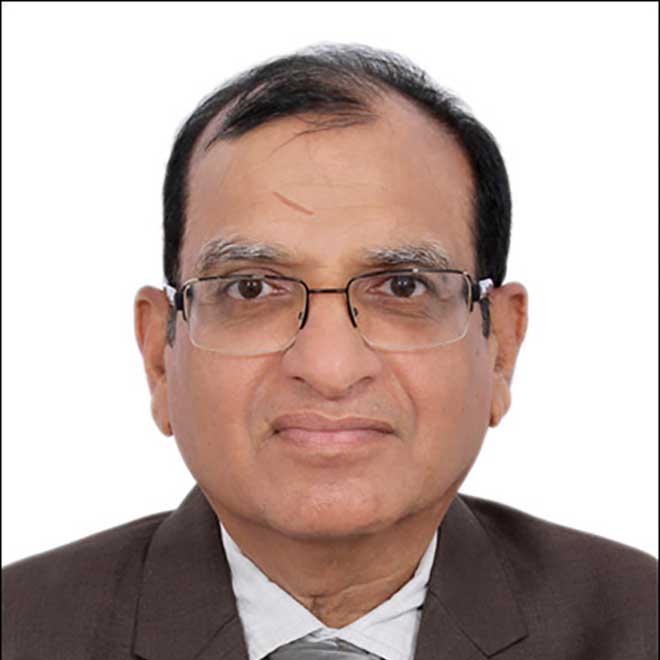
  • Ekagra Jain, Associate, Wadia Ghandy & Co. on mooting, academics, and bagging a job

    Ekagra Jain, Associate, Wadia Ghandy & Co. on mooting, academics, and bagging a job

    Ekagra Jain graduated from the Institute of Law, Nirma University in 2016. From being the Best Oralist in 4th NALSAR-NFCG Corporate Law Moot Competition, 2015, to being the Best Emerging Player while representing his University in sports, he made sure that he explored every opportunity which came his way. He is inclined toward Corporate Law and Competition Law and is currently working in the Banking & Finance Department at Wadia Ghandy & Co., Mumbai.

    In this interview he talks to us about:

    • His experience at ILNU, both inside and outside the classroom and the decision to peruse law.
    • The importance of balancing academics and the co-curricular and extra-curricular activities.
    • Work experience at Wadia Ghandy & Co.
    • His views on building a successful career graph in the field of law.

    How would you introduce yourself to all our readers?

    To everybody reading this, I am Ekagra Jain, a 2016 Graduate from Institute of Law, Nirma University, Ahmedabad. I have been recruited by Wadia Ghandy & Co. through college placements and have been working in the Banking & Finance Department, Wadia Ghandy & Co., Mumbai. Born & brought up in Jabalpur, I am a passionate reader who is still ‘learning’ in life and believes in being the change you wish to see in the world.

    Why did you choose law as your career, who and what were your sources of inspiration?

    To say that I wanted to be a lawyer for a long before would surely be fallacious. However, I was an avid debater during my school days which inclined my interests towards journalism in the beginning. My family had always given me full liberty to choose the venture I sought to enter into and thereby gave me a chance to break the stereotype of following ‘engineering’ as a career option. I had always been fascinated with legal education and the scope that existed beyond the four walls of the court room. However, with enhanced research and reading, taking into account career growth, I decided near to the end of the 12th standard that I wanted to be a lawyer. The  source of my inspiration is primarily my grandfather, who studied at BHU and was a Public Prosecutor for 11 years. In addition, my family trusted in me and what I wanted to do and the results have not disappointed them since. To the contrary, what scared me the most before entering law was the volumes of books that a lawyer is required to refer to. However, with the passage of time and dedication, to say the least, I have acclimatized myself to this profession and my inclination towards law has only escalated since then.

    How was your law school journey like- could you share your experiences with us? What were your favorite subjects and your areas of specialization?

    To say that my experience at Nirma University has been fabulous would be an understatement. Summing up a period of 5 years within 10 lines is an arduous task. Nirma gave me the perfect platform to groom myself personally and professionally. For me, when you barge into the entrance of a law school, you should keep your arms wide open towards actively participating in all activities that happen in a law school because that in turn lets you find what your interest lies in and also lets you adapt to itchy and uncomfortable situations. From focusing on academics, the submission of assignments, writing research papers, participating in moots, attending classes on a regular basis, to playing football representing the University, I made sure I didn’t have any regrets and enjoyed myself during the voyage of ‘learning’.  I am very thankful that I did law as it has made me think outside the box, meet some charismatic personalities who have helped me down the line and helped me improve as an individual. During my whole law course, I showed dedication towards all fields and made sure I did not overburden myself and left time for leisure with friends as well.

    My Area of Specialization is Corporate Law Honors and I had been inclined towards Corporate Law & Competition Law therefore, I gave the Company Secretary Exam a shot and also the NALSAR Moot on Corporate Law. Additionally, I guided moot teams for their preparation primarily on corporate related Laws. I also have an interest towards International Laws namely Public International Law and International Trade Law to name a few.

    You being one of the all-rounders of our college, kindly share with us your academic as well as extra-curricular experiences that have helped build your personality? What were your biggest achievements in and outside law school?

    As they say, the more you sweat in training, the less you bleed in war. For me, my basic approach had always been to ensure Balance and train myself rigorously within all fields. Academically, I have always maintained above average pointers with my CGPA for the 5 years at around 8.7. I have also cleared the Executive Level of Company Secretary and will be attempting the Professional level soon. I have also obtained a Cyber Law Diploma Certificate from GLC and Asian School of Cyber Laws with a view to expand my knowledge.

    With respect to Internships, I made sure I interned at all platforms and kept a planned approach towards it. I maintained a steady start originating from NGOs to Trial Courts to High Courts. I also interned under the Assistant Solicitor General of India. Moving on to Supreme Court, I interned under Mr. Shanti Bhushan, Former Union Law Minister and Senior Advocate which gave me a glimpse on the Supreme Court functioning and the clash of all high-rated arguments which flow. I have also interned in S & R Associates, Bharucha & Partners, Link Legal India Law Services, to name a few law firms. Owing to my interest as highlighted earlier towards International Law, I also interned at International Trade Law Consultants, New Delhi where I was offered a position in the long run.

    With respect to Moot Courts, I have been adjudged as the ‘Best Oralist’ for the 4th NALSAR-NFCG Corporate Law Moot Competition, 2015. We also bagged the ‘Best Memorial’ and we were ‘Semi-Finalists’ for this moot. I have also represented my University at the Asia-Pacific Rounds of ELSA WTO Moot Court Competition in Philippines, Manila and International Maritime Moot organized by VIPS, Delhi. Additionally, I guided various teams representing the University at the National and International Level. I have also written various research papers and made paper presentations. I was also the Co-editor for Law Mantra for certain years and worked as a Research Associate with Grayscale Inc.

    For all the time I managed in between all that I did above, I tried my best to utilize it towards Football and fun with friends. I was awarded the Best Emerging Player of the Tournament from the University in 2013 and was also the Vice-Captain of the Team representing Institute of Law. In addition, I played in Yuvardha and for S & R Associates as an Intern at the Football Cup, Mumbai. All these all round experiences and their management have helped me in building my personality in the long run.

    Tell us about your approach towards the long term and the short term goals you had set during the academic period and how were you able to manage it?

    A goal without a plan is just a wish. I planned certain things way back to avoid panicking when the time arrived. With respect to scoring well in academics, I didn’t keep it as my utmost priority. All I always focused on was realizing the subject, its importance and getting the interpretation of law at its true essence. Exams weren’t and shouldn’t be an Integral goal. At the end of the day, even if you are a 9.6 pointer and could not answer the difference between hypothecation and pledge through an example, you still didn’t learn the way you should have. So my short term goal was always to get things in mind with appropriate logic. P.S.: If you have understood a topic, the exam pointers are always on your side.

    Apart from academics, my short term goals were mainly to balance all extra-curricular activities in a manner that does not deteriorate the level of education I wished to attain. During my 1st & 2nd year, I would attend classes, play scheduled football match at lunch, and give an exam, complete assignments, research for moot all in a day.  It is a tough task at the start but soon you get to acclimatize yourself doing all things some way or the other.

    With respect to long term goals,  most of the students and I would include me within this ambit are often stuck up in the starting years figuring out what seeks to be the apt future and where should we be heading at the end of 5 years and that is normal. Though I could see certain glimpses of where I will be heading towards the end, I fell short of being firm on my decision. By my third year, I was certain towards heading to the corporate field where I also attempted the Company Secretary exam and cleared it easily. I worked on my CV and did internships at places I was inclined to. Additionally, I also read up various articles on Corporate laws to augment my knowledge with all the current debates.

    Wadia Ghandy & Co, Mumbai was the first law firm arriving for recruitment in my Batch and had a three step procedure for recruitment. It started with a written submission followed by Skype Interview and Final Round Interview at Headquarters, Mumbai. I had my basics clear and worked hard for the Final Round Interview. Finally when the moment arrived, I made sure I was well prepared to seize the opportunity thereby.

    To sum up, plan beforehand on how you are going to take off. After law college you ae left at the midst of a highway where you see roads going off in divergent directions. Additionally, I was at my toes with backup options if things didn’t work out as you expect them to. The goal should always be to maintain consistency, trusting yourself and improving yourself. Also, the trick is to understand what is expected out of you when you step out and to learn the nuances which may help sustain you in the long run.

    How far do you see your university as being the contributor in preparing you for what you are right now? Does ‘specialization’ in any field of law, as provided by your college, help in the early stages of one’s career?

    For all that I stand today, I am indebted to Nirma University for graduating me not just in law, but in life too. Being a Private Law University set up just in 2007 and directly competing with the National Law Universities, we have made a place in the top most law institutions. We have had some astonishing faculties who have helped us down the line when it mattered most. An Institution is normally represented by its students and the students have left no stone unturned in brightening the name. From acing BCI Moot 3 times in a row (& various other moots too) to having record breaking placements as a Private University, the Institution has provided immense support to the students to rise on their own feet within the legal arena. As a Student run initiative, the Institute also supports Judiciary coaching for students who seek to do so. (I attended this to brush up all my laws). Having said that, we are still a growing institution and despite the positives as highlighted above, we still fall short on certain matters and have a long way to go.

    With respect to specializations, I did specialization in Corporate Law and this has helped me to flourish and intensify my knowledge in corporate law. It has facilitated me also to work at ease and has also catered to my clearance of CS Executive.

    Tell our readers about the goals you have set for yourself for the upcoming years? What do you see yourself doing ten years from now?

    As of now, my goal is to learn and improve myself by the practical exposure I get in the shortest time possible. Other than my occupation, I am more committed towards successful completion of Company Secretary – Professional level exam due in December. I am not really certain for 10 years down the line, but if things go as planned, I see myself giving another interview to Super Lawyer 10 years from now as Partner of one of the leading firms 😉

    You are working with Wadia Ghandy & Co., one of the oldest law firms of India, tell us about your working experience? What is the real world like- are you facing difficulties carrying personal and professional life together now?

    Currently working at Wadia Ghandy & Co., I’d say I have been working under a very experienced team where I have been learning the practical nuances of Law. Presently, I work in the Banking and Finance Department under Ms. Shabnam Kajiji, who has had years of experience in Banking and Finance Sector. My working hours normally begin from 10 in the morning and may stretch up to late at night, depending upon the work allotted and the reporting deadlines.

    With respect to maintaining balance, I’d say we are all aware of the fact that in order to achieve something in life you have never had, you must be willing to do something you have never done which includes sacrificing personal life at times. Straight roads do not make skillful drivers. Working in a law firm is a challenging task and that’s what lets you grow and overcome them. Despite the long working hours which I may succumb to “occasionally”, I do have the sufficient breaks which let me enjoy my life too. And as they say, If you love what you do, you’ll never have to work a day in your life. Keeping the broad ideologies intact, I make sure I keep learning during my work and improving myself day to day, in order to reach where I intend to.

    Considering the nature and importance of this profession what according to you should be the focus of the law students at the Law Schools? What are the important factors which students should keep in mind while building their potential career graphs?

    Having seen and experienced the different facets of law, the focus of law students primarily should be towards seeing them grow. Experiencing and participating in different activities, indulging into healthy discussions and making sure that you are not only changing your CV to suit the firm needs, but changing yourself in a positive manner too is an integral factor which every law student should keep in mind. Additionally, what is of utmost importance is to realize the need to not only learn things by heart but to solve a complex situation by the practical application of law.

    For building potential career graphs, there is no straight jacket formula to be followed upon by every law student. Every student has their own understanding, working patterns and their future goals. For people focused towards corporate, every law student shall develop his knowledge towards corporate laws, read up on corporate issues and should maintain a decent CV containing good Academic Credentials, Moot Certifications, Paper Publications, Internship Experiences to name a few, depending upon an individual’s interest and priorities.

    Law school is an amazing time period where you have five years to read upon laws you have never done, participate in varied activities, get out of your comfort zone, work hard, trust yourself and chase your dreams. Dreams don’t work unless you do. In addition, every law student shall keep in mind the desire to chase the vision, not the money. The money will end up following if you have had the proper vision and worked on them accordingly.

    In the end, what would be your 3 biggest pieces of advices for the students as well as fresh graduates who are all set to begin their professional lives soon?

    My biggest advice for people who strive to set their foot into law firms or to the legal profession in general are the following. Firstly, don’t let the desire to learn end! Intelligence without ambition is like a bird without wings. Yes, you read that right. Many graduates often have that tendency to consider themselves at the epitome of success such that they inhibiting within their minds the practical knowledge that should come forth. For a lawyer, I’d say the road to learning is never ending. The farther you go, the better off you’ll be. Secondly, Think before you speak, read before you think. Recruiters have ‘experience’ and know how to analyze your knowledge within the ambit of law. For everybody applying for jobs, bluffing is not really an option. Make sure you have read upon the basics well and your answer should match what the recruiter seeks to ask and the rest shall be history.  Thirdly, Learn, Discover and Explore. Do not restrict yourself. There are various options emerging after you graduate. And as they say, do not blindly follow the Masses. Sometimes, the M is silent. Choose the one where you can deliver the best, carve a niche for yourself and prosper.

  • Shriya Jain, Associate, Wadia Ghandy & Co., Ahmedabad on work experience in real estate at a top tier law firm

    Shriya Jain, Associate, Wadia Ghandy & Co., Ahmedabad on work experience in real estate at a top tier law firm

    Shriya Jain, a 2013 graduate of Institute of Law, Nirma University, Ahmedabad is currently working as an Associate at Wadia Ghandy & Co. She works in their Property Team, in the real estate department and handles the drafting of transactional documents relating to real estate and also makes title certificates. In this interview she tells us about:

    • The passion for indulging in extra/co-curricular activities;
    • The importance of drafting as a skill;
    • The interesting path of choosing to do different things;
    • The importance of breaking barriers.


    How would you like to introduce yourself to our readers?

    I am a part of the 2013 graduating batch of Institute of Law, Nirma University, Ahmedabad. I started my practice with Wadia Ghandy & Co., Ahmedabad in their Property Team and have recently completed three years with the Firm. Coming from a non-legal background, my journey till here has been very interesting and surely a roller coaster ride.


    What would you like to share with our readers about your experience at ILNU, Ahmedabad?

    In one word – Enlightening! We were the second batch of the Institute; hence, we as an Institute were exploring and learning a lot of new arenas of a Law School, like moot courts, debates, seminars, MUNs and such. These were very raw and new for us. Particularly, because of this reason, the initial batches had an added advantage. Further, the best thing about ILNU is that it focuses on various modes of teaching law, starting from classroom lectures to seminars, guest lectures from practicing lawyers, innumerable extra-curricular and co-curricular activities, mandatory internship for 9 semesters, setting up a legal aid clinic and giving students firsthand experience at an early stage to gain these experiences. I have tried my level best to absorb something from each of the above activities.


    What were your areas of interest in the law?

    This question has been rightly put up as what ‘were’ my areas of interests in law, as my interest has taken a drastic turn… by chance. During my days in law school, I was really interested in Corporate Law and wanted to pursue it further. At the time of campus placements, I was offered a position in the property team of Wadia Ghandy & Co. and I thought I should give it a shot! It would have been something new for me and I would have learnt about a field I had not much heard of. And to be honest, I have never looked back since then.


    During your time at ILNU, what, if any, extra-curricular or co-curricular activities did you take up? How did the same affect your learning experience and prepare you for the legal sector?

    ILNU has given me various opportunities to explore and enhance my potential. I am someone who cannot rely only on academics. My focus has always been on overall development. Since my school days, I was clear on one aspect – I would participate in extra-curricular activities. It builds your personality, enhances your creative side, gives you an opportunity to meet several people and learn from them, develops a competitive spirit and gives you an edge. I carried this pattern of my life to college as well, ensuring from the first semester itself that I am involved in the extra-curricular and co-curricular activities of college, and I did this till my tenth semester there. I was very inclined towards debating during my school days and, in college, I was introduced to Parliamentary Debates and the concept of adjudication.

    shriya-jain-2In my first semester I was given an opportunity to represent the Institute as an adjudicator at the NLS Debate hosted by NLSIU, Bengaluru. After this experience, I don’t remember any year of my college where I didn’t participate in a debate competition and have since adjudicated Semi Finals and Final Rounds of various National Level Parliamentary Debate Competitions. In my final year, I was made the Chairperson of the Debating Committee of ILNU and along with my wonderful team, we organized the 1st ILNU National Parliamentary Debate Competition. Oh what an experience that was!


    Apart from this I was a part of the team which qualified for the Asian Regional Rounds of the Manfred Lachs Space Law Moot Court Competition, 2012; presented a paper on the topic of “Emergence of Refugees in Non-International Armed Conflict : Its Implications on the Host State and the Role of UN” at the International Law Students Association Annual Summer Conference, 2010 at Istanbul, Turkey, a topic which is co-incidentally very relevant today. Participating in these activities (you may choose whichever activity holds your interest, but make sure you are doing something apart from sitting in classrooms) gave me an opportunity to interact with law students from all over the world and it has been a wonderful experience throughout.

    I was also involved in cultural activities like fashion shows organized by ILNU, where I was spotted by a creative agency and starred in videos pertaining to ‘Awakening of Youth’ by the Government of Gujarat and in another video for ‘Save the Girl Child’ campaign.


    Having been working with one of the best law firms in India, what can you tell our readers about what law firms look for in potential candidates?

    Your basics of law should be clear. As a firm or any recruiter for that matter, we understand that a fresher may not have an advanced knowledge of law and may not be able to respond correctly to every question. Therefore, we would want to see how clear your basics are. Further, being curious and having the zeal to learn at every step, good drafting skills etc. are looked forward to.


    What led you to gravitate towards Real Estate practice?

    My earlier response to areas of interests covers how I started with real estate practice. The scope of work in this field is not known to many, including how the laws are different in each State. It is not taught in law schools and is very different from other areas of practice. Also, there are few women lawyers in this field. In my 3 years of practice, apart from the lawyers in my team, I would have interacted with not more than 3 female lawyers who are practicing in real estate. And because of this fact, clients (from real estate) are not used to having female lawyers. In our field, our clients are mostly builders, farmers etc. where female presence is generally very less. Therefore – and I don’t blame them – they are a little shocked to see a female lawyer involved in the matter. My initial 10 minutes of every client interaction is invested in building confidence of the clients. It is good to break barriers!


    How important do you consider drafting as a skill, especially for those who are interested in transactional practice?

    Your document is the end product of your knowledge. Hence, it is extremely important to have good drafting skills to portray the understanding of clients and your knowledge in the best possible way. As a transactional lawyer, 75% of your time is invested in drafting agreements. I would say, if you want to be a transactional lawyer, focus on enhancing your drafting skills. It is all about how you bring out the understanding on paper. Do not confuse it with using fancy language and Latin terms. Be simple, precise and coherent.


    What would you like to share with our readers about the general rigorous and demanding nature of a corporate sector job?

    If you enjoy what you are doing, you will not find it to be rigorous or time consuming. Yes, you have to put in hard work and lot of hours, but that is an investment at the end of the day.


    Finally, what parting message would you like to give to our readers?

    I shall put this in a precise manner:

    1. Read a lot. From course books to articles, essays, fiction, non-fiction, history etc. As a lawyer, you should not restrict yourself to course books or specific laws. Enhance your knowledge, there is no limit. Like my Father says, “College is there to only provide you guidance, it is your responsibility to learn and shape your career”. Another advice which I have taken from ILNU is from one of our lecturers, Mr. Divya Tyagi, “You speak what you read”. Hence, read quality books;
    2. Participate in Co-curricular/Extra-Curricular activities;
    3. Work with a lawyer after college hours. This will give you an experience as to how the law is applied in reality;
    4. Socialize with your peers from other law schools, lawyers and lecturers. The knowledge and exposure that you will get from interacting with them is invaluable and shall be with you for life; and
    5. Enjoy your time at law school. It is a wonderful experience!


  • Utsav Gandhi, Associate, Fox Mandal, on 1st year at a law firm and graduating from Nirma University

    Utsav Gandhi, Associate, Fox Mandal, on 1st year at a law firm and graduating from Nirma University

    Utsav Gandhi graduated from the Institute of Law, Nirma University in 2014. He has participated in many reputed International and National Law Moots and has headed various committees. During his time in college he made sure to get his hands on everything college had to offer. He is currently working in the corporate and real estate law team  at Fox Mandal, Ahmedabad and wishes to keep exploring the field and continue the cycle of learning.

    In this interview he talks to us about:

    • His decision of choosing ILNU and the college’s contribution in his career.
    • His views on Moots and other activities in augmenting a CV.
    • His work and experience at Fox Mandal.
    • His views and suggestions on starting a successful legal career.


    How would you like to be known to our readers, most of whom are the law aspirants?

    I am a corporate lawyer based in Ahmedabad and a graduate of the 2014 batch of Institute of Law, Nirma University. Also, I am a first generation lawyer in my family. Initially I thought of studying engineering, but when I started going for the engineering coaching classes the subjects did not capture my interest. While looking at other options I came across law and I immediately took a liking to subjects such as tort law, civil law and criminal law, that I came across while studying for the law entrance exam.


    What specific goals, other than those related to your current line of business, have you established for yourself for the upcoming years?

    None of my plans are set in stone. However, in the coming years I would like to grow as a legal professional and tackle new challenges over time. Further, I would also like to assume a position of leadership and develop expertise in a particular area of law. On a personal front, I was an avid trekker in school and that is something that I would like to proactively pursue as a hobby in the near future.


    What led you choose your college or university?

    When I joined ILNU it was relatively new, with the first batch students still in their 5th year. However, Nirma had a very good reputation for having excellent faculty with amazing infrastructure. In fact the Nirma University campus has to be one of the best in India. Also, when I went through the prospectus, it immediately piqued my interest since the course structure was unique, wherein a student could pursue a specialisation (Hons.) in either Criminal, Corporate, Constitutional or IPR Law. Thus, I believed that joining ILNU would help me immensely in building my career as a legal professional.

    How do you see your university and education and experience it imparted as being helpful in preparing you for a corporate career?

    I would credit the teachers at ILNU for being extremely diligent and focused on teaching the students about the basics of law. Further, I was also given the opportunity to explore many extra-curricular activities such as debating, MUNing and of course, mooting.

    Further the curriculum at ILNU was quite rigorous, with term assignments and exams always keeping me on my toes. This helped me greatly in improving my time management skills and also helped me to work under pressure, s so ILNU through 5 years of college, prepared me for the corporate life.


    Tell us about the activities you participated in while at university that helped boosting your progress?

    I participated in everything that I could get my hands on. I have participated in many international moot courts which have greatly improved my research and communication skills. In fact, mooting was the best thing about college as it also taught me how to work in a team. Further, I also tried my hand at debating and MUNing which helped me in public speaking. Apart from this, I have been part of the ILNU’s Campus Recruitment Committee and Literary Committee, which imbibed in me, the leadership skills, which are invaluable for any lawyer and something that every lawyer should possess.

    Also, I have presented papers at various international as well as national conferences and have got some of them published as well. This gave me the opportunity to extensively research on upcoming areas of law and have now helped me in my career. For example, I presented a paper on Corporate Social Responsibility, which back then was only an evolving concept and there was no legislation on the same. However, my research encompassed various jurisdictions and consequently, set up a strong base for me in that subject. Now, CSR has become a major area of interest/concern in the industry, and it has become extremely easy for me to advise the clients on the same.

    With regard to the internships, I kept an open mind before deciding on a particular area of law. I had not decided to choose corporate law as a career since the beginning. The various internship experiences I did helped me choose a definite career path. Thus, during my early years at ILNU I decided to intern with Nanavati Associates (District Court, Gujarat), Adv. Devang Nanavati (High Court of Gujarat) and Krishna and Saurastri Associates (IPR). Finally, it was when I interned at Phoenix Legal and Trilegal that I decided pursue a career in corporate law.

    Further, I have also completed various courses such as the Thomson Reuters’ Legal Advancement Programme (in my second year) and a diploma course on Entrepreneurship Administration & Business Laws jointly offered by NUJS and iPleaders. These courses helped me improve my knowledge base and have also played a major role in helping me to ace my interview with Fox & Mandal.


    Share with us your working experience as an Associate at Fox Mandal, India’s oldest law firm.

    I have been working on corporate and real estate law matters at the Ahmedabad office of Fox & Mandal for the past 2 years. My work profile mainly comprises of transactional and advisory work in the area of general commercial laws and drafting due diligence reports and advisory opinions on real estate law.

    Fox & Mandal is a huge law firm with over 200 lawyers across India and all the offices regularly connect with the each other. Therefore, I have had the opportunity to interact and work with some of the brightest minds and experts in their fields of law. Further, since the Ahmedabad office is relatively new I have also had the opportunity to network with potential clients across various industries in Gujarat. I believe that no other big law firm would have provided me with this opportunity and I am sincerely grateful to Fox & Mandal, as I believe that this will always be of an immense help to me.


    Would you like to share with us any of your accomplishments before or after joining the Law School or even after your placements?

    The first moot that I went to was the GNLU International Moot Court Competition, where our team won the 2nd Best Memorial Award. Later on, we were the first team from ILNU to get selected for the prestigious D.M. Harish Memorial International Moot Court Competition through the Memorial Round. I was also awarded a gold medal by ILNU in recognition for my moot court achievements.

    Further, I have also won an essay competition which was then consequently published in a book titled “Right to Development – Views and Issues”. I also pursued an online internship with Alexis Society (an organisation dealing with issues relating to youth empowerment), where I was adjudged the Best Intern and I had primarily worked on the research topic of Global internet freedom.

    At present, I am also closely working with Adhrit Foundation as an Editor and an Internship Coordinator. My priority tasks with Adhrit include Editorial Work, Content Development and Talent Development. This role has provided me with the opportunity to mentor many law students who have just begun their law school journey.


    Having seen the dynamic evolution in various facets of law, how did you manage to seize any opportunity that knocked your door?

    One has to really be on their toes and it is very important to keep a lookout for any new opportunity. The best resource for this is of course the internet, which is a multitude of vast information. However, in order to stand apart from my peers, I always chose to do something new and take risks and I give a  100% to whatever I am doing.

    Also, I always keep myself updated with the latest developments in the legal field and immediately prepare concise notes for the clients on the upcoming areas of law which are going to have a big impact on the industry. After joining Fox & Mandal, I have also assisted in organising various conferences and workshops with the latest one being a Workshop on Sexual Harassment of Women at Workplace. Further, I have also delivered a lecture at Apollo Hospital, Ahmedabad on the medico-legal issues that healthcare professionals face. This has helped me in understanding the industry issues and consequently, helped me in addressing their various concerns too.


    How would you advise a law student if one has to start on to preparing for a career while in college?

    I believe that a law student should focus on his academics to ensure that the basic concepts are clear since that is the first thing that the recruiters will look at while short listing a candidate. However, one does not need to be a topper to get a good job. The important thing is that the CV should be well-rounded. Also, I would advise the current crop of law students to moot extensively, irrespective of whether they’re choosing litigation or a corporate law career. Mooting develops ones research and communication abilities to a great extent. Further, other extracurricular activities such as debating and presenting papers at various conferences also helps in developing presentation and research skills.


    In the end, what would you like to communicate to the fresh graduates who are ready to set foot in the law firm?

    Keep an open mind and work on as many areas of law as possible and always interact with everyone across the board, be it an Associate or the senior management. Further, the field of law is dynamic and ever changing, hence, one has to stay abreast with the latest developments and preferably conduct a thorough research on topics which may have a huge impact in the future. Also, ones aim during the first couple of years at a law firm should be to accumulate knowledge on all the aspects of law and not confine themselves to a particular area from the beginning.


    This interview was taken by: Kadambari Tripathi, Student at Institute of Law, Nirma University, Ahmedabad

  • Aditya Chopra, Legal Counsel, Sahara India on utility of mooting and CGPA in life after law school

    Aditya Chopra, Legal Counsel, Sahara India on utility of mooting and CGPA in life after law school

    Aditya Chopra is a graduate from Institute of Law, Nirma University (Batch of 2012). He has a noteworthy academic, mooting and debating record. His diligence and mettle at work was recognized when he received a job offer from Sahara India, Mumbai in last year of law school. He currently works as an in-house counsel there.

    In this interview he talks about:

    • Academics, internships, debates and moots
    • His journey from an intern to getting job offer from Sahara India
    • Work as in-house counsel at Sahara India


    How would you like to introduce yourself to our readers?

    Hello, my friends!

    They say a lawyer needs to be a jack of all trades. I believe in it but with slight improvement. In this competitive world, where law profession is no more a family business, a budding lawyer needs to be a jack of all trades – at least in the initial five – ten years, one needs to have a multiplicity of experience to become a master of one. Post my graduation from Nirma University, I started my career with ASA Legal and thereafter, I worked with Advocate Ravi Prakash (Partner, DSK Legal, Delhi). I am currently working as the Legal Consultant to Mr. Seemanto Roy, promoter of the esteemed Sahara India Pariwar. I do not believe in a stereotypical way of ‘lawyering’. I look at a problem from a multi-dimensional angle and like to explore and test all the possibilities and alternatives for my client.


    Did you have lawyers in your family? Does a legal background help in the long run? Did any of your family members motivate you to pursue a legal career? Why did you decide to study law?

    I am the first one to break the ice in the lineage. With zero motivation from anyone in my family, it was my sole decision to go ahead in this line. Although my father did law but later on he decided to join a public sector bank. But I never ever felt hesitant or under-confident about it, as lawyering is all about confidence whether you are appearing in the Court or dealing with the clients during transactions.

    Certainly, a legal background helps. I do not deny it, be it for securing an internship to sometimes getting a job or later on for hooking the clients. But again, the merits of a lawyer or his approach towards a matter or the ability to deliver to the client – these traits always remain individual-specific and cannot be attained through heritage. So, there could be advantages to certain degrees (may be 10-20%), but in the end, in the longer run, everyone’s fate in the profession would be tested on his/her capacity to retain the knowledge (memory), maintain the immense pressure (patience) and the readiness to work (determination).

    Though I never dreamt of becoming a lawyer from childhood, but while growing up, I always used to testify everything on the touchstone of rationality and logical sense. And that’s how when I got to know that there is an extensive five-year integrated course to offer by law schools over the traditional 3 years post-graduation (this realisation was only 10 days before the last date of filling out the forms of the colleges, some even got missed), I grabbed the opportunity.


    aditya-chopra-2

    Tell us about your time at Nirma University. What all activities did you participate in?

    Spending five years in law school just after coming out from high school obviously shapes one’s identity and has indeed influenced my personality as well. It was like a leap of faith for me to join Nirma and it prepared me not only for the multi-faceted profession of law but also gave me one the most enjoyable and memorable years of my life.

    Everything at Nirma was a challenge in itself, as we were the pilot batch and therefore, we were always the subjects of the experiments conducted by the Institute on a trial and error basis. Life at Nirma was all about discipline with the most stringent rules of attendance. We were regularly assessed like any other good law school, not only on the basis of mid-sems and end-semester examinations, but in between, we also used to be bombarded with projects, term assignments, quizzes, research papers and moot courts etc. with strictest deadlines. This not only sharpened my research skills, but I also got trained to find right information at the right place in the limited time and helped enhancing my multi-tasking skills.

    I always liked to play a participatory role in all the activities taking place at the college by organizing moot competitions or conferences or lectures etc. I was lucky to represent my University in moot court competitions on national and international levels like 8th Surana and Surana International Law Moot Court Competition, 6th Leiden Air Law International Moot Court Competition and Willem C. Viz International Commercial Arbitration, Vienna etc apart from participating in various debate competitions.


    How has been your experience serving different committees while at Law School?

    I used to be really active in all the activities taking place at the Institute by being the part of the different committees in all the semesters like Moot Court Committee, Debating Committee, Organizing Committee, Cultural Committee etc.

    That’s the advantage of being part of the very first batch of the Institute, though we lacked experience in terms of strong alumni, but we hardly cared. We never had to follow any settled irrational norms of the college. We were constantly exploring, always on our toes, growing as an Institute. From collecting funds to managing huge sponsorships from the market for organizing a moot court competition to orienting juniors with mooting skills – to organize cultural events, I took interest in all. And I give a huge credit to our Director Mrs. Purvi Pokhariyal and her team to push us to every corner possible. They all mentored and supported us well during our initial times and then gave us the freedom to question and be the part of the norms set by the college.

    I think it’s really significant to work or be a part of at least some of the student committees, as it really teaches how to work in a team with the people coming from different backgrounds with different thought-processes to reach an amicable solution and if not much, it really teaches you to be tolerant to the people you may not like otherwise.


    How do you recall your internships? Did you learn many skills while interning?

    It was part of our course curriculum to intern after every semester for a month. My internship experience includes working with AMSS, AZB, Trilegal and Phoenix Legal, law clerkship with the erstwhile Supreme Court Judge – Hon’ble Mr. Justice Surinder Singh Nijjar. Since ours was the first batch, it was really difficult to secure internships as the big law firms would not recognise us due to lack of our alumni. Therefore, initially I had secured internships only through personal references and gradually I understood the pattern of the firms to accept applications for internships. One should prepare a strategy for early and well drafted applications to the appropriate firms and at the same needs to be really patient enough to accept a rejection from almost any kind of firm – big or small.

    These internships were extremely instrumental in shaping my legal career when I look back now. It provides an opportunity for students to get practical exposure of work, the application of different laws which are freshly taught in the law schools. Plus the best part is you get to interact with interns from different law schools which help in growing your network in the longer run.


    You have participated in various moot court competitions. How do you look at this exercise?

    This is one of the most delightful experiences which Nirma gifted me through mooting – I was lucky enough to travel across the country and overseas to taste its fruits.

    As, I mentioned earlier also, Nirma was extremely strict in terms of attendance. We could never bunk. I swear, I can count on my fingers the times, I got lucky.  There was literally no way anyone could excuse the classes – except mooting and debating. And when I realised this, I was game for it.

    From the very first year, we were given the opportunity to represent our Institute on the national level, but that opportunity was provided only after tough screening at the college level through an intra-college mooting panel or debating panel. Either being the member of the first team to represent the College at the 7th NLSIU Parliamentary Debate in my first year and a part of the first team to go international and participate in the Willem C. Viz International Commercial Arbitration at Vienna, Austria in my final year, it was a constant ride of learning. Due to lack of seniors’ guidance, especially in the first two years, sometimes we got confronted of our short-comings only at the venue of the competition. But I never got disappointed by that, instead learnt from the best teams, went back to college, polished myself and managed bringing laurels to the college.

    I think it is always good to participate in Moot Courts. Moot Courts are the closest experience that you can get to – appearing in a court involving a hypothetical case involving a moot question of law – you read books on different subjects, research, frame arguments, prepare memorials and appear before a hypothetical Court (where judges are always keen to take your case and officially rag you). It helps you at the student level itself to learn to identify the questions of law from the questions of fact, it hones up your research skills and finally organizing a legal argument issue by issue in the time bound manner. Mooting brings out the best in you to put across an argument, justify it with an intensive research with the combination of court-mannerism and court crafting.

    I would not say that it has helped me getting a job instantly. But mooting is in itself a cherishing experience and it certainly adds to one’s resume as a prospective employer would always go for a well-rounded person over a simple aggregation of the marks scored in all the semesters.


    You are currently working at Sahara India. How did you go about getting recruited there? Please tell us about the recruitment process at Sahara India.

    My recruitment at Sahara was an example of Talent poaching. My last office was working with Sahara’s team in a particular litigation, where I got the opportunity to interact and work personally with one of the promoters of the company. Unlike the usual selection of Sahara which starts from sourcing and interview, I was just offered the joining letter with the specified date and I embraced it. I feel privileged for the same.


    How important according to you is CGPA in building a career in the legal industry?

    CGPA cannot be the final determination to one’s legal education. But, when a law student applies for a job, the first thing would be the curriculum vitae (CV) and the attention of the interviewer would obviously go to the CGPA first. Undoubtedly, the first impression is created by your academic achievements which rightly includes CGPA, though I agree, cannot be the ultimate indicator as I never found myself convinced to run in the chase of 9 and 10 pointers.

    I would recommend a more balanced approach to the law school life, inclusive of all the flavours and opportunities a law school can offer. It’s worthwhile to focus on extra-curricular activities like mooting, debating, writing articles etc. – it all acts as building blocks in the formative years of the profession.


    Many people believe that working as an in-house counsel affords more work-life balance and is less demanding. Would you agree?

    Most of the large companies, rather than outsourcing all its legal work to law firms, have lawyers on its board to represent the company’s legal interest who are known as “in-house” counsels.

    There is a popular belief that working with companies is less demanding. I think it all depends more on the company’s legal approach. As per my experience, working with a company calls for a greater responsibility and work-life balance does not happen so easily. Unlike with the law firms, the approach towards a given task is taken with far greater concern rather than just being ‘another clients’ work’. Any advice tendered should be well founded within the contours of law while keeping in mind the welfare of the company as well.


    If you could re-live your 5 years in Law school, is there something you would do differently?

    I have done it all and had good fun and no regrets.


    Lastly, what would be your parting message for our readers?

    There isn’t a sure shot way to success in the legal profession. Everyone has his/her own unique story of success. Believe in yourself – something will surely come to you. No point in comparison and ultimately losing your heart. All you need is patience and hard work.


  • Jagruti Dekavadiya, Managing Partner at Arun Oza & Associates on specialisation in Commercial Law from UCL

    Jagruti Dekavadiya, Managing Partner at Arun Oza & Associates on specialisation in Commercial Law from UCL

    Jagruti Dekavadiya is a graduate of the 2012 batch of Institute of Law, Nirma University B.A. LL.B. (Business Laws – Hons.). A lawyer with the qualification of LL.M. (International Commercial Laws) from University College London, (U.K.) and a Registered Trademark Attorney, Govt. of India, she is now the Managing Partner of Arun Oza & Associates.

    In this interview you will get to read what she has to say about:

    • Choosing law as a career option
    • Specialization in Commercial Law
    • Importance of Research and publications and other co curricular activities
    • Working as a Managing Partner at Arun Oza & Associates


    Please tell us what defines you.

    I am a very passionate human being. Routine bores me so to keep going, I need challenges. I graft wonders under pressure. I love challenges and it becomes an obsession to win, be it a boardroom game or on a playground. I believe in maximum output with limited time. Moreover, I like being at peace followed by hard work and complete fairness. I don’t like it I get favoured in anyway. I like to earn it myself than to get it inherited.


    What is it that motivated you to take study law?

    It is actually a very funny story. Till I completed my 12th (Science Stream – Biology Group), I always wondered as to why one chooses being a lawyer. Why would one fight cases and take mental stress dealing with others every day? But during that period, I came in contact with my mentor, guide and philosopher, Shree Arun D. Oza (Former Government Pleader and Public Prosecutor for High Court of Gujarat), who changed my perception about lawyers forever. He is the type of lawyer who fights for justice, always fighting for the cause of justice against oppression and victimisation.

    He is the only lawyer I have seen so far who will ask his filthy rich prospective client bluntly, “Did you do this?” and if the client says “Yes”, he is at fault. Mr. Oza won’t proceed further and will show him the real picture. So his honesty, integrity and power of truth inspired me to become a lawyer and then in the meanwhile, Nirma University launched their Institute of Law and Shree Oza filled out my form and told me on the day of the exam an hour before that you have to go and appear for entrance and so I did.

    My Rank was 81 (Only top 80 were to be selected.) and I got an interview call followed by an admission, and now, I hold the qualification of a B.A. LL.B. (Hons- Business Laws) with University Second Rank (with minor difference of 0.01 points) and I was also among the toppers in the Business Law Honours Subjects. I also hold an LL.M (International Commercial Laws) from University College London (UCL), UK and Registered Trademark Attorney, Govt. of India.


    You have specialized in Commercial law. What made you interested in the same?

    I am a Gujarati, therefore business oriented by birth! The intricacies of business, investment and calculation come natural to me. I always see the pros and cons of everything may it be on professional or personal front. Plus everything has a reason in whatever I do. So, the calculative nature and my interest in learning more about commercial law directed me to specialize in commercial law.


    jagruti-dekavadiya

    Do you say there is room for specialisation and research in Commercial Laws?

    Indeed, there is. Commercial Law is rather a discipline in itself. Very vast and diversified. It has an incredible scope from the academic and research point of view. The study of commerce and market, foreseeing the economic growth, and identifying the best practice to adapt or policy to formulate is the ongoing dynamic and intense area for academicians and researchers and the same is also related to the professionals up to a certain extent. I feel students who want to specialise in this, should think what they want to be – A professional or an academician and then should adapt themselves accordingly, as it’s interdependent and does not have straight jacket formula to follow.


    Most of your internships have been litigation internships. How helpful were they in increasing your skills and competence as a professional in the field of commercial law?

    My internships into litigation were not isolated from the commercial laws. During those internships, I have learnt the intense interdependent aspects of legislations like Income Tax, Carriage of Goods Act, Trade policies etc along with the Constitution of India. At various judicial forums, these internships have helped me learn the basics which every lawyer should know, along with the aspects of interpretations as far as commercial laws are concerned. Moreover, I believe any skill gained is always an advantage. So for me, it was like know the problems with poor contract drafting or policies resulting into litigation, so that I can be prepared to curb them before inception. Knowing what could be the prospective problem, equips you with solutions resulting into excellence and success.


    What do you think about students pursuing CS?

    I believe in adding brownie points to your CV but for the students who already want to specialise in Commercial Law, why do CS? It has more or less the same subjects and same contents. So, I would invest my time in attending workshop on corporate finance or investment or any related area.


    You did your masters from UCL, one of the most prestigious universities of the world in international commercial law. What do you think is the scope in this area?

    UCL is indeed the one of the most prestigious universities in the world and known for its course on International Commercial Law. It was indeed prestigious and an amazing experience to do my LL.M. in International Commercial Laws from there. There is a tremendous scope in this area. It widens your theoretical understanding along with the technical ‘know how’. Proficiency in International Commercial Law has the power to empower one to become a global citizen or a professional in its true sense.


    How do you assess your LL.M program? Was it an intensive academic and research oriented exercise or did it also help from a professional point of view?

    UCL has a very intense and comprehensive program for its LL.M. It is extremely well structured. It comprises of the academic and research aspects on the various topics and also has tutorials and workshops which empower students to have a complete holistic view than just focusing on academics. So, it was very intense from an academic and research point of view but it also offered various training programs and endowed me on the professional front too.


    You have done a lot of publications. How big a role did the same have to play in helping you get admission at Cambridge?

    Having publications on your name and authoring upon the burning topics always adds cherry to the cake. However, I would say that a prestigious University like UCL and Cambridge do note it. As it’s evident in my case, inspite of lacking post study experience, along with A+ Grades, it were my publications which helped me bag admission at Cambridge and UCL too. I believe in collecting options on my plate to choose and pick from later when needed.


    Along with having publications, what all activities did you indulge in as a law student, which helped you secure admission at Cambridge? Do research work and writing papers have a role in building you as a professional?

    I have been very active in co-curricular activities and I firmly believe that it surely played a role for me in getting an admission. I have successfully carried out responsibility in my post as the Chief Executive Editor of Nirma University Law Journal. One of the key achievements out of the list was to be selected as the Chief Coordinator to lead a batch for legal awareness camps at various villages, schools and Sabarmati Central Jail for five years. I have also been the founder and active member in the Moot Court Committee, Debate Committee, and Seminar & Publication research cell. You name any committee or any team; I have played an active role in it. I believe these responsibilities makes you a complete professional along with your academics and it surely distinguishes your profile and leads you on the top of everything. As it did to me, apart from getting admission it also helped me grab the PPO from a London based International Law Firm. (which I rejected, as I was clear of doing an LL.M. and then subsequently having my own law firm which I am doing successfully now.)

    I have presented more than fifteen papers and chaired sessions at various National and International Conferences at leading Universities in India including Bombay, Calcutta, Chandigarh, Indian Business Academy Bangalore, and Indian Society of International Law (ISIL) and as well as some outstanding seminars abroad including Los Angeles in 8th International Conference on New Dimensions of Humanities organized by University of California Los Angeles, USA in February 2010, Mauritius in ICER-2010 by University of Mauritius in September 2010, London in BSA Sociological Association Annual Conference at London School of Economics and Political Science (LSE) in April 2011.

    I have also taken active part in one National and two International Moots – Participated as a Researcher in Surana & Surana National Corporate Law Moot Court Competition 2008 and as a Speaker in 9thPhilip. C. Jessup International Moot Court Competition 2009 and a coach and chief researcher in International Maritime Law Arbitration Moot 2011, organized by Murdoch University, Australia in collaboration with National University of Singapore, National University of Singapore July 2011.

    I firmly believe being professional is not only about skill or knowledge. A professional needs to be equipped with the knowledge and also with a technical ‘know-how’ to face any situation ahead. Hence, I also had equal focus on my academics too. I have scored the highest in the University in Business Laws Honors subjects. I have also scored University Second position with the minor difference of 0.01 points. So, I believe in achieving excellence at every possible thing related to your area and it will be followed by the success never achieved by anyone before, may it be getting admission or a PPO for that matter.


    Along with Commercial law, your profile also shows that you have interest in Trademark and IPR? How closely are the two branches of law related?

    Commercial law is very vast and mammoth. Of course, it has interrelation with IP related issues too. In fact, while I was advising one of my corporate clients, he had issues with breaching contract of confidentiality resulting into the leakage of the trade secret. So, I had to take IP protections for this client. That’s how I actually ended up being qualified as Registered Trademark attorney.


    What are the other areas of study which you think that a law student wanting to excel as a professional in the field of commercial law should be proficient in?

    As I suggested earlier, based on the individual limb of commercial law, whatever area which interests the most to the student, he/she has to be equipped with the skills and knowledge needed. However, if you ask me to pin point them: Maritime Law, International Trade Law, Insurance, Merger & Acquisition and Corporate Finance are the essential areas of study, though each of them have an entire discipline in it.


    How was your first year after graduation? Do law schools in India prepare their students for their professional life?

    My first year was very exciting indeed. There were a lot of challenges to meet with. I doubt that law schools in India are completely adequate enough to prepare the students for their professional life since the curriculum in Indian Law schools is academic centered rather than practice oriented. A law student must enhance his CV with Publications, Paper presentations, Research and Moot Court presentations to compete with other candidates. I believe only academics or only extracurricular will not help. Make your CV that impressive that no one can ignore it.


    How did you get to work at Arun Oza & Associates? Please share with us your journey from your induction into the firm till date?

    Shree Arun Oza is a senior lawyer at the High Court of Gujarat and he served as an inspiration for me to shift to law from my Science background. I have been attending his office since 2007 from my first year of law and now, it’s my firm. I am managing it. My journey was quite tough and taunting as from day one it felt like I was talking responsibility. It was the real experience of being responsible for your act rather than a feeling of being an associate where you know there is always a senior to check. However, the journey was very interesting and to this day it continues to be. I have new challenges and new aspects to explore.


    What is a normal workday like at Arun Oza & Associates? Being the Managing Partner at AOA, what are your responsibilities?

    I head the Corporate and Commercial Department, including Arbitration and Intellectual Property Rights. I also head litigation along with Mr. Oza. My day starts with urgent admissions and other matters on board and ends with meetings and drafting for my commercial clients, especially companies whom I am currently advising on its International affairs too. So, my duties aren’t fixed. It’s kind of like being an entrepreneur and being the head at the same time. I also have to manage associates directly and run for final hearings at Court too. But, it’s very much happening.


    Do you take interns at AOA? What do you look for in a typical cover letter and CV? How can interns manage to get positive feedback in the limited time they have?

    Of course, I do take interns at AOA. Matter of fact, I am currently having three interns directly under me. One from JGLS and other two are from NLUs. I am really picky about their cover letter. I believe, because they are applying for experience, I don’t expect their CV to be full of achievements but I read the cover letter carefully. The way they draft cover letter depicts the confidence level and clarity as to why they want to intern under me or AOA. Once, I approve the cover letter, my office writes back for interview either online or offline and then if they are selected, they directly report to me. I provide them feedback on each and everything. The interns under me aren’t pampered. They get the first hand experience of everything I do. It may range from cracking negotiations with corporate clients to appearing at different final hearing stage in Courts. I give them files to read and also give them the responsibility to assist me inside the Court being on the front desk alongside myself.


    Is there any other tip you would like to give to our budding professionals?

    Strive to learn and stay hungry for knowledge. Take it as a challenge and believe that you can do it. Hard work is important but in this age if you also want to succeed what’s more important, is focused smart work. Know your priorities and act accordingly. No doubt, Law is a lucrative profession but learn to be fair and give back to the society as well.