Your journey reflects remarkable versatility and determination. Looking back, what pivotal decisions do you believe have contributed most to your practice over the years?
My journey into law, and specifically as an IP Attorney, was far from a linear path. Unlike many, I never initially aimed to be a lawyer; in fact, the term “IP Attorney” was completely foreign to me until my second year of law school when IP was first introduced as a subject.
Coming from a humble, rural background in Talegaon Dabhade, Pune, my early academic pursuits were remarkably diverse. I chose arts at Ferguson College, majored in Psychology for my B.A., and even dedicated time to learning and tutoring German language while preparing for Nritya Visharad, harbouring aspirations of becoming a classical dancer, psychologist, or German translator. Law was never on my radar.
However, destiny, as they say, had other plans. Being a first-generation lawyer in the family, unaware of the fascinating journey ahead, I took a significant leap of faith. I applied to only one institution, ILS Law College. Getting selected in the first list felt incredibly lucky, as it was a high-risk gamble with no Plan B – a rejection would have meant a wasted year. Although I later transferred to Shankarrao Chavan Law College in my second year, this initial entry into the legal field was itself a pivotal decision.
This unconventional start , directly led to numerous vital career breaks, opportunities, and challenges. The journey itself broadened my horizons, exposing me to diverse people, institutions, experiences, and ideologies. These early experiences undoubtedly instilled in me resilience, an openness to new directions, and a unique interdisciplinary perspective. I truly believe these qualities laid the foundation for my enriching legal practice and have profoundly shaped who I am today.
What motivated you to pursue a Master’s degree in Science and Technology Law? Why did you choose this particular specialization, and how has it influenced your practice?
My decision to pursue a Master’s degree in Science and Technology Law was a pivotal moment in my journey. The dynamic and evolving nature of science and technology, encompassing fascinating areas like Intellectual Property, Biotechnology Law, Cyber Law, and Health Law, deeply intrigued me. This particular specialization, offered by the Department of Law at Savitribai Phule Pune University, provided a holistic overview of the actual laws in place, regulations, and pending bills in these fields.
The one-year LL.M. program was instrumental in cultivating strong research, presentation, and public speaking skills. While Intellectual Property (IP) was my primary focus, this course provided a robust theoretical foundation in IP, which was crucial for my understanding, research, and practice in IP law. I am particularly grateful to my professors, Dr. Jyoti Bhakare Ma’am and the late T.S.N. Shastry Sir, for fostering my interest in research. The affinity for research I developed during my LL.M. studies remains a cornerstone of my practice today. Beyond academics, the program also allowed me to forge valuable connections and a supportive network that continues to be a source of shared knowledge and care.
In the early phase of your career, what experiences or cases helped solidify your interest and expertise in intellectual property law, ultimately leading you to build a career in this domain?
So, from administrative and accounting roles during my LL.B. to becoming a Trademark Associate, visiting faculty, researcher, and ultimately leading my own law firm, every step has been instrumental in building my network, professionalism, knowledge, and interpersonal skills. The one constant thread woven through all these experiences has been Intellectual Property.
A particularly pivotal moment occurred during my third year of LL.B., when I was working in an administrative capacity. However, my main work was to recover pending invoices from clients. For the first time I was tasked with coordinating copyright filings for a corporate client. As I wasn’t yet a qualified lawyer, the initial plan was to outsource this work. However, being new to the field with no prior legal experience or strong professional connections, I struggled to find a trustworthy attorney online, causing a delay in the assignment. Instead of waiting, I took the initiative. Under the guidance of my senior, I decided to undertake the assignment myself. Successfully completing it single-handedly, by the time the registrations were finalized, I had not only gained valuable IP experience, but this experience provided the initial boost of confidence I needed to delve deeper into IP.
At that time, I even found myself daydreaming about having my own law office and all the “corporate fancy things,” largely inspired by series like “SUITS.” From that point forward, the more I immersed myself in this field, the more opportunities I seized. Another impactful experience that solidified my global perspective was assisting foreign attorneys with trademark infringement matters in SAARC countries. Additionally, I had the opportunity to introduce new perspectives to the firm’s trademark practice, which led to a drastic increase in their filings. This invaluable exposure allowed me to read, understand, and apply IP laws in various foreign jurisdictions, especially within Asian countries, further cementing my dedication to this domain.
After working with prominent law firms, what inspired you to branch out and establish your own practice? What were some of the major challenges you faced during this transition, and how did you navigate them?
Establishing my own practice and ultimately my own office was always a core aspiration. While working with Ex- law firms, I actively immersed myself in client counselling, meetings, networking, and client acquisition, eventually realizing I excelled in these areas. By the time I decided to make the leap, I felt confident in my ability to navigate the challenges that lay ahead.
The opportune moment arrived post-COVID-19, amidst a global surge in entrepreneurial spirit. I decided to take the plunge, giving myself a pragmatic six-month window to explore the market. This time, I had a well-thought-out Plan B, given my increased responsibilities. I am incredibly satisfied, happy, and grateful for the overwhelming positive response and trust I received not only from my professional network but also from my husband. What began as an individual practice has since grown into an LLP, offering a diverse range of services beyond IP, including Data Protection, Privacy Laws, Cyber Laws, Entertainment Laws, Legal Metrology, POSH, Litigation, and General Corporate matters. My portfolio expanded organically, driven by my clients’ evolving needs.
A unique challenge emerged during this transition, one that I found both amusing and concerning. I received calls, on multiple occasions, demanding justification for starting my individual practice. These calls explicitly instructed me not to approach former firms’ clients or even to redirect any clients who might approach me in my individual capacity. Such demands from senior industry figures were not only illogical but also fundamentally unacceptable. Indeed, it felt like an attempt to threaten, suppress, and dominate me. But, this act inadvertently bolstered my confidence, affirming that I was on the right track and destined for something significant.
My belief has always been, “There are plenty of fish in the sea; go and catch yours.” I am immensely proud to state that my first 50 clients were acquired purely through my own efforts and network, not by “stealing” or personally soliciting from any previous firm. This is a point I’ve rarely discussed publicly, known only to my closest friends. Naturally, I chose to ignore those unwarranted demands, focusing instead on testing and implementing my own ideas. I am proud to say that I have never had to proactively solicit work from clients. Instead, my clients, friends, family, my husband, and my business partner have organically become my most effective brand ambassadors.
You’ve worked on over 3000 trademark applications across jurisdictions. Could you share a particularly complex or memorable case that left a lasting impact on you professionally?
Yes, indeed. Each and every case and application has its own unique journey with its challenges and surprises. One particularly memorable case that left a lasting impact on me professionally involved a situation where the infringers were, surprisingly, a group of my client’s own students. They had copied my client’s domain name with deceptively similar words and spellings, leading to clear trademark infringement and cyber-squatting.
The complexity arose from the existing relationship between my client and these individuals. A direct legal enforcement action, while legally justifiable, would have severely damaged those relations. Therefore, my approach had to be non-conventional. Instead of issuing a formal legal notice, we had to very politely communicate with them, explaining the legal implications and amicably requesting them to take down the domain name and refrain from future use.
This case was a significant learning experience for me. It taught me that legal solutions aren’t always black and white, and understanding the human element can lead to a far more satisfactory and sustainable outcome for all parties involved.
As a Trademark Facilitator and mentor under the Start-up India initiative, how would you assess the current level of IP awareness among Indian startups? What more can be done to foster a stronger culture of IP protection in the startup ecosystem?
As a Trademark Facilitator and mentor under the Start-up India initiative, I’ve seen India’s startup ecosystem flourish since 2015. While many startups are aware of IP’s existence, there’s a significant lack of strategic understanding in approaching IP registrations. Even after a decade of Start-up India Scheme, very few startups genuinely prioritize and secure their IPs seriously. Those who do are consistently at the forefront of the market, proving the competitive edge IP offers.
To foster a stronger IP culture, we must empower founders with foundational IP knowledge, which shall help them to identify their IP assets. Also, this would prevent them from being misled and enable them to proactively integrate IP protection into their business strategy, which is crucial for long-term success.
You’ve presented research and spoken at international conferences in Singapore and China. How have these global engagements shaped your professional outlook and influenced your long-term vision?
My global engagements, especially the ARCIALA research conference in Singapore and fellowship in China, profoundly shaped my professional outlook. Initially seeking research opportunities in IP, these experiences offered me an invaluable global perspective from diverse international researchers. They provided strong connections and significantly deepened my understanding of the subject. This exposure solidified my long-term vision to practice IP with a broader, more interconnected view, constantly seeking to understand and adapt to the evolving international IP landscape.
Your extensive work across SAARC, GCC countries, and through the Madrid Protocol gives you a unique global perspective. What are some key considerations Indian IP practitioners should keep in mind while managing international trademark portfolios?
Having the opportunity to work on various international trademark assignments, definitely it becomes very important for us as Trademark Attorneys to go beyond eye on details, deadlines and trademark filing requirements of a particular country. It’s crucial to grasp the technical nuances of each country’s trademark law, such as “first-to-use” versus “first-to-file” systems, and ensure the mark is morally and culturally acceptable in that specific region. Thorough due diligence, understanding local language requirements, knowing the protection period, establishing strong connections with foreign attorneys, and being prepared for diverse enforcement procedures are all vital. This comprehensive approach is essential for effective global trademark management.
In addition to your legal practice, you’ve been a visiting lecturer for nearly seven years, work with an NGO, and have co-authored a book. How do you balance your professional responsibilities with these meaningful pursuits, and what drives you to stay engaged on so many fronts?
Balancing my legal practice with lecturing, NGO work as a POSH committee member, and co-authoring a book comes down to strategic time management and prioritizing urgency. I initially took lecturing roles outside office hours, and now, with a diverse practice, I focus on shorter courses and sessions. Co-authoring was part of a job role, yet it significantly advanced my research direction, while NGO work is primarily “as required on site” role.
So, the support and belief of the good people around me drives me across these varied engagements, which keeps me motivated and energized!
With a career spanning over two decades and expertise in Real Estate, General Corporate, and Commercial Transactions, what were some of the early experiences or influences that drew you to these specific areas of law?
Early years in Practice are experimental, one has to be open to everything, each work adds value to your knowledge, it is like experimenting with your own skill set, it is only with years that your client decides what you are good at, so I guess the choice is more about getting your skills to explore everything rather than being selective in the early years. And as you go through handling transactions, each being its own type, over the years, you realise that every transaction has that one element which is different, and there lies the experience, which gradually grows through such handling and conclusions of transactions, it’s a process and there’s no short cut to it.
You began your academic journey with a degree in B.Com. What led you to pursue law afterward and was it a deliberate choice or something that evolved over time?
My career chose me, I guess. I was always meant to be here. In fact, I also cleared my ICWA, Group III and CS, Group I, but ultimately my passion for Law was stronger. I was inclined to do something which had an element of variety in its execution and detailing and Law, has a wide range of skill sets to choose from, here there is no limit to the learning or stopping from being variant and practicing the streams that one intends to, one can be practicing various domains simultaneously, too.
Having worked with prominent law firms and institutions, what inspired your transition to establishing an independent practice? What were some of the turning points that shaped this decision?
Growth is inevitable and so is learning, any point of saturation leads you to level up. That is the only constant. One always wishes to have an independent set up, not for enjoying freedom but also for being able to take up newer areas of expertise, grow. The Covid times, made start up advisory and POSH Practice my added areas of legal services, that was the time that I started rendering legal services and complete legal handholding to start-ups, MSMEs and handled their entire contract cycle. I guess it’s always about learning and as a Professional that should be one’s priority.
You’ve handled a wide range of real estate transactions. In your experience, what are some of the major legal challenges that often arise during due diligence in the real estate sector?
Real Estate Practice is one of the most challenging practice areas, because of the wide range of enactments in force, gazettes and regulations, with plethora of enactments, due diligence for specific land types, tenures as also proximity to certain sensitive areas and coastal areas, personal laws, etc makes it an extensive area of practice. Out of the many transactions that I have been a part of and handled, one such was while being a part of a 50acre acquisition, it had multiple enactment permissions, sanctions and permissions, under various Acts, prior to my client being able to buy it, it was for a German Company. One of the most exciting acquisitions.
Your work with startups, SEZ developers, and major infrastructure companies. When dealing with SEZs in particular, how do you adapt your legal strategy? What makes the legal landscape involving SEZs distinct from others?
Start up and SEZ are two distinct set ups, calling for totally different approach. While for a start-up it is important to understand their vision statement to be able to legally handhold them, for a SEZ it’s the scale of acquisition, permissions involved. A start up may still be naïve to hiring a Lawyer yesterday, a SEZ has it all along. While SEZ is about scale, a Start up is about measure. Law remains the bottom line for both, the scale differs. As I mentioned practicing law means gauging the requirement, while start up may just require contracts, IP to be its first choice of legal expertise SEZ calls for enumerable sanctions, due diligence, permissions, contracts, Definitive documents and may more to even begin with.
You’ve played an active role in promoting POSH compliance and workplace inclusion. In your view, how is the legal framework in India evolving to support safer, more equitable work environments?
Yes, as I mentioned I started my POSH practice in the year 2019 and it was a turning point in understanding how an organisation can be ignorant about an employee being mentally harassed (sexually). It has been 2013 since the enactment came in force, but the way things have evolved in view of the present workplace and the diversity of the workforce, calls for a different perception of how we would now interpret the enactment, more gender neutral. But by and large it’s the women who need to be safeguarded against the harassment and we have to focus and emphasize more on gender sensitization and education. The practice in POSH is a challenging area of practice, which calls for proper interpretation of law, policies of an organisation and understanding the human aspect of the practice, too. There still needs to be a lot of work to be done in the domain and I personally feel, the real achievement lies in not requiring any Law to tell people how to behave/act with one another. It’s about being able to strike a chord between a healthy and mutually dependable, respectful and growth oriented work environment for all.
With the Data Protection and Digital Privacy Act (DPDPD) gaining prominence, how ready do you believe Indian businesses are to meet compliance requirements? What specific impact does this have in sectors like real estate?
Absolutely ignorant is how I would view it as, as of now. With we still awaiting the Rules to be framed, I guess it’s still a wait and watch scenario with most. Though there is awareness about something, it’s not clear as to how much detrimental it can be, if non-complied with, and that’s a huge gap that we as Professionals, working in this domain, have to fill. You’ve received several accolades for your work. What key advice would you offer to aspiring legal professionals particularly those looking to build a corporate practice?
Law is the profession for the patient players, you cannot rush to success in this field, it’s about Perseverance and constant Learning, here it is about knowledge first. One important thing is never compare your success with any measuring tape, accolades, awards, included. Success means to each its own and thus does not have any set yardstick of measurement. Focus on your journey, upgrading, learning and do everything with a lot of passion and involvement, nothing is Magic, it takes time to shape up and show results. Patience is the key. There are wide choices in todays times and one can pick and choose that one intends to and stay focussed on building that. But, levelling and upgrading is a must. Law is an ever growing field and a need for all, so learning is absolutely inevitable, I know it all attitude, may not work.
With such a diverse and dynamic legal portfolio, what drives your passion for the law each day? What has sustained this motivation and commitment over the years?
Your question has the answer- PASSION and I would value Discipline more than Motivation, Consistency above Perfection, its ones constant effort and dedication that keeps you going, every day.
Looking back, why did law resonate with you as your chosen path?
My early inclination toward debate, theatre, and structured argument made the law a natural fit. The profession offered intellectual rigor, stability, and a meaningful way to engage with real-world issues, both theoretically and practically. During my early career, I had the opportunity to work in in-house roles and Litigation Chambers, which confirmed my affinity for litigation. Since then, there has been no turning back.
What truly drew me in was the dynamic and intellectually stimulating nature of courtroom practice. Over time, it became a calling. The constant influx of new challenges kept me engaged and reaffirmed my decision to pursue law as a lifelong profession.
Your initial years in legal practice involved real estate disputes and civil litigation before transitioning to regulatory and commercial litigation. How did those early experiences shape your legal philosophy and prepare you for handling high-stake, sector specific financial regulatory matters today?
Starting out in civil and real estate litigation helped hone essential skills, such as precise drafting, procedural discipline, and strategic planning. Early mentorships were instrumental. I was fortunate to begin at Bhave & Co. and later work under Mr. Mehernosh Pardiwala. Both mentors entrusted me with complex matters early on and encouraged independent advocacy, which helped build courtroom confidence and strategic maturity. It was compounded by the faith reposed in me by Ms. Priyanka Khemani at the then Anand & Anand & Khimani.
Civil litigation, particularly involving title disputes and contractual claims, instilled in me a sense of procedural rigor and the value of legal precision. These foundational skills now serve me well in high-stakes regulatory disputes where the stakes often involve reputational risk, statutory interpretation, and deep sectoral insight.
At Regstreet Law Advisors, I have the privilege of working under Mr. Sumit Agrawal, a leading authority in securities and financial regulatory law. We as Regulatory Lawyers use our nuanced understanding of how law, policy, and financial markets intersect. One may not expect the need to interpret balance sheets or NSE / BSE disclosures in legal pleadings, yet these elements often define the outcome in financial regulatory litigation. For instance, we recently succeeded in a matter involving allegations of non-disclosure of a penalty imposed by the Hon’ble National Green Tribunal. To secure a favorable outcome, we had to integrate environmental law, civil and criminal procedure, and corporate and securities law, a true example of the 360-degree interconnectedness that defines modern regulatory law practice.
What inspired your decision to begin independent practice in 2017? Could you share some of the key challenges you faced during that transition, and how you overcame them?
As a first-generation lawyer, the desire to build something of my own, grounded in courtroom skill and client trust, was a powerful motivator. Independent practice meant owning every aspect of litigation, drafting, arguing, client relations and even managing office logistics.
I was deeply inspired by senior advocates on both the Original and Appellate Sides of the Bombay High Court. Watching them argue with clarity, depth, and composure reinforced my aspiration to take ownership of cases end-to-end.
The transition was demanding. With no safety net, just grit and a phonebook, I began reaching out to friends and seniors across Maharashtra to offer court appearances, even for simple mentions or adjournments. These appearances helped me gain visibility and build trust. Gradually, I started receiving direct briefs and appellate work.
My first office was a modest 4×8 sq. ft. space in Yeshwant Chambers near Kala Ghoda. I managed everything from filing, setting up a library to client meetings personally. I also appeared in matters across jurisdictions, MIDC property disputes in Ankleshwar, revenue entries before Tehsildars in Jalgaon, and DV Act matters in Vasai. I even had the opportunity to appear in PMLA and Economic Offences Wing matters. These diverse experiences added to my procedural agility before I eventually streamlined my focus on the Bombay High Court and City Civil Court.
Those early years, though uncertain, taught me resilience, the value of consistency, and the importance of professional relationships, all of which remain central to my practice today.
You’ve represented both high-profile individuals and corporate clients. How do you balance legal strategy with media attention and client confidentiality so that the integrity of the case isn’t compromised by public narratives or media trials?
Legal strategy must always be rooted in facts and law. However, in an age of media trials, perception management becomes a necessary adjunct. Often, public narratives overshadow judicial processes, which can unfairly influence outcomes or reputation.
In a world of deepfakes and viral outrage on Instagram, WhatsApp and X (formerly Twitter), courtroom integrity matters more than ever. Public biases whether toward ultra-high net worth individuals or marginalized communities are amplified. Blind faith in authority, or public outrage, can distort the legal lens. My goal is to maintain faith in the judicial process and focus on the courtroom while maintaining a strict code of discretion. The courtroom, not the comment section, is where justice belongs.
In my experience with high-profile matters, media attention peaks during accusations but dramatically drops once a favorable order is obtained. That’s why strategic restraint is often more powerful than a soundbite.
I believe the only legitimate forum for justice is the courtroom. Media narratives can’t be controlled, but they should never dictate strategy. While the clients may feel anxious, a lawyer ought not to. With preparation, discretion, and a client-first focus, we safeguard both legal and reputational interests.
As head of the Litigation & Dispute Resolution practice at Regstreet Law Advisors, how do you approach complex regulatory disputes in rapidly evolving sectors such as competition law, especially considering your involvement in the landmark litigation against Reliance Jio?
Regulatory disputes require a unique blend of legal depth, policy awareness, and sectoral insight. At Regstreet, we adopt a layered approach, combining doctrinal legal strategy with industry expertise and real-time regulatory updates.
I’m supported by a remarkable team of associates whose diligence ensures that factual accuracy, procedural compliance, and early-stage preparation are solid. This foundation allows me to focus on broader strategy and advocacy.
Mr. Sumit Agrawal, our Managing Partner, has been an invaluable mentor. His regulatory background as a former SEBI officer allows him to anticipate the thought process of prosecuting authorities – insight that has shaped my litigation instincts and strategic outlook. Our philosophy is clear: respect the regulator, understand the sector, and advocate with clarity.
In the Reliance Jio case, I represented one of the respondents in the writ petition and the original complainant before the CCI. The matter involved allegations of cartelisation to deny Points of Interconnection (POIs) and delay Reliance Jio’s market entry. Being part of that matter so early in my independent practice and arguing alongside some of the most eminent names in the legal profession was transformative. It reinforced my faith in preparation, consistency, and perseverance.
With growing legal scrutiny on digital platforms, how do you balance the defence of artistic freedom with the legal thresholds of defamation and public sentiment in media law cases?
Balancing artistic freedom with legal thresholds requires a constitutionally grounded yet sensitive approach. A recent matter involved a stand-up comedian who made remarks about a political leader. While some viewed the act as satire protected under Article 19(1)(a), others saw it as defamatory. This divergence typifies the legal tightrope in media law.
In one case, I represented an artist (a well-known comedian) whose show faced an injunction on the grounds of hurting religious sentiments. The Hon’ble Delhi High Court dismissed the plea, allowing the show to be released. That experience affirmed the strength of our democracy and the judiciary’s role in balancing expression with accountability.
Ultimately, the independence of our courts allows satire and expression to coexist with legitimate legal recourse. In handling such cases, we focus on ensuring the content stays within legal bounds while vigorously defending freedom of expression.
You’ve been actively involved in legal education, teaching business and media law, and engaging with students through workshops and seminars. What is your motivation behind taking up this role and what key advice would you offer young legal professionals entering the field today?
My involvement in legal education stems from a simple but pressing need to bridge the gap between what law schools teach and what legal practice actually demands. The endless debates of NLU vs. non-NLU, Tier 1 vs. boutique, money vs. exposure are increasingly irrelevant. The real game is about learning faster than the world changes. It’s about upskilling every single day.
Statutes and case law are taught well in classrooms. But what about courtroom craft? The silence before an objection? The art of managing client trust or decoding what’s unsaid in a negotiation? These are rarely part of the syllabus, yet central to practice. Through lectures and workshops, we practitioners try to fill in those blanks to make legal education more holistic, grounded, and practice-ready.
Teaching, for me, isn’t just a way of giving back. It keeps me intellectually agile, sharpens my thinking, and refreshes my perspective. Being around young minds curious, unfiltered, and sometimes irreverent is energizing. It also ensures I stay tuned in to emerging thought and even pop culture, which often influences how the law is perceived and applied.
My advice to young professionals? Focus on substance. Master procedural law, contracts, evidence, and constitutional principles. Explore internships widely, be it litigation, corporate or policy to discover your true calling. Build a reputation for reliability, not just credentials. Law is a marathon, not a sprint. Stay curious, stay adaptable and most importantly, stay grounded.
Further, as Artificial Intelligence evolves, legal practice must evolve with it. The issue isn’t the use of ChatGPT or Deepseek – it’s a powerful tool, and we must embrace it. But no matter how advanced technology becomes, it cannot replace the value of human judgment, analysing the source of law or using your strategic insight. We must continue to apply our minds, not just automate our outputs or look for a “template”. The real edge will always lie in how well we integrate emerging tools while staying true to the craft.
Law is a marathon. It requires adaptability, resilience, and lifelong learning. As Steve Jobs said, “Stay hungry, stay foolish” – a mantra that resonates deeply in the legal profession.
With a demanding career that spans high-stakes litigation, teaching, and public speaking, how do you maintain a sense of personal balance and well-being? What practices or routines help you sustain performance without burnout?
Litigation demands mental stamina, emotional composure, and the ability to stay sharp at all times. But clarity doesn’t come from constant motion, it requires deliberate pauses. I make it a point to disconnect periodically. Without that reset, it’s easy to slip into autopilot, and litigation is no place for mechanical thinking. Strategy needs space.
At Regstreet, we believe in celebrating the process, whether it’s watching a film together, attending a play, or unwinding at a concert after a long matter. These shared moments go a long way in keeping the team grounded and cohesive.
Cricket has been a personal outlet. I’ve had the privilege of playing for and leading the Bombay High Court team in several tournaments. It’s more than a game; it’s a way to channel focus, discipline, and camaraderie. I also turn to theatre, trekking, cooking, and cinema to recharge. Saturdays are usually reserved for such pursuits, while Sundays often involve preparing for the week ahead.
Teaching, too, is a form of balance. It renews my intellectual curiosity and gives me space to reflect beyond the courtroom.
Everyone’s rhythm is different. For me, personal well-being isn’t an indulgence – it’s a professional investment. It’s what keeps the passion alive and the performance sustainable.
Given your career spanning over a decade, did you initially view law as a predetermined path for you, or were there specific factors that influenced your decision to pursue it?
Growing up on the campus of Pune University, I was surrounded by an unspoken expectation to pursue a conventional career in science. I followed the script, diving into science during my 12th grade, with engineering or medicine as my presumed destinations. But somewhere along the way, I realized the script wasn’t written for me (largely thanks to a rocky relationship with Mathematics).
The turning point came when my mother, who has dedicated her life to social and environmental causes through her NGO, National Women’s Organization, suggested I meet the iconic environmental advocate Shri. M.C. Mehta. His passion for using law as a tool for change sparked an idea that law could be a path to make a meaningful impact, an idea that had not even crossed my mind before. Encouraged by my mother, I applied to ILS Law College in Pune, more as an experiment than a commitment.
What unfolded was far beyond what I had anticipated. Law, as I discovered, wasn’t just a career, it was a way of thinking, a discipline that pushed me to question, analyze, and create solutions. While I initially leaned toward environmental law, an introduction to Intellectual Property Rights during my 3rd year in college shifted my focus entirely. I found myself captivated by the intricacies of IP law, and as media and entertainment law emerged as a distinct field, it felt like an organic extension of my interests.
In retrospect, my journey into law wasn’t about finding a career, it was about discovering a passion I didn’t know I had. What began as a casual detour became the foundation of a profession that allows me to blend creativity with structure and create impact in ways I hadn’t imagined. It’s proof that sometimes, the paths we don’t plan for lead to the most fulfilling destinations.
You began your career at an established Media & Entertainment law firm in India. Could you share how your initial experiences shaped your understanding of the intricacies of this specialized field of law, and how did your role evolve your understanding and experience?
Law school gave me a solid foundation in the theoretical aspects of Intellectual Property Rights, but it was not until I stepped into the real world that I began to truly understand the nuanced and dynamic nature of Media & Entertainment law. My early years were nothing short of transformative. I had the opportunity to be involved in pathbreaking litigations, which tested my ability to apply theory to complex, real-world scenarios.
One of the defining experiences was being part of policy-level discussions surrounding the landmark Copyright Amendment Bill introduced in 2010, coincidentally the year I graduated. These discussions offered a rare glimpse into how laws are shaped, debated, and implemented, a perspective few young lawyers get to witness so early in their careers.
I also worked on a variety of transactions, from structuring film projects, complex agreements, to drafting opinions, conducting due diligence, and crafting advisory notes. Each assignment added a new layer of understanding and taught me to navigate the intersection of creativity, business, and compliance that defines this field.
I remain grateful for the early exposure I received to the many facets of Media & Entertainment law, which set the foundation for my practice today.
You played a pivotal role in the landmark statutory licensing case on radio royalties. Could you share your experience of being part of such a significant decision, and your thoughts on the abolishment of the IPAB and its implications for the resolution of IP matters in commercial courts?
Representing Tips Industries Limited and international organizations like SESAC (USA) and SUISA (Switzerland) during the radio statutory licensing matter before the IPAB was an incredible professional milestone. The case, conducted entirely via video conferencing amidst the pandemic, spanned over a month-long virtual hearing and culminated on December 31, 2020. This high-stakes, time-bound hearing saw 10 radio broadcasters seeking statutory licenses to fix royalties for sound recordings broadcast through radio.
The IPAB’s decision was groundbreaking, overhauling the prevailing royalty model and establishing new precedents that reshaped the calculation of radio royalties across India. It was an unparalleled learning experience to witness and contribute to such a transformative legal development.
However, the abolishment of the IPAB has disrupted the framework of statutory licensing and several other matters, which was designed to be a time-bound process. With IP matters now before overburdened commercial courts, delays have become the norm, undermining the efficiency and predictability that statutory licensing aimed to ensure.
In the “Trial by Fire” case, you successfully defended Endemol India in a lawsuit involving defamation and privacy claims. Could you describe the key legal arguments you made to prevent the release of the web series from being delayed or obstructed?
In the “Trial by Fire” case, where our firm successfully defended Endemol India against defamation and privacy claims brought by Sushil Ansal, the primary legal arguments revolved around balancing the plaintiff’s rights with the defendant’s right to free speech and expression enshrined under Article 19(1)(a) of the Indian Constitution. The court was persuaded by the following key arguments:
Public Domain Information: The web series was inspired by a book published in 2016, which was based on public records and widely circulated events related to the Uphaar tragedy. The plaintiff had not sought any injunctive relief against the book for several years, demonstrating acquiescence and diminishing the basis for an urgent injunction against the series.
Freedom of Expression and Public Interest: The series reflected the experiences and perceptions of the victims’ families, who have the right to narrate their anguish and systemic failures. The court recognized that preventing its release would stifle public debate and discussion about a tragedy that had been in the public domain for over 25 years.
High Threshold for Pre-Publication Injunctions: The court reiterated the principle that pre-publication injunctions are granted only in exceptional circumstances. The plaintiff failed to demonstrate that the series was manifestly defamatory or malicious. The disclaimer in the series, clarifying it as a fictionalized account inspired by true events, further bolstered the defense.
Delay and Lack of Good Faith: The plaintiff approached the court at the last minute, despite the series’ production being publicized years earlier. This lack of prompt action undermined the claim for equitable relief.
These arguments collectively established that the plaintiff’s apprehensions of reputational harm did not outweigh the broader public interest in ensuring free expression and access to information on matters of significant public concern.
Content regulation for OTT platforms is a rapidly evolving area of law. What are some of the most pressing legal challenges that OTT platforms face today, and how do you guide your clients through these regulatory issues?
Content regulation for OTT platforms is a rapidly evolving area of law, where platforms face a delicate balancing act between creative freedom and regulatory compliance. The IT Rules, 2021, play a significant role in shaping this landscape, emphasizing a three-tier grievance redressal mechanism and requiring platforms to adopt self-regulatory measures for content classification and viewer discretion. The importance of self-regulation cannot be overstated, as it empowers platforms to address potential concerns while avoiding excessive external interference. However, challenges such as defamation, obscenity claims, claims in relation to hurting religious sentiments or claims due to other socio-political sensitivities and the need to navigate jurisdictional complexities across borders add layers of complexity. In guiding clients, we prioritize setting up robust compliance mechanisms, pro-active script vetting during development stage/ content vetting during production and aligning with industry standards to mitigate risks. Staying abreast of evolving legal precedents and regulatory trends is critical, as courts and policymakers continue to shape this dynamic field. Our focus remains on helping clients adapt to these changes while safeguarding their creative integrity and commercial objectives.
Your work as a trustee for the National Women’s Organization and your involvement in the Save Ganga Movement showcase your commitment to social causes. How do you balance these responsibilities with your demanding legal career?
Balancing a demanding legal career with social responsibilities is undoubtedly challenging, but I believe it’s a matter of purpose and priorities. My work as a trustee for the National Women’s Organization and my involvement in the Save Ganga Movement stem from a deep conviction that we all have a duty to give back to society. While my legal career demands significant time and focus, these causes remind me of the broader impact we can have beyond our professional lives. I approach this balance by integrating my passion for social change into my daily life, leveraging my legal expertise to contribute meaningfully to these initiatives. It’s not about managing time as much as aligning values, when you believe in the importance of giving back, you find the energy and commitment to make it happen. Ultimately, the fulfillment I derive from these efforts enriches my professional work, creating a symbiotic relationship between the two.
You founded IPRMENTLAW, which aims at spreading legal awareness relating to the changing dynamics in the IPR and Media and Entertainment field. What inspired you to create this knowledge-sharing platform, and what impact has it had on the legal community?
Knowledge sharing is a value I hold very close to my heart, and it was the driving force behind the creation of IPRMENTLAW. When I started practicing in the intellectual property and media and entertainment fields, I noticed a significant gap- there wasn’t a dedicated, open-access forum for updates, insights, and discussions specific to these areas. I wanted to bridge that gap and create a platform where legal knowledge could be shared freely and accessibly, not just within the legal fraternity but also with creators, businesses, and students who engage with these fields.
IPRMENTLAW was conceived as a blog to foster dialogue and keep critical issues alive through debate and discussion, similar to the impact platforms like Spicy IP have had. Over the years, I’ve been fortunate to have a group of young lawyers join me in contributing to the platform, bringing fresh perspectives and enthusiasm to the initiative. Together, we’ve built a resource that has become a go-to space for updates, opinions, and legal developments in IP and media law.
The impact has been humbling. It has sparked meaningful discussions within the legal community, encouraged critical thinking, and provided practical insights for practitioners and stakeholders and most importantly inculcated a habit of staying updated and informed about the latest legal happenings in the realm of IP, media and entertainment laws. By making it a non-profit open-access platform, we’ve ensured that knowledge isn’t confined to a select few but is available to anyone seeking to learn and engage. For me, this initiative is more than a professional endeavor, it’s a small step towards democratizing legal knowledge and fostering a culture of informed dialogue.
With your extensive background and experience, what advice would you offer to budding lawyers who wish to have a successful career in IPR and Media and Entertainment Industry?
My advice to budding lawyers aiming for a successful career in IPR and the Media and Entertainment industry boils down to one key principle: there is no substitute for hard work. In a field as dynamic as law, particularly in niche areas like IPR and media, the hustle and hunger to learn must never stop. While every generation benefits from advancements in technology that make knowledge more accessible and work more efficient, success in the legal profession still requires steadfast commitment and effort.
A common observation about Gen Z is their inclination towards balancing priorities, which is undoubtedly important. However, it is crucial to remember that prioritizing knowledge and consistently honing your craft is non-negotiable in this field. Opportunities in law are not handed out, they are earned through diligence, resilience, and an insatiable curiosity to learn. The legal profession demands 100% dedication, irrespective of how sophisticated technology becomes to aid you.
For budding lawyers, I would emphasize focusing on gaining knowledge and building expertise. Read voraciously, stay updated on developments in your area of law, and don’t shy away from putting in long hours when needed. The money, recognition, and work-life balance you aspire for will follow once you’ve laid a strong foundation through your hard work. This profession rewards those who are relentless in their pursuit of excellence, and if you bring that mindset, success will inevitably come your way.
Managing a demanding legal career can be challenging. How do you balance your professional responsibilities with personal life, and what strategies do you employ to maintain that balance?
When you truly love what you do, work never feels like a burden. I consider myself to be blessed to engage in work that I’m incredibly excited about making every day of my life even if it’s difficult, quite worthwhile. But in the same manner, I do think it is important to make sure you set aside time for yourself in your personal life. Balance isn’t about giving equal time to everything; it’s about prioritizing what matters most in each moment. I try to set boundaries where possible and carve out moments for myself, whether it’s through travel, or just downtime to recharge. It’s also important to acknowledge that there will be times when work takes precedence, and that’s okay, as long as one tries to balance the focus and does not forget the aspects of their life that are personal.
Could you please share what initially sparked your interest in law and how your early experiences at ILS Law College and Crawford Bayley & Co. shaped your legal career?
Well, an interest in law sparked since it was a technical field for students after high school (12th) who did not want or rather could not become doctors or engineers, could join five five-year integrated law courses. I wanted to pursue a technical field rather than going for a simple graduation of three years and then preparing for civil services (UPSC) or any State government jobs, etc. The five-year integrated law course was in trend at that time in the year 1998. Further, the third year of the law degree i.e., Bachelor of Socio-Legal Sciences (BSL) of the five-year law course was considered and treated as equivalent to any graduation degree. Hence one had the flexibility to switch from law and pursue a job, take government examinations, etc. after completing the third year of the five-year law course. Lastly, the five-year law course also saved an additional year for those who did not want to graduate from any stream for three years and then pursue the conservative law course for an additional three years.
As regards ILS Law College Pune, I must say it is a complete institution for shaping someone who wants to make his or her career in law. The campus, the Library and the faculty were at our time and even now the best. At that time in 1998, I also had an offer to join Symbiosis Law College, Pune but I chose ILS for the reasons above.
After passing out law from ILS Law College Pune, I got placed in Crawford Bayley & Co. Mumbai in their customs and central excise department. It was a Solicitor’s firm where I learnt about how do firms practise and functions. As a novice, I had to do lots of research work, file reading, notes preparation, and brief keeping and assist seniors both in courts as well as back office. Initially working here taught me a lot.
From starting as an Advocate Assistant to holding senior roles in renowned companies, how has your understanding of the legal profession evolved over the years?
I pursued law as a means to earn my bread and butter. Initially, like many, I was unsure of where I would land in this profession because it is such a diverse field. One thing was clear: I had to learn and earn. In my view, what we study or do during our law degree is primarily for passing exams and obtaining a license. The real challenge begins when we have to apply that knowledge practically once we start working. The learning process is never-ending in this profession. Everyone will agree that we are learning every day because the law is always evolving based on facts, needs, and circumstances. Laws are amended, updated, and are dynamic.
I have learned throughout my journey, starting as an Advocate Assistant in law firms, moving to corporate houses as an in-house counsel and head, and even now as an independent legal counsel. As an in-house counsel, my role focused more on addressing business and commercial needs with the laws applicable to the industries I was supporting. On the other hand, as an independent counsel, I am responsible for ensuring the overall execution of legal strategies.
As an in-house counsel, I relied heavily on timely feedback and inputs from the business team to achieve the best results. Therefore, networking and maintaining good relationships with the business team were crucial. In both in-house and independent roles, the application of any law, strategy, or action in a given scenario can only be effective when we have the correct and relevant facts.
Having been part of both in-house and independent setups has given me valuable insight into what is expected from me in any given assignment. Additionally, as lawyers, whether in-house or otherwise, we must stay up-to-date with technology, computers, legal software, and MS Office, as these tools enhance our efficiency and boost overall productivity.
What motivated you to establish R&R Advocates Law Office in 2020?
I have been in a job for a long time either in law firms initially or as an in-house and head legal later with domestic and multinational corporate houses. I wanted to give it a try to independent work. Some of my well-wishers from the industries I worked with, their trust and networking motivated me to establish my office fully in January 2022 although I had initiated the setup in October 2020.
With your extensive experience in arbitration, can you share key strategies that have helped you successfully resolve complex disputes without resorting to court battles?
The strategies would depend on the stage of the arbitration proceedings one is involved in. If we are defending or initiating arbitration, it may ultimately be difficult to avoid a court battle, as either party is likely to challenge the arbitration award. In my experience, I have not encountered a situation where the parties involved in arbitration have fully accepted the award without further dispute. However, from a commercial standpoint, there may be opportunities for the parties to negotiate before the commencement of arbitration proceedings and mutually agree on a way forward, rather than pursuing arbitration or other legal recourses. This would depend entirely on the commercial aspects, the agreement in place, and the specific facts and circumstances of the case.
The construction of the agreement is crucial. As an in-house legal professional working with corporates, I always ensured that business agreements were thoroughly vetted, with legal clauses carefully aligned to meet both commercial and industry requirements. This approach left very few loopholes for the other party and allowed us to enforce or negotiate the terms of the agreement in the event of a dispute, thus securing the organization’s rights and minimizing the chances of legal battles in court.
You’ve worked on matters involving international collaborations, like with IFFCO-TOKIO. How do you navigate the complexities of cross-border legal issues in today’s globalized business environment?
Before addressing the main part of the question, I would like to mention that while working with IFFCO-TOKIO, I also pursued my Master’s degree in Law (LLM) in 2017 from K.R. Mangalam University. The classes for my Master’s were held after office hours.
IFFCO-TOKIO operates in the General Insurance sector, and it was crucial to regularly review and adhere to relevant government policies and regulatory circulars to avoid any non-compliance issues that could affect both domestic and international stakeholders.
Regarding the complexities of cross-border legal issues, it’s essential to ensure that stakeholders and regulatory compliance are properly managed to minimize business risks. Today, technology has advanced to the point where connecting with offshore partners is no longer a challenge. This allows for comprehensive strategies to be planned well in advance, effectively foreseeing and mitigating risks within a set timeframe.
You have experience in both litigation and corporate advisory. How do you balance the dynamic challenges of litigation with the strategic nature of corporate legal work?
The best part of having worked as an in-house counsel with various corporate houses is the exposure to a diverse range of legal issues related to different businesses. This experience has been invaluable in my independent practice, allowing me to better manage the dynamic challenges of corporate legal work. As an independent practitioner, one must also embrace an entrepreneurial mindset. You are responsible for overseeing all aspects of the work, whether you handle it personally or collaborate with others. In this role, you’re not just functioning as a lawyer—you also take on responsibilities in PR, office management, administration, and promotions.
For current law students or early-career professionals, what areas of law do you think will be most crucial or in-demand in the next decade?
In my views there are many but to name few, corporate and commercial laws, Human Rights & labour laws, tax laws, Intellectual Property Rights, Criminal Laws, Consumer Laws, Competition Laws and Arbitration will be in demand.
What advice would you give to young legal professionals who are starting their careers? How can they effectively navigate the challenges of today’s legal landscape?
In my views there is no fit formula. It is all based upon an individual as to how does he want to mould his career in law. If we go by conservative mechanism, sincerity and continuity in whatever one is doing is important without thinking about what others are doing. One has his own potentials, hence he or she should give the best out of it. To know what is happening around or to say be aware of the environment around him or her to evaluate, calculate and take decision will be important at any stage. Identify your strengths and weaknesses and work upon them but do not waste much time thinking because may are in the race and no one is indispensable.
With such a demanding profession, how do you unwind and maintain balance in your life? What activities or practices help you recharge?
I have always starved for time management. The more I try, the difficult it gets. While in job there is a fixed schedule of reporting to office with punch in and punch out and many work even after office hours. But till I was in job, I tried not to carry pending work home unless it was unavoidable. I focused on being physically active from very beginning of my career and even before that. Every day for past 20 years I have spent one and half hour daily either going to gym for light exercises and cardio, running, jogging and playing different sports like badminton, cricket, etc. This has helped me staying fit both physically and mentally as not only this profession but any demand good health. I am a teetotaler. I do party very occasionally but not late nights. I spend time with family and my near and dear ones mostly. These are the few things that has kept me going.
What inspired you to pursue a career in law, and how did your education at ILS Law College and your qualification as a Company Secretary contribute to your professional development?
I find the dynamic nature of legal work exciting. In the corporate world, the landscape is constantly shifting—new regulations emerge, industries evolve, and global markets interconnect in unprecedented ways. Each day brings forth a fresh set of challenges that demand not only legal acumen but also strategic commercial thinking and a nuanced understanding of business dynamics. Whether negotiating a complex merger, drafting a crucial contract, or navigating regulatory hurdles, I am driven by the impact my work can have in value creation for my clients and the broader business community.
ILS Law College, with its strong alumni and emphasis judicial services focuses on jurisprudence-based teaching, which gave me a robust foundation of legal practice and legal perspective. Complementing this, my Company Secretary qualification offered a comprehensive grasp of corporate law procedures. I believe having dual degrees positively enhances my credibility, reinforcing my ability to deliver comprehensive legal counsel.
With extensive experience in corporate transactions, what are some of the most challenging deals you have worked on, and what were the key factors that led to their successful closure?
I recently concluded a brand acquisition which involved bifurcation of a long-standing family business. The transaction involved complex nuances of brand identification and family settlement. In such transactions, there are multiple layers of commercial and legal negotiations involved. Bringing all the elements together under one umbrella was a challenging task. The transaction’s success hinged on rigorous due diligence, effective communication among stakeholders, extensive negotiation rounds, and a comprehensive grasp of regulatory framework. Skillfully navigating these intricate challenges and anticipating potential hurdles was pivotal in achieving a seamless transaction. My team’s ability to navigate these complexities and foresee potential obstacles was critical in ensuring a smooth transaction.
How do you approach mentoring junior lawyers at EVA LAW, and what qualities do you believe are essential for their growth and success in the legal field?
At EVA Law, we’ve consciously moved away from the traditional hierarchical culture that is common in many law firms. Our approach to mentoring junior lawyers involves fostering an environment where designations and titles take a backseat in favour of hands-on experience, open dialogue, and regular feedback.
We encourage junior lawyers to immerse themselves in real-world legal challenges from the outset. Practical experience is invaluable, and we ensure that they have opportunities to work directly on transactional documents and negotiations. This hands-on approach not only builds their confidence but also sharpens their analytical skills and deepens their understanding of legal complexities.
We prioritise continuous learning and the importance of effective research, because a fail-safe differentiating factor that a young lawyer can have is ‘knowledge’. We encourage our lawyers to be approachable and reliable, qualities that build trust and enhance collaboration within the team.
From your time as an Associate at Thakker & Thakker to your current role as a Partner at EVA LAW, what are some of the most significant lessons you have learned that you would like to share with young legal professionals?
As an associate, I was often tasked with reviewing extensive documentation, which underscored the critical importance of attention to detail. Ensuring accuracy and thoroughness in these tasks established my reputation for reliability among peers and superiors. In my role as a Partner at EVA Law, I am required to think beyond the immediate legal issues and consider the broader business implications of my advice. One invaluable lesson which I would like to share is that as a lawyer one should constantly question the rationale behind our actions. This vision drives us to delve deeper into our work, gaining a thorough understanding of our decisions and ultimately enhancing our professional capabilities.
Another significant lesson I learned early on was the importance of accountability and that one should not have an ‘employee mindset’. Even as a junior lawyer, I took a lot of pride in my profession and felt personally answerable and accountable to the client, before sending any draft to a senior.
To young legal professionals, I would advise that while legal knowledge is fundamental, the ability to connect with clients and colleagues is equally essential. Strive to be reliable and approachable, and always be prepared to go the extra mile to deepen your understanding of the law and its application.
As a prominent female leader in the legal field, what challenges have you faced, and what advice would you give to young women aspiring to enter and excel in this profession?
I feel fortunate to have had incredibly supportive mentors who have treated me as an equal and provided me with the flexibility to manage both my professional and personal responsibilities effectively. Building rapport and trust with colleagues and mentors, irrespective of gender, is crucial. My mentors could always rely on me to balance my professional engagements while having a fulfilling personal life.
For young women aspiring to enter and excel in the legal profession, my advice is to remain confident in their abilities and seek out supportive mentors who can guide and advocate for them. It is equally important to advocate for oneself, assert your value, and consistently strive for excellence in all aspects of your work.
Have you been involved in any pro bono work or initiatives? How do you believe legal professionals can contribute to social justice and community service?
Pro bono work represents a crucial avenue for legal professionals to contribute to social justice and community service. Legal professionals can contribute to social justice through pro bono work by advocating for marginalized communities, supporting nonprofit organizations, and assisting individuals facing legal challenges.
What is your vision for the future of EVA LAW, and how do you plan to contribute to its growth and success in the coming years?
Given our strong foundation and the significant strides we have made in just under a year, my vision for EVA Law is to continue focusing on its expertise, client-centric approach, and innovative solutions in the legal landscape. Client relationships will always be at the core of EVA Law’s success
What motivated you to pursue the Company Secretary (CS) qualification alongside your LLB, and how has this dual qualification benefited your legal career and the clients you advise?
The motivation to pursue the CS qualification alongside my LLB stemmed from a desire to deepen my understanding of corporate governance and regulatory compliance. This dual qualification has enabled me to provide holistic legal advice that encompasses both legal and corporate governance perspectives, thereby adding significant value to the clients I advise.
Outside of your legal career, what personal hobbies or interests do you pursue, and how do they contribute to your overall well-being and professional performance?
Beyond work, spending quality time with my family is a top priority. After work hours, I look forward to going home to my daughter, who eagerly waits to share every little detail about her day. This time together is incredibly precious, and it helps me unwind and recharge. Being involved in her life while being able to effectively contribute and enjoy my work brings a sense of fulfilment and joy that balances the demands of my professional life. In addition to family time, I have found yoga and meditation to be immensely beneficial for my overall well-being. Practicing yoga and meditation provides a much-needed mental respite from the pressures of work.
You initially pursued a Bachelor’s in Business Management before shifting to law. What motivated you to transition from BBA to LLB, Can you share how your journey began, including any mentors or specific experiences during your education at College that significantly influenced your career path?
The transition was not voluntary and Hon’ble Supreme Court had a major role to play in it.
In 2003, between the choice of joining National University of Advanced Legal Studies, in Kerala, and ICFAI LAW School, although I hailed from Kerala, I choose to join ICFAI LAW School for B.B.M LL.B. (Hons) at it Hyderabad Campus. The primary reason for choosing to join ICFAI LAW School was being allured by the course content and teaching methodology, advertised in the brochure then, was very promising. The principle ‘Caveat Emptor’ was taught by life example by ICFAI then. Before completion of the 2nd year, in 2005, it was informed that the B.B.M and LL. B degree of the College which was affiliated under Chhattisgarh Private Sector University Act, 2002, was struck down as unconstitutional by Hon’ble Supreme Court and that the batch of ours could not be continued. It had come to almost an existential crisis that not only two years of college life is lost, probably a career in law was never going to be there.
It was after a lot of talks with the College Authorities, solutions emerged and it was offered that we complete the last year of Graduation at the Dehradun Campus of ICFAI University and will be conferred with B.B.A degree and thereafter whoever was interested to pursue M.B.A, would be given lateral admission to M.B.A degree to the ICFAI Colleges and whosoever was interested to pursue law could pursue law from Colleges of their Choice. Although distraught, accepting the offered solution, we went to Dehradun. Undeterred to the dream of being a lawyer, pursuant to final exam, I applied to ILS Law College, Pune and Campus Law Centre, Delhi. Until I secured admission, I moved to Delhi and started working with IBM and later at Convergys (BPO Sector). Working in the BPO sector, improved my communication skills and during the training period, befriended and met a lot of interesting individuals. Spending time with people and understanding their nature, especially from different parts of India, the discussions on various topics improved my perspective on how to narrate the facts and impress upon it. These discussions, had later, came to be of use while drafting Plaints and Petitions and while arguing cases.
I was able to secure my admission in ILS Law College, Pune (2006-09) for three-year course. I was staying in an apartment next to ILS Law College where the other roommates were from Symbiosis Law College including my dear friend Advocate Rony John. Most of my dear friends among the legal fraternity were formed here. The apartment used to house at time more than 30 college students. We had a library with the discarded books of the roommates who left for jobs after the final year college. The apartment was first choice among many students for preparing moot court memorials and research. More law was learnt during the discussions in the apartment with friends who were preparing for moot courts.
During my three-year law course, much to various other factors shaping my decision, I was lured to attempt the Civil Service Examination. After my final examinations in 2009, I shifted back to Delhi for preparing Civil Service Examination. Thrice I cleared preliminary examination, but could not clear Mains Examination. After 2012 Mains attempt which I wrote in Kerala, while waiting for the results, I applied with M/s Menon and Pai Advocates in Ernakulam for the post of Associate Lawyer. The aspirant in me knew there was no further aspiration to attempt once more if I don’t clear the Mains. It was time to adorn the black gown.
I had applied with M/s Menon and Pai Advocates around September, 2012 and my confirmation came in December, 2012. For around two months I was attached with Chambers of Advocate K.S Babu at Ernakulam. Adv K.S Babu Sir’s son, Advocate Babu Shankar, was a dear friend and being absolutely new to Court practices, I was introduced to trial court practice. Representing during roll call is an art in itself and I learnt how to submit during roll calls and obtain adjournments and even ensure adjournment requests by opposite side lawyers are not acceded by the presiding Judge stating the urgency in the case. In fact, the office Clerk Mr. Murali encouraged me to take representation chits from other offices too and make as much representations as possible so as to gain experience, acquaint with other fellow lawyers and be a known face in the Court.
Upon joining M/s Menon and Pai Advocates, I started initially with the High Court practice, primarily Writ Courts, then moving on to Labour Law practice. I had the opportunity to appear before Assistant and Regional Provident Fund Commissioners, Authorities under the ESI Act, EPF Appellate Tribunal Camp Sitting in Kozhikode, Labour Courts at Kollam, Ernakulam, Kozhikode and Kannur, Industrial Tribunals at Trivandrum, Kollam, Idukki, Alappuzha, Palakkad, Kozhikode, Statutory Authorities under the Payment of Wages Act, Bonus Act, Minimum Wages Act and also under Industrial Disputes Act. Cross examination of Claimant and Claimant witness and cross examining the statutory officials, was enriching experience to prep myself for the in depth trial court practice on the Civil side in the years to come. Around 2015, at my instance, I shifted internally within the firm into Civil practice. It is during this tenure, I jumped into the deep waters of Civil law practice starting my tryst with Civil Procedure Code, 1908. I was also fortunate to associate myself on drafting Plaints and Written statements in Original suits; Writ Petitions and counter affidavits in Writ matter; First Appeals from Orders against Interlocutory orders in Original suits, Appeals from Final decrees, Second Appeals from First Appeal Orders; Claim petitions and Defence statements in Arbitration matters; Versions on behalf of Opposite party in Consumer matters. The Pleadings and nature and style of drafting each, are not only different and has to be structured differently according to each Court and sometimes according to the presiding judges. I was fortunate to have my drafts corrected by Senior Partners of Menon and Pai – Justice Jaishankar Nambiar Sir (High Court of Kerala), Justice Gopinath Menon Sir (High Court of Kerala), Senior Advocate E K Nandakumar, Advocate Gopikrishnan Nambiar Sir, Senior Advocate Benny P Thomas Sir (now Senior Partner with Thomas and Thomas Associates), Advocate John Mathai Sir, Advocate Joson Manavalan Sir. What has to be said, how it has to be said and where it should be said are the hallmarks in pleading. I learnt the same and even understood the nuances of how different the pleadings are in Original Suit vis- a-vis Writ Petition, between Claim Petition in an Arbitration and Original Suit for Specific Performance, between Appeal suits and Writ Appeals etc. during my practice at M/s Menon and Pai Advocates.
The journey took me from Kerala to Hyderabad to Dehradun to Delhi to Pune and then back to Delhi and later back to Kerala. The journey although was strewn with hardships, existential crisis at times including closing down of the College I had enrolled with; the people I met at the cross roads of the journey, the problems and how the solutions came across in life, looking aback, prepped me for the life ahead. The hardships were definitely rewarding and as its goes, “What doesn’t kill you, makes you stronger”, made me stronger to face the hardships the life of a Lawyer would bring upon.
Having represented clients in more than 400 litigations since 2017, can you discuss one particularly challenging case and the insights you gained from it?
Being a first generation lawyer, I could never conjure the courage to start my independent chamber practice. Dear friend of mine, Advocate Krishnamohan Menon, inspired me to take the first step. Even if abject poverty could become the outcome, the hunger to practice law with one’s own clientele, was alluring to start independent chamber practice. Another dear friend of mine, Advocate Unni Kappen, offered to share space in his Chamber and thus was born M/s Navodaya Law Solutions in March, 2017. My first work was to draft a Memorandum of Understanding for a purchase of a property. This drafting was done by me carefully wording the clauses. I was fortunate to have drafted and vetted several agreements on behalf of M/s BPCL and M/s Symega Food Ingredients Ltd among many other clients, that Contract drafting and its nuances was taught during my discussion with the senior officials of the respective companies. Mr. Venugopal (Retired Senior Legal Manager) of BPCL and Mr. Mathews Jacob (Retired -CFO- Symega Food Ingredients Ltd) have been instrumental in helping me understanding the nuances of the Contract drafting. These skills came to help in drafting the MOU, which when later had ended up as a land grabbing case by impersonating my client and executing the Sale Deed, I was fortunate to have the confidence of my Client who in spite of being advised to engage a Senior Counsel, entrusted the brief with me and I was able to get the land grabbing undone, the registered documents declared as forged and the revenue records rectified. An act of registration of sale deed by impersonation amounts to an act of fraud. I was able to advise my client, not to resort to the remedial course of Civil Court declaration and injunction simpliciter, but approach the Inspector General of Registration (IGR) for setting aside the document. The land grabbers had grabbed not only my Clients property but also adjoining properties of the relatives of my Clients. While they were suggested by their respective counsels to move the Civil Court and had instituted Original Suits after remitting hefty Court fees, I moved the IGR for cancellation of the deeds and also moved the High Court to direct the sub registrar to not permit any further conveyancing of the disputed property until IGR decided my application. High Court was pleased to issue the directions and also directed IGR to consider my application at the earliest. Finally, IGR was able to ascertain that the Sale deed was registered by an act of impersonation and the sale deeds were cancelled. The clauses of the Agreement were also tested by both Civil Court (in Suit for Specific Performance filed by Land grabbers) and High Court for whether the land grabbers had a charge on account of advance payment and were entitled for prayer of specific performance. I was able to convince the Court that charge was not possible as the clause was clearly worded that Advance payment was not refundable if the sale was not completed at the instance of the purchasers. As the purchasers, admittedly committed the act of land grabbing, there is not possibility of the proceeding with the sale, and therefore, the Advance amounts being not refundable, the charge on the property was not possible and the specific performance was not possible.
The challenge in the entire proceedings was that the land grabbers were politically connected and the police authorities were completely hesitant to act. The complaints before police authorities were on the garb of investigation moving at a snail’s pace, I had to think out of box and invoke the High Court’s writ jurisdiction to ensure that the further conveyancing of the property was not undertaken, albeit the same even if registered may have no validity in the eyes of the law, a further transaction would bring in more respondents to the proceedings and therefore further time spend on that. The lessons learnt from my Seniors and practice at M/s Menon and Pai Advocates, helped to me use statutory remedy for cancellation of sale deed than approaching a civil court for declaration and invoking High Court for interim remedy. This act and course of action, adopted, proved to be successful and the entire course of proceedings culminated in less than a year.
I was also fortunate to be the lead Petitioner Counsel in the issue of Director Disqualification wherein I had filed 100 plus writ petitions on behalf of 100 plus directors of various companies challenging the acti of disqualifying the Directors from acting as Directors of their Companies for five years and was also the lead Petitioner Counsel for candidates who failed in the Review Medical Examination in Combined Examination for Assam rifles and CAPFs. At both occasions, without engaging Senior Counsel, clients had entrusted the matters to me to argue before the High Court, in spite of the stakes involved. I have been also glad that I have always been approached by Lawyers to be handed briefs as I had varied experience in handling matters arising from Arbitration, Intellectual property Law, Labour, Electricity, Consumer, White Collar crime, Company and Insolvency, Securitisation etc. and roughly 40 percent of my cases are Lawyers briefs in my practice at Kerala. I will always recommend that if one can burn the midnight oil, and conduct your cases diligently, you will also be engaged by fellow lawyers to conduct their briefs and this will cement your belief, yes one is moving in the right direction. I would also say, do have the courage to refer mattes to fellow Advocates who have better experience in the subject area so that you do justice to your Client and learn in the process too.
Over the years, you’ve handled numerous arbitration cases, including high-stakes ones like the Tamil Nadu PWD appeal, which had a significant impact. Can you elaborate on how your approach to arbitration has evolved throughout your career? What specific strategies or methodologies have you developed, and how do you ensure you remain at the forefront of arbitration practices?
My tryst with Arbitration Laws started while assisting Advocate Joson Manavalan Sir in Arbitrations. Arbitration resolves disputes, primarily, based on what documented right or obligation has been vitiated and therefore the game is won based on documents. The art of pleading has to more to do with art of pleading the documents. If by documentary evidence, one can substantiate the award can be granted, then the Arbitration is won before it has been awarded. However, if the documents are not a clear winner, then it will all rest on the cross examination and arguments. The art of preparing the Defence Statement in Arbitration is another skill altogether. The difference between Defence statement in Arbitration and written statement in an original suit are two different pleading styles. While at first blush, one would think aint it all a game of denial, however, the art of denial is different in both. While Civil Procedure Code, 1908, clarifies the nature of denial in written statement, denial in defence statement are governed by terms of contract, procedure of the Arbitral Tribunal e.t.c. In arbitration, the Claimant and the Respondent being parties to most of the documents, the defence lawyer has relatively a tougher role to play pleading that the Claimants prayers are to be rejected inspite of admission of documents.
Time and ease of procedure is what attracts the litigants to Arbitration. My approach has been to advise the Client from the time of drafting the Arbitration Clause into the Agreement, including the number of arbitrators, timelines, interest payable, capping of Arbitrator fees etc, the issuance of section 21 notice and the disputes clearly stated in them, filing of Section 9 Application and Section 11 Application. Preferably, prepare the Claim Statement and Section 17 Applications, if any, and file it on the first sitting, thereby cutting timelines for a speedy culmination of proceedings, if appearing on behalf of the Respondent, file section 16 Application, study the documents threadbare, preparing for the cross examinations and be ready for the hearing without taking adjournments. I have not developed any methodologies separately for Arbitration, except the study of documents. Its interesting to see what a documents offers as aid when the documents are examined and re-examined multiple times.
The only way to ensure to remain at the forefront of Arbitration is to update on daily basis the interesting developments in the field of Arbitration law. High Courts are competitively coming out with judgements and interpretations in the field of Arbitration Law and there is never a dull day in the evolving of Arbitration law. Although judicial review has steadfastly attempted to apply the pigeon hole theory and thereby let the sanctity of the Award and the Arbitrators application of facts remain paramount, arbitration is evolving and has unfortunately evolved to absorb all lacunae’s of civil litigation. Throw in the whims and fancies of the Arbitrator, at times, Arbitration stands on the threshold of losing its importance to Mediation. The recent choice of Central Government not to have Arbitration for disputes above 10 crores and above is a clear sign of the weariness of the system of Arbitration has evolved into. If Central Government directs officials to resort to Mediation for disputes above 10 crores, then is time the stakeholders in Arbitration learns how to skim and streamline the present Arbitration process.
Right from appointment of Arbitration under Section 11, the Arbitral Tribunal, if consisting of three Arbitrators, convening and completing the proceedings therein, moving to Section 34 Challenge of Award and Section 37 Appeal results in years of time spend in Arbitration and Court proceedings. A contractor who has not been paid, invoked Arbitration and even after obtaining the Arbitration Award does not see the awarded amounts, will have no use when the money is ultimately paid after 7 to 8 years.
Arbitration Act ought to have a major overhaul to ensure Arbitration achieves what it promised to achieve i.e., speedy and less expensive dispute resolution process compared to Civil Courts, generally tedious and expensive dispute resolution process. However, with Commercial Courts functioning with strict timelines, summary judgement in commercial suits being pronounced much faster compared to the timeline an Arbitral tribunal culminates its proceedings by issuing the Award, it is time for stakeholders and Advocates ‘of’ Arbitration and ‘in’ Arbitration to introspect.
White-collar crime cases often involve intricate financial transactions, regulatory compliance issues, and complex legal frameworks. Could you elaborate on the unique challenges these cases present, and how your approach navigates these complexities to ensure effective representation for your clients?
White Collar crimes stands elusive as a niche area of practice as it involves intricate financial transactions, regulatory compliance issues, and complex legal frameworks. However, as its nothing complex compares to Rocket science, one will need ardent interest to learn the subject, patience to review the document multiple times, threadbare understanding of the technicalities with the help of the subject expert and ability to understand the loopholes. Every Criminal proceedings needs the Advocate to obtain first if possible anticipatory bail, otherwise, custodial bail, interim reliefs during the time at the jail, quash of the complaint or proceedings or FIR or chargesheet, conduct of trial and final hearing. A thorough understanding of the criminal procedure code and the statutory provisions relating to the offence, is key to undertaking the brief. There are certain provisions that without being aware if one undertakes a brief, and not taking recourse to the non compliance of the provision which necessitates grant of bail, are unpardonable mistakes being committed at the cost of the liberty and life of the Accused.
As I said, this field of Law only needs us to be thorough on facts and law in relation to the brief. It wouldn’t take aeons to achieve this optimality to undertake the brief, but anything less would ensure the Accused would spend donkey years in prison.
I have been fortunate to have been guided in defending my Clients under the tutelage of Senior Advocate Raman Pillai, from whom I learnt how to traverse the complex technicalities. I was initially not well versed with the complexity in white collar crime. It took dedicated reading and was able to defend and also presently defending my clients alleged scams over several hundred crores. The proceedings being sub-judice, it will be best I leave the facts arising out of it from my answer herein.
What I have learnt is again threadbare reading of the documents filed by the Police. The eye has to be trained to see the chinks in the FIR, Charge sheet, mahazaar, arrest memo etc. There are mistakes committed by Magistrate Courts too while issuing directions to register FIR. Once these are identified, then ‘go for the kill’ is the best expression I could say. But knowing what it is, is the key. Its need several years of practice and attending Court proceedings on a regular basis.
How do you manage to balance your extensive litigation work across various courts and tribunals in both Kerala and Tamil Nadu?
Over the period of years, I was concentrating my practice around commercial law. Due to various factors including geo-political handicaps, the nature, complexity and variety of Commercial litigations that I could undertake were limited in Kerala. I felt, the my knowledge and depth in practice was getting stagnated and not feeling challenged about the litigations I was being handedover. The neighbouring state, Tamil Nadu, in my observation was having the Appellate Tribunals NCLAT and DRAT; National Green Tribunal for South India. The Principal Bench of High Court at Madras had Original side jurisdiction and that attracted me further to watch the proceedings online during Covid lockdown.
While I did not want to go back to Delhi to further enhance my practice areas, I thought it is best to take a risk to move to Chennai and see if I can make it work. Strong personal reasons too conspired the decision, and I was fortunate to connect with Advocate Thomas T Jacob of M/s Thomas And Associates, Anna Nagar, Chennai through my dear friend Advocate Krishmohan Menon, and was offered to be the Partner, Practice Head-Litigation. It was interesting to learn Letters Patent Act, 1970 and Original Side Rules, 1994 among others to learn about Madras High Court. Although the risk was high in losing out practice in Kerala by moving to Chennai, I was sure of myself that I will be able to make it. I was given several examples of people who attempted this and had to go back. It gave me all the more reasons to go all guns ablaze. In the very first year, I was able to appear before NCLT Chennai, NCLAT, DRT Chennai and DRAT, NGT, High Court, Subordinate Courts initially through matters of M/s Thomas And Associates and slowly briefs were entrusted to me from the brother lawyers. I had quit M/s Thomas And Associates in the month December, 2023 and was Independently practicing.
I was fortunate to meet Advocate Jacob Kurian, Senior Partner, KRIA Law, through a business platform, and an expression of interest to join KRIA LAW was offered to me. After discussions with Advocate M.S. Bharath, Founder and Senior Partner, KRIA Law, and Advocate Jacob Kurian, in the month of April, 2024, I joined M/s KRIA LAW as its Partner (Litigation) and merged my practice with KRIA Law.
I manage both the works at Kerala and Tamil Nadu through KRIA Law. KRIA Law has a very structured litigation handling process put in by Advocate M.S. Bharath and the young lot at the firm are very enthusiastic and its through them I now handle the litigations and Clients of Kerala. The video conferencing and option to reach Kerala by air travel within hours makes it easy to handle the work and Clientele.
As a lawyer, my experiences till date, since moving to Chennai in 2022 has been enriching, daunting and was naturally filled with struggles. I believe, struggles are a constant part of life. Either you create struggles in your life or life will create struggles for you. When you choose your struggles, you have an option to traverse it at your wish and will. Growth follows struggle. Hence, Iam of the opinion, choose your struggles, before life chooses one for you.
Outside of your legal practice, do you have any hobbies or interests that help you maintain a work-life balance?
I have a very rewarding sedentary life which gives me ample time to do more work. I am made to understand that will not fly for long. Hence, apart from my only interest of reading books, I have started on certain other interests. But it’s too early to say, where that road leads.
It’s necessary to have work-life balance. The latest trend being work life integration. I am working towards it. I try to engage myself and spend more time at home on Saturdays and Sundays, and I would not want to be preaching when I have not practiced it, but can definitely say, if the balance/integration is not stable, the repercussions arising out of it makes the heavy work life not worth it. Hence, I would offer as my suggestion, work optimally but live fuller.
What advice would you give to young lawyers who aspire to have a diverse and impactful career like yours?
Diverse Yes, but ‘Impactful career like mine’ is far-fetched, I have just scratched the surface. Dedication and loyalty to the brief, if not to your office; determination and mind set to Grit to traverse through office politics, complaining seniors and irritated judges and sly opposite side lawyers. One of the best quote to know is “your client is your first enemy”. A wrong order will make the Client to go bonkers on you. Hence loyalty to the Client, I would advise is not the right option, loyalty to the brief is what I suggest. Even if the Client irritates you, ignore it, concentrate on the brief. The brief has found its way into your hands, therefore treat it and take care of it with all your wits and determination. Think out of the box and don’t rely on judgements. Have original thoughts and read statutes on the issue of law than trying to find answers to issues of law through judgements. Calm your nerves when Judges are not ready to hear you, understand that they might be having a reason to react. Find that out and resolve it rather than simmering over why you were treated that way.
Invest in Books, invest in yourself. Travel destinations, expensive wines and watches will always be there. Work hard and it will find its way to you than you finding your ways to it.
You’ve represented high-profile clients like SONY and Makemytrip in consumer forums. What strategies did you employ to ensure the best outcome for your client, and what lessons did you learn from the experience that have influenced your approach in subsequent consumer protection cases?
SONY was not a direct client and I was handed the work by Advocate Rajat from Delhi. Consumer cases are mostly skewed in favour of Complainant. Opposite party should be ready to take the beating. Its by raising technical issues, you win consumer litigations in favour of opposite party. Makemytrip matter was also engaged by a counsel Advocate Afif. In that matter, I had cross examined the Complaint on the issue of maintainability as the Complaint was filed in Ernakulam CDRF and the territorial jurisdiction, according to me ought to be in Thrissur CRDF. It was admitted by the Complaint that the booking was made by the Complainant while he was in Thrissur and therefore no cause of action arose in Ernkualam to institute the Complaint. I had to cross examine and bring out the fact that by making the witness affirm the time he took for driving from Ernakulam to Wayanad and the booking time shown in the map would place him further from Ernakulam and more in or around Thrissur, calculating the time he reached the hotel where the deficiency of service was alleged. The questions on time forced the answer.
While at M/s Menon and Pai Advocates, I was representing Corporate Entities mostly Builders, FMCG companies etc. The cases are defended mostly on technical grounds and if the deficiencies are quite evident, reliance on the documents was paramount. It was after starting Independent practice, I was filing complaints for consumers. The learning curve was good as after having defended Corporate entities, I was mostly aware of the grounds that will be taken and while drafting the Complaint I didnt leave any chance for that to be taken as a ground to reject the Complaint.
In Consumer matters and even in any other matter, the search for details among the documents and the relief prayed are important to assess the course of the litigation. If the documents do not clear the path to favourable judgement, then cross examination of the witness is the key. Understanding the witness and knowing when to crack the witness are key traits one picks by diligently assisting Seniors and watching cross examination of good lawyers.
Strategies always depends from case to case. I try not to leave the outcome of the litigation to luck. If I lose a matter, I should be able to say I did my best and no other lawyer could have done any better. Otherwise, the Client would have been wrong in choosing you. That fear drives me to work diligently on the file. There are certain approaches I do employ on being presented with a brief. But its mostly case to case. One should know whether being offensive or defensive and when to be evasive. These nuances, form as though process by working on briefs under guidance of seniors and later on ones on briefs not for the financial benefits but for the value the profession wishes to render to the society. As lawyer, especially trial lawyers, we forge history in the courtrooms and the black gown gives us that power. When you have a stake in creating history, better be prepared to adorn that black gown with dignity.
What skills does your firm look for when selecting interns, and how did your own internship experience shape your professional development?
I had done a two month’s internship in the year 2005, with the Chambers of Advocate Challa Kodanda Ram (who was later designated as Senior Advocate and then elevated as High Court Justice). I was sole intern to nearly twelve plus lawyers, where I was assigned research works, drafting work, make notes of cases in which Challa Kodanda Ram Sir had appeared and was reported in the Law journals. The notes of the cases were completely handwritten and went in two volumes. The arduous task multi-tasking between the research and drafting for all the lawyers single handedly, not having a laptop then, and not being in a position to carry office files to hostel, leading to me taking permission and staying late in the office, resulting me in sleeping in the office and waking early to go to hostel and reach office to brief Advocates of the research done and the drafts corrected. I ended up also drafting a Writ Petition in its entirety under the guidance of Challa Kodanda Ram Sir. Presently Senior Advocate, Mr Vikram Posserla, who was then attached to the office then, was the main Advocate I was reporting to. I learnt a lot of Vikram Sir, who had openly told me that he will make the internship hard enough for me and told me to be ready to go through it. True to his words, Vikram Sir used to ensure that Iam given work load of two days to be completed in a day and ensured that before leaving, ask me the status. It was then when after struggling and coping with the pressure, Vikram Sir had ensured that I was ready to be a Litigating Lawyer. The Chambers of Challa Kodanda Ram Sir was practicing in almost every area of law possible and therefore I was introduced to almost every area of law including the Subordinate Courts functioning and High Court. I stand heavily indebted to Challa Kodanda Ram Sir, Vikram Sir and the lawyers present there then in introducing me to the world of Litigation and giving first-hand experience.
The only skill I look for an intern is the mindset to take the tasks head on and work on it. Figure things out and reach out when they hit the wall. Interns should realise that whatever work given will always be beyond them, but as per the lawyer what they should be ready to explore. Attempt it with full heart and the intern will see how enriching and rewarding will be their efforts. There are time Interns stumble upon certain judgements for a hearing and it becomes useful for the Lawyer. Sometime a third perspective comes from the intern in the issue of law being researched upon. Enjoy and value your Internship time is what I would advise Interns. Keep your statues closely, read them and acquaint yourself with law. You will see its benefits later.
How did your journey into law begin? Please walk us through your journey from college to where you are. What were the challenges you faced along the way? And what inspired you to specialize in disputes and commercial litigation?
I hail from a small town, Siliguri in West Bengal and from a business family. While exploring career options after 12th Board exams, I wanted to pursue a career in journalism, given my love for reading and writing. My father however wanted me to study law. He believed in my capability to become a lawyer and nudged me to join ILS Law College, Pune. As luck would have it, I got through the merit list at ILS Pune.
In my initial months in Pune, I was quite intimidated while interacting with students from big cities of India and abroad. In fact, almost 60% of my colleagues were from a background of lawyer/ judge families and civil servants. Albeit, right after the first semester results, I started finding my feet, confidence and good friends.
Throughout college, I aspired to join the fancy corporate law firms and practice corporate laws. In fact, I participated in most mooting events as a researcher and a compiler to hone my corporate drafting skills. I even joined Khaitan & Partners, Delhi in their Banking and Project Finance Team. I had not thought about becoming a litigator.
Initial years of practice is all about being open to learning and working on different aspects and subjects of law. I was also open to learning. In fact, when joined as an associate in LakshmiKumaran & Sridharan, I was a common associate for three teams- Corporate and Regulatory Advisory as well as the Litigation Team. I took up every kind of assignment that three partners in the firm were working on. I dawdled between subjects like FEMA, Legal Metrology, Companies Act, SEBI and at the same time assisted the litigation team. Interestingly, my first two litigation assignments were what sparked my interest and love towards litigation. The first matter was an outstation matter before Gujarat Electricity Commission in Ahmedabad where we secured a landmark favourable order and the second one was a heavily contested banking finance litigation before the Delhi High Court. It was while working on the litigation side that I realised that this was where I belonged.
As an expert in commercial law, white-collar crimes, and insolvency laws, what trends do you foresee shaping the legal landscape in the coming years?
In 2016, there was a major overhaul with the introduction of insolvency code, RERA and the commercial courts act and changes in the arbitration act. It was around this time that the ED- money laundering also started becoming active. It is very interesting how these amendments and legislations have completely changed the face and speed of deciding commercial disputes. These changes being relatively new, they have been developing and updating at an astronomical pace.
I believe earlier, there were mainly three choices of practice- Criminal, Civil and Corporate Law. Over time, commercial law practice has become a homogenous mix of all of the above, since these legislations include criminal prosecution of directors. Commercial laws, especially insolvency laws have blurred the gap between civil/ criminal since they also entail criminal prosecution and even trial for procedural defaults. For instance, corporates and their management are facing civil and criminal prosecution, money laundering and SFIO proceedings in respect of loan default cases, construction default cases and so on. The same companies are also undergoing insolvency. The gap therefore has been bridged.
Courts are also more accessible to business houses as well as individuals since IBC allows individuals to approach the NCLT for every grievance over their claims, without any pecuniary threshold. Homebuyers for instance are more aware of their rights under law, they have become very powerful in exercising their remedies across forums and manipulating insolvency of big corporates. The High Courts and the Supreme Court have also aggressively promoted these changes, as a result, the Tribunals have become powerful. A lot of jurisprudence is being developed at the Tribunal level.
Your educational journey includes both LLB and Company Secretary qualifications. What inspired you to pursue Company Secretaryship alongside your legal career, and how do you believe it has enriched your practice as a lawyer?
While in college, I aspired to become a corporate lawyer and engage with a fancy law firm. I therefore utilised my time after college to pursue Company Secretaries and certain diplomas in business and cyber laws. Any additional degree, especially something as in-depth as Company Secretaries, always adds up to the otherwise textbook knowledge that is gained in college education. In my case, the fundamentals regarding companies compliances, checklist compliances, basics like examining forms under legal provisions to understand the scope of the provision, really helped me gain better understanding of commercial laws. Eventually, it all added up since it helped me do a lot of FEMA, SEBI and Companies advisory work in the early years of my practice. Even now, while examining the role of companies in money laundering matters, I find it helpful to examine the statutory filings from the MCA and check the relevant forms with the registrar of companies.
Beyond your professional achievements, what are some personal interests or hobbies that you’re passionate about?What advice would you give to the current generation looking to pursue a career in law, especially in your specialized areas?
I love reading books on history, fiction, fantasy and recently added genres- mythological fiction. Lately, I have developed a keen interest in reading the Bhagwad Gita by Devdutt Pattnaik. I also take time to travel.
I believe that the habit of casual reading really helps in loving the profession as well. I always advise my younger colleagues to read newspapers. This one habit- not only helps a lawyer keep updated, but subconsciously keeps the curiosity and hunger that is needed in the profession, going.
As opposed to my earlier days, the new generation has it easier on account of law files and entire offices having become digitised, one does not have to carry huge files and journals around, they can read from the comfort of homes, be better prepared because of access to material online. Zoom meetings have made conferences more efficient and less time consuming. With things becoming easier and accessible, the current generation that I have come across, is taking more for granted.
I believe that our legal profession requires tireless first five years and intense hard work, long nights and discipline. I would advise freshers to join the profession with this in mind and thereafter, the legal profession rewards with identity and success that cannot be easily taken away.
Can you share a memorable moment from your career that reinforced your passion for advocating justice?
Recently, the Delhi High Court passed a landmark order, allowing my clients, a group of 250 retired members of the BSF Army, to get possession of their units in a Tower, on as-is-where-is basis from a Company undergoing winding up, instead of them waiting for the liquidator to take steps and then go through the entire payment mechanism under the Companies Act. In doing justice to these set of allottees, the Court exercised its extraordinary jurisdiction in a winding up matter, giving homes to 250 retired persons who had spent most of their life savings for their retirement houses. It has been one of the most fulfilling matters I have done, where not only professionally but personally I have been able to secure justice to ones who deserve.
I started finding my profession immensely fulfilling when people around me- my domestic staff, their neighbours and my neighbours started reaching out to me for legal aid out of hearsay. I became aware of the power and social responsibility attached and it was deeply satisfying to be able to help them. I strongly believe in the wise words of Justice Ruth Bader Ginsburg- “If you want to be a true professional, do something outside yourself.”
Your work often involves representing various entities before different courts and tribunals. What key differences do you find while representing different courts and tribunals, and could you share some nuances or insights you’ve gained from navigating these diverse legal arenas?
Besides the Supreme Court and the High Court, Delhi also is the headquarters for various Tribunals and quasi-judicial bodies. Each of these Tribunals have their own systems in place, filing procedures, and hearings which are peculiar to such Courts.
As I have said earlier, a great deal of jurisprudence is being developed in Tribunals because the High Courts and Supreme Courts are rigorously promoting the development of law at this stage and have reduced their interference with orders passed by them. The Tribunals also are focussed on a special kind of law. The preparation for matters before Tribunals is vastly different and much more detailed from the higher courts owing to the uniqueness of process and procedure before each Tribunal.
Watching the court proceedings, studying the precedents and views taken by the said Tribunal on a subject before approaching them and enquiring from counsels regularly appearing there does go a long way in addressing them better. Over time, it is good to specialise in a few Courts to sharpen the skills and presence in certain courts and Tribunals.
Transitioning to independent practice can be a significant milestone in a lawyer’s career. Could you share your experience of practicing independently and shed some light on the challenges one might encounter in this path, along with any key insights you’ve gained along the way?
As a young lawyer not having any base or family in Delhi, I had never imagined I would get the chance of starting my independent practice and it looked too far-fetched and incredible. The day I took this decision, it was a mixture of uncertainty, turmoil, self- doubt yet some inner voice giving me strength.
The first year is often easier, because one has no great expectations with oneself, the struggle begins once you have surpassed your own low expectations- to maintain and to grow.
Practising independently is a whole new challenge than working in Chambers and law firms. It is a totally uncharted territory whether it is basic day-to-day administration in running the office, or dealing with clients coupled with the uncertainty of a regular monthly income. The same work that one has been doing while working under someone, when done as an independent practitioner, seems like a lot more challenging as the accountability is much more. I have spent days initially, just wondering what fees to quote for a matter.
As an independent lawyer, the biggest handicap I face is engaging good juniors to join and retaining them. This is because graduates are always aspiring to join big firms with higher remuneration or some other reason. There is high attrition for that reason. I also believe that clients are much more demanding with independent lawyers in terms of deadlines and bargain hard on payments.
Having said this, two things I also credit to the legal fraternity- one that it always gives opportunities to ones who are willing to take on the task and second- I did not face any gender discrimination at least in getting opportunities. By and large, most of the people I have worked with have been extremely encouraging and never fail to put in a good word.
Among the multitude of cases you’ve handled, could you share with us which one stands out as your personal favourite? One that presented significant challenges yet provided a rewarding experience in your career journey?
The most memorable dispute which I hold close to my heart was a family dispute arbitration between Ajanta family. I was relatively young and had no experience of arbitration laws and procedure, much less briefing very strict and seasoned senior advocates like Mr. Dushyant Dave, Mr. Gopal Subramaniam and the likes. This matter was a heavily contested litigation, which led me to frequently travel, helped me learn drafting, filing, carrying out a cross examination, handling contempt matters and conducting overall arbitration. The seniors were very patient and kind to me and even the Ld. Arbitrator, Late Justice RC Lahoti appreciated my work and efforts in the Award.
Given your extensive experience, what qualities do you look for when hiring interns to join your practice, and how do you nurture their growth and development during their time with you?
I look for two main things in new joinees- one is their curiosity and passion to learn and explore the legal subject. The second is the effort they are willing to take to quench their curiosity.
I have learnt that the legal profession is not just for nerds, it is also for the street-smart. Although I belonged to the former category, I greatly admire smart workers as long as they can get the job done.
I always advise my younger colleagues to work with passion, but also have a hobby outside of the office. I also encourage them to have a social network of lawyers, it allows exchange of legal anecdotes, assistance and exchange of information which overall helps in development as a good well informed lawyer.
Can you tell us about your journey into the field of law, particularly what motivated you to pursue an LL.M. in Corporate Law & Governance after your B.S.L., LL.B. degree?
As far back as I can remember, law as a profession had always piqued my interest. My mind was set on law and ILS Law College, Pune was ranked No. 1 in a popular survey around the time I finished 12th standard. There I was in Pune. I loved that city from the moment I reached the Pune railway station. I had learnt Hindi in school, but it was bookish and my friends thought I was showing off speaking like a poet. The illusion was dispelled quickly when they realised bookish or not, my Hindi was below average. If my Hindi teacher (Late Ms Usha Rajagopalan) had known, she would have quit teaching twice over – once for people thinking I spoke chaste Hindi and once for making it known to the world that all her efforts on me were rather wasted. But there I learnt law, bits and pieces of Hindi and Marathi. I am very fond of my professors from Pune; they were all great mentors. Dr. Jaya Sagade and Ms. Smita Sabne hold a special place in my heart. I also have some of my most cherished memories with friends in Pune.
I decided to complete my post-graduation before entering into the profession. I wasn’t sure I would be able to take a break for further education once I started working. I was naturally inclined towards taxation and corporate law, perhaps due to my commerce background in school. I got into NALSAR University of Law. There I met some great professors and made great friends. I was also happy about extended college life.
How did your educational background, including your diploma in National Security and International Relations, influence your approach to practicing law, especially in the areas of corporate governance and international investment law?
Pune is a city of world-class colleges and educational institutes. I joined as many courses as I could. I was and am fond of politics, international relations and national security. The IR course taught me to see the big picture of domestic policies and regulations. India’s economy and its growth is inextricably linked with a whole set of factors and even a minor difference in the mix would have far reaching ramifications. IR opened my eyes to the consequences and effects (primary, second order and tertiary) of each policy and regulation within the country, their interplay with India’s foreign relations.
Investment law was part of my LL.M. instructed by Professor V. Balakista Reddy. After class, I used to assist him in several of his assignments which gave deeper insights on the subject and the influence it holds over the domestic affairs of India.
Even as we as a nation are growing from strength to strength, I find myself going back to the lessons learnt from these courses. I draw upon these to contribute to the general legal discourse in the country in my own small way. And in my own practice, it helps me ruminate over the wider aspects of any given case.
From my own experience, I would advise every student of law to actively seek and acquire knowledge from diverse disciplines and not restrict oneself to law books alone.
As the managing partner of SA Law, you handle a wide range of legal matters. Could you share with us some memorable cases or experiences that have shaped your perspective on the legal profession?
I have been fortunate to work in a range of cases across several forums and cities. Rather than go into specific instances I will share what I have learnt or what has been reinforced in me.
I have and will always consider myself a student of law. Not just my experiences in managing a Firm, but my experiences even as a junior advocate in the profession have influenced my thoughts and approach to my practice.
I always bear in mind the wisdom imparted by several seniors over the years – be ethical, one’s reputation is more valuable than the money one makes in a matter or a lifetime, be humble and honest with the court, do not hide facts which may be against you and always read and review your own work. These are the broad principles which have guided me. Each day, I realise more and more the importance and truth in these pearls of wisdom.
Be thorough with the facts; prepare to present the matter as if the judges do not know anything and at the same time as if they know everything, that way one will eliminate the room for lacunae in preparation; cross-check every work product prepared by one’s team and also have one’s own work product carefully reviewed; these are the other thoughts which influence my approach to work.
You’ve been involved in advising tech-based businesses and startups on legal and regulatory aspects. What unique challenges do these clients face in terms of technology laws, and how do you navigate them?
In India, we suffer from too much regulation in certain areas and too little regulation in certain others. We are evolving as a nation in this regard. Both the legislature and the judiciary are wise to the regulatory quagmire. There are some promising steps being taken. Technology as an interface will also mitigate several of the challenges faced by both clients and lawyers.
Some clients have to find a way in the labyrinth of regulations and stay on the right-side of law without the burden of compliance sounding the death knell to the business. Some clients have to be told that what is not regulated does not mean that it is prohibited. Especially, newer kinds of business find themselves without any regulatory guidance and often these companies liaison with the regulators to bring about a law to govern their industry. Fintech is a classic example of industry-led regulation. It also has the danger of bias when business lead the way of regulations. But India has done well in that department overall. Of course, one can always improve.
Tech based companies making a foray and disrupting the finance, education or medicine industries find themselves facing unique business as well as legal challenges. Some of these issues were deliberated upon by experts from various fields in the Vichaar 2024 Conclave organised by our Firm. Right from designing the contracts that govern the relationship of the clients inter se, with their vendors and users, to the regulatory obligations under the law, new-age companies present issues which may not have any precedence and defy the template-model of transaction and conveyance practice. Without understanding the business there is no way one can find the thin line between legal and illegal business operations. The first step for any technology lawyer is to first understand the technology and the business. Then one must revisit the principles of law. I always find it useful to re-read the provisions of law and their interpretation before providing any advice. I feel this is especially important for start-ups as any misstep may cost dearly to not only the clients and their investors, but may also adversely impact the technical solutions piloted by such start-ups. And never cut corners.
Cyber law is not a new expression in India’s legal system. But as technology evolves, tech-law also has to keep pace. We are all waiting for life to be breathed into the Data Protection Act. Fast evolving technology like AI is full of possibilities, opportunities and at the same time massively disruptive capabilities. AI would be a game changer in national security, personal privacy and the job market in general. This presents a huge challenge to everyone with stakes in the law and policy field to anticipate, prepare and adapt for the changes while safeguarding the core constitutional promises to citizens.
Your experience includes handling pro bono cases for individuals with meagre incomes and working with NGOs like SEWA Bharat. How has this aspect of your work impacted your overall legal career?
Every case is satisfying in its own way, be it contesting the unsustainable tax demand, bringing defaulting corporate debtors to books, dealing with breach of service law, championing the cause of unjustly terminated labour in getting justice, or representing the parties involved in the criminal justice system.
By nature, I have never been particular about money – not a great quality when you are managing your own practice, but that is what it is. So when I help someone in need, I do not feel altruist or special about it. It is what I am and what I do. But these cases also humble me, and they make me realize more and more the nobility of the profession.
At the same time I would add this: ask any senior in any court and they will tell us to work harder on pro bono cases or cases where we are advocating the cause of some social organisation. These are cases which can shatter the delicate reputation that any lawyer has to build with great diligence and time. I take these words of caution with utmost seriousness.
Could you discuss your role as a senior associate at Lakshmikumaran & Sridharan, particularly your involvement in indirect tax matters and your appearances before various authorities and courts?
I had one of the most enriching experiences of my life at LKS. It was a great learning experience. A large firm like that gives one the opportunity to work with seasoned and consummate professionals at the top of the game. One learns from individuals with great differences in style and approach. Where one senior demands perfection in the draft another would require extensive research even on issues tangential to the matter, just to be thorough and to leave nothing unprepared. I also had the opportunity to work from some of best Senior Advocates involved in indirect tax cases, from Mr. Harsih Salve, Mr. P. Chidambara, Mr. Arvind P. Datar, Mr. Santosh Bagaria, Mr. N. Venkataraman to Mr. V. Sridharan.
I worked closely with Mr. V. Lakshmikumaran during the time the Supreme Court constituted a special tax bench to speedily dispose of long-pending tax cases, including assisting him before the 9-judge bench Entry Tax matter. That was my first constitution bench matter. Thanks to him, I honed my ability to quickly navigate any brief, anticipate the questions and prepare for the same. Under him, I learnt the importance of preparing to explain the most basic points of a subject and at the same also to present the most nuanced and sophisticated points of the same subject. During the time the special tax bench was there, I was fortunate to have worked on more than 200 final hearing cases, which is a very rare opportunity for anyone in the profession. I must say this – the pace of Justice A.K. Sikri and Justice R.F. Nariman on the tax bench kept all of us on our toes and the entire team working on Supreme Court matters would have worked for close to 16 hours a day!
Apart from appearing in the Supreme Court, I have handled cases before the Delhi High Court, CESTAT and at Commissionerate level. In all these, I have been the beneficiary of guidance and friendship of several lawyers of the firm. In no particular order, I am grateful for the time and guidance of Mr. B.L. Narasimhan, Mr. Amit Jain, Mr. Hemant Bajaj, Mr. MP Devnath and Ms. Jenny Verghese. Some of my former colleagues are today friends beyond and outside the profession.
You’ve been actively engaged in conducting seminars and talks on legal issues for law students and professionals. What inspired you to take on this educational role, and what do you hope participants gain from these sessions?
While in college, I read somewhere that the best way to learn a subject is to teach it. I started making presentations purely to learn topics, but I soon realised that I enjoyed the process of learning, sharing what I learnt and learning more in that process. I have since carried on with conducting such sessions with students. It is a way for me to learn more and to also give back to my profession.
I also feel that due to the nature of the profession and the enormous syllabus which needs to be covered in college, nuances and practical aspects cannot be taught solely by the law institutions. Seminars and conferences which bring practical experience to the classroom serve to fill the gap of what can be taught in a traditional environment and what is expected/ required in the market. So our endeavour at the Firm is to bring the niceties of legal practice across to the students and aspiring young professionals.
Lastly, based on your journey from law school to becoming a managing partner and advocate-on-record, what advice would you give to fresh graduates aspiring to enter the legal profession, especially in the areas of corporate law and governance?
Legal profession is a rewarding and at the same time a highly demanding profession. The foremost demand placed by the profession is on the health of the individual, both physical and mental. Focusing on maintaining good health and creating a daily routine around which to organise every aspect of your life comes first. There are time-tested and well-respected qualities expected from any lawyer and law student – commitment, professional knowledge, professional competence, hard work, attention to detail and being well-informed about the developments in the society. By professional competence I don’t mean only written and oral communication skills, but I include adherence to ethical standards and providing honest advice to clients, even if such advice is unpalatable to the client. These are necessary but not sufficient conditions for success in the profession. Consistency, professional and personal integrity, steadfast adherence to professional ethics and building a good network are factors which make or break a career. To add a few words about personal integrity – a lawyer is somewhere between the society at large and the centres of power (though often the roles overlap) and hence, must bear the extra weight of responsibility to the society more so than most other professions and at all times conduct themselves as an ambassador of the profession.
Speaking specifically about corporate law – keeping pace with business and economic development, learning about the evolving business trends, training to put oneself in the shoes of an entrepreneur – these are the qualities one must develop.
I have saved the best for the last. Patience and unwavering self-confidence. These are, of course, empty shells if one doesn’t check all the boxes above.
Reflecting on your journey, could you share some insights into your college days at ILS Law College, Pune, and the initial struggles you faced in the early days of your career after graduating? How did those experiences shape your resilience and approach to the legal profession?
Law School is where you formed your foundations, be it education or friends. ILS Law College was, and remains, one of the most prestigious institutions in Law. It was an incredible learning experience as you came together with aspiring lawyers from all over the country. It was evident from the beginning that the legal profession professed immense competition and that one needed to do more than what was ‘required’ in order to stay ahead of the curve. Whilst at Law School, our version of finding a job was finding an ‘internship’! There was immense competition, if for nothing else, then for bragging rights – which was an undeniable reality. These early experiences were a lesson for later years – that life wouldn’t be easy, or fair.
Your legal career spans over 17 years, with a wealth of experience in civil/criminal litigation and commercial arbitration. Can you share a memorable moment or case that significantly shaped your approach to legal practice?
It was in my second year in the profession where I was faced with the occasion of having to argue a high stakes matter before the Delhi High Court in an arbitration case. As my senior was on his legs at that moment (as is very common), I sought the customary Passover. However, the Hon’ble Judge insisted (read: encouraged) that I present the arguments. Reluctantly, I proceeded with the arguments. My senior arrived mid-way but the Hon’ble Judge insisted I continue. After the hearing, my senior encouraged me to lead the matter, of course, with his support in whatever way needed. We went on to win the matter.
The takeaway: Judges will always be there to inspire and encourage you, but the hard work will have to be yours alone. You must be able to cash in on opportunities through thorough preparation, of law as well as facts. Your Seniors will also be there to mentor and guide you, but you must win their trust – again, through your work. These are privileges, which must never be misused.
I was extremely fortunate to have found the support from my senior during my early years who was pivotal in my learnings, especially that there is nothing like a big or small matter. Every matter is equally important for a lawyer because it carries the trust of a client, which must be reciprocated with competence and responsibility. Also, you either know an answer or you don’t – never faff! Your duty to your client is always first and sacrosanct.
As a Partner at Kochhar & Co., you handle disputes related to arbitration, insolvency, and commercial litigation. What aspect of your current role do you find most fulfilling and challenging?
Keeping abreast with the ever evolving concepts of law is one of the most crucial aspects for any practice, be it Arbitration, Insolvency, or any other field. Clients look for solutions from both legal as well as commercial perspectives. Striking a balance between the two remains the most challenging and satisfying aspect. Your skillset must include the ability to provide out of the box solutions.
Beyond your legal expertise, you’ve been associated with various publications. What inspired you to write articles?
As a lawyer, you are constantly exploring ways to hone your skills, especially reasoning and conveyancing. When you write an article, you are free to express your own views on a subject after understanding the jurisprudence and evolution of said subject. But it is not just about sharing your views, rather how to grasp the attention of the reader. This requires a fair amount of research and formulation of opinions based thereon. To articulate and convey your views independent of others is the biggest privilege a lawyer has.
Your bio mentions a deep passion for the legal profession, passed down through a family of lawyers. How has this familial connection influenced your journey, and what does the legal profession mean to you on a personal level?
Growing up, we were privy to numerous stories and anecdotes emanating from the legal profession. This definitely had an impact on the decision to pursue law, but said decision was never owing to expectation or pressure. We were always free to choose our career path and were always supported in that. From the beginning, we were motivated to make it on our own and not through whom you knew. Case in point: my father refused to consider my candidature for his organization unless I had garnered at least 3-4 years of experience!
I have always considered the legal profession as a noble profession. I learned very early that representing a client was an enormous responsibility which could only be shouldered through your understanding of the law and a thorough appreciation of the issues involved. On the other hand, you are also an officer of the Court, which comes with its own set of responsibilities. There must be a sense of pride when you don the gown, but never arrogance.
Having been associated with both DSK Legal and Luthra & Luthra Law Offices, what unique aspects of each firm have contributed to your professional growth, and how do these experiences influence your approach as a Partner at Kochhar & Co.?
Both organizations had very distinct and unique characteristics.
While at Luthra, I was fortunate to have been a part of a wonderful set of lawyers, and human beings alike in a very close knit environment. Our senior colleagues were always ready to help and mentor, which every newcomer looked to. A lot was learnt in the ways of mentorship and on how to hone your skills as a lawyer. In many ways, I learnt my core professional values whilst at Luthra. It taught me the importance of not only learning to deliver quality, but also of the need to guide and assist youngsters.
DSK Legal further encouraged you to go beyond the role of a Partner and to grow as an individual. It is with the combined experience garnered from both organizations that I look to assisting my present organization in its visions ahead.
From your time at The Doon School to being a School Athletics Captain, how do you think your early experiences and leadership roles in school have shaped your professional journey?
Doon has played a pivotal role in my journey. I was primarily a long distance runner which entailed two main requirements: keep breathing, and keep going – a trait most often needed in today’s profession in many ways! Doon inculcated a strict sense of discipline and leadership from a very early age. These characteristics have been essential to me through the years in the profession.
In addition to your legal expertise, you’ve authored articles and judged Moot Courts. How do you balance the roles of an author, mentor, and litigator, and how do these activities contribute to your overall professional satisfaction?
All these roles are interlinked. It is crucial to invest in mentoring and undertaking extracurriculars beyond work. Time has always been a constraint but one needs to find the time as these are investments you make in yourself as an individual. Moot Courts are an excellent way to interact with budding lawyers and to get a feeling on how they perceive the law and present themselves. The coming generation is extremely sharp and intelligent, and they certainly offer a fresh perspective, which is often much needed.
Apart from your professional commitments, how do you unwind and relax? Are there any hobbies or activities that you particularly enjoy in your free time?
Travelling has been the best way for unwinding and finding a break from the regular vigour of life. I found my ultimate Xen in Scuba Diving many years back, which I pursue religiously.
AI is fast taking charge in developing times. How do you see AI impacting the legal industry?
Technology has always been a powerful tool in a lawyers arsenal. Online research, though not a substitute for conventional modes, has certainly been a boon over the past many years with access to legal databases merely a click away. Now with the advent of AI, the landscape of the profession is fast changing. Numerous Corporates have already started using this for their professional needs. There is thus a dire need for lawyers to adopt and adapt, lest you miss the bus.
AI is well poised to reduce (and in cases, even remove) the reliance on different sources, be it drafting or research. Although human logic and ingenuity is difficult to be substituted, Generative AI is certainly a stiff competition in the field. What will be the endgame in the vista, time will tell. For now, AI is certainly the most powerful tool available to us and its potential must be capitalized.
Would you like to share any suggestions or advice for the upcoming generation of lawyers?
Read, read, and read! There is no shortcut to hardwork. Every lawyer is unique.
Cherish your relationship with your Mentor, but maintain respect and independence. Read “Letters to a Young lawyer” by Alan M.Dershowitz for more insights.
Invest time in networking early – this will be your biggest asset in the later years.
Always look out for yourself – you alone will be responsible on setting the trajectory of your career. Don’t let anyone dictate your choices. Have confidence in yourself.
Eat well and stay fit – don’t be 50 at 35.
Lastly: no matter how successful you become in life – always respect the Bench.

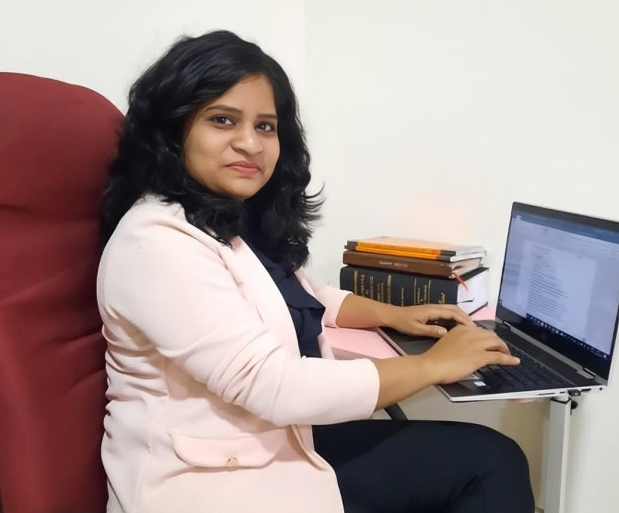






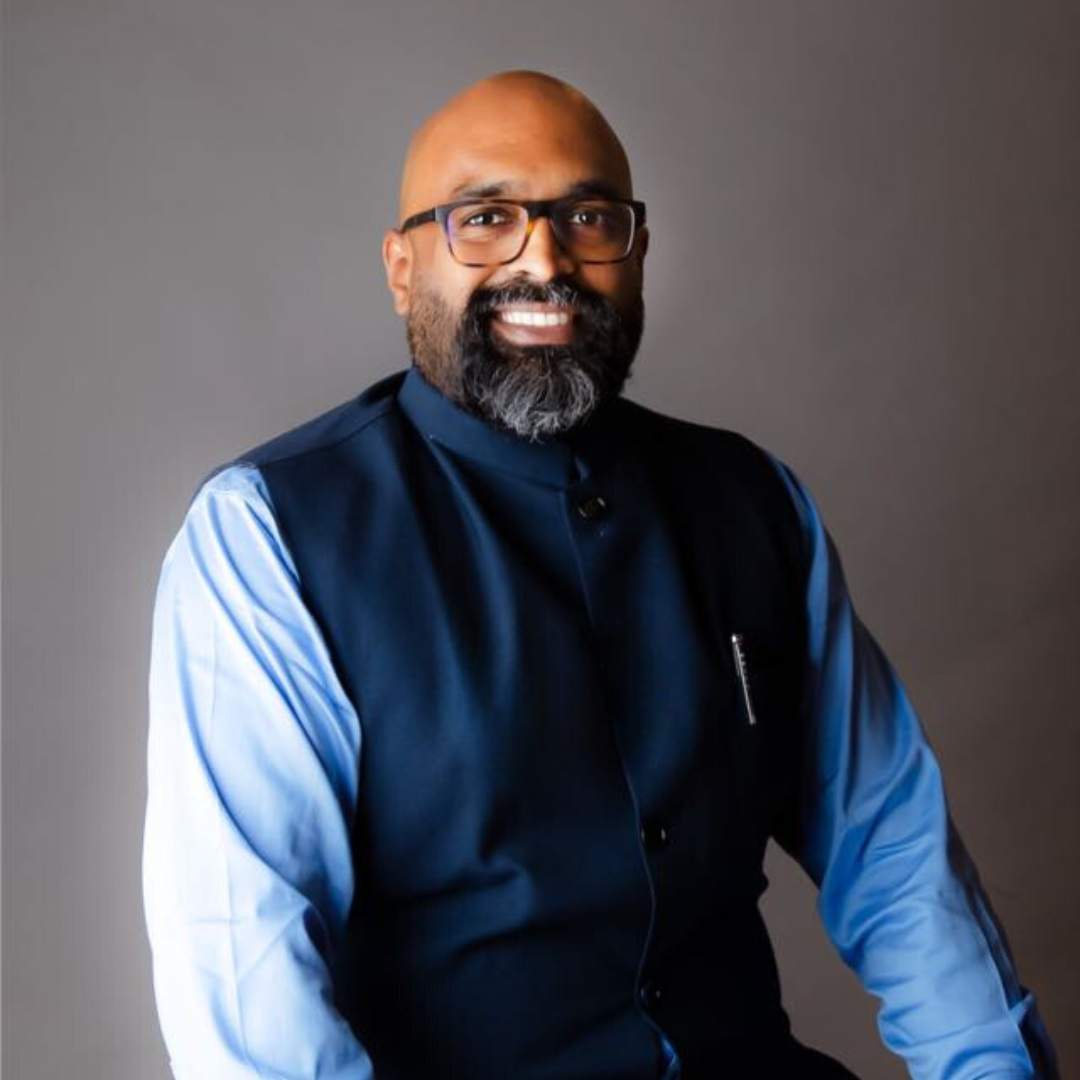





 Allow notifications