Let me start with the most important question, what motivated you to specialize in immigration consulting, particularly in areas like humanitarian and compassionate, medical, admissibility, and other complex matters? And how did Settle Immigration Services come into existence?
Interestingly, this is actually my second career. Back in 2009, I was pursuing Chartered Accountancy. My father is a CA in both India and Canada, and as is often the case in India, the son typically follows in the father’s footsteps.
At that time, immigration consulting was a growing field, and I thought I’d explore it as a side interest. But once I attended my first course, I realized this wasn’t something you could do casually – it’s vast and nuanced. There are so many areas: economic immigration, business streams, enforcement, family sponsorship, and more. So I decided to commit fully. Back then, ICCRC was the regulatory body.
I completed the program, passed the licensing exams, and launched my practice in 2012. In the beginning, I handled every type of case to gain hands-on experience. Over time, I developed deep expertise in certain areas – especially humanitarian and compassionate applications and Procedural Fairness Letters (PFLs).
For context, a PFL is issued when IRCC has concerns about an application. It gives the applicant a chance to respond. Often, the officer may have already made up their mind, but the process demands procedural fairness. We’ve had a strong track record – over 90% success in responding to PFLs in the last 12 years. Most PFLs we deal with are the result of DIY applications, which is why retaining a legal expert is so important.
Settle Immigration offers a full range of immigration services, but my personal focus is on refusal cases, H&C submissions, and family sponsorships.
From almost becoming a CA like your father, you built a successful career in a completely different field and are now Chair of the Board at the Canadian Association of Professional Immigration Consultants (CAPIC). Can you share more about that journey and your responsibilities?
It’s been an interesting and rewarding journey. Initially, without business experience and determined not to rely on my father, I learned the hard way. There were moments when people suggested unethical practices – selling LMIAs, for example – which unfortunately occur in the industry, even among some lawyers.
But I chose integrity. I wanted my work to speak for itself. It took years, but today I’m proud to say our clientele is purely referral-based – 100% word of mouth.
I started with the Finance Audit Committee at ICCRC, which later became the College. I joined CAPIC in 2018 as a committee member, became a board member in 2021, and was elected Chair of the Board in 2024. This would not have been possible without the support of my parents – financially and emotionally.
As Chair, my role includes providing strategic leadership, ensuring CAPIC remains a strong voice for immigration consultants across Canada. I work with the Board to set long-term goals, advocate for policy reforms, and maintain professional integrity. I also attend stakeholder meetings with CICC, IRCC, and CBSA. In fact, I recently co-chaired a meeting with IRCC’s Assistant Director Tammy Lynn on December 18th.
The role allows me to help shape the future of our profession through reforms, continuing education, and advocacy.
For skilled professionals abroad, particularly from India, how do you guide them in immigrating to Canada? What are key considerations?
I start with a comprehensive assessment. I like to call myself an immigration doctor. I diagnose eligibility, identify the right stream (Express Entry, PNP, etc.), and tailor the path to the client’s goals.
People often confuse Express Entry with PR. Express Entry is a system that manages applications under multiple programs: CEC, Federal Skilled Worker (FSW), and PNPs. For FSW, you first need 67 points out of 100. CRS is separate and draw-based.
Many applicants fixate on the IELTS “7778” benchmark, but language is just one of six FSW factors. Job duties – not titles – are critical. Under section 87.1 of IRPR, the applicant must perform the majority of duties listed in the NOC. Even if your title is “Receptionist,” if you perform the duties of an “Administrative Assistant,” your role may be skilled.
We pay close attention to experience letters – ensuring 60% of duties align with the NOC. Many employers, especially large ones, use rigid templates, which can be problematic. If needed, we request alternate letters from supervisors.
Foreign experience letters often lack detail. I advise clients to secure complete, detailed letters before leaving their job. And never copy-paste duties, customization is key.
We’ve never received a PFL for PR applications we handled from scratch in 12 years, that’s our benchmark.
Could you elaborate on Express Entry vs. other pathways, and the common challenges applicants face?
Express Entry gives you a score and lets you create a profile. But eligibility is the first step. The system favors younger applicants; points start dropping after age 29.
Even if your score is low, register. Back in February 2021, there was a draw with a cut-off of 75 – the lowest ever. Profiles are valid for one year, and you can update them if you improve your language scores.
If you’re paid in cash, that’s okay, just document it. Get a letter from your employer, bank statements if available, or tax filings. If income is below the tax threshold, provide an affidavit. If documentation is limited, secondary evidence like supervisor letters can help.
For PNPs, some require job offers and others are draw-based. Applicants inside Canada usually have more options. Some streams like Ontario’s Human Capital Stream, pick you from the Express Entry pool.
If you’re already here, Ontario has pathways for recent graduates and skilled trades. A master’s degree can give you 30 extra CRS points and some PNPs allow direct PR application after graduation.
Alternatively, prepare well for IELTS and French. The French TEF or TCF can boost your CRS by 62 points, and IRCC now conducts French-specific draws. This is often underutilized.
Spending $40K–$70K on a degree might not be necessary if you can reach a higher score through language preparation. That money could go toward a house down payment instead.
What are some of the most common mistakes applicants make?
First, eligibility is misunderstood. Selecting the wrong NOC can lead to refusals. Documentation errors are also frequent, such as submitting the wrong form.
People also fail to disclose past visa refusals, even from other countries. That’s serious – under Section 40, it’s misrepresentation, which leads to a 5-year ban or removal if you’re in Canada.
Always disclose, and always hire a legal expert if unsure. Small errors can lead to big consequences.
How have global events like COVID or regional conflicts impacted immigration, and what does the future look like?
Conflicts in Ukraine, Israel, and elsewhere have led to increased refugee claims and backlogs. Despite claims that AI only assists decisions, we’ve seen refusals issued by automated systems.
Processing times have been affected, though IRCC says they’re using historical and projected data to improve accuracy. With high immigration volumes, economic pressures have led to reduced targets.
Now more than ever, improving your score through language tests, especially French, is critical.
Is there any final piece of advice you’d like to share?
Yes – do not misrepresent. It’s taken very seriously here. Don’t submit false duties or experience. It may seem like a shortcut, but it jeopardizes your future and your family’s future too.
If you want to gain skilled experience, ask your employer to give you those duties first, then apply. The integrity of your application must be protected at all costs.
Hello, and welcome to yet another episode of SuperLawyer YouTube channel. Today, we have with us esteemed advocate, Jose Abraham, who is Advocate on Record as well. And we are excited to hear his journey, who has authored five books alongside his booming practice and the kind of the connections he has built and the way he represents his clients. Thank you so much for joining us here. Hope you’ll enjoy the interview. Sir, let’s start with the very, very first question and an interesting one I would say that we want to hear your story from your school days till now, the kind of learnings, the kind of pivotal moments that you have gone through in the making of the Advocate on record and the author of five books, Jose Abraham, sir please.
First of all, Namaskaram to all the viewers of SuperLawyer, and I would like to sincerely thank SuperLawyer for giving me this wonderful opportunity to interact with all of you. The first question is about my journey, from my school days to today.
I am originally from a remote village in Kerala called Madampam, which is in the Kannur district. It’s a very remote area, and I attended a government school, which was a Malayalam-medium school. The reason I am mentioning this is because, nowadays, people might assume that one needs to come from an elite background or have a convent school education to succeed. So, I want to be honest and share my true background, as it might resonate with some of you and be of help.
Coming from a remote area and attending a regular school, I am also a first-generation lawyer. During my school years, I developed an interest in reading books and newspapers, which made me aware of the significant role played by the judiciary and the legal profession. This became my motivation, and by the time I was in the 9th and 10th standards, my aim was very clear: I wanted to enter the legal profession.
For my 11th and 12th grades, I chose humanities, and later pursued my law degree from Government Law College, Kozhikode, which is also in the northern part of Kerala. During my final years of law school, I considered preparing for the civil services. With that ambition, I moved to Delhi.
However, after a month of civil services coaching, I had a realization. I felt that if a lawyer has the potential to be a civil servant, then a lawyer can contribute even more effectively than a civil servant. This realization came to me very quickly, and I decided to focus on my legal career.
I began practicing at the Supreme Court, but I didn’t limit myself to just the Supreme Court. The office I joined handled cases from trial courts, high courts, and various tribunals in Delhi, which is a hub of legal opportunities. I took on cases in all these forums and even handled small matters, such as paying fines for traffic challans. These are cases where a lawyer might not even be necessary, but that’s how I started my journey.
Wow, sir! You knew your passion from childhood. It’s rare to meet someone who decides at such a young age what they want to become and actually achieves it. You’ve been an Advocate-On-Record for over 16 years now. How has the legal landscape in India evolved during this time, and what new challenges have you or your colleagues faced? With the rapid advancements in technology and the constant introduction of new laws, we’d love to hear your thoughts on these changes and how they have impacted the legal profession.
I would like to divide these 16 years of my practice into two periods: pre-COVID and post-COVID, because COVID has changed everything, including our legal profession. Yes, pre-COVID, there were challenges at that time as well. But after COVID, the whole system has changed. Of course, challenges remain, but I prefer to look at it from a positive perspective. New doors have opened for the legal fraternity.
Now, a lawyer sitting in a remote place like Rajasthan can attend matters in the trial court, the High Court, and even the Supreme Court, all thanks to COVID and advancements in technology. Nowadays, lawyers can manage multiple cases simultaneously, sitting in their chambers with several devices in front of them. That’s one of the greatest advantages COVID and technology have brought to us. It’s one of the most positive changes I’d like to highlight.
I also recognize that many law students or newly practicing lawyers might be listening. Virtual streaming is now available, and all courts are on YouTube or other specific platforms. I would like to request all young lawyers and law students: whenever you have time, please watch court proceedings. You can learn a lot by simply observing how things work.
During my initial days, we would go to court just to see how senior lawyers like Nariman Sir, Arjun Sir, and other legal luminaries addressed the court, persuaded judges, and secured favorable orders. Back then, to witness these events, we had to be present in the Supreme Court, and it was rare to see them in High Courts. Today, however, everyone can watch how the Supreme Court’s constitutional bench handles matters. You can see the top lawyers arguing various cases.
COVID has, in fact, given us many opportunities along with advancements in technology. There are numerous platforms now. For instance, SuperLawyer, which I believe is a more recent creation, is a result of technology. We are getting more opportunities, more platforms where we can interact and gain a wealth of knowledge. That’s what the present era offers us.
Sir, beautifully said. The SuperLawyer YouTube channel is a relatively recent addition, but SuperLawyer written interviews have been conducted for over a decade now. This has actually helped us transition to more video interviews, as people often feel more comfortable speaking on camera rather than writing their responses. So, it has been beneficial for us as well.
With that in mind, sir, I would first like to ask: how do you find the time to write such amazing books? One book, in particular, I’d like to discuss is Indians and Immigration Laws: Concerns and Remedies, which addresses the critical issue of migration in Indian society and explores the legal framework surrounding it. Could you elaborate on your thought process while writing this book and perhaps share some insights into the cases you’ve encountered related to Indian migration laws?
Yes, as a first-generation lawyer, to establish a successful practice, we need to do multiple things. One of these things is writing books, as it gives the impression that we may be an authority on a particular subject. That’s why many choose to author books. This helps us gain recognition within the legal fraternity.
I would advise participants and viewers to start writing whenever possible. You can begin by publishing articles in newspapers or journals—there are many available now. Take advantage of these opportunities as they can give you an edge and increase your visibility. Writing, especially authoring books, is one of the best ways to present yourself to your fraternity and potential clientele. It is essential for establishing a solid practice.
The first book I authored is on immigration. Immigration law may be a well-developed area in most developed countries, but in India, unfortunately, it is still underdeveloped. Very few lawyers focus on this area. I realized that this was an untapped field, so I decided to concentrate on it and write a book about it.
A large number of Indians migrate to foreign countries for jobs or studies, and this is covered under the Indian Immigration Act of 1983. There are laws and systems in place governing immigration, but the common person may not be aware of how the entire process works. I authored this book as a way to educate and empower ordinary people migrating abroad, particularly migrant laborers and domestic workers heading to the Middle East. Many of them face exploitation on multiple levels, such as fraudulent recruitment agencies, high fees, human trafficking, and bonded labor.
I wrote this book to help NGOs and society as a whole, particularly those working in the field of migration. It also addresses the broader issues surrounding the migration process. Many cases are now emerging in courts related to recruitment fraud and other issues. When something happens to an Indian citizen abroad, it is often the responsibility of the Indian Embassy to intervene and provide legal support. The high courts can also entertain petitions regarding the kind of legal assistance Indian missions and embassies are supposed to provide if they fail to do so.
What a beautiful area and as you rightly said that there are very few who are practicing this particular immigration laws in India. Outside India, especially developed countries, they have developed their own immigration system, which is more prominent.
Sir, given all of this and your connection with NGOs and you being the global president of Pravasi Legal Cell, what inspired you to establish this particular NGO? And what unique legal issues do you actually encounter while dealing with the cases that are related to NRIs?
In 2009, I was fortunate to have the opportunity to establish an NGO, Pravasi Legal Cell, aimed at providing legal assistance. I came to Delhi in 2007 to start my practice, and despite India being one country, the vast differences in languages and cultures across states made my initial years challenging, particularly as I am from the southern part of India. These early struggles inspired me to create an NGO that would offer pro bono legal aid to migrants, who often face similar challenges.
That’s how Pravasi Legal Cell was founded. Initially, we focused on providing legal support to migrants in Delhi. At the time, a significant portion of these migrants were nurses from Kerala, who were subject to severe exploitation. There was a bond system in the nursing field that was prevalent between 2009 and 2011. Even though the Constitution abolishes bonded labor and specific legislation exists to prevent it, the bond system persisted in the nursing sector. Nurses, after completing their education and joining a hospital, were forced to sign a bond that required them to work for the hospital for three to five years. If they broke the bond, they had to pay a hefty compensation, sometimes as high as five to seven lakhs.
In 2009, I filed a Public Interest Litigation (PIL) on behalf of one of these nurses. The Honorable Delhi High Court ruled that such bonded labor practices were not permissible in the nursing profession. The court directed the Nursing Council to issue proper guidelines and circulars to address this issue. Later, we filed another PIL in the Supreme Court, which led to a national resolution of the matter.
This case was one of the first significant issues Pravasi Legal Cell tackled. Afterward, we gradually expanded our reach to other countries. We started with the Middle East and now have offices in almost all major countries in the Middle East, Europe, and the U.S. Pravasi Legal Cell has established chapters worldwide, and our primary objective is to provide legal aid to those in need and to advocate for policy changes related to immigration.
What an accomplishment, sir! It’s truly amazing to hear about the changes you’ve brought forward. The kind of discrimination that was prevalent and the way you’ve addressed it is remarkable. I sincerely hope we have more dedicated individuals like you in this field, and that many more will follow. These changes are not only necessary but crucial for ensuring that India becomes one of the best countries on the global stage, both for work and immigration. This is something we constantly face, and addressing it is vital.
Sir, considering you’re also an avid writer, how do you view the intersection of education and law, particularly the teaching aspect? As the Chairman of Paideia Institute in Delhi, how do you feel legal education in India has improved? Is it paving the way for a better future, and how are we working to make it even more competitive on an international level?
What are your thoughts on ensuring that our legal education system becomes even more globally compatible than it was before?
Yes, I have seen a lot of changes and improvements in the legal education system over the last decade, especially with the establishment of national law schools in multiple locations. This has significantly enhanced the quality of legal education in India. During my own law graduation, a systematic education was lacking. There were many law colleges that existed only on paper, and by spending some money, anyone could obtain a law degree. I had heard about many such instances at that time.
However, as you rightly pointed out, the system has changed. Now, we can see a more structured approach to legal studies. Students who approach us for internships today are highly qualified. The standard of legal education has improved dramatically, thanks to various authorities, including the Bar Council of India and the State Bar Councils. Additionally, multiple orders from the Supreme Court have helped streamline legal education. Now, like IITs and IIMs, law schools are also offering campus placements, and bright students can secure high-paying jobs straight out of college.
This is a very encouraging scenario. I am also heading an institute called Paidiea Institute, where we provide extensive training focused on capacity building, particularly in areas like POCSO, POSH, and RTI. RTI is one area where we have done a lot of work in spreading awareness about the Right to Information Act. In fact, we filed a PIL before the Supreme Court last year, which led to an order directing all High Courts and state governments to establish online RTI portals. Now, citizens can file RTI applications online, making the process more accessible.
Paidiea Institute aims to provide training and capacity building to empower ordinary citizens.
What has your experience been like while practicing in the Supreme Court, the High Court of Kerala, and other High Courts? What differences have you observed in the legal processes? And what are the challenges between these two levels of the judiciary? There seems to be a misconception among people who don’t fully understand the legal system. They often feel scared or think the case could have been resolved earlier, without moving to the Supreme Court. It’s difficult to explain to clients why a case had to escalate to the Supreme Court. How do you handle such questions, and how do you ensure your clients are satisfied with the solutions you find for them?
In our legal system, we have multiple jurisdictions. At the district level, we have trial courts, at the state level, we have High Courts, and at the top, we have the Supreme Court. The skill set required to practice in these courts can differ significantly. For example, the skills needed in a trial court are different from those required in a High Court, and at the Supreme Court, it’s even more refined.
In the Supreme Court, especially on an admission day, the court may hear around 80 to 90 petitions in just three to four hours. A lawyer only gets two or three minutes to present a case, and within that time, the court decides whether to admit the case. This requires a very specific skill set to handle such cases at the admission level.
However, in a High Court, especially in its original jurisdiction, the process is not as fast-paced, and there is more room to present the case. So, yes, different courts require different skill sets. You also mentioned clients who question why a case wasn’t resolved at the first level itself, or why it had to move to the appellate level.
As lawyers, we can only do our part, but for various reasons, justice may not be achieved at the first instance. That’s why we have a robust legal system with appellate jurisdictions. If there has been a misunderstanding or misapplication of the law, we can seek correction from a higher court. This is the beauty of our legal system.
Yes, different platforms may require different skill sets, but my personal opinion is that it’s crucial to gain experience at the trial court level. The trial is the heart and soul of litigation, the foundation. If a lawyer can gain trial court experience early in their career, they will have a better understanding of the legal system—how to draft a plaint, how to file a complaint, how to conduct examinations and cross-examinations.
This trial experience makes the transition to practicing in the High Court or even the Supreme Court much easier. I’ve seen some very talented colleagues in the Supreme Court, but because they lack trial experience, they sometimes feel a sense of incompleteness. On the other hand, a lawyer who has trial court experience often carries a higher level of confidence. That has been my experience.
There are many aspirants for the AOR exam, but they often don’t know the right approach to prepare or understand the importance of being an Advocate on Record. We would request you to share some of the key details about the kind of preparation one should do, the resources they can use, and the strategies you followed that helped you become an Advocate on Record at such an early stage in your career.
An Advocate on Record (AOR) is a designation given by the Supreme Court, allowing the advocate to file matters before the Supreme Court. This designation is an added advantage for getting cases in the Supreme Court. Yes, clearing the AOR examination requires significant preparation and effort. The passing percentage is around 10 to 15%, which shows that it requires thorough preparation to succeed.
Most of the questions or syllabus for the AOR examination are related to the practical aspects of drafting, practice, procedure, and leading cases. These can be mastered through at least one year of practice in the Supreme Court, which will equip you with the skills needed to draft Special Leave Petitions (SLPs), Article 32 petitions, and transfer petitions before the Supreme Court.
The key to passing the AOR exam is developing practical skills rather than relying solely on theoretical knowledge. Understanding leading cases is also crucial, as it equips you to draft well-supported petitions with settled laws or authoritative pronouncements of the Supreme Court.
Additionally, knowledge of practice and procedure will inform you on when to file or approach the Supreme Court and how it handles matters under Article 136, Article 32 petitions, or even original jurisdiction cases. The Supreme Court can sometimes entertain original suits directly. These are all practical aspects of litigation in the Supreme Court.
A year of sincere preparation will certainly help in clearing the AOR examination. The Supreme Court’s website provides access to previous question papers, materials, and the syllabus for the exam. There is a dedicated AOR section with a separate link where all this information can be accessed. I believe even interviews and other helpful resources may be available on other websites or in similar repositories of information.
Now, I would like to move on and talk about work-life balance, which is such an important topic nowadays, especially when it comes to mental and physical health. How do you balance all of this with the kind of busy schedule you have with your cases? Is it just about hobbies and interests outside of law, or how do you make sure to carve out time for your family as well? I believe that’s one of the most important things, and we’d love to hear your perspective on it. Additionally, I’d like to ask about your views on mental health, especially for lawyers, as we are definitely under a lot of pressure.
That’s a very interesting and relevant question. A balanced life is essential for any professional. Of course, all of us aim to be successful lawyers, but at the same time, we should also strive to be successful fathers, sons, and brothers. A balanced life enables success in all areas—personal, professional, and community life.
You see, there are many “super lawyers” with wonderful practices, but some struggle to maintain their family relationships because they can’t make time for their loved ones. There are also lawyers who, by the time they reach 40 or 45, may have impressive careers but are physically weak due to neglecting their health. So yes, Divyaji, your question is very important. We must learn to balance our personal, private, and professional lives. Only then can we truly achieve success. There’s no point in sacrificing one for the other.
Regarding mental health, it is indeed a growing concern, even for young children. The COVID pandemic gave us opportunities but also challenges, especially with technology. The increase in screen time has reduced personal interactions, whether with family or friends. While technology has its advantages, we must use it wisely to maintain a balanced and successful life. A content and happy life, in essence.
Beautifully said, sir. Yes, screen time has definitely increased, and there are many perspectives we need to keep in check as the world, and India, continues to evolve. As a successful advocate, what advice would you give to first-generation lawyers who are just starting their practice? What kind of challenges do you think independent litigators face, and how can young lawyers stay motivated? Because often, we have a tendency to give up too early. You didn’t give up and made a name for yourself. Could you share your insights on that?
Divyaji, it’s always a bit uncomfortable to talk about oneself. And I don’t claim to be a “successful” lawyer, but as a student of law and someone who has been in this profession for 17 years, I can offer a few observations.
To succeed in this noble profession, certain skill sets are essential, and those can be developed through a committed and dedicated lifestyle. If you are sincere in your profession, it will reward you. Don’t worry if you’re a first-generation lawyer or come from a humble background. These factors don’t matter. A lot of young lawyers come from families with judges or senior lawyers, which may help them in the initial stages, but even for them, this profession requires continuous dedication, hard work, and commitment.
This is a wonderful profession. Every day brings new challenges—new cases, new judges, new legal issues. The legal system is constantly evolving, so we must update ourselves regularly. Being a successful lawyer requires a unique set of skills, including excellent communication, both in drafting and oral arguments. It’s important to learn how to draft effectively and argue convincingly.
Maintaining a good relationship with your clients is another key skill. There will be a lot of pressures—financial, familial, and emotional—but you must be able to manage these while staying focused. This profession, which deals with human issues like family matters and disputes, not only shapes us into successful professionals but also helps us become better human beings. That’s one of the most fulfilling aspects of being a lawyer.
Thank you, Divyaji, for giving me this opportunity to share my thoughts. You’ve asked all the right questions in such a way that I felt comfortable sharing my experiences. Thanks again.
Thank you so much for your humility and for agreeing to join us, sir. On behalf of the SuperLawyer team, Namrata, and myself, we sincerely thank you. You’ve shared your story so beautifully, even though we often hesitate to talk about our personal lives and motivations. I believe that those watching this video will learn so much from you—how to better themselves in life and in this profession. Once again, thank you for your time.
Thank you very much, Divyaji, for giving me this opportunity. You are doing such important work by supporting young professionals. Please keep it up. You’ll always have my support, and best wishes to all the participants. Thanks again.
Can you share the journey that led you to pursue a career in law, especially considering your background and childhood ambition?
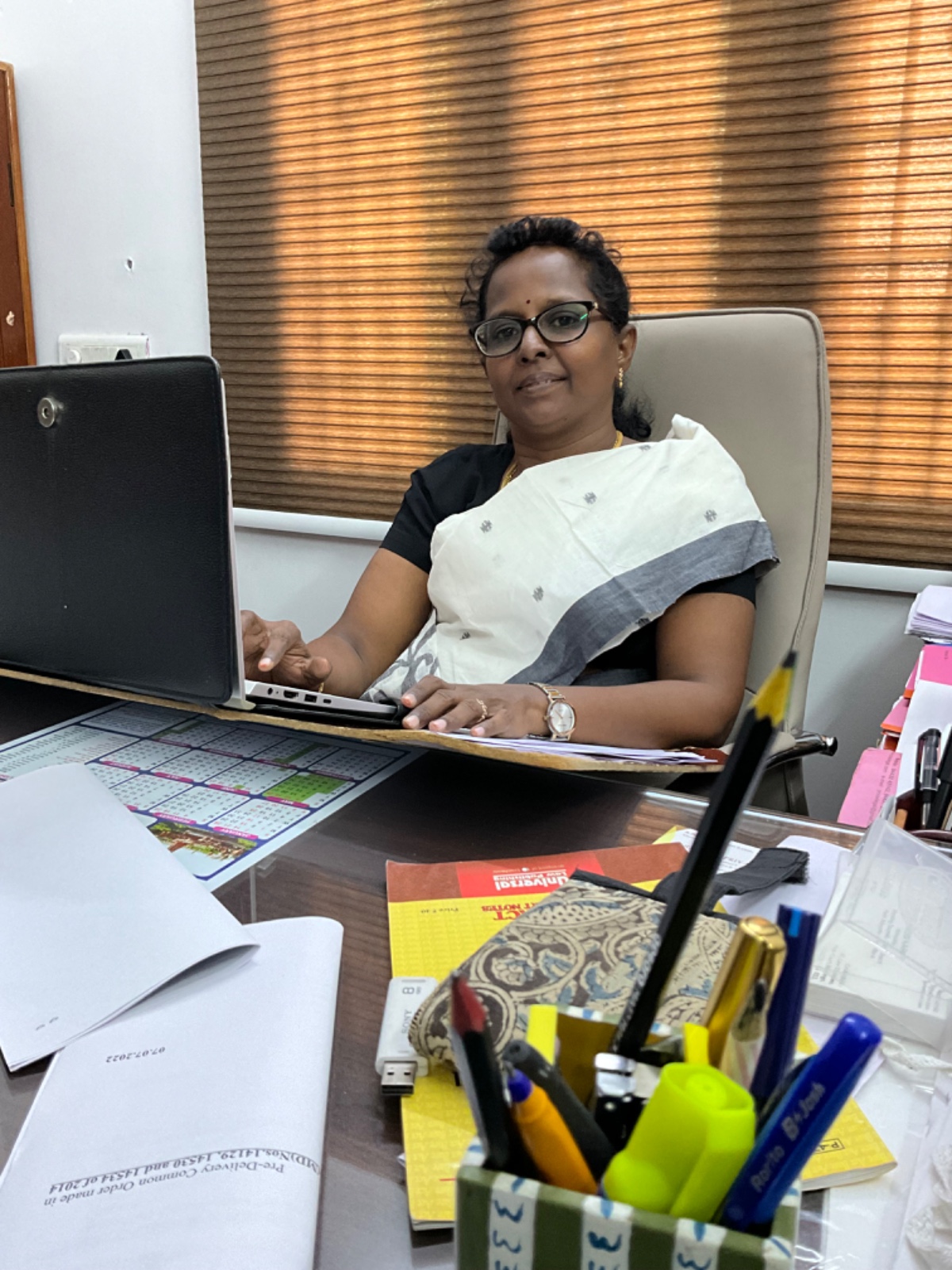
I am from a backward district of Tamilnadu and I am one among the four daughters of my parents. Everyone opted for various professions, but interestingly, this profession attracted me more, even in my young days. The reason might be that the Sub Court campus at my native is existing near to my school. I was going to school everyday by watching the court campus, with the busy advocates roaming here and there with robes. I was very eager to know more about it and lots of questions came into my mind and the same were clarified by my father who was a teacher by profession and the entire outcome was that this is the only profession where I could question anybody, however giant he or she might be. Further I found this profession makes one closer with human problems. I am fond of moving with people and would like to be surrounded with people always. The litigation area turned out to be a good option for me. This is the main curiosity that pushed me to choose this profession as my childhood ambition approximately from my 6th standard onwards.
With 25 years of experience in law, what inspired you to specialize in labor, service, and writ matters, particularly in the high court setting?
Yes… after choosing law as my career, I did not have any clear idea initially. But while studying the Constitutional Law and Administrative law as subjects, my mind was very much obsessed with various decisions of the Supreme Court and High Courts questioning the excessive actions or inactions of the Government and that had driven me to concentrate my work in the High Court.
Founding a law firm, especially one like POLAX LEGAL SOLUTIONS, requires vision and determination. What motivated you to take that step, and what challenges did you face in establishing and maintaining it?
Being a woman, I had to balance both family life and profession, though my family is a supportive system for me. Sometimes our presence is very much needed at home to take care of our elders, kids etc. My husband, Mr.Ramar is also an advocate on the criminal side but I wanted to establish a separate office, though he is very supportive to me in personal life and professional life. I felt the necessity of someone to continue my cases even in my absence to justify my Clients. The same was felt by my friend, Mrs.Lakshmi. We both used to help each other in all our cases from drafting to arguing. This went well and we both realised our compatibility and thus the concept of a Law Firm was coined. The Firm was conceptualised into reality in the year 2013. We both had the determination to continue the profession without any break and that was the main reason for the concept of this Law Firm. It is also time to show our young woman advocates that persuasion and patience in the profession would make you withstand forever. We have to create our own path to success. Moreover, since it was my childhood ambition to become an advocate, I have never felt any stress or depression in my professional life. As we face different cases, dealing with each case needs to be addressed individually and so I feel refreshed in each and every case. In fact I enjoy working and I don’t see any difficulty in family life and professional life. So go by what your heart says and life is so beautiful.
As a founder-partner of a leading law firm, what are some key lessons you’ve learned about leadership and collaboration, especially in an industry that traditionally has been male-dominated?
In fact, we don’t feel any difficulty in running the firm as all the junior advocates associated with us were more co-operative, helpful and played a vital role in running our Firm. Legal profession is basically a 24 x 7 job and all of us were ready to work even at midnight, if it is necessitated by considering the urgency of the case. In fact, we created an atmosphere of joining together, working together, growing together and celebrating together. It enhanced our personal relationship also.
Being recognized as the only law firm with women advocates as partners running for 10 years is a significant achievement. Can you tell us about the importance of gender diversity and inclusivity in the legal profession from your perspective?
Of course, it is a male dominated profession. When I entered into this profession during 2000, the daily cause list consisting of the list of cases published in Madras High Court consisted of 95% of male advocates names. And there were only a handful of women judges at that time, though there were well performing women seniors were found at Madras High Court. But going by the years, this trend has now changed. In fact, I had not considered any of my co advocates, either male or female, as my competitor. I felt myself as the competitor and hence I never felt that I am running in a race along with male. But, the way male advocates and even male judges look at the woman advocates is absolutely discriminatory. I can put an incident, one Mr.X, who is a sitting judge now, when he was an advocate made a comment to me that “a woman from a good family will not come for this profession”. This did not resist me or my character, but it made me change my perspective towards him. One more incident to be pointed out, one of the senior advocates, who claims to be a progressive thinker, threw a question that “from where and how do you get briefs?”. I don’t think that he could have put this question to any of the male advocates ever.
-as in all the fields, there need not be any discrimination between male advocate or woman advocate, and it should be termed only as “ADVOCATE”. An advocate is an advocate and where does the question of woman advocate or male advocate arise? We both are doing the same work with the same effort and determination. Even today, the Judges used to identify by saying “woman advocate”. We don’t want to be identified and we are advocates as such.
You’ve had the opportunity to work with esteemed companies as clients. Could you share some insights into maintaining successful client relationships and handling high-profile cases effectively?
The issues of the clients should be given much more importance from the time of discussion with them till explaining the outcome of the cases. It is also needless to say that we have to let them explain the exact disputes or issues they are facing. Then only we can advise them of the legal solutions and we should not blindly follow their words without substantiating documents. The right legal advice given by you will make the Clients have confidence with you, sometimes, the advice could be not to initiate any legal proceedings. The most important thing is we should not treat them as a single point solution for all our financial needs, we should explain to them exactly what we are going to do and the win or lose situation. To be precise, proper legal advice, and transparency are the key to retain your clientele.
Considering your extensive experience, what advice would you give to fresh graduates aspiring to pursue a career in law, particularly those interested in practicing in high courts?
If litigation is your option, then be ready to undergo proper training under the guidance of a senior; Be ready to work for 24 x 7; Be ready to do all the work in office, either it is drafting, research work or clerical work; get updated with latest decisions in important cases of your area of practice; spend more time in reading either case papers or the decisions related to cases; Knowledge is power in litigation so get equipped; consider each and every work as an opportunity as each and every single work done during this period would be an experience for you.
Ma’am, can you please share the pivotal moments or experiences that led you to pursue a career in law, especially focusing on your journey from studying at the Army Institute of Law to earning an LL.M. at The Fletcher School of Law and Diplomacy?
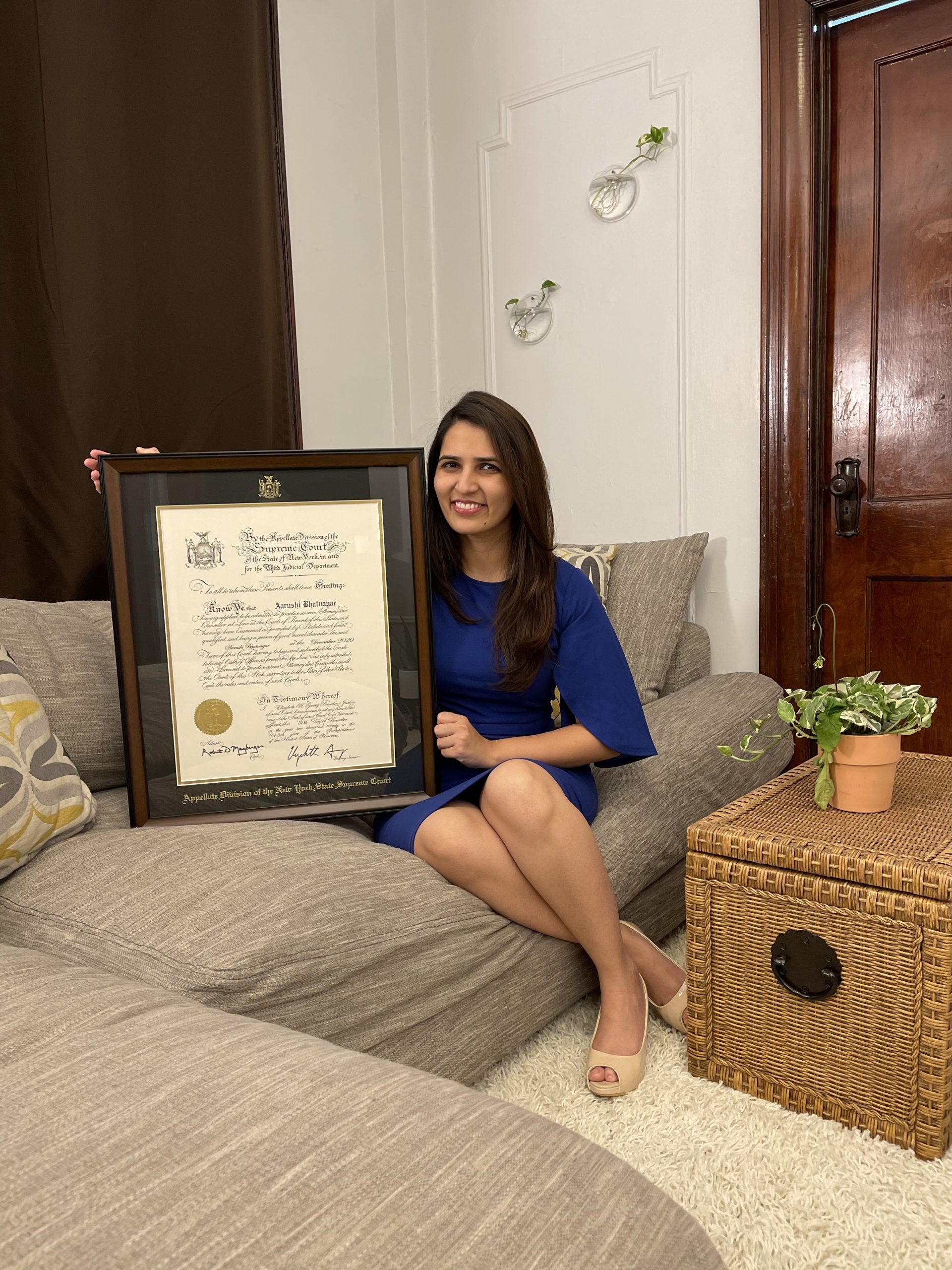
I always had a justice oriented personality and the choice was either between Law or Journalism for me when I was growing up. I also was very clear since very early on that I wanted to work in the field of women’s rights and gender based violence and with that I decided that Law would be a path best suited for me. At 22, I published a novel on the human trafficking of women in Nepal to India after the Nepal earthquake and after completing Law from the Army Institute of Law I went on to study at the Fletcher School where I focussed specifically on gender based violence and International Law. I wouldn’t say that there was one moment that defined my trajectory but I’d say that just the conviction that my aim in life is to use my education, privilege, knowledge and expertise to help women led me from Law School to graduate school to the positions I’ve held thereafter.
Your LL.M. focused on International Laws, and you received the Honos Civicus Award for Civic Engagement. How did these experiences shape your perspective on the intersection of law and civic engagement, and how do you see it influencing your current work?
I feel both Law and civic engagement have a symbiotic relationship for example it was Raja Ram Mohan Roy’s advocacy against ’Sati’ to legally put an end to it in the 1800’s and today we see the role of civic engagement in creation and abolishing of laws over matters important to the current times. For me, being active and participating in the community, advocating for one’s community and influencing positive change is my mantra and I live these beliefs by being involved in groups and advocacy over issues that I am most passionate about like women’s rights and immigrant rights.
As a law clerk specializing in asylum law and gender rights at the Law Office of Robert B. Jobe, can you elaborate on how your work has involved strategizing refugee and asylum claims based on gender-based persecution? What challenges and successes have you encountered in this role?
In my previous role, I worked with battered women who were fleeing persecution that they suffered in their home countries and it involved documenting their persecution, highlighting issues that were in tandem with the theory of their case. My journey with a client often started from building rapport with them which sometimes can be hard when they have suffered immense trauma in their lives, to creating a safe space where they can feel comfortable in expressing themselves and sharing their stories. One challenge with this work is that sometimes the other person is not open to seeking therapy or doesn’t live in a community that would help them work through their trauma; I learnt how to tackle this bump over the years and I feel the more you grow as a professional and person, there are different approaches you can use to understand their resistance to therapy while also giving them other suggestions to seek support from a place of empathy.
You’ve engaged with governmental organizations like USCIS and the Executive Office of Immigration Review. Could you share how these partnerships have contributed to your work in supporting vulnerable populations, and what impact your stakeholder engagement strategy has had on your cases?
My engagement with EOIR and USCIS as a Law Clerk was limited to the work I was doing but given my position as the Vice Chair of the San Francisco Immigrant Rights Commission, I have more freedom to persuasively raise and inquire about immigrant issues with USCIS that impact immigrant population of San Francisco. That said both EOIR and USCIS are Federal bodies and stakeholder engagement with them happens at the Federal level that hopefully I am a part of at some point in my life.
Serving as a Commissioner for the San Francisco Immigrant Rights Commission, you’re involved in developing strategies for human rights and labor rights for immigrants. How do you balance your advocacy work with the practical aspects of implementing policies and programs to address these issues?
San Francisco Immigrant Rights Commission works on conducting special hearings to make recommendations to the Mayor and Board of Supervisors on Immigrant rights issues which span from creation of employment for asylum seekers to housing for immigrants to taking a stance on H1B layoffs to standing in solidarity with DACA recipients whenever the country fails them. Once we have a special hearing, we review the recommendations, debate them and then forward them. This debate is often rich and detailed with every commissioner bringing practical questions to the mix and we also have the San Francisco Attorney’s office and Office of Civic Engagement and Immigrant Affairs to help us through the procedure. At the end of the day, the aim is to be an accurate representation of the issues of the immigrant community and should there be a gap between the recommendations and the practical implementation of policy, the Mayor and the Board of Supervisors may reject it.
Your role as the Chair of Women’s March San Francisco involves designing and implementing human rights programs. Can you provide insights into the specific programs you’ve developed, and how collaboration with government and grassroots organizations has played a role in advancing these initiatives?
The Women’s March San Francisco is an inactive group right now but in the past I have worked on organizing First Amendment Marches in San Francisco on reproductive rights and have collaborated with different initiatives like we have co-hosted panels on equal pay for women followed by a movie screening (on the discrepancy of pay between the men and women’s football teams in the US) and we led a workshop on how to be active beyond the marches. The beauty about a group like WMSF is that it is an all volunteer group founded by women who are epitomes of ’stand up fight back’ and has been around since 2016. WMSF has also amplified the work of other grassroots organizations for years and has provided support (whenever possible) if needed.
As a Research Assistant for Prof. Dyan Mazurana on the topic of child brides in humanitarian settings, how did your work contribute to addressing evidence gaps in child marriage during crises, and what lessons did you draw from this experience?
My work as a Research Assistant was to assist with a literature review on the topic and then identify key stakeholders who possess experience and practical knowledge in the field of child brides in humanitarian settings so that they could be interviewed and their insights could be recorded by Prof. Mazurana. As my first assignment as a graduate student, a lot of my work revolved around planning logistics for interviews and communicating with the interviewees from INGO’s and governments around the world and I definitely learnt a lot in this process.
Lastly, what advice would you give to fresh graduates aspiring to make a positive impact in the legal and humanitarian spheres based on your journey?
Figure out your purpose in life, have a larger vision and chase that, you are more than your job, your accomplishments and your possessions. AND give back to your community!
If we start from the beginning, were you always academically diligent? Did you always want to pursue law? What other career would you have chosen if not law?
I have always considered myself a sincere but average student. I was not excessively academically inclined during my school years. Instead, my interests were directed toward art-related extra-curricular activities. Accordingly, my slam-book career goal was to be a fashion designer. At the same time, I had a strong family background in law, with multiple family members being in judiciary and litigation. Being amidst frequent family discussions involving topical legal issues, I gained valuable insight into the legal world and its opportunities. Ultimately, my interest in engaging with current affairs and doing my part to help the people around me pushed me to pursue law as a career.
You have completed your master’s from NLU Jodhpur. Would you like to share a few tips with the students who are preparing for CLAT? How different is the preparation of CLAT PG from that of UG?
The best advice that I can give to students preparing for the CLAT is to do as many practice tests as possible. In my experience, that is the key to cracking any competitive exam. Of course, studying and knowing the basic material that will be tested in the exam is also essential.
I found the CLAT PG preparation to be easier than the UG preparation. The subjects tested in the CLAT PG exam are part of the law school curriculum. If one has studied and built a strong foundation in the relevant law subjects during their undergraduate years, the CLAT PG exam preparation becomes a revision exercise. On the other hand, students preparing for the CLAT UG exam are right out of high school with no formal exposure to legal academia. In such a situation, enrolling in a good entrance prep course is worth considering.
Despite having an LL.M. Degree from NLU Jodhpur, you decided to pursue another LL.M. degree from NYU and had the flexibility of designing your course structure (subjects) there. What major considerations should one take into account while designing their course? What extra efforts have you made being a foreigner?
Many LL.M. programs provide the students with an opportunity to design their coursework. However, one must consider several factors while making this decision. First, the coursework should align with the candidate’s short-term and long-term career aspirations. A career in law is often path-dependent, and the first job often charts the path for future professional endeavours. Second, it is essential to choose an area that complements the candidate’s prior experience. Choosing a field that builds upon the existing credentials ensures that one can make the most out of a short and rigorous LL.M. program. On the other hand, LL.M. also provides a unique opportunity to diversify into new areas. It is essential to consider one’s areas of interest and the corresponding job opportunities while striking that balance.
As a foreigner, one should put extra effort when making space in a completely alien environment. I actively participated in networking events (both within and outside the university) and pro-bono activities, which gave me the familiarity and visibility required to succeed in the US job market. At the same time, being flexible and open-minded facilitated my venture into immigration law, a field that I have since fallen in love with.
Can you share in brief about your current role and responsibilities as a Managing Attorney at a boutique law firm in the NJ/NY area? How do you manage to maintain a work-life balance?
As the Managing Attorney of a boutique law firm, I have a diverse and dynamic set of responsibilities. I am responsible for onboarding clients, managing the cases from inception to completion, and handling the firm’s day-to-day operations. I advise multinational corporations, business units, and individuals on employment-based and family-based immigrant and non-immigrant visa petitions and applications. My role also entails hiring and training junior staff, including attorneys, law clerks, and paralegals.
Compartmentalizing my work and non-work activities helps me maintain a good work-life balance. While at work, I dedicate myself to planning and executing my tasks efficiently. Breaking complex cases and procedures into simple daily tasks helps me leave the office with a sense of completion and accomplishment. It also ensures that work anxiety and stress do not spill over to my personal life. During weekends, I like to travel and engage in cooking, arts, and crafts. Having an active lifestyle rejuvenates me and prepares me for the upcoming work week. However, there are certain times when maintaining a work-life balance is challenging. In those times, having a good support system at home helped me keep my spirits up.
You used to work as an Assistant Professor at Banasthali University, Rajasthan and now you are working in a law firm. What all struggles did you face adjusting in Banasthali and then in a Law Firm? What all things and skills did you learn as an Assistant Professor which are now assisting you in your current role as a Managing Attorney in your Law Firm?
Teaching at a university and working in a law firm is different in certain aspects. As a teacher, I followed a well-structured curriculum and spent all my efforts ensuring that my students remained interested in the topic and benefited from the course. On the other hand, managing a law firm requires me to handle unanticipated challenges daily. However, I have enjoyed both these roles and did not face any issues in transitioning from the former to the latter. Instead, I found that the teaching skills I developed in Banasthali come in handy when I train new hires at the law firm.
Would you like to share a bit about the field of immigration law? What is the future scope and struggles involved in the same?
Immigration is a very dynamic field of law. It involves securing and defending the rights of immigrants from various countries and backgrounds. The legal landscape is constantly evolving, and the changes substantially impact many companies and individuals. The ongoing pandemic has amplified immigration-related issues by forcing many firms to downsize and leaving many immigrants jobless and without a livelihood. Given the ever-increasing importance of the field, it is (arguably) one of the most attractive and rewarding career paths for law students.
You also cleared the NY state bar exam. How strenuous was the preparation? What are the eligibility criteria for the exam?
Preparing for the NY State Bar Exam is like a full-time job. It was one of the most challenging tasks I have undertaken. Enrolling in a good bar prep course is extremely helpful.
There are various qualifying methods to sit for the NY state bar exam. The most common criteria include graduating with a first law degree (J.D.) from an American Bar Association-approved law school. However, in the case of international students/foreign-educated lawyers, the eligibility criteria are pretty cumbersome. All foreign-educated lawyers must submit an online credential evaluation request along with the required documentation to the Board of Law Examiners. One should submit these documents even before the start of the LL.M. program because the evaluation process is time-consuming. LL.M. students must also fulfil the specified credits requirements via classroom courses in substantive and procedural law and professional skills. The official website of the New York State Board of Law Examiners provides the detailed eligibility criteria and application process.
What will be your parting words for our readers?
Focus on having both career goals and life goals. Be ambitious and entrepreneurial but remember that professional success depends heavily on working smart (in addition to working hard). Reach out to people and take their guidance, rather than spending time reinventing the wheel. Be patient and diligent, and success will eventually come. Lastly, prioritize creating a wholesome life experience as it is the journey that counts.








 Allow notifications