Tag: insurance lawyer

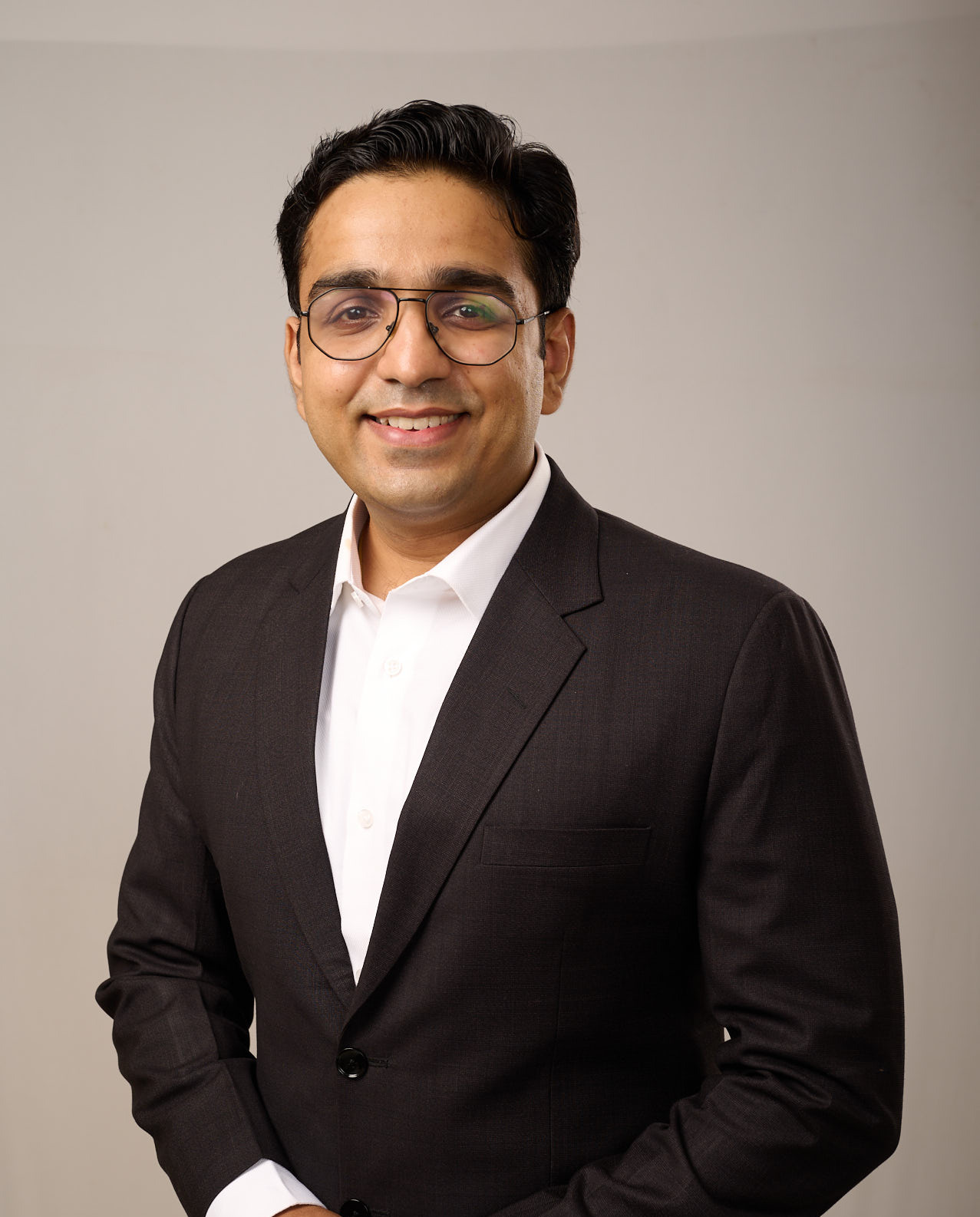
  • “What truly drew me to the field of Law was its dynamic nature and the intellectual challenge of navigating intricate commercial disputes.” – Prateek Mishra, Advocate-on-Record at Supreme Court of India and Principal at EP Advocates.

    “What truly drew me to the field of Law was its dynamic nature and the intellectual challenge of navigating intricate commercial disputes.” – Prateek Mishra, Advocate-on-Record at Supreme Court of India and Principal at EP Advocates.

    This interview has been published by Anshi Mudgal and The SuperLawyer Team

    With over 10 years of experience in commercial litigation and arbitration, what initially inspired you to pursue a career in law, and how has your professional journey evolved over time?

    My parents were not from a legal background, and as such, the inspiration to take up law did not come from my immediate environment. However, during my formative years, I found that my acquaintances in the legal profession always displayed an unwavering sense of purpose. I also remember getting inspired by the views that Mr. Rajeev Dhavan, Senior Advocate, would express on public issues, all rooted in constitutional values, and without any fear of the popular opinion. This, coupled with a deep disinclination towards pursuing a career in engineering, made law a natural choice.

    During my time at NLIU Bhopal, I developed a particular interest in international arbitration, which is reflected in my dissertation on jurisdictional aspects of international investment arbitration. What truly drew me to this field was its dynamic nature and the intellectual challenge of navigating intricate commercial disputes.

    Over the years, my practice has evolved from focusing purely on arbitration to encompassing a broader spectrum of dispute resolution. My experience at Luthra & Luthra helped shape my approach to complex commercial litigation. When we started EP Advocates in 2020, I focused greatly on disputes involving insurance law and insolvency, which is something I had already extensively undertaken in the past as well. Now, my role as an Advocate-on-Record at the Supreme Court has added another dimension to that practice. The evolution has been organic, driven by a desire to provide comprehensive dispute resolution services to clients.

    You completed your LLM at Queen Mary University of London, specializing in International Commercial Arbitration among other areas, what drew you to this specialization, and how was your experience at the university?

    My choice to pursue an LLM at Queen Mary was deliberate, given its renowned reputation in international arbitration. QMUL and MIDS Geneva are the only programmes that I had applied for. The program’s focus on comparative and international dispute resolution perfectly aligned with my academic interests and professional aspirations. I particularly valued the exposure to diverse perspectives, studying under leading practitioners and scholars in the field. The experience was transformative – I graduated with distinction in my dissertation on ‘The Relevance of Local Remedies in ICSID arbitration,’ and the program’s practical approach to complex international disputes has significantly influenced my practice. The modules provided insights that I apply to this day.

    With respect to your current focus, could you share some of the most challenging disputes you’ve encountered and how you managed the complexities of those cases?

    Some of the recent disputes, where we have prevailed include: (i) in insolvency, we were able to negotiate a settlement for certain homebuyers whose rights had been extinguished by the Resolution Plan, when the matter was pending before the Supreme Court – the challenge was that the Resolution Plan had already been approved by the NCLT and NCLAT; and 

    (ii) in insurance, before an arbitral tribunal, we were able to successfully defend an insurance company against a commercial entity on the quantum of claims that had to be paid – the challenge for our team was more with respect to adopting the best strategy for our arguments, given that the case involved various issues of ‘industry practice’ and voluminous documentation.

    In these cases, and even otherwise, I have found that one does not have to ‘manage’ complexities, if they are avoided. I believe complexities can be avoided if:

    1. you can anticipate and discuss with your clients, the difficulties in their case, and explore the possible arguments and solutions;
    2. simplify the case, present facts and arguments in a manner that is holistic but concise, and do not present a complicated picture without a solution;
    3. stick to first principles throughout the case and justify your arguments and pleadings using those principles.

    Having worked with a leading law firm for over six years before establishing your own practice, what were some key lessons learned early in your career, and what motivated you to start your own firm?

    My six years at L&L Partners were instrumental in shaping my understanding of dispute resolution and law practice. Leading a young disputes team at the Mumbai office taught me invaluable lessons about team management, client relationships, and strategic dispute resolution. One key lesson was the importance of understanding not just the legal aspects, but also the commercial implications of every dispute for the client. The decision to establish my own practice stemmed from a desire to provide a more personalized service to clients. The experience of independently handling major mandates under the Insolvency & Bankruptcy Code and leading significant arbitrations in areas of construction law gave me the confidence to take this step.

    What were some of the initial challenges you faced while founding your practice at EP Advocates, and how did you navigate them?

    Starting EP Advocates in 2020 came with its unique set of challenges. The primary challenge was establishing a new practice during the pandemic, which required adapting to remote working while maintaining the highest standards of legal service. We focused on building a lean, technology-driven practice that could deliver sophisticated legal solutions efficiently.

    Another significant challenge was transitioning from a large law firm setup to building systems and processes from scratch. However, this also presented an opportunity to implement modern practice management techniques and create a more agile organization. Within two years, we successfully built a strong client base including major entities like National Insurance Company Limited, Dish TV India Limited, BSNL, and NTPC Limited, validating our business model and approach.

    Given that you are an Advocate-on-Record before the Supreme Court of India, could you share with us some significant cases ?

    Being qualified as an Advocate-on-Record has been a significant milestone. Even prior to becoming an AOR, I was a part of teams that handled significant arbitration-related cases. One notable matter involved advising the Petitioner on issues relating to appointment of arbitrators given the inter-connected nature of several agreements, each of which had a separate arbitration clause. The judgment in that case is now a leading decision on appointment of arbitrators in international arbitrations under Section 11 of the Arbitration Act.

    Recent cases, as an Advocate-on-Record, have involved representing a leading bank in Special Leave Petitions (SLPs) filed by debtors challenging eventual court-ordered auction of properties. With respect to insolvency, I recently had the privilege of representing one of the impleadment parties in a Civil Appeal titled Ayush Agarwal v. Jaypee Infratech Limited & Others, where the Supreme Court’s intervention ensured that rights of certain active homebuyers did not get extinguished by a Resolution Plan.

    You have represented major clients in complex disputes. What are some unique legal challenges faced during long-drawn litigation, and how do you help navigate these?

    Long-drawn litigation presents multiple challenges, particularly in maintaining consistency in approach while adapting to evolving circumstances. One key challenge has been managing the intersection of public policy considerations with commercial interests.

    We help clients navigate these challenges through:

    1. regular strategic reviews and updates on regulatory changes;
    2. proactive risk assessment and mitigation strategies;
    3. maintaining clear communication channels.

    For instance, in insurance matters, we’ve developed specialized approaches for handling claims under various policies, from Standard Fire & Special Perils to Bankers’ Indemnity Policies, always keeping in mind the evolving regulatory landscape.

    What advice would you give to law students or young professionals aspiring to build a career in areas of insurance or insolvency law? How should they prepare to handle high-stakes disputes and gain expertise in this area?

    My advice would be threefold:

    First, develop a strong foundation in commercial laws. Understanding the business aspects is as crucial as knowing the legal provisions.

    Second, gain practical exposure through internships and hands-on experience. The field of insolvency law, in particular, requires understanding practical aspects of business operations. Insurance law requires a good understanding of how insurance companies handle claims, and what regulations apply, and one must know these irrespective of the side they appear for.

    Third, stay updated with evolving regulations and judicial interpretations. Both insurance and insolvency laws in India are rapidly evolving, and staying current is crucial.

    I would also emphasize the importance of developing strong analytical skills and the ability to handle pressure, as these areas often involve time-sensitive, high-stakes matters.

    With your extensive professional commitments, how do you manage to balance your personal life with the demands of your legal practice?

    Maintaining work-life balance in a demanding practice requires disciplined time management and efficient delegation. Technology has been a great enabler – we’ve implemented systems that allow for effective remote working while maintaining high service standards.

    I believe in building strong teams and empowering them to handle responsibilities effectively. This not only ensures better service delivery but also helps maintain a sustainable work environment. Regular team meetings and clear communication channels help manage workload efficiently.

    Additionally, I make it a point to stay involved in academic activities, such as conducting lectures at law schools. These activities provide a refreshing break from practice while contributing to the legal community.

    Get in touch with Prateek Mishra –

  • “Young lawyers should not lose themselves in over planning everything about their career. Work hard, be authentic and allow things to happen.” – Kaushik Sochannam, Managing Partner at Sochannam Legal Indian Advocates.

    “Young lawyers should not lose themselves in over planning everything about their career. Work hard, be authentic and allow things to happen.” – Kaushik Sochannam, Managing Partner at Sochannam Legal Indian Advocates.

    This interview has been published by Anshi Mudgal and The SuperLawyer Team

    Having extensive experience in shipping, insurance, commodities, and international trade, can you walk us through the journey that led you to choose law as a career and to specialize in these areas?

    My decision to study law was an unplanned act of desperation based on a two-minute argumentative interaction with women’s rights lawyer Flavia Agnes who visited KC college (where I was pursuing BSc – Statistics and Economics) to conduct a seminar on women’s rights. During the discussion, Flavia touched upon the topic of martial rape of wife by the husband. The impatient rebel in me promptly asked her whether the wife could be guilty of martial rape when the husband didn’t want to have sexual intercourse. This interaction with Flavia and her articulation stayed with me.

    When I completed my Bsc – Statistics and Economics, I realised that as much as I enjoyed statistics as a subject, I was not good at it. pursuing it further would be a torture that I preferred to avoid. I had to tell my parents that I was pursuing higher studies to get them off my back!!!   

    Right next to KC College was KC Law College. I recollected my discussion with Flavia Agnes which I found intellectually refreshing. In an act of desperation (or a leap of faith) I decided to apply for admission at KC Law and secured my seat!!! That’s it. No research, no carrier prospects analysis, no guidance counsellor, never met a lawyer previously, neither saw a court room nor did I know how a court room looked, no idea what a solicitor/counsel meant!!! etc. I was the antithesis of what most prospective law students went through when they enrolled in law school and what most law students endure today!!!     

    To be honest, I did not choose to specialize in shipping and insurance law. Shipping law chose me. I would like to think that.  During law school, I was eager for internships to gain experience. I was sending my CV wherever I could to secure an internship. I received a call from Crawford Bayley for an interview. I met the partner who asked me a few generic questions. He asked me to join the next day. While leaving his office, I asked him what law he practices. He said shipping. I said, cool!! I am doing shipping law now. That’s it. No grand plan or scheme was hatched. I stumbled into the field of shipping law!!

    You have worked on admiralty cases across Indian courts. Could you share one of the most complex or interesting cases you have handled in the admiralty space?

    There are so many. A case involving the Salgaocar Group and Goldgen Ocean Group involving ani-suit injunctions against English court proceedings, arrest of vessel in South Africa as security and eventual settlement on favour of the client. 

    Another case involving European creditors against a fleet of vessels controlled by Jaisu Shipping. This involved the arrest of their entire fleet in India, dealing with multiple creditors, challenging port claims, priority of claims and arriving at a resolution where my clients made a full recovery of their claims from the sale proceeds.  

    Allison incident with a chemical jetty where shipowners were straddled with inflated claims. This was one of those cases where you delve into root case analysis, construction path analysis, remoteness of damages, delay analysis, liability in tort, contract and statute. At the end of the journey, the owners were not held liable for any of the claims made by port authorities. 

    In your experience, how has the legal landscape surrounding maritime law in India evolved in recent years, particularly in terms of regulation, enforcement, and the role of the courts?

    The biggest change in the legal landscape is the Admiralty Act, 2017. The Admiralty Act 2017 vested more high courts with admiralty jurisdiction. Previously, it was only the chartered high courts and their successor courts that were vested with admiralty jurisdiction. In terms of substantive legislation, regarding maritime claims and liens, we are following Arrest Convention, 1999 with some variations. 

    Could you share some of your experiences from the early years of your practice as an associate that helped shape your career? And, after almost five years of working with a law firm, what motivated you to establish your own practice? What were some of the key challenges you encountered in the initial stages?

    Looking back, the early years in the profession were exciting, challenging and rewarding. Challenging in part – as I was argumentative, impatient, and blunt without due regard to the person I was dealing with. I was fortunate enough to have worked with Ananjan Mitter at ALMT Legal who encouraged me to soften the rough edges of my personality. His guidance helped me a long way in adjusting to the requirements of the profession. I am indebted to him. The biggest take away from those years – the profession is about people. Dealing with people in an honest, fair and respectable way goes a long way in getting things done.   

    Ananjan decided to pursue other interests and left the firm. I was at crossroads in terms of where I wanted to be. At that point, I did not see myself in the law firm architecture. I was securing decent amount of work through my contacts.  In a leap of faith or madness, at the age of 29 in the year 2013, I set up my private practice under the banner – Sochannam Legal. I sought freedom and had a load of dreams.  In return, I received a rewarding roller-coaster ride that I would not trade for the world!!!  

    The key challenge when setting up practice is migrating from just servicing a client to managing and servicing the client while keeping in mind the value for the services you are offering. It’s a 360-degree role. Private practice is not meant for everyone. Once you endure the practice for a few years, you get a hang of it. 

    How do you manage the complexities of different legal jurisdictions and international laws when handling maritime cases that involve multiple parties across borders?

    Research, research and more research. Speaking with lawyers in other jurisdictions to understand how things work there. You start from a position of understanding what you do not know and then work towards finding answers to them.  

    When dealing with parties across multiple jurisdictions, it is always good to understand the culture they come from. Every culture is unique. Understanding another culture (without being judgmental!!) goes a long way in dealing effectively with clients and parties. 

    You have significant experience in handling arbitrations related to COA disputes, Off-hire disputes, charterparty disputes, and demurrage. What strategies do you find most effective when preparing for and managing arbitration proceedings in these areas?

    1. Get the facts right.
    2. Provide documentary proof for damages. Especially in cases of repudiatory breach of charterparty/COA. Depending on the market situation, these claims can go into millions of $$. 
    3. There are many reasons for demurrage and dispatch claims.  When your clients are relying on adverse weather to defeat demurrage claim, make sure there is adequate documentary proof to demonstrate adverse weather. Vanilla weather reports won’t do. The weather report will be unique to the location of the weather station. The moot point will be if the weather was prevailing at the port.    

    Given your experience in corporate structuring, particularly when advising companies looking to set up operations in India, what are the most critical legal considerations for international businesses entering the Indian market?

    The critical issues are FEMA compliance and sectoral caps. Restrictions on foreign shareholders. Whether they intend to form a wholly owned subsidiary or form a Joint Venture company with a local partner. In which case, shareholding interest in the JV company plays a significant role. Assessing consequences of DTAA which may impact the operations in India and the global parent company. Repatriation of profits.    

    What advice would you give to a young lawyer starting out in the areas of shipping, insurance, and international trade law?

    After a year/two into the practice, young lawyers should ask themselves if they really like this area of law. If they do not, they should be honest enough to admit it and be open to make changes to their career path. These days, a lot of aspiring lawyers at very early stage of their career set their agenda in the profession. This is good when there is clarity of thought. In most cases, it is based on insufficient information, and this is where people get stuck.   

    It serves no purpose to do something you do not like. In my case, I knew I was not good at statistics though I enjoyed it. I took a chance and decided to study law and got involved with shipping. The journey has been enriching and rewarding. More importantly, young lawyers should not lose themselves in over planning everything about their career. Work hard and allow things to happen. Be authentic and don’t be an imitation!!! be open to change!!!

    Get in touch with Kaushik Sochannam-

  • I consider my inclination towards the use of technology along with my acquired skills in project and data management, data analysis, and risk assessment to be the most important factors that have largely contributed to my success- Ayan Chakraborty, Senior Legal Manager, Bharti AXA Life Insurance

    I consider my inclination towards the use of technology along with my acquired skills in project and data management, data analysis, and risk assessment to be the most important factors that have largely contributed to my success- Ayan Chakraborty, Senior Legal Manager, Bharti AXA Life Insurance

    This interview has been published by  Priyanka Karwa and The SuperLawyer Team

    What’s your typical workday like?

    Insurance law practice in particular and in-house corporate legal practice in the BFSI segment in general, demand you to be ‘always on your feet’. In an in-house legal role, the exposure that one gets at a very early stage of your career is enormous. Every day there’s a new case/challenge and a new kind of legal advice that you are required to come up with. Along with some ongoing work, there are also certain ad-hoc requirements which needs to be catered to. There’s no dearth of work on a typical workday.

    My role as a generalist resource, gets me involved in almost everything that is whatever’s happening in the legal space of involving the organization I am associated with and be on top of all assignments. The gamut of cases helps me broaden my horizon. Apart from strategizing and analysing the cases, I supervise the data management for the department. Maintaining a tracker of assignments, projects and daily actionable makes it easier. So there’s also some bit of data work every day along with the tracking and closure of the tasks.

    On typical workdays, I negotiate contracts, vet documents to be submitted in the court and supervise the work of my team.

    An interesting workday entails peer-to-peer connect, brain-storming with team and other departments on special cases or planning the Friday evening! 

    Cups of strong black coffee and ginger tea helps me keep going through the day.

    Throughout your career, you have achieved numerous accolades and recognitions. Could you highlight one or two achievements that you are particularly proud of and explain why?

    Starting from the ‘WOW’ Award at Exide Life Insurance Company Limited in January 2017 for single-handedly successfully managing PAN India Insurance Ombudsman complaints with significant financial impact, to the recent recognition by Bharti AXA Life Insurance Company Limited as an achiever for the ‘Xtra Mile’ demonstrated within six months of joining. 

    There’s this is one that I would like to highlight: the ‘Customer Centric Icon’ of Edelweiss Tokio Life Insurance Company Limited. It was the very first time in my career to receive an award on stage, with a thousand people glued to me. That was the first time I realized how glorious perseverance can be.  

    Also, I would like to share a special moment when Shri Bharatkumar S. Pandya (Hon’ble Insurance Ombudsman in Mumbai) shared a testimonial to appreciate one of my reportees for her impeccable performance. This empowered me as a mentor and helped me gain more confidence from my juniors to guide them in the right direction, just as I have always been guided.

    Throughout your career, you have demonstrated exceptional performance and received recognition for your work. What do you believe are the key qualities or skills that have contributed to your success?

    To start with, as my mentor says – “jo dikhta hai, wohi bikta hai”. And here’s how do I do it – Dashboards, discovery and plugging of gaps, going beyond the call of duty whenever required, and continuing exchanging dialogues with my seniors on any critical or regulatory assignments that I handle. 

    I consider my inclination towards the use of technology along with my acquired skills in project and data management, data analysis, and risk assessment to be the most important factors that have largely contributed to my success.  Persistent performance with constant self-monitoring, understanding of the product and the business, and staying abreast with the latest developments, changing products & regulations in my area of practice; have also helped.

    You have been involved in audit management as well. How to ensure that the legal function is audit-ready and compliant with all relevant regulations?

    Yes. Fortunately, I have had my share from both sides of the table, as far as audits are concerned. 

    Wearing the Auditor’s hat, to certify the Legal Department or any department, I’ll delve into: process notes and it’s adherence, Process improvements in sync with the latest trends and good practices, Data and Documentation. More than half the battle is usually won by the Auditee if these are well taken care of.  

    In insurance, where every step is closely monitored by the regulator – given the robust regulatory regime, it is indeed a task to ensure audit readiness. Given the expertise and knowledge on different aspects of businesses that it requires, I’ll not be surprised if, in the coming days, the in-house Legal departments start hiring resources dedicated exclusively to ensuring audit readiness and compliance with all applicable relevant regulations, and for end-to-end audit management for the department. 

    As an Auditee, I endeavor to keep the legal function, audit-ready, by maintaining a checklist of the requirements under relevant regulations. This is a ready reckoner for me. Besides, there is meticulous data management, frequent sample checks/mock audits, and proper documentation of all the identified deviations. It’s a continuous process with stringent monitoring.

    With your extensive experience as a generalist resource in legal departments, and the professional growth that you have had in a short span of around 7 years, could you share some insights into the challenges in your role and how to effectively handle them? 

    Understanding the requirement and articulating in a manner acceptable to business, while, in the process, also ensuring that the interest of your organization is not compromised, is a challenge I deal with daily. Umpteen situations warrant balancing business demands and market dynamics vis-a-vis the spirit of the law. So, I think being a business enabler is very important. 

    What are some of the common issues or challenges faced by the insurance industry, and how do you think can these be navigated?

    Out of all the challenges, the one that the insurance industry certainly cannot lose is the protection of the interests of its Policyholders. The nuisance of Instigation Agencies (operating under the façade of ‘Grievance Resolution Agency’ and against the interests of the Policyholders) is probably the most common hurdle that the industry is facing today. Vexatious Customer Grievance, Ombudsman Complaints, Litigation & Police Complaints are on a constant rise due to the menace of these Agencies. Need-based selling of insurance, enhanced due diligence at the time of on-boarding of customers, investment on spreading awareness and a very firm action-oriented approach can address this plague.

    Then there’s the on-going fundamental shift and transformative changes in the regulatory landscape that has driven all the attention to the insurance industry. Industry is in the sweet spot now and the biggest challenge is to leverage this to the benefit of all stakeholders – policyholders, distributors, employees and shareholders. A lot is happening in the Regulator’s endeavour of “Insurance for All by 2047” – State Insurance Project, tie-up limits increase for distributors, promotion of ‘ease of doing business’ besides simplification of the process of setting up an insurance company in India, ‘Use and File’ procedure for insurance products, proposed changes in the business mode and more. To manage the expected traffic and to stay in the game, insurance companies will be expected to level up many folds – in terms of enhancing and setting it’s processes right, adapting to technology in every walk of the customer journey right from on-boarding of a Policyholder to dispute resolution. To support this journey – Legal, Compliance & Risk functions will be required to provide best-in-class experiences to Operations & Sales.

     ‘… provide best-in-class experiences to Operations & Sales.’ How?

    Implementation and acceptance of technology. We are talking about ‘Insurance for All” and ‘ease of doing business’ here. 

    Based on your experience, what advice would you give to fresh graduates who are considering a career in law and young lawyers?

    Always remember, “To be a good lawyer is different from a successful lawyer” – Late His Lordship Hon’ble Justice Protik Prokash Banerjee to me on the last day of my internship under his able tutelage in July 2013.

    Never compromise on your integrity.

    Embrace the change and the technology, equip yourself with MS Excel & MS Powerpoint skills – there are no better tools to showcase and market yourself in the corporate sphere. With channelized effective efforts and persistent hard work, the ‘sky is the limit’.

    Above all, find yourself a mentor in the early stages of your career, whom you can look up to … a mentor who can guide you in having your career shaped in the right direction.

    Get in touch with Ayan Chakraborty-