Tag: IP Law

  • Since a patent is generally applied for an invention which is novel and inventive in nature, it is very important for a patent lawyer to be well-versed with technology-Chinthan Japhet, Associate Partner- Intellectual Property, Krishnamurthy & co. (K Law)

    Since a patent is generally applied for an invention which is novel and inventive in nature, it is very important for a patent lawyer to be well-versed with technology-Chinthan Japhet, Associate Partner- Intellectual Property, Krishnamurthy & co. (K Law)

    This interview has been published by Priyanka Karwa and The SuperLawyer Team

    To start this conversation, please tell us about how you ended up pursuing law after pursuing B. Tech. What made you switch your profession from an engineer to a lawyer?

    Indian families continue to express an undue preference for careers in engineering and medicine, to the exclusion of all else. Fortunately, for me, I had a natural inclination towards the sciences and technology and did not in the least bit mind the push towards engineering. However, the decision to then forsake a reputed job in engineering for something as alien as patent law is not something that went down very easily with my family. After a prolonged debate with them, I was able to convince them that their ideas of law and its potential for social change and empowerment influenced me considerably. And that the best way for me to marry my interest in law with engineering was through patent law, a rather specialized field of law that was gaining prominence in India. I consider myself blessed to have found my niche so early in life without much experimentation.

    What was your motivation behind pursuing LLM with a specialization in IPR from USA?

    After having gained sufficient work experience on Indian patent law by working in a reputed IP boutique law firm in Mumbai, I wanted to increase my range of knowledge on patent law of other jurisdictions as well. U.S.A was my first option , since I was intrigued with the advanced patent law system there. It is also very important for a patent lawyer to have knowledge of the patent practice across various jurisdictions. As an example, an Indian patent lawyer is required to be abreast with patent practices across jurisdictions such as the US, Europe, Japan, etc, since a lot of Indian tech companies have international presence in these jurisdictions. In order to gain a competitive advantage in these markets, it is essential for these Indian tech companies to obtain patent protection therein. Taking into consideration these aspects, I decided to pursue an LLM with specialization in IPR from Illinois College of Law, US which specifically caters to candidates interested in pursuing a career in patent law.

    Could you tell our audience about the article which you wrote on “Software Patents -An Indian Perspective”?

    The above-mentioned article discusses the patent protection for software related inventions in India. At present, since software is the core of most of the technological innovations, is considered to be the driving force with respect to current developments across sectors such as automobile, healthcare, manufacturing, networking, telecom, etc. In addition, software programs have helped in developing cutting edge technologies, such as artificial intelligence, machine learning, Internet of Things (IOT), blockchain and cognitive computing. Since there is a lot of confusion around patenting software related inventions in India, we have summarized our observations on the same based on Indian case laws and the practice followed by the Indian patent office.

    Could you please elucidate your role as an Associate Partner with Krishnamurthy & Co (K Law)?

    I head the patent and design practice at K Law. Since our firm is a full-service law firm, other than the core patent and design practice, such as-prosecution, analytics and litigation, we also advise clients on IP aspects in relation to M&A, private equity and venture capital transactions.

    What hardships did you face during the initial days of your career and how did you overcome them? 

    During my initial days in the patent field, learning the art of patent drafting took some time, as there are no specific formats for drafting a patent application. Each patent lawyer will have a specific style of drafting patent applications. Therefore, to inculcate a specific style of patent drafting, which legally would be acceptable was a challenge. I overcame this challenge by going through numerous granted patent applications in India and other jurisdictions, to develop a specific style of drafting for various arts, such as electronics/electrical, mechanical and software related inventions.  

    What qualities do you think a good Patent Lawyer must possess?

    Inventors consider an invention as their own baby, since a lot of time and effort would have gone into developing the same. In this regard, a good patent lawyer must possess the following qualities in order to facilitate the inventor in monetizing the patent:

    Well-versed with the latest technology: Since a patent is generally applied for an invention which is novel and inventive in nature, it is very important for a patent lawyer to be well-versed with the cutting-edge technology.

    Language: Each term drafted in a patent application may be interpreted in different ways, hence clarity and succintness of language used in a patent application would be essential in ensuring patent protection for the inventor.

    Creativity: Patent lawyers have to be creative as the inventors they work with. For example, check with the inventors whether there are any alternative ways of protecting the technology, how a competitor may try to circumvent the patent, any other interpretation to the drafted patent application and emphasize on the problem that the inventor is trying to solve with the invention.

    Business acumen: A patent lawyer’s responsibility in addition to facilitating in ensuring patent protection for the invention is to enable the patent owner to monetize the patent. Therefore, apart from the technology, the patent lawyer should be aware of the competitors, market for the patented product, jurisdictions, where the patented product may be sold, etc. Basis which, the patent lawyer should develop a strategy in order to ensure the client uses patent as a tool in order to gain a competitive edge in the market and monetize the patent.

    Lastly, please tell us what keeps you motivated.

    Inventions whether just an improvement or a breakthrough cutting edge technology, make the world a better place. As a patent lawyer, we are privileged for having helped the inventors deploy the invention to the public. This is what keeps me motivated.

    Get in touch with Chinthan Japhet

  • Arvind Gopal, Attorney, Digital Crimes Unit, Microsoft on studying from QMUL and his diverse international exposure

    Arvind Gopal, Attorney, Digital Crimes Unit, Microsoft on studying from QMUL and his diverse international exposure

    Arvind Gopal graduated from University Law College, Bangalore in the year 2007 after which he pursued LLM in IP from QMUL. He has a diverse international experience having worked in England as well as India. His achievements include negotiating with the Tanzanian Government, speaking in the Parliament of India, advising Google, starting his own firm and being recruited by Microsoft.

    In this interview we speak to him about:

    • His Master’s degree from QMUL, London
    • His international exposure and experience.
    • His role as Attorney, Digital Crimes Unit at Microsoft
    • Assisting in petitions concerning smoking ban in public, patent linkage, Section 377 IPC and HIV/AIDS Bill


    HOW WOULD YOU INTRODUCE YOURSELF TO OUR READERS?

    I am a lawyer with ten years of experience (have explored everything from Wildlife to Real Estate Laws) however, the legal profession continues to make me feel as if I began practicing yesterday as there is something completely new to learn every day or a new perspective to ponder over.

    I fell in love with the subject of ‘Law’ 15 years ago and continue to remain starry-eyed about it.. Otherwise, I am a misguided musician who wishes to question everything and put my own spin on an argument. The love and curiosity for the law has taken me from negotiating with the Tanzanian Government to speaking in the Parliament of India, to advising Google, starting my own firm and most recently, being recruited by Microsoft.  It has been an enriching experience and continues to be amazing.


    WHY DIDN’T YOU OPT FOR THE CONVENTIONAL DEGREES IN ENGINEERING OR MEDICINE?

    Till my 11th Grade in School, I wanted to be an Archaeologist; regimented forms of learning or conventional vocations did not appeal to me.  I preferred playing sports as well as harassing my classmates, educators and parents alike with my antics.  I also had a constant tune in my head that I was either humming or singing; I was also a voracious reader and read everything there was to read (an excellent habit that my parents inculcated and it has served me brilliantly). In essence I was an “outstanding student” as I saw more of the sky than the inside of a classroom.

    My parents wanted me to get on with ‘A Plan’ but I wanted a bike and ride away into the sunset. Well the bike was the turning point.  I was told by everyone that I would never make it out of school or into another educational institution. I was never one to believe that anything was impossible. My first task was to analyse whether Archaeology was a viable option. The answer was a ‘negative’ because very few institutions offered courses and it was not really a recognised profession with a clear cut path in India.

    I stumbled upon law when I picked up an entrance test preparation book. What intrigued me most was that I could take a proposition which had been codified, break it down and give my own spin to it. The main challenge was to convince a third person that my perspective was correct. The art of convincing a third person (a judge) that a third person’s perspective (one’s client’s perspective) and/or stance is correct is an art and creativity at its best. I continue to remain baffled by some of the genius arguments that lawyers come up with and this continues to fascinate and intrigue me.

    Getting into law school was eventful. I gave all the entrance exams possible and only got through National Law School, Bhopal and Amity Law School. I did not make the cut with respect to Bhopal as my rank did not feature within the top 100 and my rank after the Amity exam was 748.  The bike was slowly fading away and I was extremely nervous. Amity Law School was my only bet as I was selected for the group discussion round. There were forty people in my group, and the topic was ‘India and Pakistan’s Relationship’; the sparkle was back in my eyes. I waited for 39 people to finish and then spoke on the topic for the next 45 minutes as I systematically did a SWOT analysis of the subject. I was back in the game as my rank jumped up to 23 from 748, due to that ‘group discussion’ round. I was offered a seat without any Scholarship and I knew I could not afford the fees. Hence, I said no to Amity and went to JSS Law College in Mysore. The rest as they say is history. I left home for law school with the bike of my choice, a song on my lips, coupled with the curiosity and excitement of a child in a candy shop with a hundred pounds to spend.


    ARE THERE ANY MEMORABLE MOMENTS OF LAW SCHOOL WHICH YOU WOULD LIKE TO SHARE?

    I was in JSS Law College (JSS) for the first six months and then transferred to University Law College, Bangalore University (ULC). I managed distinctions in JSS Law College as my central focus remained on achieving decent grades. At JSS, I was vice captain of the cricket team; I also won a rock competition held by Mysore University. Further, I was also selected to represent the Mysore City Club as a member of their basketball team and participated in a tournament in Bangalore. Though I spent six months at JSS, I cherish the time as it set the course for my love story with the law and in the process also managed to make great friends who continue to offer support to this day.

    I had incredible fun at ULC. Initially, I faced adversity from classmates who could not relate to me but I not only managed to dispel the adverse attitude but made some great friends.

    The one thing I did differently than others was to do internships from the second year onwards. In my quest for practical training I was helped by Yang Yen Thaw, Anil Sachidanand, Anil Kumar who mentored me and are people I still turn to when I am in need of advice.

    During my time at ULC, I captained the cricket and basketball teams, lead the efforts in establishing the girls basketball team (I also coached them in the first year) and the college band for which I was the vocalist. The most satisfying moment for me was when this awesome girls’ team were declared runners-up in the first two tournaments which they participated in. I was also an active member of the Moot Organising Committee and took part in several moots that received commendations and further helped in the formation of the film society.

    Law school in all was a fantastic experience because it made me aware of my strengths, limitations and further aware of how gruelling our profession can be. Surprisingly, it made me more compassionate especially seeing how people were unaware and intimidated when it came to lawyers and the law. This negative outlook was something that I have desperately endeavoured to change by continuing to help as many people as possible.


    HOW WAS YOUR FIRST YEAR AFTER GRADUATION AND WHAT WERE THE CHALLENGES THAT YOU FACED AS A YOUNG ASSOCIATE?

    The first year was challenging as I had no clue as to what was happening around me but it was a massive learning experience. I felt there was a huge gap between the National Law Schools and students from other law schools. The National Law Schools were geared to prepare students for the gruelling experience ahead. But the one advantage I had was having done many internship which allowed me to have some experience of how the profession functioned. Additionally, people like Neel Mason, Anand Grover, Indira Jaising, to name a few lawyers, ensured that I was challenged every day to keep putting in a hundred percent and keep striving to acquire the right knowledge and skills.

    This drive and curiosity to learn, kept me afloat even in the most challenging times. I also got to brief Mr Sudhir Chandra, on my own, as my senior was unavailable and Mr Gopal Subramaniam, which in itself were enriching experiences. Further, a couple of hearings in which I was to get an adjournment and a pass-over turned into a situation wherein I had to argue issues in order to be granted my pleas. These experiences proved to be invaluable and were exhilarating to say the least. I was lucky because people reposed faith in me and situations also presented themselves which I grabbed with both hands.


    WHAT MADE YOU GO FOR FURTHER STUDIES?

    [After three years of work experience, Arvind went on to pursue his Master’s degree from Queen Mary, University of London (QMUL)]

    The day I decided to do law was also the day I decided I would do my Master’s Degree in England.

    In my mind the English system was the pinnacle and produced these eloquent individuals, remnants of which can still be seen when some of our polished seniors argue matters. Additionally, anyone who has heard the proper English accent would note that even total rubbish sounds exceptional, and there was also James Bond. I later came to realise that my favourite Bond, Sir Sean Connery, was actually Scottish! In reality the Scots are far more loveable than the English. Disclaimer to my English friends: You know I am kidding!

    On a more serious note, I knew that if I had to master IP then I would have to do a Master’s Degree from a renowned institution and in an evolved system. England and QMUL were perfect in those respects.


    SHARE SOME ADVICE ON ACING THE APPLICATION REQUIREMENTS AND PROCEDURE FOR QMUL?

    It took me three years of arguing with my parents and other well-wishers who all thought leaving a job and going to study was a bad idea. Also, the perception at the time was that in a profession like law, practical experience is what mattered.

    QMUL was an easy choice because by the end of three years, I had already fallen head over heels for Intellectual Property Law and QMUL being the best in England for IP was an easy choice. I did not take up offers from Cardiff, Kings, UCL, Leeds and the University of Edinburgh because QMUL offered me the opportunity of being taught by, argue with and learn from Professors J.A.L Sterling, David Llewyn, Ian Walden, Chris Reed, Noam Shemtov, who happen to be legends in the profession!

    The admission process was fun. The challenges were varied but eventually, being bull headed and with the help of a senior from law school, I managed to get an interview with the head of admissions of QMUL who was visiting Delhi. The funny part was that I called her right after writing to her, explained that I was in Court during the day and therefore would only be able to meet her in the evenings, in case she was able to make time. After some intense negotiations I managed to get a meeting with her for the very next evening where she agreed to make time for me. At the end of that meeting and after she had reviewed my CV, I walked out with an assurance that a seat was reserved for me and all I had to do was apply on time.

    The next step was convincing my parents, tough gig, as it was an expensive proposition. My parents finally relented and were kind enough to fund my LL.M. They have always stood by me and this time too, was no exception. They continue to be my pillars. In the midst of this task of convincing my parents and getting funds organised I had missed the window to be eligible for scholarships. But eventually with sustained efforts made the cut and got to England despite various challenges. One has to apply months in advance to be considered for scholarships and the ingredients for increasing one’s chances are a great CV, great recommendations and a worthy statement of purpose.

    Most importantly with the help of some stalwarts in the profession, professors in law school, parents and friends, I managed to get a great set of recommendations, a worthy statement of purpose and some solid practical experience which helped QMUL overlook the abysmal grades that I had obtained in high school.


     TELL US ABOUT YOUR INTERNATIONAL EXPOSURE AND EXPERIENCE.

    It was really tough to get jobs soon after the downturn in 2008. I spent a little over a year doing odd jobs in England such as from working at small chip shops to volunteering at the local Buddhist Centre. One such job, whilst I was volunteering at the centre, lead to a job as a receptionist at the Kingston Probation Centre. This was a significant turnaround for me because till then I had applied for close to 3,500 jobs and had given three interviews at large law firms, and was shortlisted for all three positions, but failed to make the cut because I had no UK experience.

    I gave my all at the job in the Kingston Probation Centre and this was recognised by the Director and the Lead Counsel for the Centre. He took pains in giving me advice and even took me to the Crown Court to get acquainted with the system. Eventually, through a lot of perseverance, daimoku coupled with the support of my family and friends, I managed to land a job as a Litigation Consultant for one of the biggest personal injury law firms in the West Midlands. Six months into the job I was heading one of their litigation teams and it was a fantastic experience. This was great exposure as I was drafting, negotiating, strategizing and briefing senior barristers; in the process picked up knowledge on a completely new area of the Law despite having no idea about the way it worked when I interviewed at the firm.


    HOW DID YOU THEREAFTER DECIDE TO QUIT WORK THERE AND COME BACK TO INDIA?

    The fact that England was making it mighty difficult to obtain extensions to the work permit made me re-think my plans. I was not willing to live in uncertainty of whether I would get an extension or not. On hindsight, that was a good decision as I would never have realised some long standing dreams such as starting my own practice or working on matters for brands such as Novak Djokovic, Google, BCCL, BCCI, Tupperware, Louis Vuitton, Christian Dior, to name a few, and lastly, I would have never realised my dream of being at Microsoft!

    More importantly, I would have lost out on the opportunities of working with and learning from stalwarts such as Hemant Singh, Mamta Jha, Bharat Dube, Sujatha Chaudhri and now the CELA team (Corporate, External and Legal Affairs) at Microsoft India from whom I have learnt and continue to learn immensely.

    My current team is unique because it works as one cohesive unit and we are lead by some exceptional leaders. Additionally, being the youngest lawyer in the group has its advantages. I would not trade this opportunity for all the chocolate in the world (another weakness of mine).


    WHAT DOES AN ATTORNEY, DIGITAL CRIMES UNIT AT MICROSOFT DO?

    Our team is generally consulted on matters pertaining to cyber security/space, intellectual property and information technology amongst other issues. Also, with the advent of Global Data Protection Rights (GDPR) and Artificial Intelligence (AI) things are getting more interesting.

    I divide my work into four equal portions that consists of litigation, enforcement, formulating legal strategy, and advising the different arms of the business on various issues including advising on policy related issues. Additionally, I conduct trainings for the legal community and law enforcement personnel.


    HOW WOULD YOU SAY THAT AN INTERN CAN GENERATE A POSITIVE FEEDBACK IN THE LIMITED TIME THEY HAVE?

    (Arvind has guided several interns.)

    Enthusiasm, willingness to learn, the art of listening, being driven, positivity, ability to work hard under trying circumstances and more importantly free-wheeling thought process coupled with honesty are qualities that are essential. One needs to bring their ‘A’ Game each time they step onto the park. These are evident in most of the interns, some more than others. I have enjoyed working with them all because I have also ended up learning a lot from them.  I am hoping it was equally fun for them because I have impediments such as a bad temper and am a hard task master!


    BEING A PART OF THE CORE TEAMS ASSISTING IN THE PETITIONS CONCERNING BANNING OF SMOKING IN PUBLIC, PATENT LINKAGE, SECTION 377 IPC AND THE HIV/AIDS BILL, SOUNDS EXCITING! GIVE US AN INSIGHT.

    Extremely important and career charting for me.

    Health is a fundamental right and ought to be enjoyed by everyone; smoking banned in ‘public spaces’ is great and much needed! Very progressive! I really enjoyed learning from a stalwart, Ms Indira Jaising, a true legend! Notable qualities were the meticulous preparation, the well-reasoned arguments, how to structure arguments and the art of maintaining clarity of thought.

    The Patent Linkage matter was one where I wasn’t deeply involved in as the case was being argued when I joined Lawyers Collective. But while assisting Mr Grover, I ended up learning a lot about the patent regime, particularly, concepts such as ‘spurious drug’ and its ambit, marketing rights, and the manner in which these concepts are applied in different jurisdictions.

    The most exhilarating experience so far was being a part of the petition concerning Section 377 of the IPC, a matter that we won in the Delhi High Court. It was also one of the best judgements that I have read in a long time. Recently, the Supreme Court commented on the issue as a part of the Privacy Judgement, another brilliant judgement. This is much required in trying times that we live in, as denying people their fundamental rights is just plain unfair!

    Re-drafting, negotiating and presenting portions of the HIV/AIDS Bill to various policy makers in the Ministry and to the Parliament was possibly one of the highlights of my career, due to the commendations I received from policy makers and the health ministry, a real confidence booster.. Mr Anand Grover gave me the opportunity.  My leader and friend, Mr Raman Chawla, helped me realise it and be effective in the process.


    ENLIGHTEN US ABOUT SANGUINE – ATTORNEYS AT LAW.

    It was a dream come true, my second foray into independent practice. It was tough as nails, as matters were tough to come by, but I did some good work. A truly satisfying experience because some of my clients still call me to thank me for pulling them out of a tough spot. This is exactly what one lives for, as no amount of money can match up to the feeling of contributing to the happiness of others.


    TELL US ABOUT SOME OF THE INTERESTING BRANDS THAT YOU HAVE HANDLED.

    (He has handled brands such as LVMH, Christian Dior, Christian Louboutin, Ferragamo, Liu.Jo, Alexander Wang, DVF, Speck and Novak Djokovich, etc.)

    Until the time I began working with Mr Bharat Dube, I really had no idea as to how big these brands were; I had not even heard of some of these giants. I had no clue that bags, shoes, clothes, accessories etc., could cost an arm and a leg, albeit, sometimes, they also tend to have legs but continue to burn a hole in your savings!

    The best part was that having been an avid fan of Djoker, I nearly fell off my chair in disbelief on getting an email from his team, asking us to protect his IP.  That was a really cool moment.

    Overall, this was a unique experience as I got to explore counterfeiting from an online perspective and how to tackle it. Some fantastic learning which I tend to use till date. One of which, ‘internet jurisdiction’, a concept that the world is still grappling with. In the process I was also exposed to drafting matters with respect to domains under the UDRP process and matters to be filed in the Circuit Court, New York.

    Very long hours, tight deadlines but overall, great fun!


    WHAT WOULD BE YOUR PARTING MESSAGE TO OUR READERS?

    If any of you are planning to do law then just close your eyes and go for it. It is a profession that will never die and will continue to evolve (especially IP) and will forever remain challenging both mentally and physically. But the beauty of achieving the best and most satisfactory result is when it is done through honest and straight forward means. Plus one needs to be resilient and determined. So, crack on with it folks, chop, chop!!


  • Rai Mittal, Partner, Titus & Co, New Delhi shares his diverse experience of 25 years in the legal profession

    Rai Mittal, Partner, Titus & Co, New Delhi shares his diverse experience of 25 years in the legal profession

    Rai Mittal graduted in Law from CCS University, Meerut in the year 1992. Originally being a B.Com student, reading a murder case in one of the law journals at his father’s office made him realize his that Law was his true calling. Back in the early 1990’s Law when Law was not as promising as it is now, Rai started his practice at Muzaffarnagar- his hometown. Later he joined Singhania & Co. Advocates as an associate.

    Currently, he is a Partner at Titus & Co, New Delhi where his work includes- advising clients, working on opinions, formulation of strategies, drafting, legal analysis, court and arbitration appearances and guiding and supervising associates and senior associates.

    In this Interview Rai shares his insights with Rounak Biswas of SLS, Pune on the topics raised by Mihika Gupta of NLU Jodhpur.


    How would you describe your journey as a lawyer?

    I am currently associated with Titus & Co. as Partner. Titus & Co. was set up in the year 1997 and I have been associated with the firm since the very beginning. Prior to that, I spent one year in district court litigation practice on civil, criminal, revenue and labour law sides and thereafter about three years with Singhania & Co. Advocates and with IP firm Lall Lahiri & Salhotra.

    Over the last 25 years, I have been involved in diverse assignments and areas of  practice including commercial and corporate litigation and arbitration, intellectual property matters, general commercial and corporate work, contracts, industry specific advisory work, mergers and acquisitions, legal due diligence matters, franchise and licensing, technology transfers, FDI, regulatory work, investigations and white collar crimes, tax disputes, banking and finance, infrastructure work and employment laws.

    I have had a keen interest particularly in commercial and corporate advisory work, dispute resolution, strategically advice on legal-commercial matters and intellectual property laws.

    I like to work with a problem solving approach, endeavouring to advise clients from a commercial and practical standpoint. Having worked on a wide variety of assignments over two and a half decades, I believe that I am able to review issues as well as uncover issues from different perspectives. It’s, perhaps, like playing the role of a General Counsel while also acting as a specialist lawyer.


    What motivated you to pursue Law?

    It was while reading a reported murder case in a law journal (to which I got access in my advocate father’s library) that I realized that Law as a subject fascinated me. I was pursuing my final year of Bachelor of Commerce degree at that time. I had also become conscious of the fact that I enjoyed working on and solving problems, rather than doing something more of a procedural nature. I also realized that I should pursue a profession where quality matters more than quantity.

    This made me give up the idea of pursuing chartered accountancy course which I had aimed to pursue after graduation. We of course know that the role of a chartered accountant at that time was very different from what it is today.


    Was Law a rewarding profession when you got into it?

    In the late 1980s/early 1990s, Law as a career was not rewarding and prestigious as it is today. Very few Lawyers earned handsomely. Particularly in small cities and towns, earnings were extremely limited and working conditions of Lawyers were poor. It is really good to see how things have improved over the last couple of decades.


    What were your parents’ reactions to your decision to get into legal profession?

    My father, though he a successful and respected Lawyer, was fond of journalism and social work, and he could never adore the profession more. However, I was perhaps destined to become a Lawyer, true to my interest and liking. My parents, though apprehensive, were supportive throughout.


    How was your experience at Law school?

    I was lucky to be taught by many practicing Lawyers and scholars, even though legal education those days certainly was not in good shape. It was a lot of fun cycling to Law school and engaging in discussions on legal topics with professors and other Law students.

    Most Law schools during those days were far below today’s general standards. Only a few students seriously pursued Law as a career. Attendance in Law schools was usually low and classes were held infrequently. There were no debates, no moots, no seminars, no training and no internships. However, despite all shortcomings, there was no dearth of good Lawyers. They were probably as good and knowledgeable as one can be today.


    Describe your early years in the profession.

    I started practising in my home town Muzaffarnagar, U.P. The first year was amazing when I got an opportunity to work on different kinds of legal matters – which included revenue and land matters, labour Law cases, civil, criminal and consumer disputes. I practiced on the original side and in revisions and appeals at different levels with a lot of free hand. Those were the days when I learnt to implement theory in practice. I used to enjoy, which I still do, surprising the other side with a novel argument.

    As cases of substance and importance fascinated me, I moved to Delhi with the urge to practise in the Supreme Court but landed a job as an associate in Singhania & Co. Advocates. The two years of my association with Singhania was extremely useful as I was frequently worked on different tasks, right from IP to Corporate to Dispute Resolution to Firm Management. Singhania was my first experience of practising in international scenario and it was just the beginning.


    What are your views on the importance of higher education?

    Pursuing higher education leads to better prospects. It enhances knowledge and skills enabling a person to analyse things deeply and view a situation from different perspectives. It aids in providing a competitive edge in the career market, higher pay opportunity and better communication skills and makes a person more focused, disciplined and responsible. As LL.M is now a one-year course in most Universities in India and abroad, it makes sense to go for it.


    Describe your work profile at Titus & Co.

    I usually start my day in the office early. Every day is challenging as it brings up new issues of diverse nature. Meetings with clients, working on opinions, formulation of strategies, drafting, legal analysis, court and arbitration appearances and guiding and supervising associates and senior associates takes the entire day.


    Can you recall the first time you appeared in a significant matter in court?

    I prepared for my first few cases by organising and reading files, doing Law research, preparing notes, discussions with seniors, getting tips from colleagues and inquiring about the general attitude and nature of the concerned Judge.

    These days most of the Judges are welcoming and supporting young Lawyers. They encourage young Lawyers to come forward and plead their cases without any fear.


    Which are the good areas for the practice of Law?

    Any and all areas are good. It depends on your personal liking. I would suggest that one should be open to do all kinds of different assignments during the initial few years of Law practise and then choose what fits him or her the most.


    How do you see the future of young law professionals?

    The future of the profession looks quite promising. Opportunities in the profession are immense. With Law getting more and more complicated and of specialized nature, sincere and smart Lawyers would continue to do extremely well in the profession.


    What are the skills one needs to develop to succeed in the legal profession?

    To succeed in legal profession, one should have good communication, analytical and research skills and creativity and ability to persist and convince. One should be focused and have a practical approach.

    Students and young Lawyers can develop requisite skills by regular reading on Law topics, participation in debates, interacting with people in the profession and watching court proceedings. One should focus not only on curriculum, which comprises of studies, mooting, debating, etc., but also learn time management techniques, be positive and always keep looking for new learning opportunities which will help one to broaden horizon and thus help in facing new challenges that come one’s way.

    Most importantly, learn to enjoy the profession!

  • Deepak Singh, Associate Partner, Lexorbis Intellectual Property Attorneys, on Patent Law, and his experience

    Deepak Singh, Associate Partner, Lexorbis Intellectual Property Attorneys, on Patent Law, and his experience

    Deepak Singh graduated in law from University of Delhi, batch of 2015. Prior to that, he held a degree in Engineering from Maharshi Dayanand University. After a successful stint at LakshmiKumaran and Sridharan, and short span at Khurana and Khurana, and at IIPRD Consulting, he’s currently Associate Partner at Lexorbis. Deepak specialises in Patents, with an expertise in Software, Networking, and Telecommunications. He is actively involved in identifying inventions, drafting patent applications, performing Infringement analysis, drafting responses to office actions for Indian and foreign applications in the field of software, mechanical, medical robotics, bio-medical, robotic processes, medical devices, electrical, electronics, and automobiles.


    In this interview, we speak to him about:

    • His major shift from engineering to the IPR sector.
    • His role at Lexorbis.
    • His gainful experience in IPR.
    • The importance of mentors in the legal fraternity.


    How has your  degree in Engineering been useful in your work as a lawyer?

    During my school days, I wanted to become an Engineer like my father and never planned of becoming an Advocate. I got my engineering degree in computer science in 2006. Being a mediocre student, I decided to take up any engineering job and started my career in software domain.

    While working in the software domain, I got a call for a Patent Analyst profile from an HR of Anindus Consultants (Formerly known as Bluefile IP Services). Anindus Consultants was a subsidiary of Lakshmikumaran & Shridharan Attorneys. Following that, I was hired in 2007 as one of the first employees in the prosecution team of the IPR division. I  started my IPR career with drafting responses to US and EP office actions. I also got an opportunity to work for a US Attorney on analysing a patent portfolio for identifying potential patent infringers, preparing infringement charts, preparing invalidity contention charts, preparing response to invalidity contention charts, performing market analysis, and computing financial damages due to patent infringement by an infringing party.

    After four successful years with Anindus Consultants, I was shifted to the main firm Lakshmikumaran & Shridharan Attorneys. While working with the law firm, I felt a need of becoming an Advocate and therefore I joined the regular evening batch of the Law Faculty, University of Delhi. After three hard years, I completed my Law Graduation, which I had never planned for in my early days of career. There is no direct connection between engineering and legal graduation; but a job profile in Intellectual Property Rights, requires both technical as well as legal knowledge. Following my Law Graduation, I have also cleared a Patent Agent Exam and now I am an Engineer, an Advocate, and a Patent Agent. Thus, I am now a complete Intellectual Property Professional. As one can see, nothing was planned, everything kept on rolling from one strength to another.


    How has the transition been moving from the STEM discipline to legal studies?

    Like I have mentioned earlier, nothing was planned, everything kept on rolling. But yes, I started my career in the STEM discipline and then moved to legal the fraternity. In the initial days, I would think on a regular basis that whether I had taken a right step or not. But, as you can see that it proved out to be the best for me. I will not shy away from saying that STEM and legal world are totally different, but when you accept something from your heart, there is little to worry about. And as rightly said by someone “Nothing even becomes real till it is experienced”.

    What were the different activities that you took up at law school?

    I had attended the evening classes at Law Faculty, University of Delhi. I would join the class after the entire day at office for 10 long hours. But still, I managed to participate in a few sports events and annual day programs, apart from attending the moot court as a spectator. I really wanted to take a part in moot court, but my official responsibilities never allowed me to take another extra step beyond attending the classes.


    Did you always aspire to work in IP law?

    Well, I never even aspired to become a lawyer. But I joined the Law Fraternity either by chance or by luck. Year 2007 was a period of world job recession and even the right candidates were not getting right job. I am very thankful to God that I met right people at right places in that year. Whatever I am today is because of the friends and professionals I met in the year 2007. Becoming an IP Professional was never on my wish list but you never know what God had already decided for you.


    In a few years you got promoted from Associate to Principal Associate at L&S, which is one of the most reputed law firms in India. Please tell us a bit about it.

    The qualities and competencies vary from one professional to another. There is no formula to success. Some takes easier path, and other take longer ones. But, what matters in the end is whether you are successful or not.

    According to me, one has to have fair communication skills to deal with inventors, applicants, clients, and even the officers sitting in the patent offices. One need not to be excellent or exceptionally well versed with the in-depth knowledge of the developing technologies, but has to have good basic knowledge of the subject matter. In addition to that, as and when a professional career rises, one has to keep his legal knowledge updated from one level to another. So, basically, when you a make a distinction between an Engineer and a Lawyer, you will see that Engineer requires to have a good rather strong basic knowledge about his/her engineering domain, but the lawyer has to keep on updating his knowledge on day to day basis. He has read latest case laws or judgements to compete in the Legal Fraternity, which is not the case with Engineer.

    But, yes, I enjoyed with working with L&S. And  currently I am not a part of L&S but working as Associate Partner at Lexorbis Intellectual Property Attorneys.

    Having mentored a lot of interns what would be your advice to those seeking internships at law firms like yours?

    The qualities required for internship varies from one firm to another. There is no sure shot formula. But yes, I would recommend that an aspirant can connect socially with one or more seniors over the social network to secure the internship program. Otherwise, each firm has their own rules and guidelines to select the interns for the internship.


    What is your stance on India’s present standard of protection for software?

    The Patent Office has released new revised Guidelines for Examination of Computer Related inventions (CRIs) in June 2017. These Guidelines are modified version of the Guidelines published in February 2016, last year.

    I would not like to go into details but would like to let the inventors or investors know that the new Guidelines are definitely a step forward in positive direction and are in line with foreign jurisdiction practices. That is, with the new Guidelines, the success ratio for grant of patent related to software will now increase.


    What do you do and how do you do it?

    I have recently joined Lexorbis. But, when I was at Lakshmikumaran and Sridharan Attorneys followed by Khurana and Khurana, I managed some of the largest client accounts at both the firms. I oversaw end-to-end client engagement, delivery and operations management, and resource management. The responsibilities also include interfacing with other organizational functions including management of paralegal operations in addition to technical part of the job.

    My responsibilities as Principal Associate followed by Associate Partner include managing a fast-growing group, defining processes, ensuring quality, maintaining client relations, and helping the new paralegal team of IPR Engineering to understand the various requirements of the Indian Patent Laws.

    Within the technical team, I was responsible for mentoring fellow associates, determining and ensuring revenue targets, and creating new workflow processes. The responsibilities further include identifying training requirements of team members, understanding their personal goals, and mentoring them to achieve their personal and professional objectives.

    At, Lexorbis, I would be involved in managing Foreign Law Firms and Clients, Strategic Planning, Operations Management, Business Process Transformation, Managing Budgets and P&Ls, Board Reporting, Client Engagement, Thought Leadership, and Managing Patents operations. I would also focus on removing bottlenecks, work in cross-functional teams to get things done in expected turnaround time, and attain scalability to create value for Lexorbis and its clients.


    What steps did you take to land in your present job?

    Currently, I am working as the Associate Partner with Lexorbis. Previously, I was working in Patents Division of Khurana & Khurana, IIPRD Consulting, and Lakshmikumaran & Sridharan. While landing on the present job. I have attained a Law degree and a Patent Agent Certificate.

    However, obtaining multiple degrees was not the only means to land in my present job. But most importantly, my 10 years of experience of working with Indian and Foreign clients on projects including patent drafting, patent prosecution, FTO, infringement analysis, patent searches, invalidation searches, litigation support, and attending hearings at Indian Patent Office and Indian Intellectual Property Appellate Board (IPAB).


    What are the most challenging aspects of being an IP lawyer?

    There are a number of challenges in this career. One major challenge is that majorly an IPR section or IPR job opportunities prevail in law firms. In law firms, there is a culture of sitting late in office and leaving after set time period. So, this in return offsets the work life balance.


    What final piece of advice would you like to pass on to our readers?

    A student aspiring to become an IPR professional needs to complete his/her law degree after a graduation in science. Also, everyone should visit a career counsellor at least once to choose his/her career and to sort out what they want to be. A career counsellor’s job is to assist or guide a student to figure out what they want to be.

  • Anirban Sen, Litigation Attorney, on bridging the gap between technology and policy, and IP Law

    Anirban Sen, Litigation Attorney, on bridging the gap between technology and policy, and IP Law

    Anirban Sen graduated from Symbiosis Law College, batch of 2004. After serving at the Calcutta High Court as Advocate for three years, he went on to purse his Masters from George Washington University Law School, specialising in Intellectual Property Law. He is admitted to the New York State Bar Association as well as the American Bar Association. He is currently Advocate at the Courts of Delhi.

    In this interview we speak to him about:

    • Marrying technology with law
    • Studying in the US
    • His experience in IP Law

    How would you like to introduce yourself to our readers?

    I am an all-round general litigation lawyer although I have specialised in both IP and Technology laws as well as Media and Privacy laws.  My hobby had been to build electronic gadgets since my early school days, and later to write computer code.  In some ways I think I still know more about computers and technology than I know about law. However, having actually studied and practised law for so many years, I enjoy the opportunity to explain one field of knowledge to people from the other field. Usually, technical persons do understand the law to some extent, but usually lawyers fail to move beyond the basics of technology.  Hopefully, this will change soon.


    What is unique about the B.S.L., LL.B course that you undertook, and how did it contribute to your career in law?

    The B.S.L., LL.B. course is a 3+2 year course which was available at Symbiosis Law College under Pune University. There was a two-fold advantage to this course.  As a science student in 12th standard, I had never studied subjects like Sociology, Political Science or Economics which create a good base in the understanding of law. Secondly, there was an option to just get a B.S.L. course and then study a different postgraduate degree.  The unique advantage in studying towards a B.S.L. degree is that the subjects help your understanding of the law and its social implications.


    To what extent does one’s GPA affect one’s chances of landing jobs in top firms?

    Grades are unfortunately very important.  It doesn’t matter if you get good grades, but very bad grades will make you look poor in the corporate law world.  Of course a better grade may just get you that interview that you have been eyeing, but internships hold more value in deciding who would be hired.  Of course, if you interested in a career in litigation and want to start apprenticeship under an advocate, what matters most is your understanding of the courts, followed by knowing how and where to look up the relevant law.

    What subjects did you take particular interest in during your law school days?

    As far as law school (LL.B.) degree goes, I did not take particular interest in any one subject. Of course, I found Constitutional and Administrative Law to be the bedrock of litigation, but subjects such as Evidence and the Indian Penal Code were interesting too. Interest in a subject may not affect career choice in India but rather how much of what you know.


    What were the activities, academic or otherwise, that you undertook in your law school days which in your opinion have shaped you and your career?

    For me it was having a keen mind that shaped both me and my career.  Those days there weren’t that many options. I wasn’t particularly interested in mooting.  But I did read, a lot.  Mostly news and current affairs.  Those days there was no Google or Facebook or Twitter. News sites and periodicals kept the interest alive.  I also kept up my interest in building electronic gadgets and writing computer programs which later helped in realising that lawyers and technophiles are largely a mutually distinct group. During my Masters’ degree, I wrote a paper on governing virtual reality given the speed with which immersiveness of artificial, interactive media was increasing. Yes, in India this may take some time to evolve, but once the prices come down, there would be rapid adoption and the law would be far behind.


    Who was your mentor, or main source of inspiration who motivated you all along the way?

    I did not really ever have a mentor or single source of inspiration. I have worked with many different lawyers with different philosophies towards life.  However, I found my father’s way of working to be the most balanced in terms of both working hard and enjoying life. Although he is a Barrister-at-law and Senior Advocate, he can mix with anyone with ease and regularly takes out time to visit new and interesting places every year and I am happy to accompany him.


    What kind of internships did you engage in during your student years?

    I did only three internships in my last two years of college, each in a different city.  The different environments of different cities also contribute towards one’s career.  Since each was a different type – firm, individual, and Delhi litigation (Supreme Court), and offered me a unique perspective at the time and age, I wouldn’t trade one for the other.


    Would you say higher studies are relevant for a career in litigation?

    LL.M.s per se really don’t have much value in litigation. However, a good college (at least in the U.S.) imparts far more knowledge than a five year course in law here does and I would highly recommend one as a course which can help a person grow. Also, in later life, the Master’s degree helps.  Add to this the thrill and the opportunity to study with international students is something to look forward to. And when it’s all over, it’s simply great to have friends from all over the world.


    Which universities in your opinion, offer a worthwhile L.L.M program in IP law?

    There are many universities offering good programs, but The George Washington University Law School is one of the best in IP law.  That said, a candidate has to marry their interests with what a law school offers and this requires an in-depth, time consuming research – both online and through students of those colleges.


    Which is the ideal time to do an LL.M?

    An LL.M. should ideally be done after two or three years of practicing law in courts.  It gives one better focus and the habit of addressing courts goes a long way in posing critical questions to professors in class.  For someone in corporate law or in-house practice, an LL.M. can be done even after five or six years while on a planned sabbatical. That said, if one is so inclined, there is no set age limit for broadening your educational horizon.


    Tell us about your work experience at Anand & Anand where you’d held the position of Senior Associate.

    This position helped me understand how Delhi courts worked and  acquainted me with the Delhi style of practising law. Although short, I really enjoyed my time there.


    Between Calcutta and Delhi, which city do you feel is more receptive to a newbie in litigation?

    Each city has its pluses and minuses.  Delhi is commerce driven and works well in set schedules.  Calcutta allows juniors to address courts easily and the financial stakes of cases are not as high, making it better for a newbie to argue and learn drafting.  The Calcutta style drafting follows more traditional methods and is probably more sound. However, Delhi drafting is more flexible and is focused more on the objective than form.  For a newbie, I recommend working in Kolkata for a few years to gain sufficient experience in addressing courts and arguing matters alone.


    Is there any other suggestion you would like to give to our budding lawyers and IPR enthusiasts?

    Budding lawyers these days are much better prepared than we used to be.  However, I would advise that future lawyers must understand not just the law, but the history and tradition of the profession from seniors.  Law is not a money-making business, but a profession (although many lawyers, especially in Delhi, are amongst the highest paid).  Read up about the life histories of different lawyers or spend time with lawyers you know. Get to know their schedules and how they conduct their lives.  This will help you appreciate the responsibility of not just being a lawyer, but also help you understand how to carry yourself in public. For an IPR enthusiast, get to know the underlying subject as well. To understand copyright, understand how the music business works.  For patents, know the underlying physics or biochemistry. For technology, go to the basics and understand how and where it evolved and why. This will give you an edge over an otherwise simply bookish lawyer and this practice will hold you in good stead throughout your life.

  • Sahil Ahuja, Legal Manager, Flipkart, on IP Law, the need for innovation, and his experience

    Sahil Ahuja, Legal Manager, Flipkart, on IP Law, the need for innovation, and his experience

    Sahil Ahuja graduated in law from Pune University, batch of 2010. He currently works as an in-house Legal Counsel with Flipkart and his core practice areas include IP, litigation and software contracts. Prior to taking up his current role with Flipkart in 2015, he has worked with R.K. Dewan & Co. for over four years and Krislaw for about an year.

    In this interview we speak to him about:

    • Being engaged with IP Law
    • Choosing between litigation and corporate law
    • His past experiences

    Have you always been keen on pursuing law?

    With some of my family being reputed members of the legal fraternity, I always found law intriguing. However, joining the armed forces and taking up music professionally were other career choices I had pondered over. I am fortunate to have liberal and supportive parents, who, right since my formative years, encouraged me to find my passion and pursue it professionally. After giving it a lot of thought and receiving valuable counsel (and watching a lot of Boston Legal!), I decided that law was the profession for me.


    Tell us a bit about your time as an undergraduate student.

    Law College was a long five year journey and at times the abundance of subjects made it seem longer. Like most law students, there were some subjects that I really found gripping and others that made me want to hit the sack and doze off! I enjoyed spending time researching on subjects that caught my fancy and the rest on either sports or music. Examination preparation was always limited to the eleventh hour.

    Did you take part in co-curricular activities while in college?

    Well, you know what they say about all work and no play. Situational awareness, problem solving abilities and an open minded approach are pre-requisites to being a good and effective lawyer today. These are best achieved through being involved in a competitive sport and pursuing other co-curricular activities. I can’t emphasis enough on the importance of overall personality development for someone interested in practicing law.

    I played the lead guitar for my college band and was a winger in the football team.

    In fact I’d like to share an interesting experience that taught me one of life’s crucial lessons. Initially, whenever I tried to master a really fast paced guitar solo, I’d find myself trying too hard, which would result into my fingers tensing up and I’d end up falling short on speed. I remedied this by consciously calming my mind down and letting go of muscle tension and after that speed and accuracy were never an issue. Sometimes you end up not getting the desired results because you’re trying too hard and are hell bent on getting things perfect. In, such a situation, it is important to relax, withdraw yourself from the situation and rethink your approach.


    What were your areas of interest during your legal education? 

    IP, contract law and jurisprudence were among my favourite subjects. I found criminal law and criminology gripping as well. Always having been fascinated by the value of intangible assets and the importance of protecting innovation, I found myself inclined to pursue IP as my core area of expertise.


    How did you make the decision between Litigation and Corporate practice?

    Choosing between the two is a common dilemma for a lot of law students, but I strongly believe you cannot sever litigation from corporate practice or vice versa. Litigation is the essence of law and every lawyer should experience it, whether under a senior counsel or in a corporate environment. On the other hand, understanding business is as important for effective application of legal education.

    I wanted to hit the ground running and owing to my love for IP, I decided to join an IP law firm straight after graduation.

    What are the causes you feel strongly about? 

    I strongly believe innovation is the key to improving the quality of life and the surest way to encourage innovation is by strategically securing rights therein for effective monetization. It has always been my endeavour to formulate strategies to protect creativity, whether in the form of novel technology or marketable brands. Through my expertise and experience in the field, I have helped safeguard innovation and ward off infringement which has hopefully incentivized innovators I have worked with.

    Law graduates are faced with having to choose from several career options and the choice of studying further. What advice would you give students in avoiding a decision paralysis? What are the parameters that must be considered in deciding what the next step should be after graduation?

    Career options for law graduates nowadays are plentiful and being unsure about what path to take is absolutely normal. While at law school, students are exposed to a plethora of subjects and it is essential to identify one or two practice areas that appeal to you the most. To arrive at this decision, it is advisable to get a taste of the practical aspects of all subjects by participating in moots, debates and attending the Courts.

    I think deciding between studying further or commencing practice is a very personal choice and the key here is to follow your heart and avoid being swayed by convention. It is crucial to spend some time organizing your thoughts about the direction you would like your professional life to take.

    When making an overall decision, ask yourself two questions:-

    1. “What practice area do I want to deep dive into?”
    2. “How can I create the maximum impact in that area?”

    And remember, there is no wrong answer. Once you’ve narrowed it down, your self-belief should set you on your track.


    How did you come to take up a position with R.K Dewan Co.? 

    I started my career with Krislaw, a Pune based IP firm right after graduation. Here I got introduced to working on the practical aspects of IP. However, I soon felt the need to deep dive into the subject and deal with its intricacies. Consequently, I joined R.K Dewan & Co., one of the earliest and better known IP boutiques in the country. After just a couple of months at the firm, I knew I was at the right place to grow as a professional and a subject matter expert. At R.K Dewan, I was exposed to a wide array of matters involving identification of IP, formulation of IP strategies, strategic brand protection and effective enforcement mechanisms to name a few. I was extensively involved in litigation and commercial contracts and also got a taste of driving anti-counterfeiting actions for an automobile giant.


    What does your role entail as an Associate at R.K Dewan Co.?

    R.K Dewan & Co. offers an extremely rich and conducive environment to grow professionally. The absence of rigid water tight compartments ensures the opportunity to work on a wide array of matters, making it ideal for young professionals. My proactive and result oriented approach was always appreciated here and due to the firm’s high repute, I got the chance to work extensively on matters for several high profile clients. Title clearance searches, attending to office actions, drafting cease and desists, IP due diligence, technology licensing and brand protection were areas I had to attend to on a daily basis. Another skill I acquired here was advising clients on identification, selective registration, monetization and effective enforcement of IP. I also got my first taste of appearing in Court and arguing before a Judge.

    I focussed quite a lot on developing drafting and negotiation skills, in so far as commercial contracts are concerned. I tried to keep myself abreast with landmark precedents and latest judgements. Another activity I enjoyed was writing articles for the firm’s monthly newsletter.

    What has the experience been like representing R.K Dewan Co. at international conferences?

    I was fortunate and am grateful to the firm for sending me for various conferences and seminars. The most memorable and noteworthy was the INTA Annual meet which took place in Hong Kong. It was exhilarating interacting with IP professionals from all over the world and learning about what course the law had taken in their respective nations. Apart from sharpening my networking skills, the conference offered the chance to be a part of committees that addressed global aspects of IP like cybersquatting, trans-border reputation and counterfeiting to name a few.


    Can you please share with the readers your work profile so far at Flipkart?

    Having gained a lot of exposure in a little over four years at R.K. Dewan, I wanted to experience things from the other side of the spectrum and in 2015, I decided to take up the role of an in-house counsel with Flipkart. After a promotion in less than an year of joining, I am currently at the position of Legal Manager in the IP and litigation team here. Apart from managing the entire IP portfolio of Flipkart worldwide, I have broadened my horizon to include handling recovery, competition and warranty related contentious matters. Flipkart, being one of the most valued brands requires constant proactive measures to curb rampant infringement. My strong focus on the most effective, timely and cost efficient mechanisms for brand protection has led to me adopting unorthodox strategies to resolve issues on several occasions. I work on negotiating and vetting several technology and cloud services procurement contracts at Flipkart. A lot of my time goes in working on cybersquatting and domain disputes. Intermediary liability is another aspect I work on extensively. Working at Flipkart has been an insightful journey so far which has taught me the essence of balancing business and law.


    Did you have a mentor or guide during the formative years of your career?

    I was fortunate to receive the guidance of Dr. Mohan Dewan from an early stage in my career. Apart from his unmatched knowledge in IP and law in general, he knows a lot about almost everything under the sun! I found this very inspiring and always looked up to him. His ability to expeditiously understand a client’s exact requirement, better than the client himself was something I always admired and strived to inculcate. He has and continues giving me valuable counsel about various aspects of life, far beyond merely my profession.

    Aneesh Garg, who heads the litigation team in Flipkart is another person I look up to as my mentor. Having been a Judge for a decade, Aneesh’s assessment of proposed litigation strategies is second to none. He has motivated the team to achieve newfound success.


    How do you manage your time between your professional and personal interests?

    Being a professional, the only way you can pursue personal interests is by consciously making time for them. My undying love for music has ensured I don’t give up playing the guitar and I try to keep challenging myself. Football is now restricted to the weekends and I try to squeeze in a few frames of snooker every now and then. I make it a point to devote time for fitness on a regular basis.


    Given the dynamic nature of the field you practice in, how do you keep yourself updated about the latest developments in the law?

    I keep myself updated by regularly reading a couple of quality blogs and through knowledge sharing sessions at work.


    What advice would you like to give our readers, who are mostly law students and young lawyers?

    Have faith in your ability, stick to your beliefs and constantly work on yourself, not just your knowledge base.


  • Atika Prasad, IP Attorney, Wahl Clipper Corporation, on studying in America, practising internationally and striking work-life balance

    Atika Prasad, IP Attorney, Wahl Clipper Corporation, on studying in America, practising internationally and striking work-life balance

    Atika Prasad graduated from Symbiosis Law School in 2012. She subsequently went on to pursue her Masters from George Washington University, with a focus on Intellectual Property Law. She worked at a boutique patent law firm for about six months, following which she returned to India. She is currently IP Attorney at Wahl Clipper Corporation, where she handles the company’s world-wide IP enforcement.

    In this interview we speak to her about:

    • Being a first generation lawyer
    • Building a strong IP Law practice
    • Managing time between work and personal interests

    Were you always fascinated by the field of IP law?

    IPR is a field that is vast and constantly evolving. The prevalent laws are reformed from time to time in order for it to be in sync with the advancement of technology. In the early years of law school, I was inclined to pursue litigation and was more interested in civil procedural and substantive laws. Soon after, I was introduced to IP and Corporate Law. I was immediately drawn towards the connection between law and the dynamics of innovation. I realized that IP is one such branch of law that forms part of every transaction and has several relevant consequences.


    How did you build up your expertise in IPR?

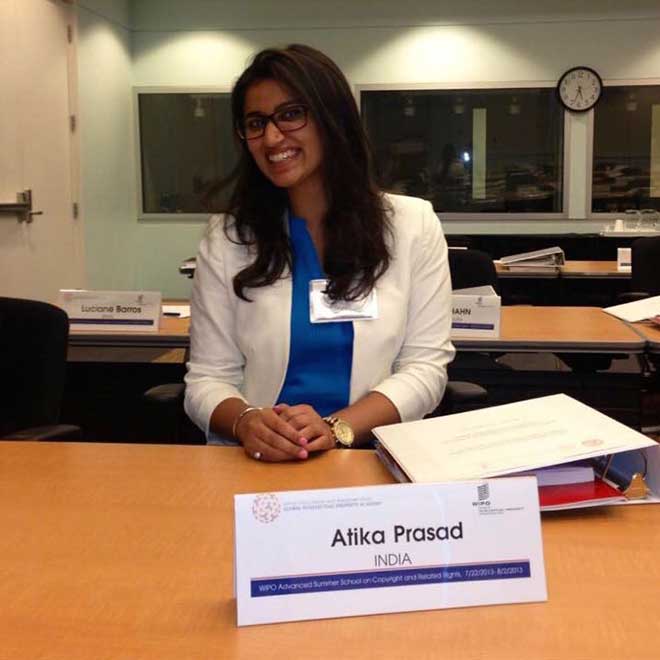
    To keep my knowledge in the field of IP abreast with ongoing changes, I try to take up IP specific short-term courses from time to time. After completing my LL.M., I undertook a two-week course conducted by the WIPO at the USPTO on Copyright and related rights.  Over a period of two weeks, 40 young professionals, selected from across the globe, deliberated over the intersection of International and domestic IP laws of their respective countries. Thereafter, I worked at Hershkovitz & Associates, a Patent Law Firm in Alexandria, Virginia, for a brief period. In February 2014, I started working as Wahl’s IP attorney to handle their IP portfolio and my responsibilities predominantly included enforcement and border protection measures in India. Wahl provided me with the option of combining my understanding of the laws of India and that of the US. I have also been afforded the opportunity to represent Wahl at different platforms across the globe, INTA being one of them. Wahl encourages their employees to continue learning by means of short-term distance learning courses. While being at Wahl, I have completed a few certificate courses conducted by organisations such as FICCI and WIPO.


    Tell us about your schooling and early life. What, according to you, sparked your interest in law?

    To be the daughter of an eminent orthopedic surgeon (my father) and a renowned histopathologist and former president of IMA (my mother), life has been a sine wave. On one hand you get everything, the right advice, the right resources, and the right environment; on the other hand, living up to the expectations is certainly not easy.

    In school, I lived in the shadow of my elder brother (now a neurologist in USA) and teachers would always compare me with him and his achievements. All that did was to encourage me to put my best foot forward in whatever task and assignment I undertook. Come to think of it, choosing law as a profession was not that difficult of a decision. I had made up my mind when I was thirteen. I was amazed with the idea that throughout my entire life I can continue to be creative in my thought process, read every day, write, get introduced to new people, think and analyze issues and put forth my opinion.


    How important are internships for a law student?

    I feel law schools in India mostly provide theoretical knowledge rather than providing a practical insight. The practical aspect of legal system in India is too distinct from the theoretical aspect. This is where internships play an imperative role in enabling a law student to gain firsthand experience of court practice and understand the practical application of legal theory better. I think varied options of pursuing internships under Advocates practicing at different levels of court in different cities, law firms and corporations, widens the prospects of possible practice fields for a law student. Hands on experience in so far as the practical implications that the profession demands, is an added factor which assists a law student in making one of the most important decisions of being a litigator or a corporate attorney.


    How do you maintain your work-life balance?

    Working for a multinational company not only requires an individual to possess legal acumen but also entails certain added responsibilities. My work profile demands extensive travel to different countries every month. As they say, the transition phase in one’s life is the most important and the sooner one is able to achieve a balance between the conflicting interests of work and life, the better it is for one’s own development in the longer run. Personally, I feel lucky to be married to a workaholic lawyer who not only understands the level of commitment which this profession demands but also encourages me on a regular basis to deliver to the best of my capabilities. Moreover, Wahl gives me a great amount of flexibility, which in effect helps me manage work and personal life.

    How did you decide to pursue an LL.M.?

    Pursuing an LLM was a well thought out decision, which was taken after much consideration and strongly encouraged by my family. While I was studying IP, I realized that the various treaties and conventions to which the country in question is a signatory, govern domestic IP laws. Apart from the various domestic issues involved in this area of law, it also has far reaching international and commercial implications. These factors reinstated my decision to have an in depth knowledge in the subject and specialize in the same. I was convinced that international exposure in the field of IP law via comparative analysis of a developed jurisprudence would be helpful and it actually was.


    What are the essential skills required to be a corporate lawyer?

    Every corporation/law firm/company has a completely different work culture. As a corporate lawyer, one needs to understand the work culture of the corporation for which one works. As far as my experience goes, I believe inter-personal skills are to be given far more credence while representing a corporation. If an individual chooses to practice as a corporate attorney then a conscious effort from the very beginning in grooming communication skills would certainly be advisable. One needs to constantly understand the concerns of the company.  Apart from that, it is always helpful to be aware of general commercial development with respect to the relevant industry practices and also be updated on the same.  Primarily, every corporate lawyer should always have a result-oriented approach, should be able to think on one’s feet and improvise when needed.


    What are the primary professional ethics you follow while at work?

    While prioritizing the interests of the company, I ensure that I listen and understand what the other person has to say and wants, without interjection. Also, management of time is crucial and I make sure that I am clear on the deadlines of any work that is to be done and accordingly, if need be, prioritize. One needs to be mindful that timely adherence to the deadlines while being the face of the corporation reflects not only on the attributes of an individual but also the corporation.

    It’s perfectly human to make mistakes while executing any task; the key is to learn from it as soon as you commit them. Apart from this, it is of utmost importance that an attorney religiously follows the internal code of conduct and other policies of the corporation.


    Where do you see yourself ten years down the line?

    When I was doing my law, I just thought that I would be the country head of a multinational company in ten years. Three years ago, when I joined Wahl as a young attorney who handled their IP portfolio only for India, I did not know that within three years I would be handling their worldwide IP enforcement.

    While working towards one’s goal, one has a better understanding of the opportunities that come along and one’s own capabilities. With the support of my family and the opportunities given to me by my superiors, I can say without a doubt that I have all the determination to be a sprightly attorney, a finisher who has the eye for detail and a manager who takes initiative. I believe my ultimate aim after ten years is the coveted YPO membership, an organization which needs no introduction and its membership would truly be a dream come true.


    What is the role of an In-House/General Counsel in India?

    As of now, my role as the IP attorney of Wahl Clipper Corporation is multifold. I began with handling the IP enforcement of the company with respect to India, in 2014. A few more jurisdictions including the Asia Pacific, Africa, Russia, and UAE were added to my work profile last year and now I handle their worldwide IP enforcement. The job is as challenging as it sounds. Being responsible for so many different countries with different time zones definitely leads to a great deal of travelling and efficient time management.

    As part of the global IP enforcement of the company, I handle IP infringement related lawsuits and negotiations, Trademark and Copyright Customs registrations and also supervise online enforcement. With the laws and regulatory procedures becoming more complex, I believe it is the foremost responsibility of an in-house counsel to secure the interests of the Company from any present or future impediments.

    What would be your parting message to our readers?

    Every day is a learning process. I think willingness/eagerness to learn, skillful time management along with creatively strategizing on the issues at hand, are the most important qualities that one can possess. One should consider failures as stepping stones to success.


  • Bharadwaj Jaishankar, Attorney, Associate Partner at Sim and San, on being a first generation lawyer, his experience in IP Law, and the importance of internships

    Bharadwaj Jaishankar, Attorney, Associate Partner at Sim and San, on being a first generation lawyer, his experience in IP Law, and the importance of internships

    Having graduated in 2008 from Symbiosis Law School, Pune, Bharadwaj began his career at K&S Partners, a tier 1 boutique intellectual property law firm. Having spent five years there, he joined Saikrishna & Associates, a tier 1 intellectual property & commercial law firm, in November, 2013. Thereafter, Bharadwaj joined  Sim and San, Attorneys At Law. Bharadwaj has over eight years of solid and in-depth work experience and knowledge in the fields of Intellectual Property and Commercial law.

    In this interview he speaks to us about:

    • His experience in IP Law
    • The transition from working for tier 1 law firms to working with a smaller set-up
    • His foray into academia


    How would you like to introduce yourself to our readers?

    I am a first generation lawyer, with my father being a management guru and my mother who, amongst other activities, is a singer. I have a younger brother, who is an aspiring musician and a music producer. In that sense, it is a fantastic and exciting feeling to know that, where I stand today, is on account of my own efforts and hard-work. That being said, I have been extremely fortunate to have had and continue to have some great mentors in my professional career who have played a vital role in my professional career path. My career has also immensely benefited from the fact that my wife, Raddhika Singh, is also a lawyer.


    Could you tell us why you chose B.BA. over a B.A. degree?

    When I joined law school, I had the option of choosing either the B.BA. or BA law degree course. B.BA. was the preferred option for me, as the business subjects (forming part of the course) interested me more. That being said, what I have learnt these past more than eight years is that the specificities of your degree do not matter eventually. Just because someone does the B.A. .LLB course, it does not mean that they are incapable of dealing with commercial/business issues. The same is true inversely. Ultimately, it comes down to the individual.

    By the time I hit high school, I was still unsure of what I wanted to pursue in college. My paternal grandfather, who belonged to the first IAS batch of administrators, played a huge role in directing me towards law. He believed that I had the requisite skills to become a good lawyer. I am extremely thankful for the passion and drive he showed towards my career.


    What are the kinds of activities that you took part in during your legal education?

    In college, I made a concerted effort to participate in moot courts. Moot courts are extremely important for a law student. Some of the skills that are acquired through mooting have immense value to a law student, once they become advocates. These skills include (i) understanding the facts at hand and identifying the key issues involved (ii) conducting research and building up of a case (iii) drafting a memorial (iv) arguing the case (v) court manners (vi) identifying and addressing rebuttal arguments etc. All of the above find an application when handling a real case. The value of participating  in moot courts is, therefore, essential and crucial for the development of a good lawyer.

    Appearing both as a speaker and a researcher in several State and National level moot court competitions, there was also scope to mentor mooting teams in my last couple of years in college. A lot of what I learnt through mooting helped me in my initial years as a green-horn in the profession.

    Apart from mooting, I also helped organize seminars, guest lectures and symposiums for college. If anything, these enabled me to interact closely with some of India’s finest legal minds. I was able to pick their brains and gain valuable insight into the profession, as well as get some solid career advice. I certainly feel that, as a law student, it is also important to interact with senior and respected members of the profession, as their practical inputs and advice certainly help in making career choices for law students.
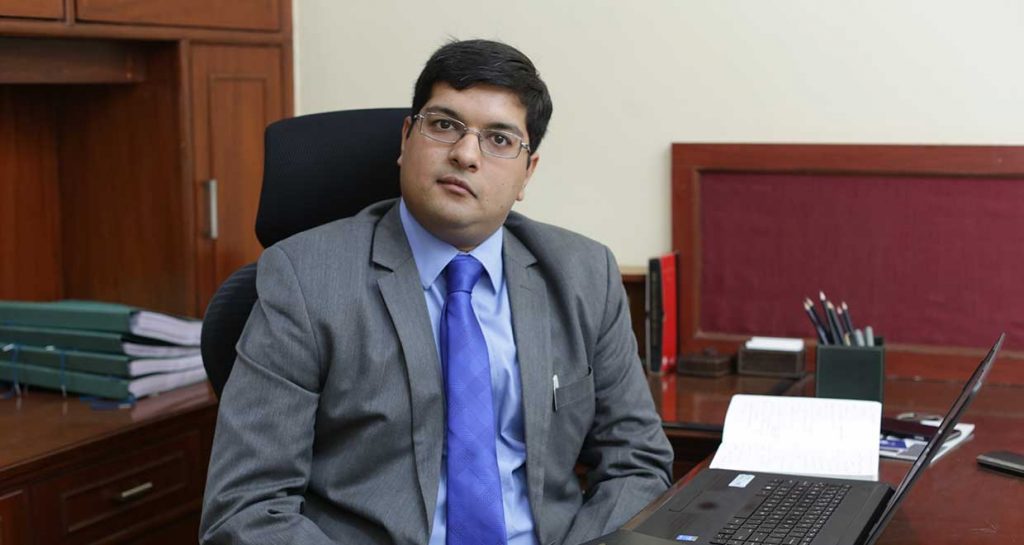
     

    How important are internships for an aspiring lawyer?

    Being a first generation lawyer, it immediately occurred to me, during my first semester in college, that internships would be crucial to me securing a job. In fact, it is through my internships that I was lucky enough to receive a pre-placement offer from K&S Partners (one of India’s leading boutique IP Firms), before college placement madness began for my batch.

    As a law student, and I still hold this opinion today, it is important to experience different kinds of internships. During my five years at law school, I managed to intern with single practitioners, a designated Senior Counsel, general and boutique law firms, a company, and with an international NGO in South Africa. Doing such a wide array of internships certainly helped me zero in on where I wanted to work and, most importantly, the kind of work I wanted to do. There are just so many avenues of law that can be explored. My internships in the initial couple of years gave me exposure to different types of law. Around my third year, I got interested in IP law and, thereafter, my internships focussed on firms that practiced IP law. Through such focussed internships, I was able to get a PPO.

    It is also important to do internships as often as possible. In my time, we did not have the luxury of doing running internships. Nor did we have a set-up whereby minimal subjects were taught in the final year, thereby providing an opportunity to just intern in the final year, with the objective of landing a PPO. In fact, today, my office has a couple of such final year interns; who have only one subject to study. Such opportunities were not there when I was in college.

    Internships become that much more important when one is a first generation lawyer. Building up contacts through internships is important both from getting a job, as well as from a networking perspective. You never know when a contact cultivated through an internship becomes important at a later date. It goes without saying that the approach of work, the work itself and conduct are extremely crucial during an internship. Just because a law student secures a good internship, does not automatically mean that a PPO is possible. The onus is completely on the law student to make the best of their internship. Going the extra mile on assigned work and deliverables does have a make a big difference during an internship. Apart from the work, the conduct and mannerisms of the law student during internships is also important. Apart from showcasing professional ability, I equally feel that showcasing your personality (as an open and approachable person as opposed to being arrogant or cocky) is also important. I guess to sum it up, a law student would want to be remembered in a favourable light after the conclusion of the internship. From my personal experience, I still remember, and am in touch with, some of the interns who really made a mark when interning with me (or my firm).  


    How important is it to cultivate the skill of academic writing for young lawyers and students?

    (Bharadwaj has had his works published in a wide array of IPR journals.)

    It is really important for a lawyer to write articles/papers. Yes, with demanding schedules, it is easy to ignore this aspect. Writing articles and getting them published have great professional and personal advantages.  It also gives immense personal satisfaction! Some benefits that accrue from writing papers include:

    1. It brings fantastic exposure to the author. Writing in the right publication, having quality and wide readership, provides a brilliant platform for the author to show himself/ herself. The style of writing, manner, background research, thought process, analytical skills etc., all get showcased.
    2. It provides an opportunity for the author to create a niche and become an industry expert. Who knows, potential clients can emerge from reading articles and publications.
    3. It pushes the author to bring themselves up to speed with the law and developments, both in India and worldwide.
    4. It also helps develop drafting and analytical skills.
    5. Adds immense character and value-add to the author’s profile.

    The list of advantages can be endless. Finding a balance between work, personal life and writing is the key. The balance has to be found. If it means staying up a little longer or writing during a holiday, then I suggest you do it. Personally, I try and plan my schedule in such a way that I carve out time, either on a Saturday or Sunday, to try and write. Sometimes, I am able to write an entire article without a break and other times, other circumstances, force me to write in stages. No matter what the circumstances, I do force myself to write. In a way, making a commitment to a publication forces me to honour the same, thereby giving me no option but to write.


    Please share with us your experience at K&S Partners, your first job.

    Working at K&S Partners is something that I will always cherish. I spent my first five years in the profession working with K&S Partners. I was lucky enough to intern twice at K&S Partners, before getting my PPO from them. Hence, when I started working, I knew most people there- lawyers and support staff. That helped.

    I can honestly say today that working at K&S Partners played a HUGE part in shaping me as a lawyer and professional. The first office that a lawyer works with will, and should, always hold a special place. Some of my mentors (who continue to mentor me today) are with K&S Partners. In that sense, I consider myself extremely fortunate. Of course, it goes without saying that this is a two way street. I know the amount of effort and application I had to put in at K&S Partners, to ensure that I benefited from anything that was offered to me by the firm.

    As a fresher, I had to put in extra effort to bring myself up to speed with the law and practice. What I learnt, very quickly, was that the law you learn in a classroom is completely different from the law that is practiced. Even after work, I would spend time reading judgments and commentaries, so that the following day, I could add value. For me (and indeed for every aspiring lawyer), along with doing the grunt work, it is equally important to contribute from a strategy perspective. You don’t want to get tagged as a lawyer who can only execute. It is also important to be known as someone who contributes at the ideation and strategy phase as well. K&S Partners allowed me to do that. Of course, I had to ensure that I put myself in such a position where I was able to do that.

    A lot of what I learnt and imbibed at K&S Partners still stay with me today. Working for five years at a tier-1 firm provided me with an excellent launch pad to make a name for myself in this profession. I will always be grateful for the time I spent with K&S Partners. Apart from having some excellent colleagues, I made some lovely friends, with whom I remain in contact till date.


    What motivated you to choose IPR as your area of expertise?

    Sometime in my third year of law school, I realized that I had developed an interest in IP law. Till that time, I had done some work, through my internships, on other areas of law. I can’t exactly recall what motivated me to pursue IP. I do recall that working with brand names that form an everyday aspect of my life (from my toothbrush brand to the clothes I wore to the pen I wrote with etc.), did influence me. Interning with K&S Partners, a boutique IP firm, influenced me heavily. The work I did as an intern (twice) around brand names, IP in Bollywood, Image rights etc., really got me excited about IP. I have never looked back since.

    Luckily, through my professional career, I have been able to work with different IPs and work on different aspects of IP. In my experience, what a lot of people don’t realize; is how important IP is and can be. It is really looked upon as just another asset and not as a vital asset that can make or break business. A good IP protection, enforcement and exploitation strategy can mean the very existence (including market domination) or destruction of an entity (be it an individual or corporate house). Especially in today’s start-up environment, big ticket funding, series funding etc. can can be rendered irrelevant, and in fact wasteful, if IP is not protected or secured. Working in such an atmosphere is very exciting for me.

    In fact, for over eight years, I made a conscious effort to stay away from patents on the ground that I did not have a science background. I knew the basics of patent law and the importance of securing and enforcing patents, but I never really touched this aspect of IP law. Now, working with Sim and  San, I am actually engaged in a couple of precedent setting patent matters, which includes the Standard Essential Patent litigations going on in the mobile handset sphere. Suddenly, after eight years of working with trade marks, copyrights, designs and geographical indications, I have discovered that patent law also interests me, which only adds to my excitement around IP laws in India.
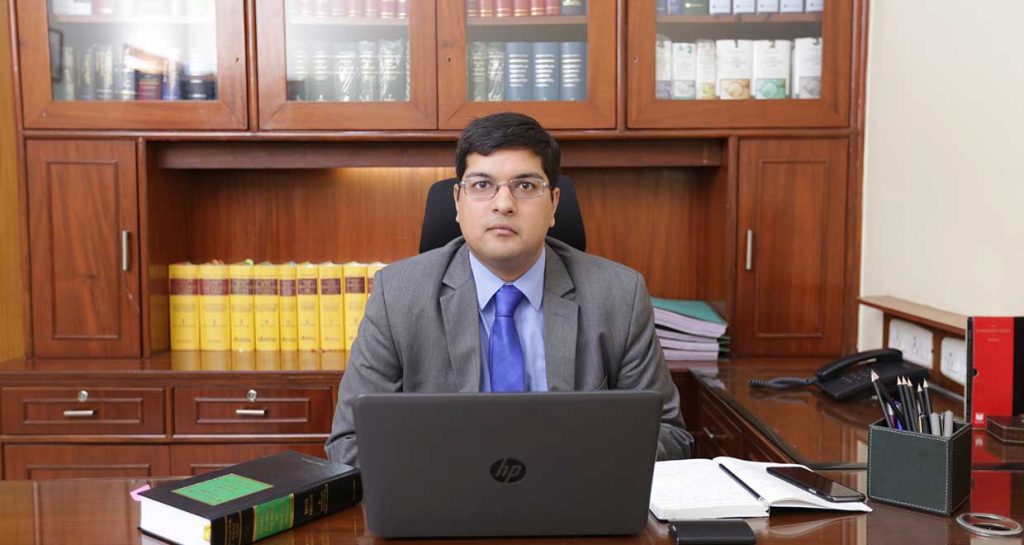
     

    Could you share your experience representing industry leaders in the field of technology?

    The experience has been both challenging and exciting. Technology and IP laws are connected and overlap quite a bit. It is, therefore, a great chance to learn about new technology while applying IP law to the same. It is also quite exciting to know that some of the mobile applications and technology devices that one uses day in and day out, are being back-ended by your team from a legal perspective.

    It is also very nice interacting with tech leaders. One of the biggest advantages with working with technology and industry leaders is that you get to learn a lot of new things about IP and technology law and the application of existing law to new fields of technology. Since the technology leaders I was fortunate enough to work with were always looking to push boundaries, applying existing law was extremely exciting and challenging. The other aspect which I really liked was the fact that the technology industry leaders I worked with, had a fresh and dynamic approach to their work and product. Such an approach made it extremely fun working with them.   


    How has your experience as visiting faculty at Symbiosis, Noida, been?

    I quite enjoy the experience of being a visiting faculty. After a few years in practice, I was actually looking for a way in which I could give back to my law school. So when I heard that Symbiosis Law School was opening a campus in Noida, and that Dr. C.J. Rawandale was going to be the Director, I got in touch with Rawandale Sir (who was one of the Professors I interacted with a lot during my college days). Sir was immediately keen that I start taking IP classes for the students. Eventually, it also extended to me taking a few classes on Information Technology law as well.

    Being on the other side of the fence, has been an interesting ride. I found it quite amusing that I was, while teaching, asking students to keep quiet, when a few years back I was also probably doing the same very thing. That aside, I learnt, after taking a couple of classes, that teaching is a very challenging profession. It requires a lot of dedication and focus. Teaching at Symbiosis, Noida made me read a lot more because I wanted to keep myself updated on the latest developments in IP law. This, of course, helped me immensely at work as well.

    Also, I learnt being patient and became a better listener, while taking classes. This has also helped me greatly at work, especially when dealing with a difficult client or where I was required to understand client’s requirements before offering advice. That way, teaching has helped me immensely, both as a professional and as a person.

    The other aspect of teaching that I have really benefitted from, is that I got to know some of the students really well, through interactions inside and outside class. This has helped me get good junior associates and interns whenever I have had such a requirement. Plus, some of these students have also become good friends of mine.     


    What motivated you to join an emerging Firm, Sim and San, after working in two tier-1 IP firms?

    I just wanted a new and different challenge. Working with K&S Partners and Saikrishna & Associates, two tier-1 IP Firms, provided me with a fantastic foundation in most aspects of IP law. I consider myself extremely fortunate to have worked with these two firms and, that too, with some fantastic lawyers. But I felt that my professional career needed something new. I wanted to feel challenged once again in my professional career and not get comfortable in what I was doing.

    After working at these two offices, I was sure that I did not want to work, at this moment, with a large set-up. I wanted to take a step-back and join a smaller emerging office, where the scope of work is wider and, therefore, a greater opportunity for me to grow as a professional. A very dear friend of mine connected me with Sim and San, Attorneys at Law. He told me of some of the work that Sim and San are doing, which included being involved in some of India’s biggest patent, GI and trade mark matters. I immediately felt that this could be a good match. Thereafter, I met Mohit and Sidhant Goel, Partners at the firm, and we immediately connected. It was very easy to say yes to the offer.

    There is, of course, a big difference in working with a large firm and a smaller firm. The dynamics, work environment and set-up are different, which I found really nice. It felt really nice to work with a small, motivated and young team, who all think on the same wave length and want the same thing as well. It also felt nice to enter an environment where, after a long time, I felt the focus was only on work and not on other stuff. Somewhere, I felt that I needed to make a big change in my professional life, so that my career could advance. I can say that, three months into my new adventure, I am very happy to have taken a leap of faith.


    What are some of the benefits and advantages with working with an emerging firm?  

    Today, there are so many emerging firms who claim to be experts in IP law. Choosing a good firm, therefore, is very important. The biggest advantage with a smaller firm is that it provides a tremendous space to express oneself as a professional, thereby offering a bigger opportunity to make a name and reputation. I personally feel that in a smaller firm, there is a greater scope of getting yourself known as a good lawyer.

    In a smaller firm, there is a greater chance of doing everything, as opposed to working in a larger firm that has clear and distinct verticals. I find that as a young lawyer or for someone looking for something fresh (as was my case), working in an environment where everyone does everything offers a greater challenge and scope for learning. I do feel a great opportunity exists to become a good and effective well-rounded lawyer.

    Also, with a smaller firm, the management is usually extremely motivated to establish  a firm foothold in the market and tend to look at problem from a different angle. Plus, there is a determined  effort to be a little different from established firms. This is something that personally appeals to me. Put simply, there is a greater opportunity to become a big fish in a small pond, as opposed to a small fish in a big pond.


    What is the experience of being a member of the Emerging Issues Committee of the International Trademark Association (INTA)?

    I am currently a member of the INTA’s Committee on Emerging Issues for the term 2016-2017. Within this Committee, there are various Sub-Committees. The Sub-Committee that I am involved with is looking contributory infringement of intermediaries from a trade mark law perspective.

    The experience in working in such a Committee (including the Sub-Committee) is really nice. I get the opportunity to interact, in depth, with fellow members, who represent firms and companies from around the world. For example, my current Sub-Committee consists of lawyers (in-house and practising) from all five continents. It is a great way to know and understand the development of law (and indeed precedents) that deal with the focus area of the Sub-Committee. I also get the opportunity to explain to my fellow members the state of law in India and the emerging trends, precedents and developments.

    In terms of being a member with organizations like INTA, AIPPI etc., there are quite a few benefits. It obviously affords a fantastic platform to network and build contacts in countries around the world. It also helps in developing mutually beneficial professional relationships between firms. Also, the annual meetings (and other conferences) of these organizations provides a great setting to meet existing clients, cultivate new clients and, also, to meet and catch up with professionals and friends from around the world. Plus, there is a lot of knowledge sharing that happens, which is very useful as a professional.  


    What are your interests outside of law?

    Outside of my work, I am a fanatical supporter of Manchester United. I have been so since about 1996. Subject to my work requirements, I try my level best to catch all their games. There have been times where I have compromised on my sleep to try and catch a later kick-off and be at work early next day!

    I also play the sport of Ultimate Frisbee, an American sport, which is one of the fastest growing sports in India. I represent the Delhi Ultimate team. As part of my love for this sport, I am also one of the legal advisors to the Ultimate Players Association of India.

    I also enjoy listening to music, especially blues and jazz, and love travelling.


    Finally, what parting advice would you give to our readers considering most of them are young lawyers or law students?

    As parting advice, I would say that becoming a good lawyer is like a test match and not a T20. Given that there are so many avenues of law and varied professional and employment opportunities, choosing the right one is vital. Sometimes, identifying your core/ niche area takes time. The right way, in my opinion, is to be guided by the quality of work and not the salary. It is very easy for a law student or a young lawyer to get swayed by the pay package being thrown their way. Sometimes, the work offered (with the large pay package) works out, sometimes it doesn’t. What should matter is the work and work only. Money will follow if you are enjoying the work.  


  • V.C. Mathews, Senior Associate, Sujatha Chaudhri IP Attorneys, on studying in London, IP Law, and being a professor

    V.C. Mathews, Senior Associate, Sujatha Chaudhri IP Attorneys, on studying in London, IP Law, and being a professor

    V.C. Mathews graduated from Symbiosis Law School, Pune, batch of 2008. After working with R.K. Dewan & Co. as Associate for two years, he went on to pursue his Master’s Degree from Queen Mary University of London in Intellectual Property Law. Since then he has worked with IP Gurus and Remfry & Sagar. He is currently working in Delhi as a Senior Associate at Sujata Chaudhri IP Attorneys, where his role entails Trade Mark Filing, assignments, drafting responses, appearing for hearings, preparing legal opinions and portfolio management, Copyright filing and legal advise, Preparing and drafting domain name complaints, Criminal Enforcement, etc. He is also Adjunct Professor at Symbiosis Law School.

    In this interview we speak to him about:

    • His experience in IP Law
    • His experience in academia
    • Pursuing his masters in England


    Was taking up law always a part of your career plan?

    I wasn’t very good at Math or Science. So taking up the arts group was the only option. However, at that time, not many schools offered arts in Kerala. Once I got through one of the schools, I had a look at the various options available with a lot of help from my parents and zeroed in on law.

    What was your experience at Symbiosis Law School like?

    The experience in Symbiosis Law School was holistic. It moulded me as a person and in the way I made some amazing friends in my batch and amongst my seniors who till date I am in touch with and meet often. Sports and Moot courts and client counselling were the activities I was involved with in college.

    How did you go about developing an interest in Intellectual Property Rights?

    During the course of our vacations between semesters I used to intern at law firms and under individual lawyers. One of those internships exposed me to Intellectual Property Rights. I liked the subject but was not sure as to if I wanted to take it up as my area of speciality. To discover the same, I did a further two internships with a firm specializing in this field. At the end of those internships, I realized that this was the area of law that I wanted to specialize in. Not many wanted to go into this field at that time as most wanted to do corporate law and the more common fields.


    Can you recall any experiences during college or your internships that have played a key role in shaping you as a lawyer?

    Law is a profession where you need to have good relationships with others. If you are specializing in one field having good working relationships with others in others fields of law always helps. To this end, I have a good number of close friends with whom I can rely on and fall back on. They are a source of help both personally and professionally to me. I spent five years of college with them and have spent many more years outside college.

    How important is developing the skill of writing according to you?

    Writing is a good skill to develop and have. Additionally, it helps you learn about the new topics you write upon. We don’t pay a lot of importance to writing and therefore, currently, not many students/practitioners have articles published in the numerous journals/ publications  out there.

    There isn’t any one way for one to develop their writing skills. The only way to better it is to actually start writing.  Start with blog posts and then write in depth articles for journals and publications.  A good place to start for students is their own college journals.

    Tell us about your internship experience.

    Working at a law firm is a lot different from what they teach you in college. Internships only gave me a small insight into the world of a full time lawyer. However, when one comes out of college and into a law firm environment, one has to learn and adapt fast. It is a fast paced environment with its own pressures and one must learn how to handle it.

    In your opinion how crucial is your first job in determining your career path?

    My first job gave me the base to forge ahead. It was tough first year and my second year was not easy either. However, what I learnt in those initial two years still stay with me as it moulded me as a professional.


    From your own experiences would you recommend that aspiring LLM candidates work after graduation and then pursue an LLM?

    An LLM is one where you actually specialize and go deeper into a subject of law. This must be taken in all seriousness. When I went for my LLM, I found that my batch had an array of people from different countries. But they were all elder to me. In other countries, those who take up masters take it up after a few years of work. This helps them better understand what is being taught as well as the teaching outside India is very unlike how we are taught in colleges here. Therefore, it is always beneficial to work a few years after graduation, figure out what area of law you want to go into and then do a LLM in that field.

    Tell us about the nature of your work and your experiences working at IP firms.

    (He has worked with Remfry & Co. and presently holds the position of Senior Associate at Sujata Chaudhri IP Attorneys, formerly known as IP Gurus)

    On a single day you could handle a lot of matters in an IP firm, each with its own deadlines and complexities. Many of the issues we deal with have real world implications and must be looked at with the larger commercial picture in mind. It is important, therefore, to find a middle ground between the law and the commercial aspect for clients. This offers many challenges. Additionally, IP law in India is still developing which gives rise to lacunae as well as interpretations to legal concepts. As I handle anti-counterfeiting, it has its own difficulties with the police also being involved. Having to work with them is also a challenge.


    Has academia always been of interest to you?

    I am an accidental professor. I never knew I could teach till I was asked to by a former professor. The role is very different from the one that at a law firm, but just as challenging. Being a practitioner helps as my experiences help in holding the attention of the students. Additionally, my classes are more tuned towards the practical teaching of law rather than just the theoretical which has worked with the students.


    As a parting note, what advice would you like to leave our readers with, who are mostly budding lawyers?

    There are a number of lawyers coming out each year. In such an environment, one has to ensure that he is different to others. Sitting and looking at resumes I look for the one candidate who has something extra to offer. This is a hard thing to do. However, the need of the hour is that one needs to mould himself to be different from the others. Internships, writing of articles, etc. all help in this regard.


  • Sahil Yadav, Associate, Ladas and Parry, on IP Law, the New York Bar and working in the US

    Sahil Yadav, Associate, Ladas and Parry, on IP Law, the New York Bar and working in the US

    Sahil Yadav is a graduate in law from Symbiosis Law School, Pune, batch of 2010. After successful stints with Ranjan Narula Associates, IP Gurus, and Sujata Chaudhri IP Attorneys,  he went on to pursue his Master’s degree in Law, Science and Technology. He is an intellectual property lawyer with over five years of experience in trademark and copyright law in India. Since August, 2016, he has also been working with an intellectual property boutique law firm in New York. He is currently Associate at Ladas and Parry, LPP.

    In this interview we speak to him about:

    • Finding his passion in IP Law
    • Clearing the New York Bar, getting a work permit and working in the US
    • The importance of writing consistently

    Kindly tell us something about your school and college days.

    I was schooled at Delhi Public School, R.K. Puram and I pursued the commerce stream although I was always passionate about computing and technology. At Symbiosis Law School, when I first started, I honestly wasn’t sure what kind of a lawyer I wanted to be. That indecisiveness led me to explore internships with various firms to see what piqued my interested. The turning point in my life was an internship at Anand and Anand in my second year of law school as I grew an instant connection with trademark and copyright law there. I never looked back and continued gaining more experience at IP law firms and I would say that was the most important aspect of my law school life.


    Tell us something about your summer school experience in University of New Hampshire Law School (formerly Franklin Pierce Law Center).

    The summer school at Franklin Pierce Law Center was a great experience. I applied for the one month program when I was in the fourth year of law school because by that time I had decided that I want a career in intellectual property law. For information, it is possible to apply for the course on the University of New Hampshire’s website by filling an application, preparing a statement of motivation and submitting your transcripts. It is quite competitive because it only lets in, on an average, around 30 students every year.

    The summer school was very flexible and I could complete up to three courses of my liking in over a month. It helped me get a taste of western education and learn about intellectual property laws around the world. At the time, my law school did not have any international and comparative courses on intellectual property law and I believe taking such courses at the summer school definitely gave me a competitive edge in terms of having a basic idea of international laws.

    Apart from the actual studying, the summer school is always great to make connections and networks even before your career has started. A testament to that is the fact that I went on to be hired by an alumni of Franklin Pierce Law Center and later by one of the adjunct professors at the summer school!


    What according to you should be an indicator in deciding one’s area of practice post-graduation?

    Based on my personal experiences, I would recommend law students today to intern as much as they can in different types of practices. Law school in India is very different from actual practice and if one tries gaining practical experiences in different settings, one is bound to stumble upon that eureka moment when one knows where their passion lies.

    Having said that, while passion is definitely the most important factor, I would also recommend law students to speak as much as they can to alumni to gauge which areas of practice are hot and which are not. The popularity and earning potential in practice areas varies over the years so as a law student, you want to be sure you’re getting into something that would not only fuel your passion but also match your financial and growth based objectives.


    Can you tell us about your internship experience?

    Internships have had an integral role to play in my career. I can’t stress enough how important they are. At the outset, it helped me in honing in on the area of law I was passionate for. Additionally, because I had completed sixteen internships by the time I graduated, I felt I was up to speed with the practical aspects when I started my first job after law school. I felt that my learning curve was more inclined and I was able to excel at what I did initially. I had varied experiences with different law firms. While some were outstanding, some, not so much. The internship programs at some law firms are frustrating as they only entail clerical work which does not aid in enhancing learning while at others you get to work almost at the level of an associate. It is important for law students to research on internship programs at various law firms and read reviews posted by fellow students online before committing to an internship so that it can meet their expectations.


    When did you know that you wanted to pursue IP Law?

    To be honest, up until my second year I was still not very certain of which area of law captured my imagination. This was until my first internship at an IP boutique law firm. I remember working on a trademark case involving the Power Rangers, a Disney property. Being a childhood Power Rangers fan, the idea of protecting the brand from counterfeit merchandise was very exciting. It also made me realize that I have a marketing bent and from then on, I focused on trademark law. This just goes to show that the moment you decide which area of law you want to focus on can sneak up on you without you knowing or planning for it!


    Do you think that it is important for law students to intern at various law firms in various fields of law?

    This is not a very complicated question to answer. In an ideal world, I would advise law students to experiment as much as they can to dabble in as many different areas of law as possible in the first two year of law school. Hopefully by then, you will have zeroed in on the area of law you want to specialize in. Once you have that, it makes a lot of sense to focus on that practice area and spend the last two years of your law school in an attempt to gain as much practical experience as possible. As someone who has sat in on interviews to hire freshers right out of law school for an IP boutique that I worked for, I can tell you that it is very comforting to see on a CV that the candidate has focused on IP in his or her final few years of law school. The legal environment nowadays is competitive and you need practical experience to gain an edge in the hiring process. Another important pointer for law students is not to go for big names when it comes to internships and focus on workplaces where they will be able to obtain actual practical knowledge. IP as a fraternity in India is a small one and I can say with confidence that firms look for practical experience more than big names on your CV.


    Please share with our readers your experience of working at various IPR boutique firms.

    I started my career with IP Gurus, a small sized IP boutique which was eventually acquired by Anand and Anand. This stint holds a dear place in my heart. I had just graduated from law school and after months of struggle, I was hired by the firm on a retainer of INR 16,000 a month. I was unhappy with the remuneration I was being offered and felt like I had been a failure. All that quickly evaporated as I was thrown into the deep end. Three months into my career, I was asked to prepare the first lawsuit on protection of a trade dress in product configuration. The firm was only five people strong and the one year at IP Gurus exposed me to so much in terms of practical experience, I had a new found confidence in my abilities.

    I then moved to Ranjan Narula Associates which is a bigger law firm. This meant that although I handled a lot of matters, life was easier and the hours were more manageable. After a whirlwind of late nights and working weekends in IP Gurus, I thought this was what I wanted. But I quickly realized that I thrive in a more fast-paced environment.

    I moved back to IP Gurus when I heard that an ex-professor from the United States had moved back to India to head IP Gurus. I was given more responsibility and managed the trademark contentious team at the firm. The long hours were back and I couldn’t be happier feeling valued in the organization.

    I eventually moved with my ex-professor to set up her law firm, Sujat Chaudhri IP Attorneys, when IP Gurus was acquired by Anand and Anand. I had similar roles and responsibilities at the new firm but I was part of the process of setting up an entirely new law firm which was exciting and an experience not a lot of people can get at a young age. From choosing office space to deciding what IT systems and docketing software to use to build clients, I learnt how to do it all. After over a year of working with SCIP, I decided to head abroad for my masters degree.


    You have worked on the landmark case dealing with the protection of product configuration of the Rubik’s Cube. How would you describe your experience working on it?

    The landmark judgment in this case was recently delivered by the Delhi High Court, six years after I had drafted and filed the suit as a 21-years old right out of law school! It was partially in our favour so I’m excited for my ex-firm!

    It was the experience that defined my career as a lawyer, honestly. As previously mentioned, I was only three months into my career hoping to learn more basic things like trademark filings when I was entrusted with this matter because the only senior associate handling litigation had left without notice. It was my own little sink-or-swim moment. The matter was complicated as it was the first of its kind in India and there were no precedents or authorities to guide me under the Indian law.

    This was an opportunity for me to research on trade dress laws of many different countries to find precedents to support our positions. I had taken international comparative trademark law classes as part of a summer school in the US but this research was still the toughest thing I had ever done. In law school, all our legal research had been limited to Indian case law and this got me out of my comfort zone. It also exposed me to briefing senior counsel at a very young age and all of these experiences combined shaped my career.


    What prompted you to pursue post-graduation?

    IP Law and technology are more connected than people think! I always had a passion for technology. I completed a course in C++ as a twelve year old boy outside of school! I chose law, science and technology as my area for a post-graduation as I knew that the course would allow me to hone my already-existing skills in IP law and learn new skills in other upcoming technology law related areas. With the world moving towards artificial intelligence and big data, it is important for IP lawyers to keep abreast of this seismic shift. The course gave me exactly what I needed. I was able to take courses in my core strengths such as trademark and copyright allow. In addition, I also got to learn about very current and hot issues such as artificial intelligence, big data, net neutrality, internet of things, autonomous vehicles, etc.


    Is it true that one needs a Master’s degree, preferably from a foreign university, to land a job?

    I wouldn’t say a graduate degree is not enough to land a job in India. Based on personal experiences, I would urge law students to work for a few years before they make plans to study further and gain a masters’ degree. Once you’ve been in practice for a few years, you learn your strengths and weaknesses and know what you want to focus on. If you’re in that kind of a situation, a masters’ degree can be much more beneficial as you go into it with clear goals. If you go for a masters’ degree right after graduation, you’re bound to waste a lot of time dabbling in different things during your masters’ degree to find your niche or identify your goals. That is not what a masters’ degree is for. I don’t think a masters’ degree without any practical experience is that lucrative in India for employers. On the other hand, solid practical experience with a masters’ degree focused on your area of expertise can do wonders for your marketability.


    As an experienced lawyer in the field of IPR law in India, do you think that this field will expand/grow in the near future?

    Yes, of course. IP law in India is growing at an exponential rate! When I started working seven years ago, I always felt that Indian companies do not invest in IP as much as foreign companies do. While it is still true, the gap is narrowing. Indian companies are realizing the worth and important of IP to their business and this coupled with a concerted push by the government to make securing IP rights in India easier under the new National IPR Policy, makes me confident that IP in India will continue to grow and become more important in the next five years.

    In terms of the job market, I feel it has become very competitive and crowded. The supply of IP professionals far outweighs the demand. If law students choose this path, they could find themselves battling against a rough start. But as soon as they have some experience, they will find that the profession is very rewarding with multiple opportunities available.

    Practical experience is the single most important factor in landing a job in an IP boutique law firm. I would urge law students to intern with as many IP firms as they can.

    Additionally, I would advise that they look to take additional IP related courses outside their law school. This demonstrates a candidate’s commitment to IP law. The course offered by the World Intellectual Property Organization is an excellent example. They are inexpensive and can be completed from home.

    Tell us about the scholarship you secured at Stanford.

    (While pursuing his Masters at Stanford Law School Sahil participated at INTA’s Annual Saul Lefkowitz Memorial Moot Court Competition and won the annual INTA student scholarship.)

    I represented Stanford Law School at INTA’s Annual Saul Lefkowitz Memorial Moot Court Competition. What’s special about this competition is that it is the only moot court competition which solely focuses on trademark law. I encourage any law student who comes to the US to pursue a masters’ degree to participate in this event. Considering that you will be one of very few Indians in the competition, it is a nice way to pit yourselves against American law students on American trademark law. It gives you a taste of practicing trademark law in the United States and also tells you whether you are in shape to handle it.

    I did also win the annual INTA student scholarship as part of which I was flown to Orlando to attend INTA’s annual meeting. Before going into the scholarship program, I urge all law students interested in IP law to purchase a student membership to INTA. It is very inexpensive and opens up a lot of doors in terms of learning and networking opportunities. As for the scholarship, it is open to INTA student members and it is a brilliant way to get to attend the annual meeting which is usually out of reach of law students because it is held mostly outside India. The scholarship gave me a great opportunity to learn and network and also made me more marketable. As someone who has managed hiring, I can tell you that scholarships such as these on a candidate’s CV demonstrate a strong interest in IP law which is very desirable for a recruiter.

    Tell us about your experience working in the US.

    (Sahil passed the New York Bar Exam in July, 2016, and is currently working for Ladas and Larry, LLP.)

    The New York Bar Exam was the hardest thing I’ve ever done in my life. I don’t know what the difficulty level of the Indian Bar Exam is currently, but based on my experience of taking the Indian bar in 2010 and the New York bar in 2016, I can safely say that the New York bar is much tougher to clear. Although this can be a daunting thought, the flipside is that the more difficult an exam is to pass, the more prestigious it is and the more rewards it brings.

    The big difference between the Indian Bar Exam and the New York Bar exam apart from the difficulty level is the fact that the Indian Bar Exam only has objective type questions while the New York Bar Exam has objective type questions in addition to essay questions and practical exercises.

    My advice to law students planning to take the bar exam would be to start very early. You can start playing with the materials and acquainting yourselves with the forma, etc. even one year before you are scheduled to take the bar. Further, I would advise that law students take one of the bar review courses offered by BARBRI, Kaplan or Themis and start studying part-time four to five months in advance with the last two months being full-time study.

    I feel that Indian law students have an advantage with the New York bar exam. A lot of Americans struggle with the bar exam because law schools in the US do not focus on memorization and all of a sudden, when the bar exam comes around, they have to memorize astonishing volumes of material. We, on the other hand, have grown up memorizing material all throughout school and law school. Although this may be identified as a weakness in the Indian legal education system, it works in our favor in this specific context.

    Working in the United States is very different. There are fewer procedural inefficiencies in the legal system which allows lawyers to spend more time lawyering and less time dealing with government offices and courts to get things done. It is a refreshing change and one I’m enjoying. It is also much more financially rewarding compared to working in this field in India. Also, working in India in the IP field largely entails working on Indian law. Working in an international law firm exposes you to matters in jurisdictions around the world. In the short time I’ve been here, I have already handled matters in more than twenty different countries!


    Tell us about your interest in blogging.

    (Sahil has contributed to the World Trade Mark Review and is the co-editor of IP blog ipslate.com.)

    Blogging is a habit I inculcated very early on in my career. There was no specific moment that spurred me to do it. It was just me following valuable advice of more-experienced lawyers.

    Blogging serves three purposes for law students. First, in order to blog regularly, you research on current events and keep yourself abreast of all of the latest developments. Second, by writing more articles you make sure that you are constantly evolving your writing skills which is an integral part of being an IP lawyer. Finally, your blogs gaining visibility increases your marketability.

    What advice do you want to give to students and freshers who are planning to visit US for pursuing their Masters program?

    Obtaining a work visa in the United States is an uphill battle. A lot of law students come to the United States to become US qualified attorneys and work here only to get a rude shock when they put in all the effort and money to complete a master’s degree and pass the New York bar to find out they can’t stay in the country.

    My advice to law students would be to comprehensively research on the probability and possibility of obtaining a visa in the United States before deciding to come to the United States for a masters’ degree if they are interested in working here. You should walk into it with open eyes! Also, the key thing to obtain a job and a visa here is to start to work towards it early in your masters’ degree and network as much as you can in addition to exploiting the usual channels such as job postings, careers services office of your law school, etc.  Eventually, even if you manage to overcome all of these obstacles, whether you get a visa or not is still dependent on a random pick of the lottery so one should always be open to exploring other countries and not have all their eggs in one basket.


    Where do you want to see yourself ten years from now?

    I have modest goals! I want to see myself happy and doing what I love ten years from now.


    What final piece of advice do you want to pass on to law school aspirants, law students and freshers?

    I just want to take this opportunity to tell all of the law school aspirants out there that you have chosen a very well-respected field. With globalization set to affect the Indian legal industry in the next few years, it is an exciting time to be a lawyer in India. Don’t be afraid to think big, work hard, get as much exposure as you can and you will all eventually achieve what you set out to. If someone would have told me I would be a US-qualified lawyer living my dream when I had passed out from law school and started working for INR 16,000 per month, I wouldn’t have believed them! Anything is possible. If you need any guidance related to IP law as a career or becoming a US-qualified attorney, please feel free to reach out at sahily@alumni.stanford.edu and I will be happy to help.