With over 14 years of experience in corporate and banking litigation, what initially motivated you to pursue law as a career, and what early experiences strengthened that decision?
My interest in law was sparked quite early, I was drawn to the way legal frameworks shape real-world outcomes. I found the intersection of reasoning, language, and impact particularly compelling. What truly cemented my decision, however, were my early internships and court visits during law school. Watching senior advocates argue complex matters and observing how legal strategy could influence the course of businesses and individuals made me realize that this was a profession where intellectual rigor meets tangible change.
In your early years with law firms, what experiences shaped your understanding of banking laws and guided you toward this specialization?
In my formative years at leading law firms, I had the opportunity to work closely on recovery actions and regulatory compliance matters for major banks. My involvement with corporate recovery teams gave me a ground-level understanding of how financial institutions operate, where the friction points arise, and how legal intervention can create both risk mitigation and strategic advantage. These experiences naturally drew me toward banking, corporate and financial litigation, a field that demands precision, meticulous research, commercial awareness, and long-term perspective.
Having worked extensively with banks, corporates, and financial institutions, what do you see as the most pressing challenges businesses face today in managing disputes and compliance?
Today, businesses operate in an environment where regulatory frameworks and expectations are rising faster than internal systems can adapt. Disputes often arise not just from contractual breaches but from operational gaps, inadequate documentation, and ever-evolving regulatory landscapes. The most pressing challenge I see is the lack of proactive legal risk mitigation & management. Many entities still view legal strategy as a reactive tool rather than an integrated business function, which leads to avoidable disputes, compliance lapses, and reputational risks. As the saying goes ‘prevention is better than cure’.
You’ve also advised on digital and social media laws, as well as data privacy. How do you see these evolving areas influencing the future of corporate legal practice in India?
Digital regulations and data privacy are no longer niche concerns, they’re becoming central to corporate strategy. With the Digital Personal Data Protection Act and increasing regulatory oversight, companies must build data governance and responsible handling into their core structures. Social media presence, influencer marketing, and tech platforms are creating entirely new legal questions around liability, consent, intellectual property and reputation. I believe corporate legal practice in India is at an inflection point where traditional commercial law will increasingly overlap with technology, media and communication laws, and lawyers will need to re-equip and upgrade constantly.
What inspired you to establish Simpli-Counsel, and how does your approach to advising startups, Gen Z entrepreneurs, and corporates distinguish your consultancy?
Simpli-Counsel was born out of a simple observation: many startups, Gen Z founders, and even established businesses need practical, clear, and commercially aligned legal advice — not just legalese. After years of working with large institutions, I wanted to build a consultancy that bridges structured legal strategy with the agility that modern businesses require. Our approach is deliberately collaborative and solutions-oriented. We focus on simplifying complex legal frameworks so that founders and business teams can make informed decisions swiftly, without feeling overwhelmed by jargon or legal process.
Looking back, what has been one of the most complex or high-stakes matters you’ve handled, and what were your key learnings from it?
One of the most challenging matters I’ve handled involved a multi-jurisdictional recovery action for a consortium of banks against a large corporate borrower. The case involved layered security structures, parallel insolvency proceedings, and regulatory sensitivities. Navigating this required not only deep legal analysis but also constant coordination between stakeholders across jurisdictions. My key takeaway was the importance of strategic clarity and communication — aligning diverse teams behind a coherent legal roadmap can often make the decisive difference in complex disputes.
In your transition from working with established law firms to building your own consultancy, what have been the biggest challenges and most rewarding aspects?
The transition from structured law firm environments to building my own practice has been both demanding and deeply fulfilling. The biggest challenge has been stepping out of established institutional systems and creating operational, branding, and business development structures from the ground up. But the reward has been immense: the freedom to shape a practice aligned with my values, the ability to work closely with clients as strategic partners, and the joy of seeing the building something authentic and future-oriented.
Data privacy is becoming increasingly critical. What practical advice would you give startups and entrepreneurs on mitigating legal risks early, especially in this domain?
Startups often underestimate data protection until they face a regulatory hurdle or breach. My advice is: embed privacy-by-design early on. Map what data you collect, define clear consent processes, implement basic security hygiene, and assign responsibility for compliance. Even simple steps like robust terms of service, privacy notices, and access protocols can dramatically reduce risk. More importantly, build a culture of respect for data & privacy — because in today’s world, trust is currency.
What vision do you hold for the future of your practice, and what guidance would you offer younger professionals aspiring to build careers in data privacy and banking law?
My vision for Simpli-Counsel is to build a modern, agile legal advisory practice that combines deep subject expertise with empathy for how businesses actually function and not how they should. I see tremendous opportunities at the intersection of corporate,technology, and regulation, and want to help clients navigate this evolving landscape with clarity and confidence.
For young professionals, my advice is twofold: develop strong foundational legal skills, andstay curious about emerging areas like fintech, data privacy, and digital laws. The future belongs to lawyers who can blend legal acumen with strategic foresight and adaptability.
Beyond your legal career, you are passionate about heritage crafts, travel, and fitness. How do these interests help you maintain balance and perspective in your professional journey?
Law can be an intense profession, and for me, travel, heritage crafts, and fitness offer grounding and perspective. Exploring crafts connects me to India’s rich cultural fabric, travel fuels my curiosity and adaptability, and fitness keeps me focused and energized. These interests remind me that while our work is serious, our growth is richer when we remain open, balanced, and inspired by the world beyond our desks.
Ma’am, with over two decades of experience, when most people didn’t know about cyber laws, intellectual property laws, let alone media laws, what initially inspired you to pursue a career in this field? And what led you to study at the most prestigious King’s College, London? How did you choose this as your specialization?
Very interesting question at the outset. Well, if I look back at my journey in this field of law, it’s been very fascinating. It’s been evolving just like the dynamic nature of law and technology. Way back when I was studying at Delhi University, I did my law from DU, and at that time, the IT Act 2000 was just enacted, and we were very fascinated to see a new law being enacted in India.
We were looking at what exactly the nuances of this new field would be, what the challenges would be. Everything was so new that this field of law made me very inquisitive about what could be the legal issues that would arise, considering the inherent nature of the internet would be borderless.
You know, questions like, will the conventional laws still apply in this medium? How will it change the way people work? How will it change the way people communicate? What kind of complications could arise? For example, jurisdiction issues: if two parties were interacting and contracting online, and there was a dispute, which court would be the right forum to decide? Because there is no global internet court, and there is no global internet law. So that was very, very interesting to think about, and I wanted to read more in-depth into this field, research it further, and contribute to it.
So, I think it’s basically the fact that it was a completely new and unsaturated area, completely new to explore, and I always like to explore something that is an uncharted avenue of our subject. It makes you brainstorm. And I wanted to do this brainstorming in the field of law.
And that’s what really kept me energized. Even today, I still feel like a student. Every day, there is so much to learn. So I may have been here for 25 years, but I still feel just like a graduate would. There is so much to learn and contribute.
In your early stages, you must have obviously, like us, faced a lot of challenges. There must have been a variety of experiences. As you said, the IT Act had just entered and became a reality. How has all of this understanding helped you make a niche for yourself in technology law? How did you decide where and when to start, what kind of practice you should do, and how you should approach it?
You are also majorly involved in training and developing public policies with the government sector. How have you shaped your practice around this?
Well, as I said, the field was unexplored at that time. It was very new. And I wanted to do anything and everything under the sun because this is, you know, learning. And when you’re learning, you can contribute in multifarious ways. As we say, this was a road less traveled, and I took that.
When I looked at the way in which I could basically learn and gain more experience, I looked at the IT Act. Then I also looked at what was happening across the world. When I studied at King’s, we understood that the approaches to the same issues really varied across various jurisdictions. So we had professors, and we had interactions from different jurisdictions across the world. And with those perspectives and the kind of debates in the classrooms, we discussed issues like criminality. For example, how would criminality apply in the metaverse today? Can we say an avatar is responsible for committing a crime? Is the player liable if it’s an assault in a game that leads to some sort of mental shock to a user? How would one impute criminality in such a scenario?
We also discussed how jurisdiction would apply if a person commits a crime in one location and damages critical infrastructure in another country. If while deciding a court’s jurisdiction for example, if the protective principle applies, then the courts would pass orders. How would one go about enforcing those orders? These kinds of cross-jurisdictional issues were really at the helm of discussions even at that particular point in time.
If you look back, the IT Act, when it was just a basic Act, and the way technology developed, the industry grew, cybersecurity became a huge area in itself because with the rising crime, the industry had to catch up. Cyber safety tools were being floated, right from a basic antivirus to spyware to firewalls, and other kinds of technologies. Nowadays, we have blockchain, VPNs, data loss prevention software, and many network safeguards.
So as the industry developed, they also needed legal compliance, and legal advice. I started advising companies on various issues linked with cyber law, which was also interesting. I helped frame their policies, shape their HR policies, social media policies, and tackled tricky issues like whether companies could scan employee emails in the name of productivity. These policies became very important as e-commerce grew.
So in this way, my role became more advisory. I was also involved in education. I taught cyberlaw at the Indian Law Institute and Amity University. In fact, I was part of the first batch of PG Diploma in cyber law at AmityI completed after LLB from Delhi University, and that was a significant encouragement and motivation for me to learn more about this field. That was just the beginning, I would say. Then I went on to study Masters at King’s and further pursued my Ph.D. in cyber law.
It’s been a fascinating journey, but as far as contributions are concerned, there was a need for capacity-building in the country because law was changing. Cybercrime increased phenomenally, so I dealt with those cases, represented clients in various forums, and assisted law enforcement bodies. I also worked on educating and training judicial academies and police academies across India.
And then came writing, which is also a passion I followed and pursued. I wrote my book on computers, the internet, and new technology laws, which was released in 2012. We have a third edition, the latest edition in the market now. I’ve been writing extensively on this subject, and since it’s been changing so fast, we’ve already had 3 editions since 2012. So you can imagine. This is also one way in which technology has positively impacted me and helped me contribute better to society.
How do you see the advent of artificial intelligence shaping the kind of technology law that we have? How is it going to influence not only the legal system but all systems, especially the defense system, as you are with the DRDO right now, advising them in different capacities? How do you see all of this being impacted by international AI acts as well? There are so many of them from which we also take a lot of references, like with the DPDP Act, as it happened. Where do you see we lie with artificial intelligence, and what kind of track are we going to take? Obviously, it can only be speculation. I’ve been advising the government for more than two decades now, and in my personal experience, it’s been a very enriching journey. The way we have shaped our laws and looked at technology, it’s been a very liberal and progressive approach.
I do believe, and firmly believe rather, that one should allow technology to advance liberally and support R&D in the country because, truly, India, when we say ‘Make in India,’ ‘Viksit Bharat,’ or ‘Digital India,’ we have seen this revolution, and it is ongoing and in process.
We are already working towards India at 2047. Looking at that, we are building our roadmaps, and plans are already being implemented. It’s not just in one department; I’m talking about the Ministry of Law, Ministry of Defense, Ministry of IT and Telecom, Ministry of Home, for example—they’re all trying to bring in coordination. There’s scope for more, but with the adoption of the PPP model we see now in AI, India’s AI projects are truly creating a platform for India to progress in the right way.
There is going to be minimum regulation because if you put too much regulation, it’ll stifle the growth of the industry, and that’s the approach of the government as well. But I do feel that high-risk systems need to be regulated immediately because they can play havoc with people’s lives and bring destruction to countries.
For that reason, I strongly advocate that there should be a regulation. In fact, in my mind, there should be a separate regulation for AI. As a voluntary initiative to support G20 and as country chair of G100 for AI and cybersecurity, I drafted a proposed code, a proposed Act for India on AI.
I would like the government to consider it, and in various roundtables with the Honorable Minister, we’ve had discussions. We know the DPDP Act is already there in the offing and it will have provisions for high-risk systems that need to be prohibited and regulated. There will be some regulation to that extent.
Although I think we’re still far away from having separate AI legislation because there’s no talk on that right now, but you never know. The way technology is progressing, I think this will become indispensable very soon. Let’s see how it goes, but so far so good.
The government is taking a lot of interest and initiative, and we are truly world leaders in the ‘Make in India’ space, and I think the law will support the government’s approach and initiative because it’s in the interest of the industry.
With India being quite active in AI, there has been a lot of conversation surrounding its cultural and diversity impact. Ethical concerns and language considerations are important, but cultural aspects must also play a significant role. Where do you see this intersection of culture, ethics, and AI impacting society, and when will these changes be realized by the common man? Currently, a lot is happening at the policy level, but how do you foresee it affecting society when it becomes a reality, especially given that India is a leader in AI yet culturally diverse? How do you see India impacting the global AI scene with its own AI Act, coupled with cyber and intellectual property laws?
I believe we have already started exploring the key pillars of AI ethics. I’ve been involved in developing ethical frameworks, particularly in national projects and educational institutions, such as my role as a professor at Vivekananda Institute of Professional Studies (VIPS). Here, we’ve introduced an ethical framework for AI, which reflects global principles such as transparency, justice, inclusiveness, sustainable development, and bias elimination. These principles are endorsed globally, though regulations can vary by jurisdiction. In India, while we don’t yet have an AI Act like the EU, we are working on provisions for AI regulation.
On the industry side, AI development is progressing rapidly, with models being developed for multilingual AI systems that consider India’s diverse languages and cultural contexts. This is already ingrained in the AI models being developed in India, and as a result, the laws need to reflect these cultural nuances as well. However, these laws must also be globally synchronized, given that AI models or data may eventually travel outside India for processing or storage, requiring compliance not only with Indian laws but also global standards.
Take, for example, the GDPR and its standard contractual clauses (SCC) for data transfers. Similarly, India’s DPDP law also addresses these concerns. While we have cultural diversity, the core principles, like data protection, remain universal. Therefore, I believe we need a harmonized framework that works both for India’s unique needs and the broader global landscape.
Moreover, there are also concerns about data ownership and intellectual property when training AI models. A current case before the Delhi High Court involving ANI and OpenAI raises these issues, questioning whether permission is required for using copyrighted material in AI training. Such cases highlight the need for clear regulations to determine how intellectual property laws apply to AI and data usage for training.
AI regulation is already becoming a pressing matter, and I believe it will require global cooperation to set clear principles and enforce them. The lack of a universal convention on cybercrime and AI further complicates enforcement, even when jurisdiction is assumed.
You’ve managed so much despite being an author, professor, advisor, and now a law firm founder. What motivated you to start your own law firm, especially considering your already extensive involvement in cyberspace and AI law?
The main driving factor behind starting my law firm was the desire for flexibility. I wanted to contribute to the legal field in multiple ways, integrating the knowledge I gained in various roles—whether it was teaching, advising, policy-making, or litigation. Each experience enriched my understanding of the law, and I believed it was essential to bridge the gap between legal theory and practice.
Through teaching and advising, I gained deep insights into the law’s practical challenges. When engaging with Public policy, I was able to identify gaps that needed to be filled. For instance, there were complications in the law around intermediary content removal, and after handling cases such as the one involving HubPages and a spiritual guru, I realized how critical it was for the law to evolve with changing technology.
This interdisciplinary approach—combining litigation, advisory work, policy-making, and teaching—allowed me to contribute meaningfully to law reforms in India, especially in areas like data protection and AI regulation. By establishing my law firm, I could consolidate these experiences and provide a platform for further contributions to legal practice and public policy.
You’re also well known for your work in women and children’s empowerment, especially in the context of cyber safety. Can you elaborate on your work with organizations like UNESCO and ICMEC, and how these global initiatives are being adapted or modified to protect Indian women and children online?
Child protection and women’s empowerment have always been at the core of my work, particularly in the realm of cyber law. Online harassment and digital abuse were rising concerns, especially as many women and children lacked awareness of the risks and legal protections. The existing laws were inadequate, and that’s what prompted me to focus on researching and advocating for stronger protections.
In 2015, I wrote the first book in India on child protection on the internet, which later became the subject of my PhD thesis. In this, I proposed various reforms to strengthen laws such as the Juvenile Justice (JJ) Act and the Protection of Children from Sexual Offences (POCSO) Act. Additionally, I’ve written extensively about women’s rights against cybercrimes, including a book on cyber safety for women.
Through my work with organizations like UNESCO and ICMEC, I was able to contribute to global policy discussions on child protection and cyber safety. In India, I’ve helped tailor these global frameworks to suit our local context. For instance, I established a not-for-profit organization that focuses on awareness-building in schools and colleges, empowering women and children with cyber safety skills and best practices.
During the COVID-19 pandemic, we conducted over 50 webinars to raise awareness about online scams, fake emails, and malicious content targeting vulnerable populations. We were able to educate women, children, and educators on how to protect themselves from online threats, and the response was overwhelmingly positive.
These efforts were particularly rewarding because we saw tangible changes, with many women and children reaching out for guidance, and schools actively engaging in cyber safety education. Through these initiatives, I believe we were able to mitigate harm and empower individuals to navigate the digital world more safely.
You have also worked extensively in intellectual property protection, particularly in the digital space. Could you share some of the primary challenges you’ve faced in this area and how industries have reached out to you for solutions? Given the rising importance of digital platforms, how can businesses better protect their intellectual property?
Intellectual property (IP) has grown tremendously over the years, and new laws were needed to address these changes. In the early days, it wasn’t clear whether domain names could be protected like trademarks. But over time, legal clarity emerged, affirming that domain names could indeed be protected as trademarks. I’ve had the privilege of serving as an arbitrator for the National Internet Exchange of India, where I resolved many cross-border disputes involving “.in” domains.
The expansion of cyber litigation, especially in areas like music piracy, video piracy, and film piracy, has been notable. I also advised Prasar Bharati in overhauling their royalty contracts, ensuring they accounted for the rise of the internet. Many of their contracts, at that time, did not even mention the internet. More recently, we’ve worked on updating these contracts to align with today’s technological landscape.
Governments and industries are now paying more attention to policies that govern emerging technologies, including AI. In this context, governance and audits have become essential. We must ensure that businesses are not collecting unnecessary data, that the data being used is unbiased, and that proper security measures—such as encryption and data redaction tools—are implemented.
The protection of trade secrets, copyrights, and trademarks through registration is fundamental. However, in the case of trade secrets, businesses must ensure confidentiality through other means. The development of new technologies, including AI-generated images, music, and art, raises questions of ownership. Who owns AI-generated art—the person who provided the prompt or the AI system itself? These are some of the challenges businesses face, and it’s crucial for them to adopt encryption, anonymization, and pseudonymization to protect sensitive data.
Moreover, sectors like the social sector, which deal with sensitive data such as donor and beneficiary information, must ensure that data is encrypted and stays within the country. I’ve been advising these sectors on policies, ensuring they comply with legal frameworks. Protecting confidential information is not just the responsibility of the government; the industry must also play its part by adhering to these laws.
The PPP model is vital. It allows for a collaboration between government resources and industry expertise. The government brings its authority and resources, while the industry contributes its technical know-how and capabilities. When both sectors work together, it results in a win-win situation that benefits the nation’s progress.
How would you guide aspiring lawyers looking to specialize in fields like media law, cyber law, or IT law, which are expanding rapidly? What skills should they focus on, and are there any particular books, journals, or individuals they should follow?
To make a meaningful contribution to this field, aspiring lawyers must have the right mindset. You should always consider yourself a student, as there is always more to learn. If you think you know everything, that’s the end of real learning. Passionate research is also key. You cannot delve into the depths of these fields without thorough research and understanding different perspectives. It’s essential to look at how different jurisdictions address similar challenges and tailor those solutions to India’s context.
Perseverance is another crucial trait. The journey in this field isn’t always easy, and you may face challenges along the way. But consistency and hard work will bring results. The legal profession is full of ups and downs, and while your views might differ from others, time often proves the validity of your perspectives. The world changes, and sometimes the policies you advocate for today become essential in the future. Being open to criticism is important, as it helps you grow.
Cyber law and IP law are highly specialized fields. Today, we have DPDP laws, AI laws, and entire branches dedicated to IPR, all of which often intersect. A lawyer working in this space needs to have a broad understanding of various legal issues. These fields cannot be treated in isolation, as cases often involve multiple areas of law.
There are wonderful resources available today that were not accessible when we started law practice. The proliferation of e-learning platforms, educational apps, and online courses is a game-changer. I have personally taken courses such as the Cybersecurity CS50 from Harvard University, which was a fantastic experience. These online platforms provide a wealth of knowledge, allowing students to access information from anywhere.
Additionally, portals like Manu Patra, SCC Online, and government-backed platforms like Swayam and E Pathshala offer free courses that cover a wide array of subjects. There are also incubation centers at institutions like DSCI and NASSCOM that promote startup culture, which is an excellent opportunity for students to learn hands-on and learn about new technologies.
With over a decade of experience across various areas of law, do you believe law was always your destined path, or were there particular factors that steered you in this direction?
For me, it was a mix of both. While studying at Loyola School, Trivandrum, we had only two main options after school: engineering or medicine—there were no streams for humanities or commerce. I initially leaned towards engineering but decided to keep a backup. The year I finished school was the first year of CLAT, which consolidated various law entrance exams into one. Law seemed like a good alternative, partly because my father had a law degree, though he pursued a career in journalism.
Interestingly, I performed well in my engineering CETs but not in CLAT. Despite this, I was so fatigued by the STEM curriculum that the backup suddenly became my first choice. Eventually, I chose ILS Law College, Pune over GLC in Mumbai because my family felt more comfortable with Pune—though the reasons remain unclear to this day!
Once I joined ILS, I grew to love the idea of a career in law. After a few internships in Mumbai and New Delhi, I gravitated towards litigation. Mr. Kishore Vussonji at Kanga & Co., with whom I interned a few times, suggested I start practicing in New Delhi rather than Mumbai. I took his advice, and it was the right decision—Delhi has been very kind to me.
You began your legal journey at the office of an Advocate-on-Record (AOR) at the Supreme Court of India. How did this initial experience shape your understanding of the legal profession and influence your subsequent career choices?
Until recently, the ‘traditional’ path at the Supreme Court involved starting in an AOR’s office, then moving to a senior counsel’s chamber, and eventually starting independent practice. Though this route is no longer dogma, it’s the one I followed.
I interned with Mr. Senthil Jagadeesan, Senior Advocate, during my final year of law school. He offered me a position in his chambers post-graduation, which aligned perfectly with my goal to practice at the Supreme Court. His chambers was an AOR office then, and under his guidance, I focused on learning court processes, you know, getting familiar with the Supreme Court, drafting, and understanding the nuances of the profession—the ‘ropes’ as they say. This was foundational.
Later, I joined the chambers of Mr. Shyam Divan, a four-year stint that I consider transformative for me. Court craft is something you keenly watch and learn at a senior’s chamber—of course Mr. Divan’s style is inimitable, although I must confess many of us have tried in vain to copy it! Another thing we learnt by watching was the high degree of rectitude and integrity one had to maintain when acting as counsel—towards the court, clients & co-counsel, all. Finally, he would insist that you must always attempt to ‘elevate’ your brief as counsel, especially at the Supreme Court. It matters what you bring to the brief over and above what is written in it. These are lessons that have profoundly shaped my practice.
Can you share your experience of completing your LL.M. at Harvard Law School? What motivated you to choose this institution, and could you share with us the admission process and criteria for our young readers?
Harvard Law School was both enriching and humbling. I decided to pursue my LL.M. six years into my career, unlike many Indian applicants who apply straight out of college. Initially, I was hesitant because I didn’t want to lose my small but growing practice. Dr. Menaka Guruswamy, Senior Advocate, among other seniors at the bar encouraged me to consider it, and I eventually decided to apply to U.S. law schools for their rigorous yet compact programs.
The application process for most Ivy League schools is somewhat same, and involves submitting a strong statement of purpose, solid references, and academic essays. My SOP—which shouldn’t be a flamboyant CV—was a simple, personal essay. Personal essays, I had become fond of as a form having read its champions such as Didion, Sontag and Baldwin, so I felt that was the easier bit. Harvard required an additional academic proposal, which I based on my reflections about the Supreme Court’s role in post-conflict scenarios. This proposal evolved into my dissertation under the guidance of Dean Martha Minow, a renowned scholar in transitional justice.
I feel my time at Harvard was important to me for two major reasons. Academically, it gave me a framework and a language to express my already brewing concerns about the judicial process. I learnt from the giants of the Critical Legal Studies movement—Roberto Mangabeira Unger, Duncan Kennedy, David Kennedy & Mark Tushnet—and the ideas that were discussed in class spoke to my bare-bones thoughts and reflections. On a personal level, it gave me a huge cohort of friends, strewn all over the world doing great things, and some of whom I get to collaborate with every now and then. Both are important reasons, and I think I’m better off for having spent some time in the little town of Cambridge, MA.
After gaining significant experience working with various big names in the legal industry, you chose to start your own practice. What prompted this decision, what challenges did you face in the early stages, how did you overcome them?
In January 2022, I co-founded Godiyal & Manoharan Chambers with Samiksha Godiyal, a friend and colleague from Mr. Divan’s chambers who shared my vision for a chamber practice. Seniors encouraged us to go independent, and by then, we had experience managing independent briefs alongside chamber work.
The early challenges were universal: balancing roles as CFO, COO, and CMO while maintaining high standards of legal service. Putting in place systems and strategies has helped overcome these challenges, and prepare the chambers for the long game. New challenges always crop up, but they are welcome—they keep you sharp and motivated. One of our keen focuses is on more tech-integration in the processes, which we have been able to achieve to an encouraging extend benefiting service excellence, and the practice in general; keeps the chambers future-ready.
You’ve been involved in several landmark Supreme Court decisions, such as the marriage equality case, the Cauvery River dispute, the Right to Privacy case, and the decriminalization of consensual same-sex relationships. Could you share one particularly interesting case you’ve worked on and how you prepared for such a complex matter?
All these cases you have mentioned were very interesting to me and have resulted in mixed outcomes from the Indian Supreme Court. As we speak, we have dismissal from the court on our review petitions in the marriage equality case, something I have been involved in right from 2020 when the first petitions were filed in the Delhi High Court. All briefs are interesting briefs, some make news, others don’t, but that’s the beauty of having a generalist practice, one can never get bored!
The Cauvery River Water Dispute that you mentioned is the one that ended with a judgment from the Supreme Court in 2018. Now this is a niche area of law, inter-state river water disputes. There are about 10 or so in the history of the country, and I was able to be part of two—the other one was the Mahadayi river dispute among Karnataka, Maharashtra and Goa. This niche area of law involves complex questions of federalism, prior use rights, and equitable water distribution. The Supreme Court’s 2018 judgment marked its first appeal over a water tribunal’s decision. Preparation involved examining over 50 U.S. court decisions on river water sharing to distill first principles of equitable distribution. These principles helped guide the Supreme Court’s analysis of the tribunal’s award.
I suppose with climate change we will see more of these disputes not only of a domestic character but also at the global level. There will be more dams as countries try to achieve their national renewable energy goals, and more or less water in rivers to share owing to changing weather patterns. It’s an area of growing importance.
You had worked as counsel representing the National Council for Teacher Education (NCTE) before the Delhi High Court for about two years? What key challenges did you encounter in handling regulatory disputes, particularly in light of your experience representing a regulator?
Representing NCTE was my first experience as counsel for a statutory regulator. I found that judges respond well to state counsel if they are handy with timely instructions on most occasions, and at all times, fair and prepared. I think that was key to assisting the court from the State’s side.
Often regulatory disputes on the writ side of the high courts or specialised tribunals like APTEL or SAT have to deal with petitions seeking to compel the statutory regulator to do their job or petitions examining the correctness of adjudicatory decisions of the regulator. These are disputes related to the regulatory activity itself. The other cases, which I got to see a fair share of was, disputes on policy—which may enter courts as a vires challenge. My experience at Harvard where the policy-oriented approach is often reflected in case law was useful in litigating these disputes in our courts. Sound policy arguments, alongside technical legal points, are crucial in such cases.
On the private side of things, like for any other regulated entity in business you are looking out for the commercials while litigating. Something that we try to do at chambers is to understand that the commercials at stake in a case, the ‘pain-point’ so to say—legal arguments and strategies will flow accordingly.
As a member of the LAWASIA Human Rights Committee, could you share some of the key initiatives or challenges you have encountered in your role?
LAWASIA is a regional association of lawyers, judges, jurists and legal organisations, which advocates for the interests and concerns of the Asia Pacific legal profession. They’ve been around for over six decades, and is one of top associations of lawyers in the region. I’ve been a member for a few years now, and since February 2024, as part of its Human Rights Committee, I focus on the intersection of business and human rights.
Apart from being a brilliant network spanning across regions, LAWASIA hosts very significant conferences each year on various areas of the law, apart from its annual conferences. In February this year, LAWASIA along with the Nepal Bar Association is hosting the 5th International Human Rights Conference in Kathmandu. I am able to join friends who are excellent lawyers and scholars from Malaysia, Taiwan, Japan, South Korea & Australia in our committee and also, learn from folks who do brilliant work in Singapore, China, Vietnam and other jurisdictions in the region.
LAWASIA’s conferences and webinars provide invaluable insights into regional legal issues, emphasizing both shared experiences and unique challenges. Recently there was a discussion on “Human Rights at Sea,” where we heard from those advocating the cause of stateless fishing communities. These forums offer opportunities to learn and collaborate across jurisdictions.
As you have written a piece on mental health and the legal profession, could you share some key insights or recommendations on how the legal community can address these issues? Additionally, what role do you believe law firms and legal institutions should play in fostering a healthier work environment? On a personal note, how do you manage the balance between your personal and professional commitments?
Mental health interventions in the workplace are a dime a dozen. Addressing mental health begins with acknowledging the profession’s high-stress nature and fostering open conversations.
Discussions on mental health in the legal profession have significantly evolved since I wrote about the topic in The Caravan in 2016. Back then, it wasn’t a mainstream conversation, but now we see greater awareness, better vocabulary, and even acknowledgement from senior figures like chief justices.. So, that’s a good thing—but then as they say, talk is cheap.
I wanted to draw attention to the issue at the time—much like that famous ‘mission statement’ from Jerry Maguire (though thankfully, I didn’t lose my job over it like he did!). Meaningful change requires more than lip service. Judges and senior members of the Bar must lead serious discussions and implement effective systems to make the profession more accommodating.
Personally, I balance work by spending time with loved ones, enjoying music, and staying active. Remembering that work is only part of life—and learning not to take oneself too seriously—can make a big difference.
What advice would you give to young lawyers who aspire to build a successful career like yours? How should they approach planning their career trajectory and advancing in the legal profession?
Goodwill and relationships, and an overall commitment to excellence are invaluable in the legal profession. While financial success is important, pro bono work should not be overlooked—it’s equally rewarding. Success is personal and evolving. Take time to define success on your own terms—if you are able to do that, you’ve solved half the puzzle!
Can you tell us about your journey into the field of law? What inspired you to pursue a career in law, and how did you get started in the legal profession
Being a first generation lawyer, I persuaded my family that I want to be a lawyer and make a good career in law. To be very frank, I must say the journey in this legal profession has been a roller coaster ride for me. Let’s dive back in time to know more about why and how I chose the legal profession as a career. In the year 2007, I did my schooling from Cambridge School Noida. I was least interested in accounts so it was easy for me to make up my mind about not pursuing CA/CS Course for sure. After that decision, I decided to pursue a BBA Course and appeared in the entrance examination for 3 continental BBA courses from Amity University Noida. Although I was selected, I was not satisfied at all whether to pursue it or not. Later I came to know, accountancy is also included in the BBA Course, and I couldn’t deal with the accounts subject so decided to move ahead and quit this course. Just like 3C BBA, at that point of time, the 5 years integrated BA.LL.B(Hons) course was gradually evolving. I pursued law with Amity law school, Noida and graduated in 2012. Furthermore, I did my masters from O.P. Jindal Global University, specialisation in Corporate Law in the year 2014.
INSPIRED BY WHOM –
Succinctly to say that, inspirations are so many luminaries of our legal profession, but one person who inspired me was the late Sh. Ram Jethmalani Sir. In the first year of law, I came to know about the Jessica Lall murder case wherein in 2006, the trial court had acquitted Manu sharma in that case. The first time I heard about Ram Jethmalani sir was in the aforementioned case who was defence counsel of Manu Sharma. I did a little bit of research later on. He was noted for his legal acumen and expertise.
Also for the parents, Selecting/Choosing a career option on behalf of their child is one of the major decisions that they undertake in the initial stage of commencement of their child career.
REASON WHY I CHOSE CRIMINAL LITIGATION OVER CORPORATE/IN HOUSE LAW PRACTISE –
By the time I jumped to fourth year in law, I had interned in a few corporate law firms including IP firms such as Sai Krishna and Associates. Prior to that, I already had interned for a month under tutelage of Senior advocate Rakesh Dwivedi Sir and K.K. Manan, Sr. Advocate, chairman of Bar council of Delhi . By this time, I had partially decided that I would go for litigation. It was the year 2012 where I interned for 3 months under tutelage of Advocates Subhash Gulati Sir and Sima Gulati Ma’am (Gulati and Associates), who were and still are my first mentors in this legal profession. These 3 months were fruitful for me as an intern which aided me in taking the right decision of which area of law to practise in coming years.
They have been doyens of the legal profession and have nurtured so many successful lawyers. I feel honoured to have been a part of that law firm (G&A).
You have an impressive and diverse background, working in various areas of law, including criminal trials, original side practice, and corporate matters. Can you share some of the key experiences or cases that have had a significant impact on your career and expertise
In mid-year 2012, I initiated my career in the field of criminal law for 2 years straight and got associated with the law firm of Gulati and Associates. I had a short yet effective stint as a junior advocate for Subhash and Sima Gulati . Having worked under Subhash Gulati and Sima Gulati (Sir and Ma’am) all this while, proved to be beneficial for me as very closely, I learned the tricks, tactics and specially the art of cross examining the witnesses in criminal trials. In fact, for a few months, I started assisting seniors in criminal matters listed in district courts. To name the few it includes dowry related case, dowry death case, murder case and 2G Scam case. For beginners in this legal profession, reading, researching the case laws, interpretation of the laws/provisions and putting all of it in drafting are few of climbing the ladder of district court practice. Next comes the oral advocacy , i.e. to say mastering the submissions/oral arguments before the court, that I learned at much later stage.
So, initially I started appearing in all district courts in Delhi and sought Passovers in complaint matters, heinous crimes /non heinous crimes (both pre trial and post trial stages matters) as well. A person is bound to make a mistake in his /her commencement of his trial litigation and that’s exactly what I did. The one thing I learned from the seniors , at the very beginning in starting 6 months, appearing before MMs (Metropolitan Magistrates) or ADJs/DJs (Additional/Assistant District Judges/District Judges) is that never ever lose your patience during arguments, the ability to handle the situations, be crisp on law and facts and one should know when to counter/rebut the arguments on the questions asked put forth either by the opposite party counsel/Hon’ble Judges.
I can tell you the first trial case I was involved in was of dowry one. In that case, we were representing husband. Senior told me to prepare the tabular chart by highlighting the general allegations and specific leveled against the husband and other family members and accordingly find out the relevant judgments on the issue . I attempted in searching the judgments day and night, on the proposition related to dowry law ,i.e. 498a, but couldn’t find it in our favour. Patience is the key. Then next day, I restarted researching on ratio ,found out the judgments and Just before At the stage of final arguments, cited the relevant judgments before the court, that lead to an acquittal. That was the pride moment for me in assisting senior and in adjudicating the matter.
It is undoubtedly a fact which cannot be ignored that apart from senior lawyers, in an advocate’s life Role of clerk also plays a vital role in building up the career of a lawyer. Clerks are invaluable.
They inculcate practical knowledge pertaining to court filing procedures/inspection of files in courts /High Court/ Supreme court inter alia. I remember Jitendra Kumar (who is now an advocate) is one such person who throughout has aided me in this particular field .
ROLE/ IMPACT OF SENIOR COLLEAGUES IN MY LIFE –
I always keep the relationship with my seniors at the beginning of my career at a high pedestal. No matter how many times you seek help from them, they will clarify your doubts in every possible manner. I discovered it’s essential to be enthusiastic and open to learning new skills, asking for more work and being curious to learn and ask questions. I thank my seniors and acknowledge their indisputable efforts namely as Advocates Sugam Puri, Shikha, Kunal Raheja, Navneet, Khan, Shammy, Rahul, Jatin Sapra for rectifying my mistakes in drafting and other consequential areas.
Post 2015 and till 2021, I had worked with other seniors namely Advocate Vikas Arora, Ardhendumauli kumar Prasad (AOR) (AAG, UP), Sr. Adv S.R. Singh (Former Justice of Allahabad High Court), Advocate Arvind Kumar Shukla gaining abundance of experience in land , service, appointment, education, excise matters ,criminal , landlord tenant arbitral disputes, property matters. I cannot thank my seniors enough for giving me the opportunity to argue independently in various forums/courts.
The regular bail granted to my client I defended in the POCSO case is one of the major takeaways of my litigation that I cherish the most.
Not to forget the landmark judgment of supreme court in Swiss Ribbons case v/s Union of India that upheld the validity of IBC Code in 2018, A separate writ was filed from our office and that was tagged along with several other petitions) and the fate of the judgment decided in the main petition decided in other cases including ours. So, by virtue of the judgment delivered by the 3 judges bench, the matters tagged were disposed of, technically without listening to the side of petitioners, to which I think it shouldn’t have happened.
There are numerous cases which I can’t mention all of it here. So keeping it in short.
You mentioned working with Dr. Pradeep Kumar Rai, Vice President of the Supreme Court Bar Association. What were some of the most valuable lessons or experiences you gained during your time with him, and how did it shape your legal career?
Since I already had experience working with Senior Advocate and briefing seniors on earlier occasions, prior to joining him, it was like a cherry on cake for me. Before becoming Advocate on record, I worked there as a senior associate and handled a variety of matters of the Supreme Court, District Courts, Tribunals as well. One of the memorable experience with him was that as soon as I joined his office in the year 2021, I got the opportunity to brief a criminal matter before Vikas Singh, the then President of Supreme Court Bar association, led by Pradeep Sir. It was an enthralling experience to assist and brief Vikas Sir in the criminal matter. As a young lawyer, it is the duty of him/her to rise to the occasion and see to it that the faith and trust of the Senior should not be shaken. Briefing and assisting senior is two different aspect altogether. The sharpness of mind, argumentative skill, confidence, organized, persuasive, intelligentest are the components of becoming a sharpened advocate.
Amongst so many valuable lessons taught by Pradeep Sir, one of them out of so many of them was:
‘Never do work half heartedly, do it wholeheartedly and with confidence’, Such words motivates you to do better in the longer run. Some of the things that I have learned from him would play a vital part in my long journey in the field of litigation. Essential things before briefing a senior advocate
For E.g. Reading the facts in a crisp manner, make sure to note it down if you are not capable of grasping it initially, note down the provision/law, if any involved pertaining to that case, qua the judgments in your favour or against you, make yourself aware about the day to day judgments of various High Courts/tribunals/forums and of course, of apex court, briefs has to be shorter, highlight the main ground of the case and so on so forth. It is true to say that recognition as a lawyer in the legal field is the prominent one. The face value and the recognition that I had received as a junior of Pradeep Sir is invaluable. It is something which doesn’t last but you have to create your own name to sustain in this profession and that is exactly what happened after working with sir and post clearing advocate on record examination in 2023.
One of your recent achievements is becoming an Advocate on Record at the Supreme Court of India. Can you tell our listeners about the significance of this accomplishment and the responsibilities that come with it?
As a first generation lawyer, It is a matter of pride, honour, privilege to become a reputed part in the highest court of country
Nowadays, the debacle of professionalism and ethical standards dropping day by day in Advocate on records has seriously concerned the judges of supreme court. AOR has much more onus rather than merely signing of the petition. On behalf of the party, an Advocate on Record can file a petition, draft an affidavit, file a Vakalatnama, or any other application at the Supreme Court. A registered clerk assists AOR in procedural aspects.
The court not only requires AORs physical presence but effective assistance from AOR is also required. He is a seeker of justice for citizens of this nation. An AOR is much more accountable than a senior advocate , who is responsible for whatever is written and pleaded by putting his appearance to maintain solemnity of court records. The institution of Aors is to facilitate working of court as mentioned in Order IV Rule 6 of Supreme court Rules.
For the first time, as an intern I entered the premises of Supreme court in the year 2011, at the time of pursuing law (4th year), vacation bench was presiding In the court no.1 where bench of former CJ S.H. Kapadia and J. Altamas Kabir were taking up the urgent matters, I was awestruck seeing the arguments by some of the senior lawyers at that time and then I had decided in my mind that I will soon practise here.
Let me tell you firstly about the Advocate on record examination. Every year the Supreme Court of India conducts an Advocate on record exam for the lawyers who want to establish his/her own practice in the Supreme Court. It is one of the toughest examinations in the fields of law attempted by numerous lawyers. Precisely to say every year around a thousand lawyers/aspirants having an experience over five years or more, so, write this lengthiest exam. And only a few could crack this examination. Consecutively, in Successive years 2021 and 2022 examination approx. 500 lawyers have become advocates on records, prior to this, the numbers were very minimal. At Personal level, the Significance of this accomplishment becomes imperative for two majorly reasons :- Firstly, a non- legal background lawyer cracking this examination, Secondly, it was essential for me to make my name and register it in the Supreme court, by hook or by crook and I did it in the 3rd attempt. Failing in the last two attempts given in 2018 and the post covid, in 2021 were depressing years. Then I found a ray of hope and flushing out all my negative approaches, appeared again and cleared the AOR Examination in my 3rd attempt. They say ‘TRY TRY UNTIL YOU SUCCEED’.
Could you share some insights into your daily work routine and the challenges you face as a legal professional, especially when dealing with cases in the Supreme Court and High Court?
From the past year, I am into independent practice, the timings are a bit relaxed. Prior to this, it was bit hectic and as it should be since a fresher/junior during commencement of his/her practise either in litigation or at corporate, whatsoever the field may be, is supposed to do constant hard work, to be persistent in carrying out various tasks of various courts in order to succeed in legal profession and that’s exactly just like others I had followed the same.
I wake up, have breakfast, drop my kids to school and then rush to the court in early hours as I don’t want my cases listed to get automatically Passover and then to wait for the whole day for my matter to reach. By this way, reaching the court, either its High court or Supreme court or any other district court, I avoid traffic congestion. You have your whole day once I am done with my matter. This is the kind of work I learned at the initial stage of my internship and then carried it off in my early stages of litigation practice.
Above all this, Fitness plays a significant role in shaping my legal career. I have become more focussed, punctual, more energetic, less impulsive after doing some workout in late evening.
Our routines become ingrained in our brains. They are made up of a series of habits. Changing your work routine is difficult, for it requires tackling many habits.
In your extensive career, you’ve handled a wide range of cases and legal matters. Are there any particular cases or moments that stand out as particularly memorable or challenging for you?
From 2012 till mid 2023, I have had encounters with multiple cases in criminal side, civil side, corporate side as well, both at district, High Court and Supreme court. My memories with each case are very special because of which I grew as a lawyer and as an individual , I not only thrived for social justice but also embraced life long learning.
I find matrimonial disputes and child custody cases are the most challenging ones, since you have to fight tooth and nail to defend your client whether it’s a husband or a wife, or the case relates to custody of a child. Mediation plays a vital role in settling the disputes between the parties. There was such a peculiar case where I was representing husband, a retired IAS Officer in multiple cases filed against my client by his wife who was also an retired IAS officer, that is to say, maintenance u/s 125 CRPC, Domestic violence case under section 12, and FIR was already lodged u/s 498a. They were into court battles for so many years and the remedy I could see was through mediation. However, in a number of dates fixed for mediation, the matter could not be solved and it went back to court again and now its sub-judice. So many sittings in mediation and yet marital conflict- issues involved between both aged parties remained status quo and didn’t sorted it out.
For instances some of the cases I assisted and as independent counsel argued for are listed below : –
Acquittal of husband/client in false dowry demand case (u/s 498a, Sec 2/3 DOWRY Prohibition act)
12 Writ Petitions before Delhi High Court against setting aside ex parte order of labour court, filed on behalf of management company to reinstate services of labour from date of their termination along with back wages – notice was issued and Settlement arrived between both management and employees at Later stage.
Statutory Bail granted under POCSO Act
At present, I am handling various arbitration matters with land acquisition, both at district level and high court level, which is a bit complicated but intriguing also.
Given your experience in the legal field, what advice would you offer to law graduates or young lawyers who are just starting their careers in law? What key principles or values have helped you succeed in your journey as a lawyer?
Nowadays, a career in law opens up a plethora of possibilities. Firstly, the law graduates/young lawyers should explore career options and must be decisive in their choice of practise whether its litigation practice, (civil side or criminal side), law firm, corporate practise, judicial services , academics and research, Public prosecutor, Judge Advocate General (JAG ) Officer.
Learning to practice law can be daunting sometimes and it takes some time for junior lawyers to comprehend the technicality and procedural court work. Don’t disheartened, discourage and lose your heart if you are unable to understand the functioning of the courts. You will get it through your sheer hard work, by dint of persistence, self determination. Moreover, read the judgments of supreme court, High courts, Tribunals etc. to enhance your knowledge on various laws discussed in several judgments. Any case, in a free time, if you don’t have anything to do, or not in a mood to research, then peruse constitutional law judgments. Establish your IQ more on constitutional aspects. By reading judgments, you merely not only improve your legal vocabulary, it gives you a better understanding of the law and the legal idioms/ phrases that is being used in the judgments, you can learn it also by continuously reading it. All these you can put it in drafting and in your communication skills which further cultivates in honing your argumentative skills before the court.
You can regularly read whether from online legal search engines or from journals, depending on your preference. In this age of technical advancement, one can now easily access and also learn the art and craft of legal arguments/submissions made by legal luminaries in constitutional hearing matters.
I have come a long way from being a mediocre law student to a lawyer holding the highest position in the Supreme court. I have always been a keen learner, enthusiastic, and determined person. Giving the best in your profession and Being an honest to your profession has been my primary goal. Time management is the key to success. Value the time. I valued the time at each interval of my litigation practice. My next advice would be ‘value the time, don’t waste it. Time won’t come again. Take baby steps at once and keep working hard, success will come your way, if not today, then in coming years.
“AT ANY STAGE, DO NOT UNDERVALUE YOU, UNDERESTIMATE YOURSELF, UNDERMINE YOUR SELF BELIEF, UNDERMINE YOUR SELF DETERMINATION”
As the founder of your own law firm, “Chambers of Kunal Yadav,” what motivated you to start your practice, and what are your goals and vision for the firm’s future?
I am sure that every law student / graduate lawyer has this huge dream of having his/her own law firm. Mostly , some of them initiate the setting up of a law firm, right after graduation , some of them don’t start them at all. While few of them start a bit late. In today’s competitive environment, it’s a challenge for even the most qualified lawyers to maintain and grow a successful law practice in India.
I have quite an experience in various law firms based in Delhi and after witnessing the positive growth of associates , working under a good leadership, thus in a positive environment and working cultures of those litigation law firms, I took the decision of having my own firm. Who doesn’t want to be his own boss , right ?
I had thought of establishing and commencing my own firm some day. Before leaving the last office where I worked, I had completed 10 golden years in the legal profession. As of now It has just been a year as an independent practitioner, let’s see how and where this wind goes .
I always believe that a healthy environment in the law firm should sustain rather than a toxic environment.
As a founder of my new firm, I am looking for new avenues, new recruits which would aid in taking the firm to greater heights.
What inspired you to choose law as a career? How has been the decision so far?
I have always been fascinated by the impact that words – verbal or written – can have and when I was in school I was always drawn to the law as a profession, particularly because of the command over language that it requires. Of course as with most children that age, I had romantic notions about becoming a criminal lawyer and being in the thick of high profile cases. However, as I prepared to join law school, I wanted to focus more on gaining a strong knowledge base of all laws before I decided on what to specialise in. I am glad I made the decision to become a lawyer and the constant learning continues to inspire me to become a better lawyer.
What were the challenges that you faced in the beginning of your career?
The primary challenge was to secure a job. I was in the first batch of my law school and at that point we didn’t have established recruitment processes and most firms did not know us. We all had to work doubly hard towards getting our own internships and interviews and making a mark before we were considered for recruitment.
Then came adapting to a work environment which was very new, highly competitive and incredibly fast paced. While law school helps build the foundation in terms of basic knowledge that is required to start off, a lot of what you need (even at the start of your career) is learned on the job.
It was a challenge to switch out of a heavily theoretical and academic approach to a more practical style which required you to think on your feet and come up with creative solutions, while being very thorough with the law and its application. It was a also a challenge to adapt to quick timelines, long hours and a much faster pace of life. That said, the environment at work although challenging equipped me to adapt quickly and feel confident about my ability to move from my life as a student to a working professional.
What do you consider to be the most challenging and important aspects in this field of IT law?
The most challenging aspect of the field of technology law is that it is changing and evolving at a very fast pace. From being a field that was subject to very minimal regulation, technology is now at the front and centre of most regulation – either in the form of new laws and regulations, or as a result of amendments and changes being made to existing laws to adapt to the digital revolution. While I believe that it is crucial to regulate the use of technology, it is important for the law to not be overly prescriptive and compliance heavy as that would be counterintuitive to very nature of technology and its ability to evolve.
As an IT lawyer, it is important to marry the principles that the laws are based on with the functions that various technologies bring with it in such a manner that innovation is not hampered, and the harms that technology brings with it are addressed.
This often requires us to go back to first principles, be very aware of how technology is being regulated across jurisdictions and actively following the policy initiatives with respect to technology as they most often set the context to new tech regulation.
Often times, you will find yourself walking into a grey area with no interpretational guidance where you need to take calls based on several factors including your deep understanding of technology, the intent of regulations and regulatory perception.
Jyotsna, do you remember any exigent experiences while advising clients on all these regulatory aspects, data privacy, etc. ? What suggestion would you give to our young law professionals to tackle the same?
The field of technology law is very broad and encompasses several areas such as cyber security, data privacy, e-commerce, digital payments, content regulation etc. Very often these areas intersect and it is critical for us as technology lawyers to be able to address the full spectrum of issues that a client is facing without operating in silos. A good example of this is in dealing with cyber security incidents which have become very common. The nature of cyber-attacks that organisations face are highly sophisticated and evolving each day and as a result our assistance as lawyers in advising clients on regulatory and commercial aspects becomes critical.
Cyber-attacks often come with several considerations including regulatory reporting obligations, an assessment of privacy issues (if personal data is involved), criminal law aspects while examining unauthorised access, ransomwares etc., as well as building strategy around communication to the data subjects, to the public and depending on the sector, sectoral regulators. Most often these attacks are multi-jurisdictional and require understanding and working closely with lawyers in the relevant jurisdiction to develop a common strategy.
In order to deal with matters like this, and generally on matters related to data, technology and privacy, I would recommend that young law professionals train themselves to be nimble, highly aware of regulatory trends, enforcement and practices across jurisdictions to be able to advice clients in a holistic manner. It is also important to guide the client on an approach that is future proof and based on best practices and this often puts the client in a much better position than others who choose to only do the bare minimum when it comes to compliance.
Jyotsna, people have started feeling that corporate is a safe option instead of choosing a longer struggling period in law, do you think the same?
I do sense that in-house as a choice of profession has gained some more traction recently, however I don’t think this is necessarily because it is considered a ‘safe option’ as opposed to a law firm. I think in-house roles have also become an important choice as the demands of the role are similar to a lawyer in a law firm, with companies ramping up and investing in legal departments.
In fact, the challenge of dealing with legal issues by being a part of the company as opposed to serving as external counsel, is one of the main factors that I think drives people to choose in-house. That said, I think there is generally a push to rethink how one wants to practice the law and there do seem to be several parallel tracks that have come about for professionals to choose from, instead of joining a law firm or sticking to mainstream law.
How do you balance your work and personal life ?
My approach to balancing work and personal life has always been to not view one as restricting or impinging on the other. I am conscious of the decisions I make when it comes to work and personal life and at all times I try and ensure that I am honouring each commitment. That said, if I am unable to manage a perfect balance, I make sure I am not hard on myself. It is not doubt easy for work to overwhelm and capture all your mind space but with time and small changes to my routine I have been able to feel like I am in control of both aspects of my life.
For example, the time I set out for my exercise, or to spend with my child is sacrosanct and I try and schedule it in a way that does not allow work to creep in and reduce the time I set out for this. If it means I start my day an hour later, then that does not faze me and most things can in fact wait. I try and stick to a routine that is simple and flexible so that I am able to respond to the demands at work and home calmly. I also make sure that I take small breaks from work whenever I can so that I don’t feel like it is always catching up to me.
A lawyer sometimes is expected to do work apart from legal functions as well, what are your views on the same?
Absolutely, and this is an increasing expectation even from clients. The demand now is not just to provide sound legal advice, but also to be able to identify and balance commercial considerations in arriving at solutions. This may need you to step in to the shoes of the various stakeholders you are dealing with – for e.g. if there is a new technology product that is being launched, you need to be able to understand the objectives and outcomes from a technology, business and legal perspective.
Further, as a lawyer, it is also important to be aware of and participate in public consultations and policy making as this often shapes the regulation that comes out. Separately, as a lawyer in a law firm, you also have several administrative functions attend to including billing, matter management, knowledge management and building and business development. All of these functions are equally important as being a lawyer and equip you to be a better and more efficient lawyer.
Jyotsna, was there any roadmap that helped you thus far in your journey, or any mentor that supported you from the very beginning, please share how was it for you?
I didn’t enter this profession with a specific roadmap. In fact, when I joined Trilegal I wasn’t sure of what I wanted to specialise in. When I joined, we had a rotation system and my first seat was TMT. I have since then only been part of the TMT practice and I couldn’t be happier with how things turned out. While I am not very rigid with how things pan out and often like to play things by ear, I did set various targets for myself in my journey as a lawyer and what I wanted to achieve. Most importantly, I ensure that I am always growing as a lawyer, and learning new things every day. I always kept (and continue to have) an open mind and as a result I have greatly benefited from the perspectives of my juniors, my peers and seniors.
The partner’s practice who I started off with has always been a mentor for me and has had a huge role to play in my journey as a lawyer at Trilegal. I have learned immensely from him and the focus has always been to develop a high quality practice that focuses on learning, freedom of thought and self-challenge. It is also important to not lose sight of the importance in building out a safe, respectful and encouraging work space and that has been integral to my journey as a lawyer in this firm.
While being in a law firm is no doubt challenging and competitive and I have had my share of tough times, overall my experience has been nothing but rewarding and enjoyable and that’s what keeps me so invested in this.
According to you, what networking strategies should be adopted by the first generation lawyers specifically in corporate?
Jyotsna: Networking in an orchestrated set up is a challenge for most people and at times is not very effective. I think that networking should be woven in to your practice as a lawyer where you ensure that you are meeting and investing in professional relationships in several inorganic ways. For starters, don’t wait for a specific time in your career to start networking.
It is never too early and the earlier you start the more natural it becomes for you. Take the time out to think of people that you want to meet and engage with, find avenues to meet that person – it could be a conference, it could be a roundtable discussion or perhaps a knowledge session that you conduct, or are a part of. Keep in mind what to be of interest to that individual and if there are relevant developments, find a way to get your thoughts over to them. Don’t be shy of expressing your opinion or taking a stance as that helps the other person understand your approach and views as a lawyer.
Most importantly, do not network with an expectation to see immediate results. Building professional relationships comes with its own gestation period and it is important to recognise that. You will find that slowly you will make a mark and people will remember you for your expertise and reach out. And for this you do not have to be the loudest voice in the room.
Lastly, any 3 best pieces of advice for our young lawyers?
I would just say keep an open mind, stay on top of all regulatory developments and constantly learn. No amount of knowledge is too much. And find a way to truly enjoy what you do.
Was pursuing law planned for you or it all happened in a flow? Kindly share with our readers.
It was not at all planned. After completing 10+2 in commerce stream, I opted to become a Chartered Accountant. I had even took admission and deposited fee for that. During that time, five year course from I.P. University, Delhi was introduced and my father influenced me take a plunge in the field of law. I had appeared in the common entrance test conducted by the University and was fortune to get admission in limited ‘free seat’ on basis of merits.
Initially it was more of subjective learning rather than practical and took some time to get myself adjusted in that flow. Afterwards, I had started developing my interest and scored well thorough out all semesters. Never thought that I would become first-generation lawyer in my family, however destiny has chosen so for me.
What do you think, which specific advice has helped you come thus far in law? What is that one motivation that keeps you going in life?
As a first-generation lawyer, the journey has been quite tough yet exciting. Working as the junior most associate in the Law Firm to heading a boutique Law Firm has been an overwhelming and enriching experience.
The hurdles on the path of this journey, especially as a litigation lawyer, are tough to handle. Consistency and Dedication are two stepping stones for almost every success.
Do not expect quick results especially while practicing as litigation lawyer. Change the mindset from working as employee to working like a professional. Own responsibility for every step taken by you while working on a matter. Success does not come without failures. We cannot have favourable results the way we thought every time, however we should be capable enough to be responsible for those results.
Initially many colleagues even left the profession due to various reasons like low income, great hard work with slow or no results and that had sometimes demotivated me to choose this profession, but like a pillar of strength and motivation my family stood beside me and here I am today, enthusiastically climbing the ladder with more than seventeen years of experience and having Law Firm of my own.
Could you brief a case you were led on that substantially broadened your knowledge of the legal field?
In last seventeen years, I had the privilege to lead as well as assist my senior colleagues in various corporate commercial matters across different Courts and Tribunals.
I fairly remember a matter dealt by me in my previous law firm, where we used to brief Late Mr. P.P. Rao, Senior Advocate in a constitutional matter being tussle between State Government and Union Government to enact law to control and supervise State Universities in the State of Himachal Pradesh.
We used to take him for hearings before High Court of Himachal Pradesh at Shimla. In my entire career, I have not come across any other Senior Advocate like Mr. Rao, who was so thorough and clear in his understanding on the constitutional matters.
He used to throw case law citation as well as its relevant paras to us while briefing him. That matter has surely broadened my concepts on educational and constitutional matters. I think it was his hard work and good wishes that we won that matter on his birthday.
As an empanelled Arbitrator with prestigious Delhi International Arbitration Centre at High Court of Delhi, I have gained experience of deciding matters judiciously which has helped me in proving reasoned and more apt interpretation of legal issues.
Lokesh, you have over a decade of experience in legal, how do you see the legal industry coming up with new concepts and creating exciting opportunities?
India is a large country and the biggest democracy in the world. We have by far the longest constitution in the world, so the laws are accordingly quite vast. Similarly, there are host of Cases pertaining to Supreme Court and High Courts. Both these are referred regularly in the current set of cases and used immensely in the courts and by the lawyers. All this can happen only through digitization and having effective analytical tools which can help a Lawyer to quote relevant cases in the court and the corresponding Legislations and Provisions.
I can see a lawyer walking into the court with a simple Tab and referring to relevant Legislations/Cases and the Judge verifying the same through his online terminal linked to the Master Registry. No more attachments of papers/cases/book portions etc. It makes the system faster, accurate and efficient.
There is a huge role for Digital Transformation to play in the Legal Industry. We are far too behind in this area compared to our western counterparts. Undoubtedly, thanks to corona period, we have come a long way in transforming ourselves from a paper-based judicial system to a digital system. However, lot more is required to do in this field to help in surviving in faster pace.
You have been there in some really big deals, how would you educate our readers about the risks attached to the same?
Every journey has up and down graph like an ECG report. It is always fascinating to deal big ticket matters, however the same comes with many fold of challenges and expectations from client and senior colleagues. It’s true that our hard work should not depend upon the quantum of the matter dealt by us, however high stake matters involves greater effort and strategy to deal the same.
Don’t hesitate to take opinions from expert or senior colleagues in a ticklish matter. A direction is must to achieve a goal. In a litigation, experience has bigger role than the academics. One should always adapt to learn not only by reading and research, but learning from experience of others especially your senior colleagues.
A small court crafting skill can save you from multi-fold hurdles and that comes from court experience. A young lawyer should sit and watch proceedings in court rather than roaming outside courtroom waiting for his turn to come. A lawyer must not enter courtroom without reading his brief as you never know what may come from bench as a query.
What strategies do you use to ensure that your clients receive the best possible?
My preparation for a matter starts from first meeting with the client. We should make goal oriented strategy in a matter that too keeping in mind the financial implications on the client. Now a days, thanks to multiple courts and forums, we have various alternatives available to churn out results in a given matter in a most possible and economical manner. My endeavour is to pull our best suitable remedy out of bunch of options available for a given client considering his financial capabilities and timelines to get desired results.
At the same time, a lot depends upon the zeal and hunger of client to get results in a given time frame. Many clients opt not to disclose correct and complete facts on the threshold which leads to multiple hurdles and greater time to achieve the desired goal.
Workplace harassment also contributes to mental health issues that last forever, what are your views on the same?
Work-life balance is very important to ensure a long term efficiency in work and a satisfaction in your personal life. Workplace stress can be managed by fixing short term goals and taking all possible effort to achieve the same.
Being a Partner, I try spend sometime with my team members to interact and discuss work and the general life related aspects. However, one needs to prioritise the work and maintain a discipline during the working hours.
I am a strong supporter of not carrying the work related stress to home and spend my away time playing with my daughters as well as working out. It is equally important to take care of your health and therefore, I have made it a routine not to carry work at home except in dire emergency.
Lastly, any 5 best pieces of advice for our readers?
Legal field requires continuous study and keeping yourself updated of the latest developments. So, it is very important to make an early habit of reading latest judgments as well as precedents. Young lawyers should also visit Courts and hear established legal practitioners argue the cases in Court.
There are no substitutes for hard work in law. I’ll quote J.R.R Tolkien, when he said “Shortcuts make long delays.” There are 5 P’s success formula – Passion, Patience, Punctuality, Perfection and Politeness.

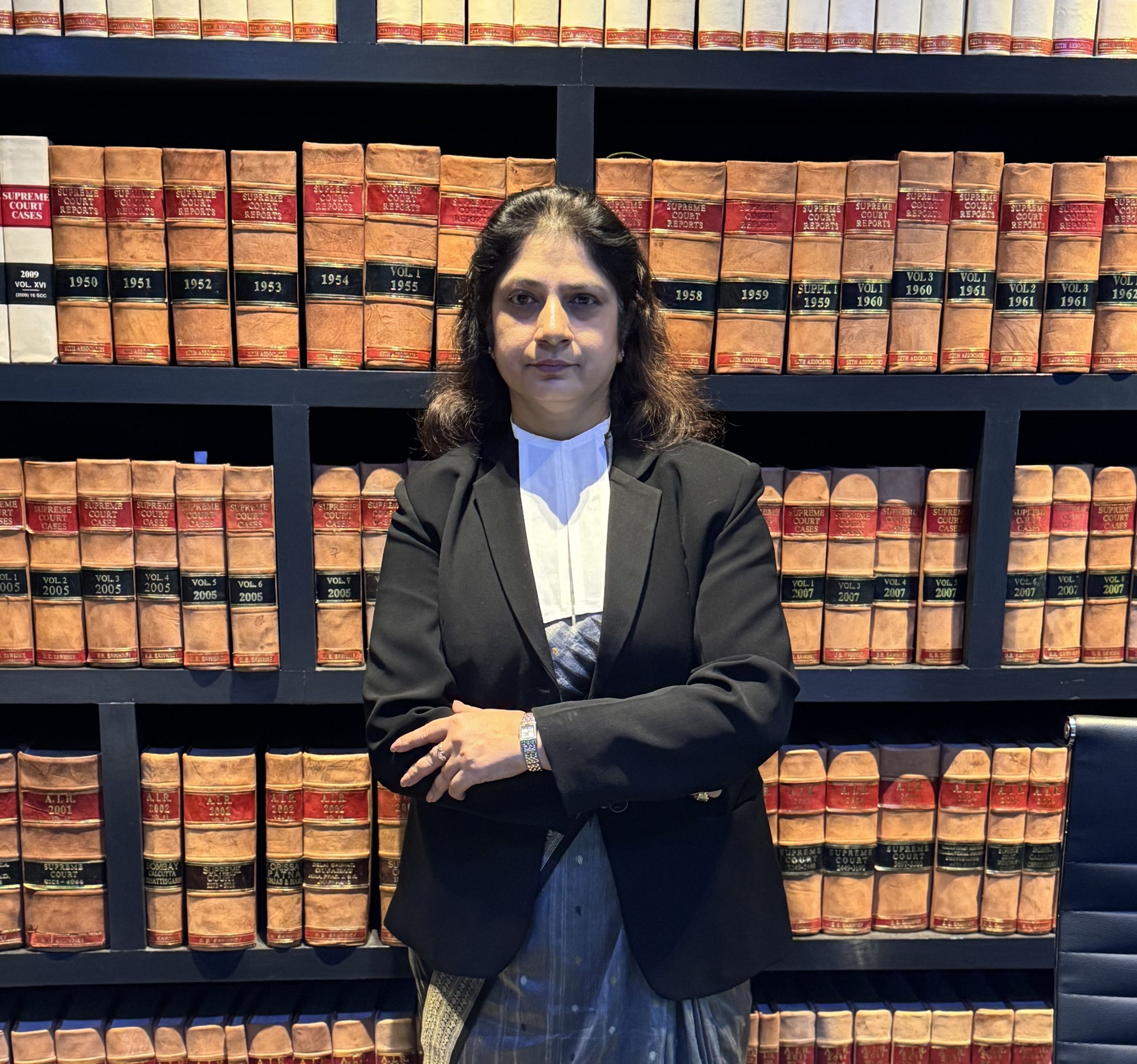

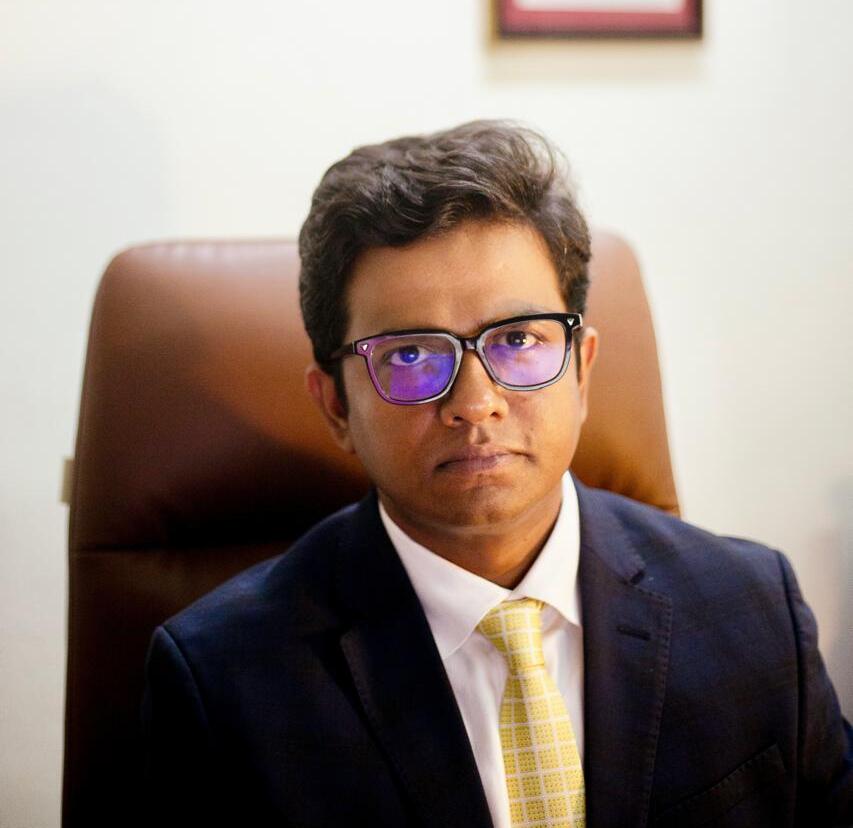

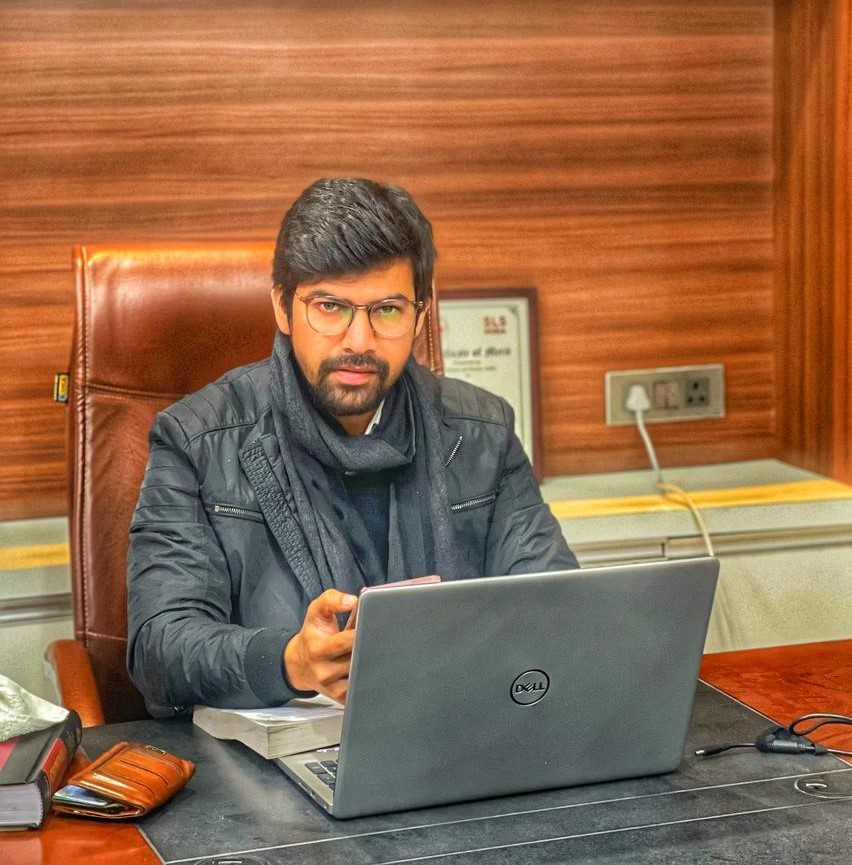

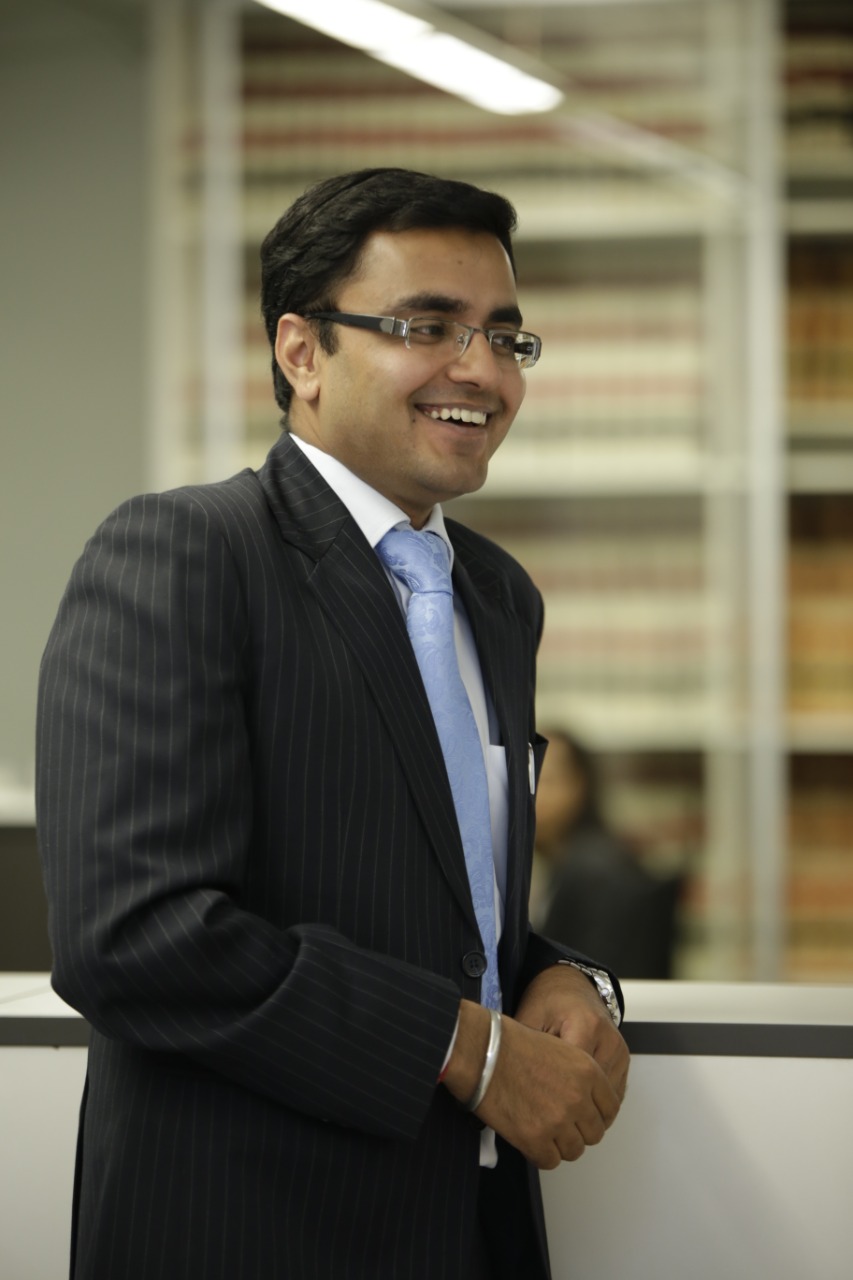


 Allow notifications