Tag: IT

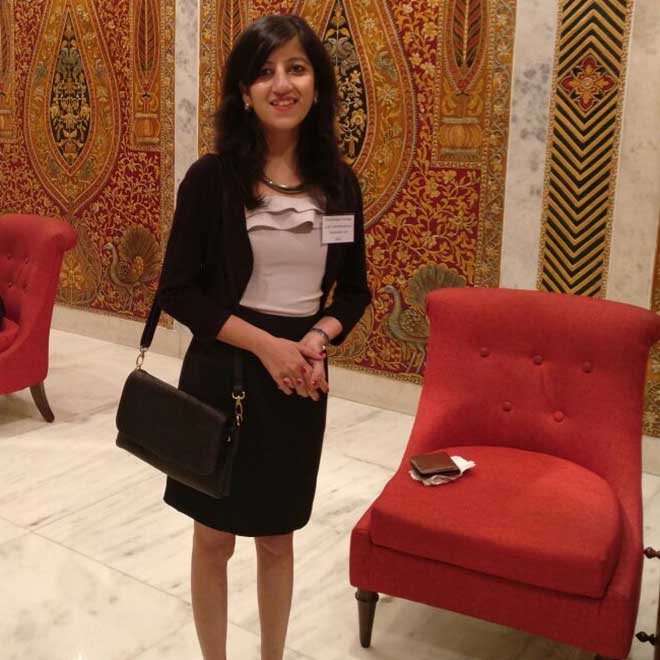
  • Shubhangini Rohatgi, Deputy Manager-Legal, Mahindra, on studying in London, IT Law, Contracts, and her diverse experience

    Shubhangini Rohatgi, Deputy Manager-Legal, Mahindra, on studying in London, IT Law, Contracts, and her diverse experience

    Shubhangini graduated from Guru Gobind Singh Indraprastha University, in 2007. After having worked for five years in the IT and Telecom Industry, she decided to pursue higher studies and thus, completed her LLM in Corporate and Commercial Law from Queen Mary, University of London, in the year 2013, with specialization in Cyberspace, Privacy and Information and E-Commerce laws. Her forte has been Commercial Contracting with a focus on the IT (Software) sector. She is currently associated with Comviva Technologies Limited (a subsidiary of Tech Mahindra), as a Legal Counsel handling reviews and negotiations of commercial contracts along with providing general advisory as well as advisory related to employment matters. She has previously worked with Oracle India and British Telecom.

    In this interview we speak to her about:

    • The Indian legal education regime
    • Studying in London
    • Her experience in IT

    How would you like to introduce yourself to our readers?

    I am a transactional lawyer, having worked in the field of Information Technology and Telecom for close to a decade. Quite contrary to the profession I’ve chosen for myself, I am an introvert at heart, and a not-so-social butterfly. But that has never deterred me from moving ahead in my career.


    What motivated you to pursue law?

    My Mother! She always wanted me to do something different. As a matter of fact, I was known to be a very argumentative child, as my father always observed and never failed to highlight, a quality which later helped me decide my future plans. My parents, being from the medical and teaching fields, encouraged my elder brother and me to pursue an unfamiliar path. Around that time, in the late ’90s, the usual career choices were either medical or engineering. My brother opted for hotel management, a career decision which many questioned, but supported by my parents, he proved himself in that field and is now doing very well in the hotel industry. When my time came, in early 2000, I did not wish to take up the regular courses, and of course had to follow in his stead, and thus chose between Law and Journalism. It’s a decision I am very proud of today.
     

    Would you say that the teaching methods here and abroad are vastly different?

    It would not be correct on my part to decide the level of difference in the teaching processes in India and abroad. Foremost reason being, that there is a vast difference in taking a course at an under-graduation level and post-graduation level. It was in India that I learnt the basics of education, and which brought me to the stage that I have reached. As part of my Masters’ degree in Law, I got the opportunity to be taught by acclaimed professors who were authorities in themselves. The focus of the professors is on imparting a practical sense of understanding rather than bookish knowledge. I am sure the same mechanism is being imbibed by faculty in India as well, making lectures more and more interactive. Unfortunately though, I have learnt the hard way that a Masters’ degree in Law, even from a prestigious international university, is not equivalent to an MBA. So, it is your basics which must be absolutely strong, and I believe, India has enough law colleges of repute which focus on the same.


    How significant do you think internships are for law students? 

    Internships must be made an integral and mandatory part of the law program starting from the first year itself. It helps in determining your likes and dislikes and paves the way for deciding which field to enter in the future. Of course, no one’s stopping you from choosing a different path even after! During my law school, I interned with several law firms, as well as with independent lawyers. It was because of this one internship with a Delhi based law firm in my fifth year which helped me get my very first job with British Telecom, a multi-national telecommunications company headquartered in UK. While I was interning I got a flavour of contracts, and got to know about the various terms which form part of contracts. It was a simple exercise of comparing two draft versions of a contract and highlighting the areas of difference. It may sound like an effortless job, but for a person still in law-college this was a very important piece of work assigned by a senior at the law firm. So I had to give it my best shot. In the process, I read through the entire contract, word by word, and few terms from the contract (which we call “boilerplates”) got etched in my mind (so much so, that even after eleven years, I still remember the name of the client whose draft it was, but for confidentiality purposes, will not pen down here). This simple piece of work helped me get my first job with a top MNC, while I was still in final year.


    Did you have any mentor or guiding figure during your formative years as a lawyer?

    I am a first generation lawyer, so it was not that I could rely on a lawyer in the family for deciding my career path or even understanding the nuances of law. My parents have always been my guides and mentors, and any and all decisions that I take, are taken giving due consideration to their advice imparted to me during my formative years.

     

    What are your fields of specialization? 

    My field of specialisation is reviewing and negotiating commercial contracts, more particularly software contracts. By way of qualification, I have specialised in e-commerce, privacy and data protection and cyber laws. It was during the initial six months as trainee at British Telecom that made me realise that commercial contracts were my calling. As I have primarily worked with Telecom and IT companies, it was an obvious choice to take up privacy, cyber laws and e-commerce as subjects of specialization given the fact that these are still considered niche and up-coming fields in India.


    Having worked in firms like British Telecom and Oracle India, what would be your advice for job seeking aspirants?

    From a value perspective, I feel that employers seek to engage with people who are sincere and committed. Unfortunately, integrity is a facet not seen in many. No matter what the situations and circumstances are, one should not deviate from the value of integrity. It goes a long way, and you will be remembered as an honest and truthful soul. From a work perspective, one should choose a career/job which one truly enjoys doing. Ultimately, it is your life and you alone should be responsible and accountable for the direction it goes in.

    I find myself fortunate to have gotten the opportunity to work with big names like British Telecom and Oracle. But, it wasn’t an easy job. One has to be focused and driven by passion to achieve something. My first six months at British Telecom, which was my very first job, was about preparing an online contract repository, which quite literally involved typing/copying clauses from PDF versions of contracts and pasting them on an online tool which was developed for creating an online repository of contracts. It may seem a dull and monotonous piece of work (and which quite frankly it was!), but it really helped me understand contract terms and conditions – just imagine the wide range of clauses I would read day in-day out.


    On what basis would you hire an intern?

    First and foremost, the person deciding the selection should keep in mind that an intern is still a student, and should be treated as one. He or she comes with a passion and is full of vigour.  Having said that, the key quality that I would look for, while selecting, would be the individual’s enthusiasm and eagerness to learn. I firmly believe that one may not know all, but with a learning bent of mind, one can achieve anything. The other quality I’d look for in an intern would be a sense of commitment and dedication. Not that I would want my interns to slog the entire day, as I am also a firm believer of having fun at work, but, such fun should be accompanied by serious commitment towards work.


    How do you stay updated on the latest legal developments?

    I regularly read the newspapers, and articles from various legal news websites to abreast myself of the latest updates and developments. Also, as my husband is a litigating lawyer, we often have dinner table discussions around various topics.


    What do you like to do when you’re not working?

    I like to read. More than reading, I like to collect books and articles. Although I may not get the time to read much, I feel content in the fact that I have something to rely upon.


    Any word of advice for our readers?

    The key to real success is happiness and contentment. I believe in the fact that though commitment and dedication is an essential element of climbing the ladder of success, the most important one is being happy and enjoying the work you do. If you enjoy your work, you are happy, and if you are happy, then dedication and commitment will reflect in your demeanour, and success will automatically follow you.



  • Avijit Sharma, Associate, Saikrishna & Associates, work at IAMAI, winning moots and balancing studies

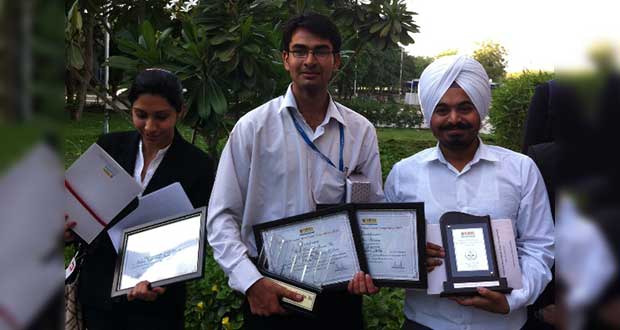
    Avijit Sharma, Associate, Saikrishna & Associates, work at IAMAI, winning moots and balancing studies

    Avijit Sharma graduated with a degree in Anthropology from Hans Raj College, Delhi, later he graduated in law from CLC, Delhi University in 2009. While in college, he earned several awards at moot court competitions including the award for the Best Speaker at the 27th National Bar Council of India Moot Court Competition. He was also the Convenor of the Moot Society at Delhi University. He began his legal career as Assistant Manager-Legal Affairs at Internet and Mobile Association of India. He is currently an Associate at Saikrishna & Associates. In this interview he talks about:

    • Balancing academics and mooting
    • Working at IAMAI and Saikrishna & Associates
    • Specializing in IPR Laws


    You have a Bachelor’s degree in Science (Anthropology) from Hans Raj College, DU. Could share with us any specific incident which motivated you to pursue law as a career?

    Law was always a career option for me. Law could be studied as a five year program after XII Boards, or a three year program after a graduate degree. Graduate degrees in English, Business Administration, Economics and commerce are considered useful for a career in law. However, after going through the syllabus for B.Sc. Anthropology I felt that it should provide an ideal foundation for a career in law – in no other discipline is one simultaneously exposed to the study of biological, sociological, cultural, economic and political growth of human beings and societies, as well as immediately useful subjects – such as human anatomy and forensic science. For me law was a logical progression from Anthropology.


    How was your experience at CLC, DU?

    I had a wonderful time at CLC, DU. The crowd was good. The faculty is great. The intellectual environment is stimulating. I focused on constitutional law, intellectual property and environmental law. I found criminal law fascinating and law of evidence absorbing, but tried not to neglect any major branch. I cannot presume to be able to advise anyone, but would suggest that one should try to explore every major branch of law.


    What is your take on academics?

    Academics are very important. A consistently good CGPA is a reflection of one’s attitude and habits of regularity, inner discipline and capacity for organized work. I believe that these qualities are equally essential for a good career in the legal profession. In addition, a good CGPA makes your CV impressive in the eyes of Law Firms and prospective employers.


    What skills did you get to hone as the Student Convener of your Moot committee?

    Being the student convener of the Moot Court Society was a cherished moment. The Moot Court Society was all about close looping with the senior and junior batch-mates and learning to present arguments at moot court fixtures. I am greatly in debt to Prof. Alka Chawla for recognising my time management skills, and entrusting me with various important decisions to manage the Moot Court Society.


    You have participated and won various moot court competitions. What is your advice to budding mooters?

    Yes, I have won various moot competitions and also won a scholarship and the Best Speaker award in the 27thNational Bar Council of India Moot Court Competition and in a few others.

    One has to be better prepared for the ‘competition’. It requires thinking through both sides of the ‘problem’, being conscious of the strengths and weaknesses of both sides of the case and an anticipation of the possible queries of the judges. In short, one should be prepared enough to be able to argue from any side of the case at a moment’s notice. My advice to a budding mooter would be – never to be aggressive at any moment, but to be assertive at all times. It is important to carefully listen to the arguments of the opposite side and the questions asked by the Judge.


    avijit-sharma-2

    How does one make a winning memo? According to you, what is the difference between a great and an average memo?

    My answer would be the same as in response to the previous question. Plus, a winning memo should be crisp and brief, without missing out on anything essential. A great memo would reflect the fullness of legal research, and a keen focus on the essential issues. An average memo would be comparatively lacking in these properties.


    How important do you think are co-curricular activities in shaping the legal career of a law student?

    Mooting, debating and publication in journals are the best intellectual pleasures for a law student and very effective preparation for a life in law. I’d say that it’s the time best spent.


    What are the tips and strategies you would like to share with our readers who are currently law students?

    Academics are very important, since they reflect one’s inner discipline and attitude towards work, and it would be foolish to sacrifice them for the sake of anything, including a good performance in a moot court competition. It is to be understood that the theory of law itself has resulted into various codified laws and landmark judgements. The great Nani Palkhiwala attained a tall stature at the bar on the foundation of a strong academic background. In short, one has to excel at both, which requires good time management – an advice which is easy to give but hard to follow. Nevertheless, a good CGPA can never hurt.


    How was your first year after graduation?

    The first year after graduation was a tad difficult, since I could not find congenial work at the very outset. It was important to have a proper start by finding a suitable opening with a law firm of repute.


    You started your legal career as an Assistant Manager – Legal Affairs at Internet and Mobile Association of India. How did your appointment take place? What was the nature of your work there?

    I applied for a position at Internet and Mobile Association of India (“IAMAI”), and was fortunate to have been offered the said position. I believe that it was due to the combined effect of my academic and extra-curricular record. As the Assistant Manager, Legal Affairs, in addition to the other things, the most interesting part of my duties was to watch and document the developments taking place in the cyber world – in India as well as globally, be they legislative, judicial, social, political or commercial.

    The tipping point came when I as a co-petitioner along with IAMAI decided to move the Supreme Court of India in a writ proceeding, challenging various provisions of The Information Technology Act, 2000 and the Rules framed thereunder. The Writ has recently been decided by the Supreme Court (reported as Shreya Singhal vs. Union of India) and is considered as a milestone in Internet Jurisprudence.


    Currently you work as an Associate at Saikrishna & Associates. Please tell us the recruitment process at Saikrishna. Tell us about your induction into the firm.

    S&A is always open to the induction of fresh associates. They look for young professionals having the ability to work smart as well as hard, in keeping with its professional requirements. I assume that in addition to a creditable performance at the graduate and law school level, the firm also gives weightage to the extracurricular as well as professional exposure and confidence in a prospective associate. I came in touch with Mr. Saikrishna Rajagopal and Mr. J. Sai Deepak in relation to my law related responsibilities at IAMAI. S&A and IAMAI were collaborating over several matters of mutual interests, including the above-mentioned writ petition. I must have left a good impression upon them and they were gracious enough to offer me the position of an associate in the firm.


    What kind of work and responsibilities does an associate at Saikrishna deal with?

    The Associates in the litigation department deal with subject matters pertaining to IP enforcement, regulatory litigation, competition law litigation, pharmaceutical advisory and litigation, entertainment, media and software anti-piracy campaigns. The gamut of work includes preparing briefs, drafting pleadings, researching relevant case laws, client meetings, court appearances. The firm provides ample work related opportunities, professional exposure and a conducive environment to enable its members to fully utilize their potential to the maximum, thereby enabling them to shape their standing and professional career.


    How did you build up your expertise in IPR?

    The study of law is a never ending process. A lawyer remains a student forever and only the finest and sharpest of minds can claim to be an expert in any given department of law. In all humility, I would say that I have been barely able to scratch the surface of IPR Jurisprudence. The primary essential of an IPR lawyer or for that matter a lawyer in any other field of law is his thirst for knowledge and an open but critical mind.


    What kind of internship applications do you think stand out positively?

    Interns are meticulously and rigorously coached at the Firm which offers to them invaluable insight into the professional lives of the lawyers conducting cases and appearing before the various courts and tribunals. The interns are given a range of responsibilities which includes research upon various propositions, preparing case notes and attending mediation sessions. The firm has an internal department which evaluates the applications keeping in mind various objective standards. I understand that interns having a working knowledge of the substantive and procedural laws usually do well with the firm.


    Given a chance to turn back the clock would you have done anything differently from what you’ve done?

    The study and of law and its practice has so far been an exciting journey. It has taught me ways of life. Given a chance, I would want to revisit my graduation days to attend and discuss study lectures of Prof. Kamla Sankaran on constitutional law and jurisprudence.


    Lastly, what would be your message to a law student who is yet to decide his/her career?

    The study of law is more than chalk and talk, so it is important to meet people, patiently listen to their ideas and to socialise. As an advice to law students, I would first stress upon the importance of academics and theory and thereafter making career decisions after evaluating the stream of opportunities which may come their way.

