Tag: Jamia Millia Islamia

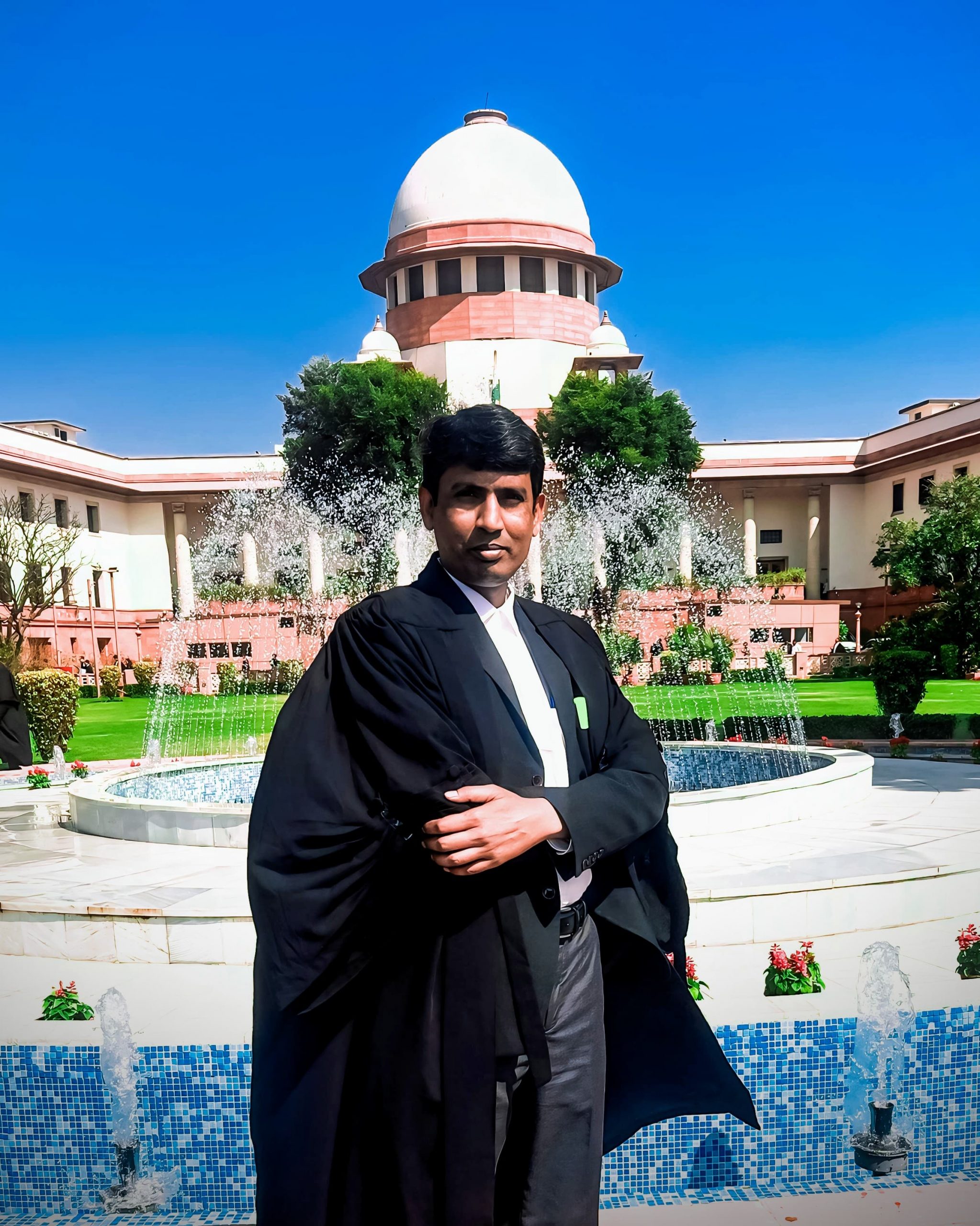
  • “I had no ambition, no aspiration, no other option but to study law and to serve and aid the ailing humanity with the power of Law.” – Champion of Heritage Conservation: Syed Mohammad Haider Rizvi, Advocate at the High Court Of Judicature at Allahabad

    “I had no ambition, no aspiration, no other option but to study law and to serve and aid the ailing humanity with the power of Law.” – Champion of Heritage Conservation: Syed Mohammad Haider Rizvi, Advocate at the High Court Of Judicature at Allahabad

    This interview has been published by Namrata Singh and The SuperLawyer Team
    Can you share how you began your career in law and what motivated you to pursue this path? Was there someone who inspired or motivated you to make a career in Law?

    I have seen my father crusading the cause of litigants, most of whom were poor and oppressed, and his commitment to the cause of justice, irrespective of whether his clients could pay his fees. With his excellence as a private counsel, who rose to the position of the Chief Standing Counsel for the State, rescuing public departments from many a piquant situation that arose during his tenure, I held him (and still keep him) as my role model and therefore I had no ambition, no aspiration, no other option but to study law and to serve and aid the ailing humanity with the power of Law. 

    With over 25 years of diverse experience in the legal field, what significant changes have you observed in the practice of law?  

    The technological developments worldwide have lessened the gap between fellow humans across the globe and social interactions which now happen worldwide on various social media platforms have not only broadened the horizons for budding lawyers but have enhanced their capacities and abilities. In olden times, legal research which mandated visits to libraries, and reading through books, journals and digests is now available with the click of a mouse. The information, which is available freely on the world wide web can be accessed by anyone and everyone, but then, there is certainly a word of caution for those who just believe in cut and paste, as many times, deceptive websites may offer a concocted information which may land the user in trouble. Technology and Law go hand in hand, but so do caution and care, which need to be exercised by those using technology to aid their research. 

    In your private legal practice, you have handled various cases in Family Laws, Civil, and Criminal Litigation. Can you share a memorable case and its impact on your professional growth?  

    Post Covid, there has been a spurt in cases relating to matrimonial relationships where the couple fight a concerted battle, which results in multiple FIRs being filed from either sides and related litigation in the form of a maintenance case, a case under Domestic Violence Act also being agitated in courts of law. A close look at the cases would reveal that these cases are mostly an outcome of an ego clash between the spouses where the role of an Advocate is more of a counsellor, who must use his skills to mediate and bring the parties to a consensus as, in a matrimonial case, and the cases that ensue, it is not only the couple which suffers, it is their families which suffer the trauma. In my role as an Advocate in matrimonial cases, I have successfully closed dozens of cases brought about an amicable settlement between the parties, withdrawn criminal cases, ensuring a better tomorrow for the estranged couple, by way of an agreement that created a win-win for the estranged couple. 

    A Memorable case that I would share related to a frantic phone call to me from a lady, a mother whose daughter aged about 13 years, complained of stomach ache and was taken to a nearby hospital where it was revealed that the girl child was pregnant and was carrying a live foetus. The family extremely poor, was devastated. On our intervention and request made to the SP, an FIR was registered and the culprit was arrested and sent to judicial custody. The bigger concern was the pregnancy which would have cost the girl child, her life. We coordinated, got a petition filed in the High Court and procured permission to abort the foetus, at state expenses. Post this traumatic incident, we handheld the girl, ensured that she was treated well and left her home, while also ensuring the payment of a compensation of 3.00 Lacs from the government, which would go a long way in sustaining her in the drama called life. All this was done gratis, pro-bono for which not a single penny was charged from the family/child.

    Another memorable achievement, which is worth sharing, is the case of tourist guides of the all-famous Husainabad Trust, which owns the majestic and most beautiful monuments of Lucknow, the cultural hub of north India, and includes the signature monument of Lucknow – Rumi Darwaza, Asafi Imambada and Bhool Bhulayya, Chota Imambada etc. These tourist guides were not even paid the wages that were payable to an unskilled worker. At their request, we took up their cause pro-bono and ensured the grant of the minimum pay scale to these lesser privileged brethren, besides other social security initiatives, an effort which was lauded worldwide.  

    Having worked both as an in-house counsel and as an independent advocate, can you share your experiences and insights on the distinct challenges and rewards of each role, and how they have shaped your overall legal perspective?  

    Having aced my academics with distinction (Securing First Place in the LL.B. Examination from Jamia Millia Islamia and then having topped the Merit list of LL.M. from the University of Lucknow, securing 2 gold medals), I always craved knowledge on the working of the public as well as private institutions and I spent a considerable time, working for a central government PSU and a corporate giant, heading their legal wing. I learnt that while in government, officers are only conscious about saving their skin and trying how to delay and thereby stall a project (as one only becomes accountable when a particular action that is taken turns bad after a few years, making those who initiated and concluded the said appraisal vulnerable) private sector is just the reverse. The private sector is result/solution oriented, meaning thereby that the private sector understands the concerns and procedural hiccups but an in-house counsel is required to provide solutions on how to get a project going. In the private sector, it is the result that matters and the result is the determinant of the continuance of a job in a private entity, notwithstanding the business group which controls it. 

    The learnings from both the government and provide sectors which I have gathered through these formative years of my professional career are helping me in discharging my functions as a private counsel, as I understand the concerns and issues of both these enterprises and have an edge on my peers who are less aware on how the decision making takes place on these divergent sides. This knowledge and understanding help me serve my clients in a better and promising manner.

    Your work in the preservation of heritage monuments in Lucknow is well-known. What inspired you to take up this cause, and what has been your most rewarding experience in this area?  

    Protecting and preserving culture, which is a determinant of an individual’s personality is a fundamental duty of every Indian, and when I work towards the concertation and preservation of monuments, I do so in the discharge and fulfilment of my fundamental duty. The monuments of Lucknow and adjoining districts are uniquely distinct and have an aura that resonates once you even have a cursory glance over them. These monuments have always fascinated me as a child and I used to fight with my friends who would scribble on the monuments. The fascination turned into a passion when in the year 2008, I was entrusted with a monument (Mausoleum of King Amjad Ali Shah, Hazratganj, Lucknow constructed in 1847)  as a trustee appointed by the State Waqf Board. In a struggle that ensued, it transpired that the monument, which was a centrally protected monument was obscured, vandalised and on the verge of an imminent collapse, forming a part of the “Lost Monument” of Lucknow. Since neither the Wakf Board, nor the earlier committee of the Waqf had any documentation regarding this monument, the RTI Act came to our rescue and the RTI Applications we filed before the concerned authorities, visits to the Archives, regular follow-ups with the authorities resulted in the initiation of action, initially with the removal of encroachments from within and around the monument, and then its conservation and preservation, as a result whereof, the monument now stands restored as a live monument. Unfortunately, during the first COVID lockdown, the outer gate of the monument crumbled down, which has also now been fully repaired and conserved as a result of our efforts and follow-ups with the concerned stakeholders. The most rewarding moment was being adjudged “One Man Preservation Movement” by the internationally acclaimed magazine “The Economist” in Oct 2016.

    The learnings gathered from the Mausoleum of King Amjad Ali Shah are now being replicated for the other similarly situated monuments of Lucknow which are equally vandalised, encroached and unkempt. I am confident that I shall be able to ensure a proper conservation of our cultural heritage, with guidance from the Hon’ble High Court where my PIL on this count is engaging regular attention of the Hon’ble High Court whose intervention is proving to be a boon for the monuments and their conservation. 

    Your research on the Allahabad High Court Rules led to a significant amendment. What drove you to undertake this research, and what impact has it had on the legal community?  Please share some insights if you can.

    An Advocate, to be able to do justice with his profession, has to be inquisitive. In my endeavour to secure the rights of my fellow citizens, I came across this provision of the Allahabad High Court Rules in the form of Chapter XVIII Rule 18(3)(a) which mandated a 10 days notice to the Government Advocate (to enable him to seek instructions from the districts regarding criminal antecedents of the bail applicants and instructions on the said applications). This notice period was necessary before the bail application was placed before the Hon’ble Court for hearing. This rule indicated the deprivation of the right to life and personal liberty of an individual sans “due process of law”. This intrigued me and I initiated research on the subject, studying similar rules across the country only to note that no rule akin to this patently unjust rule existed in any High Court across the country, irrespective of geographical areas of the states. The rule was therefore challenged before the Hon’ble Supreme Court, by way of a PIL which was drafted after thorough research and in terms of the directions of the Hon’ble Supreme Court, the Rule was amended from 10 days to 2 days, to the respite of thousands of those who languished in jails without hearing, for a minimum period of 10 days, which even extended further on account of procedural technicalities. The rule that stood in the rulebook for almost 4 decades was not challenged and led to the deprivation of the rights of scores of citizens. This in fact, is my contribution towards my fellow citizens and profession which I cherish.

    Winning the prestigious Changemaker Award for five consecutive years is a remarkable achievement. How did these awards influence your work and inspire others?  

    The corporate sector, especially the larger companies with substantial turnover has a CSR wing, adhering to a legal mandate, and some of these companies including the Bharti group get involved in several far-reaching social initiatives and walk the talk by motivating their personnel towards public causes. I, for one, have been a Samaritan for whom public service and aiding the ailing humanity has been a priority had been crusading for many public causes all through, which were identified by the company’s foundation which enlisted my socially oriented individual efforts in the category for in-house professionals and post a detailed review which comprised of a committee of distinguished personnel and social activists selected globally, my initiatives were found laudable and creditworthy and they were rewarded by way of Changemaker Awards 5 years in a row, till I switched to a different role and reverted to hardcore advocacy.

    As a visiting faculty at various institutions, what key lessons do you impart to your students, and how do you prepare them for a successful legal career? Also, what advice would you give to young legal professionals who are just starting their careers in the current legal landscape?

    We, Indians have proven acumen and are conscious about our rights and reach the authorities whenever any of our rights are infringed, seeking prompt redress. While agitating for our rightful claims is our right, we have an equally important set of duties that are enshrined in Article 51A of the Indian Constitution. Unfortunately, most of my fellow countrymen are hardly aware of these duties and those who are aware, do not perform these duties. In all my interactions with the students and officers, I always insist that we must not only read, understand and perform the fundamental duties, but also imbibe upon our younger generation, especially the budding lawyers to inculcate these fundamental duties in our persona, and I am confident that if we do so, our country shall gradually rise and shine, becoming a world leader, a position which we aspire for and rightly deserve. 

    The young lawyers who are about to enter the unfathomable legal profession need to know that there is no alternative to hard work, and their interactions with the clients and the needy need to start with a notebook in their hands, where they need to give a patient hearing to the concerned, note down the concerns and then decide upon the course of action suited for a particular situation. 

    Outside of your professional life, what personal hobbies or interests do you pursue, and how do they influence your approach to your legal practice?  

    My personal hobbies include social interactions, reading and writing and these hobbies enable me to learn the human values of commitment, dedication, and devotion and to a larger role of a social reformer which an Advocate has to play as a person who is not only leaned but also knows how to interpret laws and write the petitions aimed at aiding the ailing humanity. The knack of a lawyer as a crusader for the rights of the poor and the oppressed is beautifully expressed by poet Waseem Barelvi when he writes : 

    Kaun see baat, kahan, kaise kahee jaati hai,

    Ye saleeqa ho toh, har baat suni jaati hai ……

    Get in touch with Syed Mohammad Haider Rizvi-

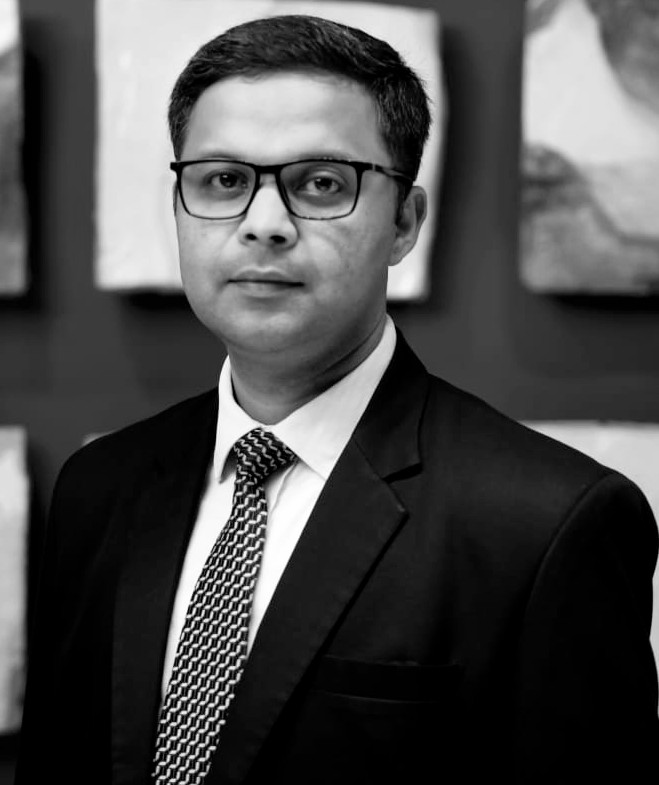
  • “Fostering effective collaboration is fundamental, whether engaging in negotiations or providing legal support, this entails a comprehensive approach grounded in clear communication, cooperation, and trust.” – Sudershani Ray, Partner at VantaLegal

    “Fostering effective collaboration is fundamental, whether engaging in negotiations or providing legal support, this entails a comprehensive approach grounded in clear communication, cooperation, and trust.” – Sudershani Ray, Partner at VantaLegal

    This interview has been published by Namrata Singh and The SuperLawyer Team

    You’ve had an extensive career spanning over 13 years in law. What initially drew you to this profession, and how has your journey been so far?

    Law was not my first choice, I always dreamt to become a doctor. But there was no way I could have made it to a medical college, as I was not good in maths and science.  20 years back  professions like law, engineering, and medicine were highly respected and prestigious, the level of respect they receive can fluctuate for a variety of reasons.  So, I decided to pursue law to serve the community. Just as doctors work to heal and improve the health of individuals, lawyers work to uphold justice, protect rights, and ensure fairness within the legal system.

    What inspired you to specialize in divorce law, service matters, civil, and criminal law?

    At my law school I intended to become a corporate lawyer or work for corporates during my internships I discovered a passion for litigation.  

    As a junior I worked in the chamber of prominent lawyers such as Advocate Neelima Tripathi( now senior advocate) , Advocate Gurang Kanth( now Justice Guarang Kanth), Advocate Suparna Srivastava wherein each day was  a learning experience, with victories and setbacks alike serving as fuel for my determination to continuously improve.

    Working in the chamber of my seniors I wealth of knowledge in field of civil law and property law which enabled me to lay a strong foundation in the civil law and property law.

    Why I became a family lawyer?

    This is a question I, admittedly never actually asked myself before, that is until in 2015 when I started considering for opting an additional specialization.  I sat down and actually asked myself … well , why did you  want to become a family lawyer in the first place?

    The answer I discovered was quite simple?

    I am an empathic person, who likes to help people, I love to listen to people’s problems and help guide them through sometimes the most difficult time in their lives.  When you’re going through a divorce, there’s a lot on the line. From your finances to your home and even the time that you spend with your children, it will all be a part of your pending divorce. Being a good Family Lawyer is to be understanding and empathetic, without becoming emotionally involved in your client’s life.

    Family Law is a difficult area of law, it is emotional for clients as they are often at their most vulnerable, people are frustrated with delays and costs (both of which are increasing each year), and no-one ever really wins. But at the end of the day, I would say in nearly every case I have advised or acted for someone I can look back and say I helped that person (even if it was only in a small way) and that is what matters to me and what makes it all worth it.

    You’ve been practicing independently for quite some time now. What motivated you to establish your own firm, RAY & ASSOCIATES?

     Establishing my own firm, RAY & ASSOCIATES, was a decision driven by a combination of ambition, capability, and a desire for autonomy. After gaining valuable experience practicing independently, I felt compelled to create a platform where I could orchestrate operations according to my vision and values. The motivation stemmed from a deep-seated belief in my abilities and the conviction that I could lead a team to success. Founding my own firm allowed me to cultivate an environment where I and my associates could work collaboratively, pooling our strengths and expertise to achieve common goals. Moreover, the opportunity to work on my own terms, setting the pace and direction of our endeavour’s, was immensely empowering. By establishing RAY & ASSOCIATES, I aimed to create not just a business, but a supportive and inspiring workplace where every team member feels valued and motivated to excel. This journey has been fueled by a relentless determination to innovate, grow, and make a meaningful impact in the legal landscape, driving us forward with passion and purpose.

    We understand that you specialize in matrimonial disputes among other legal areas. Can you share some insights or experience from one of your cases where the lady paid alimony to her husband? How do you approach such cases, and what factors might lead to such outcomes in matrimonial disputes?

    There have been a plethora of memorable cases mostly in the field of family law but a  exceptional  case I handled was where a wife  paid a certain amount to husband to get divorce. Certainly, in matrimonial disputes, the payment of amount by the wife to her husband is relatively uncommon but not unheard of.

    I recollect that the client X ( Name not disclosed for privacy) entered by office and presented the brief. He said  Mam I am a victim of false cases .  I want compensation and alimony. I laughed on him and remarked “ You have gone crazy and this has never happened to my knowledge . My client was adamant and persistence  to seek alimony from his wife.

    Family law is patience and perseverance.    This client of mine  cooperated in all legal proceedings and mediation. The man was ready to face the trial without fearing for consequences.

    In today’s time, there are increasing reports of men being victims of false allegations in matrimonial cases. What advice or insights would you offer to individuals who find themselves in such challenging situations and may not know how to navigate the legal complexities effectively?

    Navigating false allegations in matrimonial cases can be an incredibly daunting and emotionally draining experience for anyone, regardless of gender. For individuals facing such challenging situations, it’s essential to approach the matter with composure and strategic thinking.

    Firstly, seek legal counsel from a qualified and experienced lawyer specializing in family law. They can provide invaluable guidance and support, helping you understand your rights, obligations, and legal options.

    If a wife files a false case, then the few advise which I can   provide.

    Stay Truthful and Transparent: Being honest and transparent with your lawyer is crucial. Provide them with all relevant information and facts pertaining to the case to enable them to represent you effectively.

    Consider Mediation or Settlement: In some cases, opting for mediation or settlement negotiations can be a viable option to resolve the dispute amicably and avoid prolonged legal battles. However, this should be done under the guidance of your lawyer and with careful consideration of your best interests.

    Stay Informed: Stay informed about your legal rights and obligations. Ask questions and seek clarification from your lawyer whenever necessary to ensure that you fully understand the legal proceedings and implications of various decisions.

    Maintain Support Networks: Surround yourself with supportive friends and family members who can provide emotional support during this challenging time. Seeking counseling or therapy can also be beneficial in coping with the stress and anxiety associated with false allegations.

    Trust the Legal System: Have faith in the legal system and trust that truth and justice will prevail. While the process may be daunting, having a skilled legal advocate by your side can significantly increase your chances of achieving a favorable outcome in your case.

    By following these advice and insights and working closely with a knowledgeable lawyer, individuals facing false allegations in matrimonial cases can effectively navigate the legal complexities and protect their rights and interests.

     Documenting any evidence that disproves the allegations or supports your case is crucial. This could include text messages, emails, witness statements, or any other relevant documentation. Additionally, maintain open communication with your attorney and follow their advice diligently throughout the legal process. It’s also important to prioritize self-care and seek emotional support from trusted friends, family members, or counselling professionals to help cope with the stress and uncertainty of the situation. Remember, false allegations can be disproven with patience, perseverance, and the right legal representation.

    Looking back at your journey from law school to becoming a partner at VantaLegal, what are some pivotal lessons you’ve learned along the way that you would like to share with our readers aspiring to make their mark in the legal field?

    In reflecting on my trajectory from law school to achieving the status of partner at VantaLegal, I have garnered pivotal insights that I deem invaluable for aspiring legal practitioners seeking to carve their niche in the legal realm. Through this journey, I have underscored the paramount importance of perpetual learning, which serves as a linchpin for professional advancement in the dynamic legal milieu. Specializing in a distinct area of legal expertise has proven to be transformative, allowing me to distinguish myself and furnish exceptional value to our esteemed clientele at VantaLegal. Cultivating robust professional relationships has been foundational to my career trajectory, enabling me to unlock new vistas of opportunity and glean insights from peers and mentors. Upholding an unwavering work ethic and demonstrating perseverance are cardinal virtues in the legal profession, qualities that have been pivotal to my ascension to partnership within VantaLegal. Finally, I accentuate the indispensable nature of ethical standards in the legal domain, advocating for the steadfast adherence to integrity, honesty, and ethical precepts as non-negotiable tenets that engender trust and credibility with clients and peers alike. In culmination, I proffer guidance for aspiring legal professionals to embrace continuous learning, cultivate specialized expertise, prioritize relationship-building, uphold a strong work ethic and perseverance, and maintain unwavering ethical standards, as a blueprint for success and impactful contributions within the legal arena.

    Throughout your career, you’ve handled cases independently and provided legal consultancy services. Can you share a memorable case that taught you something profound about the legal profession or human nature?

    Every case provides a unique opportunity for learning and growth, both professionally and personally in family law. I recollect a case which is quite dear to my heart which was child custody. Cases involving child custody can be emotionally challenging, especially when there is acrimony between the parties involved.

    The parties had acrimonious relationship, due to dispute between parents affected child custody arrangement.  The father was unable to meet the child for 2 years  which had  emotional and psychological consequences on both father and the child involved. In this case, the court’s decision to grant the father custody during the summer vacation demonstrates the court’s recognition of the importance of the father-son relationship and the need to ensure the child’s access to both parents. This decision not only provided the father with the opportunity to spend quality time with his son but also helped to restore and strengthen their bond after a prolonged period of separation.

     This order enabled me to  realize that  moments like these, where the legal system can facilitate positive outcomes for families, that highlight the significance of the work done in family law courts.

    Especially in child custody it is imperative to provide a forum for resolving disputes and making decisions in the best interests of children,  being the officer of courts, we lawyer play a crucial role in promoting the well-being and stability of families.

     Amidst the demands of a thriving legal career, how do you unwind and recharge? Could you share some of your favourite ways to relax and rejuvenate outside of the courtroom?

    Balancing the demands of a busy legal career is crucial, and finding time to unwind and recharge is essential for maintaining productivity and well-being. Outside of the courtroom, I prioritize activities that promote relaxation and mental rejuvenation. Spending quality time with my pets, family and friends are incredibly rejuvenating. I practice mindfulness practices, such as meditation or deep breathing exercises,  helps  me to  promote relaxation and reduce stress. Recognizing the importance of maintaining a healthy work-life balance, I believe that fostering a sense of humanity and camaraderie within our profession is essential for long-term success and fulfilment.

    Collaboration seems to be a key aspect of your work, whether it’s negotiating agreements or providing legal support. How do you cultivate effective collaborations with clients and colleagues?

    In my legal practice, fostering effective collaboration is fundamental, whether engaging in negotiations or providing legal support. This entails a comprehensive approach grounded in clear communication, cooperation, and trust. I prioritize transparent communication channels, ensuring clients and colleagues are consistently updated and engaged, fostering a sense of accountability and mutual understanding. Additionally, I actively listen to and empathize with stakeholders’ perspectives, tailoring legal strategies to align with their goals. Collaboration is further enhanced through teamwork and cooperation, leveraging diverse expertise to achieve shared objectives efficiently. Moreover, I uphold principles of professionalism and integrity, cultivating an environment of trust where all parties feel empowered to collaborate openly and confidently. By adhering to these principles, I facilitate robust collaborations that drive successful outcomes in legal matters.

    Get in touch with Sudershani Ray-

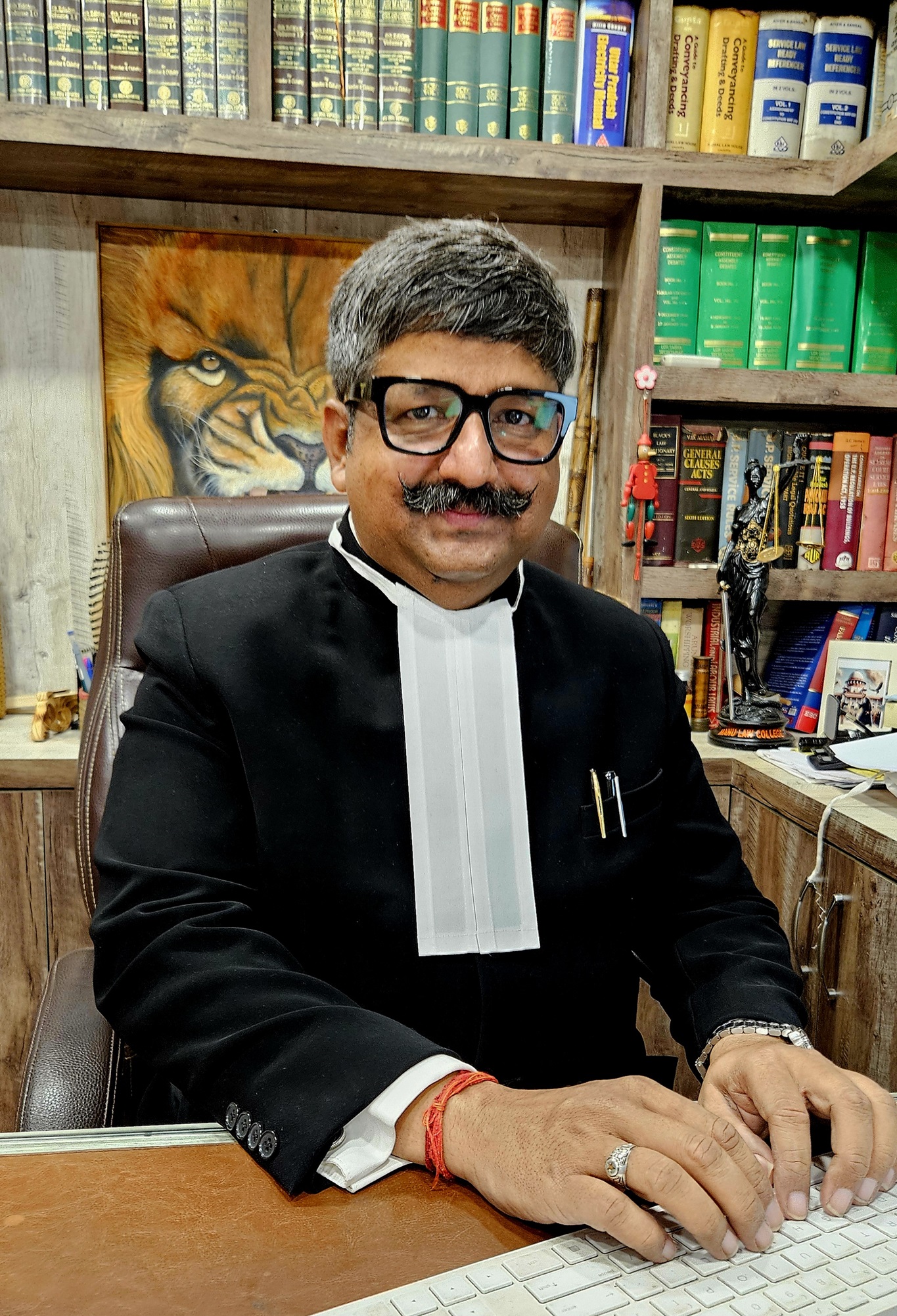
  • “Keep moving forward with unwavering determination, and you’ll find that the rewards are bound to follow.” – Evolution from a First-Generation Lawyer to IP Law Specialist, Anil Kumar Sahu, Managing Partner of ALL IP CARE.

    “Keep moving forward with unwavering determination, and you’ll find that the rewards are bound to follow.” – Evolution from a First-Generation Lawyer to IP Law Specialist, Anil Kumar Sahu, Managing Partner of ALL IP CARE.

    This interview has been published by Namrata Singh and The SuperLawyer Team

    Can you share with us the story behind your journey into the field of law? What inspired you to pursue a career in law, and how did your early experiences shape your path to becoming a seasoned legal professional?

    As a child, I witnessed my family go through a challenging and emotionally taxing ordeal that required multiple visits to various courts. During this time, my father faced significant hardship due to family disputes and it was during these moments of adversity that I had a profound realization that I would never want to see my family or anyone I cared about go through such difficulties again.

    This poignant experience became the catalyst for my decision to pursue a career in law. I was determined to gain the knowledge and skills necessary to navigate the legal system effectively, to protect the rights and interests of my loved ones, and to ensure that justice was served. It was a deeply personal motivation that fuelled my journey into the field of law, driven by a heartfelt commitment to prevent others from experiencing the same kind of turmoil and uncertainty that my family endured.

    Your firm, ALL IP CARE, specializes in Intellectual Property Rights among other legal services. What drew you to focus on this particular area of law, and what excites you the most about working in the realm of IP rights?

    Becoming an advocate, especially as a first-generation lawyer, presented me with numerous challenges on my path to success. In 2002, I embarked on a journey of advocacy at Tis Hazari Court. I gained first-hand experience in handling a diverse range of legal matters, including civil, criminal, matrimonial, writ, and service cases.

    However, life had other plans and in 2007, when I decided to switch my practice in the domain of Intellectual Property laws. This transition introduced me to the intricate world of IP laws.

    During my tenure at the IP law firm, I was fortunate to be presented with significant opportunities that I regard as noteworthy achievements. I was entrusted with the task of working on a research paper related to prior publication in the Designs Act, and I was also deeply involved in trademark research. These experiences allowed me to delve deeply into the realm of Intellectual Property Rights (IPR) laws.

    Given your extensive experience in criminal law, could you share some insights into how you approach defending clients in criminal cases, especially in light of your specialization in areas like Intellectual Property infringement?

    When approaching clients, particularly in cases of Intellectual Property infringement, I adhere to a strategic and comprehensive approach. Though stringent laws on criminal prosecution exist, their enforcement is challenged by limited awareness among law enforcement bodies. Investigation and scrutinizing evidence surrounding the alleged infringement go hand in hand, further buttressed by assertions from potential witnesses such as subject matter experts or law enforcement officers who can support building the case, whether it be a civil or criminal prosecution. Being able to adapt strategies based on evolving circumstances ensures the best possible outcome for the client in protecting their IP.

    Your profile mentions your involvement in organizing workshops and seminars on various legal topics. What motivates you to engage in these initiatives, and how do you believe they contribute to the legal community?

    As an IP lawyer, organizing workshops and seminars is not only a professional responsibility but also a passionate pursuit. The lack of awareness among people about intellectual property remains a significant hurdle, leading to substantial challenges in enforcing IP rights. It provides a platform to disseminate knowledge about trending developments and legislative changes within the field among young lawyers and business professionals which in return provides space to enhance understanding of complex IP concepts, as well as moulding opportunities for collaborative ventures. At the same time, it allows for an interesting brainstorming session with budding lawyers and business professionals.

    As a seasoned advocate, you’ve undoubtedly encountered diverse legal challenges. Can you tell us about a particularly challenging case you handled and how you navigated through it to achieve a favourable outcome for your client?

    I could recollect a notably challenging case that I handled which involved securing an injunction against a defendant who was dealing in jewellery falling under class 14, while using a tagline deceptively similar to our client’s tagline registered in class 3. Dealing with this complex matter required a strategic combination of legal research, expert collaboration, and meticulous argumentation and we crafted a compelling case by highlighting the infringement of both trademark rights and the deceptive trade practices involved. Through persistent negotiation and leveraging the strength of our legal arguments, we successfully obtained the injunction, thereby protecting my client’s intellectual property rights and securing a favourable outcome.

    However, I would like to stress that it is not a particular case but the domain of IPR laws which is itself a very challenging and rocky terrain which requires intellectually eccentric application of mind.

     Your firm has been involved in various legal initiatives and collaborations, including workshops with law enforcement agencies. Could you elaborate on the significance of such collaborations and how they contribute to the broader goal of legal awareness and enforcement?

    These collaborations with legal firms and law enforcement agencies are important for promoting legal awareness and enforcement of IP rights. These initiatives facilitate the exchange of knowledge and expertise, creating a better understanding of complex legal issues and procedures which in return helps in building capacity through proper guidance. Altogether, these efforts contribute to more effective problem-solving strategies, enhanced enforcement outcomes, and increased community engagement, by working together comprehensively and securing awareness among all channels of enforcement.

    Away from the courtroom, do you have any hobbies or interests that you like to indulge in? How do you strike a balance between your professional commitments and personal pursuits?

    Maintaining a healthy work-life balance for me involves a clear distinction between my professional and personal life. I establish boundaries to ensure that when I’m working, I’m fully engaged and focused on my professional responsibilities, and when I’m off-duty, I prioritize personal time with my family and watching documentary/ Bollywood movies. Additionally, I love to Share my knowledge and passion by becoming a mentor or teaching others about the different realm of the provision of laws.This separation allows me to recharge, spend quality moments with loved ones, and pursue hobbies and interests, ultimately ensuring that both my professional and personal aspects of life coexist harmoniously and contribute to my overall well-being.

    Lastly, considering the rapidly evolving legal landscape and the challenges faced by the current generation of legal professionals, what advice would you offer to young lawyers aspiring to make their mark in the legal field?

    Perseverance and patience are the fundamental keys to success. It’s essential never to lose faith in yourself and your journey because life has a way of presenting opportunities that make all the challenges and efforts worthwhile. I suggest to all young lawyers to remember a famous dialogue from the movie ‘3 Idiots’ – “All is well.”. This simple mantra serves as a reminder that, despite difficulties, maintaining a positive mindset can be a powerful tool to navigate through life’s ups and downs. Keep moving forward with unwavering determination, and you’ll find that the rewards are bound to follow.

    Get in touch with Anil Kumar Sahu-

  • “The intricacies you learn from Senior Counsels and how you evolve and transform into arguing the same issues yourself is what stands out for me.” – Gauhar Mirza, Partner at Cyril Amarchand Mangaldas

    “The intricacies you learn from Senior Counsels and how you evolve and transform into arguing the same issues yourself is what stands out for me.” – Gauhar Mirza, Partner at Cyril Amarchand Mangaldas

    This interview has been published by Namrata Singh and The SuperLawyer Team

    We’d love to know more about your journey in the legal field. Can you share what inspired you to specialize in technology law and pursue a career in arbitration and corporate litigation?

    My journey as a lawyer technically started in the year 2010, however, I have regularly interned at different offices since 2006-07 (even during law school). I started my career as a chamber junior to Ms. Manmeet Arora (who is now a Judge at the Hon’ble Delhi High). I can proudly say that I was trained by the best and the initial chamber training prepared me for what I was bound to do in my career. Later I moved to Luthra & Luthra Law offices (which it then was), progressing further to being a Partner at SAM and presently, I am a Partner at CAM. My journey from college days till date has been a roller coaster ride, with different experiences, ranging from doing the Aircel Maxis Spectrum Trial, to representing Tech Giants in almost all spheres, to recently being part of the much celebrated NN Global matter. My interest in Tech law grew with my inquisition towards small issues that we face on a daily basis. If you see, Tech and Arbitration are the two fields that are ever-evolving and I think that’s my inspiration.

    As a “Future Star” in arbitration, could you tell us about a particularly challenging or interesting case you’ve worked on recently and what made it stand out for you?

    In the order of ranking, the most challenging matters that I have been part of as a briefing Counsel would be HCC Ltd. Vs. UOI & Ors. 2019 SCC Onlibe SC 1520, where the 3-Judge Bench of the Supreme Court struck down Section 87 of the A&C Act, second would be Kal Airways vs. SpiceJet Ltd. & Anr. which is still a landmark on Section 9 A&C Act. Recently, I have argued a few important arbitration matters before the Delhi High Court, including HCC vs. NHPC, 2023 SCC Online Del 819, which decided an important question on bank guarantees and till what point the same have to be maintained in case the arbitral award is under challenge. This was special to me as recently I got a call from a Senior Counsel who told me that they relied on this judgment and got an order before the Rajasthan High Court. The next and very important issue on Section 28(2) of the A&C act which I argued before the Delhi High Court is NHPC vs JP Associates Ltd., 2023 SCC Online Del 3294, i argued on Section 31 and 28 (2) and got the award partially set-aside. As mentioned earlier, recently I have made submissions before the Supreme Court in the case of NN Global which put to rest the issue of stamping. Each case was challenging in its own way. The intricacies you learn from Senior Counsels and how you evolve and transform into arguing the same issues yourself is what stands out for me.

    Being a member of the Steering Committee at IAMC, how do you see the landscape of international arbitration evolving, especially in the context of technology-related disputes?

    I believe arbitration is one field that runs totally on stakeholder involvement. We as practitioners and arbitrators are constantly evolving the field and ourselves. Being part of an institution gives us the platform to get more ideas. The evolution of arbitration in the international context and specifically technology-related disputes has been increasing recently. I Have recently finished arguments in an arbitration where the underlying issue was the performance of an App designed in a particular way. While we still have time to see big tech-related disputes being referred to arbitration, we are taking baby steps towards it and the future is bright for the generation that is following us.

    You’ve represented tech companies on issues related to intellectual property and regulatory frameworks. What, in your opinion, is the most exciting or challenging aspect of navigating the legal landscape in the technology sector today?

    As I said earlier, the ever-changing nature of Tech is what is the most challenging part of it. While you learn to deal with one particular issue, you won’t even know that the same is obsolete and you have to move to learn the new version. The IP and regulatory framework issues that I have dealt with personally have also changes their nature and shape. Litigants are becoming smarter by the day and know how to navigate the entire ecosystem.

    In your career, you’ve dealt with a wide range of disputes in infrastructure, real estate, and corporate matters. Is there a piece of advice you often find yourself giving to clients facing such diverse challenges?

    My first advice to every client, whether it’s an infrastructure, real estate, tech or any other issue is to find out a way to settle the matter, so it is a win-win situation for all. Prolonged litigation is what each corporate now wants to avoid and that makes complete sense when it comes to business efficiency and cost benefit analysis.

    Having worked on a variety of international commercial arbitrations, can you share some insights into the differences or nuances you’ve encountered in dealing with disputes on a global scale?

    I have never found anything very different even while dealing with an international dispute. The ways and methods may be different, but the approach is the same. Yes, if I have to point out a few distinguishing factors, I would say the sophistication and systematic approach that is adopted internationally, is something we must even adopt in our domestic arbitrations.

    Representing major tech giants in various matters is certainly impressive. Can you share a bit about the unique challenges or dynamics involved in handling cases for major social media platforms?

    The most unique challenge that a lawyer faces in such cases is that any of your actions/reaction in Court will have a far-reaching impact on the entire industry. So whatever way you are presenting your case- pleadings, submissions or oral arguments, have to be well thought out and based on parameters that do not only do good for your client, but for the industry at large.

    Given your extensive experience, what skills or qualities do you believe set apart successful lawyers in today’s competitive environment, and how can law students cultivate these attributes during their academic years?

    The ability to keep yourself abreast with the latest changes to law, with knowledge of the first principles is what will set you apart. The learning will never stop but one tips I can give to youngsters is that they should be observant. The Red-car theory is something I always believe in. Never say no to any work that comes your way and dedicate yourself to the profession. During academic years, focus on bare acts and law journals. Once you start practising you will constrain yourself to the books that you will be using in your case, so today is the best time to read]

    Many students contemplate between pursuing a career in litigation or opting for judiciary preparation. What factors should they consider when making this decision, and are there benefits to gaining experience in both areas early in one’s career?

    I think if someone wishes to pursue judiciary, they should start visiting District Court in as many districts as they can. See what is happening in Courts and are you up for it. For litigation, similarly start early. Observe how trials are done, how lawyers argue, how they act in Court and how the judges react. By following this, one can totally connect with what they would want to do and develop the Rio interest accordingly.

    Switching gears a bit, outside of the legal realm, what are your personal hobbies or interests that you enjoy in your free time?

    I am a biker and a super bike lover. I love to ride early morning during weekends (if work permits). I also like listening to old songs and ghazals and to justify my surname, I have slight inclination towards poetry 🙂

    Lastly, we’d like to know your perspective on mentorship. Have there been mentors or individuals in your career who significantly influenced your professional growth, and what lessons have you carried forward from them?

    Mentors play a very important role in this profession. Whether some is teaching you with interest or you learn by just following them, the idea is to learn. The most important part of this mentorship is that no one will come and tell you that they are your mentor. You have to choose yourself and follow them. I am lucky to have many mentors in the profession, starting from Ms. Manmeet Arora (“it’s a people’s profession”), Mr. Gaurav Duggal (“anything is possible if you want”), Mr. RS Suri, Sr. Adv (“money isn’t everything”), Mr. Anirban Bhattacharya (“eat, sleep litigate”) and Mr. Tejas Karia (“build your team”). Each one of them I chose as my mentor and all of them at one point or another have taught me things that have helped me grow as an individual and a lawyer and they all continue to inspire me every day.

    Get in touch with Gauhar Mirza-

  • Tariq Khan, Senior Associate, Advani & Co., on authoring a best seller book and challenges faced by Non NLU students

    Tariq Khan, Senior Associate, Advani & Co., on authoring a best seller book and challenges faced by Non NLU students

    Tariq Khan completed his graduation from Faculty of Law, Jamia Millia Islamia in 2014. He specialises in International and Domestic Arbitrations, MSME disputes, Commercial Laws, Writ Remedies, etc. He is currently working as a Senior Associate, Advani & Co., Barristers-At-Law, (New Delhi) and has also been appointed secretary to the tribunal for SIAC arbitration.

    He is also a guest faculty in various law colleges across Delhi and NCR including Indian Law Institute and is currently working on his next book. Recently, Tariq featured in Fortune 500 (India) magazine (Special Issue, 2017-2018) for authoring the best seller book ‘On the Rise’ published by Universal Law Publishing (an imprint of Lexis Nexis). In 2017, All India Reporters Association conferred on him the title of Shaan –E- Awadh. He is a columnist and made it to the conference round of Judge Advocate General. He is associated with various NGO’s, commissions and is frequently invited by law colleges across the country for interactive sessions.

    With his demonstrated experience of working as a lawyer, author, academician, columnist, he talks to us about:

    • Problems in the Indian Legal Education
    • Biggest Challenges faced by Non-NLU students and First Generation Lawyers
    • Challenges faced in authoring first book
    • Making litigation more attractive to young lawyers


    HOW WOULD YOU LIKE TO INTRODUCE YOURSELF? PLEASE TELL US SOMETHING ABOUT YOUR PRE-COLLEGE LIFE?

    This is perhaps the first time I am writing about myself and it reminds me of a line from the brilliant film The Devil’s Advocate: “Vanity is definitely my favorite sin.” I am extremely fond of music and an ardent traveler. I can be described as a lone ranger who lives life by his own template and a frugal eater who mostly gorge on snacks. Incidentally, it is also literature that fills me with inspiration. I sometimes write on arcane but interesting topics and I feel that reading has shaped me personally and professionally. To sum up, I am brusque, direct and unbending.

    I belonged to a middle class family and spent my early childhood in Shahjahanpur, a small city in Uttar Pradesh. I was an average student in a very average school and never possessed erudition or eloquence. English was a language I was not very familiar with. When I was in my seventh standard, I was relocated to New Delhi where I jumped eighth standard and took admission directly in ninth standard. I had a tumultuous school life in view of fact that my parents put me in science stream as a consequence of which I had a terrible sort of anger and grudge against them. The minutiae of mathematics and science did not interest me at all. Contrary to my apocryphal perception, my father would always tell me not to run after money but prodigious prospects. Throughout my school life I had a feeling that I was never adequately praised or appreciated for my achievements but frowned upon transgressions. All in all, suffering has been the best teacher as it has bent and broken me but in a better shape.


    WHAT FACTORS INFLUENCED YOU TO CHOOSE LAW AS A CAREER? WHY DID YOU CHOOSE JAMIA MILIA ISLAMIA UNIVERSITY FOR PURSUING LAW?

    Well the truth is that I never wanted to be a lawyer for three reasons firstly, I did not have command over English language; secondly, I had stage fright and thirdly, I hated studying/reading. I clearly remember my father telling me to give law entrance however; I told him that I would do anything but law. I surreptitiously began exploring other options as I did not feel the influence of law, lawyers and judges in my life early on even though much of my character was built early in life as I grew up in a household where free expression was practiced and encouraged. Since I was a science student, I wanted to be an engineer and hence, I appeared for various engineering exams however, I failed miserably. I must add that it is hardships in life which we have to meet with and overcome them to build our true character. Nevertheless, I realized the unvarnished truth that it’s not what we take, it’s what we leave that enables us to sieve and confidently winnow down the choices to career path and therefore, I can vouch for the fact that I didn’t choose law , law chose me.

    Amidst challenging economic circumstances, not all can afford the exorbitant fees charged by private law colleges and thus, Jamia was a perfect choice as our annual fees was around five thousand rupees.


    WHAT ALL ACTIVITIES DID YOU TAKE PART IN DURING YOUR TIME AT LAW SCHOOL? HOW IMPORTANT DO YOU THINK IS MOOTING FOR A LAW STUDENT?

     My law school journey was fraught with controversies and obstacles. Compared with my contemporaries in other law colleges, I was a struggling law student in the first two years. What was even more disconcerting was that there was no mooting or debating culture in our college and there was hardly any support from seniors barring one or two. There was dearth of internship opportunities and there was no campus placement. But there’s a silver lining; in stark contrast to this depressing picture, Jamia gave me a larger slice and a canvas to draw on. We learn best when we learn by doing and that’s exactly how we learnt. At the end of the day, it’s all about your perspective whether you see the positive or the negative. Some people complain because God put thorns on roses, while others praise God for putting roses among thorns. You always have that choice.

    During college I applied for internships in almost every senior’s chamber and almost all tier one and tier two law firms however, most of them never responded despite repeated follow ups though, some of the firms were gracious enough to revert with a standard email saying “Currently we do not have any slot available. We will get back to you in case of a suitable opportunity”. Interestingly, this was the response even when I applied one year in advance. However, instead of giving up, I would remind myself of William Ernest Henley’s golden words in the poem, Invictus: “It matters not how strait the gate, how charged with punishments the scroll, I am the master of my fate: I am the captain of my soul.” Consequently, I had the rare honour of interning under the tutelage of veteran lawyers and in tier one law firms. Insofar mooting is concerned, my team won various national and state level moots. To my surprise, my team qualified for the Oxford Price Media Moot Court Competition and we were the twelfth Best Team of South East Asia. This was the first time Jamia participated in Oxford Price Media International Moot. I was an avid debater in college and won in various national debate competitions. As the president of the debating society of my college, I organised the first Jamia National Parliamentary Debate and also worked as the Coordinator for Internship and Placement Committee.

    Mooting broadens the horizon of law students and provides them with a platform wherein they can learn, grow, work in new environments and of course travel and meet new people. It is the most enriching activity that gives law students a firsthand knowledge of being a lawyer. It’s a platform for the law students to polish their rhetoric and research skills. However, appearing before a judge in a court of law who has to adjudicate many matters in a day is completely a different experience. Hence, in my view mooting doesn’t really help much after the student graduates.


    WHAT ACCORDING TO YOU ARE THE PROBLEMS IN THE PRESENT INDIAN LEGAL EDUCATION?

     To borrow the golden words of Justice Krishna Iyer: “Education is now priced in India, not given.” Money power has captured legal education in our country which is nothing but malignancy. Law colleges have become money sucking engines. Surprisingly, law students are being taught by teachers who have never even appeared in any court. There are certain anomalies e.g. we are taught penal statutes and tax statutes in second year or third year however, we are taught Interpretation of these penal and tax statutes in the fourth or fifth year. Serendipitously, we were fortunate to have a professor like Mr. Atyab Siddiqui who is a brilliant lawyer and equally a good professor who taught us the practical applicability of law using analytical method rather than the rote method.


    WHAT ARE THE BIGGEST CHALLENGES FACED BY NON NLU’S AND THE FIRST GENERATION LAWYERS IN THE LEGAL PROFESSION?

     There are more than 1300 Non NLU’s in India and the law firms recruit only from the top most law schools. Even the internships are given on the basis of the tag of your college and not on the basis of your achievements. Unfortunately, some law firms discriminate between trainees/associates at the same position or level by offering lower salaries to the Non NLU’s. These practices deprive meritorious students of opportunities. Also, Non NLU’s don’t get internship opportunities with a lot of tier one law firm. In litigation even today, it is extremely difficult for a first generation or a Non-NLU student to get into a good chamber.

    Nonetheless, it doesn’t matter which college you are from and it doesn’t matter ‘who you know’, the only thing that gets you ahead in the profession is ‘what you know’. It doesn’t matter whether you are a first generation lawyer or a second generation lawyer. There are ample opportunities for all of you who are ready to face the challenges and strive for such opportunities. There are humongous prospects for those who are willing to make their mark in this field. This reminds me of few lines by George R.R. Martin “Never forget what you are, for surely the world will not. Make it your strength. Then it can never be your weakness. Armour yourself in it and it will never be used to hurt you.” Initially the profession may not be very rewarding however, if you stay in the profession and not give up, then you will be rewarded beyond your imagination. My mentor Dr. Singhvi has very rightly said that being a second or third generation lawyer definitely gives you a push and backup however, if you do not do well in first few cases, the system rejects you.


    HOW DID YOU GET A JOB AT A TOP TIER ARBITRATION LAW FIRM? TELL US ABOUT YOUR LIFE AT ADVANI AND CO.?

    When I was in my final year of law school I was very restless and perplexed and I would ask myself, what’s next? It seemed like a dead end to me with no place to go. Mr. P Chidambaram has pithily put it that “In law, there is no dead end. What seems to be the end could very well turn out to be a new beginning.” During my final exams, I applied for a job at Advani and Co. even though I had never studied Arbitration as a subject in college. I was interviewed by the then partner Mr. Apar Gupta who did not judge me on the basis of my law school and gave me a job. I was fortunate to work with him in the very first year of my career and learnt various facets of drafting and research under his tutelage. Thereafter, Mr. Gupta set up his independent practice as a counsel and left the firm. Since then, I have been working with Mr. Shashank Garg who is the partner in charge of our Delhi office. Mr. Garg in true sense is my ‘Arbitration Guru’ as he introduced me to the arbitration fraternity and gave me innumerable opportunities to argue matters in district courts, high courts and handle domestic as well as International Arbitrations all by myself. Advani and Co. has helped me grow as a person and as a professional. Since day one I have been working closely with Mr. Hiroo Advani who is an authority on the subject and I am privileged to have learnt the art of cross examination from him.

    As a senior associate at the firm, I am primarily representing various Multi National Corporations, Public Sector Undertakings and individuals in high profile arbitrations and civil litigation. I have also published various articles on the subject and I am a guest faculty at Indian Law Institute where I teach ADR in PG Diploma Course.


    YOU HAVE WRITTEN THE BOOK ‘ON THE RISE’ . PLEASE TELL US WHAT MOTIVATED YOU TO WRITE THE BOOK AND HOW CHALLENGING IS THE TASK OF AUTHORING A BOOK?

    (Tariq authored the book ‘On The Rise’ that covers inspiring stories of young legal professionals which featured in Fortune 500 magazine.)

     I realised that there is no dearth of opportunities, but it is the dearth of information that restricts the trickling down of variety of options available to budding lawyers and hence, I felt that there was a dire need for a publication to give budding lawyers an insight of the legal profession and the challenges that follow. I must thank my mentor Mr. Shashank Garg who helped me extensively and also motivated me to come up with a book like this. Incidentally, the 20 contributors who believed in my idea deserve full credit of this book. When I came up with this idea, many people in fact discouraged me thereby making it one of the most challenging works of my life. It was difficult to execute the idea as it was my first book and being a first generation lawyer I did not have any connections however, I felt that here was no harm in taking aim, even if the target was a dream.

    There has been a divine intervention in my life that cemented my faith in this noble profession as there are some veteran legal eagles namely Justice A.K. Sikri, Dr. Abhishek Manu Singhvi, Mr. Sidharth Luthra, Mr. Fali S Nariman, Mr. J.P Sengh, Mr. Arvind Datar and Dr. Faizan Mustafa that have constantly motivated and guided a ‘nobody’ like me. This book would not have been possible without their support. To my surprise the book featured in Fortune 500 Magazine. All in all the journey of this book has taught me that ideas become clear as we work on them. We just have to get started.


    ACCORDING TO YOU, HOW WOULD LITIGATION BECOME MORE ATTRACTIVE TO YOUNG LAWYERS?

     Most of the law students come from middle class and lower middle class families. After graduating, they have to assure their parents that they are going to be self sufficient if they are not making fortunes and will not be requiring the support of their family financially. This is possible only when seniors in the profession become more professional about this. Young lawyers on joining should be assured of reasonable remuneration. Of course an individual litigating lawyer would not offer as much as law firms would offer and those juniors who enter into litigation are generally prepared for that however, those who have responsibilities or family expectations, they avoid entering litigation but it often happens that when they join chambers, they are not told how much they are going to get. Those who take juniors owe a duty to their juniors clearly as to how much they are going to pay them. Additionally, what puts off many young entrants is the spectacle of lawyers hanging out in the courts during the day often without substantial work and then having work in the evening later hours. I feel time management in courts and in office can make litigation more attractive.


    WHAT ADVICE OR SUGGESTION WOULD YOU LIKE TO GIVE TO OUR READERS, WHO ARE PREDOMINANTLY LAW STUDENTS AND YOUNG LAWYERS?

    I may not be the right person to give any advice or suggestion to young lawyers as I am myself in my legal cradle striving to grow up and increase knowledge and stature however, we must always remember that no matter how big the problem is, time will solve it. First and foremost, get rid of all the negativity around you, some people in our lives act like anchors that are constantly trying to slow us down, cut them lose. Live in your present and plan the future because if you carry the burden of past negativities/unpleasant memories and recall them, then your downfall is inevitable. Always remember that the greatest successes come from having the freedom to fail and by keeping your mind on the objective, not on the obstacle. Keep in mind, success is the best revenge. My senior friend Mr. Bharat Chugh time to time keeps reminding me that readers are leaders and he keeps giving me books to read. Reading definitely helps! In my free time I see speeches/videos of the legends of law and learn from them and I read judgments of my role model centenarian Justice Krishna Iyer who possessed hoarded wealth of a vast vocabulary which helps me in writing articles and has also improved my legal lexicon over the period of time. Keep yourself updated with recent developments in law that can easily be done by following legal news portals like Live law, which is an excellent initiative, by MA Rashid. Scrolling through Live law for two minutes in a day gives me insights of what’s happening in the legal fraternity.

    Lastly, I would like to borrow words of Chief Justice John Roberts who is one of the most brilliant judges in the world: “From time to time in the years to come, I hope you will be treated unfairly, so that you will come to know the value of justice. I hope that you will suffer betrayal because that will teach you the importance of loyalty. Sorry to say, but I hope you will be lonely from time to time so that you don’t take friends for granted..And when you lose, as you will from time to time, I hope every now and then, your opponent will gloat over your failure. It is a way for you to understand the importance of sportsmanship. I hope you’ll be ignored so you know the importance of listening to others, and I hope you will have just enough pain to learn compassion. Whether I wish these things or not, they’re going to happen. And whether you benefit from them or not will depend upon your ability to see the message in your misfortunes.


  • Bharat Chugh, Rank 1, Delhi Judicial Services, on resigning from judgeship and returning to civil and criminal practice

    Bharat Chugh, Rank 1, Delhi Judicial Services, on resigning from judgeship and returning to civil and criminal practice

    Bharat Chugh graduated in law from Jamia Millia Islamia in 2011 and thereafter began practicing independently, taking up cases involving a wide range of legal issues, both Civil as well as Criminal.

    In 2013, at the age of 23, he secured first rank in the prestigious Delhi Judicial Service, in all the three stages of the exam. He joined the Delhi Judicial services as the youngest to crack the exam in his batch. After three and a half years of being a magistrate, he recently decided to resign and return to the practice of law.

    He is also an avid writer, currently working on two books and has various publications to his credit. He is also extremely passionate about mentoring ‘future judges’ and contributing to ‘judicial education’.

    With his combined work experience both in litigation and Judgeship, he talks to us about:

    • His introduction to the Legal Profession
    • The need to reform the system of education
    • Trials and Triumphs in Independent practice
    • His experience of acing the Delhi Judicial Services
    • His return to Litigation


    How would you introduce yourself to our readers.

    I graduated in law from Jamia Millia Islamia in 2011 and entered the bar at the age of 21; I practiced law independently for about one and a half years before being selected in the Delhi Judicial Service. I joined as a Civil Judge/Metropolitan Magistrate at the age of 23 years. After heading various criminal/civil judgeship assignments and an extremely fulfilling career as a judge, I decided to return back to my first love – the practice of law.


    Tell us a bit about your initiation and experience with law.

    My father was a practising lawyer, however my initiation in law was by no means a conventional one where a father hands over the baton to his son. My father’s law practice was brought to an abrupt halt when he had a massive stroke. I was 6 years old back then. As a result of which our family’s financial position became extremely precarious. I figured out that a regular school education was not only a needless (and avoidable!) expense, but also kept me from working. I had to contribute to my household in terms of finances, to keep it running. Yes! I am essentially a drop out and left regular schooling after 8th Standard. However, I continued my education through the Open School, frog leaped some classes and ended up gaining two years in the process. I kept working alongside.

    By the age of 13-14 years, I was already accompanying my father to the court, drafting pleadings and arguments. When my classmates were learning the first principles of science and math, or just plain fooling around, I was handling my father’s law practise from a small seat near State Bank of India, right below Tis Hazari Old Nazareth Branch, under the stairs, which was our headquarters. It used to be the hub of all activity. A lot of learning in the actual ways of law happened by osmosis by just being in the middle of the action. Like any other 14 year old, I was at times happy on being excused from the drudgery of banal school work, and at others upset over being plucked rudely from the comforts and certainties of a normal childhood and all that comes with it. However, the early initiation in law, gave me a sense of fortitude and a ‘I can deal with whatever life throws at me’ attitude. I also taught computers, designed websites, worked in a Call Centre for a brief while, just to earn those extra bucks each month. However, what at first blush may appear to be a setback, turned out to be a huge advantage. The exposure to work ethic and law, at a very early age gave me a head-start. Though, I was missing school classes, I was learning some valuable life lessons. This was how I also managed to work my way through college and entered the profession.


    “No two persons can learn something and experience it in the same way.” Can this is said to be applicable to the system of education in india both law and non-law? Tell us about your experience

    I would agree with that. This also explains how different eye witnesses to the same incident give different accounts of it. This also emphasises the need to shift from a conventional text books based learning to experiential learning. It is quite meaningless to talk about isolated learning, especially in the discipline of law, divorced from experience. I must say my early initiation into law and education in the university of adversity and hard knocks of life, set me up in good stead for a career in law.


    How do you say a law student can shape up his profile for litigation while still in law school? Does academic writing help?

    A practising lawyer’s language is his foremost stock in trade. Law Students should work on their verbal as well as writing abilities. The ability to articulate even the most complex of issues clearly and succinctly is extremely important for a lawyer. The most successful lawyers are often the people who know the most and can present it most articulately. So while in Law School one should soak up as much as one can. Master your legal concepts. Discuss with your peers, ask questions, attend talks/lectures/seminars. Mooting is also extremely important. It gives one a sense of what it means to be in a court room. I participated in as many moots/quizzes as I could, and as they say, each drop of sweat in practice, saved blood in War. Mooting helps one develop that quality of being able think on one’s feet. It’s like being in a bouncy, even if you fall you don’t get hurt

    Academic writing does not only look good on the CV, but helps one understand the first principles of law better. This also helps a student hone his drafting skills.


    How important do you think are internships for a law student? What sort of internships did you do while in college?

    Internships are extremely important. I interned with Sr. Advocate Sh. KTS Tulsi, Delhi Legal Services Authority. I also assisted Dr. Tamara Relis from the London School of Economics in some research projects. I also worked briefly as a correspondent for a Law Magazine ‘Legal Era’. All these internships give on quite an insight into law-in-action and an opportunity to survey the legal scene from the shoulders of giants. Throughout this, I also kept assisting my father in his law practice.

    I also did a lot of legal aid work in Law School. Me and my friends started a 24 X 7 Legal Aid Cell, and worked in active collaboration with Delhi Legal Services Authority on a lot of projects. These projects gave us a ringside view of the law. The legal aid projects, which were totally selfless, did finally pay off. After I graduated, these cases would go on to be my first briefs and help me enormously in my initial phase as an independent practising lawyer. (Call it Karma!).


    bharat-chugh-2

    Soon after graduation, you began practising. What challenges did you face in the initial days at the bar? Any memorable trial court experiences?

    Soon after I graduated, I observed a huge vacuum in traditional litigation scene. In this vacuum – I, as a 21 year old lawyer, saw opportunity. Everyone wants to be a Senior Advocate, but few are willing to pull all-nighters for an important case. I used to take up briefs for what people will consider a pittance, and tried to deliver the best service possible. My previous legal aid experience, publications and frequent court appearances ensured that briefs (though not too well paying initially!) still kept me busy.

    During this time, I got to advise my clients on a wide range of legal issues including Criminal Law, Bail Applications, Injunctions, Conventional Civil, Contract, Property and Commercial litigation, Arbitration, Writ Petitions, Cases relating to Negotiable Instruments, Financial Fraud and Cheating, Matrimonial/Inheritance/ Succession/Guardianship and Custody Laws. I had many overseas clients to whom I rendered advise on various issues relating to interface of foreign law with Indian Legal system, enforceability of foreign judgments/awards in India, anti-suit injunctions, etc. Some very vexed issues indeed !

    My favorite court room triumph came in a divorce case where I was cross examining. This was one of my first cross examination cases and I was still pretty naïve in the art. It was a case where I was appearing for the husband in a divorce petition, where he was seeking divorce on the ground of mental cruelty, as his wife had filed a false 498A/ 406 IPC case against him. She had alleged that my client had kept the entire articles of her stridhan and thereby committed criminal breach of trust. The witness in question was the lady’s brother, who had come to depose as to ‘how dutiful his sister was, and it was my client who had treated her cruelly’. As soon as that middle aged North Indian Punjabi Man came into the witness box, I could already see the anger in his gait. He appeared to be a man with an acute sense of honour, and I knew that this potentially might turn out to be his Achilles heel. I planned to hurt his credit and let him burn on his own. I asked him and I remember the exact words :

    ‘I put it to you that you have sold all your sister’s gold articles, and misappropriated the money!’ He just blew his top off on this one and launched a scathing attack on how insensitive I was. I politely reminded him to answer the question first. He blurted out “That is incorrect!” He further volunteered: “It still remains with us”. I immediately followed it up with the finishing coup de grace and drove the proverbial last nail in the coffin: “but you haven’t brought it to the court! You’re lying!”

    He agreed to bring it to the court on the next date of hearing. I got these two answers recorded and concluded the cross examination. Through these two questions, we were able to demonstrate that the 406 IPC charge levelled against my client was false. If we would have asked him whether they had the gold or not directly, he would have clearly denied the same. My client won the case eventually, and this rather damning admission was one of the factors that weighed heavily with the court. A case won by a single question, and a killer argument; nothing compares to this high. One doesn’t need food or drink for days. This made me really happy and yes, the word spread fast, it fetched me a lot of good clients.


    Prior to entering law school, did you ever wish to be a judge? What motivated you to apply for judicial exams?

    Frankly, No. I shared the prevailing stereotype that one doesn’t get to be judge, unless one has more salt than pepper in his hair. I had never imagined I’d be a judge at 23. Since I was initiated into law when I was still 13-14 years, I always wanted to be a lawyer. In my fourth year of law, I got hooked to reading great Judges like Justice Chinappa Reddy, J. Krishna Iyer, J. Chandrachud, Lord Denning, Oliver Wendel Holmes, Lord Atkin & Justice H.R.Khanna, amongst many others. They inspired me a great deal. I was fascinated with how these judges breathed life into the dead letters of law by creative interpretation, fashioned remedies, where they apparently were none and did substantial justice. During this time only, I first got enamoured with the idea of being a judge. I have seen a lot of injustice and inequity early on in my life, my heart used to be rankled at each injustice. This was a beautiful opportunity to be a part of the solution and actually dispense ‘Justice’. A service that allowed one an enormous ability to correct injustices, contribute to the evolution of law, and at the same time, quench one’s penchant for writing.


    What is the structure of the exam and how did you prepare for it? What motivated you to accomplish such a feat?

    (Not only did Bharat secure the first rank in the Delhi Judicial Service Examination but he was also the youngest to do so.)

    I started studying for the Delhi Judicial Service Exam, alongside law practice. I also took took preparatory classes with Mr. Rahul Yadav of Rahul’s IAS (fondly called ‘Rahul Sir’) at Mukherji Nagar, Delhi. The time at his classes did wonders and really helped me build a strong conceptual base and made my job much easier. I also started teaching my juniors in whatever time I was left with after court, classes and my own studies. It dawned on me that the best way to master a subject is to be able to teach it. All in all, I used to spend at least 8-9 hours a day either studying or teaching.

    Armed with about a year of preparation, I appeared for the Delhi Judicial Service Examination (in short ‘DJS’). To give one a fair idea: DJS exam is not rote based exam and is based on real life cases, involving extremely vexed questions of law; issues that have arisen in the recent times before the courts. The examination has the distinction of being the toughest judicial service examination in the country. It is spread over three stages, first stage is the prelims – which is objective type; the second stage consists of 4 written exams which are subjective and test one’s ability to write well, followed by an interview/personality test. The exam is intensive and requires the student to don the mantle of a judge and write proper orders/judgments. The preparations are strenuous but extremely fulfilling for someone who likes to grapple with legal issues.


    How did you feel when you got to know about your excellent scores in the judicial services? Please share with us your experiences thereafter.

    On the day the results were declared, I was arguing a bail application before the High Court. I was ecstatic to find that I had not only cleared the exam but also aced the exam, in all the three successive stages. I was also the youngest at 23 (or rather, the least experienced!) in my batch. I must confess that I was on the horns of dilemma when the results came out. I enjoyed the practice of law immensely and it was hard to let go-of. After thinking days and nights on the trade-off involved, I finally came to the conclusion that ‘a life of reticence’ was a small cost to pay, to be given this opportunity to do so much good. The existing clients, who had reposed great faith in me, were naturally a little sad about it, but happily moved to my friends/associates who took my cases over, making my transition smooth.

    At 23, I took the oath of office on 28th May, 2013. The text still sends adrenaline rushing down my system, each time I read it, and the text will be incomplete if I don’t reproduce it in full :-

    “I, Bharat Chugh, having been appointed a judge, do solemnly affirm that I will bear true faith and allegiance to the Constitution of India as by law established; that I will uphold the sovereignty and integrity of India, that I will duly and faithfully and to the best of ability and knowledge and judgment perform the duties of my office without fear or favour, affection or ill- will and that I will uphold the constitution and the laws. “

    As Wordsworth puts it ‘Bliss was in that dawn to be alive; to be young was very Heaven’. I took over my first judgeship assignment in June, 2014 as a Metropolitan Magistrate (NI Act), Tis Hazari. Life had come a full circle, so to speak; My father had started as a typist in Tis Hazari only, roughly four decades back, and I also began my career from here only as a judge. He was ecstatic to say the least. I had fulfilled the promise that I had made to him. I wanted and always tried to make a meaningful difference to people’s lives and hence took it up.

    I did not find the transition very problematic. My essential duality as a lawyer, and the ability to argue both sides, was never a hindrance in judging. In fact, it helped me appreciate both sides of a question even better.

    On the essential qualities of judging, As Socrates says ‘four things belong to a judge: to hear courteously, to answer wisely, to consider soberly, and to decide impartially’. This, I must confess, is an extremely tall order to go by, but I always tried to abide by this principle. The art of active listening isn’t easy, but once mastered, is worth its weight in gold. One learns a lot that way. I learnt so much from counsels who I had the privilege of hearing in different cases.

    A judge’s life is not easy; it is, in a lot of ways, a hermit’s life. It requires reservoirs of patience that run deep and never dry up. Social Contact is quite limited. But all this, as I’ve said earlier, is a small cost to pay for being able to dispense justice.

    I had the opportunity of writing judgments in countless cases that kept the pangs of writing satisfied. Though arguing was something I always missed.


    Law students aspire to join practice, judiciary or the civil services but usually tend to shy away from providing legal services and see is as a chore. Is such an attitude advisable?

    No. Judicial Services or Civil Services is extremely fulfilling. It does require a lot of preparations but let us not forget that knowledge does not go to waste ever. Even if someone does not make it to the exam, the knowledge holds the student in great stead, throughout their lives. In a knowledge driven economy, the man with knowledge wins sooner or later. I know so many people who were extremely capable, but for some reason could not clear the exam, but armed with such great knowledge entered practice and did extremely well.

    As regards litigation, I agree there are enormous challenges for a young litigator, and the going is extremely tough, at least in the initial few years, especially if one has no legal background. It is also extremely demanding insofar as an individual lawyer has to divide his time between attracting clients and core legal work, however, nothing takes away from the fact that the struggle is extremely sweet, and those three minutes in court kind of justify everything.


    Can you tell us about the training you received at the Delhi and National Judicial Academies. Is there in a need for reform in training programmes of judges?

    After taking the oath of judgeship, I, along with my batchmates underwent one year of extensive induction training at the Delhi Judicial Academy, Dwarka which included – academic sessions as well as hands-on experience in court management, docket management and court craft. We, along with our seniors – presided over various judgeship assignments, such as Civil Judge,, Guardianship Court, Metropolitan Magistrate, Crime Branch court, Special Court for cheque bounce cases, Special Court under the Prevention of Corruption Act, Sessions Trials etc. The Training at the Delhi Judicial Academy is truly transformative. The academy works as a think tank and training institute for newly recruited and existing judges.

    I was also fortunate enough to be at the National Judicial Academy, Bhopal for a brief time and it was truly enlightening. One gets to interact with judges from across the country and exchange best court practices. It is an opportunity that no intern/scholar/judge should miss.

    The training programmes are quite comprehensive and inter-disciplinary. It would be a great idea for the academies to also introduce courses in comparative legal positions in foreign countries and the psychological aspects of judging, heuristics and logical fallacies, which are extremely important for a judge to know.


    Any memorable judging experiences that you would like to share with our readers?

    There are many actually. There is one that I remember off-the-cuff. I was acting as a Railway Judge, for a brief time, as an additional charge (called the link judge), where I was aghast to find that young men and women were being prosecuted for begging/selling tea on the railway platform under an archaic provision of the Railways Act. This was a classic case of, what one author calls, ’Criminalisation of the Poor’. The sight of these unfortunate people mired in poverty, and disowned by the State moved me a lot. I gave voice to my anguish in one of my poems called the ‘Confessions of a young judge’. This gave me sleepless nights, and I had to find out a way to help them, of course within the framework of law. The relevant provision in the Railway Act clearly prohibited such an activity; However, convicting them will amount to me being a court of law and not a court of justice. Taking cue from Justice B. D. Ahmed’s remarkable judgment in Ram Lakhan v. State (2006), I dropped proceedings against many of these people, invoking the doctrine of ‘necessity’. I ruled that: A person was excused from the crime of begging, if he begs in order to save himself from starvation and a certain death. I wrote, with great anguish, that if the so called welfare state could not provide basic necessities for these people, it had no right to prosecute them. These orders were never challenged by the State before the higher echelons, which was undesirable insofar as a judgment by the High Court on this point would have had a wider coverage and could have provided a much needed security cover to these forgotten souls and benefits would have trickled down on a much wider scale.


    The judiciary today is in crisis due to the excessive backlog of cases. Can mediation be a solution to this crisis? Is there any other form of adr which can be looked upon as a potential solution?

    Backlog is a huge issue. Courts are crumbling under pressure. Too many cases on the board deprive cases of the personalised care and attention that they deserve. With such work pressure, it is indeed a challenge to maintain quality not just in the final judgment, but also in the process. I worked in my first assignment for one a half years. It was one of the heaviest courts with over 5000 cases; I managed to dispose of about 3800 cases in the first one and half years. I tried to implement new court and docket management strategies.

    Mediation and ADR is, of course, the way forward, not because of the system’s inability to deliver timely justice, but because of the qualitative worth, finality and superiority of a decision arrived-at, by the parties themselves.

    In order to further the cause of ADR, I also made a reference to the Hon’ble High Court of Delhi on a question of law relating to ‘Mediation/ADR in Criminal cases’. The reference was subsequently entertained, amici appointed to assist the court. A landmark decision is expected on that point which would streamline the mechanism of ADR in criminal cases !


    You recently returned to the practice of law after resigning from judgeship. What were the factors which influenced you to do so?

    All in all, after a three and a half year, and a rather fulfilling stint at judging, I decided to once again return to the practice of law. I sorely missed being able to practice law in the last three and a half years. Once a lawyer, always a lawyer as they say ! I also missed being able to write and teach. Having fulfilled the promise made to my father, I had certain promises to keep with myself and this is but the first step in that direction. Whether I’ll be able to redeem those promises is something that time will tell. But, for now, as Shakespeare would say, there is method in my madness !


    What would be your parting message to our readers?

    There is no substitute for hard work in law. I’ll quote Justice Joseph Story when he said “The law is a jealous mistress and requires a long and constant courtship. It is not to be won by trifling favors, but by lavish homage.”If you are able to do that – there is little else that you’ll need ever again !