Tag: Jessup

  • Aditya Chatterjee, Associate, Keystone Partners, on litigation, Jessup and managing extra-curriculars at law school

    Aditya Chatterjee, Associate, Keystone Partners, on litigation, Jessup and managing extra-curriculars at law school

    Aditya Chatterjee graduated from Gujarat National Law University, Gandhinagar. His aspirations to become a litigator led to his internships with Mr. Nikhil Nayyar, Advocate-on-record, Supreme Court and at Nayak & Srikumar (now Keystone Partners). He is also the Founder Editor of “The Colloquium”, an online views journal.

    His mooting achievements include the Best Memorial Award at the India Rounds of the 53rd Philip C. Jessup International Moot Court Competition where he was also adjudged Fourth Best Advocate. He is currently working at Keystone Partners. In this interview he talks about:

    • Law school experience at GNLU
    • Pursuing litigation as a career
    • Founding “The Colloquium”


    What motivated you to pursue law as a career?

    Atticus Finch from To Kill A Mockingbird 🙂 (Seriously!)


    Tell us a bit about your time at GNLU.

    Five years in law school have, without doubt, been my best days so far. I learnt a lot from what was taught in class and even more from just being in law school (read: hostel). I was not the exam-driven studious kind and was nowhere close to being among the toppers in class; all the same I quite liked studying and went about it in my own way. I was more involved in say organising a screening of 12 Angry Men than I was in scoring well in the evidence law paper. The approach adopted with most courses in law school certainly exposed the inter-disciplinary nature of the study of law to me. I did not like courses where we only stuck to text book material. I am grateful to some of the professors at GNLU for allowing me the freedom to explore subjects just the way I wanted to. I think somewhere this freedom has contributed to my being able to decide on litigation as my career choice early on in law school.

    And academics apart…

    In college I spent a great deal of my time in running GNLU’s cultural committee and starting the film club and photography club. One of football, volleyball or badminton featured in my daily schedule. I dabbled in debates and quizzes; had my share of mooting as well.


    aditya-chatterjee-3

    How would you compare your alma mater with other premier law institutes in India?

    I don’t see how I can make an objective comparison. I have after all studied only in GNLU and know very little about how things are in other law universities. That said, I think GNLU has some extremely good faculty for some subjects, while also having its share of subjects that I would not count among GNLU’s strengths. This I assume would be the case in most other law schools as well. The important bit for me however is that, the attitude to academics in GNLU has not been completely blinkered by an examination centric system. We had enough happening around the core curriculum to keep the courses lively.


    Please tell us about your approach towards academics while in college.

    My approach to academics in college was somewhat unconventional. My CGPA was nothing great. I was essentially a five-point someone and just about managed to cross in to higher grades on a couple of occasions. I did not attach too much importance to studying for exams and scoring high marks. I however did put in a lot of effort into and spent more time on projects and class presentations. At times I volunteered in researching for classes as an informal teaching assistant, while also teaching a few modules to junior batches.


    Tell us about the kind of internships that you did while in law school. Did you have any such experience during an internship which helped you decide your career choice?

    I came in to law school with the idea that I would someday want to argue in court. Litigation was my calling and I picked internships accordingly. I applied for internships based on recommendations from friends who had previously interned under certain lawyers or on suggestions from my bosses at a particular internship. I started off with placements with lawyers who had large trial court practices and then moved on to High Court and Supreme Court internships.

    There was a criminal law (trial) internship that I did in Bangalore with special focus on forensic evidence. Mr. Shankarappa’s (advocate on the criminal law side in Bangalore) practice had a great variety of such matters. I assisted in the evidence stage of a murder trial involving the death of a call-centre employee in Bangalore. This exercise involved a fair bit of understanding of how forensic evidence works. Also this particular case had attracted considerable media attention and had generated some public opinion. To some extent, during this particular internship I was taught to understand things the way a lawyer is expected to, without being too influenced by opinions created outside the case file.

    All my internships have been hugely beneficial. The third year onwards, I deliberately chose to work in smaller offices where the amount of work outweighed the number of lawyers.  During most of my internships I got deeply involved in the cases that were assigned to me and tried to go about research and preparations as if I was going to argue the case. Internship experiences in the chambers of Mr. Nikhil Nayyar, Advocate-on-record, Supreme Court and at Nayak & Srikumar (currently called Keystone Partners – where I am now employed) egged me on to take up litigation straight out of college.


    What are the biggest hurdles and challenges of a litigation career? How do you deal with them and with litigation generally?

    Well, I still am in the early days of my career and challenges are a daily feature. The initial few days I just spent in coming to terms with how little I knew of how courts work.  Over time you learn on the job and things seem more comprehensible, you feel less clueless. The manner in which you deal with these challenges matures with time, as you better your understanding of the job, the law and court procedure. In the first couple of months as a litigating lawyer my sole aim was to see a hearing through without making a fool of myself. There sure were times when I did not manage that, but I must concede that every court outing, good or bad, has been a big learning experience. The only way to learn and get better, I would think, is by spending productive hours in court, preparing thoroughly for every hearing and perfecting your basics. As for court craft, there is no real way of learning it. You probably develop it for yourself by appearing in court regularly and from watching senior colleagues in action.

    As for the second part of the question: Progress in litigation can be slow and testing; the only way forward is by constantly keeping at it and innovating your way through trying situations. At the end of it all though, the high that follows a good day in court makes litigation worth all the time and labour it demands.


    What are the essential soft skills that a law student aspiring to make a successful career in litigation should work on?

    Just the willingness to learn and the drive to keep at it.


    You are the Founder Editor of ‘The Colloquium’, an online views journal. Please tell us about the experience. What made you start this website?

    The initial idea was to create some sort of a platform for stories and news that are not considered news worthy by the mainstream media. Unfortunately most of the mainstream media is constrained by market limitations. The attributes that a particular story needs to boast of to make it to television studios or appear in print ensures that certain kind of news (or views) will forever be denied space. On the other extreme some very pertinent issues of public importance get limited to discussions in peer-reviewed academic journals.  The Colloquium has in its own small way tried to provide space to lesser heard stories.

    The experience of running the journal has been very educative. The interviews with Capt. Lakshmi Sehgal, Justice V R Krishan Iyer and Shyam Benegal have been most memorable. It gave me the opportunity of documenting glimpses of some notably extraordinary lives.


    You’ve represented your university at prestigious moot court competitions. How significant do you think mooting is for law students?

    Mooting can help introduce oneself to preparing a brief or researching on a point of law. That said, it cannot claim to compare with the experience of researching or drafting for a case in court. Moot courts do not always demand a nuanced understanding of the law as much as it recognises the ability to argue a certain legal proposition. As for significance to a law student, I would rate a good internship experience over a good moot experience. But given all of this you cannot take away from the excitement and fun that mooting brings with it. To some extent it teaches you that a good argument in law cannot be confused with good oratory. That substance assumes priority over style and diction is a lesson that mooting has taught me.


    Your team secured the ‘Best Memorial’ award at the India Rounds of the 53rd Philip C. Jessup International Moot Court Competition. Additionally, you were also adjudged the Fourth Best Student Advocate. How did you go about your preparation?

    The credit for this does not belong to me. I was fortunate to be a part of a very good team. The preparation was gruelling, at the same time very enjoyable. We spent a lot of time having heated arguments on propositions that we wanted to plead. It helped that two of my team-mates had very well-reasoned opposing views on almost every point, and thus drafting memos for rival sides became a tad bit easier. Our research was quite exhaustive and a great deal of effort went into ensuring that our memorials were unblemished. With a huge chunk of the ground work having already been done, a decent performance during the argument rounds did not seem very difficult.


    You have also since drafted moot problems and judged argument rounds. What was the experience like to be on the other side?

    Far less stressful!


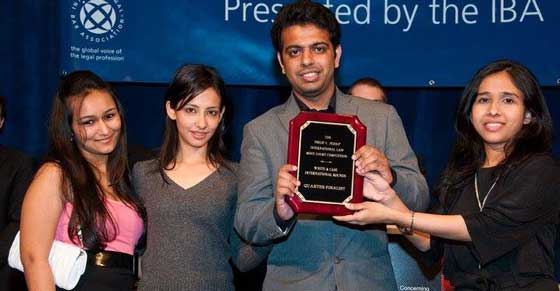
    Pic Courtesy: Ishani Dave
    Pic Courtesy: Ishani Dave

    How important do you think that extra-curricular activities are to a law student? How can one manage time effectively?

    I did not manage my time effectively. I devoted almost all my time to extra-curricular and co-curricular activities. My approach was simple – I got involved in anything that interested me and everything that I thought was worth exploring. Working on college journals, heading the cultural committee, debating, quizzing, films, photography and sports, all of these exposed me to things that a text book would never teach me. These activities in fact made classroom learning more engaging. Law school would have been quite drab had it not been for these experiences.


    As a concluding message, what would be your suggestions to law students?

    Do not let ‘recruitments’ take control of your life in law school.

    For most of us law school happens just once, have fun while it lasts 🙂

  • Ankit Yadav, LL.M candidate, NYU, on researching with legal luminaries and drafting the perfect memorial

    Ankit Yadav, LL.M candidate, NYU, on researching with legal luminaries and drafting the perfect memorial

    Ankit Yadav is one of the illustrious graduates of 2012 batch from RMLNLU. He subsequently went on to pursue his Masters NYU School of Law. After graduation he went for an LL.M. to New York University. During his tenure as an LL.M. candidate at NYU he worked with many legal luminaries and also had the opportunity to judge in the Philip C. Jessup International Law Moot.

    During this interview we speak to him about:

    • LL.M experience at New York University
    • Researching for Prof. Jose E. Alvarez and Prof. Eda Katharine Tinto
    • Perspective of a judge of Philip C. Jessup on what is an awesome memorial


    How would you like to introduce yourself to them?

    I am still a student of law, who is endeavouring to make a mark in this field.


    Tell us something about your life before college.

    I am a first generation lawyer. I did my schooling in the science background which, I still believe, helps me in having an objective approach towards various situations.


    How did you gravitate towards legal studies?

    I would not go on to the extent of saying that I always dreamt of being a lawyer. But yes, it always appeared to me as a fascinating profession, especially because most great leaders across the globe are/were lawyers. I believe that the study of law helps one relate better to the society and its needs.


    How did you go about securing internships at places like top tier firms?

    My idea of doing internships was to get a sense of different areas and work setups in this field (law firms, lawyers’ chambers, governmental and non- governmental organisations), which later allowed me to make an informed career choice.

    Most law students have an apprehension that one can’t get a good internship without having good contacts or knowing someone who can recommend you. Well honestly, I also thought so till the time I was proved wrong. Having a good network of relevant people is always a plus point in this profession.

    However, that does not mean that you cannot secure a good internship without the same.In my opinion, the key to securing a good internship is to apply well in advance and have a cover letter that allows the employer to judge your skills within a period of 30-40 seconds. Most employers get numerous applications every day. Therefore, the cover letter and resume of an applicant should be very concise and well drafted.

    Every internship that I did, not only helped me in honing my skills but also allowed me to decide what kind of lawyer I want to be. Internships teach us time management, team work, work ethics and give us a chance to put our classroom knowledge into practice. In short, internships give law students an insight into the real practice of law. Therefore, I would strongly recommend that law students should take all their internships very seriously.


    What was your motivation behind pursuing LL.M.?

    Everyone in my family is a post-graduate and I did not want to be the least literate one. I always wanted to get the knowledge, skills, academic resources and exposure that a world class university offers. Therefore, it was always there at the topmost position of my priority list. The only requirement was to get through one of the leading institutions of the world, which I was fortunate enough to get.


    ankit-yadav1How should one go about choosing a university?

    The hard task is for the law students to decide what area of law they want to specialize in. Once that is done, the process becomes relatively easier. Law schools ranking are available online and law students are good at doing online research. One needs to find the best uinversities in their chosen area of specialization. Location of the law school also plays an important role in determining what kind of exposure it would be able to offer to a prospective student. Therefore, a law student should take this into consideration before choosing a university.


    Please tell our readers about the application procedure and other requirements for an LL.M. at NYU.

    The application procedure for an LL.M at NYU is almost the same as other Universities of US and UK. All the applicants are required to submit a statement of purpose, writing samples and letters of recommendation along with the application form. All the information is available on the official website of NYU.


    Does NYU provide students with scholarships?

    Yes, like most leading universities, NYU also offers merit-based scholarships to prospective students. Also, apart from the scholarships offered by law schools, a number of charitable organisations offer merit-based scholarships to students who have secured or are hopeful of securing admissions in well recognized law schools abroad.


    Was there a lot of academic work?

    Yes, the work load becomes overwhelming at the beginning, but one gets used to the system after a while. Reading or writing assignments are allotted for every class and one has to go prepared to be able to understand the discussions properly.


    Please tell us about your experience working with Prof. Jose E. Alvarez and also Prof. Eda Katharine Tinto as Research Assistant.

    The work I did during my research assistantships was very enriching not just because of its academic value but also because of the amount of experience and knowledge I gained while working with the people who are widely recognized for their contribution to the American and international society.


    How has the experience of being Judge at the international rounds of Philip C. Jessup International Moot Court Competition been?

    It was truly a wonderful experience, being at the other side of the podium at the most prestigious moot court competition of the world, sharing the dais with and getting to interact with some of the well known faces of international law and just being a part of the entire process.

    The primary qualities that every judge looks for is a strong understanding of the basic concepts of international law and a proper appreciation of the facts provided in the Compromis. Once these are present, then eloquence, demeanour, poise, innovative arguments and persuasive skills are the qualities that bring out the difference between a winning team and the rest.


    If I want to write an awesome memo, what are the relevant skills and how should I go about learning them?

    An awesome memo would be the culmination of an awesome research into an awesomely drafted document. When I grade a memorial, I look for good amount of research and its proper application in the facts provided. Every word that is mentioned in a Compromis/problem statement should be presumed to be relevant while drafting a memorial.

    The language used should be formal and simple and must be as concise as possible. These are the skills that can only be acquired with practice. Therefore, it is imperative to have a first draft prepared well before the submission deadline and then keep refining it.

    In my opinion, MUNs, debates and moot courts are a great way of developing advocacy skills (research, drafting and oratory skills among other things). Unlike regular academic coursework, these activities involve the thrill of getting immediate results for all the labour you put in them. They are also a great way of boosting up the confidence of a law student and to learn something which may not be  a part of your academic coursework.


    Was your typical workday during your internships in India any different from your workday abroad?

    Not very different. Nowadays, most employers in India have also become more respectful towards their employees. They have started recognizing a proper work-life balance is necessary for employees to be able to perform up to their potential. I am hopeful that it will keep getting better from here on.


    What are your future plans?

    My future plans are to be a successful litigator. In the next five years, I want to be a well recognized name in this field.


    Lastly, what would be your message to a law student who wants to excel as a lawyer?

    Believe in yourself! If you are determined to be successful, no one can stop you. All you need is to stay focused and motivated. The legal profession needs to transform to keep pace with the changing society and our generation will bring about that change.

    “I have, let’s say, sixty years to live. Most of that time will be spent working. I’ve chosen the work I want to do. If I find no joy in it, then I’m only condemning myself to sixty years of torture. And I can find the joy only if I do my work in the best way possible to me. But the best is a matter of standards—and I set my own standards. I inherit nothing. I stand at the end of no tradition. I may, perhaps, stand at the beginning of one.”

    – Ayn Rand, The Fountainhead.

  • Murali Neelakantan, Global General Counsel, Cipla, on being a first generation lawyer, mooting, and his diverse experience

    Murali Neelakantan, Global General Counsel, Cipla, on being a first generation lawyer, mooting, and his diverse experience

    murali-n3Murali Neelakantan is a graduate of NLSIU, batch of 1996. He was one of the first India educated Lawyers to have become a partner in an English law firm. Murali had worked as a Senior Partner at Khaitan before joining Cipla as a Global General Counsel. At Cipla he imparts leadership training and his work entails solving critical problems in times of conflicts. Murali has also been mentioned in the Who’s Who of the World 2004 – 2009.

    Murali had a lot of interest in moots while he was a student at NLSIU and presently he takes time out to judge prestigious moots like Manfred Lachs and Phillip C Jessup.

    In this interview you will get to read what he has to say about:

    • Being the first Jessup team from India and winning the BCI moot
    • Judging Manfred Lachs and the critical elements of a mooter.
    • Being a Global General Counsel of Cipla


    We have more advanced career insights to share from him in the next interview.


    Tell us a bit about your life before college.

    There were no lawyers in the immediate family and the whole family had very mixed feelings about a career in the law. They obviously knew of the legends like Nani Palkhiwala, Ram Jethmalani, Soli Sorabjee, and K. K. Venugopal but also of the many lawyers loitering around the city civil courts. My father was an engineer and others in the family were civil servants or officers in the armed forces. My parents would very much have liked me to have become an engineer or joined the armed services.


    The image of a lawyer back in the ’90s was neither inspiring nor attractive for most students. What motivated you to choose law as a career?

    I had given up on a career in medicine after Class X and studied Physics, Chemistry, Math & Electronics during Class XI and XII. Those were the days when reservations of seats in academic institutions were at their very peak and very few places were available in the leading medical and engineering colleges in the merit category even though I scored reasonably well in the Common Entrance Test. I took keen interest in the Armoured Squadron of the NCC for three years where I was quickly promoted and also won medals. It was really the first opportunity for me to demonstrate leadership and a career in the armed forces was definitely on the radar.

    The National Law School had been in the news since 1988 and I had been impressed by a few of its students at the inter college festivals where I was a regular. There were also a couple of kids from my neighbourhood in Bangalore who had joined NLS before me. There was quite some buzz created by the vision that the government had for the National Law School to be like the IIMs and IITs. A few lawyers that my family knew felt that if one was keen to study law, NLS was a good idea. I was a good public speaker, a logical thinker who liked reading and writing and that, at the time, seemed good enough for a career in the law. So despite opposition from the family, I wrote the entrance exam and got through. It was also very much cheaper to study law than either engineering or medicine.


    murali-n2How did you get into mooting?

    (Mr. Murali represented India at Jessup and had also won the BCI Moot Court Competition.)

    The extra-curricular activities that interested me in the first two years were volleyball, cricket and athletics. I discovered very quickly that merely being a sportsman really didn’t get the attention of the girls. My experience of moot courts began in my second year where I helped my classmates win the inter class moot court competition. It was not until the third year at the insistence of one of my closest friends and senior at NLSIU, Dayan Krishnan, now Senior Advocate who was a very keen mooter that I really began participating in the university selection rounds. There were really only about seven moot courts and it was an honour to represent the university at a moot court competition. I came fourth in the first of three selection rounds and that was really the encouragement I need to take this on. At the end of the selection rounds, I got the opportunity to represent India with Sandeep Farias and Sanjoy Ghose at Jessup. That was really my first competitive moot court! The next moot court for me was the Bar Council moot court which was the toughest moot court at the time and was therefore the most prestigious national moot court.

    When we got back from Jessup we realised how far behind the world we were in terms of support for moot courts. Sandeep Farias and I started the first novices moot where those who didn’t want to moot competitively got the opportunity to try it out in camera. This student initiative continues to be popular even though there are many moot court competitions and everyone who wants to participate gets the opportunity very easily.

    I would encourage every law student to moot as often as they can. The most important lesson it teaches is that there are two equally true sides to every story and clients don’t come to lawyers with facts that will guarantee a win. Research is critical to success in a moot court and while it is easier to search these days, one is unlikely to find a decision of the Supreme Court that fits the facts before you perfectly. Formulating the key legal propositions and finding support for them is a skill that is indispensable to every lawyer. Finally, mooting is about persuasion. The days when one wins by confusing the judge are few and far between. One needs to be articulate to be persuasive. This is a skill that is used both inside and outside the court room. In a court room, one has the benefit of a neutral judge. In a negotiation, one is up against another lawyer who is naturally inclined to disagree with you. It is here that the powers of persuasion are tested most. Articulate and persuasive lawyers also put these skills to use while advising a client on a course of action when a client may have an incentive to take an alternative course.


    If you see that a person you are considering hiring is good at mooting, does this influence your decision?

    While I look at grades closely and usually have a CGPA cut-off, I also consider all the extra-curricular activities that interested a potential hire. I would definitely interview a student who won moot courts, played team sport, published a paper or had been committed to IDIA (Increasing Diversity by Increasing Access), even if the CGPA was below the cut off for interviews.


    As a judge what are the specific skills you look for among the mooters?

    1. Clear legal propositions fully backed up with authority and the ability to anticipate the propositions and authorities of the opponent. Most of this is easily done with thorough research and attention to detail. I expect the participants to know more than the judges.
    2. Clear articulation that persuades me that no one could have argued this case better is perhaps the best description of the winning team. Preparation is the key here so that there are no surprises. If one does find a judge taking an unexpected view, it is an opportunity to demonstrate the breadth of one’s knowledge of the law and facts and quick thinking.
    3. A good sense of humour makes it easier for an advocate to make a connection with the judges; bad timing or poor taste could ruin it though. Quickly evaluating the bench is therefore a key skill. That will tell you what the winning strategy is, how to articulate a proposition so that it rings true to the judges, which authorities are likely to have an impact or when not to press on an issue even if you think you have a good argument.
    4. I have seen students treating moot courts like an elocution contest, reciting to me their memorial. That perhaps works if the judges do not interrupt the speech and I know many judges who will not allow the monologue to last for more than a few minutes. If moot courts are opportunities to prepare for a life in the law, the ability to recite 20 pages of the memorial is not the most valuable skill.


    If someone does not go to a top law school, would you say he still has a shot at a great career in law, at the top of the practice?

    Like any other profession, a good education, by which one assumes graduating from a leading academic institution, is merely a good starting point to launch one’s career. It is not necessary for success as a lawyer to have graduated from the leading law schools in the same way as those who did not graduate from one of the top IITs can, and have, succeeded as engineers.

    It is a myth that the top law schools have the monopoly over excellent faculty or infrastructure. With technology that is widely available these days, I believe that the playing field has been levelled and students from every law school have a fair chance at being the best. No judge in a moot court knows which university a student represents. Quality of the memorial and the arguments are the only two qualities that are evaluated. I would find it difficult to ignore a student who did well at Jessup, Manfred Lachs, Stetson or Willem C. Vis. Similarly publication of research papers is another opportunity to demonstrate ones abilities. When I went to London in 1999, almost no one there had heard of the National Law School and it gave me no advantage at all over my Oxbridge educated peers.


    What does a general counsel at an MNC like Cipla do?

    The role of a Global General Counsel does not exist in all companies and even in those companies who have it, the roles are not defined uniformly. It all depends on how the company sees the legal function and the organisation structure. Cipla’s legal team is really led by the Chief Legal Officer who manages all the lawyers around the world. I am merely the coach of the legal team and a resource that they can use where there is a critical judgment to be made on conflicting courses of action.

    My main function is to be counsel to the CEO and the management team so that they have someone who can identify, allocate and mitigate enterprise risk in the decisions that are being taken.

    For example, strategic decisions like whether we invest in vertical integration or have long term supplier arrangements.


    When you hire lawyers, what kind of skills and profile do you look for?

    Unless one is a sole practitioner, the practice of law is about teamwork. One can learn the law but it is very difficult to change people’s character and personality. The critical quality for me is happiness. I will just not hire a person who I feel is not happy. Energy and enthusiasm are essential for a team to work well. Good grades tell me that the person has been hard working and diligent through law school. Many of the subjects may not be fun but knowing that it has to be done well is a good lesson to be learnt in law school. Most of the work we do will not be interesting every day and I would like to be sure that every person in the team will do it well even if it is not fun. We are presented opportunities to learn everyday and that’s a habit best learnt in law school. Participation in moot courts and team sports, for example, tells me that the person knows what one needs to do to succeed, has seized the opportunities presented to them, works well in a team, is well organised, takes risks but also knows how to prioritise and make good choices.


    We have published the rest of the interview here.

  • Iram Huq, Juris Doctor Candidate, Harvard, on interning at the UN, working pro-bono, and working in the US

    Iram Huq, Juris Doctor Candidate, Harvard, on interning at the UN, working pro-bono, and working in the US

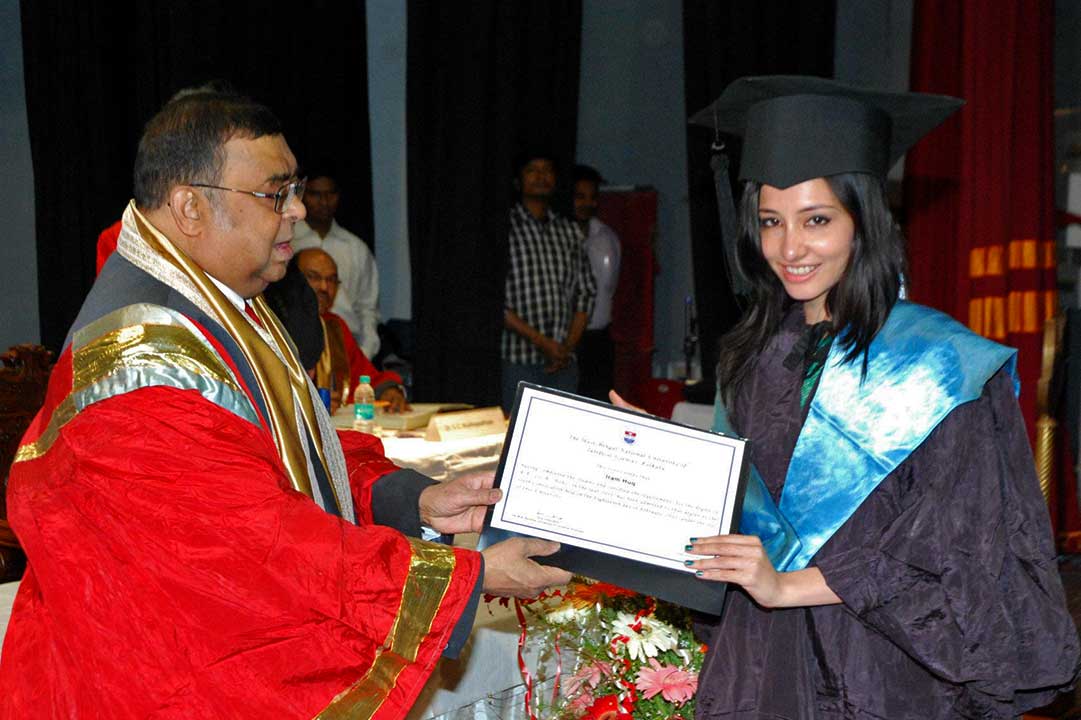
    Iram Huq is a graduate from WBNUJS, Calcutta, batch of 2011. She was a top ranker as an orator at the Phillip C. Jessup International Law Moot. She is currently a Doctor of Law at Harvard University, where she is also student of the Moot Court Board (2013-2014).

    In this interview, we speak to her about:

    • Getting a JD from Harvard
    • Interning at the United Nations
    • Taking time out for pro-bono human rights cases

    Tell us a bit about your life before college.

    I went to La Martiniere for Girls in Calcutta and was in the school’s debate team. That inspired me to write the law school entrance exams. I had studied science in plus two, and I liked Physics and Maths. Occasionally, I wish I had taken those subjects more seriously. I really enjoyed them conceptually, but I never saw myself as having a career related to either of those subjects.

    I think that my debating and science background helped me to develop a more objective view of the world. I appreciate the subjective aspects of the law, but I can’t help feeling that our legal system tends to reward sophistry and obfuscation instead of real analysis. I do not have lawyers in my family.


    What motivated you to choose law as a career?

    I wasn’t really paying attention to what people thought would be an ‘acceptable’ career. My parents were very encouraging, and my teachers also thought that law would be a great choice, given my skill set. It helped that a lot of people graduate from national law schools with excellent, respected jobs.

    I think middle-class Indian parents tend to be very conservative in estimating what careers are satisfactory for their children. However, I have learned that it is very hard to be successful at things that you do not enjoy. I am glad I was never pressured into choosing some other career.


    iram-huq3

    Did your debating skills help you at Jessup?

    Yes, that is absolutely correct. Debating is a great platform to learn public speaking. Once you understand how to put forward an argument in a clear and convincing way, you can apply that skill to any number of activities, including moot court. My father was also in debate teams of La Martiniere and St. Xavier’s so he was a great help. We had a teacher to coach us in school.

    I will say my ‘mentors’ for moot court were my friends and teammates, Deepak Raju and Rukmini Das, who helped me understand the basics of moots and coached me during the initial auditions for the moot court team. (They were both excellent mooters before I had even considered moot court). I also learned a lot from my experience in Vis Vienna, and could apply those lessons to Jessup. Deepak and I were on a debate team together, and that’s how we started working with each other. It was a pretty organic process, and I would like to believe that all three of us learned a lot from each other. I am not a fan of hierarchical team structures where the senior mooters mentor the junior mooters: the best teams are those consisting of friends.


    iram-huq4What are your thoughts on activities like mooting and article writing for journals?

    I think that writing for journals is a wonderful educational activity, if you can do it. Unfortunately, I was always too bored of academic articles to attempt to write them (but that was a personal preference). I liked mooting because, in addition to the academic part, it allowed me to travel and work on a single, practical project. Jessup (and Vis, Vienna) helped me understand how the rest of the world views different aspects of international law, improved my analytical and writing skills, and taught me how to network in professional settings. I definitely think that law students should try either mooting or writing for journals, if not both.


    Did you get any institutional support for internships from your college?

    No, I did not. NUJS was remarkably reticent when it comes to helping its students get good jobs or internships. It left everything in the hands of students, which was a good thing since the administration was both languid and incompetent. I did network with some of my seniors in law school, who recommended places where I applied and later interned. On two occasions, I secured internships through personal contacts. Young students should not be ashamed of using their contacts to secure internships. It is a perfectly natural process. If you don’t believe me, watch this TED talk


    How well do you think your education at WBNUJS prepared you for real world practice of law?

    Honestly, I think we could do with less compulsory classes and more optional classes in law school. It is absurd to think that someone who only wants to be a securities transactions lawyer should be required to study jurisprudence or intellectual property. We were required to study so many things that were absolutely useless to me when I finally began clerking at the Supreme Court. And yet, I never had the opportunity to learn subjects that would become really important in my job, like lower-court trial procedure.

    Additionally, our subjects were often taught in a completely academic manner, devoid of any instruction on how the law actually worked in practice. Finally, we never had clinics or any other option to learn through practical work. If not for moots and internships, my law school experience would have been completely inadequate.

    I do have to say that I had some excellent professors, and their teachings proved to be very useful for me later on in my work. I think law schools need to work on rewarding quality professors.


    iram-huq2

    Do you think being from WBNUJS helped your career in any way?

    Yes. Even though I complain a lot about NUJS, I have to say that I was surrounded by very intelligent students and studied under some wonderful professors. Compared to other law schools in India, NUJS has an institutional presence that reinforces an academic spirit and encourages its students to learn the law. I’m very grateful to my peers for challenging me and helping shape the direction of my legal career.


    Tell us what factors contributed to your decision to purse Juris Doctor from Harvard?

    I did not want an academic degree, like the LL.M. I was certain that I wanted to work in a law firm in the US. I was applying at a time when the rate of legal hiring was depressed (it still is), and so I concluded that the JD degree was the best option.


    iram-huq1What is the application procedure for a JD from Harvard?

    Applicants have to sit for the LSAT, and submit a couple of essays (a personal statement, a diversity statement, and any other essays they want the admissions officer to consider). Needless to say, successful applicants usually have good LSAT scores and compelling essays. Quite a few people have asked me similar questions, and it’s hard for me to explain what constitutes a ‘compelling essay’. But there is a lot of information available on the internet and on LSAC.

    I do not think that anyone can ‘hack’ their way into Harvard. My only suggestion is that applicants should be able to demonstrate a real vision of what they want to do with their Harvard Law degrees once they graduate. I do not think my own essays were particularly good, but I was able to make up for it during the phone interview. That is why I think that some imagination goes a long way.

    The application also requires at least two recommendation letters. Applicants should make sure that they get letters from teachers/employers who really know them and are willing to bat for them. But some institutional weight is also a good thing. I had a letter from Justice Patnaik, for whom I was clerking at the time I made my application. I highly recommend that graduates clerk after law school. It’s a great opportunity to learn how judges and the justice system works. And if you do good work, you’ll have a recommendation letter from a high court or supreme court judge, which is invaluable.

    As for scholarships: I am on a need-based grant at Harvard. Harvard Law does not have academic scholarships, as far as I know. Once you get in, you have to submit a lot of documents about your parents’ income and assets, and they assess a grant package. The whole process is very transparent, and applicants can find all the information on the Harvard Law website.


    Do you plan to have a career in the USA?

    Yes. I am currently working as a summer associate at WilmerHale’s New York City office. I hope to secure a job offer by the end of my internship, if everything goes well.


    You have been a Chayes Fellow for 2013-14. What does the fellowship entail?

    The Chayes Fellowship is awarded to first-year Harvard Law students who travel internationally for public service work. More information can be found at Chayes international public service fellowship


    As part of your Chayes fellowship you were an Intern at United Nations Assistance to the Khmer Rouge Trials. Please share your experience of working at Cambodia.

    Yeah, that’s what I did last summer for ten weeks. It was a great experience—I enjoyed working for the UN in Cambodia. I was working on the prosecution of senior Khmer Rouge leaders. I wrote a blog post about it: Blogs.law.harvard.edu


    I gather that most of your internships have been concentrated in and around Human Rights organisations. Is it planned or they just happened?

    I was looking for internships where I would get real experience in research, drafting and filing. It just so happens that large law firms in India rarely let interns shoulder much responsibility. Working for human rights organizations gave me a sense of purpose and also the opportunity to be far more involved in the projects to which I was assigned.

    The firm where I work at present is WilmerHale; it has a large pro bono practice with substantial human rights work. One of my projects is an asylum case. WilmerHale’s pro bono practice allows younger lawyers to shoulder greater responsibility and learn the art of appearing in court. No firm can afford to provide these opportunities in high-stakes litigation, and so human rights work is a great way for younger lawyers to acquire this experience.


    How do you manage Human Rights activities alongside the corporate world?

    I am committed to Human Rights work, but I am not a fulltime Human Rights lawyer. My goal has been to work in the corporate world for quite some time now (I have to say that I joined NUJS hoping to be a human rights lawyer). I guess I am privileged, because a few US law firms allow you to do corporate litigation work while still fighting Human Rights cases. I do not think that the two goals have to be mutually exclusive: many US law firms are very profitable even though they allow associates time for different kinds of pro bono work.


    Lastly, what would be your message to law students who want to pursue a career in human rights?

    I would say that they should go for it. Personally, I find the Human Rights ‘world’ to be a little oppressive: there is a constant sense of urgency and sadness associated with Human Rights work which interferes with my ability to objectively go about my work. But God knows we need more people dedicated to this field. I respect Human Rights lawyers for their courage and tenacity in the face of all odds. I will acknowledge that money is important, and there is not much of that in the human rights world. But we would be wrong to conflate wealth with success. If there are people who are willing to dedicate themselves to this field, we need to respect their legal skills and talent even as we respect rich and powerful lawyers.

  • Mohit Singh, Advocate, Supreme Court of India, on being an entrepreneur, his internship experience, and his mooting achievements

    Mohit Singh, Advocate, Supreme Court of India, on being an entrepreneur, his internship experience, and his mooting achievements

    Mohit Singh is a graduate from HNLU, Raipur, in 2013. During his time as an undergraduate, he has interned with Ravindra Shrivastava, Senior Advocate, Supreme Court Of India, Justice Manindra Shrivastava, Chhattisgarh High Court, Justice A. K. Patnaik, Supreme Court of India, and at firms such as India Vision Foundation, Haresh Jagtiani & Associates, Phoenix Legal, Scrioboard, Wadia Ghandy & Co., and Amarchand & Mangaldas & Suresh A. Shroff & Co. 

    He is currently an Advocate at the Supreme Court of India, and his past experience includes working in the chambers of Advocates-on-Record, Arjun Garg and Rahul Narayan.

    In this interview we speak to him about:

    • A very detailed guidance on how to start preparing for moots and drafting memos
    • His entrepreneurial bent of mind and starting ventures such as ‘Lexcetera’, ‘Law School Tips’ and ‘1, Law street’
    • His diverse internship experience


    How would you like to introduce yourself to our readers?

    I have graduated in BA., L.L.B. (Hons.) from Hidayatullah National Law University, New Raipur with Corporate Law and Intellectual Property Right being my Honours subjects. I had finished my schooling from Delhi Public School, Bhilai, where I was a science student. At present, I am practicing law in Delhi, working with an Advocate on Record. I am the first lawyer in my family.


    Why did you decide to study law?

    I was actually a science student at school and always had aspired to be a web-designer. I was busy preparing for engineering entrance exams for two years, but ended up doing law after clearing the first ever CLAT. A reason for choosing law was my love for political science since childhood. My parents had left the final decision of choosing my career on me, and I chose law.


    mohit-singh3

    Tell us about your mooting experience.

    (Mohit has been a runner up in national rounds of Jessup and even participated in international rounds.)

    All my moots had been pre-planned with the exception of Jessup. After the release of Compromis (It is a compilation of agreed upon facts about the dispute that is submitted for adjudication to the International Court of Justice (ICJ), the primary judicial organ of the United Nations), my friend along with whom I was a speaker, discussed about doing Jessup and I affirmed the proposal. In the next one week we chose rest of the members of our five-member team and started the work. First challenge was to face a strong University team in the internal rounds. We succeeded there and started preparing for National Rounds. We had a little difficulty in finding research material on some legal issues for which secured resources from ISIL library. At the National Rounds in January, 2012, we finished as Runner Up. Thereupon we had to participate in the World rounds for which our visas etc had to be prepared in a short time. But thankfully we passed all the hurdles smoothly.

    If I may point out the biggest challenge, it was to face Mr. Rishab Sancheti as a Judge in the quarterfinal rounds. He was probably most prepared for the moot than any other participant.


    When you faced the moot problem, what are the first three things you did?

    The first thing to do would be to go through the problem at least three-four times. I would then chalk out the issues (if not already given) and then do a general research and jot down the possible arguments which can be used to support the contentions in each issue. The issues and works are generally divided amongst the team members, however I always feel that if time permits, each member should work a little on each issue because everyone has a different perspective of looking at legal issues and it might help the team with additional points on the already dealt issues.


    mohit-singh2Describe the entire process of memo writing for beginners.

    The mode of research and drafting vary considerably from person to person. Personally, I do some research and if I find some content which is worth being incorporated in the memorandum, I write these down and then continue with the research. Once I am done with some good research and have enough data to begin, I  start giving shape to the memorandum. This is followed by re-phrasing and re-shaping of the content. Dividing contentions into
    sub-contentions makes it easier to research and drafting and also helps the speakers to deal with issues in a better and clearer manner. But again, everyone can have a different approach.

    The research should not end with the end of the drafting. One should keep reading, as for a moot, one should be ready for the worse. Some judges won’t even let you finish a quarter of your contention and use rest of your time to just grill you with their questions. One thing we specifically did for Jessup was to keep handy, the answers for a lot of basic questions. To cite an example, compilation of definitions of legal principles and the cases where International Court of Justice had relied on or had observed them. This really helped. This can be done by the researchers of the team after memorandums have been submitted and while speakers are preparing for the oral rounds. I have always gone to moots with compilations of documents and case laws (Compendium). Some judges like them while some completely have an aversion to them.

    It’s very necessary to have a good team. Lack of understanding and co-ordination may bring in lots of issues. For Jessup, I am really grateful to the team members who were really very supportive.


    What is the importance of mooting?

    There can be two very different answers. Yes and No. Mooting is quite different from lawyering. One may often come across people saying that one gains nothing from mooting. However, I feel that the best research works that I have done in my college life were for drafting my memorandums. Mooting definitely sharpens one’s research skills. So, I would say that mooting does contribute a lot. Mooting helps to build confidence and the skills of putting forth your arguments, being selective  and convincing others on those issues.


    mohit-singh1How did you balance mooting with other important stuff like college assignments?

    Compromis/Moot Problem was out in mid-September and we had our University internal rounds in first week of November, a couple of days before our
    end-semester were to begin. Internal rounds were a little challenging, but probably that compelled us to work harder which finally paid in the national rounds. One can manage mooting with studies. One can often use the moot research work for writing articles and getting them published (though I always planned so, I personally remained too lazy to do this). But there are times when deadlines clash, but then few days of less sleep can help. Our deadline for submission in Jessup was first week of January and I and my teammates were interning during entire December. We were running out of time and I was forced not to sleep for continuous 40 hours before personally handing over the memorandums at Amity University where moot was going to be hosted. But then as there are lots of things to do in a Law School, one needs to be selective.


    According to you, what should law students expect from mooting as an activity?

    As I said, mooting definitely helps to sharpen one’s research skills. But it’s not a case that without mooting one cannot get that. My college juniors often ask if the law firms where I had interned value moots or not. I personally feel and have seen that it depends on the person evaluating one’s curriculum vitae. But if a person is planning for LL.M from abroad, moots especially the ones like Jessup, Oxford moots and Stetson carry a lot of weight. Moreover, one gets to visit universities across India and also abroad.


    If I have never mooted in my life, but I want to – how should I get started?

    Pick up any moot, preferably a national moot; make your team and just start and first year is not too early to do it. You may fail, but it’s not something that doesn’t happen to even the best of them. Research on your own and never put the blame on your teammates that they are not working.  Rather take it for granted that you are going to face this situation. Divide the issues amongst team members. Do not mind being a researcher initially or even later. But if you are confident that you can speak better than the rest, stand up for being a speaker.


    What was it like to attend an international student event? You must have met many international law students. Any interesting stories to share?

    In my personal opinion, international rounds of Jessup is probably one of the best things that can happen to a law student. The event takes place at Capitol Hilton which is at a walking distance from the White House. One gets to meet the best teams selected from over 600 teams from over 90 countries (as of 2013). The parties, especially the National-go-Ball, where teams come in their traditional dresses, are just awesome! Meeting people from across the world at the same place is very exciting. We also interviewed the winning teams of the World Rounds for Lexcetera. We are still in touch with the friends we made there.

    Judging is very different there as compared to India. To cite one  example, they are generally not involved in just grilling you unlike few who just love doing so.

    We also met one of our college senior, who was doing his LL.M at Harvard. He was invited as a Judge.


    According to you what are the qualities that make a good lawyer?

    As I am very new at the Bar, I probably would not be very suitable to answer this question. But however in my opinion, the most basic quality is to maintain a rationale and logical reasoning for everything you think and do. This helps not just a lawyer but also a lay man. Choose the best argument and give it your best.


    What were your areas of interest during your graduation?

    My Honours subjects in the University were Corporate Law and Intellectual Property Rights. Cyber Law was my favourite optional subject. As I was into web designing and also otherwise, I was always interested in computers, I  developed a liking for Information Technology. I took Corporate Law from the market need point of view and I took Intellectual Property Right as I liked the subject. Love for political science has also kept me close to Constitutional Law.

    International Law led me to do International Moots. I have worked a lot on this subject and like it a lot.


    What are “Lexcetera” and “1, Law Street”? How did you get the idea in the first place?

    Things began with ‘Lexcetera’. When I started to moot, there was no database of moots or even a calendar or a list which would tell me that which moots I should participate in and which suited my academic calendar. I and a friend of mine, Hansa Sinha (who was also my co-speaker at Jessup) decided to compile information in this regard. Later on ‘Legally India’ launched its ‘Mooting Premier League’ where I voluntarily worked for their wiki database – ‘Legallypedia’. Subsequently in August 2011, I and Hansa, with help of three other juniors launched Lexcetera which had a sort of exhaustive repository of the details of the Indian Moots and of International Moots, where Indians teams are eligible to participate. We maintained it for two good years and are deeply grateful to law students for their response to the website. But after we entered our last phase of law school, priorities changed and it became quite difficult to save ample time for it.


    How did Law School Tips start?

    Facebook has been playing a very important part in lives of most of us. Law school was something which connected law students to the law school life at Facebook. The founding of page was very random. ‘Lexcetera’ had already started in 2010. A year and half later, I was watching the Republic Day Parade on TV when randomly it struck me that the whole essence of celebrating this day was that we got our Constitution on that day. So this day is technically a landmark day for lawyers. I do not know what led me to think more on this on very different angles but, one thing led to another. I needed something to vent it all out. So, I gathered few ideas and at the midnight of 31st January 2012, and I launched the page.

    The posts were a series of things which happen in law school. From mooting to love and from teachers to end semesters, there were posts which students could relate themselves with. The Tips are less now and posts these days are not specific to law students but generally to those involved in law.


    How did you go about finding good content for the page?

    For ‘Lexcetera’, along with co-founder Hansa Sinha, we had four other college juniors to whom I shall always be grateful. Law School Tips, I manage on my own.

    I feel finding content is sometimes very easy and at times very difficult. The page has got weekly reach as high as five lakhs to as low as six thousand. Sometimes I love things which interest even lay men a lot and sometimes doesn’t even interest to lawyers. I try to be active on social medias and regularly keep a tab on other legal websites. I try to keep original ideas as being different it what attracts a larger crowd.


    How did Lexcetera become so popular on Facebook?

    After its launch at midnight of 31st January, 2012, with the help of night owls like me, page was followed by around 100 people by 7 AM. By night it had over thousand followers and within a week follower mark crossed 3000. Slowly it had crossed twenty thousand followers mark. I did not promote it through Facebook ads or kinds but thanks to the kind followers, when they like or share the contents, it shows up on their profile and the page gets promoted. I really had no idea that the page would get so popular and also, thank you for calling it ‘popular’.


    What are your future plans with 1, Law Street and Law School Tips?

    As of now I have to earn my bread and butter, I get less time, but I plan to involve my college juniors and work again for this. As I have plans to re-launch ‘Lexcetera’ together with ‘Law School Tips’ as ‘1, Law Street’. I also plan to do something which lawyers are generally interested into. Let’s see, how it happens. Fingers crossed!

    ‘Law School Tips’ has definitely not been very active as before, but I hope in future, it engages with legal people to get an even larger share of their love.


    What are you currently doing? Why did you choose this career?

    I am currently working with an Advocate-on-Record at Supreme Court, who has been kind enough to teach basic nuances of drafting and litigation. He even lets me argue some matters. I was about to work in Corporate Sector but, thankfully I chose litigation as my career path and I plan to continue in this field.


    How important do you think is to have a mentor to guide you in the formative years of a practice at the SC?

    It is very necessary to have a good mentor in the initial years of practice because the concepts of law studied at law school give you only an insight of the vast field of law and then again the actual practice of courts is quite a different world in itself. While being in litigation, other than learning the nuances of law, one also needs to know and understand the process of filing and essentials of drafting. Several times at an appellate level, we come across cases where due to minor mistakes made in the fillings at lower level, a case may be lost even though it may be strong on merits. Therefore to have a good mentor who teaches the details and intricacies of the entire process is very necessary.


    How is it like to start one’s litigation practice at Supreme Court?

    Being in law school, it appears very fancy to hear about working at Supreme Court though practically speaking it is not the case. Many people do not recommend starting up the practice directly at Supreme Court. I would always recommend a person joining litigation to start at a place where he or she can get to work at a variety of forums. Narrowing one’s work at Supreme Court, one shall miss learning the process of drafting and filing process at lowers courts which shall cause a little trouble when one tries to get independent. Starting practice directly at Supreme Court is not wrong but knowledge of the litigation process at lower forums is very necessary.


    How difficult would you say it is to set up a practice at the apex court?

    Normally when a lawyer start getting independent, he may not choose to fix the forum where he may decide to continue the law practice. After five to six years of getting a law degree, one becomes eligible for appearing in an Advocate-on-Record examination. Being an AoR is necessary for filing a vakalatnama on behalf of a client but this does not mean that a non-AoR one cannot argue a matter before the Supreme Court. An AoR may do the filing but any other person who is legally authorised by him can argue it. On this note, this judgment is worth referring to Re Rameshwar Prasad Goyal AoR.

    It is a dream of every litigating lawyer to start his own practice. However it is difficult to give a straight answer to the question asked as it may depend on various factors, a family background in law, years of practice in law, forum of practice being few of them. Chambers and firms where one has worked and the level of contacts one has built also matter because building contacts are helpful in bringing clients to you. There are firms which put a restriction on their lawyers to entertain individual clients. Hence, more the time is spent at such firms, the more time it would take for that person to establish his own practice. Even if one has good experience and has good knowledge and understanding of law, yet it would not be possible for him to start his own practice if he is not able to draw clients to himself.

    Setting up one’s own practice is of course difficult, and it takes time and efforts, but there is no other option. I am perhaps a too junior member of bar to answer this.


    Where do you see yourself five years down the line?

    I would be very happy if I myself had an answer to this question. Till last year, I had no plans of joining litigation but now that I am into it, I do not plan to leave it. A foreign LL.M. has always been on my bucket list but now that I am into litigation, I am having second thoughts about it, though I am still not crossing it off from there. To be frank I am not certain of the answer though a possible happy situation five years down the line would be that either I have already started my own practice or perhaps be close to it.


    What message would you like to share with our readers?

    For the law students, I will say that law school life is often a roller-coaster but stay focussed and work hard. Try not to miss any part of the law school life. Friends you make there, generally remain with you throughout your profession and hence life. Most of the law schools in India have some or the other short-comings but a lot can be managed without depending on them for that. But definitely do not MISS the fun part of law school!

    And as I am involved in litigation, I would say that if you are interested in litigation but do not plan to practice just for the fear of initial hiccups, please do not let the money and family factor let you decide what you have to do for rest of your life. There are initial money issues but slowly you can fair better than others.

    Keep communicating with others as this profession is all about that.