Tag: jindal global law school

  • “There are no shortcuts in this profession, reading reading and reading.. is the only mantra to be successful, whatever be the circumstances, don’t compromise with your integrity” – Madhup Singhal, Founder & Managing Partner, MSA Legal.

    “There are no shortcuts in this profession, reading reading and reading.. is the only mantra to be successful, whatever be the circumstances, don’t compromise with your integrity” – Madhup Singhal, Founder & Managing Partner, MSA Legal.

    This interview has been published by Namrata Singh and The SuperLawyer Team
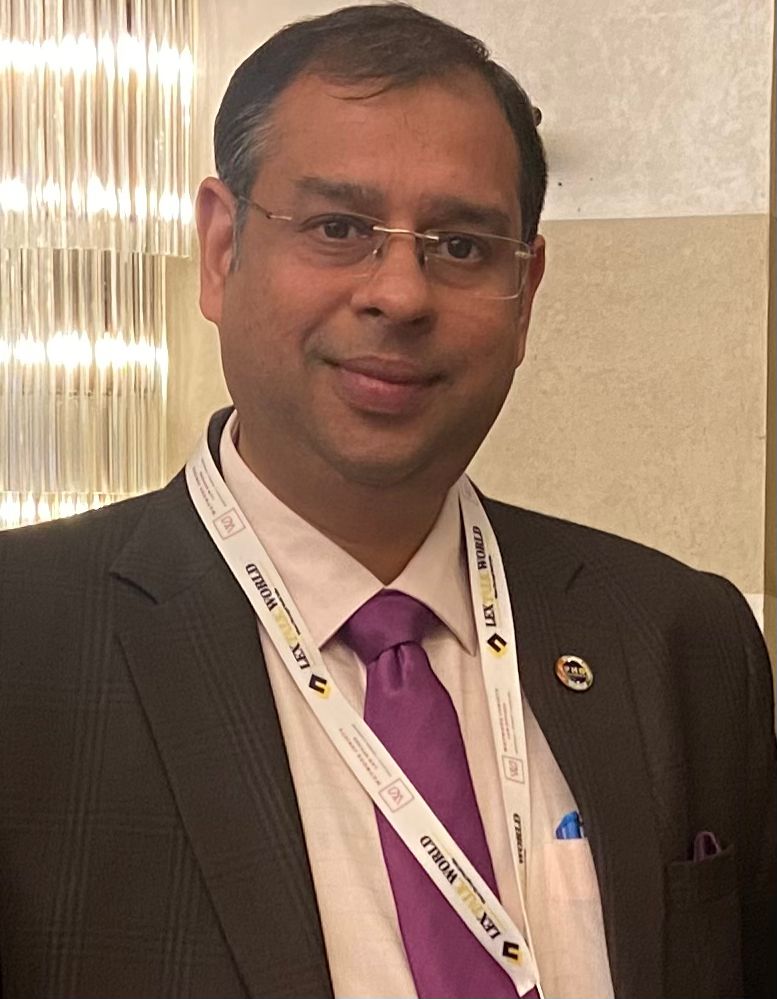
    Your academic background includes a BSc in Science before pursuing law. What inspired your shift from the Sciences to a Legal Career, Could you walk us through the challenges you faced during the initial stages of your legal career and how you overcame them?

    To answer this, I will have to take you through my early life which is quite interesting and of course would become inspirational once I establish a successful international law firm of repute for which I am endeavouring.  

    I was a good student of Science and I was preparing mainly for JEE along with my 12th Board exams. In the Board exams,  I could not even secure First Division as my complete focus was on clearing JEE. The only reason for not securing the First Division in my Boards was getting very less marks in Physics and Chemistry practical for the reasons best known to my then respected teachers of respective subjects, though I scored very good in theories. At that time it was a major setback for me which shattered  my confidence and (gave me a huge blow)caused a big depression as well. After that I dropped a year for JEE preparation but could not succeed again. Next year, I took admission in B.Sc. but kept preparing for JEE. Just before one and half months from JEE exams I had a fever which turned into Typhoid and later on into Measles , which ruined my entire preparation and so I could not get through the JEE exams again. Since I took admission in B. Sc. Therefore, at least my year did not get wasted and with overnight studies, I could manage a score of around 70% in BSc first year. Getting this kind of marks with very less studies was a big boost to my confidence and again I prepared for JEE. My preparation was good but unfortunately that year I along with my family had met with a very severe accident due to which I could not appear in my JEE exams. The accident was such severe that I lost my memory for more than 20 days. After this I decided to leave the Science stream and decided to join the CA course. After starting the CA course, everything was going very well. In my first year of article ship, I had started conducting audits of Banks and Companies Independently. My first CA attempt was in November 1998, my preparation was good but suddenly in the last week of September 1998, I started feeling severe pain in my hand while writing. I thought it was because of over studying as at that time I used to study for around 14-15 hours in a day. I took lots of medicines but no relief and the result was my first CA attempt went futile. After that I consulted many Orthopaedic Doctors but no relief. Then one of my uncles who was an Orthopaedic Surgeon suggested consulting a Neuro physician. I consulted one of the renowned Neuro Physicians who diagnosed it as WRITER’s CRAMP (a disease wherein a person can do all works except WRITING). I took his medicines for a long time but no relief. In the meantime I lost my May 99 and Nov 99 attempt of CA course. I also tried all the therapies but I could not get relief from any. Since this problem was not curing, therefore, I could not see but a dark tunnel through my future. Then one fine day I read in the newspaper that CCS UNIVERSITY has introduced an LLB course with an objective pattern. I joined the same and because of the objective pattern I could manage to complete the LLB course despite the acute problem of Writer’s Cramp, which still has not cured. To be honest, I wanted to do LLB since beginning but along with CA and never thought that I will practise Law. Therefore, shifting to a legal career from Science was not by choice but then prevailing circumstances as enumerated. I will always remain indebted to CCS University for introducing the LLB Course in an objective pattern during those days, due to which I could complete Law and achieve this success being a first generation lawyer.

    In the initial days of my career I faced almost all the challenges which a first generation lawyer from a small town of India faces like rejection by big law firms as I did not have any God Father and I was passed out from CCS University, sometimes insult from near and dears as they used to think that I was wasting my time and I should join my father at his small pharmacy shop. My father never wanted me to sit in his pharmacy shop because he, himself started the pharmacy shop after losing his big Oil Business to his uncle and their son who fraudulently took over the same from my father, frustrations of my earlier failures and obviously monetary challenges. Therefore my early days of my career were full of challenges but I kept patience all the time and never accepted defeat from defeat. 

    Your firm, MSA Legal, offers a full range of legal services, including corporate advisory work, litigation, and arbitrations. Could you tell us more about the ethos and mission behind MSA Legal, and what sets it apart from other law firms? Additionally, what types of interns do you typically take, and what opportunities do they have to learn and grow within your firm?

    Being a small town guy,  I was not aware about the Legal Profession and used to think that CA profession is very big as compared to Legal Profession, but after joining The Chambers of Law, as an Intern, I came to know about the Legal Profession in a real sense. I found that it is no lesser than the CA profession. After completing the LLB I joined Gagrat & Company and started my career at the Supreme Court. In the initial days of my career while with Gagrat & Co. I handled Bofors Case on behalf of Hinduja Brothers, briefed almost all renowned Senior Advocates of India independently and leant about  all renowned law firms of India. Then only I dreamt of establishing my own Full Service Law Firm. After working with Gagrat where I did majorly Supreme Court & High Court Litigation and Construction Arbitrations, I joined Mr Atul Chitale, Senior Advocate. At that time he used to run his Corporate Law Firm. There I did lots of Corporate Work like Merger & Acquisitions, JV Agreements and Corporate Litigation before the Company Law Board. After working with him, I started my own company along with working with one US Company where I did a lot of work on US laws but because of some financial reasons I had to join the Corporate Houses. I joined Jubilant Energy, an Oil & Gas Company, after that Monnet Group a mining, power & steel Company, then GMR Energy a Company involved in Thermal, Hydro, Renewable and Transmission and finally Vedanta Cairn, an oil & gas company. While working in these  big Corporate Houses,  I understood business very well and while dealing with lots of Law Firms as an In House Counsel, I realised that Lawyers understand Law but not the business and therefore applicability of law in the given business scenario always remain a challenge even for a lawyer who has good understanding of law. Though since the beginning of my career, I always wanted to start my firm but when I noticed this scenario, my determination got stronger and I took a plunge of starting my own law firm. 

    I have the business knowledge of certain sectors like Oil & Gas, Power, Mining, Steel & Infrastructure besides me there are business experts of all these fields in our firm, our approach always remains very practical & solution oriented and we believe in continuity of business. That’s how our Law Firm is different from other firms. 

    I always prefer to take interns who are first generation budding lawyers, having a humble background and willing to devote time to the profession without seeking any short cuts. Being a (comparative)small full service law firm, exposure in our firm is much more as compared to other big law firms as in our firm everyone gets an opportunity of doing all kinds of matters. Therefore, in our firm, a person gets all kinds of exposure. 

    Your expertise includes contract negotiation, arbitration, and legal documentation across industries like IT, energy, and mining. What drew you to such a broad spectrum of sectors, and how do you navigate the unique legal landscapes of each?

    At the outset, I would like to state that I am not an expert and still learning from my daily experience. Advocacy is an ongoing learning process. It’s correct that I have done a lot of work relating to negotiating the high value contracts with parties situated in different geographical regions of the world. It’s just because I have worked in  different industries and could come across the nuances of the business which help a lot in negotiating agreements. As I understand the flow of transactions & steps involved in the entire cycle of the project due to which it becomes easier to find the loopholes and the same can be mitigated while negotiating a contract. Same thing applies in the  arbitrations and litigation since you are already aware of the flow of the transaction, you may anticipate questions or arguments encountered by the other side or bench. This gives an edge to you over other lawyers and you can provide better solutions to your clients.

    In addition to your professional achievements, you mentioned involvement in cooperative societies and chambers of commerce. How do you balance your legal career with community engagement, and what role do you believe lawyers should play in society?

    I am on the Advisory board of some Co-operative Societies one of them is NQOCN i.e. a society funded by WHO for creating awareness for the new born babies. My philosophy of life is that besides your professional duties you owe to the society as well and one has to give it back to the society irrespective of his family or professional commitments. I am an active member of various Chambers of Commerce like ASSOCHAM, PHD Chamber of Commerce, IOFGE and others wherein my role remains to create legal and compliance awareness among the  industry. I divide my day into several activities. I want to allocate more time for social activities but due to my other commitments, I spare a minimum 7 hours in a week. The only key is time management. Besides my already fixed commitment, for the rest of the day. I always plan my day one or two days in advance.

    A lawyer can play a very important role in society as he is aware of his duties in an equal manner as he is aware of his rights. There is one major problem in our country that here everyone is aware of his/ her rights but no-one bothers to know his/her duties towards nation and society. A lawyer can make the public aware of their duties towards the nation and society and make them more vigilant about their rights.

    Your profile highlights involvement in drafting agreements for large transactions and acquisitions. Could you walk us through the process of negotiating such complex deals and ensuring favourable outcomes for your clients?

    While starting drafting agreements for large transactions or even for small transactions, the foremost thing is the wish of your client. One has to understand in a very clear manner what exactly is the client’s requirement. After understanding the requirements of the Client, the process needs to be identified through which the transaction will go through. After understanding of the process, one has to see which laws and provisions thereof will impact the transaction. All these laws and provisions are required to be read in a very thorough manner including the precedents available as on date so that all mitigation strategies can be decided. Contract Negotiation is an art which develops over a period of time and there are no set rules for the same. It  is different in all the matters and depends on your client’s wishes and how hard it is the other side.

    Your career spans across different roles, from in-house counsel to managing your own law firm. What motivated you to transition into entrepreneurship, and what challenges did you face along the way?

    As I told you in my earlier answers after joining the profession in 2003 and joining Gagrat & Co then only I decided that one day I have to start my own law firm but being the first generation lawyer, not belonging to Delhi, not having any Godfather, I had lots of challenges to face. I always wanted to do good work for the big corporates and in the starting phase of your career, it’s very difficult that any big corporate will assign you any work, I could not get entry in any big law firm so that I could do the niche work moreover my financial position was not that I could survive in the city on my own therefore I took a cautious decision to first work as an In House Counsel to understand business, to do the niche work from the other side of table and also to collect some amount so that after starting my own practise, I can have some time to sustain in the market easily and do the quality work even on the lower rates. So that I can work for big companies and gain their trust. With the grace of God, it’s happening in a nice way.

    Considering your involvement in policy advocacy and corporate affairs, how do you perceive the evolving regulatory landscape in India, and what implications does it have for businesses and legal practitioners?

    According to me, the kind of environment this Government has created in the entire world about the INDIA and the target which the Government has put before everyone to reach up to 5 Trillion Economy in next few years and to be a developed nation by 2047, there would be lots of investment in India in next two decades. This Government, has simplified lots of things but simultaneously to maintain transparency in the business, has introduced lots of regulatory compliances (checks and balances). With the liberal policies of the Government lots of investment is coming to India due to which Indian local businesses are also growing. In case the business will grow, there would definitely be more work for the lawyers particularly who are into corporate advisory. In the present regime the involvement of a Lawyer is equally necessary and required as of CA for finance function.  

    Your experience includes working with multinational companies and startups alike. How do you adapt your legal strategies to cater to the diverse needs and scales of these organizations?

    As explained earlier, my approach to every assignment remains very unique. There is no straight jacket formula which applies to all the situations, it’s all based on the requirement of clients be it an established multinational or a start up.  The bottom line is to understand the needs of the client, understand his business, apply the prevalent law in the given scenario, that’s it.

    Apart from your legal career, what are some of your personal interests or hobbies that you find equally fulfilling? How do you manage to balance your professional life with your personal passions?

    My foremost personal interest is to serve my nation but for that it’s not the correct time as at this stage I have my other commitments.  After sometime when things will be settled, I will start giving my maximum time in serving the nation. As far as my hobbies are concerned, I used to like watching movies but in the last five years I watched very few movies and in most of them I slept. I like cooking and driving and am fond of listening to music of  Mukesh, Jagjit Singh’s Ghazals and songs of the 90s. To relax myself while cooking or driving alone I listen to songs or ghazals.

    Given your extensive experience, what advice would you offer to young professionals aspiring to build a career in law, especially in today’s competitive landscape? 

    I would like to advise following to the young professionals especially who are first generation lawyers and belong to a humble background:-

    1. There are no shortcuts in the Profession;
    2. Reading, Reading and Reading is the only mantra to be successful;
    3. Whenever you start working don’t see the time . I’m not saying that time management is not important but not at the cost of quality. and not fix any time to complete any task. Keep on working till the time you are not satisfied with your work. After submitting your work, you should not have any regrets like  if I had put in some more effort ,results could be different. Therefore always give your best;
    4. Be a good listener;
    5. Always read judgements in its entirety not the relevant para or head notes;
    6. In the initial days of the career don’t run after the money;
    7. Don’t compare yourself with your other friends who are in different professions especially in engineering or in management as they start earning very good from day one while in Legal Profession money comes late. After 20 years when you will compare you will find that you are on equal footing and after 30 years you will find yourself much ahead. Obviously some exceptions always remain;
    8. Whatever be the circumstances, don’t compromise with your integrity;
    9. This is the profession where Sky is the limit but with continuous hard work and labour. You can’t take anything lightly at any point of time when you are in this profession.

    Get in touch with Madhup Singhal-

  • As I’ve gained experience, honed my skills, and discovered my areas of expertise, I’ve found a sense of fulfillment in my work that I may not have anticipated earlier in my career- Shivam Sinha, Partner (Commercial Disputes & Regulatory) at Sagus Legal

    As I’ve gained experience, honed my skills, and discovered my areas of expertise, I’ve found a sense of fulfillment in my work that I may not have anticipated earlier in my career- Shivam Sinha, Partner (Commercial Disputes & Regulatory) at Sagus Legal

    This Interview has been published by Pragya Chandni and The SuperLawyer Team

    Can you walk us through your journey from starting as an Assistant Manager, Legal at Jindal Steel and Power Ltd. to becoming a Partner at Sagus Legal? What were some pivotal moments that shaped your career path?

    Allow me to capture my professional journey so far as succinctly as possible (don’t want to bore the readers). I am from the first B.A LLB batch of Jindal Global Law School which graduated in 2014. During the placement cycle I ended up getting an offer from JSPL and a lucrative one for that matter. At JSPL, I majorly worked on the corporate side along with handling a few electricity generation related matters. 

    After this initial phase of 2 years, I transitioned to a law firm, marking a pivotal juncture in my career trajectory. Embracing the dynamic environment of firm practice, I embarked upon a journey characterized by specialization yet having experience of diverse work, client engagement, and the relentless pursuit of delivering desired results to the clients. Over the subsequent 7 years, I immersed myself into having a core specialization along with having experience in diverse practice areas, honing my expertise and assuming progressively substantive roles within the firms I was part of, which eventually led to me becoming a Partner in Sagus Legal last year. However, I sincerely believe that ‘Partner’ is a designation outlining my roles/responsibilities and nothing more than that. My career graph as a professional has only begun and hopefully, I am able to contribute much more.

    You’ve had experience working both in-house and in law firms. How did these different environments influence your approach to practicing law and the type of work you pursued?

    Working in-house versus at a law firm is like comparing apples and oranges – they’re both fruits, but they have their own unique flavours. When I was in-house, the role demanded both managerial and legal acumen. I worked closely with folks from different departments, understanding their needs, and figuring out how legal could support them. It was like being the legal quarterback, always strategizing to keep the company moving forward while avoiding legal pitfalls.

    Whereas in law firms, one needs to have a much more holistic understanding of law. You strive to become the go-to person for that slice of legal expertise, whether it’s corporate law, litigation, or something else entirely. It’s intense, with tight deadlines and high stakes, but it hones your skills like nothing else and it’s also incredibly rewarding to see your expertise in action. Plus, there’s a strong emphasis on client service. You’re not just a lawyer; you’re a trusted advisor, making sure your clients feel supported every step of the way.

    Overall, both experiences have shaped me into a more versatile and adaptable lawyer. But if a fresher is inclined to go in-house straight after law school, I would suggest that she or he should first spend a few years in law firms or a chamber of some experienced lawyer. That ways’ you will be able to contribute much more as an in-house lawyer. 

    Could you share some highlights or memorable cases from your time representing major corporate houses?

    In the past few years, I have had the privilege of doing matters which are of sectoral importance. The most recent one would be the Judgment passed by Appellate Tribunal for Electricity where I was representing Distribution Companies of State of Odisha in one of the appeals in the batch. I won’t get into technicalities but to give a brief, in this matter Indian Railways was seeking status of Deemed Distribution Licensee status, and the Distribution Companies were opposing the same as that would be against the framework of the parent statute governing the electricity sector i.e. The Electricity Act, 2003. APTEL dismissed the appeals and did not allow the status being sought by Indian Railways. The Judgment has a nationwide impact as in case APTEL would have granted the status of Deemed Distribution Licensee to Indian Railways, there would have been a consequential impact on energy charges being paid by all the other set of consumers across India.  

    You’ve been recognized for your work in handling complex projects and energy disputes across various forums. Can you share some insights into the strategies you employ when dealing with such high-stakes matters?

    In handling complex projects and energy disputes across various forums, my approach is rooted in thorough preparation, strategic planning, and effective communication. Before delving into any matter, I ascertain the client’s goals and objectives, as much as possible. This enables me to develop a tailored strategy aligned with their desired outcomes and anticipate potential challenges. Throughout the process, I maintain open lines of communication with clients, keeping them informed of progress, developments, and potential risks or opportunities. Collaboration is also key, as I leverage the expertise of colleagues to address complex legal issues from multiple perspectives. Flexibility and adaptability are also important aspects, allowing me to navigate evolving challenges. By employing these strategies, I strive to achieve the best possible outcomes for my clients while mitigating risks and maximizing opportunities in high-stakes matters.

    What has been the most rewarding aspect of your career thus far, and what motivates you to continue practicing law in your areas of expertise?

    The most rewarding aspect of my career journey so far has been the evolution from uncertainty to clarity. While I may not have initially been clear about my career trajectory, the process of exploration and self-discovery has been immensely rewarding. As I’ve gained experience, honed my skills, and discovered my areas of expertise, I’ve found a sense of fulfillment in my work that I may not have anticipated earlier in my career.

    Finally, what advice would you give to recent law graduates aspiring to make a mark in the field of energy law or law in general, based on your experiences and journey?

    Law as a profession is very dynamic and engaging. It demands a lot out of you but rewards you with constant intellectual stimulation and knowing that your work has a meaningful impact is incredibly fulfilling. There is no straight jacket formula for making a mark though one necessarily has to keep at it, day in and day out. Experimenting in early years of a career is fine but frequent jumping of ships doesn’t really help in the long run. 
    The journey of a lawyer is a long one. Don’t rush into things. At times things will work in your favour, at times it won’t but in the end, you will end up learning something out of the entire process. I would like to conclude by quoting the famous statement of Justice Joseph Story “The law is a jealous mistress and requires long and constant courtship. It is not to be won by trifling favors, but by lavish homage.

    Get in touch with Shivam Sinha-

  • As a first-generation young litigator, it is always hard to have a clientele flowing in clinically and to be substantial enough to learn and grow-Ilam Paridi, Advocate-on-Record, Supreme Court of India, and Founding Partner, Vox Populi Legal

    As a first-generation young litigator, it is always hard to have a clientele flowing in clinically and to be substantial enough to learn and grow-Ilam Paridi, Advocate-on-Record, Supreme Court of India, and Founding Partner, Vox Populi Legal

    This interview has been published by  Priyanka Karwa and The SuperLawyer Team

    Can you share with us your journey from your undergraduate studies in law at Christ University to pursuing an LL.M. at Tilburg University in the Netherlands and O.P. Jindal University, Sonepat? What inspired you to take this path?

    Growing up in a household where both my parents are Ph.D. holders, my fondness for academics was always subconsciously ingrained. Having chosen law professionally, I was exposed to various philosophies and jurisprudences, which shaped my interest towards academia. Having said that, it was also important for me to not jump into LL.M. right after my undergrad and approach it like just another degree or as an exercise of CV building. It was really important for me to enjoy this process. So I decided to work for a minimum of three years and see for myself where my interest organically built. Even in my undergrad, I had the opportunity of being the Convener of Model United Nations Society and had consciously chosen to only do international moots like Oxford Price Moot- South Asia rounds and Jessup India Qualifiers, upon realising that I might not be able to learn much international law once I graduate and start litigating. Once I started practising, just like any other fresher, I had engrossed myself in learning law and court craft. With the unfortunate onset of COVID-19 pandemic in India, where courts and offices were operating in virtual mode, I was able to give space to my academic interests. It was then that I enrolled and completed various certificate courses on contract law, anti-discrimination and citizenship laws from Harvard Law School, Stanford Law School and the University of London respectively. In the meantime, I had also applied to O.P. Jindal University to pursue an LL.M. and was fortunate enough to get ERASMUS+ Scholarship and was sent as an exchange student for a semester to Tilburg University, Netherlands. The semester exchange at Tilburg University is certainly one of my fondest experiences, both personally and academically.

    Your academic achievements, including the Gold Medals and Rank 1 recognition, are impressive. Could you tell us about some of the key experiences or strategies that contributed to your success during your LL.M. studies?

    Personally, I think that one cannot and should not plan to top the course or win Gold Medals, at least while doing LL.M. At the cost of sounding preachy, it should be a natural outcome of one’s inclination, understanding and efforts put into that course. Having said that, what I personally think helped me to achieve Nani Palkhivala Memorial Trust Gold Medal, Savitri Jindal Merit Scholarship, Gold Medal for Academic Excellence and Rank 1 in Outstanding All-Round Performance in LL.M. was certainly the maturity that I garnered with my 4 years of practice, as against jumping into LL.M. right after undergrad. I was able to see the visible difference in my approach to law subjects in my undergrad and those in my Masters. Since I had chosen my area of interest to be human security and dispute resolution, it fell right in the midst of my prior work experience and academic interests. I was able to connect the dots much better than I could in my undergrad, which gave me an edge over the majority of the students who enrolled in Masters right after their UG.

    You’ve worked on a wide range of cases in the Supreme Court of India, including some landmark ones. Can you share a memorable case or experience that had a significant impact on your legal career?

    For this, I certainly have to thank Hon’ble Justice Ms. Neela Gokhale, with whom I was working, prior to her elevation as a Justice of the Hon’ble High Court of Bombay. Justice Gokhale had a wide range of matters from the lowest court to the highest court with an experience of over 30 years. Under her guidance, I worked on a variety of matters ranging from civil, criminal, and arbitration to matters of constitutional importance. One such case was Sakshi Bhattacharya v. Union of India where we had challenged various provisions of the Hindu Minority and Guardianship Act, 1956 since the Act did not deem the mother as a ‘natural guardian’ as against the father, amongst various anomalies. The research for this matter was astounding since a huge amount of literature had to be read and understood to get a perspective of the legislative intent, though archaic and colonial. This matter did have a significant impact on my understanding and approach to law as a young litigating lawyer. This did teach me that I did not have to be bound by the constraints of law if it is principally in breach of one’s fundamental rights. This also taught my younger self that I could and should question everything, including the laws in force to secure ends of justice. This certainly enhanced and nuanced my approach to every dispute, more so the ones before the Hon’ble Supreme Court since the aspect of substantial questions of law was involved in every appellate filing.  

    Your experience also includes internships and chamber experience with notable legal figures. How did these experiences shape your perspective on the legal profession, and what valuable lessons did you learn from them?

    As a first-generation aspiring lawyer, I did intern in different offices with a variety of work. I interned with Mr. Amit Anand Tiwari, Advocate-on-Record, followed by World Wildlife Fund and Nishith Desai and Associates, Delhi to get a first-hand idea of how chamber practice differs from a corporate practice. It was only thereafter did I started interning with Justice Gokhale in my third year and continued to work with her until I started my own Firm and independent practice. Working with Justice Gokhale has been the biggest influence on my perspective on litigation and the justice delivery system. As an intern, I used to take dictation and would often be given a blank document to draft an affidavit/petition, without the benefit of a format to merely fill in. The biggest takeaway from the said exercise was that the template formats should be used for convenience and not in substitution for actual learning. It should not be the case that if a template format is not available, one is not able to draft. This is a practice I till date put my junior colleagues through. Despite having done a certain type of matter a few times, we were still made to re-read the same provision every time I did a new matter. As redundant as it might sound, but it always does wonders as one would interpret a certain word/ingredient of a section differently in light of the peculiar facts of the case. It was the aforementioned that made it easier for me to crack the Advocate-on-Record examinations on my first attempt.

    As a founder partner of Vox Populi Legal, what motivated you to start your own law firm? Could you tell us about the focus areas and goals of your firm?

    The idea of starting Vox Populi Legal [meaning Voice of the People] was long pending. It really grew in shape while I was doing my Masters in the Netherlands. As a first-generation young litigator, it is always hard to have a clientele flowing in clinically and to be substantial enough to learn and grow. To overcome this, I along with my friends from my UG started Vox Populi Legal, so that we could pool our resources to run our office and at the same time work together on a variety of matters to grow. Once we started working with each other, the influx of matters automatically increased and we were able to manage offices in three different cities- now grown to five. Vox Populi Legal is primarily a litigation firm which specialises in civil and criminal dispute resolution, arbitration, insolvency proceedings, intellectual property rights etc. from the lowest to the highest courts. Apart from the objective of rendering services to people throughout the country, we are also attempting to change how a law firm ought to work. We attempt to prioritise better work-life balance and mental health, while not compromising with the quality of service. We also strive to fairly compensate our junior associates and also our interns so that they remain motivated to perform optimally.

    In addition to your litigation work, you have experience in arbitration. Can you explain the differences and challenges between litigating in court and handling arbitration cases?

    Personally, I see arbitration and litigation in courts as two strong pillars of dispute resolution in India, though with its own limitations. While arbitration is predominantly founded on the principle of consent, litigation in courts may not necessarily revolve around consent- arbitration clause, appointment of arbitrator, seat of arbitration etc. That being said, arbitration is more flexible in terms of schedule and also spends more time on each claim made by the Claimants than what courts generally do. So essentially, arbitration demands a lot more attention from determining the timeline of proceedings, and schedule of fees to the smallest of the arithmetic detail to justify one’s claim. Though the general principle is to ensure least interference by courts in arbitration, one would often find themselves being in court against every order passed by the Arbitrator. The said ping-pong between the arbitrator and the courts would often lead to delay, which is antithetical to the idea of arbitration as an alternate dispute resolution itself. Thus as a practitioner, it is of utmost importance to constantly evaluate the needs of one’s client and choose forums and strategies accordingly.

    You’ve published several research papers on various legal topics. Could you highlight one of your research findings or publications that you’re particularly proud of and explain its significance in the legal field?

    Though I have had the privilege of having my work considered worthy of publication in esteemed journals, but the one I thoroughly enjoyed working on was ‘Report on Legal Assistance at the stage of Pre-Arrest’ for National Legal Services Authority [NALSA]. Having worked in cases involving criminal law from the stage of pre-arrest, the need for effective legal assistance became more glaring and obvious. For effective functioning of a vibrant democracy, equal access to justice is a sine qua non, not just after proceedings have been initiated, but also at the stage of pre-arrest. So essentially, legal aid serves as the contact point between law and people who are living in poverty and is a catalyst for social change. By way of the said report, various structural, qualitative, policy-based reforms were suggested to ensure prompt access to legal advice and assistance to guarantee a fair trial and the rule of law, keeping up with the latest technological advancements.

    Finally, what advice would you give to fresh law graduates who are just starting their legal careers? What key principles or strategies should they keep in mind as they embark on their professional journey?

    As a fresh law graduate in litigation, it is reasonable for one to feel ‘not sure’ about the field of law or type of practice one intends to partake in. But what is important is that one should not close themselves to learning new things constantly. In my opinion, a common mistake fresh law graduates often make is that they pre-define their area of specialisation, even before they try new fields. Though people might differ on this, I strongly feel that one’s specialisation should be determined organically wherein one ends up doing/enjoying a certain kind of matter a lot more than other. As a fresh law graduate, the best thing that one can do for themselves is that one has to be the ‘Master of their Brief’, without any exception. It is a non-negotiable that one ought to know every fact, every page, every document, and every law involved in the said matter, better than anyone else on the given day in the said courtroom. This will not only help a fresh graduate to be more confident but will also help one grow consistently. There is no shortcut to hard work in litigation. When the same is coupled with consistency and integrity, one would find results visibly quicker than the rest of the legal professionals. Having said that, one also needs to strive to maintain a healthy work-life balance and mental health to enjoy the journey of life-long learning.

    Get in touch with Ilam Paridi-

  • It becomes easier when I allow some aspects of work-life slip into my non-work life and vice-versa, i.e. integrate the two, rather than making rigid efforts to keep them segregated- Leader, Investment Funds Practice at Nishith Desai Associates

    It becomes easier when I allow some aspects of work-life slip into my non-work life and vice-versa, i.e. integrate the two, rather than making rigid efforts to keep them segregated- Leader, Investment Funds Practice at Nishith Desai Associates

    This interview has been published by  Priyanka Karwa and The SuperLawyer Team

    Can you tell us about your journey into the field of law? How did you end up pursuing a career in law, and what inspired you to choose this path?

    I was allegedly a rulebreaker as a child. Therefore, I was repeatedly taught the importance of rules and order. I was keen to learn who makes these rules, and why should I abide by them. This took me to the field of law. I also had the opportunity to often visit my parents’ friend who was a district court judge. She commanded a lot of respect, and that inspired me. More than anything else, I was looking for a field of work where I could do well enough to create my own space in a city of my choice. Law fit the bill.

    You’ve had a remarkable 9-year journey at Nishith Desai Associates as a Legal Associate and now as the Leader of the Investment Funds Practice. Could you share some highlights and turning points in your career during this time?

    I joined as a disputes intern at NDA in 2013. Incidentally, my desk was in the middle of the Investment Funds team. I got most of the work from this team and I developed a liking for the practice. It was different, it touched upon different legal subjects, and I was keen to learn more about the industry. Finance had always eluded me. This practice area reintroduced me to finance from a legal perspective. The turning point in my career was having to take up a position of leadership quite early due to the dearth of lawyers specialising in this practice area. Under appropriate guidance and encouragement, I have been able to deal with the overwhelming expectations from a leader.

    As a seasoned professional in the legal industry, what challenges did you face during your journey, and how did you overcome them?

    I prefer a conversation over a squabble. If the other side preferred a squabble, then I often felt withdrawn from the discussion. However, over the years, I have learned that a squabble can be turned into a conversation. It just takes a lot of skill and grace to do so.

    In your current role as the Leader of the Investment Funds Practice, what are the key responsibilities and areas of focus?

    There are three main focus areas that I try to focus on:

    (i) client acquisition and servicing;

    (ii) mentoring and bringing up the next league of leaders; and

    (iii) continuing self-education and using that to assist policy makers and regulators.

    The legal industry is constantly evolving. How do you stay up-to-date with the latest developments and trends in the field of law?

    I have subscribed to many newsletters prevalent in the industry, I regularly attend webinars and conferences on topics of interest, we conduct focused research across different platforms to improve specialised knowledge, we write a monthly newsletter ourselves which is well resourced, the entire team brainstorms on every update in law in our practice area and reading the newspaper always helps.

    Could you share a memorable or impactful case or project you’ve worked on during your career that left a lasting impression on you?

    I worked and led many efforts on the formation, raising and each of the closings of the National Investment and Infrastructure Fund, which is the largest infrastructure fund sponsored by the Government of India (49%). We had the opportunity to negotiate with the most leading sovereign wealth funds across jurisdictions, learn about local laws and restrictions applicable to such investors, their expectations from Indian funds which are sponsored by the Government. We honed our skills to manage multiple investors and conflicting expectations at the same time. We developed endurance to work through late nights and weekends in a manner that no amount of workflow could scare us afterwards. Each document drafted by us underwent many rounds of review by the best law firms across the globe, giving us insights and opportunity to exchange notes across borders. This particular project definitely left a lasting impression on me.

    What motivates you to continue pursuing a career in law, and what aspects of your work do you find most fulfilling?

    I am good at this, and I enjoy getting better at this. I think I am mostly self-motivated. We assist either fund managers, or fund investors in mobilising capital which is then invested across different businesses, giving rise to employment, innovation, development and economic progress. We play a small but significant role in getting the deal through and that is quite fulfilling.  

    As a leader in your practice area, how do you maintain a work-life balance and ensure the well-being of your team?

    The meaning of ‘work-life balance’ is not universal. It is dynamic and it evolves over time. For me, it becomes easier when I allow some aspects of work-life slip into my non-work life and vice-versa, i.e. integrate the two, rather than making rigid efforts to keep them segregated. I try to remain emotionally connected with my team-members so that they trust me and feel comfortable in confiding in me when things get too overwhelming. I am apologetic if (in rare circumstances) I take up their weekend time. I mostly encourage my team-members to decide timelines rather than dictating timelines unless clients are getting adversely impacted. I try to ensure that my team-members are not bothered with calls and work when they take vacations.

    Finally, what advice would you like to give to fresh law graduates who are about to enter the legal profession? What key qualities and skills do you believe are essential for success in this field?

    Try not to restrict your wardrobe to black and white. There will be days when you will get to wear colours. Every lawyer is different despite what people may tell you or the jokes you may hear. There are no defined rules to be a ‘good lawyer’ or a ‘bad lawyer’. Try not to put yourselves in boxes, try to explore and innovate, and try to remain keen. You will possibly find it easier to work as a lawyer if you are able to (i) translate your thoughts (and your clients’ thoughts) into appropriate and impactful words, (ii) break sentences or statements down into smaller phrases and make sense out of each phrase independently,  (iii) get to a point or bring the other side to a point in an unsuspecting manner; (iv) be tolerant and inclusive, be prepared rather than being shocked at your arguments or points of view being defeated.  

    Get in touch with Nandini Pathak-

  • Take feedback seriously, but never to heart. Also it only reflects how you were at that particular point in time and never a reflection on your future opportunities or ability- Samarth Chaddha, Legal Counsel at Goeasy

    Take feedback seriously, but never to heart. Also it only reflects how you were at that particular point in time and never a reflection on your future opportunities or ability- Samarth Chaddha, Legal Counsel at Goeasy

    This interview has been published by  Priyanka Karwa and The SuperLawyer Team

    Sir, please tell us about your journey and how you ended up pursuing a career in law? What inspired you to choose this path?

    I was working after I completed my graduation in Economics and I felt the need to study further. At that point, an MBA seemed like it would require many more years of work experience, so I decided to look into becoming a lawyer. The idea of law school aligned with my idea of writing, researching and discussing laws and policies – all of which were activities I enjoyed. 

    With your combined academic and working experience in legal counseling within various business environments, what have been the most valuable lessons you’ve learned along the way?

    I think I have learned what kind of mentor to be and what not to be. I have had bad bosses, and some very good ones. Therefore, I know what not to do. On the technical front, I have learned how to redline and draft agreements which is a skill we have to keep getting better at as we progress in our career. 

    In your previous roles, you have been involved in regulatory compliance, risk anticipation and management, as well as contract review. Could you share some examples of challenges you faced in these areas and how you successfully navigated them?

    Initially I found some of these agreements daunting and confusing to say the least. But with the right levels of practice, and some help from other colleagues and mentors, the process of reading an Agreement became more easier for me. I recommend having a checklist or some flow of standard steps so you don’t end up missing out on the fine print! 

    You have been responsible for overseeing vendor management for new contracts, contractual work, litigation, and licensing. Could you discuss a project or initiative where you implemented a vendor management process that had a significant impact on the organization?

    In my previous role, I built out a vendor management policy that was adopted by the organization. This was an opportunity for me to understand the pain points of different stakeholders and work with them in creating a policy that reflected their concerns. Eventually this was created into an updated version as well and impacted the business in a big way. 

    Throughout your career, you have demonstrated strong analytical and critical thinking skills. Can you share an example of a complex legal problem you encountered and how you approached its resolution?

    I remember negotiating in a conference room over a force majeure clause and whether the pandemic was still foreseeable or unforeseen. I just tried to understand the other party’s perspective and my approach was to come to a gradual resolution with a more give and take mentality as we went along with the contract negotiation. 

    Communication is a vital skill for any legal professional. How have you utilized your oral and written communication skills to effectively collaborate with colleagues, clients, and stakeholders?

    This is something we have to keep working on. Whether it is emails, or even speaking to clients and stakeholders on the phone – we are always communicating. I try to keep my emails short and my tone to be friendly or business casual for the most part. I typically find that if you are not able to deliver, sending a holding email can be an effective way to buy some time and not disappoint. 

    Lastly, based on your extensive experience, what advice would you give to fresh graduates who are just starting their careers in the legal field? What key skills or mindset should they focus on developing to succeed in this profession?

    Be ruthless. Take feedback seriously, but never to heart. Also it only reflects how you were at that particular point in time and never a reflection on your future opportunities or ability. Everything can be taught and learned – no body is born with the ability to decode legislation or draft agreements. Similar to driving, we all are learners and keep practicing our craft to be so in the “practice” of law. 

    Get in touch with Samarth Chaddha-

  • “To be successful per your own assessment, you need to take bigger challenges, grow out of your static and comfort zone. That is what life is all about. It keeps you sharp something to look forward and conquer otherwise would end in the engine of lethargy and dullness”- Gaurav Vutts, Lawyer at Parinam Law Associates

    “To be successful per your own assessment, you need to take bigger challenges, grow out of your static and comfort zone. That is what life is all about. It keeps you sharp something to look forward and conquer otherwise would end in the engine of lethargy and dullness”- Gaurav Vutts, Lawyer at Parinam Law Associates

    This interview has been published by Priyanka Karwa and The SuperLawyer Team

    How did you become a lawyer from being a poultry farmer and broom seller?

    After graduating in B.Sc from University Maharaja College, Jaipur, I ran small poultry farm along with selling brooms in local city areas. Managed day to day work, did labour / manual farm work & selling broomsticks. Upon one of my travel to New Delhi got a chance to see law firms which changed my idea from being a poultry farmer & broom seller to become lawyer. It was a very difficult phase of my life as to transition from being a labourer to become lawyer without any generational support, no one known in Delhi or in legal fraternity to support but it was one of the best times as well.   

    How satisfying has your journey been, transitioning from a litigator to becoming an in-house counsel with one of the topmost corporations, and now returning to being a partner and dispute resolution lawyer with a top law firm? 

    God has been kind. Being first generation lawyer was privileged to work with Karanjawala & Company India’s top law litigation firm. There practiced all segments of law criminal & civil. I appeared for various clients involving peculiar kind of legal issues before various Courts & briefed Senior Counsels. This made me not only learn the basics of law but how to appear before Courts and be dutiful towards Clients and most importantly Courts of Law. Apart from this practiced law with Chambers of Ankur Chawla for a short period where got experienced more of Trial Court.  

    I further worked with great corporates like Hindustan Unilever Limited (HUL) as Regional Legal Head where handled general corporate advisory related to Food Laws, IPR, Retail, Franchising, Brand Protection & General Litigation involving various segments of laws, Compliance & Reporting, Code and concept of business partnering.

    The experience with Indiabulls Housing Finance Limited taught me intricate nature of financial laws, complexities of Real Estate laws (RERA), Insolvency (I&B Code), Facets of Consumer laws, how to handle complex litigations & large legal teams.

    Wipro Limited being Information Technology Giant offered rich knowledge on global eco-system surrounding Ethical & Code practices, Trade & Sanction Laws, Anti- Bribery and Anti- Corruption landscape, Code Policy drafting clubbed with Enterprise Risk Mitigation, Functional Support to Internal Audit and other functions, training & delivery on statutory compliances to Audit Committee and Board. These stints benefitted me with overall rich experience in handling legal issues related to FMCG, Banking and Info Tech nature of businesses.

    All clubbed together are of immense legal & practical value which assist me to handle issues from Client & Business perspective. I must state that it’s an extremely difficult role to be In-House Counsel but it’s truly fascinating to help the brands grow in most effective & compliant manner. Today I appear in various Courts and practice law which I believe is the duty of being a true lawyer.     

    Whether working in-house or with a law firm, what are your thoughts and what are the key attributes required for a lawyer?

    Both are truly fascinating & satisfying. Working In House within Company has variety of attributes which may be:

    • Complete know how of your business & functions
    • Knowledge of Functional Laws & its implications
    • Red flagging key issues and reporting with ease and without legalese
    • Weak points, how to highlight with solutions absorbable by business partner
    • NO to be avoided as it’s taken as not able to business partner but have balancing approach
    • Exhibit & highlight your work upon every stage regardless nature of work else non-highlight of work at appropriate time & spot weakens its delivery value.
    • Ability to showcase achievement without delay to your superiors and demonstrate value towards the company

    Keeping above aspects in mind, the lawyer doing work in-house should be able to demonstrate the outcome immediately to management.

    Working with firm & lawyers- the key attributes which may be:

    • Ability to conduct swift & voracious reading of papers on short time
    • Grasp facts without any constraint
    • Prepare error free draft in easy legal language   
    • Up to date Legal knowledge of the issue at hand
    • Overall handling & case management (Start to End)
    • Client & partner satisfaction
    • Timelines and Delivery
    • Sincerity & Devotion – as outcome of the case is decided by Court where no errors can happen
    • Smoothly conduct conference with Client and Senior Lawyer
    • Conduct research of case laws, precedents for the issue at hand
    • Most importantly liking for law and legal profession
    • Maintaining diary of dates and filing  

    Considering above my view is – it depends on lawyer as to where the professional satisfaction is matched. Both are good to learn and practice law.  

    How do you provide the best possible legal advice to a client even though telling the truth may affect revenue?

    Firstly honesty is the only way. Must have non- negotiable honesty with clients whilst providing legal opinions or leading them in litigation. Represent them with honesty before Courts as primary duty of lawyer is being officer of Court. Secondly there is no substitute for hard work. Work hard on clients briefs and research law/ try your best to get relief for client without loss of integrity.

    How do you feel now that you’re back in practice from the in-house advisory?

    I think that both are always good and satisfying.

    To be successful you need to take bigger challenges and grow out of your comfort zone. That is what life is all about.

     However it is always good to be in active legal practice, help various clients resolve issues, appear before Courts for their rights and interests. This would mean to deal in real time cases, draft pleadings, research law and precedents which is very different than sitting in background and advising In- House. However it depends on what a personal choice is for a lawyer & what is the preference. Sooner and later the In House advisory would end due to job becoming mundane, no challenges, burn out or retirement but the legal world is always open for practice regardless of age.

  • In Conversation With: Dipti Srivastava, Senior Associate at Citadel Law Chambers, a tennis prodigy turned Corporate Lawyer, who is also an ardent researcher and writer

    In Conversation With: Dipti Srivastava, Senior Associate at Citadel Law Chambers, a tennis prodigy turned Corporate Lawyer, who is also an ardent researcher and writer

    This interview has been published by Sonali ParasharOjuswi Sahay, and the SuperLawyer Team


    You were a sportsperson during your higher secondary and secondary school competing at the national and international tennis circuit. You have represented and won medals for your state in all age categories and were top 15 in India at one point in time. How did a tennis prodigy become a lawyer?

    Becoming a lawyer for me happened by chance and enjoying the profession ended up being a blessing. It was due to too many injuries that I had to decide to get back to academics. Luckily for me, my mother being a lawyer herself (although now in the family business) was there to guide me through it. She knew the process and also had an idea as to how much time and effort would be required for me to excel in this field. Further, JGLS (my college) aided in the process as it provided me with the platform to be taught by excellent professors and also gave me access to ample opportunities to learn the nuances of law and hone my skills. 

    I always believe that it is important to strive to be the best at whatever one does. When I knew that this was not going to be possible in my tennis career (unfortunately, due to injuries), I had to make a choice and a very difficult one. It was a difficult transition, however, the never to give up attitude that I learned through my tennis career helped me through the process. I started to spend considerable hours in the library of my college and soon found myself enjoying the same. I had a revelation then that being a sportsperson, I gained and internalised very essential life skills of being disciplined, perseverant and hardworking. All of it aided in the transition process and till date helps me to strive to be a better lawyer each passing day of my life.

    You got a chance to attend Summer School at Somerville College, Oxford University to complete courses in International Law and Global Governance in pursuance of your LLB degree. How were you able to secure that opportunity? Please share the experience. 

    It was an opportunity provided in college and I was able to secure a position in it based on my grades and a Statement of Motivation that I had to write and submit. The Statement of Motivation had to contain my reasons/motivations to pursue these courses at Oxford University. 

    It was a very enriching experience. I must say that the teaching patterns used in such an esteemed institution are worth experiencing once in a lifetime for sure. We used to have the lectures given by subject matter experts in the morning hours and during the late afternoon hours, we used to have tutors teaching us the same matter with extensive classroom exercises making it very interesting. I felt that they made us engage with the subject to an extent that it ignited the motivation to do further research and acquire more knowledge in the said subject. I believe there is nothing more that one can ask as a student. 

    After your education, you moved back to Kolkata, your hometown. Many stayed back in Delhi or Mumbai for better opportunities and bigger pay packages. Was this a conscious decision to move back to your hometown? If so, why? How challenging was it?

    Yes, it was a conscious decision taken by me to move back to Kolkata after my studies. I had stayed out of home for too long due to my training, tennis tournaments and then studies. Therefore, this time around, I wanted to start in Kolkata itself and see where life takes me. Thus, to sum it up, the reason was simple. I wanted to live my life on my own terms and did not want the situation around me to determine the same.

    It was very challenging but with persistent effort, I did secure a position in HSA Advocates. I remember that day and it’s been more than 5 years since then that I continue to work with the same senior and team and it’s been a great learning experience so far. It’s also been very exciting to be a part of the growth story of Citadel Law Chambers where I get the exposure to practice all areas of law and not be limited to one. I truly believe if you are good at something, you will do well wherever you are. Opportunities and money will follow. 

    You have published articles in some reputed journals and forums including IBLJ and Mondaq. How did you get into writing? What are 5 essential practices one should start to become better at research and writing?

    I got into writing extensively when I was in law school. The seeds of it were sowed then and it continues to be a very essential part of my life. 

    The five essential practices to start would be: (1) read and write every single day. Such practice on a continuous basis will 100% show results; (2) gain comprehensive knowledge about all the databases that one needs to refer to for their respective subject matter; (3) learn the skills to know what to look where. This is a very important skill for a lawyer. There is no way around it; (4) technology has now become a very important part of our lives, therefore, to be better researchers, one should stay abreast of all the tools one can use to locate materials for their respective research; and (5) writing well is a skill that comes with time and with well-grounded research, therefore being persistent with the practices mentioned above would be extremely important.

    You cleared the Custom Brokers Examination under the Custom Broker Licensing Regulations. How did it help you in your corporate career? As per your experience, how would you advise someone preparing for this exam?

    My family is into the business of providing end-to-end logistic services (for two generations now) to importers and exporters which includes custom clearance services as well. Such services can only be provided by licensed customs brokers. Since this is a part of my family business I got first-hand experience of it during family discussions. I also gained practical knowledge of it with time. I also got to know that such service could only be provided by people who have sound knowledge about laws governing the logistics industry. Therefore, since I had completed law and the said business was a lot dependent on the laws governing the logistics industry, I decided to give the exam and continue the legacy. It really widened my knowledge base and also provided me with the opportunity to learn about laws governing logistics services in India. 

    Additionally, it helped me in my corporate career to understand the businesses of clients who were providing such services. To pinpoint, it came in very handy when a legal due diligence exercise was being carried out on a company which provided similar services. It made it much easier for me to discern the business-specific licences and consents required for such services. It also helped me while providing advisory services to clients on compliance requirements under food safety regulations for the import of processed goods in India.  

    The examination process was pretty rigorous. I had to sit for a written exam and thereafter an oral round which was taken by three IRS officers. One thing that I would like to mention for the people taking the said exam is that it is very important to solve question papers of past years (as many as possible) while preparing for such competitive examinations. It really helps to understand the type of questions which may be asked and the areas of law that one needs to concentrate upon. Further, the oral rounds are entirely on your confidence. It is important to know Customs Act in its entirety but it’s even more important to be confident and own up when you may not have an answer to a question in particular. Such officers really appreciate honesty rather than giving wrong answers.

    You worked on various corporate commercial, M&A, and banking finance transactions. Can you share some of the nuances in this practice area for law students and professionals who are not exposed to this area of practice? Why should they choose this area of practice?

    The nuances of these practice areas range from conducting legal due diligence for highlighting the red flags to preparing, negotiating and closing the documentation part for any transaction. It also includes providing advisory services which range from structuring a transaction/deal and advising on corporate actions taken by corporate bodies including corporate restructuring. 

    I believe the reasons for any student/lawyer to choose these areas of practice should be their knack for diligence and sound knowledge and interest in commercial laws. 

    Please share any two golden rules that you follow in your career which could be helpful for students and upcoming legal professionals.

    Two golden rules that I follow are (1) there is no substitute for hard work. As we all know “hard work beats talent when talent doesn’t work hard” (Tim Notke). Therefore, one needs to understand and internalise that there is no shortcut to the learning process and being perseverant is the key; (2) once you decide to be a lawyer, you need to understand that you have signed up to be a lifelong student of law, therefore reading and applying the law on an everyday basis is an important rule that one needs to practice. 


    Get in touch with Dipti Srivastava –

  • In conversation with Anirudh Suresh – Founder and Partner at Aristo Legal and featured in the list of “Top 50 Disputes lawyers in Asia” by Thomson Reuters

    In conversation with Anirudh Suresh – Founder and Partner at Aristo Legal and featured in the list of “Top 50 Disputes lawyers in Asia” by Thomson Reuters

    This interview has been published by Sonali Parashar and the SuperLawyer Team


    How would you like to introduce yourself to our readers?

    I am Anirudh Suresh, Founder of Aristo Legal, a full-service pan Indian corporate law firm. My success story as a first-generation lawyer was recently published by Brut as I was recognised among the Top 50 Disputes Lawyers in Asia (Litigation and Arbitration) by Thomson Reuters on the basis of my work, market feedback and client recommendations. My interest in law and legal enforcement goes back to my 10th grade. While I don’t exactly recall the genesis of this interest, I sure till date remember and feel its intensity.

    We get that being a first-generation lawyer, it is difficult to find one’s footing. You started off as a Litigating Lawyer and then you moved up to become a Corporate Lawyer. Can you share what all struggles did you face while being a Litigating Lawyer and then as a Corporate Lawyer? What all skills did you learn as a Litigating Lawyer which are now assisting you in your current role?

    As a Litigating Lawyer for the first 5 years, I was working 8 AM to 8 PM, 365 days a year but I never complained about it as I was involved in my work deeply and enjoyed the learning experience step by step. It’s a matter of interest, at the end of the day. I used to appear before all courts in Bangalore for all sorts of matters and this helped me in developing a diverse and strong foundation, eventually allowing me to head the Delhi office of Bathiya Legal successfully as we had a range of matters under the Companies Act, Insolvency and Bankruptcy Code, and Competition Act. I never felt any of these experiences to be a struggle as I enjoyed the work and liked what I was doing. In fact, it never felt like work either. So, the knowledge and court craft I had developed as a litigation lawyer enabled me to successfully implement it for the corporate litigations matters that I took. This journey has given me the confidence to handle any matter before any court.

    You’ve accomplished so much in your career in such a short time; what skills do you think a law student should develop in order to pursue a career in Corporate Law?

    Firstly, I feel like I still have a lot to achieve. I would recommend that law students read the entire commentary on a subject rather than reading only the textbook. This will mean that they would have read thousands of pages, and this reading habit will help improve their drafting skills and legal communication skills. And the hard work put by them in reading so many commentaries will bear fruits when they start practising. Further, they should meet lawyers in different practice areas and understand the practical aspects of those areas. For this, I would recommend students complete at least six months of internship under a corporate law firm or a corporate lawyer. 

    You have graduated with B.A.LL.B. from B.M.S. Law College, and then went on to pursue your PG Diploma and Masters from National Law School of India University and O.P. Jindal Global University. How important do you think it is for a law student to pursue Masters? Does it help one in his career trajectory?

    I often see law students rushing to get a master’s degree immediately after graduating from law. I would recommend that the students should start their practice in a particular area of law and get accustomed to a particular practice area as a working professional and then pursue Masters in that relevant practice area. This would make the master’s degree have value as your work experience and your interest would align with it. 

    You have also led the Delhi Office of Bathiya Legal for about 3.5 years. What exactly were your responsibilities while you were there? How would you describe your experience of working at such a reputed law firm? 

    My responsibility as the head of the Delhi Office was to handle all the corporate litigation matters in Delhi, Jaipur and Chandigarh and work closely on M&A and Private Equity transactions when the buy-side or the sell-side was based in Delhi. I regularly appeared before various forums such as Supreme Court, High Court, NCLAT, NCLT, DRT, Consumer forums, etc. And this journey helped me develop myself as an advocate and realise my potential. I will forever be grateful for the platform that Bathiya Legal gave me. The amount of confidence, trust, and faith that the Partners put in me, and I hope I have reciprocated the same by ensuring positive results with the best of my efforts. I was very much impressed with the values, ethical standards and calmness to approach of the Partners which I too hope to implement. I can go on writing volumes about the positive influence this firm has had on me.

    Your work as a corporate lawyer has earned you a well-deserved appreciation in the legal industry. What have been your key learnings to date? And what does it feel like to be recognized among the Top 50 Disputes Lawyers in Asia (Litigation and Arbitration) by Thomson Reuters?

    I would like to reiterate that I still have a long way to go as known is a drop and unknown is an ocean. My key learnings to date would be that Client satisfaction is key and this can be achieved with extensive research and ensuring timely deliverables. And I feel that my work in the past which involved getting successful reliefs for clients in high profile precedent-setting matters has been acknowledged by this recognition bestowed upon me by Thomson Reuters, Asian Legal Business. 

    It is now close to a decade that you’ve been in the legal profession. What do you think is the difference between the law profession right now and the profession a decade back? And, what all changes would you like to see in our Indian Law Profession?

    The legal profession has completely changed in the past decade. Both substantively and procedurally, one could probably call it one of the most dynamic and important decades. Many new age laws such as the Insolvency and Bankruptcy Code, Companies Act being overhauled, Data protection Law etc. have come up and they are constantly subject to change based on different interpretations given by the courts every other day or based on amendments passed by the government to keep pace with the rapidly growing economy. In terms of practice, the profession and the professionals have been highly digitalised, and it becomes vital for lawyers to be tech-savvy.  

    I would like to see more courts make way for hybrid hearings such as NCLT and NCLAT. The normalization of hybrid hearings would be a much welcome development towards implementation of the online dispute resolution. I would also like to see long term internships that range at least 6 months being made mandatory for law students during their final as it helps them to get a true picture of a particular practice area.

    What would be your parting advice to the budding lawyers? How would you like to inspire those who are unsure about their future in the profession?

    Read, read, read. One should find what motivates them to keep them going. A healthy relationship with colleagues, respect towards seniors and ensuring timely deliverables to clients should be a habit rather than a mode of precaution. Never look back and compare yourself with peers, just keep yourself occupied all the time and the work you do will automatically lead you to the path suitable to you. 

    Get in touch with Anirudh Suresh:

