Tag: Judicial Clerkship

  • Jyotika Jain on Judicial Clerkship under Justice S.K. Mishra, Delhi HC

    Jyotika Jain on Judicial Clerkship under Justice S.K. Mishra, Delhi HC

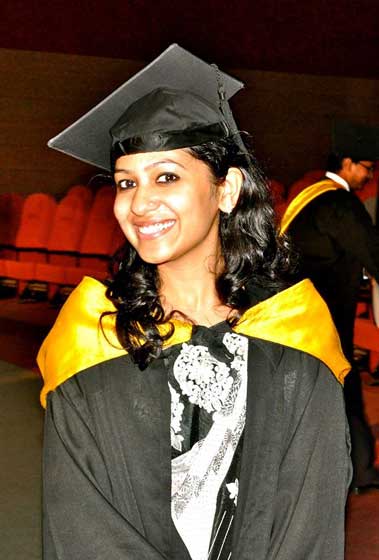
    Jyotika Jain is a graduate of 2010 batch of Amity Law School. She has publications in renowned journals to her credit and has extensive experience of the Supreme Court & Delhi High Court atmosphere. She is currently working as a Judicial Clerk in Delhi High Court. In this interview we asked her in depth about her experience of working as a judicial clerk under Justice S.K.Mishra, the application procedure and the future prospects of her legal career.


    Given that most of our readers belong to legal fraternity, how would you introduce yourself to them?

    I am an accidental lawyer. Law had never been one of the options that I had narrowed down to while choosing a career path. I wanted to pursue medicine. After my board exams in class 12th, the next thing I knew was that I was sitting in a class of Law of Contracts.


    Legal studies are still only a backup option for quite a lot of students. What motivated you to choose law as a career? How did you get through to Amity Law School?

    I never gave law a serious thought. Medicine had always been on my mind. That’s what you would expect in a class with students who have taken Physics, Chemistry, Maths and Biology, as their chosen subject combination. However, one of my batch-mates, did want to pursue Law and she was perhaps the only one. At present, she is pursuing her PhD, and that isn’t remotely in any legal field. Hers and mine is only just an example. There are a lot of students who choose law, and end up in law school. But, I believe ultimately what happens is destiny. No matter how many plans you have in mind, or the amount of preparation you go through, things happen differently.

    Coming to Amity Law School, was another chance. I decided to drop a year after 12th so that I could join one of the many coaching institutes and give a good shot at PMT. In the meanwhile, I needed admission in some college as a back-up. I chose Amity over a course in physiotherapy. At the time when I was getting into law school, CLAT had not yet been introduced. Every university had its own entrance examination. I believe that coming from a ‘pure science’ stream, helped me develop an analytical bent of mind. Therefore, without much preparation I was able to clear the GGSIPU’s common entrance test for Law.


    What were your areas of interest during your graduation? How did you go about developing expertise and knowledge in these areas?

    A lot of decisions that I made through law school, whether for the best or not, were somehow still revolving around science. My favorite subjects were criminal law, mainly due to forensic science, and IPR within which I was fascinated by Patent Law. I always had an interest in these areas, so reading articles or blogs, came as a natural interest. In fact, my dissertation was based on ‘Patenting of Transgenic Animals’. When it came to criminal law and criminology, I just went with my gut and all the information I had absorbed through TV series such as Medical Detectives and Criminal Minds. The key lies in keeping yourself updated. I would never miss out an article with a scientific theme in the newspaper. Somethings just catch your fancy.

    In retrospect, things could have been different. The advise that I can give to the next generation of law graduates is; read, read and read. Make a database, make an index for legal areas, and just read a lot. Keep yourself updated with the latest legal principles. You’ll do yourself a favour if you start this exercise now. You’ll find yourself relying on this database very often.


    As a law student which activities did you participate in? Did you have any guidance on how to go about your academics, co-curricular activities and internships?

    I am a first generation lawyer. Throughout five years of law school, I learnt from observation and from my own mistakes. I didn’t receive any guidance, and I didn’t have anyone’s hand over my head. That hand over your head will make your life much easier throughout law school and later as well. There is no hiding from this fact or being ashamed of it. That’s how it works. At the same time, the other side to this is that, if you don’t have a support system, you can manage fairly well by just working hard. It pays off, and it did in my case.

    First year for me was just exploration. It was a new world. So many new faces and a lot more stories about the ‘cool’ seniors we had, who I would say were ‘mooting studs’. Since the very beginning there was this mystical power one would get if they were a mooter, and this is what attracted a lot more people to the arena. My first moot, an internal one, made me cry from the inside, and I ended up with a resolve, not such a firm one, clearly, that I would never moot again. But it was this first moot itself that made me realise that I had a natural gift for research work. As time progressed, I started participating in moot court competitions throughout India, voluntarily choosing to go as a researcher. Believe me.

    Around the time I came to third year, I was introduced to Parliamentary Debates (PD). The adrenaline rush in that is much more than moots. In moots you have a lot of time to prepare and furnish your research work. Preparation for PD can never be complete. You can’t know what motion would be thrown at you. The only preparation you can possibly have is, just reading up on current affairs and having bills/propositions prepared before hand, but whether that is used or not is another question. It was this rush, that finally pushed me to go for a moot as the second speaker in my final year at law school.

    I never missed a chance on any kind of extra-curricular activities. Moots, Parliamentary Debates, and Essay competitions. One should try for everything. These days there are a lot of colleges that have taken the initiative for letting students present papers at conferences and other events. Which is a good opportunity and one should try and present a paper, or at least try and get two publications.

    When it came to academics, I didn’t have a problem. It was as simple as that. I did not shy away from giving my notes to my batch-mates or my juniors. During exams, I was perpetually surrounded by twenty people. Twenty people who had just opened their books hours before the exam. Explaining concepts, and helping them made me revise my course over and over again. Throughout five years, I held the top three ranks in my class. Academics is something I didn’t consider as something that I had to work for. Moots and PDs on the other hand required work and effort. It didn’t take much to recall things from class lectures, or remember case laws. The fact that I could understand legal principles easily can be attributed to my science background, which helped me analyse propositions. As I said before, a lot of what I did revolved around science. Of course, this is not a rule, I am an exception.

     

    jyotika-jain-1

    What kind of internships did you do while you were a student? Any remarkable experiences during your internships that shaped your career choices later?

    One thing that I didn’t skip or compromise on was internships. I didn’t while away time during June and July, the months when we had vacations. June is the worst time to try for litigation internships. Courts are shut. There is hardly any work before the vacation benches, just one or two odd matters.

    Looking back, there are two broad areas in which I can divide my experience during internships; Litigation and Research.

    I’ll start with the research based ones. The first one was with the National Commission for Women, followed by Centre for Policy Reasearch, where I got the opportunity to work with Dr. Subhash C. Kashyap, on his book on Constitutional Law. After which, I worked with Mr. Shyam Divan, Senior Advocate on the third edition of Environmental Law and Policy in India. This book has been authored by Mr. Divan and Mr. Armin Rosencranz, and is perhaps the only such book available that covers the legal and policy aspects of the environment. In all these three internships, there was a lot to read on legal aspects. Digging and sifting through thousands of precedents, cherry picking applicable areas and then presenting them in a sumarrised form. Although, with Mr. Divan, this wasn’t limited to just precedents, but also covered other literature, where topics related to the environment were being discussed. Imagine in 2009, I’m reading something about vendors on the street, and it is now that the Street Vendors Act got introduced. There were many ancilliary things which were related to the environment that I read about. This helped me build a strong foundation, which helped me later when I interned with the Ministry of Environment and Forests, when Mr. Ramesh was holding charge.

    When it comes to litigation, I worked with counsels and in firms. I worked with Mr. Sushil Kumar Jain, who has now been designated as a Senior Advocate and with Mr. Shyam Divan. I went twice to Karanjawala and Co., once in 2010 and before that in 2008, and I also worked with Vaish Associates Advocates.

    Ministry of Environment and Forests wouldn’t per se qualify as a litigation based internship, although I did work on some legal briefs there. This was heavily based on policy work and the new amendments that were going to be introduced in the Wild Life Protection Act. It was around this time when the idea for NGT and NEPA was being talked about. There was a lot of interaction with the members of the civil society and also with citizens who had grievances with the proposed amendments. Generally we are used to saying that the government doesn’t really work, but here we went through emails and queries from citizens and also gave them personal hearings. Every day was a different day, and most days had frenzied activity. One of the richest experiences from this internship that I took with me, was working on the Gola Elephant Corridor issue. Having a ground zero and hands on experience with the conflict between man and environment was a very unique experience.


    Did you find that your law school education had prepared you sufficiently for the many tasks you were required to execute during your internships?

    I believe that what you do in law school and what you do in the field are two entirely different things. Keeping in mind the existing law school curriculum, there isn’t any law school that can prepare you for the world outside. Law school revolves around books, and extra-curricular activities. The life outside these books is another dimension. Well, using research databases such as SCC and Manupatra, is something that you would do in law school and also outside while interning or working. Books would provide a settled principle of law, litigation is on grey areas. Therefore, no law school can prepare you for internships or work. If I could draw an analogy, it is like saying I read Grey’s book on human anatomy and then I performed an autopsy. Practical experience can never come from books.


    You have published a lot of papers in various prestigious journals. Can you give us a few tips to ace the art of paper writing?

    Art of writing. Well that’s a tough question. You can’t be perfect, there is always something that you can do to make it better. To develop some sort of mastery would require 20-30 years. Writing requires a lot of revision as well. Especially, legal writing, where you can say the same thing in twenty different ways, but the best way would always be the way in which a lay man understands what you are trying to say. Grammar is another area which requires work. I still have a Wren and Marting with me, and a book that tries to explain the usage of punctuation marks on my desk. Understanding rules is one aspect, the other aspect is to read. I stopped reading in between thinking that reading someone else’s work would take away my own unique writing style. I know a lot of people who have gone through this phase. I was wrong. There is a lot you can discover through someone else’s work, and you can learn a lot.


    How has your mooting and debating experience been?

    Mooting experience, that was a joy ride. As I said, I voluntarily chose to be a researcher mostly, till I chose to finally go as a speaker. All the moots that I participated in, I never got anything back. As a researcher, I could only pass ‘chits’. It was my last moot that changed everything. My team was awarded the prize for the Best International Team in IICLAM. This was also my college’s first ever international trophy. It is something that will always be memorable.

    PDs on the other hand, I picked up on faster. It was in my second PD in NLSIU Bangalore, which was organised by Allen and Overy, in which I came runners up in the Novice Championship.

    Every student should at least participate in one. There is so much you can learn, and you also get to meet new people during these competitions, people you can learn from as well. Don’t worry about messing it up, or worrying about not getting any awards. The first moot or PD will always be an ice-breaker.


    How helpful do you think is mooting for a law student? Does it serve a real purpose or is just another way to crowd up the CV?

    Mooting will help you build up on your confidence. It will teach you to not lose your composure when the judge tries to heckle you on a point. I have also judged few moots, and I know why judges try to heckle. They want to see if you break under pressure. It is nothing personal. Most judges heckle those who are good orators. If you are missing the law point, or are fumbling, or don’t understand the question, the judge knows, and they won’t bother with asking you questions and waste time. It’s the good ones whose mettle we try and test.

    I don’t think moots should be used to crowd up your CV. You should use it as a means to grow and learn. The purpose it will serve is that it will help you think on your feet, come up with ingenious arguments and at times will also help you in becoming witty.


    Currently, you work as a Judicial Clerk at the Chambers of Hon’ble Mr. Justice Sudershan Kumar Misra, High Court at New Delhi. What had contributed towards this appointment?

    After law school, I decided to sit for the Civil Services Examination. I believed that having a background in law would help me. I didn’t clear my exam, and I had to start from scratch. I started the process for rebuilding everything. A judicial clerkship is a very good beginning. Although, it is quite unfortunate that in India the value attributed towards this is comparatively quite low as compared to other countries. Even within the legal fraternity here, a clerkship is never viewed as a crowning glory.

    One thing that helped me was that even though I have a huge gap on my CV, I still had numerous internships, and extra-curricular activities on it. Getting into law school and sticking to it is not a hard and fast rule. Your life won’t come to an end if you decide to try something else. You should try it, and it is better than living with the regret that ‘I wish I had given this a shot.’ My past work experience and my overall performance in law school helped me immensely.


    How did you obtain the Judicial Clerkship? What is the standard procedure to do so?

    Every Judge in the High Court and Supreme Court is allowed two law clerks. Generally, one comes through the Registry and the other one is based on the discretion of the Judge. The standard procedure is to go through the Registry.


    Did you ever consider a career in the corporate sector? What influenced your decision to work in this sector?

    I considered working in the Corporate sector. I don’t have hard and fast notions about careers within the legal field. A lot of decisions depend upon experience and your level of comfort in that field. Ideally, one should try everything, you never know what would click. I haven’t had the chance to work in a corporate environment, so I can’t say much. However, when it comes to litigation, I like the frenzy of the courtrooms and the rush of adrenaline.


    What does your current work profile consists of? What is your workday like? Are there new challenges every day or did work fall into a predictable pattern?

    Work can be challenging on some days. Employees in the High Court, leave at 5 p.m. Filing counters, Registry etc., shuts in the evening. By 7 p.m. the Court is deserted. But you’ll still have a few Stenographers working, and one or two law clerks that you’ll bump into. I leave when I finish my work. Even though Courts adjourn at 4;30 p.m. there are days when it is not adjourned till seven in the evening. In the evening there are no fixed timings. You’ll leave when you are done for the day. On the other hand, my day at work starts at 9:30 a.m.

    Working on the other side, and this is no exaggeration, that at times over 120 matters are assigned to a Judge. The Court timings are from 10:30 a.m. to 4:30 p.m. and in this short period of time, it is not possible to adjudicate upon 120 cases. Judges try their best, and I have seen that. Every person wants a fair amount of time to be heard, and the judges try and give them the time. But honestly, they are just overburdened. We need to at least double the current strength of the High Court Judges. 60 would be a good number to start with.

    As a law clerk, one duty which is common to all clerks is to ensure that there are no errors; typographical or grammatical, in the Order or Judgments, before those are given to the Judges. These errors are mostly human errors, which inadvertently creep in when the orders are typed. The court rooms are packed and at times the level of noise is a little high and when the orders are being dictated in the courtroom, some word is missed out by the stenographers. Even a single comma can drastically change the meaning. It is something I have learnt working with Hon’ble Justice Mr. Sudershan Kumar Misra, and he has been a wonderful teacher is this process. His guidance has been invaluable.

    Second common task is research work. Your research skills should be very strong, and you’ll sharpen them while working with a judge. The point of law that is being debated upon, is so fine at times, but you need to find something, or be enterprising an ingeneous and try and relate several points together to get to it.

    Reading files and making short notes, or as it is called ‘peshis’ is something which other clerks do as well. Making short notes helps you learn how to sift through information and get to the point. Summarising one file into one page is an art and it requires practice.

    I don’t think there is a predictable pattern, but yes there are some very slow days at work as well. However, one interesting case will make up for it.


    Tell us about your work mantra? What do think are the most essential things required to excel in clerkship?

    Everyone has their own personal shortcomings or weak areas. I would only say that you should not shy away from it and work towards improving yourself. My work mantra, or rather mantras would be; work hard, drop your ego, learn how to listen, and always strive towards learning more.


    Do you consider pursuing an LL.M abroad? A lot of LL.M aspirants opt for judicial clerkship before higher studies; what is your thought on this?

    I would say that if one wishes to pursue an LLM, doing a clerkship is the right thing to do. As I mentioned earlier, in India a clerkship doesn’t hold much value, but for example in USA, a clerkship is viewed as a valuable experience.


    What will be your suggestions to our readers who wish to be a judicial clerk?

    My suggestion would be that one should seriously consider this as an option. There is a lot you can gain from a clerkship, and these are things that you will realise later. It is a good stepping stone.


    What are your future plans?

    I wish to continue into litigation. In fact from my batch there are only a handful who chose to be in litigation. Losing possible litigators to easy money is a loss to this field. So, for now my eyes are set here and my feet are firmly planted in the court.


  • Jeet Shroff, Associate, Allen & Overy, on judicial clerkship, and an LL.M from Harvard

    Jeet Shroff, Associate, Allen & Overy, on judicial clerkship, and an LL.M from Harvard

    Jeet Shroff graduated top of his class from GLC, Mumbai in 2010. Soon after graduating he joined AZB Partners as an Associate. In 2012 Jeet joined Harvard Law School where he pursued a general LL.M. and served as Senior Editor on the Harvard Business Law Review.

    He has now joined Allen & Overy’s international arbitration practice at its Hong Kong office.

    In this interview we speak to him about:

    • Studying at Harvard
    • Getting recruited at firms
    • Judicial clerkships


    jeet-shroffHow would you like to introduce yourself to our readers?

    I graduated from Government Law College, Mumbai in 2010. At GLC I won the Y.V. Dalal Prize ’10 awarded for the best graduating student and the Best Student Prize for the years 2006-07, 2007-08 and 2008-09. I had also served as student-editor of the GLC Law Review for all five years, won several national moot court competitions and assisted with the editing of Wadhwa’s commentary on Insurance Law. I interned with judges at the Bombay High Court and at the Supreme Court, with a senior counsel at the Bombay High Court and worked as a Para-legal at AZB & Partners, Mumbai while at law school. After graduating from GLC I accepted an Associate position at AZB where I worked on matters involving M&A and post M&A disputes, general corporate advisory, securities litigation and international arbitration.

    In 2012 I joined Harvard Law School where I pursued a general LL.M. and served as Senior Editor on the Harvard Business Law Review. I will now be joining Allen & Overy’s international arbitration practice at its Hong Kong office. I publish regularly in leading newspapers and journals in the country. My academic interests include the Legal Profession & Ethics, Corporate Governance, Corporate Social Responsibility, International Arbitration, Constitutional Law, Judicial Review and Constitutional Design Theory.


    Why did you decide to study law?

    I wanted to be a lawyer since my final year in school; but I wasn’t confident enough to pursue it because I had a terrible stammer and I was very bad at public speaking. When I got good grades in the 10th ICSE Board, I didnt have the confidence to back myself for a career in law. My parents wanted me to be a doctor and I went with their vision. I actually appeared for the Maharashtra medical entrance examination and thankfully, I did so badly that I would only have gotten a paid seat in a dental college in Aurangabad. My father wanted me to reappear for the exam. But by then I was sure I didn’t want to do medicine.So I decided to take up what I liked doing. I hadn’t appeared for any of the N-school entrance examinations and I could only apply to Mumbai law schools because they took you on the basis of the 12th HSC Board results where I had done fairly well. I lost my stammer in my second year at GLC after exposing myself repeatedly to public speaking in the moot court eliminations at GLC in my first year.


    What were your areas of interest during your graduation?

    I didn’t have any areas of expertise as such. GLC doesnt have any concentrations. I was deeply interested in Constitutional law and politics. I followed it up with moot court participation, law review membership, authoring articles, interning with judges at the Bombay High Court and the Supreme Court and generally reading up on it over and above course-work. That apart, I was interested in traditional court litigation, securities litigation and corporate disputes. I pursued an internship with senior counsel Mr. Janak Dwarkadas at the Bombay High Court, which I would rate as amongst my best experiences so far. That internship really inspired me to consider a career as an arguing counsel. Finally I was lucky to get placed at AZB where I ‘grew up’ in a sense because I spent my last year as student and the first two years as a full-time practitioner there and I think those years really shape you and teach you the crucial skills you need to imbibe when you have just started.


    What was your motivation behind doing an LL.M. abroad?

    I didn’t think the LL.M. in India would be of much use to me. It’s not as rigorous. It’s a two year program which I think is too long even if you aim to become an academic. And it’s not rated highly in comparison with foreign LL.M. degrees which are now par for the course given the volume of Indian lawyers that spend a year studying aborad. My motivation behind the LL.M. was to experience academic life at a top institution, acquire a US / UK degree which may have its uses in the future, qualify to practice in another jurisdiction and if possible, land a job with an international firm. I was looking to spend a year experiencing a different life and I hoped that this would in turn broaden my horizons and allow me to experience a different culture. I felt it would help me grow, professionally and personally.


    When did you decide that you wanted to do a Masters?

    I decided in my third year at GLC. I hoped to land a scholarship and in fact I turned down an offer from NYU in 2010 because it didn’t come with funding. I took loans to finance the LL.M. eventually.

    It is financially taxing and people question its efficacy given the cost. But if you plan to be a lawyer and if you are keen on studying further for whatever reason, the LL.M. is your degree of choice. That said, I can now think of other degrees that may be more useful for lawyers transitioning to a career in say policy-making, academia or management. But for lawyers with a thirst for further studies, I think there isn’t a substitute for the LL.M.


    How did you choose the universities that you applied to?

    I applied to the top LL.M. programs. That included Harvard, Columbia, Oxford, NYU, Stanford and Yale. These colleges pick themselves. They are acknowledged as top choices for the LL.M. and most are Ivy League as well. To this list I would add Chicago, U.Penn, Cambridge and LSE. I didn’t apply to a larger number of schools because I was working and simply didn’t have the time.


    Did you decide on a course first or the University first?

    I’d say I picked the University first because I wanted to pursue a general LL.M. with a focus on arbitration law, corporate law and constitutional law. Harvard, Oxford, NYU and Yale have excellent courses in each of these areas. Stanford and Columbia are better known for corporate law but since that was an interest area I sent out applications to these two as well. If I had had a specific focus such as say environmental law, I might have applied to Berkley as my first choice but I wanted the flexibility of a general LL.M. with the option of creating my own course structure and choosing how much I would take on in which semester.


    What did you study at Harvard?

    I pursued a general LL.M. with a focus on corporate transactional law, international arbitration law and constitutional law. I split my three semesters between these three areas. My course choices were a result of my interests. I wanted to learn US Corporate Law and litigation so I took up a course on Delaware litigation taught by Chancellor Strine of the Delaware Court. I wanted to try and work in the international arbitration space, hence a course on arbitration. And I have a deep interest in Constitutional law and politics which informed my decision to study the 14th Amendment and the Comparative Politics of Law by Duncan Kennedy.


    Tell us about the faculty and facilities.

    I’d rate my year at Harvard as the best one I’ve had so far. It was a vibrant, fulfilling, fun and demanding year that went a lot faster than any of us in the program might’ve wanted or anticipated. Its thrilling to take courses by professors who are that driven and that accomplished. The campus is beautiful and Cambridge town is very very student friendly. I’d do it all over again, despite the cost and the present exchange rate of the US Dollar.

    The faculty at Harvard is sterling. Although you take a restricted number of courses (a maximum of 27 credits), you have a chance of much wider faculty interaction because of your LL.M. paper. There are Research Assistantships that you can take up and there is the option of doing courses in other Harvard schools as well. The facilities are top class. The Law Library is an iconic building, stacked with books on every topic from every country. You are encouraged to use every facility on offer and there is a genuine sense of pride in how the library is organized and run. The recently constructed Wasserstein Center is obscenely well equipped for any conceivable student / academic need. But I think it’s the attitude that set Harvard apart. It was fantastic to be part of a culture that was incredibly open and liberal, intellectually engaged, so passionate and driven and yet, unfailingly courteous and polite.


    How was the Indian fraternity over there?

    The Indian community at Harvard isn’t that cohesive. There are too many of us to really feel the need to be tight-knit. The LL.M. batch had twelve Indians, the second highest number from any single country after China which contributed sixteen LL.Ms.


    How is the recruitment for overseas students?

    US recruitment for LL.Ms was poor in 2013. Most people landed temporary foreign associate positions – not permanent US attorney positions. Indians did particularly badly with only one student securing a foreign associate position with a top US firm. Of the seven who were looking for law firm jobs, only three managed to secure them. Unless you have over four years of work experience or a personal connection with a law firm partner, I suspect two factors determine your placement chances: 1) How much India work there is at that point in time, which is determined by the volume of big-ticket India deals and which in turn seems to be affected by the state of our economy; 2) Whether vacancies have arisen in the limited number of associate seats allocated for India-lawyers in top US firms. Connections and contacts always help, and in fact could be decisive in a market which isn’t too India-educated or India-enthused. Positions in New York’s dispute-resolution practices are hard to come by for any non-US lawyer.


    How was the academic schedule?

    The US LL.M. is a very flexible program. You can decide how rigorous or otherwise your year will be. I had a very rigorous year indeed – I was doing the maximum number of course credits allowed, editing a journal, serving as Research Assistant, authoring a Long Paper, applying for jobs and travelling the West Coast, New England and New York. Fortunately, I never felt overwhelmed because I had a great support network of friends.


    What about the accommodation?

    I stayed at North Hall which is one of the costlier on-campus dorms because it’s a hotel turned into a campus accommodation. It proved to be a good choice. Cambridge winters can be brutal and we found ourselves in the midst of one of the worst snowstorm in recent years. By the time Snowstorm Nemo was done with us, we had snow almost reaching the first storey of our dorm building. North’s heaters kept us warm and safe. It helped that many LL.M.s chose to live in North, turning it into the de facto LL.M. hub.I formed some close, lifelong friendships with my fellow residents there.


    Does the institute offer any scholarship?

    No, Harvard doesn’t have LL.M. or India specific scholarships. Most Indian students struggle to find adequate funding or scholarships. Inlaks, Sekhsaria and Tata scholarships offer partial and complete financial aid but it’s an uphill task.


    What does a paralegal’s role entail?

    (Jeet has worked at AZB & Partners as a paralegal for a while.)

    I’m not sure what role other para-legals played but as a para-legal I was given the opportunity of being involved in matters full-time and was basically treated as a semi-associate. The idea was to make use of the fact that I was at GLC and could attend office on a full time basis for the entire duration of the year save two breaks of six weeks. So I would end up doing research, drafting, client calls, counsel briefings as well as filing, making lists, indexing etc. I was very lucky that my internship with Mr. Dwarkadas led to my stint at AZB which in turn led to a placement at AZB once I graduated.


    Is the practice of hiring paralegals widespread in the Indian legal industry?

    I’m not sure what the trend is but I had certainly not heard of Paralegals until I joined AZB. I think it’s a great position and it’s especially useful for GLC students. Unlike N-schools, we are located ten minutes away from the Bombay High Court and from all the law firm offices, the college timings are 7 am to 10:30 am and its a two semester as opposed to a trimester system. All of this really helps GLC students work on a full-time basis even while we are still in our third/fourth year of law school and it’s the only way we can narrow gap with the N-schools which admittedly are far superior in terms of their teaching, batch quality and public perception. So as a GLC alumnus, I am a big supporter of this trend. It augurs very well for students from my college and I think firms might gain from it as well. If you have someone you have trained for one or two years before making her an associate, you already have someone who understands how a law firm works, has made all the connections with the seniors and partners and can integrate very easily.


    How was your experience as a judicial clerk?

    I clerked only with one judge at the Supreme Court actually. I clerked with two judges at the Bombay High Court. I think the most important thing I learnt through the clerkships was to understand how a judge’s mind works, what the pressures of the job are and what they are looking for. If you are a first generation lawyer, you tend to be a bit starry-eyed about the judicial office. I think the clerkships helped me place judges in perspective. If I do argue before a court, hopefully those stints might help me be a better counsel. I did them at the time because I was curious about how judges work.


    How can a law student apply for a judicial clerkship?

    The Supreme Court has a straight-forward application process where you send your CV through your college and the Registry places you with a judge who is willing to mentor a trainee. At the Bombay High Court too there is a similar process.

  • Fatima Quraishi on application and work of the post of a judicial clerk at Supreme Court

    Fatima Quraishi on application and work of the post of a judicial clerk at Supreme Court

    fatima-s4

    Fatima is a graduate of 2013 batch of RMLNLU, Lucknow. She has extensive experience of the Supreme Court atmosphere and has worked as a judicial clerk just after graduating.

    In this interview we asked her in depth about her experience of working as a judicial clerk under Justice T.S. Thakur, the application procedure and the future prospects of her legal career.


    How would you like to introduce yourself to our readers who are mainly young and aspiring lawyers?

    I’m a 2013 Batch law graduate from Dr. Ram Manohar Lohia National Law University, Lucknow (RMLNLU). I recently completed my contract as a Law Clerk to Hon’ble Mr. Justice T.S. Thakur, Judge, Supreme Court of India. A first generation lawyer, I am very enthusiastic to join the development sector.


    Do you feel that there is a bit of resistance towards legal education in India? How did you incline towards a career in legal field? Do you reckon any specific incident influencing your choice?

    Engineering and Medical studies were sought after because our parents were brought up in that environment and they have continued to have that mindset until now. They could only picture traditional litigation in their heads and were insecure about letting their kids, especially girls join that community.

    Currently, there has been a wave of change in which parents have encouraged this profession because they see dispute resolution in a different light. The working conditions are much more civilised and there is scope and variety in the different roles a lawyer could play. This change has been brought about by the zeal of our generation who was genuinely interested in the profession and took it upon themselves to change opinions. There are Law Firms, Companies, Think Tanks, Non-Government as well as Government sector that absorb the major chunk of law graduates. The most crucial insecurity about the profession is to a great extent addressed with an improvement in job security. For example a litigator who mainly deals with civil/criminal matters has a retainer client for a regular source of income.

    I belong to a family of doctors so law was never on the cards until class 11th where I got introduced to the profession by Mr. Sachin Malhan who visited my school, Loreto Convent to promote LST. Thereafter, things just took shape with my family being ever willing to let me follow my calling.


    fatima-s3How would you describe your time at RMLNLU? What kind of co-curricular activities did you participate in?

    Frankly speaking, I was a very laid back student who just enjoyed the ambience that Law School provided. I had a small bucketlist of things to do in Law School. Moot-check, conference-check, publishing-check but never pursued one thing for long. I hated monotony in my work which has trickled down to my career objective too. I was always inclined to venture out and do different things. I was part of the Placement Cell initially and then switched to the Legal Aid and Welfare Committee. The only thing I was very particular about was internships which provided me a great opportunity to learn and network. I thoroughly enjoyed RMLNLU for its independence, flexibility and facilities.


    Which are the law firms and other places where you interned? Which internships would you consider to be right at the top and why? Tell us about the variety of work you were given during your internships?

    In my first year, I interned with U.P. State Legal Services Authority and Greenpeace which was a very good social sector introduction. Subsequently, I moved on to law firms like Anand & Anand, Remfry & Sagar, JSA,  M.V. Kini & Co., Vaish Advocates Associates and Khaitan & Co. where I mostly worked on Intellectual Property Rights (IPR) issues which was my interest area then. The kind of work I got at each firm depended upon who I was directly working under. It’s always a good option to use every opportunity to directly interact and get work from the partners. I did quite a lot of drafting at Remfry, infrastructure related work at M.V. Kini and prepared presentations on law governing video games in India at Vaish. The rest of the work at my internships was research based.


    Interning at a top-notch firm is a dream of every law student. How did you procure your internships? Can you throw some light on the application and follow up process?

    Although, all law firms have an internship portal or email ID displayed on their website, in reality it’s difficult to get through, considering how all law schools have vacations practically at the same time. I got most of my internships through contacts. Importantly, most of these networks were my own that I had managed to form during my previous internships and conferences. It’s a good strategy to be referred and one can very well ask alumni and seniors for help.


    You have a Diploma in Entrepreneurship Administration & Business Laws. Tell us how helpful these courses have been in your career? Why did you choose to pursue diploma in corporate laws?

    It’s a fantastic course. It’s as good as a senior mentoring you at a law firm without any howler. It’s a study at your own pace program which explains practical aspects of business law lucidly. Career wise, I’m still to use this skill set which I have had no opportunity to use during Clerkship where I was mainly concerned with Criminal and Service law matters.


    Considering the fact that most of your internships have been in corporate firms, what drifted you towards the career of a judicial clerk?

    Clerkship was not my first career option. I was interested in IPR throughout my college days and somehow my law firm PPO in IPR did not work out. Alternatively, I had applied for Clerkship where I got through. I am extremely glad about the way things transpired. It’s an excellent first job experience which I would recommend all recent graduates to pursue.


    How did you obtain the Judicial Clerkship? What is the standard procedure to do so?

    The Supreme Court Registry annually publishes an advertisement inviting all final year National Law University students to apply. I applied through my Internship & Placement Committee at College wherein all applicants were required to send their application form, CV along with attested documents to the Supreme Court Registry.

    Thereafter, short listed candidates were called for an interview and results of the first list were declared within a month from the date of the interview. The list of successful candidates is not published and all selected applicants get individual phone calls from the Registry. As and when a vacancy for clerks arises, calls are made to the rest of the people on the list in accordance with merit. Once one confirms his/her availability for joining, the Registry asks them to report to the Supreme Court at a certain date wherein the person completes all paper work and then is informed about the Judge one is to assist for a term of roughly 10 months. Clerkship can be extended for a further period in consultation and by the approval of the Judge one works with.


    Tell us the daily routine of a judicial clerk? What is the kind of work you come across? How different is it from the corporate field?

    It will be patently wrong on my part to generalize my Clerkship experience as it totally depends on the Judge one is assisting, which continues to be a surprise till the last minute of joining. Speaking for my own self, I had flexible work timings and attending Court proceedings was not mandatory unless there was an important matter for which His Lordship required me to take notes. The office staff was extremely friendly and co-operative and provided me a conducive environment to work. I mostly worked on reserved matters or part heard matters as His Lordship was not inclined to let me make briefs only. The USP of the job was the daily discussions with His Lordship on nearly all matters that came before him. There were also other perks attached to the job which I think are part of the experience if you’re lucky to get a Judge who accommodates it.

    The experience can’t be compared with anything close to what one does as a lawyer, let alone exclusive corporate practice. Since you work for a Judge, your perspective on every matter is very holistic as you have the unique opportunity of weighing both sides of the matter and not be prejudiced. Your aim is the dispensation of justice rather than getting relief for your respective client.


    fatima-s2

    Tell us about your work mantra? What do think are the most essential things required to excel in clerkship?

    I have never followed a rule book but patience, hard work and optimism has worked well for me. For law clerks at The Supreme Court of India, one has to make the best of whatever one gets since there is no certainty. Generally speaking, I feel it will be sensible if one could be flexible enough to mold himself/herself according to the work requirements of the Judge, be cordial to office staff and impeccable with the research notes submitted to His Lordship. Half-heartedly done work is easily detected. It is also helpful if one keeps a track of the Judge’s recent pronouncements, part heard and reserved matters. One will hit solid gold if he/she is fortunate to share a similar passion/hobby as His Lordship because then one will be able to interact with His Lordship on an informal basis.


    Do you consider pursuing an LL.M abroad? A lot of LL.M aspirants opt for judicial clerkship before higher studies; what is your thought on this?

    Writing a recommendation letter is completely the discretion of the Judge. One should be prudent not to bank upon it. Clerkship experience independently is very enriching and has no causal connection towards higher studies except in cases one is pursuing Clerkship only to be referred.

    In my case, I am inclined to go for a Masters Program for Fall, 2015 after working for another year.


    What will be your suggestions to our readers who wish to be a judicial clerk?

    Judicial Clerkship is a privileged short term contractual job that gives you an insight into the way the Bench works, that one can never hope to get otherwise at this age. It’s an opportunity to be mentored by one of the finest fraternity in the Country. No matter how clerical things seem initially, it does inculcate life skills. The experience provides an optimum amount of pressure, moulds, evolves and prepares you to be better equipped on the other side of the Bench.


  • Divya Swamy on mooting, internship and Judicial Clerkship

    Divya Swamy on mooting, internship and Judicial Clerkship

    552294_446406408729080_681169104_n

    Divya Swamy a student of 2014 batch of RMLNLU talks about mooting, internships and Judicial Clerkship. She elaborates on the details of doing a judicial clerkship and it’s importance for those who aspire to do an LL.M. from a foreign university.

    Key takeaways:

    • Mooting and its importance
    • Law firm internships
    • Judicial Clerkship


    Why did you decide to study Law? What inspired you to do so?

    Law is a field that ensures an over-all development of an individual. It makes us aware about our society so much more than any other field. As a student, just out of school, it seemed like the most rigorous form of personality building exercise to me, and this motivated me to study law.


    Which stream did you study at School? Was that beneficial in preparing for CLAT?

    I was a Commerce student at school. I wouldn’t say that it helped me much in preparing for CLAT but it left me with more options. In my opinion, the curriculum for CLAT is such that it requires only a couple of months of dedicated study in the right direction. There is no section in the CLAT paper that would make it more favorable for any stream. It tests only what ordinarily can be expected from any student who has passed Class 12.


    Do you have any lawyers in your family? Do you think having family members with a legal background help in this profession?

    No. I am a first-generation lawyer.

    Yes of course, having some guidance from the family always helps. In fact, it makes it easier to make decisions as regards internships, moots and even about the future after law school. Also, it is easier to break through. But, surviving in the legal industry is only subject to merit. There are innumerable examples of people who have excelled in the field without having any law-oriented family background. The beginning may be tough but what matters is how you use your 5 years in law school. I think that developing a skill set is the key to surviving in the fraternity.


    What are the extracurricular activities you took part at RML NLU?

    I participated in Moots and debates. Besides participating as a Debater, I was also actively involved in adjudicating Debates. I engaged in free-lance researching and also assisting a Professor in research in the last 2 years of law school.


    You have taken part in a lot of Moot Court Competitions in college, can you share a few mooting experiences?

    My favourite mooting experience has been at Surana & Surana Trial Advocacy because I will be practicing law soon and the exposure in this format of mooting is immense. The structure of the moot is different from other Moot Court Competitions and here, one is supposed to train witnesses, solve legal issues and conduct a proper trial. It fascinated me and gave me an experience as close to real Court as possible, in a simulated environment. It was because we enjoyed it so much that our team went on to win the tournament.


    Do you think mooting is beneficial for Law students or is it just to make your CV look fancy?

    I think that mooting adds more value than just decorating your CV. In fact that is the area where it least contributes. The exposure that one receives in a Moot is unparalleled. It is a learning experience in terms of helping you with developing research skills and speaking skills. It grooms one for the real competition. In fact personally I think that the subjects that I learnt while mooting, are the areas that I am most confident about and this is because you learn the law in the most practical way possible.


    What are the law firms and other places where you interned? Which internships will you consider to be right at the top and why?

    Well, since I am a first generation lawyer, I preferred to intern at the most varied places so as to choose my area of interest.  I interned at firms like Parekh & Co. in the corporate and litigation departments, with reputed Senior Advocates like Dr. M.N. Krishnamani and various other internships in the Supreme Court, Delhi and Calcutta High Courts and District Courts.

    The most noteworthy experiences have been while I interned with Mr. Subhiksh Vasudev, Advocate at the Delhi High Court since I learnt the Court procedure. I learnt how to draft legal documents and most important, I attended Court proceedings. Also, my internship with Hon’ble Ms. Justice Hima Kohli as a Law Researcher has been the most enriching experience because I researched on fresh cases and had the opportunity to work on many briefs at a time while also becoming comfortable with the procedure.


    What was the procedure you followed to apply for these law firm internships?

    I applied about 3 months in advance by sending in my CV. It is very important to follow up by sending e-mails and making phone calls after applying at any place.


    What was the kind of work was allotted to you during your internships?

    There was research work on various points of law, preparation of legal documents, preparing briefs and so on based on the place I was interning at.


    What do you plan to do for the next 1 year?

    I will be doing a Clerkship at the Delhi High Court.


    Why did you choose to do a Judicial Clerkship? What is the daily schedule of an Intern at a Judicial Clerkship?

    I chose to do a Clerkship because it is the most convenient and efficient way of learning the Court procedure. In fact, for those who believe in learning by observing, working as a Law Researcher at High Court is a very good option. Further, the interaction with Judges is unparalleled since it they teach you how to look at the law from a different perspective. In fact, I think that the nature of work is apt for a fresh law graduate who wants to learn the law.

    The nature of work for an intern working as a Law Researcher is different depending on the Court and the Judge. Generally one must reach Court by 10 a.m. and make all necessary corrections and proof read the orders that had been dictated the previous day. Then, attend all fresh matters for the briefs you prepared the previous day. You must then do all the necessary research as required and prepare briefs for the next day at Court. Besides this, research needs to be done on reserved judgments. Ordinarily the day ends at about 8 p.m.


    Did you learn any skills while interning at the Court? What are these skills and how did you acquire them?

    I observed that the nature of work for an Intern is the same as that of an Associate at a Law firm or a Law Researcher in Court. If one goes with an open mind and desire to learn, there is a lot to gain from internships. I think all skills of drafting and researching are best learnt at internships. In my opinion, while working as an intern, networking is also a necessity for any law student.


    How did you obtain the Judicial Clerkship? What is the standard procedure to do so?

    I had worked as an intern twice. This is when my application to work full-time got accepted. Generally, one must either intern with a judge or apply to the Registrar in the respective Courts. Annually, during this time of the year, posts are offered by High Courts and the Supreme Court. Interested students must keep checking the respective websites for the vacancies. There is an interview in the Supreme Court for the shortlisted candidates.

    To secure a clerkship with a judge, there are 2 ways:

    One applies to the Registrar in the High Court or Supreme Court, as the case may be, requesting for an opportunity by filling in the requisite form that is available on the website or you should have interned with a Judge, who MAY if impressed, permit you to work as a Law Clerk after graduation.

    To secure an internship with a judge, one should:

    Apply to the Registrar in the High Court or Supreme Court, as the case may be, requesting for an internship with a judge or apply to the office of the concerned judge, where you intend to intern.

    Even if one secures the internship by applying to the office of the concerned judge, the final approval is by the Registrar.


    How is it beneficial for further studies?

    Generally, besides the skill development, the Recommendations of Hon’ble Judges is held in high regard by foreign Universities. However, one does not get a recommendation letter as a matter of right. It is based on the quality of work during the clerkship and the sincerity shown in the work.


    What do you plan to do when the term of your clerkship expires?

    I plan to pursue a Masters in Law.


    Your advice to the law students aspiring to do an LL.M.?  What do they need to do, how should they prepare in the last 3 years of law school?

    For those who want to do a Masters abroad, immediately after law school, must start applying by their 4th year. For Indian Universities, one must prepare for the entrance examinations based on the format followed in the precious years. But irrespective of what one wants to do after Law school, it is most essential to love the law. So, read the law as much as possible because it helps you identify what you would want to do for the next 50 years of your life.