Tag: Judiciary

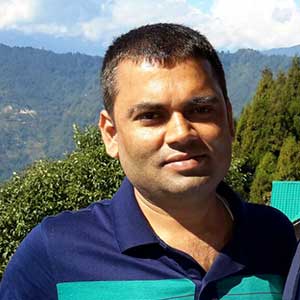
  • The avenues which have opened up in the field of Law today are immense- Sanjay Kumar, District and sessions judge, Rajasthan

    The avenues which have opened up in the field of Law today are immense- Sanjay Kumar, District and sessions judge, Rajasthan

    This interview has been published by  Priyanka Karwa and The SuperLawyer Team

    Sir, can you tell us about your background and what motivated you to pursue a career in Law?

    My grandfather Prof. Krishan Datt did his law from Cambridge University, England. He was a barrister at Inner Temple (for more info, https://en.wikipedia.org/wiki/Inner_Temple) but after partition didn’t pursue a career in law and had a career as Professor in Economics in Punjab University, Jalandhar.

    My father who was 1956 batch IAS officer, was posted in Churu district of Rajasthan, where I was born. I grew up watching my father deal with revenue cases as District Collector, hence interest for the subject of law naturally came up in me.

    After my initial schooling from Mayo college, Ajmer and high school from St. Xavier’s School, Jaipur, I graduated in science and thereafter enrolled myself in Three Year Law Program at University of Rajasthan, Jaipur.

    After completing your LLB and LLM, you briefly worked as a journalist before returning to the practice of law. What made you decide to make that switch?

    After doing my LLB and before completing my LLM I cleared an examination conducted by the Times of India, New Delhi for the post of ‘Legal English Sub-Editor’. After pursuing this field for a few months, I decided to complete my Masters in Law and join advocacy. Thereafter I started working as an associate at a law firm in Jaipur and practiced law at High Court of Judicature of Rajasthan at Jaipur bench for four years (1991-1995).

    Both legal journalism and advocacy require similar skill set, for e.g., command over law, articulation, critical thinking and reasoning, patience and perseverance. I found myself foraying into advocacy and hence came back to Jaipur.

    You have worked as a judicial officer in various capacities. Can you tell us about some of the highlights of your career in this field?

    People generally think that role of a judicial officer is confined to courtroom. But a judge wears many hats. The role of a judicial officer is quite diverse ranging from adjudication, to policy making and even administrative work. Apart from serving in judicial forums, I have worked at policy formulation level as Secretary (Law), Ministry of Law, Government of Rajasthan. Now as Director, RSLSA, Rajasthan High Court, I am involved in implementing schemes to provide legal aid across the State of Rajasthan. Hence, a career in judicial services is enriching one and now with good pay scales, it is becoming increasingly popular among law students.

    I don’t think there are any highlights in the service tenure of a judicial officer because he is bound to deliver justice in whatever capacity he is sitting. There may be sensitive cases in which a specialised agency may have filed a chargesheet or media-focussed cases, whatever may be the case, he has to oversee the trial in an impartial and fair manner.  

    As the Director of the Rajasthan State Legal Services Authority, you are involved in executing the Legal Aid Program of Rajasthan High Court to provide free legal aid to destitute people throughout the State of Rajasthan. Can you tell us about this program and how it is making a difference in people’s lives?

    The Chief Justice of the High Court of Rajasthan is Patron – in – chief as well as executive chairman of RSLSA. The State government in consultation with Hon’ble C.J.H.C. appoint Member Secretary and Director RSLSA for implementing the legal aid programs through funds allocated by the Central Government under NALSA Schemes. Any person having net income of less than 3 lakh per annum is entitled for legal aid in the State of Rajasthan apart from women, members of SC/ST community and children etc. I have personally seen cases in which a woman who is the recipient of legal aid by RSLSA, had got cost imposed on her by order of a court. The moot question is can a Court impose cost on recipient of legal aid and who will pay the cost imposed. This matter is pending at the policy level and soon it is hoped that recipients of legal aid will not have cost imposed upon them by courts.

    Under the Lok Adalat schemes, we endeavour to ensure that speedy, legal justice is bestowed to the recipients especially under Bank recovery cases and cases of NI Act.  In Rajasthan, in the last national Lok Adalat, the Hon’ble Chief Justice of High Court via e-conference interacted one to one with the local population of various districts and provided valuable input regarding disposal of cases including asking the courts to follow ratio propounded by Hon’ble Supreme court in Pranay Sethi Case and Pappu Devi Case.

    You were instrumental in drafting and vetting the Rajasthan Protection from Lynching Bill, 2019, and the Bill on Honour Killing which was later passed by the Rajasthan Assembly. Can you tell us about your role in drafting these bills and how they are helping to tackle these issues in the state?

    The drafting and vetting of these bills took place while I was posted as Secretary (Law) and later as Special Secretary in Ministry of Law, Government of Rajasthan. The drafting of the bill was undertaken by me as well as other members of Law Department on receiving the proposals from Home Department. Before any Bill Making process begins, the proposal would come from relevant department and then it goes for scrutiny to the home department. Afterwards it is sent for legal vetting to the Law department and finally financial vetting with the Finance department.

    In Rajasthan there have been many untoward incidents of mob lynching such as the Pehlu Khan case and the Rakbar Khan case because of which need was felt to enact a separate legislation for mob lynching for providing not only stricter punishment to offenders but also relief and rehabilitation to victims.

    Similarly, there were several cases of illegal diktats reported from Khap Panchayats leading to Honour killings in the State because of which the State Legislature passed “Rajasthan Prohibition of Interference with the Freedom of Matrimonial Alliances in the Name of Honour and Tradition Bill”.

    The process of legal vetting of Bill involves examining the Bill on constitutional parameters, encouraging easy to understand drafting and preparing English and Hindi texts. As Secretary (Law & Parliamentary Affairs), I also used to attend Vidhan Sabha sessions whenever a Bill of critical importance was tabled.

    You have also served as a member of the Board of Revenue for Rajasthan, where you heard land revenue cases and appeals against the orders of various authorities. Can you tell us about your experience in this role?

    As Member, Board of Revenue for Rajasthan, I heard land revenue cases in single and division bench and heard appeals against the orders of Sub Divisional officer, District Collectors, Revenue Appellate authority and Divisional commissioners.

    One interesting incident in the Revenue Board was that reference cases were filed by the government against persons who were allotted land prohibited under the Rajasthan Tenancy Act. Instead of acting directly against the Khaatedar, I ordered action to be taken against the revenue officials responsible for allotting such land. I also ordered inquiry and trial against persons poaching in Sariska Wildlife reserve resulting in protection of wildlife in Sariska Forest in Alwar district of Rajasthan.

    On the administrative side, I was the inspecting officer for all the Tahsildar Courts and SDO Courts of the various district of Rajasthan. In the revenue board, our endeavour was digitalisation and computerisation of Land Revenue records thereby resulting in easy accessibility of such records to the general public.

    Lastly, what advice would you give to young lawyers who are just starting their careers?

    The avenues which have opened up in the field of Law today are immense. Today a fresh law graduate has many options. He can join judicial service or start litigation or join law firm depending on the area of his/her interest, or join PSU’s as manager (legal), become a prosecutor, join in-house or even go for vacation schemes in Magic Circles Law Firms. Whatever stream they venture into, they must have patience and perseverance. In the rural areas, the concept of toutism in the legal profession is gradually getting over as better and quality legal education is percolating down at the Taluka Level with the general public having more awareness regarding their rights. Create short term and long-term goals for yourself and keep. Don’t try to rush into things. Julius Stone talks about lawyer’s extraversion which means a good lawyer should not only know law but also other subjects like humanities, science, technology, anthropology, psychology etc., hence keep on reading things apart from law as well.

  • Aakash Sharma, 5th Rank, UP Judicial Services-2016 shares tips and tricks to get a sweet taste of victory

    Aakash Sharma, 5th Rank, UP Judicial Services-2016 shares tips and tricks to get a sweet taste of victory

    Aakash Sharma completed his LL.B. in the year 2014 at Campus Law Centre, Faculty of Law, Delhi University. He went on to pursue an LL.M at National Law University, Delhi in 2015. After qualifying the UGC-NET exam, he taught Law as an Assistant Professor at Lloyd Law College for a year.

    Not lured by the fancy corporate jobs, Aakash got fascinated with the working of the judiciary as a judge is an independent arbiter upon the matter before him and does not have to take sides unlike a lawyer. Hence, to conquer his dream he started with the preparations from scratch without any coaching. He qualified for the UP Judicial Services – 2016 examination with 5th Rank.


    In this interview, he gives us great insights to:

    • The ideal time to start preparing for the Judicial Services exam.
    • His strategy for tackling and remembering the different provisions of Law.
    • Tips for facing the nerve-wracking interview.
    • And his motivational message to the aspirants.

    How would you like to introduce yourself to our readers?

    First of all, thank you for giving me this opportunity to connect with your readers. I did my Law from Campus Law Centre, University of Delhi in the year 2014. Subsequently, I completed an LL.M. from National Law University, Delhi in 2015 and also qualified the UGC-NET Examination the same year. I taught Law for a year, but destiny had something else in store. I was selected in the UP Judicial Services Examination 2016, commonly known as PCS-J.


    How did you gravitate towards Law?

    (Aakash completed his B.A. (Hons.) in Political Science from Kirori Mal College, University of Delhi in the year 2011.)

    I have often wondered what prompted me to take up Law. It now seems to me that the decision of taking up Law after pursuing graduation in Political Science was utterly providence. While subconsciously, I used to find Law and legal process intriguing as a child. But unbeknownst to me, I have somehow drifted to it. Law is a fascinating discipline because it is so dynamic. Every day is an exciting day in law. The credit really goes to my teachers. Prof. Rajiv Khanna, Prof. Usha Tandon and Prof. Raman Mittal at Delhi University; and Prof. Mrinal Satish, Prof. B B Pandey and Prof. M.P. Singh at NLU Delhi. These teachers made Law interesting and turned my initial intrigue for Law into endearment.


    Did you focus only on academics in college life?

    I maintained a healthy balance between co-curricular activities and academics. I was designated the Student Convener of the Seminar & Discussion Society after winning the college debating competition at Campus Law Centre. I used to organize weekly discussions on bills, legislations and judgments. The real secret of excelling in academics is a deadly mix of self-discipline, being attentive in class, making your own notes, reading the best authors, mastering the bare acts and leading judgments, and avoiding cheap guide-books and coaching institutes like the plague.


    What made you choose to serve the Judiciary; did you not get tempted by the fancy corporate jobs?

    Every facet of Law is enjoyable. I chose judicial services because a judge is an independent arbiter upon the matter before him. He need not take sides like a lawyer. I found this especially attractive about judicial services. As far as corporate job is concerned, I got a taste of corporate practice during my internship days and found that it was not my calling.


    Do you think an LL.M. candidate gets leverage to the rest appearing for the Judicial Services?

    Yes, having an LL.M. is definitely advantageous. LL.M. at NLU Delhi is a very rigorous and advanced degree wherein you not only learn the Law, but you critically assess and deeply scrutinize it. This deconstruction of Law is not done as thoroughly in LL.B. As far as leverage over other aspirants is concerned, LL.M. will make you “think” about Laws and not just “know” the Laws; it will improve your writing skills and make you cognizant of legal theory and philosophy. Therefore, an LL.M. candidate has better grasp on the subject over the rest appearing in Judicial Services.


    When should a person ideally start preparing for the Judicial Services exam?

    Nobody can really be very confident that he/she will positively succeed in an exam where the success ratio is 1:200 or a mere 0.005% so I was simultaneously working as an Assistant Professor to have a steady income and a stable back-up if my efforts don’t bear fruition. I did not take coaching. I made my own notes from scratch. It was a painstaking job. Preparation for judicial services can informally start from the law school itself once the candidate has diligently read all the landmark cases in the various subjects. One should also cultivate a rational and reasonable world view and should be able to have independent opinions which are free from any bias. This exam requires utmost dedication from the candidate. It requires at least 1-2 years of dedicated preparation if you are starting from scratch. On the other hand, if you were paying attention in college itself and actually studied from cases and bare acts and not guidebooks, you can clear the exam with 6 months of preparation also.


    How many hours did you devote towards the Judicial Services in terms of your preparation on a daily basis?

    My agenda every day was to stick to a plan of about 2 hours for General Knowledge including the newspaper, 1 hour for Language and Essay, and 4-5 hours for Law. I tried to stick to this schedule the best I could. I revised each and every topic in every law subject at least 5 times before the Mains exam. The result of this kind of meticulousness in preparation was that during Mains I faced no problem at all in answer writing, while other candidates complained of lengthiness of some papers.


    What was your study pattern, the mode of study (online, offline, etc.)?

    My study pattern was well spread out across the day with regular breaks to keep the mind fresh. I referred to Ratanlal for Indian Penal Code, Kelkar for Cr.PC, Takwani for CPC, Avtar Singh for Contracts and Specific Relief and MP Singh for Constitutional Law. For Preliminary Exam, I solved a lot of MCQs and referred to bare acts simultaneously. For Mains Exam, I made notes for all subjects, solved all the previous year’s question papers, pasted the syllabus in my room and consulted it regularly to keep a tab on my preparation. For Interview, I revised the mains exam law syllabus, made notes for general knowledge, and practiced answering questions that are most likely to be asked.


    How did you prepare for the General Knowledge section?

    I read the Indian Express newspaper every day. For static GK I referred to Lucent, Bipin Chandra and Arihant. For current GK I referred to Pratiyogita Darpan, and used online resources from Vision IAS and GK Today.


    Any specific strategy for dealing with the various case laws?

    The approach to remembering the sections is to consult the bare acts again and again while studying law. There is really no other way to remember provisions. For case laws, one should prepare their own subject-wise list of leading cases and their ratio decidendi. This list will aid in last minute revision and one can regularly update it with new rulings. The exam will exhaust you. But it is important that you keep fighting as if your life depends upon it.


    Tell us about your interview.

    My interview lasted 25-30 minutes. I was asked about 25 questions. 2-3 questions about my personal background to break the ice. Followed by 2 questions from current affairs. And about 20 questions from Law. Interview preparation basically comprised of revising all the Law subjects and having an opinion on each and every Law issue I would encounter. The interviewing panel comprised of the UPPSC Chairman, High Court Judge, and two Law professors.

    I was first asked about my background, my education, and what I did and do presently.

    From GK I was asked to explain the rationale behind Demonetization with its pros and cons, and to tell them whether the policy had been successful or not.

    From Law, I was asked:

    • What is a Thug as per IPC?
    • Jurisprudence for unconstitutionality of s. 303 of IPC?
    • Difference between culpable homicide and murder?
    • Definition of consideration in ICA, followed by a problem based question upon it.
    • Elements of Contract and the distinction between Agreement and Contract.
    • The particular section in the Contract Act which defines what a Contract along with is its ingredients.
    • What is the definition of evidence?
    • Whether you can convict someone solely based on circumstantial evidence, the jurisprudence behind it, and the section which makes circumstantial evidence relevant?
    • What are the alternatives available if the police do not register an FIR?
    • Describe in detail the procedure of recording a complaint under section 200, and how you will proceed further with the procedure after it is recorded?
    • How many witnesses must be present along with the Complainant for recording the complaint?
    • Describe an abuse of legal process and explain it by giving an example, also state the remedy available to counter it.
    • Which section and order of the CPC prescribe for the mechanism of ADR?
    • What are the different kinds of ADR, and my comment whether they are desirable?

    Be humble and polite in the interview. Do not show off. Accept your mistake there and then. If the member tries to interrogate you further, do not get defensive and hesitant. Answer respectfully and give to the point answers. The interviewers comprise of experienced persons so do not even think of misleading them.


    Selected for the Judicial Clerkship/Law Researcher at Supreme Court of India in 2015; please share an insight to it.

    Judicial Clerkship comprises of an entrance examination followed by a personal interview with the Chief Justice of India himself! The entrance examination is quite competitive and comprises of English and all the Law Subjects. Students in the merit list are called to appear for a personal interview at the Supreme Court. I was interviewed by Hon’ble Chief Justice T.S. Thakur and Hon’ble Justice Anil R. Dave. It was a memorable experience.


    What would be your tips to those aspirants who are preparing for this exam?

    You have to produce the result of your selection yourself. So don’t count too much on coaching institutes. Judicial Services Examination is not a piece of cake. The competition is immense, so halfhearted attempts can never work. Only the most sincere effort gets rewarded. And once you achieve success, there is nothing sweeter in the world.

  • Pallavi Sharma, Judicial Magistrate, Rewa, Madhya Pradesh on preparing for the Judiciary and work at National Insurance

    Pallavi Sharma, Judicial Magistrate, Rewa, Madhya Pradesh on preparing for the Judiciary and work at National Insurance

    Pallavi Sharma graduated from National Law University, Jodhpur in 2012. Soon thereafter, she started studying and working hard for the Judicial Services exam for various Hindi speaking states. Even while preparing, she decided to utilise the most of her time and worked as a legal officer in a PSU for a brief period. Currently posted as a Judicial Magistrate at Rewa, MP, Pallavi shares the following in this interview with SuperLawyer:

    • Reasons for joining the judiciary and her ever strong desire to make a difference in the society
    • Rational behind attempting PSU exams and experience as a legal officer in a PSU
    • Strategy followed and material used for the judicial exams
    • Experience of giving the interview for the judiciary
    • Advice to budding lawyers looking at attempting the judiciary exams


    Tell us a bit about yourself.

    I am Pallavi, a 2012 graduate from National Law University, Jodhpur. I worked as a legal officer with National Insurance Company Limited for around six months and have just left the organisation to join Madhya Pradesh Judicial Services. Currently, I’m posted as a Civil Judge/Judicial Magistrate at Rewa, Madhya Pradesh. I’m a sports fanatic. I love every sport and I would do almost anything to meet Rahul Dravid.


    Are you a first generation lawyer in your family? What were your ambitions before joining law? What led to your inclination towards law?

    Yes I’m a first generation lawyer in my family. To be honest, law was never my first choice. I had taken up science in XI and XII standard and was actually preparing for engineering. In fact, I wasn’t even very sure about engineering so I took both Mathematics and Biology in XI, XII hoping to soon figure out which way to go. In a few months I realized these subjects don’t interest me at all. Hence, I decided to pursue law. By fortune I got into NLU, Jodhpur and now I’m very glad I pursued law.


    How was your time at NLU Jodhpur?

    It was a lifetime experience. It took me a while to settle down but I soon got used to the place and loved every moment thereafter. NLU, Jodhpur provides a variety of opportunities to its students. I wasn’t much into mooting or debates but I found cultural and sports activities there really interesting. The cultural and sports week were my favourite two weeks of college every year.


    Prior to entering law school, did you ever wish to be a Judge? What motivated you to apply for judicial exams?

    No, judicial exams were not something I decided to write before entering law school. It was only during law school I decided to appear for this exam. Initially I only planned to appear for Delhi Judicial Services Exam but I soon realized the high level of uncertainty with these exams and hence decided to appear for a couple of other states as well. I wanted to make a difference and I thought judiciary will not only give me a perfect opportunity for that but would also allow me to remain associated with the field of law.


    How did you decide to take a plunge and prepare for judicial exams straight after graduation? Was it a difficult decision?

    It wasn’t a difficult decision for me. By the end of college I was quite sure that I wanted to prepare for judicial exams and I thought it’s always better to start right after college when one is in the habit of studying. Soon after college I joined a coaching institute in Delhi and started my preparation.


    pallavi-sharma-2

    You also worked at National Insurance Company Limited as a Legal Officer for a while, please tell us about your time there.

    While preparing for judicial exams I also appeared for a few PSU exams. I got selected for the post of Administrative Officer (legal) in National Insurance Company Limited and joined its Divisional Office in Allahabad. Though I worked there only for around six months, I enjoyed every bit of it. There is not much variety in work and it is mostly related to motor accident claims and consumer cases but it’s nonetheless interesting work. And as a young officer in the company I got immense support from higher authorities which made it easier for me to work there.


    You also appeared for a few of the PSU exams, please tell us about your experience preparing for them.

    Most of the PSU exams have the same pattern. To be honest, I did not especially prepare for any of the PSU exams. I decided to appear for these exams while preparing for judicial exams. As I was good at mathematics and reasoning since school, mathematics, aptitude and reasoning parts of the written paper were not very difficult for me. I used to brush up general knowledge and current affairs a couple of days before the exam. But what is most important in these PSU exams is time management. One should make sure they attempt enough questions in every section to secure sectional cut-off marks for every section. Also I would recommend people preparing for judiciary to give such exams even if PSU is not where they want to work because by giving such exams you learn how to manage your time, handle the pressure, etc.


    What all do you think is required to be able to crack a PSU exam and get hired by them?

    PSU exams are not very difficult and most of the exams have the same pattern so one doesn’t need to separately prepare for each. Time management, good understanding of basic concepts and practising a few past year papers is all you need to crack a PSU exam.


    What motivated you the most to be part of MP State judiciary?

    For me the biggest motivation was to become a judge. The State was always a secondary consideration. I gave exams for almost all Hindi speaking states because in the end all you want to do is help the people irrespective of the State you are in. But having said that, I am very glad I got through MP Judiciary. I have been here multiple times and I find that the people are honest, welcoming and sweet.


    When did you start preparing for the exams? When should a person ideally start preparing for the judicial services exam?

    I started preparing for judicial exams right after college and I feel if one is very serious about it then they should start preparing around the same time, if not during college.


    How did you prepare for the exam? Which books/materials did you use for preparation?

    My main focus was to first be very clear with the basics of every law paper in the syllabus. I got immense help from the coaching classes that I took. Apart from the class notes that I took during the classes, the case materials, general knowledge and current affairs notes and regular mock tests helped me in my preparation. I did not refer to any book as such for these exams apart from bare acts and class notes but I did refer to a few books in case of a doubt in any topic. And of course reading the newspaper regularly is a must.


    How did you remember the sections of the Acts in your syllabus and leading case laws on varied areas of law?

    One should know the important sections and landmark cases of every subject but at the same time it is not necessary to mug up each and every section and case law. What is important is a sound understanding of the concept and the purpose of the law. For the case laws also it is more important to know the ratio of the case instead of remembering the name of the case. It is also important to go through the latest case laws of not only the Supreme Court but also the High Court of the respective State for which one is writing the judicial exam. What also helped me was talking about the law with my friends. I think discussing random sections with your friends will make you remember them for a longer period of time.


    Tell us about your interview. How did you prepare yourself for it and what qualities do you think helped you crack the judicial exam? What kind of questions were asked by the panel?

    The interview was conducted by a panel of two High Court judges. For the interview I made sure I properly revise the local laws of MP. Apart from that my main focus was the procedural law. I hardly got around 15 days to prepare for my interview so I could only manage to go through the important sections of all the subjects. The questions asked to me were very basic ones, mostly from CPC and CrPC like summary procedure under CPC and trial procedure under CrPC. One needs to be very calm and confident during the interview and I feel even if you don’t know any answer it’s perfectly fine to just tell the panel that you don’t know the answer instead of making up an answer.


    How valuable do you think coaching institutions can be for preparation for judicial exams?

    I took coaching classes at Rahul’s IAS and it helped me a lot in my preparation. It helps in properly focusing on the important parts of the syllabus. It also helps in preparing notes and the regular tests conducted there help in preparing for these exams.


    What advice would you give to judicial aspirants? Any message you would like to be passed on to the law students reading this?

    Study hard. Stay focused and don’t stop trying because perseverance pays. Don’t get distracted or feel bad about yourself when you see your friends working, earning and having fun. Your true friends will understand that you are focused and busy. Once you succeed, all the time that you studied while others were having fun will seem worth it. And even if you don’t succeed it’s okay because it’s better to have tried and failed than never to have tried at all.


  • Ashutosh Pandey, Additional District Judge, Tripura, on preparing and cracking the judicial services exam

    Ashutosh Pandey, Additional District Judge, Tripura, on preparing and cracking the judicial services exam

    Ashutosh Pandey qualified in law from Banaras Hindu University in the 2005 Batch. He has been a practicing lawyer in all the six courts of Delhi since then. He started preparing for the judicial services in 2010 and finally cracked the Tripura Judicial Services in 2015, securing the single Additional District Judge vacancy in higher judiciary. In this interview he talks to us about:

    • His background and the impact on his values and beliefs today
    • His preparation for the Tripura Judicial Services
    • The syllabus and books referred to in order to crack the exam
    • His personal views on the values and inspirations that can lead to success in order to crack such an exam


    How would you introduce yourself, given that most of our readers are aspirants of law and services, law students and professionals?

    I am a native of Buxar, Bihar who has graduated from BHU Law School with a BA LLB in Geography (Hons.). In 2015, I cracked the Tripura Judicial Services exam where there was a single vacancy. I come from a remote area and coming from a background without any legal professionals in the family taught me that the only companion is hard work. I am an individual who believes strongly in the values of sincerity towards preparation and the fight to succeed amidst stiff competition while rectifying one’s weakness alongside.


    What was your life like after graduation and how did you begin focussed preparation in order to achieve your goal?

    I came to Delhi in 2005 and I practiced at the Delhi Bar Association for 7 years as an advocate in all six district courts, tribunals and also had the opportunity to represent in the Delhi High Court and the Supreme Court. Initially, I was simultaneously preparing for the Higher Judiciary along with the practice. I had observed a lot of my classmates who had successfully cracked the exams in order to secure the Magistrate position and were posted all over India. I was confident in my abilities in being selected as an ADJ.

    The chances of selection though are minute, because students from all over India appear for the exam and in huge numbers. Moreover, only 25% of all ADJ position holders are recruited directly from the Bar with 7 years’ experience despite the massive number of applicants while the rest 75% get selected through Departmental exam or promotions. The chances of selection also depend on the different marking criteria along with different syllabus which varies across states.


    Along with your hard work and capability, which individual would you like to accord credit to in your attaining your goal? For what reason did this person have such a massive impact on you?

    I would like to acknowledge my friends and batchmates of 2005 from BHU along with Akhilesh Kumar who also cracked the Rajasthan Higher Judiciary as an ADJ in 2015. The two of us were practising and simultaneously preparing for Judicial Services exams for various states. The two of us share the ideology that hard work coupled with meticulous planning and cooperation are a formula for success in the Higher Judiciary services.

    My father had faith and confidence in me as well and supported my journey to become a judge of Tripura Higher Judicial Services.


    akhilesh-kumar-2

    Did you undertake coaching or mock tests, or refer to any study material during your preparation?

    In my journey, self-study, text books, bare acts and the foundation and understanding of basics developed during my time in law school helped me to attain my goal and I personally believe that one cannot negotiate, or rather that there is no substitute for hard work.

    In today’s day, in my view, there are multiple commercial coaching centres and they are beyond the reach of the pocket of a normal student. I referred to no mock tests and undertook no coaching from any centre but for the purposed of cracking the interview, I took advice from my friends who had appeared for Judicial Services exams.

    I was in the process of serious preparations for the Judiciary since 2009 and was successful in cracking the exam and being selected on 2nd February, 2015 into the Tripura Higher Judicial services.

    I don’t believe in luck or dependence upon any individual or blaming someone else for my own results. What I do believe in immensely is hard work along with 3 important D’s- dedication, devotion and determination and unwavering focus upon the goal one has set out.

    My motto for life is my belief that if someone does hard work, it won’t go in vain, it shall always reap results and lead to success.


    How many hours did you devote towards the Judicial Services in terms of your preparation on a daily basis?

    In order to clear the Higher Judicial Services one requires deep knowledge and practise of advocacy alongside helps one to learn the law more. Apart from that, I used to spend around 5 hours daily on my preparation and study.


    What would be the syllabus and the major acts which should be read by an aspirant of the Judicial exams?

    The syllabus for Higher Judicial Services varies across different states. Moreover, it is lengthy and so a candidate has to prepare according to the syllabus of the concerned state.

    In procedural laws, one needs to be well versed with Criminal Procedure Code, Civil Procedure Code, Evidence Act and in substantive laws, Transfer of Property Act, Indian Penal Code, Negotiable Instruments Act, Family Laws, SC/ST Act, the Narcotic Drugs and Psychotropic Substances Act, the Arbitration and Conciliation Act of 1996 and the Prevention of Corruption Act. One must also keep referring to Supreme Court and High Court judgements and other State laws must also be referred and compared. While writing answers, one must also keep in mind to write them in line with landmark judgements and with comparative study of one act from another.

    One must also remember CSE law on a regular basis and in case, one doesn’t remember the same, the fact or principle held in the Judgements should be remembered.


    What are the books you would recommend in order to prepare for the Higher Judicial Services?

    The books I can recommend are all Bare Acts, all the college text books in general, S.N.Mishra for Indian Penal Code, J.N. Pandey for Constitutional Law, Takwani for Civil Procedure Code, Kelkar for Criminal Procedure Code and TPA as well as Evidence from Mulla and Mulla in particular.


    This interview was taken by: Abhinandan Pandey, III year, ICFAI Law School, Hyderabad

  • Manoj Bhati, Civil Judge/Judicial Magistrate, MP Judicial Services, on cracking the exam and his experience

    Manoj Bhati, Civil Judge/Judicial Magistrate, MP Judicial Services, on cracking the exam and his experience

    manoj-bhati-2Manoj Bhati graduated from the National Law Institute University in 2011. In the same year he cleared the Madhya Pradesh Judicial Service Examination. He has been serving on the MP Judiciary for the last two years.

    In this interview we speak to him about:

    • His experience as a law student at the National Law Institute University.
    • Preparing for Judiciary during college years, without coaching
    • Tips on clearing competitive examinations in the country.


    How would you introduce yourself to our readers?

    First of all I would like to thank SuperLawyer for giving me this opportunity to have some words with you. For our readers, I am a BA. LLB (Hons.) from NLIU Bhopal. In the same year I got selected in the M. P. Judicial Services as Civil Judge/ Judicial Magistrate. I have been serving on the Indian Judiciary for the last two years.


    What motivated you to choose law as a career?

    I agree. Back when I joined BA. LLB, pursuing law was considered by the ones who had no other option (I have confirmed it from many seniors of mine), many of my neighbours had no idea how graceful and career oriented the course could be. They only had a thought that like others I too would go and sit in court to become an advocate but now things are different. As we see young chaps are leaving IITs, etc. and joining law programs through CLAT and other exams. As I told earlier I decided to study law to get legal knowledge that would have helped me in my IAS exam.


    Prior to entering law school did you ever wish to be a Judge?

    I never really thought of being a Judge. Initially at NLIU I was a person who wanted to join the corporate sector just not to be an unemployed person whose ultimate destination was civil services. A teacher I knew of, used to teach at Bhopal University, and she became a judge back in 2008. Her selection motivated me and her guidance helped me in preparing for the exam.


    manoj-bhati-1

    When did you start preparing for the exams?

    I started preparing formally at the beginning of 4th year. But I had already started to focus from the 3rd year on subjects which were asked in judicial service exams. My advice to the aspirants is to start preparing by the end of your 3rd year of a five year course and focusing more on subjects like CPC, CrPC, IPC, Evidence act, Constitution, contract act, Hindu Laws, Muslim Laws etc. when we study them in the Law School. It helps us in reducing the workload when we prepare after College. New Subjects which we are not taught in Law School will need time to be prepared thoroughly.


    How valuable do you think coaching institutions can be for preparation of judicial exams?

    To be very frank, I am not a big fan of taking coaching classes. I did not attend any coaching classes. For me, coaching classes just help you in getting disciplined e.g. you will at least study at the coaching time and at home whatever taught at coaching on a particular day. Law school is very hectic and after attending classes 9 through 5 the energy level goes down. On the other side, it is a boon for those aspirants who have not been able to focus on studies due to some problem during college or who need some base to start with. My advice for students is to get Standard Text Books for each subject and start with yourself and if they find it difficult to prepare themselves then only switch to coaching classes.


    What are your views on taking notes in class?

    For me, taking notes is the most important part of your preparation. Notes will help you in revising your subject as you need to revise the subjects more frequently. Better take rough notes in classes and later mend them as per your need to make useful notes.Notes save your time when you have lesser time in between Pre & Mains Exam. I did not adopt any special strategy except to focus on those subjects which are asked in Judicial Service Exams. One should give more time to subjects like CPC, CrPC, IPC, Evidence act, Constitution, contract act, Hindu Laws, Muslim Laws as preparing them in college means preparation half done!!


    Did you undergo a rigorous academic schedule?

    As we know life at a law school is very tough. You have a hectic schedule and time management is a very important aspect. At law school I chose evening time when everyone was busy with sports, gym and other things to avoid disturbances. I still feel sorry for my dear friends who used to knock my door to go to the market or outside but I had to refuse them.


    Tell us about your time at the Judicial Academy.

    For training of new Judges of the District Judiciary of MP we have the State Judicial Academy at Jabalpur. In future when I visit National Judicial Academy as a Judge I will share my experiences with the readers. For me, training period has been just like 1st year at college. You have to start afresh and go ahead just like a beginner. Gradually you grow in confidence with your experience. Thousands of people attempt for judicial exams and only a few get selected.


    Which are the prime skills and expertise required to crack the exam?

    Competition at judicial services is very tough. My tips to aspirants is to start preparation early after you have been taught procedural Laws such as IPC, CPC, Crpc at your college. Starting too early is a waste of time as you won’t be able to understand these subjects without a basic idea. A candidate for judiciary should be well versed at procedural laws because they form the very base of your knowledge. You should be focused on studies. Get previous question papers from the market and try to get a basic idea about sections on subjects which are important and how to prepare them. Maintain good writing speed by practicing as main exams are lengthy and you have to attempt the whole paper to get selected in a tough competition. Prepare Self notes on each subject; they will help you in a quick revision as time is very limited. Keep revising the subjects continuously because if you prepare a subject and then don’t revise, you will end up losing command over it.


    What is the importance of CGPA for law students for judiciary aspirants?

    If you want to join corporate sector CGPA is very important. But for Judiciary CGPA is only important to the extent that you must have a prescribed minimum percentage to sit in the exam which is generally 50-55 %. CGPA does not make a difference at the interview, only the questions during the interview do. The honorable interview committee mainly focuses on legal knowledge, besides how many placement offers you had bagged, why would you want to leave a lucrative city life and want to work in a rural atmosphere and whether you would be able to work at small districts and villages. Besides subjective questions, basic questions on international law and events were asked.


    What is a typical day at work like?

    You have to work 10 AM to 7 PM, 6 days a week. You can say life is just like that of the corporate sector. Important files you have to read at home for the next day’s work i.e. you have to prepare in advance. You have to devote the most of  your 24 hours.


    What do you think of the Indian judicial system?

    Indian judicial system is one of the best judicial systems in the world. As we see judiciary has been protecting the rights of people since independence. Every system has some flaws, and so does our judiciary. For me, the notable thing is legal delays, the reason being lesser number of judges and more number of cases. In India we need adequate number of judges and need police reforms in effective justice delivery system. Plus we need drastic changes in old laws. A judge can’t go beyond what the law is and old laws need changes with respect to changing times.


    What will be your suggestions to our readers who wish to join judiciary?

    Best of luck to all readers who want to join this noble cause. You should develop good reading habits, accumulate knowledge with as much reading as you can, try to be a good listener and prepare thoroughly. You must remain focused and patient.

  • Kumar Rahul, Law Graduate, NUJS, on cracking the MP Judiciary

    Kumar Rahul, Law Graduate, NUJS, on cracking the MP Judiciary

    Kumar Rahul graduated from  NUJS, Kolkata, in 2012. After working for some time he quit to join his true calling, the judiciary. He cracked the MP Judiciary exam, being ranked 4th in MP. His preparation comprised taking mock tests, studying the basics of his law school curriculum, and going through the previous papers of MP Judiciary.

    In this interview he talks about:

    • Preparing for the Judicial Services
    • Books and other knowledge sources helpful in preparation
    • Staple questions which are asked


    What motivated you to appear for judicial services?

    Coming from a small place called Dumka in Jharkhand, I was lucky to have completed my graduation from NUJS. When I was studying law at NUJS, I always thought about pursuing something which would have a direct bearing on the society and people. However, after graduating I joined a corporate firm which I left to join a Public Sector Company but the same did not work out owing to certain exigencies. So, at this stage I had the option of going back to a law firm job or doing something which I had always dreamt of doing. Then, I zeroed in on the two most prestigious services in the country namely-Civil services and Judicial Services. But the higher degree of uncertainty with respect to civil services and my earnest desire to remain associated with the field of law had cleared the dilemma and I started my preparation for judiciary.


    How did you prepare for the judicial services examination?

    I took coaching classes. Coaching helps immensely in saving time as going by the vast syllabus, one may need more than a year to prepare notes while the same is done exhaustively at coaching within ten to eleven months. The second biggest advantage of coaching is that it enables one to focus on core areas and thereby facilitates strategic preparation and the mock tests for prelims as well for mains provide a platform for regular assessment. Apart from this, the environment also keeps one motivated as there are regular interactions between like- minded individuals pursuing a common goal. However, I must say that coaching is not indispensable for preparation but a good and committed coaching institute polishes your concepts and nurtures the judicial bent of mind required for clearing the exams. But one may always prepare on their own with hard work and proper planning.

    I took coaching from one Rahul’s IAS from Mukherjee Nagar, New Delhi. I would definitely recommend this place if anyone wants to join coaching for judiciary.


    Did you take mock tests during your preparation?

    Yes, I did. Mock tests help an aspirant to test if he is able to execute his strategy which includes important aspects like time management, prioritising questions, finding out weak areas and keeping a check on the scores. Sometimes, questions which one has attempted in Mock tests are repeated in judicial examinations as one practices an inventory of questions. Since each mark is important so even if there are three to four questions which are exactly the same as that of the mock test then it provides an edge over the other candidates.


    When did you start preparing for the exams?

    Since I had not decided to write Judicial exams during my college years, I started preparing for the same when I left my job. I think this exam requires one year of preparation and therefore, if anyone wants to sit for judicial service exams, he/she should start preparing for the same during fourth or fifth year of law school.


    How many hours did you put in for your preparations every day?

    I never followed a set routine for everyday during my preparation. I did not study much in the beginning but within five months of my preparation, the notification came for the exam and the number of hours subsequently increased but I would like to mention that one should have fixed targets for the day or a week and not go by the number of hours.


    How much time did you give to each subject?

    I haven’t allocated any fixed time but subjects like CPC, CrPC, IPC, Evidence require more time as compared to less voluminous subjects like SRA, Limitation, etc.


    What approach did you take to remember the sections of the acts in syllabus?

    I have heard from many people that the judiciary exam is all about how much you can remember sections and language of Bare Acts. However, this is a common misconception among the aspirants. The exam primarily tests your concepts and knowledge of law. With the sound understanding of the concepts it is easy to retain important sections more effectively. There may be very few direct questions on a Bare Act in prelims exam. Therefore, only mechanical reading of Bare Acts will not suffice.


    How much of a case law do you need to remember?

    For prelims, one has to remember landmark cases in subjects like Constitution, CPC, CrPC, IPC etc. However, case laws help in writing answers for mains as they develop one’s ability to think like a judge and enhances the application of judicial mind. The quality of answers also automatically improves when we substantiate our answers in mains with the help of case laws.

    One should be updated about the cases which are in news for interview.


    What strategy did you adopt for preparing the subjects you had studied in college?

    Since, the ambit of law is very broad, it becomes important to know what not to read for any competitive examinations. It is humanly impossible to learn everything in all law papers. Therefore, it becomes very important to plan a strategy for preparation. I made a strategy based on the previous year paper and focussed more on important topics.

    Truly speaking, I have not studied subjects like CPC, CrPC, Evidence, IPC properly etc during my college and since, these subjects are very important for judicial service exams, I focussed more on these subjects.

    It does help in your preparation if you have studied in college. I shall advise the judicial service aspirants to make a habit of reading Bare Acts and Case laws. This exam does not require research on any topic but instead,  you have to be very smart with your preparation. You may study less but you should revise regularly whatever you study.


    Which books/materials did you rely on while preparing?

    Since, I got immense help from the notes which I prepared during my classes at coaching institute; I referred to books only for clarifications on few topics.

    However, here is the list of books which one may refer:-


    Subject Book(s) Recommended
    Constitution of India Bare Act, Pratayiogita Darpan (Polity issue), M.P.Jain
    Code of Civil Procedure Bare Act, Takwani
    Transfer of Property Act Bare Act, Poonam Pradhan (lexis Nexis)
    Indian Contract Act Bare Act, Avtar Singh
    Specific Reliefs Act Bare Act, Avtar Singh
    Limitation Act Bare Act, J.D.Jain
    Indian Evidence Act Bare Act, V.P. Sarathi, Batuklal
    Indian Penal Code Bare Act, K.D. Gaur
    Code of Criminal Procedure Bare Act, Kelkar
    Negotiable Instruments Act Bare Act
    MP Accommodation Control Act Bare Act
    MP Land Revenue Code Bare Act


    Which books/material did you use for preparing for the general knowledge section?

    For the static part, I referred to Upkar, Lucent’s GK and Arihant’s GS for MP and for current GK, I referred to a Hindu newspaper and monthly issue of Pratyiogita Darpan.


    How would you recommend one should prepare for the English knowledge and computer knowledge sections?

    One may refer to Objective General English by R.S. Aggarwal and Lucent’s Computer for questions relating to computers.


    Did you regularly read newspapers?

    Yes, I regularly read the Hindu and it helped in attempting General knowledge questions and writing the essay in mains paper. One should at least spend an hour everyday to read any good news paper and if possible, he/she should note down important points. The editorial part regarding legal developments is a very good source for essay.


    How would you rate the preliminary examination question paper on difficulty?

    I honestly do not consider prelims to be difficult provided one prepares with hard work and diligence. Since prelims is gateway for mains and interview, it becomes really important to focus properly on the bare act and one cannot afford to be selective in his preparation for prelims as even a single question can make a huge difference. One should practice questions from a standard book on each subject.


    How did you prepare for the segment on certain state acts passed by the M.P. legislature, since they are not taught in law schools?

    There were two local Acts which are asked in MP Judiciary: – Rent Control Act and Land Revenue Code. I have analysed previous year papers and found that the questions were almost from Bare Acts. Therefore, I have referred to Bare Acts and a few High Court and Supreme Court cases on important topics.


    During the main exams which consist of four papers, you are given two question papers simultaneously. How did you divide your time between the two?

    I gave equal time to all the papers as the marks allotted to each were identical.


    How did you manage your time among the questions in each paper?

    Since, in the first paper, all questions were from law carrying equal marks, I gave equal time to every answer. In the second paper, I divided my time according to the marks allotted to the questions asked in the paper.


    Would you say some of the sections are easier to score compared to others?

    The questions on essay writing, precis and translation do not require as much effort and with weekly preparation also one can excel in those areas whereas the questions of law are more demanding as they require regular revision and brushing of the concepts.


    What structure did you follow for answering a question in the main exam?

    There were mostly theoretical questions from law in Paper I and therefore it becomes very important how you write your answer in mains within a very limited time. I have tried to include object, policy and landmark cases as I believe that these are the requisites of a good answer.


    Did you practice writing the answers?

    I practised writing answers to almost all questions of last ten years which helped me immensely while writing answers during exam with respect to content and time management.


    Had you prepared some topics in advance for the write up section?

    I had chosen a few topics based on the questions asked in previous year.


    How did you prepare for the summarization exercise for the exam?

    The question on summarization exercise was pretty simple. I have not referred to any book for the same. I practised a few questions asked in previous years.


    Did you practice reading lengthy court documents to increase your reading speed and comprehension?

    No, I did not refer to any such documents. However, I read few judgments of MP High Court for judgment writing in mains.


    What is the level of Hindi proficiency required for the translation exercise?

    Since Hindi is mostly used in the lower courts in MP, one should have fair understanding and at the same time the ability to write in Hindi. If one wants to refer to any textbook then Sighal’s guide is a decent book available in the market.


    Did you practice translation exercises during your preparation?

    Yes, I practised a few questions which were asked in previous years.


    How did you prepare for the judgment writing exercise?

    Judgment writing is very important to clear mains. Out of 200 marks in mains, 50 marks have been allotted for judgment writing. This is the part which many students ignore and since there is a minimum cut-off for each paper, it becomes very important to get a good score in judgment writing.

    There are two judgment writing questions asked in the mains- one on civil law and another on criminal law. It is advisable to follow the format of trial court of MP for judgment writing. The main part is how you appraise evidences in a given factual situation. You may decide the case in anyone’s favour but your reasoning should be sound and cogent.

    For judgment writing, I practised previous year papers and read a few High Court judgments.


    How would you rate the main exam question paper on difficulty?

    The exam is not difficult as such provided one has prepared well with a good strategy.


    Did you appear for mock interviews?

    Yes, I attended a few mock interview sessions organized by my coaching institute. These mock interviews helped me a lot in building confidence.


    Any specific strategy you used during the interview?

    I haven’t adopted any specific strategy for my interview preparation. I simply revised all my notes before the interview and prepared questions based on my background, home town, college, work experience, recent legal developments etc.


    Do you remember any of the questions asked during the interview?

    Questions were mostly from simple concepts of procedural law (CPC, CrPC) and local Acts and my background. Some of the questions which I can recall:-

    Why do you want to work in MP?

    Where have you worked previously?

    Why the Judiciary?

    How are issues framed in Civil cases?

    Provisions and safeguards regarding arrest under CrPC

    What is an interpleader suit under CPC?

    Question on power of court under S.313 CrPC.

    Questions on 2013 CrPC Amendment Act.

    Who is a pauper according to CPC?

    Difference between inherent powers under CPC and CrPC.

    Whether accused can be acquitted after prosecution evidence in Court of Session trial?

    Questions relating to Nistar Patrika and Wajib-ul-arz as given under the MP Land Revenue Code.

    Can there be an investigation in a complaint case?


    Lastly, what message would you like to give to graduates aspiring for judicial services?

    Graduates aspiring for judicial services should not be in awe of this exam but move ahead with confidence and a positive attitude. This exam requires constant absorbed hard work with proper planning throughout the preparations. One should be able to identify the core areas of the subject and focus more upon them. Candidates should have their own strategy whatever suits them and stick to it.  They need to stay focused and shall remain detached from any distractions especially the ones coaxing them to think about other career options. Aspirants should never get paranoid about the time they spend while preparing as at the end of the day all their efforts will reap sweet fruits of success. No hard work goes in vain.

  • Nitendra Tomar, Civil Judge, Hoshangabad, on cracking the MP Judiciary exam, and posting as Judicial Magistrate

    Nitendra Tomar, Civil Judge, Hoshangabad, on cracking the MP Judiciary exam, and posting as Judicial Magistrate

    nitendra-tomar-1Nitendra Singh Tomar graduated from HNLU, Raipur in 2009. After preparing for sometime, he secured the 35th rank in the Madhya Pradesh Judicial Service Examination, 2012.

    We have taken this opportunity to ask him about:

    • His experience as a law student at the Hidayatullah National Law University.
    • Importance of coaching for competitive exams.
    • Circumstances that prompted him to prepare for Judicial Exams for 3 years
    • Tips on clearing one of the toughest examinations in the country.


    Given that most of our readers are law students and young lawyers, how will you introduce yourself to them?

    Hello friends, I am Nitendra Singh Tomar, a 2009 law graduate from HNLU Raipur. Presently posted as Civil Judge Class-II/ Judicial Magistrate at Hoshangabad, Madhya Pradesh.


    How did you gravitate towards law and what was your motivation behind attempting for judicial exams? Why and when did you decide to go for MP judiciary?

    I had never planned to pursue law until I passed the twelfth standard. To be very honest, getting admitted into Hidayatullah National law University was just by chance. When I completed my twelfth in 2004, there was hardly any competition for entrance to NLU’s as compared to that for the IIT’s or PMT. Being a Bhopal resident, where NLIU is situated, I had heard a bit about NLUs. So I applied for a few NLUs and secured a seat in HNLU.

    Once I got admitted there, I realized that unknowingly or knowingly I had taken a good decision. Public sector has always charmed me, as my father is also a government servant. Apart from this, the security, respect and eminence attached to the judicial service had always allured me to move forward in this direction. . Being a resident of Madhya Pradesh, M.P Judicial Services had been always a first choice for me. I did apply to other states, but fortunately I cleared MPJS before getting through any other state. During the initial years of my graduation, I wasn’t very sure about my career plans, but gradually at the end of the final year of B.A.LLB, I had decided to go for the Judicial Services. After graduating in 2009, I appeared for MPJS in 2010, 2011 and finally got selected in 2012 and secured Rank 35.


    How did you prepare? What did you do differently in 3rd Attempt, which enabled you to crack it?

    Yes it was indeed. Well there wasn’t any special strategy for the third attempt. But definitely, I devoted more time and attended to my preparation with dedication and sincerity. So I can say that I prepared with more conviction in my third attempt. Also the experience that I gained in my first two unsuccessful attempts helped me a lot.


    What sort of internships did you do while in college? How have they helped you get to where you are now?

    I have done internships in almost every forum, whether be it district court, high court, Supreme Court, NGO, Litigation Firms, Corporate Firms and other governmental organizations dealing with the law enforcement. It helped me a lot as I realized during my internships that the private sector is not my cup of tea. Internships at the various courts also gave me the inside picture and the realization that the courts are quite different as are portrayed in the cinema. So you can say that I took it as a challenge to see myself on the other side of the dais.


    People have a tendency to ignore moots, debates and other extracurricular activities if they want to go into judiciary or civil service exams. What do you think about this?

    Extracurricular activities like moots and debates helps a lot in developing one’s over all personality and should not be ignored at all. If we talk about a Judge, S/he is supposed to be a good listener rather than a speaker, but being a judge is not just about sitting on the dais and delivering judgments, other administrative tasks are also attached to the post you hold. So such extracurricular activities help you a lot in every walk of life.


    When did you start preparing for the exams? When should a person ideally start preparing for the judicial services exam?

    There is no such set time frame to start preparations. Once you have decided to go for it, start preparing from that day itself. In my case, I started preparing by the time I passed out from the College. How many hours did you put in for your preparations every day? Is having a fixed schedule or weekly targets important, according to you? I never had any fixed timetable or schedule for the preparation. I prefer making subject or topic based targets.


    Which were the easiest and the toughest part of your preparation?

    Generally in most of the competitive exams, preliminary screening test is based upon objective type questions where questions are asked about the specific bare provisions and section numbers. I found that part the toughest, but I must mention that in the recent years, number of such memory based questions has decreased and now most of the questions that are asked are concept based. I found the interview part of the whole selection process to be the easiest.


    How did you divide your preparation schedule among the different subjects? Did you take coaching classes?

    Yes, I did take coaching classes. Coaching classes help you a lot in pointing out the important areas of the syllabus. Marking out the important portions of different subjects plays a vital role in preparation as the syllabus, especially for the judicial services, consists of 15 to 20 different subjects and reading each and every topic and remembering it isn’t practically possible. So in that case one can take help of coaching classes. Apart from this, important areas can also be marked out by referring to the previous year’s question papers. It is also important to mention here that the pattern for every state’s judicial service examination is different and the types of the questions are also different, so before starting one must thoroughly go through at least questions of the previous 10 years to have a fair idea about the scheme of the examination and the weightage of different subjects.


    What is the importance of CGPA for law students, especially for judiciary aspirants? Does it make any difference during the interview?

    CGPA isn’t a criterion for selection, but yes, in the interview having a good CGPA gives you an edge over other candidates. Basically your CV consisting of good grades and internships gives a good first impression to the interviewer, but at least you need to answer their questions correctly and smartly to score good marks in an interview.


    Tell us about your interview? What kinds of questions were asked by the interview board?

    Well the interview board consisted of three Hon’ble Justices of the Madhya Pradesh High Court. Most of the questions asked of me were related to the procedural laws and the Constitution. Apart from this, the focus was on the overall personality of the candidate and the knowledge about the practical aspects of different subjects.

    Basically the purpose of the interview is not to check your knowledge as the same was thoroughly tested in the preliminary and mains exam. Interview is all about the personality check and up to an extent for testing practical skills in applying the knowledge in a given situation. The key to get good score in the interview is to not to panic and be calm and composed during the same. In my case I wasn’t able to answer a question based of some substantial law so I panicked a bit, but I was provided then and there with the bare act and was asked to explain the provision, which I did correctly.


    After the training period, where was your first posting? Can you tell us about your experience at your first posting?

    In Madhya Pradesh, field training is also imparted in addition to training in the academy. So I got posted as a Trainee Judge at Hoshangabad District of Madhya Pradesh from day one. Here I also got a separate Trainee Board with a lesser number of files as compared to regular board. Overall experience was very good as the members of the bar and the bench were very supportive and motivating.


    What advice would you give to judicial aspirants? Any message you would like to be passed on to the law students reading this?

    According to me, preparation for judicial services is much easier as compared to any other kind of civil services, but one needs to be consistent while making preparations if you really want to succeed. The three tier process of selection at times becomes irritating and monotonous, so one needs to maintain mental peace and calm.

    First of all, before planning to appear for the judicial services, one must visit lower courts so as to get acquainted with the working culture and the atmosphere out there. Many of the aspirants have the simulated image of the lower courts and after getting into the services the real picture horrifies them. There are lower courts at the tehsil level, also where there are more than a few problems relating to the basic infrastructure.

    Getting into the services and continuing the service are entirely two different things. So before putting in the hard work for the examinations one must make up his mind with full conviction. As per my experience, the very nature of this profession is such that there will be job satisfaction to the fullest.

    Being an active member of the Justice Delivery System gives a feeling of eternal pleasure that can’t be expressed in words. At last I would just like to give a useful tip to the judicial aspirants that the last hour revision plays a vital role as you will fetch a few extra marks by doing this especially in the prelims. Best wishes to all.


    Contributor – Ms. Deepa Chansoliya

  • Sudeep Das, Civil Judge, Odisha Government, on working at Jindal Steel and cracking the Odisha judicial test

    Sudeep Das, Civil Judge, Odisha Government, on working at Jindal Steel and cracking the Odisha judicial test

    sudeep-das-2

    Sudeep Kumar Das graduated from Hidayatullah National Law University in 2009, after which, he spent a year and a half working at Jindal Stainless Steel Ltd. However, he decided to quit his comfortable lifestyle and join the judiciary instead.

    We have taken this opportunity to ask him about:

    • His experience as a law student at Hidayatullah National Law University
    • His time as an employee at Jindal Stainless Steel Ltd
    • Tips on clearing the Odisha judicial entrance test


    Tell us a bit about yourself.

    I come from a middle class family. My father is a government servant and my mother is a home maker. I did my schooling from Bhubaneswar and went on to join HNLU after that. I am presently posted as Civil Judge-cum-Judicial Magistrate First Class, Koraput.


    What were your ambitions before joining the law college?

    Yes, I am a first generation lawyer in my family. For as long as I can remember, I wanted to be an IAS officer – mainly because my father was in the administrative services. In fact, I was never inclined towards law, until after my class 12 exams, when my father brought me law entrance exam forms to fill up.I wrote exams for NALSAR, Symbiosis, HNLU and GNLU. On the day of the Symbiosis exam, I was in Kolkata on holiday and my father sprang a surprise on me and handed me the admit card, I went ahead, took the exam, and cleared it – along with HNLU and GNLU. I joined HNLU at the age of sixteen and, even then, the only thing I wanted was to live the ‘law school’ life, make friends, and have fun – a far cry from any real inclination towards law. However, it was destined.


    How was your college life?

    My college life was beyond great! HNLU will always be the best thing to have happened to me. Students with different linguistic backgrounds, cultures, traditions and customs, gathered and shared their views and opinions. That, in many ways, shaped my life and broadened my horizons. For a boy from a small city, the experience of living away from home, and meeting and interacting with new people was a challenge. I was an average student. I was never into serious stuff in college. I always had the notion that college life involves enjoying and living life to the fullest. Even on the last day of HNLU, I never thought of entering into judiciary. Like many of us who study law, a decent job with good money was all I thought about. The realisation of an actual career came only after I joined the corporate sector.


    When did you decide to get into judiciary?

    During my law school career I had interned with almost all the top law firms like AMSS, Khaitan, Luthra & Luthra, JSA, S&R, Karanjawala etc. But I never wanted to be in law firms as I had to prepare for the civil services examination. So I joined Jindal Steel with a thought that working in a company would provide me time to prepare for the civil services. But this thought went out of the window, the day I got my first salary. I lost focus and was swayed. With good money coming your way and living in the capital city with your best friends, people generally lose their aim of life. But after a few months I realised this is not what I wanted to do my whole life. Life is much more than sitting behind a desk, doing some research and briefing advocates. Life is to create your own name however small it may be. Further, being in the company I was never going to give anything back to the society. I wanted that each day when I go to sleep, I could tell myself that today I did something satisfactory.


    What motivated you most to be part of Orissa State judiciary?

    Judiciary is one of the most respected and revered institutions of our country and the backbone of our democracy. I always wanted to serve the people. For me, judiciary and executive are the only institutions in this country where you directly come in contact with the society at large and deal with their problems. People demand justice. There is no better service than being a part of the justice delivery system and imparting justice to people. As the judicial exams are conducted by State Public Service Commission and I was not conversant with Hindi, which is a mandatory requirement for Judicial Service Exams in other states, I opted for Orissa Judiciary.


    How did you remember the sections of the Acts in your syllabus and leading case laws on varied areas of law?

    Firstly, the idea of doing well in the field of law has nothing to do with remembering the sections of Acts. The Judicial Services Exams test not your memory but your knowledge. For instance, the kind of questions we faced were:

    Which article of the constitution includes the right to environment etc.?
    (a) Article 19 (b) Article 21 (c) Article 51 (d) Article 48

    Now, any person who has merely read the bare provisions will not be able to answer this, since the fundamental answer that the examiner is looking for is that the candidate is aware of Supreme Court’s interpretation of Article 21 to include the right to environment. People get confused, look into DPSP and fundamental duties, and get the answer wrong. The test is to determine an adequate knowledge of the constitution, which only comes by having a holistic view of constitutional law. Clarity of the basics overrides the need to memorise provisions. Case laws can be taken care of by reading commentaries and newspapers. Furthermore,the questions are generally regarding landmark cases, which every law school student is usually aware of.


    How did you prepare for the exam?

    Daily routine was not my cup of tea. So, I planned my preparation on a weekly basis and set deadlines to finish the syllabus.For the preliminary examination, bare acts are a must, but they won’t help if fundamentals are weak. I relied on Universal’s guide for preliminary examinations, as well. Also, note-making is one way to prepare for the main examination. They helped me greatly with quick revision. Good commentaries on each subject are essential for a basic understanding and for clarification of doubts. For example, for constitutional law, I referred to D.D.Basu. In fact, I found that the books we referred to in law school were enough to crack the exam.


    Would you say an exam like this requires coaching classes?

    No, not necessary at all.


    How did you prepare yourself for the interview?

    My interview was mostly on the subjects I opted for in the main examination like the Indian Penal Code, Contract Act, Torts, Negotiable Instruments Act etc. The interview board consisted of a Judge of the Hon’ble High Court and two members of the Orissa Public Service Commission. As for questions, I was asked about the difference between murder and culpable homicide not amounting to murder. The members asked about current affairs and recent Supreme Court decisions.

    I would also like to highlight that in judicial examinations, the major focus is on the Criminal Procedure Code, Code of Civil Procedure and Evidence Act, as these are the provisions which a judge will be applying in day-to-day activities. However, in national law schools these subjects are not given due importance as most of the focus is on corporate law and intellectual property law.

    In the interview session, one needs to be calm and focused. Even if the candidate does not know the answer,he/she should not panic. The interview is not to test your knowledge;that has already been done in the main examination. The interviewer wants to analyse whether you are fit to be a judge. Various practical situations will be put to you and your reaction to these situations will be the basis of your selection. For example, if an advocate in court makes irrelevant submissions in the court, what should be a judge’s reaction? A judge must have patience and needs to be composed. Furthermore, sudden reactions to submissions are not warranted from a judge. A judge needs to analyse law and all submissions – however irrelevant they may be – and pass a reasoned order.


    Tell us about your time at Orissa Judicial Academy?

    In law school, we learn the law, but in the academy, we learn the application of law in the justice delivery system. We are taught to write reasoned judgments, orders etc. The subordinate judiciary is where litigation begins. The root must be strong enough to hold the system. We are trained to record evidence of the witnesses and apply the procedures properly in day-to-day proceedings in consonance with the recent amendments and decisions of the Honourable Supreme Court and High Courts.


    Do you feel the extent of training at Orissa Judicial Academy for giving decisions is adequate to meet the real world’s needs?

    The training imparted at the judicial academy is adequate enough to meet the needs presently. Also, during training, we have interactions with judicial officers across India. The problems faced by judicial officers are discussed and the solutions are provided. The academy also provided special training on finger prints, brain mapping, counterfeit currencies, revenue laws etc., which are generally not taught in law schools. Also, we visited parts of Orissa to provide legal literacy to the people. This training helped us discharge our duty more efficiently. After all this, it has become clear to me why it is said that judges are “experts of the expert”.


    After the training period, where was your first posting?

    I was first posted as Judicial Magistrate First Class, Cuttack. Within months of my first posting, my court was declared as a Special Court to deal with Negotiable Instruments Act. That experience was immensely enriching. Moreover, there has been a lot of interpretation of provisions of the Negotiable Instruments Act recently by the Honourable Supreme Court. Therefore, one has to be equipped with knowledge of recent judgments and their application. As the negotiable instrument cases are compoundable, I convened many sittings with the complainants and the accused persons for amicable settlement of disputes and dispose of the same in the Lok Adalats.


    How has your experience of being a judge been so far?

    A judge’s day starts in court at 10:30 in the morning by going through various registers of the court and maintenance of the diary. A trial court in India has huge pendency of cases and lots of cases are posted each day. In the first hour of the court, the trial judges record the evidence of the witnesses, mark the exhibits etc. In the second hour, generally, we hear the bail matters and arguments. After that, we write judgments. As of experience, it is beyond description. While on the dais, one feels he is doing something for the people, for the country. A lot of people are deprived of their rights, and the judiciary is the last resort for every individual in this country. The faith of the people and the sanctity of this institution should not be compromised in any manner.


    What do you think of the Indian judicial system?

    The judicial system in the country is well-balanced and it has provided great judges to this country who have upheld the ideals of the Constitution. However, the infrastructure in the subordinate judiciary is not adequate and needs to be improved. Moreover, a higher budget allocation must be done by the government for the judiciary. Inadequate staff in the subordinate judiciary is also a major concern. Judiciary is one of the four pillars on which our democracy survives and the government needs to address its concerns. Secondly, the All India Judicial Service Exam must become a reality. The All India Judicial Service will foster national integration, improve the tone of judicial administration in the country, attract meritorious persons to judicial services and create confidence among them.


    Given a chance to turn back the clock would you have done anything differently from what you’ve done in life?

    A person would do different things given a chance, only if he has regrets about his past. I have no regrets. Every experience in life makes you a better and stronger person.


    In the end, what advice would you give to judicial aspirants?

    First of all, one should be honest about the reason for joining the services. Patience and perseverance will help in cracking the exam. In judicial services, you have a restricted life, and a large amount of time is spent in reading extensively, so make up your mind before opting for it.