Tag: KCo

  • Avaantika Kakkar, Partner, Competition Law, Khaitan & Co., on challenges and landmarks of a career in corporate law

    Avaantika Kakkar, Partner, Competition Law, Khaitan & Co., on challenges and landmarks of a career in corporate law

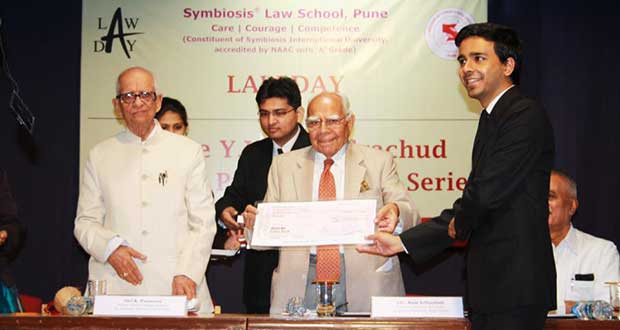
    Avaantika Kakkar, a 2003 graduate of Indian Law Society’s Law College, Pune, is currently a Partner at Khaitan and CO., heading its Competition and Antitrust Law practice. Soon after graduating, she published her book, “A Perspective on Product Liability Law and Consumer Safety”, and she continues to take active interest in academia, especially if it is linked to Competition Law. In this interview, she tells us about:

    • The passion for indulging in research and how it helps build character;
    • Getting one’s work published;
    • The challenging path to success in a niche area like Competition law;
    • The nature of a corporate job; and
    • The importance of balancing personal and private life (with some great musical recommendations to help students find the crucial balance).


    How would you like to introduce yourself to our readers?

    Simply, I am Avaantika.


    What would you like to share with our readers about your time spent at ILS Pune, both within and beyond the classroom? How did the city itself play a part in your legal education?

    ILS Pune has a fantastic library – that was my favourite hang-out. It’s a college that allows you to be what you want to be and in my time, at least, we had a very supportive and encouraging faculty. We had visiting professors who were practicing lawyers with superb independent reputations, and they allowed us glimpses into what it would be like to practice law.

    One may miss the perpetual ‘internships’  that colleges in other cities offer, but at ILS, the good part is that you have all that time for a real, college life, and you use your vacations for internships and practical exposure.

    About Pune – what can I say? I love the city and keep going back! It accommodates my beautiful Alma Mater, in the heart of the city, with its own scenic hill-side (which students and teachers of the college along with the residents of Pune have to defend against the occasional threats of flyovers and by-pass roads!).

    I lived on what constituted both sides of the city back then – ILS and CAMP area (the cantonment). The city has expanded, and too much has changed, however there is always FTII, MG Road, East Street, Marz-O-Rin and THoaks (Thousand Oaks, for the uninitiated)!


    During your time spent there, what, if any, extra-curricular or co-curricular activities did you take up? How did the same affect your learning experience and prepare you for the legal sector?

    Moot courts and debates, of course. But what I enjoyed most was writing – I finished my book on product liability in India while I was in college. Of course, I felt it was ahead of its time and was never the bestseller that I had intended it to be but, yes – writing it, editing it, and finally, getting it published was a great learning curve. This has helped in moulding the writer in me, and I remain deeply involved with the publication initiatives at Khaitan & Co, and I type really fast!


    Did you always have a passion for research or was it an acquired taste? What specific experiences or circumstances lead you to write your book on product liability and consumer safety?

    I always had a passion for research – still do.

    I guess I wrote on the subject because, in my naïve-student-mind, I felt that this was a subject on which very little had been written, and I was inspired with all that sparkle in the law of torts.


    What advice would you give our readers looking to enter academia and publish their own work?

    It really depends on what you are looking to publish. There are many opportunities now, with online publications for short essays and articles that make it easier than it was. I had managed some publications in international law journals that solicited legal writing by students. There is also self-publishing, whether through e-books or traditional methods (but I would use that after exhausting all other options). Law book publishers are always on the look-out for more subjects and good writing. In fact, they still receive, read and respond to unsolicited manuscripts. Then, there is the Big 6 (or whatever the number is now) and the option of publishing great reference texts or non-fiction through them, but these would have to be extremely meaningful and insightful works that interest the publisher commercially.


    How would you say research publications impact one’s understanding of the law and the legal system? Further, how does the same impact one’s employability or desirability to prospective employers?

    Research publications help one dive deep into the subject – you become alert to nuances and learn to articulate your thoughts. I think that ours is a field that will always value clear-thinking individuals who are able to get to the depth of a problem (and also out of it!). Quality publications (or writing) are often an ask of almost every practice, including Khaitan & Co. and Nishith Desai Associates (where I worked for a brief period).

     

    avaantika-kakkar-2

    Given your extensive work with Competition Law in India, what would you like to share with our readers about the same as a relatively newer area of law in India?

    Competition Law is exciting because it’s a developing law in India. We are a nascent jurisdiction and it is great to be so deeply involved in the creation of precedent. The really challenging (and thrilling) aspect of competition law is that it puts you in direct touch with the conduct of, and incentive for, businesses across sectors. It’s a great practice area for lawyers who like research – one aspect of this law is that both the regulator and the practitioners look for precedent from jurisdictions that have been around much longer.


    About antitrust and competition law in general, what experiences, internships, or other activates would you say are essential to anyone looking to specialise in this field, during or after law school?

    It helps to have studied the subject extensively (this is true for most practice areas, actually). The challenge is that the subject is not always formally taught in Law Schools so one has to look for online courses or specialised short courses, which are a good start.

    I also think that a background in M&A, general corporate and commercial laws, or litigation experience, goes a long way in making a comfortable transition into this super-specialised field.


    How do you see the future of competition law in India as, and what would you advise those looking to enter the same field? To what extent do you see it as a niche area within the general sphere of corporate practise?

    Yes, competition law could be a niche practice, but I think that the general sphere constitutes an overlap of corporate practice (of course) as well as litigation, commercial laws, data protection, and intellectual property laws, at the very least. I actually see the practice of competition law as rather a melting pot of all of these practice areas. Also, it is already becoming a standalone practice across the firms that were first movers in this area and in the future, I see it as a very important constituent of full service law firms. I also see a future for boutique competition law firms – in the more distant future.


    When and how did you identify competition and antitrust law as your specialization? How did your career path or trajectory change after that?

    (Avaantika worked earlier at Udwadia & Udeshi in their general corporate advisory, and later moved on to broader corporate and commercial matters at Nishith Desai Associates)

    My varied background and diverse experience with complex corporate structuring, advisory work on the commercial side, transactions on the secondary market, my exposure to listing work as well as going private (delisting transactions) and the time that I spent on structured finance and the contentious matters that I was involved with, have all helped me work as a competition lawyer who has some value add.

    I know that today, there is a strong emphasis on specialisation from the day that students graduate – I think this is an unfortunate development of our times, and I was lucky that I had mentors, great guidance and the opportunity to choose specialisation when I had had at least 6 years of varied experience across practices.

    My career path is largely in line with what one may expect. Competition law allows for intellectual satisfaction and deep academic fulfilment.


    What would you like to share with our readers about the general work environment and the demanding nature of a corporate sector job?

    (As a partner at Khaitan & Co Avaantika has led multiple mergers and acquisitions, and acted as an advisor on many transactions and joint ventures, etc.)

    It’s the same everywhere, really. I don’t know of any job that does not demand a deep mental and physical commitment from you. It helps if you let this great profession define who you are. At some level, it impacts who you are as a person, which is not always a bad thing.

    Take some time off, read, get some exercise (or, watch a movie!), spend time with your family, but be equally focussed and committed to your profession.

    I haven’t really found the answer to how one copes with the demanding nature of a job – the truth is, you just have to find balance whenever you can, and it isn’t a very precise scale that you weigh your experiences on!

    It is obviously great to cultivate hobbies and have interests outside of work but there will be days, in fact, weeks and sometimes a few months, when it will be maddening! This is also where the organisation that you work with comes into play – do they care?


    What would you like to say about the trade off, if any, between a personal life outside the office and effort required to make it as an advocate?

    Law is a bad wife. But, she makes a good mistress, right? You have to be there for her!

    The law, the practice of medicine and at least a few other jobs (rather professions), do require us to be on our toes, work hard, work smart and do what it takes to stay relevant. This is a constant, unending process (I am sure most senior, successful doctors and lawyers would vouch for this).

    It helps to surround yourself with family (and friends) that support your passion and your ambition – this is often tougher than finding balance at work (because we don’t always get to choose our families!).

    Having said this – prioritise your work. Prioritise your life. I don’t think that we can lead a life without regrets, but regret is an avoidable circumstance! Some things are pretty obvious – I, for instance, would take no pride in describing how I missed out on important moments in my life or with my family. But, at the same time I take great pride in my work and am unapologetic about its excruciating demands – my work defines who I am – this is who I hold myself out to be – there is therefore, no scope for any misrepresentations!


    Finally, what would be your parting message for our readers, most of whom are law students and young lawyers?

    Work hard, work smart – most of all, enjoy what you do. Give in to the effort that it requires, don’t feel sorry for yourself and try not to take yourself too seriously.

    I love advising students to read (possibly listen to) Baz Lurhmann’s words. Also, listen to The Gambler by Kenny Rogers – let it play in your head and guide you as you make the choices that will come to define you, as an individual and as a professional.

  • Vineet Shingal, Associate Partner, Khaitan&Co. on the role of a partner and in-depth law firm experience

    Vineet Shingal, Associate Partner, Khaitan&Co. on the role of a partner and in-depth law firm experience

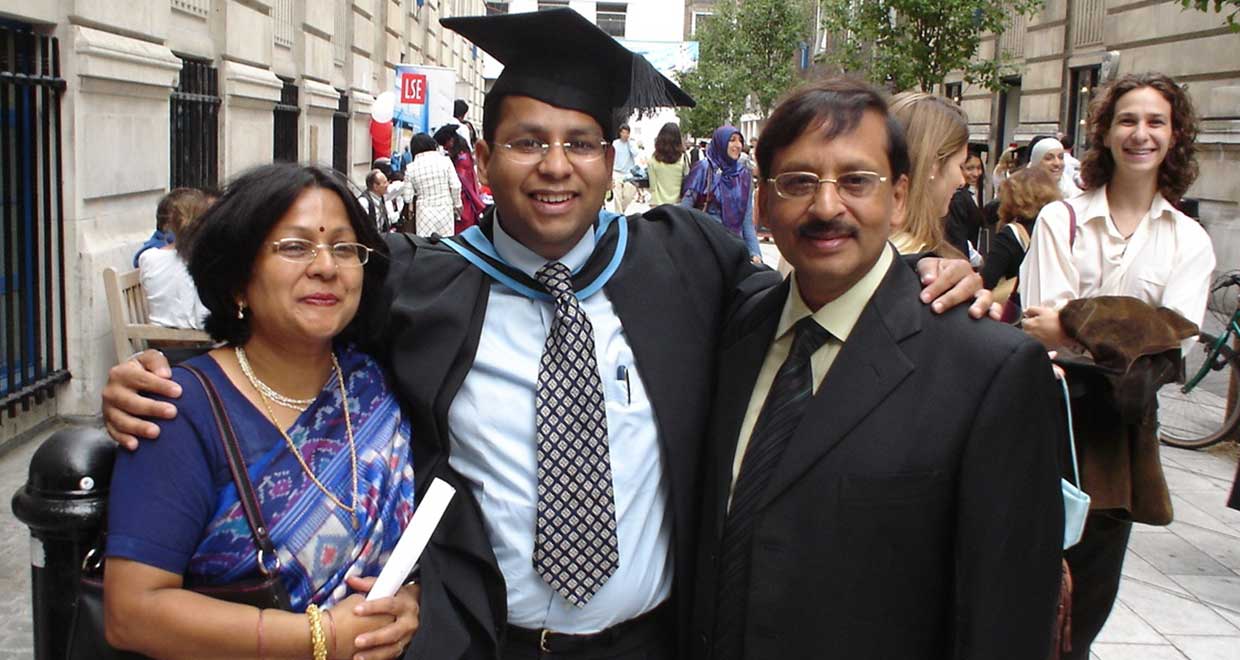
    Vineet Shingal graduated in B.A. (Hons) Philosophy from St. Stephen’s College, Delhi University and later completed his law from LSE in 2006. He secured the LSE Undergraduate Scholarship on merit and, in addition to being a lawyer registered with the Bar Council of Maharashtra & Goa, is a non-practising Solicitor of the Law Society of England and Wales.

    He briefly worked with Nagashima Ohno & Tsunematsu, Japan on a secondment as a visiting attorney. Post the secondment, he was promoted to Senior Associate at Amarchand Mangaldas. Vineet later moved to Khaitan and Co., Bangalore and is currently an Associate Partner.

    In this interview he talks about:

    • Studying law post a degree in Arts
    • Securing the LSE Undergraduate Scholarship on merit
    • Becoming a non-practising Solicitor at the Law Society of England and Wales
    • His work experience with Nagashima Ohno & Tsunematsu, Japan
    • Responsibilities as a Senior Associate at Amarchand and Associate Partner at Khaitan.


    Could you tell us a little about your family and personal background? What were your ambitions as a child, what did you dream about your future?

    I have had the privilege of a diverse and a sound academic and non-academic background largely due to my upbringing in a family that put so much stress on all-round development of the personality. While my paternal grandfather was a lawyer, some of my other family members, including my father were bureaucrats. My mother is a qualified teacher but gave up teaching to look after me and my younger brother.

    From the very beginning, the atmosphere I was raised in had always been one where learning, participation and contribution were strongly emphasized. Academically, I did very well in school, and at different stages of my school and college life, I wanted to do a myriad of things without limiting my career choices. I grew up listening to and participating in discussions on legal and political issues from quite a young age and was naturally inclined so. As such, I decided to read law when I was in college.


    University of Delhi is considered as one of the best universities in India in terms of education, culture and overall atmosphere. Please tell us a bit about your time at Delhi University.

    I read Philosophy at St. Stephen’s College in Delhi and was privileged to be a part of such an elite academic institution. We were a small batch and had three professors who taught us right through college. Professors used unconventional teaching methodologies and at times a non-classroom environment for having discussions on esoteric topics, which certainly made for effective learning and added to the pleasant memories I have today.

    I also participated in a number of extra-curricular activities including dramatics. Besides reading Philosophy at college, I also pursued chartered accountancy and worked part time as an articled clerk during my college years, which gave me a good background of corporate, accountancy and tax laws.


    What made you choose law after finishing your Bachelor of Arts? Do you have lawyers in your family?

    Studying Philosophy gave me the opportunity to apply principles of logic in a wide range of contexts, including both ethics and metaphysics. The study of Philosophy also helped me assimilate and synthesize a large amount of written material in a relatively short period, which is a great asset in the legal field. I had also gained some knowledge of corporate and tax laws because of the chartered accountancy course that I pursued. My paternal grandfather was a lawyer and greatly influenced my life and as such I decided to take up law.


    You were awarded the LSE Undergraduate Scholarship on merit, please tell us more about how you got this? How can a student go about the admission procedure?

    In 2002, the LSE admission process required us to fill a UCAS form, with one recommendation from a college professor and a statement of purpose. While I was admitted to the law course by the LSE, it was dependent on my securing an overall first class in my Philosophy course, which I did.

    Once the admission process was over, I had to fill out a separate form for an undergraduate scholarship. The scholarships were awarded partly on merit and partly on need. Post an interview with the academic council, I was awarded a tuition fee waiver. I am not sure if the admission and scholarship process still remains the same.


    vineet-shingal-2

    What all would you recommend to a law student who has an opportunity to study at LSE?

    London is a financial and cultural center and LSE (The London School of Economics and Political Science), being located in the center of London, had access to professionals from leading law firms, accounting firms, and other financial intermediaries, who would often visit the institution to mentor, and also to participate in seminars and conferences.

    LSE is an interesting mix of nationalities from all over the world and you can learn about so many different cultures. My class had 180 students from 50 different nationalities. The Socratic method of teaching, an encouraging atmosphere, and interaction with so many people from across the world broadened my horizons and led to a holistic development of my personality.

    LSE is a world class teaching institution and I would definitely recommend people to take up the learning opportunity at LSE, if they get one.


    Do tell us the procedure involved in becoming a non-practising Solicitor at the Law Society of England and Wales.

    One of the ways of qualifying as a solicitor of England and Wales is to complete two years of work experience as a lawyer and write the Qualified Lawyers Transfer Test (QLTT). This two years’ experience could be completed in India as it follows the English common law legal system. I completed the two years’ of practical experience working in an Indian law firm and then passed the QLTT.

    If a solicitor is not practicing the law of England & Wales and has not obtained a practicing certificate, such a lawyer can apply for and continue to be on the rolls of the Law Society as a non-practicing solicitor, which I currently am. I understand that the test has recently undergone some changes including the work experience requirement.


    Can you tell us a little about your experience at the law firm, Nagashima Ohno & Tsunematsu, in Japan? What was it like to work there as a visiting attorney?

    The Japanese are the most welcoming and polite people. Their deep rooted traditions, respect for each other and an honest desire to learn sets them apart.

    I was at NO&T, Tokyo for an eight week secondment program. There were four non-Indian law students and another non-Indian lawyer from a law firm in the same program. It was a good mix of cultures where we exchanged knowledge of our respective legal systems and procedures with each other as well as our host lawyers. Our host lawyers also introduced us to their legal system and working styles as well as their culture and traditions. All in all, it was an amazing experience.


    vineet-shingal-3

    What diverted you towards the field of corporate law? Share with us any experience which helped you make your career choice.

    While I was at the LSE, I took up tax and corporate law as my specialist subjects. I also had the privilege of interacting with lawyers from diverse practice backgrounds (litigators, solicitors, in-house counsels) while in London and in India through my internships.

    I had the first-hand experience by interning at barrister’s chambers, law firms and with legal departments of companies. This gave me a broad idea about each practice area and the type of work each is involved in.

    In India, I interned at AMSS and really liked the energetic work atmosphere and working on cutting-edge legal issues and deals. I wanted to be a part of it and applied for a corporate job there.


    As a Senior Associate in Amarchand & Mangaldas & Suresh A. Shroff & Co., in Mumbai, what was the work experience that you gathered?

    I started with the securities markets team but made a shift to the M&A/ corporate team very early in my career. A lot of my time in my early years was spent in legal data rooms undertaking due diligences.

    I was fortunate to work with and be mentored by some of the best legal brains that the industry had to offer. There was an unending flow of transactions, ranging from corporate advisory work to very complex M&A transactions. With seniority comes more responsibility and one has to learn to manage time efficiently.


    Presently you are an Associate Partner at Khaitan & Co., what are the main areas of law that you deal with? What does a partner have to do at a big law firm like this? What is a typical workday like?

    I focus mainly on corporate advisory, M&A and private equity investments. While execution capabilities and good technical skills are a given, a partner has to really focus more on business development, client handling and financial management.

    Keeping the team motivated and ensuring that the juniors get a good mix of work and training is also important. Mentoring thus becomes a very important aspect of a partner’s role. A typical work day would include reviewing advice, structuring and negotiations on transactions and business development meetings


    What skills and qualities do you think have helped you achieve your current position and stature?

    I can largely attribute my achievements to certain moral codes that I hold on to in life. Foremost, the values of honesty, integrity and uprightness in professional life and every day conduct have helped me observe the distinction between right and wrong, and question and reason out why things are often not as they ought to be. I would add determination, hard work and perseverance as some of the other qualities that have helped me in pursuing my goals.


    What are the skills a law student should try to imbibe to successfully carve out a niche in the corporate world? Could you give our readers some tips on acing the professional realm?

    Pursuit of knowledge and to truly enjoy what one is doing. This is true for any profession. It is also very important to be sincere and hard-working as people are competing with some of the best legal brains that the law schools have to offer. Commercial awareness as well as good communication and social skills would definitely be an asset.


    vineet-shingal-4

    Many young lawyers at corporate firms complain about the work being too exhausting, and that maintaining a work-life balance is just not possible. Could you share any advice on this?

    There have been times when I worked three days in a row with just two hours of sleep but there have also been times when I have left office at a decent hour. It is definitely important to have a work-life balance.

    I have seen a lot of people getting burnt out very early in their career and quitting. The HR and the senior management do realize that it is important to retain good talent and not let people quit due to over work.

    Khaitan & Co has a wonderful atmosphere for a work-life balance and lawyers do get their annual holidays and the time-off. There are obviously times where people have to put in the long hours due to the dynamic nature of the work we do but with good training and effective time management, it can all be managed very smoothly. Being in office for 14-16 hours on a regular basis is really not the norm any more.


    While hiring, what skills do you look for in a prospective employee? What qualities should a law graduate possess to be successful?

    A candidate should demonstrate willingness to learn, adapt and an ability to think out of the box. While CGPA is a determining factor, we also look at the overall personality and problem solving approach within a candidate besides the various extra-curricular activities that the student has participated in.

    It is important to have developed a holistic personality. It is also essential to have a strong grasp of basic subjects like contracts and company law besides keeping abreast of the legal developments taking place.

  • Khyati Rathod, Senior Associate, Khaitan & Co., on work experience in real estate laws

    Khyati Rathod, Senior Associate, Khaitan & Co., on work experience in real estate laws

    Khyati graduated with a B.A. LL.B from Jitendra Chauhan College of Law (Mithibai) in 2007. After graduation she joined Desai & Chinoy (Advocates & Solicitors) as an Associate. After specializing in real estate laws for almost two years, she joined Khaitan and Co. as an Associate and currently works as a Senior Associate there. In this interview she talks about:

    • Specializing in real estate laws
    • Recruitment at Khaitan and Co.
    • Being a Senior Associate at Khaitan and Co.


    What got you into legal studies? Was it all planned or something that just happened by chance?

    I love this question – Why law? I come from a family full of Chartered Accountants and Engineers and to be honest, this was the first question that everybody asked me when I informed them about my decision of choosing law as my career. The sole motivation to turn towards law was my own conviction and the hallmark of prestige towards this profession. The legal profession appeared to me as one of the most intellectually rewarding jobs on the planet!


    How was your experience at Mithibai Law College, Mumbai? What activities were you involved in apart from the regular academic curriculum?

    I graduated with B.A. LL.B. from Jitendra Chauhan College of Law (Mithibai). I have had a wonderful experience in Mithibai. From the very first year of my college, I was given an opportunity to represent our college in some of the prestigious moot court competitions. I was also part of a team who organized moot court competitions and seminars. Co-curricular activities help you develop an all-round personality, improve your interpersonal skills and also boost your self-confidence.


    What were your major interests as a student of law?

    Let me answer the latter question first. Figuring out what practice area to choose after law school is a big decision. To start with, I would say there has to be a self-assessment as to whether you want to be the expert or generalist. Choosing a practice area will depend upon a variety of factors like inventories of your interest and skills, an eye towards the law school courses you most enjoyed, long term goals, work-life balance and so on. I strongly suggest undertaking internship programs in the formative stages of your legal career as such programs are an ideal way to make you realise your interest in specific area of work.

    During the early course of one’s career, one may venture into areas that were not originally considered. Be alert to your changing interests, the changing law and changing markets. Be open minded and unafraid to learn something new.

    The urge to swot the business and legal aspects of real estate was always within me. I was fortunate enough to work on property and alternate dispute resolution matters during my internships and in my earlier law firms.


    What is your take on academics? How important do you say is a good CGPA for an illustrious career?

    There seems to be an incredible fascination amongst law students for maintaining high CGPA and well, let us be honest, who wouldn’t want to score good marks in an examination? The first impression is created by your academic achievements which includes CGPA. However, one should not equate scoring of high CGPA to “success”. I do not wish to negate benefits of scoring of high CGPA but personally, in my view, the concept of “CGPA” is considered as an easy way to assess merit while a securing job. According to me, CGPA cannot be the best indicator of a person’s ability. Let us not forget that at work and in your daily routine, all that matters is your hard work, confidence and your zeal for having in-depth knowledge about your subject. You may be the topper from a law college but that may not make you a good lawyer! Don’t despair if your CGPA isn’t ideal; however, do drum up your effort in practical experience and professional networking.


    How was your first year after graduation? What do you think were the biggest hurdles and challenges in the early days of your career? How did you deal with them?

    Law school does not prepare you to practise law. Of course, it teaches you how to “think like a lawyer,” but when you get your first job as lawyer, you will find that you’re completely in the dark about lot of things. It was a new world with a plethora of experience. One needs to put to use all theoretical knowledge that was learnt in a law school! Luckily for me, I undertook internship programs during my initial days. I would not say that I learnt it all during these programs but it relatively became easier for me to gain a bit of experience and showcase the same when I secured my first job as a lawyer. One more important factor which helped me was that I got to work with wonderful people. Healthy work environment plays an important role to combat any challenge.


    What is your opinion when people say that all that they have learnt is in their years of practice?

    I would like to say my learning during college days helps me every day in some or the other aspect. We were encouraged to do mock-trials, give presentations and so on. My professors and seniors still remain my mentors. It depends on how you make the best out of the opportunities given. Legal education helps in gaining theoretical knowledge. Yes, there is no doubt that you learn a lot when you are actually in a situation where you have to put to use “theoretical solutions” to “your practical problems of clients”! I believe everything cannot be taught in a classroom and this is a profession where there is continuous learning.


    After graduation you joined M/s Desai &Chinoy (Advocates & Solicitors) as an Associate. How was your experience working there?

    Desai & Chinoy was a wonderful experience for me. The best part was that this was my first job after graduation and I was fortunate enough to gain insights about property matters in my early years and worked with wonderful team.


    khyati-rathod-2

    Thereafter, you joined Khaitan and Co. as an Associate and currently work as a Senior Associate there. What led to this shift?

    My superiors will be in a better position to answer this question! The initial few years of your career require lot of hard work, dedication and persistence to grow. I was driven by these factors which helped me to climb the ladder. I am fortunate enough that my work has been acknowledged and appreciated by my partners and senior management. Over all, it is all about your hard work coupled with an optimistic outlook to absorb new things.


    Please tell us the recruitment process at KCO. How did you appointment take place?

    Recruitment process is at KCO is extremely transparent and well structured. Real Estate practice is slightly different from other practice areas. As our team has expertise in real estate sector, it was very important for the team to absorb people who will easily comprehend property laws, specifically, pertaining to Maharashtra. I had 2 rounds of interviews. I was directly interviewed by the partners and after 2 rounds of grilling sessions, I had my offer letter with me!

    What kind of work and responsibilities does a Senior Associate at KCO deal with?

    KCO gives an opportunity to develop ourselves as professionals as the common objective is to grow. It gives opportunity to take independent decisions.


    What has been your strategy to deal with errors and mistakes? How would you suggest a young associate to deal with them?

    No matter where you work, adhering to professional ethics benefits your career. Foremost is to own up to your mistakes. It is simple – you can’t learn from your mistakes if you can’t acknowledge you’ve made them! And if you don’t learn from your mistakes, you’re destined to repeat them. I also ensure to have good working relationship with my colleagues as it helps to maintain healthy working environment.

    My advice will be to maintain a “good work ethic” and make it an important part of your professional package. Your overall reputation and particularly your references will follow you the rest of your life, particularly for your career.


    What changes has being a Senior Associate brought into your life, do you ever feel that there is excess of work load on you?

    Being a Senior Associate is not an easy job and of course it comes as an added responsibility! You are accountable not just to your seniors but also to your clients. You will also have your junior colleagues who will look up to you for your guidance. Your whole outlook changes and you start feeling more responsible which also includes negative consequences if any! Yes, I do come across work pressures but I have excellent colleagues at associate level to make my life easy.

    Work life balance? On a lighter note, my friends always say that “work life balance” in the legal industry is oxymoron! Yes, law firms usually have long working hours but you also enjoy reasonable amount of flexibility. For me, my work starts sharp at 9 am and depending upon the work, my working hours vary from 10-11 hours each day. I try and prefer to finish work at office even if it calls for having late working hours. However, at times to meet urgent deadlines you are left with no choice but to carry work home. To be realistic, there cannot be a “perfect” work life balance but one should strive to achieve a balance between one’s personal and professional life. I strongly feel that it is achievable.


    Have you ever considered litigation or starting up on your own? Would you say the opportunity a firm provides for a young lawyer is worth the trade off in building a reputation?

    Honestly, the amorousness for doing litigation or visiting the courtrooms everyday never got to me. I haven’t considered starting up on my own as my work profile in KCO gives me immense work satisfaction. I think starting up your own is a personal choice.

    I do agree that the law firms be it in small firm or a large firm provide excellent platforms for lawyers to make a mark and build reputation. However, I do not necessarily think of the trade-off between a law firm practitioner and a private practitioner. At the end of the day, reputation happens to be the most important asset for all professionals and all of us endeavour to work towards it in some or the other manner.


    Given a chance to turn back the clock would you have done anything differently from what you’ve done?

    By nature, I have always been headstrong. I have always had clarity of thoughts in decisions that I have made so far and therefore I wouldn’t really want to turn back the clock. In fact there’s no looking back now.


    Lastly, what would be your message to a law student who is yet to decide his/her career?

    It may sound cliché but find what you love and work hard to achieve it! If you wish to become a lawyer, be prepared for challenging work and lots of it. The legal profession is one of the most lucrative industries in  the job market and there are plethora of opportunities for law graduate.

    To quote Mario Puzo in The Godfather – “A lawyer with his briefcase can make more money than a burglar with a gun, if he has a sharp wit and intelligence.”


  • Vatsal Gaur, Associate, Khaitan & Co., on receiving PPOs, induction and work at top law firms

    Vatsal Gaur, Associate, Khaitan & Co., on receiving PPOs, induction and work at top law firms

    Vatsal Gaur graduated from National Law University, Jodhpur in 2011. Having decided early on that he wanted to be a lawyer specializing in Mergers & Acquisitions and Private Equity, he interned with top-tier law firms such as Trilegal, AZB & Partners and J. Sagar Associates. He received two PPOs by the end of his third year. After graduation, he worked at J. Sagar Associates, Gurgaon for almost three years before joining Khaitan & Co., Mumbai in May, 2014. In this interview he talks about:

    • The importance of CGPA, moots, publications and debates for a legal career
    • Pursuing a career in corporate law
    • Working at top law firms like J. Sagar Associates and Khaitan & Co.


    Tell us a bit about your childhood. How did you decide to study law? Did you have lawyers in your family?

    I’ll answer the last question first. I’m a first generation lawyer. I do not have lawyers in the family. To be honest, law for me was just a choice I made out of high school – as with most kids out of school, we are all supposed to miraculously arrive at our future career paths, and mine happened to be law. I’m quite satisfied with my decision, though. When I connect the dots backwards, I don’t have many misgivings on my choice of career.

    I grew up in a modest background, and with both my parents being civil servants, it was always clear that I really had to make my own mark, and set my own goals. Law was one of those goals. I did not have a fall back option, and I am glad for it.


    Do you think having family members or mentors with a legal background help in this profession?

    Yes, most certainly. Having a legacy in any field is irreplaceable. I have read so many times how people quite casually disregard the benefit of a legacy. However, I wouldn’t like to mince words answering this question. In whatever field of law you are in, whether it is corporate or litigation, at the end of the day, contacts help. Equally competent individuals would most likely execute tasks with more or less equal efficiency. Business development and building a clientele is ultimately what sets you apart. And, it is here where having a legacy can be a major facilitator. Having said so, one must not feel disheartened with the lack of a legacy, and instead think of such a void as an opportunity to develop your own legacy. There are innumerable precedents of first generation lawyers who have done well for themselves, and who continue to do so.


    Tell us about your law school experience. Share some highlights from your college days that shaped you as a lawyer.

    I ranked in the bottom 15% of my batch in my first semester – maybe because I was experimenting with the ‘law school experience’, or maybe simply on account of youthful incredulity – it doesn’t matter. This had caused a major setback to me back then as I usually fared well in high school; however, in the same breath, I would also say that this was the most beneficial experience for me. I tasted what it felt like to not finish at the top, and what followed was a lot of toil and sweat and more toil and sweat to make amends. The race to the finish line, having started late, is what shaped me up.

    By third year, I had participated in some prestigious moot court competitions, broken ceilings that I thought existed (not literally!), published a fair number of articles (including in business dailies), gotten into public speaking, and of course, continued playing football.

    Not many know this (as I never made a big deal of it, and still would not like to), but I bagged two pre-placement offers before I completed my third year at law school from two of the leading national law firms (and a call back internship with the third, which too was very likely to have culminated into an offer). None of the holders of high CGPAs had an offer by third year.

    The only reason I am sharing this on this forum is to perhaps be a motivation for those who may feel they have been side-lined on account of not having grades. My word of advice to you is: Be a rebel, but not one without a cause. Instead, have a cause to back it.

    Therefore for me, the battles I fought in University, the reality checks I faced early on in my time there shaped me up tremendously. In fact, I feel living in a residential set up away from home (in environments which can get quite demanding as well as harshly competitive) greatly equipped me for life ahead.


    How did you fare in your academics at NLU, Jodhpur? Would you say a great CGPA is a necessity to kickstart a good career in the legal profession?

    Following from my response above, I eventually fared well in academics. However, due to the damage done to my GPA during first year, I didn’t finish in the top 10 percentile. At the same time, I finished high enough to be shortlisted for all campus recruitment opportunities. In the end, my CGPA never mattered.

    Would I say a ‘great’ CGPA is a necessity? – a big NO! A ‘good’ CGPA and a ‘balanced CV’ will help just as much, if not more. At least, this should hold true in case an individual is looking at being a transactional lawyer or a litigator.

    I feel the only place a ‘great’ CGPA helps is to secure a job at a UK magic circle firm or if you are keen on academics or, lastly, in securing scholarships/ funding for an LL.M programme. If you are interested in any of these, you should definitely have an eye out for your grades.

    At work, and in daily life, what matters is grit, confidence, hard work, more hard work, real time application of legal principles and the ability to be a problem solver. At many instances you will be faced with situations where you will need to back yourself consciously. Grades are forgotten once you start work just as high school grades are forgotten once you enter college.


    Conferences, debates and Moot Court Competitions – do you think participating in these extracurricular activities helps a student in the long run?

    Yes. I feel any form of self-expression is greatly rewarding. Having participated in a variety of conferences, moots and debates, I can dare say the experiences gained greatly helped me develop my legal skills ‘qualitatively’.

    Mooting taught me research and patience; parliamentary debating taught me how not to rely on rote learning, and instead learn the art of expanding on bullets; conferences helped me express myself in forums where I spoke in front of people much more experienced than me in the fields I chose to research.


    You have published a lot of papers in various prestigious journals. How should one go about writing papers and getting the same published? Can you give us a few tips to ace the art of paper writing?

    Writing for me started on account of being able to have a stronger CV, but as I went along, it just became a mode of self-expression for me, and I write just for the pleasure of such self-expression.

    I feel each one us have our own ways of self-expression, and I unfortunately do not profess to have ‘aced’ the art of paper writing, and I will, therefore, not be able to provide a one-size-fits-all tool-kit. However, what I could set out, are broad parameters that young authors should keep in mind when writing. Again, these too would vary on what forum one is addressing and your ultimate readers.

    Focus points are:

    • Have your aim straight. Know the point you want to make (similar to a moral to the story)
    • Clear expression
    • Lead your reader to your aim (i.e., to the moral of the story)
    • Do not overstress upon or overdo anything
    • Sophistication over sophistry; preciseness over verbosity


    Tell us how paper publishing and other co-curricular activities helped you in acquiring skills that are important for a successful legal career.

    I feel legal writing does play a positive influence in one’s legal career. Similarly, participation in other academic as well as non-academic co-curricular activities also has the effect of shaping your profile.

    At the end of the day, when you get out of law school, people will not recall what grades you have; what they will recall is your impact value. Solid mooting experience helps develop this facet. Similarly, legal writing greatly enables and facilitates drafting work.


    vatsal-gaur-2

    What kind of internships did you do while you were a student? Any remarkable experiences during your internships that shaped your career choices later?

    I focused very early on, on pursuing corporate/ M&A internships. I was lucky to have secured some good internships to start with. I remember that I did not take a single vacation during law school and worked back to back to complete three internships each year. I feel my best internships were at AZB & Partners, J. Sagar Associates and Trilegal. I received a good amount of mentoring and challenging assignments. I was also given a great deal of responsibility, just what I needed as I was working my way up to a good CGPA after the initial hit.

    I feel all my internships had very many remarkable experiences, right from getting a ‘outstanding’ rating from Mr. Gopal Subramaniam during my internship at his office in my 2nd year of University to being able to work on PE/ VC term sheets and research on very contemporary corporate law issues during my internships at Trilegal and JSA.

    I feel I was lucky to have met some really good mentors who saw talent in me, and nurtured it. ‘That’ nurturing did for me, what law school could not – feed my thirst for knowledge and the practice of transactional law.


    After graduating from NLU, Jodhpur you had worked at J. Sagar Associates for almost 3 years and then joined Khaitan & Co in May of last year. Please tell us a little about your work profile at these firms and the responsibilities you have been entrusted with.

    Having set myself the goal of being a transactional lawyer, I joined the M&A/ PE team at JSA, Gurgaon. Given that I had started working in this area of corporate law pretty early on in my internships (as early as 2nd year of law school), I had a good hold on the core essentials. Also, given that I had received a PPO from JSA pretty early in law school, the gestation period for me was practically non-existent as I had done rigorous internships with the firm before joining it, where I worked more like an associate than an intern. This allowed me to get right into the thick of things very early on in my legal career. My first legal due diligence for a PE deal came to me in my 2nd week, and transaction documentation started by the end of the first month. I will always be grateful to the firm and my seniors for believing in me so early on and giving me the necessary impetus required in order to develop a quick and steep learning curve – one that I have greatly benefitted from.

    I made a shift to Khaitan & Co’s Mumbai office in May of 2014 and I have greatly enjoyed being part of this set-up. The firm is highly institutionalised and is run on a merit-based system where lineage and family is surmounted by meritocracy and integrity. Joining as a lateral, I have felt very welcomed by the establishment and my colleagues.

    My responsibilities at Khaitan & Co primarily involve advising private equity/ venture capital investors and private M&A players on their investments/ acquisitions, general regulatory advice around structuring of transactions, conducting and leading diligences, negotiating, vetting and preparing transaction documents, and finally, assisting in closing of transactions. We also advise some promoters and target companies during sell-side mandates where we need to change hats during negotiations. My responsibilities at JSA were broadly similar to those described above.


    Your main practice area covers Mergers & Acquisitions and Private Equity investments. What prompted you to choose these practice areas? Please share with our readers.

    I was always a bit of an outlier in University, insofar as I started on corporate/ M&A internship roles very early on while most of my batch mates were still being experimental (trying different kinds of internships). Therefore, by the end of 2nd year, I had pretty much decided that I wanted to be a transactional lawyer driving M&A and PE deals. Each of my internships from 2nd year until 5th year were ‘only’ with M&A teams of the various firms I interned with, and I made that choice at the time of applying to these firms. On account of this exposure (quite self-induced, in my case), M&A/ PE was the only natural choice for me.

    I don’t know if the above answer will help your readers, but I suppose what I could broadly state is that you should try and direct your internships. Not everyone is born to do corporate law. There are so many options in law firms – right from competition, tax, infrastructure, banking to intellectual property. Similarly, nowadays, the trend seems to be changing finally where a lot of law graduates from top law schools are opting for litigation over law firms.

    I will highly recommend law students to not follow the herd, and in fact, chose the branch of law that is of most interest. M&A/ PE interested me the most – it really was, and still is, that simple.


    vatsal-gaur-1

    Corporate Law sometimes comes with a humongous workload. What made you gravitate towards this field? How do you manage the workload and your personal life?

    To be honest, I did not have much of a work-life balance in my first two years. I missed all important events – birthdays, anniversaries, the works, and all along I never seemed to mind. I really was a work horse (and do not regret it).

    But over time, I suppose one naturally realises how to prioritise things, and it is something that frankly everyone in the field is constantly trying to learn every day.

    To be honest here, in my view work-life balance is a major misnomer. And the reason I say this is simple. If you really think about it, 80% of our awake time is spent at work, so it is essential you enjoy your work. If you enjoy 80% of your awake time, you automatically enjoy 80% of your ‘life’ time. The balance 20% is what you really need to really think about, in my view, and make the most of!

    With so much information available online nowadays about how demanding different career lifestyles are, I am sure people are well familiarised with a lawyer’s work-life. And to this extent, all I would say is you just need to brace yourself for the long haul if corporate law is your chosen career path.

    I am not a very good example of someone who manages work and personal life too well, so unfortunately I will not be able to answer your last question. However, I would say that I do try and balance work with pleasure every now and then (just as most others also try and do), as it is vital to take a break and refresh yourself whenever you can.


    Many law students strongly believes that getting a job at one of the top 3 law firms is mostly about securing a high CGPA. Would you agree?

    After reading my responses above, I hope I can, to whatever extent possible, change this impression! Law firms recruit based on merit, and while a high CGPA is an easy way to assess merit, in practice, law firms do not see that in isolation. I feel having a good internship experience coupled with a well-rounded profile (which includes extra-curricular initiatives as described above) matters far more than just purely a high CGPA driven CV.

    Once you are in the grind (i.e., the workspace), it does not matter what your grades were. What matters is how well you perform, how well you execute deliverables, and how well you can display your skill set. To this end, a person with a well-rounded profile has far greater chances at excelling than someone who only has high grades to show on a CV – purely because the former kind has tested him or herself against far greater experiences and challenges, and is thus more ‘anti-fragile’ (to borrow from Nassim Nicholas Taleb).

    Notwithstanding any of what I have said, what matters most is how technically sound a to-be lawyer is – that is the single most important aspect that recruiters consider, and is irreplaceable as a skill set.


  • Adyasha Das, Associate Khaitan & Co., on Corporate Law, getting a PPO and moots

    Adyasha Das, Associate Khaitan & Co., on Corporate Law, getting a PPO and moots

    Adyasha Das graduated from the 2013 batch of National Law Institute University. She is one of the most diligent and illustrious scholars of NLIU and has a noteworthy academic, mooting and debating record. She was also the Convener of Moot Court Society, NLIU (2012-2013). Currently she works as a Corporate Law associate at Khaitan & Co. She has gone about achieving things on the sole basis of her merit.

    We asked her to share her experiences and strategies she used over the years. In this interview, she tells us about:

    • Work experience as the Convener of Moot Court Society, NLIU
    • Her journey from being an intern to getting job offer from Khaitan & Co.
    • Importance of academics, internships, debates and moots


    What motivated you to choose law as a career?

    Considering the number of lawyers and people from the legal background that dominate the corporate, social, and political scenes of the country, I don’t agree that there is currently any prejudice against law as a career in India.  If there were any apprehensions against the profession, the emergence of CLAT, national universities and lucrative job offers are fast changing perceptions about the profession.

    That said law wasn’t my first career choice. Although I did not come from a background that was prejudiced against law as a career, I wasn’t aware of the opportunities, relevance, and prominence of a legal career. In fact to be honest I inadvertently stumbled upon law, but that is a long story. However, what made me continue the pursuit was that law indulged my curiosity and engaged my attention.


    Tell us about your time at NLIU, Bhopal and the highlights of your college life and achievements?

    Time at NLIU was life aptly described by Calvin and Hobbes “Life’s a lot more fun when you aren’t responsible for your actions.” College is place that redefines the phrase spoilt for choice in every conceivable way. I made some incredible friends, learnt a lot and mostly enjoyed my time there.

    I am from a small city and hence for me the biggest highlight of NLIU was that it made me come across so many people, ideas, influences, thoughts, and possibilities. To add to that, I was always fortunate to have mentors (professors, seniors, and peers) to guide me around.  I believe that universities are not institutions devoted only to traditional education but rather help broaden the horizons of the students. NLIU, apart from being responsible for my basic understanding of law, has also substantially influenced  knowledge and views on music, books, movies, culture, social issues, political orientations, economic rights  etc. through its numerous committees that I was associated with throughout the five years.


    What skills did you get to hone while managing the NLIU moot court society?

    Mooting was my love in college. Consequently, everything associated with moots became a passion. Convenership was a great experience for me but that can mostly be attributed to the fantastic team and faculty I had to work with.  I would not be able to put in words all that I gained from this experience but among other things it taught me: “How to work with a team with differing expectations, unequal levels of execution and opposite countenances”.


    Having participated and won Best Speaker awards in a few moot competitions, what would be your suggestion to budding mooters?

    As I already mentioned, mooting was love for me. All my hard work and preparation was entirely influenced by how much I loved the activity itself. I could go days without food, sleep, classes and friends if a particular question of law caught my fancy. Good research and hard work are almost synonymous with a moot win. Based on my experience my only advice would be that participants should invest more interest in the moot they pick.

    Speaker awards are hugely dependent on articulation, persuasion, and spontaneity of the speaker. It is important to gauge the judge and engage his/her attention with the right arguments and points of law. This can be easily achieved by practising the orals in advance. Plus no amount of effort for a shiny trophy at the end is a bad investment.


    How does one make a winning memo? According to you, what is the difference between a great and an average memo?

    The answer is ‘Research’. I cannot emphasise the importance of good research any further. Good research has to be understood in context of the fact that almost every student now has access to a huge pool of resources and therefore any average memorial would contain the standard statutory provisions and case laws. What makes a difference is identifying the issues correctly and addressing them with support of authority. You will be surprised at the scope of creativity available within law.


    adyasha-das-1

    You had also participated in the ICC International Commercial Mediation Competition. How was your experience?

    Mediation competitions are fairly different from moots and require preparation of a separate set of skills. Mediations generally test the commercial bent of a participant and her persuasion and negotiation skills. Understanding the people sitting on the opposite table plays a key role in tackling competitions like this.

    Although ICC International Commercial Mediation Competition was a brilliant opportunity for me, it was also a revelation of the fact that Indian teams required a lot more preparation considering we do not have enough mediation competitions in the country.


    What are your thoughts on activities like mooting, debating and publications in journals? How important do you think are these activities in shaping the legal career of a law student?

    Concentrating only on academics in a course that runs for half a decade can become quite mundane. Extra-curricular like moots, debates, model united nation competitions, publications; sports etc. provide an effective way to not ‘make Jack a dull boy’. The numerous kinds of extra-curricular available these days to students are also sufficiently varied to pique anybody’s interest. Plus these activities are a never ending source of new things to learn.

    Even objectively, recruiters across the country would not generally ignore a CV reflective of five years of constant activity. Therefore I don’t see any reason for not pursuing either one or all of the available extra-curricular that any university has to offer.


    How did you manage to keep up your grades?

    I am not aware of other colleges’ schedules but NLIU generally did not have a very hectic curriculum. So maintaining grades and doing well in moots remained two mutually exclusive fields. It did not require any more strategy than keeping aside 2 weeks for exams which included the week of actually writing the exams.


    Tell us about your internships. What skills have you acquired from these internships and how helpful have they been in your legal career?

    Technically my only corporate law internship was at Khaitan & Co. All my other internships have ranged from UNICEF, State Information Commission, an accountancy firm, a shipping company to working with a media consultant and I wasn’t interning as a law student under anyone of the above.

    Internships, of all kinds, are a great way of learning the practical aspects of law. For students, it provides an excellent work-life perspective and helps them make an informed choice about the kind of work and lifestyle they intend to choose after college.


    Did you have an interview before you were offered the PPO from Khaitan & Co.? Tell us about the interview process and how did you prepare for it?

    Yes I had to undergo an interview before getting the PPO. The interview was substantially the same as a campus interview. I had prepared for the interview by reading up subjects that were mentioned in my CV and things I had worked on while interning at Khaitan & Co.


    What are the things you consider sine qua non for positive feedback or a “call-back” from an internship?

    I am not the right person to ask this as it is really the recruiters’ decision. However anyone who shows interest in the work given to them and pays attention to the work submitted inevitably gets the attention of the seniors. Apart from that, sincerity, accountability, punctuality, and hard work always earn you brownie points.


    If you could re-live your five years in Law school, is there something you would do differently?

    I am not unhappy with how I spent my 5 years in college but if I could re live it, I would definitely have a lot more fun, would read a lot more than I did and do Jessup again.


    What would be your message to your juniors from law school?

    Work hard and have fun while you are at it.

  • Arijeet Mukherjee, Associate at Khaitan & Co. on being an ideal student and law firm atmosphere

    Arijeet Mukherjee, Associate at Khaitan & Co. on being an ideal student and law firm atmosphere

    Arijeet Mukherjee graduated from Symbiosis Law School, with a gold medal as the class topper of his batch (batch 2012). While maintaining Rank 1, he won various moot court competitions and has multiple publications to his credit during his five years in law school. As a law student he has been quite active and participated in many debates, MUNs and conferences.By the time he graduated, he had received a PPO from Khaitan & Co

    We have taken this opportunity to ask him about the several decisive moments in his career amongst other things including:

    • Maintaining grades
    • Acing moot court competitions
    • Securing a PPO at Khaitan & Co.


    arijeet-mukherjee-2How did you gravitate towards Law? Tell us about your college life at Pune. What all activities did you partake in?

    I had a keen interest in matters that impacted the society and law was simply one of them; an option which I could take up as a profession. Looking back, the choice of going to law school was more than anything else, a leap of faith and as it turned out it was an excellent experience.

    Pune is one of the most fun cities to be living in as a student and I thoroughly enjoyed every bit of it. College life was not just about academics at any point of time, the whole experience of living independently with friends and making the most of it was extraordinary. All in all, college life at Symbiosis was definitely an exciting and memorable one.

    I was involved in various extra-curricular activities and represented the college in Philip C Jessups, Raj Anand and M S Rammiah moot court competitions. I also participated in the HR and RCPNE Model United Nations. However, the activity closest to my heart was the Make a Difference project, which I was involved in as a part of the Human Rights Cell of the college, wherein I used to teach drawing to children who used to live in a nearby slum.


    What were your areas of interest during your graduation? How did you go about developing expertise and knowledge in these areas?

    I was in a peculiar position where I did not have any one particular area / subject of interest per se, some aspects of quite a few subjects really interested me. For instance, I was not particularly keen on intellectual property rights law, but the aspect of pharmaceutical patents was something that really evoked interest. Overall, I can say that no one single area interested me the most, it was eclectic mix of subjects, topics and ideas which fascinated me.

    In this regard, to develop a better understanding of my likings and gain experience, I interned at quite a few places. These internships gave me an exposure to different fields and organisations. I learnt as much in my internships as I did in college, perhaps even more.


    You were one of the most exceptional students at Symbiosis Law School. You bagged a Gold medal for being the batch topper. Please give us a few actionable tips on managing higher grades.

    Grades are an important part of law school life, particularly if you are looking towards a future in corporate or law firms, so grades were definitely on my priority list. However, the cliché law exam clearing method of mugging answers never appealed to me. I had quite a few friends in law school, who spent months and weeks mugging answers and more often than not they were successful in getting good grades, but that was not something that I could have ever possibly succeeded in doing.

    My method of achieving high grades was simply studying smart. It is not the volume of materials that you study that can help you get good grades, but it is your understanding of the concept that matters the most. The way I used to go about preparing for my exams was to first identify the important topics, then conceptually understand those topics and create my own answers in plain and simple language, rather than repeating text book answers. This not only helped me get good grades but also made me conceptually stronger and most importantly, reduced stress levels before exams.

    One has to realise that the manner and method of studying is a personal matter and what suits one in all probability will not suit the other. No one can claim that one method is the best and the other a failure, I believe that everyone should find a way to study that they are most comfortable with and not get tensed over what others are doing. In these matters, it is best that you prepare on your own terms and not let others stress you out.


    arijeet-mukherjee-1

    You have been the Recipient of various scholarship and awards including Ram Jethmalani Scholarship for Excellence in Law of Evidence, Advocate S K Jain scholarship for topper in B.B.A.LL.B, Advocate Nani Palkhiwala Memorial Trust Award for Excellence in Constitutional Law. How did you go about achieving this?

    As far as the Ram Jethmalani scholarship and Nani Palkhiwala scholarship go, I had developed an interest for topics of constitutional law and evidence law. It was due to this interest that I ended up studying these subjects in greater detail and that was perhaps the reason I was able to receive these scholarships. For the Advocate S K Jain scholarship, I owe it to the study pattern I followed throughout law school of studying smart and not mugging. I must admit that achieving these accolades was not an easy task, but then when one is interested in it the task does not seem uphill.


    You have publications in various renowned journals. How should one go about writing papers and getting the same published?

    Publications are definitely a way to gain visibility and put out your work for others to view. However, the trend of publishing something for having a fuller CV is not something I believe in. One should not write for filling up columns in one’s CV, but one should most definitely put pen to paper if one is genuinely interested in the topic.Needless to say that the quality of the article depends on the research one puts in. One important thing to bear in mind is that the articles written should not be generic “gyaan”, but the topic should be distinct and innovative, such that it arouses interest. Even if the topic is general in nature, strive to put that one additional thing that will make your article different from the others.

    As for publishing the articles, there are immense opportunities available online, I highly recommend a thorough regular check on the internet for publication opportunities. The regular publishing hotspots usually have an overflow of interest but the unconventional ones or ones lesser known in India are the ones which must also be explored.


    Soon after graduation, you joined Khaitan & Co. as an Associate, how did your appointment take place? What worked for you in securing the job?

    I was selected for a one month internship at Khaitan & Co, Mumbai through college. I had interned in the month of March, which typically is a mad rush season for corporate law firms as it is the financial year end. This effectively meant that even as an intern I was exposed to some big ticket transactions and got opportunity to work on some quality matters. I thoroughly enjoyed my internship experience and based on the feedback, after a brief interview, I was offered a PPO in my fourth year.

    Some of the most important factors that helped me get the PPO were my internship feedback, my grades and my previous internships experiences. As an associate now, I think one additional factor which is considered deeply is one’s attitude. Usually interns are simply judged by their sincerity at work, this sincerity only comes if you are enjoying the experience of interning. My earnest advice in this regard is to enjoy the internships as an experience and you will in all probability do well.


    Any tips on how one should go about framing a C.V. and prepare for an interview?

    Keep the CV short and simple, usually no one reads more than a page. Highlight what you think are your big accolades / accomplishments and sieve out the minuscule ones. It is wise to tailor your CV as per the organisation you are applying to, so that the potential employer sees synergy between what they do and what you can offer.

    As far as an interview is concerned, in my experience the most important factor is likeability. One must come across as a likeable person, whom the potential employer would like to hire and make a part of his existing team. This likeability can never be faked, so one must not try to appear something he is not and one must be absolutely comfortable in one’s own skin. Confidence is another appealing factor, if one is not sure about one’s own answer, rest assured he is paving a way for a few very difficult questions ahead. In case you do not know something, admit it and tell the interviewer your limited knowledge on the topic in a confident manner. Some basic technical skills must be polished before the interview, which would off course depend on where you are interviewing.


    Many lawyers would say that the actual learning takes place in the years of practice. How far would you say it is true? What was the case in your situation?

    Unfortunately, it is absolutely true generally and specifically in my case as well. You soon realise that what you learn on internships and on the job was nothing like what you were taught in law school. This gap between class room teaching and real life practice is unfortunate and the system of theoretical teaching has to undergo a change so that we have more street smart lawyers. Till the time the system changes, as a student one can greatly enhance one’s learning curve by interning as much at as many different places and organisations as possible.


    It’s been more than two years of your work experience in corporate law. What would you say contributes to the high attrition rate of the top law firms?

    There are many factors such as stress, pressure, seniors, larger life callings etc. However, the biggest factor that pushes one over the edge is when one stops enjoying what one does. So work in an organisation as long as you enjoy working there, else move on to what you like doing.


    In these two years you must have guided a lot of interns at Khaitan & Co. What do you think differentiates a good intern from the rest?  How can an intern make a positive impression in the limited time they have?

    I believe that a good intern is different from the rest on account of his sincerity. This is not to be confused with face time or perceptions, when intern is given a task he should try doing it to the best of his abilities and that all there is to it. Interns are allowed to and even expected to make mistakes.

    I personally have worked with quite a few interns, and have a personal liking for those students who are here to have fun and enjoy their internship experience. I think a fun and relaxed working attitude definitely creates a positive impression.


    Life for lawfirmites can be very hectic at times. What is your take on work-life balance? How do you unwind?

    I have to admit that I am struggling with that. As is well known, college life at Symbiosis is very different from work life and it takes some time to get used to working in a law firm. Work levels and stress levels cross danger marks quite often,so one really needs to take a break regularly. As far as unwinding goes, college life at Symbiosis has equipped all of us pretty well on that front.


    What would be your parting message to law students who want to be successful in corporate law?

    For being successful in corporate law, you do not need to dwell yourself in books, enjoy the experiences of interning and learning new things. Look out for stuff that interests you and pursue them, and most of all do only those things that you like. This quotation from Warren Buffet pretty much sums it up:

    “There comes a time when you ought to start doing what you want. Take a job that you love. You will jump out of bed in the morning. I think you are out of your mind if you keep taking jobs that you don’t like because you think it will look good on your resume. Isn’t that a little like saving up sex for your old age?”

  • Anuj Sah, Principal Associate at Khaitan & Co., on a secondment at Debevoise & Plimpton and a career in corporate law

    Anuj Sah, Principal Associate at Khaitan & Co., on a secondment at Debevoise & Plimpton and a career in corporate law

    Anuj Sah is a Principal Associate at Khaitan & Co. (“KCO”), he is currently working on an international secondment at Debevoise & Plimpton. Anuj graduated from ILS, Pune in 2006, thereafter he worked at Desai & Diwanji and AZB Partners, and finally he joined KCO in 2010. His main practice areas at KCO are related to acquisitions, PE transactions, corporate restructuring, etc.

    In this interview we asked him about:

    • Secondments and their mechanism
    • Work exposure at Debevoise & Plimpton
    • Growing from an Associate to a Principal Associate at KCO
    • Life in a corporate law firm


    How would you introduce yourself? Please tell us a bit about how you gravitated towards law.

    Hi! I am Anuj and I working in the corporate team of Khaitan & Co. (KCO), Bombay. At present, I am on a secondment at Debevoise & Plimpton. Like other corporate lawyers, the assignments that I work on are related to acquisitions, private equity transactions, corporate restructurings, advising on regulatory issues and so forth. I graduated from ILS Law, Pune in 2006 and I joined KCO in 2010.Before KCO, I worked at AZB and also briefly at Desai & Diwanji.

    For me, the real motivation to pursue corporate law as a career happened pretty late. In my early years in the profession, I wasn’t too sure whether I wanted to pursue a career in law/ corporate. So even after I started working after law school, I continued to wait to find my calling. I had the benefit of having good seniors and mentors which helped in learning the ropes. The real motivation to pursue law as a career occurred after joining KCO. At KCO, I got the opportunity to work with some of the lawyers whom I most admire in this profession. It was from them that the purpose of being a corporate lawyer started becoming apparent. I got to see first-hand the value that lawyers could bring on transactions and also the trust being reposed by clients in lawyers. As a corporate lawyer, you work on deals where you may be representing an Indian promoter who is selling all that he has created in his entire lifetime. He puts his trust in you for the sale of his most valuable asset and relies on you to get him a fair deal. On some days, you represent a foreign investor, who rely on you to ensure that he is not short changed while entering a new market. So, it is a lot of responsibility, and when you do your job, there’s also a great sense of satisfaction.

    Although a bit philosophical, I think being a corporate lawyer also in some way provides an opportunity to be of service to the businesses of our country. Businesses create employment, promote growth and lead to development. As a corporate lawyer, whether you represent the foreign investor or the Indian promoter, there is a role to play in ensuring deals are concluded in precise terms so that businesses continue to flourish. Only, when businesses grow, it will be a win-win for everyone involved. I think as purpose became clear, motivation followed.


    Please tell us a little about your law school days at the University of Pune? How were you at academics?

    Law school has some of the best memories. I made some of the closest friends, learnt new things (good and bad), got introduced to the world of legal practise and learnt my basic concepts of law. On academics, we had a robust curriculum, and the standards were pretty good. I think I was a fast learner, which helped.


    How important do you say is a good CGPA for an illustrious career in legal?

    I wish I could say that CGPA is not crucial, but unfortunately, [sociallocker]that’s not the case. Law practice is getting more and more competitive. Although there’s a good demand for corporate lawyers, there’s also good availability of great talent. Earlier, opportunities were limited, and you needed a reason to hire someone but now the quality of talent available in general is so good that you may struggle to find a reason to reject someone. It’s best not to have a poor CGPA as a weakness in this competitive environment. Also, a good CGPA is an indication of the fact that you have good understanding of the fundamental concepts of law that you are expected to know if you choose to join a law firm.


    How do you think internships are beneficial to law students?

    I think internships are an excellent opportunity to get an insight into the functioning of a law firm and its various practice areas. It could help one in deciding if this is what he wants to pursue in years to come. Besides, most law firms I know of ensure that interns are well utilized during their internship and are provided with opportunities to get involved in transactions. One can  be prepared for what he is expected to do if he chooses to join a law firm. Also, for the law students who are trying to get corporate law jobs, I hear of several PPOs being offered to interns all the time.


    How was your first year after graduation? What do you think were the biggest hurdles and challenges in the early days of your career? How did you deal with them?

    For me, the first few years after graduation were the toughest years – you are put straight into the frying pan. I know some junior lawyers go through the same situation. Perhaps, like me, you can also keep reminding yourself that ‘this too shall pass’. I say my first few years have been the toughest because those are the years when you have very limited understanding of the matters that you are working on and also of what is expected of you. Also, there’s so much in corporate law practice which you don’t learn in law school but while working which adds to the challenge. Now when I look back, I think it’s not very difficult to deal with those challenges – read a lot, observe a lot, ask questions, find the answers and work hard. You will get better at the job very quickly. Remember corporate law is pretty simple stuff but requires a lot of commitment and hard work. Once you are good at your job, it will be a lot of fun.


    A lot of law students would be keen to know about the mechanism of a secondment. Please tell us a little bit about your secondment at Debevoise & Plimpton.

    It was  a cross – secondment with Debevoise. A lawyer from Debevoise came to KCO for a secondment for six months, and I came to Debevoise. While, I am primarily based in the London office of Debevoise, I recently also spent few weeks in their New York office. It’s a great opportunity. Debevoise is one of the most reputed firms globally. Corporate law in this part of the world is quite evolved. Capital controls are less of an issue, and the regulatory environment is more light touch in comparison with India. I am working at Debevoise with some of the most acclaimed lawyers, and it’s such a wonderful opportunity. Also, it is a lot of investment by the firm that sends you on a secondment, so it’s a great feeling that your firm considered you suitable for the opportunity.


    How important is it to take the lead in business development while also being a principal associate?

    I think it is very important. The good part is that if you are good at your work, this will happen without much effort. Several clients will start approaching you for their repeat matters. Also, once you are good at your work, and clients realise that, several of them will be your ambassadors and will do this for you.


    How do you maintain a work-life balance? Are there any specific time management tips you would like to share?

    This is a tricky one. The profession is very demanding and requires a lot of commitment. Developments on assignments that you are working on will control your calendar. There will be instances when you may have to cancel a long-planned holiday or skip a friend’s wedding. However, it’s important to have a healthy work-life balance so that you are at your best when working on assignments. Some of the tips I have been using to get better at this are:

    (i) prepare a to-do list every morning of things that need to be completed, this keeps away distractions and reminds what needs to be prioritized;

    (ii) When delegating work, try to give proper background and instructions – this helps in receiving a better work product;

    (iii) try to keep your team members involved in discussions so that they also have the background of what is expected to be delivered, a lot of leakages otherwise could happen in communication from one person to another;

    (iv) longer vacations are not always easy to plan so I prefer taking small unplanned vacations whenever workload is light to spend time with family;

    (v) also, there will be occasions when you will be provided with lots of documents and information to review, keep reminding yourself the objective otherwise it’s easy to get lost with all the excess information available.


    anuj-sah-1

    Tell us about your growth from an Associate to a Senior Associate and then becoming a Principal Associate at Khaitan & Co.?

    I think this is pretty much a natural process. At least at KCO, I have seen that as you get ready for senior roles you are moved up. There is an objective evaluation process where feedback received from partners, clients and other members of the firm is considered. There are also external consultants who are engaged to test softer skills and give feedback. In general once you like your work and are passionate about what you do, moving up will be a by-product. Also, it is important to have an outlook that matches with that of the organisation – sometimes I see lawyers who are good at their work, but suffer because of this drawback.


    What is your current work profile like? Please tell us about the responsibilities you are entrusted with.

    My current work profile broadly includes the entire spectrum of corporate law. Most of the work relates to acquisition/investment transactions where sometimes I represent the buy side and sometimes the sell side. I also do a fair bit of regulatory work which involves advising clients on regulatory issues and outlook of regulators on various policy issues. The gamut of corporate law is pretty wide, and one needs to have basic understanding of several laws including taxation, anti- trust law, real estate, IP laws, etc.


    You must have guided several interns. How would you say that an intern can generate a positive feedback in the limited time they have?

    Yes, I have seen many interns during my career. It’s so good to see several of them working in various firms and doing extremely well. Interns could consider some of the following tips to generate a positive feedback in the limited internship time:

    • When you are assigned work, try and get clarity on what is expected from you. Also, attempt to meet the time line. Sometimes the answer to the work that you will be assigned will be readily available on the internet but don’t stop there. Assume that the person assigning you the work wants you to find more in-depth information than that is easily available on the internet;
    • Ask questions when in doubt. Utilize this time to get your queries clarified;
    • Try to reach office in time, may be a bit earlier than the office start time. It shows good seriousness on your part;
    • If you get free time, spend some of it in the library or going through available precedents of past transactions.


    What has been your strategy to deal with errors and mistakes? How would you suggest a young associate to deal with them?

    Unfortunately, the profession is demanding, the stakes are high and it can be harsh on the one making mistakes. But then it’s only human to make mistakes, and everyone will make mistakes at some point or the other. So the best strategy is to follow the conventional wisdom – learn from your mistakes and try not to repeat your mistakes. I think if you have made a mistake and as long as you can ensure that you will try your best not to repeat it again, you will be ok. Also, try not to cover your mistakes. Own up to your mistakes, feel the pain and try not to repeat them.


    We thank you for participating in this exercise. We’re sure the readers of SuperLawyer would find this interview beneficial and insightful. As a concluding message, what would be your suggestions to law students/younger corporate lawyers?

    Entirely my pleasure! I hope I have been able to provide some insight to law students looking to make a career in corporate law or younger lawyers in law firms. If I have to give some suggestions, it will be the following:

    –           read a lot and keep yourself abreast with the latest developments/transactions;

    –           be solution oriented;

    –           try to be good at finance/commercials/numbers;

    –           try to write in simple English. Write documents and emails keeping the client in mind. Know a lot but it’s not necessary to tell the client all that you know. Remember Mark Twain said, ‘If I had more time, I would have written a shorter letter’;

    –           no point competing or comparing with others. Every person has different likings and strengths;

    –           learn from your seniors – they have a wealth of experience to learn from;

    –           always keep a positive outlook;

    –           and most importantly, be humble and continue to be humble as you walk up the ladder. There are several others who may be as talented, but didn’t get this wonderful opportunity of being in your place.

    [/sociallocker]

  • Jayantika Ganguly on being a corporate lawyer at AMSS, and Khaitan & Co.

    Jayantika Ganguly on being a corporate lawyer at AMSS, and Khaitan & Co.

    Jayantika Ganguly graduated from WB National University of Juridical Sciences, Kolkata, back in 2008. She has thereafter worked at Amarchand & Mangaldas & Suresh A Shroff & Co (“AMSS”) for more than three years, and is currently working as a Senior Associate at Khaitan & Co. (“KCo”).

    We asked her to share her journey from being a law student to being a corporate lawyer.


    Given that most of our readers are law students and young lawyers, how will you introduce yourself to them?

    “Hello, Lawdroids! Greetings from a sample of Lawdroid Ice-cream Sandwich!”

    <Disclaimer: I do not own the terms “Lawdroids” or “Ice-cream Sandwich” and these are merely being used for representative purposes.>


    Back in 2003, NUJS was a fairly new institute. What motivated you to choose law as a career?

    It might sound a tad fickle, but law was simply the most interesting option for me at that stage. Law was exciting and a heady blend of the secure and intrepid – which just felt right.Perhaps a side-effect of growing up on detective stories!

    NUJS was fairly new back then (we were the fourth batch) – but we had the legendary Dr Madhava Menon as the Vice Chancellor! The rank #3 in the entrance exam helped, too.


    In retrospect how would you compare NUJS with other premier law institutions of the country?

    NUJS is undoubtedly one of the best. As an alumnus, my hindsight might be a little more rose-tinted than reality – but NUJS did a great job of not only training us in law, but also preparing us for our professional lives. The courses, internships, projects, moots, extra-curricular activities – it was all great. I think NUJS might have one of the most active student populations amongst the law schools. It certainly gave us a twinkle in our eye and a swagger in our stride.


    How did your recruitment at AMSS take place? How do you recall your anticipation of the job offer?

    Campus recruitment – our Placement Committee did a spectacular job. The procedure was fairly standard – CVs were sent, shortlisted students were called in for a Group Discussion, and further selected students were called in for individual interviews. I remember frantically reading the Companies Act before the scheduled date – but in the end, it wasn’t required. We were tested for our aptitude, oratory and analytical skills.


    Many lawyers would say that the actual learning takes place in the years of practice. How far would you say it is true? What was the case in your situation?

    I would take that statement with a grain of salt – but then, this is my personal opinion. I feel the internships and the way they are structured in law schools are very advantageous and we are not caught unawares upon joining a firm/company. You study a subject, and then you get to apply your knowledge during your summer internship. I certainly learnt a lot this way. Obviously we do not learn everything in college and during internships – but we definitely gain a general idea of how things function, and that is what ultimately influences the decision on where to work.


    You worked at AMSS for more than three years before joining KCo. Being the largest law firm in India, how did it shape up your work profile?

    At AMSS, I worked in the Project Finance team. Headline-grabbing deals and late nights were the norm. It was a fantastic learning experience – fast and glamorous.


    After having worked at AMSS for more than 3 years how did the shift to KCo take place?

    The move to Kolkata, for family reasons, was the operative factor. By a happy coincidence, KCo Kolkata was looking to recruit and I got lucky!


    What does your current work profile at KCo consist of? How is a typical workday like?

    At KCo, I am a part of the Corporate Team, so I get to work on a wider range of transactions here. A typical work day would have a few phone calls, a meeting or two thrown in, some discussion sessions and a lot of emails, document review and drafting.
    jayantika-ganguly-2

    It’s been six years of your work experience in corporate law. What would you say contributes to the high attrition rate of the top law firms?

    There are a fair number of reasons. A lot of lawyers wish to work for a few years before going in for their Masters degree. Some move either out of a desire for change or for personal reasons. In my opinion, though, the biggest culprits behind high attrition rates are burnouts and breakdowns. The frantic pace and glory of big deals feels amazing at the beginning – but gradually, it gets exhausting. Health problems start cropping up – and that is when most people leave. Some are able to adapt, some are able to change their lifestyle and continue. This is more common with first jobs, I think, because as students, we are unable to accurately gauge what we are getting into – we are too star-struck. Also, the elation of the first all-nighter, the euphoria of a successful closing, the excitement of seeing your deal in a newspaper, the feeling of being ‘important’ – these are all quite addictive, so, more often than not, we tend to ignore our health concerns until something goes seriously wrong.


    In these six years you must have guided a lot of interns at AMSS and KCo. What do you think differentiates a good intern from the rest?  How can an intern make a positive impression in the limited time they have?

    The best interns I have seen are prompt and meticulous. The characteristics of a good intern are pretty much the same as the characteristics of a good associate. Take your deadlines seriously. If you don’t have the bandwidth to take on additional assignments, say it upfront and request an extended deadline if possible – if not, check with the senior for priorities. Listen to instructions carefully – ask questions if you do not understand. Be meticulous. No one will penalise an intern for not knowing an obscure detail of law – but silly mistakes, shoddy submissions are not good. Do your research well and be prepared to answer questions on the assignment you have been given.


    Life for lawfirmites can be very hectic at times. What is your take on work-life balance? How do you unwind?

    Work-life balance is very important to me. I think it is a somewhat misunderstood concept. Work-life balance does not mean that you leave your time-sensitive transaction hanging and wander off because your work-hours are over – that is simple irresponsibility. What it means is that you do your work to the best of your ability, but you also keep some time to yourself, indulge in something you are passionate about, and you also keep an eye on your wellbeing. It is about finding a passion beyond your work and making time for it. It will have a positive effect on your work efficiency as well, as you will be more organised and work down the priority list.

    There are plenty of unwinding activities I indulge in. I love travelling – be it for work or leisure – and I try to travel as much as I can. I also fancy (or, perhaps, delude) myself to be a bit of a writer. I like to explore new cuisines and new languages. I am an avid Sherlockian as well – and a fan of music, art, dance and drama.


    Many young law students want to have a flourishing career in corporate law. What would be your advice to the future corporate lawyers?

    Other than thoroughly studying the corporate laws, keep abreast of the market news. Being up-to-date on information as well as laws is important. Try and intern with companies as well as law firms – this will give you a well-rounded idea about how things work on both sides. Hone your drafting and negotiation skills – this will form a major chunk of your work hours.

  • Arshad (Paku) Khan, Exec. Director, Competition Law, Khaitan&Co., on his expertise and building a global practice

    Arshad (Paku) Khan, Exec. Director, Competition Law, Khaitan&Co., on his expertise and building a global practice

    Arshad (Paku) Khan graduated from the Vanderbilt Law School in Nashville, Tennessee, USA in 1991. He is currently the executive director of the competition/antitrust law team of Khaitan & Co, one of the largest and most experienced practices in India. Paku is a highly experienced competition lawyer with nearly 25 years of real-world experience with key roles in all aspects of Indian, EU, Irish and US competition/antitrust law.

    We requested him to share his insights on:

    • Starting out a legal career in the U.S
    • Work at the Irish Competition Authority and other European firms
    • Establishing a new practice area for an Indian law firm


    Please tell us a bit about your pre-law life.

    My parents – both of whom have, sadly, passed away – moved to the US in the 1960’s, and that was where I was born, raised, and educated, living there for the first 35 years of my life.

    Nobody in my family was a lawyer – only doctors or scientists. This meant that I had to learn law all by myself, with no one in the family to guide the way. However, my parents supported me by putting an extraordinary premium on education and reading, and that has been tremendously helpful in my career. Since I had no prior knowledge of the law, my mom suggested that I serve as a law firm runner/courier, to gain experience in whatever way possible.  I did that in the US in the late 1980’s. That was loads of fun, and was my first taste of the law.  I was also extremely fortunate to have some mentors early in my career who were fantastic lawyers, fantastic people, and fantastic teachers. This was vital in my early days of being a lawyer in the US, when I graduated in 1991.


    What made you gravitate towards a legal career after a degree in Sociology?

    At first, like almost everyone else in my family, I was going to be a doctor. However, in my third year of university, after taking, frankly, a horrible semester of organic chemistry, invertebrate biology, biochemistry, genetics, and neurobiology, I realized that I wasn’t really cut out to be a doctor because I never enjoyed science. On the other hand, subjects like language, history, literature, and other “arts” came naturally to me. My mom always – and very correctly – told me that I was better suited to be a lawyer than a doctor. Changing my career choice, even if it was at the last minute, has been one of my best decisions.

    I guess I can also say that heroes of mine like Mahatma Gandhi and Abraham Lincoln, who were both excellent lawyers, made me think that a career in the law, rather than in medicine, was much more up my alley.

    In terms of competition law (which is referred to as antitrust in the US), I  sort of was selected by it rather than my selecting it.  But when I got involved in the area in a substantive way, I realized that that was something I really loved. After my first year of law school, I clerked/interned at the antitrust law department of a law firm in Nashville, Tennessee.  My boss there was a former senior in the Antitrust Division of the United States Department of Justice, and he was enormously helpful in teaching me the art of being a competition lawyer.  I didn’t know anything about competition law at the time, but really enjoyed reading cases about predatory pricing.  I never knew that companies did such things, me being quite naive!

    After several years of private practice in antitrust, I become an Assistant Attorney General for the State of Tennessee and had a five-year stint as the in-house counsel at a large US bank holding company where I did a great deal of hands-on M&A work. This experience of working in private practice, in-house, and as a regulator, was tremendously beneficial to me. It gave me the ability to see the law from various perspectives (and often these are exceedingly different perspectives). It also gave me an opportunity to learn about how to think on “both sides of the table.”  It’s very important to understand the other side’s thoughts and motivations.


    What was your scope of responsibility during the tenure of your work at the Irish Competition Authority?

    It is because of India that I came to Ireland, and it was ultimately because of Ireland that I came to India. Let me explain.

    I had actually wanted to move to India in 1997 after having been a lawyer for six years in the US. I wanted to do what my parents did, when they left India in 1964 to come to the United States. I had basically lived my entire life in the United States, except for visits to my grandparents in Bihar and Kerala, and a few trips to Europe. So, I wanted to see what living overseas was like. In the autumn of 1997, I came to New Delhi and met lawyers from many law firms, went to hear some Supreme Court hearings, talked to legal institutes in New Delhi, and was very close to moving here. However, because my dad got sick, I put those plans on hold.

    A few years later in 2002, one of my friends became a senior member of the Irish Competition Authority in Dublin, Ireland and mentioned to me that they had positions available for lawyers. I had to go to Dublin for a competitive interview, and was lucky enough to finish first in the panel.  So I got an offer from the Irish Competition Authority. I thought I would give it a try for one year and that this would cure the wanderlust that I had.  India frankly dropped off the radar screen for me when I moved to Ireland because I thought I would have a short one year stint in Dublin and then head back to the US.

    That one year became seven years in Ireland. I spent three of those years at the Irish Competition Authority, never having done EU competition law before. However, my experience in US antitrust law helped me make the adjustment reasonably quickly.

    The time at the Irish regulator was a tremendous experience for me. For example, I got front-line experience in dealing with cases on cartels and abuse of dominant positions as well as merger control matters. One of the great highlights of my time at the Irish competition authority was that I served as the Rapporteur for the EU Member States in the European Commission’s 2004 abuse of dominance decision against Microsoft, which was a case that the entire antitrust world (as well as non-lawyers) paid attention to. It was a real career highlight for me. Another really interesting thing I got to do at the Irish Competition Authority was dawn raids. Dawn raids are basically surprise investigations by the regulator. In the context of those investigations (I think I did about 20 or so), I gained experience regarding forensic technology and was appointed as the Irish representative to the EU/national competition authority forensic technology task force.  In today’s day and age, that is an invaluable skill that I was lucky enough to obtain back then.


    How different was it to work as a solicitor after working with a government authority?

    (Mr. Khan worked as a senior solicitor at A&L Goodbody.)

    I must say that working in a European law firm in the competition law practice was exceedingly busy.  You had to juggle a lot of matters simultaneously to produce effectively flawless results, both substantially and linguistically, with little time on several cases. It was also a lot of responsibility.  For example, I had one filing before the European Commission on a very well-known merger control matter, namely, Ryanair’s hostile takeover of the Irish flag carrier Aer Lingus.  My colleagues and I worked from 8 AM to 4 AM, Monday to Sunday, for an entire month.  I had to repeat the exercise several times in the case. That clearly taught me the value of time management and of thinking carefully about your case in order to anticipate roadblocks.


    Any time management or work-life balance tips for our readers?

    The number one technique that I have for case management is planning ahead as much as possible.  The moment you receive a case or matter, think ahead about every issue that you will confront, from the beginning to the end.  Of course, in many cases, there will be unexpected issues to deal with, that will always arise. There is nothing you can do about those, except deal with them as they come up.  However, if you have visualized in your mind’s eye the case from start to finish, I guarantee that you will always have much better results than merely being bounced around from issue to issue and making things up as you go along.

    In terms of time management, I have never been a believer in putting in “face time” to impress people, either when I was being supervised or when I was supervising.  I’m happy to pull an all-nighter if it’s necessary, and sometimes it is indeed necessary.  However, what I found in my professional career of nearly 25 years is that planning ahead, including planning each day in the morning, is a great way to manage your time.  Many of those all-nighters or even late nighters are really not necessary if you have effective planning and real teamwork and communications with your colleagues.  Some people think the phrase “work smarter, not harder” is silly. I think there is a profound philosophy encapsulated in those words.

    Above all, put your family first.  They are simply irreplaceable.  It is very, very easy to get immersed in work, and forget about your loved ones. But, if your work causes your personal life to suffer, that’s going to have a negative influence on your work.  The work will always be there.

    I am very lucky to be in a firm like Khaitan & Co that values this work-life balance greatly.  Because it is a great place to work, you feel a deep sense of pride in what you do.


    What circumstances lead to your move to India?

    I was recruited to come to India in April 2009 by another law firm (Amarchand Mangaldas, where I served as Director of the competition law practice) because portions of the Competition Act were going live in May 2009.  I was living in Dublin, Ireland, when I first got the query about coming to India. When I started realizing the immense potential in India, which was a country where I had always wanted to live, it became obvious that moving to New Delhi was the right move.  I am a big believer in the concept of ‘one world’, and India is an integral part of this global economy.  The chance to be a part of that was an offer I couldn’t refuse.

    I must say that the fun and adventure in moving to India was even more special given that I had to move our family of four (including a newborn).  That was a challenge in its own right!

    In terms of the working environment in India, I have really relished the opportunity of working with some outstanding young lawyers whom I’ve had the privilege of knowing.


    What does your role as Executive Director of Competition/Antitrust law at Khaitan & Co. entail?

    As Executive Director of Khaitan & Co’s competition/antitrust practice, my role is to consider how competition law matters in India would be treated under EU and US competition/antitrust laws.  Competition law is very much an international law, and the experience in the US and in Europe has been invaluable to understanding how the Indian competition regime will, can and should work.


    How does the Indian Competition Law Regime fare against that of the UK or the USA?

    It’s very important to understand that India is one of the last of the major countries to implement a competition law regime.  Accordingly, India is fortunate to have the “last mover advantage”, as it can look to the mistakes and successes of other jurisdictions to improve its own regime.  Simply stated, there is a large amount of synergy between Indian competition law and the comparable laws in other jurisdictions like the US and EU.  The laws are not identical, but they are more similar than they are different.  There’s a lot of exceedingly useful guidance that can be found that is often very relevant to the Indian regime.

    For example, the United States had its antitrust law in 1890, and the EU has had its competition laws for decades. In contrast, with respect to the Competition Act, 2002 (as amended), the prohibitions in Section 3, dealing with anti-competitive agreements (including cartels) and Section 4, dealing with abuse of a dominant position, have only been in effect for a little more than five years.  Indian merger control has an even shorter lifespan of only three years.  In my view, by any definition, India is still in its infancy with respect to competition law.  However, that’s not a bad thing, because India can take that vast amount of experience in the rest of the world and use that to help fashion the people of India, from the richest to the poorest and from the strongest to the weakest.

    That’s emphatically not to say that what happens in the US or the EU is merely going to be “rubberstamped” in India.  Competition law is much more sophisticated than that.  For example, market conditions in Mumbai are very different than they are in Manhattan or Montevideo.  A good competition lawyer has to consider those market dynamics, apply the law to those facts, and use international precedents in the correct fashion to understand how other jurisdictions have looked at the issue.


    What advice would you like to give to a law student who wishes to make a career in competition law?

    There’s absolutely no reason why a new lawyer shouldn’t go right into competition law.  But I think it’s very important to understand that even though the substantive provisions of the Competition Act are very short, the law is incredibly complicated, involving a mix of law, economics, and market conditions.  There is a tremendous amount of artistry that is involved in being a great competition lawyer, as the same set of facts in one industry can result in a totally different outcome in another industry. The key to being a great competition lawyer is understanding what that mix is.


    What would be your advice to a law student or young lawyer who is indecisive about their area of specialisation?

    Law students or newly-inducted lawyers should try to immerse themselves in as many areas of law as they can. It first starts in law school, where you have the luxury of learning many different aspects of law.  The reality of the situation, however, is that if you don’t use that knowledge, you lose that knowledge.

    As I stated earlier, I have been lucky enough to have been a private practitioner, in-house counsel, and a regulator in multiple jurisdictions. I’ve had the opportunity to also do complex litigation and M&A work. All of those experiences have been important to my career.

    To be a great lawyer, you need to be a great peacemaker and find a way to bring resolution and closure.  The experience you get from being knocked down by mistakes, and facing defeat but learning from them and rising to fight yet again, is essential and is something you only get over time.  These, to me, are the hallmarks of a lawyer who will indeed go far.


    Finally, what would be your parting message to our readers?

    You must love what you are doing.  It is as simple as that. Money and fame are things that may or may not follow you in this life; however, none of those things are worth anything if you don’t love what you do. The fact of the matter is that I love being a lawyer. I sort of fell into the profession by happenstance, and it was one of the very best things that could’ve ever happened to me.

    I like to fix things that are broken, and I like to see injustices cured.  I like to be deeply involved in my matters and try to treat each matter as if it were my own. Taking ownership of a matter and treating as if it were your own, and being sensitive to a client’s needs, will take you a very long way.


  • Anish Jaipuriar, Law Graduate, NLUO, on being offered a PPO from Khaitan & Co., summer school from LSE and on mooting

    Anish Jaipuriar, Law Graduate, NLUO, on being offered a PPO from Khaitan & Co., summer school from LSE and on mooting

    Anish Jaipuriar graduated from NLUO, Cuttack, in 2014, as part of their inaugural batch. During this time he has interned with the Food Corporation of India, Khaitan & Co., Indus Legal, Zeus Law Associate, and AMSS. He has also managed the moot court committee, represented NLUO at various moots, and has also attended one of the best summer school programmes at the London School of Economics.

    Anish has received a pre-placement offer from Khaitan & Co.

    In this interview we speak to him about :

    • His mooting experience
    • Attending London School of Economics
    • Receiving a PPO from Khaitan


    How would you like to introduce yourself to our readers?

    Apart from law, I love watching movies, visiting new places. I am also very passionate about mooting.

    My childhood was mostly spent in Bokaro Steel City, Jharkhand. I completed my schooling from Delhi Public School. After having completed my Xth from there, my family shifted to New Delhi where I completed my XI and XII and finally appeared for the law entrance tests and got selected at NLUO. My parents were my inspirational sources which became the driving factor to get to where I am today and to where I want to go. I am a first generation lawyer, my father is a Chartered Accountant and has his private practice so, choosing law was something new for the entire family.


    What motivated you to choose law as a career?

    My ending up in law was more an accident than a well thought plan. I was all set to join Manchester University to pursue Economics (Hons.) and International Business, but due to various personal reasons I decided to pursue Economics (Hons.) from Delhi University, but the course did not suit me at all, so I decided to appear for law entrances and finally ended up in NLUO. Fortunately it turned out to be a life changer and I am happy it turned out the way it did.


    What co-curricular activities did you engage yourself in?

    Well, I was also a member of various student committees such Literary and Debating and for a brief period I was also associated with the Mess and Hostel committee. I spearheaded the 1st Intra-University Debating Competition for selection of a pool of debaters who would represent NLUO in different debating competition held nationally and internationally. I was also the member of editorial board of the 1st NLUO Law Review.


    You were the convener of The Moot Society. What skills do you get to hone while managing such a responsibility?

    In the five years of my law school life, I have regularly been associated with The Moot Society (TMS) in several capacities: as a member for one academic session, a convener for three academic sessions and as an expert advisor in my final year. Mooting is one of the most important activities that take place in a law school apart from academics. Given that my University was in its early years of establishment, as a convener you have the biggest responsibility of developing mooting culture in a law school, and with our current Mooting Premier League (MPL) ranking I feel very happy.

    These years of my association with TMS has helped me improve on my inter-personal skills, organizational skills and has made me more responsible. It helped me develop and polish my multi-tasking skills.


    How important is mooting?

    (Anish has participated in various moot court competitions like ELSA, Price Law Media, NLUD Corp, and GH Raisoni.)

    In the first few weeks of law school I decided to do four moots: two as speaker and two as researcher. When I took this decision I had no clue how it would help my CV, but sure as anything I wanted to add good content to my CV and make it long. It was only in time that I learnt it is not the number of pages in CVs that help you but the quality that you carry in it. In the four moots that I have done, one got me a Best Memorandum award and in the other one I was adjudged the Best Mooter and my team qualified into the semi-finals.

    Mooting helps you identify and improve your legal skills, the answer to the question whether it helps your CV is an absolute YES!!


    anish-jaipuriar1

    Can you tell us about your experience at LSE?

    (Anish attended a summer school course at the prestigious London School of Economics and Political Science on Introduction to International Financial Law and Regulation.)

    LSE is one of the top schools in the world and to have its name in my CV was a big for me. The experience of being part of LSE history and to study there and walk around the campus is just something you can’t compare. No matter how great you think it is going to be, the LSE feel is just beyond imagination. Though it was a short course of three weeks, you have so many things to be done; if you intend to pass the exams and submit the essays for evaluation in time you will soon realize that this trip is not a holiday. Right from the welcome party to boat party to weekends’ trip to Oxford and Cambridge, the entire course is filled with events like opera, drama and sightseeing, LSE leaves you wanting for more.

    LSE summer school takes place in two sessions, you can select a course from each session and attend both session or you can attend just one session. The application process is online, fill in the application within deadline submit the same along with supporting documents with the application fee (request for waiver may be made), and wait for them to reply. You can check the status of your application online. For more info you can visit this webpage.


    Tell us what all places you interned at and how did you procure your internships?

    When it comes to internship, I find myself quite lucky, because I am sure even with the right merits and grades one may not land up a good internship. I started my first Corporate Law internship at Hemant Sahai Associates, thereafter I interned with Khaitan & Co in its Delhi, Mumbai and Bangalore offices. I also had the opportunity to intern with Zeus Law Associates with its corporate team. I have also done an internship with Amarchand & Mangaldas & Suresh A Shroff & Co, Mumbai office.

    I got through HSA, KCo. and AMS internships trough e-mail and interview process and Zeus and litigation internship through Internship committee in place at NLUO.


    What kind of work did you come across during your internships?

    At KCo. I was associated with the corporate team, I was also asked to accompany a team to another city for a due-diligence work. At AMSS, I was interning in the tax team and was given mostly research work.


    Give us some tips on framing a CV?

    Preparing your CV is more like a balancing act; you must balance both the curriculum side, extra-curricular and co-curricular side. But again there is no straight rule for preparing your CV. To a certain extent it depends for which place the CV is meant for.


    You secured a PPO from Khaitan & Co. Did you have an interview before you were offered the PPO? Tell us about the interview process and how did you prepare for it?

    Yes, after completing my third and last internship at KCO, I applied for a position and was shortlisted for interview. After clearing the first round of interview, I was shortlisted for second round and after clearing the same I was then offered a PPO.

    I mostly read the basics of Company Law, and prepared my CV; one needs to know everything that has been mentioned in the CV. Companies Act 2013 was another important area of questioning.


    What do you think an intern should do to get the “call-back”?

    The first week of any internship is the most crucial, because they start to entrust you with work and the quicker you get the associates to give you meaningful work, the faster you can rely on them to give you good feedback which plays a crucial role for a call-back. Also, you need to give your best; seriousness and punctuality goes a long way in making an impression. No matter how small the work is, do it well and you will be noticed.


    Where do you see yourself five years from now?

    In five years I see myself as a senior associate. LL.M is definitely a plan, but for now I want to concentrate on what I have right now.


    You being from the first batch of NLUO, do you think that being from a relatively new law college made any difference?

    Being the first batch of a law school we did not have any alumni to look up to for help and support, so we had to do everything from the start. This really helped us as it made us more independent and allowed us to witness and build a law school from the scratch.

    Yes, as a new law school we didn’t have a well functioning internship or placement committee in place, so we did face a lot of trouble getting the attention of the law firms and lawyers. Even when it comes to mooting it took us a lot of time to make our mark, we learnt from our mistakes and improved upon them. As a first batch we did realise our geographical disadvantage but we have worked really hard to reduce the affect of the same, right from hosting Stetson, to organising international and national seminar and conferences.


    What message would you like to give to our readers?

    I will convey it in the famous words of Walt Disney: “If you can DREAM it, you can DO it.” Obstacles will come in life; no matter where and what you are just work hard, just keep in mind that every time you have to make a choice about anything, always ask yourself whether this goes toward or away from what you want? Always choose what goes towards what you want.