Tag: Kent

  • Vishavjeet Chaudhary, Assistant Professor, Jindal Global Law School and Barrister (Inner Temple) on LL.M from Cambridge and academic research

    Vishavjeet Chaudhary, Assistant Professor, Jindal Global Law School and Barrister (Inner Temple) on LL.M from Cambridge and academic research

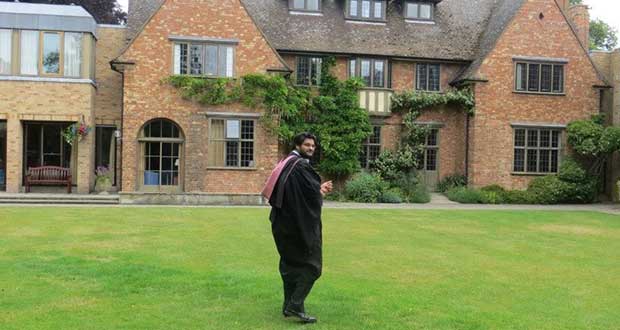
    Vishavjeet Chaudhary graduated in law from University of Kent, Canterbury in 2011 and was called to the Bar in 2012. He went on to complete his Masters’ degree from University of Cambridge in 2013. During his time there, he pursued Criminal Justice, Philosophy of Criminal Law, History of Civil and Criminal Law, and Jurisprudence. Aside from his legal career, he is interested in Human Rights and their protection, poverty alleviation, Social Services, and Economic Empowerment.

    He is a Barrister (Inner Temple) and is currently working as an Assistant Professor at O.P. Jindal Global University’s Jindal Global Law School where he is also the Assistant Director of the Centre for Penology, Criminal Justice and Police Studies.

    In this interview, Vishavjeet talks about: –

    • What made him pursue a legal career;
    • His experience while studying in the UK;
    • His focus on pro-bono and Human Rights related work;
    • The importance of Public Speaking; and
    • The difference between the UK and India with respect to legal systems.


    How would you like to introduce yourself to our readers?

    I am a Barrister, currently working as an Assistant Professor. My areas of interest are criminal law, constitutional law and human rights. I am also a very keen traveller, horse rider and agriculturist!


    What made you get into the legal practice?

    I knew that I wanted to be a lawyer when I was five years old! It partly ran in the family but my decision was not influenced by that in the slightest.  Other than the odd (I have been into full time agriculture for some time!), this resolve has been unwavering. I think one can make a genuine difference in this profession as law is something that touches everyone’s life in one way or the other. Second, this profession allows me to pursue my interests- intellectual endeavours, public speaking and interacting with a wide variety of people. Third, the independence of this area really attracted me.

     

    vishavjeet-chaudhary-2

    What inspired you to pursue your LL.M at University of Cambridge?

    I chose my undergraduate university based on how liberal it was. The university allowed for tremendously wide multidisciplinary studies. A lot of my tutors there very kindly encouraged me to pursue Masters in Cambridge to gain deeper understanding of the law. Most of my courses were either in jurisprudence, history or crime.

    What made you focus primarily on Criminal Law?

    I find criminal law fascinating- this is an area where all facets of human social interaction are at play. It is also an area that studies the depths of human emotions- passions, insecurities (no pun), deceit and weakness. Human Rights play a pivotal role as well. As I was interested in all these areas, I focused on criminal law.


    While at University, what co-curricular and extra-curricular activities, if any, did you partake in?

    I gave everything a shot – from debating and mooting to Polo and American Football!


    How did they benefit your performance at University, academic or otherwise?

    Intellectual activities like debating helped me in organising my thoughts, developing public speaking skills and communicating my point in a clear and persuasive manner. Sports and other activities helped me in relaxing and letting off steam. Both were also great ways to socialise and get a well-rounded education.


    What does your work for the Centre for Penology, Criminal Justice and Police Studies entail? What purpose does this Centre serve?

    (Vishavjeet is currently serving as the Assistant Director of the Centre for Penology, Criminal Justice and Police Studies at the prestigious Jindal Global Law School)

    The CPCJPS offers cutting edge inter-disciplinary research in the areas such as victim protection, reparation, juvenile justice, police reforms, technically sound training in human rights complaint law enforcement and investigation. Our aim is to encourage dialogue between different players of the criminal justice system to contribute to this area.
     

    vishavjeet-chaudhary-1

    What made you get interested in Human RIghts? What is the importance of pro-bono work?

    (Vishavjeet has shown keen interest in protection of Human Rights, Social Services and pro-bono work since his University days)

    I feel a big part of human life is to help. I do not say there is anything heroic about that- someone has to do it! I also find it intensely satisfying and enriching to be able to make a difference. There are few things half as rewarding as putting your knowledge to good use for betterment, no matter how small the change!


    How is the role of a Barrister any different from that of an advocate in Indian Courts?

    I was called to the Bar by the Inner Temple. England and Wales have a dual system- a distinction between Barristers and Solicitors. To crudely put it and to crunch centuries of history – Barristers do more advocacy and solicitors do more paper-work, conveyancing, etc.


    What inspirations can the Indian justice system draw from that followed in UK?
    vishavjeet-chaudhary-3Our Justice System is excellent considering everyday challenges. We do however need to urgently address issues like delays, transparency and the occasional malpractice if the system is to enjoy legitimacy and authority. All sections- judges, lawyers, the civil society- all of us need to put our heads together and work out solutions that are sustainable.


    How important are activities like Public Speaking and Debating for a law student?

    (During his time at Kent, Vishavjeet was the Vice – President and the Co- Founder of the Kent Debating Society. Further, he was a member of the Speakers’ Committee at Cambridge and has always stressed on the importance of public speaking)

    Exceptionally important I think. The perception is that if you do not want to get into litigation, you do not necessarily need to train as a public speaker. Public speaking regardless helps in developing wit, confidence, succinctness, persuasive knack and the ability to think on your feet. I feel that these are essential skills for a lawyer, irrespective of the area of practice. There certainly are other ways to develop these, but public speaking is definitely one of the best!


    What got you interested in interdisciplinary studies with respect to law? How do you intend on connecting the various disciplines?

    (One of Vishavjeet’s primary interests is appreciating law as an interdisciplinary subject by relating it to other disciplines like Philosphy, Literature and History)

    I feel we should not approach law as an overly technical subject. Borrowing from other areas  like literature and philosophy helps tremendously in broadening horizons and innovating. It is great to break the drudgery sometimes as well!


    From your experience of teaching, what would you like to say about the newer generations of law students? How would you say their education and way of life differs from yours as a student?

    The similarities are striking! Students today have more access (and more distractions) depending on how you use the internet, ‘applications’ and the like. I also feel they make more calculated and informed choices now.


    Finally, what would be your message to our readers?

    Please ensure you are making the best of each day right from day one. Time flies in college! Do talk to as many people as you possibly can, try as many new things as you can and have fun! Learn the basics of law and principles behind it to create strong foundations. Some degree of stress is inevitable, but do not overly stress and remember to enjoy college life! Good luck!


  • Subhashree Sundararaman on LL.B from Kent, being 3rd at New York Bar Scholarships and authoring a book

    Subhashree Sundararaman on LL.B from Kent, being 3rd at New York Bar Scholarships and authoring a book

    subhashree-sundaraman-2Subhashree Sundaraman graduated in BSL from ILS, Pune in 2011, thereafter she left it to pursue LL.B from University of Kent. She has had the opportunity to co-author a book on Keshavnanda Bharati, take up a course in IPR from WIPO and amazingly get ranked 3rd at the New York Bar Scholarships. She shares with us her experience in taking up a lesser known path.


    At the outset please share with us what brought you into legal studies? Did you have friends or family members to impress upon you the idea of law?

    My great grandfather and my grandfather have both influenced me in some ways to take up law as my career choice. I was very thrilled to hear about various judgements and legal matters that my grandfather dealt with, while he was assisting the then famous lawyers from my hometown. Also, as I did not particularly enjoy the idea of taking up computer science or medicine as my career options, Law was the perfect path for me to take and it has continued to prove to be so.


    How was your experience at ILS, Pune? What are the best memories of your student life? What would you suggest those law aspirants who are faced with a choice of taking up ILS?

    ILS Pune was a new experience for me as I was moving out of my home town and my comfort zone for the first time, in pursuance of my higher education. In addition to producing top class lawyers, who have held and are holding high positions in the Indian judiciary, the college has a reputation of holding some of the best collections of legal books. The college timings were tabled in such a way that students had the opportunity to self-learn by making use of these resources. Apart from academics, I engaged myself in writing short stories and poems, which eventually led to me starting my own blog. I won several prizes for my blog posts. Thus, my undergraduate experience at ILS was just not about developing myself academically but exploring various things that I liked and pushing my boundaries to develop holistically. Further, the limited college timings, gave me an opportunity to explore Pune and network with diverse group of people coming from various parts of the country.

    ILS gives preference to meritorious students, who are tutored by experienced teachers as well as practising lawyers. The high calibre of the students as well the teaching quality is witnessed by students taking part in various competitions and winning laurels to the institution, which makes me proud as an alumnus.


    You were one of the ten students selected from the University of Pune, India to research and help in the publication of the book, which discusses the Basic Structure of the Indian Constitution. Please tell us about your experience you gathered from such an exercise.

    It was an enriching as well as a challenging experience for me to research a whole judgement along with my team members. The task involved paragraph by paragraph analysis of the 11 opinions in the Kesavananda Bharati case and prepare a summary on them. In addition, our team of researchers was assigned the task of reviewing the literature. This particular exercise helped me in improvising my drafting skills, alongside understanding the complexities in the reasoning of the judges. Further, it also enabled me to identify core reasoning in the judgments made by the judges, which sharpened by logical and analytical skills. In addition to the serious research work, I also had fun working in a team along with others during this exercise. My contribution to this work was duly recognized and acknowledged by the University and I was also given a copy of the book.


    How was your experience with extra-curriculars? Did you partake in moots and conferences?

    Right from my first year, I was involved in mooting at ILS. I took part in couple of on campus moots within the college, where I developed my mooting skills such as application of appropriate laws to the problems, correlating various legal issues and developing my negotiation skills. I was the lead college researcher for the runners up team that participated in a National Moot that was held in Nagpur in 2011. In addition, I took part in conferences that were conducted within ILS, they were interesting for discussion and also broadening my knowledge base on various legal matters outside academia.


    When did you decide to pursue an LL.B from University of Kent? How did you settle upon Kent?

    I decided to do my LL.B from the UK immediately after my 3 years at ILS, which gave me a BSL degree [Bachelors in Social Legal Science]. I settled upon Kent, after thorough research along with my parents as well my relatives in the UK, who had colleagues from Kent. From my research, Kent University and Kent Law School [KLS] impressed me a lot. Kent Law School provides a critical approach to the studying of law as opposed to studying merely the black letter law. After having spoken to couple of final year students as well as professors, who visited India from the University, I made an informed choice of joining Kent.


    People generally go for LL.M from reputed universities to build up a profile in a certain section of law. Why did you decide to study further Bachelors in Law? Any specific reasons?

    I have always dreamt of exploring opportunities outside India and UK was of particular interest, given its common law. Hence, I decided to do my Bachelors, instead of an LLM, because I wanted to master the law of the country as opposed to mastering in a certain section of law.


    How has been your experience at Kent? How was the selection procedure? How are the faculty and facilities?

    My experience at Kent is by far the best experiences that I could ask for both in terms of academics as well as social. I have been able to participate and contribute on various topics within the University and outside it. The faculty at Kent Uni are extremely inspiring, kind and supportive. Being an international student, I had apprehensions before I left India, but Kent only disproved all the apprehensions and made me feel at home. At Kent Law School, I was selected as the Course Representative in my 1st and 2nd year, and eventually became the Law School Representative in my final year. This gave me a lot of opportunity to network with fellow law students and faculty within law school and from other departments.

    As for the facilities, the University has a huge library that hosts books ranging on all topics under the sun and not just law. Further, the University encompasses other departments along with the Kent Law school, which facilitated inter departmental communication. The Kent Law School has its own Kent Law Clinic, which provides pro bono work and has received various awards including the prestigious Queen’s Anniversary Prize. In addition, the Kent Law School has student led societies, which conduct various guest lectures and career fairs, helping students to network with barristers and solicitors.

    I was selected after being screened on multiple aspects including the reasons to pursue law in the UK and in particular Kent, my contributions in the field of law and other fields, which were all summarised by me in the form of an SOP, and of course, my grades.


    How different would you say is the bachelor course at Kent from a typical law school of India? What are the things which these two systems can learn from each other?

    The Bachelor degree at Kent, as mentioned earlier, provides a critical approach to the study of law.  It provides a very application based study as opposed to theoretical learning. In addition to just reading the books, we were made to read and analyse different journal articles and newspaper articles in order to correlate with the laws that we studied. Further, all our modules were not 100% exam based and were divided between exams and course works. The course works entail writing essays ranging between 1000- 3500 words on certain topics, which helped me sharpen my research and writing skills by miles. This also gave me confidence to write a 10000 word optional dissertation in my final year on consumer law.

    In addition to classroom teaching, we also had seminars, where we were divided in to groups of 20 and assigned a professor with whom we discussed various questions on the topics we learnt in the classroom. This helped me to get more clarification on the subjects from the student discussions in the seminars. The most impressive element that is different from a typical law school in India is the system of recorded lectures. Thus, even if a student is unable to attend lectures due to personal reasons, he/she could listen to the lectures that were recorded live by the professor and uploaded to individual student portals. This also helped students to make lecture notes and prepare for the exams by listening to it multiple times.


    What is the importance of mooting and writing research papers in the LL.B programme of Kent?

    Although, students actively participated in moots at KLS, it was not compulsory or imposed. In my first year, I saw various students participate in moots to acquire experience on mooting or sharpen their advocacy skills. However, from my observation, moots were undertaken by those students, who wanted to become barristers. I was not particularly interested in mooting, so instead I channeled my interest in participating in in-house negotiation and mediation activities.

    The LLB programme at Kent was very tight and hectic. Therefore, aside from academics and extra-curricular activities, writing research papers were not undertaken by many. This could also be because most of our course work involved researching on our own and writing essays of a minimum of 3000 words, which was a research paper by itself. The law school also published in its law school journal those course works, which secured a first. Therefore, writing a separate research paper was not considered as a necessity.


    You also took up a course in IPR from WIPO. Please share with us the experience of this course? How would you rate the course? Were you thinking of gaining expertise in IPR law?

    I took the IPR course from WIPO during my first year summer break, while I was in England. The course gave me an in depth view of the fundamental elements of IP. I would recommend the course for anyone who wants to get an insight in to the IP Law. The course is well structured and provides a good basis before one takes up IP Law as full-fledged module. The course helped me make a choice before I took IP as one of my final year modules. I enjoy IP Law and I aim to have it as one of my practice areas.


    You had earlier cleared the New York Bar Scholarship with an astounding third rank! Please share a few tips and strategies to crack the scholarship.

    The New York Bar Scholarship was facilitated by BARBRI International, a leading provider of post qualification training for legal professionals. I am not sure if this scholarship is a recurring one. I came to know through couple of legal agencies that I had signed up to. The Scholarship entailed the applicants to write an essay by critically reviewing the recent “Right to be forgotten” judgement given by the ECJ involving Google and discuss the legal ramifications in applying the ruling to other cases. A simple tip to crack any scholarship is to keep abreast of the current legal activities, as one of the aims of scholarships is to test the commercial awareness of the applicants alongside other elements and how legal decisions affect businesses. Currently, I plan to work for couple of years and then I plan to sit the New York Bar exam availing my scholarship.


    Which are the other scholarships you would suggest applying for?

    There are so many scholarships that are available, which are interest and need based. Therefore, students who wish to pursue their interests should keep their ears and eyes open and look for opportunities to gain advantage.


    What are your long-term goals? Where do you see yourself in ten years’ time?

    My short to medium term goal is, in 3 to 5 years become a leading in-house corporate lawyer with a sound expertise in the fields of Mergers and Acquisitions and Intellectual Property law. I intend to continue building my key skills in these areas by handling a variety of challenging and knowledge enriching work assignments. My long term goal is, in 10 years acquire necessary leadership skills that will help me lead legal functions of large corporate organizations.


    What is your message to your juniors at Law School? Any career advice you would like to share?

    I have always believed in the saying, “The future belongs to those who believe in the beauty of their dreams”, a quote by Eleanor Roosevelt. Therefore, my message to my juniors at law school would be to dream big, explore all the opportunities that come their way, acquire as much knowledge and experience as possible, for it would help along the way in building their career. It is understandable that law school is a five year commitment and sometimes, it might feel monotonous and tedious. However, having crossed that bridge, I would advise not to give up for it is totally worth it.

