Tag: KHAITAN & CO

  • “It is extremely important to keep your head down and continue working hard at every stage of your career”- Pratiksha Mishra, Advocate-on-Record, Supreme Court of India

    “It is extremely important to keep your head down and continue working hard at every stage of your career”- Pratiksha Mishra, Advocate-on-Record, Supreme Court of India

    This interview has been published by Namrata Singh and The SuperLawyer Team

    Pratiksha, it’s a pleasure to have you with us. Could you start by introducing yourself to our readers, giving a glimpse into your journey from law school to becoming an Advocate on Record at the Supreme Court of India?

    I graduated from the Army Institute of Law in 2015. I began law school with the idea of venturing into the corporate/transaction side. However, during my early internships I realized that I enjoy litigation and foresee myself practicing in courts. This was largely because of the mentors I came across during the course of internships and, my senior and  very close friend from college, Niyati Kohli who really encouraged me to pursue litigation. 

    I started my career at the chambers of Mr. Balaji Srinivasan, Advocate on Record where I got the opportunity of independently handling matters before the Supreme Court and a variety of other forums such as the TDSAT, NCLAT and the NCDRC. The professional guidance and moral support I got from Mr. Srinivasan helps me with my work even today.  I must also mention that I had a wonderful set of colleagues at the chamber with whom a 7-day work week never felt burdensome. 

    Having worked at an AOR Chamber, appearing for the AOR exam had always been a priority. By the time I became eligible and appeared for the exam, I was at Khaitan & Co. Apart from everything else that goes for any other exam, appearing in the AOR examination also entails handling the pressure of the preparation process, alongside the responsibility of your regular practice. In my case, this entire process was relatively easier because my husband was also appearing for the exam the same year. 

    You’ve had an impressive career at Khaitan & Co. Can you share some pivotal moments or cases that shaped your journey and defined your focus in areas like IBC litigation, commercial and civil litigation, and arbitration?

    I joined the Delhi Office of Khaitan & Co after completing 3 years at Mr. Srinivasan’s chamber. Thanks to the firm and my seniors, Mr. Diwakar Maheshwari and Mr. Karun Mehta, I have had the chance to work on some extremely challenging and nuanced propositions. I got to contribute to several high-stake IBC disputes almost immediately after joining the team. Over five years of working with the firm have given me the opportunity to interact with and represent a variety of clients. One of the most valuable lessons I have learnt is the importance of understanding the commercial objective behind a litigation and coming up with a solution to achieve the same. 

    My expertise in areas of IBC litigation, commercial and civil litigation, and arbitration, essentially came from the work that has come my way during my time at Khaitan and Co. 

    Your practice involves a wide array of legal areas, including IBC litigation, commercial and civil litigation, and arbitration. How do you manage to balance such diverse responsibilities, and do you have a favorite among these areas?

    Irrespective of the subject matter, the way one approaches a case is largely the same.  Having said that, the procedural law followed in an IBC proceeding, an arbitration and a civil suit is very different. The style and structure of the pleadings differ from fora to fora as well. For example, a plaint/arbitration claim is starkly different from a petition under IBC which is largely as per a prescribed form.  

    I work with an extremely competent team of lawyers and support staff from the firm. They make managing the volume and diversity of work much easier. 

    I do not have a particular favorite area of work. I enjoy the pressure that the stakes of an IBC proceeding inevitably brings. At the same time, I find the process of initiating a suit/arbitral claim and seeing it through to its logical end extremely fulfilling. The rush of adrenaline that follows a good cross-examination is unmatched. As I have said earlier, I have been fortunate to have been exposed to a gamut of work. I hope that the same continues in the future. 

    As someone who has represented clients in insolvency proceedings, could you share an interesting or challenging experience that stands out in your career so far?

    IBC as a legislation has been extremely dynamic and fast-paced. There have been numerous cases where amendments to the law have been introduced having completely altered the course of a matter overnight. 

    Another great thing about working on a relatively new subject is that you get to test innovative propositions which have not been examined by the Courts before. I have found it extremely satisfying when arguments based solely on the reading of provisions of the IBC have been canvassed by us and accepted by the Court. The chance to contribute to the development of new jurisprudence in this manner has been both – the most challenging and the most fulfilling experience in my career thus far. 

    Looking ahead, what are your aspirations for the future, both professionally and personally? Are there specific areas of law or causes that you are passionate about and would like to contribute to in the coming years?

    Professionally, I hope to be able to continue doing good work and turn out as a well – rounded and reliable professional for my clients. Having worked on the commercial side for 7 and a half years, I hope to be able to make time for taking up pro-bono assignments in the future and to be able to somehow contribute to society. 

    On the personal front, it has always been an endeavor to maintain the right work-life balance and make time to pursue some hobbies outside work. 

    Beyond your legal pursuits, do you have any personal interests or hobbies that play a role in maintaining a work-life balance? How do you manage the demands of a challenging legal career while nurturing personal well-being?

    I have always enjoyed participating in physical activities such as swimming, running, boxing etc. I believe that taking care of your physical health, in a way, helps you also take care of your mental health. Setting aside, a few hours in the morning before work for exercise helps me decompress and prepare for the day.  

    For aspiring lawyers entering the field, given the competitive environment and long working hours what advice would you offer? 

    There are no shortcuts in this profession. It is extremely important to keep your head down and continue working hard at every stage of your career. Given that we spend most of our time around people we work with, it is essential to be inclusive and have a good equation with colleagues. Like I mentioned earlier, having a good team around you effectively reduces the stress of the long hours one has to put in.

    Get in touch with Pratiksha Mishra-

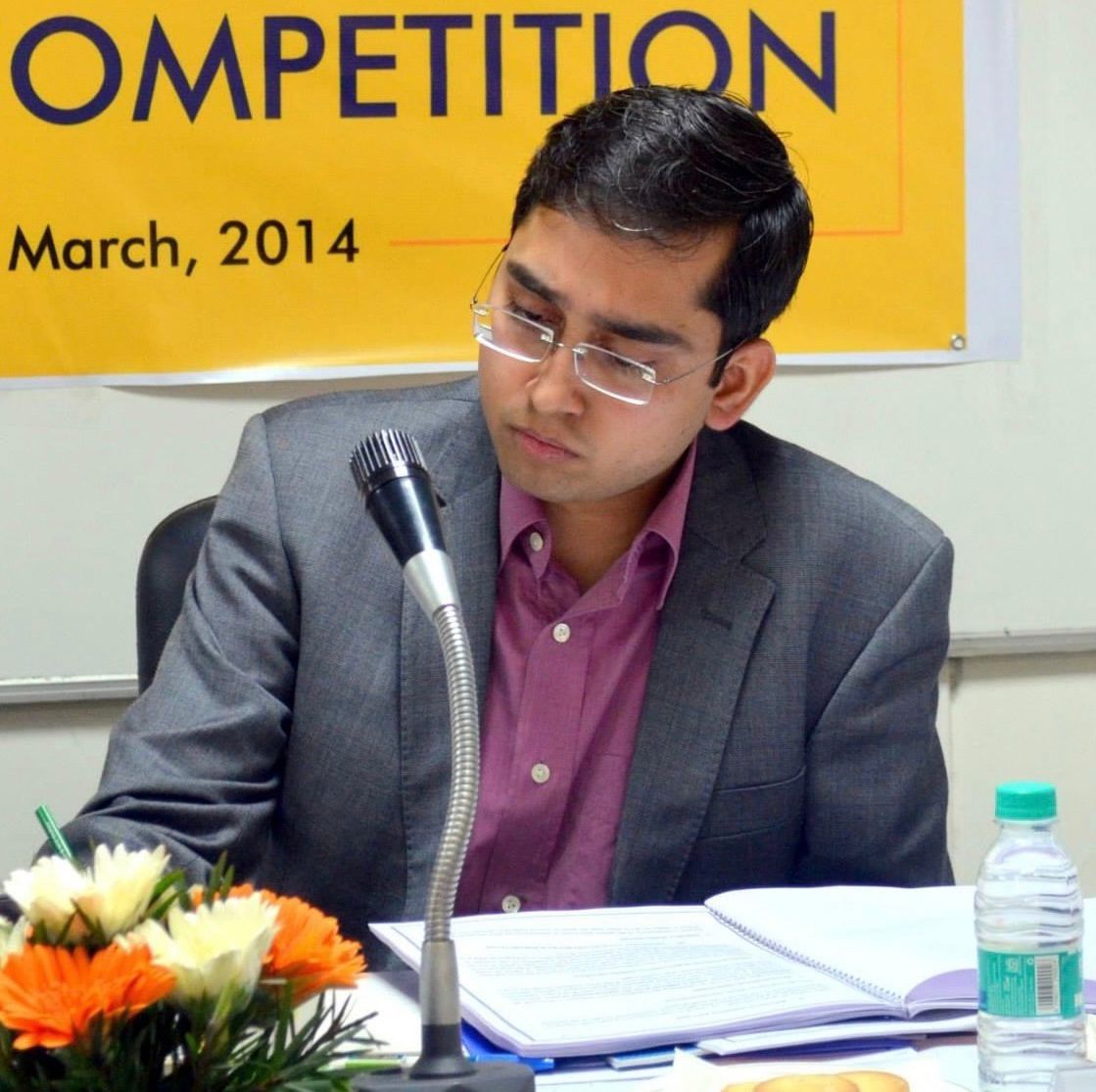
  • “I believe the legal industry is rapidly moving towards specialisation”- Abhishek Dadoo, Partner, Khaitan & co.

    “I believe the legal industry is rapidly moving towards specialisation”- Abhishek Dadoo, Partner, Khaitan & co.

    This interview has been published by Priyanka Karwa and The SuperLawyer Team

    What inspired you to pursue a career in corporate law?

    It was the money. On a more serious note, I was quite lost as a law student on my preferred career stream. My best learnings (and finally my decision) was based on my internship experiences. I liked participating in moot court competitions and learnt a lot during my supreme court internship – but I enjoyed my corporate law internships a lot more. To me, the nature of work (in corporate law) was very interesting and I ultimately decided to pursue the path I enjoyed more.

    Can you tell us about your specialized practice area of Public M&A?

    Public M&A is a practice area focused on listed company transactions. I typically advise financial sponsors and strategic investors in navigating through a complex web of Indian securities laws (such as the insider trading regulations, takeover regulations, etc) which are triggered while dealing in shares of listed companies.

    Public M&A requires expert knowledge and experience about the interplay between various stages of the deal – for instance, a control deal of a listed company generally triggers a mandatory tender offer, requiring the contracting parties to upfront factor various possible outcomes on account of unpredictable public tendering. While most deals are friendly / negotiated, the listed space occasionally witnesses hostile takeover bids and this has been a source of great offensive and defensive learning in acquisition strategy.

    What have been some of your most interesting matters thus far, if you can just share a glimpse of them?

    I have been fortunate to advice on various interesting Public M&A matters, including financial and strategic investments, and hostile takeovers of listed companies. While each Public M&A deal is unique and carries its own set of challenges, some of the matters on which I learnt a lot include: (i) Reliance Group’s acquisition of controlling interest in Justdial, (ii) Sale of Majesco (a NASDAQ listed subsidiary) of Majesco Limited (an Indian listed company), followed by distribution of sale proceeds through dividend and buyback by the listed company, (iii) acquisition of controlling interest in Tide Water Oil Limited (a government owned company), (iv) the attempted delisting and voluntary open offer of Vedanta Limited, (v) an unsuccessful bid for the acquisition of controlling interest in Ambuja Cement / ACC, and (vi) litigation on shareholder rights in Zee Entertainment.

    What challenges have you faced in this field so far and to what extent you acknowledge the role of mentors?

    I have been extremely fortunate to receive mentorship and guidance from some wonderful people. In particular, I have looked up to and learnt immensely while working with Late Mr. S. H. Bhojani, Mr. Cyril Shroff, Mr. Nihar Mody, Mr. Haigreve Khaitan, Mr. Sudhir Bassi, Mr. Arindam Ghosh and Mr. Aakash Choubey. Each one of them has been an incredible mentor and teacher. True masters of their craft, they have all inspired me in more ways than one, and I have sought (and received) their valuable guidance on various aspects of life.

    How has the legal landscape in this field changed over the years?

    I believe the legal industry is rapidly moving towards specialisation. Clients look for efficient delivery of service at reasonable costs – the HQHF (High Quality Honest Fee) model – this is best achieved by utilizing expert or specialised resources to deliver optimal output. For instance, a focused Public M&A team, having already navigated various nuances and complications of listed company deals, is far better equipped to structure, execute and complete a transaction in a time (and therefore cost) efficient manner. A legal advisor’s role has substantially evolved over time – a legal advisor can no longer choose to be myopic about the specific legal issue she / he is advising on. Instead, it is generally expected that legal advisors look out for the overall commercial (and not just legal) interest of their clients. This is the role of a ‘trusted advisor’, who thinks above and beyond her / his call of duty, all to protect the interests of her / his client.

    What strategies do you use to ensure successful negotiations?

    An M&A lawyer broadly requires three essential skills – let us coin it the LDC matrix. The first, knowing the law (that is a no brainer and probably the easiest one to master). The second, understanding the deal – this is a bit more complex – to effectively guide a client, the lawyer must assess not only whether the intended transaction is legally viable but also guide his client on whether the deal conforms to the client’s values and long and short-term commercial vision. The third, create a spirit of collaboration – M&A negotiation by its nature can be adversarial – but it is important to remember that it is the beginning of a new relationship. The most successful deals are where both parties walk away winners.

    I have forged strong professional and personal relationships with the counter party and its counsel during negotiations – and that bond has only helped smoothen out future deals we have done together.

    How do you stay abreast of the latest developments in the industry?

    There is no short cut to keeping up with the latest developments –  the only option is to put in the hours and read. One approach which I try to adopt is writing articles about new and interesting developments in the Public M&A space. This ensures that I read and learn about the topic, and at the same time I am able to share my knowledge with others. Needless to say, I am indebted to my co-authors for the articles (typically, they put in a lot more work than I do). Another approach we follow (as a Public M&A team) is to regularly brainstorm on new developments and trends in this space – it helps spread the knowledge / experience of one to the entire team – and we are all the smarter for it.

    What advice would you give to someone just starting out in this field?

    Be curious and work hard. Ask lots of questions. Looking back to my internship days, I used to ask way too many questions (partly because I was curious and party because I wasn’t smart enough to figure a lot of things by myself). And trust me, it is appreciated that you are interested and are willing to learn. Do not be afraid to make mistakes, it is a part of your development. We make mistakes even today. Simply put, the more mistakes you make, the more you learn.

    What do you find most rewarding about your work?

    I really enjoy my work and admire the people I work with. I believe those are the two most important elements of a rewarding career.  

    Please tell us how you create a work-life balance?

    There is (unfortunately) no magic formula to work-life balance. A career in corporate law is certainly demanding – but there are ways to find balance. Some phases are tough, and others are light. Idea is to work hard when deals demand it and dial down when things are light. In general, team work plays an important part in finding balance – I sincerely believe there is nothing a well-coordinated team cannot achieve – including supporting each other and achieving work life balance.   

    Any parting thoughts you would like to share with our young readers?

    I say this often – knowledge and experience are both privileges – when you can, always pay it forward. Use every opportunity you get to teach, educate, write about your learnings and help spread your knowledge to benefit those who might have use for it. This is bound to help create a better and smarter ecosystem and community of lawyers.

    Get in touch with Abhishek Dadoo-

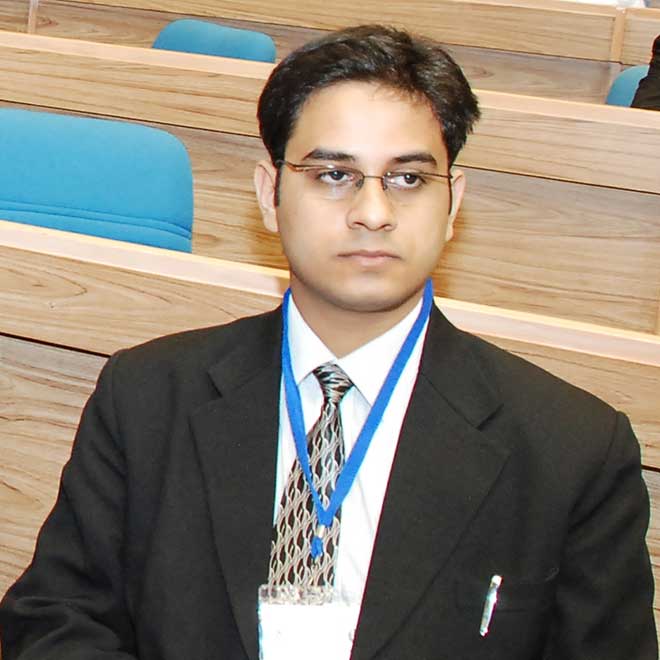
  • What does it take to become a partner? Sahil Narang, Partner at Khaitan & Co and AOR, Supreme Court shares his 8-year-long journey at Khaitan: from junior associate to a distinguished Partner.

    What does it take to become a partner? Sahil Narang, Partner at Khaitan & Co and AOR, Supreme Court shares his 8-year-long journey at Khaitan: from junior associate to a distinguished Partner.

    This interview has been published by Sonali Parashar and the SuperLawyer Team


    Let us begin with the most important question, did you always dream of becoming a lawyer or, did it happen by chance? Also, tell us about your journey.

    Before coming to what led me to become a lawyer- a little bit about me. I hail from Abohar, a small town, about 30 km from the India-Pakistan border, in the State of Punjab. My grandfather was a local politician and social worker, and my father was a lawyer practising at the city civil courts, Abohar who, quite often, also used to attend and appear before the District Courts at Ferozepur (later at Fazilka, a border town). So, I was exposed to the field of law at a very young age. 

    Since I grew up looking at my father, working diligently as a lawyer and collecting hundreds of books for his library every year, the curiosity towards law was imbibed in me by default. However, I had a huge interest in the field of science during my school days and wanted to become either a doctor or an engineer given the trend prevalent at that time.  I went on to study science in the 11th and 12th standard and gave competitive exams such as the IIT, AIEEE, etc. to get admission into engineering courses back then. I had an option to continue that pursuit and become an engineer, however, the innate affinity towards law imbibed within me from childhood, looking at the meticulous way my father used to practise law, pushed me to pursue the study of law. Therefore, rather than getting admission in some renowned engineering college, I enrolled in the B.A.(Hons.) program at DAV College, Chandigarh affiliated to the Panjab University, Chandigarh. I passed BA with a distinction in Political Science in 2005, post which I got selected in the three-year law course at one of the oldest institutions in the region, the Department of Laws, Chandigarh, my father’s alma mater.

    Since I was inclined to continue the study of law and give competitive examinations including the judicial services exam, I got admitted to the LL.M course at NALSAR University of Law, Hyderabad through CLAT. I was actively involved in research, pro bono work and co-curricular activities at the university during the LL.M course

    During my days at NALSAR, I was introduced to various opportunities in the field of law. I also got an opportunity to attend the Private International Law Course at the Hague Academy of International Law at, the Hague, the Netherlands in 2009. Eventually, I joined Khaitan & Co. and a decade later – here we are. 

    The present focus is on advising on regulatory issues, commercial litigation, and the representation of various clients from the entertainment and multiplex industry across India. If we draw a comparison between the global and Indian entertainment and multiplex industries, were you able to predict these advancements in the legal arena?  

    The advancement in the legal arena surrounding a sector depends upon the growth of that sector. I have been blessed to get exposure to and advise and represent clients in various sectors including in the entertainment and multiplex industry during my career. The Indian entertainment and multiplex industry caters to a very different demographic as compared to the western world. Although we receive some guidance from other countries when it comes to legal issues surrounding this sector. While there is a significant amount of autonomy and minimal regulation in western countries in the sphere of entertainment and cinemas, jurisprudence is still evolving in India. We still see heavy regulation by the government in these spheres and archaic laws which are dealing with these fields. The Indian cinema industry is faced with archaic laws which need to be updated given the fast-paced development in this area. The liberalisation of Indian cinemas and the recent shift to OTT has been a game-changer on how people consume entertainment in today’s world. The recent years have witnessed a massive influx of OTT giants such as Netflix and Amazon foraying into the Indian market. This has led to an increased reliance on Indian lawyers to assist them to find their way into the Indian space and steer clear from legal repercussions. The real challenge is for the regulation to catch up with the development of this sector.    

    You were named as one of the lawyers for Legal Era’s 40 under 40 list in the field of law for the year 2020, and you also served as the Co-Chair of Competition Law & Consumer Affairs Committee of PHDCCI for Presidential Year 2021-22. Congratulations on adding another feather to your cap. What is your next goal? Is there anything you’d like to tell us about?

    I had started with Khaitan & Co as an intern in the year 2009, got a PPO and became a Partner with the Dispute Resolution practice group, New Delhi in the year 2018. I have learnt a lot during this time. Currently, I lead a team of lawyers working on the dispute resolution side with a primary focus on commercial litigation and arbitration. The year 2020 was a very challenging year given the outbreak of the COVID-19 pandemic. It brought the best out of many of us. I was very lucky to have worked on a variety of matters despite the disruption in the legal sector because of the pandemic. It was because of the wide variety of work and the client’s recommendations that helped me get recognised in recent years. 

    However, I wish to be mindful that it’s a sea out there and there is still more to be achieved. I would want to expand my commercial litigation and arbitration practice, both domestic and international, and engage more in highly complex and challenging disputes. 

    Besides this, I would also like to contribute to the development of jurisprudence in various nuances of laws including beneficial legislations made for ease of trade and commerce.

    Having received so much from the legal fraternity, I would like to take out time to render legal advice to individuals and organisations that are unable to afford legal advice and/or cannot access legal aid. Various organisations are doing good work in this sphere. However, it is particularly overwhelming to see young law students very effectively running legal aid clinics in their colleges and effectively using social media to educate people and spread legal awareness. It would be a privilege to be associated with such benevolent activities.  

    At this juncture of my career, I would want to engage with law students and young lawyers to share the experiences and learnings, which I have received in my career to date. In fact, in furtherance of this endeavour, I have been actively participating in such webinars and would certainly like to keep that going. 

    I would conclude with a famous quote – ‘Big tasks are still out there and a lot of hard work yet to be done.

    You are involved in research and have authored some extensive research on a variety of topics. How has research work helped you stay updated with the academics as well as policy and legislative changes that we see occur from time to time?

    I think the most important tool in a lawyer’s toolbox is his / her ability to research, read and write. During my time at NALSAR University of Law, while pursuing the masters’ course, I realised that one of the best things one could invest in is books, be it academic or otherwise. This habit of reading will inculcate a life-long habit of curiosity and research.  

    This helped me immensely during my preparation for the coveted Advocate-on-record exam of the Supreme Court of India. Getting admitted is a major achievement as very few lawyers qualify in this annually held examination conducted by the Supreme Court of India.

    In addition, knowing and being abreast of the current position of law gives one confidence in dealing with and correctly advising a client.  

    Further, research methodologies would generally include comparatives analysis of legislation across jurisdictions and critique of legislation and policy prevalent in various jurisdictions. This would in turn give one perspective of laws of developed countries and what legislative changes our country may see. 

    Mr. Sahil Narang, Partner at Khaitan & Co.

    Can you give our readers a brief idea of what they need to prepare for if they want to climb the corporate ladder based on your experience representing international commercial arbitration in a variety of matters?

    There is no shortcut to hard work, perseverance, and commitment. I would add that in the initial years, a young lawyer must remain open to all kinds of work whether he/she chooses to join a law firm, a senior counsel or a chamber practice for his/her training. At a later stage, one may discover their interest in a particular field of law.  

    Further, for one to excel and climb the corporate ladder, it is important to be client-centric, innovative, detail-oriented, and prolific. These virtues will not only make one solution-oriented but also will give them an edge over other contemporaries.

    In the field of arbitration, it is important to refer to commentaries of various celebrated authors on arbitration and keep abreast of recent judgments by the courts.  

    What was the one learning experience throughout your entire career that you’d credit to have shaped your career and brought you to this point?

    My family, I would say has been my greatest motivator, and has shaped my career. Seeing my father practising law at the city civil courts, Abohar, working hard, day in and day out, motivated me at a very young age to work hard and excel in academics. Further, having roots in a very small town has made me grounded but at the same time meaningfully ambitious.

    Can you take us through a typical day in your life? Is it possible to carve out time for your other interests or hobbies given your hectic schedule as a renowned Partner at Khaitan & Co?

    In pre-covid times, most parts of my day were spent either in courts or in office. Substantial time used to be spent commuting from court to office or conferences and venues for arbitration. Travelling used to take a fair share of my time, however, with most courts and tribunals going virtual, I could save a lot of time. Consequently, efficiency increased. During covid times, my day is usually spent on reviewing drafts, attending conference calls with my colleagues in the team, clients, and senior counsel. I also make it a point to read the latest case laws of the Supreme Court and other courts on dispute resolution and arbitration. Even in my hectic schedule, I make it a point to take out time for my family. I love to read books on weekends. My favourite pastime since my college days has been to watch movies in multiplexes and the latest series on OTT platforms. I have recently picked up badminton as a sport and would also like to learn to play the piano soon.  

    What career advice do you have for our readers? In my opinion, to be successful in the field of law one must inculcate a habit of reading at a young age. One thing that has helped me in being thorough in my work is that I read every document in full, irrespective of any preconceived notions. I would advise law students to read, read and read everything you can get your hands on. To put this in perspective, my favourite quote is by Walt Disney- “There is more treasure in books than in all the pirate’s loot on Treasure Island.”


    GET IN TOUCH WITH SAHIL NARANG:

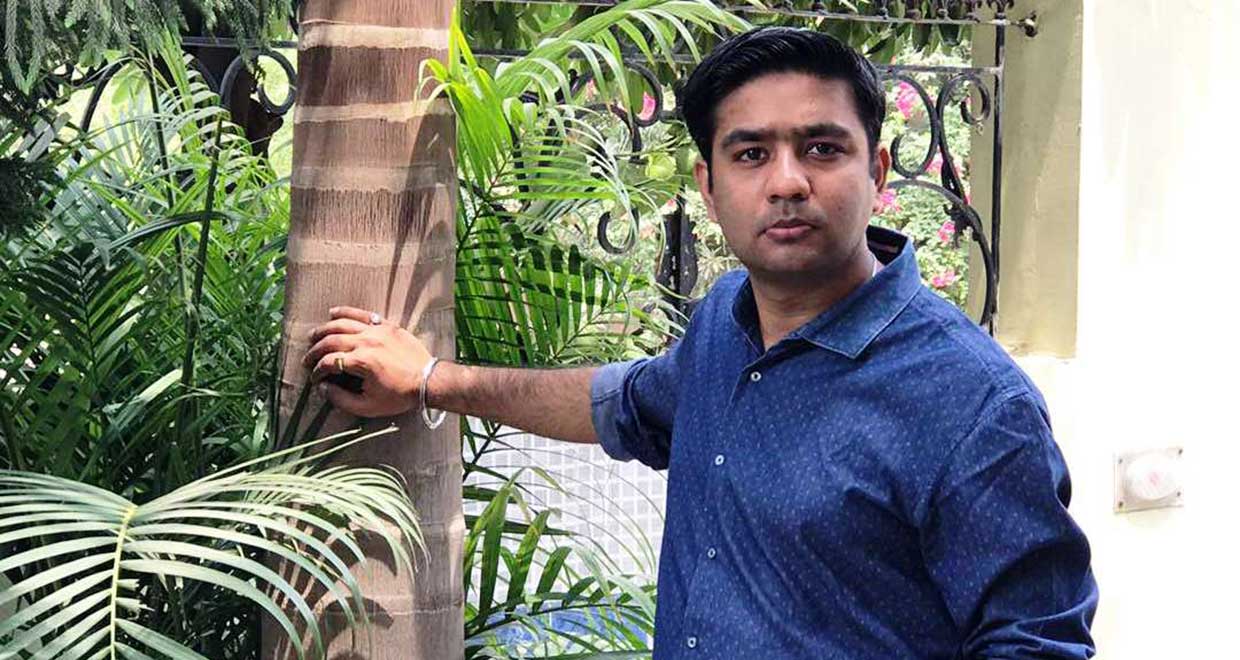
  • Jeevan Ballav Panda, Principal Associate, Khaitan & Co., on Dispute Resolution, Environment Law, and his diverse experience

    Jeevan Ballav Panda, Principal Associate, Khaitan & Co., on Dispute Resolution, Environment Law, and his diverse experience

    Jeevan Ballav Panda graduated from Hidayatullah National Law University, Raipur, in 2008 with Distinction in Environmental Law and Intellectual Property Rights. He has experience handling litigation and arbitration proceedings including interaction with clients, liaising with clients/ counsel, undertaking legal research and formulating strategies, drafting and preparing pleadings, briefing and assisting counsel, regularly appearing and arguing matters before the Supreme Court of India, Delhi High Court, National Green Tribunal (Principal Bench, New Delhi), National Company Law Tribunal (Principal Bench, New Delhi), Debt Recovery Tribunal, Delhi and Arbitral Tribunals (both domestic and international).  He has also appeared before Calcutta High Court (Original Side & Appellate Side), Goa Bench of the Bombay High Court, Jharkhand High Court, National Green Tribunal (Southern Zone, Chennai), City Civil Court, Calcutta, District & Sessions Courts, Magistrate’s Courts, Labour Courts/ Industrial Tribunals, Consumer Forums, Trade Marks Registry and other administrative/quasi-judicial authorities.

    In this interview we speak to him about:

    • His time at HNLU
    • Dispute Resolution and Environment Law
    • His experience thus far


    How would you like to introduce yourself to our readers?

    It is indeed my profound pleasure and privilege to give this interview. I would like to thank SuperLawyer for giving me the opportunity to help its followers in whatever possible manner.

    I was from the science stream and was supposed to be a medical aspirant but destiny had some other plans and it was by chance that I ended up pursuing law in the first batch of HNLU. The five years of Law School saw a complete metamorphosis of my personality from an introvert and reserved individual when I joined in 2003, to pursuing Dispute Resolution practice after graduating in 2008.  Being in the inaugural batch of the university gave me much needed exposure and I thoroughly enjoyed the five years in law school by participating as a speaker in some of the most reputed Moot Court competitions across the world, participating in about a dozen seminars/ conferences, publishing about twenty articles, being the first in the university to do a foreign internship, first in the university to get a pre-placement offer (PPO) and ultimately  working in one of India’s oldest and leading full service law firms for the last nine years or so.


    What motivated you to opt for legal studies after school?

    As I said earlier, I was from the science stream and was supposed to be a medical aspirant, considering the fact that that was the most conventional career choice at the time. Law was never considered as a preferred career option then and was looked down upon and perceived to be pursued by those who did not have any future in engineering or medicine. Though I came from a family full of engineers including my father, sister, cousins and later my wife, I was personally never keen on pursuing engineering. I have always been fascinated with cars so my heart at some stage wanted me to pursue Automobile Engineering but my mind deterred me from doing so because even this field required studying some common subjects like other Engineering courses. I was also not confident of pursuing Medicine as a career option.

    It would not be out of place to admit that right before my class 12 examinations, a discussion with my maternal grandfather Mr. Bisweswar Purohit (who is well known and a leading Advocate in Western Odisha) and whom I hold in high esteem really convinced me into pursuing law. My maternal grandfather who recently stopped practising after about 55 years of practice, was a self-made man and as a child I was always attracted towards the respect he commanded in society and the unlimited scope of emoluments the profession provided on being successful. As luck would have it  I did not score good ranks in the Medical or Engineering entrance examination and around the same time someone told my father in his office that with the advent of the five years integrated law course from National Law Schools, law has a great scope in the near future. On enquiry it transpired that the due date for appearing in the National Entrance Test (NET) of the then existing five National Law Schools were over. I was not interested in losing out a year by preparing for any course. Coincidentally my sister found a Newspaper Advertisement for commencement of HNLU and that the NET was scheduled two days after. I appeared in the NET by travelling to Raipur the very next day and when the results were out I was pleasantly surprised to have been shortlisted. That’s my journey of landing in a National Law School.


    Give us a brief overview your HNLU experience.

    In my opinion, five years of law school is a great opportunity for each student to experience the wide range of extra-curricular activities that it offers apart from the courses offered as part of the academic curriculum. When I graduated in 2008, an NLU tag possibly had more significance because NLUs were considered to be equivalent to IIMs or IITs for law and it gave you a good platform. Needless to mention, you still had to make good use of the platform and prove yourself. However, today with NLUs mushrooming across various states and several private and other law schools doing equally well in terms of exposure, faculty, and facilities, I do not think that not having an NLU tag is in itself a set-back, if otherwise the student is passionate about law and focused. The private and other law schools these days have discipline in their management and a wide variety in their course curriculum with mandatory attendance for classes, internships made compulsory and student exchange programmes with universities abroad providing excellent exposure and opportunities.

    Being in the first batch of HNLU was in fact a blessing in disguise since it was a small batch of about 50 students from different corners of the country. We had the advantage of being taught by some of the most experienced and brilliant legal minds from across the world and also were usually the first choice for being considered for representing the university in any competition or forum. Moot Courts gave you popularity amongst the junior batches, even more than topping the semester and I realised it very soon. Apart from that, the in depth research and team work that it brought in motivated me to participate as a Researcher in the Surana & Surana Corporate Law Moot Court Competition in the second year of law school itself. Thereafter, I participated as a Speaker in various other Moot Competitions like Henry Dunant, Commonwealth, Murdoch University International Maritime Arbitration and Willem C. Vis International Commercial Arbitration (West) and gained experience which immensely helped me during my initial days as a qualified lawyer to cope up with the pressures of a matter. I participated in various seminars and conferences as a Speaker on contemporary issues/ subjects both in India and abroad.  I converted my project papers into articles and got them published at various national and international books and journals.

    I utilised my extensive research work done at the Indian Society of International Law (ISIL) Library for the Murdoch University International Maritime Arbitration Moot Court Competition by applying and obtaining a month long Internship at Cocks Macnish, Perth, Australia before being joined by my team for the Moot Court Competition.


    In your opinion, what are the activities that you would recommend as necessary experiences for every law student?

    Internships, moot courts, client counselling, publications, seminars/ conferences, etc. are equally important as scoring good grades in the semesters. In my view, one should not lose out on the opportunities that the law course provides to a student because each activity has a significant role to build and shape significant skills like researching abilities, legal reasoning, analytical skills, confidence level, personality building, public relations, etc. which are indispensable in one way or the other for a successful advocate.


    From your experience in legal writing, please share with our readers the kind of topics that one must write on if they hope to get their work published in reputed journals?

    Writing is not something which came naturally to me. I tried to gradually improve this. In law school, I chose my project topics very carefully considering its relevance and wrote them after thorough analysis and research. Hence, it was easier to convert them into articles and make them worthy of publication. Writing article helps one to keep abreast with latest developments.

    Even now, I continue to write articles and choose topics of contemporary relevance like the significant decision of the Supreme Court or a High Court on a particular issue, ambiguous/ conflicting legal position, absence of legislative framework or implementation mechanism in a particular field, comparative legal position across jurisdictions, change in law and implications thereof, etc.

    For writing a good article to generate interest in the readers, originality, thorough analysis of the existing legal position and clarity of expression of views/ thoughts/ opinions are a must, apart from identifying the targeted readers. One should also consider his/ her own areas of interest before choosing a topic to write an article.


    What kind of internships did you undertake during your student years?

    I started interning with my maternal grandfather in the first year, followed by internships with the Senior Advocate in the Orissa High Court, Sandersons & Morgans, Kolkata, Khaitan & Co, Kolkata, Cocks Macnish, Perth, Australia and Zeus Law Associates, New Delhi. I did not have any references and managed to get confirmation for all my internships on the basis of personal application and calculated follow ups. With some contacts/ references maybe that I could have secured few more internships in other Tier I Firms, however there are no regrets.

    I think these days securing a good internship is getting more and more difficult as the internships one gets is more to do with the contacts/ references one has. With a small legal fraternity and the increasing demand of students to pursue law, mushrooming law schools, the competition for securing an internship is increasing day by day with very limited number of slots left for internship through the internship coordination committee.

    Choosing places for internship has got more to do with variety in the first three years of law school, such as NGOs, District Court, High Court/ Supreme Court and Company and narrowing down the choices in the fourth and fifth year depending on whether one is inclined towards Dispute Resolution or Corporate practice.

    I still feel that one should make the most out of the opportunities that comes his/ her way. If one has options to choose from, then of course you can strategize and choose the internship that best suits your interests and profile in the longer run. I feel each internship opportunity is a chance of proving yourself and have an edge over others interning along and get noticed by the firm/ organisation. It is as good as giving an interview for securing a job on a continuous basis, with each day of your internship tenure giving an opportunity to exhibit your skill sets.


    What are your areas of specialisation and how did you go about choosing these fields to specialise in?

    In law school, our course curriculum BA LLB (Hons.) required us to choose two subjects as Honours/ Specialisation papers so I chose Environmental Law and Intellectual Property Rights. The choices were unconventional as majority of my batch mates chose Corporate Laws or the like. On the basis of my internships and inclination towards pursuing Dispute Resolution practice, I decided not to go with the herd mentality and saw lot of scope and potential in Environmental Law and Intellectual Property Rights in the near future. I could also secure Outstanding and Distinction Grades in both the Honours papers I chose. It is very important that one understands the relevance of a specialisation subject for himself/ herself and chooses the subject accordingly and not just for the sake of it or just because the majority is choosing it.

    At what stage in one’s law school life must one pick a specialisation?

    In my view, in law school one must aim at learning and understanding the basics right. After completion of third year, on the basis of internship experiences one can make a broad choice of whether he/ she has an inclination towards Dispute Resolution practice or Corporate practice. The specialisation/ Honours papers, if any, may be chosen accordingly. The internships for the fourth year and fifth year should also be streamlined and planned in such a way.

    In my view, after graduating irrespective of whether one has chosen Dispute Resolution or Corporate practice, it is important to build up a strong set of basic skills. Dispute Resolution practice and handling Court matters gives you that much needed exposure. However, most of the firms do not give you that exposure and in the event you are hired for Corporate or Real Estate or Tax practice, you are trained for such specialised area of practice from the first day of joining. Some firms do have a rotation policy by which freshers are given exposure to different areas of practice including Dispute Resolution for a year or two. I strongly believe that for every law graduate it is important to do Dispute Resolution practice on general laws and make the basic and foundation strong in first two to three years of their career. This is very important because once you have your basics right, it is easier to pick up a specialisation.


    Who was your mentor, or main source of inspiration who/which motivated you all along the way?

    While my maternal grandfather Mr. Bisweswar Purohit has been my mentor and continues to be my constant source of inspiration, different people at different stages have played a pivotal role in providing me the right guidance and advice. Needless to mention that a mentor can only show you the path and what is right and wrong but to ensure that the path is followed and the suggestions are effectively implemented is still to be carried out by oneself only.

    In my association with Khaitan & Co., I have had the privilege of assisting stalwarts of the legal profession like Mr. Ram Kishore Choudhury, Mr. Pradip Kumar Khaitan, Mr. R.N. Jhunjhunwala and Mr. Padam Khaitan, and directly working under their supervision, guidance and advice. Their experience and expertise inculcated in me deep rooted traditions of integrity, the ability to handle complex situations in life and in profession with ease, discipline, humility, meticulousness and how to continue hard work irrespective of your position and stature because there are no shortcuts in life and no substitute to hard work. Mr. Pradip Kumar Khaitan and Mr. R.N. Jhunjhunwala being the senior most Partners of Khaitan & Co. have been like family and all along led me as my guru, philosopher and guide. Presently, I have the pleasure of assisting Mr. Ajay Bhargava and Ms. Vanita Bhargava, who have two decades of experience in handling complex litigation in diverse fields of law and have their unique ways of approaching a legal issue. Their success and popularity at such a young age is motivating and inspiring.


    What does it take to make the cut and land a Tier-I job?

    Ownership and belongingness towards the firm, combined with hard work, dedication, and responsibility in what is entrusted to you is important to make the cut. Hard work, discipline, honesty, integrity, sincerity, loyalty and willingness to learn are the quintessential attributes of a lawyer which are indispensable for a prospective candidate, whether it is a Tier I Firm or any organisation for that matter.


    What is the level importance given to a student’s Grade Point Average with respect to recruitments at Tier-I firms?

    Grade Point Average may definitely give the student an edge over others on Day Zero to be shortlisted or interviewed by a Tier I Firm. However, mere Grade Point Average according to me is not adequate if the rest of the CV of the student does not reflect the overall outlook and personality required for the profile. An average student with better exposure in terms of internships and learning in those internships, moot courts, seminars/ conferences, publications, etc. may fit in to a role better than a topper of the batch with good Grade Point Average but no real exposure in terms of extra-curricular activities. I believe as a student of law it is important to be a Jack of all trades.


    How do you say interns should go about their work at a firm like Khaitan, so as to get noticed in a positive way in the limited time they have?

    Exhibit initiative and willingness to learn and having solution driven approach in the work assigned rather than sitting over the same work for days or weeks together without any progress. The four to six weeks tenure one gets as an intern is a golden opportunity to prove yourself and your skills every single day and project yourself to be better than the rest. Acclimatize to the working style and environment quickly, get involved with the work assigned, show ownership, responsibility and belongingness towards the legal issues and try to come out with high quality research and solution/opinion, as the case may be. Consider your internship as a now or never opportunity to get noticed (not only in terms of your talent but your behavioural skills as well) and secure a Pre-Placement Offer. I am sure such approach will have a lot of positive impact and definitely help in the longer run.


    What does a regular work day look like for you?

    In hindsight, I seem to have taken my school’s (DAV Public School) motto of “Work is Worship” quite seriously. I am a workaholic and passionate about what I do. As a Dispute Resolution lawyer the day usually starts with early morning conferences, appearances before Courts preceded/ followed by discussions/ interactions with counsel/ senior counsel or other legal professionals in Court while waiting for matters or after that, dictating matter updates for clients, arbitrations in the afternoon/ evening followed by drafting pleadings/ opinions/ preparation for the next day matters.

    I enjoy the presence of the firm, complexity of the matters, court appearances, dealing with high profile clients and matters that it provides but at times it does affect your work-life balance, which one has to cope with and sometimes accept.


    Is there any other suggestion you would like to give to our budding lawyers?

    Be honest and sincere to yourself and understand your strength and weaknesses. Take your decisions rationally and not impulsively. Self-motivation and self-confidence is very important. Learn to stay grounded and lie low with humility irrespective of whether you are flying high or passing through a difficult phase in life. Everything is temporary and change is the law of nature. Be passionate about what you do and do it like no one else can do it better than you.


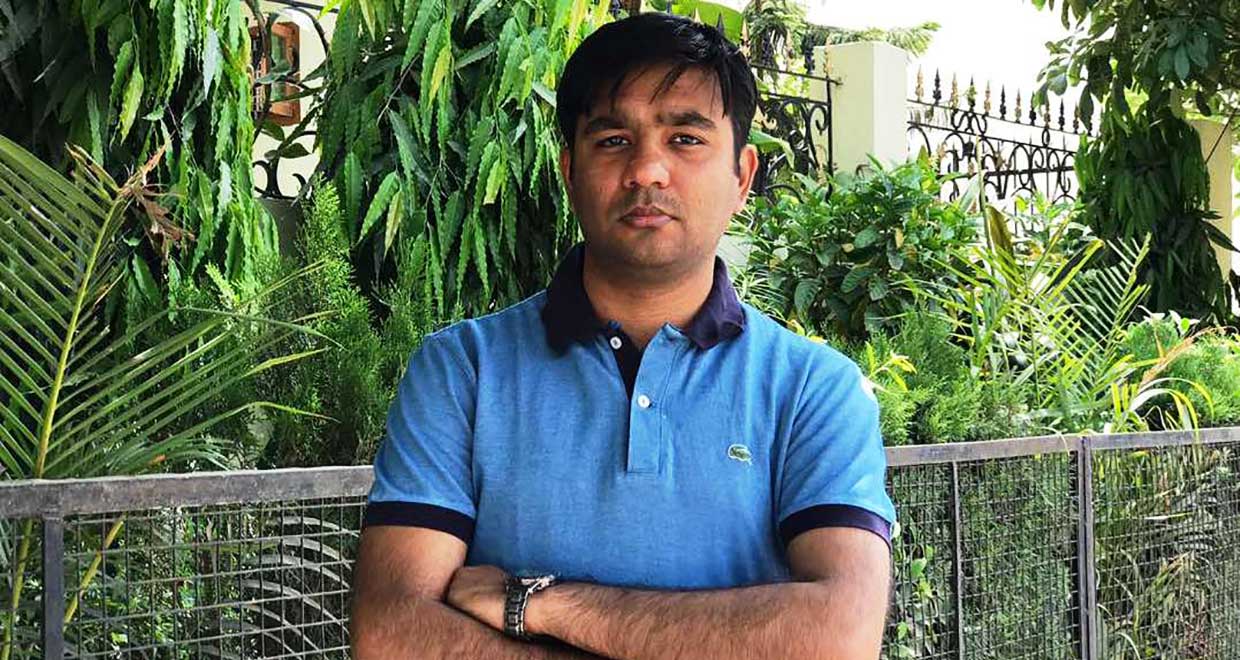
  • Sarvesh Saluja, Senior Associate, Trilegal, on working at Khaitan & Co., corporate law, and the need for an LL.M

    Sarvesh Saluja, Senior Associate, Trilegal, on working at Khaitan & Co., corporate law, and the need for an LL.M

    Sarvesh Saluja graduated in law from Vivekananda Institute of Professional Studies affiliated to Guru Gobind Singh Indraprastha University, in 2008. He then went on to pursue his Masters from Kurukshetra University and holds a Post Graduate Certificate in Cyber Laws from Indira Gandhi National Open University. After successful stints at The Practice, ibibo Group, PAV Law Associates, BT Telecommunications, Khaitan & Co., and Accenture, he is currently Senior Associate at Trilegal, where his role entails advising on various aspects of telecommunication, broadcasting and information technology regulations like interpretation of terms of various telecom licenses like UASL, UL, Audiotex License, OSP Guidelines, uplinking and downlinking guidelines, M&A Guidelines, spectrum trading and sharing guidelines, IT Act etc.

    In this interview we speak to him about:

    • His expertise in media, telecom, and technology law
    • The importance of pursuing an LL.M
    • His experience thus far

    How would you like to introduce yourself to our readers?

    On the professional front, I am a corporate lawyer specializing in Telecom, Media and Technology matters. On the personal front, I am a sports junkie. I follow most sports and try to take out time for some sports like cricket which are very close to my heart.


    Did you feel like not being from an NLU was a disadvantage in any way?

    Nostalgia kicks in when I think about law school days. They were an eclectic mix of varied influences and activities. Activities in law school comprised moots, paper submissions in addition to the usual classes and the most important of all, college banter. I think the diverse activities and influences shape your personality in addition to your professional skills. Personally, I did not face any discrimination because of the lack of NLU tag. Most law firms judge you based on the work done. Having said that, having the tag of a prestigious institution comes with its advantages but one has to follow up with good work to actually build on the advantage.


    What were the activities, academic or otherwise, that you undertook in your law school days which in your opinion have shaped you and your career?

    I was an active participant in various moot courts organised by our college. Also, we had a regular system of court visits. I think the court visits and the moot courts got me acquainted with the level of persistence required in the profession.


    What kind of internships did you engage in during your student years?

    My internships were a heady mix of court practice and corporate law firms. I think the initial internships were more about finding out the fields which excited me and the later ones were about trying to gain a perspective on the work and tasks to be performed. I think all my internships gave me a perspective about various facets of law. I feel that the experiences gained at various internships lay down the foundation on which an individual can shape up the career.


    Are LL.Ms absolutely necessary for a career in law?

    I do not think that LL.Ms are an incumbent for a career in law unless one is looking to go towards academics. An LL.M program requires you to delve deeper into the areas of law one chooses. So in effect, one gets to do a lot of work and research on the chosen topics. Also, one gets to interact with a variety of people and gain perspectives which enhance the networking skills.


    What in your opinion are the factors to be taken into account by a student while choosing a field to specialize in?

    I feel that specialization comes in much later. A student should try to gain experience in at least the basics of law before going in for a specialization. One should take into account, I think, one’s aptitude and strengths. Also, one should also be very careful about the anxiety to jump into a specialization very early in career as the basics are something which cannot be ignored.


    Could you give us some insights on working with a tier-I firm like Khaitan & Co.?

    Khaitan is a truly professional law firm in every sense of the word. Khaitan gave utmost emphasis on looking for pragmatic solutions for clients and building a relationship on the basis of good work. I think the work culture and timings in most Tier-I firms revolve around the requirements of the clients. However, in terms of mentorship and colleagues, I think I was fortunate enough to work with some exceptional mentors and colleagues in Khaitan.


    What should the CV of a student aspiring to land a corporate job look like?

    A student should try to build in ample internship experience in corporate law firms/ corporates to land a good corporate job. Having said that, other activities like moot courts, court visits and being part of various committees carried out in college also count and one should build up an impressive array of activities to be put in a CV.
    I am a firm believer in the notion that during the formative years one should try to get into as many varied internships as possible. Also one should interact with the professionals in the field to gain perspective about the work and understand the finer nuances of the profession.


    How do you say interns should go about their work at a firm like Khaitan & Co., so as to get noticed in a positive way in the limited time they have?

    Due to heightened competition for slots in Tier-I firms like Khaitan and Trilegal, an intern has to be really pro-active. The earlier measure of just performing the given tasks has been upgraded and now the emphasis is on the analytical capabilities, smart work and ability for value add. I think these factors would help interns get noticed in a positive manner.


    Tell us about your current work profile with Trilegal.

    My current work profile in Trilegal is a mixture of the general corporate and TMT work wherein I am involved in both transactional work and regulator advisory. A typical day starts much before reaching the office when I read the e-mails and make plans for the work to be done. The timings hover depending on the requirements of the clients. A typical day would involve drafting, internal discussions and research on various aspects.


    What is your message to our readers?

    As a parting message, I would like to quote Justice Joseph Story who said, “The law is a jealous mistress and requires a long and constant courtship. It is not to be won by trifling favors, but by lavish homage.”
    In the present context, I believe this quote has become even more relevant and would go to the extent of saying that it is not only the lavish homage which is required but a lavish and consistent intellectual homage which is required to win it over.

  • Abhiraj Krishna, Founder, Abhiraj Krishna Associates, on independent practice, and e-commerce law

    Abhiraj Krishna, Founder, Abhiraj Krishna Associates, on independent practice, and e-commerce law

    Abhiraj graduated from NLIU, Bhopal, in 2009. Soon after, he joined the Mumbai Office of Khaitan & Co. While with Khaitan, Abhiraj worked on diverse client matters, on domestic and cross‐border mergers and acquisitions, private equity and business transfers. Abhiraj advised many domestic and international clients, on entry options in India and assisted them in setting up businesses in India by advising them on key structuring issues with respect to Indian law including foreign exchange regulations in India. He is currently sole proprietor at his independent venture, Abhiraj Krishna Associates, which aims to provide participative and facilitative legal solutions to business eco-systems in India.

    In this interview we speak to him about:

    • His time at NLIU
    • His experience at Khaitan & Co.
    • Venturing into independent practice

    How would you like to introduce yourself to our readers?

    My professional credentials aside, on an aspirational note, I would always like to be introduced as a lawyer with solutions. And as a business facilitator and somebody who takes the stress out of the legal practice but not seriousness.


    Give us a brief overview of your NLIU experience

    The NLIU experience is fundamental to the development of my overall personality. Law school years are the foundation blocks and so this experience would always remain precious for me. At the cost of sounding a little grandfatherly, I would like to emphasise that law school experience is far more than just legal learning. This is the time for you to involve and engage with the argumentative and reflective side of you. It is this that you carry forward in your life.

    One thing that was distinct at NLIU during our time there was that things were not always easy. The institution was still in its evolutionary stages (from both infrastructure and public perception perspective). Since we knew that things were not always easy to get, we always had the zeal to go that extra mile and we learnt how to wait. The relationships we built then, we carry with pride till today. I am not talking about only my wife, Aditi (who was my batch mate in law school), but also our faculty, office staff, helpers everyone. The immense diversity in terms of social and cultural background of students at NLIU instilled in us acceptance for all. And the ability to hear, understand and appreciate other perspectives. These are real learnings.


    What are the subjects that you took particular interest in during your law school days?

    I have always been the type to be interested in philosophy courses. I was one of those in law school who was often caught reading Kafka, the one who was often told by everyone to stop the gyaan! No wonder then that I have many nicknames around that. So, yes, I had a keen interest in courses that reflected on the philosophy of law like the courses in English (that was more Law and Literature Course), sociology of law, jurisprudence, etc.
    To be honest, these fundamental courses have gone a long way even in developing my practice of corporate law. The methodology of analysis learnt through these humanities courses lay the foundation of going beyond the book. I think this is absolutely critical when you want to expand your practice.


    What kind of internships did you undertake during your student years?

    I have interned at a variety of places, State Human Rights Commissions, SEBI, Khaitan & Co, Talwar Thakore & Associates, district courts and High Courts. I don’t think there is any strategy for internships. However, in my view, five years at law school with approximately ten months of internship is a great time to peep into various practice areas. The best part about legal education is that it opens a whole set of career opportunities. The more you explore the better it is. It is important that you love what you do and it’s difficult to find real love in the first shot. So keep exploring. However, it is still recommended, especially if you are purely applying for jobs through campus or otherwise, that by the start of fourth year you start focusing on internships in the area that you want to work on.


    In your opinion, what are the law school centric activities that you would recommend as necessary experiences for every law student?

    Anything and everything that you are interested in. I am too small to comment on the requirements of being a successful advocate. We all are students and will always so remain. There is so much to learn and explore. I am of the view that this “balanced CV” issue is overhyped. In this profession, you are as good as your last deliverable. So, you would actually not carry your grades, moot-court certificate, or papers anywhere. What you can carry is your learning from them. Having said that, you have to justify your law school stay to your perspective employer. Not doing anything may not be the best option if you’re looking for a job.


    Growing up, did you have a mentor?

    I have received so much guidance from so many people that it is difficult to single out names. But yes, my mother is my constant source of inspiration. My wife, Aditi, is my biggest critique and a pillar of strength. Life is a beautiful gift and legal knowledge is a very effective tool in adding to not only your beauty (through hard-earned money) but also for really creating a positive impact in your client’s business and/or life. This realisation itself is a very positive and inspiring thought.


    What does it take to make the cut and land a Tier-I job?

    (Abhiraj had previously worked with Khaitan & Co., one of the most sought after firms for placements by students, as a Senior Associate.)
    For one, I was amongst the top students (in terms of grades) and had previously interned with KCO. However, ours was a very difficult time in the wake of recession (2008-2009), so it was a lot of divine grace in my case. Law firms today are looking for aptitude and attitude. At times, where we are already discussing artificial intelligence, conventional ways of looking at legal practice of only having certain CGPA/ papers is slowly becoming redundant.


    How significant is Grade Point Average with respect to recruitment at Tier-I firms?

    This is a first indicator of a student’s seriousness, so it is relevant. The first level filter. Grades do not show how intelligent you are but it is a good indicator of how diligent you are. So, it is important to have good grades but that number/rank race is irrelevant.


    What or who motivated you to take the leap of faith to found your own consultancy firm?

    It was an individual phase-wise evolution. Whatever legal practice I have is from my learning at KCO. However, there came a time where I decided that it is time for me to move and concentrate on the areas of law that I am passionate about. I still get a lot of guidance from my seniors at KCO. My father (who was a law professor himself) used to tell me always that in legal practice, if you do not have confidence of earning your bread and butter from independent practice, then don’t expect a law firm to give you a job. They will require you to earn at least four parts so that you can take one part for yourself.

    AKA just happened. Really, I did not think this through then and I am fairly instinctive about this even now. I am fortunate that corporate leaders and institutions have shown faith in my work. I just endeavour to deliver to the best of my ability. This is a long journey. But it is fulfilling and I am enjoying it. This is all what matters now.


    Do you provide internships at your office?

    Yes. We do have a comprehensive intern guidance program. We are open to both in-office and remote working arrangements. We have commenced recruitment and are primarily looking for freshers. The quality we seek is appreciation and eagerness for learning; don’t say no to any work. Since we are not receiving huge amount of applications at the moment, we really don’t need to apply the grade filter


    What does your regular working day at AKA look like?

    To be honest, a typical day is as busy as any corporate firm. Multiple matters are underway at any given point in time. However, we try to keep it as stress free as possible. Removing unnecessary formality in the way of our functioning, we have a relaxed work culture. We do a lot of regulatory structuring / start up advisory so there are lots and lots of discussions. Challenging new developments present themselves every day.


    If given an opportunity, what would you do differently in your career journey up to this point?

    Nothing. The only blunder one can do is to believe that there can be any blunder in career. It is an evolution. There is always a U turn, few miles away. Don’t restrict yourself in any stereotyped images. Experience, explore, then firm up your mind.


    Is there any other suggestion you would like to give to our budding lawyers?

    The legal profession is a very demanding one. You have to enjoy this journey to sustain. While money is a good reason to choose corporate law, it is not good enough to sustain your practice of law. Find your own path. Try opening a PPF account as soon as possible-patience, perseverance, and faith. This account is helping me realise my dreams. It may also be helpful for you.

  • Rupesh Mishra, Assistant VP-Legal, Everstone Capital, on being In-House Counsel, working at Khaitan & Co., and his experience

    Rupesh Mishra, Assistant VP-Legal, Everstone Capital, on being In-House Counsel, working at Khaitan & Co., and his experience

    Rupesh Mishra graduated in law from National Law Institute University, Bhopal, in 2007. After a successful stint of approximately seven years at Khaitan & Co., he joined Everstone Capital, a South East Asia focused private equity fund and presently works as Asst. Vice President – Legal (Private Equity) at their Bangalore offices. He focuses his expertise on private equity and venture capital investment, joint ventures, mergers and acquisitions, strategic alliances, foreign investment laws, and general corporate law advisory work.

    In this interview we speak to him about:

    • His time at NLIU
    • Working at Khaitan & Co.
    • His experience thus far

    How would you like to introduce yourself to our readers?

    First and foremost, I would like to thank SuperLawyer for this interview. By way of introduction, I was born and raised in Rewa, Madhya Pradesh, a district town better known for white tigers. In my free time, I like to spend most of it playing with my one-year-old daughter, Miraya, helping my wife with her ventures, and reading fiction.


    Tell us a bit about your time as an undergraduate at National Law Institute University, Bhopal.

    It is indeed a great privilege to attend an NLU. Law school was a massive platform for me both in terms of personality development as well as career opportunities. During the five years, I had the good fortune of reading and understanding law and literature, I met some brilliant minds and inspiring characters, and made some friends for life. Overall, law school was full of fun, friends, aspirations, hard work and, of course, a race to score grades.

    Did you take part in co-curricular activities while in college?

    (Rupesh has represented his law school at the Philip C. Jessup International Law Moot Court Competition.)

    I used to play volleyball, did a few plays, participated in moot courts and essay competitions and wrote a few articles. However, I feel that I could have done much more than this. Co-curricular activities are a medium to express various traits of your personality. It also helps in learning team work, coordination, management, organising skills, etc.

    The Philip C. Jessup International Law Moot Court Competition was probably the biggest event of my law school life. It was the first and only time I participated in a moot court competition. I would like to offer my sincere gratitude to the two speakers of my team who preferred me as their researcher. I think we were a remarkable team. We were really thrilled after qualifying for the international round particularly because it was the first time our university qualified for the international round of Philip C. Jessup International Law Moot Court Competition. The feeling of representing our nation and university on an international platform was incredible.

    The entire process was enriching. It was amazing to witness law students from around the world approaching the same problem in various different ways with their unique style of arguing. It was a great confidence booster for me. It also helped in refining my research and analytical skills which have always been noticed and appreciated throughout my professional career.

    What were your areas of interest during your legal education?

    During the law graduation course, I was more inclined to substantive laws than procedural laws. Contract law, constitutional law, corporate laws, public international law, IPC were my favourites. I developed an inclination for corporate laws in the last two years of the course when I was sure that I will pursue a career in corporate laws.

    What are the causes you feel strongly about?

    I feel strongly about wildlife and nature. I believe that it is our duty to preserve them for the future generations. I am associated with a few NGOs which support these causes.


    What advice would you give students in avoiding a decision paralysis?

    I am always in favour of more education. It is always a plus to your personality and legal acumen. If one has the time and resources, he/she should definitely pursue higher studies without comparing its utility and returns in monetary terms. In my view, going for further education after four to five years of work experience is a better choice.


    From a law student to a lawyer, how will you describe the transition?

    Transition from a law student to a lawyer is a gradual process, not an event. It is about responsibility, accountability, coordination, professional conduct, discipline, etc., which you learn over a period of time. Due to the guidance and support of people with whom I worked during my initial professional life, it was quite a smooth transition for me. According to me, perseverance, hard work and discipline are the keys to success.

    Could you please share with us your early professional experiences at Khaitan & Co?

    At Khaitan & Co. my core area of practice was M&A and general corporate advisory. I also worked extensively in the areas of education law, NBFCs and real estate laws. I feel fortunate to be picked up by Khaitan & Co. on day zero of campus placement. In 2007 when I joined Khaitan & Co., it was not as big as it is today. There were a handful of lawyers in M&A and the general corporate team. I had the great privilege of directly working with the managing partner as well as other senior partners of the firm. This helped me immensely in terms of exposure, client management, time management, quality of deliverables, etc. The overall experience with Khaitan & Co was enriching. It laid a strong foundation for my professional career going forward.

    After seven years at the firm, what I can say for sure is that there is no short cut for success; you should keep working towards your goals every day, and over a period of time you will definitely see favourable results.


    What prompted you to take up a position at the Everstone Capital?

    I was always fascinated by the position of a General Counsel, the kind of respect they command inside and outside the organization, their business acumen, their practical and holistic approach towards any legal issue and tremendous risk assessment ability.

    After leaving Khaitan & Co. in April 2014 and shifting base to Bangalore due to personal reasons, I came across this opening at Everstone and decided to go for it. I was particularly impressed with the job profile (mainly the private equity related work, which I enjoyed doing in the law firm as well) and the unique opportunity to get a first-hand experience of private equity business. Today, after working at Everstone for more than two and half fruitful and successful years, I can say that I am a better ‘business’ lawyer. I am glad I took the right decision at the right time! Everstone has a very strong in-house legal and secretarial team. My role as an in-house lawyer is professionally very different than an associate’s role in a law firm. My role is more about risk management and enabling the business to maximize opportunities within its risk appetite. As in-house counsel, I have to move beyond the narrow technician tag and be a proactive and trustworthy partner rather than someone who is reactive and deals with a problem when they arise. Also, there is a great sense of partnership at Everstone—where all functions support each other extensively—as well as support Everstone’s partners such as its portfolio firms and its advisers.

    Right from the non-disclosure agreement and term sheet stage, I am actively involved in drafting and negotiation of definitive documents, monitoring the transaction and implementing the process and systems to achieve the desired outcome in light of my knowledge and understanding of the “bigger picture” of the company’s operations, in coordination with my very smart colleagues and inspirational seniors. Further, I am also responsible for coordinating with and managing multiple work streams such as bankers, legal counsels, tax advisors, internal investment team, finance team, secretarial compliance, etc. This is an exciting experience and allows for great learning. I also help the portfolio companies with legal advice or documentation from time to time as and when required.


    Could you share with us the process you adopt from choosing a research question to writing the article?

    I prefer to write about contemporary issues. There are a couple of processes through which I choose a topic. Firstly, if I have to deal with any peculiar issue as part of any transaction or otherwise, I like to share my research and learning about that issue in the form of an article. Secondly, if there is a new legal development which may have a significant impact on my practice area, I like to share my thoughts about that as well. After selection of the topic, I think about the readers who will be interested in that subject matter. Depending upon the category of readers, I decide the scope, content, and language of the article. Once these things are sorted out and I have a synopsis ready, I start working on the content of the article. For that, I do extensive research and speak to experts to get their practical inputs. Once the first draft of the article is ready, I share it with at least one subject matter expert and someone from the target readers’ community for proof reading and inputs.


    What does a typical working day look like for you?

    There is nothing like a typical working day, every day in office is different. The beauty of private equity is that no shortage of action, especially at an active and highly professional firm like Everstone. There will always be something exciting happening either in the form of potential investments, live deals, exits or portfolio management. A regular working day will involve discussion with business folks on new investments, live deals and exits opportunities, working on NDAs, LOIs, terms sheets, transaction documents and some advisory work for portfolio companies. Further, given that in a private equity firm you are surrounded by many investment professionals, I spend a lot of time discussing and understanding business and market related matters on a daily basis. This helps in honing my commercial and business acumen and the investing professionals at Everstone have a great depth of experience and are very supportive.


    Did you have a mentor or guide during the formative years of your career?

    Yes, I had a few mentors during the different phases of my career. It was a mix of senior folks in the law firm, friends from law school and close family members. In my view, it is vital to have someone around with whom you can share your doubts or problems and who can guide you towards the right path. Having said that, one should not expect that someone else will steer your boat away from troubled waters. That is something you yourself have to do. A mentor or guide can help you with developing the right perspective and a balanced approach to various things but at the end of the day, you have to execute and implement those learnings.


    Where would you like your career to take you five years down the line?

    Five years is a long time and it is difficult to predict anything right now. I am extremely satisfied with wherever I am and what I am doing presently. I wish to continue this momentum and keep discharging my responsibilities with utmost enthusiasm and excellence. In terms of career goals, as an in-house counsel, I am particularly looking forward to enhancing my domain knowledge and acquiring the right skill set to manage and resolve disputes. Further, I look forward to developing expertise in the domain of new laws relating to food products, pharmaceuticals, e-commerce, payment systems and taxation.


    Given the dynamic nature of the field you practice in, how do you keep yourself updated about the latest developments in the law?

    I religiously read at least one business newspaper every day to keep myself updated with current affairs. Apart from that, I read newsletters circulated by the Big Four firms and certain law firms on important legal developments. I also visit websites of key regulatory bodies such as SEBI, RBI, DIPP, FSSAI on a weekly basis to track any new circulars/notifications. Further, I read the IPO prospectus filed by the companies with SEBI in detail to understand different sectors and regulatory environments relevant to that sector.


    Do you observe a paradigm shift in the demand for In-house counsels with large companies beefing their in-house legal teams?

    Over the last ten to fifteen years most corporates and financial institutions have come to realize the benefits of having a dedicated legal team and now we see teams of more than just a General Counsel, with many hiring specialist lawyers with niche skills. Today, there is a trend to do more internally than externally. This trend is underpinned by proven cost savings and growth in complexity and risk in modern business models and industry-specific regulations which often need a lot of practical experience to deal with. Often the best response is to have expert lawyers in-house.

    Although the internal legal teams continue to expand due to solid demand for in-house counsels with five to eight years’ post-qualification experience, I believe that there is still room for growth. A lot of large companies still have just one or two lawyers and people still do not know the value that a good in-house legal department can bring because they just go to lawyers when they have a problem and do not have coherent internal processes and procedures to stop them getting into problems. I do hope that there will be an improvement in demand and supply of in-house lawyers. Everstone is one company that really understands the importance of in-house counsels and put them to very good use.


    What would be your advice to current students aspiring to be an in-house counsel and why?

    Contrary to the general perception, being an in-house counsel is no less challenging than being a lawyer in a law firm. Start with being a great lawyer, and then develop the other skills that may prove essential to your career choice. In-house counsel can be a great stepping stone for those who want to be further integrated into the management of an organization. Just like law firms, in-house counsel departments vary significantly in terms of their size, resources, work-life balance and a variety of work. Based on my limited experience in each role, I have found that both positions provided me with tremendous learning opportunities and helped me develop different sets of skills that are applicable to the practice of law, whether it is at a firm or in-house. In short, as with any career decision, there are always advantages and disadvantages. The decision to move to an in-house role is certainly not for everyone and depends on each individual’s personal preferences and career goals. For me, joining Everstone as part of their in-house counsel team was a great step and learning opportunity. Moreover, the opportunities in in-house or in private practice vary significantly and exist across a spectrum rather than as two discrete options. At the end of the day, finding the perfect job is as much of an exercise of introspection as it is an external search.


    Is there any other suggestion you would like to give to our budding lawyers and corporate law enthusiasts?

    Dream big and dare to achieve it. Corporate law practice is not rocket science. Anyone with strong domain knowledge and decent drafting and persuasive skills can do really well. Be original and never lose your identity in the process. Do not let failure go to your heart and do not let success go to your head. Have fun and enjoy every bit of the journey.

  • Kirti Krishna, Senior Associate, Khaitan & Co., on corporate law, turning author, and his experience

    Kirti Krishna, Senior Associate, Khaitan & Co., on corporate law, turning author, and his experience

    Kirti graduated from SDM Law College, then affiliated to Mangalore University, in 2012. With a very minor litigation stint, he moved on to a boutique law firm called Themis Associates, during which he was also on secondment with Sequoia Capital. He moved to Khaitan & Co in 2015 and has since been a part of their Securities, Capital Markets and Corporate team. His experience spans Mergers and Acquisitions, Venture Capital / Private Equity investments and the Securities market. He is also deeply inclined to labour law and compliance in general.
    In this interview we speak to him about:
    • Juggling extracurricular interests with academia
    • Writing his book
    • His experience in corporate law

    When did you decide to take up law as your profession?

    Unlike most others, I always knew I wanted to be a lawyer. Back in school, I was greatly drawn to academic disciplines that discussed human culture, history, and politics. The farthest memory I have of me wanting to be a lawyer is from my fifth grade. I recollect having participated in a debate competition, winning it, and getting back home only to tell my parents that I will be a lawyer someday. By the looks of it, I’ve successfully lived up to achieving my childhood goals.

    I’m told that my maternal great-grandfather was a District Judge in Alleppey, Kerala. Apart from him, to the best of my knowledge, I think I’m the only person in my family who took up law as a profession.


    Tell us a little bit about your life a student of law at SDM Law College. 

    Some of my best years were spent at SDM Law College. The institution is a private law college in Mangalore, Karnataka. As a student of law, I found deep interest in academics as well as co-curricular activities. Given that Mangalore is a very education-centric city, we would have colleges host student festivals every other week. Apart from participating in moots, I also had the opportunity of participating in an array of management fests, and finding newer avenues to excel, without limiting myself to law. As a student, I kept myself on the move all the time and enthusiastically involved myself both with the college’s moot court society as well as the students council.


    How did you divide your time between academics and co-curricular engagements?

    Luckily enough, my college had very flexible hours. Between my first and fourth year, I had classes from 09:00 AM to 12:30 PM, and for a part of my final year, I had classes from 09:00 AM to 1:30 PM. During my final year, I recollect my batch creating a ruckus when we were told that our classes may be extended by an hour. Our principal had to finally give in, and we ultimately managed to ensure that our classes did not extend beyond 12:30 PM.

    Given these hours, I would typically use the rest of the day to focus on participating in moots, fests and other activities. When I was in my first year, I had made a goal of attending at least one moot each semester. While I couldn’t quite achieve this, I managed to make it to about six moots in the five years that I spent in college. As a student, apart from academics and co-curricular activities, I also took up part-time jobs to earn extra pocket money. Between my first and third year, I worked as a part-time news anchor for a local cable show, and also undertook some assignments for the All India Radio. In my final year, I worked part time at a call centre.


    What kind of activities did you undertake in law school that helped you nurture this interest in writing and editing?

    I come from a family which draws a lot of inspiration from the arts. I have always been interested in writing and don’t think I consciously took up activities in law school that helped me nurture this skill. My folks always laid too much emphasis on the power of books and the habit of reading. When I was barely six, my mother gave me about a 100 Amar Chitra Katha books and made sure I read at least one book each week. In my teens, I was introduced to the likes of J D Salinger, Fitzgerald, and Ayn Rand. Amidst all of this, I was also gifted the entire Harry Potter series at some point resulting in me, a 27 year old man, continuing to identify myself as a hardcore Potterhead. With all the books I read, my imagination found newer dimensions to explore. What began with scribbling random thoughts on pieces of paper, transformed into me writing blogs, and ultimately, writing a book.


    From a law student to a legal professional, how will you describe the transition?

    Back in college, I had idealistic dreams of getting into litigation after graduation and saving the world. My lecturers continue to find it really hard to believe when I tell them that I changed paths and took up corporate law as a profession. To be honest, the transition from college to the legal profession was not very easy. I started working immediately after I gave my final exams in the year 2012. For the first six months, I practiced law, traveling from court to court and making minor submissions whenever I was given the opportunity. I then moved to Themis Associates, a full service law firm, which gave me the jump start I needed. Themis introduced me to the nuances of corporate law, and gave me hands-on experience on how the system really works.

    After spending nearly three years in Themis, I moved to Khaitan & Co., which again, opened up abundant opportunities for me to explore and learn. When I look back, I see that my five years of law (though filled with a lot of fun) were fairly monotonous. For instance, every year I followed a fixed routine: classes, co-curricular activities, work, tests, and friends. The past five years of my ‘professional life’ have been a whirlwind of sorts. There has been so much activity and learning that I’ve hardly found time to pause and think about how much has changed. To me, the transition has been all about being laid-back in college, to becoming extremely fast-paced (while learning on the job) at work. Corporate law has over anything else taught me the importance of time and how fast months roll into years.

    Tell us about your early professional experiences Themis Associates. 

    Since I had a very minor stint as a litigant, for all purposes, my job at Themis Associates was pretty much my first big job. I spent close to three years at Themis and was given several opportunities to understand law, and find different ways to excel. When I joined Themis back in 2012, I had very little understanding of corporate law, and found it very difficult to draft basic documents. I still remember working on my first due-diligence and being rebuked by my immediate senior for my ‘abysmal’ work. To make things worse, back when I had just started working, I thought that the ‘main objects’ of a company was its mission statement – and not something that is crystallized in its charter documents. Some smartness, no?

    As I progressed though, week by week, month by month, the more assignments I was given (and the more number of times I was berated for my work), the better my understanding of law became. At Themis, I was a part of the firm’s transaction advisory team as well as the compliance team. Being a part of the transaction advisory team, I had the opportunity of advising funds and companies on various rounds of investment. In the compliance practice, I was part of a team which created 360 degree compliance structures for companies across sectors including healthcare, FMCG, and e-commerce. Given the diversity of my profile at Themis, I was taught that there is absolutely no substitute for hard work – and to be able to create a difference, one must learn how to work smart. This apart, through Themis, I also ended up meeting some of my closest friends, each of whom are today, very well settled in their respective areas of practice.


    On what parameters do you choose the projects you work on? 

    I have never been picky about the projects I work on. To me, it is very important to be practice agnostic and make an attempt in doing anything and everything that comes your way. In my five years of practice, I have managed to gain some experience or the other across both ends of the spectrum. At both Themis and Khaitan, I have been very flexible in terms of assignments and have never quite complained about the kind of work I have been handed over. Since the very beginning of my career, I have wanted to be a generalist without consciously building my practice around a specific body of work.

    As a part of Khaitan’s Securities, Capital Markets, and Corporate practice, I have been involved in initial public offerings, qualified institutional placements, and offshore bond issuances in various capacities. In these transactions, I have typically represented the issuer, the book running lead managers, and / or the selling shareholders. This apart, my role also entails providing regulatory and general corporate advisory on regulations issued by the Securities and Exchange Board of India, foreign exchange regulations, and other regulatory authorities. In the corporate space, at Khaitan, I have been involved in advising on venture capital and private equity investments, as well as court convened mergers and amalgamations. I also have a penchant for employment laws. Given this, I have had ample opportunities at Khaitan to advise on various employment related matters.


    Tell us about how you developed a passion for writing.

    Like I mentioned earlier, I have always enjoyed writing. My book, Piece of Mind – Pun Intended was released way back in 2013 and I took to writing it because I have always wanted to be identified as a writer. Very honestly, I drew inspiration from the banality of my own life, and decided that it was important to achieve something out of the ordinary, at the time when I had ample time and an abundance of opportunity. I started writing the book some time in my final year of college. It took me about seven months to come up with a concrete idea and about a month to execute it. Though it has been about five years since I wrote and published the book, I have very fond memories of the entire process.


    What are the challenges and learning opportunities that you were faced with in writing this book?

    I came across two major challenges while writing and publishing the book. My first major challenge was ensuring that the book was well-edited. Finding an editor to read my book and share meaningful insights on the language and grammar was a herculean task. My second major challenge was finding a good publisher. Fortunately for me, my publishers were very enthusiastic about my book and provided me with all the support I needed.

    There are several authors who have inspired me. While I do enjoy fiction, I have been deeply inclined to philosophy. I have found extraordinary inspiration in the writing of authors such as Albert Camus, Ayn Rand, Jean-Paul Sartre, and Ernest Hemmingway. I recollect Sartre having once said, “everything has been figured out, except how to live”. Back when I wrote it, my book was my personal attempt at figuring out how my life should be, and what I need from it. The proficiency and composition came with aligning my thoughts and finding the right words to express myself. I spent about seven months to come up with the idea because my thoughts were scattered and I had absolutely no idea about where to begin and where to end. The moment I managed to have my thoughts in place, I had the flow in control and the book came along.


    Could you tell us about your experience participating and going on to win the reality show on MTV called On the Job 2?

    Back in college I worked part-time with a local cable operator in Mangalore as a news anchor for extra pocket money. Hoping that this experience would help, I auditioned for ‘MTV On the Job – 2’ when I was in my second year, in the year 2008. The show, focused on showcasing off-beat careers such as journalism and radio-jockeying had contestants being pitted against each other. As a part of my challenge, I was given an assignment with Headlines Today (now India Today), where I had to read news, live on-air (or so told), and face real time challenges. While I was on-air, my teleprompter went off and when I was asked to break the news of UFOs being cited – I said ‘aliens were going to take over the earth in some time’. After what all my friends referred to as a ‘comedy of errors’, I, along with another contestant ended up winning the show. A good takeaway from participating in the show was an internship programme with Headlines Today.


    What are the social causes you feel strongly about? 

    Back in college, I was involved with two organisations for most part. Firstly, I was involved with a home for the elderly called ‘Vishwas Trust’. At Vishwas, I had the opportunity of setting up a helpline and day care centre for geriatric patients suffering from Alzheimer’s disease. Given that my mother too was an enthusiastic social worker, I was given a freehand in organising various programmes to raise awareness on Alzheimer’s disease and means, using which, such illnesses can be treated. This apart, I was also involved with Make a Difference, an organisation which aims at imparting education to children who live in street shelters. Since I had ample time back in college, I always found it easy to involve myself with some social cause or the other.

    Since I began work, I haven’t quite had the time to personally involve myself entirely with social work. However, I vicariously support a few organisations such as the ‘Deepika Centre’, a school for special children in Bangalore, and IDIA.


    Where would you like your career to take you five years down the line?

    A friend once told me that you can’t have it all. But to me, life has always been about achieving it all no matter what it takes. Personally, I don’t believe in long term goals and rather believe in taking in one day at a time. This policy has helped me well, and I have complete faith that it will continue to lead me on in my journey of life. As for where I see myself five years from now – I hope, on a holiday at one of the Caribbean islands.


  • Sarthak Sarin, Principal Associate, Khaitan & Co., on studying in Oxford, mooting, and his experience

    Sarthak Sarin, Principal Associate, Khaitan & Co., on studying in Oxford, mooting, and his experience

    Sarthak graduated from Symbiosis International University in 2010. He then went on to pursue his Masters from Oxford, with a Masters of Science in Law and Finance. He is currently Principal Associate in the Corporate and Commercial team at Khaitan & Co., and has advised the likes of CK Birla Group, HCP Healthcare, SBS Holdings, among others.

    In this interview we speak to him about:

    • Studying in Oxford
    • His experience in commercial law
    • His mooting experience


    How would you like to introduce yourself to our readers?

    I am a first generation corporate lawyer with an enormous appetite for travel and binge-watching. I am currently a Principal Associate at Khaitan & Co and my practice predominantly focuses on domestic and cross-border M&A, joint ventures and collaborations, retail trade and e-commerce, exchange control laws and general corporate and commercial advisory.


    What motivated you to opt for a career in law, amidst the many options that were available to you?

    Coming from a business family, I did not have much of an option in choosing a career path, given that the majority of the dinner table discussions (on the topic of career choices) with my family were consumed by the glorification of the family business and how I was expected to accentuate the legacy that my father had worked very hard to create. Consequently, my career trajectory was meant to sail through a course in business studies from an overseas institution.

    Little we knew that destiny had something very different planned for me. Just around the time of my graduation from senior school, my father had asked me to get involved in a project that entailed a joint venture which my father was eyeing from a long time. Given the indispensable need of legal services, I very soon, found myself surrounded by a group of lawyers on a daily basis. Watching the lawyers negotiate the various facets of the joint venture arrangement was captivating and sparked curiosity in me about the practice of corporate law. Fortunately, the transaction went on for a good period of time and provided me with multiple opportunities to interact with legal practitioners and better appreciate the minutiae of corporate legal practice.

    The ensuing experience and my new found interest in the work of John Grisham ultimately sealed the deal for me. Convincing my father was not an easy discussion, but a good old bottle of scotch and my endless pitching of the entrepreneurial element underlying the corporate legal practice did the trick.


    Do you think or ever felt that there is a divide between NLU and Non-NLU students in the matter of getting jobs with law firms?

    No, I have never felt or experienced any unfavourable reception from the legal fraternity just because I am a non-NLU student. At the same time, my experience also dictates that the law firms are seasoned enough not to disregard a good talent just because a law student lacks the NLU tag.  Nevertheless, having said that one thing that one cannot (and does not) overlook is that getting admission into a prestigious law school in itself is seen as an accomplishment for a limited purpose of appraising dedication and ambition in a potential candidate.


    How important is mooting in the life of a law student? 

    (Sarthak has himself been judge at several mooting contests.)

    The importance of mooting in the life of a law student cannot be over-emphasised for a simple reason that the skills that are required to excel in this extra-curricular activity are very much akin to the skills that a lawyer requires to prosper in not just the litigation practice, but in other practice areas as well. In my view, the following qualities/skills separate a good mooter from the crowd:

    • A comprehensive understanding of the facts in question together with the applicable laws, jurisdictional issues and the underlying legal principles and propositions;
    • An ability to present the arguments with confidence and civility;
    • A curiosity to go beyond the scope of the matter in hand for the sake of comprehensiveness coupled with ingenious thinking to effectively tackle probing questions;
    • strong interpersonal and communication skills;
    • an innate competitive spirit; and
    • clarity of thought as regards to the reliefs sought.


    What kind of internships did you undertake during your student years? 

    My internships portfolio was quite diversified and involved training under NGOs, trial lawyers, senior advocates, judges, medium to big sized law firms and a private equity fund. Fortunately, I had started out early and before the end of my law school, I had acquired reasonable insight into a variety of practice areas (covering company litigation, general corporate advisory, IPR and finance) and consequently was quite clear of my career trajectory.

    Before narrowing down on the places to intern at, it is advisable to first clearly identify the practice areas one is interested in exploring. A clear thought process and a corresponding plan of action really comes in handy when strategising around internships. Moreover, given the competiveness of the legal profession, it is always useful to maintain a broad list of internship targets; which are also diverse enough so as to ensure a sufficient depth and breadth of experience. Lastly, it is equally important for the law students to understand that there may be rejections (and more so from your most preferred options), but that should not hold you back since there is always a next time or some other equally good opportunity awaiting you.


    Would you say higher studies are relevant for a career in corporate law? 

    In my experience, higher studies from a prestigious institution abroad does have a propitious influence on one’s career trajectory; but (most importantly) it is the network that you build during your higher studies that creates a real value in the long run. For the foregoing reason coupled with the dynamic experience of living in a foreign country amidst a completely diverse culture and lifestyle, I would suggest looking only at the options outside India.


    What does the CV of a student seeking admission in a premier university offering an L.L.M program have to look like?

    Comprehensive, inimitable, seamless and immaculate – that’s how a CV should like for any post-graduate program.

    • Comprehensive: A CV should be a perfect blend of a consistently good academic performance, internships experience and a number of extra-curricular / co-curricular activities.
    • Inimitable: what makes a CV standout from the rest? It is the inclusion of that one unique extra-curricular activity, internship experience or accomplishment that invigorates the readers and makes them believe that the applicant in question will undoubtedly bring a fresh breath of outlook and experience to the course. Pertinently, this element of uniqueness is assessed against the applicant’s own background, experience, education qualification and the eventual career goals and (in some way) should reinforce the skill-set that the applicant is relying on to vindicate his or her application for a particular course.
    • Seamless: A CV should be seamless in the matter of establishing a logical nexus between the career trajectory and the ultimate aspiration of the applicant. Accordingly, if one aspires to be a corporate lawyer and has applied for a specialised program in corporate law, then the CV should demonstrate in a coherent manner a trajectory that accentuates the applicant’s enthusiasm, efforts and ambition in the subject/practice of corporate law.
    • Immaculate:  Check and double check; a CV should be crisp, readable and devoid of any typos and grammatical error whatsoever.


    How important are grades, in your opinion? 

    Grades are certainly not a reliable yardstick to judge how successful a law student would be as a lawyer. However, in my view, consistently good academic performance does play an important role in the matter of securing admission for higher studies in a prestigious institution abroad or at least pushing one’s job application at the top of the stack. The reason being that when faced with an overwhelming amount of job or post-graduate applications for a limited number of openings, it is not unusual for the HR / admissions department to give a significant weightage to grades so as to shortlist the potential candidates, since a consistently good academic track record demonstrates commitment, focus and hard work.  

    Accordingly, in my view, grades / rankings are given a serious consideration in the matter of weeding out the crowd from the promising applications; but, ultimately, it is the overall comprehensive profile (in terms of an impressive statement of purpose, grades, extra-curricular activities, internships, publications and interpersonal and communication skills) fortified with a good amount of luck that seals the deal in the matter of securing admission for higher studies abroad or securing a job in a top notch law firm.


    Which is the ideal time to do an L.L.M?

    Given the investment that one needs to put in for pursuing a post-graduate program in law (both in terms of money and time), the ideal time to pursue such a program should be after a few years of practice. This way an individual will have the opportunity to better understand and appreciate the intricacies that underlie a particular practice area and what skills he/she would need to progress in such practice area. Consequently, he/she will be much more informed (than a law student) in the matter of evaluating the benefits that a post-graduate program would bring in his/her progression as a lawyer.


    What are your areas of specialisation and how did you go about choosing these fields?

    My areas of specialisation include domestic and cross-border M&A, joint ventures and collaborations and commercial disputes. Within these practice areas, I further specialise in retail and e-commerce sectors. I was very passionate about these practice areas right from the very beginning. Accordingly, I was very selective about my internships and focused extensively in familiarising myself with each of these practice areas. Nevertheless, realising the importance of some basic court experience, I started my career in litigation practice. During my momentary involvement in the litigation practice I predominantly focused on commercial litigation and arbitration (entailing shareholders’ disputes, oppression and mismanagement cases, interim reliefs under Section 9 of the Arbitration and Conciliation Act etc.) and regularly appeared before the Company Law Tribunal and the High Court of Delhi.

    Once I was confident that I had acquired some basic understanding of the commercial disputes practice, I shifted my focus on transactional advisory work. Before joining Khaitan & Co as a corporate lawyer in 2013, I pursued MSc in Law and Finance from the University of Oxford. This program helped me refine my skills in transaction structuring, introduced me to the global industry practices and trends in financial and strategic collaborations and M&A and reinforced my zeal in corporate practice.

    As part of the corporate group at Khaitan & Co, I have had the opportunity of working on a number of complex and multidisciplinary transactions. Khaitan & Co strongly believes in encouraging its lawyers to engage themselves in a variety of industries and sectors, with the impetus being that each lawyer should pick at least one industry and sector of his/her interest and specialise in it. To this end, we have weekly CLE sessions across all our four offices, wherein latest updates in each industry/sector and practice area are discussed interactively. It was on account of these sessions that my interest got entrenched in retail and e-commerce sectors and since then I have been actively engaging myself in a variety of transactions and advisory work in these sectors.


    At what stage in one’s law school life must one pick a specialisation?

    My experience dictates that for any law student choosing one particular area of practice as a career choice is the most vexing decision. The right time to make a decision in this regard should be around the fourth year of the law school, so that there is still some more time to ensure that the chosen practice area is actually the calling that one is indeed most passionate about.

    For someone who is yet to make this choice, the only way to find out which practice area appeals/suits you the most is to get as much experience as you can in a variety of practice areas. However, if the foregoing words of wisdom have not worked any wonder for you, then enter the legal profession with an open mind and try getting a good amount of experience in a number of practice areas/sector before taking the plunge.

    How would you say interns should go about their work at a firm like Khaitan & Co., so as to get noticed in a positive way in the limited time they have?

    From the standpoint of expectations at least, law firms do not differentiate between interns and the first-year junior associates. Accordingly, every intern should conduct himself/herself and go about his/her work in the same manner as a first-year associate does. To this end, an intern should (a) demonstrate enthusiasm and competence; (b) have a positive can-do attitude; (c) be eager to learn and absorb things quickly; (d) be confident to put forward his/her opinion and inputs; (e) have the ability to work under pressure and come up with practical and commercial solutions; (f) never shy away from responsibility; and (g) be proactive in seeking feedback. At the same time, an intern must possess remarkable interpersonal and communication skills and should also actively contribute to the knowledge management and the CLE sessions of a law firm.


    Is there any other suggestion you would like to give to our budding lawyers?

    Always endeavour to learn something new on a daily basis whether legal, commercial or general. However clichéd this may sound but the truth of the matter is that (in this profession) knowledge is the real power. Moreover, do not forget that the legal profession is really very demanding and competitive, so never hold back from putting in the hours and, while at it, creating a niche for yourself in at least one practice area/sector.


  • Devesh Juvekar, Partner, Rajani Associates, on litigation, ADR, and his diverse experience

    Devesh Juvekar, Partner, Rajani Associates, on litigation, ADR, and his diverse experience

    Devesh Juvekar graduated from K C Law College, Mumbai University, in 1995. Devesh Juvekar started his career with M/s Gagrat & Co in 1995 and went on to work with Hariani & Co, Dua Associates, Khaitan & Co and Kalpataru Ltd prior to joining Rajani Associates. He has an experience of twenty years at the Bar in traditional and alternate dispute resolution. He has handled, a wide array of matters such as Commercial Arbitrations, Recovery proceedings, Intellectual Property issues, Conflict of Laws, Product Liability cases, Writ Petitions and General Commercial Litigation. Devesh has appeared as well as briefed Senior Counsels, in numerous fora including at the Supreme Court of India, High Court of Bombay (Original and Appellate Side), various High Courts in India, City Civil Court, Small Causes Court, Sessions Court, Metropolitan Magistrate’s Court, Debt Recovery Tribunal, Company Law Board, Securities Appellate Tribunal and various other tribunals and quasi judicial authorities.

    In this interview we speak to him about:

    • His current role as Partner
    • The evolution of the legal industry from then to now
    • His experience in litigation and ADR


    How would you like to introduce yourself to our readers?

    I always perceived myself as a social creature first, lawyer next. I believed, and still believe in dealing directly with the person, rather than the facts and figures – it just makes more sense to me.

    Though my days in law college is a chapter best left unexplored, I do still fondly think back to those stray occasions where I attended classes and enjoyed subjects like contracts and constitutional law. It was a different world for our profession when I was still in law college – a world without seven figure salaries for fresher (articled clerks used to vie for stipends of ninety rupees), or competition among firms for poaching talent. While we didn’t wend our way through law college worrying about internships and letters of recommendation, we had our own worries. For one, it was difficult enough finding a job back then, much less a “paying” job! 

    Even without the scores of technological advances in communication, we made our connections with batch mates and stayed in touch with them during and after law college and those contacts helped.

    Presently, I am a partner at Rajani Associates, Mumbai based law firm and head its dispute resolution practice. 


    What  propelled you to pursue law as a career?

    In my days as a law student, law as a major was almost taboo – a major reserved for the trouble-makers, chronic flunkers and the aimless. It took a considerable bit of haranguing and begging back home to even get in. But law was something I knew I wanted to do, simply because I did not want to be a run-of-the-mill engineer or doctor or a chartered accountant that everyone else was looking to be. I guess it was more a choice from negation than an active preference, in that sense.


    What was the legal profession like back in the day?

    Like I said before, it was a very different profession back when I was in law college. National law schools were yet to make a mark and create the hiring heaven for law graduates that it has now. I had my heart set on becoming a Solicitor, and had even signed my articles with erstwhile Gagrat & Co., under the tutelage of Mr. P. A. Jani and started working towards it. A series of unexpected personal setbacks, however, compelled me to discontinue it. I do not regret the decision, however – it was an experience that enriched me while it lasted.

    Law practice in Bombay (as it then was), was steeped in traditions dating back to the nineteenth century – you slog in underpaid anonymity to become a Solicitor and earn the respect of your peers, or you slog it in unpaid anonymity as a Counsel till you find a sure footing in the Courts.


    What type of skills should a law student strive to develop while in a law school?

    Learn as much law as you can. But bear in mind that for every hour you put in law college, you will still need to put in an additional hundred once you get into the profession, simply into learning. I think reading is the most important skill for a law student which one should strive to develop while in law college. It makes the understanding of law easy and helps one in drafting too, both of which are immensely important for a lawyer. 

    Do not listen to those hundreds of people saying litigation is the way to go for bright students; it isn’t necessarily so. Litigation is something that requires hard work, commitment, and a willingness to emulate the Counsels – slogging away in unpaid anonymity. A lawyer who wishes to litigate would need to develop a lot of resilience – against irate clients, obdurate opponents, and (more often than not) a well intentioned judge who just won’t get your point. It is a long term commitment – one that cannot be taken idly and one that cannot be given up so easily.


    What were the difficulties you faced in the early days of your practice?

    Finances, of course, are the biggest difficulty that any budding lawyer would face in the early days and my case was no different. Articled clerkship was especially notorious for the stipends (or lack thereof) that came with it. My experience, even otherwise, was not very different from what you would normally hear from any lawyer growing up in the nineties – finding work, finding a good senior to guide you, making a mark with (and at) the bar, and trying to keep your head afloat through all this.

    I come from an era where internet was a luxury and mobile phones were only for the opulent. Research meant book/commentary unlike today where one has plethora of options on the internet and the information is just a click away.

    Building and maintaining a client both require hard work and utmost care towards them. Beside work of precision, maintaining harmony between good work and good relation is quite vital. Thus, I think, its good work alongwith being updated on various laws and not number of years is which bring in good clientele. Besides, good recommendation also adds to one’s list of client.


    Could you tell us about the atmosphere in each of the places you have worked at?

    (Erstwhile) Gagrat & Co.As one knows,to get a breakthrough in Gagrat was extremely difficult. For me, beginning my journey with such a reputed law firm was indeed special. Gagrat was an old school firm which gave me a very strong foundation with the help of supportive colleagues and superiors.

    Due to the old school style working of Gagrat, the court clerks also played a vital role in each matter. I still remember taking guidance from court clerks on the technical aspects for which they guided me swiftly.

    Hariani& Co.: Even though Hariani, was then, a mid-size law firm, it gave me tremendous exposure in variety of litigation. Besides free hand in various assignments, working under strict timelines was essential at Hariani. This gave me immense confidence in my field.

    Dua Associates.: It was during Dua that I started concentrating more on dispute resolution and arbitration. It was a leap towards next level in my career.  

    Khaitan & Co.: I worked in Khaitan & Co for more than six years. Thus, one can imagine how pleasing it was to be associated with Khaitan & Co for such a long time. I grew along with Khaitan, which gave me the key to handling various top notch clients.

    Rajani Associates: My present work place, Rajani Associates has a very homely environment with every one closely bonded to each other. I think this makes Rajani Associates a comfortable place to work, which, I must add, has a positive effect on the work. I have dedicated team members and each one of them are hard working.

    Different law firms have different style of working and so does the environment vary.  Work environment plays a very vital role for ones success at any work place. I think one should analysis how compatible one would be with the environment he/she is about to enter. Nonetheless, monetary consideration and nature of work one wishes to pursue also requires to be kept in mind.

    Please tell us a bit about your work profile Rajani Associates?

    As I said, I head the dispute resolution practice of Rajani Associates and you can find me in courts/tribunal or in arbitration, more than in office. My profile also includes lot of advisory work where corporates are apprehending or proposing litigation. Beside, we even do a lot of opinion oriented work.


    How was your work at Khaitan and Co.?

    I joined Khaitan & Co as a senior associate of their dispute resolution practice and was soon promoted to rank of a principal associate. I was involved in various types of litigation at Khaitan& Co be it property, commercial, admiralty or company court matters.

    Since Khaitan was involved in variety of corporate transactions, it also had challenging company related matter. I was involved in quite a number of company scheme matters which were complex and time bound.

    How has your transition from litigation to alternate dispute resolution been?

    It could hardly be said to be a transition – it is but the same institution in just a different container. Litigation and ADR (alternate dispute resolution) have always been interpolated and connected with each other.

    Of course, in the past ten years there has been a shift from court to ADR, corporates or for the matter, even individuals, off lately, are getting inclined towards arbitration as a method for dispute resolution. One can see, each agreement containing an arbitration agreement which speaks volume of the transition. Though we doubtless enter ADR with a markedly different mindset – with a focus on brevity in proceedings – it can hardly be said that the shift was so considerable as to consider it a transition. It was more a matter of re-alignment – of thought, strategy, focus, and endgame.

    ADR is making its mark – especially with the Government making a big push for it now, with the amendments to the Arbitration and Conciliation Act, 1996. But let us be clear on this: any litigator who is worth his salt in court should handle the shift comfortably enough.


    Is mediation a better option than litigation in India?

    Mediation is definitely an option to explore before initiating any litigation. It cannot, however, be regarded as an alternative to litigation per se – certainly not in every case. The idea behind mediation is to attempt to find a middle ground between the parties, and save everyone the resource outlay needed for a long drawn litigation. One rarely finds this in commercial litigation – where strategies are often fine tuned for multiple eventualities arising during an ad-interim hearing. 

    I must, however, add that the institutionalisation of mediation is definitely a step in the right direction – in terms of the statute. All that is left is for us to wait for the institution itself to catch up in terms of infrastructure, penetration and training the mediators. Even though, parties in India engage themselves in mediation process, thanks to the contract or the court intervention, personally speaking, it seldom ends on a positive note. I also believe for a mediation to become successful, parties have to be open-minded and should not remain adamant on their demand. Only then can the entire process of mediation succeed.  


    What are your comments on the current state of Arbitration Law in India? 

    I think with the amendments in the arbitration law, particularly the 2015 amendment to the Arbitration and Conciliation Act, 1996, it has come at par with the international arbitration laws. I have seen the shift from the 1940 act to the 1996 act and it is a whole new era for the Indian arbitration. Court interference, in an arbitration, has become less, while earlier courts used to, or if in can say, was required to intervene considering the structure of the prevailing extant laws.

    However, I think there is still scope for further smoothing the process of arbitration. Few of the examples which still require better clarity are as follows:-

    • Whether the 2015 amendment applies to all the on-going proceeding (arbitral proceeding or proceeding related to arbitration) or only to arbitration proceeding initiated after October 23, 2015? This controversy is pending before the Apex Court and presently different High Courts have had divergent views.
    • Execution of foreign awards are still halted for technical reasons.
    • The schedule of fees prescribed for the arbitrator in the 2015 amendment is strictly not followed.


    What advice would you have for law students who wish to take up Arbitration as a career option?

    Arbitration and conventional litigation go hand in hand, so don’t assume you’re going to evade one by choosing the other. Attend as many internships while in law school/college – the experience matters a lot for yourself (and not necessarily to your recruiter, I’m sorry!). Read judgements – as many of them as you can. Master the art of reading judgements, because you’ll need to do it a lot, and fast, especially in your foundational years. If at all possible, learn patience, for you’ll need a lot.


    What are you recommendations for making alternate dispute resolution more popular and common in India?

    More institutionalised arbitrations, better infrastructures for the institutions, and a greater impetus from the Government is definitely the way to go. I think arbitration is already quite popular in India with certain caveats.

    One cannot ignore the role to be played by lawyers in advising their clients to opt for ADRs, but I believe it would certainly follow once a certain assurance can be had that costs, time schedules and issues won’t escalate. The 2015 Amendments are definitely a step in the right direction for that, but one now needs to see how the implementation occurs. As ironic as it may sound, the Courts will be key in safeguarding ADR laws!

    I also think mediation particularly needs a shot in the arm to become as popular as arbitration. I believe mediation process has great potential. However, as said earlier, the perception about mediation of individuals/corporates need to change in order for mediation to become a success.


    Certain international commentators have seen and argued that the host state should keep an eye on functioning of the judiciary. What are your views?

    Courts in India have held that the executive, the legislature and the judiciary are required to function independently without each other overstepping their limits. In fact, Judiciary even has the power to declare laws made by legislature as unconstitutional or ultra vires if they are in conflict with the fundamental rights of a citizen. I believe it is very important that Judiciary is left independent and the function whereof should not be interfered by the state.


    Is there any skill or secret you picked up over the years that you believe is critical to a lawyers success?

    Patience. I see youngsters itching for a promotion barely two years into a team – sometimes actively campaigning for it. It was unthinkable of, in my early days, to even ask our boss whether we’ll be paid for working in his chamber. A lawyer’s retainer is something that he commands, not demands and that will take its time arriving, one needs to be patient for that.


    What would be your parting message to all the law students?

    Don’t miss the wood for the trees in this profession; it is all about the people. Facts, figures, precedents, legal acumen, an eidetic memory – these will get you far, don’t get me wrong but, connect with the persons you meet along the way. Listen, empathise, be eager to learn, develop contacts and make your impression. That’ll take you much further than just the skills.