Tag: Kings College London

  • From a Passion for Investigation to Founding Tenet Law: The Journey of a Lawyer Specializing in Fraud and Financial Crime. – Arun Chauhan, Founder of Tenet Law.

    From a Passion for Investigation to Founding Tenet Law: The Journey of a Lawyer Specializing in Fraud and Financial Crime. – Arun Chauhan, Founder of Tenet Law.

    This interview has been published by Anshi Mudgal and The SuperLawyer Team
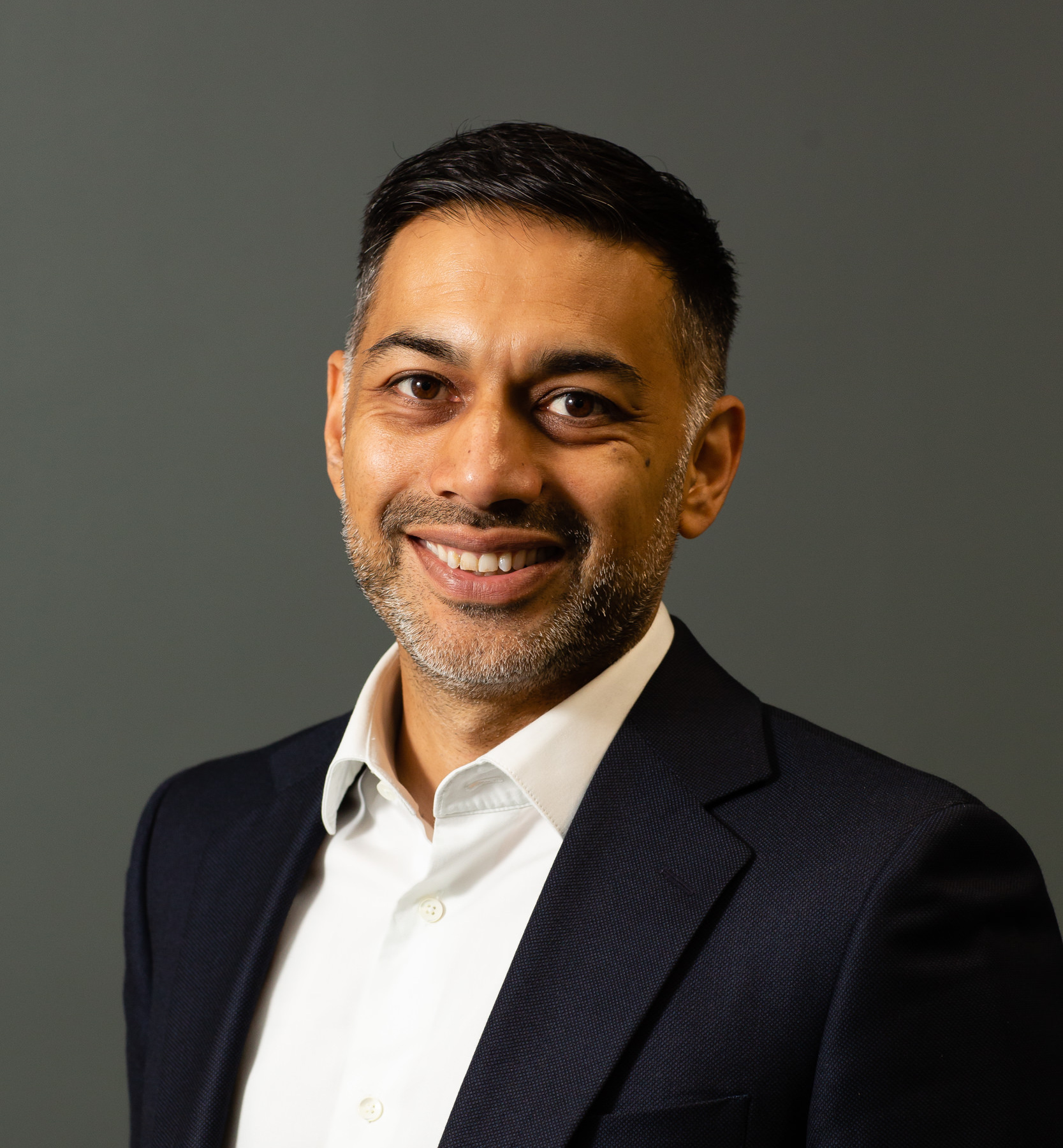
    How and when did you decide to become a lawyer and specialize in fraud detection, especially because this is something that influences almost all the communities, be it corporate, private, or public? It depends on which sector you are from. 

    So my Baba moved here from India in the 1960s over to England. And so I was born and raised here. So I grew up with British and American television. And I grew up watching a lot of television in the 1980s, so, you know, I’m 48 years old now.
    And during that time, there were some films which were starting then, the Indiana Jones series of films, which was Harrison Ford. And there was an American investigation kind of program called Magnum P.I. with an actor called Tom Selleck. And I was really fascinated with history, with Indiana Jones, and unraveling what the truth of history was, what the true state of affairs was, and learning from things that have happened.
    To try and piece together a jigsaw of a picture of what really has happened and investigation. So I started to get intrigued about just digging into things, looking into history, looking into working out what’s really going on. And at the same time, there were a few legal dramas coming around and again, US programs, a few UK programs.
    And that just drove my interest. I have no other lawyers in the family. My Baba was an engineer, and my sister’s an accountant. And there were no lawyers in our family. And I just took an interest in it. I gradually found the opportunity to study law, and right after I qualified, I got interested in some of the criminal side, some of the commercial contract side.
    And I always liked the idea of working out where there’s been wrongdoing in the workplace and wrongdoing to an individual or to a community and saying, right, how do we solve that? And how do we fix it? And it comes from watching programs like that in the 1980s.

    So, sir, we can call you the first-generation lawyer who has made a big name for himself.
    Way back in 2016, you parted ways with a large international law firm and decided to start your own law firm, Tenet. You have also won recognition for actually disrupting how law firms operate because what I have learned about Tenet is it operates without financial targets, billable hours, or office presentisms. How has this impacted the teams that have joined you, the way the client relationships have been built, and how you have made a whole name for yourself and the firm?

    Yeah, it’s interesting. I mean, if I go back to what took me to making those decisions, it was quite simple. So I worked at a large firm called DWF, an international firm, as you mentioned, and I was a partner there and I dealt with the civil fraud disputes and investigations team. That was my role. And I had a really nice time there. They are really wonderful companies to work for, a wonderful law firm to work for. And my boss who I worked for was really supportive, but at the time for me, I left because of burnout issues.
    My children were young, and work was quite demanding, my Baba was quite ill, in and out of hospital. And I wanted to just have more time to myself, to really manage the family issues more than anything. But I thought I’d been working in this area of law since about 2006, 2007. So by that time, 10 years, I thought I’d go and be a consultant and I set up Tenet to deliver consultancy services, but work quickly found me and I needed lawyers to join.
    And my wife, who’s not a lawyer, she’s a pharmacist, she said there are lots of women who’ve had children with their families. And they have left their place at work. Lawyers have left their place, but they can’t go back to work part time. And so a couple of my former colleagues were in that situation, and I contacted them about whether they could give me some support and just some extra hours to help me as work started to develop in the practice.
    And this was all in 2016. I started it in March of 2016. And I realized a few things quite early on. I had probably a chip on both shoulders that I didn’t think you could get the best out of people by driving them towards numbers and taking them away from thinking about the solution of their clients.
    And I also didn’t think you need to be seeing people in the office or always watching people to know that they were working. We’ve all grown up to be responsible adults. We’ve all invested many hours in our careers to get to a certain point. If we want to do well in our careers, that requires self-discipline.
    It doesn’t require someone telling you what to do. So I developed the concept around let’s have a firm without targets, without presenteeism. So it’s a traditional litigation law firm. We’ll have billable hours, financial targets, before COVID everyone would be in the office. Our business as usual was to come to the office if you need to, work where you want to, work when you need to, around the client’s demands.
    But just get the work done. Let’s not worry about the numbers. And what we did was we built a model, which was broadly people first, then the product, and then the profit. And what that means is, if we get the best for our people, ahead of our clients, and create an environment where they’re not distracted.
    The only focus they have is the solution for the clients. They’re not distracted by, have I made my numbers this week, this month, today. They’re only focused on sorting out the solution. They’re not driven by getting profit out of a client. So they focus on the product and you get the product right. The amazing thing that happens is people recommend you and refer you.
    So we developed that model of no targets because it gave the best chance for, I guess, creating the art of what’s possible for a client. If we just focus on sorting out that issue for a client, anything is possible. If we start to think about ourselves as part of that journey for a client, it’s a distraction.
    So my job here is to make the best environment for people, so they can get the best for the clients. And then hopefully life takes care of itself. And we make enough money along the way to be safe and everyone’s secure. Culturally it’s been really fascinating because lawyers are institutionalized in most of the law firms.
    You probably have experienced it where you think you’ll have lawyers who have a certain number of hours done in a month and then they’ll be asked by their management, what’s your recovery plan? You are behind track. And so what could that lead to? It could lead to bad behaviors. Do you spend more time on work than you need to?
    I’m not saying that happens, but it’s a risk. Do you hold on to work? Because you need to make up the hours, but that work is getting delayed if it was put in the hands of a colleague. So the client could have their work done quicker if you just passed it over. Well, if you’ve got a target and you hold on to it yourself, you delay the work product for the client.
    So there are lots of lateral benefits, but for the people themselves, it meant they could just be trusted to get on with their job. And we all just want to be lawyers, don’t we? We just want to be lawyers. And so it just allows people to be lawyers. Yeah, I guess that’s broadly how we’ve done it.

    Sir, keeping all that in mind, you already have built a name for yourself, but in a very specialized field of fraud, and especially the fraud cases, they involve sophisticated scheming and all those processes. With the rise of the digital space, with the rise of crypto and everything, how have you seen fraud evolve in the cyberspace and what kind of investigations or cautions have you suggested your clients, especially the ones who are HNIs or who are in fintech or who are SMEs and nowadays startups as well?

    So, I mean, we have to go a step back when we think about fraud because one person’s definition of fraud is not the same as somebody else’s. And when you think about cyber, people talk about cybercrime and cyber fraud or cryptocurrency fraud, where there’s not legitimate cryptocurrency, but ultimately cyber or digital age.
    Or digital mechanisms for committing fraud are just that—they’re just the mechanism for committing the fraud. It’s not the fraud itself. The fraud isn’t cyber, the fraud isn’t crypto, it’s the mechanism used. So the first thing is going back to what is fraud. For some people, fraud is very black and white.
    It’s misappropriation, it’s diverting assets, it’s breaching duties. For others, it can be more subtle. So, for example, you could have a very simple scenario that you’re in a restaurant with your family or friends, and at the end of the evening, an employee at that restaurant brings out the bill. And if they bring out the bill, and then you notice on that bill that they’ve forgotten to charge you for a drink or some food.
    And I ask people in training sessions. How many people would own up and would confess that they’ve been undercharged? And typically about 30 percent of people will say they would own up in the restaurant. And then I ask people, look, you know, just this definition of fraud, if your employer overpaid you and it was obviously a mistake, like the restaurant, how many of you would own up?
    And everybody owns up. And then you have to delve into why, and people don’t realize that taking money from your employer when they’ve overpaid you by mistake or taking the benefit of the restaurant food when they’ve undercharged you are both the same species of fraud. It’s called unjust enrichment, but they’re both fraudulent events, but people’s interpretation of fraud may be in one instance with the employer, but not with the restaurant.
    So your first concept is understanding, you know, fraud is about interpretation. And then that’s something that has to be a constant in your mind as a lawyer dealing with fraud is how people interpret that because as we’ve moved to this digital age, as you talked about,
    We are driving all our communications and we’re driving all of our purchases, acquisitions, investments, thought processes around how to utilize our money online, and how we engage with people, how people sell things to us, or how people invite us to invest.
    It comes down to our interpretation of fraud. What is that area of gray? If someone is optimistic about selling you an investment product, that crypto will get you a certain level of returns. Are they being fraudulent or are they being optimistic in telling you something to invite you to invest? So you have to think about how you interpret fraud?
    Because from the recipient’s point of view, you have to really be quite clear, the communications you want digitally. What you’re told digitally before you make a decision. Crypto space and cyberspace is really interesting.
    So in the digital world, now we’re in the situation were certainly around banking and fintechs, all our transactions are online. So in the UK, we have payment services, firms, fintechs, main retail banks. And there is new law that came in in October of last year, 2024, which makes it almost compulsory for banks to refund domestic transaction victims of fraud, if they’ve been tricked into making a transfer.
    And that law will probably spread as an idea around other Commonwealth countries in time. But we’re driven to do everything online. We’re accustomed to doing everything online in this digital age. And we don’t have enough digital literacy, certainly for the elder generation. And the younger generation think too quickly because they have too much digital access.
    So they don’t have time to stand back and think, is this behavior consistent? Am I being tricked? Is this too good to be true? So let’s take cyber. You mentioned cyber and I’m sorry, I’m giving quite long answers, but I’m trying to pick up all the points you raised. In the UK, there are three, sorry, crypto.
    There are three types of cryptocurrency you can think about and being duped on or being defrauded on in the UK. The first level is unlikely to be tricked. That’s where you’ve got a provider, a cryptocurrency exchange platform that is regulated by the Financial Conduct Authority in the UK for money laundering purposes.
    They are a legitimate enterprise engaging in selling and purchasing cryptocurrency. You are likely to be safe in their hands. The only risk is the fluctuation of the market. Then you have those cryptocurrency exchanges, which are in other countries. They are legitimate in that they are exchanges, but they are not regulated.
    So it’s slightly more loose and it’s very hard to recover from overseas. And then you have those, which are just smoke and dust. Those criminals that create the impression through very good digital tools that they have a platform for you to invest in. But the platform doesn’t exist.
    It’s all smoke and dust. It’s all fresh air, and your money is gone. And with any fraud situation, be it in procurement, be it with employees, be it with investments, be it with cryptocurrency, unless you educate yourself about what you’re about to invest in or the party you’re about to contract with, and really understand it yourself and verify independently, you’re having more fraud.
    And that’s the problem. The digital is the biggest enabler of fraud now, because it is so good at imitating legitimate organizations and people and transactions. And we are as humans, we’re short of time now, we’re all time poor. So we make transactions quicker without thinking, you put those two together, and you’ve got more friction and more risk.
    So for us, there’s a lot to unravel every time we get an investigation because there are

    so many moving parts. You have to check what’s real and what isn’t, and the growing number of fraudsters playing with these new technologies, it’s harder and harder to prevent.
    As a business, as a law firm, we are constantly looking out for those kinds of things. For instance, we work with financial institutions, and it’s really important for us to make sure we understand everything behind what’s happening, everything behind the platform, everything behind the person and always verifying every step of the way. That’s how we go about it.

    At Tenet, you specialize in this particular niche area. Let’s say, we would like to understand if new entrants are interested in this field and how they might navigate their way into the fraud and investigations space. Since you have mastered this area, how would you suggest they move forward, perhaps with a checklist? This could benefit learners, especially in India, who may be looking to qualify for SQ exams and practice in the UK. Is it possible for Indian lawyers to work in this field in the UK, or is there another path they can take to learn and practice there?
    Yes, on both counts. So, to anyone interested in fraud, I always say it’s important to build a foundation. Whatever you do in life, it should be something that interests you. It could be fraud, sports, or any subject at all. Once you have found something you are passionate about, you need to invest in yourself. This means dedicating time to learn and surround yourself with people involved in that subject.

    In the UK, fraud is not just limited to law. There’s a whole financial crime compliance and counter-fraud community across the UK, Europe, Asia, the US, and Africa, dealing with various aspects of financial crime—illicit funds, wildlife trafficking, people trafficking, money laundering, and fraud investigations. This is the ecosystem I love and work in.

    When I started showing an interest in this subject in 2006 or 2007, I joined a charity called the Fraud Advisory Panel in England. Anyone worldwide can become a member of this charity. It works to promote best practices for countering and combating fraud and financial crime. There are other organizations like the London Fraud Forum, the Midlands Fraud Forum, and more, but the Fraud Advisory Panel is where I focused my attention.

    By becoming a member, I learned about events in the industry, which could be anywhere in India, Asia, or wherever. This allowed me to connect with people who were passionate about fraud. I volunteered countless hours and met senior people from the big four accountancy firms, PwC, and law enforcement. They began trusting me with cases, and that helped me build my career.

    So, for anyone entering this field, I recommend joining charity organizations, volunteering, and surrounding yourself with people who have experience in fraud. In the UK, there are many firms that specialize in fraud, and even as a foreign-qualified lawyer, there are opportunities here. Fraud has existed for centuries and will continue to do so, requiring people who are dedicated to unraveling it.

    I’d like to ask about your role as a trustee director for the Fraud Advisory Panel, and how public awareness plays a role in combating fraud. You also frequently speak in the media, so what impact do awareness programs have, particularly in your area of work?

    Education plays a crucial role in combating fraud. Much like road safety, if we understand the risks and threats, we can be prepared. Awareness about fraud helps people recognize potential risks and avoid falling victim.

    I’ve been involved in media campaigns about fraud for years. One such campaign started in 2016, advocating for a law that requires UK banks to refund customers tricked into making transactions to fraudsters. After eight years of media engagement, the law was introduced in 2024. This law was necessary because, years ago, people didn’t think fraud would happen to them. Now, fraud and cybercrime account for 38% of all crime in the UK, though only 1% of the policing budget is allocated to economic crime.

    Raising awareness is critical because people tend to think fraud won’t affect them. If we can educate the public, businesses, and government bodies about fraud risks, we can help mitigate the harm. In India, for instance, fraud awareness is still in its early stages, especially when it comes to cybercrimes. It’s an ongoing challenge everywhere, but awareness is the key to fighting it.

    Unfortunately, fraud is still under-discussed in India. People may have heard of cybercrimes, but awareness has not fully caught on. This conversation itself is vital for combating the issue. Moving on, you studied law at King’s College, London. How did your college experience shape your thoughts on awareness and your approach to building a community through your work?

     King’s College London was a privilege. I wish I had worked harder, but it definitely shaped my understanding of the law. Before law school, I thought law might be dry, but I soon realized it’s about interpretation and human behavior. At King’s, I found that law is not just about rules but understanding the actions behind those rules.

    Criminology and tort law were key subjects that sparked my interest in fraud. It was here that I learned how criminal behavior can influence business conduct, particularly in fraud investigations. The diverse international student body at King’s also showed me how law transcends borders, which shaped my global perspective on legal practice.

    After qualifying in 2002, I spent 14 years in private practice before founding Tenet. For me, specializing in one area was important, so I chose fraud and financial crime. I decided to focus exclusively on fraud investigations, disputes, and compliance, helping individuals and businesses resolve issues stemming from dishonesty.

    Our firm, Tenet Compliance & Litigation, isn’t huge—only 11 people—but we’re highly focused. We’re recognized for our expertise in fraud and financial crime, which is why we win most of our work through recommendations. We make it relatable to clients, focusing on their concerns rather than just the financial aspect.

     Cultural aspects certainly influence change, and it’s clear your diverse college experience helped shape your perspective. Sir, outside of work, you are also a guitarist and into fitness. How do you balance these hobbies with your work, and how do you encourage your colleagues to do the same?

      Well-being is crucial. It’s not always easy to balance work and personal life, but I encourage my team to have hobbies and time for themselves. We have a “family first” policy, meaning if something comes up for family, you take care of it. I believe in making time for family, especially during the years when children are young.

    For me, fitness is a priority. I exercise three or four times a week, and I know that staying healthy improves my performance at work and at home. While I may not always have time to play the guitar or exercise as much as I’d like, I believe it’s important to have hobbies outside of work.

    I encourage my team to do the same. If you want your people to perform at their best, they need to have time for themselves. It’s hard to find that time, but it’s essential. We work to live, not live to work. It’s a reminder to experience life, see new places, enjoy theater or movies with friends, and take moments to appreciate life outside work.

    In the end, if you’re not living your life, work will lose its meaning. The balance between work and personal life is key to both professional and personal growth.

    Get in touch with Arun Chauhan –

  • Charting a Path in Cyber and Technology Law: A Journey of Innovation, Challenges, and the Evolution of Legal Practice. – (Dr.) Karnnika A Seth, Cyberlaw Expert, Author & Educator, and Founder of Seth Associates Law Firm.

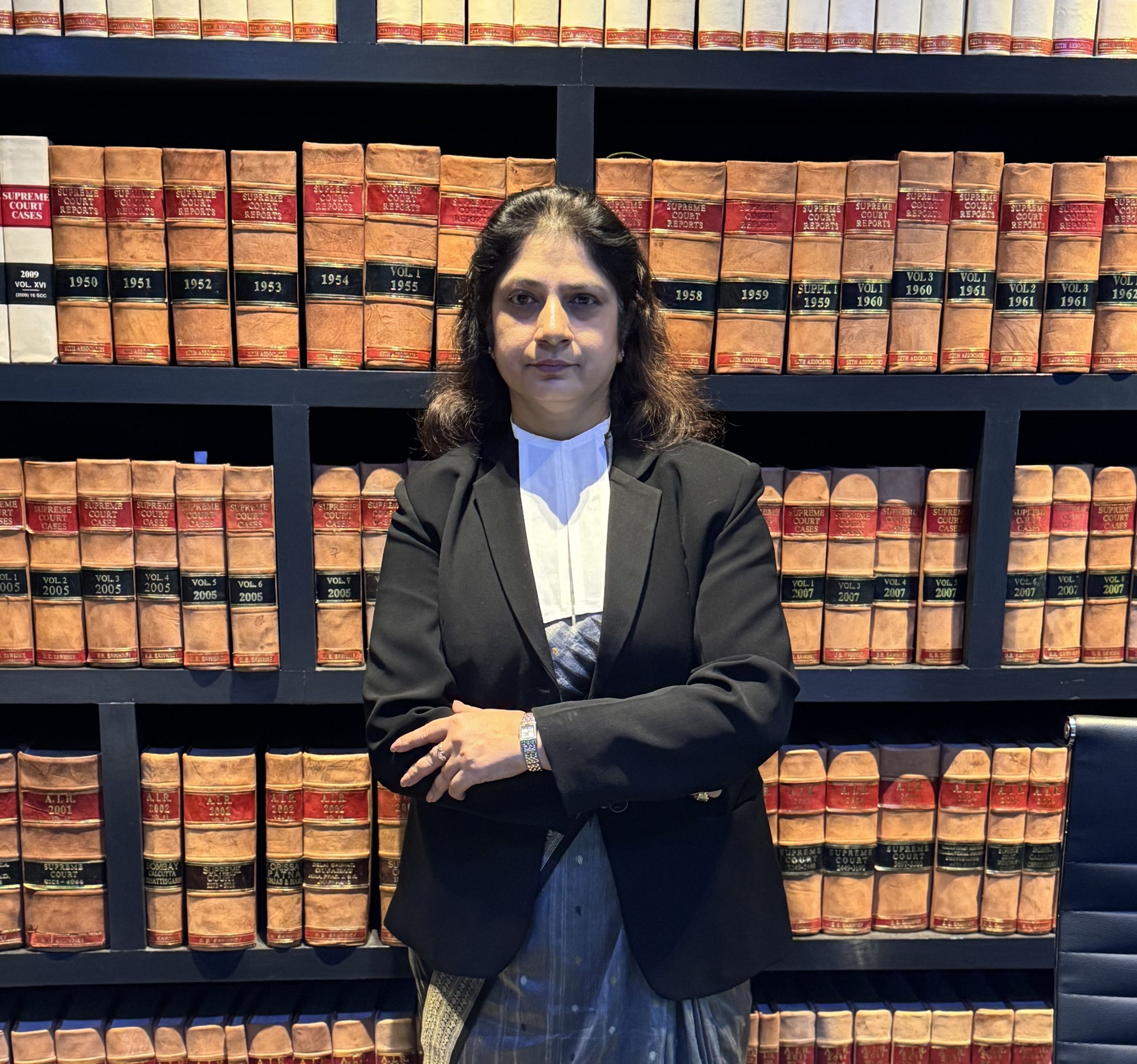
    Charting a Path in Cyber and Technology Law: A Journey of Innovation, Challenges, and the Evolution of Legal Practice. – (Dr.) Karnnika A Seth, Cyberlaw Expert, Author & Educator, and Founder of Seth Associates Law Firm.

    This interview has been published by Anshi Mudgal and The SuperLawyer Team

    Ma’am, with over two decades of experience, when most people didn’t know about cyber laws, intellectual property laws, let alone media laws, what initially inspired you to pursue a career in this field? And what led you to study at the most prestigious King’s College, London? How did you choose this as your specialization?

    Very interesting question at the outset. Well, if I look back at my journey in this field of law, it’s been very fascinating. It’s been evolving just like the dynamic nature of law and technology. Way back when I was studying at Delhi University, I did my law from DU, and at that time, the IT Act 2000 was just enacted, and we were very fascinated to see a new law being enacted in India.

    We were looking at what exactly the nuances of this new field would be, what the challenges would be. Everything was so new that this field of law made me very inquisitive about what could be the legal issues that would arise, considering the inherent nature of the internet would be borderless.

    You know, questions like, will the conventional laws still apply in this medium? How will it change the way people work? How will it change the way people communicate? What kind of complications could arise? For example, jurisdiction issues: if two parties were interacting and contracting online, and there was a dispute, which court would be the right forum to decide? Because there is no global internet court, and there is no global internet law. So that was very, very interesting to think about, and I wanted to read more in-depth into this field, research it further, and contribute to it.

    So, I think it’s basically the fact that it was a completely new and unsaturated area, completely new to explore, and I always like to explore something that is an uncharted avenue of our subject. It makes you brainstorm. And I wanted to do this brainstorming in the field of law.

    And that’s what really kept me energized. Even today, I still feel like a student. Every day, there is so much to learn. So I may have been here for 25 years, but I still feel just like a graduate would. There is so much to learn and contribute. 

    In your early stages, you must have obviously, like us, faced a lot of challenges. There must have been a variety of experiences. As you said, the IT Act had just entered and became a reality. How has all of this understanding helped you make a niche for yourself in technology law? How did you decide where and when to start, what kind of practice you should do, and how you should approach it?

    You are also majorly involved in training and developing public policies with the government sector. How have you shaped your practice around this?

    Well, as I said, the field was unexplored at that time. It was very new. And I wanted to do anything and everything under the sun because this is, you know, learning. And when you’re learning, you can contribute in multifarious ways. As we say, this was a road less traveled, and I took that.

    When I looked at the way in which I could basically learn and gain more experience, I looked at the IT Act. Then I also looked at what was happening across the world. When I studied at King’s, we understood that the approaches to the same issues really varied across various jurisdictions. So we had professors, and we had interactions from different jurisdictions across the world. And with those perspectives and the kind of debates in the classrooms, we discussed issues like criminality. For example, how would criminality apply in the metaverse today? Can we say an avatar is responsible for committing a crime? Is the player liable if it’s an assault in a game that leads to some sort of mental shock to a user? How would one impute criminality in such a scenario?

    We also discussed how jurisdiction would apply if a person commits a crime in one location and damages critical infrastructure in another country. If while deciding a court’s jurisdiction for example, if the protective principle applies, then the courts would pass orders. How would one go about enforcing those orders? These kinds of cross-jurisdictional issues were really at the helm of discussions even at that particular point in time.

    If you look back, the IT Act, when it was just a basic Act, and the way technology developed, the industry grew, cybersecurity became a huge area in itself because with the rising crime, the industry had to catch up. Cyber safety tools were being floated, right from a basic antivirus to spyware to firewalls, and other kinds of technologies. Nowadays, we have blockchain, VPNs, data loss prevention software, and many network safeguards.

    So as the industry developed, they also needed legal compliance, and legal advice. I started advising companies on various issues linked with cyber law, which was also interesting. I helped frame their policies, shape their HR policies, social media policies, and tackled tricky issues like whether companies could scan employee emails in the name of productivity. These policies became very important as e-commerce grew.

    So in this way, my role became more advisory. I was also involved in education. I taught cyberlaw at the Indian Law Institute and Amity University. In fact, I was part of the first batch of PG Diploma in cyber law at AmityI completed after LLB from Delhi University, and that was a significant encouragement and motivation for me to learn more about this field. That was just the beginning, I would say. Then I went on to study Masters at King’s and further pursued my Ph.D. in cyber law.

    It’s been a fascinating journey, but as far as contributions are concerned, there was a need for capacity-building in the country because law was changing. Cybercrime increased phenomenally, so I dealt with those cases, represented clients in various forums, and assisted law enforcement bodies. I also worked on educating and training judicial academies and police academies across India.

    And then came writing, which is also a passion I followed and pursued. I wrote my book on computers, the internet, and new technology laws, which was released in 2012. We have a third edition, the latest edition in the market now. I’ve been writing extensively on this subject, and since it’s been changing so fast, we’ve already had 3 editions since 2012. So you can imagine. This is also one way in which technology has positively impacted me and helped me contribute better to society.

    How do you see the advent of artificial intelligence shaping the kind of technology law that we have? How is it going to influence not only the legal system but all systems, especially the defense system, as you are with the DRDO right now, advising them in different capacities? How do you see all of this being impacted by international AI acts as well? There are so many of them from which we also take a lot of references, like with the DPDP Act, as it happened. Where do you see we lie with artificial intelligence, and what kind of track are we going to take? Obviously, it can only be speculation.
     I’ve been advising the government for more than two decades now, and in my personal experience, it’s been a very enriching journey. The way we have shaped our laws and looked at technology, it’s been a very liberal and progressive approach.

    I do believe, and firmly believe rather, that one should allow technology to advance liberally and support R&D in the country because, truly, India, when we say ‘Make in India,’ ‘Viksit Bharat,’ or ‘Digital India,’ we have seen this revolution, and it is ongoing and in process.

    We are already working towards India at 2047. Looking at that, we are building our roadmaps, and plans are already being implemented. It’s not just in one department; I’m talking about the Ministry of Law, Ministry of Defense, Ministry of IT and Telecom, Ministry of Home, for example—they’re all trying to bring in coordination. There’s scope for more, but with the adoption of the PPP model we see now in AI, India’s AI projects are truly creating a platform for India to progress in the right way.

    There is going to be minimum regulation because if you put too much regulation, it’ll stifle the growth of the industry, and that’s the approach of the government as well. But I do feel that high-risk systems need to be regulated immediately because they can play havoc with people’s lives and bring destruction to countries.

    For that reason, I strongly advocate that there should be a regulation. In fact, in my mind, there should be a separate regulation for AI. As a voluntary initiative to support G20 and as country chair of G100 for AI and cybersecurity, I drafted a proposed code, a proposed Act for India on AI.

    I would like the government to consider it, and in various roundtables with the Honorable Minister, we’ve had discussions. We know the DPDP Act is already there in the offing and it will have provisions for high-risk systems that need to be prohibited and regulated. There will be some regulation to that extent.

    Although I think we’re still far away from having separate AI legislation because there’s no talk on that right now, but you never know. The way technology is progressing, I think this will become indispensable very soon. Let’s see how it goes, but so far so good.

    The government is taking a lot of interest and initiative, and we are truly world leaders in the ‘Make in India’ space, and I think the law will support the government’s approach and initiative because it’s in the interest of the industry.


    With India being quite active in AI, there has been a lot of conversation surrounding its cultural and diversity impact. Ethical concerns and language considerations are important, but cultural aspects must also play a significant role. Where do you see this intersection of culture, ethics, and AI impacting society, and when will these changes be realized by the common man? Currently, a lot is happening at the policy level, but how do you foresee it affecting society when it becomes a reality, especially given that India is a leader in AI yet culturally diverse? How do you see India impacting the global AI scene with its own AI Act, coupled with cyber and intellectual property laws?

     I believe we have already started exploring the key pillars of AI ethics. I’ve been involved in developing ethical frameworks, particularly in national projects and educational institutions, such as my role as a professor at Vivekananda Institute of Professional Studies (VIPS). Here, we’ve introduced an ethical framework for AI, which reflects global principles such as transparency, justice, inclusiveness, sustainable development, and bias elimination. These principles are endorsed globally, though regulations can vary by jurisdiction. In India, while we don’t yet have an AI Act like the EU, we are working on provisions for AI regulation.

    On the industry side, AI development is progressing rapidly, with models being developed for multilingual AI systems that consider India’s diverse languages and cultural contexts. This is already ingrained in the AI models being developed in India, and as a result, the laws need to reflect these cultural nuances as well. However, these laws must also be globally synchronized, given that AI models or data may eventually travel outside India for processing or storage, requiring compliance not only with Indian laws but also global standards.

    Take, for example, the GDPR and its standard contractual clauses (SCC) for data transfers. Similarly, India’s DPDP law also addresses these concerns. While we have cultural diversity, the core principles, like data protection, remain universal. Therefore, I believe we need a harmonized framework that works both for India’s unique needs and the broader global landscape.

    Moreover, there are also concerns about data ownership and intellectual property when training AI models. A current case before the Delhi High Court involving ANI and OpenAI raises these issues, questioning whether permission is required for using copyrighted material in AI training. Such cases highlight the need for clear regulations to determine how intellectual property laws apply to AI and data usage for training.

    AI regulation is already becoming a pressing matter, and I believe it will require global cooperation to set clear principles and enforce them. The lack of a universal convention on cybercrime and AI further complicates enforcement, even when jurisdiction is assumed.

    You’ve managed so much despite being an author, professor, advisor, and now a law firm founder. What motivated you to start your own law firm, especially considering your already extensive involvement in cyberspace and AI law?

    The main driving factor behind starting my law firm was the desire for flexibility. I wanted to contribute to the legal field in multiple ways, integrating the knowledge I gained in various roles—whether it was teaching, advising, policy-making, or litigation. Each experience enriched my understanding of the law, and I believed it was essential to bridge the gap between legal theory and practice.

    Through teaching and advising, I gained deep insights into the law’s practical challenges. When engaging with Public policy, I was able to identify gaps that needed to be filled. For instance, there were complications in the law around intermediary content removal, and after handling cases such as the one involving HubPages and a spiritual guru, I realized how critical it was for the law to evolve with changing technology.

    This interdisciplinary approach—combining litigation, advisory work, policy-making, and teaching—allowed me to contribute meaningfully to law reforms in India, especially in areas like data protection and AI regulation. By establishing my law firm, I could consolidate these experiences and provide a platform for further contributions to legal practice and public policy.

     You’re also well known for your work in women and children’s empowerment, especially in the context of cyber safety. Can you elaborate on your work with organizations like UNESCO and ICMEC, and how these global initiatives are being adapted or modified to protect Indian women and children online?

     Child protection and women’s empowerment have always been at the core of my work, particularly in the realm of cyber law. Online harassment and digital abuse were rising concerns, especially as many women and children lacked awareness of the risks and legal protections. The existing laws were inadequate, and that’s what prompted me to focus on researching and advocating for stronger protections.

    In 2015, I wrote the first book in India on child protection on the internet, which later became the subject of my PhD thesis. In this, I proposed various reforms to strengthen laws such as the Juvenile Justice (JJ) Act and the Protection of Children from Sexual Offences (POCSO) Act. Additionally, I’ve written extensively about women’s rights against cybercrimes, including a book on cyber safety for women.

    Through my work with organizations like UNESCO and ICMEC, I was able to contribute to global policy discussions on child protection and cyber safety. In India, I’ve helped tailor these global frameworks to suit our local context. For instance, I established a not-for-profit organization that focuses on awareness-building in schools and colleges, empowering women and children with cyber safety skills and best practices.

    During the COVID-19 pandemic, we conducted over 50 webinars to raise awareness about online scams, fake emails, and malicious content targeting vulnerable populations. We were able to educate women, children, and educators on how to protect themselves from online threats, and the response was overwhelmingly positive.

    These efforts were particularly rewarding because we saw tangible changes, with many women and children reaching out for guidance, and schools actively engaging in cyber safety education. Through these initiatives, I believe we were able to mitigate harm and empower individuals to navigate the digital world more safely.

    You have also worked extensively in intellectual property protection, particularly in the digital space. Could you share some of the primary challenges you’ve faced in this area and how industries have reached out to you for solutions? Given the rising importance of digital platforms, how can businesses better protect their intellectual property?

    Intellectual property (IP) has grown tremendously over the years, and new laws were needed to address these changes. In the early days, it wasn’t clear whether domain names could be protected like trademarks. But over time, legal clarity emerged, affirming that domain names could indeed be protected as trademarks. I’ve had the privilege of serving as an arbitrator for the National Internet Exchange of India, where I resolved many cross-border disputes involving “.in” domains.

    The expansion of cyber litigation, especially in areas like music piracy, video piracy, and film piracy, has been notable. I also advised Prasar Bharati in overhauling their royalty contracts, ensuring they accounted for the rise of the internet. Many of their contracts, at that time, did not even mention the internet. More recently, we’ve worked on updating these contracts to align with today’s technological landscape.

    Governments and industries are now paying more attention to policies that govern emerging technologies, including AI. In this context, governance and audits have become essential. We must ensure that businesses are not collecting unnecessary data, that the data being used is unbiased, and that proper security measures—such as encryption and data redaction tools—are implemented.

    The protection of trade secrets, copyrights, and trademarks through registration is fundamental. However, in the case of trade secrets, businesses must ensure confidentiality through other means. The development of new technologies, including AI-generated images, music, and art, raises questions of ownership. Who owns AI-generated art—the person who provided the prompt or the AI system itself? These are some of the challenges businesses face, and it’s crucial for them to adopt encryption, anonymization, and pseudonymization to protect sensitive data.

    Moreover, sectors like the social sector, which deal with sensitive data such as donor and beneficiary information, must ensure that data is encrypted and stays within the country. I’ve been advising these sectors on policies, ensuring they comply with legal frameworks. Protecting confidential information is not just the responsibility of the government; the industry must also play its part by adhering to these laws.

    The PPP model is vital. It allows for a collaboration between government resources and industry expertise. The government brings its authority and resources, while the industry contributes its technical know-how and capabilities. When both sectors work together, it results in a win-win situation that benefits the nation’s progress.

    How would you guide aspiring lawyers looking to specialize in fields like media law, cyber law, or IT law, which are expanding rapidly? What skills should they focus on, and are there any particular books, journals, or individuals they should follow?

    To make a meaningful contribution to this field, aspiring lawyers must have the right mindset. You should always consider yourself a student, as there is always more to learn. If you think you know everything, that’s the end of real learning. Passionate research is also key. You cannot delve into the depths of these fields without thorough research and understanding different perspectives. It’s essential to look at how different jurisdictions address similar challenges and tailor those solutions to India’s context.

    Perseverance is another crucial trait. The journey in this field isn’t always easy, and you may face challenges along the way. But consistency and hard work will bring results. The legal profession is full of ups and downs, and while your views might differ from others, time often proves the validity of your perspectives. The world changes, and sometimes the policies you advocate for today become essential in the future. Being open to criticism is important, as it helps you grow.

    Cyber law and IP law are highly specialized fields. Today, we have DPDP laws, AI laws, and entire branches dedicated to IPR, all of which often intersect. A lawyer working in this space needs to have a broad understanding of various legal issues. These fields cannot be treated in isolation, as cases often involve multiple areas of law.

    There are wonderful resources available today that were not accessible when we started law practice. The proliferation of e-learning platforms, educational apps, and online courses is a game-changer. I have personally taken courses such as the Cybersecurity CS50 from Harvard University, which was a fantastic experience. These online platforms provide a wealth of knowledge, allowing students to access information from anywhere.

    Additionally, portals like Manu Patra, SCC Online, and government-backed platforms like Swayam and E Pathshala offer free courses that cover a wide array of subjects. There are also incubation centers at institutions like DSCI and NASSCOM that promote startup culture, which is an excellent opportunity for students to learn hands-on and learn about  new technologies.

    Get in touch with (Dr.) Karnnika A Seth –

  • “In the process of litigation you may lose some small battles, but the idea is to win the war and not every single individual battle” – Avinash Amarnath, Partner at Chandhiok & Mahajan

    “In the process of litigation you may lose some small battles, but the idea is to win the war and not every single individual battle” – Avinash Amarnath, Partner at Chandhiok & Mahajan

    This interview has been published by Namrata Singh and The SuperLawyer Team

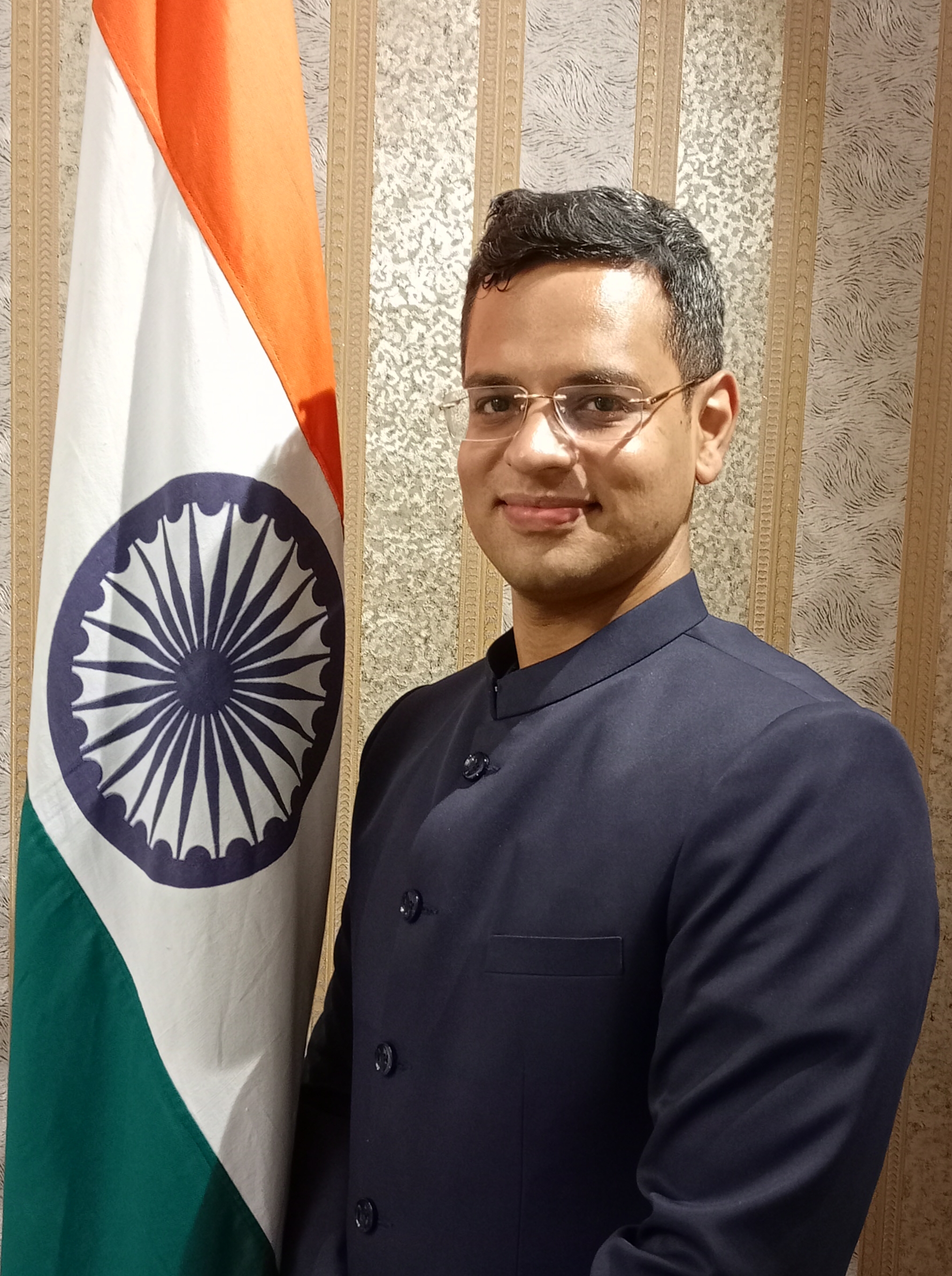
    A very warm welcome to everyone! The SuperLawyers team is back with another enriching and informative session. Today, we are thrilled to introduce our guest, Mr. Avinash B. Amarnath. Thank you so much for accepting our invitation. Avinash sir is currently a Partner in the Competition and Disputes team at Chandhiok & Mahajan Advocates and Solicitors. He leads the firm’s Hyderabad office and South India disputes practice, specializing in advising clients on complex competition law and dispute matters.

    A very warm welcome from the entire SuperLawyers team.

    Thank you. It’s a pleasure to be here.

    Sir, after a decade of commendable excellence in the legal profession, could you share with us why you chose law? Was it a calling, or a conscious decision from the start?

    For me, law has always been part of the family. My father is a practicing lawyer, and my mother, though not a practicing lawyer, is a law graduate. However, law was never imposed on me—I had the freedom to choose. I would say it was a conscious decision. Honestly, I chose law almost by a process of elimination. I didn’t want to pursue science, and I had a choice between commerce and law. Law seemed intriguing, especially because I had an interest in humanities during school. I felt that studying law would allow me to explore subjects like political science, which is why I chose it.

    That was concise and insightful. Moving on, you’ve been working in the corporate sector for years now. What keeps you going in this environment? Do you have any particular routine or professional discipline that you follow?

    So, I think the first thing I would say is that the routine that works for me may not work for everyone. My first piece of general advice is that everyone has to find their own routine. However, a few tips I’ve noticed that generally help include sleeping early, waking up early, and avoiding screen time.

    You’ll find that you actually have a lot more time in the day than you think, especially if you follow these guidelines. It’s also very important, particularly in this stressful corporate culture, to prioritize your family and yourself.

    One of the best pieces of advice I received as a young lawyer was from someone who used to run a law firm. This advice has stuck with me for a long time, and I try to follow it: no matter how much work you have or how tight the deadlines, always dedicate three to four hours to the following things:

    1. Spending time with your family.
    2. Engaging in physical exercise.
    3. Pursuing any personal hobbies.

    Guard this time scrupulously and strictly. This is what I try to follow to maintain discipline. Of course, the most important thing in this is that, the corporate culture demands flexibility.

    So, while this is a routine, it often gets broken, and you have to be innovative. For example, I travel a lot, and when I do, some of this strict routine gets disrupted. But you have to be innovative and find alternatives.

    If I’ve been traveling too much, I make sure to completely reserve that weekend for my family. Even when I’m traveling, I try to fit in quick 10 to 15-minute exercises in the morning. This is something I’ve realized over time. It took me 10 years to figure out this routine, so it will take time. As I mentioned at the beginning, this works for me; it may not work for someone else. The idea is to find your own routine and what makes you tick.

    Thank you, sir. I’m sure we all recognize the importance of limiting screen time and balancing various aspects of life, especially in such a high-pressure environment. This wisdom is particularly valuable for those of us just starting out. Let’s move on to our next question: Dispute resolution involves a lot of strategizing and planning. How did you develop your flair in this area, and how much do you enjoy it?

    Absolutely. I was fortunate to have very good mentors and guides when I started in the profession. The most important thing in litigation, especially in strategizing and planning, is paying attention to detail. One of the first things I was told very early on is to read the entire file—whatever it is, even if it’s a small transfer petition matter.

    Even if the matter is just getting adjourned, I was still told to read the file as thoroughly as possible, front to back. This habit, ingrained in me from the beginning, made me realize that sometimes, the more you read and reread, new things come to light that you wouldn’t have noticed before.

    This attention to detail really helps in planning and strategizing. When a client first approaches you, they provide a broad perspective, often their own, which may not be reflected in the documents. So limiting yourself to just what the client says isn’t sufficient. You need to verify their perspective by examining the documents. As I mentioned, the devil is in the details.

    This practice slowly developed my flair for this work. The more I read, the more confident I became with the case, and the better I could strategize. It’s a process of evolution, right? As a young lawyer, your role is often limited to knowing the facts well. If you have a strategy, great, but usually, you’re expected to have a solid understanding of the facts, along with thorough legal research.

    As you grow older in the profession, you start engaging in actual strategizing. It’s like a game of chess—you make a move and see how it plays out. Sometimes it works, sometimes it doesn’t. When it doesn’t, you go back, regroup, and try a new move. It’s a constant game of chess, and I enjoy that.

    Strategizing and planning, especially in litigation, is like sports. It’s not always going to be a perfect victory on the first try. There will be setbacks, but what’s important is to focus on the long-term goal—for both the client and yourself—and work towards that in the best way possible. You may lose some small battles, but the idea is to win the war, not every single battle. That’s how I approach and enjoy it.

    You have been involved in a lot of high-profile cases. That has received media attention. And we all know how media attention can turn both ways. It can celebrate you one day. It can suddenly criticize you unnecessarily the other day. How do you keep calm in these specific high-profile matters where really high stakes are involved?

    I think I’ve been a bit fortunate because I haven’t had to face intense media pressure directly. However, there were instances where difficult questions were asked, and I received calls from media houses seeking comments on a very contentious case. In such situations, we were strictly instructed by the client not to make any comments.

    Generally, in cases, I always try to focus solely on the case itself and block out any external noise, as I call it—whatever is happening outside. I believe that in high-profile cases, it’s even more important to understand that your role is limited to being a lawyer in that case and not to worry about the repercussions or consequences. Your job is to provide the best strategy, whether it’s a defense or prosecution, and offer the best advice to your client. The outcome is not in your hands, nor is what people make of it or think about it. You have to let it go. In one word, you need to develop a thick skin and ignore what the media is saying.

    Moving on to the next question, your academic excellence at King’s College is truly commendable. As someone who has studied both in India and abroad, how was your law school experience different there compared to India?

    I should start by saying that my law school experience was 10 years ago, so I’m sure things have changed in India since then. However, back then, my experience in India was that law education was still heavily focused on rote learning and less on application. When I studied abroad, that was the biggest difference I noticed.

    The way classes were conducted there was different. Typically, in India, you come to class, open the book, and learn the concept then and there. But there, the structure was different—you were given a set of reading material before class, and you were expected to read it on your own. This might also be because it was a master’s course, so there was an assumption that most people already had a basic understanding of the law. Still, I really liked that system. You do your reading at home, and when you come to class, you’re taking the discussion to the next level. You’re applying the knowledge you’ve already gained to difficult questions or discussing specific, controversial, or complex topics in more detail.

    Even the exams were different. The questions were mostly problem-based, requiring you to apply what you’ve learned and provide solutions, rather than just reproducing information. This was a significant difference for me. Another major difference was the encouragement from the faculty to have and express opinions. They would encourage students to form their own opinions and make it clear that there is no right or wrong answer, as long as you can back it up with solid logic. They might challenge your logic if they disagreed, but if you could defend your position, they respected that. This openness and application-based learning were aspects I truly enjoyed at King’s College.

    That was very interesting. I’m sure law schools in India are also starting to embrace these changes, though we still have a long way to go in fully adopting application-based learning. How did this experience shape your legal perceptions once you returned to India and began practicing?

    To be honest, it was partly that education, but also working with some lawyers here who were educated abroad, that really changed my entire perspective on law.

    In most subjects in India, let me take law or even medicine as an example—you’re often considered a good doctor if you can quickly prescribe the right treatment. Similarly, the expectation for lawyers in India is that you should know every section and answer legal problems on the spot, complete with section numbers and details. However, I realized that’s not what practicing law is really about, nor is it what makes a good lawyer.

    It’s impractical for a lawyer to know every single law by heart, especially given the vast range of knowledge required. What’s important, and what changed my perspective, is knowing how to read and interpret the law. When presented with a problem, you should be able to identify the relevant subject, pick up the relevant law—perhaps one you’ve never read before—and immediately apply yourself to it. You should be able to analyze the law and argue points based on the definitions and sections. The focus should not be on merely retaining knowledge, but on how to use that knowledge effectively and strategize.

    So, in that sense, my approach to practicing law changed completely. I no longer stress about remembering every detail; instead, I focus on how to strategize and apply the knowledge that’s available in front of me.

    How to read the law is such an application-based concept, which we should all imbibe no matter whether or not our colleges and our educational setups are telling that. We can definitely make it a practice. Thank you so much, sir.

    Talking on these lines, sir, how do you balance this personal life with professional commitments, any hobbies or any passion, or interests, that keeps you lively?

    As I mentioned earlier, I think it’s important to revisit the discipline points we discussed because maintaining those habits helps me balance professional and personal life. I want to touch on hobbies, but something else just came to mind. When you’re at work and you get a call from home, you might answer, but usually, even if you do, you say, “I’ll call you back, I’m at work.” I believe the key is to give that same level of importance when you’re at home, spending time with family, or doing something personal. There will be emergencies, and sometimes you genuinely need to take a call and work, and I completely understand that. However, more often than not, if someone calls you, even if it’s from work or a client, you can tell them, “I’ll call you back.” It’s important to give the same respect to your personal time as you do to your work time. If someone calls you while you’re with your family, it’s okay to tell them, “I’ll call you back in a bit.”

    Now, regarding hobbies, I’ve always been a sports fan, particularly passionate about cricket, especially test cricket. When I’m not working, I’m usually either following cricket, trying to play wherever I can, or discussing it with everyone I know. One of the things I love about sports is how it parallels what we do as lawyers, especially in court. It’s like a game of chess, similar to sports where you constantly see strategies and counter-strategies. I find that very appealing, so I try to follow and play sports as much as possible.

    Moving on, how would you compare the corporate work culture in law firms versus the litigation culture in chambers? If you had to choose between the two, which would you prefer based on your experience? Could you elaborate on that?

    Sure. Both have their pros and cons, and I’ll explain my preference based on my personal reasons. I found litigation chamber work more appealing, but I think the ideal scenario is to combine the best aspects of both, which I see happening, especially in our firm.

    In corporate work culture, one of the pros is that you are more directly in touch with the client, which gives you a very different understanding. In corporate and commercial law, there’s a legal position and a commercial reality. For a client, especially a company or a business, the end goal is that commercial reality—whether they’re trying to make or save money or achieve some other goal. The legal position may not always support that goal, so the challenge is to find an alternative or a middle path that satisfies that goal while staying within the confines of the law. In pure litigation chambers, responses can be more black-and-white: “This can be done, this cannot be done.” But in a corporate law firm, you develop the art of finding solutions, saying, “This strictly cannot be done, but we can explore this alternative.” That’s crucial as a commercial lawyer—you have to be solution-oriented, not just give yes or no answers.

    Another advantage of law firms is that you get more time to work on a particular case. In litigation chambers, files often come to you the day before a hearing, leaving you little time to fully understand the case. In a law firm, you might work on the same case for two to three months, allowing you to interact with the client, get all the necessary clarifications, and build a strong strategy.

    On the downside, one con of law firms, and this varies, is that sometimes there’s too much focus on presentation—form over substance. A document might look very polished, but if the substance isn’t strong, it shouldn’t pass the test. Another con is the lack of court time—you don’t get to go to court every day, maybe once a week or a few times a month.

    In litigation chambers, the focus is primarily on the substance because you don’t have time to worry about presentation. The emphasis is on points of law, developing legal arguments, and finding and interpreting judgments. In a litigation chamber, you’re expected to read judgments thoroughly, knowing both the points that favor you and those that don’t. Plus, being in court every day is a significant advantage.

    However, a con of litigation chambers is the lack of time to fully apply yourself to a file, as you would in a law firm.

    At Chandhiok & Mahajan, especially within the disputes team, we’re trying to combine the best of both worlds. We don’t just recommend briefing senior counsel for every matter; we’re happy to argue cases ourselves, which gives us the litigation chamber experience while also benefiting from the client interaction typical of a law firm. We try to push for this as much as possible, although it’s ultimately the client’s preference.

    So, to sum up my long-winded answer, I would say that combining the best of both worlds would be my ideal scenario.

    Thank you, sir. Talking about work and everything, first of all, since you have been involved with dispute resolution and you so beautifully summarize the entire strategizing process as a game of chess, how do you think the new ADR mechanisms, such as the mediation bill, will impact India’s ADR structure in the coming years?

    I think we’ve all realized that with arbitration, certain mistakes were made as a system, which is why it hasn’t worked the way people had hoped. The main issues were delays and court interference. If we don’t repeat those mistakes with mediation, I believe it could be very effective—perhaps even more so than arbitration. The reason is that mediation is fundamentally based on the consent of the parties. In arbitration, you consent to having a decision made by someone outside the court, but in mediation, you consent to the substance of the settlement itself. This significantly reduces the scope for court interference.

    I think we’ve got a great opportunity now, and rightly so, the government is pushing mediation as a preferred form of ADR. However, we must be cautious and learn from our past mistakes. Firstly, we need to minimize court interference. Secondly, it all comes down to the will of the parties involved. Sometimes, as litigation lawyers, we see ADR as just another method to delay things. Everyone might agree to mediation, but they might not take it seriously. The mindset often is, “Okay, it will go into mediation and take another six months.” If that’s the approach, it won’t work.

    So, perhaps some level of court interference could help. Currently, once a case enters mediation, courts are very hands-off, and extensions are given when requested. I think courts should perhaps ask for interim reports on how the mediation is progressing. If the court feels it’s not working out, it might be better to pull out of mediation rather than prolong an unnecessary process.

    I genuinely hope mediation works, but it will come down to addressing these challenges and the will of the parties involved.

    Understood, sir. You’ve highlighted several important aspects, and it’s crucial to exercise caution as we move forward with the mediation bill and act, as you mentioned, to avoid repeating the same mistakes and to hope for a better structure. Sir, this next question is from young lawyers and law aspirants who are in the early stages of their careers. As someone who has emphasized the importance of strategizing, what advice would you give to those who are struggling to find a strategy in the initial phase of their legal careers?

    I would say, keep it simple. Sometimes, people tend to project law as more complicated than it really is. So the first thing I would say is, don’t worry—it’s not rocket science. I often tell my colleagues that people who work in science and innovation require a much more complex skill set. Law, at its core, is a social science; it’s human-related.

    One of the key aspects to understand is that it’s a lot about psychological insight, especially for litigation lawyers. Of course, you need to know the substance of your matter, but it’s equally important to understand who you’re talking to and where they are coming from—not just the judge, but also your client. This is something we focus on extensively in our sessions. One of the most important things to remember is that the client is ultimately a human being with certain considerations. Understanding what the client wants and the pressures they are under can make things a lot easier.

    The only other piece of advice I would offer is that young lawyers today are much more aware of their rights, which is a very good thing. They demand work-life balance, recognizing it as a right rather than a luxury, and they are comfortable with technology, which makes them efficient. However, I would advise them to occasionally go back to being old school. With technology, you might miss out on important details, and those details are crucial. So, use technology to your advantage, but don’t forget the importance of manually double-checking and thoroughly reading every document. It’s sometimes good to be old-fashioned in this regard.

    If you’re feeling confused about your career path, I’d say there are many opportunities in law now, so don’t be afraid to try different things. Coming out of law school, it’s impossible to be clear about what you want to do because you don’t get enough exposure. Internships can help, but they don’t provide the full picture. So, try out different things—corporate law, litigation, clerking, media reporting—everything. Don’t think it’s too late to make changes. There’s plenty of time to find your niche.

    Sir, the way you’ve elaborated on this point, particularly the notion that coming out of law school doesn’t always equip you with the decision-making skills needed to know exactly what you want to do, is a relief to many of us who are just starting out in our careers. We also appreciate the emphasis you’ve placed on planning and the balance you’ve achieved at your firm. So, what are your long-term plans in terms of your personal trajectory in this profession, as well as your plans for your firm?

    I was working in Delhi until two years ago, and most of my career has been based there. For both professional and personal reasons, I saw a unique opportunity to come to Hyderabad and set up an office. I believe Hyderabad has a lot of untapped potential, and the proposition we’re building here is unique. We’re aiming to run an entire South India disputes practice out of Hyderabad.

    We faced several challenges initially, especially when virtual hearings weren’t common, as travel could be quite a problem. But thanks to the initiatives taken by the current Chief Justice of India, high courts are now hybrid, which really helps us manage matters. For district courts, we sometimes have to rely on local counsel, but overall, it’s a very unique proposition, and I’m enjoying the roles we’re building here.

    My immediate goal is to continue developing this practice into what we envisioned—a comprehensive South India disputes practice. In the long term, I plan to continue in litigation, with a particular focus on competition law. I don’t see myself leaving competition law, as it’s a specialization I consciously chose early in my career. Eventually, I hope to argue more matters in court and continue doing interesting work.

    Your insights have been amazing today. Once again, thank you so much from the entire team of LawSikho and SuperLawyers. We are sure that with the wealth of practical experience and tips, which you have given us today, we have benefited all the young ones.

    Thank you.

    Get in touch with Avinash Amarnath-

  • “Intellectual property law and data protection law are both ‘future facing’ laws driven by technological advancement and global regulatory challenges”- Sanjukta Venkatesh, AVP – Legal at Godrej Group

    “Intellectual property law and data protection law are both ‘future facing’ laws driven by technological advancement and global regulatory challenges”- Sanjukta Venkatesh, AVP – Legal at Godrej Group

    This Interview has been published by Pragya Chandni and The SuperLawyer Team

    Can you share what initially drew you to pursue a career in law? Was there a particular moment or influence that sparked your interest?

    My decision to pursue a career in law stemmed from my love for books, writing and languages. Mystery, crime and thrillers have always been my favourite genres and continue to be so till date.  Whether it was devouring legal thrillers or reading about real-life cases, I couldn’t help but marvel at how the law shapes our world by helping us unravel clues and arguments to uncover the truth that can make all the difference. Moreover, from a young age I have found myself drawn to the concept of justice and fairness.  The law provides a platform to champion causes, protect the vulnerable, and advocate for change. It offers the opportunity to use analytical skills to solve complex problems, negotiate effectively, and provide counsel that can profoundly impact individuals and communities. It was a combination of all these factors that influenced my decision to pursue law as a career.

    How did your time at West Bengal National University of Juridical Sciences and King’s College London shape your perspective on law and your career path?

    The methodology adopted to teach law at WBNUJS was what made the institution stand out from the other law colleges and the way law was taught in those colleges. We were constantly encouraged to think critically and be intellectually curious. The rigorous coursework challenged us to delve into the complexities of legal theory and practice, and every class was a stepping stone towards a deeper appreciation for the nuances of law. Beyond the classroom, we were provided exciting opportunities for practical learning through internships at prestigious law firms and with eminent legal practitioners, which allowed us to apply theoretical knowledge to real world scenarios. These opportunities enabled us to decide on our areas of interest and work towards forging a career path accordingly upon graduation. 

    The diverse and inclusive community at King’s College London enriched my perspective on law. Interacting with students from various backgrounds and cultures exposed me to different legal traditions and societal norms, broadening my worldview and giving me useful insights into the importance of cultural competence in legal practice. The course that I was specialising in (Intellectual Property Law) was administered through engaging lectures, case studies, and discussions led by esteemed faculty members and industry experts, I gained a deep understanding of the legal frameworks and complexities surrounding IP law.  Beyond the classroom, King’s College offered unique networking opportunities with professionals in the field. Seminars, and alumni events connected me with practitioners who shared their insights and experiences, and provided me with a holistic perspective of the subject as well as the potential career opportunities therein. 

    What were some key takeaways from your early roles at Paras Kuhad & Associates and Khaitan & Co. that helped shape your legal career?

    My early roles at these law firms provided me with key insights and foundational lessons essential to my development as a legal professional. It taught me the importance of time management, prioritisation of work and multi-tasking, attention to detail and meticulousness. I also learnt important lessons in humility, team work, collaboration and acceptance of my strengths and weaknesses.  These skills not only enhanced my ability to analyze complex legal issues but also instilled a disciplined approach to problem-solving.  Furthermore, interacting with clients during my early career taught me the importance of client service and relationship-building, as well as understanding their needs and tailoring legal solutions that align with their objectives. 

    How did your transition from law firms to corporate roles, starting with ITC Limited, impact your approach to legal practice and compliance?

    While working in law firms provided me with a solid foundation in legal knowledge, rigorous training in analytical thinking, and exposure to diverse areas of law, moving in-house brought about a refreshing change in focus, where I was now on the other side of the fence and was immersing myself in the strategic and operational aspects of a specific company or organization. Rather than advising multiple clients on various matters, I now had the opportunity to align closely with the business’s objectives, understand its industry dynamics, and contribute directly to its success.  One of the most rewarding aspects of in-house practice is the opportunity to work closely with internal stakeholders, including executives, managers, and employees across different departments. This has taught me to think multi-dimensionally and has sharpened my ability to balance legal considerations with practical business realities. I am continuously challenged to find innovative solutions that not only comply with legal requirements but also align with the company’s strategic goals and values. This holistic approach to problem-solving has expanded my skill set and broadened my perspective in numerous exciting ways. 

    Can you describe some of the challenges and successes you experienced as the Regional Legal Counsel at Unilever, particularly in the fast-paced FMCG sector?

    One of the primary challenges I faced in my role as Regional Legal Counsel was navigating complexities across various operations in the FMCG sector. Each of these sectors have their own legal requirements, and understanding and complying with regulations while ensuring consistency in legal advice across the region required a meticulous approach and proactive communication with local teams. Another significant challenge has been managing legal risks in a rapidly evolving industry. From product compliance to advertising standards, litigation management and supply chain issues, staying ahead of regulatory changes and industry trends is essential. Implementing robust risk management strategies and providing timely guidance to stakeholders have been challenging in order to ensure operational continuity and safeguarding the Company’s reputation. 

    The successes in my role have also been significant. Some noteworthy ones would be successfully defending crucial litigation, significantly reducing overall litigation numbers in the region. actively working on anti-counterfeiting strategies, negotiating favorable commercial agreements, and resolving disputes through alternative dispute resolution mechanisms.  Furthermore, implementing compliance programs and training initiatives across the region to promote a culture of ethics and legal compliance has been rewarding.

    Given your specialty in Intellectual Property Law and recent certification in Data Protection, how do you see these areas evolving, and what excites you about these fields?

    Intellectual property law and data protection law are both ‘future facing’ laws driven by technological advancement and global regulatory challenges. Intellectual property law is an ever evolving landscape. Advances in technology, particularly in areas like artificial intelligence (AI), machine learning, and biotechnology, are challenging traditional IP frameworks. Issues such as patentability of AI-generated inventions and ownership of AI-generated works are becoming increasingly complex.  With businesses operating on a global scale, harmonization of IP laws across jurisdictions is a growing trend. The rise of digital platforms and online streaming services has led to new challenges in copyright protection. These developments reflect evolving consumer behaviors and industry demands and is an exciting area to be involved in, keeping in mind the role of an in-house counsel in protecting business interests. 

    Data protection law has also seen some key changes and developments, particularly in the Indian legislative context.  The new regulations impose strict obligations on organizations handling personal data, including enhanced consent requirements and data subject rights. Mandatory data breach notification requirements have been introduced in many jurisdictions to enhance transparency and accountability in data processing practices. Organizations are now required to promptly notify authorities and affected individuals in the event of a data breach, underscoring the need for robust cybersecurity measures.  Data protection authorities are increasingly proactive in enforcing compliance with data protection laws, imposing significant fines and penalties for non-compliance.

    In summary, both intellectual property law and data protection law are constantly evolving to address the complexities of a digital age. Staying abreast of these evolving landscapes is crucial for businesses, legal practitioners, and policymakers alike to navigate compliance challenges and deal with a rapidly changing legal environment.  

    What are your primary responsibilities as the AVP – Legal at Godrej Group, and how are you applying your previous experiences to this new role?

    My present role at Godrej Group involves handling areas such as legal compliance and risk management, risk assessment, contract management, policy development, environment and sustainability compliance, legal training and awareness, supporting strategic initiatives and enhancing corporate governance. My previous experiences in the FMCG sector have proved to be invaluable from the perspective of having equipped me with a unique blend of industry-specific knowledge, practical skills, and strategic insights that are crucial for effectively managing the legal aspects of an FMCG business. This has also proved to be useful in advising and managing the other businesses which are also part of my role as AVP Legal. 

    Finally, what advice would you give to fresh law graduates who are just starting their careers in the legal field?

    The focus should be on the following areas: a) Focus on basic concepts and constantly staying informed about changes b) Develop proficiency in research and writing c) Always look for opportunities to network and gain practical insights on the industry as a whole d) explore different areas of law and identify your interests before choosing to specialise e) plan your career path and set long and short term goals for yourself. 

    Get in touch with Sanjukta Venkatesh-

  • “One should always state the truth before the court and making incorrect statements or half truths before the court should be completely avoided”- Advocate Chandrachur Bhattacharyya

    “One should always state the truth before the court and making incorrect statements or half truths before the court should be completely avoided”- Advocate Chandrachur Bhattacharyya

    This Interview has been published by Pragya Chandni and The SuperLawyer Team

    Could you please share with us what motivated you to pursue a career in law, particularly specializing in areas such as consumer protection, banking disputes, and money laundering prevention?

    The idea of arguing in a court of law fighting for justice for the client appealed to me. It is a powerful profession wherein the work you do can have a huge impact positively on others as well.  The judgments which are rendered by the courts have the potential of having an all India impact and it gives a sense of satisfaction. 

    Your work has had a significant impact on consumer rights, as seen in numerous landmark cases handled by you.  What inspired you to champion the cause of consumer protection in your legal practice?

    When you are taking up cases for consumers against a service provider which are large corporate entities , you are essentially fighting for the weaker party against a stronger party having superior bargaining power. The service providers  have more financial resources at their disposal and often engage the best of lawyers and have the best in-house legal teams,  thereby making it tough for consumers to get speedy and good quality of  justice. This is one of the reasons why I take up cases for consumers. It is a challenge  to fight cases against a party with more financial strength. 

    With your expertise in navigating complex legal frameworks like the Prevention of Money Laundering Act, could you shed some light on the challenges and strategies involved in handling such cases effectively?

    The only strategy is to go fully prepared to court on facts as well as law for each and every hearing and avoid taking unnecessary adjournments. Completion of pleadings in time is another important aspect. If one has completed the pleadings in time and one is  fully prepared to argue, the bench also appreciates it and it creates a positive impact on the court. 

    You’ve been involved in several high-profile cases that have garnered attention from the press. Can you share any insights or lessons learned from these experiences that have shaped your approach to legal advocacy?

    The lesson learnt is that a laid back attitude is to be avoided and one has to be constantly alert and on one’s toes. Having an enthusiastic approach to work also helps. One should always state the truth before the court and making incorrect statements or half truths before the court should be completely avoided. This helps in gaining the trust of the court. 

    The legal landscape is constantly evolving. How do you stay abreast of changes in legislation and judicial precedents to ensure the best representation for your clients?

    There are many good legal websites like Livelaw,  Barandbench and other newspapers which keep lawyers and the public in general  informed about the latest judgments being delivered by the courts. One must keep reading the articles published in these websites and newspapers to stay updated about the latest judgements and the development in law.  

    One of your notable achievements includes a Supreme Court judgment which laid down the law in favour of homebuyers’ rights overturning the earlier law which was against the homebuyers. Can you walk us through the process of advocating for such a significant legal shift and the impact it has had on consumer rights protection?

    One of the  landmark cases which I handled  was earlier the law. Once a homebuyer accepted possession or executed the sale deed/ conveyance deed, he would lose his right to claim delay compensation from the builder. I was a part of the  SC judgment where this law was reversed in the homebuyer’s favour where homebuyers’ right to claim delayed compensation even after accepting the possession or executing sale deed survives. This judgment was passed in view of the fact that in a consumer dispute the service provider has a superior bargaining power and it often bulldozes its way to get things done the way it wants which are sometimes prejudicial to the rights of consumers. Many service providers have a take it or leave it approach thereby leaving very little for the consumers to bargain on or negotiate with including unfair terms of contract. This judgment will change that. 

    Your career spans 14 years in legal practice. What have been the most rewarding aspects of your journey so far, and what challenges have you faced along the way?

    The most rewarding aspect is the fact that we get the opportunity to be part of judgments which have the potential of having an all India impact and positively affect and impact the rights and lives of  others.  The challenges are that sometimes delays happen in the adjudication of a case and clients get frustrated. This can be solved by appointing more judges and filling up the large number of vacancies in judicial offices. 

    As someone with extensive experience in the legal field, what advice would you offer to fresh graduates who are considering a career in law, especially those interested in specializing in consumer protection, banking disputes, and commercial litigation?

    The advice is to be patient and keep  working  hard. To be fair to your client as well as to the court. Go to court fully prepared for every hearing and be courteous to the court and put your point across forcefully but  in a respectful manner. Making incorrect statements on facts should be completely eschewed.  This will also help earn the trust of the court. 

    Get in touch with Chandrachud B-

  • “Resilience and adaptability are crucial especially in a rapidly evolving field like law”- Arun Visweswaran, Partner, Addleshaw Goddard

    “Resilience and adaptability are crucial especially in a rapidly evolving field like law”- Arun Visweswaran, Partner, Addleshaw Goddard

    This Interview has been published by Pragya Chandni and The SuperLawyer Team

    Sir, could you please share the pivotal moments or experiences during your academic journey, from studying Electronics and Communication Engineering at Anna University to pursuing Law at King’s College London? What influenced your decision to transition to law?

    I enrolled in Engineering as I always had an interest in the sciences and intended to pursue a career as an Engineer. However, both during school and later during my Engineering degree, I found myself consistently drawn to activities such as debating and writing and taking on leadership roles representing my peers. This led me to explore other career opportunities and law presented a perfect confluence of speaking, reading and writing skills which attracted me greatly more so given its impact on every aspect of society.  I also realised that the analytical and problem-solving skills I had developed while studying engineering would be an asset in legal practice and provide a unique perspective on legal issues.

    Studying law at King’s College London was a transformative experience. It not only provided me with a solid foundation in law (and confirmed my decision to switch paths) but also exposed me to a diverse and dynamic legal environment in one of the world’s leading legal hubs. 

    How did your early experiences as a trainee at Clifford Chance shape your career path? 

    My early experiences as a trainee at Clifford Chance were invaluable and played a significant role in shaping my career path. During my training, I was exposed to a broad range of practice areas including transactional work and disputes. This gave me a well-rounded understanding of the legal profession and allowed me to identify the areas I was most passionate about.  It also gave me many life-long friends who continue to inspire me.

    Being part of a global law firm also offered me the opportunity to work on complex and high stakes matters in three different jurisdictions being the UK, Dubai and Singapore. This experience was instrumental in developing my skills in navigating cross-border legal issues and managing diverse client relationships.

    The firm’s approach of providing the highest quality of service to clients and its emphasis on continuous learning and development have greatly influenced my approach to legal practice. These early experiences laid a strong foundation for my subsequent roles and continues to guide me in my current position as a Partner at Addleshaw Goddard LLP.

    How has your experience evolved with your recent transition to Addleshaw Goddard LLP as a Partner in their disputes team?

    I am grateful for the opportunity to join the talented team of lawyers at Addleshaw Goddard LLP who are a leading global law firm. I joined them at a time of unprecedented growth for the firm which has been built on a solid platform of expertise and providing exceptional legal services to clients. These principles resonate strongly with my approach to legal practice, and I look forward to growing further with them. 

    You’ve been involved in many high-value and complex cases throughout your career. Could you walk us through a specific case that stands out to you and share the challenges you faced and lessons learned? 

    The first construction dispute I handled as an associate was also a memorable one due to the challenges it posed to me personally and the lessons learned. This was a large infrastructure dispute valued at over USD 200 million and I was leading all aspects of the matter from drafting the pleadings, handling witnesses and experts to conducting a large part of the advocacy.  

    While I had participated in various moots during law school, this was my first experience of advocacy (after law school) where I had to cross-examine three fact witnesses and the delay expert. In the process of preparing my questions, I came across one of the clearest expositions of the art of cross-examination in Irving Younger’s lecture from the 1970’s (which is available on Youtube). Taking his “10 commandments” as a guide, I carefully prepared my strategy for cross-examination and delved into technical questions with the assistance of our delay expert. It was therefore entirely satisfying to have effectively cross-examined the expert’s opinion and challenged their credibility such that the Tribunal dismissed their report entirely.  It was particularly gratifying when the other side personally congratulated me on a very good cross-examination. 

    This case taught me the importance of thorough preparation and the value of a well-planned cross-examination. It also reinforced my focus on construction disputes where my engineering background brings an ability to delve into both the legal and technical issues.  

    With your extensive experience across the Middle East how has working in diverse legal systems and cultures shaped your approach to dispute resolution, and what unique challenges have you encountered?

    Working in diverse legal systems and cultures in the Middle East has significantly shaped my approach to dispute resolution. It has taught me the importance of understanding the local business culture, legal landscape, and the unique dynamics of each jurisdiction. 

    Each country in the Middle East has a unique legal system and regulatory framework. For instance, the DIFC Courts in Dubai and the ADGM Courts in Abu Dhabi operate on a common law framework, while other parts of the UAE follow civil law. Understanding these differences and being able to operate effectively within these diverse legal systems requires adaptability and has been an opportunity for professional growth.

    Overall, my experience in the Middle East has enriched my legal practice and provided me with a broader and more nuanced perspective on dispute resolution.

    Given your role in tech disputes, how do you navigate the intersection of technology and law? Can you share a notable case or challenge you faced in this realm and how it was resolved?

    Navigating the intersection of technology and law requires a good understanding of both fields. It’s about being able to understand the technical aspects of a case, as well as the legal implications. This is where my background in engineering combined with my legal expertise comes into play.

    One notable case I handled involved advising a global tech company on a multi-million-dollar software licensing dispute with a global software/cloud service provider. The case was complex as it involved intricate details of software licensing, cloud computing and IP rights. The challenge was to understand the technical aspects of the software provided and how that interacted with the contract terms and the facts which were quite complex. 

    Our advice allowed the client to successfully conclude a settlement with more than 90% reduction of the claim amount. The case was a testament to the importance of understanding both the technology and the law in tech disputes. It also highlighted the value of negotiation and mediation skills in resolving complex disputes.

    How has sharing your insights through publications contributed to your professional growth, and how do you stay updated on the latest developments in your areas of expertise?

    Sharing insights through publications has been a vital part of my professional growth. It has not only allowed me to contribute to the broader legal discourse but has also helped me clarify my own understanding of complex issues. Furthermore, my publications have also been a valuable tool for engaging with clients and other professionals in the field.

    Staying updated on the latest developments in my areas of expertise is a continuous process. I regularly read legal articles, attend seminars and conferences, and participate in professional networks and associations. I also engage in regular discussions with colleagues and other professionals in the field, who often provide valuable insights into emerging trends and issues.

    Drawing on your experience, what advice would you give to recent law graduates who are just starting their legal careers? What key lessons have you learned that you believe would be valuable for those entering the legal profession today?

    1. Find your passion: Law is a broad field with many specializations. Try to gain exposure to different areas of law early in your career to identify what truly interests you. Once you find your passion, dive in and become an expert in that area.
    2. Never stop learning: The law is constantly evolving, and it’s important to stay updated on the latest developments in your field of practice. Regularly read legal journals, attend seminars and webinars, and participate in professional associations.
    3. Develop strong relationships: Building strong relationships with colleagues, mentors, and clients is crucial for advancement in the legal profession – and this starts right from law school!  
    4. Work on communication skills: Effective communication is key in the legal profession. Whether you’re advocating for a client in court or drafting legal advice the ability to convey your ideas in a simple, structured, and persuasive manner is crucial. 
    5. Embrace technology: Technology is transforming the legal profession. Be open to learning about new legal tech tools (e.g.AI) and how they can enhance your practice.

    As for key lessons, one of the most important I’ve learned is that resilience and adaptability are crucial especially in a rapidly evolving field like law and one should remain curious about developments rather than shun them altogether. The other lesson imparted to me by a senior counsel I admire is that of the 3 P’s – Preparation, Preparation, Preparation – which is critical to success in any case.

    Get in touch with Arun Visweswaran-

  • “Law aspirants should familiarize themselves with this disruptive technology  and understand its implications in a wide array of areas such as contract law, regulations, data privacy,  intellectual property, and digital currencies”- Anshuman Gupta, Counsel, Fox & Mandal

    “Law aspirants should familiarize themselves with this disruptive technology  and understand its implications in a wide array of areas such as contract law, regulations, data privacy,  intellectual property, and digital currencies”- Anshuman Gupta, Counsel, Fox & Mandal

    This Interview has been published by Pragya Chandni and The SuperLawyer Team

    Sir, could you please share with our readers how your journey in law began and evolved, leading  you to specialize in commercial litigation, arbitration, and mediation? 

    I had intended to join the Indian Air Force as a reconnaissance pilot rather than practice  law. The National Defence Academy in Pune required unaided 6/6 eye vision as a visual criterion  and a passing grade in mathematics and physics in 12th standard as an educational requirement for  admission to the Air Force wing. However, when I was in my early teens, I developed myopia and  found that I struggled with mathematics. It implied that I wouldn’t even meet the eligibility criteria  to take the entrance exam. At first, I was dejected, but as they say time is a great healer! 

    Years passed by and in my high school years, I developed an interest in civics and business studies  which contained chapters on constitution, business law and ethics which propelled me to take up  commerce stream in 11th standard and eventually I pursued undergraduate course in law. I took up  internships with an independent counsel, LPO and law firms to understand different facets of law  and organizational structure of lawyers. Initially, I worked on a bouquet of dispute resolution matters, 

    My work included inter alia real estate, testamentary, writ, arbitration, commercial, company,  banking, labour and with the passage of time, I realised that my area of interest was in commercial  litigation, arbitration and mediation. 

    You’ve achieved significant recognition, being enlisted by Forbes India and acknowledged by  The Legal 500 and with experience across various industry sectors, from aviation to real estate, you’ve  covered a wide array of legal areas. How do you manage to navigate and excel in such diverse practice  areas? 

    I believe to excel in diverse legal practice areas, a thorough understanding of facts and  legal issues, effective strategy and planning, and time management are crucial. Keeping abreast of  recent updates through legal publications is also essential.  

    A successful lawyer should adopt a personable approach, comprehensively understanding the client’s  business, and creatively using resources to address the legal issues. In my view, continuous learning  and dedication to provide quality support to my clients drives my motivation to excel. In addition to  this, a successful lawyer must imbibe the spirit of learning throughout one’s career and be able to  creatively use its resources to fulfill the requirements of the client. 

    Your academic background includes an LLM in International and Commercial Law from King’s  College London. How has your international education shaped and influenced you?   

    Pursuing a master’s degree in London on a scholarship gave me a great deal of exposure  to a relatively different university pedagogy and to students from diverse backgrounds. The subjects  were more advanced and in-depth than those I studied in the undergraduate law program and writing  assignments and thesis helped me develop my research and analytical skills. Most of the assignments  which were given to us revolved around practical legal issues compelling us to apply our legal  knowledge in real-world settings. 

    Pursuing a degree abroad also made me become self-reliant and independent. I think when you face  challenges independently, you develop resilience and confidence which benefits you in various  aspects of life. 

    Interacting with fellow international students and locals enabled me to expand my network. Building  friendships establishes a global alumni network, expanding your horizons and introducing you to  diverse ideas and perspectives that may not have been part of your previous considerations.

    From your independent practice to your current role at Fox & Mandal, you’ve navigated various  professional settings. How has this journey contributed to your personal and professional growth,  and what key lessons have you learned along the way? 

    Working in diverse work environments enabled me to understand the perspectives and  challenges one goes through in its legal practice. For example, in an independent counsel setting,  one needs to pay attention to the legal cases as well as take care of administrative tasks such as billing,  operational requirements of the setup and HR aspects etc. However, in a law firm you might be  spared from the administrative responsibilities and focus only on your work that has been assigned  to you.  

    It is essential to know and understand your role in each professional setting. Once this is clear in  your mind, it will be easier to handle and navigate the work and the expectations of your seniors and  your team. Another thing to remember is that the learning in this profession never stops. The law,  and the practice, is constantly evolving. You either evolve with it or be left behind.  

    In my short professional journey, I have learnt that one must be open to embrace new opportunities. It is only when you open yourself up, wonderful opportunities come your way to help you polish  your skills and be instrumental in your professional and personal growth. 

    For law students and recent graduates aspiring to build a successful career, what advice would  you give based on your own experiences and observations within the legal industry?   

    I believe law students and graduates should act like a sponge trying to absorb knowledge  and information from wherever they receive, be it reading an article/newspaper/blog, or listening to the submissions advanced by counsels or observations made by the judge in a courtroom or  discussion on a legal topic with colleagues over lunch.  

    I also believe that one must have the hunger and passion to excel in his/her field of specialization.  In addition, one must also be honest towards the work assigned to them. When you give your all to  the matter, whether you win or lose, it does not matter, what matters is – did I give my best? If your answer is yes, you will get immense gratification, there will be no regrets. 

    I’ve learned that being organized and having your case files at hand is crucial, whether you’re  conducting your own study or research or briefing a senior counsel. 

    Another factor which is instrumental in building a successful career is having a mentor to offer you guidance and support when you require the most. I consider myself fortunate to have numerous  mentors in my field like Mr. Sanjay Kumar Pathak, Mr. Kanishk Vardhan Shahi, Mr. Sonal Kumar  Singh and Mr. Kunal Vajani who have shaped both my professional and personal development. My  deepest gratitude to all of them.  

    Considering the evolving landscape of law and legal practice, are there specific trends or changes  that you foresee impacting the field in the coming years? How should aspiring lawyers prepare for  these changes? 

    The Covid-19 pandemic has not only showcased the feasibility of remote work but also  emphasized the flourishing potential through effective work procedures and cutting-edge  technologies, a concept previously unthinkable. 

    This shift emphasizes the increasing significance of technology in the legal sector. Whether you’re a  law student or a legal professional, proficiency in working efficiently in virtual environments and  familiarity with online collaboration tools is essential in the evolving landscape. 

    One trend which is already making its impact felt across the entire world is generative artificial  intelligence (AI). AI is being increasingly used by law firms/companies nowadays for document  review, legal research, contract analysis, communication etc. Aspiring Lawyers should make  themselves acquainted with legal tech tools and understand how technology is transforming the way  we practice law. 

    Furthermore, the use of blockchain technology and smart contracts is increasing across industries, including legal practice. Despite challenges, blockchain has revolutionized the world of  technology and business. Law aspirants should familiarize themselves with this disruptive technology  and understand its implications in a wide array of areas such as contract law, regulations, data privacy,  intellectual property, and digital currencies. 

    Finally, drawing on your extensive experience, what advice would you offer to fresh law  graduates who are just starting their professional journeys in the legal field? 

    The early years of this profession are the formative years and important for the fresh  law graduates. I reckon in my early years of the profession; a senior advocate narrated the importance  of commitment in the profession by quoting United States Supreme Court Justice Joseph Story – “The law is a jealous mistress and requires long and constant courtship. It is not to be won by trifling  favors, but by lavish homage.” One needs to devote a lot of time to the subject and not be casual in  the approach. Commitment and perseverance are inseparable and work hand in hand for success. As a practicing lawyer, I have realized that learning in this profession is perpetual. Embracing the  idea of being a lifelong student is paramount, resonating with the timeless adage, “Once a student,  always a student.”

    Get in touch with Anshuman Gupta-


  • “Law graduates should recognize that what they learn in law school is not enough for legal practice”- Anjan Neupane, Partner at Neupane Law Associates

    “Law graduates should recognize that what they learn in law school is not enough for legal practice”- Anjan Neupane, Partner at Neupane Law Associates

    This Interview has been published by Pragya Chandni and The SuperLawyer Team

    Sir, could you please share your journey of becoming a legal practitioner, from your education at the University of Aberdeen to your current position as a partner at Neupane Law Associates?

    Like every other lawyer, my journey of becoming a legal practitioner began during my law school. The most helpful experience I had was volunteering as an advisor at the Citizens Advice Scotland. We advised mostly low-income clientele legal matters relating to debt, bankruptcy, consumer, landlord, family problems, etc. Clients in difficult situations needed quick and effective legal help. There I learnt you had to focus on reaching an effective solution for the clients quickly. This learning has stayed with me until now. 

    At law school, my interest was in commercial law and I enjoyed my elective courses in corporate finance law, corporate insolvency law, and tax law very much.

    After graduating, I worked for around 2 years with a renowned senior advocate with extensive tax and commercial practice in Kathmandu. There I gained first-hand experience of Nepali contract, tax, and company laws. I also gained exposure to construction law and arbitration matters.

    There were not many lawyers with good international exposure and English language skills in Nepal at the time. Commercial law practice was very small and focused mostly on compliance. Nepal was also recovering from a decade long insurgency and foreign investors were slowly returning back. Due to the market scenario at the time, I started getting contract drafting and foreign investment related matters through my personal contacts and references from other lawyers. Thereafter, I started with my current firm Neupane Law Associates serving my own clients. Currently, we are established as a go-to law firm for corporate and commercial matters in Nepal. Our firm’s practice is ranked Band-1 by Chambers and Tier-1 by Legal 500 in Nepal for a number of years now. 

    As a leading legal practitioner in Nepal, specializing in corporate, finance, cross-border transactions, and dispute resolution, could you highlight a particularly challenging case or project you’ve worked on recently and share the key strategies you employed?

    Nepal is a challenging jurisdiction to work in due to vaguely drafted laws and bureaucratic unpredictability. Our approach is to strictly follow the law, while not being afraid to create new market practices. A rewarding experience for me early on in my career was to advise a consortium of foreign and local lenders as local counsel in the first international project finance transaction in over 20 years for Lower Solu Hydropower Project. Bridging the gap between best international practices and Nepali law was challenging. It created a market precedent that set a practice in other similar transactions. Another highlight of my career has been working as a tax and corporate law expert appointed by the Government of Nepal in the ICSID arbitration filed by Axiata. It was the largest legal dispute in Nepal’s history. It was also a learning experience to see leading international lawyers in action. 

    Our team has been working in various shareholder and construction disputes currently. They are naturally challenging and complex. In my view, a good lawyer should have the ability to simplify even the most complex issues. Being solution oriented and getting in-depth into the facts of the case are key strategies we employ.

    Your expertise spans a wide range of areas such as arbitration, litigation, banking, finance, and M&A. How do you stay updated on the evolving legal landscape in Nepal, especially considering the complexities of cross-border transactions?

    Being a transaction and disputes lawyer at the same time is very challenging from a time and knowledge management practice. However, I have found that these practice areas complement each other. I have found that the knowledge and experience gained in transactions can be used during litigation and vice versa. Being a small jurisdiction, many aspects of Nepalese commercial law jurisprudence are still unsettled. Therefore, taking inspiration from what is happening in other jurisdictions is important. Reading good international books and participating in international conferences and seminars has been very helpful in staying updated. 

    Given your involvement in advising world-renowned companies, including Texmaco, IFC, and Alibaba Group, can you share any unique challenges you’ve encountered while facilitating cross-border transactions between Indian companies and Nepal?

    The challenge in Nepal is vaguely drafted laws, unpredictability of government agencies, and lack of established market practice for new and complex transactions. Oftentimes the Nepalese counterparts are also not assisted by an experienced commercial lawyer. Some international clients do not engage a Nepali lawyer at an early stage of the transactions but only do so later. When the client has not taken advice at an early stage, the transaction structure may have to be changed at the documentation stage which becomes a problem and causes delay. Enforceability of Indian seated arbitral awards in Nepal and vice versa has also come up recently as a new challenge due to a recent Supreme Court ruling in the Sangi Brothers case.

    You’ve been recognized for your excellent knowledge of Nepali commercial and contractual law. How do you balance staying rooted in local legal nuances while also navigating the complexities of international law, especially in the context of your cross-border transactions?

    As a lawyer advising in international matters, I find that you are required to have a good command in both Nepali law and law practices internationally. In-depth recognition of the similarities and differences in the laws of Nepal and of other jurisdictions is key to our legal practice. Like I mentioned earlier, I read good international books and exchange views with lawyers in other jurisdictions to balance these aspects. 

    Your recent work includes advising on equity investments in hydropower projects and various financings. What trends do you observe in the current landscape of foreign investments in Nepal, particularly in the energy sector?

    Equity investments and financings in the hydropower sector for foreign clients have recently been challenging as Nepal has not signed power purchase agreements in US dollars and there is a lot of uncertainty about how to hedge currency risk. The Government of Nepal has come up with various hedging guidelines and regulations, however, foreign investors are yet to be convinced. Also, getting a bankable risk allocation in power purchase agreements and concession agreements has been difficult. Nevertheless, the governments of Nepal and India have entered into an agreement for Nepal to export 10,000 MWs of power to India over the next 10 years. This will open the door for Indian sponsors to sell power from Nepal to India and obtain financing from Indian banks.

    Could you shed light on your role in defending lawsuits filed against Nissan Motors by distributors? How do you approach representing clients in the automotive sector, and what unique legal challenges arise in such cases?

    We have been recently involved in a couple of cases of similar nature involving Nissan Motors, Royal Enfield, Preet Tractors and others. In my view, the key to avoiding disputes or having an upper hand when there is one is to have a well drafted distribution agreement and fully complying with the contract provisions and laws during termination. Nepalese courts can grant stay orders if contract terms are ambiguous and if the termination can be seen as unlawful due to non-compliance with contract provisions. This can be very risky and is best avoided. 

    Lastly, what advice would you give to law graduates aspiring to make a mark in corporate law, especially those interested in practicing in Nepal or dealing with cross-border transactions?

    Law graduates should recognize that what they learn in law school is not enough for legal practice. They should extensively read judicial precedents in the practice areas of their interest and international books to stay updated. They should also recognize that the law in theory and the law applied in practice might differ. They should become more commercially aware and solution oriented.

    Get in touch with Anjan Neupane-

  • “All legal systems cannot deviate from the basic principle of ‘Justice’. The way it is delivered may be different”- Jurist Dr. Srikant Parthasarathy, Senior Managing Partner, Chakra Legal

    “All legal systems cannot deviate from the basic principle of ‘Justice’. The way it is delivered may be different”- Jurist Dr. Srikant Parthasarathy, Senior Managing Partner, Chakra Legal

    This interview has been published by Priyanka Karwa and The SuperLawyer Team

    Can you share with our listeners your journey and what led you to pursue a career in law and arbitration, especially with your background in finance and management?

    I have always been a fan of law. This may seem like a stereotypical answer, but imagine, law is one of the very few areas of study which mixes imagination with practicality. Reading a law or an act or a Bill is no different than reading a Grisham Novel. There is logic. There is context. There is ‘masala’ (if I may say so) and then a reader morphs into the lawmaker and thinks from the point of view of what was running in their mind when they wrote this. It is exciting. The same applies to Arbitration. Arbitration has a history which predates the formation of the Republic of India. Then, we have the UNCITRAL and the Model Law in 1996 coupled with the fervour in amending the law multiple times over the years. Finance is a numbers game along with strategy. To me, Law and Finance go hand in hand because, while the former sets the boundary for innovation, the latter sets the boundary for intricate analysis and strategy. Having been in 100+ Arbitrations and being commended by various courts, I can confidently say that the flavour of the two is currently being sought by the legal world.

    You’ve been involved in a wide range of arbitration and mediation cases, from finance to art and maritime law. Could you tell us about one particularly challenging case that stands out in your career and the lessons you learned from it?

    Contrary to what one may think, all arbitrations look rather similar in nature. I am not being a reductionist, however, when one has seen multiple arbitrations and strategies, it is rather easy to spot where it is heading. The case I am about to share is a case that made me the Lawyer that I am right now. A very senior lawyer was hired in a high-profile arbitration. They called me to represent a counterparty. We concluded the arguments in which I was accused of bias, which the arbitrator quickly dismissed. I was called a ‘Chote bacche’ during the session. I did not respond. The Senior Lawyer invited me for a drink in the evening (I am a teetotaller). I shared the camaraderie and joined them. In that meeting, she asked me how old I was. I quickly quipped “Not young enough to call me Beta, not old enough to call me ‘Uncle’ “. She is someone I still look up to. We became the thickest of friends and I am the Godfather to her grandson. This shows that arbitration hinges not entirely on the law, but in your ability to put up a strong face in spite of the oddities. 

    Being a certified mediator and arbitrator, what key skills and qualities do you believe are essential for success in your field, especially when dealing with complex international disputes?

    Patience and Listening is non negotiable. Everything is a learning in its own might. I believe that everyone is a student of law, no matter how senior they are. Law is so vast that our understanding is miniscule compared to what it has to offer. Once someone is an arbitrator, the job gets harder as every move of yours is questioned. 

    You’ve worked in various jurisdictions, including India, Singapore, UAE, UK, and more. How do you navigate the different legal systems and cultural nuances when handling international cases?

    All legal systems cannot deviate from the basic principle of ‘Justice’ . The way it is delivered may be different. Civil law countries have a system which ensures finality in the process and a certain level of deterrence from bringing vexatious claims. I have seen the UK Pre and post brexit. The nuances may be far more pronounced from, perhaps, wearing a wig (which I do, much to the amusement of my son). In the UK, it is difficult to take a matter to the UKSC unless the point of law in question is framed by the lower courts. They are very picky about what reaches the UKSC. UAE is a superb jurisdiction to practice finance and law, as you have the DIFC as well as the local courts. I sit in various arbitral panels of GCC and have advised them in framing the rules. They are very accepting of changes. I speak 13 languages and it certainly helps. 

    As a Certified Independent Director and with your extensive background in finance, what unique perspectives do you bring to corporate governance, and how do you see the role of independent directors evolving in today’s business landscape?

    Corporate governance in India is going through a difficult phase right now. Primarily, the need for transparency has grown exponentially and is available only through the SEBI. However, integrity in governance is non negotiable in a private entity too. This prompts investors to actively look out for individuals who can be the ‘true independent’ in protecting their investment and also looking out for the shareholders. This has brought in a whole host of ‘stapled agreements’ in the term-sheets which include the clause that ‘such independent director’ shall be appointed and it is not open to negotiation. Being the Ministry of Corporate Affairs certified Independent Director, it is vital that we live up to the expectations of protecting the entity and to give a fair and an independent assessment. Whistleblower protection in private entities is certainly an area that can be strengthened.

    Your involvement with the Government  in various capacities is intriguing. Could you explain your role and share some insights into the intersection of policy, investment, and arbitration?

    I have always felt that I should give back to society. Hence I teach in various schools for the visually challenged. I happened to meet a person who was a teacher in the school. We opened up and I realised that the person was a Secretary in the Government of India. He was very keen about my expertise. That is how the journey started with advising the Government on various bills and amendments. My work on the Arbitration Act of Maldives was appreciated and I was called in regularly as a person who can give a ‘Second Opinion’ on various laws. I consider it pure coincidence that my suggestions are the ones that finally made it to the law. Arbitration is strange. 

    With your teaching engagements at prestigious institutions and numerous publications, how do you balance your academic commitments with your professional practice? What motivates you to continue teaching and writing in addition to your legal work?

    Teaching keeps the student alive in you. I teach at the top 5 NLUs and 2 QS ranked International universities. Ask my students how I balance the commitments and they will rant about how the classes are frequently rescheduled. However, I have always maintained the top ranked visiting professor status. Writing keeps the child in me alive. Since I don’t talk much, perhaps the best way to communicate is to write. Boring as it may sound, I write about law & medicine, and read the most random Wiki pages when exhausted. 

    Finally, what advice would you offer to law graduates and aspiring professionals who want to follow a similar path in arbitration, mediation, and law in general, especially in an international context?

    Find the anchor in the career that you can latch on to. This is the person who you can ask anything and everything. I am what I am because of my juniors and my students. They call me by my first name (you are free to independently verify this). Arbitration is a practice that is more than what it seems and lesser than what you hear about it. Yes, it can be lucrative, but, be careful when you choose this path. Unlike litigation, where there is a fair amount of material available publicly, arbitration does not enjoy that benefit.

    It can be exhausting. It can be nerve wrecking. It can feel like everyone out there is trying to put you down. However, if you know your law, nobody can surpass you. 

    Get in touch with Dr. Srikant Parthasarathy-

  • Ayan De of Volterra fietta on treaty arbitrations, rigours of commercial Litigation and a non-NLU background putting you behind the race but not out of it

    Ayan De of Volterra fietta on treaty arbitrations, rigours of commercial Litigation and a non-NLU background putting you behind the race but not out of it

    This interview has been published by  Priyanka Karwa and The SuperLawyer Team

    Please share with us your journey into the field of law and how you ended up specializing in Commercial Litigation and Dispute Resolution?

    It’s quite interesting that I never wanted to study law in the first place! Not having studied science during my 11-12th standards (mostly because I was despicable at it!) made options very limited even more so for someone like me who belongs from a family of doctors. I was always interested in fine arts and thus intended to study history and literature. I got through the iconic Presidency College for History (Hons) , however it was my father’s insistence, despite being a doctor himself, that I should “strongly” consider law as an option. My reluctance, of course, cost me from getting through the NLU’s  (National Law Universities) and I ended up studying from a Non-NLU (or as we call it a traditional university, which also happened to be one of the oldest in the State). Much to my surprise law school was an excellent learning curve, mostly owing to some brilliant lecturers who spurred me on (it would be an absolute travesty not to mention three of them: Dr S K Chakrabarti, Mr Navin Sinha and Mr B Sarkar, with whom I must have lost in touch much to my own failures). 

    Being from Non-NLU comes with its set disadvantages, one of them was, being cloistered from national or global corporate exposure. I had one singular aim in mind, I wanted to go to court, be there, plead, argue, watch, learn and practice. I kept my mind open as to where the profession might take me without pre-empting myself from dedicating myself to a particular area of law early on. This led me to my first senior Mr Paritosh Sinha of Sinha and Co. He pushed me to the original side of the great Calcutta High Court wherein I was entrusted to handle varied types of commercial matters which also included arbitrations/mediations. He trusted a greenhorn to do matters, fail, make mistakes and get up again. Slowly, what started as an innocent attempt to learn about commercial law became a serious endeavour. I was naturally drawn to commercial litigation. The thrill of being in court, the palpable tension, the adrenaline rush to assist a senior counsel arguing for hours on an interlocutory matter or in conducting a trial felt like a second skin. What contributed more was the great privilege of assisting some of the best senior barristers and counsels from the Calcutta Bar from whom I could learn (Mr Anindya Kr Mitra, The late Mr Pratap Chatterjee, Mr S.N. Mookherjee. Advocate General W.B, Mr S.N. Mitra, Mr Abhrajit Mitra, Mr Jayanta Kr Mitra, Mr Kishore Datta, Mr Anirban Ray, Mr Ratnanko Banerjee, to name a few). What was equally contributory was working with some of the best junior counsels I have encountered in my professional life. Some of them are my contemporaries yet undeniably from whom I have learned every day since last decade! (Mr Chayan Gupta, Mr Soumabho Ghose, Mr Sarvapriya Mukherjee, Mr Shaunak Mitra and Mr Pranit Bag warrant a huge mention).  The more I did matters, the more I developed and a turn of fate (and a bit of hard work I would presume!) landed me with one of the oldest and biggest law firms in India, Fox and Mandal (F&M). At F&M, my skill set was tested, enhanced and tried at all levels. Under the expert guidance of Mr. Debanjan Mandal, Partner (who in my small experience is possibly one of the sharpest legal minds in India) and Mr Sandip Dasgupta, Partner, I not only learned so much about the art of solicitorship and advocacy but was continually entrusted with commercial litigation of all sorts and dispute resolution on a national and international level. By the time I realised, I had already spent a decade in the profession and I cannot imagine doing anything else! 

    With your extensive experience in Commercial Litigation, Dispute Resolution, and representing clients from both private and public sectors, could you highlight some of the most challenging and interesting cases you’ve handled?

    There are far too many for this limited space and time! And for understandable confidential reasons, I cannot name them in detail. However, my first big matter, which grabbed a few eyeballs owing to its uniqueness, remains special. It involved a partnership business for an online gaming platform. One single matter made my foray into partnership law, derivative action under company law, and intellectual property rights – not only before the High Court but also before WIPO and the law of criminal defamation. Cases were filed, actions, reactions, counter actions and retaliations were done which pushed me to the limit- sleepless nights, countless conferences with senior barristers, days of research into points of law and arguments for hours before the court. Another, I remember distinctly wherein we were representing a major state-owned enterprise faced with an invocation of a Rs 400+ crore bank guarantee. The case apart from presenting its challenge owing to technicalities of the mining operation in question was also beleaguered by the law revolving around the invocation of bank guarantee- which as many would know is very strict. We had anticipated that we might not succeed before the Single Judge and had prepared an appeal even before the original case was filed by us! On the day, as expected we didn’t draw first blood before the single judge and a whole domino effect took place thereafter. The judgment was delivered post lunch around 2 p.m. Going by the contingency plan we immediately obtained leave to appeal without the copy of the judgement from the Chief Justices Court around 2.30 pm and pleaded the urgency to list the matter around 3.30 pm. Once listed, preliminary arguments took place and we were successful in obtaining a stay of the appeal, pending final adjudication on the same day itself around 4.30 pm! saving the state and the state enterprise from being plunged into ‘darkness’! What was not only high profile but also fraught with trepidation, now (as I look back turning time- not in a H.G. Wells manner, though!) was a full day of thrilling legal drama, which in hindsight has taught me much about holding onto nerves in the field of commercial litigation. 

    Your career has taken you through various practice areas, from Criminal Laws to Intellectual Property Laws and Company Law. How do you manage to excel in such diverse areas of law?

    To be candid, one cannot excel in ALL spheres. However, what one can do is put his/her best foot forward, utilize the knowledge gained, and the skill set acquired and “try” to win. What is important is not just excelling but being involved and genuinely committed to the work being done and endeavouring to get the best results/outcomes in the given circumstances. Yes, being interested, inclined and involved in full steam is the stepping stone to excelling but for me, the trick is not excelling or knowing about everything but knowing everything about certain things. In that way, my belief is, the quality of work is much more refined and superior AND that is what will separate one from others. 

    Before pursuing your master’s degree, you worked as a Senior Associate at a renowned law firm in India. How did your experiences there shape your career and influence your decision to further your studies?

    Working as a SA that too in a top law firm comes with a set of challenges. It will push and test you mentally, psychologically and most importantly intellectually. I believe working at such a high level with not just a myriad of matters to handle at a given time but also continually learning from senior counsels/barristers develops and refines one understanding of the law, its working and its granular nuances. During my time I was at a given time exposed to arbitrations, commercial litigations, drafting, research, pleading, strategic decision-making, and judgement calls- a whole universe of disputes and whatever comes with the territory.  Every experience no matter how small or big the matter made a mark in the way I would think, perceive, react or even respond to situations. It made me more alert, aware and intellectually open. Quite plainly, it prepared the breeding ground for being “ready” to take on the challenge that is presented by studying at an international level. After a point, I thought that it was time to take the plunge. 

    What motivated you to pursue your master’s degree in International Business Law with a focus on International Commercial Arbitration and Investment Arbitration?

    Turn of fate is rather a cheeky first instinctive answer to this! On a serious note though, My academic journey has been a roller-coaster ride. In 2016, I was selected for pursuing my master’s at the National University of Singapore (NUS). Unfortunately, I could not take up the offer owing to personal issues. Thereafter, I never thought of pursuing my master’s and had some of the most brilliant working years of my life. In 2020, like many, Covid gave me time to retrospect and introspect. The deep-rooted urge to pursue my master’s degree, which I thought had been quelled over the years, egged me on. I applied once again, not to NUS anymore, but only to three colleges in London (I got through two, KCL being one of them). I was certain that I wanted to study in London and one of the three colleges owing to the subjects on offer and world-class faculty. What started as a perfunctory attempt ultimately led to the doors of King’s College, London. Since my background and skillset have always been in commercial law and dispute resolution, specializing in that area was a natural choice. The strategy was to play to my strengths, which I did. The underlying objective or motivation was simple: gain a finer understanding and international exposure to the concerned area of law.

    Could you share some of the key lessons or experiences from your time studying at King’s College, London, and being taught by leading barristers in the field of dispute resolution?

    The experience of studying in such an iconic college is overwhelming not just in terms of the intellectual challenges that it encompasses but also the pressure to survive and perform in a batch with such diversity. Colleges like KCL always boast of an extremely diverse cohort wherein one is competing against some of the brilliant minds across the globe. During my time in England, I have been fortunate to have been taught by some of the leading barristers of not just England but of the world. Some of them include Samuel Wordsworth KC, Lucas Bastin KC, Dr. and Paul Key KC all of whom I proudly call my professors and continue to have good relationships with them. King’s College London has always, historically, been associated with leading practitioners who regularly teach. The current heavy-weight names include Samuel Wordsworth KC, Lucas Bastin KC, Dr Paul Key KC, Phillipa Webb, Julian Bailey, Jason Fry KC and Lord Guglielmo Verdirame KC. Past names include the legendary Late VV Veeder (aka Johnny Veeder), the Late Prof. Martin Hunter (of Redfern and Hunter fame), and Toby Landau KC (who has now shifted his practice to Singapore). One of the major takeaways is that the teaching methodology, the emphasis on critical thinking and the diverse views of other students compel one to engage, think, introspect, present and importantly be flexible to differing perspectives and ideas. It prepares you for critical challenges that the profession will throw at you. It goes without saying that access and interaction with the best minds, apart from being a rare opportunity, also is a tremendous learning curve. 

    Working with a public international law firm like Volterra Fietta must have provided unique challenges and opportunities. Could you share some of your experiences in representing states and investors in investor-state disputes?

    My aim to develop in the area of investment arbitration and public international law (I had a fair amount of experience in commercial arbitrations back in India) led me to work with the renowned public international law firm, Volterra Fietta (VF). VF’s uniqueness lies in being one of the rare firms currently on the planet to exclusively specialize in various aspects of public international law be it before the ICJ or investment arbitration tribunals or the English courts. It is not every day that a ICJ case or an investment arbitration comes about but if it does one needs a firm like VF to tackle the nuances of public international law (which by the way very few can!), apprehend critical hard facts, forensically strategize and advocate the case to bring about the best results. Naturally, being with VF’s investment arbitration practice team has allowed me to gain substantial experience in advisory and highly contentious work, representing both state and investors, in connection to the interpretation of treaties and broader public international law aspects. I have the good fortune of being involved (along with others in the firm) in important matters relating to climate change before the ICJ as VF is mandated to represent one of the Caribbean countries, a multi-million dollar development construction investment arbitration disputes under ICISD for one of the small island states and also a multi-billion dollar investment arbitration against France, under the aegis of PCA, relating to gold mining concessions, to name a few.  The experience has thus been very varied and testing. When working at such an international level, the stakes are always high, there is hardly any room for error. One must be on their toes, being rigorously meticulous. The test of strict timelines fixed by the court /tribunal, the precision of pleadings, the presentation of facts, the research of law, long hours (not even remembering which day it is, at times!), the advocacy before an international tribunal (which, more often than not, would consist of some of the biggest names in public international law) handling high profile client representatives are some of the challenges. One wrong step can fatally affect the case and the client. One will falter at times as to err is human, but it is equally fulfilling to learn from specialist practitioners, at the top of their form, how one can tackle these challenges every day. Hence much is credited to the inimitable Robert Volterra, Founding Partner, Mr Gunjan Sharma, Partner and Ms Angela Ha, Counsel. 

    Balancing your professional career as a lawyer with your passion for writing fiction and photography sounds intriguing. How do you find time to nurture your artistic pursuits alongside your legal practice?

    Quite frankly, I don’t always get time as being a disputes lawyer can flush out life! However, I try my best to read, travel, capture moments and put them down into words for my own sanity. I must, of course, admit I  am not a prolific writer! I am a reader more than a writer. It was, again, pure luck that one of my short stories got published (God knows how that happened but I will take it!). Understandably and bitterly right, my photography has yielded lesser results of such nature! (now, in this case, god knows why that has been so!).

    Notwithstanding the dry sarcastic humour, I believe one must always find time to engage or indulge in activities outside the profession and hold them dear to the heart. For me, it is photography, reading and writing (at times!). Indeed, work pressure will always be persistent, on the flip side what is equally true is that its intensity will vary. It is in those golden bouts of intermittent sanity that one must disengage from the legal world. On a lighter vein though, maybe, I try to compensate or overcompensate for the regret of not being able to study literature and history! 

    What advice would you give to fresh law graduates who are aspiring to build a successful career in Commercial Litigation and Dispute Resolution, especially those who come from non-NLU backgrounds like yours?

    One thing to be clear at the outset, is that the profession is tough. No matter which branch of law one practices, it is a rigorous profession. It becomes cruelly painstaking when one ventures and tries to eke out a living from commercial litigation and dispute resolution. As I said, being from a non-NLU background can have its challenges at the initial stages but it cannot define one’s work. It cannot define you, therefore NEVER let it. At best a non-NLU background will put you behind the race but it cannot put you out of the race. Whoever is out there from a non-NLU, do not let your background define your work. A sense of single-mindedness is required to build a career in disputes and this is what I call the “3-D” effect: Discipline, diligence and determination. There cannot be any substitute for this. There never has been and never will be. Therefore, one should concentrate on building up and creating good quality and body of work. The opportunities or recognition comes from the work one delivers and not from a person’s background. One must be patient and ready to persevere, burn the midnight oil, and suffer the frustration of less or no work and money in the initial stages. It is often said ‘love what you do and do what you love’. This might sound easier said than done but in my experience, this is the way one can work towards whatever one wants to achieve.  Importantly, you cannot stop believing in the work that you are doing- this is irrespective of where you come from and whatever work one is doing. The day you stop believing in the work, it will be the end of that area of practice. As Denzel Washington said in his NAACP image awards ceremony speech, “Keep working, keep striving, never give up. Fall down seven times and get up on the eight”. 

    Q10. Lastly, what do you envision for your future in the field of international dispute resolution and commercial litigation? Are there any specific goals or areas you would like to explore further?
    I have always been a dispute lawyer and will continue to be so. I have realised that there is so much out there on a global scale to learn not just about commercial arbitration but litigation and importantly about treaty arbitrations. My interest in dispute resolution more specifically in investment arbitration (aka treaty arbitrations) which happens to be an offshoot of public international law is much credited to Samuel Wordsworth KC (whom we fondly call “SAM”) and Lucas Bastin KC as they tapped into the brain and exposed me to the rich yet complex and beautiful word of treaty arbitrations and in turn to the universe of public international law. This has been further accentuated by my work with VF. I may not be new to the world of commercial litigation or commercial arbitration but fairly green to the universe of public international law and treaty arbitrations. People who have tasted its cypher have been sucked into this fascinating field like quicksand only to be consumed in the whirlwind of its finer nuances. I shall continue to work, explore and develop in the field. As I would say, you can take the lawyer out of disputes but never the disputes out of the lawyer! Hence, ideally, I will always strive to maintain a balance of disputes work with commercial litigation to the plausible extent it can be and look forward to working and learning from the best legal minds ploughing the planet currently. 

    Get in touch with Ayan De-