Tag: LAMP Fellowship

  • Simar Singh, LAMP Fellow, on all about the LAMP Fellowship

    Simar Singh, LAMP Fellow, on all about the LAMP Fellowship

    Simar Singh studied law from Amity Law School, Centre-II, Noida and has graduated recently. During his years of law school he has interned under Adv. Guru Dutt Sharma who was the Additional Standing Counsel for Government of India in the Dwarka District Court and also Adv. V. K Aggarwal who was also the former Law Secretary. Simar also won the Achiever Award for displaying leadership qualities by the University’s Founder President. He is also a fellow of LAMP (Legislative Assistants to Members of Parliament).

    In this exclusive conversation with Simar, we talk about –

    • His journey through Amity Law School, Noida and the internship experiences.
    • Achieving the Achiever Award for displaying leadership qualities by his University.
    • Receiving a letter of appreciation for efforts and conduct in International Seminar on Global Environment and Disaster Management from Hon’ble Justice U Tha Htay, Judge Supreme court of Myanmar.
    • Being chosen as a LAMP fellow (Legislative Assistants to Members of Parliament).
    • The work performed by a LAMP fellow and the learning acquired from it.


    How would you like introduce yourself to our readers who are mostly law aspirants, law students and young lawyers?

    I am Simar Pal Singh. I am a recent Law graduate from Amity Law School, Centre-II, Noida. I am a very passionate reader, especially biographies and autobiographies of different lawyers and eminent jurists. I also like to participate in debates and discussions. I am a LAMP Fellow for year 2015-16.


    Tell our readers a bit about your childhood and pre-college life as well as educational background. Do you have lawyers in your family who motivated you to pursue a career in legal field?

    I was born into a family of Government Servants. Both my parents were in the paramilitary force C.R.P.F and therefore my childhood was all about seeing one or the other parent going to a different State away from the family and serving the country. I did my schooling from CRPF Public School, New Delhi. I had always been an average student in academics but was always interested in sports activities. I was in the football team of my school and won many inter school tournaments. I was also a National Level Athlete and represented my school and my State in various sports meets and won many medals in 100 m and 400 m races.

    There were no lawyers in my family but my father did his LLB while working and used to tell us about his subjects. He never pursued law as a career but his talks on law as a subject and its importance in our society did intrigue me. I think this was the trigger which got embedded deep inside me and eventually got activated after my 12th  and that’s why when I decided to pursue a career in law, my parents were very supportive.


    What inclined you towards the field of legal education? Can you recall any specific incident that made you choose law as a career?

    After scoring well in my X boards, I took science stream on the advice of my family and teachers who according to the set convention told me to go for engineering. During my 11th and 12th I took coaching for getting into a good engineering college but It is a fact that it was all about just going with the flow and not accessing that whether I was actually interested in becoming an engineer or not.

    After 12th, most of my classmates took admission in engineering, B.Sc., hotel management, etc. I also joined the segment and, after clearing the entrance for Hotel Management got myself admitted in hotel management course in IHM Chandigarh and I think this was my life changing incident. It was my second day in IHM and it suddenly dawned on me that this is not the place where I belong. My parents have served this country all throughout their life and therefore I too have to be in a profession where I can serve the system and the country. This is when I thought of pursuing LLB.


    You graduated from Amity Law School, Centre-II, Noida in the year 2015. How would you describe your experience as a student aspiring to be a professional there?

    With no prior family background in law and practice, I would say the initial journey in the law school was little strenuous. When your batch mates know where they will intern and work during their course work and you on the other hand have absolutely no pointer as to how to cover up with them. And since I was from science background, I also had trouble in adapting the writing pattern for my law exams.

    But as it is said, with plethora of problems comes the opportunity to overcome them. One simply has to keep trying. After I realised this, things became much better. I studied hard and not just the prescribed course books but various books by foreign authors to gain insight on a particular subject, various biographies of those famous in our field to acquaint myself with working of the greats and current legal judgments to keep myself updated on the contemporary issues in our field. With sustained hard work and support of college, I was able to grasp on my subjects and do justice to them. It was a long and challenging journey where I started as a complete stranger and ended up discerning the calling for my life.
     

    simar-singh-4

    How instrumental was Amity Law School, centre-II in shaping up your legal career. Did you grow an interest in policy making in law school itself.

    Since ALS-II was the very first platform of my legal career, I’d say that it had a key role in moulding me and my career. I had very encouraging teachers who were always there to guide me and support me in my choices. I constantly, used to take advice from them which turned out to be invaluable in making career selection. I had commendable batch mates some of whom turned out to be my very good friends and healthy competitors who always strived me to do better. I wouldn’t say that I had an interest in the policy making per say in the college itself because I was completely focussed on law but I always did make an effort to be continuously in touch with the happenings in our country through newspapers and to keep a track on all the news bills that were being introduced as the process was part of our law itself.


    Tell us about your experience as a law student at ALS.

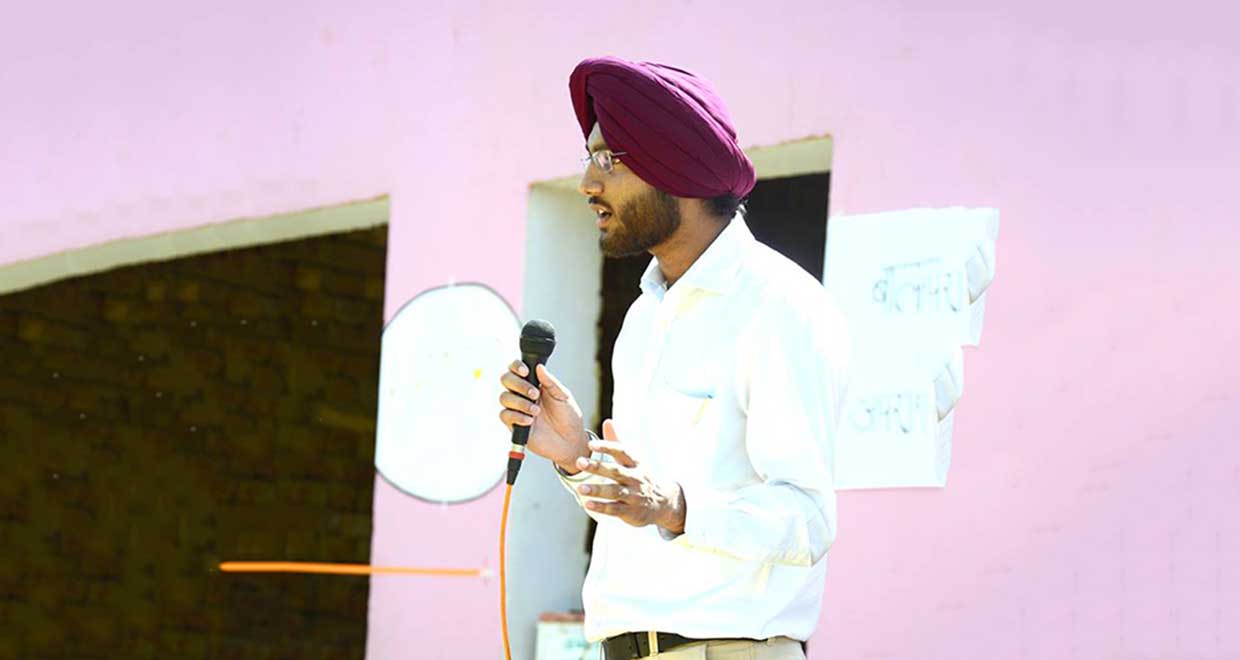
    Till my first year, I was also like the others a mere observer, watching activities happening but too nervous to come forward. But from second year I guess I grew into my fears and decided to take a leap towards them. I started participating in various moots and debates, representing my college all over India and before I knew it, I was assigned the responsibility of looking over these activities as the head of various societies. Participating in the various moots was always fun. It used to be like a trip with friends, exploring new colleges and meeting some of the best legal minds from all over the country. I think, public speaking and debating are very important for a student today especially a law student to gain confidence and come out of his shell but it is not the only important thing. I personally know a lot of brilliant law students who never did any mooting but are still very good in their arguments so it depends on the person.
     

    simar-singh-1

    Tell us a little bit about your internships and work experiences in the law field.

    My first internship was with Advocate Guru Dutt Sharma who was the Additional Standing Counsel for Government of India in the Dwarka District Court. Initially I simply used to observe the court proceedings and eventually I started reading out cases, preparing their briefs and following them up in the hearings. It turned out to be an illuminating experience as I saw the practical side of legal profession for the first time and realized that this was what I meant to do all along. The pleadings, the arguments and the decorum of a court, all of it captivated me and I did my internship with such dedication and enthusiasm that I was offered a part time employment by the Counsel to assist him with the cases which continued for three years of my law college where I saw myself being transformed into an Advocate much before my graduation.

    I also interned with Advocate Dr. V. K Aggarwal who was also the former Law Secretary and had drafted the Arbitration and Conciliation Act, 1996 where I got the first-hand knowledge on arbitration proceedings and their conduct. I observed the proceedings of various arbitrations, prepared briefs on various cases and performed extensive legal research on SEBI Regulations, Telecom Laws and Company Laws. But most importantly, I got the opportunity to gain prodigious knowledge about Arbitration as a subject from V K sir.


    Tell us about being awarded the Achiever Award, and your experience with Justice U Tha Htay.

    (Simar has two major achievements namely Achiever Award for displaying leadership qualities by the University’s Founder President in the presence of Hon’ble Chancellor and Vice Chancellor of University and a letter of appreciation for efforts and conduct in International Seminar on Global Environment and Disaster Management from Hon’ble Justice U Tha Htay, Judge Supreme Court of Myanmar.)

    I was deeply obliged with the fact that I was bestowed with that award and that my University thought I was worthy of it. After all the great learning, valuable mentors in the form of teachers, wonderful friends and many good memories, I owe Amity Law School II a lot and this award is simply an acknowledgement of the fact that my efforts and achievements have been supported and honoured by my college. Experience of college is one of the paramount experiences that one goes through life and for me my college journey has been simply astounding.

    My experience with Hon’ble Justice U Tha Htay was extremely enriching and enlightening. I was chosen to represent my University in this seminar and after a personal interaction with all of us, fortunately, the organizers found me competent to assist Hon’ble Justice U Tha Htay during his stay in the conference. I assisted him with his seminar briefs and meeting schedules throughout the seminar after which I was given a souvenir from Myanmar and a Letter of Appreciation for my work from the Hon’ble Justice himself which was a rare and privileged honour for me.


    Being a LAMP (Legislative Assistants to Members of Parliament) fellow is a great achievement indeed. What all did you have to do in order to get selected?

    Before answering this I like to share my gratitude to my previous faculty Dr. Sam Abraham. He was the person who pushed me to fill LAMP application and made me believe that I can get through this.

    In order to get selected, I had filled in my form with due diligence and made sure that I stick to the word limit that I was asked for. Once my application was accepted I was called for the personal interview before the panel three experts. For this I made sure that I speak only what I know and remained calm and confident throughout the whole interview even when I did not know the answer to any question.


    Tell us about the SoP you submitted for the LAMP fellowship?

    I did not prepare any SoP in advance and had filled my form spontaneously so I don’t have my SoP exactly but in that I had broadly mentioned that as a lawyer we generally see how Courts makes use of our existing laws to deliver justice. Till now I had seen law getting declared, but this fellowship would get me the experience as to how law and legislation is actually born and how the legislature of largest democracy in the world works. Further from this fellowship I intend to get insight the working government mechanism since it is directly responsible to our parliament.
     

    simar-singh-2

    How does one apply for the LAMP fellowship? Tell our readers about the process, requirements and finally your suggestions to our readers who aspire to become a LAMP fellow?

    To apply for LAMP, one has to be very vigilant. The online application for this fellowship opens around the starting of year and it is open for around 20 -25 days. One can find the link of application on LAMP website. Any person who is of age below 25 years can apply for this fellowship provided he is a graduate. My suggestion to anyone who wants to become a LAMP fellow is that keep your article on policy issue ready in advance. Also keep asking yourself that why you actually want to pursue this fellowship because in the SoP you should write what you actually intend and not what will constitute a right or good answer (There is no good or right answer). For interview I would suggest that the aspirant should know what they have written in their application form, few basic knowledge on the structure of parliament and current affairs.


    LAMP fellowship provides an excellent opportunity to interact with Legislators at a personal level, and to understand the policy process. What have you learned in your stint as an LAMP fellow?

    Well LAMP fellowship has just started and I feel each day is new opportunity to learn and this is the ultimate objective of this fellowship. You learn and experience things which you don’t know and which you can never experience in your normal routine work. I have learned to be more responsible and now I know that unlike the judgmental view, Hon’ble Member of Parliament actually works a lot.


    Tell us about working with your MP. What is the experience like? Please tell us about the kind of work a LAMP Fellow is required to do in a typical workday.

    I won’t be able to tell you the name. However the experience has been extremely delightful and knowledgeable. The work of LAMP fellow is nowhere strictly defined or codified. He is there to assist his Hon’ble Member for the work related to parliamentary affairs. In a typical day when Parliament is in session, he has to go through around 6-7 newspapers for getting updates on current affairs of country. He has to read each of the documents tabled in parliament and then prepare briefs about them. Further he draft’s starred, unstarred and supplementary questions for his allotted Hon’ble member which could be asked to the government. Preparation of Private Member bill and researching on topics on which the Hon’ble member has to speak in parliament is also the part of the job.

    The work is slightly different when parliament is not in session. Here the work is mostly related to research for the policy issues which your member is interested in, attending various conferences, seminar, committee meetings etc.


    Do you have any plans to pursue higher education in the future?

    Yes I am planning to pursue my higher education from a foreign university after the completion of this fellowship, most likely in the public policy.


    Is there any message you would like to share with our readers?

    My only message to all would that do whatever you like with utmost sincerity. There is not just one path that is right as prescribed and you don’t have to follow what others are doing. In fact, most of the times, the path that is less travelled often leads to the most fulfilling and fruitful journey.


    Finally tell us in which specific role you would like to see yourself the role of a lawyer, policymaker or a reformist of the society we live in.

    Well why not in all three. I would love to keep my roots as a lawyer first and then I wish to contribute my experience in policy making. I believe if I can discharge my previous mentioned roles honestly then surely the third role of reformist will get fulfilled itself.


  • Sonakshi Kapoor on application and getting selected for the LAMP fellowship

    Sonakshi Kapoor on application and getting selected for the LAMP fellowship

    Sonakshi Kapoor graduated in BBA.LL.B from Symbiosis Law School, Pune in 2013. She had joined as a Junior Associate at A. U. Khan & Associates and had mainly worked in litigation matters. In 2014, she applied for the Legislative Assistant to Member of Parliament (“LAMP”) fellowship, her application was accepted along with only 42 others among more than 1200 applicants.

    She tells us in details about:

    • The application procedure, dos and donts in order to get selected
    • Working with legislators and drafting private member bills and assisting them
    • Experience gathered from the LAMP fellowship


    How would you describe your childhood and pre – college life as well as educational background? Did you have lawyers in your family who motivated you to pursue a career in legal field?

    I spent a substantial part of my school life in a boarding school in Mussoorie. The day I declared to my parents that I had decided to study law (I was still in the 10th Grade) they were left confused and quickly dismissed it as a phase. We had no lawyers in my family, except a first cousin of my father, but growing up in a boarding school ensured a very limited interaction with my extended family. So there was no one toinspire me or eventually guide me through a legal career.  It was altogether a scary thought for my parents especially when I decided to go all the way to Pune from Noida to get a degree in law.


    What inclined you towards the field of legal education? Do you reckon any specific incident that made you choose law as a career?

    Growing up in a boarding school, my access to the internet or the TV was so limited that it was almost non-existent. Books were the only source of recreation and inspiration for me. By the time I was 15 and meddling with the possibilities for my future (even contemplated being an astronaut or an archaeologist), I had already drowned myself in dozens of writings and books on women rights, particularly in the Middle East. The fact that a law alone could prescribe or curtail the freedom of an individual and influence life had struck me hard and was pushing me to pursue a career that would simply empower me. Hence, Law.


    Tell us about your law school life, how instrumental was Symbiosis Law School, Pune in shaping up your legal career? Did you grow an interest towards policy making in law school itself?

    Moving to Pune defined a very important phase in my life and my five years in that city have been instrumental in shaping the kind of person I am today. Symbiosis Law School, despite its small campus (the college has a bigger campus now), did manage to offer an education befitting a good law school of our country. We had defined hours and a plethora of subjects to study. This not only ensured that we read and understood almost all important central legislations but we also had ample time to participate in extracurricular activities.

    It was through a pamphlet on the college notice board that I read about the LAMP fellowship and how it offered a platform for young aspirants to participate in the policy making process. I applied for it in 2013 itself, however due to the recent Lok Sabha Elections the fellowship was deferred. My professors in college, who were also helping me with my LAMP application, helped me list out other similar career options that I could apply to. But I decided to practise law and apply for the fellowship a year later.


    You have worked with Senior Advocates and at National Commissions including the NHRC. Any remarkable internship experience which shaped up your career? How would you recommend students to go about choosing their internships?

    Every internship gave me an opportunity to experience something absolutely different. And I am grateful for all experiences, especially the bad ones for they helped me decide on what not to pursue, for instance from my internship at Bajaj, I knew I was not the right fit for a desk job at a corporate house. During my internship with a senior advocate, I was star struck. I learnt a lot but also gathered from my peers and seniors on how difficult a successful career in litigation was especially when you don’t come from a family of lawyers. However litigation is, without doubt, the more exciting career path and even as a LAMP fellow, I sometimes do miss attending courts (even though my practise lasted a year). As a law student, one should not hesitate to intern anywhere and everywhere. It is equally important to intern in a law firm or a company as it is to intern in a district court. However it would be helpful to achieve some clarity during the last two years of your law school, so you can only focus on the work that you would want to eventually do.


    Being a LAMP (Legislative Assistants to Members of Parliament) fellow is a great achievement indeed – you were selected over 1200 applications that were received this year. What all did you have to do in order to get selected?

    The selection process involves filing out an application form with a Statement of Purpose and a brief note on a recent policy or law. While I breezed through my Statement of Purpose, my biggest challenge was the policy synopsis.  I analysed the 2013 legislation on food security and had a tough time battling with the 500 word limit for there was much to say. The Food Security Act is a very controversial law with very conflicting opinions on its implementation and success. However multiple revisions later, I was happy with my note and submitted my application a day before the actual deadline. I was lucky enough to be called in for an interview at the PRS office (PRS also conducts interviews via skype for outstation applicants). The Panel interviewed me on the basis of my resume and my policy note and to adjudge my interest in public policy, my understanding of the fellowship, and my future goals. I was able to aptly respond to almost all the questions except a few to which I admitted having no knowledge of. Overall the interview did go well and I eventually received a mail admitting me to the Fellowship.


    How does one apply for the LAMP fellowship? What are your suggestions to people who aspire to become a LAMP fellow?

    The application process generally begins by April and the deadlines are also released. The general information on the fellowship such as eligibility criteria, selection process, stipend etc., is available on http://lamp.prsindia.org/thefellowship. The Application form is also available on the website and clearly specifies the procedure for filling and submitting the form. If you wish to apply for the fellowship, then you should start keeping a tab on the everyday working of the Parliament including the bills which are introduced or eventually enacted and issues which are discussed (for instance the crisis of black money was recently debated). Once the deadlines are released, start working on your policy note by listing at least 2-3 topics that you would want to analyse and eventually decide on the policy synopsis that you would want to submit. While writing your statement of purpose, try to put down concise information relevant to your achievements and your interest in public policy and the fellowship. Do submit your application few days before the actual deadline for you may face a lot of issues with the website at the eleventh hour, with many applicants trying to submit their applications.


    LAMP fellowship provides an excellent opportunity to interact with Legislators at a personal level, and to understand the policy process. What have you learned in your stint as an LAMP fellow?

    As a law student and then as a lawyer, my most basic achievement was understanding our legal and political structure and as a LAMP fellow, I have continued this learning process. I have dedicated my time and potential to the cause of a Member of Parliament by contributing towards his policy and legislative debates and other Parliamentary interventions (including drafting a bill) which I know will have an impact –in a small way – on the laws and policies of tomorrow. The magnitude of this responsibility alone has been the biggest learning experience for me.


    Please tell us about the kind of work a LAMP Fellow is required to do in a typical workday.

    A typical work day (when the Parliament is in session) involves framing and submitting Parliamentary Questions, Matters of Urgent Public importance that my MP would want to raise in the Parliament and working on supplementary interventions. The biggest task is meeting all the deadlines set out by the Parliamentary Secretariat and complying with its procedural requirements which are very similar to the filing process in courts. The interventions and questions often revolve on issues related to the constituency of my MP. It’s a small contribution to my MP’s work but it keeps his mind free and helps him take up larger issues.

    When the Parliament is not in session, work generally revolves around preparing for the next session, drafting private member bills, working on speeches that my MP is required to deliver on various platforms, and attending workshops and training sessions organised by PRS.


    Do you have any interesting experience whilst being a LAMP fellow which you would like to share?

    As a LAMP fellow everyday offers a different experience. Even though I function within the confines of a schedule and various deadlines, no two days are alike. However rather than an interesting experience, I would like to share an important moment as a fellow which was when my MP raised an issue drafted by me, for the very first time, in the Parliament. It was an intervention (supplementary question) on preserving the language and culture of tribes in Kerala and it taught me the magnitude of my responsibility and of the consequences.


    Do you have any plans to pursue higher education in the future?

    I do wish to pursue a Masters in Public Administration and I am in the middle of shortlisting colleges and universities abroad for my higher education. In the coming months, I will begin with my application process including taking the necessary tests. I would want to eventually work as a forerunner in the framing and implementation of policies and projects that resolve important societal problems.


    Is there any message you would like to share with our readers?

    You should be strong and stubborn in what you want to pursue despite all resistance. Even if it is a different career path, don’t hesitate to explore it but have the courage to make mistakes for they are inevitable and sometimes the best teacher. Studying law can be tedious and monotonous mostly but it is indeed an exciting career option so be strong willed and work hard but don’t forget to have fun along the way.

  • Prashanth Potluri on being a LAMP fellow, career in policy work and taking time out for football

    Prashanth Potluri on being a LAMP fellow, career in policy work and taking time out for football

    Prashanth Potluri is a graduate of 2011 batch from School of Law, Christ University. He has been a LAMP fellow and till recently he worked as a Senior Specialist in Public Affairs and Advocacy at Genesis Burson-Marsteller. He is famous among his colleagues as a passionate footballer and most amazingly he could take time out from a busy schedule for football as a law student and even after joining work. In this interview he talks about:

    • Taking time out for football from a busy schedule
    • Working as a legislative and research assistant for HRD Ministry and being a LAMP fellow
    • A career in Policy
    • Work experience at Genesis Burston-Marsteller and ThoughtWorks


    Given that most of our readers are law students and young lawyers, how will you introduce yourself to them?

    I am a graduate from the 2006 – 2011 batch of the School of Law, Christ University (SLCU), Bangalore. I went on to pursue the LAMP fellowship after graduating, shortly after which I completed a course in Leadership Development at the Indian School of Business, Hyderabad. I am an avid football fan and the game of football has been my biggest teacher.  I have always been very clear since my initial days at law school, that I would want to make a career in a field that isn’t directly related to the law and the two things that I have always loved were football and politics.


    Amongst the various career options, what motivated you to choose law?

    Frankly speaking, I didn’t have too many options. I was a mediocre student in school and I was in the commerce stream. I only did well for myself in the Social Sciences. This gave me an indication as to where my interests lie. I have been fascinated with politics since a young age and a law degree felt like a useful tool for me to have to pursue a career in politics and its allied fields such as policy studies, public affairs and administration etc. I have never wanted to be a lawyer during my time at law school and after graduating either. I chose law as a means to my political ends and also because I knew it would enhance my ability to think in a different and more holistic manner.


    How was your law school experience? What did you do to keep the monotony off the law school?

    I had a very rough start to my law school experience. I was frustrated that I did not get into any of the top 3 national law schools, which I believed I deserved at that time I made up my mind that I would take the entrance exams the second time. Having failed to get through the top 3 schools again, I realized that I would spend the next 5 years here and that’s when I decided to embrace my fate. In retrospect, it’s the best thing I have done because, I ended up having the best 5 years of my life from 2006-2011 and I had the fortune of meeting some of the best people there and building relationships that I know will last a lifetime. I realized that a law school experience is only as good as the people you are surrounded by and we had some very intelligent and fun-loving people at SLCU. I made sure I took part in quite a few extracurricular activities such as football, quizzes, debates and music and this made sure my mind was active and constantly challenged and there was no room for monotony. I was never much of a mooter and the few times I did moot, it was because I had no other choice or because a friend’s team could have used a researcher. If I sensed any kind of monotony kicking in, I would make sure I start doing something new and fun to keep me entertained and living in a fantastic city like Bangalore definitely helped my cause!


    How did you manage time to pursue your passion for football while pursuing a law course?

    I made it very evident to my family, faculty and peers that football was, is and always will be my first love and passion and I wouldn’t treat it as an ‘extra activity’. This didn’t go down too well with my faculty and college staff, but this was a decision that I was entitled to make. The manner in which I managed football and the pressures of a law school was not done in the best way possible, but I managed nonetheless. The classroom chatter included football talk, match analysis and sometimes even sneaking in the occasional YouTube clips during class hours. Once the exam dates were announced, I’d go back to my books and ensure I put in enough hours to get good score. I never missed a football game even during exam time though. In the words of a very wise boy (Calvin), last minute panic served as the best kind of motivation to make sure I did well for myself academically in law school.


    Do you still play for or manage football clubs? Please share some tips on time management.

    I don’t play football as often as I would like (everyday) due to commitments at work, but I make sure I play once a week. I was recently offered a trial with Histon F.C., an English club that play at the Ryman Premier Level and I have decided not to pursue that as it didn’t seem pragmatic in many ways. I currently don’t manage any teams although I did so for 5 years at law school with the college team and this experience has taught me critical life skills such as leadership, managing people, identifying talent and nurturing it, managing deadlines etc. and I am truly grateful for that experience. I couldn’t have managed a football team so well without the efforts of the team itself. We were a self managing unit of sorts and I was just leading the way, but on a day to day basis, everyone did what they were expected to. I clearly laid out the expectations I had from them and they always delivered. Everybody played a critical role in making sure there was a sense of camaraderie and family in the team. This ensured on-the-field success and off-the-field friendships. My tip on time management would be to have a clear agenda for your day, allocate specific time for each activity and make sure you are well rested so as to be physically capable of doing what you have planned. Sound sleep, nourishment and clarity of thought in managing your time is very important.


    You worked as a Legislative and Research Assistant for the HRD Ministry in your fifth year. How did this happen? What was the application procedure?

    This was a classic case of being at the right place at the right time. I had not formally applied to it and there was no opening per se. I was very interested in education and public policy at that time and thought it would be a good idea to work at the HRD ministry. I later met a family friend who helped me get the opportunity to work in the ministry.


    You became a LAMP fellow just after graduation. What are the criteria to apply? How did you go about your application process?

    The LAMP fellowship requires you to be a graduate and within 25 years of age, – from a relevant academic background and expects you to commit yourself for a period of one year. I received an e-mail regarding this fellowship through the college and I looked it up, it was very compatible and accurate with regards to what I wanted to do in my career, which was politics. The LAMP fellowship was a very tangible step I took to ensure I built myself a career in politics and public policy.


    What was your work profile as a LAMP fellow? How did it help build your career in Policy?

    I worked with Mr. Tiruchi Siva from the DMK who was a Rajya Sabha MP and the Chairman of the Parliamentary Standing Committee on Industry and a Member of the Joint Parliamentary Committee on the 2G Spectrum Allocation.My daily tasks consisted of intensive research that facilitated his day to day parliamentary duties and ensure that he was well equipped for his parliamentary debates, standing committee meetings etc with the best possible research.

    Working closely with an MP gives you the kind of insight into policy making that no other job does. You get to witness a policy from an idea to an actual policy that gets implemented. This is very useful in pursuing a career in public policy in the long run.


    We often hear that more lawyers are getting into ‘policy work’. What does this actually involve? What is it that policy lawyers do?

    Public Policy professionals are a bit different from lawyers with regards to what they do on a daily basis. Policy work relates to the study, understanding, drafting and interpreting of rules pertaining to a very specific subject unlike a statute/legislation which is meant for a broader and more generic set of circumstances. This is why lawyers do well for themselves in this field. Every organization has a set of internal policies, every ministry in the government have a set of internal policies that facilitate the working of the larger statutes that come under their purview and lawyers are equipped with a foresight and thought process that lets them know what a comprehensive policy should entail, better than people from other academic backgrounds. Public policy professionals spend a lot of time researching on policies of other countries and organizations and get a comprehensive understanding on what the most suitable policy would be for their specific need. It does have a lot of overlapping with what lawyers do which is why lawyers are most preferred in this field. We get to research, draft and interpret policies on a gamete of issues minus the task of going to courts and presenting our case. We let the lawyers do that for us 🙂


    You also worked with Genesis Burson-Marsteller. What was your job profile there? What was a normal workday like?

    I worked as a Senior Specialist in Public Affairs and Advocacy at Genesis Burson-Marsteller and I was based at Delhi/Gurgaon. It was the best experience I had as a working professional dealing with a variety of corporate and political clients. Normal work days varied depending on whether I was working on a corporate or political client. With regards to corporate clients, my job entailed me to map out a comprehensive list of stakeholders, profile them and prepare an outreach and advocacy strategy for the clients. We also had meetings and calls with our clients which ensured we constantly had something to do. Political clients were a completely different ball game and this was the part of my job that I cherished the most. I got to work on a few election campaigns including the recently concluded general elections and my tasks included constant research on various talking points, drafting speeches, articles, talking points for the client, undertaking surveys to assess how much we have progressed, prepare a comprehensive strategy on how to best utilize the resources in hand etc.


    You completed a course from Indian School of Business on Leadership Development. Please tell us a little about it. How did you decide to take it up? How effective was the course for your career?

    The leadership development course at ISB was a part of our LAMP fellowship. PRS, the organization that undertakes the LAMP fellowship tied up with ISB that year to undertake a course in Leadership Development so as to supplement and enhance the skill set we had already developed on the job. I had a fantastic time doing this course and it has definitely been a huge value addition with regards to my career options. It taught me to clearly articulate my thoughts and carefully execute a vision and motivate my colleagues during testing times which has proven to be very useful while working with different organizations.


    You had worked with ThoughtWorks for some time. What was your job profile there?

    It was a research centric job which taught me a lot on market research and fine tuned my ability to make and give presentations. It was not a conventional policy job but it was fun working there as it provided me with a lot of insight on various business verticals and business trends. I worked with some amazing people there and it gave me a more global perspective on a lot of issues and taught me how to manage expectations with the people I work with.


    What would be your message to our readers who would want to take up a career in Policy?

    To put it quite simply, do it. It is a very rewarding and viable career option for lawyers and non-lawyers alike. I hope law students stop looking at this as an ‘alternative career path’ and look at it as a conventional career choice in the future. From my experiences in this field I can vouch for the fact that it is a challenging area to work in and it requires a lot of dedication and an ability to think in a holistic manner with proper foresight. The ability to think and articulate yourself is very important in the field of public policy and its allied areas. There are tons of career options and if anyone is interested in taking it up, I would be glad to provide any kind of clarity they may require.

  • Teslin Augustine, NUJS grad on interning with MP Naveen Jindal, the LAMP fellowship & life in the public policy sector

    Teslin Augustine, NUJS grad on interning with MP Naveen Jindal, the LAMP fellowship & life in the public policy sector

    Teslin AugustineTeslin an NUJS graduate tells us about her inspiration for joining law and her internship with Naveen Jindal which set her on the course for a career in public policy. She talks about the transition from law school to the real world and how best to have a work life balance.

     

    How will you introduce yourself to our readers?

    My name is Teslin. I graduated from NUJS in 2012, after which I did the Legislative Assistant to Member of Parliament fellowship offered by PRS Legislative Research in association with the Constitution Club of India. I am currently working as a policy consultant in a law firm in Delhi.


    Why did you decide to study law? Tell us about your college life?

    Perry Mason – the oh-so-cool defence attorney who was the star of a series of Erle Stanley Gardener books which I was addicted to as a child, is the single biggest reason why I decided to do law. Of course, I found more logical-sounding reasons when I had to justify my choice of profession to my family but the truth is that I found the long-winding arguments Mason hashed out in Court too hard to resist.

    College made me the person I am today – and for those who don’t know me, I am a pretty awesome person (modesty is probably not one of my traits though). Jokes apart, I made some amazing friends, who gave me the confidence to not be apologetic about myself – my choices, my likes & my dislikes and most of all it gave me the NUJS tag which meant instant “smart-alert” for my future employers.


    What kind of internships did you do while you were a student? Any remarkable experiences during your internships that shaped your career choices later?

    I did the usual run of the mill corporate internships. The only internship that was of any real significance was my 6-week stint at the office of Naveen Jindal, MP. I stumbled upon this internship purely by chance and it was the only internship where I felt like what I did mattered – that I wasn’t just another person helping rich corporations get richer.


    We often hear that more lawyers are getting into “policy work”. What does this actually involve? What is it that policy lawyers do?

    Courts take years, sometimes decades, to correct a legislative mistake. As a lawyer working in the realm of public policy (I wouldn’t call it “policy lawyer”) I do what I can to influence what a piece of law ultimately looks like – be it through making standing committee representations or educating the political class about lesser known concepts. I make sure that our legislators have all the information they should have to make intelligent policy choices which will ultimately decide the trajectory which our country will take. To put it simply, as a policy worker, I try to make sure that the Bill that ultimately becomes a law is in its best possible format.


    What made you interested to get into this area of work?

    Be prepared to roll your eyes, some naive ideology coming your way – I have always believed that at the end of 20 years if I can think of one thing that I did to make things better for this country then I will have deserved my place in this world. To me, policy seemed like the most direct way to make a difference. Even if I don’t make any direct changes, as long as I can keep the dialogues happening I have done my job well.


    When did you start thinking of going into such an offbeat career? What precipitated this decision? How difficult was it for you to make an out of the box career choice?

    I wanted to be happy about the work I did and that’s all that mattered to me. Sure, at the beginning, I was filled with uncertainties and always wondered if I was making a big mistake. But I soon shed all my uncertainties and insecurities about my choice of profession, when I realized I was one of the few people to have a smile on their face at the end of every day.


    How did LAMP Fellowship happen? What are the criteria to apply? How did you go about your application process?

    I first heard about the fellowship during my internship at Naveen Jindal and I had thought to myself at that time that no matter what happens I would definitely give this a shot. The LAMP fellowship is open to everyone who has an undergraduate degree, is below the age of 25 and is an Indian citizen. There is an online application form which asks for a statement of purpose along with your CV and some other details. Once you get shortlisted based on the SOP, there is a telephonic/skype or walk-in interview. The panel who interviews is made of ex-LAMP fellows, PRS analysts and usually a third party policy expert. There is no secret mantra to the interview or the application. The most important thing they try and ascertain during the interview is your reasons for applying and how passionate you are about policy-making. I think, if you truly care, your sincerity shines through.


    How was your typical day over there?  What kind of work were you involved in?

    I spend most of my time preparing questions that my MP could raise in the House, helping him with his Standing Committee responsibilities, doing issue-based research for him, prepping him for debates, preparing special mentions, zero hour submissions and private member bills.


    Is the pay enough to sustain your life in a megacity like Delhi, especially if you are not living with your parents?

    I am a very middle-class person with very middle-class needs. That said, as a LAMP fellow I lived in a constant state of poverty, my current job as a consultant allows me to lead a comfortable life.


    Currently you are involved in policy related work in a law firm. What kind of work do you have to do? How is it different from your previous work profile?

    As a LAMP fellow my work was mostly parliamentary in nature. This means that I helped my MP raise questions in parliament, introduce private member bills, raise special mentions, zero hour submissions and prepared his speeches for parliamentary debates and media appearances. The work I am doing right now uses a lot of the experience and knowledge I have gained over the past year as a fellow. I advise clients on implications of laws and policies passed by the Government, how it is likely to affect them and how to make representations to the Government so as to have a regulatory system in place that is favourable to clients.


    Would you throw some light on your current job profile? Is this an emerging area that law students should keep an eye on?

    I currently work as a Policy consultant in a law firm. We are in the business of providing policy-based advice to corporate clients.


    Any memorable career experience you would like to share?

    The highpoint of my fellowship was when a private member Bill I had drafted was introduced in the Rajya Sabha and was discussed and debated upon for 7-8 hours. There is nothing more rewarding than seeing Parliamentarians discuss, argue for or against a clause that you have yourself drafted.


    Where do you see yourself 5 years down the line?

    I eventually want to work with the Government and do policy making at the most basic level. I want to directly be responsible for what a policy document or a Bill looks like when it is introduced in the Parliament.


    What would be your advice to people interested in policy work? How should they prepare themselves for a career in policy? What are the essential qualities one should cultivate?

    As simple as it sounds, read the newspaper – to begin with. Policy work is a lot about being up-to-date with everything – be it the latest consultation paper that TRAI has released or the Orissa High Court’s judgement about mining. Know what is happening around you and take an interest to keep yourself updated. Do internships with a couple of policy organizations – Rakshak Foundation or Observer Research Foundation for example are excellent organizations to get an idea what policy work is all about. Talk to people who work with policy and leave behind all your fantasies


    How difficult or easy is the transition from being a law student to a lawyer?

    It is difficult. Your first job always feels like an internship. You keep waiting for it to get over and when it finally hits you that there is no getting over and that you have to do this every single day – pay rent, bills, buy groceries, fight with the maid, sit at the same desk everyday – it can get difficult. But once you accept that, life is good. It’s good to not be bound by any rules and finally be an adult, it’s good to be outside the constant scrutiny and judgment that is such an essential part of college life and do what you really want to.


    What’s your take on work- life balance?

    I know plenty of workaholics who are perfectly happy working all day everyday. Fortunately or unfortunately that is not me. I have to have the time to meet my friends, once in a while, come back home before the sun is up and go for a holiday once in a while.  I will probably be “lagging behind” my peers who work day and night but I choose not to measure my success based just on my professional life – it is a success for me if I have the time to explore every nook and corner of Delhi, it is a success for me if I have been able to take a dance class outside work and it is a success for me if I have gorged down 5 kgs of meat in a pigging competition. It is upto every person to decide what they want from life and there are no set rules.


    Last but not the least, what would be your advice to law students?

    I completely understand the glitz and glamour of corporate law and if that is what you really want to do then good for you. But if it is not, then there is no point fooling yourself. There is only so much happiness and satisfaction money and things can give you – true happiness is in finding something that you are truly passionate about and in waking up in the morning and actually being happy about going to work – that’s what matters in the end. Have the confidence to explore and find out what you love doing – don’t settle for anything lesser.
