Tag: Law officer

  • “Interdisciplinary approach is the key. Integrating knowledge from various fields enables you to provide innovative and practical solutions.” – Sahib Chadha, Competition Law officer at Competition Bureau Canada.

    “Interdisciplinary approach is the key. Integrating knowledge from various fields enables you to provide innovative and practical solutions.” – Sahib Chadha, Competition Law officer at Competition Bureau Canada.

    This interview has been published by Namrata Singh and The SuperLawyer Team
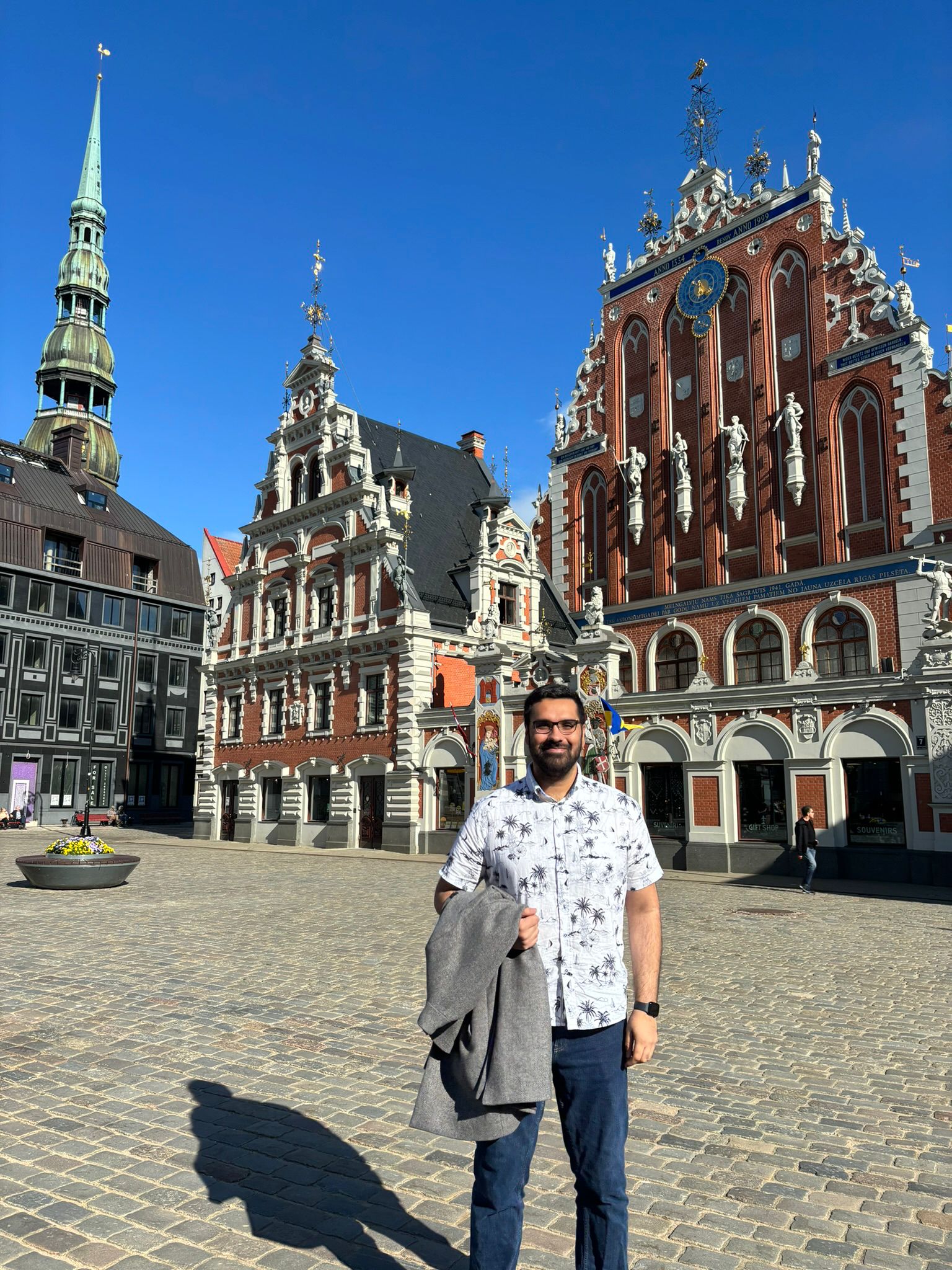
    Your educational journey has taken you from doing LLB in India to pursuing a Masters in law and economics from the EU. Could you share the motivation behind taking this diverse educational path and how each experience contributed to your growth as a legal professional?

    Through both chance and persistence I have developed interest in economics, particularly the role it plays in shaping law and policy. The practice of law concerns various legal issues which can only be understood by using economic tools and techniques. With the change in the Indian corporate environment, there is a definite demand for a new breed of lawyers who argue in court on the basis of a multi-disciplinary expertise in law, economics, politics, engineering, management and the social sciences. Post my Law degree and after working as a litigating lawyer under the esteemed tutelage of Mr. A.S. Chandhiok (who was then the Adl. Solicitor General of India,) I knew my next step was to choose an interdisciplinary programme. This made me opt for the European Masters in Law and economics where I took up courses like Competition Economics, Regulatory Impact Analysis and Cost Benefit Analysis. 

    The course turned out to be valuable in my journey as a legal professional as it nudged me in the direction of competition law and policy. The intersection of law and Economics helps in rigorous analysis and a better understanding of  competition issues in the market. Conducting efficiency analysis, assessing market power, impact on consumer welfare and even predictive power are a few areas where applying economic principles are very effective. As a result of my educational experience, I had the opportunity to work with some Law firms in the field of Antitrust in areas such as High technology, Standard essential patents (intersection of IP and competition), Fintech, agriculture ,healthcare amongst others. The academic experience also helped develop my writing skills(contributed to a Book on Comparative Competition Law and developed courses for some online education platforms) and oratory skills (enabled me to speak at public forums and conferences including giving guest lectures).

    Your educational journey didn’t stop here. You ended up doing another course in Policy from National University of Singapore. What was your goal behind this? What sort of opportunities can one think of in the field of policy after a course like yours? 

    While working for law firms, I realised that enforcement of law is just one facet. The way laws are made/developed have a drastic impact on how they are implemented in a society. I realised that there was a definite need for a more concrete understanding on how policies are framed, how stakeholders are dealt with and how to make decisions in the varied political setups. This made me attend the policy programme at National University of Singapore. Studying in Singapore, learning how some great policy decisions contributed to Singapore’s journey to becoming this current economic behemoth was an incredible experience. 

    While most of my cohort ended up joining government consultancies or organisations engaging in social policies, I chose a route that helps me fortify my interest and expertise in the field of digital economy. So, I ended up working as a legal and policy consultant to Asia Internet coalition which is an industry association representing policy interests of several technology companies in Asia. Here my role was to advice on technology regulation and policy related issues, promote stakeholder dialogue and sharing comparative best practices. The areas worked on included regulations around Data Privacy/protection, Cloud computing, intermediary liability, Artificial intelligence, e-commerce amongst others. I was fortunate to have gotten this opportunity to solidify my expertise in technology policy. 

    After your stint at AIC, you moved to Canada and started your current role as a law officer at Competition Bureau Canada. could you shed some light on your day-to-day responsibilities and the most rewarding aspects of your work? How do you see your role contributing to the broader landscape of competition law enforcement, especially in the context of evolving technologies and industries?

    I am extremely honoured to have been given this opportunity to work at the Canadian Competition bureau. Having worked on the private side for the better part of my legal career, the moment I was offered a chance to work on the public side, I pounced on it. I currently work for the Mergers and Monopolistic Practices Branch as a legal officer. Here my role includes conducting investigating steps i.e collect evidence to prove theory of harm. For this we conduct market calls, Document review, analyse all material so collected and make submissions to the competition tribunal. For ease of reference, my work is similar to what the Director General of Competition Commission of India does. This work has been extremely rewarding as it puts me in the centre of some of very interesting, contentious competition issues across diverse industries. Furthermore, Canadian competition law has recently gone through extreme changes via 3 rounds of amendments in the last few years. So this was an opportune time for me to witness and contribute to drastic policy changes in action.

    Across the world big tech has seen an upheaval of enforcement actions by several regulators. The Canadian competition bureau too continues to lay a great amount of emphasis on the conduct in the digital space and hence I have had the privilege of being in the centre of some very exciting proactive law and policy  work in this space. 

    How would you describe the differences between studying and working in the legal field in India and abroad? Are there specific aspects of your work that you found particularly enriching or challenging compared to your experiences in India 

    Based on my personal experience, workplaces in India often reflect a blend of traditional hierarchies, respect for authority, and strong emphasis on personal relationships. This can sometimes lead to a slower decision-making process and conflicts amongst colleagues. Which is not the case in places I’ve witnessed abroad, especially in Canada. Foreign workplaces seem to be more egalitarian with flatter organisational structure, hence is more efficiency enhancing and is result oriented. Here at the competition bureau for example, we officers are bestowed with complete responsibility for tasks assigned with minimal intervention from senior management. This helps me garner my leadership skills and gives a sense of accountability to the task assigned. 

    There is an obvious difference I observed in terms of work hours. In Most Indian workplaces I’ve been to long hours and extended workdays are common. Foreign workplaces however lay a lot of emphasis on clear boundaries between work and personal life. But that could also be attributed to differences in organisational setups.

    Your interests extend to areas like behavioural economics and mental health. How do these interests intersect with your legal work, and do you believe they bring a unique perspective to your role as a Law officer?

    During the early days of my masters programme I was exposed to a new discipline which fascinated me. Understanding behavioural economics helps comprehend how individuals and organisations make decisions. In the recent past regulators across the world have seen this as invaluable in legal context to analyse organisational behaviour, compliance with regulations and even strategize negotiations. Even at the Canadian Competition bureau we have a dedicated unit dealing with behavioural insights and how they aid in enforcement and policy work. So my curiosity back in the day has been helpful in my current career activities. 

    With regard to Mental health, it goes without saying that any job or any role requires an individual to be both physically and mentally fit. This is essential at workplace because it underpins well being, supports effective decision making, teamwork and positive work culture. Looking at the importance in the current era, I try to take every step possible to enhance my knowledge in the area hoping to be a good leader and an even better friend/colleague. It is my endeavour to help foster a culture of compassion and support. 

    On a lighter note, outside of your professional life, your interests include travel, playing table tennis, and playing the tabla. How do these activities contribute to your work-life balance, and do you have a favorite destination you’ve traveled to recently

    Engaging in travel and other co curricular activities all contribute uniquely to my work life balance. Growing up my parents always pushed me to do stuff outside of academics. Playing a music instrument, like tabla, is an amazing creative outlet that helps me relax and unwind mentally. Most of my colleagues, especially in India, complain about routine and mundane life. So channeling focus and discipline in an alternate creative activity seems very helpful. Further, Playing table tennis is a great physical activity that helps me stay active and relieve stress. It’s a great social sport where playing with friends or colleagues fosters camaraderie. 

    I am an extremely passionate traveller, having visited more than 40 countries across the world. Traveling allows me to wind down and gain fresh perspectives. Experiencing different cultures, cuisines, and landscapes broadens my horizons and stimulates creativity. It’s a way for me to recharge and return to work with renewed energy and enthusiasm. As for my favorite destination, I have always enjoyed going to Vienna. Weirdly, Vienna was the first city I visited outside of India for a moot court back in 2011. I ended up doing a semester during my masters later and visited Vienna a couple of times as an arbitrator for the vis moot. Recently I visited again for a good friend’s wedding which was beyond magical. The blend of amazing Austro-Hungarian architecture, scenic alps, delicious coffee and cake make it the perfect place for any traveler.   

    Considering your work across several jurisdictions, what advice do you have for aspiring legal professionals looking to make a mark in the field of law and policy?

    For aspiring legal professionals aiming to make a mark in the field interdisciplinary approach is the key. integrating knowledge from various fields such as economics, sociology, or technology with legal principles enables you to provide innovative and practical solutions. I have observed across all levels especially in regulatory fields economists and lawyers tend to think in Silos. It is essential that they work harmoniously in order to address complex issues in the new age. 

    Another aspect I would pay emphasis on is to find the right mentors. Seeking mentorship from experienced professionals can act as a major anchor when it comes to navigating one’s career. have noticed resistance from young individuals in seeking opinion/guidance. I was fortunate to have some really amazing mentors like Mr. A.S.Chandhiok, Justice Pratibha singh, Jeff paine and Max liu who at different points of life have provided my some sound advice not only professionally but personally too. The guidance so provided has helped me make a meaningful impact on my career but also make me a more wholesome human being. 

    Get in touch with Sahib Chadha-

  • Raghav Singh, cracking IBPS and DMRC, on being a Law Officer at State Bank of India and teaching CLAT aspirants

    Raghav Singh, cracking IBPS and DMRC, on being a Law Officer at State Bank of India and teaching CLAT aspirants

    Raghav Singh graduated from Dr. Ram Manohar Lohiya National Law University, Lucknow (2007-2012). At present, he is the Deputy Manager (Law)/Law Officer in State Bank of India posted at Administrative Office.

    In this interview he talks to us about:

    • Academic as well as extra-curricular experiences.
    • How he prepared for SBI and IBPS exams.
    • His experience while teaching CLAT aspirants.
    • Factors students should keep in mind while building their career graphs.

    How would you like to introduce yourself to our readers?

    I would like to introduce myself as a Banker by profession, Lawyer by passion and Teacher at heart. I am also a hopeless optimist who cannot stop himself from laughing at serious moments.

    What was your motivation to study law?

    The motivation mainly came from my father, Sh. Arun Kumar Singh, who is currently posted as a CBI Judge at Rewa(MP). My father was born in a family of farmers and education was a luxury to him, still he worked hard and after a lot of struggle came to stand where he is today. This naturally had a profound effect on me and I developed an interest towards law. Initially I wanted to serve the judiciary but I presume, destiny had a different plan. I learned that a lawyer can contribute in many ways to the institution where he is working thereby impacting his surroundings and it is a great feeling when there is a positive impact as the character of Andrew Beckett has summed up in The Philadelphia, “It’s that every now and again – not often, but occasionally – you get to be a part of justice being done. That really is quite a thrill when that happens.”

    How was your law school journey like- could you share your experiences with us?

    If I am to answer in one word I would call that journey amazing. But law school life deserves much more than one word. As life is much more than just the job you are doing, Law school too is much more than just your academics. It is about the bundle of experiences where everything fits in, be it your success or setback or the journey that you took while reaching there.

    I had a wonderful journey thanks to my teachers, friends, seniors, juniors and everyone who was a part of it. I remember with much fondness how Anshuman hit a four of the last bowl that sealed the Inter batch cricket tournament for us where I was one of the frontline bowlers of the team and at the same time I recall how I bowled 17 times in one over in one of the matches. I remember during the Final year Aditya coming to my room and practicing on guitar for hours and telling me that singing “Smelly Cat” at our Cultural Fest is not a very good idea but I anyway went with it much to the amusement of the capacity crowd in the auditorium where only my Debating committee members were found cheering. At the same time I also remember how everyone appreciated me for the song that I composed and sang on Guitar during our farewell. In addition to the academic life all the trips towards the old city, late night Bun makkhan, watching IPL in the common room, all the Bak*****, etc. are just priceless and I can’t thank God enough for the life that I had in law school.

    Kindly share with us your academic as well as extra-curricular experiences that have helped build your personality? What were your biggest achievements in and outside law school?

    Since we had a semester system so there was lot of time at hand to participate in Extra Curricular. Mooting was one area that caught my fancy, the thrill of arguing your case was enough to make me pursue that interest in the first semester itself. One should keep in mind that Mooting is a team effort; therefore, you need to get the right team. The one thing you should look for before making a team is—Compatibility. Remember, when it comes to moot courts compatibility trumps intelligence. And add hard-work to the equation and result is a brilliant team.

    I was fortunate enough that I had my friends (who stood with me through thick and thin in our mooting journey) as the best team mates anyone can have. So with contributions from Srijan, Akansha Ma’am, Suyash, Mayank, Pallavi, Dhruv and Yash, I was able to win 3 Best Memorials (including 3rd GNLU international Moot court competition) I have also won best mediator in UPES Mediation Competition, 2012 and published few articles, 3 of which with the help of my co-authors Amit Kumar Pathak and Sukriti Guha (Manupatra Competition Law Journal, Company cases, The Practical Lawyer & Environment Law Times).

    Also, I had one of the best times as convener of the Debate & Discussion committee thanks to the members of the committee we were able to organize several debating competitions, helping  streamlining the debating culture at RMLNLU.  After me, the responsibilities of the committee were taken over by talented conveners like Vinayak, Krishna & Aayush.

    In my professional life too, I was lucky enough to have brilliant and hardworking people as my support system especially T K Singh sir, BM Sharma sir, D V Malhotra Sir & Piyush to name a few. While working in Oriental bank of Commerce as a law officer, with the collective effort of the branch managers as well as branch officials, we settled the maximum number of cases in the National Lok Adalats organized throughout 2014.

    Participation in these competitions helped me a lot in building my personality. The more you participate in extra-curricular,the more exposure you get which help you to deal with assignments in your professional life. For instance, in my SBI Deputy Manager(Law) interview, I was privileged to have former Bombay High Court Judge, Justice P D Kode(Famous for his judgment on 1993 Bombay bombings case) as the head of the interview panel and all that I learned in law school did help me to face the board with confidence and score well above 80% in the interview.

    How did you prepare for SBI (Law officer Scale-II) & IBPS (Law Officer Scale-I) exams? What are the subjects one needs to study for its preparation?

    IBPS(Law Officer Scale-1) is conducted for all the public sector banks excluding SBI. So, apart from Law, questions are asked on General Awareness, mostly relating to Banking and current affairs, Reasoning and English. There is a negative marking of 0.25 for every wrong answer. Paper comprises of 200 questions of one mark each. Since I was already preparing for judicial services, I did not face much problem in law and I just went through previous years question papers to know the pattern of the examination and practiced some mock question-papers. I feel reasoning is the deciding factor, since most of the law students just loath anything related to Maths or calculations. So I made a point to practice reasoning. It helped me in clearing Delhi Metro Rail Corporation exam as well.

    Although for SBI, the pattern is somewhat different as there is no General awareness section and other sections like Reasoning and English are merely qualifying in nature, which means that merit list shall only be decided on the basis of the marks scored in law section unlike IBPS. Therefore, the concentration must be on Law. Apart from basic laws such as Contract, Procedures codes, Penal Code one should also focus on the commercial and banking laws like SARFAESI, Banking Regulation Act, Partnership Act etc. Also, the material from Indian Institute of Banking Finance’s on legal and regulatory aspects of banking proved to be very helpful.

    As I was already working with Oriental Bank of Commerce (Allotted through IBPS), I was not having much time to spare on preparation, so I stick to the basics and practiced previous years question papers and IIBF preparatory material.

    For most of the law graduates the syllabus of these exams might appear to be alien where lot of such acts are involved which one might not have even heard before. But one needs to just go through these acts. If somebody is preparing with all seriousness and regular practice even for a short span of 2 months, it can easily be cleared.

    How was your experience teaching CLAT aspirants? What were the challenges you faced? What do you think legal aspirants need to be aware about before they become professionals?

    I immensely enjoyed teaching as it helped me personally to build on my knowledge. As I left my job at Mumbai and was appearing for competitive exams, to do away with boredom and monotony, I thought teaching would be a good experience. Here, I have to thank Bishwajit Sir and Priya Ma’am. They were very understanding and gave me an opportunity to teach the wonderful kids who are now studying in prestigious law universities. The only challenge I faced while teaching, was to simplify the legal concepts for my students. So while teaching, I incorporated this habit of explaining concepts with lots of real life examples, so that it helps them understand the application of these laws in a cogent manner.

    Legal Aspirants needs to be aware of the fact that they belong to the area which is always evolving. Past year CLAT papers have proved to be unpredictable and therefore, one should prepare with an open mind without any preconceived notions on the difficulty level of the paper. Age old formulas like studying regularly, revising timely, practicing lot of mocks and most importantly preparing with the positive mindset should be kept in mind while preparing.

    How far do you see your University as being the contributor in preparing you for what you are right now?

    Whatever I am today, I owe it to my Alma-mater. The opportunities that I got, helped me to understand the difference between and move from ‘good to better’, ‘listening to perceiving’, ‘losing to learning’, ’speaking to arguing’ and most importantly ‘reading to ‘interpreting’.

    Considering the nature and importance of this profession what according to you should be the focus of law students at the law schools? What are the important factors students should keep in mind while building their potential career graphs?

    Building concepts, utilizing the opportunities at hand, improving on research and drafting skills should be the main focus area. Do not get bogged down witnessing someone who is better than you, as 5 Years is a long span of time and one must utilize this to work on their weaknesses. It is okay, if you are not getting an ‘A’ in every subject provided that you understand the subject well you can apply those principles with confidence whenever you have to.

    And most importantly, when it comes to career, one should always be open to new opportunities and ideas.

    Tell our readers about the goals you have set for yourself for the upcoming years?

    Currently, I am striving to serve this prestigious institution, SBI, to the best of my abilities and just like law school, I shall make best use of any opportunity that comes my way. I am satisfied till I am contributing something to this institution, which serves millions of Indians in our country and abroad.

    In the end what would be your three biggest pieces of advices for the students as well as fresh graduates who are all set to begin their professional lives soon?       

    Firstly, do not hesitate to follow your hunch. Even if it says to leave your job which you just got 6 months back and do something which you feel is right.

    Secondly, Life of a lawyer is like a runner in a never ending relay race and not a sprint. So all you can do is try to maintain the advantage, so wherever you are, try to improve.

    Thirdly, it is just the human mentality, that we can never be satisfied where we are, so just stay hopeful, as said beautifully by Andy Dufresne in The Shawshank Redemption, “ Remember Red, hope is a good thing, maybe the best of things, and no good thing ever dies.”
