Tag: lawyer

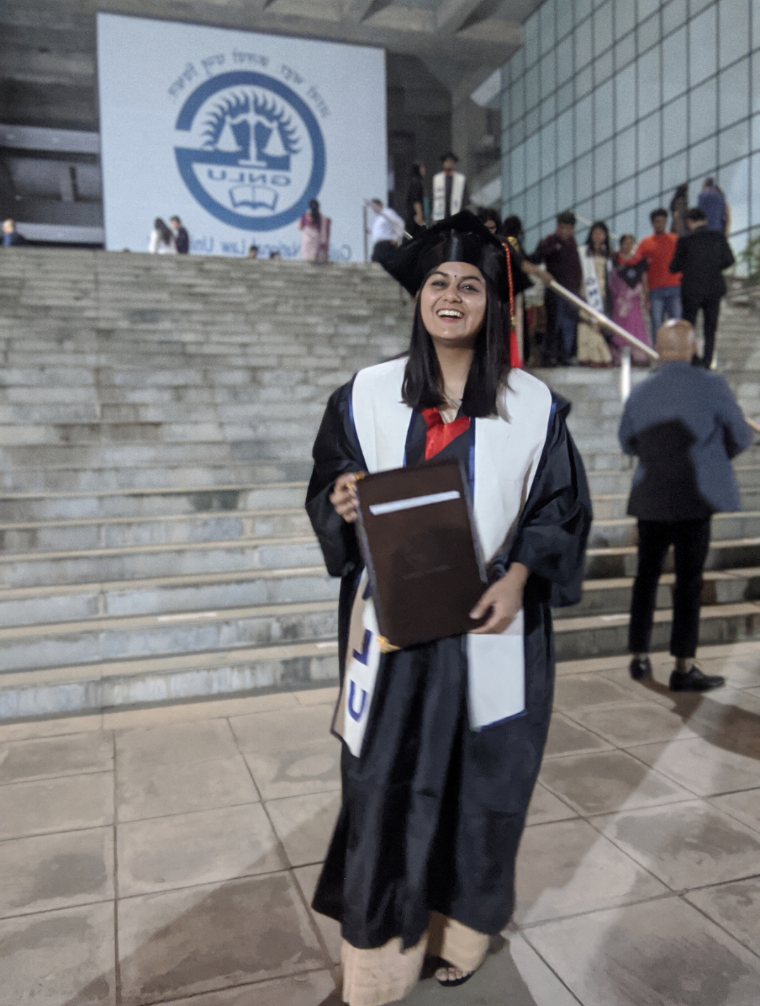
  • Rishika Kumar, Senior Associate at AB Legal (Advocates & Legal Consultants) In a Discussion With SuperLawyer On Corporate Litigation And Opportunities In Same

    Rishika Kumar, Senior Associate at AB Legal (Advocates & Legal Consultants) In a Discussion With SuperLawyer On Corporate Litigation And Opportunities In Same

    This interview has been published by Prabhjot Singh, Priyanka Karwa and The SuperLawyer Team

    What motivated you to choose law as a career? And how has been the journey so far for you?

    It was way back in my school days, when I was introduced to the subject of Civics. The subject itself is so enriching and intriguing. It was then, when I was briefly made aware of our judicial system as well as our fundamental rights, which instilled in me the hunger to know more. Hence, the quest began to learn more, which eventually brought me to a decision of taking up law as my career.

    It has been said by many, that follow what interests you and you would never fall back. During my initial days while I was an intern, I ensured that I should get to taste as many genres of law as I can.

    However, in the journey, the eagerness to learn more, was lost, rather, it shifted to the idea of having a comfortable corporate job.

    But life has it plans and eventually, I landed up with one such firm in my final days of internship which gave me a taste of corporate as well as litigation and this combination not just awed me but also ignited in me the fire of learning, which was lost in the process of becoming a lawyer from a law student. Today, it has been more than 3 years that I am working as an Advocate and the journey of a corporate litigant has just been so overwhelming, that I cannot imagine even a single day without the courts and the law.  

    What were the challenges that you faced in the beginning of your career?

    It is true that beginnings are always tough, but worth the wait. Starting my career as an Advocate in 2019, was no less than a dream.

    As we all know that Advocates are generally pictured to be an essential character of a courtroom drama and as other Advocates, I always craved to be a part of it. However, those courtrooms became a flowery dream, when the world was hit by covid. In my journey, the major challenge that I faced was of not getting the essence of being an Advocate for nearly 2 years since the courts during the pandemic became virtual.

    The virtual court has its own pros and cons but as an Advocate not going to the courts physically made me miss on a lot many courtroom essentials, as the work was confined majorly to drafting pleadings only. Further, due to work from home, the issue of filing the pleadings at courts became yet another task, hence, the introduction of e-filing was even though a necessary and welcoming change, but was even tougher to execute.

    Nonetheless, when the situation of covid subsided and things started taking its shape back to normal, the courts also started physically, and its almost a year now, since I started appearing before the Courts physically, which has brought the Advocate in me back to life and the experience of past one year has been incomparable.

    What is the most challenging case you have handled in litigation and what were your learnings out of it? 

    Litigation means challenges. Every case has its own beauty and with every case I have learnt different viewpoint in which the law can be interpreted. I won’t say that I have faced ‘the most challenging case’ till date, since I am too new to the industry and yet to explore a lot. Yet, I would say that, I have been fortunate enough to be a part of such a team in which we have faced several cases which are different from each other and are a challenge in itself. I am a part of dispute resolution team and I have been a part of the strategy making, wherein I have understood that there is no straight jacket formula to solve all the cases, each of the case have a distinct fact or law which makes the work more challenging. Moreover, I have a core practice in Insolvency & Bankruptcy Code, 2016, which is an ever-evolving law. The Code has seen several amendments over a period of 6 years and with such amendments the challenges pertaining to each case has arisen. Accordingly, the challenges have taught me to be abit more proactive towards the amendments, to be more patient and have perseverance to attain a finality in a case.

    Rishika, according to you, what exciting opportunities can corporate litigation bring in the future for the upcoming generation?

    The upcoming generation tends to have an urge to “have more in less time”. Corporate Litigation is that genre of law which provides the new gen-z lawyers a platform to have a mix experience of the business law along with the its practical application i.e., having the taste of litigation at the same time.

    With the increasing trend of start-ups in the country, there is no escape from Corporate Litigation and it is to be understood that Corporate Litigation not always aims towards court proceedings, but also has the essence of mitigating the risk of litigation in several corporate and commercial dealings by way of client counselling.

    With the boom in economy there is no doubt that there will be several business enterprises looking for expansion and restructuring and this also falls under the wing of Corporate Litigation. Hence, it won’t be wrong to state that Corporate Litigation has a lot to offer to the upcoming generation since it is the most modern and trendy genre of law.

    How do you ensure that your clients receive the best possible outcome?  Any hacks for the same?

    One of the basic principles to provide the best outcome to the client is that you have to be a good listener. In order to provide a suggestion on point, it is very important as a Counsel to hear your Client at length. A patient hearing would not only allow the Counsel to understand the facts clearly but would also help in co-relating the same with the applicable laws and to strategize the whole case. Secondly, which bears the utmost importance is, the communication between a Counsel and its Client which must be transparent and clear.

    It is essential that the Client must not hide any facts from its Counsel and the Counsel while taking up the case, if feels that the case is strong only factually and has a weak leg in law, then the same maybe well informed to the Client.

    Further, as a Counsel we ensure that our Clients are duly updated about their matters and hence all the developments howsoever small that be, should be informed to the Client in a timely manner. Thus, it is really important as a Counsel to make the Client comfortable enough to share its case and therefore a welcoming environment is must and necessary in order to retain the Clients.

    Rishika, is freelancing worth doing in the legal profession and if yes, how to master the same?

    Personally, what I believe is that, freelancing in the initial stages of the profession is a sheer waste of time and is a strict no-no for me, as it involves a lot of struggles for a newbie. However, one can very well be a freelancer after spending a sufficient amount of time in the industry.

    To master this art it is essential for one to showcase the market your USP and once people have known you because of your knowledge, you build good connections and then it is way easier to be a freelancer. 

    How useful do you think the idea of Metaverse would be in the legal industry?

    Honestly, what I believe is that Metaverse is a whole new concept in itself and this sudden change of everything from physical platform to virtual platform is not an easy change to be acceptable by all especially in the legal industry. The idea of Metaverse may sound very fascinating and may be a time-saving one, but for me these are dreamy and may have serious repercussions.

    It won’t be wrong to say that till date we have no stringent check and balances for securing the privacy and confidentiality of social media applications as there are serious questions which are still unanswered when it comes to protection of the data of an individual.

    Hence, it might happen on the digital platforms that the privileged relationship of the advocate and client is violated as the privacy is at stake as there exists no regulatory forum for such virtual universe. Therefore, it is true that things are changing rapidly in the intent to achieve a digitalised world but we are missing out on basic essence and enjoyment of everything at its pace.

    What are your thoughts on the frequent amendments that are brought under the IBC every now and then?

    Basically, amendments in a law showcases that, the law is being put to use and is being utilised by the population at large. It is true that laws have to be amended with time so as the same is viable enough for the legal system. It is quite imperative to amend the law but doing the same constantly makes it difficult to interpret and implement, as, there have been situations wherein, a case of a Corporate Debtor is pending for approval of Plan before the Adjudicating Authority, and meanwhile an amendment is introduced which has to be incorporated into the Plan and hence, the Plan is to be revised.

    This effects the whole intent of the Code as it aims towards a time-bound resolution. It is thereby certain to note that amendments are essential but it should be affected and necessitated only at certain intervals and that too with a proper mention of the nature of such amendment, i.e., prospective or retrospective, as deemed necessary, for the development of the Code.

    According to you, what networking strategies should be adopted by the first-generation lawyers specifically in corporate litigation?

    It is apposite that, for a first-generation lawyer to make a mark in the industry, it is essential to have patience, perseverance and must be hardworking along with smart work. A first-gen lawyer should mainly focus on networking and building connections.

    One can build connections by being a member to a Bar Association, wherein, one gets to meet a lot of lawyers from different genres and further, one should also attend events, seminars and conferences to build contacts. However, mere getting contact is not building, it is important for one to regularly follow-up with the new contacts. Hence, in order to build network, one should be well-recognised and known in the industry and that can either be by way of working or by way of building contacts.

    Lastly, any 3 best pieces of advice for our young lawyers?

    I have completed merely 4 years (approximately) in the legal industry and I myself is at a tender age in my professional career to advice the young ones. Nonetheless, I would like to share 3 of my basic principles which can benefit the young lawyers and they are:

    1. Know your interest, to show your interest at work;
    2. Work to learn and not to earn, as earnings would follow subsequently; and
    3. Keep clam and work hard, as there are no short-cuts in life.

    Get in touch with Rishika Kumar-

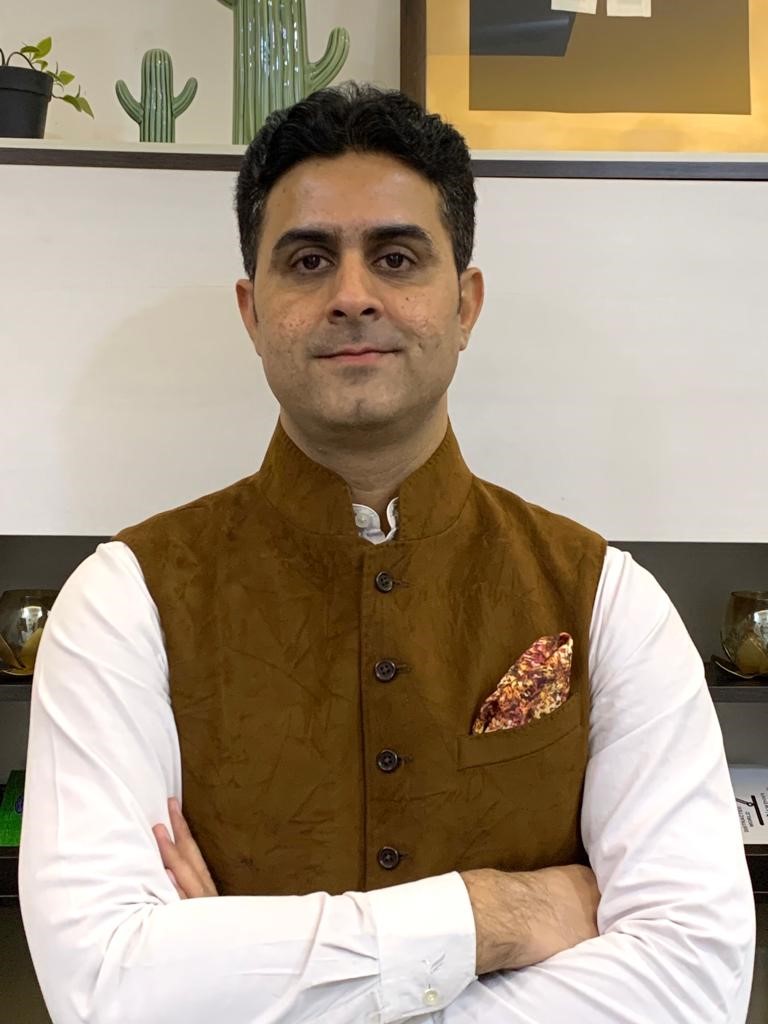
  • Anmol Maheshwari, Commissioning Editor at LexisNexis India In a FireSide Chat With SuperLawyer On LLM in IPR, Role Of Content Manager and Legal Researching

    Anmol Maheshwari, Commissioning Editor at LexisNexis India In a FireSide Chat With SuperLawyer On LLM in IPR, Role Of Content Manager and Legal Researching

    This interview has been published by Prabhjot Singh, Priyanka Karwa and The SuperLawyer Team

    What was your motivation behind choosing law as a career?

    Growing up, I spent my formative years in the company of my grandfather, who remained deeply embedded in social and political life for as long as he lived. I used to accompany him to many of his social gatherings full of lawyers, local politicians and judges which gave me an opportunity to plunge in the stirring political discussions. Every time I listened to them, I realized there was so much more to it, than what was being said. During one such event, my grandfather once said, “Look around…if you also pursue law, it will help you be whoever you want to be” and that is when I finally decided to turn his words into actions.

    What were the challenges that you faced in the beginning of your career?

    To get a job was probably the easy part but real game is to survive and thrive in it. There is a significant difference between knowing the law and its application to any legal role held by you. To put it simply, knowledge is theoretical, and skills are practical. You may be well versed with the rules of the game, its history and the statistics. But this only makes you well informed and knowledgeable, it does not make you skilled in it. To be good at a game, you must consistently practice your skills and techniques.

    Similarly, in a job knowledge is not everything. Skimming through multiple case laws, absorbing wide range of legal knowledge, being able to itemize relevant legislations does form an integral part of law school curriculum. But this is only the first step. Once you enter the real world, the project or case you are handling might require advanced research and that is where you have to showcase your skills.

    To be able to undertake that research, articulate thoughts and express ideas effectively using verbal and written communication skills to multiple audiences, as well as to listen for meaning and understanding forms a crucial part of your career.

    With LLM in Intellectual Property Laws, what drew you to this field of legal researcher and content manager, eventually as a commissioning editor?

    I studied Intellectual Property Laws from Gujarat National Law University. Ostensibly, it doesn’t sound relevant to any of my jobs but my education is coming strangely handy as my course helped me develop research and writing skills, the ability to present and argue persuasively and to develop an eye for detail.

    In particular, I chose to be in research and academic publishing because I have always enjoyed interacting with the professors and other scholars as they are the people really cutting edge with their subject area and sometimes many subjects at the same time. So, I thought it would be terrific to work with these people and be paid for it.

    What are the essential skills, abilities and personal attributes required to make it to the field of Legal Research, Writing and Publication?

    Publishing is a creative industry so commercial awareness and strong verbal and written communication skills will get one far in publishing. Focusing on research skills is also equally important. It is crucial to understand how to perform legal research, including where to start and the steps to follow. Perseverance is the key when it comes down to research.

    Can you recommend trade journals, magazines or professional associations which would be helpful for our readers?

    The World Trade Organisation produces a wide range of publications on various trade-related issues. Most of these publications may be downloaded from the WTO website. Also, WorldTradeLaw.net offers a free library of trade news and resources, as well as a subscription service, which provides summary and analysis of all WTO reports and arbitrations; a keyword index; a database of dispute settlement tables and statistics; and a user-friendly search tool for WTO cases, legal texts, and other documents.

    How does your work affect your general lifestyle?

    The working culture of publishing industry is exciting, and the working hours can be long sometimes but not insane. The industry does offers you a good work life balance. It’s a busy-buzzy environment to work in so one must be highly organized and really good at juggling between multiple tasks.

    What kind of problems and challenges do you deal in the publishing process?

    The biggest challenge is to procure manuscripts from authors within the scheduled time frame. Editors have to ensure that they do not miss the publishing deadline and authors don’t miss their writing deadline. For this, the editors are required to establish a tremendous working relationship with the authors which involves detailed correspondence and having a lot of empathy for the authors to be able to put yourself in their shoes.

    Throughout the publication process the role of editor never ceases. At any stage between signing a contract till the product hits the market, editor is the point of contact for all concerns and queries authors might have. Suppose if you are giving the authors really tight deadlines you have to explain why that is and do what you can to help them through to avoid potential slippages. Any delays at early stages can have dramatic effects on publication schedules especially when the publishers have already been advertising a book’s release and the due date needs to be changed.

    Therefore, to avoid any delays, editors spend a large part of their working week speaking with their authors. All of this is in addition to a whole myriad of administrative tasks that always need to be done.

    If you could do it all over again, would you choose the same path for yourself? If not, what would you change?

    Big YES! By the end of graduation, I was certain that litigation or working at a law firm never inspired me and during my post-graduation I realized that I am more inclined towards research and writing. Needless to say, the decision to follow my passion came with its own adjustments, particularly in terms of compensation. But the flexibility and work life balance my job offers always keeps me afloat.

    What advice would you give someone who is considering being in this field?

    The key to achieving anything and everything you desire is Action.

    So, “Wish for it, Hope for it, Dream of it, but by all means do it.” – Leslie Levine


    Get in touch with Anmol Maheshwari-

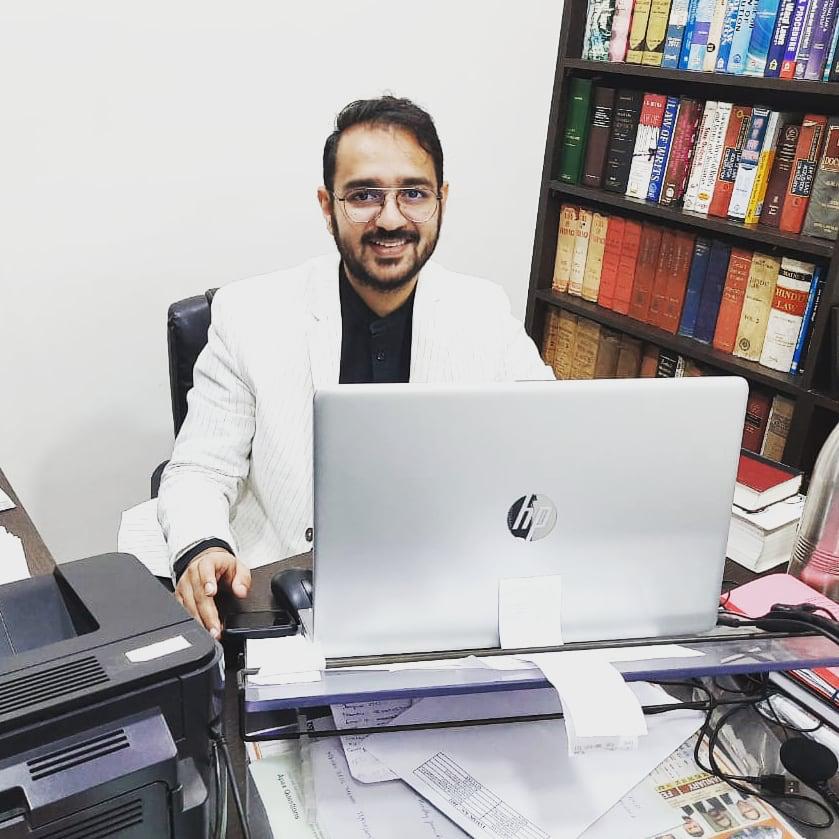
  • Maitreyi Kannur, Senior Associate at JSA In a Discussion With SuperLawyer on Litigation Management and The Role of Legal Tech In Same

    Maitreyi Kannur, Senior Associate at JSA In a Discussion With SuperLawyer on Litigation Management and The Role of Legal Tech In Same

    This interview has been published by Prabhjot Singh, Priyanka Karwa and The SuperLawyer Team

    Was pursuing law planned or did it all happen by chance?

    It was an informed decision. I have had a fondness towards business because my father was from a business background. At a very young age I understood the need and importance of sound legal advice to run a business. My inclination towards law was initially drawn from the need for good and correct legal advice to run a business successfully. I decided I want to study law thereafter and after that there was no looking back! 

    Please enlighten our audience about the initial struggles in your career and how you managed to overcome them?

    Initial struggles obviously is very individualistic in nature. When I think about the initial struggle I can think of three things (i) being able to cope with the time and effort this profession demands ; (ii) court craft and presentation of matters and (iii) ability to find a place of comfort and fit in culturally in an organisation. 

    My take on point (i) is that while you’re are studying law and on your way to become a lawyer you already know what you are getting into!  If you have interned at the right places and I stress ‘right places’ you already know this profession is very demanding. So you are mentally prepared and I have the the hunger to grow so coping with this came naturally to me and yes, it takes what it takes!


    With respect to point (ii) the only way to deal with it is read your file. Confidence is key to a lawyer’s progress and success. In my experience confidence is self built and it doesn’t matter who and what stage of your profession you are at. To exhibit the confidence in court, one needs to fight the fear and that fear vanishes when one is a master of his/ her file. This has always worked for me as I have been able to avoid surprises in court and during hearings.

    Knowing the file a-z gives you a sense of power in court to present your case better by assisting the court better and representing your client better. Once you have mastered your file the clarity helps you present the matter in a structured manner. 


    Despite the above, there has been a situation when I was asked to present a case before the Hon’ble high court of Karnataka at Banagalore and due to my sheer over preparedness I didn’t know where to start from and my first one minute went in silencebefore court.

    The reading and over night preparation came to my rescue when the judge asked me a question on the matter and I was able to quickly pick up from there and Yes, I was able to obtain a favourable order in the matter. 
    The point being it’s okay to be nervous and it’s okay to fumble in court but a non- negotiable is not preparing for a matter.

    The preparation will come to your rescue at the time of need and it has in my experience. 
    With respect to point (iii) it’s a game of chance. The trial and error theory worked for me. I have worked with 3 organisations so far. I started off my career with a pre placement offer from Dua Associates after an internship. Thereafter, I worked under Senior Advocate Mr Udaya Holla and currently I work at JSA.  

    I had interned at all these places during law school. So I was familiar with the work environment which worked in my favour. 
    Although there is no straight jacket formula! I think the only way to cope with struggle is channelising your mind! Mindset is the key! 

    With experience I realized how to prioritize what are the actual issues and what are non- issues that can be ignored. The other key was acceptance! You can’t change everything and everything is not black and white. When you decide you will put in what it takes you’ll learn to deal with situations and when I say deal with situations I mean priorities your issues. 

    Among all the specialisations, i.e. Insolvency & Bankruptcy, Drafting, Arbitration, Debts Recovery, Criminal related, Company law, etc., which one do you find the most interesting and challenging? 

    I am a commercial litigator. I deal with civil commercial litigation and arbitration. I have always been inclined towards arbitration and commercial matters. For me the most interesting and challenging part of litigation is cross examination whether before an arbitrator or a judge. I had the opportunity to cross examine a witness from Greece in an arbitration and even after days and sleepless nights of preparation I realised the art of understanding a witness and strategising and most importantly re- strategising your cross examination plays a primary role. 

    Needless to mention strategising a case can effectively happen only when you have mastered your file and the facts.
    The effort and time put in a matter will always be useful and that is the most challenging and interesting part of litigation. 

    What all does litigation management include, and do you also use legal tech often? How useful its been for you?


    Litigation Management is key. It could be as basic as file management. A litigator is handicapped without his/ her file before any court/ tribunal. This also means organisation and being organised is very essential for a litigator. 
    For instance – As everyone knows litigation /arbitration files are voluminous generally. Therefore, arranging the file is essential. You have limited face time on each matter while representing your case.

    When the judge asks you a question and you start looking for the documents during that time, you can consider half the battle lost. 
    Presentation of a matter is key! Therefore, behind the scene work is time consuming and very necessary. 
    With respect to usage of technology, we are still on a snail pace as on now. 


    How do you stay up to date on the latest legal developments and apply the same in day to day practice?


    I can’t deny this is a challenge. My senior and my former boss being Mr Udaya Holla always stresses on reading and these days everything is digitalised. He always said don’t finish your matter in court and go home. Please sit and read. If I have to pass a message to someone I’ll pass the same. If we aren’t spending time till 10- 11 pm reading and preparing on matters, we are not going to make it.


    Also there are a lot of blogs which are handy these days leaving witnessing day to day court proceedings. I use Daksha legal, SCC online and live law regularly. Leaving that thankfully JSA has a full fledged knowledge management team who tirelessly work to put together the latest updates which I have access to. 
    Also, as a lawyer, one reading of a particular case/ legislation will help you multiple times. You may read that particular case law or legislation for one particular matter but you will end up filing similar petitions for another client and eventually end up using the same material. If anything you’ll build on existing knowledge. 

    Any roadmaps that were followed by you in this journey Maitreyi? 
    Off course, yes.

    Everyone has heard that there is no substitute to hard work but in addition to that there is no place for wrong attitude in this profession. 
    Always remember, there is always someone who can replace you and there are zillion competent people out there with the hunger to provethemself. Being grateful and keeping the right attitude is key. 
    An organisation will be willing to teach you the law and the skill to work on a matter but will not tolerate a wrong attitude. Focus on the right attitude towards work. 

    What strategies work best in dispute(arbitration/ litigation) matters ? 

    Hard work without deliveryon time will have no meaning. 
    In a span of two weeks, I had 2 situations where the client approached us to obtain urgent restraining/ stay orders respectively. I had to not only draft the petitions over night but also file and obtain favourable orders. Hard work is of no use if you cannot deliver within steep deadlines. Yes! We obtained favourable orders in both the matters. 


    The need and hunger to deliver has always been important to me. It is also important to keep it uncomplicated and simple. Let it be drafting, presenting a matter before court and / or cross examination. Keep it simple and clear. Every unintentional ambiguity will cost you the matter. 

    Nowadays, people don’t have that zeal to pursue a career in litigation, what can be the reason for that apart from job security in corporate?

    Well that’s a choice. I don’t fully agree that people don’t have the zeal for litigation. Litigation jobs are equally secure and satisfying and I am a living example of it. 

    Any 3 advices that you would like to share with our audience


    Advice – 
    (i) Get immune to unrealistic timelines. 
    (ii) Execution and delivery is equally important as behind the scene work. 
    (iii) It will atleast take you a year to understand if you like what you are doing or the place you are working at. Don’t change or quit your job as soon as you face a non work related or a work related issue. 


    Get in touch with Maitreyi Kannur-

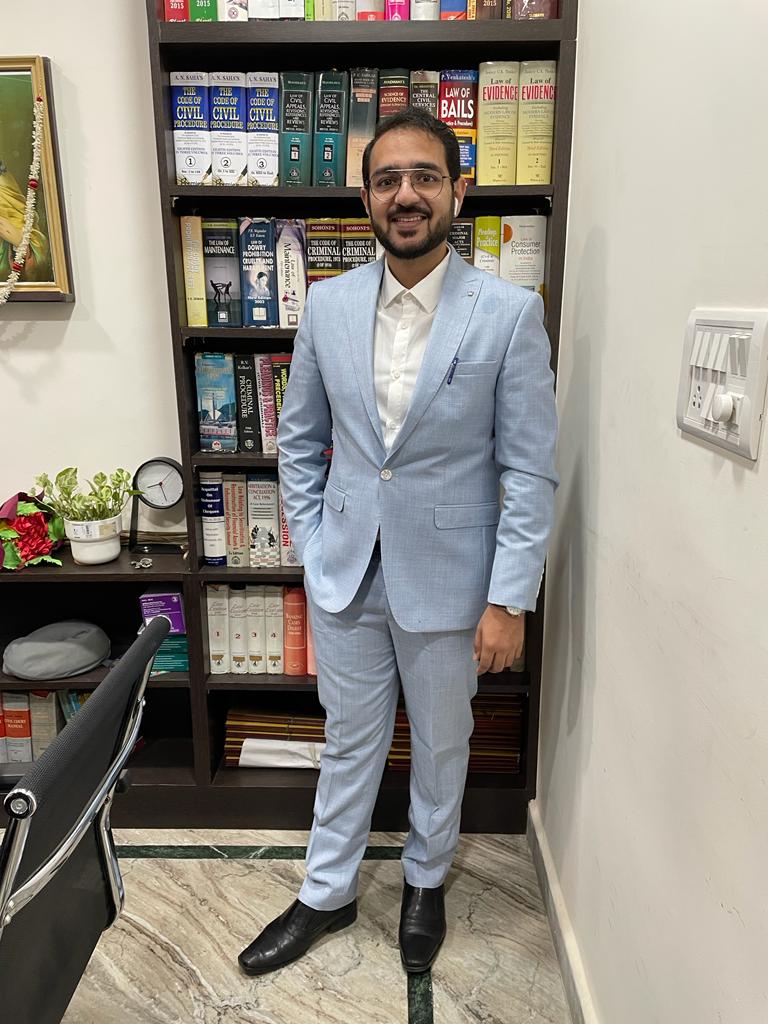
  • Zeeshan Ali Khan, Partner-IP Enforcement at Rahul Chaudhary & Partners In Conversation with SuperLawyer On IPR and Networking for First Generation Lawyers

    Zeeshan Ali Khan, Partner-IP Enforcement at Rahul Chaudhary & Partners In Conversation with SuperLawyer On IPR and Networking for First Generation Lawyers

    This interview has been published by Prabhjot Singh, Priyanka Karwa and The SuperLawyer Team

    Being a science student, and then choosing law, what was the idea behind?

    Though I was doing good in science, however somehow, I was not interested in pursuing a career in science and therefore, was looking for options. During this time, my family suggested me to go for a career in law and when I started preparing for entrance exams of different law schools (as we did not have CLAT back then) – it really fascinated me. I started reading about famous lawyers in India and also visited the lower Court in my city, the idea of wearing that collar band and arguing in Court used to give me goosebumps.

    At was during this time that I firmly took a call to make a career and practice law.

    How challenging has it been for you so far in the legal industry?

    It has been a very satisfactory journey so far. I was able to clear the entrance exam of two National Law Universities and two reputation private universities and decided to join HNLU, Raipur. I joined the third batch of HNLU, Raipur in 2004 and was fortunate to have been taught by some of the best faculties at the time. My five year stay at HNLU was both memorable and enlightening at the same time.

    The strict time lines to submit projects and moot court memorials gave me an early introduction of how the legal profession going to be and worked as a solid foundation for later part of my career.

    I joined an IP boutique firm ZuesIP immediately after completing my course and thereafter, my joined current firm Rahul Chaudhry & Partners in 2010.

    My firm and my mentor Mr. Rahul Chaudhry, the Managing Partner of the firm have immensely helped me become the professional I am today. I started as a junior associate in the firm and slowly learned the nuances of IP and law in general. I was designed as Partner – IP Enforcement in 2021 and handles IP Enforcement before the Courts in India, Domain Name as well as Custom Authorities.

    What created your interest in the IP sector? And how did you prepare yourself for everyday challenges in the same? 

    My initial interest in IPR started when we were taught IPR in the second and third years of our law course. The idea of knowing, protecting as well as helping the brands grow attracted me and I decided to intern with IP Firms to better understand the subject. I learned the intricacies of IP as a subject and practical aspects of implementing the same in day-to-day legal practice during these internships.

    Accordingly, I opted for IPR as my honours subject in the university and got a specialization in the same.

    Preparing myself to practice IPR was not a challenge for me as I had a keen interest in the subject. I used to go through all major IP judgments by the Courts to keep myself updated of the latest developments and still try to read as much as I can whenever the schedule permits.

    According to you, what networking strategies should be adopted by the first generation lawyers specifically in corporate?

    Being a first generation lawyer myself, I have never felt any difference in terms of treatment by law firms or corporates. If you have knowledge of the subject and good command over language – you are bound to be noticed. The age old saying that there is no substitute to hard work is absolutely correct. I am a strong supporter of making your work speaks for yourself. If you are getting reliefs for your clients and are being recommended for your work – the world will look for you.

    At the same time, I would suggest one to leverage technology, join industry groups in person or through various social media like LinkedIn and also offer educational resources. Give presentations and educational lectures in various industry gatherings as well as educational institutions.

    What are the most important qualities for an intellectual property lawyer?

    An IP lawyer needs to keep himself updated with latest judgments and industry practices. With the creation of IP Divisions in the Courts, IP has become even more niche practice. Going through PTC on a regular basis and keeping a track of prosecution practice is also very important. I always suggest that to be a successful IP lawyer, one should have a good command over prosecution side as the same forms the foundation of one’s IP practice.

    How a trade mark application is filed, the route it takes for registration and how to overcome the objections raised by the Administrative Authorities (like Trade Marks Registry) are all very important. A wrong advice to the client during prosecution and registration procedure can ruin all future prospects of protecting and enforcing the mark.

    Zeeshan, do these legal tech tools have helped litigants and corporates so far in preparation of different documents or filing and what in the future would be challenges for lawyers in dealing with such tools?

    The tech tools are indeed helpful and I see them playing a greater role in future. Along with saving time, the tools also minimise the chances of an error. Many corporates have started using them to keep a track of their matters pending in the Courts, checking the deadlines and even setting reminders to ensure that no deadlines are being missed. As we all know, deadlines play very important role in our profession.

    The time frame provided by the statues to file pleadings/documents before Courts as well as various administrative authorities are to be strictly followed, specially in IP prosecution. Hence, I believe the tech tools are going to be a game changer in future. With respect to the challenges, I believe the new generation of lawyers will not have any difficulty in handling these tools. I suggest even law schools should start preparing the students to use these tools during their course.

    As a partner of a law firm, how do you manage to balance the work-life aspect?

    Work-life balance is very important to ensure a long-term efficiency in work and a satisfaction in your personal life. My day usually starts at 9 am in the office and then few hours are spent in the Court as well. Being a partner, I also try spending sometime with my team members to interact and discuss work and the general life related aspects. However, one needs to prioritise the work and maintain a discipline during the working hours.

    I am a strong supporter of not carrying the work related stress to home and spend my away time playing with my daughter as well as working out. It is equally important to take care of your health and therefore, I have made it a routine to work out for atleast an hour every morning.

    The same not only helps me stay strong physically but also strengths my mind and helps me to prepare myself for the day.

    Lastly, any advice for our young law generation?

    Legal field requires continuous study and keeping yourself updated of the latest developments. So, it is very important to make an early habit of reading latest judgments as well as precedents. Young lawyers should also visit Courts and hear established legal practitioners argue the cases in Court.


    Get in touch with Zeeshan Ali Khan-

  • Manav Gecil Thomas, Partner at Thomas George and Associates Shares his Thoughts on Networking Strategies in Litigation and Role of Tech and AI in Legal Operations

    Manav Gecil Thomas, Partner at Thomas George and Associates Shares his Thoughts on Networking Strategies in Litigation and Role of Tech and AI in Legal Operations

    This interview has been published by Prabhjot Singh, Priyanka Karwa and The SuperLawyer Team

    What motivated you to take law as a career and how has been the decision so far?

    As all students, I was also confused during my school days as to which profession I should choose. Thereafter, my mom suggested me to take up law in lines of the profession of my father as he has already established a base. I did not qualify CLAT, however, I qualified for UPES, LAWCET and ILS Law College, Pune.

    Keeping the long standing reputation and I decided to join ILS Law College, Pune. All throughout my college life, I enjoyed participating in Moot Court competitions. After completing my law, I immediately joined my father’s law firm i.e., THOMAS GEORGE & ASSOCIATES. Thereafter, my mom was instrumental in insisting me to complete my LL.M.

    I did LL.M in Constitutional Law from O.U.P.G. College, Basheerbagh and secured a Gold Medal which was a lifetime dream come true. My father has been an amazing mentor as he not only trained me in drafting, filing procedures, clerical works but he also gave me the freedom to take up matters and handle them independently from day one …!

    My first appearance itself was arguing a final hearing before the then united Hon’ble Andhra Pradesh High Court of a Criminal Revision Case pertaining to 2008. Ever since then, I have never stopped and I hope to argue many more important cases in the years ahead of my life.

    Arguing the law and interpreting the law are two important facets of my litigation life which I will always cherish. So, though law happened by accident, I am happy to go the way it carries me. There is a unique unexplained sense of happiness that, I feel while arguing cases before different judicial and non-judicial fora throughout the country. With all the tremendous pressures that we as advocates undergo, it is only, that joy that I get, after arguing different kinds of matters that keeps me going ahead…!

    Your internship experiences are filled with reputed Advocates and Judges, was there any roadmap for the same or all did was in flow? How would you guide students in choosing internships?

    As a law student after participating in few moot court competitions, I was inclined towards litigation. My first internship was with my father and mentor who taught me the basic art of advocacy, that includes drafting, filing procedures etc.

    Thereafter, I went on to intern with Designated Senior Counsel Late Padmanabha Reddy where I was mesmerised to see sir argue different kinds of matters at length on his legs from 10:30 AM to 04:30 PM…! I would observe, sir argue most complex matters with utmost patience and he was always calm and composed, the most essential art I learnt. Subsequently, I interned with Adv. S. Niranjan Reddy now Designated Senior Counsel/ Member of Parliament, at whose offices I learnt corporate litigation and its nuances.

    Thereafter, I had the unique opportunity of working with Honourable Justice Kurian Joseph (Retired), Former Judge Hon’ble Supreme Court of India and while interning with his Lordship, I was able to understand what all goes in the minds of the judges post arguments since, I was also involved in the legal research that would assist judges in arriving at their decisions. I was able to see the judicial process closly that goes on after the arguments and before the judgement is pronounced.

    This experience has channelised my arguments in a slightly different manner and I am dedicated His Lordship for imparting this knowledge in me. Thereafter, I had a short stint with late Advocate Lily Thomas who had shown me no matter whatever hurdles and challenges life throws at us one must keep moving. Lastly, in my final year, I interned with Designated Senior Counsel & Hon’ble R. Basant sir Former Kerala High Court Judge. During this internship I received unique lessons of life & law, wherein I learnt how a mentor can treat his associates, juniors and interns with patience & care and at the same time learnt how hard work and dedication plays an important role in the life of an advocate. Students are not always sure as to what kind of an advocate they want to become after graduating, so it is always beneficial to intern at different places where there are variety of matters.

    Students should always start their internships with advocates who have a variety of trial court matters. In trial courts, students can learn about procedural laws, they can observe Cross Examinations and trial advocacy skills.

    Thereafter, students must intern with advocates practising in the High Courts and then the Supreme Court if possible. After this I would suggest students to intern with different corporate law firms. By the end of their internships, I would say with utmost surety, that, the students will be able to decide their career paths…!

    Manav, any specific reason for choosing litigation over corporate, what created your interest in that?

    I hope my answer to this question does not create any controversy amongst corporate law practitioners. I do not feel that I am made up for only drafting contracts or due diligence as I like to see the law in motion and that, only happens in the courts of law. In litigation, one see and meets different types of clients with different issues and in pursuing those issues one has to appear before different judicial and non-judicial fora and convince the Honourable Judges on unique points of laws and facts. Litigation requires a unique skill of being able to put forth your points with absolute clarity and conviction.

    For the same, one has to be well versed and well abreast with the laws and case laws. In corporate law, there are different nuances of law which are being explored on a day-to-day basis but none of the corporate lawyers are able to see their documents being interpreted in the courts of law. That is why, I choose litigation over corporate law.

    However, one must understand that even though I am a litigating lawyer, on a day-to-day basis, I am dealing with various aspects of corporate law which we cannot avoid being a lawyer. Thus, I believe that the so-called difference between a corporate lawyer and a litigating professional is a grey area which cannot be compartmentalised. So, I fix no label to myself….I leave it to the readers to categorise me as any lawyer they feel based on the work I execute.

    As lawyers, society depends on us in a lot of situations and pro-bono matters is one of them. How far do you resonate with this?

    Society depends on a number of aspects that keeps evolving and law is an important part of this evolving society. The changing needs of the society requires dynamic changes by the practitioners of law. In today’s world where everyone is in the rat race to earn, a lot of poor litigants suffer with inefficient representation as the fees that they can pay is less. I completely believe that in the background of the unique requirements of the society as of today, pro bono matters would definitely assist and help the people in need in a unique and effective manner.

    Many a times, I come across poor litigants who are not guided in the right direction due to which they faced unpleasant consequences. In this background all the us at THOMAS GEORGE AND ASSOCIATES believe in helping the really needy clients and when the situation demands we do take up pro bono matters. In criminal matters I observed that the people arrayed as accused in many matters do not have the necessary sources to finance their litigation expenses and tend to seek help from legal aid.

    Many a times, legal aid is not providing effective and efficient representation thereby rendering the whole purpose futile. Thus, professionals with experience taking up pro bono matters really helps the litigants in need.

    According to you, what networking strategies should be adopted by the first-generation lawyers specifically in litigation?

    The struggles of first-generation lawyers are untold in today’s world. There is no secret mantra that can be told as to the strategies that can be adopted, however, these are a few tools which may come handy in the years to come. Networking is a very important part of litigation which one will understand as they progress in their profession. One must always bear in mind that every person one meets in any walk of life can be one’s prospective client and thus one should interact with people and make them know that one is a practising lawyer.

    There is an apt example for the aforementioned statement of mine; once while I was in a club and while I was on the way to the washroom, I met an acquaintance of mine and in a casual conversation made him know that I am practising in Hyderabad. After a year I received a call by this acquaintance who had referred a very big company for coming on board as their retainer. So, one can land up with a client in any place.

    Keeping in touch with your alma mater and alumni will also help you in being referred matters from different states pertaining to your jurisdiction. Being active on social media can also help to a certain extent. Giving internships to students, is a way of giving back to the society and in return over the years to come, one will see the benefit from the same. Also, one must always remember that hard work pays off and the reason I say so, is your work must speak for yourself and that in turn would result in receiving the due benefits of networking.

    Please elaborate for us your current role

    I am currently the Name Partner at THOMAS GEORGE & ASSOCIATES, Hyderabad. The Managing and Founding Partner of the firm is my father, Advocate Thomas George and the Senior Partner is my mother. This being the background of my firm, the positions that we hold really does not matter for us internally. That being said, on a day-to-day basis I appear on various matters before various Judicial and Non-judicial fora throughout India with my base practice in Hyderabad.

    My entire day goes in arguing matters before different courts of law and in the evening, I spend my time in preparing for matters listed either on the immediate next day or for the days to come and also meet my clients. I supervise the administrative matters of the firm.

    I delegate matters to the juniors/associates at the firm, teach/assign work/cross check the drafts assigned to the Associates/Virtual/Non-virtual interns. I brief the Managing and Founding Partner and Senior Partner of the firm on matters that needs to be argued. I also help my Associates in practising their presentations before the courts scheduled for the next day, so that, they do not face any difficulty.

    So far we’ve seen employees being harassed at workplace wrt different situations, how well do you consider the role of employment laws in the same?

    It is always beneficial for employees to research about the firm where they seek employment before scheduling any interview. I also think it will be beneficial if one can speak to people who worked in the said place prior to joining. The role of employment laws is not very effective as, the internal committee for any kind of harassment consist of members of the same firm.

    Furthermore, if any employee raises a complaint and leaves the organisation the next organisation will always look at this employee with a speck in their eyes and thus there is a fear in employees from making any complaints whatsoever.

    How does AI play a significant role in helping lawyers and what are the consequences for the same?

    AI is already playing a significant role in lives of lawyers. As on today we can see AI’s tremendous use in research while comparing to our senior generation lawyers. The search engines have been extremely helpful in researching for case laws as well as to know overruled decisions, landmark decisions et cetera. Case management has become very simple with the help of various digital applications that provides the statuses of all the matters of the firm with the click of a button. Dictation and drafting have become 10 times easier than what it was with the usage of the software that types out whatever we dictate with almost 90% perfection.

    Another application that I have come across in the recent times is a scanner pen which can be used to copy paste contents from various hard copy of agreements/drafts into the word document. AI will always remain a tool in the hands of a lawyer but can never replace mankind especially lawyers, because, the brain used to interpret law in a unique manner is not AI but it is that unique skill of that lawyer. Furthermore, convincing a judge is done by advocates who present their matters in ways they deem fit which again cannot be substituted by AI. For people who disagree then mankind itself will be overtaken by AI.

    There are also applications that are being developed for taking queries from clients through chat boxes and these apps help in consolidating the client consultations to a certain extent. Such client consultations would in a way save the precious time of lawyers. However, how much ever technology advances, if it lacks  human touch in the works of a lawyer then I believe there will not be effective representation in those cases.

    Manav, we’ve been witnessing students shifting from litigation to corporate or most of the times they dont even take litigation as an option, what can be the reasons for the same?

    Personally, I would like to disagree. In the recent years I have seen many students in fact choosing litigation over corporate law firms. The ground reality is that, as on date, there are no vacancies in many chambers as they are already flooded with young students who have just graduated. However, students do prefer a comfortable and stable life with heavy packages which corporate law firms provide and that can be the only reason that students would prefer corporate law firms over litigation.

    Once litigating lawyers start paying their juniors at least the amounts that are required for the basic survival in the cities they practice, students will definitely choose litigation. What I have observed in corporate law firms is that due to tremendous burn outs over the period of time people shift back to litigation thereby losing their initial precious years of the experience. Students must understand that litigation is like an investment which grows manifolds.

    The life of a corporate lawyer or a judicial officer or a lecturer usually ends upon attaining the age of superannuation, however, the life of an advocate has no age limit and in a lighter note; when all your fellow colleagues are retiring, the practising lawyers start earning even more…!

    Lastly, any piece of advice for our young lawyers

    Repeating what you would have already heard from various stalwarts in the profession, I would like to say that there are no shortcuts to success.

    Hard work, dedication, diligence, perseverance, patience are the keystones to success. We must always remember that success cannot be achieved overnight but it requires tremendous hard work.

    Whenever, we see successful professionals, we only tend to see their achievements without knowing the amount of pain, sacrifices, compromise that they had to undergo to reach the place that they are at today.

    Having patience will definitely play a great role in reaching those heights of success that are channelled for you. One must always remember to maintain a work – life balance which everyone has been talking about in the recent times. One must take time off work, spend time with family and friends as well, which are very important.

    I always tell my hardworking interns not to forget to chill in life. All the best!!!


    Get in touch with Manav Gecil Thomas-

  • In Conversation with: Ayesha Karim, Senior Legal Consultant at Mezzle Law, Enrolled with the Delhi Bar Council

    In Conversation with: Ayesha Karim, Senior Legal Consultant at Mezzle Law, Enrolled with the Delhi Bar Council

    This interview has been published by Prabhjot Singh, Priyanka Karwa and The SuperLawyer Team

    What prompted you to choose Law? Did you always want to take Law as a career? 

    Yes, since I was about 12 or 13 years old I wanted to study law; it is difficult to say exactly why I chose law, as it was before the age of the internet and we did not have access to the sources we had today, but reading was a passion and I never changed my mind about the profession I wanted to follow.

    Congratulations on being awarded as the DIFC Courts Law Specialist by the DIFC Academy, DIFC Dubai UAE, can you please enlighten our audience about this academy?

    For over a decade, the Dubai International Financial Centre has catered to the learning needs of the financial services industry by providing a platform for top-ranked educational institutes to deliver professional development and higher education courses. 

    The DIFC Academy continues this legacy by partnering with some of the world’s most reputable institutions to offer a variety of options ranging from short certificate workshops to multi-year executive MBA degree programmes.

    The Dubai International Financial  Centre is a free zone with  common law courts, though the UAE is a civil law jurisdiction. 


    Lexis Nexis published a series of books called the Laws of the DIFC. I co authored the section on the DIFC Law No 10 of 2004, the Court Law with Late Barrister Stephen Field of 1 Pump Court Chambers,  UK.  As a result I was recognised as a  DIFC Court Law specialist .

    What prompted you to choose banking and finance law as an LLM course, and how do you see this area bringing new opportunities for the young law professionals?

    Banks are  very important institutions in any economy as well as in corporate and individual lives. Certainly there are many professional opportunities with such degrees. 

    How crucial is it for the young legal professionals or even the experienced ones for taking Pro Bono work and is there any criteria for choosing the type of such work?

    Pro bono is a way of giving back to society. Everyone cannot afford lawyers. Access to justice is considered a fundamental right in our country and every civilized society and as lawyers we should be part of the larger picture if possible.

    Pro bono work gives lawyers exposure to different areas of law. For example, when working with a legal aid clinic, a firm receives a list of cases that need lawyers.


    A corporate lawyer may get an opportunity to work on a matrimonial matter or an employment case.

    Pro bono cases also give lawyers the chance to work with other lawyers in and build relationships and networks. Exchange of knowledge and ideas is extremely important and interaction with professional colleagues is an invaluable learning process.

    You have so many publications on various topics, what tips do you give to our audience for choosing journals and topics as per that specific journal?

    That would depend on the interest of the audience; there are specific journals for almost every aspect of law. However, it is important to do independent research, published articles can give an introduction to the topic but certainly do not replace self study.

    Insider trading has been there since ages in corporate, such as writing a newsletter on the same, what can be the root cause for the same and steps that can be taken to avoid it completely?

    That is a hard question; Strong regulatory and enforcement systems have to be put in place. Ethics and honesty are character traits imbibed from our families and society. Therefore strong laws can help reduce unlawful acts but cannot eradicate them totally.

    Being associated with a UAE law firm, how can one prepare himself to settle there as a law professional in different areas? What is the road map for the same?

    Look for a vacancy in a busy firm, learn about the new systems and law. At some levels different jurisdictions have challenges, but basically a lawyers work remains the same, wherever they may be.

    What would be your parting message to our young readers?

    Gain as much experience as you can, avoid any toxic offices that do not provide opportunities to learn and grow. Do not accept bullying and sexual harassment, good knowledge and hard work is the key to success.


    Get in touch with Ayesha Karim-

  • In Conversation with: Paul J. Campson, Managing Partner at Campson & Campson, Personal Injury Attorney and Seasoned Litigator

    In Conversation with: Paul J. Campson, Managing Partner at Campson & Campson, Personal Injury Attorney and Seasoned Litigator

    This interview has been published by Prabhjot Singh, Priyanka Karwa and The SuperLawyer Team

    How would you describe your job and yourself to a 10 year old?

    I am a lawyer who helps people who were hurt in an accident get money for their pain.

    Paul, as we read about you, being a member of the carpenters’ union (United Brotherhood of Carpenters) , how did it help you in your law career?

    Being a member of the Carpenter’s Union taught me the value of hard work and the importance of an education. Being a carpenter is a physically challenging occupation and often very dangerous, so the importance of following rules, particularly safety rules, is very important.

    Appearing before various law tribunals and forums needs extra effort, how do you plan your work to be super-efficient? 

    Planning is the secret ingredient to success and efficiency. Even if I handle a case many times, I always write an outline and emphasize the points I need to make.

    This keeps me focused because it is very easy to become distracted and be thrown off track by a smart adversary, so thinking how I might lose a case is the best preparation for victory.

    You have been actively taking up Pro-Bono cases and have done a lot of free service in your career trajectory? How important is it for Law Students and professionals to take up Pro-Bono cases and help the needy? 

    Pro-Bono cases are very rewarding. Volunteering time and expertise to those who cannot afford top legal representation is the hallmark of our justice system.

    Pro bono cases provide attorneys with the chance to work with other lawyers in their firms who they would not otherwise know, as well as practice in areas outside of their day-to-day work. This fosters collaboration and increases future cross-firm prospects. It also assists attorneys in forming networks with other lawyers who work for legal assistance foundations. Networking leads to business development, which helps the firm as well.

    As we all are aware of the 9/11 incident, how was your experience wrt getting justice for the victims? Please elaborate it

    9/11 was a very difficult time for the entire nation. Being able to represent victims pro-bono was very special. At the time, no one understood the long term health ramifications connected to 9/11.

    To delve into the medical records of these victims and come up with creative ideas to get them the maximum compensation, was a stand out moment in my legal career.

    How hard is the bar exam to be passed in New York and how can one prepare with a well curated road map?

    The NY State Bar Exam is one of the hardest in the country. To pass it, you have to prepare for it as a full time job. Get on a schedule, study 9-5 and take lunch everyday at the same time, just like a job.

    Again, preparation is the key to passing the bar. Do the hard work in the morning and the rest of the day will fall into place.

    Lastly Paul, what tips are you likely to give to students willing to practice as a Personal Injury lawyer in the US?

    Personal injury is a very competitive field. tell everyone you meet and family and friends that you are a personal injury lawyer. To be successful you need cases. A great trial lawyer is useless without cases to try. 


    Get in touch with Paul J. Campson-

  • In Conversation with Vikrant Parashurami- A Hotel Management grad who went on to pursue Law, and now heads his own Law Firm, P Legal – Parashurami Legal

    In Conversation with Vikrant Parashurami- A Hotel Management grad who went on to pursue Law, and now heads his own Law Firm, P Legal – Parashurami Legal

    This interview has been published by Ojuswi Sahay, Sonali Parashar and the SuperLawyer Team


    What prompted you to pursue a career in Law after graduating in Science from the Institute of Hotel Management, Catering Technology and Applied Nutrition, Mumbai? 

    I wanted to study further after Hotel Management and my preferred course was Law. Also, having both parents in the Legal field further prompted and pushed me to take law as my preferred choice of stream. Having Hotel Management as a previous qualification, the plan was and still is to take up work involving the two core fields of my education i.e. the legal issue relating to the Hotel and Hospitality Industry.

    Was there any specific reason to pursue a Diploma in Modern Applied Psychology after completing Diplomas in Corporate Law, Intellectual Property Law, Cyber Law and a Post Graduate Degree in Alternative Dispute Resolution? 

    Certainly, there was a specific thought process and reason for pursuing and studying Modern Applied Psychology. The Diploma in Modern Applied Psychology involved the science of human behaviour and how to apply it to everyday life and that is an essential and inseparable part of the Legal field, especially the Litigation part of it. A study of this aspect would certainly help in practice (litigation) hence the course was taken up and completed. 

    Do you enjoy training young minds? Do you believe one can always teach and learn at the same time? Would you like to share any skills or habits that you inculcated after having years of experience in teaching?

    I absolutely love interacting with young minds and students and I started teaching right after my graduation in Hotel Management. My first class of students comprised of students from my graduate college i.e. IHM Mumbai. I am a staunch believer that one tends to learn continuously while one teaches and interacts with students.

    I have taught students of the 3 and 5 years law courses and the students in 3 years course are generally from a very broad age group and interacting with such a broad age group always gives you different perspectives about law and life in general. Teaching law students has definitely taught me to be more patient, be more open to different perspectives and be open to the idea that you might not always know everything and that there is always something to learn from everyone. 

    How can a young lawyer step into international practice? Do you think working with foreign firms propels career growth?

    Personally, I got an opportunity to work with an attorney practising with a U K based law firm because one of my professors thought I would be a good fit for the work and that professor was in fact supposed to undertake that work, but due to some prior commitments on the part of that professor, I got an opportunity to work with that Attorney and learn.

    So from my personal experience, I would say that you just have to do your best whenever you get opportunities and make sure you interact with as many people as you can during and after your law graduation or for that matter any course that you take up. Working with a foreign firm certainly gives you great exposure and that certainly helps in getting you prepared for better opportunities that come your way in your career.

    You happen to be empanelled with various Insurance Companies, online platforms, and also BMC. Can you tell us a bit about your role and which role do you enjoy the most and why?

    I am empanelled with various companies including Insurance Companies as their panel advocate. I am empanelled as a dispute resolution professional with online platforms and I am empanelled as a counsel with the Municipal Corporation of Greater Mumbai commonly known as BMC.

    As a panel advocate for insurance companies, I am required to protect their interests before Courts and Tribunals. As a Dispute Resolution Professional, I am required to be an Arbitrator, Mediator or conciliator in disputes that the parties submit to these online platforms for resolution. As a counsel for MCGM or BMC, I have the responsibility of representing the MCGM/BMC before various courts as a Counsel and arguing cases on behalf of the MCGM/BMC. 

    Very frankly I enjoy all the roles and the responsibility that comes with each as all different roles involve dealing with issues under different laws and I prefer working on a variety of laws and issues. As a member of the legal fraternity and as an advocate  I believe it is our duty to give back to the society as much as we can and by taking up different roles and by dealing with issues under a wide range of laws I feel I am getting better equipped to do my part to the best of my capabilities.

    Would you like to share your experience as a member of the Managing Committee of the Advocates Association of Western India (AAWI)? What are the eligibility criteria for this role?

    As a member of the Managing Committee of the Advocates Association of Western India, I have been able to interact with advocates practising at the Bombay High Court, especially on the Appellate Side and have been able to be a part of the committee that is supposed to be the voice for the advocates and take up their issues with the Bar Council of Maharashtra and Goa and with the High Court Association. This has also helped me in understanding another aspect of being a part of the legal fraternity that requires dealing with issues faced by the legal fraternity and resolving them.

    You also happen to be heading your legal firm by the name of P LEGAL – PARASHURAMI LEGAL since October 2019. Can you tell us a bit about your law firm? And, what is the life of a Founder of a reputed law firm and a renowned lawyer like?

    I have been practising since 2012 and have started my law firm by the name P LEGAL – PARASHURAMI LEGAL in 2019. The motto of the firm is to provide Practical, Practicable and Pragmatic legal solutions (If you take a closer look at the logo of the firm, the P in the logo has 3 lines which indicates 3 P’s which in turn stand for Practical, Practicable and Pragmatic in addition to representing my surname).

    As a firm, we take up a variety of work which includes consulting as well as litigation and we represent a variety of clientele in their legal issues and disputes. As a Law firm, it is our endeavour to expand our scope of work and take up varied work in a variety of streams in Litigation as well as non-litigation, while providing legal solutions to our clients. 

    As a firm, we also try to provide law college students opportunities to get practical experience while interning with us. 

    Coming to the aspect of being the founder of a reputed law firm and renowned lawyer, I would only say that there is a long way to go and there is a lot more work that remains to be done as the Legal field is dynamic in nature, there is always scope to do more and learn more and get better every time. 

    Also, being associated with an organisation that is recognised for doing good work and being a professional who is getting recognition for good and genuine work, only adds to the responsibility and makes me strive harder to do better work. While striving to do better you only realise that there is a lot that can be done in the field in general and for society and this entire process is most certainly a humbling experience. 

    At last, would you like to give any parting advice to the young lawyers out there as to how can they practice litigation considering the current era of digitalisation? 

    The advice I would like to give to all the young lawyers, from my personal experience, is that as lawyers we should never shy away from any sort of work that comes our way and that as lawyers we should push our limits and expand our horizons. 

    As I have earlier mentioned, the legal field is dynamic in nature and as such, every advocate gets hands-on experience in dealing with the ever-changing environment in litigation and therefore is well equipped with dealing with new things. Digitisation, I feel, is one such change which every advocate should and can adopt and adapt to and moving forward, that is going to be the way all work would be undertaken. 

    For lawyers who have recently started their practice or would be starting their practice soon, they are better placed according to me as they get an opportunity to digitise all their records right from the very beginning and that would certainly work to their advantage. 

    To wrap it up, I would like to wish all the young lawyers and budding advocates and mention the two lines or sayings that have always helped me and that would certainly help many budding lawyers in practice: 

    Work hard in silence, let your success make the noise & Never say never.


    Get in touch with Vikrant Parashurami –

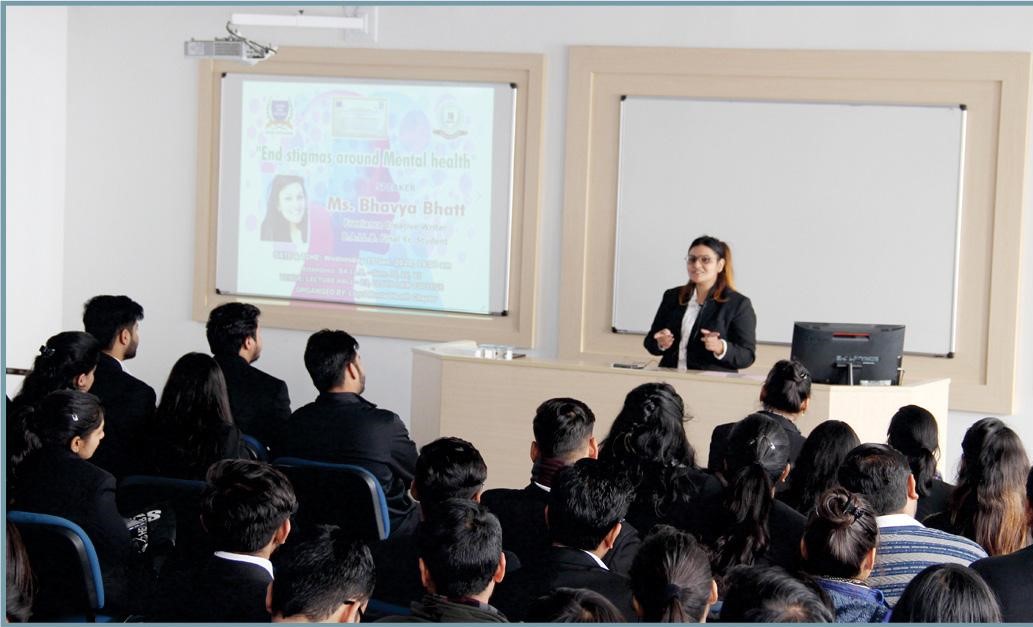
  • In this interview, Bhavya Bhatt, a Business Development Consultant, freelance writer, blogger at “Legally Herself”, answers questions by describing her own path to online freelance writing and mental health advocacy.

    In this interview, Bhavya Bhatt, a Business Development Consultant, freelance writer, blogger at “Legally Herself”, answers questions by describing her own path to online freelance writing and mental health advocacy.

    This interview has been published by Sonali Parashar. The Interview was taken by The SuperLawyer Team.


    What is your current role? How exciting is it for you? How do you describe your legal career?  

    My current role is that of a freelancer, where I am freelancing with lawyers, law firms, and other non-law companies/start-ups. My work at this point revolves around content creation, brand building, strategy, and business development. I, in all honesty, did not anticipate indulging in all of this when I passed out of law school. 

    This role is daunting with it being exciting at the same time. The reason I say this is because freelancing comes with its pros and cons, that one does not know unless they experience it first-hand. It gets challenging and I’d have to say I am still a work-in-progress because I learn through my mistakes whether it’s with client on-boarding, drafting my agreements, strategizing Workplan, or reviewing my work. The exciting part of all of this is that I get paid for my efforts without being subjected to constant stress and anxiety. I work when I feel like it, I get to do my solo trips while I work. I love the flexibility that my role provides me with. 

    Coming to my legal career, I wanted to be a Cyber Lawyer, but the Pandemic opened new doors for me and there’s no looking back now. However, I would still like to believe that I am in the game as much as my counterparts are. The work that I do is very different from what is expected out of a law graduate, but that’s why I like it. I work alongside lawyers and law firms, network with a lot of legal professionals, hence I am still in touch with the legal side. Since my work also involves legal content writing, I update myself quite often with the amendments, laws, case laws, or just legal news in general. With the dynamic role that I have gotten myself into, a legal career is a part of who I am, and there’s more to it.

    Why did you choose law as your career? How has law benefitted you in shaping your path? If not the legal profession, what would be your go-to career plan?

    I was 14 years old when I decided I would do anything and everything to not study Math in the future (I was that petrified of it). What gave the 14-year-old a purpose was an incident when I stumbled upon a book on Torts and other law-related subjects at my friend’s house. It was her sister’s.  I gave it a read, and oh boy! My mind was blown by the language I read because I hardly understood anything. 

    It was only after reading a few pages of these law books that I started concentrating on Social Sciences in school. I wanted to be in a position to understand those books I had just read.  What confirmed my decision was when I got to know I could be very far away from Math if I became a Lawyer! I guess that was all the inspiration I needed to choose law as my career. 

    Today, I am very distant from the traditional legal practice that law graduates usually indulge in and it’s the chances that I took on myself that have helped me pave my path. However, all the credits for whom I have become today, go to choosing law as a career. Joining a law school has given me that confidence, I know I wouldn’t have gotten if I were somewhere else. Five years in law school is such a long time, that you do end up contemplating who you are, and where you want to go. Studying law has made me more intellectual, practical, and rational, and it’s these qualities that have helped build me as a person.

    Coming to the last part of this question, there’s no specific answer I can give to this. My career plan right from when I knew the meaning of ‘Career’ was to study Law and become a Lawyer. Now that I am it, I am also into Business Development (Outreach), Content strategizing, Writing and I did give recruitment a try as well. So, if not the legal profession, I’d be a writer, or a Business Development Professional (which I anyway am, so…), or maybe an Artist.  

    Bhavya Bhatt

    How hard is it to branch out from your chosen profession? Do you think being labelled under one profession is burdening?

    It is hard to branch out from the profession that I had initially chosen. You become a subject of mockery, discussion because who goes to a law school for five years only to quit two good jobs and pursue professions that are nowhere close to law? It also becomes a challenge because your whole world is new out there, with new people, different work cultures, and most importantly, no one to guide you. But in all honesty, I like it. 

    I get to work with people from multiple professions, different locations. My work doesn’t get monotonous because my clients are just not from Law, but also the Medical, IT, Architecture, Real estate, Economics, Life Sciences, Fashion, Food industries. Every project of mine is so different, that I don’t feel bad about not pursuing a legal job out therLabellingeling under one profession becomes burdening if you deem your job as a burden. Like, I know a lot of my friends out there, who are pretty happy with their litigation practice, corporate law jobs. As for me, I know I would have treated my legal job as a burden because that’s not only where I see myself. I like the dynamicity of my profile, so yeah! The burden is when and if you think it is. 

    You were also a “technical content writer”. Was that challenging for you being a law student?

    I did have a few clients for whom I indulged in technical content writing. Their requirements were very different from what I was initially doing because I started with only legal content writing. As a Law student, the maximum technicality I could get into was to analyze case laws, the rationale of the judgments! That transition was a learning period I’d say. I soon started with creating how-to manuals, project plans then took to a few tech-related projects where I had to very deeply study IT-related concepts. Technical content writing was not challenging. What was challenging for me was studying technical concepts and easing it out through my writing for my clients and also studying law since it was my main hustle back then. 

    How important is mental health for an individual? How did you venture into Mental Health Advocacy? Would you like to highlight a few dos and don’ts to be followed in professional life?

    Mental Health is very important for everyone. It’s a no-brainer! One can still manage to work with an injury in the hand or walk despite being sick, but when you’re mentally unwell, even waking up can seem the biggest challenge. I did not venture a lot into mental health advocacy until I was diagnosed with Clinical Depression. The way people were around me, the way I was made to feel about my anxiety and panic attacks was how I understood the importance of mental health and the need for awareness around this. That’s how I started the Mental Health Society in my law school, and actively started taking care of my mental health, alongside helping others in understanding its importance. 

    We are all human beings after all. We have wear and tear too, but how often do we look within ourselves and realize we need to take a break or stop for a bit? I realized this in my law school itself and knew that I had to keep my grounds clear on my priorities. The legal profession is very demanding in terms of our time and efforts, so we need to know how much our plates can accommodate. 

    One could easily work for over 16 hours a day and still not have a breakdown, while others wouldn’t go beyond 8 hours. The dos and Don’ts that I list here are personal, because we all have different thresholds to stress and anxiety, and have different priorities. What one can do is,

    • Organize and schedule work every day on a whiteboard, to avoid last-minute anxieties. 
    • Be vocal about one’s work ethic because your time and efforts are equally important like that of others’. 
    • Have a break every once and then. This is a monumental move for anyone to maintain sanity. I understand all do not have the luxury of taking a break, but it was never about luxury. It is a basic necessity, like water, oxygen, money, shelter, and clothes!
    • Pick up a hobby. It helps in breaking the monotony of a taxing job, and that’s why I still pick up my Ukulele once in a while or paint or travel or explore cafes. 

    What one shouldn’t do is, 

    • Take up tasks in bulk and later procrastinate about their completion. 
    • Shy away from opening on what could work better, or pitching a strategy that could be different from what was asked. Works well on mental health because you’re relieved you’ve spoken your mind. 
    • Working even when down with a sickness or a headache. Sick leaves exist for a reason, use them.
    • Agree with a senior when you’re certain they’re wrong. Mental Health can go downhill because you suppress those emotions. But there’s nothing to be afraid of, in a real sense. There’s a way and a time to talk. Do it! 

    I resorted to all this even when I was working full time in my two jobs, and now as a freelancer. A few of you might think I am very low on experiences and life for having listed these do’s and don’ts. But you don’t need to reach a certain age or have a certain number of experiences to start taking care of your mental health. It is now or never!

    Can you walk us through your blog, “Legally Herself”? What is the main idea behind it?

    I started “Legally Herself” because a lot of publishing houses, blogs (legal and non-legal) felt my writing was not meant for them or their audience. One blog said how my writing came out a bit too strong for their audience to handle.

    I wanted to publish my poems, my thoughts, also a research article of mine. I needed a platform, something I could call my own. I was tired of waiting for someone to realize my worth, so it was just out of the blue, I bought this domain name and created my website. 

    The main idea behind “Legally herself” is for no one else to tell me how I should be or what I should write. Why give someone so much power? I was well within the legal ambit to publish my works, hence the name. I try to stay regular with posting my poems, thoughts, travel stories so there’s some fun content out there. “Legally Herself” is a virtual replica of who I am, outside of the professional world! 

    How would you describe your career up till now? Where can we expect you in the upcoming years?

    My career up till now is a ferry wheel, which hasn’t even taken a full round yet! Call me confused or non-serious for having my hands in multiple professions, but this is where I am, constantly learning, failing, and trying to get up. I don’t know where you can expect to see me in the upcoming years, because I am unaware of it too! But I can assure you, it’s going to be big!

    How does proficiency in language help in writing? Would you like to give takeaways on ‘freelance writing’ to our readers?

    Practice is the key to proficiency in anything, not just writing. The more you practice, more the proficient you become. You revisit your older works and it becomes easier to spot errors and mistakes. It is after this you become aware of how to write better, and not commit the same mistakes again. It’s only about time you use your past experiences (good and bad) to write that amazing piece of content! 

    To the readers who think they want to try freelance writing, but are unable to because they don’t have the time, or do not know how to go about it, please do not think much. There are platforms like Fiverr and Upwork where you can start writing at the comfort of your home, and get paid for it. Then there’s LinkedIn, where you start by building your brand and once people have the faith in you and your work, they can get in touch with you for their projects. You can also apply for those content writing jobs on Angel.Co, Instahyre, LinkedIn if you feel strongly about your writing skills. Things do work out eventually! 

    If you’re someone who has no writing experience but wants to kickstart freelance content writing, then write every day, stay consistent and notice the clientele coming to you in a bit. Good things take time! 


    Get in touch with Bhavya Bhatt:

  • What does it take to become a partner? Sahil Narang, Partner at Khaitan & Co and AOR, Supreme Court shares his 8-year-long journey at Khaitan: from junior associate to a distinguished Partner.

    What does it take to become a partner? Sahil Narang, Partner at Khaitan & Co and AOR, Supreme Court shares his 8-year-long journey at Khaitan: from junior associate to a distinguished Partner.

    This interview has been published by Sonali Parashar and the SuperLawyer Team


    Let us begin with the most important question, did you always dream of becoming a lawyer or, did it happen by chance? Also, tell us about your journey.

    Before coming to what led me to become a lawyer- a little bit about me. I hail from Abohar, a small town, about 30 km from the India-Pakistan border, in the State of Punjab. My grandfather was a local politician and social worker, and my father was a lawyer practising at the city civil courts, Abohar who, quite often, also used to attend and appear before the District Courts at Ferozepur (later at Fazilka, a border town). So, I was exposed to the field of law at a very young age. 

    Since I grew up looking at my father, working diligently as a lawyer and collecting hundreds of books for his library every year, the curiosity towards law was imbibed in me by default. However, I had a huge interest in the field of science during my school days and wanted to become either a doctor or an engineer given the trend prevalent at that time.  I went on to study science in the 11th and 12th standard and gave competitive exams such as the IIT, AIEEE, etc. to get admission into engineering courses back then. I had an option to continue that pursuit and become an engineer, however, the innate affinity towards law imbibed within me from childhood, looking at the meticulous way my father used to practise law, pushed me to pursue the study of law. Therefore, rather than getting admission in some renowned engineering college, I enrolled in the B.A.(Hons.) program at DAV College, Chandigarh affiliated to the Panjab University, Chandigarh. I passed BA with a distinction in Political Science in 2005, post which I got selected in the three-year law course at one of the oldest institutions in the region, the Department of Laws, Chandigarh, my father’s alma mater.

    Since I was inclined to continue the study of law and give competitive examinations including the judicial services exam, I got admitted to the LL.M course at NALSAR University of Law, Hyderabad through CLAT. I was actively involved in research, pro bono work and co-curricular activities at the university during the LL.M course

    During my days at NALSAR, I was introduced to various opportunities in the field of law. I also got an opportunity to attend the Private International Law Course at the Hague Academy of International Law at, the Hague, the Netherlands in 2009. Eventually, I joined Khaitan & Co. and a decade later – here we are. 

    The present focus is on advising on regulatory issues, commercial litigation, and the representation of various clients from the entertainment and multiplex industry across India. If we draw a comparison between the global and Indian entertainment and multiplex industries, were you able to predict these advancements in the legal arena?  

    The advancement in the legal arena surrounding a sector depends upon the growth of that sector. I have been blessed to get exposure to and advise and represent clients in various sectors including in the entertainment and multiplex industry during my career. The Indian entertainment and multiplex industry caters to a very different demographic as compared to the western world. Although we receive some guidance from other countries when it comes to legal issues surrounding this sector. While there is a significant amount of autonomy and minimal regulation in western countries in the sphere of entertainment and cinemas, jurisprudence is still evolving in India. We still see heavy regulation by the government in these spheres and archaic laws which are dealing with these fields. The Indian cinema industry is faced with archaic laws which need to be updated given the fast-paced development in this area. The liberalisation of Indian cinemas and the recent shift to OTT has been a game-changer on how people consume entertainment in today’s world. The recent years have witnessed a massive influx of OTT giants such as Netflix and Amazon foraying into the Indian market. This has led to an increased reliance on Indian lawyers to assist them to find their way into the Indian space and steer clear from legal repercussions. The real challenge is for the regulation to catch up with the development of this sector.    

    You were named as one of the lawyers for Legal Era’s 40 under 40 list in the field of law for the year 2020, and you also served as the Co-Chair of Competition Law & Consumer Affairs Committee of PHDCCI for Presidential Year 2021-22. Congratulations on adding another feather to your cap. What is your next goal? Is there anything you’d like to tell us about?

    I had started with Khaitan & Co as an intern in the year 2009, got a PPO and became a Partner with the Dispute Resolution practice group, New Delhi in the year 2018. I have learnt a lot during this time. Currently, I lead a team of lawyers working on the dispute resolution side with a primary focus on commercial litigation and arbitration. The year 2020 was a very challenging year given the outbreak of the COVID-19 pandemic. It brought the best out of many of us. I was very lucky to have worked on a variety of matters despite the disruption in the legal sector because of the pandemic. It was because of the wide variety of work and the client’s recommendations that helped me get recognised in recent years. 

    However, I wish to be mindful that it’s a sea out there and there is still more to be achieved. I would want to expand my commercial litigation and arbitration practice, both domestic and international, and engage more in highly complex and challenging disputes. 

    Besides this, I would also like to contribute to the development of jurisprudence in various nuances of laws including beneficial legislations made for ease of trade and commerce.

    Having received so much from the legal fraternity, I would like to take out time to render legal advice to individuals and organisations that are unable to afford legal advice and/or cannot access legal aid. Various organisations are doing good work in this sphere. However, it is particularly overwhelming to see young law students very effectively running legal aid clinics in their colleges and effectively using social media to educate people and spread legal awareness. It would be a privilege to be associated with such benevolent activities.  

    At this juncture of my career, I would want to engage with law students and young lawyers to share the experiences and learnings, which I have received in my career to date. In fact, in furtherance of this endeavour, I have been actively participating in such webinars and would certainly like to keep that going. 

    I would conclude with a famous quote – ‘Big tasks are still out there and a lot of hard work yet to be done.

    You are involved in research and have authored some extensive research on a variety of topics. How has research work helped you stay updated with the academics as well as policy and legislative changes that we see occur from time to time?

    I think the most important tool in a lawyer’s toolbox is his / her ability to research, read and write. During my time at NALSAR University of Law, while pursuing the masters’ course, I realised that one of the best things one could invest in is books, be it academic or otherwise. This habit of reading will inculcate a life-long habit of curiosity and research.  

    This helped me immensely during my preparation for the coveted Advocate-on-record exam of the Supreme Court of India. Getting admitted is a major achievement as very few lawyers qualify in this annually held examination conducted by the Supreme Court of India.

    In addition, knowing and being abreast of the current position of law gives one confidence in dealing with and correctly advising a client.  

    Further, research methodologies would generally include comparatives analysis of legislation across jurisdictions and critique of legislation and policy prevalent in various jurisdictions. This would in turn give one perspective of laws of developed countries and what legislative changes our country may see. 

    Mr. Sahil Narang, Partner at Khaitan & Co.

    Can you give our readers a brief idea of what they need to prepare for if they want to climb the corporate ladder based on your experience representing international commercial arbitration in a variety of matters?

    There is no shortcut to hard work, perseverance, and commitment. I would add that in the initial years, a young lawyer must remain open to all kinds of work whether he/she chooses to join a law firm, a senior counsel or a chamber practice for his/her training. At a later stage, one may discover their interest in a particular field of law.  

    Further, for one to excel and climb the corporate ladder, it is important to be client-centric, innovative, detail-oriented, and prolific. These virtues will not only make one solution-oriented but also will give them an edge over other contemporaries.

    In the field of arbitration, it is important to refer to commentaries of various celebrated authors on arbitration and keep abreast of recent judgments by the courts.  

    What was the one learning experience throughout your entire career that you’d credit to have shaped your career and brought you to this point?

    My family, I would say has been my greatest motivator, and has shaped my career. Seeing my father practising law at the city civil courts, Abohar, working hard, day in and day out, motivated me at a very young age to work hard and excel in academics. Further, having roots in a very small town has made me grounded but at the same time meaningfully ambitious.

    Can you take us through a typical day in your life? Is it possible to carve out time for your other interests or hobbies given your hectic schedule as a renowned Partner at Khaitan & Co?

    In pre-covid times, most parts of my day were spent either in courts or in office. Substantial time used to be spent commuting from court to office or conferences and venues for arbitration. Travelling used to take a fair share of my time, however, with most courts and tribunals going virtual, I could save a lot of time. Consequently, efficiency increased. During covid times, my day is usually spent on reviewing drafts, attending conference calls with my colleagues in the team, clients, and senior counsel. I also make it a point to read the latest case laws of the Supreme Court and other courts on dispute resolution and arbitration. Even in my hectic schedule, I make it a point to take out time for my family. I love to read books on weekends. My favourite pastime since my college days has been to watch movies in multiplexes and the latest series on OTT platforms. I have recently picked up badminton as a sport and would also like to learn to play the piano soon.  

    What career advice do you have for our readers? In my opinion, to be successful in the field of law one must inculcate a habit of reading at a young age. One thing that has helped me in being thorough in my work is that I read every document in full, irrespective of any preconceived notions. I would advise law students to read, read and read everything you can get your hands on. To put this in perspective, my favourite quote is by Walt Disney- “There is more treasure in books than in all the pirate’s loot on Treasure Island.”


    GET IN TOUCH WITH SAHIL NARANG: