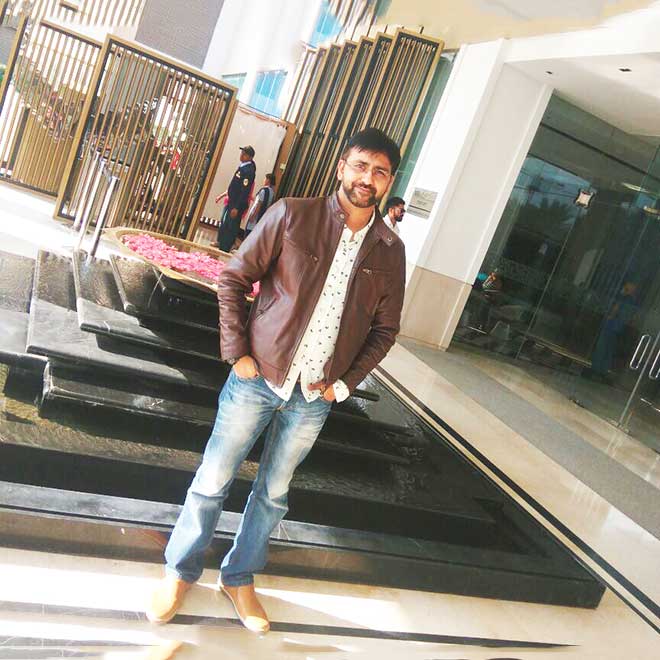
Tag: Lead Counsel

  • “My journey has been one from experiment to passion. As a business lawyer, it’s not just about saying ‘yes’ or ‘no’—it’s about providing solutions that operate in the best interest of the business, while also mitigating risks.” – Puneet Vyas, Lead Legal Counsel at Hitachi Energy

    “My journey has been one from experiment to passion. As a business lawyer, it’s not just about saying ‘yes’ or ‘no’—it’s about providing solutions that operate in the best interest of the business, while also mitigating risks.” – Puneet Vyas, Lead Legal Counsel at Hitachi Energy

    This interview has been published by Namrata Singh and The SuperLawyer Team
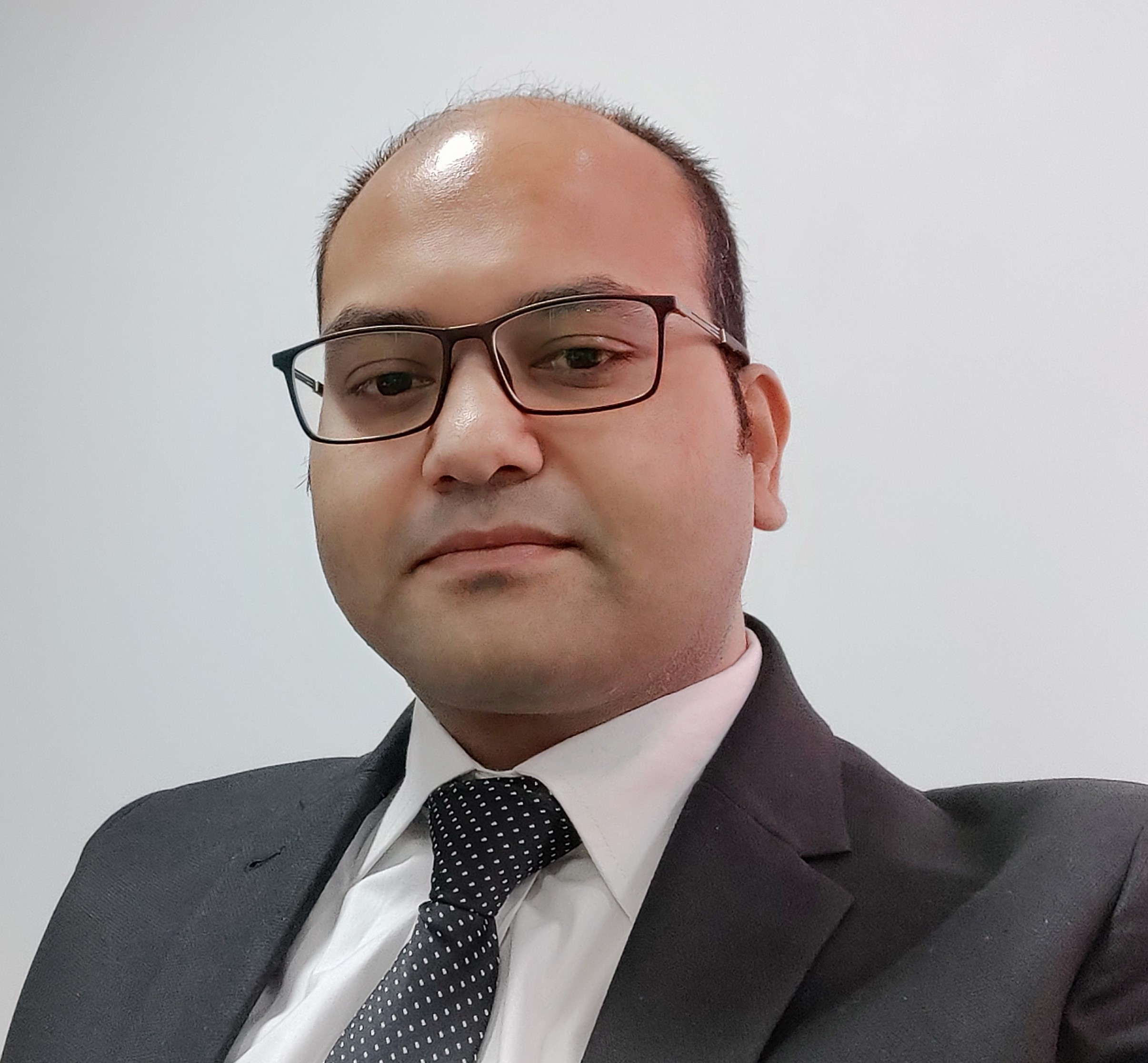
    Could you share the story of how you began your career in law? What motivated you to pursue this path, and how has your journey evolved from your early days at Gujarat State Petroleum Corporation Ltd to your current role at Hitachi Energy?  

    It has been a journey from experiment to passion. Although I had opted for Science and Maths when I was doing higher secondary in School, I was clear I would not pursue engineering and wanted to try my hand at something different. I tried getting admitted to a few merchant navy schools. Thereafter, found law to be an exciting upcoming career choice. 

    Pursuant to taking exams at various law schools (pre-CLAT era), I was admitted to the National Law University Jodhpur. The Hon’ble Vice Chancellor, Mr. N L Mitra, had a truly inspiring vision for the law school. It was my first meeting with Mr Mitra, post-admission, that gave me confidence that I had made an excellent choice. 

    I had done my specialization in IPRs and however fate had other plans. I opted to join a company as an in-house counsel.  My first job at GSPC Legal Department, taught me the 3 most relevant capabilities, an in-house lawyer should possess (1) Attention to detail (2) Reading the facts at hand, meticulously (3) Research skills. 

    From GSPC I moved to BHEL at their Corporate Office in New Delhi. BHEL is a mammoth organization, with numerous law officers. The variety of work and the exposure at BHEL was incomparable. I handled numerous disputes along with International arbitrations as well. I had the opportunity to brief and to interact with Senior Counsels quite frequently. 2016, I moved to the Industry Sector Division of BHEL, which was more focused on new businesses and I got to work on agreements pertaining to renewables and e-mobility. This gave a new insight, wherein the focus shifted from being a lawyer to becoming a Business lawyer. Business lawyers are not only supposed to provide opinions in ‘YES’ or ‘NO’, but to provide solutions that can operate in the best interests of the Business. 

    Same journey of developing self as a specialist Business Lawyer continued to my current role at Hitachi Energy. With the varied experiences of working and Government organisations as well as Private firm, the perspective as a lawyer has improved and the focused attention is on Business requirements, at the same time highlighting the risks involved and providing mitigation solutions to the said risk. Therefore, a journey which had started as a student looking for career choices, to an experienced In-house counsel is enriching and could not have asked for better experience 

    After completing your law degree, you joined Gujarat State Petroleum Corporation Ltd. Was that simply an opportunity that came your way, or had you already decided that you would focus on corporate legal work rather than pursuing a career in litigation? What factors influenced your choice at that stage?  

    As I have already mentioned, I chose to join a company as a Corporate Lawyer. I did not want to get into litigation since I don’t belong to a lawyer’s family. During Campus recruitment I got offers from Zydus Cadila and GSPC. GSPC being energy sector, seemed a more lucrative choice. The factors that influenced my choice were (1) Getting a career choice, wherein Litigation is not involved (2) GSPC being in Petroleum/energy sector, which is most promising sector even as on date. (3) Getting to know nuances of working a public sector.

    Reflecting on your experience representing NLU Jodhpur in the 12th Inter-American Human Rights Moot Court Competition, how did this experience shape your approach to real-world legal challenges? Do you see any parallels between moot court competitions and your work today?  

    I went as a researcher and obviously, the experience was outstanding in terms of providing an exposure to interact with teammates from all across the globe. Also, exposure of knowing perspective of international judges and panellists was more than what anyone could have asked as a student. A moot court competition cannot be compared to and real life work, however, if it’s a real life situation or a competition, practice and preparation are the key to be successful in your deliverables. 

    Given your vast experience in contract negotiations and dispute resolution, what are some of the most significant lessons you’ve learned that you believe could benefit the next generation of legal professionals?  

    Contract negotiations are not yet that developed in India as compared to Cross jurisdictional negotiations. The opportunity of Legal to Legal interaction is comparatively lesser. From the other party the person negotiating can be Contract Manager, Procurement head or even a Marketing person. Therefore, the key is patience and also translating your legal acumen into a language that is understood by the other person, irrespective of his field. Logical and clearly articulated reasons are the key to successful negotiations. 

    In case of negotiations with Lawyers, the key is to stick to your course of argument and to provide a reasoning which cannot be denied. Opposite side lawyers are also generally more focussed on resolving the deadlock because that is what is expected in a business organization. Cross Jurisdictional negotiations are generally based on other factors such as culture etc. that can influence the negotiations. 

    Your experience includes handling both domestic and international arbitrations. How do you approach the complexities of these cases, and what advice would you give to young lawyers aspiring to specialize in arbitration?  

    It is sad that arbitrations have neither proven to be cost effective, nor do they save on time. We are defending a Section 37 application in respect of arbitration award that was passed 10 years back. As a business organization, the huge costs incurred in Arbitration can be huge hit to the business. Therefore, emphasis should be more on pre-arbitration dispute resolution mechanisms such as mediation/conciliations. The contractual conciliations are also given more importance and the decision of the conciliation panel is also given relevance. All these mechanisms have grown in importance because of the costly resolution that arbitration offers. 

    How important is it for legal professionals to have a global perspective in today’s interconnected world?  

    Global perspective is most important for lawyers these days. This not only opens up opportunity for cross jurisdictional hiring, however in a managerial role the expectation is to be conversant with laws of Jurisdictions the business operates. Therefore, it is not an additional qualification but mandatory expectation in a business firm working in different jurisdictions. 

    Along with the above, India offers a talent HUB who can cater to different Jurisdictions. Like engineers and other professionals, Lawyer Hubs are also being developed across organizations who can cater to different jurisdictions. Young aspirants therefore having cross jurisdictional expertise have good chances of being absorbed in MNCs. 

    Recovery proceedings and insolvency cases are critical areas of your expertise. How do you navigate the intricate legalities involved in these proceedings, and what role does innovation play in resolving such disputes effectively?  

    Litigation strategy formation is the key for any success. Once a dispute/situation is at hand, the key is to analyse all the pros and cons and to evaluate best course of action. This analysis includes reviewing the costs involved, the time a probable action would take and also will the desired objective be met if a proceeding is opted. The insolvency although not a recovery proceedings, has been proven to be a very effective measure to deter companies to pay genuine dues. Interim injunctions also have proven to be a effective coercive measure against the parties, so that desired results are obtained. 

    The legal profession can be demanding and stressful. How do you maintain resilience and mental well-being in such a high-pressure environment? Any hobbies you pursue that help you to unwind?

    Mindfulness is key for every lawyer. “We live in times where we forget the Present” . Lawyers are poor listeners and also with the ever increasing pressure, the mind is constantly at work. Therefore, overthinking cannot be avoided. Mindfulness activities such as meditation and other mindful activities can help train the mind to be focussed on the problem at hand. Stress is caused when you are thinking about a problem or for issues you have no control. Once mindfulness is inculcated as part of daily practice, stress can be reduced tremendously. There is also no stress when you actually love what you are doing at work. 

    Disclaimer – Views expressed are personal to Puneet Vyas and does not represent views of Hitachi Energy.

    Get in touch with Puneet Vyas-

  • Nishant Sharma, Lead Counsel, Dolby Laboratories on work experience in Patent Litigation and being a Patent agent

    Nishant Sharma, Lead Counsel, Dolby Laboratories on work experience in Patent Litigation and being a Patent agent

    Nishant Sharma graduated in Law from Delhi University in 2012. His professional experience encompasses all sorts of patent related activities- contentious matters, prosecution or preparation of patent applications. He has frequently participated in patent litigation matters, drafting patent applications, carrying out patent-ability searches, filing of patent applications, prosecuting patent applications at Indian Patent Offices and handling opposition cases.

    Currently, he is responsible for handling litigation as well as Patent Licensing in India for Dolby Laboratories.

    In this interview he talks to us about:

    • His decision to pursue Law as a career.
    • His role as a Lead Counsel.
    • Specialization in Patent Law.
    • Skills required in making a successful career in Patents and Designs.


    How would you introduce yourself to our readers? Do you come from a family of lawyers?

    I consider myself an evolving IP professional who is trying to learn new things – be it in IP or legal field in general or even about facets of life – every day, every moment. I have a firm belief in destiny – you won’t get more than what you deserve and before it is due – and at the same time am a strong follower of principle of karma – do good work and you will get appropriate returns in the long run.

    I am a hands-on person and so like to be involved to the very core in every project I undertake or am assigned, and this has always been my advice to my juniors whom I have mentored over my past fifteen years of professional life. I have a strong belief that one needs to be self-sufficient so as to be able to complete assigned tasks even if requisite resources are not available, and throughout my career I have tried not to let unavailability of a resource, such as a paralegal or even a hardware resource, become a hurdle in completing a deliverable in time.

    Coming to you other question, no I did not belong to a family of lawyers. My family includes Engineers, Scientists and Bankers and never in my life had I thought I would be in the legal profession. But I have had good mentors who guided me, and still do, in my pursuits in the legal field.


    What motivated you to pursue law as a career?

    (Nishant completed B.E. (Electronics) in 2001 and a PG Diploma in Advanced Software Design and Development from C-DAC, Noida, 2001.)

    Ah! As I said I believe in destiny and may be my entry to legal profession was destined to happen. After completing my Engineering degree, I was in a secure job, so as to say, with Hindustan Aeronautics Limited (HAL) – a Public Sector Undertaking. I was working on latest Russian technology but the itch to learn something new was always there as things were moving at a steady pace at HAL. Most of the time we had to follow standard procedures with limited options to innovate to improve efficiency of operations. But I was happy doing the same. It happened somehow that my wife got a job opportunity in Delhi and we thought of shifting base. It was during that time, Remfry & Sagar had advertised for openings for Engineers. It was around December 2005 and the Patents Act had just been amended. Sensing a good opportunity to shift base to Delhi to accompany my wife, I applied for the opportunity and after two rounds of interview, I was selected. However, even after getting the offer, which was way beyond my expectations, I was sceptical of leaving a well-settled Government job. Thankfully, I had an acquaintance that used to work for a law firm in the IP field and she motivated me to join this field. So it was like all blocks were falling in the right place slowly paving the way for me to join the IP field. After a discussion with my wife and father, I finally decided to plunge into it and within few days of receiving the offer, I was at my work desk in Remfry browsing through heaps of files.

    On the very first day, as part of induction, I was given few files to study and develop my understanding of how the Patents filed operates. I would spend hours studying each file, making notes and writing down my doubts, which I would later on clarify with my seniors. I was lucky to have seniors who were eager to help me understand the nuances of Indian Patent law as well as Patent Cooperation Treaty. Within few months of joining Remfry, I was actively doing patent prosecution including official hearings at the Patent Office.

    I was happy doing prosecution work until one day my Supervisor suggested that I should pursue Law. Being from the Engineering field, I thought I had a technical bent of mind and I should better be pursing further studies in technical field only and thus, I didn’t give Law studies a second thought then. Yet again destiny was to play its part in shaping my decision. I moved to some other firm eventually, where I was actively involved in Patent Litigation. I liked the entire concept of Patent Litigation and how it is the ultimate test of both the legal and technical acumen of a person. And within few months, I was attending evening classes at Delhi University’s Law school.


    Being a science graduate, did you face any difficulties in law school?

    Frankly speaking, I did not face much of a problem in terms of understanding of Law as I felt statutes are generally very logically drawn with an intended objective in mind and defining steps towards achieving that objective. This is how science operates too! The major problem I faced was adjusting to life of an academic after a gap of seven-eight years. Moreover, I was actively attending to my official duties as well while I was continuing my studies and this made the entire academics part hectic. However, with my family’s support I managed to sail through.

    My advice to students pursing Law would be to understand the basis of each legal provision, question it and support your understanding with explanations provided in judicial precedence of the Courts. The best part of legal education is that Courts, with their elaborative speaking orders, help one clearly understand legal positions and I would encourage students to read a lot of Court decisions, even if different decisions speak the same language you never know when you might chance upon an additional drop of wisdom in the same.

    The other thing to keep in mind is to ask a lot of questions – to your teachers, your peers and even to your juniors. The beauty of Law interpretation is that everyone can bring in his own perspective and it is always good to know all dimensions to a legal provision. Recently, I had trouble interpreting Section 65B of the Evidence Act and to solve the conundrum all I did was to prepare a note of my understanding of the provision and circulate the same to my professional connections, even those whom I remotely knew. Many people pitched in with their perspective and finally I could gather enough understanding of the provision.

    In addition, students should be bold enough to challenge and question settled propositions. So far my experience has been that most Law practitioners hold strong biases towards settled legal propositions and they would rather dissuade their juniors from thinking beyond the same. I am not preaching to students to suspiciously look at each and every settled proposition but as the saying goes – There’s always a scope for improvement.


    How was your first year after graduation? What do you think were the biggest hurdles and challenges in the early days of your career?

    My first year after graduation from Engineering Course was the toughest one as all job opportunities in India had literally dried up in the wake of September 11 attacks in the US. I did initially try my hands as sales professional, selling rugged computers and other military grade products to various R&D organizations in Delhi, for some five-six months, but eventually realized it was not my cup of tea. That was the time I decided to quit that job and study for Government sector jobs that were supposed to be the most stable ones as compared to the ever volatile IT/software jobs. My hard work paid and I landed up in HAL.

    The biggest hurdles I faced during the initial years were to shift gears from slow pace of student life to that of a professional managing a team. I had to manage a team of workmen/work-women and get the deliverables within scheduled time as any delays would ultimately result in delaying delivery of an aircraft for which the deliverable was required. This would primarily involve managing a lot of human capital and this is what you are taught the least in your academic life. Slowly I realized that treating people with empathy can do wonders and I eventually learnt the art of people management.

    My first year after graduating from Law school was easier as I was already seven years in the profession and had learnt how to conduct myself.


    When you accept interns under you, what kind of qualities do you look for?

    Interns should be eager to learn, have some innovative thinking and be willing to experiment with new ideas. Another important aspect is, as I mentioned earlier, interns should be bold enough to challenge the settled propositions.

    In addition, honesty is a quality that every person must imbibe. Honesty towards their work, their co-workers and towards self is very important. If you have faulted, be honest and accept it before your seniors/co-workers.

    Lastly, interns or even starters in any profession must remember that there is no shortcut to success. Toil hard and reap benefits!


    Please tell us about your experience representing Remfry & Sagar at the LES 2013 and AIPPI 2015.

    (Nishant represented the firm Remfry & Sagar as a Partner Designate at the AIPPI (Association Internationale pour la Protection de la Propriété Intellectuelle) 2015 held in Rio de Janeiro and LES (Licensing Executives Society) 2013 held in Hangzhou, China.)

    The good part about such conferences is that while business development is the primary focus, you tend to end up discussing lot many things, besides IP, with people whom you are meeting. In my experience, this helps a lot in knowing about different culture and practices abroad. While you may not have earned a client for your firm, you go back enriched with knowledge about a new country/culture that may be helpful to you or your profession in the future. Besides, you get to learn of IP developments and practices throughout the world, which helps in overall development of one’s IP intellect.

    Moreover, such interactions help a lot in settling doubts in the minds of foreigners about India. For instance, many people whom I interacted with during these conferences were not aware that India actually had four patent office branches or specialized commercial benches in High Courts. During these conferences, I was able to clear many such doubts which foreigners have about India.

    And finally, all such conferences are generally in beautiful locales, and one gets the opportunity to indulge in some local sight-seeing. I love travelling and passionate about visiting new places. I consider myself lucky to have visited two of the wonders of the world – The Great Wall and Christ the Redeemer – during these conferences.


    Currently you are the Lead Counsel (India) – IP & Litigation at Dolby Laboratories. We would love to hear about your work profile.

    At Dolby, I have been entrusted with the responsibility of advancing Dolby’s patent licensing program in India. In addition, I oversee the Indian litigation suits instituted by Dolby – providing strategic inputs, whenever required, in line with the intended objective.


    What are the skills required for a fresher who is aspiring to build a successful career in Patents and Designs?

    Be inquisitive, ready to learn and honest to your profession. Also, there is no substitute to knowledge, so read a lot!


    You have a total experience including technical experience of fifteen years, how do you keep yourself updated of the recent developments?

    I read a lot about IP developments in India and abroad thanks to Google Alerts and subscribed newsletters. I also read and research a lot about other areas of law, whenever someone from my friends or family requires any legal help. In addition, I regularly read latest Indian judgments related to Patent cases on some of the free databases, a habit introduced to me by my colleague at Remfry.

    Moreover, I attend IP conferences, which are another source of abundant information on IP and other facets of law.


    You have worked as In-charge of Radio Division of Avionics Lab at HAL, Nasik Division. Please give us an insight into this marvelous achievement.

    I cannot say if it was an achievement or not, but yes it was definitely my contribution towards nation building. My team was assigned the work of developing testing equipment that were to be used for testing various electrical, hydraulic and pneumatic systems of Sukhoi aircrafts being manufactured for the first time in India under a license agreement with Russia. The part not to be missed here was the strict adherence to deadline for completing the project as any delays could have delayed the delivery of first few aircrafts to the Indian Air Force. Often, it was a race against time but by the time I had left HAL, my department was on track with regard to delivery of the testing equipment to the end customers thereof. As I mentioned earlier as well, my stint at HAL helped me learn people management and also that you can only win respect of your co-workers/juniors by showing empathy and contributing, if not more, equally as them.


     Can you elaborate any two cases for which you are extremely proud of?

    (He has given several advisories to clients on patentability and infringement issues, interacting with the inventors and apprise of the important details of their invention.)

    Without going into the specifics, in view of maintaining confidentiality of clients for whom I worked, I along with my team drafted a patent application for a Japanese client. The project was more like a test project as the client was testing waters for considering outsourcing their patent preparation part. It was an invention related to memory chips used in electronic devices. After toiling hard and intense in-house discussions, we drafted a patent specification which was filed in India as well as the United States simultaneously. The US application was recently examined and granted a patent without any objections. This gave me immense pleasure because there is nothing more than having a satisfied client. This success also helped the law firm in bagging subsequent drafting projects from the same client.

    Another case that I remember quite vividly is a pre-grant opposition case I handled in the initial years of my career. It was again a Japanese client, whose technology was surreptitiously claimed in a patent application by one of their old customers. I, under the guidance of my Supervisor, prepared a pre-grant opposition that was fiercely fought at Kolkata Patent Office. There were certain new legal propositions that we introduced in our submissions, which were finally accepted by the Patent Office leading to the impugned patent application being refused a patent. We were thus able to restore the honour of our client and this was a soul satisfying moment for me as a professional.


    Last but not the least, what is your parting message to our readers?

    First and foremost, be a good human being.

    Secondly, try and build a congenial environment at your workplace. Don’t expect something from your juniors or co-workers, if you would not have done it in the first place. If you are human, so are they!

    Moreover, be ready to share your experiences with others, especially juniors, as there’s no better lesson than learning from real-life experiences.

    Finally, don’t be afraid of making mistakes but do learn from them as well and do not repeat the same mistake again.