Tag: Legal 500

  • “Life as a lawyer is a test match, not a T-20. Keep putting your head down, work, and trust the process.” – Prashanth Shivadass, Partner at Shivadass & Shivadass (Law Chambers)

    “Life as a lawyer is a test match, not a T-20. Keep putting your head down, work, and trust the process.” – Prashanth Shivadass, Partner at Shivadass & Shivadass (Law Chambers)

    This interview has been published by Namrata Singh and The SuperLawyer Team
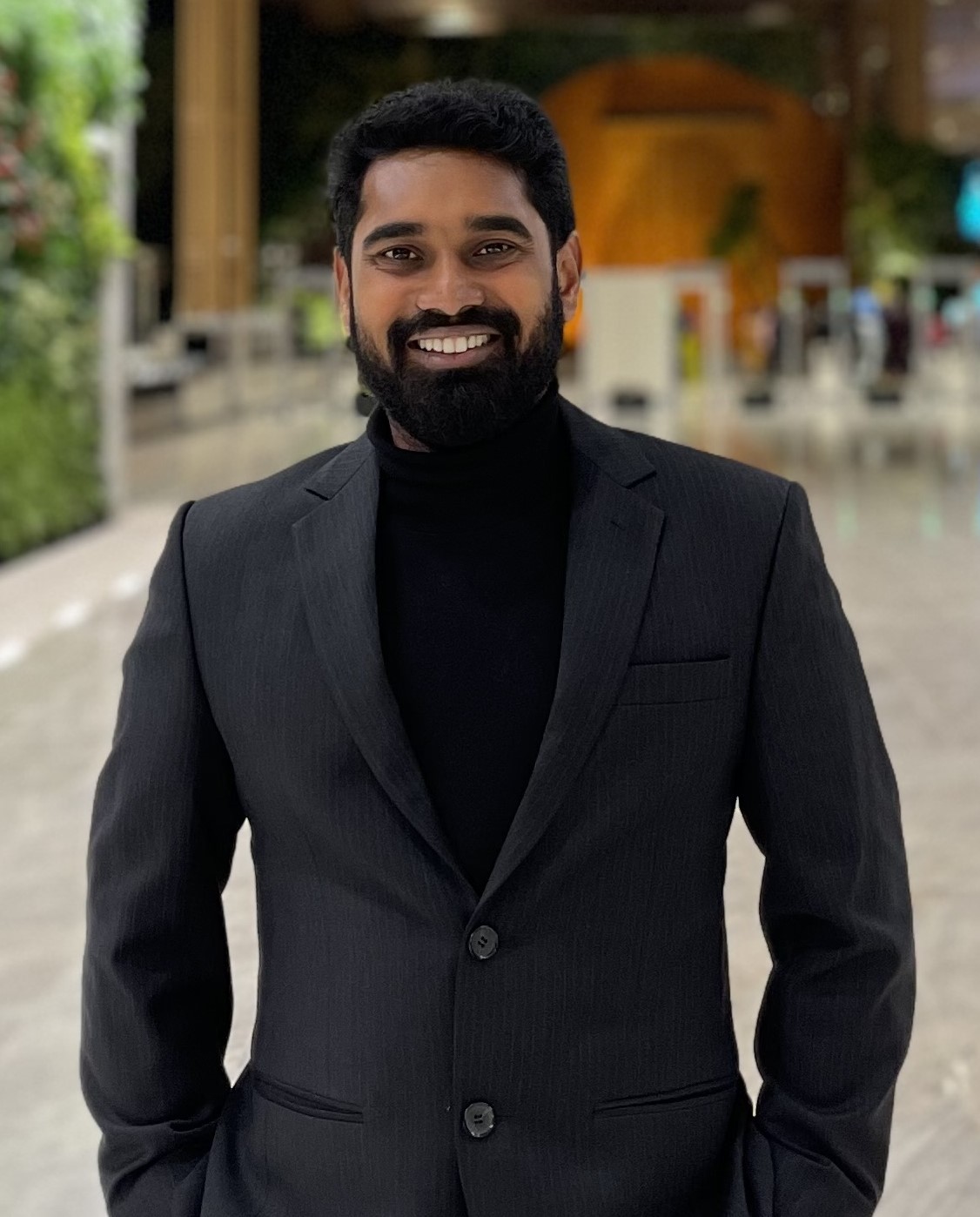
    Can you share what initially inspired you to pursue a legal career and how this journey has shaped your professional philosophy?  

    My introduction to law happened in my 7th or 8th grade (around 2002) – my father was arguing a matter before the High Court – I knew nothing about what a Court is, what a lawyer does or for that matter, even what a Judge did. I was curious because I wanted to know what my dad did for a living.

    It was a tax matter that he and his team were arguing – I didn’t quite understand the matter because I went on the 3rd day of their arguments, so a large part of the matter had been argued. But I understood the underlying transaction and the business model.

    This pulled me into reading newspapers, especially the business section, to understand the changing aspects of the business environment, new technologies etc. I decided then, that science and aspects of science, are not my cup of tea and to pursue arts and commerce, which eventually led to law (clubbed with my very menial academic scores). 

    Studying for an examination and/or interviews has never been a strong suit of mine, so cracking anything in the first instance was out of the question – which is why, I liked the concept of doing something with ‘practice’ – I played cricket when I was in school and university (under-graduation and graduation), so I know the impact of practising before a game. I think of law the same way, where a Courtroom is a beautiful playground where there is an interpretation of something in black and white against the backdrop of the kind of businesses – law catches up with changing business experiences.

    My philosophy for practising law is based on everyday practice and reading – there is no escaping hard work and long hours, no matter which generation relays this out – there is no denying that there needs to be a balance between work and life, but there will be many instances where work will take away many vacations and time away from life and family, so choose well.

    Your academic credentials include a Master’s degree in Competition Law from Queen Mary University of London. How has this international education influenced your practice, and what value do you think global exposure brings to a lawyer’s career?

    Interestingly, many seniors I spoke to during my law school days and the first two years of my practice, said a master’s degree in law was completely unnecessary to practice in Indian Courts. But 2 years into practice, I got so engrossed in work, with long hours and no breaks, and that was when I had a moment of realization that led me to think – I like working and the long hours, but the longer I stretch this out, the harder it will be to come out and become a full-time student with a lot of time on my hands.

    I then decided to maybe take a couple of years when I could (luckily with no financial and other obligations), to study something I wanted and also, see a part of the world, meet different people across the world, understand different cultures, learn different business models, firm models etc. To this day, I value and cherish my period in London and the connections I made then.

    I think a master’s degree abroad is good and valuable when you have a specific goal in mind – I wanted to study Competition Law (from an EU and UK perspective) and understand how the Magic / Silver Circle law firms work, how the ‘Chamber’ model works in the UK. Plus, I like driving and travelling, so there was no better place than the UK for me (even considering the cost, since it is significantly cheaper than the US).

    You have a rich background in various areas of law, including Competition and Antitrust, Corporate and Commercial laws, Taxation etc. Could you share how you developed such a diverse expertise, and what drew you to specialize in these specific fields?

    Antitrust was and continues to be my first love, I fell in love with it in law school because there is a very balanced economic approach to it. Unfortunately, I do not practice it as much as I would like, but I do keep up with its evolution. 

    The other intriguing area that is coming up and that has excited me for a while is data protection – especially, with the current growth of AI – it will be very fascinating to bring out a fine line between right and wrong, in this technologically advanced society.

    Tax for me is a much-liked inheritance – having started with despising the area because of its complexities, my growth in law has been because of tax matters. I have over time, grown into and loved tax, with these same complexities it creates. 

    I think coming to like a subject/area in law, is intensely personal. I know lots of friends, who love doing original civil and criminal work since it gives them a different kind of joy – muddled in facts and evidence, interpretation of a different area of law and procedure daily etc. – different Courts of practice (original, appellate, quasi-judicial), city of practice etc. also make for a decision. 

    But if I were to specialise in a certain area, I’d give myself a good 5 years, before I can even begin to think that I have a hold on the subject.

    Your firm, Shivadass & Shivadass (Law Chambers), is known for its work in Litigation (taxation, commercial etc.), Corporate Law etc. How do you approach building a specialized practice in these areas, and what advice would you give to young lawyers aspiring to excel in these fields?

    Building a practice is convoluted. Some factors are beyond control (time, place, resources etc.), but quality of work and staying updated with the law is always within one’s control. Sometimes, a pragmatic approach towards the question of law and the transaction goes a long way in assisting both the Client and the Court.

    I’ve also noticed that knowledge sharing by way of writing articles, and books, helps dissipate your point of view of a certain area or provision of law. This also gives people a chance to gauge their understanding of law and personality.

    Unfortunately, building a practice takes a long time. But should lawyers choose to build a core practice, my advice would be to let your growth in that area be ‘organic’ – it will be more credible that way. Avoid instant marketing and instant gratification, because as a field, instant gratification in law tends to break you more than you would think.  

    Having worked with top law firms and the office of the Solicitor General of India, how did these experiences shape your perspective on the practice of law, and what key learnings have you carried forward into your own firm? Please share your experience.

    For this question, I will consider my experience from both my internship and practice perspective – be it firms, companies or chambers (including the SG’s office). 

    You garner different perspectives of law when you either intern or work. Big law has never fascinated me much, but I’ve always wanted to learn how big law functions – administratively i.e., marketing, practice area development, quality of work and output, deadlines, team structure, management structure etc., as opposed to a chamber practice, where your quality is determined by your legal prowess and how you present the case before a Court – the marketing here, is your presentation and skills before a Court, which spreads more by way of word of mouth, often the older marketing tactic.

    Having become a lawyer and spent nearly 12 years so far, I have now come to terms with what areas I want to specialise in and how I want to take this forward. Therefore, while driving this ethos for our ‘boutique firm’, I draw a fine balance between a law firm model and a chamber model. It’s been a great learning and there is so much more to learn – but I don’t shy away from making mistakes because, for me, mistakes are the only way to test your ideas.

    As a trained Carnatic classical singer and a state-level cricket player, how do you balance your demanding legal career with your hobbies, and do you believe these interests contribute to your professional success?

    I honestly wish I’d kept up with my singing and/or my cricketing abilities – to date, I feel I’ve spent more time on work and law than my hobbies, which is not a good sign. Frankly, having a passion/hobby outside of law is of real benefit. 

    While people do say that work is passion etc., I must admit, there are situations in my very small career, where reading books, musical therapy (be it in the form of listening to new music styles or immersing yourself in age-old classics) or catching a small practice game or tapping a few balls in the nets, helps clear your mind off negative energy, which tends to be a lot more in this industry.

    We get stuck with trying to achieve a great deal, too soon, that we fail to realise that life as a lawyer is a test match (that ends on day 5 at 4.30 PM) and not a t-20 that ends in 3 hours. Teamwork and building a team (any team), is the fulcrum of any sport. 

    Music, on the other hand, brings out the creative energy and strength in a person, which helps in clear thinking and concentration. I often ignite my spiritual side with a little of MS Subbulakshmi and some Carnatic music daily, which then moves to some Indie-rock, classic rock etc. It also gives you a sense of calm in toxic situations and keeps your emotions in check.

    This has helped me in various ways to keep that balance and I genuinely encourage everyone, not just lawyers, to have these hobbies (and just think of them as hobbies and not ‘side hustles’). This keeps you grounded. 

    With your extensive experience, what do you consider to be the most important skills or qualities that a lawyer should develop to succeed in litigation?

    By default, every lawyer has to read – there is no escaping. You may have a team either giving their comments on an agreement or briefing you on a matter (post discussions with Clients) – but unless you pick up the draft or file to read and make your notes, it will never survive the quality you want to achieve and build a name for yourself. We have to read for life, so the sooner this realisation hits, the better. We must strive to constantly read, and there is enough for everyone who wishes to absorb. Reading also makes your life easy when drafting, presenting a case before Court or simply, comprehending a bulky file in a time-efficient manner.

    The second skill is to use simple but effective words and learn the art of presentation and speaking. A lawyer should never have visible ‘stage fright’ – you may be shaking with fear within, but strong oratory skills and clarity of thought, take you a long way.

    The third and rather important skill is to treat ‘time’ as a dear friend –‘time’ can make or break you. Usage of time effectively and efficiently is an art in itself and respecting time is another. We cannot strive to have a silk gown within 10 years of being an advocate and yet, not use 24 hours effectively and efficiently. 

    I take whatever pending work I have to Court, for instance – while waiting for a matter, I read up on new cases, correct opinions and other drafts and/or, watch proceedings and note down similar cases that are being argued, which can be used as a precedent for some of my cases. I trust the process and patiently wait for my time to shine, while choosing all along, to keep putting my head down and working.

    You’ve been involved with a wide variety of matters across different forums / Courts. How do you navigate complexities of different matters across these forums? 

    A few years ago, I was in Court as part of a batch matter and the leading Senior Advocate on the matter was sitting beside me. Out of curiosity, I asked him, ‘Sir, do you think the matter will end today?’. He smiled, looked at me and said ‘Just remember, every matter has its fate and destiny’. I’ve come to realise that line today when on certain days, the Bench is with you and then flips completely the very next day. There are also situations, where you may be close to a disposal of a matter, but the matter never reaches and is not picked up for the next 6 – 8 months.

    Amongst other things, which is reading the file (concrete factual aspects, the law and the application of law to facts), making your notes etc., some other things we keep in mind is the language of the Judge i.e., the Judge’s view on an area or subject of law, their insistence on procedure, decorum in Court, manner of presentation, grip and handle on the subject, etc. 

    We don’t realise it often, but Judges today are under the immense pressure of workload – it is never an easy task being a Judge; social media only brings out one side of it but there is a side that only arguing counsels know – on an average day, each Judge (of whatever position), works at least 16 – 18 hours. It is sometimes inhumane but that is the reality. If you keep this in mind, you know how to navigate in a Court viz., your facts, arguments and the law. Being always prepared is never a bad thing – 5 minutes is enough to turn a case around and get a positive order from the Courts.

    Given your extensive experience, what advice would you offer to young legal professionals aspiring to become litigating lawyers?

    I know this will be hard for many to read – but give litigation a chance. I do understand that the hard work and long hours with menial pay are not as attractive as the fancy pay and lifestyle of big law or a corporate law firm – but if one can push themselves, there isn’t a place to be at, other than a Court. The money, name/fame, and adoration, that you receive from Judges, peers etc., is unmatched.

    The second is to never take a file/matter, lightly – even if it is just for an adjournment/Passover or the fact that it is ‘just a matter at consumer court’ or ‘just a civil court hearing’. Every matter, of whatever nature, is absolutely important to your credibility as a litigator. 

    Third – find a mentor; a mentor who is willing to take risks with you, a mentor who not only guides you but allows you to fail and learn, a mentor who gives you opportunities. Unfortunately, such mentors may not be in a position to pay you much – but, when you have such opportunities, you can create your own brand, perhaps even get some of your cases to cover up the balance in terms of pay.

    Get in touch with Prashanth Shivadass-
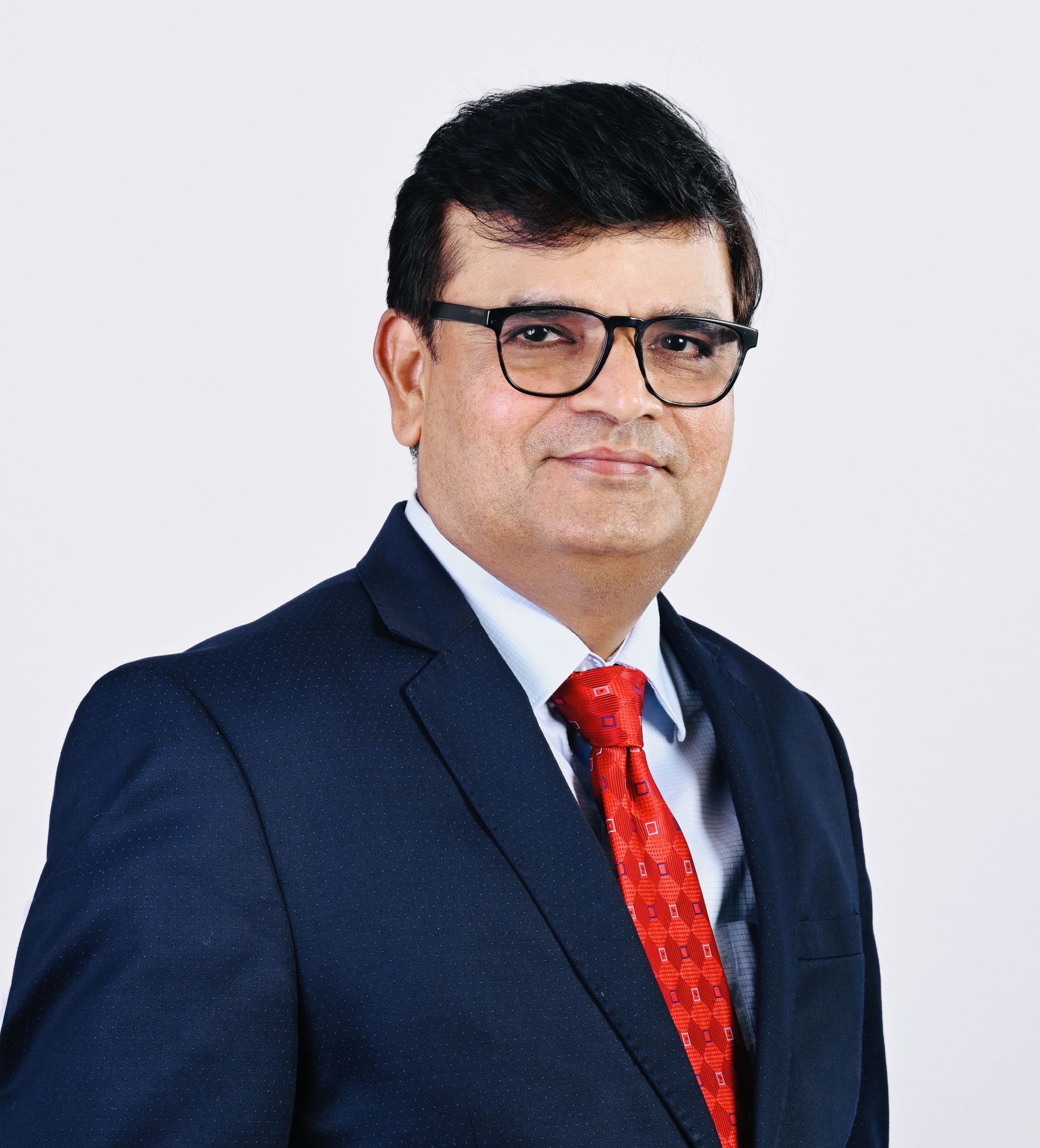
  • “My advice to young professionals is to be yourself. Embrace your originality and avoid copying others. You are unique and have your own personality. Strive to discover and develop your true self to the fullest.” – Sameet Gambhir, Sr. Vice President & Group head,  UFLEX Limited

    “My advice to young professionals is to be yourself. Embrace your originality and avoid copying others. You are unique and have your own personality. Strive to discover and develop your true self to the fullest.” – Sameet Gambhir, Sr. Vice President & Group head, UFLEX Limited

    This interview has been published by Namrata Singh and The SuperLawyer Team

    Can you share with us how you began your career in law and company secretarial work? What inspired you to enter this field, and how did you progress to your current position?  

    Interestingly, my journey towards becoming a legal counsel and law professional started accidentally. When I was in college pursuing my B.Com, I aspired to become a Chartered Accountant. To gain some working experience before enrolling in CA, I joined an organization to work in the accounts function after completing my B.Com. There, I met the Company Secretary and Legal Counsel, and I was impressed by their role, interacting with top management, handling significant matters, and sitting in board meetings. I was fascinated by that role and, instead of CA, I joined the CS course.

    However, as fate would have it (and I believe that destiny plays a very important role in our lives), after becoming a Company Secretary and joining an organization as CS back in the early 90s, I was given the charge of the legal function as well. Since CS work also involves a lot of legal and compliance responsibilities, I was happy to take on this additional role. That’s where my journey as a legal counsel began, and I later completed my graduation in Law as well.

    Since then, I have always worked as a legal counsel or legal head, mostly in-house. It’s been around 30 years since I took on these roles, working with different Indian and multinational organizations. From the moment I was first given charge of the legal function, I realized that this was what I always wanted to do. Initially, I gained exposure in litigation, then contracting, followed by IPRs, brand protection, and all other related fields, including compliance and risk management. Of course, I have continued my role as a Company Secretary and take pride in that.

    The past three decades have flown by like it was yesterday. Presently, I am the Sr. Vice President and Head of Legal at UFlex Ltd., a multibillion-dollar organization and India’s largest multinational flexible packaging and solutions company. UFlex manufactures a wide variety of flexible packaging films for various industry sectors across the world. With headquarters in Noida (National Capital Region), the company has packaging films manufacturing facilities in India and overseas under the global subsidiary packaging films brand ‘Flex Films’ in UAE, Mexico, Poland, Egypt, Russia, USA, Hungary, and Nigeria, with a cumulative capacity of over 609,000 TPA.

    Can you share some of the most challenging legal cases or compliance issues you have faced and what you learned from those experiences? Additionally, what are some emerging trends in the legal field that you believe will shape the future of corporate law and compliance?  

    Data privacy is an important legislation that has a significant impact on all organizations. Cyber risk is another area that requires serious monitoring, review, and an effective framework. Additionally, SEBI’s existing and upcoming regulations and compliance on Responsible Business and Sustainability have brought ESG and sustainability to the forefront of all organizations. This is beneficial not only for the organizations but also for the nation and the world as a whole.

    During your tenure at DCM Shriram Ltd., you held the position of VP (Corp. Law) & Company Secretary for almost a decade. What were some of the key achievements and challenges during this time?  

     In the last ten years, particularly after the new Companies Act and new SEBI regulations, the role of in-house counsel and company secretaries has significantly increased and become very challenging. Compliance with SEBI Listing regulations, SEBI (Prohibition of Insider Trading) Regulations, FEMA compliance, Companies Act, and other corporate compliances require constant attention and a high level of proactiveness. Shareholder governance has also become a new challenge, with shareholder activism on the rise in India. This is beneficial for both the company and the shareholders. Therefore, providing appropriate and accurate disclosures with all relevant information to shareholders and the public has become a priority in governance today.

    Compliance and governance of insider trading and SEBI regulations are complex and challenging roles that require a proactive approach, including regular awareness sessions and training for employees and other connected persons. As we operate multiple businesses, each with its own dynamics, this is crucial.

    Outside of your professional life, do you have any hobbies or interests that you are passionate about? How do they help you maintain a work-life balance?  

    I am very passionate about golf. Every weekend starts with a round with friends. I am truly in love with this game and can’t imagine myself without it. Golf is purely a mind game and teaches you a lot of life lessons. Playing twice or thrice a week is a must for me. If I don’t play in any given week, it feels incomplete. This game not only relaxes and recharges me but also reveals one’s true character on the course. Golf is the best thing that has happened to me, and I could talk about it for pages.

    As a visiting faculty and guest lecturer, what topics do you find most crucial to impart to your students? How do you ensure they are prepared for the evolving legal landscape?  

    I usually teach corporate laws, IPRs, labor laws, and data protection. However, today’s generation needs to be fully geared up with technology in legal, what we call Techlegal. This is the time of AI, ML, and GenAI, and routine tasks will increasingly be handled by technology. To excel in the field, students need to be proficient with technology and demonstrate creativity and new ways of working.

    For students and young legal professionals trying to decide between pursuing a career in litigation or as an in-house counsel, what advice would you give to help them understand which area might be the best fit for them? 

    I think both have their taste. It depends on what is of your interest. However, in both situations, my advice to youngsters is – Be yourself – You are what you are – be original and don’t copy anyone. You are unique and have your personality. Find yourself to the optimum. Of course, there are many things one should learn from the seniors and other leaders that should be part of your development and increase your skillsets but don’t lose your originality, no one can replace you. Further as a career advice, since we are today living in a dynamic time and things are changing so fast that by the time you get to the details of a thing the new version or new avatar is already there. Therefore one needs to get to speed with this. Technical competency is mandatory but being proficient in technology is the need of the time as we are already in the era of AI, M, and Metaverse and it’s a reality. Keeping yourself updated with the time is crucial for the counsels to be successful. The other two most important things – one they should understand the business first before they advise and the second is the quick responsiveness and proper research.

    Get in touch with Sameet Gambhir-

  • “Thought leadership is integral to staying ahead in the legal field. While it requires dedication, the impact of sharing insights and generating discussions outweighs the challenges. It’s about giving back to the profession and shaping its future.” – Divi Dutta,  Partner – Private Client & General Corporate at Khaitan & Co.

    “Thought leadership is integral to staying ahead in the legal field. While it requires dedication, the impact of sharing insights and generating discussions outweighs the challenges. It’s about giving back to the profession and shaping its future.” – Divi Dutta, Partner – Private Client & General Corporate at Khaitan & Co.

    This interview has been published by Namrata Singh and The SuperLawyer Team

    Your journey from college to becoming a Partner at Khaitan & Co. has undoubtedly been filled with challenges and achievements. Can you share with us some pivotal moments or challenges you faced during your college years and after graduation, and how you overcame them to reach where you are today?

    A little-known fact about me – before joining law, I worked with Raell Padamsee as part of her theatre group. I moved into law subsequently. I graduated in law in 2005 from the Government Law College, Mumbai and since then it has been an exciting journey. I worked in one of the oldest law firms in India – Crawford Bayley in its Mumbai office. I had the opportunity to train under Mr. Sanjay Asher for almost 6 years which shaped my understanding, interest and aspirations in the field of corporate law. Subsequently, I moved to Delhi in 2012 and joined the then Amarchand Mangaldas Suresh A Shroff & Co., the unified firm. Subsequently, post the split in 2015, I continued with Shardul Amarchand Mangaldas & Co (SAM).

    However, the most pivotal decision in my journey has been to take up the challenge and set up the private client practice which was relatively unknown at that time under the aegis of Shardul Shroff. This was unchartered territory for me as hardly any law firm had a dedicated private client practice at that time and there were no set precedents or background on this practice. We had to develop our own understanding of issues, create drafts and reach out to other limited experts in the field. Despite the initial struggles and the teething problems, I can proudly say that foraying into the private client practice has been the most significant professional decision I have made in my life. This practice has been both challenging and rewarding at the same time. After spending almost 12 years in SAM, I recently joined the private clients practice group in Khaitan & Co. This move was not easy given my long association with SAM but I am excited and raring to go and make this next journey even more memorable and fruitful.  

    I feel tremendous gratitude for the opportunities I have had and the support and guidance I received from Mr. Shardul Shroff. I am also confident that my association with Khaitan & Co. will only further my passion for the private client practice and give me a platform to take my journey to greater heights.

    Your work often involves delicate matters related to family dynamics and wealth management. How do you approach building trust and rapport with your clients, especially when dealing with sensitive topics like family disputes or succession planning?

    I treat every client as family. Most family matters need to be dealt with extreme sensitivity and confidentiality. You need to be a friend and confidant of your client first to enable them to trust you and open up to you. The legal aspect of these issues comes much later. Additionally, in a practice like this, the relationship does not end once the mandate has ended. The rapport that gets developed in these matters transforms into the relationship as there is a certain internal trust that gets built with the client. I continue to have a great relationship with most of my clients even if I am no longer advising them on legal matters and they keep reaching out to me for personal as well as professional assistance on other matters from time to time.

    Besides your legal expertise, you seem to have a flair for writing and thought leadership. How do you balance your professional commitments with your passion for writing, as seen in your contributions to various publications?

    The legal field is constantly evolving and the laws keep getting amended basis changing circumstances and other practical challenges. I feel that it is very important to be aware and keep oneself updated with the latest developments, especially in your area of expertise. It is equally important to create awareness amongst clients and peers as well. Therefore, while it is difficult to remove time and create a balance between professional commitments and making contributions, I look at these contributions more as a way of giving back to society, mentoring juniors, exchanging information amongst peers and generating business for my field of work. Further, given the nature of my practice, the reach of legal articles relating to succession planning, inheritance and wealth management is pretty wide.

    Your involvement in setting up operations for foreign companies in India is impressive. What are some key challenges these companies face, and how do you navigate the regulatory landscape to ensure smooth transitions?

    Most foreign companies are not aware of the regulatory regime in India and often question the requirement of providing documents/information. The regulatory regime in India is cumbersome to comply with in the initial stages of set up and the maximum time and effort is usually spent on collating the right documents/information from the foreign clients, explaining the submission criteria and requirements of the authorities and managing timelines. Fortunately, the current regime has streamlined a number of these processes, and it has now become easier to set up operations for foreign companies in India. Additionally, foreign clients are now more aware of the Indian system and are usually more cooperative now than before in supporting us in the set-up.

    After dedicating more than 11 years to Shardul Amarchand Mangaldas & Co., you made the transition to Khaitan & Co. as a Partner. What motivated this move, and how do you envision your role evolving in your new firm compared to your previous experiences?

    My 11 years in Shardul Amarchand Mangaldas were very fruitful and I am extremely thankful to Mr. Shroff for welcoming me into the firm. I have learnt a great deal from my experience in the firm and I take back fond memories of my time in the firm with me. I am very excited at this stage in my life and I am eagerly looking forward to my role in the Khaitan & Co. family. Khaitan & Co. has the largest private client practice in India and I intend to expand the practice to even greater heights and have an extended outreach in every corner of India through my association with Khaitan & Co. Mr. Haigrieve Khaitan is already very well known in this field and I am confident that with his support and guidance, my journey will be even more successful, enriching and rewarding than it has been so far.

    As a Partner at Khaitan & Co., what do you find most rewarding about your role, and how do you foster a collaborative and supportive environment within your team?

    The most rewarding aspect of my role in Khaitan & Co. is the confidence that the Khaitan family has reposed in me. They are always ready to support me, collaborate with me and have been extremely welcoming. They have done everything possible to provide me with a platform and resources that I can only grow to greater heights from here. The environment at Khaitan & Co. is one of extreme support and collaboration and I have naturally imbibed that thought process. The best aspect about Khaitan & Co., apart from its legal competence and a brilliant team, is its culture. 

    Beyond your professional endeavors, do you have any hobbies or interests that you’re passionate about? How do you balance your personal pursuits with your demanding professional commitments?

    I am an out-and-out foodie and I love to try new places, new cuisines and new food items, be it a new restaurant, a new café or a new dhaba. I also love watching movies. Some of my food interests are shared by clients and colleagues as we try new places together. I try and watch a late night movie on most Fridays after a long week of work. Other than this, I enjoy playing table tennis and swimming.

    For aspiring lawyers looking to build a strong foundation, what kind of internships would you recommend they focus on? Additionally, what are your views on gaining experience through internships with tier 1, tier 2, or tier 3 law firms?

    I think it is very important to intern under different law streams such as litigation, corporate, banking & finance, competition etc. to figure out where your interest lie. If you don’t like what you do, you will never be able to do it for long. I also feel, tier 2 and tier 3 law firms provide an overall experience as most of them do not have segregated practice areas and one would be able to gain a lot of experience in these fields. So one should definitely do a few internships in tier 2 and tier 3 law firms before moving on to tier 1.

    For students aspiring to specialize in private client practice or general corporate law, what advice would you offer to help them navigate the complexities of the legal profession and build a successful career in these niche areas?

    Nowadays most law firms conduct webinars, training sessions and interviews on important topics under general corporate and private client practice. Additionally, there are lots of articles and publications that are authored by partners and other associates from various law firms. There is a huge library of material in the digital space on every aspect of these practices. Every aspiring student should read and grasp this material as it really helps them to get an understanding of the practice and it also creates an edge for them in interviews and interactions with other legal professionals. Most lawyers also take guest lectures in law schools and once should try and interact with these professionals to understand their approach and seek guidance from them. These few aspects can really help any student in generating an interest in the profession. This should of course be coupled with sincerity and hard work as there are no shortcuts in any profession.

    Get in touch with Divi Dutta-

  • “In the realm of M&A, negotiations are the crux, and the art of negotiation is something we can never hone enough” – Archana balasubramanian, Founding Partner of Agama Law Associates, Unveils a Decade-Long Legal Odyssey.

    “In the realm of M&A, negotiations are the crux, and the art of negotiation is something we can never hone enough” – Archana balasubramanian, Founding Partner of Agama Law Associates, Unveils a Decade-Long Legal Odyssey.

    This interview has been published by Namrata Singh and The SuperLawyer Team

    What prompted you to do Law? and then, what prompted you to move to corporate law? And at the end in the whole journey. What made you establish Agama Law associates?

    The question of why law has always intrigued me, dating back to a remarkably early age of around 12 or 13. At that point, my understanding of the legal field was limited, and there were no familial ties to the profession. Nevertheless, something about law captivated me deeply. As a voracious reader during my childhood, I found the prospect of a career where continuous learning was inherent and extended throughout one’s professional life to be highly appealing.

    The realization that law touches every aspect of life dawned on me as I grew older. Unlike professions such as medicine, pharma, or engineering, which often specialize in a single domain, the legal profession offers a unique insight into multiple facets of life. Whether practicing medical law, which requires a profound understanding of medicine, or delving into criminal law, where a high understanding of criminal psychology is crucial, the multifaceted nature of law continues to be a source of excitement.

    Moreover, my enthusiasm for law extends to the generalist role I currently embrace. In a landscape where specialization is often emphasized, my passion lies in exploring diverse areas of law. This inclination was evident from an early stage, a decision supported by my father. This generalist approach allows me to navigate through various legal territories and maintain a broad perspective, which I find both stimulating and fulfilling.

    Reflecting on my journey, the inception of my legal career was marked by this passion and a commitment to continuous learning. It’s a journey that has been shaped by a love for reading, an excitement for the multifaceted nature of law, and a deliberate choice to remain a generalist in a world that often leans towards specialization.

    My legal journey commenced under the mentor-ship of a senior counsel, renowned as the leading shipping lawyer in the country at that time. The realm of shipping law was exceptionally thrilling and lucrative, akin to a gold mine in the legal landscape. Although disputes were relatively scarce due to the industry’s prosperity, my exposure was comprehensive. From witnessing ship arrests to navigating shipbuilding contracts, the experience was enlightening. As junior members in a senior’s office, understanding the intricacies of queuing matters and gauging the dynamics of working alongside a seasoned professional fueled my desire to explore beyond the apparent tip of the iceberg.

    Subsequently, my journey led me to a solicitor setup, where the practice encompassed both litigation and non-litigation matters. This phase afforded me a diverse range of experiences, delving into project finance and mergers and acquisitions (M&A). Engaging in IPO-related work and handling white-collar matters in the court provided a well-rounded exposure. Frequenting both Criminal Court and the High Court for writ petitions enriched my understanding of legal processes.

    Transitioning to a role at AZB marked a grounding experience, characterized by the demanding quality of work and the competitiveness inherent in the firm’s culture. The challenges posed in managing time constraints and a myriad of responsibilities served as a valuable learning curve. This stint prompted a process of unlearning certain approaches, fostering personal and professional growth.

    My inclination towards connecting with people on an individual level led to the establishment of Agama. Originating in a single room, this venture symbolizes my quest to reach out independently and make a tangible impact. The journey, from the initial mentorship in shipping law to navigating diverse legal landscapes, has been characterized by continuous learning, adaptation, and the pursuit of meaningful connections.

    Your experience spans various sectors, from manufacturing to healthcare. Is there a specific industry that you find particularly intriguing or challenging, and why? And how do you break the boundaries and enter that challenge, because this is for the ones who are entering this amazing field of law as you mentioned.

    For lawyers, such as myself, who adopt an industry-agnostic approach, the legal landscape presents a diverse and expansive canvas. Personally, I’ve been fortunate to accumulate a wealth of varied experiences across different sectors. Among the most dynamic and engaging areas of law today is the realm of general corporate law.

    Within general corporate law, several sectors stand out as particularly exciting. One such burgeoning industry is logistics, encompassing a spectrum of aspects, from real estate to road and vehicle-related laws. The logistics industry has witnessed remarkable growth, with emerging players like micro-mobility companies and port operators contributing to its dynamism. Advising clients in this field involves addressing a wide range of issues, including labor matters, especially those with an IT-centric focus. Additionally, logistics offers opportunities to provide counsel on data protection and navigate complex cross-border challenges. The sector also presents instances of high-quality arbitration, especially concerning transport, customs, and international trade.

    Another compelling and niche area that is currently witnessing the development of legal jurisprudence is the regulatory framework surrounding renewable energy. In this domain, there are relatively few lawyers in the country specializing in this evolving field. Personally, I have been privileged to work on projects related to renewable energy, particularly in assisting a client in setting up solar farms in India. This experience has spanned a broad spectrum, involving M&A, regulatory compliance, and labor issues, making it a truly comprehensive and rewarding endeavor over the past one and a half years.

    In the context of fostering growth and cultivating relationships with clients, particularly within the framework of your own firm, could you share insights into how you went about establishing these connections? What strategies did you employ when encountering unfamiliar individuals whom you identified as potential valuable clients for your firm? Additionally, could you elaborate on the foundational values that guided your approach in engaging with clients and ultimately contributed to the development and current standing of your firm?

    The foundation of any long term relationship lies in unwavering mutual trust and mutual value addition. For us, as lawyers, trust is given where we uncomplicate. If businesses can trust us to unwind the complexity in a stressful situation, as fast as possible, instead of taking them deeper down the web of intricacy – we have justified our existence. Navigating the intricacies of being a good lawyer revolves around a crucial ability: the aptitude to unravel complex problems and present them in simplistic terms, particularly from the client’s perspective. The foremost skill lies in understanding the client’s desires, pinpointing their current pain points, and crafting viable solutions.

    Some of the most renowned lawyers often exhibit this proficiency, breaking down intricate legal matters into comprehensible points for their clients. The challenge arises from the fact that clients may express their problems differently due to a lack of legal understanding. Lawyers need to bridge this gap by deciphering the true legal issues beneath the client’s articulated concerns.

    Ultimately, being an effective lawyer hinges on a clear comprehension of what the client wants, an astute understanding of their present challenges, and the ability to provide feasible solutions. The task extends beyond legal expertise, requiring effective communication and translation of legal intricacies into practical and accessible terms for the client.

    Certainly, the process involves two distinct facets: understanding clients and acquiring clients. Acquiring clients, relatively, is the more manageable aspect. It often necessitates showcasing one’s abilities, effectively communicating in the client’s language, and establishing a level of comfort that encourages collaboration.

    In the contemporary legal landscape, companies tend to engage with multiple legal professionals for diverse needs, disrupting the traditional model where a single firm handled all legal matters. As a result, lawyers need to adapt to this shift and recognize that not every point of contact transforms into a client. Identifying whether a client is attainable, either from the client’s perspective or the lawyer’s, is a nuanced evaluation.

    Understanding clients, on the other hand, delves into the core of their challenges and aspirations. It involves deciphering the key issues they face and determining whether the proposed legal solutions align with their objectives. The crux lies in comprehending what the client aims to achieve and guiding them toward feasible solutions. This task stands out as the most intricate part of the process.

    While legal documentation and transaction structuring are essential components, they primarily serve as logistical elements. However the foundational value is to get at the core of what a business needs but is not able to put into words. The value is also to minimize logistical efforts, and hence costs, as far as dispensable without compromising on risk-protection. The true essence lies in grasping whether our efforts effectively contribute to realizing the client’s goals. Therefore, the key to success in the legal profession lies in the nuanced understanding of both acquiring and understanding clients, ensuring that legal services align with and contribute to the client’s desired outcomes.

    Could you elaborate on how you navigate the delicate balance between intricate legal nuances and the broader business context when serving in an advisory role? Specifically, when recommending clients to others, how do you manage this equilibrium, considering that clients hold the reins in decision-making, and advisory services revolve around facilitating their processes and needs?

    As an advisor, I have an obligation to multiple coordination points – the individual seeking advice, the organization the individual is representing, and then the criticalities that both the representing individual as well as the organizational governance may not have full awareness or understanding of and may not have planned to address, yet. It’s crucial to align these aspects. For instance, a client might approach us for a lease agreement, but upon deeper discussion, we may discover they lack essential commercial terms. In such cases, our role evolves beyond legal drafting, extending to advising on business risks and strategic decisions.

    While some clients seek legal interpretations, others welcome comprehensive business advice. The distinction lies in understanding their specific needs. Some engagements involve academic legal exercises, while others delve into strategic business decisions. Being part of this decision-making process is equally enjoyable for us.

    As an advisor, the key is intuitive understanding—discerning whether clients merely seek legal input or require a deeper exploration of their business context. This process takes time and builds on familiarity, similar to understanding friends. Ultimately, aligning with clients’ objectives is paramount in offering effective advisory services.

    Your focus on process-driven risk management systems for startups is noteworthy. What key principles do you believe are crucial for startups to establish a sustainable foundation in terms of legal compliance?

    Sustainable business foundations would involve managing foresight and mapping the pie that a business is trying to negotiate for itself, well in advance. In the sharply agile market that we are witnessing in all sectors thanks to tech advancement and artificial intelligence, a business that desires to sustain itself for any amount of term that is markable, the bare minimum requirement is to cover for risks and obligations that will flow much in advance. Mature entrepreneurs have that foresight to an extent, but fledgling start ups don’t. This is where our experience – and the systems and in-built processes that has led to within our advice – comes in. 

    When startups seek advice, we often encounter two distinct types. Firstly, there are mature entrepreneurs who have prior experience in the field and are advancing their ventures. Dealing with them is relatively straightforward as they possess a solid understanding of the workings, time-frames, and compliance risks. They proactively ask the necessary questions, making the consultation process smoother.

    On the other hand, there’s a different category of startups – those with innovative products or disruptive ideas seeking funding and eager to establish and run their systems. Handling these startups requires a unique approach. With mature entrepreneurs, conversations can delve into advanced levels, as they are already aware of the eventual need for compliance. In such cases, simplifying their journey is achievable by providing checklists and connecting them with essential professionals like company secretaries and chartered accountants. We have a well-established network of professionals with whom we collaborate, facilitating these connections.

    For the latter type of startups, there is a need for a more persuasive approach. Convincing them of the importance of compliance is crucial. As legal advisors, our role primarily involves guiding them on compliance requirements rather than directly handling compliance matters. By effectively communicating the necessity of adherence to regulations, we aim to bridge this understanding gap and help them navigate the intricacies of legal compliance. Ensuring success in the startup landscape today is imperative, especially considering the vast reach of the Internet. I recently came across an intriguing insight in a doctor’s room that resonates with this—suggesting that if you trust Google for health advice, you might as well ask Google to cure you. In today’s digital age, startups often grapple with misconceptions, and my role involves investing time upfront to dispel any misinformation and guide them in understanding the landscape.

    One key area I find crucial is steering startups towards sustainable investments. Beyond mere compliance, many startups, in their early stages, inadvertently sacrifice significant equity and rights. The true victory, in my perspective, lies in assisting startups to secure sustainable investments that will propel the company forward without compromising its core interests. This involves strategic steps to avoid pitfalls and foster the company’s long-term growth.

    In my experience, every startup journey unveils distinct challenges and perspectives, which continually enriches my understanding of the dynamic startup ecosystem. It’s fascinating to approach each situation with an open mind, as the nuances and intricacies vary, offering fresh perspectives and learning’s with every new collaboration.

    Mergers and Acquisitions form a significant part of your practice. Could you share a memorable experience or deal that posed unique challenges and how you navigated through them?

    The turning point in my approach to M&A came when as part of one deal, I had said a big unequivocal “No” on behalf of our clients to one of the deal terms. The counter-party, a significant figure in a large group, was humble and kind enough to not come back aggressively to that position but encourage a dialogue. Which is when it really sunk in how much more are we as “facilitators” instead of hurdles, on deal making, as lawyers. And the art of negotiation is something we can’t ever have honed enough – there’s always some new interpersonal aspect to learn about. Despite his stature, he was kind and humble, encouraging a dialogue to resolve the issue. Such experiences reshape one’s perspective, emphasizing the importance of effective negotiation. Therefore,, when it comes to mergers, the crux, for me,  lies in negotiations. This has been the most significant learning for me over the past decade. Working with an entire team provides a certain level of comfort due to the presence of seniors and super seniors. However, the true learning comes from actively negotiating a transaction and seeing it through, which I believe is a crucial skill for lawyers. My advice to young professionals is to actively seek opportunities where they can lead or negotiate transactions rather than being a part of a larger team.

    In our practice, we have instilled this philosophy from the beginning. Regardless of their seniority, all associates are encouraged to actively participate in negotiations and discussions. This exposure ensures that they grasp the context of the deal and understand the dynamics involving clients and counter-parties.

    One challenge in today’s M&A landscape is the post-deal closures, especially in mergers. While closing the deal itself is significant, the groundwork post-merger is equally crucial. Nowadays, many companies handle this in-house or enlist the help of consultants, making it essential for lawyers to understand the entire process.

    Lastly, for young professionals aspiring to excel in M&A, I recommend dedicating effort to understanding the regulatory landscape. Regulatory filings, particularly under the Competition Act, offer a unique perspective. Arguing why a particular combination is not detrimental to competition provides valuable exposure that significantly enhances one’s understanding of M&A in the Indian legal context. If time permits, M&A is an excellent avenue for learning the diverse facets of law.

    Your contributions to various publications and your recognition as a thought leader reflect your commitment to sharing insights. What motivates you to contribute, and how do you stay ahead in an ever-evolving legal and business landscape?

    Lawyers often claim they don’t read enough due to the fast-paced nature of the legal landscape. However, staying ahead requires continuous reading, networking, and engaging with the legal community. Isolation isn’t conducive to legal work; interacting with peers, meeting business professionals, and fraternizing with others are essential for effective practice.

    In terms of recognitions, accolades, and awards, one values recognition for their writing. Encouraging everyone in the company to write, regardless of seniority, expands minds and provides a broader perspective. Writing on various subjects not only benefits the company but also enhances the individual’s understanding of the overall legal landscape. It is most satisfying being approached for stories on POSH and labor-specific law over the past ten years by leading magazines. This recognition, despite not being a senior labor lawyer, is particularly meaningful.

    It would do well to acknowledge the significance of industry magazines and editorial efforts, such as IBLJ, for recognizing lawyers. This recognition makes younger lawyers feel like a vital part of the legal community and boosts morale, especially when attempting to create something parallel to established setups. The credit goes to those in editorial roles who contribute to highlighting the achievements and perspectives of lawyers outside the traditional legal hierarchy.

    Your recognition as a finalist for “Woman Lawyer of the Year 2023” and other prestigious awards is impressive. How do such recognitions impact your approach to your work, and what advice do you have for young lawyers aspiring to make a mark in the legal field?

    Personally, every morning when I wake up, the motivating factor is knowing that clients rely on me. There’s nothing more inspiring than the realization that I can contribute to their businesses. Additionally, my team is waiting for me each day, and our discussions about ongoing issues drive me to be there for them as we work to advise clients. It’s a dynamic mix of client needs and team collaboration that fuels my motivation.

    Speaking of recognition’s, it’s a relatively recent trend. When we left law school, there weren’t as many accolades for lawyers. While I value these recognition’s and they undoubtedly make one feel good (who wouldn’t want to be called a top lawyer in the country?), it’s crucial for young professionals to understand the importance of building their CVs continuously. Every task, from writing an article to advising a client, should be documented. Keeping a record of your learning experiences allows for recollection when needed, whether for award submissions or networking. This proactive approach helps people remember you, and at our firm, we ensure everyone records and reflects on their work regularly. It’s about considering what could have been done better, what went right, what went wrong, and identifying areas for improvement. In the fast-paced world, reflective practices might not always be feasible, but being mindful of this can significantly contribute to personal and professional growth, fostering a sense of pride and accomplishment.

    In an era of increasing data concerns, you’ve been actively involved in data protection agreements. How do you assist clients, especially those in software creation, in navigating data protection compliance and mitigating associated risks?

    In today’s globalized business landscape, privacy has become a crucial factor due to the vast amount of data available to businesses. The handling of data is emerging as a key cost-driving factor, influencing how companies operate. For instance, there is a shift towards keeping data within specific geographical boundaries, like storing Indian data in India and EU data in the EU, driven by government directives, especially in developed countries. While some governments mandate these practices, in India, it’s often seen more as a compliance requirement.

    Our approach to reviewing data protection agreements or privacy documents varies based on the client. With Indian clients, we emphasize the need for compliance, advising against drafting anything they can’t adhere to or might require additional funds for compliance. Privacy is considered non-negotiable, and non-compliance, especially for European clients, can result in significant fines. We often assist clients dealing with European parties but processing data in India, guiding them through transfer impact assessments to ensure compliance.

    The introduction of the Data Protection Act (DPA) is expected to enhance the infrastructure for protecting citizens’ privacy. However, we acknowledge that the existing Information Technology Act and rules, if implemented effectively, could serve a similar purpose. Enforcement, though, remains a challenge due to the complexity of procedures, such as involving the cyber cell or the legal system. With the DPA, many principles are being codified into law, reflecting legislative intent. While this might not drastically alter the groundwork for companies, it does offer more avenues for data subjects to seek enforcement.

    Beyond your professional achievements, what personal interests or activities contribute to your growth and well-being outside the legal realm?

    I believe, like many lawyers, I do face challenges when it comes to taking care of my health. I wish I could prioritize my well-being more and achieve a better balance. However, what takes up the majority of my time is my family, as we have a fairly large one. Balancing work and family is a constant challenge, but we make efforts to promote healthier eating habits within our family.

    For me, mental well-being is crucial, considering the demands of the legal profession. Small things at home can become sources of stress, so learning to switch off when at work and using tools like reminders helps manage personal commitments. Technology, in this sense, plays a significant role in helping me stay organized, reminding me of tasks such as buying a gift for my son.

    While it’s challenging, I’ve learned to establish boundaries between work and home life. Despite the difficulty in today’s fast-paced world, I make an effort not to work when I’m at home. Being part of a family of professionals, with my husband also being a lawyer, helps create routines that prioritize family time, especially on weekends.

    Achieving this balance is different for everyone, and I acknowledge that it’s not an easy task. Personally, I wish I could find more time to read nonfiction, as I used to read several books a year, and now finding time for even one or two is a challenge. However, it remains something I’d love to prioritize in the future.

    Get in touch with Archana Balasubramanian-

  • Personally, as a senior lawyer at the firm, I feel a great sense of responsibility towards training and mentoring younger lawyers- Akshay Sachthey, Associate Partner, Phoenix Legal

    Personally, as a senior lawyer at the firm, I feel a great sense of responsibility towards training and mentoring younger lawyers- Akshay Sachthey, Associate Partner, Phoenix Legal

    This interview has been published by Priyanka Karwa and The SuperLawyer Team

    To start the conversation, please tell us about your decision to pursue law. You graduated with an Honours in Economics. What made you choose the legal profession?

    Pursuing law was somewhat of a passive decision. My grandfather and uncle were both Senior Advocates of the Supreme Court. Although I did not have much first-hand exposure to the profession with them, given that law runs in the family, it was always in the mix for me. So when I completed my Economics degree and was considering my next move, naturally, law was one of the options. My father nudged me to enrol at the Faculty of Law at Delhi University and that was that.   

    What drew you to corporate law instead of litigation?

    I did intern with a few litigation chambers but most of my time was spent with corporate firms, the longest stint being at Phoenix Legal. I was instantly drawn to the extremely professional set up of the firm and the finesse and sophistication with which the firm’s lawyers were able to advise businesses. I was also fascinated by how corporate law allows you to have an insight into the entire workings of a business. A corporate lawyer plays a key role in advising a business through its entire life cycle – from setting up, operationalizing and carrying on day-to-day activities to shutting shop.

    You have been with Phoenix Legal since you started practising and have risen up the ranks at the Firm. You have also earned accolades from global ranking agencies. According to you, what does it take to make a successful corporate lawyer?

    I have been rather fortunate, having had the right guidance, exposure and support from my colleagues and clients and I think these factors go a long way in shaping the career of a young  lawyer. Having said that, the usual ingredients of hard work, focus and dedication are pre-requisites in our professional without a doubt. Clients expect their lawyers to be professional, responsible and reliable. The journey can be a grueling one and so it is important to hold on to something that keeps you driven and motivated. This could be anything – a knack for problem solving, a competitive streak or something else.

    How important is it for young lawyers to have a mentor to guide them and look up to?

    Extremely. I have been privileged to have been surrounded by accomplished and well-rounded professionals from the start of my career and have drawn guidance and inspiration from them. So personally, I feel a great sense of responsibility towards training and mentoring younger lawyers. In my view, this is key to building a strong ecosystem and a successful corporate practice. A young lawyer’s formative years can be gruelling and it is important for them to have the right guidance. I believe it is also important for leaders and senior lawyers to build an EQ. Something that is surprisingly uncommon in our profession.

    You have diverse experience in different areas of corporate laws. What are your thoughts on the generalist vs. specialist debate?

    Given the pace at which the legal and regulatory environment is evolving in our country, the specialist lawyer undeniably has relevance today. But for me personally, being a generalist has been what I enjoy most about my practice and I’ve been fortunate enough to have had that exposure from ground zero. From advising on an M&A deal one day to dealing with a tax or regulatory proceeding the next, it keeps me on my toes. I am constantly exposed to new areas and issues of law which I feel has given me a well-rounded perspective. I feel that clients do see value in a professional who is able to provide a holistic take on a business problem.

    What do you find most rewarding about your work?

    The satisfaction that comes with resolving a business problem for a client. This could involve something as big as achieving a successful outcome in an M&A transaction or legal proceeding or something as small as providing a clear response to a client’s query.


    Where do you think the practice of corporate and commercial law is headed in the years to come? How do you see things evolving?

    I think legal as a function is being viewed more and more by businesses as a business-enabler rather than a cost centre. There is a flurry of regulatory activity across the country and businesses are more compliance conscious than ever before. In-house legal teams have grown in size and are increasingly active. AI and legal tech already has heads turning and will undeniably make an impact. At a macro level, I feel that a lot of the inefficiency that exists in the system will be weeded out. My sense is that clients and businesses will tend to look more for strategic and high-level advice and corporate advisory as a practice will grow. This brings a big smile to the face of a corporate advisory lawyer like me.

    As a corporate lawyer in private practice, you must have a busy schedule. Please tell us how you maintain a work life balance. 

    That’s simple – I don’t ! But on a serious note, ‘pockets of time’ has been my mantra. You will often hear me throwing around this term with a younger lot of lawyers. As corporate lawyers, we are constantly struggling to find the right balance. I feel that both during the busy phases and lighter ones, it is important to find and utilize those pockets of time, however fleeting they may be, to recharge. What works best for me is listening to music, playing the guitar, taking time out for a run or spending time with my family. With a bit of planning, efficiency and a supportive team, this is achievable in most situations.

    Finally, what advice do you have for our audience of young lawyers eager to make careers in corporate law?

    Take ownership of your work. Deal with every task as if you alone are responsible for it. Think like a Partner from day one. This is one the best pieces of advice I’ve received. My own two bits you ask? Work hard but also work smart. You will deal with a variety of clients and colleagues and different things will make them tick. Be adaptable and perceptive.

    Get in touch with Akshay Sachthey-

  • Deborshi Barat, Counsel at S&R Associates In a Discussion With SuperLawyer On Current Demands And Importance Of Practical Skills In The Legal Profession

    Deborshi Barat, Counsel at S&R Associates In a Discussion With SuperLawyer On Current Demands And Importance Of Practical Skills In The Legal Profession

    This interview has been published by Prabhjot Singh, Priyanka Karwa and The SuperLawyer Team

    What motivated you to take law as a career and how has been the decision so far?

    Law was appealing at the level of ideas when I was young. In law school, like at NUJS, said ideas tend to get affirmed (absent extraordinary circumstances). For those of us who didn’t grow up with lawyers in the family, some self-selection invariably occurs. Since law wasn’t part of the Indian board curriculum in my time, certain proxies, such as affinities for logic, language, argument, etc., informed the decision-making process. I’m not sure if these proxies are useful, let alone representative, but we do rely on them disproportionately at that stage of life, given informational and experiential scarcity.

    It’s been a pretty good journey so far. I’ve lucked out over time with regard to being able to dabble variously, and I enjoy diverse aspects and manifestations of the law. I look forward to more learning.

    Your internship experiences are filled with renowned firms and other reputed people, was there any roadmap for the same or all did was in flow? How would you guide students in choosing internships?

    I suppose these things are part of an organic trajectory, perhaps steered by a latent sense of purpose. Things do happen in a flow, but we ultimately end up navigating viable paths. Curiosity helps. I see students these days choose internships based on niche interests and very specific practice areas. I admire such clarity, especially at that young an age. While it’s difficult to know yourself completely in law school, elimination is useful. However, I still think that sampling from a large spread is a good idea before marrying into the unknown.

    Could you shed some light on your journey in the topmost university, Fletcher? I’d love to know the flashbacks.

    Fletcher was a cherished destination. Even when I first joined S&R Associates (where I currently work), I had an idea that I might want to explore a specialization later, preferably in a different country. I liked Fletcher because of many things, but most of all for the flexibility and eclectic environment that it offered. The crowd is truly diverse and international, and my ways of looking at the world changed fundamentally when I came out.

    The best memories are perhaps the simplest ones, the quiet neighbourhood, the bucolic surroundings, the redbrick buildings, hours spent inside the ‘Harry Potter Room’, trudging to Harvard amidst the first snow of winter, and endless cups of coffee with friends. Add to that, the opportunity to genuinely engage with people from various walks of life, from various parts of the world, from contexts wildly different from yours: that kind of exposure is irreplaceable.

    Deborshi, among all the specialisations, i.e., in MALD, LLM, and Ph.D. Fletcher’s programme, what do you find the most interesting to you? How far did you use all this expertise in your practical areas of work?

    I liked the Master of Arts in Law & Diplomacy (MALD) program because it gave me the chance to keep law as a base and build on that substratum by adding disciplinary layers to it, including those involving public policy, political economy, international relations, comparative politics, global history, research methods, national security, foreign policy, international organizations, transnational business, and others. The MALD remains Fletcher’s keystone graduate program, and for good reason.

    Also, it’s a 2-year program, as opposed to the 1-year LLM. I’d heard from others before me that a year’s duration often feels too short from a learning perspective, and I wanted a more immersive experience.

    I received two awards as a student under the MALD program: the William L. Blue and Joan R. Blue Scholarship, and the Alfred P. Rubin Prize – awarded by the Fletcher law faculty to the ‘outstanding student of international law’ in a given year. Other than my core specializations at Fletcher, I also cross-registered with the Harvard Law School (HLS) for a semester-long seminar on law and politics.

    Accordingly, I decided to apply for the LLM thereafter. The LLM is a distinctly curated program, comprising smaller cohorts, a very close-knit community, regular exchanges with faculty and peers, periodic events and updates, and some amazing international law professors.

    The career trips to New York and DC pivot away to interactions with partners from global law firms, rather than with policy thinktanks and international organizations alone, such as in the MALD. For instance, Prof. John Burgess, then partner of WilmerHale, was the Director of the LLM program during my stint there.

    His insights on international M&A and cross-border financial intricacies were deeply valuable. At the same time, cross-listed faculty like Profs. Jeswald Salacuse and Ian Johnstone brought with them multi-disciplinary perspectives on investment law, arbitration, the UN, the World Bank, along with constructivist approaches and sociological constructions of the law.

    The PhD, of course, is a very different animal. It’s a self-driven process, especially after you finish your coursework, clear the comprehensive exams, and defend your proposal. That’s when the real research begins, and it’s easy to get lost en route. Besides, life happens. Managing things and people in the course of the PhD – which, in a US curricular perspective, remains an immensely trying, albeit templated, process with several discrete milestones – is one of the bigger challenges.

    Going through your background information, it seems you’re always up for learning something new. Even though you worked independently in the Calcutta High Court, after obtaining MALD and LLM degrees, you indulged yourself in teaching a self-designed elective course in “Law and Public Policy.” So, Deborshi, was that challenging or thrilling for you, and how?

    Being from NUJS myself, I wanted to offer a course there. This was before my PhD coursework began. However, by that time I’d already decided to adopt a more ‘law and policy’ approach to work. That way, offering such a course at NUJS was a culmination of many things, including my interest in weaving together miscellaneous disciplinary paradigms into mainstream legal analysis.

    How about your experience with Harvard LIDS, Boston, and working with ? What do you think is the most exciting part you would like to share with our readers regarding the same?

    From the perspective of personal evolution, these stints were hugely significant, where I wanted to push myself to try new things, especially in the context of applying my learning to situations on the ground. For instance, ‘law and development’ was one of my main focus areas. Working with the Law and International Development Society (LIDS) at Harvard thus provided a great opportunity in respect of putting to use some of the theoretical constructs I’d learnt across real-life problems and circumstances. We worked with the secretariat of Transparency International about the possibility of reparations for victims of ‘grand corruption’ in international criminal proceedings.

    Further, ‘international negotiation, mediation, and conflict resolution’ was one of my other specializations. I was taking a course on mediation with Prof. Eileen Babbitt. Around this time, I joined MWI, a company in Boston working in the ADR space, specializing in dispute resolution for companies through ombudsman, negotiation, consulting, arbitration, facilitation, and mediation services. I worked with instructors at the Harvard Negotiation Project of HLS, learning from their experience of negotiating with Fortune 500 clients and vendors. As part of my training, I mediated a few cases in Massachusetts district courts as well, particularly in south Boston.

    Similarly, I was working with Prof. John Cerone on matters of international criminal law and humanitarian law, which culminated in representing Fletcher for the Model International Criminal Court Moot held at Krzyżowa, Poland; serving as editor for the Journal of Humanitarian Assistance; and joining the Fletcher Human Rights Practicum, pursuant to which a small group of us had the opportunity to collaborate on drafting amicus briefs for the Committee on the Elimination of Discrimination against Women (CEDAW), a body of independent experts that monitors implementation of the corresponding treaty.

    This last experience came in handy because I’d already been working as Supervising Lawyer with Femin Ijtihad – Strategic Advocacy of Human Rights (SAHR) – a 501(c)(3) nonprofit organization. Accordingly, I continued working with SAHR until 2017 as its Global Legal Counsel using lessons from such experiences.

    As Global Legal Counsel at SAHR, I developed best practices and drafted model laws for the purpose of legislative reform, designed judges’ and lawyers’ training workshops, and advised individuals, organizations, and local lawyers/judges in various jurisdictions, including in the US, Afghanistan, Iraq, and Nigeria.

    Later, during the formative stages of my PhD, when I first got interested in the legitimacy of dispute resolution, I worked with my advisor, Prof. Salacuse – an ICSID-empanelled arbitrator and a leading expert on negotiation theory – with the Judicial Leadership Project conducted by the National Center for State Courts at the Harvard Kennedy School of Government.

    I also taught a lot during this stage and worked on several consultancy, research, and training assignments, including in terms of: taking foundational classes on International Law for undergraduate students of the Political Science Department at Tufts University; teaching introductory courses on American Politics, Sociology of Race & Ethnicity, and Globalization & Social Change under the School of Arts and Sciences at Tufts University; updating Prof. Salacuse’s book on “The Law of Investment Treaties” (3rd edition) for Oxford University Press and another book on “International Business Planning: Law & Taxation (U.S.)”; coordinating and teaching a course called “Debates in Economic and Political Relations” conducted by the Horizon Academic Research Program, New York for exchange students from mainland China; and serving as coordinating instructor for the Tavitian Scholars Program in Public Policy – conducted by Fletcher for diplomats and officials from the Foreign Service of the Government of Armenia.                    

    So far we’ve seen lawyers not focusing on their mental health because of work pressure and tight deadlines. Please shed some light on this issue, any tips that can make the situation better?

    We develop our own coping mechanisms over time. If there is meaningful work to be done, there will be appurtenant pressures and timelines within which one needs to deliver. I can’t speak for others, but I like to treat work as an extension of self. Accordingly, it’s very important to me that I enjoy the work that I’m doing, to be really invested in it. When that happens, I think a couple of things coincide: you end up being better at your job, and the pressure stops being a bother. In fact, the pressure might become a thrill in itself.

    I’m deeply aware that mental health is an important issue for all professionals, including for lawyers. Modern-day work ends up creating high-pressure situations for everybody. We ourselves as clients and consumers in quotidian contexts demand fast, efficient service. It’s not so much fun, perhaps, when the boot is on the other foot.

    Work-life balance is what everyone talks about, presumably as an ideal. I’m not big on that myself. I don’t mean that we should sacrifice life, or the pursuit of happiness, at the altar of work. But when work goes beyond a set of itemized chores, or when work means more than something one has to do out of a sense of compulsion or duty, it starts creating a balance of its own. Life gathers around work. Personally, I like that kind of life.

    If, on the other hand, work starts feeling like a lot of work – an ordeal, a terrible burden, etc. – then maybe one needs to move things around. I realize that this view reeks of some kind of privilege that many are ill afford to harbour, on account of variegated factors ranging from family, finances, health, and sundry responsibilities. Having said that, I was diagnosed with Multiple Sclerosis (MS), an incurable and debilitating autoimmune disease, in 2006 when I was in my third year of law school. At that time, I had no idea what MS was, or what to expect from it over the long-term.

    I remember thinking that it sounded pretty awful when the neurologist looked at my MRI and pronounced his verdict. Some other doctors suggested that I leave studies altogether and focus on maintaining my health, let alone maintain hopes of building a career, legal or otherwise. It’s been an interesting journey ever since, for sure. I’ve had incidents of relapse during internships at JSA and NDA. I’ve been tempted to give up many times, because simple things that others take for granted, or tasks that ‘normal’ people do on an everyday basis, get very difficult to complete at times. Since I have the relapsing-remitting kind of MS, there are good days and there are bad days, and some phases of relapse, along with a progressive accumulation of disability over time.

    With that qualification, however, I know that I have been very lucky to have had the kind of support from family, friends, doctors, physiotherapists, gym instructors, peers, colleagues, bosses, and employers that allowed me to continue – be it at Tufts, Fletcher, AQUILAW – where I worked during my PhD, Jindal, or S&R.

    We have to reach out for support when we need it. It sounds simple, but it’s very difficult to do. This realization itself goes a long way in taking care of oneself.

    We have heard that most law schools don’t focus on practical skills, and the current demands as well, what are your thoughts on the same, and how law students and other professionals can upskill their game?

    I was teaching at the Jindal Global Law School before re-joining S&R Associates as Counsel. I think that educational institutions (and the wider pedagogical culture that such institutions uphold) undergo some learning over time and adapt themselves to new dynamics, especially in order to remain competitive and relevant. Compared to my time as a student, law schools these days need to, and do, focus a lot more on practical skills, including actively seeking out legal practitioners to conduct sessions where stories from the trenches are shared to give students a better idea of how things work in the real world.

    At least that’s what my first-hand takeaway was, from my 3-year stint at Jindal – where as an Associate Professor, I offered courses on contract law, investment law, M&A and PE, etc. I myself used case-studies and real-life examples to familiarize students with the commercial law aspects of the courses I taught. The idea was to provide a holistic and ‘practical’ learning experience for all students. The Bar Council of India, too, has introduced various new curricular requirements that focus on such practical skills in keeping with the times.

    Lastly, any 5 best pieces of advice for our readers?

    I honestly doubt that my ‘advice’ will find resonance across the board. Nevertheless, here goes:

    1. Make plans. These are building blocks of your future.

    2. Expect said plans to go awry. Bad things happen, none of us is special. Be prepared to improvise.

    3. Keep an open mind, and keep learning. Staying relevant and curious is half the battle.

    4. Stick to your strengths and build on them.

    5. If possible, have fun meanwhile. Life is short. No point making it more painful than it needs to be.


    Get in touch with Deborshi Barat-

  • Sangeeta Lakhi, Partner, Rajani Associates, on leading a practice in Capital Markets

    Sangeeta Lakhi, Partner, Rajani Associates, on leading a practice in Capital Markets

    Sangeeta Lakhi qualified in Law in 1993 and possesses an experience of over 20 years in the legal industry. She has worked as an Associate at Crawford Bayley and is at present a Partner at Rajani Associates. She has been handling the International Capital Markets practice of the firm since 2004 for which she has been recognized as a ‘Leading Lawyer for Capital Markets’ by Legal 500.

    Sangeeta has recently completed 105 issues of GDRs, FCCBs and QIPs, each of them full-fledged transactions, handled by her. Each transaction has been unique and no one transaction has been the same as the other. Sangeeta has handled these issues for companies in almost all sectors, whether they be pharma, textiles, oil, manufacturing, service, etc.

    In this interview, she talks to us about:

    • Choosing law as a profession and changes in the legal sphere since she graduated in 1993.
    • Her career decisions.
    • Working in the corporate sector and her specialization.
    • Advice to students about the Corporate Sector and prioritizing.


    How would you introduce yourself, given that most of our readers are young law students & young lawyers?

    I am a happy lawyer. I love my work and am constantly looking out for more challenges.


    What incidents, influences or interests prompted you to think of law as a career? If not law, what would you have considered for a career?

    At first I was not serious about law and just wanted to study some more. However, after I started working at a law firm and on assignments, I developed a liking for the field and the challenges that each assignment contains and the satisfaction that I get upon their completion. I love to travel so if I hadn’t become a lawyer, I would have been an air hostess!


    What has your experience with legal education in this country been like and how relevant do you feel it has been to your profession after attaining your LL.B in 1993?

    The legal education in our country is improving and I am very proud and happy about it.  I am happy with my education and what I’ve achieved before I started work in 1993. I did my B.Com and then did an MBA and law, not to mention other small courses along the way. All of these have shaped my career and outlook towards people and the world.


    How competitive would you say the legal profession was when you entered it, has it changed since then?

    Not very! A lot has changed now. We hear of new law firms springing up every month and it is constantly getting more and more competitive.


    What led you to a practice in Capital Markets as your area of speciality?

    In 2004 when the market was booming, I chose to work on international capital markets, in which I have completed 105 issues. When the markets fell in 2008 and deals in international capital markets became scarce, I went back to what I was doing prior to 2004, i.e. corporate work.


    sangeeta-lakhi-1

    Did you always prefer corporate practice what thought do you have for litigation?

    Although, I have done some litigation, my preference has always been on the corporate side.


    Please tell us a bit about your time at Crawford and Bayley.

    My years with Crawford Bayley & Co. were very good and taught me many things, not just law. My senior, Mr. Suresh Talwar was the best teacher I could have asked for, and I have learnt a lot from him.


    What prompted the shift from Crawford Bayley to your current Firm?

    I guess I was looking for a change of work. For Rajani it was just the idea of supporting and growing the firm from its inception.


    What were the biggest obstacles and challenges faced by the firm during the initial days?

    At the beginning we were a start-up and did not have a brand which motivated us to prove ourselves with our hard work and dedication and win clients’ confidence and appreciation.


    Were there any trade-offs?

    None. I am a workaholic.


    How do you balance your professional life with your personal life given the heavily demanding working hours of the profession you have chosen?

    It is just a matter of priority. I ensure that both my professional life and my personal life get due attention.


    In dealing with clients within and beyond the domestic markets, what do you personally believe have been your greatest accomplishments through the 105 issues of GDRs, FCCBs, and QIPs you have dealt with so far?

    Each transaction has been unique and has had its own challenges. In dealing with the number of clients, merchant bankers and lawyers across the globe, I have made new friends and we receive, as well as, provide referral clients to each other.


    What are your plans for your career path in the future both presently and in the long term?

    To continue to work hard and be recognised as one of the Magic Circle Law Firms in India.


    What would be your advice to law students and young lawyers looking forward to make a mark in the industry?

    This field is not easy. It requires a lot of hard work and dedication. You must be serious about your career and be ready to deal with various kinds of clients.


    What would your parting advice be to our readers?

    Don’t forget to enjoy life!