Tag: legal consulting

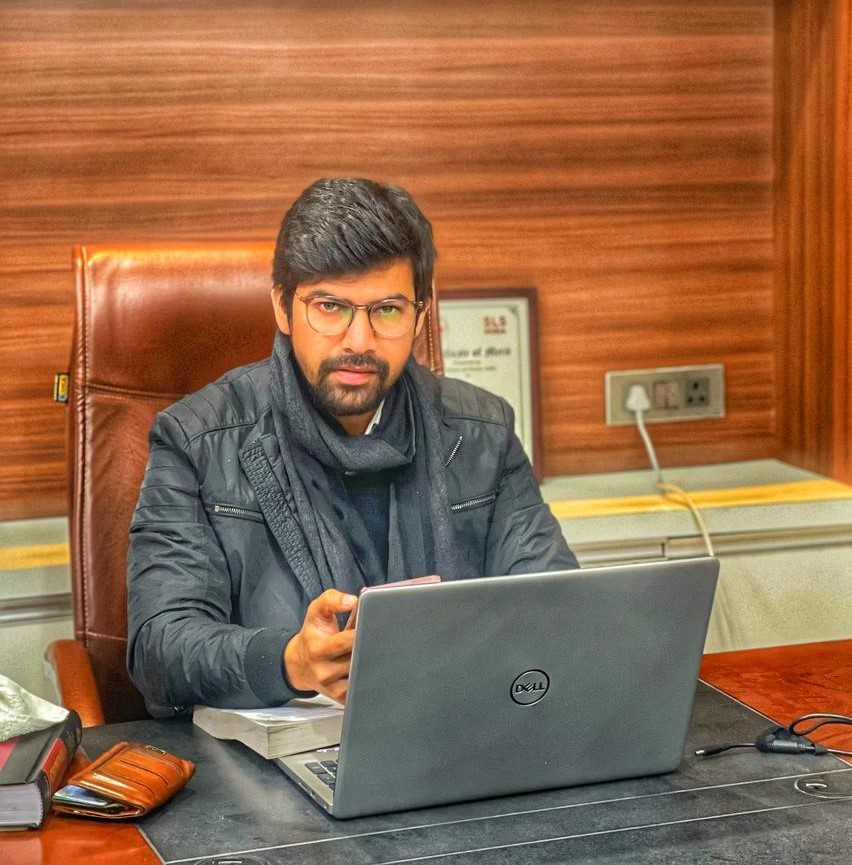
  • “Being an in-house counsel is more than providing legal advice; it’s about shaping business strategies that minimize risks and contribute to the company’s long-term success.” – Yogendra Bhaskar, In house Counsel at DJT Corporation & Investment Pvt. Ltd.

    “Being an in-house counsel is more than providing legal advice; it’s about shaping business strategies that minimize risks and contribute to the company’s long-term success.” – Yogendra Bhaskar, In house Counsel at DJT Corporation & Investment Pvt. Ltd.

    This interview has been published by Namrata Singh and The SuperLawyer Team
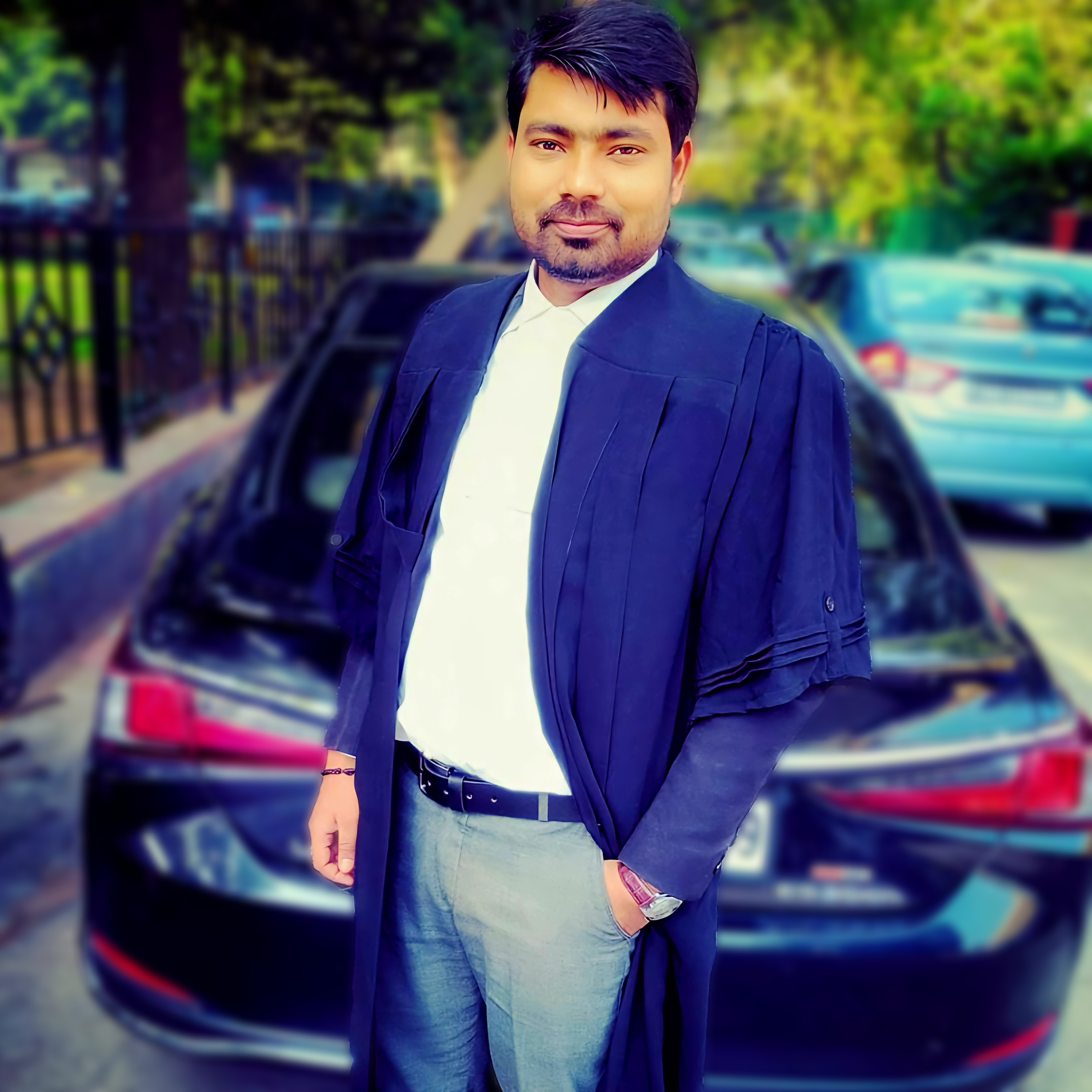
    You’ve had an impressive journey in the legal field. Can you share what inspired you to pursue a career in law, and how did you navigate your early years to build a strong foundation in this field?  

    My journey into law was shaped by a unique blend of family expectations and personal discovery. Growing up in a family with a strong tradition of public service, particularly in the Central Government sector, there was an implicit expectation for me to follow a similar path. My father’s distinguished career as a “Government Officer” set a high bar, exemplifying the respect, authority, and satisfaction that came with this role.

    Initially, I ventured into Aeronautical Engineering in 2008, driven by my background in the science stream. However, after a semester, I realized that this field did not ignite the same passion I had observed in my father’s career. I was missing the sense of purpose and impact.

    This realization led me to pivot towards a field of law that I believed could offer the opportunity to make a meaningful difference in society, much like the government service I had grown up admiring. I saw “law” as a path that could lead to either judiciary or advocacy, both of which aligned with my desire to contribute significantly to society.

    My legal education and early career were driven by a passion for understanding and navigating complex legal systems, to create positive change. I laid a strong foundation by immersing myself in litigation, gaining valuable hands-on experience across various courts and tribunals under the guidance of excellent legal professionals practising in Delhi High Court and Supreme Court. This diverse exposure was instrumental in bridging the gap between theoretical knowledge and practical application, providing me with a comprehensive understanding of law that went far beyond what textbooks could offer.

    During your time at LEX JURIS and SKC & Associates, you handled a wide range of cases across various courts and tribunals. What strategies do you find most effective in preparing for and managing high-stakes litigation?

    When it comes to high-stakes litigation, I believe in thorough preparation using tried-and-true methods. My approach starts with diving deep into the core of the case through legal research and understanding the correct facts of the case. I make sure to note down all relevant precedents that could support my case. A crucial part of my preparation involves anticipating what arguments the opposing side might present and observing myself in his shoes.

    Before stepping into the courtroom, I always ensure a few essential elements are in place. First, I develop a solid case theory – this is our roadmap for the entire litigation process. Then, I create a concise summary document “by hand-noting” that helps me remember all the critical points of our case. Still, I always make a diagram of the whole story of the case on the first page of the file, a diagram structure as it helps me to remember the cruciality of the case. It is also fundamental to gather and organize all the key facts from my client, ensuring nothing important is overlooked.

    Furthermore, understanding the framework and operation structure of the Client’s business helps me a lot to represent my case before the Court as it makes it easy to judge/presiding officer, how this person’s business works and why the dispute arose, which the relief I am asking for my client.

    Sometimes, complex cases require additional expertise. In such situations, I do not hesitate to collaborate with senior advocates. Their experience and insights can provide valuable direction to our litigation strategy.

    This comprehensive preparation method, combining detailed research, strategic thinking, and collaborative efforts when needed, forms the backbone of handling a high-stakes litigation.

    You started your career in litigation, representing clients in court, and later transitioned to an in-house counsel role. What motivated this shift, and how did your litigation experience influence your approach to handling legal matters within a corporate environment?

    My time in litigation was incredibly valuable, and I am truly grateful for the guidance and learning opportunities provided by my senior advocates as well as by the Hon’ble Judges. They gave me a solid foundation and the right environment to grow professionally.

    In my early years as a litigation lawyer, I learned crucial skills about how to structure a case. I discovered the importance of presenting arguments in a way that clearly shows why my client deserves the relief they are asking for. This involves carefully organizing facts, legal points, and evidence before presenting them to the court.

    While practising as a litigation lawyer, I also obtained insights into “why disputes often end up in court”. While there can be many reasons, I noticed that “commercial litigation” frequently stems from two main issues:

    1. Unclear or confusing terms in business contracts

    2. Misunderstandings or disagreements between parties involved in a transaction

    Recognizing these common causes of litigation sparked my interest in preventing legal issues before they escalate to court battles. Thereafter, I decided to shift to the corporate sector so I may construct a better foundation and avoid potential disputes as well as financial stability too. 

    Having transitioned from working in law firms to an in-house counsel role, what key differences have you noticed in the approach to legal issues? Please share your experience.

    In-house work requires a more holistic approach compared to law firm practice. In law firms, I primarily dealt with issues after they had escalated into disputes. As an in-house counsel, I now focus more on preventing legal problems before they arise.

    As an in-house counsel, I am much more integrated into the company’s day-to-day operations and strategic planning. This allows me to understand the business context of legal issues better.

    In a law firm, the focus was often on winning cases. In-house, there is a greater emphasis on managing risks and compliances. I now assess potential legal issues in terms of their business impact and help the company make informed decisions about which risks to take or avoid.

    While law firm work often allows for specialization, as an in-house counsel, I deal with a wider range of legal matters. This requires me to have a broader knowledge base and to be more versatile in my approach as well as I may learn more and more in my career.

    In-house work involves more interaction with various departments and levels of management. I need to communicate legal concepts to non-lawyers and miscellaneous department and further balance legal considerations with business objectives.

    Unlike in a law firm where client relationships might be more transactional, as an in-house counsel, I am invested in the company’s long-term success.

    My litigation experience now serves as a foundation for preventive law. I use my knowledge of common dispute causes, like unclear contract terms, to draft better agreements and advise on potential pitfalls in business decisions. My contribution and suggestions may help my organization to grow in an organized manner

    As an in-house counsel, I am often involved in strategic decision-making processes. My role is not just to provide legal advice but to help shape business strategies that minimize legal risks.

    Overall, the transition has shifted my focus from resolving conflicts to preventing them, from specialized legal work to a more holistic business-oriented approach. This in-house role allows me to use my legal skills in a more preventive and strategic manner, directly contributing to the company’s overall success and risk management.

    The shift from working in law firms to becoming an in-house counsel is much like moving from being a mason to becoming the architect of a building. By being the architect, I can now avoid potential risks and build a good foundation for the entire structure.

    As an in-house counsel, you’ve advised management on regulatory compliance issues. What do you see as the biggest challenges for companies in maintaining compliance, and how do you stay updated with changing regulations?

    As an in-house counsel, I have found that advising on regulatory compliance is much like ensuring our building meets all the necessary codes and standards. India is an evolving country day by day and those rapidly changing regulations across various sectors is a significant challenge. Further, many regulations are intricate and can be interpreted in multiple ways, being complicated sometimes. 

    As still in India for any sector, there is no such thing as a “One Window Solution”, where you may find all the compliances at once, so you have to follow several rules and regulations together without executing any contradiction and also following the interest of the Company. Operating a business in India has several major challenges due to the long processes of compliance and obtaining those approvals. 

    For companies operating in multiple regions, complying with different sets of regulations is often too hectic. Ensuring that this compliance does not hinder business operations is also a big challenge.

    I keep myself updated on specific regulations belonging to my company’s business by continuous learning through webinars, seminars, my consultant newsletters. I also subscribe to legal journals accordingly.

    Maintaining a strong network with professional legal associations and collaborating with external consultants and experts in the legal industry also provides help. Further, now in this Digital era, using technology and the internet helps corporate lawyers to track their compliance management and ensure all aspects of such requirements.

    Legal research and writing are critical aspects of your role. How do you approach legal research, and what tools or methods do you find most effective in ensuring thorough and accurate legal analysis?

    For legal research, I rely on a combination of online databases, legal journals, and case laws. Cross-referencing multiple sources ensures accuracy and comprehensiveness. Even, having such great mentors and seniors also guided me from time to time, whenever required, and through their vast experiences in the legal field, I got a better and wider approach to research and writing.

    When it comes to legal research and writing, I think of myself as a student preparing for a really important exam. This mindset helps me stay thorough and focused.

    First, I start by clearly defining what I’m looking for. This helps me stay on track and not waste time. I use a mix of online and traditional resources. Online databases like indian kanoon, scconline etc. are great for finding recent cases and laws. 

    I always cross-check information from multiple sources. This helps make sure I’m getting accurate and up-to-date information. When I find something useful, I take careful notes. I write down where I found the information so I can easily go back to it later.

    I also try to understand the context of the laws or cases I am researching. It is not just about finding a rule, but understanding why it exists and how it has been applied.

    For complex topics, I sometimes use mind maps or flowcharts to organize my thoughts. This visual approach helps me see connections I might have missed.

    I always aim to write clearly and simply, like I am explaining it to a non-lawyer. This helps ensure that anyone reading my work can understand it easily.

    Finally, I always double-check my work and, when possible, get a colleague to review it. Fresh eyes can catch things I might have missed. This approach helps me be thorough in my research and clear in my writing, which are key to providing solid legal analysis.

    Reflecting on your career journey from a Junior Advocate to an In-House Counsel, what advice would you give to young lawyers who aspire to follow a similar path?

    As a young lawyer, your early career should focus on gaining diverse experience, especially in litigation. This courtroom work will prove invaluable, even if you plan to move in-house later. Developing strong research and writing skills is crucial, as is maintaining an unwavering commitment to ethical practice. 

    Don’t underestimate the power of networking and continuous learning for career growth. Two often overlooked but critical skills are observation and active listening.

    By carefully listening to your clients, you’ll build a stronger case and resolve issues more effectively. Meanwhile, keen observation in client meetings and in court will provide you with a broader perspective on your career. There’s much to learn from watching senior advocates in action and paying close attention to judges’ explanations.

    These experiences can reveal new angles to cases you might not have considered before. Remember, the legal profession is as much about constant learning and adapting as it is about applying the law. By staying curious, ethical, and open to new experiences, you’ll set a strong foundation for a successful legal career.

    As a lawyer, it is beneficial to adopt what we call the “T-shaped” approach to your professional development. Picture the letter “T” – the horizontal bar represents a broad, general knowledge, while the vertical bar signifies deep expertise in a specific area.

    This means you should strive to gain a wide-ranging understanding of various sectors and how they operate. Familiarize yourself with different industries, business models, and how companies function in general. This broad knowledge forms the top of the “T” and gives you valuable context for your legal work.

    However, the vertical bar of the “T” represents your core expertise – the law. In this area, you need to excel. Your legal knowledge and skills should be deep, thorough, and constantly refined. This is where you focus most of your energy and become a true expert.

    You’ve done diplomas in Advanced Contract Drafting and International Contract Negotiation. How have these certifications enhanced your ability to negotiate and draft contracts, and what are the key elements you focus on during negotiations?

    I am currently 60% through a Diploma in Advanced Contract Drafting and Negotiation, which has significantly improved my skills. I have also enrolled myself in 4 other Diploma courses in Law Sikho, which have also started simultaneously.  I have learned to focus on clear language, anticipate disputes, and cover all key elements in contracts. The course has changed my perspective on contract drafting for modern entrepreneurs, showing me how to mitigate risks with crystal-clear drafting.

    It has also enhanced my negotiation skills, teaching me to evaluate the purpose, identify specific terms, consider past limitations, stay informed, listen patiently, control my reactions, stand firm on non-negotiable points, avoid suggesting alternatives, and close negotiations effectively. This learning has transformed my approach to both contract drafting and negotiations, equipping me to better serve my company and clients in today’s business environment.

    The legal profession is constantly evolving, especially with the rise of digital technologies and changing regulations. How do you stay adaptable and continuously improve your skill set in such a dynamic environment?

    To stay adaptable and continuously improve my skills in the dynamic legal environment, I employ a multifaceted approach. I prioritize ongoing education through formal courses and diplomas, as evidenced by my current studies in advanced contract drafting and negotiation. I embrace new technologies and understand their impact on legal practice.

    Adopting a ‘T-shaped’ skill set, I maintain broad knowledge across sectors while deepening my legal expertise. I adapt my communication and drafting skills to meet modern clients’ needs, focusing on clarity and efficiency.

    Continuously refining my negotiation techniques, I emphasize understanding business objectives and finding mutually beneficial solutions. I network with peers, attend conferences, and stay open to emerging areas of law. A client-centric approach keeps me attuned to changing industry needs, while I also develop crucial soft skills like emotional intelligence and problem-solving.

    Regular reflection on my experiences, such as my evolved perspective on contract drafting, ensures I am constantly improving and providing relevant, valuable legal services in this ever-changing landscape.

    Law can be a demanding profession. How do you manage the balance between your professional responsibilities and personal life? What strategies do you use to maintain your well-being while handling high-pressure legal work? 

    Balancing professional and personal life is a constant challenge, but it is crucial. To manage this, I employ several strategies. I prioritize effective time management, set clear boundaries, and practice stress-management techniques like meditation. Maintaining a regular exercise routine and a strong support network also helps me navigate the high-pressure nature of legal work. Additionally, I ensure I take regular breaks and vacations to recharge.

    Rather than adhering to a standard corporate culture, I believe in focusing on the desired outcomes for the company. This means I do not feel the need to be bounded by a rigid 9-to-5 framework. Instead, I concentrate on resolving issues and finding a healthy balance between my professional and personal life. Ultimately, maintaining good mental health and a stress-free mindset allows me to better overcome the hurdles faced by the company.

    Get in touch with Yogendra Bhaskar

  • “This is the era of technological dynamism where the web, blockchain, and AI are making a lot of changes in the world. The legal field is not an exception to this and a lot of things are happening in legal profession” – Ajmal Khan Nadakkal, Managing Partner at ABS Partners

    “This is the era of technological dynamism where the web, blockchain, and AI are making a lot of changes in the world. The legal field is not an exception to this and a lot of things are happening in legal profession” – Ajmal Khan Nadakkal, Managing Partner at ABS Partners

    This interview has been published by Namrata Singh and The SuperLawyer Team

    “This is the era of technological dynamism where the web, blockchain  and AI  are making a lot of changes in the world. The legal field is not an exception to this and a lot of things are happening in both the legal world as well in the legal profession. So, obviously the lawyers who are the forerunners in this  profession are adopting this technology induced change and they can only survive by doing that.My advice to the young generation of lawyers would be to adopt this technological change very fast. They should be the fastest runners, otherwise, they will be out of the race. Especially AI is causing a lot of job loss in the legal profession..”

                                      – Ajmal Khan Nadakkal, Partner & Head of Corporate Khalifa Bin Huwaidan Alketbi.

     Mr.Ajmal Khan Nadakkal  is based in Dubai and he has more than two decades of experience with a wealth of expertise in setting up regulated and non-regulated firms all across Europe, Africa and the Far East, as well as in major cities and states in India.  He has a proven track record of handling complex corporate issues, including compliance and anti money laundering policies, taxation matters, and real estate transactions to name a few.

    We would like to start our journey of question answers by asking you what inspired you to pursue  a career in law, and please share your story of reaching to the top.

    I’m a first generation lawyer. There are no other lawyers in my family and my family circle. From my school days, I had a passion to become a lawyer. I don’t know exactly what  the reasons are, but there was definitely one teacher who really influenced me and he is the person who persuaded me to become a lawyer. So from those days, I was always thinking about how to become a lawyer. Then after my pre-degree, I tried my law entrance exams and got into a law college. It was definitely not an accident. I should be honest about the fact that I came to this profession by choice.

    So when this was an inspired choice and you made it with all the diligence, what prompted your decision to transition from practicing law in India, then to Dubai as well?

    After college, I started my career in the local courts- District Court, Manjeri. I practiced for almost six to seven years there, in Manjeri and other  Courts and then I got an opportunity to switch to an  in-house legal counsel role  in Bangalore. In fact, that is the reason I got to a different domain of legal field. When I took up that opportunity, I got a lot of exposure. I traveled a lot across India to handle various complex legal issues for the group, to meet regulatory authorities. Also, I traveled outside India for investment facilitations. regulatory setting ups, then also got the scope of  liaison with various international law firms for handling their legal issues. This gave me a really good exposure and then I felt, international legal opportunities are bigger and I should explore more if I can get an opportunity.Luckily again I got an opportunity in the UAE. Then I took up that assignment and came to Dubai. That is how I shifted.

    What difference have you seen in the kind of practice we do in India as lawyers and the kind of practice you may have seen in Dubai? And  when you compare these two how do you support this transition? Let’s say if someone obviously wants to move, what kind of lookout they should have in making that transition because you have smoothly sailed this. 

    The Indian legal system is more traditional, which is derived from different customs and different complex laws. It took centuries to evolve that legal system. So it has its plus and minus also. We always carry that baggage of our history, even in the legal system, which causes a lot of, you know, delay in the legal proceedings and complexities. Even though now we are trying to make big changes by technology ventures and all, but still the Indian legal system is too complex and people are facing a lot of difficulties, especially the delay in the litigation, dispute resolution, then red tapism everywhere. 

    We cannot avoid this and that is the problem.When I switched to UAE, I realised that this system does not carry much history. It is a new law and new entities, a new legal system. It was a Sharia backed legal system, but when the international business opportunities came to UAE, the rulers were really pushing the business opportunities and trying to be the global hub. During this time, they developed the legal system and the laws also to that standard, very fast developing and, technologically advanced and which always cater the needs of the business people. They gave priority to the business people who are going to come to the UAE and invest. So accordingly they made rapid changes and that favours  a person who is making  strong decisions, as  there is nothing to curtail that speed. This is because one person can take the decision here without being impacted by  many complexities.

     That is the major difference. It’s all new and transparent, moving at a very fast rate, which makes the legal dispute resolution effective.  People get a quick solution to their problem when they are approaching the courts and dispute resolution authorities. This helps them to continue with their business further. In our place, sometimes it even takes decades, especially in case of family disputes. So these are major differences I could feel in the two domains. So for somebody who wants to shift from India to Dubai, my advice is that there are a lot of opportunities here, and you can cater to the world and you can feel the international legal complexities here because of the presence of almost all the nationalities, whose  disputes range from personal issues to business disputes. Now because of the estate planning and foundation trust systems here,people from different parts of the world are setting up the foundation and trust here taking advantage of the easy environment,giving a lot of opportunities to new lawyers.

    The only thing is they have to be very fast in upgrading themselves and follow the new developments in the legal field, especially, with the help of technology. Technological advancement is also very much required, which is something the Indian legal system is still not that advanced for which even the law colleges in India are also lagging  behind in this. So these are the things they should always keep in mind when they are planning to switch to Dubai.

    You have talked quite a bit about dispute resolution mechanisms as well, and you specialize in managing these disputes, especially related to commodity derivative trading, investments, forex, gold, and bullion trading as well. We would request you to elaborate a little bit about these areas and their significance in the legal field, because it is an absolute niche of the niche field and most of us are eager to understand these fields and try and see the future in it.

    I was also very new to this domain when I joined the in-house team in Bangalore, but that group I was associated with was into online trading, forex, commodity derivatives, securities, and that kind of a domain. So, obviously I happened to handle a lot of that kind of complex issues, disputes, crisis management and  learned about trading -forex trading ,leverage trading And futures trading. I had  to learn all these things. In fact, I would say I started an  account   and lost some money and learned from that experience too because without practical training this is almost impossible. After a year or two I realised that I was really struggling to cope up with this environment so I decided to start an account in trade because that gave me a lot of insights, how the positions have to be taken, how the leverage trading happens, how the margins are called for.  This gave me a lot of input when I switched to Dubai and started my legal career. The legal profession here really helped me because UAE is also a place of online trading, leverage trading and all people sitting here are trading across different platforms across the world and also here.

    In India, though there is a clear regulation about online trading licensing and regulation which all has to happen, still people are using shortcut methods and opening up phishing companies to fraud like taking people’s money and then vanishing. Many people lose their money because they don’t know what this regulation is, they are just fantasized with this leverage trading and the opportunity to make big money swiftly.

    The marketing people always give them the positive and never the negatives. So they open the account and start trading. Then in the demo, they will show some profits while in real time they will lose. They can’t even pump in for the margin calls, so obviously they will lose the money.

    So many such disputes came and which came to me. So as a person who understands this domain, whenever a client comes and discusses this with me, we will get the synergy. And I have managed a lot of such disputes. In many of the issues, I managed to get back their money and in some of the cases,  the accused were convicted, definitely in many of the cases, the people who vanished, we cannot do much, but still we can educate the people and also the companies who wanted to regulate and do it in a streamlined way.

    They also started approaching us because of their domain knowledge. So this has become a real opportunity for me and also my team members to learn about this leverage trading and domain. Now we have started a division where we are setting up regulated entities in UAE and abroad because of this domain knowledge.

    What kind of critical factors do you consider while dealing in corporate structuring and restructuring? Because they are definitely out of reach of most of us. We don’t understand that, or it is not taught in schools or colleges. Now, how do you see that platform can be built in order to make sure that these subjects reach to most of the students so that you also get a little workforce because as I can understand having that kind of the niche, you end up having very limited number of people with that understanding? So how do you see that happening anytime sooner in future?

    Corporate structuring is a very important aspect of the business. Especially when somebody is starting a business, they should structure their business in a proper legal manner. What entity they should start, where is the destination they should start the business, what kind of license they should take up, and how the shareholding has to be allotted, and how the control mechanism has to be managed.All these kinds of things are very, very crucial when somebody starts a business. So, since we have a lot of this experience, we are able to advise all the entrepreneurs properly how to structure their business in the initial phase. Here, one thing, in UAE, most of the people who came here in seventies, eighties and nineties. Most of them are not very educated. They came here chasing their dreams. They faced a lot of struggles, hardships in the initial phase. They worked and then they started small businesses  with whatever available corporate sector at that time was available, the legal corporate sector, then they started it like a civil company or a sole establishment and so on.

    Then their business ventures grew really  fast, beyond their imagination. Many of the big businesses here have all started like that and after reaching this stage of growth ,they are apprehensive about the fact that  when the next generation is going to be onboarded the legal sector would not be intact and that it should be rectified as well. This is a very critical position because already the business is loaded and there is a lot of exposure . From here if they want to restructure their existing legal corporate system, this needs real advice, a proper advice with experience which only experienced persons can do because they need real time solutions.

    It is in this area that we advise a lot of clients now who are passing their business to the next generations -How to structure the holding company, create foundation and trust to manage their will and wish in the subsequent generations and if the next generation is not interested in the business and a working partner is onboarded, how to sector the company in that way.

    We also advise on creating an ESOP by stimulating the business through that channel.These are all things in which we really need proper advice and  here liesour experience, that we gathered from the last 10 to 14 years of having real time experience in Dubai.

    You started as a first generation lawyer, and now you own a company which works for all these corporate structuring, restructuring and licensing agreements. We would request you to elaborate on that as well.

     I was part of a local law firm as a partner for the last 10 plus years and then recently, last year, we got a license of a legal consultancy in Abu Dhabi, which is named ABS Partners Legal Consultancy, otherwise the mainland was not allowing legal consultancy licenses.  This is a recent development and we are one of the very few lawyers who got this license in our own  names. In that we strategize these kinds of activities, especially this corporate structuring, estate planning, regulatory licensing, trademarks and intellectual laws, all these specific areas, especially the central bank licensing, Crypto licensing, VARA and other regulatory ESCA. So those kinds of activities we do in that legal consultancy license, which is based in Abu Dhabi.

    Sir, about the ABS partners, which is doing this kind of work and you are one of the very first lawyers you have got in Dubai, the kind of transition you have seen when you were doing it in India as an Indian lawyer and when you are doing it in Dubai, when has it started? Because if I remember correctly, very recently, Dubai introduced its legal system in January this year. So would you care to elaborate on that as well, please?

    In the UAE, Dubai and Abu Dhabi are the major hubs. Dubai is still very strict on issuing legal consultancy licenses in the mainland to foreign lawyers. They have a regulation, but it is a bit stringent. It is not easy to get a license there, unless we have three international branches and all. But Abu Dhabi relaxed it a bit in the last year. We got a license almost a year back now. It was last year they introduced this and maybe the second or third license is issued in our name and  we should have 10 plus years standing in the UAE. Since me and my partners had this eligibility criteria  we applied and got it and  now we are developing that to a different level, towards a niche area.

    I have to cater to the niche area, which is not much explored by the other lawyers and law firms.

    So while you are doing all these things, which are very much corporate centric,  you must be going through a lot of mediation and conflict resolution techniques also. How do you make sure that you employ effective techniques for these and what kind of further assistance do you provide?

    Because in mediation, it’s not only the end of the case, it’s like, it is just a kind of start if there is any conflict over there. So how do you cater to such clients? And there are clients who must be very, very, very big and not that approachable. How do you make sure that everything is done in the best manner possible for them?

    Basically, we are business lawyers and we have a very good connection in the business world. So obviously when some issues happen, some disputes happen, they will ask us for solutions. Obviously always the first method is to try and  amicably settle the dispute.

    While getting into an amicable settlement area, I always try to understand the client psychology. We need to understand the client’s situation as of now. What is his financial capacity or whether he’s really in a bad shape or this dispute is derived from the ego of the business people. This kind of initial knowledge is what we need to gather, only then can we  effectively mediate a dispute.  When it comes ultimately, what I realized is everybody, if we can convince them properly to avoid a lengthy litigation and a time consuming process, they will always try to find a way for mediation and settlements. 

    Only in mediation and settlement, we should not have any agenda. We should try to resolve the matter in accordance with the requirements of both the people. So there, our expertise and experience again, we can give different options. If one option is not comfortable for the person, we can give another option.This is all by experience that we can now give different options and scenarios where we can effectively do dispute resolutions. And we have done quite a lot of such dispute resolutions as  well.

    Can you share any kind of case which can be very educating for learners as well. If at all you can.

    Yeah. Recently, one scenario is where a local stake was involved. The locals were very adamant while the other people were the actual investors. But the local was just a sponsor, with some agreed terms. This was a big business house, and this was almost on a deadlock because both were fighting.As it came to me, I tried to understand the actual reason behind this local person’s issues and  then I realized that he has a genuine cause for this as whatever the investors agreed with him initially, this was not honored.

    Conveniently, the locals were not asking, not demanding, so they were not giving as well. But when they are parting from the partnership, obviously he asked for his latkes to be honoured. Then I convinced the other party, instead of losing the entire business for a small amount, honour the right because all these years, almost 20, 25 years, he did justice. It was in his name, but still he helped the investor in all ways to build the empire. So with this kind of convincing, the dispute was settled very smoothly and they are still good friends now.

    I’m just a reason for it as actually there is not much difference between them. This is where sometimes a mediator is required so that the roles can be effectively played by knowing the psychology of the people. That’s it!

    Sir, in all this, there is a lot of technology disruption happening even in the legal field worldwide. How do you see it is going to work out for us lawyers on national and international platforms both, as well as what kind of  areas do you see are going to come up or are already there, which are bringing a different kind of practice, even in business laws or in business entities?

    This is the era of technological dynamism where the web, blockchain  and AI are making a lot of changes in the world. The legal field is not an exception to this and a lot of things are happening in both the legal world as well in the legal profession. So, obviously the lawyers who are the forerunners in this profession are adopting this technology induced change and they can only survive by doing that.My advice to the young generation of lawyers would be to adopt this technological change very fast. They should be the fastest runners, otherwise, they will be out of the race. AI is causing a lot of job loss in the legal profession.

    But to me, as I have realized, AI is also giving a lot of opportunities to lawyers in terms of precedence search, the formats, many of the things, especially the legal research, everything is made very easy now because of the AI advancement and these kinds of things, the new lawyers should learn. They should be very fast in learning the new technologies, especially the blockchain, the web.  Now, it is going to be a different era than the web. So with these technology adoptions they should do and then cope with the new trends in the law and in the technology.

    Sir, how have you driven your life with these kinds of philosophies? And would you care to share some of them with us for us to get inspired as well? How have you lived your life and how have you achieved all this in your legal career?

    I’m very savvy with technology, but what I do is I employ associates with good knowledge of technology and I learn from them.There is no hesitation in learning from the juniors when it comes to technology because they are my masters and there’s no ego on this. We should learn from the new generation. My son teaches me about new technology. My daughter teaches me about this. This should be our approach when we are not good in something we should learn from who is good in this. 

    Then about the philosophy of my career, we should be very transparent and we should not compromise our professional ethics. However, rewarding the other opportunity is there. We should not compromise our professional ethics. If we compromise, that will give you some gain, short term gain, but it will never give you a long term mileage.

    Your professional  advancement is possible only when you build a reputation. That is very crucial, which I always try to stick on

    How do you make sure that you have your own time for your mental health, for your personal life and obviously for other activities as well?

    Yes,  the personal space is for my family and  my small entertainments. I always kept that space, from the beginning itself. I like traveling. I like Hindi songs, then family time. I always try to find time for this. Even though my family will always complain but still,  I’m always trying to find some time, especially two days in a week. I always try to give my  family time.

    Sir, thank you so much for such positive thoughts and sharing it with us. And it has been a learning experience that there are certain niche fields which our learners can look up to and can reach out to you as well.

    And once again, thank you for agreeing to be on SuperLawyer YouTube channel. And it has been a pleasure, sir. Thank you so much for being here. Absolute pleasure

    Get in touch with Ajmal Khan Nadakkal–

  • “Treat every task with utmost respect and diligence. Embrace new challenges and venture into unfamiliar legal domains, as this exposure expands both your legal knowledge and general awareness.” – Nikita Misra, Partner at Alpha Partners Dubai & Founder of Nicknanimous Consultants

    “Treat every task with utmost respect and diligence. Embrace new challenges and venture into unfamiliar legal domains, as this exposure expands both your legal knowledge and general awareness.” – Nikita Misra, Partner at Alpha Partners Dubai & Founder of Nicknanimous Consultants

    This interview has been published by Namrata Singh and The SuperLawyer Team

    Could you share with us what inspired you to pursue a career in law, and how did your journey begin back in 2008 in Delhi to your current role?

    I am the first born lawyer in my family. However, I feel my grandfather and my father could have been great lawyers themselves. They had sharp acumen and while growing up I saw them discuss a lot of legal issues at home and I was enthralled by how laws, policies, and regulations shaped the world around me.

    By the time I finished school, my mind was made up. The only question was what breed of lawyer I’d become. With India’s economy taking flight, corporate law stood out as the frontier practice – this new engine of business and innovation. I have worked in some renowned law firms like Indus, Mine & Young and worked on some good transactions. I have also worked in a startup as a legal manager which further helped me hone my skills as a lawyer and deeper understanding of the challenges faced by startups.  Actually this has helped me fit perfectly into the environment of an in-house Legal Counsel for a big company in India, which has been a great experience for me personally. Post my move to Dubai in 2018, it was a slow start to start my career, it was kind of a restart. However, I was lucky to get a job here and started  working as a corporate consultant for a firm which was more focused  on litigation and arbitration matters. Thereafter, I got this amazing opportunity to head and build an Indian based law firm in Dubai and since then I have managed  to work on various corporate matters  and dive deeper into the corporate legal world in the UAE. It is with this opportunity that I was able to create network and build relations and eventually led to starting my own consultancy firm in Tashkent, Uzbekistan where I have been working on a big litigation matter and also consult investors/business locally and even those looking at CIS as a territory to expand their business beyond UAE/India

    During your time at Indus Law Associate and Mine & Young, what were some of the key transactions that shaped your understanding of corporate law?

    When I first joined Indus Law, a boutique firm punching well above its weight, I had no idea I was opening a gateway to the global marketplace. Despite its modest size, the firm’s client roster read a few multinational corporations, so right out of the gates, I was dealing with cross-border transactions. During my time at Indus Law, I worked on a lot of JVs and takeovers  by International companies of Indian companies and vice versa, and I vividly remember the adrenaline-fueled all-nighters, the painstaking combing through contracts with fine-tooth cares – all amidst a whirlwind of takeovers, mergers and acquisitions. Those years were quite draining yet undeniably exciting. I made countless mistakes, learned on the fly, and had my conventional thinking upended daily. But I wouldn’t trade that experience for anything. It allowed me to get an insight and exposure to the globalized marketplace before age 30. 

    Which made my transition to a real estate law firm Mine & Young. After operating at startup speeds, I was now joining a firm which was one of the pioneers in real estate law.  From high speed transactions I was now dealing with slow paced but high end and exclusive luxury property matters. Yet this seeming 180-degree pivot helped me develop an entirely new mastery that perfectly complemented my prior style and a whole new world unlocked. But it was in bridging those extremes where I found my greatest advantage as a lawyer.  Constantly stretching between these dual disciplines was grueling, but also tremendously rewarding.

    What motivated you to start Nicknanimous Consultants, and how has your experience been in balancing your role as a corporate lawyer in Dubai while managing your consultancy firm in Tashkent?

    Well I had been visiting Tashkent regularly as my mother was working there.

    And each time I visited the place and met the locals, I realized that the country had  a lot of potential for growth. I quickly understood that any business that would enter Uzbekistan now, has the potential of holding a larger share of the market and expanding its business further into other CIS countries. Uzbekistan in the last recent years has been very welcoming to foreign investments and new FDI policies have been formed which are more investment friendly. Thus motivated me to start my own Consultancy through my own networks and relationships. I can help any business looking to expand, or explore Uzbekistan as a market and provide a complete end to end solution to set up their businesses there and at the same time giving local businesses an opportunity to explore UAE or India as a market. 

    I feel both the roles are interlinked. As a corporate lawyer, my role is intrinsically linked with understanding the nuances of my clients’ businesses. By working closely with clients, I gain deep insight into the challenges and opportunities they face. This allows me to not only provide legal counsel, but also connect the dots and advise on potential business strategies. My ability to understand the client’s business landscape puts me in a unique position to facilitate connections with potential investors or partners that could aid in their growth and expansion plans. Rather than merely offering legal services, I strive to be a comprehensive advisor – leveraging my network and business acumen to unlock new avenues for my clients’ success beyond just the legal realm. This synergistic approach provides comprehensive value that transcends traditional legal counsel.

    Moving to Dubai in 2018 marked a significant transition in your career. What were some of the biggest challenges you faced, and Can you elaborate on the unique legal and business landscape in the UAE, especially how it differs from your experiences in India?

    Yes I faced a significant transition when I began practicing as a corporate lawyer in the UAE back in 2018. At that time, the commercial laws were not as investor-friendly, and there were fewer SMEs entering the market compared to today’s booming ecosystem. However, I  recognized that this marked the beginning of a new era, and I think I am fortunate to witness and adapt to this transition and growth in the country. One advantage I feel is that if a corporate lawyer has substantial exposure and transactional experience from practicing in India, which has undergone its own boom, it becomes much easier to establish a practice in the UAE now. This is because free zones, especially like ADGM, and some of the UAE corporate laws,have closely adapted common law systems in recent years, aligning with the legal frameworks familiar to lawyers from common law jurisdictions like India.

    The primary challenge I think is the need to consistently stay updated on the rapidly evolving legal landscape in the UAE. As the country progresses at a rapid pace, new rules, regulations, and bye-laws are introduced frequently. Corporate lawyers must remain vigilant and continuously educate themselves to provide accurate counsel aligned with the latest legal developments. Overall, the opportunities are available for corporate lawyers in the UAE’s flourishing business environment, provided they can navigate the dynamic regulatory changes and leverage their prior exposure to common law practices.

    Aside from your professional life, you also hold a diploma in Interior Design. How do you balance your personal interests with your demanding career, and does this creative side influence your work as a lawyer?

    As a child, I was captivated by well-designed spaces and distinctive architectural styles from various eras and places. Whenever I traveled, I eagerly anticipated witnessing different architectural marvels that would fuel my fascination with interiors and design.

    When the COVID-19 pandemic brought the world to a standstill, I seized the opportunity to explore my artistic side. I decided to formally study interior design, finally indulging my long standing passion.

    I think in the legal field, creativity manifests itself in structuring intricate transactions, drafting contracts for innovative business models, and formulating strategies to navigate complex legal battles. While I agree law is firmly rooted in theory and research, the application of legal knowledge demands innovation and creative problem-solving abilities.

    It is my dream to ultimately transition into the interior design industry as a second career after 50 years of age, following my tenure as a lawyer, leveraging the design skills I’ve cultivated alongside my legal training.

    Nurturing personal creative outlets alongside one’s primary vocation is essential for a fulfilling life. My journey exemplifies how diverse interests can coexist, potentially converging into enriching experiences that span both professional and personal realms.

    I hope my story inspires others to explore their unique combinations of passions and professions.

    With over 12 years of experience, what advice would you give to young lawyers who aspire to have a versatile and dynamic career like yours?

    The fundamental lesson is that hard work and diligence invariably pay off, regardless of the nature of the task at hand. One should never underestimate the value of any given work assignment, as those skills may prove invaluable at a later stage in life or career.

    I vividly recall my time at Rainmaker, which presented a vastly different work experience that required a strong emphasis on client relationship building. At that juncture, I naively perceived this as a waste of time, believing I should focus solely on expanding my legal knowledge. However, in retrospect, those very skills in client relations that I honed during those days have become invaluable assets nearly a decade later.

    Fresh out of law school, many of us aspire to become partners at firms or establish our own practices, without realizing the multitude of skills required beyond legal expertise to build and sustain a successful practice. Client relationships, business acumen, and interpersonal skills are equally crucial.

    To young lawyers, I would advise treating every task with utmost respect and diligence. Embrace new challenges by venturing into unfamiliar legal domains, as this exposure expands both your legal knowledge and general awareness. Staying updated, maintaining an inquisitive mindset, conducting thorough research, and continuously acquiring new skills are imperative.

    Networking is crucial in the legal field. How have you built and maintained your professional relationships across different countries, and how has this network benefited your clients?

    Networking is a critical foundation for any entrepreneur or professional looking to create their mark, including in the legal field. It  begins by actively attending and participating in industry events, staying updated on developments, being part of relevant forums,and most importantly, taking the initiative to proactively engage with others. Through years of my working experience, I’ve realized that many individuals, including lawyers, hesitate to approach and converse with new people at networking events due to shyness or apprehension. However, I must say that the UAE’s business landscape, which heavily relies on networking, offers a welcoming environment that helps newcomers overcome this hesitation. Additionally, being well-versed in one’s subject matter is crucial to maintain others’ attention and establish initial trust. 

    Even though visibility is paramount in the initial stages, over time, the quality of one’s work and the ability to maintain strong client relationships become the driving forces behind success and growth. In my case, referrals and the network I’ve built by meeting lawyers in the UAE, Uzbekistan, and India have been invaluable in expanding my reach and clientele. Effective networking involves a combination of active participation, subject matter expertise, visibility, consistent high-quality work, and nurturing professional relationships. Basically it’s an ongoing process that requires persistence, confidence, and a genuine interest in connecting with others in the industry. 

    Working across various jurisdictions, from India to UAE and Uzbekistan, what are some of the key legal and cultural differences you’ve encountered, and how have they influenced your approach to legal practice?

    Each new territory has its own fresh challenges – different legal codes, cultural norms, business practices. 

    The UAE has a dual system comprising both Civil and Sharia Laws. However, in recent years, The free zones, especially the ADGM Courts, have directly applied English common law principles in matters brought before them. This development is advantageous for Indian lawyers who are familiar with the common law system.Additionally, many new corporate laws in the UAE mirror common law principles, making it easier for Indian lawyers to practice in the region. The familiarity with the legal framework streamlines their ability to navigate the UAE’s legal landscape.

    On the other hand, Uzbekistan follows a civil law system, which differs significantly from the common law tradition prevalent in India. Despite both the UAE and Uzbekistan being Islamic nations, Uzbekistan’s legal system, local laws, and traditions are markedly influenced by its Soviet heritage, setting it apart from the UAE’s legal landscape.This contrast between the UAE’s increasing alignment with common law principles and Uzbekistan’s civil law system rooted in its Soviet past presents an interesting dynamic. It highlights the need for legal professionals to adapt their expertise and understanding to the nuances of each jurisdiction’s distinct legal traditions and influences.Navigating these varied legal systems requires a deep appreciation for the underlying principles, cultural contexts, and historical factors that have shaped their evolution.  Even though all the three nations’ legal systems are very different from each other,  yet that has  become the thrill of the chase for me. Cracking the legal DNA of each new environment, then skillfully integrating it into transactions is exciting for me.

    Your experience with startups is extensive. What common legal challenges do startups face, especially outside India, and how do you help them navigate these issues?

    One of the most prevalent mistakes observed among startups is the tendency to neglect or overlook the importance of legally sound agreements, particularly during the seed funding round involving investments from family and friends. Failing to seek proper legal advice on structuring these investments can lead to complicated arrangements that deter future investors until the structure is properly rectified, thereby delaying business progress. It is crucial for startups to seek legal counsel before entering into any investment arrangements to ensure seamless operations.

    For startups entering the UAE market, a common challenge is the lack of understanding regarding the appropriate business license to obtain based on their specific business activities. Many startups, unaware of the local laws, are often misguided when comparing the legal environment to their home countries or other jurisdictions they are familiar with.

    This is where we, Alpha Partners, can play a pivotal role in guiding startups through the process of navigating and selecting the correct business structure that aligns with their objectives while adhering to legal restrictions. Comprehensive legal assistance is essential not only during the initial setup phase but also for ongoing support with general corporate commercial agreements and transactions post-establishment.

    By addressing these challenges through timely legal guidance, startups can avoid costly missteps, ensure compliance, and establish a solid foundation for growth and attracting future investments. We at Alpha Partners, play a critical role in helping startups navigate the complexities of the UAE’s legal landscape and structuring their business operations for long-term success.

    Get in touch with Nikita Misra-

  • “Don’t ever lose hope, be patient, and focus on your work, as there are no shortcuts in this profession.” – Himanshu Tyagi, Advocate-on-Record at the Supreme court of India

    “Don’t ever lose hope, be patient, and focus on your work, as there are no shortcuts in this profession.” – Himanshu Tyagi, Advocate-on-Record at the Supreme court of India

    This interview has been published by Namrata Singh and The SuperLawyer Team

    Your journey from Meerut to becoming an Advocate On Record at the Supreme Court is quite inspiring. Could you share some pivotal moments or challenges you faced during your early years in Delhi, and how you overcame them to establish your practice?

    Once you step out of your comfort zone every first thing seems to have its own challenges. However, on the professional front I can say that I decided to take the plunge to the Capital with dreams and hope to make it big, in spite of not having any significant father figure in the field of law. Initially the first question which was required to be answered was from where to start as there was hardly anyone to suggest or guide what are the choices one could make while entering the profession. I made my choice and started with litigation as I had attained little experience while being associated with the chambers of Mr. Ravi Shanker Tyagi for a very brief period in Meerut Bar which was initially very helpful as Courts in Delhi are much more refined in terms of infrastructurally and in other avenues as well.

    Your journey as a first-generation lawyer is truly commendable. What were the key principles or values that guided you in your career, especially during the initial stages when the path might have been more challenging?

    Yes, being a first generation lawyer is a very difficult choice to make especially when you are in litigation. But all that I can say is don’t ever lose hope, be patient and focus on your work, as there are no shortcuts in this profession, the only way you can accelerate is through your abilities to make hard choices and by burning midnight oil.

    Becoming an Advocate On Record involves rigorous training and experience. How was your time with Retd. Justice S.R. Singh shaped your understanding of the legal field, and what key lessons did you carry into your independent practice?

    I was fortunate enough to join the Chambers of Retd. Justice S.R Singh ( Retd. Judge from Allahabad High Court) Sr. Advocate in the year 2009.  After working with Mr. Singh for almost two years and having gained opulent experience by understanding the nuances and intricacies of legal field along with drafting, filling and everything that the field entails.

    One judicious adage told to me by my very veteran Senior was that “ Vakalat is your first wife” if you want to do justice to your profession and I have ever since imbibed this in my practice till date and I am always grateful to all my seniors and colleagues from the chamber and outside the chamber for always guiding me in the profession. 

    As Ex. Additional Advocate General for the State of H.P., you’ve handled significant cases. Can you share an experience where your role had a meaningful impact on the state’s legal representation, and what insights did you gain from that experience?

    It was a very enriching journey while discharging my duties as AAG for state government before the Hon’ble Supreme Court as such opportunities help you bring the best out of you. As while holding such an esteemed office one has to be very candid with all the briefs while representing the State before the Court.

    Handling cases involving state entities like the Himachal Road Transport Corporation (HRTC) requires a nuanced understanding of administrative and constitutional law. Could you elaborate on the challenges faced and strategies employed in representing HRTC in various legal matters?

    It is always challenging to represent Road Corporation before the Hon’ble Courts as the mostly the matters pertaining to the Corporation is of higher monitory significance be it MACT matters or service matters. What I can say from experience is that you are required to be more updated with the law and recent judgments so that you can provide better assistance to the Hon’ble Court.

    Handling criminal matters requires a different set of skills. Can you share an experience from a criminal case you’ve worked on, discussing the complexities involved and the strategies adopted for a successful outcome?

    Through my experience in handling criminal matters I must say one should have a very fair understanding of criminal jurisprudence as most of the criminal matters involve personal liberty which is of utmost importance.  During my time at bar I have done several criminal trials, appeals but what always challenges me is the stage of cross examination as in my view Cross examination in any criminal matter is the heart and soul of the Trial.

    Apart from your legal pursuits, do you have any personal hobbies or interests that you find to be a great source of relaxation or inspiration?

    I can say visiting places and spending time with family and friends keeps me motivated other than work. 

    Coming from a small town like Meerut and making a mark in the legal profession in Delhi is undoubtedly a significant achievement. Could you share some extra efforts or unique strategies you employed in your journey to overcome any perceived challenges or biases associated with being from a smaller town?

    Once you make your mark , and in this industry that is possible only when you garner some accomplishments in your name. The bias associated with a small town only remains so long as you let it affect your mental make up. If you are determined enough, the tag of coming from a small town and making it big in the capital only adds to your reputation , which at the same time works as an inspiration for people coming from the same background, and are hesitant in pursuing their goals. My only advice to the budding generation of lawyers is to fight your demons and always be hopeful and take each day as it comes. The road to success may seem endearing but it sure is fruitful at the end.

    You emphasize the importance of hard work and dedication in your career. What advice would you give to the current generation of aspiring lawyers to navigate the challenges of the legal profession and build a successful practice?

    I can vouch for the fact that hard work is the key “what you are seeking is seeking you”. I make my juniors understand that to be candid with clients and accurate in analysis and strict in study, you will achieve whatever you aim for as there are no shortcuts in this profession.

    Having experienced both your own student journey and now interacting with the current generation, what notable differences do you observe in the approach and mindset of today’s law students compared to your time? Are there specific areas where you believe current students could focus on improvement to excel in the legal profession?

    The major shift that I witnessed in the mindset of the students in comparison to when I was one, is the availability of resources and better infrastructure that can help them achieve their goals with a lot of help which is easily available, of which there was a dearth during our college  days. Accessibility and availability are the major factors that determine the early years in one’s legal career as initially apart from all the teachings done at college level, the practical learning is also very vital if you wish to stay in this field.  

    Get in touch with Himanshu Tyagi-

  • “It’s not just about legal knowledge; it’s about fostering a sense of dignity, self-worth, and the belief that they deserve justice” – From Courtroom to Community: The Inspirational Journey of Advocate Trishla Malik, Director, AmicusLegal Consultancy

    “It’s not just about legal knowledge; it’s about fostering a sense of dignity, self-worth, and the belief that they deserve justice” – From Courtroom to Community: The Inspirational Journey of Advocate Trishla Malik, Director, AmicusLegal Consultancy

    This interview has been published by Namrata Singh and The SuperLawyer Team

    Your journey reflects a unique blend of legal excellence and entrepreneurship. As a first-generation advocate, how did you decide to carry forward the legacy of your late grandfather, an Honorable District Judge, and establish Amicus Legal Firm and Consultancy LLP?

    I am a follower of law and so was my Nanaji, but with a prolonged illness of dementia and then his demise, my Grandfather left me to forego my legal career as my journey. To which I took it as a challenge and A will to serve the nation through the law. This gave me a vision to enact and carry forward the legacy of law through a different medium which included both entrepreneurship and Advocacy. My entrepreneurial spirit craved innovation, a desire to bridge the gap between legal acumen and real-world solutions. It was then that Amicus Legal Firm & Consultancy LLP took shape in 2019, with my Partner Amol Chitravanshi AOR– a firm built on the unwavering principles of legal excellence, infused with the dynamism and client-centricity of a modern consultancy. We registered our offices in Delhi NCR and commenced our journey of Advocacy in Supreme Court litigation and other country courts. Things come up as challenges when you become a First Generation Advocate, but at the same time makes us proud to be going strong at this young age of not even 30 yrs. Each challenge makes us stronger and much more learned than before, so now we become some of the few law firms in the country delivering legal services beyond the courtrooms. AmicusLegal Consultancy LLP isn’t just about winning cases; it’s about forging partnerships with clients, understanding their needs, and crafting custom-tailored solutions. We go beyond legal counsel, offering strategic guidance, risk management expertise, and proactive solutions to navigate the complexities of the legal landscape. 

    Beyond your legal practice, you’re the Co-Founder and Managing Director of Amicus Legal Firm and Consultancy LLP. What led you to venture into entrepreneurship, and how do you balance your roles as an advocate and a business leader?

    It is not wrong to say that the legal profession is not easy for females. There is a hustle every day. During the initial years, I faced a lot of bias from my seniors who through different means let my motivation down. Especially in States like Uttarakhand, UP and Delhi, the mindset of Seniors is not very progressive for Women lawyers, especially those with no background from the same industry. But this did not stop me, this gave me the motivation to have an enterprise of my own. While advocating for clients in a court filled me with purpose, a part of me craved the challenge of building something, of shaping a space where legal expertise could transcend the confines of traditional practice and truly empower clients. This dream came true, when I and my firm’s Co-Founder Amol Chitravanshi Advocate -on- Record (AOR), who was my batch mate in law school, decided to have a law firm of our own. This was a very challenging journey for both of us, as we both do not belong to the family of advocates in fact both-of us were first-generation lawyers but together came up with a goal of a new-generation law firm in India, which was not just stick to court works but aimed in delivering all kind of legal services to the society. In a short span of 4 years we could achieve, make our presence in elite cases across the High Courts and the honorable Supreme Court. 

    My motivation is my will to deliver the society through law which helps me keep creating a balance in practical approach and legalities in the society. My journey of becoming woman entrepreneur and balancing roles as an Entrepreneur and Advocate could not have been possible without the support of family, close friends, efforts of my Team at the workplace and especially My Partner Adv Amol Chitravanshi, as we worked towards a common goal of uplifting the society and a positive and a constant vision of uplifting the legal industry and giving it a new face. AmicusLegal allows me to extend my impact beyond individual cases, shaping a legal landscape where accessibility, innovation, and client empowerment take centre stage. And that, for me, is the true reward – the satisfaction of building a legacy that extends far beyond the walls of the courtroom.

    Being a certified and recognized woman entrepreneur, you’ve achieved certifications from IIM Bangalore and the National Commission for Women. How has your entrepreneurial spirit influenced your approach to practising law, and what challenges have you encountered as a woman entrepreneur in the legal industry?

    It was challenging to understand the essentials of growth for women at a workspace, due to a patriarchal society.  women, though being talented, have been somehow suppressed over the years. But It was in 2021, luckily I got an opportunity to enrich my expertise when the very first time Indian Institute of Management, Bangalore in collaboration with the National women commission of India conducted A Women’s entrepreneurship Course, in which I was selected on merit and was offered a fully funded course after which I was entitled with the tag of woman entrepreneur by IIMBx. The impact of this course from the Indian Institute of Management Bangalore was crucial for me as a female entrepreneur, I was able to recognise the importance of women entrepreneurs in India not only on the social front but also on the economic front for the country. I was inspired by all the women who were actively participating in different fields which also helped me have a vision of a clear progressive career ahead in life and face different challenges that women go through in their daily lives, but the course helped me enrich my self-belief and confidence. The legal industry, like many others, is not devoid of its gendered challenges. Being a woman entrepreneur in this space has meant navigating. After this, not only did I train women for their entrepreneurship journey but I also awarded them with certification which was of utmost importance to them and their career ahead.

    The journey hasn’t been easy, but it has been deeply rewarding. I’ve learned to navigate the intricate dance between advocating for my clients in the courtroom and leading a dynamic legal firm. Through it all, I’ve remained committed to empowering other women entrepreneurs and redefining what it means to be a successful woman in the legal field. This educational qualification also helped me to understand the challenges as a women entrepreneur in India especially in the legal industry where even today there is a lack of professionalism and gender bias when it comes to female advocates, but evolving each day helped me achieve the desired goals over the time and the journey is still on.

    Apart from your legal pursuits, you are a national medalist in pistol shooting and a certified mountaineer. How do sports and outdoor activities contribute to your personal and professional life? How has this experience influenced your approach to challenges, both in your professional and personal life?

    I have been a believer and promoter of sports all my life. The world of sports and outdoor activities offers me a different terrain for challenge, growth, and a unique perspective on overcoming obstacles. My national medal in pistol shooting and experiences as a certified mountaineer has instilled in me qualities that extend far beyond the physical feats, shaping both my personal and professional life in profound ways. They equip me with the resilience, adaptability, focus, and leadership skills that empower me to navigate the challenges of the legal world with greater confidence and a sharper perspective. They remind me to celebrate the journey, find solace in the stillness, and approach every obstacle with the unwavering spirit of a mountain climber, always aiming for the summit, be it in the courtroom or on the next personal Everest. And in this ongoing journey, the lessons learned on the shooting range and the slopes of the mountains or in any field will forever remain my compass, guiding me towards a future of success, fulfilment, and, most importantly, a relentless pursuit of the next peak, both in the courtroom and in life.
    Your involvement with Apoorvarambh Foundation and various NGOs showcases your commitment to social causes. Could you share a memorable experience or initiative that had a significant impact on the lives of individuals or communities you’ve worked with

    My commitment to social causes finds expression through my collaborations with the Apoorvarambh Foundation and various NGOs, allowing me to use my legal expertise to make a tangible difference in the lives of individuals and communities. One such experience, etched forever in my memory, resonates with the transformative power of law intertwined with social service. 

    I have been actively involved in Prisoners’ Rights and activism through it. Not just ensuring Mental health and value for life, we also conduct different types of literacy events, entertainment events etc to make them feel connected to life and living. Apart from this, I encountered a community grappling with the aftermath of cybercrime, Child Sexual Offences, Youth Development, and Education etc., Young lives were devastated by both online and offline stalking, financial fraud, and the emotional scars of abuse. Witnessing their despair ignited a fire within me, a determination to utilize my legal knowledge to empower them. We identified cases where individuals had been physically or emotionally traumatized. Under my NGO we undergo various disciplines of education and provide wholesome education for living eg. Mental health precautions, financial security, Hygiene, Adolescent Development, Art and Culture awareness, Career guidance etc. I took the cases pro bono, navigating the complexities of crime legislation and fighting for compensation and accountability against perpetrators. We also conducted awareness sessions and literacy sessions in Rural India, helping them give some value addition to life and empowering individuals to navigate the complexities of the world around them. 

    One of my such experiences was when a minor girl was sexually assaulted and her Miss-fortune was that her mother was not able to support and fight with her for her justice. It was then that we stood and fought to the best of the US and provided justice to that family and that minor girl. To which, I under Apoorvarambh Foundation NGO have made a short film on Child Sexual Offences which is around the corner to be telecasted soon. 

    As a legal educationist and awareness trainer, specializing in POCSO and Juvenile Justice, how do you approach educating underprivileged women and children on legal matters, and what motivates you to contribute to their empowerment?

    It’s not just about legal knowledge; it’s about fostering a sense of dignity, self-worth, and the belief that they deserve justice. Through education and awareness, I hope to contribute to a society where underprivileged women and children are not just protected by the law, but empowered to claim their rightful place and live lives free from abuse and injustice. As a legal educationist and awareness trainer specializing in POCSO and Juvenile Justice, my approach to educating underprivileged women and children on legal matters is built on understanding and empowerment.  I try and simplify complex concepts using local languages, everyday examples, and interactive activities. Storytelling, role-playing, and visuals become powerful tools to demystify laws and empower individuals to recognize their rights. I work closely with NGOs, community leaders, and local authorities to raise awareness, create referral networks, and ensure access to essential legal and psychosocial support services. 

    My motivation? Witnessing the spark of understanding in a child’s eyes, the newfound confidence in a woman’s voice, or the courage of a survivor seeking justice – these are my rewards. Knowing that my work empowers individuals to navigate complex legal systems, access their rights, and seek redressal fuels my passion to keep doing more. 

    Your media presence is notable, with appearances on national platforms, national media and news channels.” How do you use these platforms to bring attention to important social issues, and what topics do you find most crucial for public discourse, through being in the legal industry? 

    The legal industry isn’t just about interpreting statutes and winning cases. It’s a powerful platform for advocating for societal change and championing vulnerable communities. My national media presence has become a valuable tool in this mission, allowing me to amplify crucial social issues and spark actionable conversations. Not just my episodes of “Reality check with Adv Trishla Malik” on Facebook, but my inputs on National Media like Times of India, News18, Amar Ujala, Sahara Samay, Bharat Express etc, gravitate towards areas where access to justice is skewed and public awareness can bridge the gap. I use these platforms to demystify the legal system, making it more approachable and empowering for the public.

    Championing ethical practices in the society. The legal profession isn’t immune to ethical lapses. I use my media voice to hold the legal system accountable, highlight issues like corruption or judicial bias, and advocate for reforms that uphold the integrity of the justice system. This is what drives me to keep using my platform as a lawyer and media figure – to ensure that the law doesn’t just serve the privileged few, but becomes a tool for empowerment and a catalyst for positive change for all.

    You’ve been recognized with numerous awards, including the Professional Excellence Award by FICCI Ladies Organisation. What achievements are you particularly proud of, and how do these accolades motivate you in your multifaceted career?

    Ans. I have been an achiever since a very young age not just in academics but I have been a national medalist in sports and have won multiple awards in all aspects of life. In a profession as demanding and competitive as the legal field, recognition isn’t just an honor; it’s a vital source of fuel for the long journey towards justice. While I’m humbled to receive multiple accolades like the prestigious Uttarakhand State Achiever award, the Women Influence Award by multiple organisations, International Medals, the Professional Excellence Award by FICCI Ladies Organisation etc., true pride lies in the tangible impact my work has on communities and individuals. But foremost, Witnessing the relief and empowerment in the eyes of a client who finally found justice after years of fighting against abuse is a feeling and accolade unmatched. My professional fulfilment doesn’t stem from awards, but from the privilege of witnessing lives transformed and justice served. Every case taken and every case won, every policy reform achieved, every community empowered through legal awareness – these are the real treasures, the true markers of success in a multifaceted legal career.

    Having received national recognition and awards for your socio-legal awareness training, what advice do you have for young lawyers aspiring to make a positive impact on society beyond their legal practice? 

    My national recognition for socio-legal awareness training highlights a crucial truth: a lawyer’s impact can extend far beyond the courtroom. For young lawyers passionate about making a positive change, here are some nuggets of wisdom gleaned from my journey:

    1. Champion a Cause: Find a cause close to your heart, something that ignites your passion and compels you to act. Immerse yourself in the issue, connect with grassroots organizations, and understand the legal landscape surrounding it.
    • Advocate Beyond the Courtroom: Public education is key to driving societal change. Organize workshops, participate in panel discussions, or write articles raising awareness about your chosen cause. Use your legal knowledge to break down complex issues into digestible chunks for the public, empowering them to advocate for themselves and their communities.
    • Practice Self-Care: Advocacy can be a demanding journey. Prioritise your well-being by setting boundaries, managing stress, and seeking support from your network. Remember, a burnt-out advocate cannot create sustainable change.
    • Celebrate Small Wins: Don’t wait for landmark victories to celebrate. Acknowledge the incremental progress, the lives touched, and the voices amplified. Every step you take, every positive change you achieve, is a testament to your commitment to making a difference.

    Get in touch with Advocate Trishla Malik-

  • Self-doubt is like a cancer for your soul, Positive mindset and self-love are very important factors for your career growth – “Khushboo Kataruka: Navigating Legal Waters, Chasing Northern Lights, and Advocating for the Environment”

    Self-doubt is like a cancer for your soul, Positive mindset and self-love are very important factors for your career growth – “Khushboo Kataruka: Navigating Legal Waters, Chasing Northern Lights, and Advocating for the Environment”

    This interview has been published by Priyanka Karwa and The SuperLawyer Team

    Khushboo, it’s a pleasure to have you here, how would you introduce yourself and your multi-faceted journey to our readers?

    Thank you. I’m so glad to be here. 

    To begin with, I’m a full-time lawyer and a part-time homemaker.  I say this because no matter how busy I get, I can’t help but manage certain chores on my own, despite having support staff. I think it’s an innate trait in most women. Most importantly, I’m a mother and I can’t put this category in either of the boxes mentioned above. So simply put, I am a mother to an adorable three-year old. I also try to espouse some social causes for my hometown, whenever I can and plan to invest more time in it, in years to come.  

    I’m a first-gen lawyer and have my own chamber also known as “Law Chambers of KKM”. We majorly practise in the High Court of Jharkhand. Albeit I have practised in district courts and various tribunals in the past and still try to appear in district courts, whenever possible. I studied law from Gujarat National Law University, Gandhinagar in the 2008-13 batch.

    Well, my professional journey commenced in Mumbai in 2013 as a maritime lawyer with Maersk Line, one of the world’s largest shipping companies. Starting as an Associate, I swiftly progressed to a managerial role within seven months due to my team leader’s sabbatical, presenting a timely and favourable opportunity. During my tenure, I handled nationwide legal matters, affording me the chance to collaborate with and brief some of the legal stalwarts of our country.

    Although I found fulfillment in my work, I decided to return to my hometown, Ranchi, in 2015 for personal reasons. Back in Ranchi, I associated with the office of the then Advocate General of Jharkhand. This experience allowed me to contribute to legal opinions for the Government of Jharkhand and gain extensive knowledge of the newly amended mining laws, particularly in response to legal precedents such as those in the Goa Foundation and Common Cause cases.

     Since the year 2017, I have been working independently with a team of young lawyers, handling land disputes, recoveries, government contracts and other commercial disputes, some family and partition suits as well, through litigation and dispute resolution. I’m also empanelled counsel for National Highways Authority of India, Central Coalfields Limited, Jharkhand State Human Rights Commission, Flipkart and have regular clientele of MSMEs and private individuals.

    From maritime law in Mumbai to championing environmental causes in Jharkhand, your legal voyage is truly diverse. If you had to relate your legal career to a type of ship, what would it be, and why does it capture your professional journey?

    That’s a thought-provoking question. Upon reflection, I would choose the Triple-E, an E-class container ship built on three core principles: economies of scale, energy efficiency, and environmental improvement.

    In the context of my legal career, economies of scale for the vessel translate to maximizing container capacity in a single voyage. Similarly, in my legal practice, it involves a dedicated effort to maximize work for my chamber. The second principle, energy efficiency, correlates with fuel efficiency for the ship. In the legal realm, it parallels the need to efficiently utilize time and energy, maintaining a work-life balance. For litigation-focused lawyers like myself, time is akin to a finite resource, and the demanding schedule often extends beyond conventional working hours.

    Spending around 7 hours in court and additional hours in chambers for case preparation, conferences, and drafting, seasoned advocates invest at least 10-12 hours daily. This demanding schedule can be particularly challenging for mothers in the legal profession, impacting their ability to spend quality time with their children and family.

    The third principle of Triple-E, “environmental impact,” aligns with the commitment to environmental protection. Like Triple-E manifests for eco-friendly voyages, consistent environmental advocacy by raising pertinent issues is one of the core principles of my chambers. 

    In essence, I aim to embody these three principles in my legal career: maximizing efficiency, balancing workload, and contributing to environmental protection.

    Your PILs for restoring water bodies are impactful. Could you take us through the journey of this PIL, and how it feels to make a positive impact on environmental issues through legal avenues?

    When I relocated to my hometown in 2015, I noticed the deteriorating condition of the water body commonly known as “Ranchi Lake” or “Bada Talab,” situated near my house. Concerned that it might soon dry up or be reduced to a sewage dump, similar to a couple of other water bodies in Ranchi, I began reaching out to authorities such as the Ranchi Municipal Corporation (RMC) and the Urban Development Minister. Despite my efforts, these authorities did not take concrete actions. The RMC instead initiated a beautification project costing several crores, but the project lacked any mention of cleaning of the water. Ranchi Lake, constructed by a British Colonel in 1842, holds historical significance as it is situated in the heart of Ranchi city. Having grown up near this lake and cycled around its periphery as a child, its deteriorating condition had a profound impact on me. 

    After numerous appeals to the authorities yielded empty promises, I decided to take the matter to court in 2020. The lake had become overrun with water hyacinths, resembling a green expanse from a distance. Filing a Public Interest Litigation (PIL) as a party-in-person, I brought the situation to the court’s attention. The PIL also encompassed issues related to other water bodies in Ranchi, and the court began hearing them collectively on a regular basis.

    The Hon’ble Court directed the authorities to provide a detailed plan for reviving the lakes. Additionally, an immediate clearance of all the water hyacinths from the lake. An order was obtained for the installation of a Sewerage Treatment Plant (STP) for Ranchi Lake, as the drain water from nearby areas had been flowing into the lake untreated for years. Owing to the order of the court, RMC was quick enough to get into action and get clearance of all the water hyacinths within a couple of months. Now we are able to see clear lake water again. 

    An interesting fact which I may like to share, which also reflects upon the mindset of people and risks that an advocate may have to be prepared for, while pursuing public interest litigation. During the hearings, encroachment issues also arose, leading individuals from various communities, who had made some constructions on the lakes’ boundaries, to speak against me. In fact, other pending encroachment matters also got attached to my name. Anonymous threats followed, especially after the Municipal Corporation published my name in notices for encroachment removal. Bringing this matter to the court’s attention, the Chief Justice of Jharkhand at the time was kind enough to provide me with security.

    After 2.5 years of active monitoring, the case was finally disposed of earlier this year with directions to the authorities to complete the installation of the STP in Ranchi Lake and take continuous measures to clean and preserve the water bodies and lakes in the city. The STP work is 80% complete but not yet operational. If the RMC fails to make the STP operational by the end of this year, I am planning to file a contempt petition as they have taken enough time already.

    As for my feelings on this issue, it is empowering to be able to contribute to the environment, the people, and future generations. Seeing results on paper is one thing, but witnessing the impact on the ground is another. The fight is not over, and I will continue addressing such issues, one water body at a time. Jharkhand is endowed with numerous forests, waterfalls, lakes, and ponds, and it is our duty to preserve and protect these gifts of nature.

    Managing your Master of Laws alongside your responsibilities as a new mother during the COVID period is commendable. How did you balance these roles, and do you have any advice for other mothers pursuing higher education or career growth during challenging times?

    It all transpired swiftly, yet it felt like the longest period of my life. The timeframe from 2020 to 2022, which I refer to as the “pandemic year,” proved to be one of the most challenging for me, akin to many others. Virtual hearings turned out to be a blessing in disguise, allowing me to continue working without a prolonged break, even during maternity. I had several cases of Covid in my family and like many others, even I was isolated. Owing to the fact that I was pregnant at the same time, the isolation took a toll on me. I also faced certain postnatal issues which were challenging to deal with at first, but now my health is much better.

    Being a new mom and handling work and studies together, some inexplicable force guided me to handle these responsibilities simultaneously, and in hindsight, staying occupied consistently helped me cope with depression. One piece of advice I would offer to all mothers facing challenging times is to persevere and stick to your “plan de vida”. Don’t give up and trust yourself.  

    You’ve been conferred the “Women and Child Rights Protection Samman” and the “Bravo Award” for your contributions. How do you feel about being recognized for your work, and what motivates you to excel in your legal career?

    Being recognized definitely lifts your morale and helps you raise the bar further, for your own self. It makes you feel your own worth, especially for people who are always self-doubting. I have now come far from there and have learnt the hard way that self-doubt is like a cancer for your soul. Positive mindset and self-love are very important factors for your career growth. 

    The most cogent reason that motivates me towards this pursuit is my family. They usher me to carry on, especially at times when I feel a burnout in my litigating career.   

    As a legal member of the Complaint Committee for Sexual Harassment of Women at Workplace at State Bank of India, Ranchi, you play a crucial role in fostering a safe work environment. How do you approach and contribute to creating awareness and preventive measures in such matters?

    During our meetings, I have always harped upon understanding the basics of gender sensitisation, stereotypes and gender roles and also a need to also give due importance to the harassment faced by male employees and not just women. It is pertinent to handle the cases with utmost neutrality and not be susceptible to confirmation bias. Also, many times I have seen some employees show reluctance in actively participating in such workshops. It becomes equally important to garner their interest and make them feel comfortable. 

    In addition to being an advocate, you are an avid traveler with a penchant for winter destinations. How do you manage to blend your love for travel with the demands of a legal career, and do you have a favorite travel memory you’d like to share?

    Travel works like therapy for me. Every time I have my court holidays, I plan a trip, mostly with my husband. We are blessed to have each other as perfect travel companions. I also do some solo trips from time to time and just came back from one.   

    A favourite memory for me would be chasing the Northern Lights for the first time in the year 2019. In Fact it was one of those years when the solar activity was not really at its peak, unlike the current year. We were not very hopeful and had a short stay in Tromsø. For 2 nights, we had no sighting at all. Zilch. It was our last night in Tromsø and my husband and I were just spending time on a catamaran tour with no real hopes of seeing the auroras. However, we got lucky and how. The auroras came dancing from all directions and graced us. In fact, this year again, we saw her properly only on our last night in Finland, despite having spent about a week, chasing lights. On our next trip, I’d definitely take my son along, to have him experience this beautiful celestial phenomenon.   

    For the aspiring legal minds, especially the young advocates, what’s one piece of unconventional advice you’d offer that they might not find in a law school textbook?

    If you plan to be an advocate, don’t just stick to the Supreme Court or a High Court or a couple of tribunals only in your initial few years; even if you are not a first-gen lawyer and have several briefs to handle in your well-established chamber. Appear in whatever forums you get opportunity at. Be it a Rent Controller, Revenue Board, Railway Court or even if required to go to Thana with your client for recording of statement. One should understand the functioning of the system. Such a myriad of experiences before different authorities will definitely give you an edge and take you a long way. 

    Thank you. It was a pleasure interacting with Team Superlawyer. You guys are doing a great job.

    Get in touch with Khushboo Kataruka–

  • “Evolution from Defender to Litigator and Leader”- The captain of the High Court Women’s Cricket team reflects on how discipline, hard work, and perseverance from her defense-inspired upbringing have become pillars of her successful legal career – Kirti Patwardhan, Managing Partner of Patwardhan Law Associates

    “Evolution from Defender to Litigator and Leader”- The captain of the High Court Women’s Cricket team reflects on how discipline, hard work, and perseverance from her defense-inspired upbringing have become pillars of her successful legal career – Kirti Patwardhan, Managing Partner of Patwardhan Law Associates

    This interview has been published by  Priyanka Karwa and The SuperLawyer Team

    Your journey from clearing the Combined Defense Services exam to becoming a successful litigator is quite unique. How did your initial interest in defense services shape your approach to litigation, and what inspired you to take the path of law after your graduation?

    I have been brought up in a household where serving society has been engrained since childhood. I wanted to join the Indian army after graduating from school itself but that point in time, there were no entries, after 12th class, in defense forces for females therefore I decided to take up law with the thought that if I don’t get to wear the olive green, I will serve the nation by doing litigation. The interest basically is derived from the thought of serving the nation in whichever little way possible. I had seen my father do a lot of hard work and I had also seen the satisfaction he used to get from his work, which was another factor that inspired me.

    Discipline, hard work, integrity and perseverance are the things I have seen in all the soldiers and these things have shaped my initial years in the litigation. 

    Therefore, litigation is one such field where you get to the opportunity to giveback by doing Pro Bono work but good work for those who can’t afford legal fees. It is a very satisfying feeling which cannot be described in words.

    Being a graduate from Gujarat National Law University and having revamped your father’s chamber into a full-time litigation firm, what challenges did you face in transforming a longstanding setup, and how do you think it has contributed to the firm’s success today?

    I owe a lot to GNLU. I evolved as a person in those five years and found few of the most amazing friends from my law school. The learning, thinking on your feet, decision making is all that I developed in the course of those 5 years which comes handy in litigation. I was lucky to have had a background but even in 2012-2013, it was very hard for a lot of people to digest that a girl had joined hardcore litigation in Indore and was also calling spade a spade. The entire restructuring invited a lot of hostility but it was my father’s support and faith that kept me going. My office was established in 1946 by my great grandfather and to change the system in place was questioned by many but I thought one has to evolve with time and that restructuring has helped the firm in establishing its clientele, Pan India. With a good team, I am now able to diversify the work we do and we now specialize in Labour law but also undertake Arbitration, Criminal, Consumer, Commercial, and NCLT matters.

    In addition to your legal expertise, you are a certified trainer under the Prevention of Sexual Harassment at the workplace act. Could you share your experience in training students and professionals on their rights and duties under the POSH act, and why is this area of law important to you?

    I think today sexual harassment at workplace is the most rampant issue and it’s a subject close to heart. It’s such an enriching experience to interact with young minds who have so much going on in their head and are full of ideas and questions. I feel delighted that I get a chance to shape their impressionable minds with the right knowledge. If they are told about their rights and duties at an early stage then automatically, they will go as professionals with right knowledge, compassion and attitude towards others at the workplace.

    Training professionals is a different ball game altogether, they are all individuals with years of work experience and it takes more convincing to make them open their minds to take in this new field of law, which is of paramount importance for smooth functioning of any office.

    The issue pertaining to awareness under the POSH act is close to my heart because like the majority girls, I have also been victim to harassment in some way or the other and I think it is my duty to make everyone aware of the law that exists and educate everyone about their rights and duties.

    As the captain of the High Court Women’s Cricket team, how do you manage to find time for sports amidst a demanding legal career? And how has your experience in sports influenced your approach to leadership and teamwork?

    I have been into sports since school and I truly believe that playing sports helps build one’s personality. If you are truly passionate about something, you might sleep an hour less but take out time for the thing you are passionate about. Likewise, I take time out from my schedule to play a sport or take boxing classes or some physical activity because litigation is such a stressful job that you need some way to vent it all out and cycling and sports have worked for me.

    As you continue to make significant contributions in various domains, what future goals or milestones do you envision for yourself and your firm?

    There is a lot to achieve and as a lot of seniors from my field say, by putting in 10 years, you just started crawling in the field of litigation. I envision opening branch offices beginning from Jabalpur and Bhopal and then one in Delhi in next few years. I also want to establish my firm as one of the best Service law firms in the industry. Originating from Indore, it will not be easy but who likes easy.

    We’ve learned about your professional endeavors. Could you share a bit about your personal interests or hobbies that bring balance to your life outside the courtroom?

    I absolutely love travelling. Whenever I get a chance, I travel. I have changed the phrase work hard, party harder to work hard, travel harder. I think the best kind of experience and learning one gets is only through travel. I like doing artistic workshops on weekends, like pottery making, resin art, mandala art etc., so I spend my Sunday engaging in all such activities which are satisfying.

    Having a deep connection with Indore, can you share a hidden gem or favorite spot in the city that you would recommend to someone visiting for the first time?

    This is the only city I relate to and I think a place called Ralamandal is a hidden treasure we have. It’s a hill top on the bypass road where in you have to trek up to the top and you can go and meditate there. There is a small museum and platform which gives the necessary space for Yoga meditation and other such activities. Its breezy and you get a panoramic view of the entire city. It is breathtaking during monsoons and you get to see all shades of green, that the nature has to offer.

    Drawing from your experiences, what advice would you offer to aspiring lawyers and young professionals navigating the legal landscape, especially those aspiring to balance legal practice with diverse interests? I think it is important to balance legal practice with your interests because litigation can be very stressful and you need an outlet to channelize your energy. One advice which I really want to give is that hard work will never leave your side, come what may and perseverance is the key to success in litigation. Frustration is temporary and there are no short cuts in this field. Be faithful and sincere towards your client and integrity towards bar and bench is the roadmap to success, in my humble opinion.

    Get in touch with Kirti Patwardhan-

  • “From Supreme Court Prodigy to Founder of Kunal Yadav & Associates”, Kunal provides a glimpse into his prolific career, spanning from solo practice to collaborating with legal luminaries in some of India’s most complex cases.

    “From Supreme Court Prodigy to Founder of Kunal Yadav & Associates”, Kunal provides a glimpse into his prolific career, spanning from solo practice to collaborating with legal luminaries in some of India’s most complex cases.

    This interview has been published by  Priyanka Karwa and The SuperLawyer Team

    Can you tell us about your journey into the field of law? What inspired you to pursue a career in law, and how did you get started in the legal profession

    Being a first generation lawyer, I persuaded my family that I want to be a lawyer and make a good career in law. To be very frank, I must say the journey in this legal profession has been a roller coaster ride for me. Let’s dive back in time to know more about why and how I chose the legal profession as a career. In the year 2007, I did my schooling from Cambridge School Noida.  I was least interested in accounts so it was easy for me to make up my mind about not pursuing CA/CS Course for sure. After that decision, I decided to pursue a BBA Course  and appeared in the entrance examination for 3 continental BBA courses from Amity University Noida.  Although I was selected, I was not satisfied at all whether to pursue it or not. Later I came to know, accountancy is also included in the BBA Course, and I couldn’t deal with the accounts subject so decided to move ahead and quit this course.  Just like 3C BBA, at that point of time,  the 5 years integrated BA.LL.B(Hons) course was gradually evolving. I pursued law with Amity law school, Noida and graduated in 2012. Furthermore, I did my masters from O.P. Jindal Global University, specialisation in Corporate Law in the year 2014. 

    INSPIRED BY WHOM – 

    Succinctly to say that, inspirations are so many luminaries of our legal profession, but one person who inspired me was the late Sh. Ram Jethmalani Sir. In the first year of law, I came to know about the Jessica Lall murder case wherein in 2006, the trial court had acquitted Manu sharma in that case. The first time I heard about Ram Jethmalani sir was in the aforementioned case who was defence counsel of Manu Sharma. I did a little bit of research later on.  He was noted for his legal acumen and expertise.

    Also for the parents, Selecting/Choosing a career option on behalf of their child is one of the major decisions that they undertake in the initial stage of commencement of their child career. 

    REASON WHY I CHOSE CRIMINAL LITIGATION  OVER CORPORATE/IN HOUSE LAW PRACTISE – 

    By the time I jumped to fourth year in law, I had interned in a few corporate law firms including IP firms such as Sai Krishna and Associates. Prior to that,  I already had interned for a month under tutelage of Senior advocate Rakesh Dwivedi Sir and K.K. Manan, Sr. Advocate, chairman of Bar council of Delhi . By this time, I had partially decided that I would go for litigation.  It was the year 2012 where I interned  for 3 months under tutelage of Advocates Subhash Gulati Sir  and Sima Gulati Ma’am (Gulati and Associates), who were and still are my first mentors in this legal profession. These 3 months were fruitful for me as an intern which aided me in taking the right decision of which area of law to practise in coming years.

    They have been doyens of the legal profession and have nurtured so many successful lawyers. I feel honoured to have been a part of that law firm (G&A).  

    You have an impressive and diverse background, working in various areas of law, including criminal trials, original side practice, and corporate matters. Can you share some of the key experiences or cases that have had a significant impact on your career and expertise

    In mid-year 2012, I initiated my career in the field of criminal law for 2 years straight and got associated with the law firm of Gulati and Associates. I had a short yet effective stint as a junior advocate for Subhash and Sima Gulati . Having worked under Subhash Gulati and Sima Gulati (Sir and Ma’am) all this while, proved to be beneficial for me as very closely, I learned the tricks, tactics and specially the art of cross examining the witnesses in criminal trials. In fact,  for a few months, I started assisting seniors in criminal matters listed in district courts. To name the few it includes dowry related case, dowry death case, murder case and 2G Scam case. For beginners in this legal profession, reading, researching the case laws, interpretation of the laws/provisions and putting all of it in drafting are few of climbing the ladder of district court practice. Next comes the oral advocacy , i.e. to say mastering the submissions/oral arguments before the court, that I learned at much later stage.

    So, initially I started appearing in all district courts in Delhi and sought Passovers in complaint matters, heinous crimes /non heinous crimes (both pre trial and post trial stages matters) as well.  A person is bound to make a mistake in his /her commencement of his trial litigation and that’s exactly what I did. The one thing I learned from the seniors , at the very beginning in starting 6 months, appearing before MMs (Metropolitan Magistrates) or ADJs/DJs (Additional/Assistant District Judges/District Judges) is that never ever lose your patience during arguments, the ability to handle the situations, be crisp on law and facts and one should know when to counter/rebut the arguments on the questions asked put forth either by the opposite party counsel/Hon’ble Judges.    

    I can tell you the first trial case I was involved in was of dowry one. In that case, we were representing husband. Senior told me to prepare the tabular chart by highlighting the  general allegations and specific leveled against the husband and other family members and accordingly find out the relevant judgments on the issue . I  attempted in searching the judgments day and night, on the proposition related to dowry law ,i.e. 498a, but couldn’t find it in our favour.  Patience is the key. Then next day, I restarted researching on ratio ,found out the judgments and Just before At the stage of final arguments, cited the relevant judgments before the court, that lead to an acquittal. That was the pride moment for me in assisting senior and in adjudicating the matter. 

    It is undoubtedly a fact which cannot be ignored that apart from senior lawyers, in an advocate’s life Role of clerk also plays a vital role in building up the career of a lawyer. Clerks are invaluable. 

    They inculcate practical knowledge  pertaining to court filing procedures/inspection of files in courts /High Court/ Supreme court inter alia.   I remember Jitendra Kumar (who is now an advocate)  is one such person who throughout has aided  me in this particular field . 

    ROLE/ IMPACT OF SENIOR COLLEAGUES IN MY LIFE – 

    I always keep the relationship with my seniors at the beginning of my career at a high pedestal.  No matter how many times you seek help from them, they will clarify your doubts in every possible manner. I discovered it’s essential to be enthusiastic and open to learning new skills, asking for more work and being curious to learn and ask questions.  I thank my seniors  and acknowledge their indisputable efforts namely as Advocates Sugam Puri, Shikha, Kunal Raheja, Navneet, Khan, Shammy, Rahul, Jatin Sapra for rectifying my mistakes in drafting and  other consequential areas. 

    Post 2015 and till 2021, I had worked with other seniors namely Advocate Vikas Arora, Ardhendumauli kumar Prasad (AOR) (AAG, UP), Sr. Adv S.R. Singh (Former Justice of Allahabad High Court), Advocate Arvind Kumar Shukla gaining abundance of experience in land , service, appointment, education, excise matters ,criminal , landlord tenant arbitral disputes, property matters. I cannot thank my seniors enough for giving me the opportunity to argue independently in various forums/courts. 

    The  regular bail granted to my client I defended in the POCSO case is one of the major takeaways of my litigation that I cherish the most. 

    Not to forget the landmark judgment of supreme court in Swiss Ribbons case v/s Union of India that upheld the validity of IBC Code in 2018, A separate writ was filed from our office and that was tagged along with several other petitions) and the fate of the judgment decided in the main petition decided in other cases including ours. So, by virtue of the judgment delivered by the 3 judges bench, the matters tagged were disposed of, technically without listening to the side of petitioners, to which I think it shouldn’t have happened. 

    There are numerous cases which I can’t mention all of it here. So keeping it in short. 

    You mentioned working with Dr. Pradeep Kumar Rai, Vice President of the Supreme Court Bar Association. What were some of the most valuable lessons or experiences you gained during your time with him, and how did it shape your legal career?

    Since I already had experience working with Senior Advocate and briefing seniors on earlier occasions, prior to joining him, it was like a cherry on cake for me. Before becoming Advocate on record, I worked there as a senior associate and handled a variety of matters of the Supreme Court, District Courts, Tribunals as well. One of the memorable experience with him was that as soon as I joined his office in the year 2021, I got the opportunity to brief a criminal matter before Vikas Singh, the then President of Supreme Court Bar association, led by Pradeep Sir.  It was an enthralling experience to assist and brief Vikas Sir in the criminal matter.  As a young lawyer, it is the duty of him/her to rise to the occasion and see to it that the faith and trust of the Senior should not be shaken.  Briefing and assisting senior is two different aspect altogether. The sharpness of mind, argumentative skill, confidence, organized, persuasive, intelligentest are the components of becoming a sharpened advocate.

    Amongst so many valuable lessons taught by Pradeep Sir, one of them out of so many of them was:

    ‘Never do work half heartedly, do it wholeheartedly and with confidence’, Such words motivates you to do better in the longer run. Some of the things that I have learned from him would play a vital part in my long journey in the field of litigation. Essential things before briefing a senior advocate

    For E.g. Reading the facts in a crisp manner, make sure to note it down if you are not capable of grasping it initially, note down the provision/law, if any involved pertaining to that case, qua the judgments in your favour or against you, make yourself aware about the day to day judgments of various High Courts/tribunals/forums and of course, of apex court,  briefs has to be shorter, highlight the main ground of the case and so on so forth. It is true to say that recognition as a lawyer in the legal field is the prominent one. The face value and the recognition that I had received as a junior of Pradeep Sir is invaluable. It is something which doesn’t last but you have to create your own name to sustain in this profession and that is exactly what happened after working with sir and post clearing advocate on record examination in 2023.

    One of your recent achievements is becoming an Advocate on Record at the Supreme Court of India. Can you tell our listeners about the significance of this accomplishment and the responsibilities that come with it?

    As a first generation lawyer, It is a matter of pride, honour, privilege to become a reputed part in the highest court of country

    Nowadays, the debacle of professionalism and ethical standards dropping day by day in Advocate on records has seriously concerned the judges of supreme court. AOR has much more onus rather than merely signing of the petition. On behalf of the party, an Advocate on Record can file a petition, draft an affidavit, file a Vakalatnama, or any other application at the Supreme Court. A registered clerk assists AOR in procedural aspects.

    The court not only requires AORs physical presence but effective assistance from AOR is also required. He is a seeker of justice for citizens of this nation. An AOR is much more accountable than a senior advocate , who is responsible for whatever is written and pleaded by putting his appearance to maintain solemnity of court records. The institution of Aors is to facilitate working of court as mentioned in Order IV Rule 6 of Supreme court Rules.

    For the first time, as an intern I entered the premises of Supreme court in the year 2011, at the time of pursuing law (4th year), vacation bench was presiding In the court no.1 where bench of former CJ S.H. Kapadia and J. Altamas Kabir were taking up the urgent matters,  I was awestruck seeing the arguments by some of the senior lawyers at that time and then I had decided in my mind that I will soon practise here. 

    Let me tell you firstly about the Advocate on record examination. Every year the Supreme Court of India conducts an Advocate on record exam for the lawyers who want to establish his/her own practice in the Supreme Court. It is one of the  toughest examinations in the fields of law attempted by numerous lawyers. Precisely to say every year around a thousand lawyers/aspirants having an experience over five years or more, so, write this lengthiest exam. And only a few could crack this examination. Consecutively, in Successive years 2021 and 2022 examination approx. 500 lawyers have become advocates on records, prior to this, the numbers were very minimal. At Personal level, the Significance of this accomplishment becomes imperative for two majorly reasons :- Firstly, a non- legal background lawyer cracking this examination, Secondly, it was essential for me to make my name and register it in the Supreme court, by hook or by crook and I did it in the 3rd attempt.  Failing in the last two attempts given in 2018 and the post covid, in 2021  were depressing years. Then I found a ray of hope and flushing out all my negative approaches, appeared again and cleared the AOR Examination in my 3rd attempt. They say ‘TRY TRY UNTIL YOU SUCCEED’. 

    Could you share some insights into your daily work routine and the challenges you face as a legal professional, especially when dealing with cases in the Supreme Court and High Court?

    From the past year, I am into independent practice, the timings are a bit relaxed. Prior to this, it was bit hectic and as it should be since a fresher/junior during commencement of his/her practise either in litigation or at corporate, whatsoever the field may be,  is supposed to do constant hard work, to be persistent in carrying out various tasks of various courts in order to succeed in legal profession and that’s exactly just like others I had followed the same.  

    I wake up, have breakfast, drop my kids to school and then rush to the court in early hours as I don’t want my cases listed to get automatically Passover and then to wait for the whole day for my matter to reach. By this way, reaching the court, either its High court or Supreme court or any other district court, I avoid traffic congestion. You have your whole day once I am done with my matter. This is the kind of work I learned at the initial stage of my internship and then carried it off in my early stages of litigation practice.  

    Above all this, Fitness plays a significant role in shaping my legal career. I have become more focussed, punctual, more energetic, less impulsive after doing some workout in late evening.   

    Our routines become ingrained in our brains. They are made up of a series of habits. Changing your work routine is difficult, for it requires tackling many habits. 

    In your extensive career, you’ve handled a wide range of cases and legal matters. Are there any particular cases or moments that stand out as particularly memorable or challenging for you?

    From 2012 till mid 2023, I have had encounters with multiple cases in criminal side, civil side, corporate side as well, both at district, High Court and Supreme court. My memories with each case are very special because of which I grew as a lawyer and as an individual , I not only thrived for social justice but also embraced life long learning. 

    I find matrimonial disputes and child custody cases are the most challenging ones, since you have to fight tooth and nail to defend your client whether it’s a husband or a wife, or the case relates to custody of a child. Mediation plays a vital role in settling the disputes between the parties. There was such a peculiar case where I was representing husband, a retired IAS Officer in multiple cases filed against my client by his wife who was also an retired IAS officer, that is to say, maintenance u/s 125 CRPC, Domestic violence case under section 12, and FIR was already lodged u/s 498a. They were into court battles for so many years and the remedy I could see was through mediation. However, in a number of dates fixed for mediation, the matter could not be solved and it went back to court again and now its sub-judice. So many sittings in mediation and yet marital conflict- issues involved between both aged parties remained status quo and didn’t sorted it out.  

    For instances some of the cases I assisted and as independent counsel argued for are listed below  : – 

    1. Acquittal of husband/client in false dowry demand case (u/s 498a, Sec 2/3 DOWRY Prohibition act)
    2. 12 Writ Petitions before Delhi High Court against setting aside ex parte order of labour court, filed on behalf of management company to reinstate services of labour from date of their termination along with back wages  – notice was issued and Settlement arrived between both management and employees at Later stage. 
    3. Statutory Bail granted under POCSO Act 

    At present, I am handling various arbitration matters with land acquisition, both at district level and high court level, which is a bit complicated but intriguing also.   

    Given your experience in the legal field, what advice would you offer to law graduates or young lawyers who are just starting their careers in law? What key principles or values have helped you succeed in your journey as a lawyer? 

    Nowadays, a career in law opens up a plethora of possibilities. Firstly, the law graduates/young lawyers should explore career options and must be decisive in their choice of practise whether its litigation practice, (civil side or criminal side), law firm, corporate practise, judicial services , academics and research, Public prosecutor,  Judge Advocate General  (JAG ) Officer.  

    Learning to practice law can be daunting sometimes and it takes some time for junior lawyers to comprehend the technicality and procedural court work. Don’t disheartened, discourage and lose your heart if you are unable to understand the functioning of the courts. You will get it through your sheer hard work, by dint of persistence, self determination. Moreover, read the judgments of supreme court, High courts, Tribunals etc. to enhance your knowledge on various laws discussed in several judgments. Any case, in a free time, if you don’t have anything to do, or not in a mood to research, then peruse constitutional law judgments. Establish your IQ more on constitutional aspects. By reading judgments, you merely not only improve your legal vocabulary, it gives you a better understanding of the law and the legal idioms/ phrases that is being used in the judgments, you can learn it also by continuously reading it. All these you can put it in drafting and in your communication skills which further cultivates in honing your argumentative skills before the court.

    You can regularly  read whether from online legal search engines or from journals, depending on your preference.  In this age of technical advancement, one can now easily access and also learn the art and craft of legal arguments/submissions made by legal luminaries in constitutional hearing matters. 

    I have come a long way from being a mediocre law student to a lawyer holding the highest position in the Supreme court. I have always been a keen learner, enthusiastic, and determined person. Giving the best in your profession and Being an honest to your profession has been my primary goal. Time management is the key to success. Value the time. I valued the time at each interval of my litigation practice. My next advice would be ‘value the time, don’t waste it. Time won’t come again. Take baby steps at once and keep working hard, success will come your way, if not today, then in coming years.  

    “AT ANY STAGE, DO NOT UNDERVALUE YOU, UNDERESTIMATE YOURSELF, UNDERMINE YOUR SELF BELIEF, UNDERMINE YOUR SELF DETERMINATION” 

    As the founder of your own law firm, “Chambers of Kunal Yadav,” what motivated you to start your practice, and what are your goals and vision for the firm’s future?

    I am sure that every law student / graduate lawyer has this huge dream of having his/her own law firm. Mostly , some of them initiate the setting up of a law firm, right after graduation , some of them don’t start them at all. While few of them start a bit late. In today’s competitive environment, it’s a challenge for even the most qualified lawyers to maintain and grow a successful law practice in India.  

    I have quite an experience in various law firms based in Delhi and after witnessing the positive growth of associates , working under a good leadership, thus in a positive environment and working cultures of those litigation law firms, I took the decision of having my own firm. Who doesn’t want to be his own boss , right ? 

    I had thought of establishing and commencing my own firm some day. Before leaving the last office where I worked, I had completed 10 golden years in the legal profession. As of now It has just been a year as an independent practitioner, let’s see how and where this wind goes . 

    I always believe that a healthy environment in the law firm should sustain rather than a toxic environment.  

    As a founder of my  new firm, I am looking for new avenues, new recruits which would aid in taking the firm to greater heights.

    Get in touch with Kunal Yadav

  • SHREYA SHARMA, WAVE MAKER AT THE GREY MATTER, ON WORKING AS A PARALEGAL, SWITCHING CAREERS AND HER ROLE IN A LEGAL CONSULTING & MANAGEMENT FIRM

    SHREYA SHARMA, WAVE MAKER AT THE GREY MATTER, ON WORKING AS A PARALEGAL, SWITCHING CAREERS AND HER ROLE IN A LEGAL CONSULTING & MANAGEMENT FIRM

    This interview has been published by Maaz Akhtar Hashmi and The SuperLawyer Team.


    You have had quite a journey as a law student, having studied at one of the most prestigious colleges, GLC Mumbai. Did any particular incident, interest, or influence prompt you to think of pursuing law?

    In May 2010, I had just finished giving my engineering entrance exams. Coincidently, around that time, one of my father’s colleagues dropped off a few preparatory books for the CLAT entrance exam for somebody else. I happened to flick through the books, and this was my first introduction to law. I found the law of torts and contracts fascinating; therefore, I decided to apply for law. One month later, I was in Mumbai with a confirmed admission in GLC. Law happened by chance and then became my choice.

    Being a Paralegal seems like an alien concept as the same is practised far more widely abroad. However, you worked as a paralegal at Amarchand and Mangaldas and Naik Naik and Co. Would you explain the charter of duties of a successful paralegal and how did you undertake work being one?

    The definition of paralegal varies from jurisdiction to jurisdiction. In India, honestly, there is not yet a clear distinction between an intern and a paralegal. However, I understand the trend is changing, and there are paralegal diploma courses now being offered by various universities.

    In my third year of law school, it was perhaps the first time that erstwhile Amarchand & Mangaldas initiated a formal paralegal program. I was amongst the first few students who were offered this opportunity from our college. GLC curriculum gave me the time to pursue a long term commitment like this one. It allowed me to get first-hand experience, more like experiential training to becoming a lawyer. We were assigned mentors who were partners in the firm. Being closely associated with the lawyers gave us the tremendous opportunity to build a rapport with them, observe and learn how they handled clients, managed their time, drafted correspondences etc. Our work included proof-reading, documentation, researching case laws, rules and regulations, drafting due diligence reports, fact-gathering, analysing and drafting legal correspondences. In addition, before delegating work, the team would take the time to set the context by explaining the client background, mandate, and issues involved, which helped us gain tangible experience instead of simply doing research. Moreover, as a paralegal, we regularly received helpful feedback to enhance our practical knowledge.

    My experience at Naik Naik & Co was equally beneficial and helped me think beyond legal jargon. For me, what stood out the most were the brainstorming sessions with the senior management. I was welcomed and encouraged to share my opinion as a junior, which was an invaluable experience.

    Overall, my experience taught me to do more than what is being asked for, understand and proactively anticipate what more could be needed/done. Get creative, and don’t be afraid to make mistakes because no one expects you to know everything at this stage. If you get an opportunity to take up a paralegal role, approach it as a job, give it your 100%.

    Having joined Naik Naik and Co., you quit after a few years and went for a Vipassana course followed by a few modelling assignments. What prompted the sudden change? Do you feel it is important for lawyers and law students to endorse the idea of career breaks?

    The background to the change was due to certain prevailing factors which prompted me to make a switch. Keeping in mind the competitive atmosphere at college and my limited understanding, the only way I understood that I could become employable was to gain experience and polish my resume. This led me to intern almost throughout law school, and in my final year, I had a PPO offer in hand.

    At Naik Naik & Co., there were many highs and lows. The highs included excellent training, getting the opportunity to travel across the country, interact and brief senior counsels, working on some fantastic national and international arbitrations, receiving immense acknowledgement and trust from the team. I am incredibly grateful for the exposure I received. However, the lows were the most challenging part – even though I was good at my work, I neither enjoyed nor was passionate about the practice leading to unhappiness and dissatisfaction. Ultimately, I had to step up for myself, and that’s when I decided to take a break and figure out my plans. It was scary, beyond my comfort zone and definitely against the so-called norms! You can only imagine the response I must have received when I broke the news to my family and team about quitting the law!

    I took a few months off to travel with my family, went for a ten-day Vipassana course (which was an eye-opener), did a few experimentations like take up a few modelling assignments, interacting with people outside of the legal field, reached out to lawyers who had quit the practice of law etc. These experiences helped me introspect.

    After each internship, I highly encourage law students to take stock of what worked for them and what did not. By that, I don’t just mean which field of law interests you but also, what are your driving factors? What motivates you? When did you feel the most proactive? Why were some days more fun than others? You see, the point of an internship is not just to learn how to become a lawyer; it is also an invaluable opportunity to learn about yourself. I say this because, in the long run, you can only sustain happily in a profession if it aligns with your nature and personality.

    In 2017 you joined AZB & Partners as a business development manager. Indeed, this process involves a fair understanding of the business and legal aspects. How did you prepare for such a role, and do you believe roles like these are becoming increasingly popular in law firms?

    Business development for any law firm is crucial for growth; however, no formal training/course is available yet. Over the last few years, BD roles (including internships) at law firms have become increasingly popular as firms have realised their importance in growing their legal practice.

    I reached out to Neha Kashyap (who continues to be my colleague and dear friend) on LinkedIn. At that time, she was heading the business development vertical at AZB & Partners. I found out from her about an opening in the BD vertical at the firm and applied for it. As a non-practising lawyer, AZB & Partners was a whole new world for me. Fascinating, challenging and intimidating all in one. My previous experience and on-the-job training under Zia Mody’s guidance helped me learn about the field.

    Additionally, I learnt a lot by simply watching the senior management lead in this space. With my legal background and experience, I found business development in law firms exciting and to my liking.

    It’s been quoted by your colleagues that you are not afraid to speak your mind while you have still maintained relationships professionally. Could you please explain to our readers the fine line between being assertive and playing in a team?

    I have always admired people who could clearly express their thoughts and opinions. There were multiple instances in the past when I used to hold back and hide what I believed in or what I wanted, including the time I wanted to quit law. I was fearful of being either judged, mocked, challenged by others or afraid I might displease someone, and that left me feeling stressed and under-confident. I had to learn how to be assertive. It is not about getting aggressive or dismissive; it is about being respectful and welcoming everybody’s point of view, including your own and coming up with a mutually viable solution.

    Since your college days, you were always involved with law firms, and in 2018 you finally started your consulting journey at The Grey Matter. Was that transition planned or a leap of faith? What did you find exciting with legal management and consulting?

    For me, the transition was a mix of very little planning, a leap of faith, confidence in myself and my team, and a lot of curiosity to see what more could happen. By this time, I had understood growth and comfort could not co-exist. It was time to take some risks.

    Meeting a variety of law firms – start-up, boutique, small/mid-size and even individual lawyers has been an exciting experience. Each has its unique journey, culture, aspirations, personality, management and working styles. Their uniqueness is what helps us serve novelty in this field. It gives us the freedom, flexibility and opportunity to innovate and develop customised solutions for them. Our unique selling proposition (USP) is identifying best practices that align with the firm’s personality. Another aspect has been to observe how effortlessly law firms have welcomed this relatively new concept of practice management consulting. I think above all, the most exciting part is how much fun and learning I have experienced along the way.

    The Grey Matter consults on a variety of issues and is also involved in law firm management. How much do you think the organization has succeeded in delivering value and innovative services to clients in the legal sector?

    In 2018, we began with a focus on advising only small and mid-size law firms, primarily on practice development and law firm management. The intent was simple – we wanted to leave the lawyering to the lawyers while providing intelligent help with managing and running their practice.

    Over the last few years, our offerings have evolved significantly purely based on client feedback and their evolving requirements. Under The Grey Matter umbrella, we advise and assist law firms of different sizes and structures on firm and individual branding, practice development, law firm management, relationship development, corporate communications, strategic business planning, tailor-made BD solutions, market research, internal process management, content overhaul, website development, digital visibility and identifying the right technology expert etc.

    We are incredibly grateful to have received repeated mandates from existing clients, new references from colleagues and clients from time to time, and seasonal projects from top tier firms. I believe success is subjective, and for us, our primary aim was to become trusted advisors to our clients, and we have achieved that mark for ourselves.

    As part of The Grey Matter, you host a live Instagram interview called the ‘Dareact Series’ every Friday, whereby individuals who took up alternate careers and worked in unconventional roles share their experiences. What was the thought process behind introducing such a series? How do you think it has furthered the goal of what The Grey Matter stands for?

    The Grey Matter is a niche team of qualified lawyers. In 2020 as the pandemic hit, we had the time to realise and ruminate on the things that truly mattered to us. We looked inward and wondered how we all would have loved to understand what other options were available to us at some point during the lawyer life. We believe in the power of storytelling, for these stories can motivate, uplift, and encourage people to overcome their doubts and fear, and that’s how we put together the #Dareact conversation series featuring lawyers who chose Dareact over bare acts. Dareact is one of our passion projects. We have had journalists who studied the law to add value to their reporting, lawyers who are cricket umpires, fashion designers and entrepreneurs, fitness entrepreneurs, and many others. The love and acknowledgement received from law students and fraternity members on the series have been exceedingly gratifying.

    Our #Dareact conversations take place on Fridays at 5 pm live on @thegreymatterllp 

    You are a certified NLP Coach Practitioner. Could you explain to our readers what exactly this is and how this course helped you develop personally and professionally?

    NLP stands for Neuro-Linguistic Programming. NLP tools are practical ways to understand our minds, control & manage our beliefs and influences and make behaviour choices. It helps in developing our logical, emotional and intuitive intelligence, thereby achieving desired outcomes.

    As a lawyer, besides technical knowledge, what makes you stand out and be unique is how you lead your team and clients. Skills such as communication (verbal & non-verbal), rapport building, persuasive negotiation, influencing, building trust, a better understanding of client’s needs are the most sought after in the industry. Yet, so little time is invested in polishing these skills. NLP incorporates many such elements to help professionals operate effectively and smoothly.

    NLP, in particular, helped in breaking my limiting thinking patterns, improving perceptions and getting a better understanding of myself and others. It also helped me communicate effectively by choosing thoughts, emotions and actions proactively.

    You have been an advocate of mental health, whether being an NLP coach or having your own Instagram page that speaks extensively about happiness in one’s life. Do you feel firms and practitioners in the field of law forget these qualities? What would be your recommendations for a systemic change whereby mental health is given priority?

    In a demanding and competitive profession like law, cases of burnout and palpable stress have become relatively common. Despite being highly educated and accomplished in this intellectually stimulating career, one often tends to have little self-awareness and emotional regulation training. As a result, when significant stressors and challenges knock on our doors, we lack the tools to navigate our way efficiently. This affects our emotional well-being (happiness and joy), which ultimately interferes with the quality of our lawyering, professional decision making and business relationships.

    Managing stress and keeping a positive mindset can undoubtedly be challenging with notoriously long work hours, tight deadlines, and pressure to appear tough and invulnerable to clients. However, a systematic change can begin with first acknowledging the situation for what it is, understanding the inevitable correlation between emotional well-being and cognitive performance, taking responsibility, increasing awareness and then effectively implementing requisite changes.

    I believe the change is slow but has commenced. It has been heartening to see a few law firms focusing on initiatives to create awareness about the importance of emotional well-being and setting up practices to promote and enhance lawyer wellness.

    You are the perfect embodiment of working hard and playing harder as a professional yoga practitioner, an expressive dancer, and a voracious reader. How do you strive towards a good work-life balance with a busy corporate life and law?

    I consider myself to be a work in progress. It will always be a process of continuous learning. Having said that, I am grateful to be working with team members who believe in working smart, having a lot of fun and pursuing hobbies. We welcome days of hyper-focus where it’s all about the hustle, as well as days of scattering focus where it’s less about doing tasks but more about “being” creative, doing things we love because that’s what ultimately kindles our grey matter. 🙂

    What would be your advice to all the people who look up to you as their inspiration, and want to reach the same height as yours in social as well as in a professional context?

    I recommend developing a curious nature because it removes the pressure of figuring everything out and opens up possibilities one could never have fathomed otherwise. Choose to have a lot of fun, in whatever work you do. Lastly, always know that success is subjective. You get to decide your definition and not the society.


    Get in touch with: