Tag: Legal expert

  • “Keep going. Never consider a case too small or too petty for you to take up. Visibility in the court matters, and every experience teaches you something.” – Dr Swati Jindal Garg, Advocate-on-Record at the Supreme Court of India

    “Keep going. Never consider a case too small or too petty for you to take up. Visibility in the court matters, and every experience teaches you something.” – Dr Swati Jindal Garg, Advocate-on-Record at the Supreme Court of India

    This interview has been published by Namrata Singh and The SuperLawyer Team
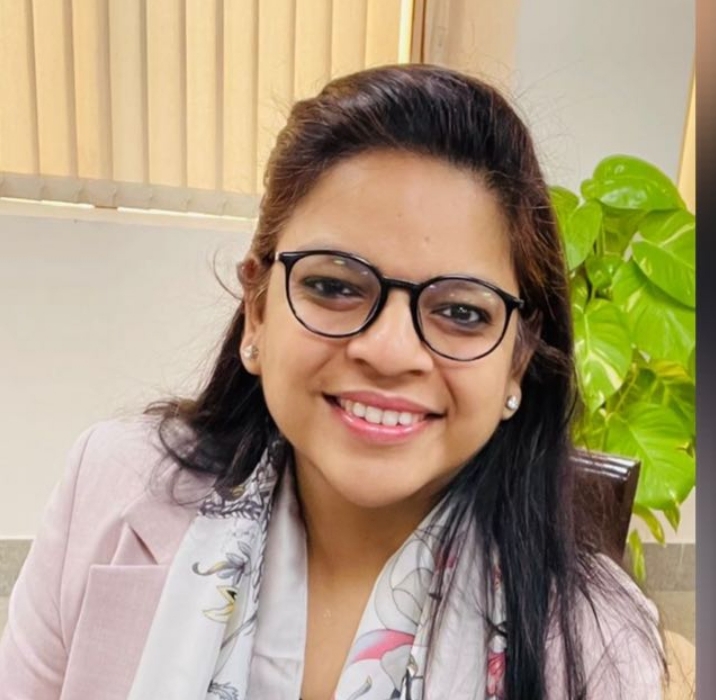
    Hello everyone. We are here today again with Dr. Swati Garg. We want to introduce her as the best female lawyer, I would say, who has opened her office doors for every student or learner. Because she is that humble that she can accept the realities of life and she can guide you through the whole process with a smile on her face. Welcome, Ma’am. And thank you for accepting our invitation to SuperLawyer.

    Absolutely.  See, I have a background of more than 15 years of teaching experience. And I tell all my students that look, guys, you’re most, most welcome to my office.

    Anytime that you need any support in understanding a matter, filing a matter, or taking it ahead in arguing, feel free, don’t ever think that because you’re a first-generation lawyer, you don’t have an office or staff. I tell them that you have me and you will not believe that my office is the DU adda of the place.

    At any point in time, all my students are here. They just drop in and ask for suggestions and request me to review their work and I love it. I mean, I feel that as a senior this is the best you can do for your juniors, right?

    I have been extremely lucky, people were very kind to me and I just feel what comes around goes around and I can’t even think of any reason to not help your colleague or your junior because you’ve also reached where you are with someone’s help. You did not just parachute land on whatever position that you hold right now.

    And, it is very nice, you know, when you go to the courts and people come and touch your feet and they’re like Guruji and you know, that kind of respect. Once a teacher, always a teacher. That’s why I love so many aspects of this profession. I can’t even imagine doing something else.

    I love the fact that there is no retirement age in law because I feel you’re growing every day. And, you know, you’re growing on a day-to-day basis. You’re more aware, and more confident today than you were an hour back.  So that is the level of learning that you get in this profession.

    When did you decide to become a lawyer? What motivated you? And also through your practice years, when did you decide to become an AOR and how has it helped you become the personality that you are?

    As for the question of when I decided to become a lawyer, I didn’t really make the decision myself. Others made it for me. Even back in school, for as long as I can recall, I enjoyed arguing and often took the weaker side. It wasn’t about my personal opinion; rather, it was about embracing the challenge. My teachers would often question why I involved myself in certain debates, but I believed every issue deserved a voice, including mine. As I grew older, my teachers encouraged me, saying, “Swati, you’re destined to be a lawyer with your passion for arguing. Why not turn it into a profession?” So, the path was somewhat predetermined, and I didn’t have to ponder much about it.

    I’ve always been intrigued by people’s problems and genuinely enjoy listening to them. Often, just lending an ear can alleviate half their troubles. I consider it one of the most fulfilling aspects of my profession. If not a lawyer, I could have pursued a career in psychology, as I believe a lawyer often serves as a counsellor to their clients.

    Regarding the AOR designation, I’ve always been drawn to pro bono work, especially in the Supreme Court. However, I realized that financial constraints could hinder access to justice. Without an in-house AOR or someone willing to take on the case pro bono, filing in the Supreme Court becomes challenging. So, I decided to pursue the AOR exam. Although I didn’t achieve top rankings, I approached it with humility and a desire to contribute.

    Certain matters may not be universally appealing, and convincing others to take them on can be necessary. However, I decided to take it upon myself, realizing that instead of wasting time persuading others, it would be more efficient to become an AOR myself. This decision was not driven by compulsion but rather by the realization that it would streamline my work. I am generally adaptable, as long as the work is accomplished.

    When such tasks begin to impact your efficiency, taking matters into your own hands becomes a logical step. Becoming an AOR is feasible; many have done it successfully. I believe the only barrier to achieving something is the extent of your desire for it. If you truly desire something, you can attain it. Look at Vicky Kaushal, who married Katrina Kaif—his determination is a testament to this. Ultimately, it all comes down to how much you truly desire something. Desperation often leads to success.

    How did you manage to pursue a PhD alongside your busy professional life? How has this academic pursuit contributed to your professional and personal growth? Furthermore, what motivates you to advocate for causes like POSH and combat sexual harassment? How do you sustain this motivation and continue your efforts?

    I really don’t know myself. It’s as if the path has been decided already. And I just keep walking. As far as the POSH thing is concerned, this was very close to my heart for a long time. I remember I used to work in the area of domestic violence.

    Then it was one of my mentors who suggested that look Swati, you are doing wonderful work in the field of domestic violence. Why don’t you look into this field also? It’s an upcoming field. And at that point, I realized that yes, it is indeed a very important field because the percentage of women in the working sector is increasing by the day.

    So definitely this is going to cause problems in the future. It is sheer chance that it did turn out to be a hot topic for debate today. And, because I feel strongly passionate about it, it kind of comes through. As far as teaching is concerned, it is definitely becoming more and more difficult with my schedule, but I tell myself that, look, people are doing it right. And, teaching I feel has aided a lot because it gives you that finesse, you know, you are confronting a class of what 80 to 100 students. And all of them are in Delhi University. They have succeeded in reaching that place.

    They have eliminated the competition. So they are difficult minds, to say the least. And you are confronting 80 to 100 brains. You’re trying to teach something to them, which makes sense to them. They are going to be coming up with their own questions. So you’re practically training yourself as to how you need to convince a person, how you need to deal with their questions, and how do you continuously speak for two to three hours without getting tired?

    Because see the throw of the voice, the projection of the voice, your body language, whether you feel comfortable speaking to a group, whether you feel comfortable addressing a crowd, all these things cannot be learned overnight. Now I have quite a few TV appearances regularly.

    I would say two to three TV appearances a month, sometimes more. There was a time when I used to palpitate, thinking, “Oh my God, this is live TV. What if I end up making mistakes?” Like I said, it’s there for perpetuity; you cannot erase it. If it’s a live program, it will be there forever. And you lay yourself open to so much ridicule, and people can kind of show it to you, saying, “Look, this is what you did. This is what you said.” I used to palpitate before every appearance. And now I’m like, “See, it is what it is. We are humans, prone to making mistakes. How does it matter? I mean, if you’ve given an honest effort and ended up saying something incorrect factually, you can always go back and correct it or apologize. As long as you do not do it deliberately or negligently, I’m sure it can be forgivable because you cannot just stop doing things, fearing that you might do them incorrectly.

    You have to start somewhere.” So I think academics have helped me a lot. And as far as I think one of your questions was, how has a PhD helped me? Well, it has. At the point in time when I was doing it, I told myself, “Why am I even doing this unnecessarily?” And then people would come to me and say, “Isn’t your practice going well that now you are studying again and teaching?” You know, that used to be very demoralizing at that time. But then I would say, “Well, maybe they haven’t been fortunate enough to get such opportunities, and that’s why they talk like this, right?” And now when the judges address me as Dr. Jindal, I feel so proud of myself. You know, somehow at some level, you have brought yourself out of a regular crowd. I remember once one of my colleagues pointed out to a person of very humble means who happened to be an advocate. I mean, you could make out. He was somehow just loitering around the court complex.

    That person was an AOR who pointed it out to me. He said, “Look, what is the difference between him and you? There is no difference. He’s also an advocate and you are also an advocate. So how is it that you two are different?” I said, “Well, I’m a doctor who is an advocate and he’s probably only an advocate. That is the difference.” So any kind of value addition that you do to yourself. I’m not humbling all the advocates out there. So you have to realize that they’re all LLBs and it is very difficult. It’s a five-year course or a three-year postgraduate course. It’s not an easy task. You have to clear around 30 papers if you’re doing a three-year postgraduate course to become a lawyer. Even if you clear 29 out of 30, you’re still not an advocate. It’s as simple as that.

    So any kind of value addition that you do to yourself, whether it is as a doctorate or it is as an AOR, anything that you do, will set you apart from that core group of advocates. And I would say that learning is a permanent procedure, that is why you call a lawyer’s practice, you know. It is not like I am a lawyer. People always say that I’m practicing as a lawyer. I’m practising as an advocate, which shows that you can never really be perfect, even if you die around Jethmalani, you will still be practicing. Nobody’s perfect. And they all say that practice till you are perfect. And in this profession, you can never be perfect. So it is sort of a moment for you to sit and self-reflect and tell yourself today.

    I had a meeting in the ministry and, the joint secretary told me, “Well, you know, this is a very complicated matter, madam.” And, it was connected to some environmental matters and how the islands need to be protected from sinking and all that. So he was throwing some technical terms and he said, “Look, this is a very complicated matter and somebody would need to convince the judges.” And I was like, “Okay, we’ll try our level best to convince the judges because we would convince ourselves first.” So he said, “This is what I love about lawyers that they are willing to learn new things every day.” I said, “We just take it like somebody has thrown us in the water and it’s either drowned or you learn how to swim.” So only a lawyer would know the nitty-gritty of, for example, construction or in a medical-legal case, they would know about medical negligence. So they know what can go wrong in a human body. They would also know as to why a wife was tortured in the house. The nitty-gritty of who gets to cook in the morning, who’s cooking in the evening. They would also know some sort of injury that happened to a person during playing, or participating in a sport. So this is one field where, practically everything, you know, as many cases as you have handled, you would know as many issues.

    What inspired you to write your books, particularly concerning women’s issues? Could you share the motivation behind addressing these topics and discuss your books?

    You’ll find it quite unbelievable. Even I do, for that matter. It’s not like I had a plan that I will write a book someday. Things sort of keep happening to me by chance.

    The only good thing I can say about myself is I don’t give up the chances I get. So I’ve been writing for a long time, even way back in school. I used to write a lot, even if only for the school magazines. I used to participate in a lot of debates. So writing was a habit.

    I used to love reading and writing. It was never forced. I mean, it was never a chore for me to read and be like, “Oh, now I’ll have to read even this.” Never like that. I’m the sort of person who would also read the labels on a shampoo bottle. You know, if I’m just sitting there with conditioner in my hair, I would be like, “Let me just read the label on this bottle while I’m waiting.” That’s sort of an attitude I have.

    So it’ll be difficult for me to pass those two minutes. So I would randomly read available things. So, as I was doing my PhD, I remember one of the publishing houses approached me, asking, “Would you like to write a book on this topic?” And I said, “But I have never written a book before,” you know, that was the level of naivety I had at that time.

    He said, “Madam, you’ve been writing so much anyway. You’ll just have to write this book in such a way that whoever reads it can understand this topic better.”

    And I told myself, “Well, why not? If they’re ready to print, then how does it matter to me?” I mean, I was amazed that you know, if there are takers for this sort of thing, then why not? So, I sort of went ahead and wrote a book on my PhD thesis at that time. At that moment, because somebody approached me, one of the publishing houses approached me. And, you know, I remember at that time I told myself, “Well, if they don’t have a problem printing it, then why should I have a problem writing it?”

    That is the kind of attitude I have. And that is how it all started. That was one book I wrote in totality. And there were a couple of other books that I wrote as co-authors. And then thereafter, I’ve been writing regularly in a lot of legal magazines.

    Till last year, I was writing one whole page in a national daily, a daily newspaper. So I had one page that used to come out every Wednesday, which was on law and justice. And now also I write in magazines that are weekly magazines. Then there are fortnightly magazines on social issues, primarily related to law, but once in a blue moon, I would also like to write something on a spiritual footing because I like to believe that I’m a spiritual person.

    I mean, some of my friends are going to be laughing their asses off hearing the statement, but very, very deep down inside, I do believe that yes, I am. I like to think that I’m a spiritual person. I’m a very God-fearing person. I believe you will get only what you deserve and nothing less and nothing more.

    Could you please share how writing has impacted your career and personal growth? Specifically, we’re interested in learning about any increases in reach, career refinement, and personal development you’ve experienced through writing. Your insights on the importance of writing, whether it’s articles, journals, or books, would be invaluable for our learners.

    Let me provide another example. If you have two baskets, and in one basket, there are myriad colors – different colored balls – and you have to sort those balls, pick up some of them, and put them in another basket. How many choices are you making? The first choice is whether you want to do it or not. The second choice is which color you should select first. The third choice is looking for that colored ball, picking it up, and putting it in the other basket. Now, the next choice that confronts you is whether you want to continue this task, having finished one color, or do you want to end it there? You know what I mean? What I’m trying to tell you is that when you take that active conscious decision to separate the balls of different colors, you have to make a conscious effort to select some of them and put them together in such a way that it solves your purpose.

    So in your mind, you have millions and millions of words. When you make that active conscious decision to put those words to paper, the first thing you need to decide is what you want to write on. If, let’s say, you want to write on women-related issues, for example, how working women today are being sexually harassed at their workplace and what laws are in their favor? What is it that they can do? If you decide to write on it today, let’s say that you want to write a 1500-word article. To write a 1500-word article, you would need to read thousands and thousands of words. Only then will you be able to select some of those words, and put them down on paper, in such a way that they make sense to the readers.

    So when you decide to write, you unconsciously, invariably also end up reading, which is imperative for anybody in this field. For any one article that you write, you probably have to read for a week. And then there will be a time when you decide that all the reading you’ve done over the years will somehow be there in your mind subconsciously. And there will be enough words inside of you that you can take them out and put them on paper whenever you want. This is the importance of writing. I don’t know if I could have put it in a better way.

    Do you apply similar planning methods to your POSH trainings? How do you structure and conduct these sessions, and what impact have they had on your practice? Additionally, how can individuals, especially lawyers, become involved in such initiatives?

    I’ve encountered various trainings, and I’m always intrigued by different approaches to conducting POSH trainings. I’ve noticed that some can be overly academic, simply relaying the law without adding much value. I believe that for any training session, there should be a meaningful takeaway for both the participants and myself. It’s not just about repeating what the law already states.

    Often, I conduct sessions for trainers, such as IC members or officers. Tomorrow, for instance, I’ll be training members of the Airport Authority of India. These individuals are well-versed in the law, so my aim isn’t to reiterate basic legal principles. Instead, I focus on real-life cases and practical scenarios to illustrate how to avoid similar issues in their workplaces.

    I emphasize the importance of integrating legal knowledge with practical insights to make the training relevant and engaging. It’s like cooking with spices and vegetables – everyone has the ingredients, but it’s how you combine them that makes the dish enjoyable. Similarly, I aim to blend legal concepts with practical applications to provide meaningful guidance.

    Rather than dictating what should be done, I prefer to present options and their potential outcomes. It’s about empowering individuals to make informed decisions and be accountable for their actions. This level of accountability is essential in creating a culture of responsibility.

    How do you approach complex legal challenges like those involving the Ministry of Environment, Forest, and Climate Change, which have far-reaching impacts on both the environment and human lives?

    The only answer you have is knowledge. So if you’re faced with any challenge, the only aspect of the challenge that scares you is not knowing. If you’re in a dark room at night and the light goes out, you’ll only be scared to go out if you don’t know what lies outside.

    Once you have an idea, why do people feel so brave when they have a torch in their hand? Because that torch guides them. It tells them that there’s nothing outside, just the plant that was shaking. So the only thing that gives you power is knowledge. Once you are prepared with the problem, once you know the solution, once you know the way ahead, you can tread ahead with full confidence and that confidence will shine through.

    The general perception is that the government is not doing anything, and the judiciary is not doing anything. It’s easy to sit in one place and say that they’re not doing anything. When you go and see the efforts the government is making, there’s no one person called the government. If we litter on the roads, is there a government guy roaming around to pick up the trash and put it back in your car from where you threw it? It has to be a social responsibility which lies on everyone’s shoulders. As far as ministry cases about the environment are concerned, getting panelled in this field opened my eyes and I realized that many steps are being taken by the government, and they’re working day and night. Whatever can be done is being done in this area to make the country more habitable, and more compliant. The only thing that remains is for the public to take their way forward in the same direction and be compliant themselves because ultimately the laws can be made, but compliance has to come from the ground level. So I think the best method to prepare for a case is to read as much as you can. Once you’re aware of the idea, what it is that you have to find out, and what are the laws about that particular matter, you will feel better about it. And you will be in a position to give your own opinion. And from there on, the sky’s the limit.

    You are in a profession that demands too much seriousness and how do you relax yourself? How do you find time for your family? How do you unwind yourself?

    See, I’ll tell you what, I just like to find little amounts of, I call them my stolen moments. So when you go to the court and you realize that, okay, there is a gap between two matters. I would say a chai samosa is my stolen moment.

    I would chat around with my friends and just do small things. It doesn’t matter. I tell you, I would call myself a very cheap date. It’s very easy to please me. I mean, you wouldn’t have to take me to ITC or the Taj. I’m quite happy. It depends on the moment.

    I think we all need to kind of appreciate the small pleasures of life and not wait for that big moment to come, and that is when we will be happy. So that is imperative, I would say.

    What recommendations would you offer for individuals just starting out in their career journey? Considering your earlier advice on the importance of reading, writing, and academic pursuits, how would you advise them to plan their career trajectory?

    See, there is only one thing that I would like to say to all the people who are planning to join this profession. I would just say keep going. That is the only thing that never consider a work or any kind of case to be too small or too petty for you to take up. It’s better than sitting idle, right? So don’t wait for that big case to come to you, which will enable you to create a name for yourself. And you will take only a big case because no case is small, the smallest of cases would teach you something. If nothing else then commitment. At least you will end up going to the court. So your visibility in the court matters and visibility does not mean chai samosa. Okay. You’re not just going there to have tea and eat samosa. You’re going there to appear before the court. So any kind of work that you get initially, basically, I would say beggars are not choosers.

    When you start in the profession, you are a person who’s begging for work and how does it matter? Go ahead and beg. We are not supposed to solicit work, but if any work comes our way, as long as your expenses are taken care of, forget about your professional fee, because at the end of the day, are you actually contributing professionally to that matter? It’ll be years before, you know, you deserve the consultation fee that you get.

    Are you even making sense suggesting people pay for it? To become the person others would pay for wisdom, you must have enough words at your disposal. Until then, doing matters for free hardly matters. I recall times when I spent from my own pocket, a practice I still maintain for matters I deem worthy of legal attention. This is why it’s called a noble profession — only nobility can afford to work without pay. Monetary rewards often come late, leaving little time to enjoy them personally; they become the legacy enjoyed by family, children, or the office. When money does arrive, there’s scarcely time to appreciate it. Needs are minimal for a lawyer: books, a Wi-Fi connection, good shoes, and clean clothes suffice. Peace and quiet become prized commodities for focused work. By then, the enjoyment of work surpasses the desire for money; holidays become a puzzle of what to do with free time. Workaholism becomes a natural byproduct of being a lawyer; creating work is instinctual when idle.

    Get in touch with Dr. Swai Jindal Garg-

  • “My experience has equipped me with the necessary skills to lead diverse teams and adapt to new and challenging situations with ease.” – Dr Lipika Sharma, Advocate, Senior Consultant UN WOMEN, G100 India Chair Sustainable Development Goals (SDGs), Founder President VidAikyam Foundation.

    “My experience has equipped me with the necessary skills to lead diverse teams and adapt to new and challenging situations with ease.” – Dr Lipika Sharma, Advocate, Senior Consultant UN WOMEN, G100 India Chair Sustainable Development Goals (SDGs), Founder President VidAikyam Foundation.

    This interview has been published by Namrata Singh and The SuperLawyer Team

    Can you share with us your journey from your days in law college to becoming the esteemed Founder and President of the VidAikyam Foundation, the only Indian on the global expert register of UN Women, and a renowned consultant in climate change, disaster risk reduction, and gender justice? What were some of the significant challenges you encountered along the way, and how did you navigate through them to achieve your current stature?

    My learning journey is astounding. I underwent three distinct phases of higher education, which spanned over a considerable period and were interspersed with different stages of my professional life. Firstly, I obtained a graduation degree in Political Science Hons and a Master’s degree in Political Science from Indraprastha College for Women, University of Delhi. I then went on to pursue my law degree from the prestigious Campus Law Centre Delhi, University of Delhi. This was the first phase of my college days. The second phase of my career commenced when I took a sabbatical to raise my son.  During this time, I earned my LLM degree with a specialization in Intellectual Property Rights from Guru Gobind Singh Indraprastha University, Delhi. I was a year topper and ranked 2nd in overall LLM results, with a 1st division with distinction. Finally, I enrolled in a PhD program at Amity University, Noida, marking the start of my third phase of college life. My PhD is focused on climate change. I have had a lifelong commitment to learning and have earned 5 degrees along with 11 certificates and diplomas to upskill myself in gender inclusion, disaster and climate change.  Each learning experience has been enriching in its way, occurring during various phases of my life. During the first phase, I enjoyed a fun-filled campus life, made friends from all over India, and had the honour of being taught by some of the most learned professors in India. It is my pleasure to share that I ranked third in the entire Delhi University in MA Political Science, as well as second in my college. The second and third phase of my education was a bit of a challenge, as I balanced the demands of my studies with my responsibilities as a parent to a young child. However, I was able to navigate this challenge and maintain a balance between both roles.

    Throughout my career, I have been fortunate enough to work as a penal advocate for various departments, representing independent clients in the Supreme Court of India and the High Court of Delhi. I was a consultant to the CCIM statutory body of the Ministry of AYUSH for Indian  Medicines. As I pursued my research degree, I began writing research articles, and to this day, I have authored and edited 4 books, 5  chapters, and over 55 articles in peer-reviewed journals of international and national repute.

    I take immense pride in my outstanding achievements in the field of disaster and climate law, which have paved the way for me to secure coveted international consultancy roles with various United Nations agencies. Being a part of the exclusive UN Women and WRD expert register, and being the only Indian among just 67 experts from around the world, unequivocally accentuates my unrivalled expertise at the international level. https://wrd.unwomen.org/engage/experts/lipika-sharma Although building my credentials in the international arena was a tough and time-consuming task, I was able to meet the stringent standards and requirements of working with such esteemed organisations through my dedication and hard work. However, I remain humble and acknowledge that I have a lot of work to do and much to learn. I am passionate about empowering women and children, and I have already trained over 20,000 employees as a POSH trainer. Establishing the VidAikyam Foundation to pursue my passion for gender inclusion, women empowerment, climate change, and disaster management was a dream come true for me. Despite the challenges, I was able to balance my personal and professional life successfully, and I am grateful to God for this blessing.

    Congratulations on your recent achievements and awards! How do you plan to leverage your experience and expertise in your new role as G100 India Chair- Sustainable Development Goals (SDGs)?

    Thanks very much for your wishes. My tireless efforts and contributions have been recognized for having a significant impact on improving the world. In January 2024 I was appointed as the India Chair of SDGs. G100 is an empowered group of 100 women leaders from across the world, and 100 Country Chairs for powerful advocacy, awareness & impact across governments and organisations for a gender-equal future. As the India Chair of SDGs and Founder of VidAikyam Foundation, I am committed to working at the grassroots level to uplift women and children, with a focus on SDG 4 quality education, SDG 5 gender equality, SDG 10 reduced inequality, SDG 13 climate action, and SDG 17 partnerships for the goals. Through my partnerships with international and national NGOs, I am confident that we will work together to create a real and lasting change. As an established leader, I have entered into Memorandums of Understanding (MOUs) with leading non-governmental organizations (NGOs) to work collaboratively towards the achievement of our shared objectives. I am confident that my partnerships with these women, combined with my unwavering commitment, will enable me to make a genuine difference in the lives of those most in need. In conclusion, I am confident that my work will continue to make a meaningful impact, and I am committed to working tirelessly towards the achievement of my objectives. I am humbled to state that I have received 7 awards and the most prestigious are by UNDP Global Compact and Women Economic Forum among other awards of National and International repute. 

    Your dedication to gender justice, disaster relief, and climate change is commendable. What inspired you to establish the VidAikyam Foundation, and what impact do you hope it will have on communities, especially concerning women’s empowerment?

    I am deeply grateful and humbled by your appreciation. My passion for women’s causes and empowerment knows no bounds. I have been working with various organizations at the grassroots level in India and collaborating closely with international organizations dedicated to the cause of women. My focus is on the areas of disaster and climate, where women are the main stakeholders but still not the main contributors when it comes to designing and implementing solutions. I am confident in my ability to provide top-notch consultancy services to UN bodies and international consultancies. The thought that my contributions can make a meaningful impact on international policy framing, is an incredibly empowering feeling. I am proud to be able to take part in this process. With my extensive global connections and my strong grounding in India through the VidAikyam Foundation, I am working assiduously to amplify the voices of indigenous women in disaster and climate areas. As the Founding Director of the VidAikyam Foundation, I am committed to educating and empowering girls and women, particularly in climate education, so that they are aware of government policies and can confront the issue of sexual harassment and other pressing issues of society with confidence. I am trying to do my bit to achieve SDG 5.

    Your international experience includes consultancy for UN agencies and participation in prestigious conferences like UNFCCC COP. Could you give insight into your prominent consultancies with UN bodies and share some insights into the challenges and opportunities you’ve encountered while working on a global scale?

    I am an active member of the Women and Gender Constituency (WGC) one of the nine stakeholder groups of the United Nations Framework Convention on Climate Change (UNFCCC). I am also an active member of GenderCC, a Germany-based women’s organisation working in the focus area of Women for Climate Justice, a global network of organisations, experts and activists working for gender equality, women’s rights and climate justice. I have been nominated to participate in the Conference of Parties (COP) of the UNFCCC to put forth my view on women and gender issues in December 2023 and, in June 2023 for SB 58 of the core body meeting of UNFCCC before COP in Bonn Germany in June by the United Nations. My recent participation in COP28 allowed me to raise awareness for the cause of gender and women’s inclusion in the climate change space, ensuring that our voices were heard loud and clear as one of the main stakeholders. But the biggest challenge of climate change is that women and girls are disproportionately affected. There is a lack of representation in official delegations of member countries and negligible representation of women in the secretariat. There is a persistent gender gap in leadership roles in matters of global significance like disaster and climate change. Only 10% of women representation in COP raises the question of whether the diverse voices of women are genuinely heard and incorporated into climate policies.

    I provided legal consultation to support an IFRC project in 2023 that aimed to map the disaster laws and public health emergency regulations in the ASEAN region and advised the ASEAN secretariat. (the report is under publication). I undertook case study research for a UN Women in 2022 for the Commission on Status of Women CSW66 Background Paper “Empowering Women in Climate, Environment, and Disaster Risk Governance: from National Policy to Local Action” The focus of my research was a case study on gender in ecosystem-based adaptation and local governance. 

    https://www.unwomen.org/sites/default/files/Headquarters/Attachments/Sections/CSW/66/EGM/Background%20Papers/Mary%20PICARD_CSW66%20Background%20Paper.pdf

    I worked pro bono with UNDP and was among the two lawyers selected to contribute to a global report on Disaster Risk Reduction. These experiences have taught me that with unwavering determination and hard work, anything is possible. The report was published in my name and is available online on the link given below:

    https://disasterlaw.ifrc.org/sites/default/files/media/disaster_law/2021-02/India-Punjab-Desk-Survey.pdf

    https://www.undp.org/sites/g/files/zskgke326/files/publications/UNDP_IFRC_CPR_DRRLaw_summary_final.pdf

    To build my international and consultancy profile with various UN bodies, IFRC (Red Cross), and International Consultancies, I had to burn the midnight oil, do a lot of upskilling and reading and sometimes work 16-18 hours to meet tight deadlines. Although it was challenging to secure these consultancies, I persevered and developed a knowledge base that is par excellence and matched the profile needed to contribute at the international level to policy framing and giving legal opinions to these esteemed bodies. I have had the privilege of meeting wonderful people and making great friends globally who have done a lot of hand-holding and have guided and supported me throughout this journey. It has been an enriching learning experience, and I have picked up more than 11 short-term certificate and diploma courses to upskill myself. I am still eager to learn more and make a significant impact on gender inclusion and women empowerment in the focused area of disaster and climate.

    Your recent consultancy work with UNDRR focused on gender-related dimensions of disaster risk reduction. How do you see the role of legal frameworks in addressing such complex issues, especially in a changing climate scenario?

    My recent publication is 2023 consultancy services to the United Nations Office for Disaster Risk Reduction (UNDRR) Switzerland, on” Scoping Study on the Use of Convention on the elimination of all forms of discrimination against women (CEDAW) General Recommendation No. 37 on Gender-Related Dimensions of Disaster Risk Reduction in a Changing Climate.” was published by UN on October 19, 2023. This report aims to reinforce the foundations of gender-responsive approaches to disaster risk by examining the connection between women’s international human rights and disaster risk reduction (DRR). It also focuses on analysing gaps, challenges, and good practices in States parties reporting on DRR into the CEDAW Secretariat. The CEDAW Convention provides strong standards for equality and non-discrimination for all women, and it is legally binding. It is often described as an international bill of rights for women.

    https://www.undrr.org/publication/scoping-study-use-cedaw-general-recommendation-no-37-gender-related-dimensions-disaster

    https://www.preventionweb.net/media/90871/download?startDownload=true

    https://www.preventionweb.net/publication/scoping-study-use-cedaw-general-recommendation-no-37-gender-related-dimensions-disaster

    I have recommended that the equal representation of women in forums and mechanisms on disaster risk reduction and climate change, at the community, local, national, regional and international levels, is necessary to enable them to participate in and influence the development of policies, legislation, and plans relating to disaster risk reduction and action on climate change and their implementation. The report emphasizes the importance of substantive equality and non-discrimination as a prerequisite for empowering women and girls through specialized policies, initiatives, and strategies and to enable them to exercise their right to obtain access to knowledge about climate change and DRR.

    Women are at the forefront of the disaster and climate atrocities. They are the ones who are hit before and after the most in all aspects of life, yet they are the ones who are left outside of the most crucial brainstorming. Hence, it is essential to ensure their voices are heard. I am glad that India has taken long strides on the long bumpy road to give reservations to women by amending the constitution and ensuring the representation of women in the lowest ladder of democracy. This move has ensured that women’s voices are heard and considered in all-important decision-making processes to make a real change.

    You’ve received recognition for your innovative teaching methods. Can you share a particularly effective teaching technique or strategy that you believe has had a significant impact on your students’ learning outcomes?

    As a seasoned law professor, I firmly believe that practical experience is crucial for students to gain a comprehensive understanding of the legal profession. In my opinion, legal education should have a stronger focus on practical aspects, and industry professionals and litigators should be given more respect and recognition in curriculum drafting and delivery. It is essential to incorporate regular classes with practitioners and industry experts to bridge the gap between theoretical knowledge and practical experience. Although internships are beneficial, they cannot replace the value of classroom learning. Essentially the classroom teaching for all subject papers taught shall imbibe the practical aspects with a focus on reading bare acts and judgments more than reading books to get good grades. The questions in the examination shall be more problem-based than theory-focused.

    Furthermore, legal education must emphasize the importance of legal drafting and public speaking skills in real-life scenarios. Instead of relying solely on moot courts, which do not accurately reflect litigating scenarios, we should prioritize teaching students the actual skills they will need in their legal careers. For instance, students should be taught to focus more on how to draft real legal documents rather than just memorials for mooting.

    While significant progress has been made in legal education, there is still much more work to be done to reduce the gap between classroom learning and real-life experiences.

    In your extensive experience conducting training sessions on the prevention of sexual harassment of women at the workplace (POSH), what common misconceptions or questions have you come across from participants, and how do you address them to foster a better understanding of this critical issue?

    I am incredibly passionate about promoting gender justice, gender sensitization, and gender equality in the workplace. As a corporate trainer, I have trained more than 20,000 people and conducted 200 plus workshops in the Prevention of Sexual Harassment at the Workplace (POSH) with a specific focus on Indian Law. My workshops and training sessions have been incredibly impactful for corporates, PSUs, universities, and organised as well as unorganised sectors.  I am external member of various IC committees in different sectors.

    One of the most common misconceptions I come across is that staring or appreciative looks at women and giving unwanted compliments are not considered sexual harassment. I understand that this can be a difficult concept to grasp, which is why I strive to create a supportive and non-judgmental environment during my training. I believe that by encouraging people to understand the impact of their unwelcome behaviour by women colleagues, we can create meaningful change. Another misconception is that it is a woman favouring legislation though the fact is that it’s a balanced legislation and gives equal opportunity to both parties. Another misconception which is very common is that the complaint before IC may linger on for long. I always stress that the legislation has clearly given a time frame of 90 days in the legislation hence order has to be passed within this time frame.

    As a POSH trainer for BSES Rajdhani Power Limited, I feel privileged to have the opportunity to train over 20,000 employees. I have also been an active member of the University level Internal Complaint Committees and introduced a 2-credit course in POSH at universities where I have taught. During the pandemic, I worked on a Community Connect Project focused on preventing sexual harassment in the workplace, which was a challenging but incredibly rewarding experience to guide young adults to spread awareness and collect data. My goal is to continue to inspire others to prioritize gender justice in the workplace and create a culture of respect and equality.

    Your work involves collaborating with a diverse array of international lawyers and leading teams across various projects. Could you share some insights into how you manage to work effectively with professionals from different cultural backgrounds and legal systems? What challenges have you encountered, and what aspects of this experience do you find particularly inspiring or rewarding?

    As a former managing editor for Wolters Kluwer, Australia, I recruited and led a team of 100 lawyers from various parts of Asia Pacific. My role involved coordinating knowledge transfer from the Australian head office and New Zealand, fostering international collaboration, and successfully navigating complex international scenarios with ease. I am proud to have worked with senior professionals in UN bodies and international consultancies, and I have successfully balanced my litigating practice in Indian courts and international projects with exceptional leadership and delegation skills. Despite the challenges of balancing my litigating practice in Indian courts and international projects, I have managed to succeed thanks to my exceptional junior staff and incredible international mentors. Though attending crucial meetings during my court commitments and working with people from different cultures in different time zones can sometimes be challenging, I am highly adaptable and have exceptional collaboration skills to overcome these obstacles with ease.  In short, I confidently assert that my experience has equipped me with the necessary skills to lead diverse teams and adapt to new and challenging situations with ease. It’s very rewarding that I can contribute to the thought and process of international policy framing in the focused area of gender inclusion, women empowerment, disaster management and claim change.

    Aside from your professional endeavours, we’ve heard you have a keen interest in journalism. How do you find a balance between your legal career and your passion for writing?

    I made a deliberate choice to pursue a diploma in journalism from the YMCA. My interest in writing had peaked and I was determined to hone my skills in that area. The diploma course proved to be a game-changer for me, helping me gain a well-rounded exposure and significantly improving my writing skills. Although I did not intend to pursue journalism as a career, my purpose of undertaking the course was to understand and master the art of writing, which I certainly achieved. As a result, I am now confident in my writing abilities and proud of the knowledge I gained through this experience.

    As a passionate educator, you’ve introduced various value-added courses and initiatives in law schools. What advice would you give to aspiring legal professionals looking to make a difference in society?

    Aspiring lawyers, in today’s world, the legal profession presents a plethora of opportunities. During college, it is crucial to explore and experiment with different areas of interest to determine where your passion lies. Seek advice from teachers, mentors, and industry professionals, but ultimately follow your heart. As for me, my professional trajectory is anything but ordinary and unconventional, starting as a legal advisor for a web portal, transitioning to a corporate lawyer for an international law firm, and eventually practising at the Supreme Court of India and the High Court of Delhi. I reached the pinnacle of my career, representing high-profile clients in the Supreme Court and High Court, and serving on various government panels. But I took a sabbatical to raise my son, a decision I am proud of.

     I pursued my LLM and PhD and worked as a professor, developing a niche in climate and disaster law with a focus on women empowerment. Now, I am back to litigation and international consultancies, actively contributing to gender inclusion and women empowerment in disaster and climate spaces, and representing global civil societies in COPs.  My advice is to take everyone’s guidance and opinion, but ultimately trust yourself as nobody knows you better than you. Remember, it’s never too late to pursue your passion and excel in your chosen field. I know all of us have the potential to achieve great heights.

    Get in touch with Dr. Lipika Sharma-

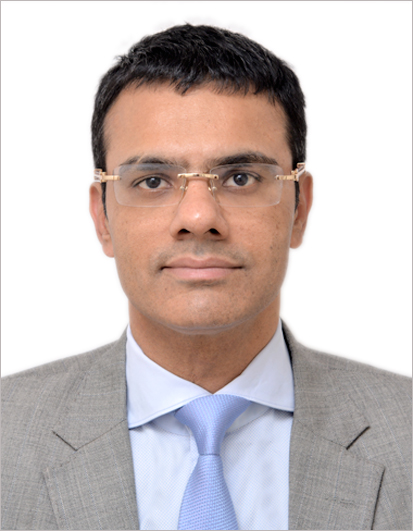
  • “To succeed in the legal industry, one must possess a strong foundation in legal principles as well as critical thinking abilities. To succeed as a lawyer, you must be proficient in legal writing and research skills.” – Sumes Dewan, Managing Partner at Lex Favios

    “To succeed in the legal industry, one must possess a strong foundation in legal principles as well as critical thinking abilities. To succeed as a lawyer, you must be proficient in legal writing and research skills.” – Sumes Dewan, Managing Partner at Lex Favios

    This interview has been published by Namrata Singh and The SuperLawyer Team

    Reflecting on the early days of your career, could you share with us how you embarked on your journey in law and the challenges you faced when starting Lex Favios? What were some of the key lessons you learned during those formative years?

    I had a passion for Law from my early days and initially started as a Litigation lawyer, and after a few years in the profession found my calling in corporate law and eventually took up more specialised areas such as Mergers & Acquisitions, Corporate Finance and   Hospitality. I spent 18 years working with large Indian Law Firms and was a Partner with laws Firms such as Fox Mandal & Desai Diwanji, before I embarked on my journey to start Lex Favios. One of the biggest challenges was to retain clients, and find the right resources and lawyers to be part of a startup Law Firm. The initial one year was more challenging, as it took a lot of convincing to clients that we can provide quality legal services in diverse areas of practice. Further, another key challenge was hiring good lawyers with experience. However, we were able to retain talent and provide quality legal advice to the clients, by ensuring that each practice area has lawyers with sound legal knowledge of its respective field. The key lesson has been that a great Law Firm is built with great human resource and by ensuring that you provide legal advise only in areas in which the Firm has an expertise, as the clients today are looking for specialised legal advice.

    Being admitted as an Honorary Fellow of the Association of Fellows and Legal Scholars is a remarkable achievement. Could you share how this recognition came about, and how has it impacted your professional journey? Additionally, with numerous awards under your belt, how do you handle the balance between individual recognition and the collective success of Lex Favios?

    I always had a passion for legal writing, and I contributed  to the journals of  Honorary Fellow of the Association of Fellows and Legal Scholars and they published my Article in the Journal, which was a great achievement which lead them to admit me as an Honorary Fellow of the Association of Fellows and Legal Scholars. The said achievement was a great validation of the legal work being done by me and also led to being recognised by the clients. All the awards I have won or been honoured with has been a great affirmation of the work done by me in the legal field and in diverse areas of practice. Each award is a validation of the legal contribution to our clients and the faith that clients demonstrate. The individual recognition helps in pitching to new clients and for new work, as it demonstrates our expertise in diverse legal areas and part of “A” List of top 100 Indian lawyers, goes a long way in boosting client confidence with the quality legal advice the Firm can offer. 

    India has seen some notable legal developments recently. Are there any ongoing cases or legal trends that you find particularly intriguing or impactful for the legal community?

    Chief Justice DY Chandrachud established the group of companies’ doctrine as a valid and applicable theory in Indian arbitration law. For India-related dealings, the Cox and Kings ruling offers a comprehensive analysis of the Doctrine and its applicability in India. It is made explicit that signing an arbitration agreement does not automatically make one a “party” to the arbitration agreement. In situations when businesses are affiliated and engage in related transactions, this could be interpreted as agreeing to be bound by the arbitration agreement. Corporate groups should be careful to make sure the transaction is structured appropriately and that their conduct is in keeping with their aim when they want only the signatory firm to be bound by the arbitration agreement. They also need to be careful not to interfere unnecessarily with discussions or the fulfilment of contractual duties by another group company. The parties may also think about including explicit language in the contract to this effect.

    Given your focus on capital markets and corporate finance, how do you navigate the complexities of international transactions, and what advice do you often find yourself giving to clients in this regard? 

    The key strategy I follow is gaining a thorough understanding of the laws and rules governing the relevant jurisdictions. This involves being aware of recent changes to the financial rules, corporate governance guidelines, and securities legislation. 

    I have been instrumental in handling various cross border transactions, both on the M&A and capital markets wherein our role goes beyond advising on Indian Laws and we work in collaboration with counsels in other jurisdictions, to understand the regulations pertaining to acquisition of equity, listing of shares in other jurisdictions other than India and bringing them in sync with Indian Laws. Indian companies listing outside India or setting ups operations outside India, need to adhere to both Indian Laws and laws of the country where the investment is being made. It is important for a legal counsel to be aware of laws of both the countries and advise the client on the applicable regulations and compliances.  Unexpected difficulties during and after the transaction are reduced by having a thorough awareness of each entity’s financial situation, legal status, and reputation. Pre-transaction planning, negotiation tactics, and post-transaction integration plans are all included in this. 

    For aspiring lawyers entering the field today, the legal landscape is vast and evolving. What areas or emerging trends do you believe hold the most promise for young legal professionals, and why?

    The need for legal experts who comprehend data protection, cybersecurity, and the legal ramifications of cutting-edge technologies like blockchain and artificial intelligence is rising along with our increasing reliance on technology. Legal experts who focus on privacy and data protection may assist companies in navigating laws like General Data Protection Regulation (GDPR) and provide guidance on the best ways to handle sensitive data, as data privacy is becoming an increasingly important topic. Remote work and legal IT tools are being welcomed by the legal profession. In the changing legal landscape, lawyers who are skilled at using technology to provide effective legal services and facilitate remote cooperation will be in a strong position. The areas of practice such as cyber security, date protection, artificial intelligence and insolvency are the new emerging legal practice areas for young professionals in the field of law. 

    Given the dynamic nature of technology and its impact on various industries, how important do you think it is for law students to develop expertise in technology law? Are there specific skills or knowledge areas within this field that you would recommend they prioritize?

    Having a solid understanding of technology law is crucial for law students in the quickly changing legal world of today. Technology law interacts with many different businesses and legal fields, covering a broad spectrum of legal concerns pertaining to the use, advancement, and regulation of technology. Almost every business, including healthcare, banking, entertainment, and others, depends heavily on technology. In order to solve the particular issues posed by emerging technologies like blockchain, cybersecurity, and artificial intelligence, it is imperative to comprehend the legal ramifications of these innovations. It is also crucial to comprehend the legal ramifications of entrepreneurship and new company models as technology continues to spur innovation. Technology lawyers may help new and existing businesses navigate legal frameworks, protect their intellectual property, and make sure they are following industry-specific requirements. 

    Regarding specialized knowledge and abilities in the field of technology law, law students who are interested in this area should prioritize learning about cybersecurity and data protection laws and regulations, since these issues are becoming more common. Technology lawyers frequently handle matters pertaining to trade secrets, copyrights, patents, and trademarks. Understanding intellectual property law is crucial to safeguarding the inventions and developments of clients.  It is crucial to be knowledgeable about privacy laws and regulations in light of the growing concerns about privacy. This entails being aware of local privacy regulations as well as the General Data Protection Regulation (GDPR).

    Lex Favios has received recognition as the Best New Law Firm and in various other categories. What do you attribute this success to, and what goals do you have for the firm’s future?

    As a Law Firm, I understand that teamwork, creativity, and a common goal lead to success rather than individual accomplishments. I wish to express my gratitude to our team for their excellent teamwork in navigating the complexities of the legal field by playing to each other’s strengths. I attribute this success to my skilled and dedicated team. The Firm has a dedicated team of lawyers, for each Practice area and each team plays a vital role in making the Firm meets its goal. Their expertise and commitment contributed significantly to the Firm’s success. As the legal landscape constantly changes, flexibility is essential. What has made us unique is our dedication to remaining on the forefront of legal trends, fostering innovation, and making investments in professional growth. In addition to overcoming the difficulties, we have grown stronger, more resilient, and better suited to assist our clients in a world that is always evolving. 

    The Firm is a member of Legal Netlink Alliance, a member network of USA and Europe, which enables us to provide legal services across the globe.

    As for setting goals for the future, it includes the following expanding the firm’s legal knowledge to provide a wider range of services to clients, establishing new offices or broadening the firm’s clientele to include clients in other areas, bringing in new business and strengthening ties with current clients to grow the clientele of the company. 

    Beyond your professional achievements, we’re curious about your personal interests. What hobbies or activities do you find yourself drawn to when you’re not immersed in the legal world?

    Beyond my professional engagements, I love to spend some time on reading books, playing golf on the weekends, watching law related web series and spending time with my family and kids, which is a nice rejuvenation and charges me for the upcoming week. 

    For aspiring lawyers or students pursuing a legal career, what aspects of their college journey do you believe are most crucial for their professional development? Are there specific types of internships or experiences you recommend they focus on to better prepare for the challenges of the legal field? 

    I suppose the most crucial aspect of their college is networking. One should build a strong network within the legal community. The students should attend seminars and conferences to connect with lawyers, judges and other legal professionals. To succeed in the legal industry, one must possess a strong foundation in legal principles as well as critical thinking abilities. To succeed as a lawyer, you must be proficient in legal writing and research skills. Finally, they should be taught and practice ethical and professional decorum. Integrity and trustworthiness are essential in the legal field. I believe that they should explore several legal fields as well in order to have a comprehensive viewpoint. This will help them in making educated decisions regarding potential career pathways.

    Get in touch with Sumes Dewan-