Tag: Legal Manager

  • “Coordinating with external counsel, ensuring timely communication, and maintaining consistency in legal strategies are crucial aspects that require careful attention”- Saswata Banerjee, Chief Manager Legal and Compliance at Bajaj Allianz Life Insurance Co. Ltd.

    “Coordinating with external counsel, ensuring timely communication, and maintaining consistency in legal strategies are crucial aspects that require careful attention”- Saswata Banerjee, Chief Manager Legal and Compliance at Bajaj Allianz Life Insurance Co. Ltd.

    This Interview has been published by Pragya Chandni and The SuperLawyer Team

    Can you share more about the pivotal moment when you decided to shift from your initial aspirations in Economics towards pursuing a career in law? What influenced this decision the most?

    Being a first generation lawyer from my family I had no idea about the field of law. So back in 2004 after my plus 2 exam completion during the break time I came across a friend who was  appearing for law entrance exam for Calcutta University and NUJS as at that time there was no CLAT. While talking with him on a regular basis I got a glimpse of the legal world and got really interested in the field of law and was intrigued by the court proceedings. I decided to appear for the entrance exam with a short preparation and got selected. By God’s will started the journey into the field of law. Also my family members immensely supported me in this decision.

    Your journey into law began with appearing for the law entrance exam at the insistence of a friend. How did you feel when you were selected, and how did that moment shape your perspective on your future career?

    When I got selected I was elated that I was getting a chance to be a lawyer. It really shaped my career as well as my family life also as I met my wife in law college who was a very good friend at  that time. Though my college was not a National University but the faculty members were good and really passionate in teaching, I am always grateful to them for their guidance. 

    Interning under the guidance of Mr. Sajal Kanti Biswas seems to have been a transformative experience for you. Could you elaborate on how his mentorship influenced your understanding of the legal profession and shaped your career trajectory?

    Firstly, Mr. Biswas provided me with invaluable hands-on experience by allowing me to directly involve myself in live cases. This exposure to real-world legal scenarios, including discussions with clients, preparation of pleadings, and strategizing for upcoming cases, was instrumental in enhancing my interest and deepening my understanding of various legal principles and procedures. Being immersed in the practical aspects of the legal profession under his mentorship helped me bridge the gap between theoretical knowledge gained in law school and its practical application in the field.He taught me to value every task in law, stressing that no work is small. . 

    Specializing in the BFSI sector after completing your law degree is quite intriguing. What motivated this decision, and how did your experience at the B School of Insurance and Risk Management in Hyderabad contribute to your professional growth?

    Specializing in the BFSI (Banking, Financial Services, and Insurance) sector started  from my observations while practicing law after completing my BALLB degree. Initially, as a newcomer to the legal profession, I found the complexities of financial matters daunting. However, exposure to numerous banking and insurance cases in court intrigued me, sparking an interest in the field. Recognizing the need for specialization, I considered pursuing an LLM. During my research, I discovered a joint course offered by NALSAR and IIRM specifically tailored for lawyers seeking to specialize in finance and capital markets. Although I missed the deadline for this program, my eagerness to pursue further studies led me to explore other options. This quest led me to the B School of Insurance and Risk Management (IIRM) in Hyderabad, where I found specialized courses in Risk Management. Despite not initially planning for this specialization, I applied for the program and was selected after successfully completing the entrance test.

    At IIRM, I gained valuable knowledge and skills in risk management within the BFSI sector. Interacting with industry experts and peers broadened my perspective. Overall, my time at IIRM complimented my legal background and prepared me for a successful career in the BFSI sector.

    Joining ICICI Lombard GIC Ltd. marked the beginning of your corporate legal career. Can you walk us through the challenges you faced initially and how you managed to adapt to your role within the corporate legal team?

    Joining ICICI Lombard GIC Ltd. marked a significant shift in my career as I transitioned into the corporate legal field. Initially, I encountered several challenges as a fresher in this new environment. Each day presented a new learning opportunity, and I had to adapt quickly to the workings of a corporate legal team.

    One of the major challenges I faced was understanding the dynamics of corporate operations and the intricacies of corporate law. However, my reporting managers provided unwavering support, guiding me through various tasks such as drafting notices, agreements, and participating in complex contract negotiations. Their mentorship was invaluable in helping me navigate the complexities of corporate legal work.

    Additionally, my role required frequent interactions with external lawyers for advisory purposes. These interactions exposed me to a wide range of legal concepts and furthered my understanding of corporate law. 

    Despite initially feeling overwhelmed, I persevered and focused on honing my skills. With dedication and continuous learning, I gained confidence and successfully closed numerous contracts. This experience taught me resilience, adaptability, and the importance of continuous growth in corporate law. My time at ICICI Lombard GIC Ltd. laid a solid foundation for my corporate legal career.

    Transitioning from litigation practice to corporate litigation presented its own set of challenges. What were some of the most significant hurdles you encountered during this transition, and how did you overcome them?

    Transitioning from litigation practice to corporate litigation management presented several significant challenges. One of the most notable hurdles was adapting to the different approach required in corporate litigation, which involves more strategic planning and coordination with practicing lawyers for execution.

    Initially, I had to familiarize myself with the nuances of corporate litigation management, which differed considerably from my previous experience in court. This required me to understand the broader strategic objectives of the company and align them with the legal strategies employed in litigation matters.

    Additionally, collaborating effectively with practicing lawyers across various courts and jurisdictions was essential but posed its own challenges. Coordinating with external counsel, ensuring timely communication, and maintaining consistency in legal strategies were crucial aspects that required careful attention. I prioritized building strong relationships with external counsel and maintained open communication channels. By embracing a learning mindset and adapting proactively, I effectively managed litigation matters.

    Your experience at Star India Pvt Ltd. provided insights into media laws. How did this experience differ from your previous roles, and what were the key takeaways for you in terms of navigating legal challenges in the media industry?

    Transitioning to Star India Pvt Ltd. from my previous roles in the BFSI sector presented a unique set of challenges and learning opportunities. While my specialization provided me with a solid understanding of legal intricacies in finance, entering the media industry required a fresh perspective.

    The key difference lay in understanding the nuances of the media business so Before diving into the legal intricacies of the media industry at Star India Pvt Ltd., I prioritized understanding the company’s business. Interacting with business leaders helped me understand the intricacies of the industry, enabling me to approach legal challenges with a comprehensive understanding of the business context.

    Although the media industry differed from my previous experience, the foundational skills and adaptability acquired in my previous roles proved really helpful. Leveraging my understanding of business dynamics, I navigated legal challenges more effectively and aligned legal strategies with overarching business objectives.

    One of the key takeaways from my experience at Star India Pvt Ltd. was the importance of continuous learning and adaptability in a dynamic industry. The media sector is constantly evolving, and staying abreast of legal developments and industry trends is very essential for legal work.

    Overall, my tenure at Star India Pvt Ltd. provided me with insights into media laws and reinforced the significance of understanding the business context in addressing legal challenges effectively. 

    How do you approach overseeing legal objectives for such a large area, and what strategies do you employ to ensure success?

    I started by understanding the work in that area, including the businesses and operations. Thereafter, I worked closely with my seniors to set clear legal goals that fit with the company’s overall plans. Good communication within the team members and with other departments is the key for everyone to work together smoothly. 

    We also keep an eye out for any legal risks and try to mitigate them before they become big problems. I talk regularly with other departments of the company further to understand their legal needs and help out where I can. 

    One notable aspect of this organization is the open communication fostered by our superiors. They encourage us to take risks and they also actively seek to understand ground-level issues through effective communication. Additionally, we are consistently striving to enhance our legal strategies and processes to adapt to evolving legal and business landscapes.

    Based on your extensive experience in the legal field, what advice would you offer to fresh graduates who are considering a career in law?

    The legal field offers numerous opportunities and is constantly evolving. Whether in litigation or corporate law, there are vast prospects for fresh graduates. As our country’s GDP grows, the demand for legal professionals will increase, providing ample opportunities for lawyers. 

    However, continuous learning and staying updated with the latest developments in the sector are essential for growth in this field. Many legal websites and resources are nowadays which are invaluable resources for students in this regard. Additionally, while the initial stages of a legal career may seem daunting compared to other professions, the rewards throughout one’s life are significant.

    Get in touch with Saswata Banerjee-


  • “Find what genuinely interests you. Embrace unconventional paths, don’t succumb to peer pressure. Networking is key – reach out, introduce yourself, and grow.” – Aritra Chatterjee, Manager at Herbert Smith Freehills, U.K

    “Find what genuinely interests you. Embrace unconventional paths, don’t succumb to peer pressure. Networking is key – reach out, introduce yourself, and grow.” – Aritra Chatterjee, Manager at Herbert Smith Freehills, U.K

    This interview has been published by Namrata Singh and The SuperLawyer Team

    You have worked in different places including Hong Kong, Singapore, Tokyo and Belfast. Could you share some insights into the challenges or struggles you faced along the way, and how these experiences have contributed to your personal and professional growth?

    Every jurisdiction has its unique challenges and a different regulatory landscape. There are also differences in market practices and work culture. However, exposure to such differences helps you become a better lawyer and allows you to think outside the box and bring a global perspective to help your clients. On the personal front, I don’t see it as a journey filled with struggles; on the contrary, it has been quite exciting and fun. Yes, you do miss your family, friends, and the familiarity of the place you are from, but I have been lucky to find excellent friends, colleagues, and mentors along the way. I love experiencing new places and cultures, so I have tried to make the most of it.

    You’re managing a team delivering outsourcing and transaction management solutions in your current role at Herbert Smith Freehills, ALT Finance. What unique challenges and rewards come with overseeing a team working on such diverse projects?

    I enjoy the different hats I need to wear. In addition to core legal skills, my role involves team, project, and stakeholder management. Every day is different; you need to continuously innovate and provide tailored solutions to clients at a large scale. I have been lucky to work with clients who are industry leaders, and I find solving problems for them very rewarding. I am also very passionate about people management, learning and growing together as a team, and celebrating each other’s success, which brings me a lot of happiness. 

    Having worked with major financial institutions like HSBC and JP Morgan Chase & Co., what are some of the key insights you’ve gained about the intersection of law and finance in the derivatives space?

    Derivatives is a complex and highly regulated practice area. To be a good derivatives lawyer, you need to understand different derivatives products and the economic outcomes that they are trying to achieve. You can’t afford to look at things only through the lens of laws and regulations and need to be aware of operational, credit, and reputational risks and limitations. My in-house stints at large investment banks were extremely helpful in improving my knowledge of different derivatives products as well as operational and other commercial aspects of the industry.

    You’ve managed large teams of lawyers and paralegals. What strategies do you employ to foster a collaborative and efficient working environment within your teams?

    There is no straitjacket formula – every individual is different. Appreciating these differences and creating a positive work environment based on trust and mutual respect is very important. Having fun as a team and celebrating little wins and each other’s success is also essential. To develop a high-performing team, a manager must empower and help teammates grow by giving them the support and space they need.

    You worked in different capacities including as an Associate Counsel as well as a Manging Consultant. What adjustments or learnings did you find most valuable when you shifted to a leadership role?

    It is an evolutionary process; there are always opportunities to lead the way, even when you are not formally in a leadership / managerial role. Effective delegation and leading by example are crucial. It is about striking a balance between acknowledging that you can’t do everything on your own and knowing that there are certain things that you must learn to do well yourself before delegating to others. 

    As a derivatives lawyer with a keen interest in legal technology, what advancements in legal tech do you find most promising for the future of transactional law?

    No prizes for guessing – AI is the obvious one. However, it is essential to differentiate between tech solutions that add genuine value and solve complex problems from solutions that are more bells and whistles. AI has radically changed how large-scale projects are managed and delivered in the last few years.

    The industry will generally see an increase in the adoption of tech platforms for streamlining document negotiations.

    I am looking forward to seeing the next leap in generative AI solutions. Currently, the technology is prompt engineering dependent, and there are concerns about accuracy and reliability. These issues will be ironed out pretty soon, and the technology’s ability to learn from and understand us will increase manifold.

    You’ve held diverse roles in different geographical locations. How have you navigated the cultural nuances in these regions, and do you believe that understanding cultural differences is essential for success in the legal profession, especially in the derivatives and finance sectors?

    Absolutely – at the end of the day, we are in a people-centric profession. Keeping an open mind as well as appreciating and respecting differences go a long way. I have come to realize that the world is smaller than we think it is and navigating cultural nuances or differences is not difficult as long as you keep an open mind. It is also important to appreciate cultural similarities instead of focusing on just the differences!

    Having worked across various international offices, is there a particular country that holds a special place in your heart, both professionally and personally? How has your experience in that country influenced your approach to law and life?

    Tough question. It would be impossible to single out any place. As mentioned, I have been lucky to find excellent friends, colleagues, and mentors wherever I have worked. The person I am is a culmination of my different experiences. I have learned a lot from and felt welcome everywhere.

    With your passion for quizzing, how do you balance your high-stakes legal career with your interests outside of work? Any favorite trivia or quiz moment you’d like to share?

    It is really important to have a passion or a hobby outside of work – especially for one’s mental health. Your work can get quite taxing and stressful, so it is nice to have something to look forward to outside of work. Quizzing was quite a sidelined activity when I was in law school. I and a few friends started the Quiz Club at our university (RMLNLU, Lucknow). Work does get in the way of quizzing, and I don’t get to participate or conduct as many quizzes as I would like, but I try to whenever possible.

    During the pandemic, when there were no live quizzes for obvious reasons so I started a quiz podcast with a friend. We made ten episodes on diverse topics. We were pretty surprised with how well it did on platforms like Spotify and Apple Podcasts, and we had a lot of fun in the process, and it kept us going when we were trying to cope with the lockdown.

    You’ve had international stints in various countries. How do you perceive the differences in legal education between India and abroad, and what insights can you share for someone considering pursuing an LLM in India or abroad?

    I might not be the best person to answer this because I did not study law abroad. Back in law school, there were not enough courses if one wanted to be a transactional lawyer, and interaction with experts from the industry was limited. Now, that has changed significantly. Law schools do get experts from the industry frequently and offer specialised seminar courses. Private players like LawSikho have done a great job in making practical legal education accessible.

    Based on my interaction with my colleagues and law students abroad, I think firms are more proactive in reaching out and connecting with students. The process for vacation schemes and training contracts is much more efficient, accessible, and consistent across firms.

    In India, the industry can do much more to make itself accessible to law students.

    Given your successful career trajectory, what advice would you offer to the current generation aspiring to excel in the field of law, especially those interested in derivatives and legal technology?

    I am not very good at giving advice. My career path has not been very traditional. It is crucial to find out what genuinely interests you. If you are not lucky enough to do what you love, see if you can love what you do. Don’t succumb to peer pressure and take up something because everyone else is doing it.

    For someone who wants to pursue a career as a derivatives lawyer, a good understanding of the financial ecosystem and macroeconomics can definitely help.

    The legal tech landscape is evolving rapidly and has a lot of exciting career opportunities. I think developing an acumen for technology to understand how it works is important. The best way of doing it is learning how to code. You can start by playing around with low code / no code platforms and move on to learning coding. There are excellent resources all over the internet. 

    It is also vital to learn how to network effectively. Don’t be shy in reaching out to people and introducing yourself!

    Get in touch with Aritra Chatterjee-

  • I consider my inclination towards the use of technology along with my acquired skills in project and data management, data analysis, and risk assessment to be the most important factors that have largely contributed to my success- Ayan Chakraborty, Senior Legal Manager, Bharti AXA Life Insurance

    I consider my inclination towards the use of technology along with my acquired skills in project and data management, data analysis, and risk assessment to be the most important factors that have largely contributed to my success- Ayan Chakraborty, Senior Legal Manager, Bharti AXA Life Insurance

    This interview has been published by  Priyanka Karwa and The SuperLawyer Team

    What’s your typical workday like?

    Insurance law practice in particular and in-house corporate legal practice in the BFSI segment in general, demand you to be ‘always on your feet’. In an in-house legal role, the exposure that one gets at a very early stage of your career is enormous. Every day there’s a new case/challenge and a new kind of legal advice that you are required to come up with. Along with some ongoing work, there are also certain ad-hoc requirements which needs to be catered to. There’s no dearth of work on a typical workday.

    My role as a generalist resource, gets me involved in almost everything that is whatever’s happening in the legal space of involving the organization I am associated with and be on top of all assignments. The gamut of cases helps me broaden my horizon. Apart from strategizing and analysing the cases, I supervise the data management for the department. Maintaining a tracker of assignments, projects and daily actionable makes it easier. So there’s also some bit of data work every day along with the tracking and closure of the tasks.

    On typical workdays, I negotiate contracts, vet documents to be submitted in the court and supervise the work of my team.

    An interesting workday entails peer-to-peer connect, brain-storming with team and other departments on special cases or planning the Friday evening! 

    Cups of strong black coffee and ginger tea helps me keep going through the day.

    Throughout your career, you have achieved numerous accolades and recognitions. Could you highlight one or two achievements that you are particularly proud of and explain why?

    Starting from the ‘WOW’ Award at Exide Life Insurance Company Limited in January 2017 for single-handedly successfully managing PAN India Insurance Ombudsman complaints with significant financial impact, to the recent recognition by Bharti AXA Life Insurance Company Limited as an achiever for the ‘Xtra Mile’ demonstrated within six months of joining. 

    There’s this is one that I would like to highlight: the ‘Customer Centric Icon’ of Edelweiss Tokio Life Insurance Company Limited. It was the very first time in my career to receive an award on stage, with a thousand people glued to me. That was the first time I realized how glorious perseverance can be.  

    Also, I would like to share a special moment when Shri Bharatkumar S. Pandya (Hon’ble Insurance Ombudsman in Mumbai) shared a testimonial to appreciate one of my reportees for her impeccable performance. This empowered me as a mentor and helped me gain more confidence from my juniors to guide them in the right direction, just as I have always been guided.

    Throughout your career, you have demonstrated exceptional performance and received recognition for your work. What do you believe are the key qualities or skills that have contributed to your success?

    To start with, as my mentor says – “jo dikhta hai, wohi bikta hai”. And here’s how do I do it – Dashboards, discovery and plugging of gaps, going beyond the call of duty whenever required, and continuing exchanging dialogues with my seniors on any critical or regulatory assignments that I handle. 

    I consider my inclination towards the use of technology along with my acquired skills in project and data management, data analysis, and risk assessment to be the most important factors that have largely contributed to my success.  Persistent performance with constant self-monitoring, understanding of the product and the business, and staying abreast with the latest developments, changing products & regulations in my area of practice; have also helped.

    You have been involved in audit management as well. How to ensure that the legal function is audit-ready and compliant with all relevant regulations?

    Yes. Fortunately, I have had my share from both sides of the table, as far as audits are concerned. 

    Wearing the Auditor’s hat, to certify the Legal Department or any department, I’ll delve into: process notes and it’s adherence, Process improvements in sync with the latest trends and good practices, Data and Documentation. More than half the battle is usually won by the Auditee if these are well taken care of.  

    In insurance, where every step is closely monitored by the regulator – given the robust regulatory regime, it is indeed a task to ensure audit readiness. Given the expertise and knowledge on different aspects of businesses that it requires, I’ll not be surprised if, in the coming days, the in-house Legal departments start hiring resources dedicated exclusively to ensuring audit readiness and compliance with all applicable relevant regulations, and for end-to-end audit management for the department. 

    As an Auditee, I endeavor to keep the legal function, audit-ready, by maintaining a checklist of the requirements under relevant regulations. This is a ready reckoner for me. Besides, there is meticulous data management, frequent sample checks/mock audits, and proper documentation of all the identified deviations. It’s a continuous process with stringent monitoring.

    With your extensive experience as a generalist resource in legal departments, and the professional growth that you have had in a short span of around 7 years, could you share some insights into the challenges in your role and how to effectively handle them? 

    Understanding the requirement and articulating in a manner acceptable to business, while, in the process, also ensuring that the interest of your organization is not compromised, is a challenge I deal with daily. Umpteen situations warrant balancing business demands and market dynamics vis-a-vis the spirit of the law. So, I think being a business enabler is very important. 

    What are some of the common issues or challenges faced by the insurance industry, and how do you think can these be navigated?

    Out of all the challenges, the one that the insurance industry certainly cannot lose is the protection of the interests of its Policyholders. The nuisance of Instigation Agencies (operating under the façade of ‘Grievance Resolution Agency’ and against the interests of the Policyholders) is probably the most common hurdle that the industry is facing today. Vexatious Customer Grievance, Ombudsman Complaints, Litigation & Police Complaints are on a constant rise due to the menace of these Agencies. Need-based selling of insurance, enhanced due diligence at the time of on-boarding of customers, investment on spreading awareness and a very firm action-oriented approach can address this plague.

    Then there’s the on-going fundamental shift and transformative changes in the regulatory landscape that has driven all the attention to the insurance industry. Industry is in the sweet spot now and the biggest challenge is to leverage this to the benefit of all stakeholders – policyholders, distributors, employees and shareholders. A lot is happening in the Regulator’s endeavour of “Insurance for All by 2047” – State Insurance Project, tie-up limits increase for distributors, promotion of ‘ease of doing business’ besides simplification of the process of setting up an insurance company in India, ‘Use and File’ procedure for insurance products, proposed changes in the business mode and more. To manage the expected traffic and to stay in the game, insurance companies will be expected to level up many folds – in terms of enhancing and setting it’s processes right, adapting to technology in every walk of the customer journey right from on-boarding of a Policyholder to dispute resolution. To support this journey – Legal, Compliance & Risk functions will be required to provide best-in-class experiences to Operations & Sales.

     ‘… provide best-in-class experiences to Operations & Sales.’ How?

    Implementation and acceptance of technology. We are talking about ‘Insurance for All” and ‘ease of doing business’ here. 

    Based on your experience, what advice would you give to fresh graduates who are considering a career in law and young lawyers?

    Always remember, “To be a good lawyer is different from a successful lawyer” – Late His Lordship Hon’ble Justice Protik Prokash Banerjee to me on the last day of my internship under his able tutelage in July 2013.

    Never compromise on your integrity.

    Embrace the change and the technology, equip yourself with MS Excel & MS Powerpoint skills – there are no better tools to showcase and market yourself in the corporate sphere. With channelized effective efforts and persistent hard work, the ‘sky is the limit’.

    Above all, find yourself a mentor in the early stages of your career, whom you can look up to … a mentor who can guide you in having your career shaped in the right direction.

    Get in touch with Ayan Chakraborty-

  • Deborshi Barat, Counsel at S&R Associates In a Discussion With SuperLawyer On Current Demands And Importance Of Practical Skills In The Legal Profession

    Deborshi Barat, Counsel at S&R Associates In a Discussion With SuperLawyer On Current Demands And Importance Of Practical Skills In The Legal Profession

    This interview has been published by Prabhjot Singh, Priyanka Karwa and The SuperLawyer Team

    What motivated you to take law as a career and how has been the decision so far?

    Law was appealing at the level of ideas when I was young. In law school, like at NUJS, said ideas tend to get affirmed (absent extraordinary circumstances). For those of us who didn’t grow up with lawyers in the family, some self-selection invariably occurs. Since law wasn’t part of the Indian board curriculum in my time, certain proxies, such as affinities for logic, language, argument, etc., informed the decision-making process. I’m not sure if these proxies are useful, let alone representative, but we do rely on them disproportionately at that stage of life, given informational and experiential scarcity.

    It’s been a pretty good journey so far. I’ve lucked out over time with regard to being able to dabble variously, and I enjoy diverse aspects and manifestations of the law. I look forward to more learning.

    Your internship experiences are filled with renowned firms and other reputed people, was there any roadmap for the same or all did was in flow? How would you guide students in choosing internships?

    I suppose these things are part of an organic trajectory, perhaps steered by a latent sense of purpose. Things do happen in a flow, but we ultimately end up navigating viable paths. Curiosity helps. I see students these days choose internships based on niche interests and very specific practice areas. I admire such clarity, especially at that young an age. While it’s difficult to know yourself completely in law school, elimination is useful. However, I still think that sampling from a large spread is a good idea before marrying into the unknown.

    Could you shed some light on your journey in the topmost university, Fletcher? I’d love to know the flashbacks.

    Fletcher was a cherished destination. Even when I first joined S&R Associates (where I currently work), I had an idea that I might want to explore a specialization later, preferably in a different country. I liked Fletcher because of many things, but most of all for the flexibility and eclectic environment that it offered. The crowd is truly diverse and international, and my ways of looking at the world changed fundamentally when I came out.

    The best memories are perhaps the simplest ones, the quiet neighbourhood, the bucolic surroundings, the redbrick buildings, hours spent inside the ‘Harry Potter Room’, trudging to Harvard amidst the first snow of winter, and endless cups of coffee with friends. Add to that, the opportunity to genuinely engage with people from various walks of life, from various parts of the world, from contexts wildly different from yours: that kind of exposure is irreplaceable.

    Deborshi, among all the specialisations, i.e., in MALD, LLM, and Ph.D. Fletcher’s programme, what do you find the most interesting to you? How far did you use all this expertise in your practical areas of work?

    I liked the Master of Arts in Law & Diplomacy (MALD) program because it gave me the chance to keep law as a base and build on that substratum by adding disciplinary layers to it, including those involving public policy, political economy, international relations, comparative politics, global history, research methods, national security, foreign policy, international organizations, transnational business, and others. The MALD remains Fletcher’s keystone graduate program, and for good reason.

    Also, it’s a 2-year program, as opposed to the 1-year LLM. I’d heard from others before me that a year’s duration often feels too short from a learning perspective, and I wanted a more immersive experience.

    I received two awards as a student under the MALD program: the William L. Blue and Joan R. Blue Scholarship, and the Alfred P. Rubin Prize – awarded by the Fletcher law faculty to the ‘outstanding student of international law’ in a given year. Other than my core specializations at Fletcher, I also cross-registered with the Harvard Law School (HLS) for a semester-long seminar on law and politics.

    Accordingly, I decided to apply for the LLM thereafter. The LLM is a distinctly curated program, comprising smaller cohorts, a very close-knit community, regular exchanges with faculty and peers, periodic events and updates, and some amazing international law professors.

    The career trips to New York and DC pivot away to interactions with partners from global law firms, rather than with policy thinktanks and international organizations alone, such as in the MALD. For instance, Prof. John Burgess, then partner of WilmerHale, was the Director of the LLM program during my stint there.

    His insights on international M&A and cross-border financial intricacies were deeply valuable. At the same time, cross-listed faculty like Profs. Jeswald Salacuse and Ian Johnstone brought with them multi-disciplinary perspectives on investment law, arbitration, the UN, the World Bank, along with constructivist approaches and sociological constructions of the law.

    The PhD, of course, is a very different animal. It’s a self-driven process, especially after you finish your coursework, clear the comprehensive exams, and defend your proposal. That’s when the real research begins, and it’s easy to get lost en route. Besides, life happens. Managing things and people in the course of the PhD – which, in a US curricular perspective, remains an immensely trying, albeit templated, process with several discrete milestones – is one of the bigger challenges.

    Going through your background information, it seems you’re always up for learning something new. Even though you worked independently in the Calcutta High Court, after obtaining MALD and LLM degrees, you indulged yourself in teaching a self-designed elective course in “Law and Public Policy.” So, Deborshi, was that challenging or thrilling for you, and how?

    Being from NUJS myself, I wanted to offer a course there. This was before my PhD coursework began. However, by that time I’d already decided to adopt a more ‘law and policy’ approach to work. That way, offering such a course at NUJS was a culmination of many things, including my interest in weaving together miscellaneous disciplinary paradigms into mainstream legal analysis.

    How about your experience with Harvard LIDS, Boston, and working with ? What do you think is the most exciting part you would like to share with our readers regarding the same?

    From the perspective of personal evolution, these stints were hugely significant, where I wanted to push myself to try new things, especially in the context of applying my learning to situations on the ground. For instance, ‘law and development’ was one of my main focus areas. Working with the Law and International Development Society (LIDS) at Harvard thus provided a great opportunity in respect of putting to use some of the theoretical constructs I’d learnt across real-life problems and circumstances. We worked with the secretariat of Transparency International about the possibility of reparations for victims of ‘grand corruption’ in international criminal proceedings.

    Further, ‘international negotiation, mediation, and conflict resolution’ was one of my other specializations. I was taking a course on mediation with Prof. Eileen Babbitt. Around this time, I joined MWI, a company in Boston working in the ADR space, specializing in dispute resolution for companies through ombudsman, negotiation, consulting, arbitration, facilitation, and mediation services. I worked with instructors at the Harvard Negotiation Project of HLS, learning from their experience of negotiating with Fortune 500 clients and vendors. As part of my training, I mediated a few cases in Massachusetts district courts as well, particularly in south Boston.

    Similarly, I was working with Prof. John Cerone on matters of international criminal law and humanitarian law, which culminated in representing Fletcher for the Model International Criminal Court Moot held at Krzyżowa, Poland; serving as editor for the Journal of Humanitarian Assistance; and joining the Fletcher Human Rights Practicum, pursuant to which a small group of us had the opportunity to collaborate on drafting amicus briefs for the Committee on the Elimination of Discrimination against Women (CEDAW), a body of independent experts that monitors implementation of the corresponding treaty.

    This last experience came in handy because I’d already been working as Supervising Lawyer with Femin Ijtihad – Strategic Advocacy of Human Rights (SAHR) – a 501(c)(3) nonprofit organization. Accordingly, I continued working with SAHR until 2017 as its Global Legal Counsel using lessons from such experiences.

    As Global Legal Counsel at SAHR, I developed best practices and drafted model laws for the purpose of legislative reform, designed judges’ and lawyers’ training workshops, and advised individuals, organizations, and local lawyers/judges in various jurisdictions, including in the US, Afghanistan, Iraq, and Nigeria.

    Later, during the formative stages of my PhD, when I first got interested in the legitimacy of dispute resolution, I worked with my advisor, Prof. Salacuse – an ICSID-empanelled arbitrator and a leading expert on negotiation theory – with the Judicial Leadership Project conducted by the National Center for State Courts at the Harvard Kennedy School of Government.

    I also taught a lot during this stage and worked on several consultancy, research, and training assignments, including in terms of: taking foundational classes on International Law for undergraduate students of the Political Science Department at Tufts University; teaching introductory courses on American Politics, Sociology of Race & Ethnicity, and Globalization & Social Change under the School of Arts and Sciences at Tufts University; updating Prof. Salacuse’s book on “The Law of Investment Treaties” (3rd edition) for Oxford University Press and another book on “International Business Planning: Law & Taxation (U.S.)”; coordinating and teaching a course called “Debates in Economic and Political Relations” conducted by the Horizon Academic Research Program, New York for exchange students from mainland China; and serving as coordinating instructor for the Tavitian Scholars Program in Public Policy – conducted by Fletcher for diplomats and officials from the Foreign Service of the Government of Armenia.                    

    So far we’ve seen lawyers not focusing on their mental health because of work pressure and tight deadlines. Please shed some light on this issue, any tips that can make the situation better?

    We develop our own coping mechanisms over time. If there is meaningful work to be done, there will be appurtenant pressures and timelines within which one needs to deliver. I can’t speak for others, but I like to treat work as an extension of self. Accordingly, it’s very important to me that I enjoy the work that I’m doing, to be really invested in it. When that happens, I think a couple of things coincide: you end up being better at your job, and the pressure stops being a bother. In fact, the pressure might become a thrill in itself.

    I’m deeply aware that mental health is an important issue for all professionals, including for lawyers. Modern-day work ends up creating high-pressure situations for everybody. We ourselves as clients and consumers in quotidian contexts demand fast, efficient service. It’s not so much fun, perhaps, when the boot is on the other foot.

    Work-life balance is what everyone talks about, presumably as an ideal. I’m not big on that myself. I don’t mean that we should sacrifice life, or the pursuit of happiness, at the altar of work. But when work goes beyond a set of itemized chores, or when work means more than something one has to do out of a sense of compulsion or duty, it starts creating a balance of its own. Life gathers around work. Personally, I like that kind of life.

    If, on the other hand, work starts feeling like a lot of work – an ordeal, a terrible burden, etc. – then maybe one needs to move things around. I realize that this view reeks of some kind of privilege that many are ill afford to harbour, on account of variegated factors ranging from family, finances, health, and sundry responsibilities. Having said that, I was diagnosed with Multiple Sclerosis (MS), an incurable and debilitating autoimmune disease, in 2006 when I was in my third year of law school. At that time, I had no idea what MS was, or what to expect from it over the long-term.

    I remember thinking that it sounded pretty awful when the neurologist looked at my MRI and pronounced his verdict. Some other doctors suggested that I leave studies altogether and focus on maintaining my health, let alone maintain hopes of building a career, legal or otherwise. It’s been an interesting journey ever since, for sure. I’ve had incidents of relapse during internships at JSA and NDA. I’ve been tempted to give up many times, because simple things that others take for granted, or tasks that ‘normal’ people do on an everyday basis, get very difficult to complete at times. Since I have the relapsing-remitting kind of MS, there are good days and there are bad days, and some phases of relapse, along with a progressive accumulation of disability over time.

    With that qualification, however, I know that I have been very lucky to have had the kind of support from family, friends, doctors, physiotherapists, gym instructors, peers, colleagues, bosses, and employers that allowed me to continue – be it at Tufts, Fletcher, AQUILAW – where I worked during my PhD, Jindal, or S&R.

    We have to reach out for support when we need it. It sounds simple, but it’s very difficult to do. This realization itself goes a long way in taking care of oneself.

    We have heard that most law schools don’t focus on practical skills, and the current demands as well, what are your thoughts on the same, and how law students and other professionals can upskill their game?

    I was teaching at the Jindal Global Law School before re-joining S&R Associates as Counsel. I think that educational institutions (and the wider pedagogical culture that such institutions uphold) undergo some learning over time and adapt themselves to new dynamics, especially in order to remain competitive and relevant. Compared to my time as a student, law schools these days need to, and do, focus a lot more on practical skills, including actively seeking out legal practitioners to conduct sessions where stories from the trenches are shared to give students a better idea of how things work in the real world.

    At least that’s what my first-hand takeaway was, from my 3-year stint at Jindal – where as an Associate Professor, I offered courses on contract law, investment law, M&A and PE, etc. I myself used case-studies and real-life examples to familiarize students with the commercial law aspects of the courses I taught. The idea was to provide a holistic and ‘practical’ learning experience for all students. The Bar Council of India, too, has introduced various new curricular requirements that focus on such practical skills in keeping with the times.

    Lastly, any 5 best pieces of advice for our readers?

    I honestly doubt that my ‘advice’ will find resonance across the board. Nevertheless, here goes:

    1. Make plans. These are building blocks of your future.

    2. Expect said plans to go awry. Bad things happen, none of us is special. Be prepared to improvise.

    3. Keep an open mind, and keep learning. Staying relevant and curious is half the battle.

    4. Stick to your strengths and build on them.

    5. If possible, have fun meanwhile. Life is short. No point making it more painful than it needs to be.


    Get in touch with Deborshi Barat-

  • Lokesh Bhola, Managing Partner at Legal Icons In Conversation With SuperLawyer Shares His Side On Struggles For A First Generation Lawyer

    Lokesh Bhola, Managing Partner at Legal Icons In Conversation With SuperLawyer Shares His Side On Struggles For A First Generation Lawyer

    This interview has been published by Prabhjot Singh, Priyanka Karwa and The SuperLawyer Team

    Was pursuing law planned for you or it all happened in a flow? Kindly share with our readers.

    It was not at all planned. After completing 10+2 in commerce stream, I opted to become a Chartered Accountant. I had even took admission and deposited fee for that. During that time, five year course from I.P. University, Delhi was introduced and  my father influenced me take a plunge in the field of law. I had appeared in the common entrance test conducted by the University and was fortune to get admission in limited ‘free seat’ on basis of merits.

    Initially it was more of subjective learning rather than practical and took some time to get myself adjusted in that flow. Afterwards, I had started developing my interest and scored well thorough out all semesters. Never thought that I would become first-generation lawyer in my family, however destiny has chosen so for me.

    What do you think, which specific advice has helped you come thus far in law? What is that one motivation that keeps you going in life?

    As a first-generation lawyer, the journey has been quite tough yet exciting. Working as the junior most associate in the Law Firm to heading a boutique Law Firm has been an overwhelming and enriching experience.

    The hurdles on the path of this journey, especially as a litigation lawyer, are tough to handle. Consistency and Dedication are two stepping stones for almost every success.

    Do not expect quick results especially while practicing as litigation lawyer. Change the mindset from working as employee to working like a professional. Own responsibility for every step taken by you while working on a matter. Success does not come without failures. We cannot have favourable results the way we thought every time, however we should be capable enough to be responsible for those results.

    Initially many colleagues even left the profession due to various reasons like low income, great hard work with slow or no results and that had sometimes demotivated me to choose this profession, but like a pillar of strength and motivation my family stood beside me and here I am today, enthusiastically climbing the ladder with more than seventeen years of experience and having Law Firm of my own. 

    Could you brief a case you were led on that substantially broadened your knowledge of the legal field?

    In last seventeen years, I had the privilege to lead as well as assist my senior colleagues in various corporate commercial matters across different Courts and Tribunals. 

    I fairly remember a matter dealt by me in my previous law firm, where we used to brief Late Mr. P.P. Rao, Senior Advocate in a constitutional matter being tussle between State Government and Union Government to enact law to control and supervise State Universities in the State of Himachal Pradesh.

    We used to take him for hearings before High Court of Himachal Pradesh at Shimla. In my entire career, I have not come across any other Senior Advocate like Mr. Rao, who was so thorough and clear in his understanding on the constitutional matters.

    He used to throw case law citation as well as its relevant paras to us while briefing him. That matter has surely broadened my concepts on educational and constitutional matters. I think it was his hard work and good wishes that we won that matter on his birthday.

    As an empanelled Arbitrator with prestigious Delhi International Arbitration Centre at High Court of Delhi, I have gained experience of deciding matters judiciously which has helped me in proving reasoned and more apt interpretation of legal issues.

    Lokesh, you have over a decade of experience in legal, how do you see the legal industry coming up with new concepts and creating exciting opportunities?

    India is a large country and the biggest democracy in the world. We have by far the longest constitution in the world, so the laws are accordingly quite vast. Similarly, there are host of Cases pertaining to Supreme Court and High Courts. Both these are referred regularly in the current set of cases and used immensely in the courts and by the lawyers. All this can happen only through digitization and having effective analytical tools which can help a Lawyer to quote relevant cases in the court and the corresponding Legislations and Provisions.

    I can see a lawyer walking into the court with a simple Tab and referring to relevant Legislations/Cases and the Judge verifying the same through his online terminal linked to the Master Registry. No more attachments of papers/cases/book portions etc. It makes the system faster, accurate and efficient.

    There is a huge role for Digital Transformation to play in the Legal Industry. We are far too behind in this area compared to our western counterparts. Undoubtedly, thanks to corona period, we have come a long way in transforming ourselves from a paper-based judicial system to a digital system. However, lot more is required to do in this field to help in surviving in faster pace.

    You have been there in some really big deals, how would you educate our readers about the risks attached to the same?

    Every journey has up and down graph like an ECG report. It is always fascinating to deal big ticket matters, however the same comes with many fold of challenges and expectations from client and senior colleagues. It’s true that our hard work should not depend upon the quantum of the matter dealt by us, however high stake matters involves greater effort and strategy to deal the same.

    Don’t hesitate to take opinions from expert or senior colleagues in a ticklish matter. A direction is must to achieve a goal. In a litigation, experience has bigger role than the academics. One should always adapt to learn not only by reading and research, but learning from experience of others especially your senior colleagues.

    A small court crafting skill can save you from multi-fold hurdles and that comes from court experience. A young lawyer should sit and watch proceedings in court rather than roaming outside courtroom waiting for his turn to come. A lawyer must not enter courtroom without reading his brief as you never know what may come from bench as a query.

    What strategies do you use to ensure that your clients receive the best possible?

    My preparation for a matter starts from first meeting with the client. We should make goal oriented strategy in a matter that too keeping in mind the financial implications on the client. Now a days, thanks to multiple courts and forums, we have various alternatives available to churn out results in a given matter in a most possible and economical manner. My endeavour is to pull our best suitable remedy out of bunch of options available for a given client considering his financial capabilities and timelines to get desired results.

    At the same time, a lot depends upon the zeal and hunger of client to get results in a given time frame. Many clients opt not to disclose correct and complete facts on the threshold which leads to multiple hurdles and greater time to achieve the desired goal.

    Workplace harassment also contributes to mental health issues that last forever, what are your views on the same? 

    Work-life balance is very important to ensure a long term efficiency in work and a satisfaction in your personal life. Workplace stress can be managed by fixing short term goals and taking all possible effort to achieve the same.

    Being a Partner, I try spend sometime with my team members to interact and discuss work and the general life related aspects. However, one needs to prioritise the work and maintain a discipline during the working hours.

    I am a strong supporter of not carrying the work related stress to home and spend my away time playing with my daughters as well as working out. It is equally important to take care of your health and therefore, I have made it a routine not to carry work at home except in dire emergency.

    Lastly, any 5 best pieces of advice for our readers?

    Legal field requires continuous study and keeping yourself updated of the latest developments. So, it is very important to make an early habit of reading latest judgments as well as precedents. Young lawyers should also visit Courts and hear established legal practitioners argue the cases in Court.

    There are no substitutes for hard work in law. I’ll quote J.R.R Tolkien, when he said “Shortcuts make long delays.” There are 5 P’s success formula  – Passion, Patience, Punctuality, Perfection and Politeness.


    Get in touch with Lokesh Bhola-

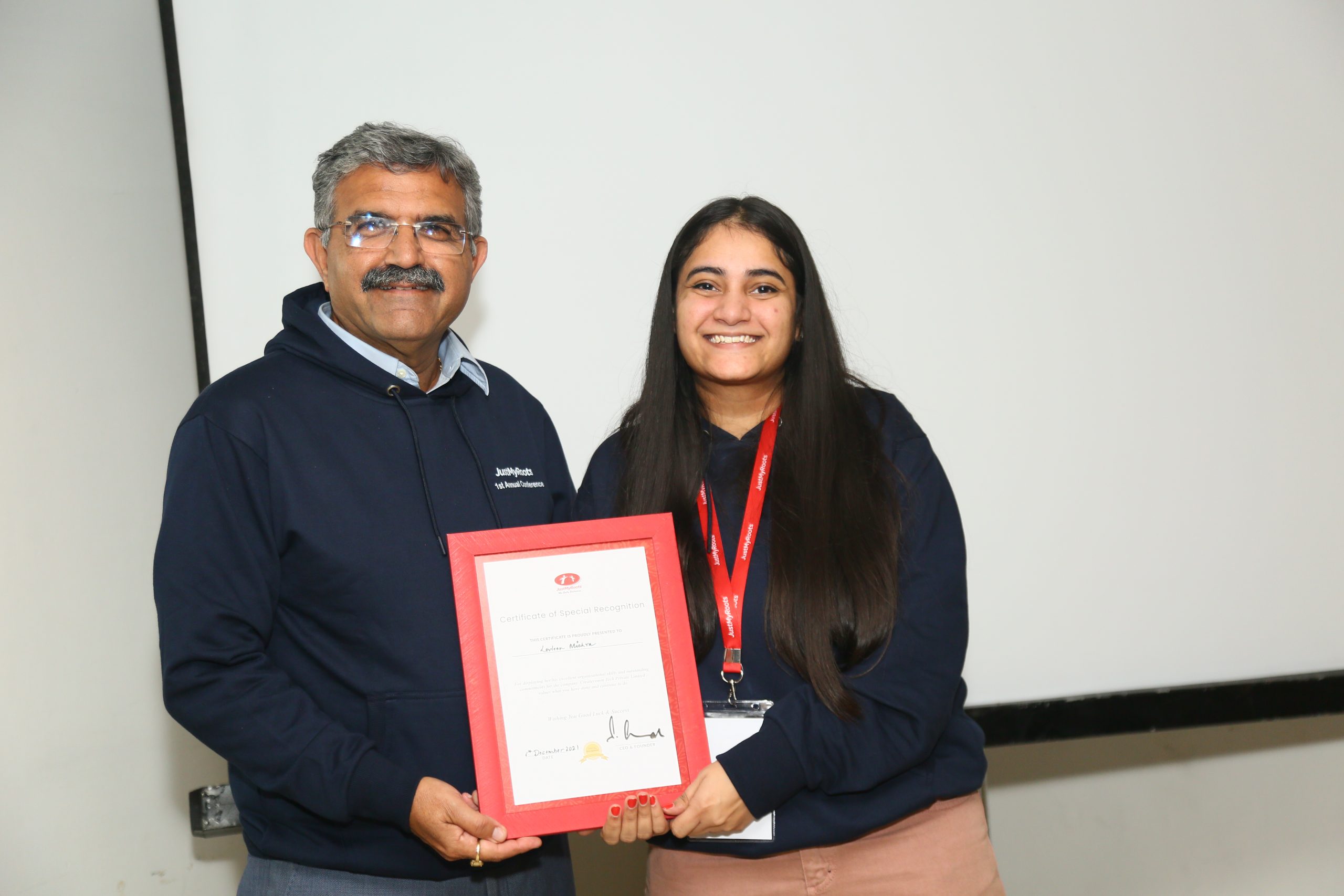
  • In conversation with Lovleen Mishra, Manager-Legal at JustMyRoots, an intercity food delivery company, sharing her experience of taking up diverse roles in the Legal field.

    In conversation with Lovleen Mishra, Manager-Legal at JustMyRoots, an intercity food delivery company, sharing her experience of taking up diverse roles in the Legal field.

    This interview has been published by Sonali ParasharOjuswi Sahay and the SuperLawyer Team


    To start at the beginning, was studying law a pre-decided career path for you? What was your motivation behind growing within the legal field?

    I wanted to be many things, but a lawyer was never one of them. I stumbled upon the idea of studying law in a casual “if not this then what?” conversation with a classmate, did a crash course on law immediately after my high school graduation (not that it was of much help), and the rest is history. During law school and in my professional career I have realised that being a lawyer is not just about the law. You have to be a meticulous writer, a conversationalist and most importantly you should know how to read between the lines. 90% of being a lawyer probably is understanding what people need from you and with time you can learn and grow into the remaining 10%. I reckon this is what interested me the most, the 90% and motivation came naturally with it. 

    You started your journey with litigation and had an experience of practice at the Supreme Court of India, where you litigated on matters related to film and media. How would you describe this experience of yours?

    It was exhilarating, to say the least. It had the excitement and eagerness of the first job and the anxiety of everything else that was my first as well. Litigation like any other thing comes with its own pros and cons. I was given the chance to learn from the best and since we had a lot of film and media matters, there were a lot of movie screenings in our chambers where we had the petitions opened in front of us and we formed our arguments. Most of the film and media petitions are usually filed a week before the movie’s premiere, so all we have is one week. There are sleepless nights and hours and hours of research which go into creating a brief. These matters are stressful for both, the client, and the advocate since the hearing takes place a day or two before the premiere and what we have at stake is years of hard work of hundreds of crew members and the money that went into making the film. In this job every day I thought through the perspective of the other party and my time management skills enhanced drastically while working here.

    Working for Sapphire and Sage on MSME, Arbitration and Energy Laws matters while heading the firm’s MSME and Energy Laws Teams, what motivated you to change your path this way, and how did this change treat you?

    Though I had been in various arbitration proceedings before, when I started working for S&S, I was given my first independent matter of MSME Arbitration. I knew the bare minimum about MSMEs so honestly, it was not I who specifically went for this change, but an opportunity presented itself and I took it and with that matter, my journey started in the field of MSME. As for the Energy Laws; I graduated with Energy Law Hons. from UPES, Dehradun. During the first wave of COVID, our partner at the firm suggested that we start exploring the solar energy industry. So, we started working with industry professionals and subject matter experts; hosted webinars and wrote handbooks on both MSME and Energy Laws. During my time with S&S, I not only worked on the above matters but explored Aviation, Real Estate, and Criminal and Corporate Laws. I remember the Partner in our firm used to check our drafts with a pencil in his hand and everybody would gather around and compare to see who had got the least slashes on their drafts. It was here where I honed my drafting skills and with each document, the number of slashes decreased. 

    You are currently working for JustMyRoots in the capacity of Manager-Legal. Tell us a bit about the organisation and your role in it?

    JustMyRoots is an intercity food delivery company. As the description suggests, it is a platform through which one can send perishable food products from one city to another. JustMyRoots has developed a special food packaging which keeps the food fresh for 24-36 hours by maintaining the temperature between 5-8 degrees Celsius and keeping the moisture intact. The work here is exciting and challenging at the same time. Every day we try to be better than yesterday and with that, we work on things we have never explored before. I currently head the legal department here and majorly work alongside the other departments in contract drafting and vetting, negotiations, advisory, compliances, investments, new projects, and strategy. Since we are a small company; apart from the law, I delved and worked in every single department of the Company and with that, I grew here more in the past year than I did in my entirety of law school and career. I have been fortunate to be a part of every new project. Each day is a new opportunity, and the learning curve has always gone up.  

    Your organisation JustMyRoots is a unique build in itself. What aspirations of growth do you hold for it in the future?

    It is, isn’t it? I was elated to see that something like this actually exists. We are present and operational in 30 cities in India; I hope this number increases exponentially and with that, every single person in the world can taste their nostalgia. 

    What are some of the highlights about each sector you’ve worked in, which you believe could be a guiding factor for upcoming Law graduates?

    Let me give you a quick black and white rundown. Film and Media are fast-paced and come with very high risks. In my opinion, MSME matters take comparatively less time to get resolved but the number of appeals is very high. Documentation in Energy Laws is very exhaustive, and you’d be surprised to see the requirements of water in the Solar PV Plants. If you are an in-house counsel, you must know everything about everything (at least the matters which concern your company). But I want the upcoming graduates to know that everything comes with its flaws and maybe some of the flaws are acceptable to you while some are not and that is okay. It is okay to not have a plan or to know everything about the profession you are in. It is okay if the cons of a sector are too much for you to take or if you are stuck at a place without the means to choose something else. I want them to know that not everyone’s career starts at the same age, at the same time, and in the same manner so if you see someone succeeding at 20 or 25, don’t think any less of yourself. It is also okay if you are having doubts about your choices, I have seen people who chose an entirely different career path for themselves after law and are content with their lives. There is no time limit to be whoever you want to be and do whatever you want to do. But I hope that you have the courage to change, make mistakes, and work towards the things that excite you. 

    How has the shift from litigation to Law firms to your current role of Manager – Legal been for you? Do you plan to explore litigation again in the future?

    From an organisational perspective; I have been rather lucky to have the support from my colleagues to make the transition seamless. On the other hand, the shift changed my way of looking at legal issues. I do not think that I will be exploring litigation again in the future. I thoroughly enjoyed my work while being there but over time I have realised that it wasn’t really my calling. That being said, it is my perspective today and it might change a few years down the road.

    Finally, being a woman in Law, what advice do you have for upcoming aspirants, especially the females in the field?

    As I mentioned earlier, there are no rules to this thing. The only advice I can give to the upcoming aspirants is to be the change they want to see in the world and to never give up on their dreams. The rest will follow. We have miles to go before we sleep!


    Get in touch with Lovleen Mishra –

  • Sanjit Ganguli, Legal Manager, ICICI Bank, on roles and responsibilities of a legal counsel; and the finance and banking sector

    Sanjit Ganguli, Legal Manager, ICICI Bank, on roles and responsibilities of a legal counsel; and the finance and banking sector

    Sanjit Ganguli graduated from the Symbiosis Law School, Pune in 2018. He currently works with the Corporate Legal Group at ICICI Bank. He regularly advises on, negotiate and structure domestic and cross-border transactions for the Corporate, Project and Structured Finance portfolios of the Bank. He is also actively involved in loan and asset recovery proceedings for the Bank before the National Company Law Tribunal and other forums.

    In this interview, we speak to him about:

    • Roles and responsibilities as Legal Manager at ICICI Bank
    • Experience as an in-house counsel
    • Importance of Certificate Courses for Law Students
    • Bagging internships at top-tier law firms
    • Importance of writing research papers.


    HOW WOULD YOU LIKE TO INTRODUCE YOURSELF FOR THE BENEFIT OF OUR READERS?

    Sanjit Ganguli is currently a legal manager at ICICI bank. He graduated from Symbiosis Law School, Pune. During his time at college, he participated in various moot court competitions, parliamentary debates and Model United Nations both at a national and international level. He has also published and presented papers at conferences and journals of national repute. He has interned with numerous top law firms in India with a strong academic record. In 2014 he was the only resident Indian invited to chair/judge a committee at the Ivy League Model United Nations held in India that year. Sanjit is an enthusiastic young lawyer who is always looking for new opportunities to learn, improve his skills and hone his craft

    Apart from the law, Sanjit is a budding wildlife and street photographer, a die-hard Bengaluru Football Club fan and a huge connoisseur of food with an insatiable appetite to travel and explore new frontiers. Sanjit is an alumnus of Bishop Cotton Boys’ School in Bangalore.

    AS LEGAL MANAGER AT ICICI BANK, WHAT ARE YOUR ROLES AND RESPONSIBILITIES?

    I work with the Corporate Legal Group at ICICI Bank. My role largely entails, drafting documents, structuring, negotiating and advising on domestic and cross border finance transactions that the Bank is a part of. I also work on debt and asset recovery proceedings before the National Company Law Tribunal and various other forums.

    DID YOU ALWAYS INTEND TO WORK AS AN IN-HOUSE COUNSEL OR DID YOU HAVE OTHER PLANS? WHEN DID YOU ZERO IN ON THIS CAREER TRAJECTORY?

    When I was in my fourth year, I was interning with the Finance practice at AZB Partners and I really enjoyed working in the Banking and Finance space. At that juncture, I felt that to succeed in this industry one required a thorough knowledge of the commercial aspect that the law was being employed for as well and ICICI Bank seemed to be the perfect fit for that. Also as in-house counsel, you get to learn every aspect of the Banking and Finance Industry and encounter a wide array of problems that require legal advice. I also have the privilege of working with and learning from not only some of the best legal minds in the country but some of the brightest and leading individuals of the finance sector in India.

    DID YOU METICULOUSLY PLAN YOUR INTERNSHIPS? DO YOU HAVE ANY TIPS TO OFFER TO LAW STUDENTS WHO INTEND TO INTERN AT TOP-LEVEL LAW FIRMS?

    Yes, I did have a basic road map. I explored both litigation and corporate law firms and various practice areas within corporate law such as capital markets, general corporate and Project/Banking and finance before deciding on my area of interest and then pursued internships in my desired field. For students looking to intern at a top level law firm, they must plan their dates and apply well in advance. Many firms have questionnaire/research questions with follow up interviews and one must prepare thoroughly for these and set aside time from their college activities for this. In my personal experience, a good performance at a moot court competition/research conference organized by a firm also goes a long way in securing an internship at the firm.

    WHAT EXTRA-CURRICULAR ACTIVITIES WERE YOU INVOLVED IN AT SLS? HOW IMPORTANT ARE EXTRA-CURRICULAR ACTIVITIES TO A LAW STUDENT?

    Law as a field of study offers the opportunity of multiple extra circulars (Research and Paper Publications/conferences, Moot courts, Parliamentary Debates, Model UN conferences, etc.) to enhance one’s research and oratory skills and me for one embraced all of the aforementioned with gusto. I maintain that a healthy mix of all these activities made my experience at SLS and unforgettable and thoroughly enriching one. Not only did these activities build my ability to build my analytical, research and soft skills it gave me the opportunity to travel across the country and in Asia, meet people from different law schools and legal professionals across the world from both common and civil law jurisdictions. These activities are hence not only academic and informative but also serve as huge networking opportunity which I believe is extremely essential for a young lawyer. I also had an engaging experience in student governance and was an active member of the Students’ Council or Student Advisory Board as it is now called at SLS and finished as Vice President at the Board.

    HOW IMPORTANT DO YOU THINK CONDUCTING RESEARCH AND WRITING RESEARCH PAPERS FOR PUBLICATION ARE?

    In my opinion, writing research papers are one of the important activities at a law school outside one’s curriculum. They help you delve deep and learn about various diverse areas of law the issues pertaining to them both in the present and the possibilities for the future. More than anything, while working on my publications I enjoyed the challenge of engaging multiple portals of research to arrive at the right answer to a research question. From burning the midnight oil in the library to circulating and questionnaires to your target audience, working on a research paper thoroughly improves one’s analytical skills

    ARE THERE ANY WAYS OF LEARNING YOU OPTED FOR APART FROM CONVENTIONAL CLASSROOM LEARNING, LIKE CERTIFICATE COURSES? HOW INSTRUMENTAL DO YOU THINK THEY ARE IN HELPING A LAW STUDENT WIDEN HIS/HER KNOWLEDGE?

    Yes, I took up various certificate courses in IPR, competition law, etc. while I was in college. They are extremely helpful in picking up legal knowledge which does not form part of the college curriculum and I find the knowledge gained through them extremely useful in my professional life. I also started pursuing my company secretary course while at college and that gives me a huge insight into the regulatory aspect of the law along with a detailed overview of the procedural requirements that a corporate lawyer should be aware of.

    WHAT ARE YOUR THOUGHTS ON MOOTING BEING CONSIDERED A NON-NEGOTIABLE ACTIVITY IN MOST LAW SCHOOLS? DO YOU HAVE ANY TIPS FOR LAW STUDENTS WHO MOOT IN UNIVERSITY?

    As someone who has mooted both domestically and internationally, I think participating in a moot court competition is an experience every law student should experience at least once. Mooting gives a law student a first-hand experience into the adversarial aspect of the law along with in-depth research into what is often a relevant and contentious point of law. This is, however, personal opinion and I wouldn’t go as far as to say that it is a non-negotiable activity as an extra-curricular activity. At Symbiosis, Pune however, we had Moot courts and mock trial advocacy regularly as part of our curriculum across our five years in various subjects ranging from Tort Law to Company Law to Criminal and Evidence Law which was something I personally enjoyed as we got to engage with the various subjects we were studying on a practical basis in a court room setting.

    For students looking to Moot at university, I would encourage them to participate in moots in diverse and different areas of law. It really helps to broaden one’s view and to learn not just different areas of law but different legal systems as well. The differences of pleading before different forums across jurisdictions make each moot a challenging but very rewarding experience and this can work as a great launch pad to decide the field of law one would want to set out on.

    DO YOU THINK LAW STUDENTS POSSESS A SOCIAL RESPONSIBILITY? IF SO, HOW DO THEY FIND OUTLETS TO HELP SERVE SOCIETY BETTER?

    I think the youth of today, irrespective of whatever field of study they are pursuing have a social responsibility to improve both the country and society. Law students because of their study of human rights backed by their strong constitutional awareness are strategically poised to help out in numerous NGO’s, think-tanks and even government organizations who working for the electoral, judicial and government reform as well as for the protection and upliftment of human rights/animal rights and the environment as well. Many of these organizations offer internships and later permanent positions which law students can take up.

    At Symbiosis, Pune we had a Legal aid cell which would among various initiatives organize workshops for free legal aid for the underprivileged. I am sure law schools across the country have similar clubs/cells which help develop social responsibility in law students

    WHAT WOULD BE YOUR PARTING MESSAGE FOR OUR READERS WHO ARE COLLEGE STUDENTS?

    Life at college is up there as my fondest memory. Always remember there are so many new avenues to learn. It is important not to get carried away by the pressure and rigours that come with college and enjoy the overall experience so that you can take away the most from it. A word of caution though, five years is a long time, make sure you have a basic plan and an end-game and while you enjoy five fantastic years with some of the best friends that you will make, never lose sight of that end-game.