Tag: Legal Partner

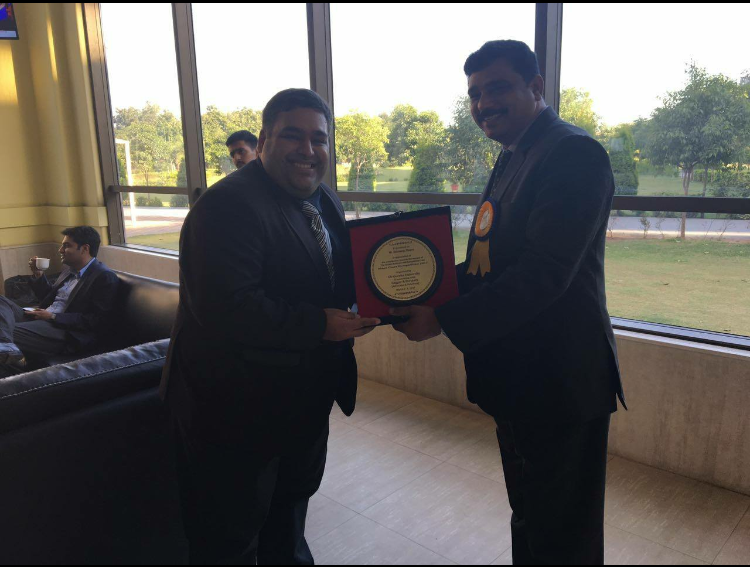
  • Increasing awareness about IP rights is crucial because it helps individuals and businesses understand the value of their Intellectual Property and how to protect it- Omesh Puri, Partner, LEXORBIS

    Increasing awareness about IP rights is crucial because it helps individuals and businesses understand the value of their Intellectual Property and how to protect it- Omesh Puri, Partner, LEXORBIS

    This interview has been published by  Priyanka Karwa and The SuperLawyer Team

    Sir, to start this interview, please tell our audience about how did you come into the legal profession?

    In my final year of graduation in Commerce, I developed a keen interest in the legal field. My fascination with law began as I studied Company law, Tax and Banking Regulations during my graduation. During my time at Law School, I found myself particularly drawn to criminal law, tax and intellectual property law.

    After completing my studies, I began my career as a Criminal lawyer, focussing mainly on bail matters and appearing primarily before Patiala House Court and Delhi High Court. However, after two years in Criminal law, I was presented with an opportunity to work in the field of Intellectual Property Law, which also included Information Technology, Advertising, IP transactions, and Cross-border IP issues. This new direction allowed me to broaden my knowledge and skills in the legal profession, and I found it to be a fulfilling and challenging experience primarily due to my likeness for Intellectual Property.

    Can you tell us about your experience in representing clients before different IP offices and courts in India? What are some of the most challenging changes you’ve witnessed?

    Throughout my career, I have advised and represented clients on a wide range of intellectual property (IP) protection and enforcement issues. Over the past 14 years, I have observed significant changes in the way IP offices and courts operate. Today, clients are more actively involved, and businesses are increasingly aware of the importance of intangible assets. As a result, lawyers are expected to possess a deep understanding of how a particular business operates and what kind of support they require from outside Counsel. It is essential to stay up-to-date with the latest Case laws, especially in the field of Intellectual Property (IP), where disputes are rapidly evolving, and the interpretation of Law is becoming complex.

    To resolve disputes, new avenues are being explored, and the increased use of technology has been particularly helpful in improving the IP Ecosystem. As a result, IP owners now have greater trust in India’s IP protection and enforcement mechanisms.

    Lawyers are generally less receptive to technology, and I too struggled in accepting new technology during the early years of my practice. However, given the rapidly changing technological landscape, it has become increasingly important for lawyers to be well-versed in the latest technologies to provide the best possible services to clients. As a result, lawyers are now expected to be more technologically sound than before. At LexOrbis, we promote the use of technology among our lawyers/patent agents and paralegals to streamline their workload.

    You’ve worked with clients across a variety of industries, including pharmaceuticals, food and beverages, fashion, and automobiles. Are there any industry-specific challenges you face when it comes to protecting and enforcing IP rights?

    Each industry presents unique challenges when it comes to protecting and enforcing Intellectual Property (IP) rights. In the past, we had more clients from traditional businesses, but in recent years, we have seen an increase in clients from the more sophisticated technical and innovative sectors. Every day, new businesses emerge that require guidance from IP lawyers, and this is one of the most exciting aspects of the job – learning about innovative and unique products and services.

    Collaborating with various industries can expand your knowledge and perspective. For example my experience working with clients in the pharmaceutical industry has highlighted the importance of innovation and public health issues in regulated industries. Similarly, my work with clients in the food and beverage industry has taught me about the significance of branding and consumer trends. Through my involvement in the fashion industry, I have come to recognize the industry’s rapid pace and the constant demand for innovation. Similarly, my time working in the automobile industry has emphasized the significance of sustainability and technology.

    Overall, my work with clients across diverse industries has equipped me with a well-rounded perspective and adaptable problem-solving skills that can be applied to a wide range of business challenges. I believe that as lawyers, our first approach should be to understand our clients’ businesses and the disputes at hand, and then draw upon our experience to resolve them. It is essential to have a deep understanding of each industry’s specific needs to provide effective legal solutions that are in sync with the business requirements.

    In addition to your legal work, you’re also involved in IP rights awareness campaigns with government organizations. Why is it important to increase awareness about IP rights, and what are some of the most common misconceptions you’ve encountered?

    Increasing awareness about IP rights is crucial because it helps individuals and businesses understand the value of their Intellectual Property and how to protect it and in case of violation, what all actions can be taken. Many people have misconceptions about IP law, such as believing that everything can be freely used and shared on the internet or that copying someone else’s work is acceptable as long as it’s not for commercial purposes. These misconceptions are so rampant and therefore it’s crucial to educate the public about IP law.

    You’ve authored several articles on IP law and regularly speak on IP issues at various forums. Can you tell us about a recent development or trend in IP law that you find particularly interesting or impactful?

    Intellectual Property matters are constantly evolving, as businesses continue to develop and encounter fresh issues that require attention. An intriguing trend that has emerged recently is the increased demand for Intellectual Property protection in emerging markets such as the Metaverse, NFT, and Artificial Intelligence markets. The companies are confronting challenges in safeguarding and enforcing their intellectual property rights in these new sectors, and I believe that legal professionals specializing in Intellectual Property must broaden their focus in order to effectively protect their clients’ interests.

    Coming towards the end of this conversation, please give tell our audience about the most valuable lesson of your life.

    The most significant lesson that I’ve learned is to remain curious and to never stop learning like a child in the school. As a legal professional, it’s crucial to stay abreast with the latest developments in Law and Business since they are ever changing. I believe that ongoing expansion of my knowledge and skill set enables me to provide superior legal guidance to my clients and keeps me excited and involved in my job. It’s critical to keep up with recent Court decisions and intellectual Property Office practices. Additionally, I prioritize my interests outside of work as well, such as playing Cricket and riding motorcycle over the weekends.

    Get in touch with Omesh Puri-
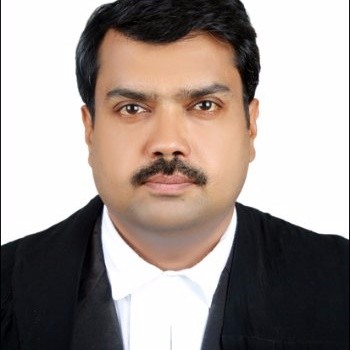
  • Participation in competitions and conferences enhances the networking among likeminded professionals- Krusch Pathippallil Antony, Partner, Arbitration at King Stubb & Kasiva, Advocates & Attorneys

    This interview has been published by Priyanka Karwa and The SuperLawyer Team

    What led you to pursue a career in law and alternative dispute resolution (ADR)?

    To be a part of justice delivery mechanism, and to uphold the constitution of India, I took law as a professional career. Peace-making efforts, and to build a global career, ADR is the best choice. Practising negotiation, mediation and arbitration, with the emergence of ODR is the path for professional advancement to me.

    Could you tell us about your educational background and how it has contributed to your career in law and ADR?

    I am a Law Graduate from Govt. Law College, Ernakulum, under the M.G. University, Kottayam, Kerala. Masters in Business Laws from NLSIU, Bangalore; and MA in Economics from GIPE, Pune. The mix of Economics and Commerce, as the base education, with further certifications in Arbitration / Mediation and Negotiations helped me to concentrate on commercial disputes and resolutions.

    You have been practicing law and ADR for over two decades. How has your experience evolved over the years?

    Over the years I gained more exposure in negotiations, conciliations, mediations and Arbitrations. The more exposures in Banking and Finance as a Corporate In-house counsel helped me to become a professional in Corporate Laws, Debt Counselling cum Mediations and Arbitrations.

    Could you explain your role as an Associate Arbitrator at the Chartered Institute of Arbitration (ACIArb), U.K? How has this position influenced your work in ADR?

    The association with CIArb helped to get sufficient exposure in International Arbitration, and more particularly as to writing of Arbitration Award. This helped me get enough confidence in handling Arbitrations, as a sole arbitrator, and ultimately to get branded as a dispute resolution practitioner.

    You are an accredited arbitrator and mediator at the Indian Institute of Arbitration and Mediation (IIAM). How has this accreditation impacted your career in ADR?

    The accreditation further helped me to get branded as a DISPUTE RESOLUTION EXPERT in the Indian ADR Market; and got associations with National Law Schools and Law Colleges, in various capacities like Guest Faculty, Judges for International Mediation , Negotiation and Arbitration competitions, conferences and symposiums e.t.c.,

    You have also been involved in several international law school competitions as a panel judge for arbitration and mediation. What motivated you to participate in these competitions, and what have been your experiences?

    Participation in competitions and conferences enhances the networking among likeminded professionals. Moreover, we understand the progress of the law and ADR through the young minds in law schools, and emerging practices in ODR & AI.

    As a partner at King Stubb & Kasiva, Advocates & Solicitors, you practice arbitration and litigation across three cities in India. What inspired you to establish this partnership, and how has it contributed to your work as a legal expert?

    Association with King Stubb & Kasiva, Advocates & Solicitors, opened the doors for practice of International and National Arbitration litigations of prominent corporates. Exposure through such association is unique and inspiring, and enhanced my legal expertise.

    You are a member of several ADR societies, including the Asian Institute of Alternative Dispute Resolutions (AIADR), Kuala Lumpur, and the Nani Palkhivala Arbitration Centre in Chennai. How have these societies contributed to your work in ADR?

    Association and membership with credible ADR institutions in India and abroad is crucial in developing ADR as a professional career, and I gained immense knowledge, information and networking through the same.

    You have completed several training courses in arbitration law and practice, including the Advanced Course on Arbitration & Mediation Procedure under WIPO Rules – WIPO Academy. How have these courses helped you grow as a legal expert in ADR?

    IPR and ADR is an emerging field with international scope in practice. WIPO Academy standards of ADR in the domain field of IPR is unique, and the ultimate course of global reputations; and further the course gives opportunity for international networking of IPR professionals and ADR Experts.

    Get in touch with-

  • No dispute settlement mechanism is free from problems or misconceptions that surround them, and international commercial arbitration has not been immune from that- Tamal Mandal, Partner, Luthra and Luthra

    No dispute settlement mechanism is free from problems or misconceptions that surround them, and international commercial arbitration has not been immune from that- Tamal Mandal, Partner, Luthra and Luthra

    This interview has been published by Priyanka Karwa and The SuperLawyer Team

    To start this conversation, please tell us your motivation behind pursuing law.

    I am from that era when engineering or medicine were the preferred career choices. Hailing from Kharagpur, with the IIT KGP – a stone throw away – the expectation was that I would sit for the JEE. However, it was a chance discussion before the Class 12 board examination with a friend who wanted to pursue law as a career option that piqued my interest in the field.  

    From there, I started my internet research and mind you, at that time around 2004, there were only a handful of National Law Schools (five to be precise). I narrowed down on NUJS, Kolkata and NLSIU, Bangalore. As compared to now, there was not much information available online or offline regarding career options after graduating or even what to expect in the 5 years that I was going to devote in studying and hopefully enjoying my university life. Having decided to become a first-generation lawyer, I took the plunge and appeared for the NUJS entrance test in January 2004 and then the NLSIU test over the summer. To my surprise, I made it to NUJS and the result filtered in just prior to writing my final paper of the ISC (Class 12) board examination. There has been no turning back since then.

    You have extensive experience in international and domestic arbitration, WTO dispute settlement, and commercial litigation. Could you tell us about a case that you found particularly challenging and how you managed to resolve it?

    To my mind, the best part of being a disputes lawyer is the wide array of dispute related work that I have done over the years. Whether it is litigation or arbitration or WTO dispute settlement or investor-state dispute, I can safely say that the core premises more or less remain the same.

    That said, if I have to choose one challenging case that I have worked on in the last 14 years, it has to be an arbitration dispute where I had a tough ask to resist the enforcement of a foreign award rendered in Singapore in an international commercial arbitration from being enforced in India. The client having failed in getting the award set aside in Singapore (which was the seat of the arbitration and whose courts had jurisdiction in setting side proceedings) wanted to contest the enforcement petition filed before the Delhi High Court. I had to work with very limited grounds as Part II of the Arbitration & Conciliation Act, 1996 does not provide a wide latitude when it comes to opposing the enforcement of a foreign award. Nonetheless, basis research on the party who had filed for enforcement, some novel arguments on contravention of public policy were formulated and advanced as that party’s (i.e., the claimant in this case) name had been struck of the register of companies by the Registrar prior to the filing of the enforcement petition. In other words, the argument was that an enforcement petition could not have been filed by a non-existent entity and granting enforcement would be contrary to the public policy of India. This is turn led that party to file an application for restoration of the name of the company in which my client filed an application as an intervenor. Eventually, with all the lawyering and proceedings, both the parties opened talks with a view to negotiate a settlement.

    What are some common misconceptions people have about international commercial arbitration? How would you address these misconceptions?

    Arbitration as a mode of dispute settlement has been well received since the days of the Alabama arbitration in 1872. I don’t think there are many disagreements as to the value and efficacy of the process given the amount of party autonomy that is vested and from the fact that a wide variety of disputes (commercial, investment, trade, maritime, etc.) have been resolved using arbitration.  

    That said, no dispute settlement mechanism is free from problems or misconceptions that surround them, and international commercial arbitration has not been immune from that. To my mind, the most common recent criticism or misconception (if I may equate the two) concerns the costs of running with an arbitration. From the arbitrators fees to counsel fees to institution fees, it is true that there has been an uptick in the cost that a party has to bear in choosing to arbitrate a dispute. However, I believe that the cost aspect is often offset by the efficiency of the process which can lead to an arbitral award in a much shorter time frame compared to national court proceedings. Second, “well managing” an arbitration is partly in the hands of the parties and their counsels, and this can bring down costs, for example, agreeing and respecting timelines, having a document only arbitration when the claims are simple and evidence is not required, etc.

    Another common misconception is that a party nominated arbitrator means you have someone on your side. The fact that arbitrators, whether it is the presiding arbitrator or the party nominees, have to be impartial and neutral is the bedrock of arbitration and to expect anything to the contrary is equivalent to discrediting the process itself.

    Lastly, the so-called “standard” arbitration clauses from the past are fast losing their relevance. With the blinding evolution of the laws and processes in international commercial arbitration, having a tailor-made arbitration clause in a contract/agreement that is being negotiated is a must to not only safeguard a party’s right but also add to the efficiency of the process when a dispute materialises later from the performance or non-performance of that contract/agreement.    

    You have worked with the WTO as a Dispute Settlement Lawyer in the Appellate Body Secretariat. Could you explain to us the role of the Appellate Body and how it works within the WTO dispute settlement system?

    The World Trade Organization (WTO), as many of the readers may know, is an intergovernmental organization based in Geneva, Switzerland that was established in 1995 and deals with rules of global trade. While one function of the WTO is to negotiate new rules on global trade, the other main function is to resolve disputes between Member States arising from the interpretation and application of the WTO treaties.

    In a first of its kind in the international arena, dispute settlement at the WTO was designed as a two-tiered system. To begin with, if a dispute is not resolved amicably in consultations, a panel of experts (simply called a panel) then decides the dispute that is brought by one WTO Member against another WTO Member alleging that the latter has violated or acted inconsistently with the treaty obligations it took upon itself. A panel issues a ruling which is called the Panel Report. The losing WTO Member has the right to appeal a Panel Report to a standing body of 7 experts who comprise the Appellate Body which at the time of its creation was termed as the jewel in the crown of the WTO. Each Appellate Body Member is appointed for an initial term of 4 years and can be extended for a second 4-year term.  

    The Appellate Body is therefore the final arbiter of disputes between WTO Member States and hands down decisions that are binding upon the litigants. The Appellate Body has the power to consider questions of law raised in an appeal and then to uphold or reverse or modify the panel’s ruling. Each appeal before the Appellate Body is handled by a division of 3 Appellate Body Members in accordance with the timelines prescribed in the WTO Dispute Settlement Understanding. The Appellate Body Members are ably assisted by the Appellate Body Secretariat comprised of lawyers and support staff.

    However, since late 2019, the Appellate Body is no longer functional owing to the United States blocking the appointment of Appellate Body Members. Talks are continuing in Geneva on how to resolve this crisis that requires consensus of all WTO Member States. In the meantime, for those who are wondering as to what is happening to any appeal that is filed, sadly panel reports that have been appealed since 2020 are lying still without any adjudication.  

    You are skilled in providing input into policy framing, strategic planning, and decision making. What are some of the challenges you have faced when advising clients on these matters?

    Much of it depends on who the client is. For instance, when the client is a sovereign government, the considerations and challenges are slightly different. In advising Ministers and policy officials who may want a particular policy to be in place, one has to carefully balance articulating the magnitude of legal risk in having such a policy and what could happen if the policy was to be successfully challenged. In such instances, while there may be commercial considerations, the other important consideration is to carefully consider the larger public interest as well reputational risks in having such a policy in place. Thus, there is an inherent balancing act that a lawyer has to perform between, on the one hand legal risks and, on the other, the policy rationale.

    When I have to do the same for a private client, commercial and reputational considerations become the key. And then I have to be upfront about the uncertainty of what may result from litigating/arbitrating a matter vis-à-vis costs of pursuing it, commercially as well as reputation wise. Let me give you an example, while arbitrating a dispute can result in an award relatively quickly, one has to also consider how best to enforce that award, where to enforce that award and how long will that process take. When such considerations are put forth before clients, they appreciate and take that on board and more often than not involve the layer in making a final decision.      

    You have a Master of Laws (LL.M) in International Dispute Settlement. What inspired you to pursue this field of study, and how has it influenced your career?

    From my early days in NUJS, I was pretty certain that I wanted to be a disputes lawyer. So, when I started out with the dispute resolution team at the erstwhile Amarchand & Mangaldas in 2009, I was exposed to a wide variety of proceedings before different forums – from the Supreme Court to district courts, from arbitration to mediation sessions, criminal proceedings, etc. And these varied experiences set off a spark in me to explore the field of international dispute settlement, like proceedings before the International Court of Justice (ICJ), state-to-state dispute settlement at the WTO, investment treaty arbitrations, etc.

    Thus, the MIDS or the LL.M. in International Dispute Settlement offered jointly by the University of Geneva and Graduate Institute of International and Development Studies became the natural choice given the stellar teaching cast and its location in the heart of the practice of international law and diplomacy.

    Be it public or private international law, MIDS provided me with an unparalleled experience in the field of international disputes. The MIDS was pivotal in my subsequent journey as an international disputes lawyer. It provided me with the platform to pursue an internship with the Appellate Body Secretariat which later materialised into a full-time position as a dispute settlement lawyer. My time at the Appellate Body Secretariat was thoroughly exciting given the types and kinds of disputes that came up for consideration at the WTO in addition to the lifelong friends I made while working there. The WTO stint in turn set me up for a position with the UK Government in London to work on UK’s international disputes engagements prior to my return to India where I am currently a Partner in Luthra and Luthra’s dispute resolution practice.

    Lastly, what advice would you give to young lawyers interested in pursuing a career in international trade law and dispute resolution?

    From my experience thus far, I can perhaps offer a couple of insights: first, do try and pursue higher studies from an institution and subject of your liking whether it is in the United States, the UK or mainland Europe or anywhere for that matter. I found my year of reading the LL.M. to be fulfilling not only in terms of what I learnt but also in terms of meeting new people, making new friends and getting to know different cultures especially when batchmates come from across the globe.

    The second piece of insight I have to offer to young lawyers is not to super specialise early on in your legal career. If somebody is interested in dispute resolution, try working on as many aspects of it that you can i.e., do court litigation, do an ad hoc arbitration, do an institutional arbitration, try your hand at tribunal litigation (for example before the CESTAT, NCLT) and better still work on a criminal law matter before the trial courts. Take my case, over the years, I have been lucky do all of the above and that’s why I always consider myself to be a generalist disputes lawyer which I believe has helped me tremendously in the varying roles that I have taken up the last 14 years.

    Get in touch with Tamal Mandal-

  • I believe that more minds need to understand and work on laws to govern emergency technology – Lynn Lazaro, Partner and Head of IP, Kochhar & Co., Bangalore

    I believe that more minds need to understand and work on laws to govern emergency technology – Lynn Lazaro, Partner and Head of IP, Kochhar & Co., Bangalore

    This interview has been published by Priyanka Karwa and The SuperLawyer Team

    Ma’am, as a conversation starter, please tell us reason behind you choosing law as a career? 

    I don’t come from a family of lawyers, so choosing law as a profession wasn’t the typical choice at the time. Law as a career played to my strengths. I was generally a curious child and I enjoyed reading, with a strong sense of self and wanting to do what’s right. Being a lawyer seemed like something I would enjoy for the rest of my life, and I still do 17 years later.

    Could you please elaborate your role as a cross border IP transactional attorney? 

    I assist foreign businesses that want to protect their IP in India, from identifying their IP assets to developing a strategy on how to protect this IP. This could range from a simple trademark or patent filing to a complex contentious dispute. In the transactional space, I assist international companies doing business in India by helping them negotiate the purchase or license of their IP assets. IP law in India has certain nuances that differ from other jurisdictions, particularly with the transfer of IP assets from one entity to another. My experience with these types of transactions has allowed me to provide very specific advice to companies where innovation is part of their business structure.

    How was your experience as a teaching assistant at La Trobe University? And what were your learnings from the same? 

    While I did my masters at university in Melbourne, I got a part time job as a teaching assistant in the same university. The role was to teach third year business students the Australian Corporations Law module. I would take the class with around 100 students in groups of 10-15 a class and go over their class work. It was pretty apparent from the start that these business students had no interest in law and were compelled to take the class as part of their business studies. So, I would set them interactive assignments, like play acting the cases that I needed them to remember. It was the most fun job I’ve had in my life. My biggest learning was not to take life too seriously and that work can be lots of fun.

    What keeps you motivated at work? 

    Motivating oneself is simply perspective. You can look at it as long shifts and mental exhaustion or you can feel the satisfaction of helping a client or winning a case. I choose the latter and that motivates me to put my best foot forward every day. Another huge motivation for me is to explore areas of law that many are afraid to touch, like the Metaverse and AI related concerns. This isn’t brand new; I’ve been watching and learning about this space for a few years now. I believe that more minds need to understand and work on laws to govern emergency technology. I’m very excited for the future.

    How do you spend your time off? 

    Like any other working parent, most of my time off is spent with my kids and their activities. It’s a balance of doing chores and spending time with the family. I have two daughters who will grow up to join other powerful women in the workforce. I am reminded daily of my duty to ensure that I lead by example.

    Coming to last question, any advise you would like to give to the budding lawyer out there?

    I’ve noticed lately that new graduates want jobs in one specific field of law right out of law school. Real world experience is needed for overall growth as a lawyer so my advice to new graduates would be to explore working in different fields of law initially before choosing to specialize in one or the other. Corporate law, in particular, is interconnected and an M&A lawyer with IP experience or a employment lawyer with some M&A experience would have an added advantage.

    Get in touch with Lynn Lazaro-

  • Dr. Abhimanyu Chopra, Partner at AZB & Partners In Conversation With SuperLawyer On Careers in Technology law & Many Other Options In Same

    Dr. Abhimanyu Chopra, Partner at AZB & Partners In Conversation With SuperLawyer On Careers in Technology law & Many Other Options In Same

    This interview has been published by Prabhjot Singh, Priyanka Karwa and The SuperLawyer Team

    What was your “slam-book career aim”? How well did it go?

    There wasn’t any slam book career aim as such, but if I have to consider the pivotal point at where I figured out what to do in life that would be in my second year of law school, where I had a couple of friends leave for national law schools after the first year and that made me think about the next steps in life. After that there was no looking back, I interned and mooted whenever and wherever I got a chance.

    All of the internships I did were with different types of organizations involved in diverse areas of law. The aim became to explore and experience everything in law to find my niche and I continue to follow and give the same advice to my juniors and peers as well. 

    For a law student, one must keep on getting evolved and updated with all areas of law to be a jack of all trades and to figure out what is one’s own perfect field to master. 

    As for how well it went, I leave that up to others to tell me. 

    You did LLM and now PHD from well-known universities, how do you carve out time for different responsibilities?

    Honestly, if you ask me about the higher degrees (both LL.M and my PhD) was solely because of my mother, who wanted me to have a “Doctor” in front of my name and nothing more. I don’t see myself reaching here without her nudge. 

    For the remainder of this question, “It takes a village to raise a child” for which I am extremely grateful to my seniors, mentors and colleagues, who stepped in and allowed me those absences from work and always had my back and encouraged me to do it and fulfil my mother’s dreams both professionally and personally. (It’s also one of the reasons that the Acknowledgement part in my thesis is over five pages long)

    On a side note, I encourage all students to keep studying alongside work and learning new areas of law in the early years since time is a commodity, which you have plenty of in your early formidable years and scarcely later in the profession. 

    You were an avid mooter in law school. Do you believe that mooting helps law students to face real-life scenarios?

    Absolutely, I believe that every law student should at least try one external moot during their stint in law school.  

    Mooting not only helps to figure out one’s likes or dislikes in the area of the specialization but also builds the fundamental traits required for an advocate. It helps you to think on your feet, research areas of law and recent issues which you remember forever and more often than not makes you more focused towards your final goal alongside making bonds of friendships with your batchmates and friends even stronger. 

    Nowadays, besides Mooting, there are a lot of different opportunities for law students such as Client Negotiations, ADR/ Mediation Negotiations, Model United Nations etc., which I believe all students should work on. I have been judging some of these new formats of competitions and it is pretty interesting and a good way of improving their oratory and communication skills given the international angle and exposure in such competitions. 

    As a first-generation lawyer, you have moved from a chamber practice to a tier-1 practice, how has your journey been so far? Would you say the opportunity a firm provides for a young lawyer is worth the trade-off in building a reputation?

    This is a complicated answer and this question has possibly taken me my entire career of 11+ years to think about and possibly answer correctly. 

    I think it was Matthew McConaughey who said, “I need each day, something to look up to, another is something to look forward to and another is someone to chase” which is what I would say has been my journey so far. It has been extremely fun filled with various learnings and lessons and has been extremely fulfilling. 

    I started with a wonderful senior and mentor, who trained me with the ways of the various High Court s and District Courts and provided me with the guidance, support to even take private matters and gave me opportunities to appear and address the Courts including my very first day at his chamber. I could give you stories upon stories as to why a good senior and mentor in the profession are key in one’s formidable years and that’s what makes or breaks you.

    Once he got elevated, I moved to another amazing lawyer and his firm, who gave me a lot of opportunities to spread my wings and allowed me to develop and learn the finer things in the legal profession and when I thought I was ready to move on the greener pastures I moved into the tier-1 setup with my current partner and team, who gave me ample opportunities in the most complex and high stake litigations and allowed me a free hand to do what I do best for which I shall be eternally grateful.

    While I believe, that my shift from chamber to tier-1 practice has not had any trade-offs as I have been graced with wonderful opportunities which have only accelerated my growth to become the best version of myself professionally. However, after being a partner in a tier-1 firm, I am of the view, that one shouldn’t directly start with a tier-1 firm at the beginning of their career especially if you have Disputes/Litigation as a career in mind since one needs basic leg work and understanding of the Courts which is not possible in the high-stress environment of the law firms and once you are aware of the basics then the shift to the hustle and bustle of the law firm is much more fruitful.

    In essence, you need to start from the peewee league and hone and develop your skill and game to reach the Yankee’s majors.

    What are your areas of expertise, and how did you come about them?

    My areas of expertise include civil, commercial and criminal disputes, domestic and international arbitrations (both institutional and ad hoc), Cyber, Insolvency and Bankruptcy Law, IPR, Telecom, Gaming and Competition Laws. 

    My mixed bag of expertise is essentially the exposure and opportunities that came my way and it continues to grow each day. 

    You are one of the few tech-savvy lawyers, how did your tech knowledge help during the Covid-19 pandemic?

    I have been arguing through Tablets and Laptops in the Courts and have been pretty much paperless for the past many years so when the virtual setup got expedited and replaced the traditional courts in the beginning, I didn’t face the learning curve which some of my peers did. I was in fact, amongst the first few listed cases when the Courts went completely virtual in various states and was able to argue my cases without too much trouble. Moreover, I had access to all of my files and data for the earlier matters and fresh filings etc. were done by scans so I managed the covid litigations from home fairly easily.  

    The Supreme Court, Delhi High Court and some of the other tribunals also started their e-filing portals so it was easier to have fresh matters filed, reviewed and argued completely digitally. We had tallied that during the pandemic we had filed and argued over 200 odd matters and it was all very seamless.

    Since we have the infrastructure now I hope that the e-filing and virtual system continue for times to come and doesn’t get disbanded. 

    You are a certified mediator with the Delhi High Court Mediation and Conciliation Centre “Samadhan”, tell us about your role and responsibilities.

    I was inducted as a mediator with Samadhan in the year 2017. Samadhan is the result of the joint initiative of the Bench and the Bar of the Delhi High Court who have committed themselves to Mediation as an appropriate method of Alternate Dispute Resolution. As a mediator, the organising committee assigns your cases and you do your best to assist the parties to reach their mutual settlement under the aegis of the Centre. Being the techno-savvy one, I have also assisted Samadhan to set up their website, which is live at https://dhcmediation.nic.in/

    What key tips do you suggest to the lawyers in the present scenarios?

    The legal fraternity has exploded with brilliant talent in recent years and as it continues to grow I have seen some stark improvements and differences. The newer generation of lawyers are confident and have a clear path to the areas of law that interests them.

    If I had to give my two cents for the newer lot and especially for the young budding lawyers who wish to explore litigation, is for them to have more patience, be more compassionate, embrace innovation and most of all stay passionate in this field. This field has a lot to offer but equally requires a lot from you.

    Remember that You can’t be an overnight success but with hard work and persistence, you will definitely prevail. 

    Besides the salient tips in the above questions, I leave my brethren with the thought of the famous comedian Jerry Seinfeld, “To me, a lawyer is basically the person that knows the rules of the country. We’re all throwing the dice, playing the game, moving our pieces around the board, but if there is a problem the lawyer is the only person who has read the inside of the top of the box.” 


    Get in touch with Abhimanyu Chopra-