Tag: Legal & Regulatory

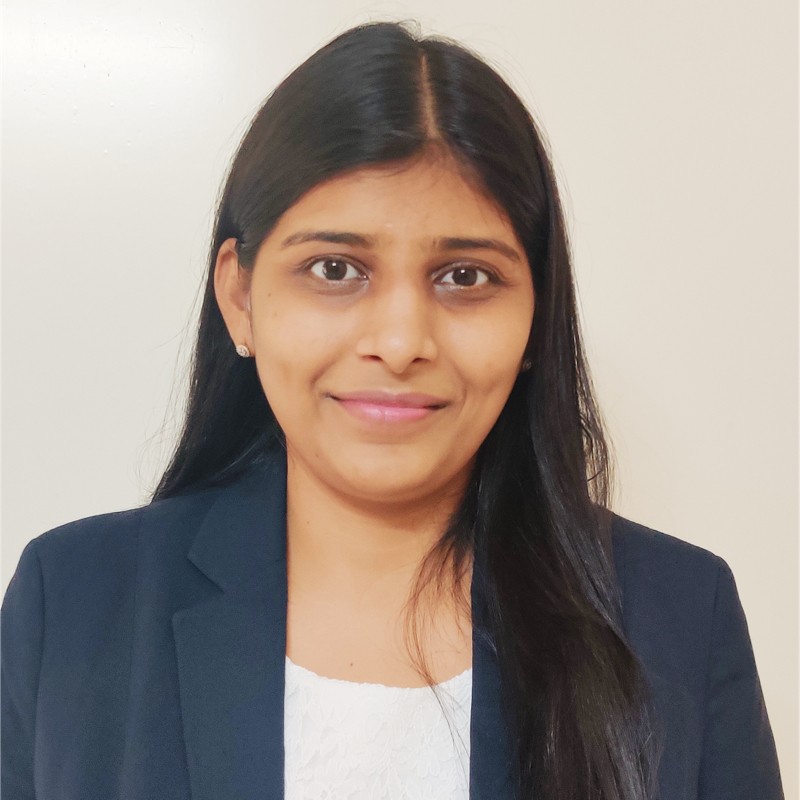
  • “Gender is not a barrier to success. I believe in creating a unique path, and it’s okay to take the road less travelled.” – Ibukunoluwa Owa, Lead, Regulations Unit – Legal Enforcement and Regulations Department at Nigeria Data Protection Commission, Nigeria

    “Gender is not a barrier to success. I believe in creating a unique path, and it’s okay to take the road less travelled.” – Ibukunoluwa Owa, Lead, Regulations Unit – Legal Enforcement and Regulations Department at Nigeria Data Protection Commission, Nigeria

    This interview has been published by Namrata Singh and The SuperLawyer Team

    You’ve had an impressive legal journey from Nigeria to working with leading firms in London and Hamburg. Could you share what inspired you to pursue law, and how your career has evolved over the years?  

    My decision to pursue a legal career was influenced by a combination of factors. While I cannot pinpoint a single defining moment, I am certain that law has always been a natural fit for me. Growing up, I was drawn to reading, arguing, and intellectual competitions. My parents, who are both lawyers, also played a role in shaping my aspirations.

    Before enrolling at the University of Dundee to study English Law, I completed a one-year foundation program at Global College in Lagos, Nigeria. During this time, I excelled in both economics and law but ultimately chose to pursue law due to my stronger aptitude for Law and English. I have never regretted this decision, as law has provided me with a dynamic and fulfilling career.   

    My career has evolved, and this has been marked by a continuous pursuit of knowledge and new opportunities. I have been privileged to work locally and internationally on interesting cases and projects and have also been able to successfully transition from the private sector to the public sector. 

    I believe my career evolution has been largely influenced by direction from God, intentional acts towards my goals, support from family and friends, networking, and a willingness and curiosity to embrace new challenges and opportunities. 

    Having worked with prominent arbitration firms in Lagos, London, and Hamburg, what key lessons have you learned about managing cross-border disputes that could benefit young lawyers entering international arbitration?  

    Before I specifically answer this question, I would like to state what I usually tell my friends and mentors when describing my experience in these three jurisdictions. While working at Aluko & Oyebode in Lagos, I learned the importance of hard work and dedication. 

    While working at WilmerHale in London, I learned that my career advancement requires proactive steps and I have the personal responsibility for my career growth. As one of fifteen international arbitration interns, I had to take proactive steps to stand out and contribute positively to the Firm. 

    While working at Hanefeld in Germany, I learned the value of efficiency and delivering high-quality work within short deadlines. 

    Aside from these anecdotes, thorough legal analysis, cultural sensitivity, effective communication skills and strategic planning are necessary for effectively managing cross-border disputes.

    In your current role with the Nigeria Data Protection Commission (NDPC), you’re shaping the country’s data protection framework. How do you think data protection laws can drive economic growth, and what challenges do you face in balancing innovation with privacy?  

    Thank you for this insightful question. I am proud to be working alongside brilliant professionals at the NDPC and relevant stakeholders to develop comprehensive and effective regulations. It is an interesting and dynamic role. 

    Data plays a crucial role in driving economic growth by enabling informed decision-making, fostering innovation, and improving efficiency. By protecting personal data and ensuring its responsible use, we can create a trustworthy environment that attracts investment, stimulates entrepreneurship, and promotes economic development.

    Balancing innovation with privacy is a key challenge in today’s digital age. At the NDPC, we prioritise the protection of citizens’ privacy rights while recognising the importance of fostering innovation. We strive to develop data protection laws that strike a balance between these competing interests, ensuring that citizens’ privacy rights are safeguarded while allowing for responsible data use in innovation.

    In your opinion, what new dimensions in law, such as technology and data privacy, should upcoming legal professionals focus on to remain competitive in the evolving global legal market?  

    The global legal market is constantly evolving, driven by technological advancements and changing societal dynamics. To remain competitive, upcoming legal professionals should focus on developing expertise in unique and contemporary areas of law to distinguish themselves. A few examples of these are; technology law; data privacy and protection; international dispute resolution; cyber security; anti-trust; and restitution law.  

    While it is important to specialise in specific areas, a strong foundation in general legal principles is essential for a successful legal career. 

    Throughout your career, have there been any cases or projects where the outcome didn’t go as planned? What did you learn from those experiences, and how do you view the role of failure in professional growth?

    Throughout my career, I have encountered cases and projects that did not unfold as planned. In these moments, I focus on understanding the reasons for these outcomes and developing strategies to resolve these issues. This often involves open communication with clients, strategic thinking and exploring alternative approaches. These experiences have been valuable learning opportunities, teaching me the importance of resilience, adaptability, and strategic thinking.

    Most times what we perceive as “failure” is often subjective, and shaped by our individual goals and inspirations. In my journey, I have come to view these “failures” as opportunities for growth and redirection. By embracing challenges and learning from them, young lawyers can develop resilience and a determination to succeed. 

    I believe that “failure” plays a valuable role in professional growth. It helps us to identify our strengths and weaknesses, develop new strategies, and ultimately achieve our goals. So instead of fearing “failure”, we should embrace it as a natural part of the learning process.

    You’ve been recognized as a rising star in the legal world. How do you personally define success in your career, and what values do you prioritize when working on high-stakes legal matters?  

    I define success as continuous growth and development in my legal career. This means staying curious, seeking new challenges, and striving to become better every day. 

    When working on high-stakes legal matters, I prioritise the following values; analytical skills; diligence; hard work; resilience; discipline and respect for colleagues.  

    As a successful female lawyer in international arbitration and data protection, what challenges have you faced in navigating these male-dominated sectors, and what advice would you give to young women aspiring to enter similar fields?  

    One thing that has defined my attitude to work is my belief that I can achieve anything I put my mind to and that my gender does not limit my capabilities as a legal professional. 

    I have also been fortunate to have the support of mentors, both male and female, who have continually provided advice and assistance at various stages of my career. In addition, having female colleagues who are equally excelling in their careers demonstrates that gender is not a barrier to success. 

    Initiatives like the Equal Representation in Arbitration, and ARBinBRIEF have been instrumental in promoting diversity and inclusion in international arbitration. ARBinBRIEF is a practical video guide on arbitration issues led by female practitioners. As a founding member, I had the privilege of working alongside talented and inspiring women from around the world. This experience was insightful and inspirational. 

    I would advise young women to have unwavering confidence in their abilities, work hard, pursue knowledge, seek mentorship, network actively, participate in diversity initiatives, and not be afraid to create their unique path. It is okay to take the road less travelled. 

    You developed a short documentary on the Arbitration and Mediation Act 2023. How did this creative process of storytelling influence your perspective on law, and do you believe more legal professionals should engage in creative forms of legal education?  

    Creating a documentary on the Arbitration and Mediation Act, 2023 (AMA) was a rewarding experience that allowed me to explore my creative side. I decided to pursue this at a period in my life when I had a bit of time. My main goal while developing the documentary was to educate professionals on the significance, potential impact, and rationale behind certain key provisions of the AMA.

    While producing the documentary did not significantly alter my perspective on law, it did open my eyes to the intricacies of visual storytelling. The creative process required skills beyond my typical legal practice, such as developing a theme, creating an effective teaser and video editing. 

    I firmly believe that legal professionals should explore creative forms of legal education. People are more likely to remember information presented compellingly and engagingly. In today’s digital world, incorporating visual storytelling can be a powerful tool for attracting clients, educating the public, and building a strong brand.  

    With such a demanding and diverse legal career, how do you find time to unwind and recharge? Are there any specific activities or practices that help you maintain a healthy work-life balance?  

    Balancing a demanding legal career with a personal life can be challenging. While the traditional concept of “work-life balance” may not always be achievable, I have found that integrating work into my life has been useful. 

    One thing I do to stay organised and manage my workload effectively is to prioritise completing small tasks during downtime. This includes responding to short emails during lunch breaks, catching up with projects on weekends, and creating weekly to-do lists on Sundays. This allows me to stay organised and avoid feeling overwhelmed.

    To fully unwind, I prioritize spending quality time with my family and friends, exploring new places and travelling. One of my personal goals is to visit a new country every year. This year, I was fortunate enough to travel to China as part of the NDPC delegation, which was a truly rewarding and insightful experience. 

    Get in touch with Ibukunoluwa Owa-
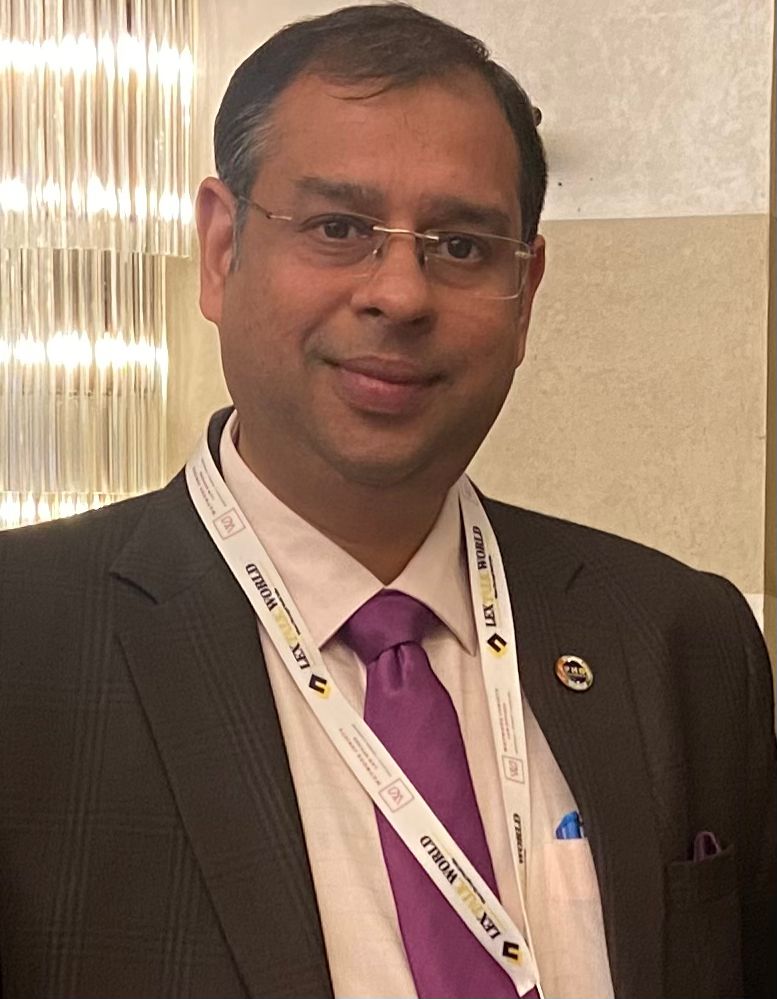
  • “Technology is revolutionizing legal and compliance functions, offering innovative solutions to streamline processes, enhance efficiency, and mitigate risks”- Ashish Pandey, General Counsel and Company Secretary, Luminous Power Technologies (P) Ltd.

    “Technology is revolutionizing legal and compliance functions, offering innovative solutions to streamline processes, enhance efficiency, and mitigate risks”- Ashish Pandey, General Counsel and Company Secretary, Luminous Power Technologies (P) Ltd.

    This Interview has been published by Pragya Chandni and The SuperLawyer Team

    Your career journey reflects a diverse range of experiences in legal, regulatory, compliance, and governance roles across various industries. What initially drew you to pursue a career in law and company secretarial services?

    My fascination with the intersection of law, business, and governance led me into the legal and company secretarial realm. The structured yet dynamic nature of the legal profession, coupled with the opportunity to make a tangible impact by upholding justice and promoting ethical conduct, resonated deeply with my values. Recognizing the pivotal role of governance and compliance in safeguarding stakeholders’ interests, I pursued company secretarial services to foster transparency, accountability, and regulatory adherence across industries.

    With over two decades of experience, including more than 10 years heading the secretarial department of listed companies, what pivotal moments or experiences shaped your expertise in corporate governance and compliance?

    With over two decades in corporate governance and compliance, including over 10 years leading secretarial departments of listed firms, I’ve been shaped by pivotal moments. These include navigating regulatory changes, managing crises, collaborating with boards, and participating in M&A. Ethical dilemmas and ongoing learning also contributed, deepening my understanding and enhancing crisis management and governance skills, ensuring relevance in a dynamic corporate landscape.

    Your profile highlights significant achievements, such as orchestrating complex business hive-offs and leading big-ticket arbitrations. Could you share a particularly challenging situation you encountered in your career and how you navigated through it?

    One notable challenge involved managing a high-stakes arbitration involving intricate contractual disputes. I strategically collaborated with legal experts, meticulously analyzed evidence, and maintained clear communication with stakeholders to navigate the complex legal terrain. Ultimately, our comprehensive approach led to a favorable resolution, showcasing resilience and strategic acumen.

    As VP Legal & Company Secretary at Luminous Power Technologies, you’ve led initiatives to enhance ethics and compliance programs, resulting in increased employee awareness and adherence to regulatory requirements. What strategies did you employ to achieve such notable improvements?

    Implementing a multifaceted approach, I initiated comprehensive training sessions, disseminated clear and concise compliance guidelines, and established robust reporting mechanisms to encourage ethical behavior. Additionally, fostering a culture of transparency and accountability, I regularly communicated the importance of compliance from top leadership down. These strategies not only heightened employee awareness but also cultivated a culture of integrity, resulting in enhanced compliance and regulatory adherence across the organization.

    Collaboration seems to be a recurring theme in your career, whether it’s fostering collaboration with stakeholders or leading cross-functional teams. How do you approach building and maintaining effective collaborations, especially in complex legal and regulatory environments?

    In navigating complex legal and regulatory environments, I prioritize open communication, mutual respect, and a shared commitment to common goals. By fostering an inclusive culture that values diverse perspectives and expertise, I promote active collaboration across departments and stakeholders. Regular meetings, clear delegation of responsibilities, and establishing common metrics for success help maintain alignment and momentum. Additionally, cultivating strong interpersonal relationships and demonstrating empathy fosters trust and strengthens collaborative efforts, ensuring collective success in achieving strategic objectives.

    Your experience includes extensive work in listed companies and leading rights issues. What unique challenges do you face in managing legal and regulatory matters in a listed company, and how do you address them?

    Managing legal and regulatory matters in listed companies presents unique challenges due to heightened scrutiny, stringent reporting requirements, and the need for transparent governance. I address these challenges by prioritizing proactive compliance measures, staying abreast of evolving regulations, and fostering a culture of transparency and accountability. Regular communication with regulatory bodies, thorough risk assessments, and robust internal controls help mitigate potential issues. Additionally, building strong relationships with legal counsel and leveraging technology for efficient compliance tracking are essential. By taking a proactive and collaborative approach, I ensure legal and regulatory compliance while facilitating sustainable growth and investor confidence.

    Implementing IT-based governance tools for monitoring trademarks, designs, and patents showcases your adaptability to technological advancements. How do you see technology shaping the future of legal and compliance functions, and what role do you envision it playing in the coming years?

    Technology is revolutionizing legal and compliance functions, offering innovative solutions to streamline processes, enhance efficiency, and mitigate risks. In the future, advancements such as artificial intelligence (AI), blockchain, and data analytics will play a pivotal role in transforming how legal and compliance tasks are performed. AI-powered tools can automate routine tasks like contract review, allowing legal professionals to focus on strategic initiatives. Blockchain technology offers secure and transparent transaction records, enhancing compliance with regulatory requirements such as data privacy laws. Data analytics enable proactive risk identification and predictive compliance monitoring, empowering organizations to anticipate and address potential issues before they escalate. Additionally, cloud-based platforms facilitate collaboration and information sharing, improving communication and alignment across departments. Embracing these technological innovations will be crucial for staying competitive and agile in a rapidly evolving regulatory landscape, enabling legal and compliance functions to proactively address challenges and drive business success.

    Finally, considering your wealth of experience, what advice would you offer to fresh graduates aspiring to enter the field of law, corporate governance, or compliance?

    For fresh graduates aspiring to enter law, corporate governance, or compliance fields, I offer several pieces of advice. Firstly, prioritize gaining practical experience through internships, clerkships, or entry-level positions to supplement academic knowledge with real-world insights. Secondly, continuously invest in professional development by pursuing further education, certifications, and staying updated on industry trends and regulatory changes. Additionally, cultivate strong communication, analytical, and problem-solving skills, as these are essential for success in these fields. Networking with professionals in the industry and seeking mentorship can provide valuable guidance and opportunities for growth. Lastly, demonstrate integrity, ethics, and a commitment to upholding legal and regulatory standards, as these qualities are highly valued in the corporate world. By embracing these principles and actively pursuing opportunities for growth and learning, aspiring professionals can embark on a rewarding and fulfilling career in law, corporate governance, or compliance.

    Get in touch with Ashish Pandey-

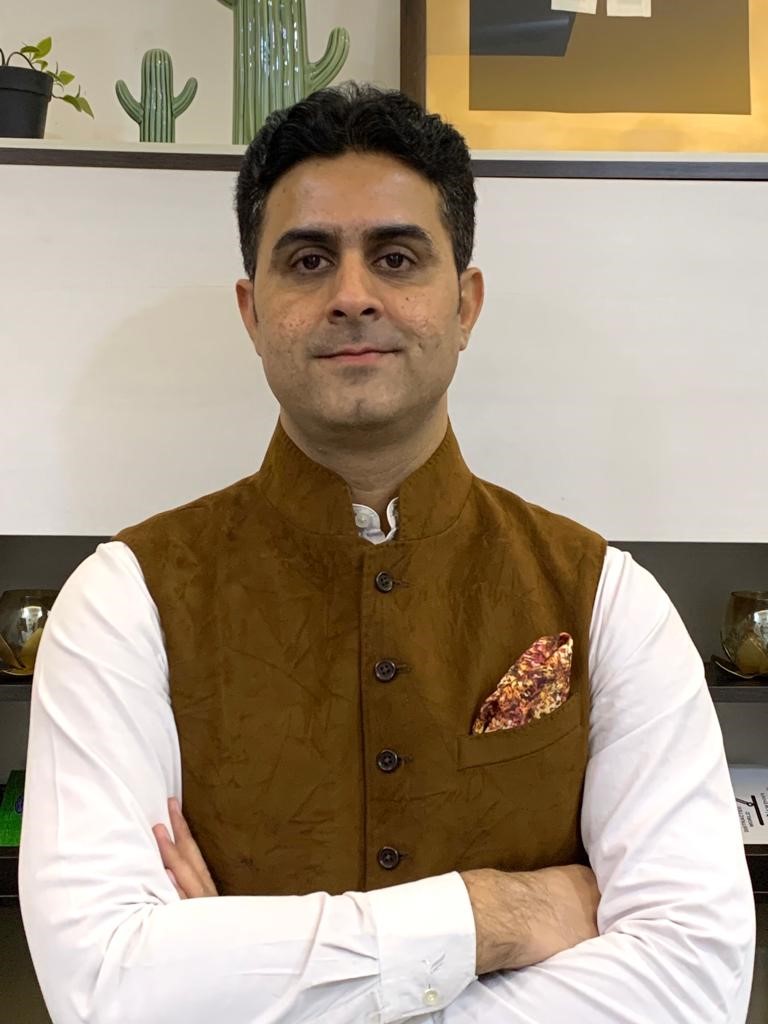
  • “There are no shortcuts in this profession, reading reading and reading.. is the only mantra to be successful, whatever be the circumstances, don’t compromise with your integrity” – Madhup Singhal, Founder & Managing Partner, MSA Legal.

    “There are no shortcuts in this profession, reading reading and reading.. is the only mantra to be successful, whatever be the circumstances, don’t compromise with your integrity” – Madhup Singhal, Founder & Managing Partner, MSA Legal.

    This interview has been published by Namrata Singh and The SuperLawyer Team

    Your academic background includes a BSc in Science before pursuing law. What inspired your shift from the Sciences to a Legal Career, Could you walk us through the challenges you faced during the initial stages of your legal career and how you overcame them?

    To answer this, I will have to take you through my early life which is quite interesting and of course would become inspirational once I establish a successful international law firm of repute for which I am endeavouring.  

    I was a good student of Science and I was preparing mainly for JEE along with my 12th Board exams. In the Board exams,  I could not even secure First Division as my complete focus was on clearing JEE. The only reason for not securing the First Division in my Boards was getting very less marks in Physics and Chemistry practical for the reasons best known to my then respected teachers of respective subjects, though I scored very good in theories. At that time it was a major setback for me which shattered  my confidence and (gave me a huge blow)caused a big depression as well. After that I dropped a year for JEE preparation but could not succeed again. Next year, I took admission in B.Sc. but kept preparing for JEE. Just before one and half months from JEE exams I had a fever which turned into Typhoid and later on into Measles , which ruined my entire preparation and so I could not get through the JEE exams again. Since I took admission in B. Sc. Therefore, at least my year did not get wasted and with overnight studies, I could manage a score of around 70% in BSc first year. Getting this kind of marks with very less studies was a big boost to my confidence and again I prepared for JEE. My preparation was good but unfortunately that year I along with my family had met with a very severe accident due to which I could not appear in my JEE exams. The accident was such severe that I lost my memory for more than 20 days. After this I decided to leave the Science stream and decided to join the CA course. After starting the CA course, everything was going very well. In my first year of article ship, I had started conducting audits of Banks and Companies Independently. My first CA attempt was in November 1998, my preparation was good but suddenly in the last week of September 1998, I started feeling severe pain in my hand while writing. I thought it was because of over studying as at that time I used to study for around 14-15 hours in a day. I took lots of medicines but no relief and the result was my first CA attempt went futile. After that I consulted many Orthopaedic Doctors but no relief. Then one of my uncles who was an Orthopaedic Surgeon suggested consulting a Neuro physician. I consulted one of the renowned Neuro Physicians who diagnosed it as WRITER’s CRAMP (a disease wherein a person can do all works except WRITING). I took his medicines for a long time but no relief. In the meantime I lost my May 99 and Nov 99 attempt of CA course. I also tried all the therapies but I could not get relief from any. Since this problem was not curing, therefore, I could not see but a dark tunnel through my future. Then one fine day I read in the newspaper that CCS UNIVERSITY has introduced an LLB course with an objective pattern. I joined the same and because of the objective pattern I could manage to complete the LLB course despite the acute problem of Writer’s Cramp, which still has not cured. To be honest, I wanted to do LLB since beginning but along with CA and never thought that I will practise Law. Therefore, shifting to a legal career from Science was not by choice but then prevailing circumstances as enumerated. I will always remain indebted to CCS University for introducing the LLB Course in an objective pattern during those days, due to which I could complete Law and achieve this success being a first generation lawyer.

    In the initial days of my career I faced almost all the challenges which a first generation lawyer from a small town of India faces like rejection by big law firms as I did not have any God Father and I was passed out from CCS University, sometimes insult from near and dears as they used to think that I was wasting my time and I should join my father at his small pharmacy shop. My father never wanted me to sit in his pharmacy shop because he, himself started the pharmacy shop after losing his big Oil Business to his uncle and their son who fraudulently took over the same from my father, frustrations of my earlier failures and obviously monetary challenges. Therefore my early days of my career were full of challenges but I kept patience all the time and never accepted defeat from defeat. 

    Your firm, MSA Legal, offers a full range of legal services, including corporate advisory work, litigation, and arbitrations. Could you tell us more about the ethos and mission behind MSA Legal, and what sets it apart from other law firms? Additionally, what types of interns do you typically take, and what opportunities do they have to learn and grow within your firm?

    Being a small town guy,  I was not aware about the Legal Profession and used to think that CA profession is very big as compared to Legal Profession, but after joining The Chambers of Law, as an Intern, I came to know about the Legal Profession in a real sense. I found that it is no lesser than the CA profession. After completing the LLB I joined Gagrat & Company and started my career at the Supreme Court. In the initial days of my career while with Gagrat & Co. I handled Bofors Case on behalf of Hinduja Brothers, briefed almost all renowned Senior Advocates of India independently and leant about  all renowned law firms of India. Then only I dreamt of establishing my own Full Service Law Firm. After working with Gagrat where I did majorly Supreme Court & High Court Litigation and Construction Arbitrations, I joined Mr Atul Chitale, Senior Advocate. At that time he used to run his Corporate Law Firm. There I did lots of Corporate Work like Merger & Acquisitions, JV Agreements and Corporate Litigation before the Company Law Board. After working with him, I started my own company along with working with one US Company where I did a lot of work on US laws but because of some financial reasons I had to join the Corporate Houses. I joined Jubilant Energy, an Oil & Gas Company, after that Monnet Group a mining, power & steel Company, then GMR Energy a Company involved in Thermal, Hydro, Renewable and Transmission and finally Vedanta Cairn, an oil & gas company. While working in these  big Corporate Houses,  I understood business very well and while dealing with lots of Law Firms as an In House Counsel, I realised that Lawyers understand Law but not the business and therefore applicability of law in the given business scenario always remain a challenge even for a lawyer who has good understanding of law. Though since the beginning of my career, I always wanted to start my firm but when I noticed this scenario, my determination got stronger and I took a plunge of starting my own law firm. 

    I have the business knowledge of certain sectors like Oil & Gas, Power, Mining, Steel & Infrastructure besides me there are business experts of all these fields in our firm, our approach always remains very practical & solution oriented and we believe in continuity of business. That’s how our Law Firm is different from other firms. 

    I always prefer to take interns who are first generation budding lawyers, having a humble background and willing to devote time to the profession without seeking any short cuts. Being a (comparative)small full service law firm, exposure in our firm is much more as compared to other big law firms as in our firm everyone gets an opportunity of doing all kinds of matters. Therefore, in our firm, a person gets all kinds of exposure. 

    Your expertise includes contract negotiation, arbitration, and legal documentation across industries like IT, energy, and mining. What drew you to such a broad spectrum of sectors, and how do you navigate the unique legal landscapes of each?

    At the outset, I would like to state that I am not an expert and still learning from my daily experience. Advocacy is an ongoing learning process. It’s correct that I have done a lot of work relating to negotiating the high value contracts with parties situated in different geographical regions of the world. It’s just because I have worked in  different industries and could come across the nuances of the business which help a lot in negotiating agreements. As I understand the flow of transactions & steps involved in the entire cycle of the project due to which it becomes easier to find the loopholes and the same can be mitigated while negotiating a contract. Same thing applies in the  arbitrations and litigation since you are already aware of the flow of the transaction, you may anticipate questions or arguments encountered by the other side or bench. This gives an edge to you over other lawyers and you can provide better solutions to your clients.

    In addition to your professional achievements, you mentioned involvement in cooperative societies and chambers of commerce. How do you balance your legal career with community engagement, and what role do you believe lawyers should play in society?

    I am on the Advisory board of some Co-operative Societies one of them is NQOCN i.e. a society funded by WHO for creating awareness for the new born babies. My philosophy of life is that besides your professional duties you owe to the society as well and one has to give it back to the society irrespective of his family or professional commitments. I am an active member of various Chambers of Commerce like ASSOCHAM, PHD Chamber of Commerce, IOFGE and others wherein my role remains to create legal and compliance awareness among the  industry. I divide my day into several activities. I want to allocate more time for social activities but due to my other commitments, I spare a minimum 7 hours in a week. The only key is time management. Besides my already fixed commitment, for the rest of the day. I always plan my day one or two days in advance.

    A lawyer can play a very important role in society as he is aware of his duties in an equal manner as he is aware of his rights. There is one major problem in our country that here everyone is aware of his/ her rights but no-one bothers to know his/her duties towards nation and society. A lawyer can make the public aware of their duties towards the nation and society and make them more vigilant about their rights.

    Your profile highlights involvement in drafting agreements for large transactions and acquisitions. Could you walk us through the process of negotiating such complex deals and ensuring favourable outcomes for your clients?

    While starting drafting agreements for large transactions or even for small transactions, the foremost thing is the wish of your client. One has to understand in a very clear manner what exactly is the client’s requirement. After understanding the requirements of the Client, the process needs to be identified through which the transaction will go through. After understanding of the process, one has to see which laws and provisions thereof will impact the transaction. All these laws and provisions are required to be read in a very thorough manner including the precedents available as on date so that all mitigation strategies can be decided. Contract Negotiation is an art which develops over a period of time and there are no set rules for the same. It  is different in all the matters and depends on your client’s wishes and how hard it is the other side.

    Your career spans across different roles, from in-house counsel to managing your own law firm. What motivated you to transition into entrepreneurship, and what challenges did you face along the way?

    As I told you in my earlier answers after joining the profession in 2003 and joining Gagrat & Co then only I decided that one day I have to start my own law firm but being the first generation lawyer, not belonging to Delhi, not having any Godfather, I had lots of challenges to face. I always wanted to do good work for the big corporates and in the starting phase of your career, it’s very difficult that any big corporate will assign you any work, I could not get entry in any big law firm so that I could do the niche work moreover my financial position was not that I could survive in the city on my own therefore I took a cautious decision to first work as an In House Counsel to understand business, to do the niche work from the other side of table and also to collect some amount so that after starting my own practise, I can have some time to sustain in the market easily and do the quality work even on the lower rates. So that I can work for big companies and gain their trust. With the grace of God, it’s happening in a nice way.

    Considering your involvement in policy advocacy and corporate affairs, how do you perceive the evolving regulatory landscape in India, and what implications does it have for businesses and legal practitioners?

    According to me, the kind of environment this Government has created in the entire world about the INDIA and the target which the Government has put before everyone to reach up to 5 Trillion Economy in next few years and to be a developed nation by 2047, there would be lots of investment in India in next two decades. This Government, has simplified lots of things but simultaneously to maintain transparency in the business, has introduced lots of regulatory compliances (checks and balances). With the liberal policies of the Government lots of investment is coming to India due to which Indian local businesses are also growing. In case the business will grow, there would definitely be more work for the lawyers particularly who are into corporate advisory. In the present regime the involvement of a Lawyer is equally necessary and required as of CA for finance function.  

    Your experience includes working with multinational companies and startups alike. How do you adapt your legal strategies to cater to the diverse needs and scales of these organizations?

    As explained earlier, my approach to every assignment remains very unique. There is no straight jacket formula which applies to all the situations, it’s all based on the requirement of clients be it an established multinational or a start up.  The bottom line is to understand the needs of the client, understand his business, apply the prevalent law in the given scenario, that’s it.

    Apart from your legal career, what are some of your personal interests or hobbies that you find equally fulfilling? How do you manage to balance your professional life with your personal passions?

    My foremost personal interest is to serve my nation but for that it’s not the correct time as at this stage I have my other commitments.  After sometime when things will be settled, I will start giving my maximum time in serving the nation. As far as my hobbies are concerned, I used to like watching movies but in the last five years I watched very few movies and in most of them I slept. I like cooking and driving and am fond of listening to music of  Mukesh, Jagjit Singh’s Ghazals and songs of the 90s. To relax myself while cooking or driving alone I listen to songs or ghazals.

    Given your extensive experience, what advice would you offer to young professionals aspiring to build a career in law, especially in today’s competitive landscape? 

    I would like to advise following to the young professionals especially who are first generation lawyers and belong to a humble background:-

    1. There are no shortcuts in the Profession;
    2. Reading, Reading and Reading is the only mantra to be successful;
    3. Whenever you start working don’t see the time . I’m not saying that time management is not important but not at the cost of quality. and not fix any time to complete any task. Keep on working till the time you are not satisfied with your work. After submitting your work, you should not have any regrets like  if I had put in some more effort ,results could be different. Therefore always give your best;
    4. Be a good listener;
    5. Always read judgements in its entirety not the relevant para or head notes;
    6. In the initial days of the career don’t run after the money;
    7. Don’t compare yourself with your other friends who are in different professions especially in engineering or in management as they start earning very good from day one while in Legal Profession money comes late. After 20 years when you will compare you will find that you are on equal footing and after 30 years you will find yourself much ahead. Obviously some exceptions always remain;
    8. Whatever be the circumstances, don’t compromise with your integrity;
    9. This is the profession where Sky is the limit but with continuous hard work and labour. You can’t take anything lightly at any point of time when you are in this profession.

    Get in touch with Madhup Singhal-

  • “The asset management domain is undergoing rapid expansion in a highly dynamic and competitive environment”- Anita Jain, Partner at IC Universal Legal

    “The asset management domain is undergoing rapid expansion in a highly dynamic and competitive environment”- Anita Jain, Partner at IC Universal Legal

    This Interview has been published by Pragya Chandni and The SuperLawyer Team

    Can you share with us the pivotal moment or experience that led you to pursue a career in law, especially considering your initial inclination towards marketing and sales?

    As a teenager, I was very keen to pursue a career in the field of sales & marketing and enrolled for a specialized course in marketing & sales. The course was being conducted by the esteemed Narsee Monjee college of commerce & economics. It was a certificate course at the Higher Secondary school level for the academic session 2005-2007. I was all set to pursue bachelor’s in management studies and to follow it up with a master’s in business administration. It couldn’t have been a mere coincidence that my dad had to file a special leave petition in supreme court at around the same time. He so strongly wished we had a lawyer in our family who would manage all the family’s legal matters. Dad would narrate to us siblings the regular courtroom happenings in that matter. The narrations stirred in me a great interest in the profession of lawyering. Around the time I was wrapping up my junior college, dad was fully convinced that I would make a fine lawyer. Thus, I enrolled for a five years integrated law programme at Government Law College fulfilling my dad’s long held wish. 

    Transitioning from a specialized vocational course in marketing and sales to pursuing a degree in law must have been quite a shift. How did you navigate this transition, and what motivated you to embrace it wholeheartedly?
    Contrary to the popular belief, one really doesn’t need a grounding in law as a sine qua non for maturing perfectly. Honestly, the first year in college was completely orientational. Towards the beginning of the second semester all my scarcely precious lawyering skills were severely tested in an intra-college Moot Court event. I enjoyed studying law and shared the commonly found eagerness amongst law college nestlings – to apply all freshly earned knowledge to the various real-world situations at the drop of a hat. Much like my new peers I too quickly realised that the procedural aspects of the real courtroom made it a different place and the experience was overwhelming.
    In my early days, the prevalent myth was that courtrooms would be the eternal resting place for lawyers. It wasn’t late when after only a handful of interactions with the college seniors and professors alike, I realized that a degree in law would rather open up a wide range of career opportunities across sectors viz private practice, government sector, academia, nonprofit organizations and corporate world to name a few. All of that really motivated me to gain a deeper understanding and knowledge of business laws. Consequently, I also enrolled for the company secretary course to gain a deeper understanding about the corporate laws. 


    Your journey seems to have been influenced significantly by your father’s vision of having a lawyer in the family. How did his guidance shape your perception of the legal profession, and what role did it play in your career decisions?
    Precisely as the words ‘a lawyer in the family’ convey, his longing stemmed from the need he felt as a common man to successfully negotiate the turns and bends of the tortuous legal system. The trust you have on family you would not find anywhere even though you entrust your wellbeing into the hands of professionals. The missing link was the element of trust. Thus, he secured in his daughter a legal professional of utmost competence and trust. As a lawyer I hold these two virtues above anything else. My father was a businessman and ethics formed the bedrock of his enterprise. He believed that
    one shall pour his/her heart and soul into whatever he or she does”. I have been unconditionally following that belief to this day. He instilled in me a sense of propriety and wisdom. For him lawyering was not merely about securing judgments but much more about securing the larger interests of the common man and the wellbeing of the society as a whole. Two wrongs don’t make a right. Balance of time and resources is optimised through informed legal reasoning. Conciliation and mediation were the approaches rooted in my father’s vision of law as a means for rapprochement in the never-ending wrangle of lis and I have borrowed heavily from him to strike a fine balance between approaches hawkish and dovish without actually lending myself to either.

    Your sabbatical to focus on well-being and completing a Vipassana course is intriguing. How did this break impact your professional outlook and approach towards your legal career?
    Initially, I was very hesitant to take a break and had few concerns about taking a sabbatical from a career progression perspective. I was worried that taking time off would lead to falling behind in the field or missing out on opportunities for advancement. I had addressed these concerns and weighed them against the potential benefits of a sabbatical.
    Vipassana is one of India’s ancient techniques of meditation. It is this observation-based, self-exploratory journey to the common root of mind and body. The entire practice is actually mental training. The human body is not a machine. We have a mind and a soul. You can’t be good to your calling unless you are good to yourself. Your mind has to free itself for new ideas to sink in. The fourth dimension of spiritual creativity widens your field of view. Just as we use physical exercises to improve our bodily health, Vipassana can be used to develop a healthy mind.
    My outlook towards life (including professional goals) completely changed during that sabbatical. I realized that it was important to focus on one’s well being to do a long marathon rather than aiming at a short sprint.

    Having worked with various esteemed firms and handled significant projects, could you highlight a particular project or accomplishment that has been the most fulfilling or impactful for you so far? Invariably every completed project gives you a happy feeling. However, one unforgettable experience at IC Universal Legal, which has simultaneously been the most fulfilling & impactful, was of getting an opportunity to assist a committee of experts on investment funds, constituted by the International Financial Services Centres Authority (IFSCA) to review global best practices in making recommendations to the IFSCA on the roadmap for the industry. It was another great opportunity to have been able to contribute to the development of the investment funds regime at IFSC. The regular advocacy initiatives undertaken at IC Universal Legal makes my association very enriching and highly rewarding.

    Your expertise lies in funds practice, particularly in the asset management domain. What are some key challenges you face in this area, and how do you approach addressing them? 

    The asset management domain is undergoing rapid expansion in a highly dynamic and competitive environment. It brings forth challenges hitherto unseen and the scales and stakes involved are of epic proportions. One of the biggest challenges being faced by the contemporary asset management industry is that of the continuously evolving and somewhat complicated regulatory landscape. The industry functions subject to various regulations and guidelines issued by the SEBI & RBI, to name a few. Asset management lawyers need to remain ever updated and familiar with the continuously evolving regulatory framework. An in-depth understanding of the regulatory working mechanism is another indispensable requisite to say the least. At IC Universal Legal, we have detailed biweekly sessions entirely focussed on the latest legal developments, regulations and industry best practices. My role entails collaboration with clients, legal professionals and other industry stakeholders for the exchange of knowledge, sharing of best practices, and addressing common challenges collectively. 

    In addition to your professional journey, we’re curious to know if you have any hobbies or interests outside the work zone? 

    I have a passion for traveling. I enjoy traveling for leisure, engaging in adventure sports, outdoor activities such as scuba diving, river rafting, sea walking etc. My Wishlist is to catch northern lights soon and also cover major rafting zones across the world. 

    On weekends, I love exploring cafes across Mumbai to find the best smoothie bowl and hot chocolate. My friends call me Zomato and ping me for instant recommendations

    As a seasoned professional in the legal field, what advice would you give to fresh graduates who are aspiring to build a successful career in law, especially considering the evolving landscape of the industry?

    • Be Yourself‘. Don’t benchmark your aim and purpose of life against someone else’s life achievements or goals. Draw inspiration from other people’s achievements. Introspect upon what you really want in life; define your goals wisely. Don’t participate in the rat race or glorify the hustle culture. Have your own vision and road map for your career goals. 
    • Track the latest developments in the legal field, especially in areas of law that interest you the most. 
    • Along with Intelligence Quotient, focus on soft skills such as communication, negotiation, problem-solving, and emotional intelligence. These skills are crucial for building relationships with clients, colleagues, and stakeholders and navigating complex legal situations.
    • Don’t take shortcuts, be honest and commit to learning to gain in-depth knowledge about the field. 
    • Attend legal conferences, events and sessions as this will help in building some great network and add to the learning curve. 

    Get in touch with Anita Jain-

  • “Resolving disputes in derivative transactions presents unique challenges, often rooted in complex financial structures and regulatory nuances”- Smrithi Nair, Partner at Juris Corp

    “Resolving disputes in derivative transactions presents unique challenges, often rooted in complex financial structures and regulatory nuances”- Smrithi Nair, Partner at Juris Corp

    This Interview has been published by Pragya Chandni and and The SuperLawyer Team

    Can you share with us your journey and how you ended up practicing law, particularly in the areas of Capital Markets, Derivatives, Financial Services & Regulatory, and Payment and Settlement Systems?

    Certainly. Given my interest in commerce, business law and financing I pursued a bachelor’s degree in Commerce. My further interest in the field of law led me to pursue a degree of Bachelor of Commerce (BCom) in 2010. I started my professional career as an Article Clerk at Kanga & Co, gaining valuable experience from August 2011 to August 2013 under the guidance of Mr. Dhaval Vussonji and Ms. Prachi Dave. During this time, I honed my legal skills and developed a keen interest in the intricacies of financial law.

    You have a specialization in debt issuances and marked-linked debentures. How did you develop an interest in this area of law, and what are some of the notable projects or transactions you’ve worked on?

    My specialization in debt issuances and market-linked debentures evolved over the course of my career. As an Associate at VND & Associates (now Dhaval Vussonji & Associates) and later at Juris Corp, I actively engaged in advising clients on debt issuances, which sparked my interest in this niche area. 

    As someone who regularly advises the International Swaps and Derivatives Association (ISDA) and various clients in the financial industry, could you tell us about the unique challenges and opportunities that arise in the derivatives market?

    Advising ISDA and diverse clients in the financial industry has exposed me to the dynamic landscape of the derivatives market. The challenges often stem from the evolving regulatory framework and the need for precise documentation. ISDA being an industry body requires me as a lawyer to think one-step ahead to foresee the practical challenges that may crop up due to the ever changing legal & regulatory landscape of India and accordingly liaising with them, market participants and the respective regulators to ensure a smooth Indian derivatives market.

    ISDA has also been integral in getting my name on the international stage as a derivatives lawyer. I recently went to Singapore to deliver a masterclass on Derivatives and it was a learning experience. 

    Your involvement with the Fixed Income Money Market and Derivatives Association of India (FIMMDA) and the National Stock Exchange of India Limited (NSE) showcases a broad range of experiences. How has working with these organizations contributed to your expertise in the financial services sector?

    Working closely with FIMMDA and NSE has been instrumental in broadening my understanding of the financial services sector. These experiences have provided unique insights into listing compliances, platform establishment, and various facets of the financial markets. Collaborating with these organizations has been a cornerstone in developing a holistic approach to financial law.

    The Payment and Settlement Systems Practice is an integral part of your work. Could you shed some light on the role of legal professionals in this area and how it impacts the functioning of financial markets?

    In the Payment and Settlement Systems Practice, legal professionals play a crucial role in ensuring the smooth functioning of financial markets. Our responsibilities include navigating regulatory requirements, advising on compliance, and addressing legal challenges to maintain the integrity of payment and settlement systems. By doing so, we contribute to the stability and efficiency of the broader financial ecosystem.

    You’ve authored several articles and publications related to derivatives and sustainability-linked financial instruments. Can you discuss the importance of sustainability-linked derivatives in today’s financial landscape and their potential impact on green finance?

    Authoring articles on sustainability-linked derivatives reflects my commitment to exploring innovative and responsible financial practices. In today’s landscape, sustainability-linked derivatives play a pivotal role in promoting environmentally conscious investments. These instruments not only align with global sustainability goals but also present opportunities for businesses to contribute to green finance, fostering a more sustainable and responsible financial sector.

    Juris Corp is considered a premier law firm in the derivatives space, and you head the derivatives practice there. What sets Juris Corp apart, and how do you ensure the highest level of service for your clients?

    Juris Corp stands out in the derivatives space due to its unwavering commitment to excellence and deep industry knowledge. Our team’s collective expertise, coupled with a client-centric approach, allows us to provide tailored solutions. We prioritize staying abreast of industry developments, ensuring that our clients receive the highest level of service backed by cutting-edge legal insights.

    Dispute resolution is another aspect of your work, particularly concerning potential disputes arising from derivative transactions. What are some of the common challenges you face in resolving such disputes, and how do you approach these complex situations?

    Resolving disputes in derivative transactions presents unique challenges, often rooted in complex financial structures and regulatory nuances. We approach these situations with a meticulous strategy, combining legal acumen with a deep understanding of the financial markets. Our goal is to achieve amicable resolutions while safeguarding our clients’ interests and maintaining the integrity of the financial agreements involved.

    Throughout your career, you have conducted presentations and seminars on regulatory changes in the Indian derivatives market. Could you share some key insights from these sessions and how these changes affect derivative products?

    Conducting presentations on regulatory changes in the Indian derivatives market has been an enriching experience. Key insights revolve around the need for adaptability in response to evolving regulations. Understanding these changes is vital for crafting effective legal strategies, ensuring compliance, and mitigating risks. Derivative products must align with the regulatory landscape to maintain their relevance and integrity in the market.

    As a successful partner and expert in your field, what advice would you give to fresh law graduates or aspiring lawyers looking to pursue a career in the areas of Capital Markets, Derivatives, Financial Services & Regulatory, and Payment and Settlement Systems? What key skills and experiences do you think they should focus on developing?

    For fresh law graduates aspiring to excel in Capital Markets, Derivatives, Financial Services & Regulatory, and Payment and Settlement Systems, I recommend focusing on a few key aspects. Firstly, build a strong foundation in financial law through continuous learning and staying updated on industry developments. Develop excellent analytical and problem-solving skills, as these areas often involve intricate legal and financial complexities, this will come with reading case laws. Networking and building relationships within the industry are also crucial, as they open doors to valuable opportunities and insights. Finally, cultivate effective communication skills, as conveying complex legal concepts to clients and colleagues is integral to success in these specialized fields.

    Get in touch with Smrithi nair-

  • From being the youngest Registrar of a State Private University to leading initiatives that earned accolades, Subramanya’s story unfolds as an inspiration for the next generation – “A Conversation with Subramanya V. Mysore, Deputy Director of Administration at RV University”

    From being the youngest Registrar of a State Private University to leading initiatives that earned accolades, Subramanya’s story unfolds as an inspiration for the next generation – “A Conversation with Subramanya V. Mysore, Deputy Director of Administration at RV University”

    This interview has been published by  Priyanka Karwa and The SuperLawyer Team

    You’ve had a diverse journey, from legal counsel to now being the Deputy Director of Administration at RV University. Managing a team of 50 members and overseeing various departments is undoubtedly challenging. Please tell us about your journey.

    This question seems to be the most asked for me. I started out with legal practice, then to couple of in-house roles in leading MNCs, further in public policy consulting for law makers and finally as of today, in university administration. From the law school days to now, I have found exploring diverse career avenues intriguing and one must feel free to do so. I’m grateful that my law qualification has helped me sail through without any hindrance. There is so much to do in multiple fields and each industry has its own essence which is worth experiencing. In terms of team management, creating responsibility and ownership at each level of team structure ensures effective task dispensation. I would say, managing mindsets of 50/100 odd teammates is the key. 

    You’ve seamlessly transitioned from a Legal Counsel to University Administration. How do you think your legal background influences your approach to running a university, and have you ever found yourself wanting to bring a gavel to a staff meeting?

    Every day at office, I involuntarily end up reasoning the decisions I take from the legal lens. This is most definitely because of my legal training. The policies I make, interactions I have with vendors, collaborations with industry folks etc. are all tied to test of “whether it is legally justifiable or not”. Additionally, it is always fun to bring your colleagues up to speed with the law and to see their startling faces. 

    As someone deeply involved in non-teaching operations, including infrastructure upkeep and ERP implementation, you wear many hats. Can you share a behind-the-scenes moment or a challenge you faced in ensuring a smooth digitization process for the university?

    The National Education Policy of 2020 and UGC’s ODL and OL Regulations of 2020 have emphasized on the fact that varsities shall strive towards automation in their administrative processes and on curriculum delivery while maintaining a world class standard. Implementation of digitization efforts are mostly affected by reluctant acceptance by the end user. Albeit, investment concerns and supporting IT infrastructure remain, the most pressing issue would be the speculative approach to use digitized tools at a varsity. Constant IEC (Information, Education and Communication) efforts coupled with incentives for optimum usage would go a long way towards successful implementation.

    You’ve been a part of the legal departments at HSBC Bank and Ennar Fin-Tech before transitioning to higher education administration. How did your experiences in corporate law shape your approach to managing the non-teaching operations of RV University?

    A University is also a body corporate emanating from an independent statute or from deemed status of the UGC Act of 1956 having its own legal existence. Statutory bodies such as Academic Council, Senate, Board of Management etc. help administer a University and under its common seal university enters into multifarious contracts usually through its Registrar or an authorised representative. Therefore, whether it is policy preparation, drafting commercial contracts, negotiations, handling legal suits and importantly Internal Quality Assurance as per the norms of National Assessment and Accreditation Council require knowledge of the corporate law broadly.

    Beyond your professional accomplishments, we’re curious about your interests outside of work. What’s a hobby or activity you engage in to unwind and recharge when you’re not immersed in the world of education and administration?

    I take immense pleasure in savoring cuisines across the country and abroad while travelling. I like to remain active and choose to mostly to go on hikes on the weekend. Catching up with latest current affairs in order to stay up to date is a habit of mine since law school days. 

    You were a key contributor to Bosch’s BRIDGE program. If you could build a bridge connecting two areas of your life or interests, what would they be, and why do they need a connection?

    I believe that there exists a symbiotic bridge between your personal life and professional life. If the former is malfunctioning, the later tends to get strained. Therefore, knowing one’s limitation and drawing respectable boundaries between these two facets is instrumental. Health is a luxury, youngsters need to ensure that they are physically and mentally intact in order to take on everyday challenges. 

    You’ve studied under the guidance of some influential figures. If you could have dinner with one of your mentors from your legal or academic days, who would it be, and what’s the first question you’d ask them?

     I have had the good fortune of working with a senior Member of Parliament, learned Advocates, corporate leaders in the legal industry. The one experience which stuck on with me was when I discharged my duties as the youngest Registrar for a State Private University in Andhra Pradesh. The Chairman of that University (1985 batch IAS officer) and my mentor Sh Bharat Lal Meena’s influence on me has been immense. To put it in fewer words, I learnt to be fearless when daunting challenges stand against you in the administration realm. I would like to ask him despite being a celebrated bureaucrat in the state of Karnataka with over three decades of rich experience in public administration, what keeps him going every day and what’s the secret of his abundant energy. 

    What’s one thing about you that your colleagues might find surprising or intriguing? What is one piece of advice you’d give to our readers, who are looking for a career in the same profession?

    People around find it surprising that a youngster is in the position once held or in position I’m in. I find it surprising too. Without going into the debate of age versus experience, I would say if I’m chosen to be in a role, I’m sure the fitness required for assumption of such role is the first thing that would be assessed and I would have passed it. For young lawyers and readers looking to transition, I would convey that always push yourself towards exploration and trust me it will be fun and worthwhile. Choose to do and be different.

    Get in touch with Subramanya V M –

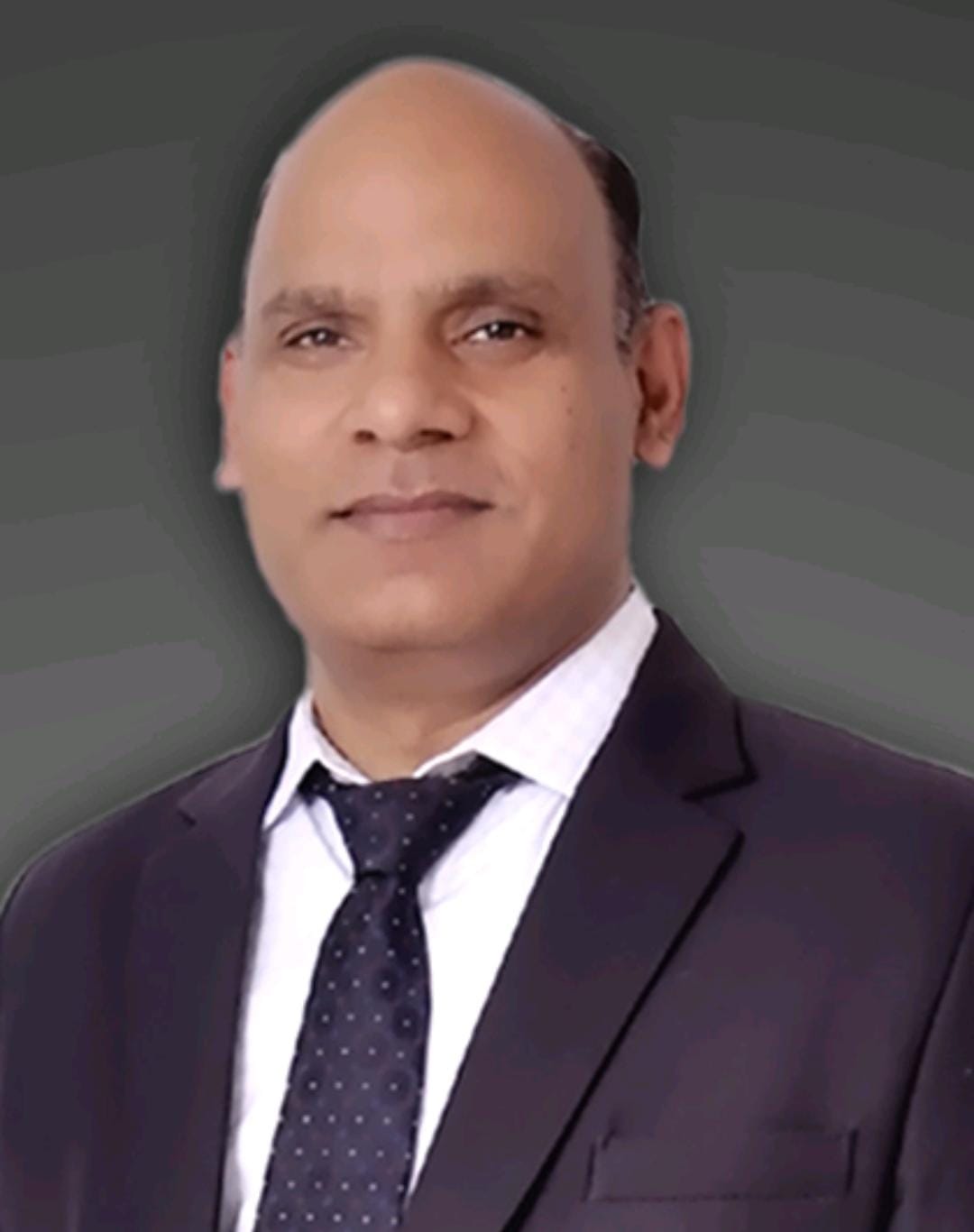
  • Zeeshan Ali Khan, Partner-IP Enforcement at Rahul Chaudhary & Partners In Conversation with SuperLawyer On IPR and Networking for First Generation Lawyers

    Zeeshan Ali Khan, Partner-IP Enforcement at Rahul Chaudhary & Partners In Conversation with SuperLawyer On IPR and Networking for First Generation Lawyers

    This interview has been published by Prabhjot Singh, Priyanka Karwa and The SuperLawyer Team

    Being a science student, and then choosing law, what was the idea behind?

    Though I was doing good in science, however somehow, I was not interested in pursuing a career in science and therefore, was looking for options. During this time, my family suggested me to go for a career in law and when I started preparing for entrance exams of different law schools (as we did not have CLAT back then) – it really fascinated me. I started reading about famous lawyers in India and also visited the lower Court in my city, the idea of wearing that collar band and arguing in Court used to give me goosebumps.

    At was during this time that I firmly took a call to make a career and practice law.

    How challenging has it been for you so far in the legal industry?

    It has been a very satisfactory journey so far. I was able to clear the entrance exam of two National Law Universities and two reputation private universities and decided to join HNLU, Raipur. I joined the third batch of HNLU, Raipur in 2004 and was fortunate to have been taught by some of the best faculties at the time. My five year stay at HNLU was both memorable and enlightening at the same time.

    The strict time lines to submit projects and moot court memorials gave me an early introduction of how the legal profession going to be and worked as a solid foundation for later part of my career.

    I joined an IP boutique firm ZuesIP immediately after completing my course and thereafter, my joined current firm Rahul Chaudhry & Partners in 2010.

    My firm and my mentor Mr. Rahul Chaudhry, the Managing Partner of the firm have immensely helped me become the professional I am today. I started as a junior associate in the firm and slowly learned the nuances of IP and law in general. I was designed as Partner – IP Enforcement in 2021 and handles IP Enforcement before the Courts in India, Domain Name as well as Custom Authorities.

    What created your interest in the IP sector? And how did you prepare yourself for everyday challenges in the same? 

    My initial interest in IPR started when we were taught IPR in the second and third years of our law course. The idea of knowing, protecting as well as helping the brands grow attracted me and I decided to intern with IP Firms to better understand the subject. I learned the intricacies of IP as a subject and practical aspects of implementing the same in day-to-day legal practice during these internships.

    Accordingly, I opted for IPR as my honours subject in the university and got a specialization in the same.

    Preparing myself to practice IPR was not a challenge for me as I had a keen interest in the subject. I used to go through all major IP judgments by the Courts to keep myself updated of the latest developments and still try to read as much as I can whenever the schedule permits.

    According to you, what networking strategies should be adopted by the first generation lawyers specifically in corporate?

    Being a first generation lawyer myself, I have never felt any difference in terms of treatment by law firms or corporates. If you have knowledge of the subject and good command over language – you are bound to be noticed. The age old saying that there is no substitute to hard work is absolutely correct. I am a strong supporter of making your work speaks for yourself. If you are getting reliefs for your clients and are being recommended for your work – the world will look for you.

    At the same time, I would suggest one to leverage technology, join industry groups in person or through various social media like LinkedIn and also offer educational resources. Give presentations and educational lectures in various industry gatherings as well as educational institutions.

    What are the most important qualities for an intellectual property lawyer?

    An IP lawyer needs to keep himself updated with latest judgments and industry practices. With the creation of IP Divisions in the Courts, IP has become even more niche practice. Going through PTC on a regular basis and keeping a track of prosecution practice is also very important. I always suggest that to be a successful IP lawyer, one should have a good command over prosecution side as the same forms the foundation of one’s IP practice.

    How a trade mark application is filed, the route it takes for registration and how to overcome the objections raised by the Administrative Authorities (like Trade Marks Registry) are all very important. A wrong advice to the client during prosecution and registration procedure can ruin all future prospects of protecting and enforcing the mark.

    Zeeshan, do these legal tech tools have helped litigants and corporates so far in preparation of different documents or filing and what in the future would be challenges for lawyers in dealing with such tools?

    The tech tools are indeed helpful and I see them playing a greater role in future. Along with saving time, the tools also minimise the chances of an error. Many corporates have started using them to keep a track of their matters pending in the Courts, checking the deadlines and even setting reminders to ensure that no deadlines are being missed. As we all know, deadlines play very important role in our profession.

    The time frame provided by the statues to file pleadings/documents before Courts as well as various administrative authorities are to be strictly followed, specially in IP prosecution. Hence, I believe the tech tools are going to be a game changer in future. With respect to the challenges, I believe the new generation of lawyers will not have any difficulty in handling these tools. I suggest even law schools should start preparing the students to use these tools during their course.

    As a partner of a law firm, how do you manage to balance the work-life aspect?

    Work-life balance is very important to ensure a long-term efficiency in work and a satisfaction in your personal life. My day usually starts at 9 am in the office and then few hours are spent in the Court as well. Being a partner, I also try spending sometime with my team members to interact and discuss work and the general life related aspects. However, one needs to prioritise the work and maintain a discipline during the working hours.

    I am a strong supporter of not carrying the work related stress to home and spend my away time playing with my daughter as well as working out. It is equally important to take care of your health and therefore, I have made it a routine to work out for atleast an hour every morning.

    The same not only helps me stay strong physically but also strengths my mind and helps me to prepare myself for the day.

    Lastly, any advice for our young law generation?

    Legal field requires continuous study and keeping yourself updated of the latest developments. So, it is very important to make an early habit of reading latest judgments as well as precedents. Young lawyers should also visit Courts and hear established legal practitioners argue the cases in Court.


    Get in touch with Zeeshan Ali Khan-

  • PRITISH SAHOO, LAWYER (LEGAL AND REGULATORY) AT VIACOM18 MEDIA PVT LTD, SHARES HIS EXPERIENCE WORKING AS A COMMERCIAL LAWYER, HIS INTEREST IN IP & TECHNOLOGY, AND HIS ADVICE TO LAW STUDENTS AND YOUNG LAWYERS

    PRITISH SAHOO, LAWYER (LEGAL AND REGULATORY) AT VIACOM18 MEDIA PVT LTD, SHARES HIS EXPERIENCE WORKING AS A COMMERCIAL LAWYER, HIS INTEREST IN IP & TECHNOLOGY, AND HIS ADVICE TO LAW STUDENTS AND YOUNG LAWYERS

    This interview has been published by Maaz Akhtar Hashmi and The SuperLawyer Team. The Interview was taken by Priyanka Cholera.


    Having studied law at KIIT University, you established a keen interest in Intellectual Property Rights (IPR) and corporate law, what drew you towards IP and Technology?

    I was always expected to go into the conventional fields of engineering or medicine. But the zeal of writing and my interest in policies governing the nation drew my initial interests towards the field of law. Further, during my law school days, having my background as a science student attracted my interest in the field of IP and technology – which is an ever-emerging field that draws a lot of curiosity among the young and old minds alike.

    During your graduation, you also were an Offshore Research Assistant for Cobalt Business Counsel PC. Could you explain how you stumbled upon this opportunity and the roles and responsibilities you undertook during your tenure?

    Cobalt Business Counsel is a Canadian legal processing firm, which was introduced to me by one of my seniors at the law college. Being offshore research assistants – we are expected to research Canadian case laws and make summary reports. Additionally, we also handled contract extraction to create clause banks for the team. The engagement at Cobalt was particularly important since it gave me first-hand knowledge of working with lawyers outside of India. This job also gave us the much-required financial independence while still studying in college.

    You joined the offices of Wadia Ghandy & Co., one of the country’s premier law firms, immediately after law school. How has that experience shaped you and contributed to your interest in the field of media & entertainment laws?

    I got selected for Wadia Ghandy & Co. during my college placements, wherein initially I worked in the banking and finance team and then in the general corporate team. While being at the firm, I got a few assignments on the media domain, which is where my interest grew in the field of media and entertainment, and that’s when I decided to specialize in that subject.

    You joined the postgraduate program at NALSAR, where you specialized in media laws. Can you tell our readers the importance of work experience before choosing an area of specialization?

    I completed the post-graduation in Media Laws from NALSAR while I was working with the law firm. This was particularly important since I had already worked on a few assignments. This is when I decided to specialize and enhance my learnings in the field of media, which ultimately opened better opportunities for me in the M&E industry.

    You started working as a Senior Legal Executive with Shemaroo Entertainment Limited. Could you share your experiences working with a leading Indian media and entertainment industry?

    The transition from a corporate lawyer at a law firm to being an in-house lawyer at a media company was particularly interesting. Being an in-house counsel has its fair share of advantages since the work was not limited to advising on the legal side of a particular deal. It is expected to understand both the legal as well as the business aspects in a more detailed manner and provide informed advice to the benefit of the company. At Shemaroo – I got the first-hand knowledge to know the distribution business of a prominent media company which further honed my skills as an in-house media counsel.

    You went ahead to work with BBC Studios as their lawyer for Business and Legal Affairs (Asia). Would you like to recall your interesting role working with arguably one of the biggest media broadcasting companies in the world?

    I was the sole legal counsel for the BBC Studios for their business in India, and working therein was an overwhelming experience. At the BBC – my team was based out of Singapore & London, which gave me the opportunity to work with lawyers around the globe. This role gave me insight into what it takes to be an in-house lawyer on a truly global scale while adjusting to different cultural ethics and time differences. I was also fortunate to find some great mentors while working therein and whose advise, and experience have further ushered my skills and expertise in the media and entertainment domain.                                                      

    After your brief stint with BBC, you joined Viacom18 Media Private Limited in their legal team. What responsibilities do you shoulder being part of the aforementioned team?

    At Viacom18, my role primarily requires me to handle agreements for its flagship entertainment channel ‘Colors’. A general day revolves around drafting and negotiating various types of agreements, including but not limited to production agreements, agreements with various artists/talents, agreements with music labels, content acquisitions, and syndication agreements, amongst others. Being a part of the legal team of a major broadcaster provides for a wider opportunity to understand the nuances of the ever-changing media landscape in the country while working for some very exciting big-ticket deals.

    The newly implemented IT Rules introduced by the government lay down a three-tier regulatory mechanism for the OTT platforms. How do you foresee the present rules will affect the media & entertainment industry?

    OTT platforms have become increasingly popular in our country, especially during the pandemic. Unlike the laws regulating the traditional media, no specific laws are regulating the content available on these digital platforms, save and except for certain sections under the Information Technology Act, 2000. While most of the platforms had signed a self-regulatory code, the Ministry of Information and Broadcasting enacted the Intermediary Guidelines and Digital Media Ethics Codes, Rules,2021. These rules make it imperative for the platforms to self-classify the content and to set up a 3-tier grievance redressal mechanism. With the unprecedented growth of the OTT  platforms in the country, regulations were always expected to come out. And I believe that the regulations will also assist in streamlining the content that is being made available on the digital platforms and bring about some or little level playing field vis-à-vis the traditional television/film industry.

    Your LinkedIn bio reads that “you are an experienced negotiator who thrives on applying the law to negotiate and close a deal keeping in mind the best interests of a client.” Can you share with us any professional anecdotes where you had a similar takeaway?

    I believe one of the most important soft skills that are essential for any corporate lawyer is to excel in is the art of contractual negotiation. And this applies to all fields and industries alike. And as a business and legal counsel – it is more than imperative to understand the exact needs of a particular deal and to be a business enabler. An in-house counsel is expected to provide informed advice to the business teams while mitigating the legal exposure of the Company.

    What advice would you have for law students & young lawyers who want to pursue a career in media law?

    Indisputably, a career specializing in the M&E field is an exciting choice, given its visual appeal. It does give a sense of genuine satisfaction to see the project that you were working upon, coming live on the big screen, and seeing your name in the credits roll. However, having said that – students and young lawyers need to be mindful of the fact that the opportunities in the M&E industry are limited in comparison to other sectors. Hence, they should keep their options open, especially when they are just starting. I strongly believe that one should try a few different avenues and fields of law – before finding his/her “Ikigai” and then excelling at it with full force. Nonetheless, the entertainment industry has undergone a paradigm shift in recent times with the penetration of the internet to the masses and the ever-increasing popularity of digital platforms. Hence, it’s safe to suggest that there cannot be a better and more exciting time to be an entertainment counsel.


    Get in touch with: