Tag: Legaltech

  • Jyotsna Jayaram, Partner (Technology, Media & Telecommunications) At Trilegal In a Quick Chat With SuperLawyer On Importance Of Unconventional Skills For a Lawyer

    Jyotsna Jayaram, Partner (Technology, Media & Telecommunications) At Trilegal In a Quick Chat With SuperLawyer On Importance Of Unconventional Skills For a Lawyer

    This interview has been published by Prabhjot Singh, Priyanka Karwa and The SuperLawyer Team

    What inspired you to choose law as a career? How has been the decision so far?

    I have always been fascinated by the impact that words – verbal or written – can have and when I was in school I was always drawn to the law as a profession, particularly because of the command over language that it requires. Of course as with most children that age, I had romantic notions about becoming a criminal lawyer and being in the thick of high profile cases. However, as I prepared to join law school, I wanted to focus more on gaining a strong knowledge base of all laws before I decided on what to specialise in. I am glad I made the decision to become a lawyer and the constant learning continues to inspire me to become a better lawyer.  

    What were the challenges that you faced in the beginning of your career?

    The primary challenge was to secure a job. I was in the first batch of my law school and at that point we didn’t have established recruitment processes and most firms did not know us. We all had to work doubly hard towards getting our own internships and interviews and making a mark before we were considered for recruitment.

    Then came adapting to a work environment which was very new, highly competitive and incredibly fast paced. While law school helps build the foundation in terms of basic knowledge that is required to start off, a lot of what you need (even at the start of your career) is learned on the job.

    It was a challenge to switch out of a heavily theoretical and academic approach to a more practical style which required you to think on your feet and come up with creative solutions, while being very thorough with the law and its application. It was a also a challenge to adapt to quick timelines, long hours and a much faster pace of life. That said, the environment at work although challenging equipped me to adapt quickly and feel confident about my ability to move from my life as a student to a working professional.  

    What do you consider to be the most challenging and important aspects in this field of IT law?

    The most challenging aspect of the field of technology law is that it is changing and evolving at a very fast pace. From being a field that was subject to very minimal regulation, technology is now at the front and centre of most regulation – either in the form of new laws and regulations, or as a result of amendments and changes being made to existing laws to adapt to the digital revolution. While I believe that it is crucial to regulate the use of technology, it is important for the law to not be overly prescriptive and compliance heavy as that would be counterintuitive to very nature of technology and its ability to evolve.

    As an IT lawyer, it is important to marry the principles that the laws are based on with the functions that various technologies bring with it in such a manner that innovation is not hampered, and the harms that technology brings with it are addressed.

    This often requires us to go back to first principles, be very aware of how technology is being regulated across jurisdictions and actively following the policy initiatives with respect to technology as they most often set the context to new tech regulation.

    Often times, you will find yourself walking into a grey area with no interpretational guidance where you need to take calls based on several factors including your deep understanding of technology, the intent of regulations and regulatory perception.

    Jyotsna, do you remember any exigent experiences while advising clients on all these regulatory aspects, data privacy, etc. ? What suggestion would you give to our young law professionals to tackle the same?

    The field of technology law is very broad and encompasses several areas such as cyber security, data privacy, e-commerce, digital payments, content regulation etc. Very often these areas intersect and it is critical for us as technology lawyers to be able to address the full spectrum of issues that a client is facing without operating in silos. A good example of this is in dealing with cyber security incidents which have become very common. The nature of cyber-attacks that organisations face are highly sophisticated and evolving each day and as a result our assistance as lawyers in advising clients on regulatory and commercial aspects becomes critical.

    Cyber-attacks often come with several considerations including regulatory reporting obligations, an assessment of privacy issues (if personal data is involved), criminal law aspects while examining unauthorised access, ransomwares etc., as well as building strategy around communication to the data subjects, to the public and depending on the sector, sectoral regulators. Most often these attacks are multi-jurisdictional and require understanding and working closely with lawyers in the relevant jurisdiction to develop a common strategy.

    In order to deal with matters like this, and generally on matters related to data, technology and privacy, I would recommend that young law professionals train themselves to be nimble, highly aware of regulatory trends, enforcement and practices across jurisdictions to be able to advice clients in a holistic manner. It is also important to guide the client on an approach that is future proof and based on best practices and this often puts the client in a much better position than others who choose to only do the bare minimum when it comes to compliance.

    Jyotsna, people have started feeling that corporate is a safe option instead of choosing a longer struggling period in law, do you think the same?

    I do sense that in-house as a choice of profession has gained some more traction recently, however I don’t think this is necessarily because it is considered a ‘safe option’ as opposed to a law firm. I think in-house roles have also become an important choice as the demands of the role are similar to a lawyer in a law firm, with companies ramping up and investing in legal departments.

    In fact, the challenge of dealing with legal issues by being a part of the company as opposed to serving as external counsel, is one of the main factors that I think drives people to choose in-house. That said, I think there is generally a push to rethink how one wants to practice the law and there do seem to be several parallel tracks that have come about for professionals to choose from, instead of joining a law firm or sticking to mainstream law.

    How do you balance your work and personal life ?

    My approach to balancing work and personal life has always been to not view one as restricting or impinging on the other. I am conscious of the decisions I make when it comes to work and personal life and at all times I try and ensure that I am honouring each commitment. That said, if I am unable to manage a perfect balance, I make sure I am not hard on myself. It is not doubt easy for work to overwhelm and capture all your mind space but with time and small changes to my routine I have been able to feel like I am in control of both aspects of my life.

    For example, the time I set out for my exercise, or to spend with my child is sacrosanct and I try and schedule it in a way that does not allow work to creep in and reduce the time I set out for this. If it means I start my day an hour later, then that does not faze me and most things can in fact wait. I try and stick to a routine that is simple and flexible so that I am able to respond to the demands at work and home calmly. I also make sure that I take small breaks from work whenever I can so that I don’t feel like it is always catching up to me.

    A lawyer sometimes is expected to do work apart from legal functions as well, what are your views on the same?

    Absolutely, and this is an increasing expectation even from clients. The demand now is not just to provide sound legal advice, but also to be able to identify and balance commercial considerations in arriving at solutions. This may need you to step in to the shoes of the various stakeholders you are dealing with – for e.g. if there is a new technology product that is being launched, you need to be able to understand the objectives and outcomes from a technology, business and legal perspective.

    Further, as a lawyer, it is also important to be aware of and participate in public consultations and policy making as this often shapes the regulation that comes out. Separately, as a lawyer in a law firm, you also have several administrative functions attend to including billing, matter management, knowledge management and building and business development. All of these functions are equally important as being a lawyer and equip you to be a better and more efficient lawyer.

    Jyotsna, was there any roadmap that helped you thus far in your journey, or any mentor that supported you from the very beginning, please share how was it for you?

    I didn’t enter this profession with a specific roadmap. In fact, when I joined Trilegal I wasn’t sure of what I wanted to specialise in. When I joined, we had a rotation system and my first seat was TMT. I have since then only been part of the TMT practice and I couldn’t be happier with how things turned out. While I am not very rigid with how things pan out and often like to play things by ear, I did set various targets for myself in my journey as a lawyer and what I wanted to achieve. Most importantly, I ensure that I am always growing as a lawyer, and learning new things every day. I always kept (and continue to have) an open mind and as a result I have greatly benefited from the perspectives of my juniors, my peers and seniors.

    The partner’s practice who I started off with has always been a mentor for me and has had a huge role to play in my journey as a lawyer at Trilegal. I have learned immensely from him and the focus has always been to develop a high quality practice that focuses on learning, freedom of thought and self-challenge. It is also important to not lose sight of the importance in building out a safe, respectful and encouraging work space and that has been integral to my journey as a lawyer in this firm.

    While being in a law firm is no doubt challenging and competitive and I have had my share of tough times, overall my experience has been nothing but rewarding and enjoyable and that’s what keeps me so invested in this.

    According to you, what networking strategies should be adopted by the first generation lawyers specifically in corporate?

    Jyotsna: Networking in an orchestrated set up is a challenge for most people and at times is not very effective. I think that networking should be woven in to your practice as a lawyer where you ensure that you are meeting and investing in professional relationships in several inorganic ways. For starters, don’t wait for a specific time in your career to start networking.

    It is never too early and the earlier you start the more natural it becomes for you. Take the time out to think of people that you want to meet and engage with, find avenues to meet that person – it could be a conference, it could be a roundtable discussion or perhaps a knowledge session that you conduct, or are a part of. Keep in mind what to be of interest to that individual and if there are relevant developments, find a way to get your thoughts over to them. Don’t be shy of expressing your opinion or taking a stance as that helps the other person understand your approach and views as a lawyer.

    Most importantly, do not network with an expectation to see immediate results. Building professional relationships comes with its own gestation period and it is important to recognise that. You will find that slowly you will make a mark and people will remember you for your expertise and reach out. And for this you do not have to be the loudest voice in the room.

    Lastly, any 3 best pieces of advice for our young lawyers?


    I would just say keep an open mind, stay on top of all regulatory developments and constantly learn. No amount of knowledge is too much. And find a way to truly enjoy what you do.

    – JYOTSNA JAYARAM

    Get in touch with Jyotsna Jayaram-

  • Upasana Singh Chaturvedi, Founder & CEO at Accords International, Arbitrator and Mediator In Conversation with SuperLawyer on Unconventional Careers in Law

    Upasana Singh Chaturvedi, Founder & CEO at Accords International, Arbitrator and Mediator In Conversation with SuperLawyer on Unconventional Careers in Law

    This interview has been published by Prabhjot Singh, Priyanka Karwa and The SuperLawyer Team

    We ask this question to almost everyone, but ma’am looking at your experiences, I would like to flip it a little bit, how did law choose you?

    I come from a family of lawyers, judges, and professors. I think ‘law’ chose me before I was even born. From an early age, I used to sit with my grandfather and used to observe the trials he used to preside over. Also, during my studies in history in my undergraduate course, I realized how a society’s nature is modeled and governed by the legal system that it has. This realization got me interested in exploring law as a professional carrier for myself. The campus law Center, university of Delhi helped me understand law and brush up on my legal and oratory skills.

    What were the struggles you faced in the beginning?

    By ‘beginning’ I believe you mean the beginning of my legal career. I think the biggest struggle is coping with the rigorous work routine and keeping on doing what you like the most. I was always passionate about teaching, so along with my practice, I kept on teaching at Delhi University, IP University, Bennet University, and Sewa Samarpan Samiti, which is an NGO based in India. I think this helped me pursue my dream with passion.  

    Firstly, a big congratulations on starting “Accords International”. Do you mind sharing some obstacles that might come in the way of being a founder at any firm?

    You know I have started to believe in what Elon Musk once said, “starting a company is like eating glass and staring into the abyss”. It is a difficult task to build a company, run it, and earn profits with it. My biggest challenge was to find like-minded people to work with and constitute a team that creates a conducive environment. I have been fortunate to finally find an amazing group of team members. I am liking every bit of it. No doubt you are wearing a crown of thorns, but you are your own boss. Accords International works in mediation and restorative justice. Both these fields are new to India and clients and colleagues are still learning. We provide mediation and restorative services and training regularly.

    When we talk about disputes, most of the time obviously the parties commit the same number of mistakes, and both suffer as well, before even going for conflict resolution, don’t you think there is something out before that? 

    In the event of a disagreement, it is often that the situation escalates to a conflict and then the parties take the matter to the court as a dispute. If the lawyers and other professionals who advise the parties during the initial stages have a non-adversarial mindset, then disputes can be avoided, and disagreements can be amicably settled at very early stages. This is beneficial for all, the clients, the lawyers, the courts, and the society.

    As someone who has also specialized in cybercrimes, bullying, etc, what are the core reasons that these things happen and any unconventional ways to stop the harm?

    Dan Olweus defines simple bullying as ‘unwanted aggressive behavior that is intentional and that involves an imbalance of power. Most often it is repeated over time.  If this is done via an electronic device, then that makes sit cyber-bullying.

    The four Elements of Bullying are- Aggressive Behavior, Power Imbalance, Repeated act, and the players (Perpetrator and victim). If we add a computer, cell phone, and any other electronic device to traditional bullying that will make it cyberbullying.

    The common types of cyberbullying and their reasons are:

    1. Exclusion- Publicly Ostracizing the target from the online world- Possible reason is to make the target vulnerable and lonely.
      1. Flaming- posting personal insults and vulgar texts- possible reasons are power play and intent to humiliate the target.
      2. Impersonation- pretending to be someone else. – possible reason can be entertainment or fraud
      3. Cyberstalking- using the internet and technology to follow someone- (harassment, stalking, revenge, fascination, show-off)
      4. Trolling- to deliberately provoke others- (attention seeking, revenge, boredom, personal amusement, paid by someone else)

    Accords International is working on a model for dealing with cyberbullying and online harm with the help of restorative justice. Teachers, parents, and school management can use restorative practices like regular restorative circles and non-violent communications to de-escalate conflicts at early stages.

    What are the necessary skills to have as a “Trained Mediator”?

    As a mediator, one learns

     To facilitate a conversation between two disputing parties.

    To be objective,

    To be impartial,

    To be an effective communicator,

    To feel empathetic, patient, adaptable,

    To be trustworthy,

    To understand the psychology of conflict,

    To be able to distinguish interests and needs and

    To become a better negotiator.

    “Unconventional careers in law will spoil your degree”, why has this misconception led many people far away from the legal industry revolution and how to excel oneself to reach heights?

    I think this advice worked in the previous century. Today, we live in a world where lawyers are working in tech policy, AI, cyberspace, Outer space, public policy, sustainability, diplomacy, and many other ‘unconventional’ fields. I think law teachers and colleges should update their curriculum on a regular basis and students should not only be exposed to court proceedings but also to the newer developments around the world. Accords International is working with the vision to make such experiences available to Indian students.

     Lastly Upasana, any advice to level up the skill game in this profession?

    I find reading is very important for lawyers to always keep updated and informed. Also, skill-building courses in mediation, drafting, negotiation, tech policy, etc are important to learn about new fields. Accords International has launched its next mediation training for the months of January-February 2023. Training programs like this keep young professionals updated and connected.


    Get in touch with Upasana Singh Chaturvedi-

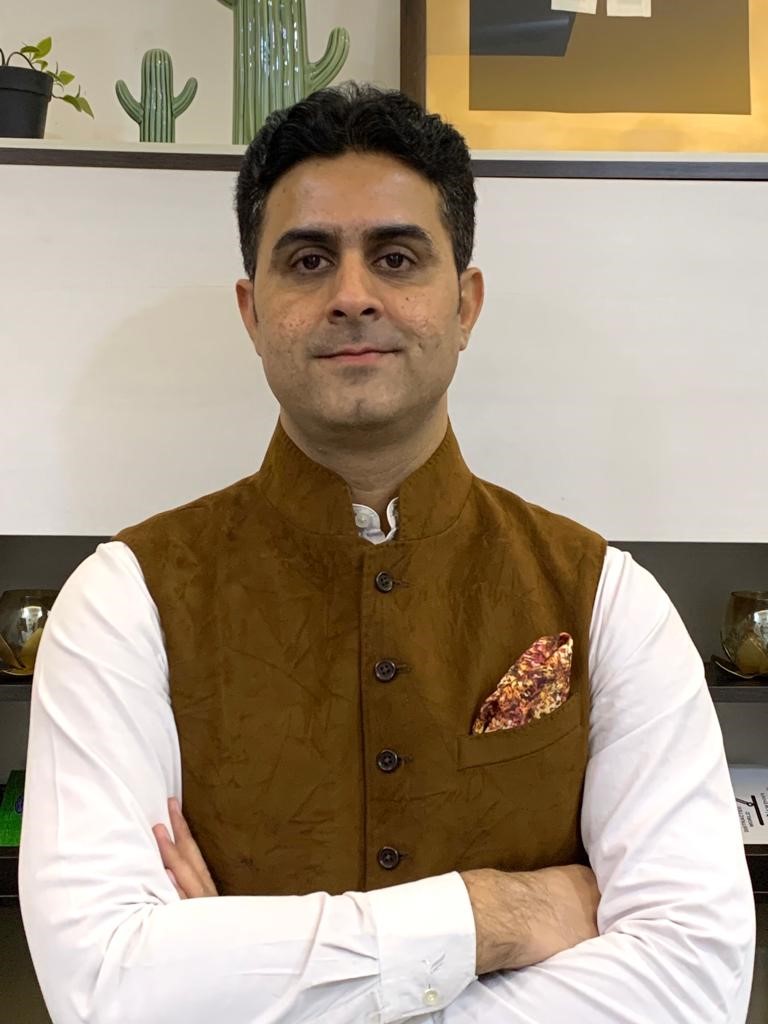
  • Zeeshan Ali Khan, Partner-IP Enforcement at Rahul Chaudhary & Partners In Conversation with SuperLawyer On IPR and Networking for First Generation Lawyers

    Zeeshan Ali Khan, Partner-IP Enforcement at Rahul Chaudhary & Partners In Conversation with SuperLawyer On IPR and Networking for First Generation Lawyers

    This interview has been published by Prabhjot Singh, Priyanka Karwa and The SuperLawyer Team

    Being a science student, and then choosing law, what was the idea behind?

    Though I was doing good in science, however somehow, I was not interested in pursuing a career in science and therefore, was looking for options. During this time, my family suggested me to go for a career in law and when I started preparing for entrance exams of different law schools (as we did not have CLAT back then) – it really fascinated me. I started reading about famous lawyers in India and also visited the lower Court in my city, the idea of wearing that collar band and arguing in Court used to give me goosebumps.

    At was during this time that I firmly took a call to make a career and practice law.

    How challenging has it been for you so far in the legal industry?

    It has been a very satisfactory journey so far. I was able to clear the entrance exam of two National Law Universities and two reputation private universities and decided to join HNLU, Raipur. I joined the third batch of HNLU, Raipur in 2004 and was fortunate to have been taught by some of the best faculties at the time. My five year stay at HNLU was both memorable and enlightening at the same time.

    The strict time lines to submit projects and moot court memorials gave me an early introduction of how the legal profession going to be and worked as a solid foundation for later part of my career.

    I joined an IP boutique firm ZuesIP immediately after completing my course and thereafter, my joined current firm Rahul Chaudhry & Partners in 2010.

    My firm and my mentor Mr. Rahul Chaudhry, the Managing Partner of the firm have immensely helped me become the professional I am today. I started as a junior associate in the firm and slowly learned the nuances of IP and law in general. I was designed as Partner – IP Enforcement in 2021 and handles IP Enforcement before the Courts in India, Domain Name as well as Custom Authorities.

    What created your interest in the IP sector? And how did you prepare yourself for everyday challenges in the same? 

    My initial interest in IPR started when we were taught IPR in the second and third years of our law course. The idea of knowing, protecting as well as helping the brands grow attracted me and I decided to intern with IP Firms to better understand the subject. I learned the intricacies of IP as a subject and practical aspects of implementing the same in day-to-day legal practice during these internships.

    Accordingly, I opted for IPR as my honours subject in the university and got a specialization in the same.

    Preparing myself to practice IPR was not a challenge for me as I had a keen interest in the subject. I used to go through all major IP judgments by the Courts to keep myself updated of the latest developments and still try to read as much as I can whenever the schedule permits.

    According to you, what networking strategies should be adopted by the first generation lawyers specifically in corporate?

    Being a first generation lawyer myself, I have never felt any difference in terms of treatment by law firms or corporates. If you have knowledge of the subject and good command over language – you are bound to be noticed. The age old saying that there is no substitute to hard work is absolutely correct. I am a strong supporter of making your work speaks for yourself. If you are getting reliefs for your clients and are being recommended for your work – the world will look for you.

    At the same time, I would suggest one to leverage technology, join industry groups in person or through various social media like LinkedIn and also offer educational resources. Give presentations and educational lectures in various industry gatherings as well as educational institutions.

    What are the most important qualities for an intellectual property lawyer?

    An IP lawyer needs to keep himself updated with latest judgments and industry practices. With the creation of IP Divisions in the Courts, IP has become even more niche practice. Going through PTC on a regular basis and keeping a track of prosecution practice is also very important. I always suggest that to be a successful IP lawyer, one should have a good command over prosecution side as the same forms the foundation of one’s IP practice.

    How a trade mark application is filed, the route it takes for registration and how to overcome the objections raised by the Administrative Authorities (like Trade Marks Registry) are all very important. A wrong advice to the client during prosecution and registration procedure can ruin all future prospects of protecting and enforcing the mark.

    Zeeshan, do these legal tech tools have helped litigants and corporates so far in preparation of different documents or filing and what in the future would be challenges for lawyers in dealing with such tools?

    The tech tools are indeed helpful and I see them playing a greater role in future. Along with saving time, the tools also minimise the chances of an error. Many corporates have started using them to keep a track of their matters pending in the Courts, checking the deadlines and even setting reminders to ensure that no deadlines are being missed. As we all know, deadlines play very important role in our profession.

    The time frame provided by the statues to file pleadings/documents before Courts as well as various administrative authorities are to be strictly followed, specially in IP prosecution. Hence, I believe the tech tools are going to be a game changer in future. With respect to the challenges, I believe the new generation of lawyers will not have any difficulty in handling these tools. I suggest even law schools should start preparing the students to use these tools during their course.

    As a partner of a law firm, how do you manage to balance the work-life aspect?

    Work-life balance is very important to ensure a long-term efficiency in work and a satisfaction in your personal life. My day usually starts at 9 am in the office and then few hours are spent in the Court as well. Being a partner, I also try spending sometime with my team members to interact and discuss work and the general life related aspects. However, one needs to prioritise the work and maintain a discipline during the working hours.

    I am a strong supporter of not carrying the work related stress to home and spend my away time playing with my daughter as well as working out. It is equally important to take care of your health and therefore, I have made it a routine to work out for atleast an hour every morning.

    The same not only helps me stay strong physically but also strengths my mind and helps me to prepare myself for the day.

    Lastly, any advice for our young law generation?

    Legal field requires continuous study and keeping yourself updated of the latest developments. So, it is very important to make an early habit of reading latest judgments as well as precedents. Young lawyers should also visit Courts and hear established legal practitioners argue the cases in Court.


    Get in touch with Zeeshan Ali Khan-