Tag: london

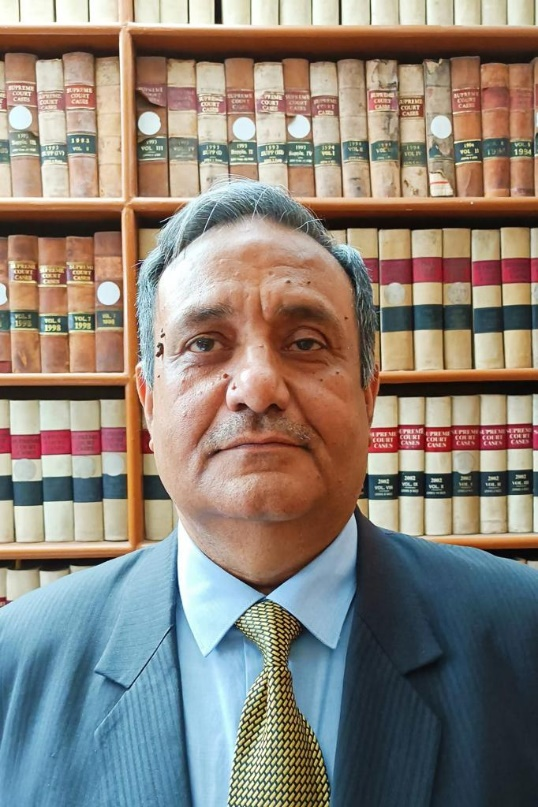
  • “It is a very long and tedious process to become a lawyer and to specialize in a particular field of interest, and to make a name for oneself. But this should not deter anyone from pursuing their dream.”- Vivek B.Siddalingaiah, Civil Servant, Ministry of Justice UK 

    “It is a very long and tedious process to become a lawyer and to specialize in a particular field of interest, and to make a name for oneself. But this should not deter anyone from pursuing their dream.”- Vivek B.Siddalingaiah, Civil Servant, Ministry of Justice UK 

    This Interview has been published by Pragya Chandni and The SuperLawyer Team
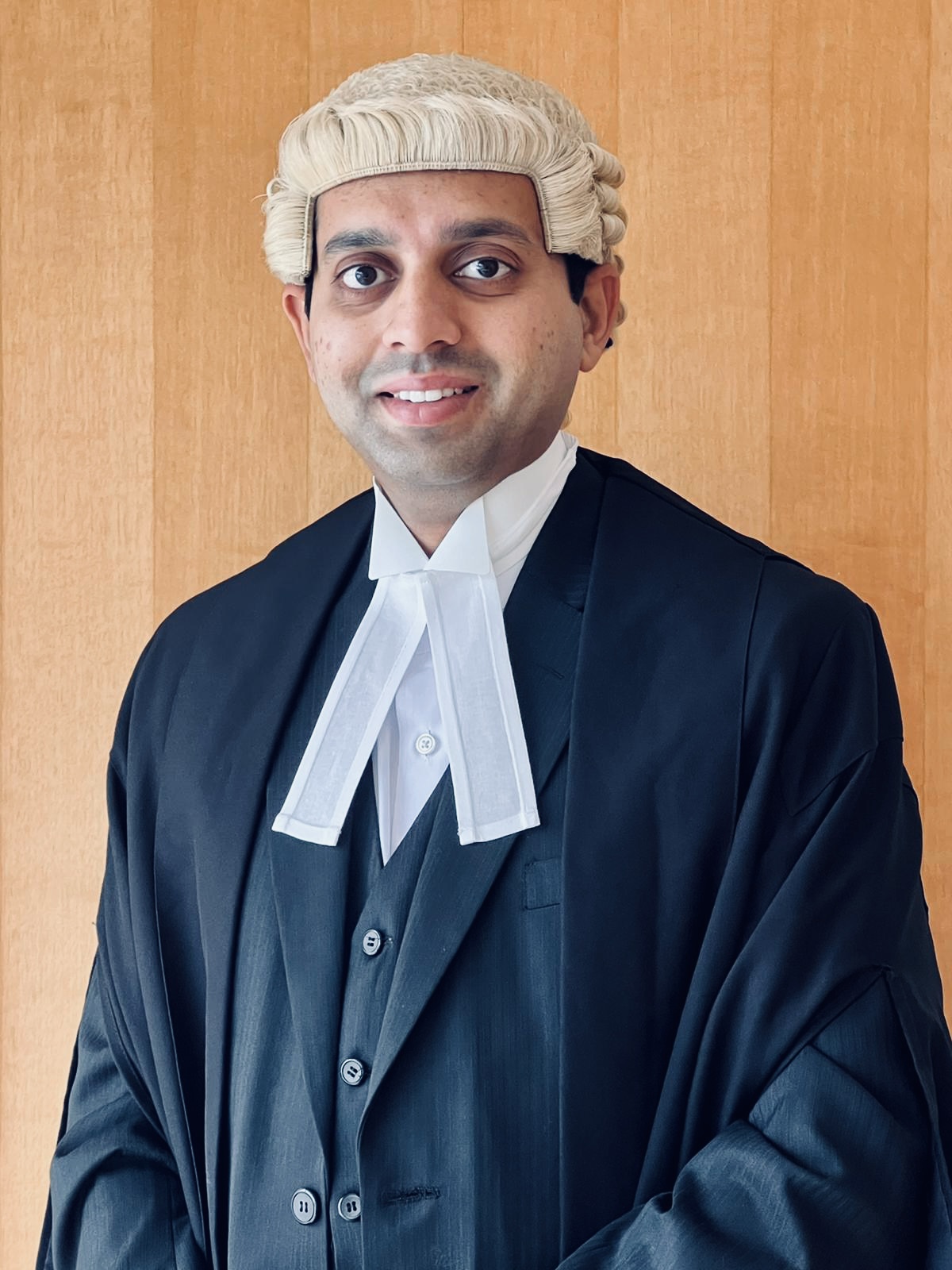
    Can you share your journey from practicing law in India to your current role as a Legal Advisor for the Magistrates in the UK’s Ministry of Justice?

    To begin with, I did my B.A.L. LL.B. , five years integrated course from University Law College, Bangalore University. In October 2010, I was called to the bar after completing my All India Bar exam and immediately after being called to the bar at the Karnataka State Bar Council, I started practicing. I started practicing under a senior and my main practice area involved insurance, banking, domestic arbitration, and other civil matters. Along with this, I also used to practice before the Debt Recovery Tribunal.

    After practicing for over four years in Bangalore, I moved to London to do my Master of Laws post-graduation from City University, London. My areas of specialization were Alternate Dispute Resolution and Civil Litigation in reference to the UK law. I completed my post-graduation in 2015 and my final dissertation as part of the course was about International Investment Treaty Arbitration. After this, I had to move back to India because of Brexit issues and I joined a startup company in Bangalore as a legal counsel. After working there for less than a period of six months, I joined Tatva Legal Bangalore as an associate in their litigation team. Working at Tatva Legal gave me a wide exposure to the other fields of law namely Corporate Law, Corporate Litigation and International Commercial Arbitration. In 2016, the New Companies Act and Insolvency & Bankruptcy Code were passed in India and as a result the National Company Law Tribunal were established. I started practicing before the NCLT for a period of two years.

     In 2019, I got an opportunity to work with the Financial Ombudsman Service, London as an investigator/ adjudicator. This role gave me an opportunity to resolve disputes in a quasi-judicial setting.  I had to take a small break during the COVID lockdown to attend to my personal work. 

    In 2022, I started applying for Civil Service roles in the UK.  Civil service recruitment in the UK is based on open competitive examinations. 

    These posts are advertised and applications are invited from eligible candidates, preferably candidates with law degree or experience in a common law jurisdiction. In August 2022, I cleared my competitive examinations and I was appointed as a Crown Court Advisor/ Clerk. I was mainly responsible for most of the administrative and procedural functions of running the Crown Courts. I got a very good opportunity to understand the criminal justice system in the UK. After having worked for one and a half years in this role, I got an opportunity to be promoted through an internal campaign and after having cleared my interview and other written tasks, I was appointed as a Legal Advisor for the Magistrates in the East London local justice area. I have been working in this role for the last two months.

    How did your experience in litigation, merger & acquisition, insurance, and international arbitration prepare you for your role as a legal advisor at His Majesty’s Court & Tribunal Service?

    As we all know, India is a common law jurisdiction, and this acted as an advantage for me. My litigation experience in India gave me all the understanding and the tools required regarding the court procedures. Because of this experience, I wasn’t a stranger to the legal system in the UK, even though there are a few procedural and other administrative differences between the two countries, the overall legal system is very identical. Because of this, I was able to understand, implement and do my best in the roles that I have been performing in the UK till now. 

    My litigation experience in India helped me in clearing my Bar exam in England and Wales, and also in my applications, written tasks and interviews for the legal positions that I applied for in the UK. 

    My experience in the field of insurance was advantageous when I worked at the Financial Ombudsman Service. My main responsibility at the Financial Ombudsman Service was to deal with insurance, banking and pensions disputes between the customers and the businesses. Having practiced insurance law for a period in India, it was easy for me to understand the concept, the difficulties and the nature of cases that were brought to the Financial Ombudsman Service for investigators or adjudicators like me to resolve. My experience in the field of domestic or international arbitration helped me in almost all the roles that I have been performing till now.

    What inspired you to pursue a Master of Laws in Civil Litigation & Dispute Resolution at The City University, London, after practicing law in India?

    In the year 2010, when I graduated with my law degree, it was sort of a practice for every other law graduate to go abroad to pursue Masters. I have had a few friends who went to the UK, the US, Australia and other places to pursue their masters. I had an opportunity to speak with them about their experiences, their expectations, and the advantageous position that they were in when they returned to India. 

    In my experience and understanding it is a bit important for any legal professional to have a specialization in one or more fields of law and I was very keen on specializing in at least one field of law which could give me an advantage over other candidates when it comes to the job market and this was one of the reasons why I decided to pursue my Masters.

    However, I was not sure about which field of law I wanted to specialise in. Initially I started my practice in insurance and banking law, then moved on to property law, then moved on to other fields of law. I wanted to make sure that I understood which field of law I would like to specialise. This could have been possible only by my own experience and work rather than anyone’s advice. After four years of practice, I realised that alternative dispute resolution was my field of interest and that is the field in which I would prefer to specialise in. 

    How has being dual-qualified as a Barrister in India and England & Wales influenced your legal career and approach to practicing law?

    It was always my aim or dream to qualify as a Barrister in England and Wales. Also, being a person interested in history and having read about many well-known jurists, freedom fighters and other people who have been in some of the very responsible positions, I realised that most of them were Barristers. I’ve heard the argument that it doesn’t require a qualification for a person to do great things. However, in my view, I was always interested in belonging to the list of people from India who are qualified as Barristers in England & Wales. Being a dual qualified Barrister does have its own advantages. I get to practice or work in two jurisdictions. It is also a very prestigious and respected profession in both the countries. I have had the opportunity of practicing before the courts in India and working in the courts in the UK. I believe this dual qualification has allowed me to work as I always wanted to. The dual qualification has also given me the advantageous position when it comes to applying for various positions or for my professional growth.

    Could you elaborate on your experience as an Investigator and Adjudicator at the Financial Ombudsman Service in London and how it shaped your understanding of dispute resolution?

    The Financial Ombudsman Service (FOS) is a service which resolves disputes between the businesses and the consumers without having the customers go to the courts. The legal system or the court system in the UK is very expensive when compared to that in India. This is one of the reasons why consumers or common people would like to bring their issues to FOS to be addressed. FOS deals with almost all types of commercial and business disputes including insurance, pensions, banking, credit, frauds and scams etc. 

    The role of an investigator or an adjudicator is to listen to both the parties, be impartial, unbiased and decide in the favor of the party which is right. This could involve penalizing the business or asking the business to do something that they are expected to do. I had the opportunity of working and resolving disputes in the insurance and banking team. I had the opportunity to resolve disputes in the Insurance, Banking and Pensions team. This gave me an opportunity to understand the various requirements, the way of interpretation of the law and drafting judgements. It also gave me an opportunity to speak with experts in the field of law and business to enable me to decide the disputes. Further,  it gave me an opportunity to understand the quasi-judicial setup in the UK and the procedure for parties to go to the courts or tribunals to resolve their disputes. This role prepared me for applying to other legal based positions.

    What unique challenges have you encountered while advising lay Magistrates on legal matters and procedural issues at His Majesty’s Court & Tribunal Service?

    Magistrates in the UK are also known as Justices of Peace. They are individuals from all walks of life who are passionate about making a difference in their local communities. This role is a volunteer role. Magistrates are people from all walks of life, usually with no legal qualification or training. The legal advisor sits with the magistrates in the courtroom to advise them on the legal procedures and the rule of law.

    No two days are the same for a legal advisor as it depends on the experience of the magistrates, the type of cases and the number of cases that are heard. As a legal advisor, we are expected to not only know the law, procedure but also the facts, recent developments in the field of law, recent judgments that might affect a particular case.

    The legal advisors are in a unique position as a lawyer. They are not fighting a case from a particular side, but instead looking at the law itself and ensuring it is applied in the correct way. A legal advisor acts with a judge’s hat on rather than as a stereotypical lawyer. This role places me at the heart of the criminal justice system. It is not only about advising the magistrate, but also assisting the parties who are unrepresented. 

    As someone deeply involved in both Indian and UK legal systems, what differences have you observed in the legal cultures and practices between the two jurisdictions?

    India is a mix of common law and civil law however, mostly adheres to the common law principle just like the UK. The judicial system in India is highly influenced by that of the British system which was framed and practiced pre-independence. The system is very identical and as such is not difficult for an experienced lawyer to understand. 

    Some of the differences that I could point out between India and the UK legal systems are the volume of cases (due to population), the time in disposing of the cases, the police system, and the working of various other departments that are involved in the administration of justice.

    The major difference is that administration of Indian courts is managed by the judiciary themselves. However, in the UK it is managed by the organization which I’m part of called His Majesty’s Court and Tribunal Service (HMCTS). 

    The practice and procedures are very identical, the court language used are very similar, the civil procedure, criminal procedure, admissibility of evidence are all very identical as well. 

    Overall, the Indian and the UK legal system are identical and they’re also complementary to one another.

    Lastly, what advice would you give to recent law graduates aspiring to pursue a career in litigation, arbitration, or judiciary, considering your diverse experiences in the legal field?

    I do not consider myself to have the experience to advise law students, however being a first-generation lawyer in my family, I had very little advice when I wanted to choose law as a career. This resulted in me waiting for a number of years before I could understand and decide what and how to do things. As such, I am keen on advising law students, especially first-generation lawyers who do not have much exposure or understanding about this profession.

    As said, the legal profession is a noble profession. One must have a lot of patience to survive and to do well in this profession. It is a very long and tedious process to become a lawyer and to specialize in a particular field of interest, and to make a name for oneself. But this should not deter anyone from pursuing their dream. Majority of my professional dreams have been fulfilled as I speak. My next and my aim is to enter the Judiciary which in my view will happen in the next few years. 

    Believe in yourself, work hard as there is no substitute for hard work and get the right advice from the right people.

    Career in law need not have to be restricted to civil or criminal practice; there are various fields of law that one can excel in. Make the right choice, take your time, get the right advice and follow your dreams.

    Get in touch with Vivek B.Siddalingaiah-
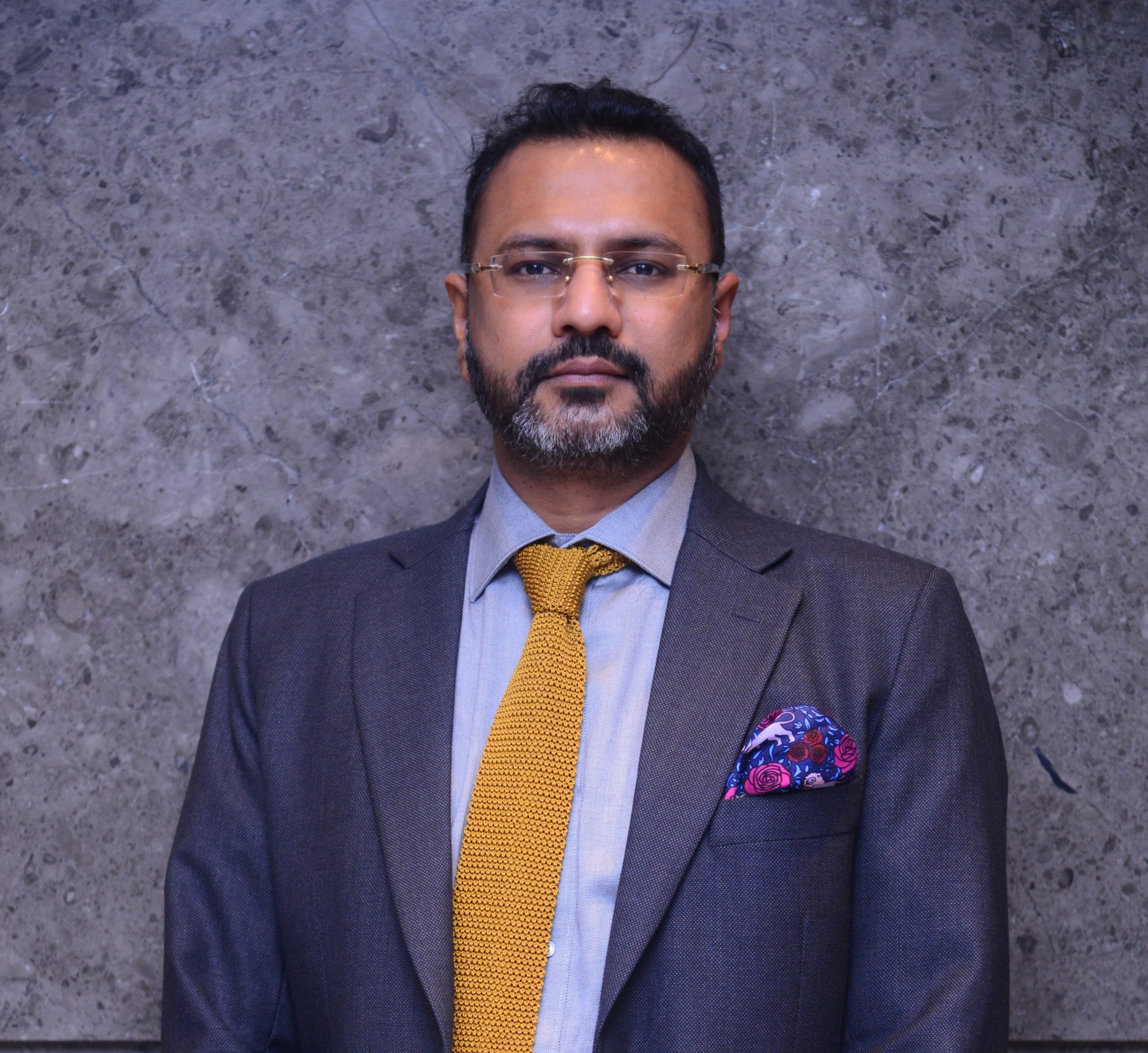
  • The usage of technology and artificial intelligence to streamline legal processes and improve efficiency is a trend that will continue to grow- Rohan Sharma FCIArb, Principal Associate at Karanjawala & Company and Solicitor (England & Whales)

    The usage of technology and artificial intelligence to streamline legal processes and improve efficiency is a trend that will continue to grow- Rohan Sharma FCIArb, Principal Associate at Karanjawala & Company and Solicitor (England & Whales)

    This interview has been published by  Priyanka Karwa and The SuperLawyer Team

    Can you tell us about your journey into the field of law and what inspired you to pursue a career as an Advocate and Solicitor in both India and England & Wales?
    Coming from a generational family of lawyers, taking up law as a profession was a default option. However, after completing my graduation in Political Science (Hons.) from Delhi University, I initially dabbled in venturing towards doing something Information Technology or Business Administration, but not getting the college of my choice I finally decided to pursue law. By the time I made my decision, the entrance exams for both IP University and Campus Law Center, Delhi University were over, so I took up admission at Mewar Law College, C.C.S University. Looking back I regret that despite the opportunity I never interned with any law firm or Advocate during my studies at the law college. 

    After completing my graduation I read law in the chambers of Sr. Counsel Mr Arun Bhardwaj for almost 6 years and practised both on the Civil and criminal side during which I had secondments with both English and Singapore law firms, and then in 2013 I joined my current law firm Karanjawala & Co, I am very grateful to Mr Raian Karanjawala who gave me the opportunity to sharpen my legal skills in my current firm which I call the “AIIMS” of legal practice, because of the sheer amount of diverse matters one gets to handle ranging from complex commercial disputes, PIL, writs petitions, etc to family disputes and one is exposed to the whole spectrum. My supervising partners, Debmalya Banerjee and Meghna Mishra, also deserve credit for their priceless guidance and mentorship.

    Credit goes to my father who encouraged me to become a Solicitor as after completing of LL.B., we discussed the possibility of doing an LL.M. However, I was not keen to do further studies, so he suggested that I should sit for the Solicitors conversion test and simultaneously work with either English or Singapore law firm for some time abroad to broaden my horizons. I qualified as a Solicitor after taking the erstwhile conversion test known as the Qualified Lawyers Transfer Test (QLTT) in 2010 and my experience working at Clyde & Co, London gave me key insights into the life of an English Solicitor. Following my secondment at Clydes, I had the privilege to join Rajah & Tann in Singapore where I worked under the current Chief Justice of Singapore, Mr. Sundaresh Menon SC, as well as Jainil Bhandari, Partner in Admiralty & Shipping, and Prakash Pillai, Partner in International Arbitration and then later on I continued my professional journey at Herbert Smith Freehills, under Mr. Nicholas Peacock, Partner in Arbitration.

    Just before the Covid 19 pandemic, I submitted my application via The Experienced Practitioner Route (EPR) to become a Fellow with the Chartered Institute of Arbitrators (CIArb) which is the world’s largest community of alternative dispute resolution (ADR) professionals, and in 2020 after review of my application and interview by the main office at London, I was inducted as a Fellow.

    With around 15 years of experience in civil & commercial litigation, arbitration, and corporate matters, could you share some key highlights or memorable cases from your career that have had a significant impact on you?

    Sure, let’s start in a descending timeline, in 2022, it is every lawyer’s aspiration to brief and assist Mr Fali Nariman, Sr. Advocate who had been on hiatus for quite some time, my chance to brief Mr Nariman came during the COVID pandemic in 2022 when Mr Nariman agreed to appear for Surat Parsi Panchayat Board before the Supreme Court who were seeking a traditional burial of Parsi Zoroastrian Covid-19 victims. From the initial preparation of the special leave petition to the final disposal of the matter, Mr Nariman even at the age of 94 is full of energy and spent a great deal of time and energy going through every document. Mr Nariman used to dictate numerous notes, which he used to consistently amend to make them as concise as possible for the Bench. My big takeaway is to consistently think about your case as with the passage of time you are able to articulate the material facts required for the applicable rule in a concise manner. 

    The culmination of a successful arbitration (Government Of NCT Of Delhi. Vs. M/S Shonkh Technologies ) that started from seeking an injunction (Section 9 of A&C Act Petition) against the termination order passed by the Transport Department, Government of NCT in 2013 against our clients- Concessionaires. Due to the sheer volume of documents we had to sift through and collate them in a logical manner in relation to our claims with the various Sr. Advocates that were briefed in the matter starting from Mr Gopal Subramaniam, Dr. Abhishek Manu Singhvi, Mr Sandeep Sethi, Mr Saurabh Kripal and  Mr Chinmoy Sharma, gave me a front row seat the manner in which the said Sr. Advocates muster and applied law to common facts, their legal strategy has been invaluable in my growth as a lawyer. The case is memorable as the client reposed faith in me and referred me to subsequent matters. 

    During my initial days of joining Karanajwala & Co I was marked on an ongoing writ petition against an Insurance Company that had unilaterally deleted rain cover for a cricket match and subsequently repudiated the insurance claim. After two concurrent findings by Delhi High Court that writ petition is not maintainable, we were able to successfully persuade the Supreme Court to set aside the concurrent findings. This case is memorable as we developed the parameters for invoking writ-large jurisdiction concerning insurance policies, rather than resorting to alternative remedies.

    I have had the best time working at Barlow Lyde & Gilbert now known as Clyde & Co and I express deep gratitude to my supervising partners Mr Richard Black, Eurof Lloyd Lewis, Patric McGonigal, Jeb Culow and colleagues Lyall Hickson, Leon Alexander and Kenzia who involved me in their matters, encouraged me and were patient in clarifying my numerous concerns. 

    During my tenure in the Marine Energy & Trade department at Barlows, Mr. Black engaged me in the Elektrim SA v Vivendi Universal SA case, which was a multi-billion-euro dispute ranked by American Lawyer magazine as the 11th largest arbitration in the world in the year 2008. As this matter had only a limited number of associates involved due to its focus on insolvency issues and compliance with EU Regulation No. 44/2001, rather than shipping-related disputes. So Mr Black involved me and I had the chance to undertake various tasks preparing notes for the hearing, from drafting witness statements & procedural applications, bundling & filling, attending conferences with Barristers and Kings Counsels such as Gabriel Moss KC, Richard Millett KC & Julian Kenny KC, court hearing, etc.

    I recall that in one of the hearings before the Commercial Court, Royal Court of Justice, Mr Toby Landu KC who acting for the Vivendi Universal SA during his submissions quoted from the book- EU Regulation on Insolvency Proceedings which was incidentally authored by Gabriel Moss KC who was leading us in the same matter which lead to a series of amusing comedy of errors during the hearing.

    One of the other big matters- Congentra AG v Sixteen Thirteen Marine SA (The “Nicholas M”) in which assisted & acted for the Russian Charterer- Congentra AG against the Greek Shipowners-Sixteen Thirteen Marine SA who had instituted London arbitration proceedings and obtained attachment order in New York in support of their arbitration claim. We counterclaimed that the attachment order was wrongfully obtained and the injunction should be discharged. We were led by Richard Southern KC, Richard Walker KC and Anna Gotts. Leading up to the dispute the emails were exchanged from different parts of the world so to get a real sense of the timeline I remember we had to cross-reference each email with the corresponding UK, Russian and New York time. 

    You are the Director of the Federation of Indian Corporate Lawyers (FICL), a not-for-profit organization. Could you tell us more about FICL’s mission and the role it plays in the Indian corporate legal community?

    Yes, FICL (www.ficl.org.in) was incorporated during the Covid pandemic in 2020 as a not-for-profit company. FICL’s vision and mission are centred around becoming the leading advocate for corporate lawyers in India. We aim to facilitate the sharing of legal expertise among the Indian corporate legal community while promoting the highest professional standards and offering valuable developmental opportunities for in-house lawyers and legal professionals in India to enhance their skills and expertise. To that effect, FICL released “FICL Code of Ethics & Standards of Professional Conduct for In-House Lawyers’ ‘ (“FICL Code”) during its Inaugural “FICL 1st Corporate Lawyers Summit 2022 held in New Delhi. FICL Code aims to provide general guidance on the ethical and professional standards to the In-house corporate lawyers community in India. 

    This year Justice Navin Chawla (Delhi High Court) released the results of India’s first “Survey on Dispute Resolution in India” undertaken by FICL & Centre for Trade and Investment Law (CTIL) during FICL’s annual one-day conference “DELHI DISCOURSE 2023”. FICL signed a Memorandum of Understanding with the Singapore International Arbitration Centre (SIAC), Beihai Asia International Arbitration Centre Pte Ltd (‘BAIAC’) to promote international arbitration as a preferred method for resolving international disputes. FICL also supports seminars of ICC, SIAC, IPBC, ACGC, Singapore Academy of Law, АРАС, etc for wider reach and participation of key stakeholders. 

    In 2022, you were recognized as one of the Forbes Top 100 Individual Lawyers in India and received the Lex-Falcon Global Award for Outstanding Achievements in the Legal Industry. What do these recognitions mean to you, and how have they influenced your career?

    These recognitions hold immense personal and professional significance for me, as they validate the dedication and effort I have invested in my practice. They serve as a powerful motivator and a source of pride, not only for myself but also for my team and my current colleagues Kartik, Nicholas, Anmol and Shreesh who have supported me along the way. Moreover, these accolades have had a substantial impact on my career trajectory. They have enhanced my professional reputation and opened doors to new opportunities. For instance, they have facilitated networking with like-minded professionals, leading to collaborations and partnerships that have further enriched my work.

    Your professional journey has taken you to law firms in India, London, and Singapore. How has working in these diverse legal environments shaped your perspective on the practice of law?

    I consider myself fortunate to have had the opportunity to work in diverse legal environments, which has greatly enriched my legal skill set. For example, in the UK, it is common for English Solicitors to engage in settlement negotiations and discuss the merits of a case without prejudice before it proceeds to a hearing, as the prospect of bearing actual and punitive costs in the event of loss weighs heavily on the parties involved. Likewise, I have observed that the legal practice in Singapore tends to be characterized by its clinical and direct approach. All in all, my experience of working in leading law firms across different parts of the world has provided valuable insights into their approaches and behaviours in different situations. 

    You’ve been involved in a wide range of legal matters, from representing corporations in arbitration to dealing with government regulations. Can you share some strategies or insights you’ve gained for effectively navigating complex legal landscapes?

    Whilst navigating disputes complex or otherwise, what I have learned is to develop a central theme like a tree trunk and then to categorise all the ancillary, supporting points like branches. This is also useful for complex legal issues where you can compartmentalize your key premises by using deductive and inductive reasoning methods as to why the court should rule in your favour. One should use a visual representation of a complex problem/ transaction by way of charts, diagrams or photographs which break down a big issue into bite-size issues which are easy to understand. 

    In drafting with the advent of cut-copy-paste, there is always an inclination to paraphrase and verbosity does not help either your clients or the judges so keep it concise. If you represent the Plaintiff- use active voice and vice versa for the Defendant. As mundane and time-consuming as it may be, make it a point to peruse through all the correspondence, documents, etc yourself and not solely rely on the client’s inputs.

    It’s prevalent for English solicitors to maintain a case diary/logbook, which basically is a notebook in which they pen down their case notes, client conferences, conferences with Barristers, coordination, etc which serves as a time capsule and it can be referred back for clarification, itemising memos, etc. This practice I believe one should inculcate.

    Can you discuss any trends or developments in the legal industry that you find particularly interesting or noteworthy, especially in the context of India and international practice?

    Technology Adoption: The Indian legal industry has increasingly adopted technology solutions for tasks such as e-filling, document review, research, case management, VC hearings, etc in the aftermath of the confinement during the COVID-19 pandemic. The usage of technology and artificial intelligence to streamline legal processes and improve efficiency is a trend that will continue to grow.

    Entry of foreign law firms in India: The much-awaited entry of foreign law firms this year by BCI is a big development that has happened this year. As these foreign firms establish a presence in India, a demand for local legal expertise in areas such as transactional and corporate law, JV, M&A, intellectual property, contract drafting, etc would emerge. The inclusion of foreign law firms in active participation in arbitration cases in India in form of either venue or seat will contribute to India’s potential to become a prominent international arbitration centre akin to London and Singapore. Simultaneously, this would open doors for Indian legal professionals to engage in arbitration activities abroad, presenting substantial prospects for them.  

    Alternative Dispute Resolution (ADR): India is ranked the fifth-largest economy in the world which is fuelled by mega infrastructure projects, Services, IT, manufacturing, etc. Consequently, the momentum of this booming economy often translates into an increase in commercial disputes. Resolutions of commercial disputes through arbitration and the newly enacted The Mediation Act are popular ADR methods. Furthermore, making India the hub of International Arbitration has been one of the pioneering initiatives of Prime Minister Shri Narendra Modi. So I do see a huge potential in this area.

    Finally, as someone with a wealth of experience and achievements in the legal field, what advice would you like to give to fresh graduates who are just starting their legal careers and are eager to make their mark in the profession?

    I am reminded of what a KC said to me when I was delivering hearing bundles at his chambers he asked “What is the similarity between mushroom and trainee solicitor” after a few moments he replied, “Both are kept in the dark and fed shit”. My advice to recent graduates is to prioritize the finer details, such as organizing paperwork in accordance with court records and staying in regular communication with your seniors regarding case progress or when things go south. These are the qualities that will make you stand out and your Seniors will entrust you with greater responsibility. Make a habit of writing legal articles periodically. The rest is about embracing your legal journey with a touch of humour and paying attention to your mental health. 

    Get in touch with Rohan Sharma-

  • My advice to those who dream of practising at the Supreme Court would be to start from the District Level-Sunil Kumar Singh, Advocate, Supreme Court of India

    My advice to those who dream of practising at the Supreme Court would be to start from the District Level-Sunil Kumar Singh, Advocate, Supreme Court of India

    This interview has been published by  Priyanka Karwa and The SuperLawyer Team

    Can you share with us the journey that led you to become a lawyer and eventually specialize in practising in the Supreme Court of India?  

    I come from a family of Lawyers, my grandfather, Late Shri Hari Shankar Singh, and my father Late Shri Rajendra Prasad Singh were eminent Advocates at Varanasi. Since childhood, I loved the environment at my ancestral chamber, and that’s what inspired me to pursue law.  

    The Chamber or the Office Area is in the front portion of our bungalow. Each day at our chamber was very eventful. There were thousands of law books and files, 10-15 lawyers, 4-5 clerks and 50-60 clients at any time. The Clients who used to visit were from various socio-economic strata, ranging from the poorest of the poor to the Rulers of erstwhile Princely States. 

    Unfortunately, my grandfather passed away when I was barely 2 years old, so I have faint memories of him. But I heard a lot about him. He was an alumnus of the first batch of LLB at Banaras Hindu University. He died in 1967 of a heart attack, around midnight, at that time he was amidst his files and books. 

    I was fortunate enough to get the opportunity to learn from my father. He sat in the centre of a large hall, along with my uncles and other advocates and clerks who used to work in our chamber. The walls of the large hall were covered with bookshelves and file racks. The hall always used to be filled with clients. And many clients used to sit outside in the waiting area until their turn came. His table had a fountain pen and an inkwell, and plies of journals and files. Even on festivals such as Diwali, my father used to read the law journals. 

    My father and grandfather were known for their exceptional legal acumen, compassionate nature, and their unwavering dedication to helping the underprivileged access justice. No client was returned for their inability to pay fees. In fact, I remember that it was a regular feature that my father used to give money to those clients who did not have money for the bus fare to return home. 

    The clerks at our chamber were very intriguing personalities in themselves; and left a lasting imprint on my mind. For instance, Munshi Nawal Kishore Lal Srivastava was as learned as a barrister. He had a command over several languages including English, Hindi, Persian, Urdu, and Sanskrit. He used to read law journals and made meaningful contributions to conferences. He hailed from Bhadani-Assi, Kashi (Varanasi), the area where Goswami Tulsi Das had authored Shri Ramcharitmanas

    My Uncles, Late Shri Surendra Narayan Singh and Late Shri Keshav Prasad Singh practised at the Allahabad High Court. Later on, both of them were elevated as Judges of the Allahabad High Court. 

    Since I grew up in such an environment, I developed a keen interest towards law and was able to appreciate the legal profession and its noble character. Thus, I decided to pursue law. 

    My uncle Late Justice Keshav Prasad Singh had asked me to start my practise from the Supreme Court since no one from our family practised there. Adhering to his advice, I came to Delhi in 1990 to start my practice at the Supreme Court. Before starting practice, I visited Late Justice Ram Manohar Sahai, then sitting Judge of the Hon’ble Supreme Court and sought his guidance and blessings. He was the brother of my father’s friend Late Mr. Madan Mohan Sahai, a leading advocate at Varanasi. Justice Sahai encouraged me a lot and was impressed by my commitment. I would like to express my special gratitude to him.  

    You’ve handled numerous high-profile cases throughout your career, including those involving Union Ministers and Members of Parliament. Can you tell us about a particularly challenging case that left a lasting impact on you and your career?

    Although I have represented many Union Ministers and Members of Parliament, if I am asked to share a case that left a lasting impact on my career, it would be the case of Rajinder @ Tinda, a 16-year-old boy who used to shine shoes in the Chambers Block of the Supreme Court along with his brother Rajpal. He used to shine my shoes daily. One day his brother Rajpal asked me “Sahab aapka Vakalat Padhna mere kis kaam ka?” (Sir, your law degree is of what help to me?). Surprised by his question, I asked him what happened. He then told me that his brother had been arrested by the Delhi Police without any warrant and was being subjected to custodial torture at Civil Lines Police Station, Delhi; and asked me what could be done about it. I immediately drafted a Writ Petition praying for the issuance of a writ in the nature of Habeas Corpus. The Supreme Court summoned The Commissioner of Police, Delhi and ordered the release of Rajinder. This case was reported in several newspapers. I still have a copy of the news published in the Hindustan Times on July 3, 1992. This case opened many doors for me and thus left a lasting impact on my career. 2 accused persons in the infamous JJ Hospital Shootout case in Mumbai contacted me and requested me to represent them in the TADA Court, Mumbai. They said that they had read my name in the newspaper in Rajinder’s case and wanted to engage me. Now, from here I got noticed by a Union Minister who wanted me to represent him in the TADA Court too. He was accused of harbouring terrorists/hitmen of the underworld Don Dawood Ibrahim’s Gang. Then I represented him before various courts, including the Hon’ble Supreme Court. 

    Who knew that helping Rajinder would open so many avenues for me? One thing that I have learnt from my father is that I handle all the cases with the same passion, irrespective of whether my client is some Union Minister or, a shoe shine boy or bonded labourer. 

    Serving as the Standing Counsel for the State of Uttarakhand is a significant achievement. Could you describe your experience in the roles and the responsibilities that come with it?

    My role as a standing counsel was to argue the matters and not drafting / filing. It is a common practice that a standing counsel is given multiple cases late in the evening, and he/she has to argue them before the court the very next day. Occasionally, I was even handed over the brief just before the matter was about to be taken up. What further tends to make it a challenging task is that you also have to argue cases of your private clients as well. Thus, you have to strike a balance between your private practice and your responsibility as a Standing Counsel of a State. The responsibilities of the Standing Counsel, or in fact any prosecution counsel, increase manifoldly when there is no private counsel for the complainant. Having served as the standing counsel for the State of Uttarakhand has indeed been an enriching experience. One of the significant reported Judgements in which I argued as the Standing Counsel for the State of Uttarakhand was Paramjeet Singh @ Pamma v. State of Uttarakhand 2010 (10) SCC 439. In this case, the Hon’ble Supreme Court held that the evidence of a person does not become effaced from the record merely because he turned hostile, and deposition must be examined more cautiously to find out to what extent he has supported the case of the prosecution. In other words, it meant that, just because the witness has turned hostile, the guilt of the perpetrator cannot be purged. 

    You have a reputation for taking up pro-bono cases for underprivileged clients. Could you share a memorable experience or case where your pro-bono work made a significant difference in someone’s life?

    I would like to share the case of Dharam Deo Yadav v. State of Uttar Pradesh, which was also reported in (2014) 5 SCC 509. Dharam Deo Yadav, a rickshaw puller, who was accused of murdering Diana Clare Routley, a 22-year-old girl from New Zealand who visited Varanasi in 1997. The Supreme Court in the judgement has emphasised the need to adopt scientific methods in crime detection to save the judicial system from low conviction rates. I appeared for Dharam Deo, who was challenging the High Court’s decision awarding him death penalty, holding that the case falls in the “rarest of rare category”. The Supreme Court altered the punishment from Death Sentence to Life Imprisonment for 20 years. The Supreme Court did not consider the case as the “rarest of rare” and therefore did not award capital punishment. 

    The prosecution’s case primarily rested upon the DNA test and circumstantial evidence. I relied upon a research paper by Yale University that highlighted the unreliability of DNA tests, why they should not be admissible as evidence in the courts and how they were far from foolproof. Another argument was that the case should not be categorized as “Rarest of Rare” on the basis of circumstantial evidence, especially when there was no neutral party to verify the claim of the police that the skeleton was recovered from the house of Dharam Deo, and it was highly probable that the evidence was placed by the police itself.  

    The case is significant not just because of the nature of the crime alleged, but also due to the various law points discussed in the Judgement such as Crime Scene Investigation, Expert Scientific Evidence, admissibility of DNA test, effect of statement of accused under 313 CrPC, meaning of the term custody, etc. This case was also taught in a Workshop at the National Judicial Academy.

    Besides, I have also worked for many bonded labourers, one such case which got published in the newspaper was filed by Subhash 

     (my client) who somehow managed to flee from the brick kiln in Meerut, U.P. where he and 29 others were being forced to work. The court ordered the SSP (Meerut) to produce before it all the 29 labourers, including 10 women and 11 children. On the next date, the Police brought them to the Court Campus on a bus. They were carrying all kinds of things with them like their cots, utensils and even their goats! The Vacation Bench of the Hon’ble Supreme Court was pleased to release these bonded labourers. 

    Over the course of your 34-year career, the legal landscape in India has likely evolved. How have you adapted to these changes?

    When I started my practice, the technology was not as advanced as nowadays. Typewriters were used by the stenographers and a cyclostyle was used to make copies of the petition. It was very difficult to get to know the status of a case. But in the early 1990s Courtnic” was introduced. It was a computer system provided by the Supreme Court which could be used to check the case status etc. Back then, each time we had to check the status of the case, we had to pay Rs. 20/-. Now, of course, the technology is so advanced that any layman can easily check the status of any case from the comfort of their home, using their mobile or computer. 

    Another significant change that has emerged was the emergence of Legal Research Engines. Now with the help of Platforms such as SCC Online and Manupatra, etc., thousands of Judgments and Legal Research materials are available within no time. Earlier we had to go through the yearly digest of important cases and even go through all the journals to find relevant case laws. 

    Nowadays we are lucky that we can just carry an iPad to the court instead of bulky files, and it is better for the environment too. All these changes have only made our job easier, and it was not at all challenging to adapt to them.  

    Being a member of the International Council of Jurists in London and the Supreme Court Bar Association, you have a global perspective on legal issues. Can you tell us how these international affiliations have enriched your legal practice? 

    I have been representing international clients in the Supreme Court of India since the beginning of my career. My first international client was Ms. Pratima Thapar who was from Manhattan. She claimed to be the legally wedded wife of Late Mr. L. M. Thapar, who was a noted industrialist. This case was widely reported in many Newspapers.

    I have been a member of the Supreme Court Bar Association since I started practising here.  

    The Distinguished Membership of the International Council of Jurists was recently bestowed upon me. 

    Finally, what advice would you like to give to fresh graduates aspiring to make a mark in the field of law, especially those who dream of practising at the Supreme Court level?

    My advice to those who dream of practising at the Supreme Court would be to start from the District Level. You need to have a certain kind of foundation that only a trial court can give you. Nowadays everyone wants to practise at the Supreme Court. A great myth I would like to bust is that Trial Court advocates do not earn much. There are many brilliant advocates in Trial Courts who earn as much as, and sometimes even more than what an advocate who practices in the Supreme Court or High Court typically earns. 

    My second advice to budding lawyers would be: work under a good senior and learn as much as you can from him/her. However, those who are 1st generation lawyers and do not get the opportunity to work in a famous chamber should not be disheartened. This profession is time taking and everyone may not be able to reach glorious heights. You would have to consistently work hard to achieve your goal. Perseverance is the key. 

    Get in touch with Sunil Kumar Singh-