Tag: Madras

  • Srinath Sridevan, Founding Partner, HSB Partners, on leaving Magic Circle and starting up

    Srinath Sridevan, Founding Partner, HSB Partners, on leaving Magic Circle and starting up

    Srinath Sridevan is the founding Partner of HSB Partners, Advocates & Solicitors, Chennai. Srinath graduated with a Gold Medal in Law from Madras University in 1996 and then went on to pursue his masters from New York University in 1997. After graduation he got an offer from Allen and Overy, London and started working there. Later he moved back to India & started out with a new Law office, named – ‘HSB Partners’ at Chennai in the year 2004. He possesses an experience of over twenty years in the legal Industry with specialization in different aspects such as mining law, arbitration, corporate law etc.

    In this interview he talks to us about:

    • Choosing law as a profession and his experience at New York University.
    • His formative years as a lawyer and his time at Allen and Overy, London.
    • Experience of establishing his own firm with his friends.
    • Criteria for selection of associates while recruiting.
    • HSB Partners and its rapid expansion.


    What incidents, influences or interests prompted you to think of law as your career and what other options would you have considered for your career?
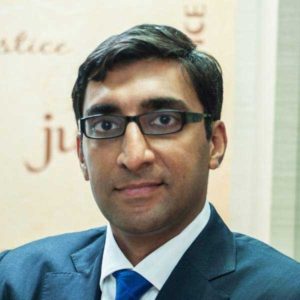
    srinath-sridevan-1I am one of the fortunate people who came from a family of lawyers and therefore Law was something apparent to me since I was in school. I also had an interest in science and astronomy especially, and I suppose if I had not gone into law I would have gone into astronomy. I had studied BSc(Physics) before I got acceptance from Madras Law College.


    Tell us about your experience in Dr. Ambedkar Law University.

    See, that time it was Madras University it was not Dr. Ambedkar University. The college itself is a century old institution and therefore, the building is spectacular, the library has books which we only dream of. For example I have seen with my own eyes a two hundred year old copy of the Hedaya by Bailee, which was one of the most classical texts in Muslim law. But unfortunately the university suffered due to government laps and negligence. Therefore, classes were conducted in a haphazard fashion. In such a situation you are forced to learn for yourself and that’s what I did.


    Could you tell us about your experience at New York University? What all were the differences that you found the Indian form of legal education and the other form of legal education?

    Everything was different. I don’t even know where to start In the Indian form of teaching specifically at Madras Law College, the professor would come in, cover their portions and leave at the end of the hour. Some professors took a little bit more interest and tried to make the class more interesting, so it was only the frontbenchers who really gained anything, because we used to study out of our own interest, and also used to take notes in class. But at New York University, the scenario was completely different. The entire class was completely participative. The professor started a discussion and he guided the discussion. So, at the end of the hour the entire class would participate in the discussion. So as a result the entire portions were covered. And apart from that there would be seminars. So, in a semester you had one hour of discussion per week with a professor, where you would jointly research on some of the subjects. The amount of learning you got in these seminars was unbelievable. Of course, the quality of the professors at New York University was also very high. Some of the professors I learned from are known the world over. So, you really can’t compare the two. The experience at NYU was quite amazing.


    You received a scholarship for applying to New York University. What factors should be kept in mind while applying for LL.M in different foreign universities?

    First you have to look at what you actually want out of your LL.M. Students go overseas for masters degree for different reasons. Some of them are extremely focused and they see a masters degree as a stepping-stone for a further career progression. Some students do a masters degree simply because their friends are doing it. Some people do it because they want a year before the reality of life hits them. So, it depends on what you want out of it. Let’s take the first category, the people who are extremely focused. They need to think about what they want to do after their Masters. If one thinks of working at the UN or some international body, then you need to apply to those universities like George Washington, NYU, and Columbia etc., which have very strong relationships with international bodies. And if you do your Masters there, it is easier to get positions and fellowships from international bodies. So, that’s one. Similarly, if you are looking to work at a law firm in the US, then you should look at the universities in those states of the US, where you are permitted to take the Bar exam with just a masters degree. So, for example you choose a State like New York, or California, where you actually can consider taking a job after taking the Bar Exam in the US. In the UK, you have to look at the universities that give you best access to QLTT.

    The second and third categories of people are those who are going for an LL.M because they can, or because they want to discover themselves, or something like that. They need to choose a city that enables them to enjoy life there to the fullest. If funding is an issue then you need to choose the universities that are really rich and which are able to give large R.A.s and T.A.s or fellowships.


    srinath-sridevan-5

    You have interned at Deacons, a foreign law firm and you have been an associate at Allen and Overy. How your experience there was and what differences did you find between foreign law firms and Indian law firms?

    I was very young when I interned in Deacons, so everything was new to me when I was there. So, on a couple of occasions, when I got to work directly with the partner that was like a high for me that lasted for the entire day. Therefore, since every experience was new, the internship itself was an eye-opener for me. What I got out of it I cannot say but it was a life changing experience for me. You learn how large these firms are. I was three years into the profession when I got an opportunity to work at Allen and Overy. So, I was more settled and I had clearer legal views. At Allen and Overy what interested me was my access to global transactions and global working practices. So, I learnt a lot there as well.

    Coming to the Indian law firms, in the last five years, they have got most of the good practices that these foreign law firms have. So, you have well established drafting and conveyancing techniques, clearer career paths for the Associates etc.


    The Government of India is planning to allow foreign law firms to enter into India. Do you think the Indian law firms will be confronting to fight with the tough competition foreign law firms entering into India?

    You, have to understand that you are asking this question to a law firm based in Chennai. I do not believe that law firms based outside of Delhi and Mumbai will be affected at all, because whoever is in Mumbai or Delhi will always need local legal support from a good law firm in Hyderabad, Bangalore or Madras. So I personally do not think that a law firm in Chennai will be affected at all.

    Further, even as per what I have read, foreign law firms will be permitted to enter only for the purpose of advising on foreign laws aspects of transactions.


    It is a general assumption that the fresher graduates have to struggle a lot during the initial years. What was your experience?

    Look, you use the word struggle as something bad. From my first year, I spent all my free time reading Bare Acts and judgments whether I understood them or not. The first few months, especially the first three months, were quite boring and it was really difficult to sustain the interest. But at some point of time the interest kicked in. Once the interest comes in, it’s a matter of pleasure to keep learning. Even now when I am bored, I pick up a law book and read. It’s not a “struggle”. I find it very pleasurable.


    srinath-sridevan-4

    What made you to venturing into a law firm than setting up an independent practice?

    All the three partners at HSB are all the same age. We all hail from families of lawyers. After we finished our bachelor’s degrees, we all went to the US for our Masters’ degrees. I went to NYU, and my partners went to Northwestern. After we finished our respective degrees, my two partners worked in Chicago and New York respectively, and I went to work in London.

    Over the next few years we kept in touch through e-mail. We were always talking about returning to the motherland and being with our parents.

    By 2002, one of my partners, Harishankar, and I started a firm and we commenced working together.

    By 2004, we spoke to Bhaskar and informally we joined together.

    And on first of April, 2005 we formally united as HSB partners.


    How was your journey during the initial days of HSB? Why do you think that HSB has won the best law firms award in the year 2012 in corporate and commercial laws?

    These awards do not matter much. You can get one every year from someone or the other. I personally don’t give much importance to these awards.

    The initial years were very exciting because it’s great to be working with your friends. There was a lot of sharing of knowledge. You know every day me Hari, Bhaskar and I used to discuss our respective cases. So, that was extremely exciting.

    We also got to learn transition from being the sole proprietors of our family firms to actually being one single firm like HSB.


    While hiring lawyers, what kind of skills you look for in their CV?

    srinath-sridevan-3Speaking for myself, I look for three things.

    The first being the university where the candidate has studied; whether it is a recognized one or not. I look for academic scores.

    Then I look for the places that this person has worked or interned at and the kind of work the candidate has done.

    Most importantly I look at the extracurricular and co-curricular activities because that is the real test of character and if I see something interesting there then I usually invite the person for an interview.


    What do you expect from a first year associate or an intern?

    I usually take interns from their second year. I ask them minor questions to see if the candidate shows interest. If a candidate shows initiative, then I give more responsibility.

    So from my perspective, I give as much work to a person as that person wants. Each person depending on how much interest they show can grow.


    What do you find admirable in present generation of lawyers compared to that of your generation?

    They are lot more prepared, prepared in the sense, bold and willing to state their opinions. For example: when I was in my fourth year of law school I don’t think I could have expressed my views as boldly and candidly as many of the interns do nowadays.


    What is your thought about the traditional ideas of specialization in single core areas of law as opposed to the contemporary broader approach with wider field with multiple specialties?

    I am biased because I myself have several areas of interest. So obviously I will say it’s better to have a broader field of knowledge. I don’t think you can be an effective lawyer if you know only one very narrow vertical.

    You can be an effective lawyer only if you know the general principles of all laws and you have a very wide-ranging interest in other fields of life as well.


    Do ever want to be a senior counsel or judge?

    Senior counsel: Yes, that is something I would like. When, I don’t know. The rules in Madras High court for designation of lawyers by senior counsel have now been changed. Now, it’s only by invitation. So, that may arise if and when am invited.

    Judge, probably not.


    What kind of internship would you recommend for a law student to opt for, to start building versatility and a wide range of law that you are well versed with today?

    I would recommend a litigation internship with lawyers or a firm that has a very substantial practice, that too when a court is in session. This is what will expose an intern to the widest possible range of laws in a shortest possible time. Unfortunately, most of the applications for internship are for the months of May and December when the court is not in session. So, those interns don’t get very much out of their internships. So to get the broadest ranging experience, I would recommend interning under a very busy lawyer or a very busy firm when the court is in session.


    What would be your advice to the budding lawyers?

    Nothing but Enjoy yourself.

     

  • Sanjeevi Shanthakumar, Dean, Faculty of Law, SGT University, on establishing three elite law schools, teaching and academics

    Sanjeevi Shanthakumar, Dean, Faculty of Law, SGT University, on establishing three elite law schools, teaching and academics

    Prof. Sanjeevi Shanthakumar is a graduate from Dr. Ambedkar Government Law College, Chennai (Madras University) (Batch of 1989). Thereafter he pursued LL.M. from Madras University with specialization in International Law and Constitutional Law.

    Currently he is Dean, Faculty of Law at SGT University, Gurgaon [NCR]. Earlier, he was Director of ITM Law School, ITM University, Gurgaon, Director of MATS Law School, MATS University, Raipur; Controller of Examinations of Hidayatullah National Law University, Raipur; Associate Professor of Law at Hidayatullah National Law University, Raipur; Senior Lecturer at Government, Law College, Madurai; Senior Lecturer at Government Law College, Chennai. Before joining the legal academia he had practiced at the Madras High Court for seven years as legal practitioner.

    He has an unique experience of establishing three elite law schools on a self financing mode.

    He shares his experiences in this interview.


    Please tell us a bit about your pre-college years, you as a student, your ambitions as a child. Did you have lawyers in your family or among close relatives?

    During my school days, I was a studious and enterprising child. Believed in honesty and hard work. Very cooperative and helpful to teachers and the school administration. One day when my class teacher was asking about the subjects we like the most, each student was naming either maths or science. When my turn came, I stood up and said “civics” and all the students in the class laughed at me. I never knew those days that this interest in civics will lead me to study law. I never had any lawyer in the family or amongst my relatives. Hence, was complexly unaware of legal profession.


    What were your objectives when you thought about law while still in the preliminary years of Law College? What were your goals after graduating? What were the options available to you?

    As I said, I never knew about this profession. My father wanted me to be a Medical Practitioner. Since I could not get a seat in the Medical College, I got admitted in B.Sc. [Chemistry] and started attending classes. One day, my dad came to my college and said that we need to go to the Madras law college and the interview is scheduled for admission to five year integrated law degree program. I walked with him without realizing that this is going to be a turning point in my life. Went to the Law College, faced the interview and later was declared selected. That was the starting point of my law journey.

    At the law college things were much unorganized. Was very scared to study in that environment. Was feeling very sad and was repenting my decision of joining the law college. Fortunately got few friends who cajoled me. Started developing interest in studies after meeting a friend called Gnanasekar. He was too elderly to be called a friend and hence we used to call him as “uncle”. He was the one who motivated me to study law. He used to call us outside the class room and started explaining to us each and every topic. He never used to carry text books like any other student. He used to carry with him volumes of AIR and read to us the full judgments of the Supreme Court. This created interest in me to read law through cases and law as interpreted by the Courts. He got opportunity to work on a part-time basis at a very popular law firm in Chennai, our interaction with him got reduced and I assumed his role in teaching my friends. This is how; I started teaching though informally.

    Instant recognition and appreciations after a good lecture fascinated me and forced me to take up teaching. Those were the days when there was a serious dearth of good law teachers. I went for a coaching class for preparing for the Civil Services Examination. The Teacher who was teaching Indian Polity could not come to classes regularly due to certain personal reasons. One day I tried to fill the gap by teaching a topic in Indian Polity. The overwhelming appreciation and feedback from my fellow students gave me confidence to become a good teacher. Based on the feedback from student the Director of the Centre Prof. M.F. Khan insisted that I should teach Indian Polity regularly and I got in to active teaching.

    My practice at the Madras High Court was a great experience. I was with one of the top ranking law firms M/s. Aiyar & Dolia and had a roaring practice. Received appreciations from my seniors, colleagues, clients and judges. In spite of these, my passion was in teaching and hence went for a full time Masters Degree Program at Madras University with specialization in International Law and Constitutional Law. After my Masters I cleared the UGC JRF and got the Junior Research Fellowship to do PhD in Law wherein as part of the fellowship terms and conditions, I had to deliver lectures for LL.M. students. Teaching Post Graduate Law students started this way and later got appointed as Senior Lecturer at the Government Law College, Chennai, and I happily started to teach at the college where I studied law. Later, on official transfer went to Government Law College, Madurai from where I resigned and joined Hidayatullah National Law University, Raipur. After HNLU, went to establish a new Law School for MATS University at Raipur as its founder Director, later established ITM Law School at ITM University, Gurgaon as its founder Director and now establishing the Faculty of Law at SGT University, Gurgaon as its founder Dean.


    Which subject do you enjoy teaching the most?

    (Sanjeevy has taught a number of both traditional legal subjects and the trending ones from Jurisprudence to Constitutional Law to International Law.)

    Not only the above mentioned conventional law subjects. I have the experience of designing curricula for Honours Courses wherein I had taught courses like “Biotechnology and Law”, “National Regulation of International Trade”, Science Technology and Law, etc. However, I enjoyed teaching Environmental Law the most and other subjects like International Law and Constitutional Law. I would also love to teach and enjoy teaching Environmental Law.


    Tell us about your teaching methodology. Do you encourage students to take notes or do you engage your students in active class participation? What advice do you share with your students on scoring higher grades?

    My teaching was never a one way process. I was one of the fortunate few teachers to get trained to teach under a World Bank Capacity Building Project and also at Cardiff University, U.K. under the British Council Funded Project. Whatever new teaching methods I learnt at these programs, I disseminated the same to many other young law teachers, through various training programs for law teachers on law teaching methods, at different universities across the county.

    I focus more on active learning rather than on teaching. It was always student centric. I actively involve the students in the process of learning the subject. During a semester, I deliver very few lectures. Most of the topics used to be learnt through small group discussions, role plays, field visits, seminars and projects. My question papers to assess my students understanding were always unique and different. Questions will never test their memory. Instead, it will encourage them to apply the acquired knowledge over a given situation and to come out with unique solutions, both legal and non-legal.

    I encouraged students in small groups to visit environmentally affected areas and to talk to various stakeholders to find out the real reasons for the problem and approach the administrators to find out what measures have been taken and finally to come out with their original solutions to resolve the problem. These methods helped every student to get engaged in the learning process. I made certain passionate students’ members of a Public Trust founded by me and named as “TREES” Trust for Research and Education on Environment and Sustainable Development” through which they continue to do some good work for the cause of environment, thereby engaging them in a life long learning process.

    My teaching methods for teaching Environmental Law was recently recognized by the Asian Development Bank, Manila by conferring on me the “Environmental Law Champions Development Award”.


    What role do legal researchers and academics play in the Indian legal system? What positive changes would you recommend on this aspect of the legal system?

    I personally feel by the legal academics have a greater role in producing quality legal professionals. As it was rightly said, the “Quality of the Bar determines the Quality of Justice”. Hence, it is the primary responsibility of legal academic to ensure the quality of the bar though developing the quality of law students who enter the bar.

    The only change I would recommend to all my law teaching fraternity is that, ‘Please take law teaching seriously and don’t take law teaching for granted. Do justice to your profession; else the nation will fail as a consequence of chain reaction.


    When would you say that an academician is successful? What are the career goals legal academicians should set for themselves?

    A Legal Academician’s success is measured in terms of the quality of legal professionals he produces. I feel successful, when I hear news about the success stories of my students, whom I have taught at different points of time. I could not avoid but sharing this news that this year four of my students got admitted to the LLM Degree Program at Harvard Law School. This gives me, as an academic to feel successful.

    The one point career goal for any legal academic is to be a good teacher and to be recognized as such. All the other positions and opportunities will automatically follow as and when time progress.

    Most of the opportunities I have had so far came to me through the recommendations of my students. One of my students even recommended to her peers and teachers at Oxford University to invite me to give a talk on Environmental Law at Oxford, which I did.  My students believed that I can do and I try not to disappoint them.


    You have authored several books and have written various research papers. How did you find time to write so many scholarly articles?

    For writing books, you need to have a compelling reason. I wrote books on Environmental Law only to help my students, as they were suffering for want of good reading materials, at that point of time, when Universities started to teach Environmental Law as a compulsory course. I tried to help them again with the help of a group of students, who dedicated a lot of time and energy to collect all the information and data required to author a book.


    What was the biggest challenge that you had to face while building the law schools?

    (Sanjeevy is the founder Director of MATS Law School as well as of ITM Law School, Gurgaon)

    The biggest challenge was to attract good students because without good students around me, I will not be able to experiment or innovate in legal education.


    Any thoughts on the current system in place to train the Indian judiciary and continuous legal education of lawyers? How can these systems be improved and made more effective?

    I believe in the importance of “Continuous Legal Education” for lawyers and judges especially in the trial courts. 15 years back, I conducted one “CLE Program for Young Lawyers”, while I was teaching at the Government Law College, Chennai. I received tremendous response for the same and appreciations for the initiative. I wanted it to be a regular feature. Due to transfers and relocation, I could not continue the CLEP. As Dean of SGT University Faculty of Law, I have started doing it again, and hope to continue it.


    As the current Dean of Faculty of Law, SGT University, how do you feel SGT can take a greater role in social engineering in India?

    As Dean of the Faculty of Law of SGT University I try to leave no stone unturned to make the law school a clinical law school where students learn through experience. I believe in “justice education” in contrast to “legal education”. I am trying to provide my students, maximum exposure to the legal profession through various clinical activities.

    I constantly remind them to think critically and not to accept anything just because it is there. To help the students feel more socially responsible I facilitate their visits to the communities for interaction very frequently through the legal literacy club. These visits to the communities and interaction with legal luminaries gives them a complete picture of the working of the Indian Legal System. Since they are made to personally feel the pain and sufferings of individuals, I sincerely believe that they will do their level best to mitigate pain and ensure justice.


    How do you say a student can manage to stay ahead of the ‘rat race’?

    Today, I find students quite impatient. My only advice to the young law students is that, keep working, work with dedication, sincerely and honestly maintaining the integrity and dignity of the legal profession. Results will follow as a natural consequence. Remember the phrase that “Rome was not built in a day”.


    What would be your message to those hard working law students who did not make it to a top NLU but want to excel in the profession?

    Many of those who are on top of the legal profession today were never a student of an NLU. In fact the NLUs started existing in public knowledge only 5-10 years ago. If they can do, why not you?
