Tag: Management

  • “From Knitting, Kitchen, and Kids to Serial Entrepreneur: My Journey from Family Tradition to Entrepreneurial Success.” – Dr. Shweta Singh, a Serial Entrepreneur and Founder of Ennoble IP.

    “From Knitting, Kitchen, and Kids to Serial Entrepreneur: My Journey from Family Tradition to Entrepreneurial Success.” – Dr. Shweta Singh, a Serial Entrepreneur and Founder of Ennoble IP.

    This interview has been published by Anshi Mudgal and The SuperLawyer Team
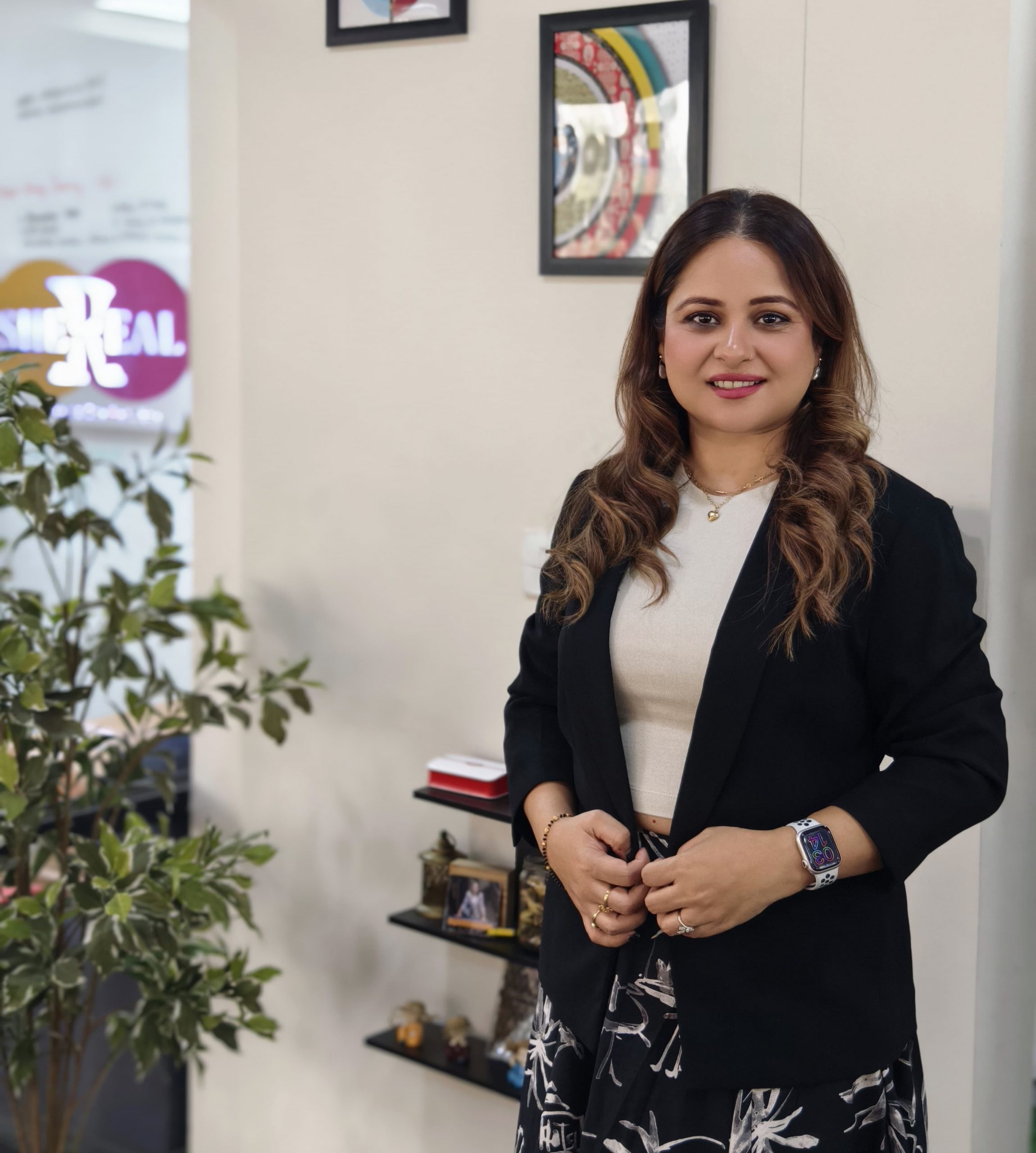
    Your work in the intellectual property law space is highly specialized. What initially sparked your interest in IP law?

    This is a very interesting question for me. I’ve been asked this many times, and I always say that actually, my personality is such that I get bored easily with things. Things, not people—okay? So, if I am doing something continuously and it feels monotonous, I get bored. Since my childhood, it has been a dream of mine to do something of my own, possibly due to my background or family conditions—a very orthodox family. But I wanted to do something interesting that always excites me.

    It should always give me a kick to do better and better, until I achieve the best, right? So, that’s how I developed my journey. I would say my interest in IP law was sparked during my graduation days when I was actually searching for what I should do.

    And I encountered a book by B.D. Singh with a chapter on patents, and this chapter opened my eyes to the fascinating world of innovation and technology. As I delved deeper, I realized that working in this field means being exposed to new ideas and groundbreaking technologies every day.

    It felt like being on the front line of innovation. Now that you are involved in IP, you will realize why I chose it. What truly drove me to start my journey in IP was that it became not just my passion but my attitude. IP became more than just a field of study for me; it became a part of who I am. I believe I am at my best when I’m working in this space, and this confidence gave me the drive to turn my passion into a business.

    More than working with corporates and universities, I realized that there’s a huge gap in the support provided to universities, startups, and SMEs. When I entered the field of IP, I started catering to these needs. For me, it’s not just about protecting ideas but also empowering innovators and helping them realize the full potential of their creativity.

    During early stages of your career, while you spent four years working as an IP consultant, basically in patent research and analytics, what kind of experience was it that influenced your career trajectory? And what were the key insights that you would prefer to share?

    During the early stages of my career, I spent not four but six years working as an IP professional, focusing on patent research and analytics in both corporate and academic environments.

    I worked in the corporate sector and with Amity University, which was the only university where I worked as an employee. This experience was instrumental in shaping my career trajectory and deepening my understanding of IP from multiple perspectives. I learned how IP is handled in the corporate and business sectors and how it is managed in academia.

    In the corporate sector, I learned business strategies around IP that help companies stay ahead in competitive markets. Large corporations file patents not just to protect their inventions but to monetize them. This taught me how patents drive innovation and secure market advantages.

    In contrast, my time with Amity University exposed me to the academic approach to IP: how research translates into intellectual property and the challenges faced by institutions in managing and leveraging their innovation effectively.

    The biggest lesson I learned during this time was the immense potential of IP to create tangible value—whether for multinational corporations, universities, or startups. It also made me realize the importance of bridging the gap between innovators and the IP process, which ultimately inspired me to start my own venture.

    I also remember a pivotal experience in Singapore, where I attended a conference through WIPO. During the conference, someone remarked that India and China are “jugaad” countries that copy products and lack awareness about protecting intellectual property.

    This comment struck a nerve. It motivated me to return to India, leave my job, and create something that could address this issue. I conducted 75 free workshops for SMEs and universities in 2013 to spread awareness about why IP is important. It wasn’t just about filing; it was about understanding what you are losing by not protecting your ideas.

    You actually are the first-generation serial woman entrepreneur. Can you take us through that journey, through that experience that actually led you to start Ennoble IP and how do you see that this is impacting society at large and majorly women entrepreneurs?

    Let’s not define entrepreneurship by gender. I used to think of myself as a woman entrepreneur, but over time, I realized entrepreneurship transcends gender.

    Yes, as a woman, 20-40% of the challenges we face may be gender-specific. But the rest are the same for all entrepreneurs. I come from a small town in Eastern UP, and I belong to a traditional Rajput family. The mindset in my family was that women were destined for the “3 Ks”—knitting, kitchen, and kids.

    However, my parents, particularly my mother, were rebellious. My mother was determined to ensure that my sisters and I became financially independent. She always emphasized that financial independence is the key to freedom—freedom to make decisions without asking a father, husband, or boss for money.

    My journey as a first-generation entrepreneur has been both challenging and rewarding. During my university days, I discovered my passion for IP and realized I could work with innovators to protect groundbreaking ideas. After gaining industry experience in corporate and academic settings, I saw a significant gap in IP services for startups, universities, and SMEs.

    Starting Ennoble IP was my way of addressing these gaps, but it was also a journey of self-discovery. Each experience taught me resilience, adaptability, and the importance of staying true to my vision.

    So, he makes the decisions on how the house will run. We live in a joint family, and to this day, we still have a joint family. My uncle guided my father, and my grandfather also guided him, saying, “You have a daughter; save money and give her basic education if you want.” But my mother and father were very rebellious—both of them, I would say.

    The first step was taken by my mother, but yes, my father joined hands with her. My mother declared, “I have daughters, but that doesn’t stop me from building their careers or making them financially independent.” And my mother was determined throughout, until we realized the importance of financial independence.

    She taught us that financial independence is the freedom you actually require in your life. Otherwise, you will always have to ask. If you don’t have a brother, you’ll always turn to your father, saying, ‘I want this; give me this money.’ Then you’ll turn to your husband, saying, ‘I want this; give me your money.’ Finally, you’ll turn to your male bosses, asking for a raise.

    So, she asked, “Why don’t you create your own financial freedom so you don’t have to ask anyone?” She even gave her example: “See, if I have to make any decision, I have to ask your father. If I had been earning, I would have sat with him to discuss whether we should invest or not. Instead of asking, ‘I want this—will you help me buy that?’ I would have had the confidence to contribute equally.”

    So, she talked about financial freedom and confidence until the three of us realized how essential they are. My father supported me—I would say he was always the strongest backbone for us, alongside my mother.

    Now, coming to being a first-generation entrepreneur: my journey has been both challenging and incredibly rewarding. I always say, “Be proud of yourself,” and I am very proud of whatever I have achieved.

    Growing up, I didn’t have—as I mentioned—a family business or entrepreneurial legacy to guide me. But I always had a strong drive, inspired by my mother, to create something meaningful.

    The key moment that set me on this path was during my university days when I discovered my passion for IP. The idea that I could work with innovators, support them, and help protect groundbreaking ideas fascinated me immensely.

    After gaining industry experience—both in corporate and academic settings—I saw a significant gap, as I mentioned, in how IP services were being delivered to startups, universities, and SMEs.

    While large corporations had access to world-class IP support systems, smaller entities were often left struggling to navigate the complexities of intellectual property. That was something I wanted to change. That realization was the kick I needed to get started.

    I wanted to be independent, and my independence inspired my sisters, who said, “Yes, we will work.” But I was determined: “No, I don’t want to limit myself to one job. I want to build a business.” At that time, I was young and naïve, but as you grow, wisdom comes. I was still a child back then, thinking, “I will start a business where my daddy’s friends will come and say, ‘Please employ my child.’”

    And these relatives will come and say, “Please help me with the job also.” I was of that mindset, but I was totally wrong. So, for the young people who are watching this, this should not be the driving force for you. I was scared. I was scared, but with the vision, with the wisdom that comes with age and experience, I am not working today for myself.
    I’m working for almost 260 people who are working with me right now. Together, we are working towards that vision. So, entrepreneurship, I would say, is a very beautiful thing if you actually enjoy this journey. Starting Ennoble IP was my way of bridging the gap—not only in the industry but also in my thought process.

    I wanted to create a platform that not only provides IP services but also empowers innovators by making it more accessible, more understandable, and more strategically strong, where they get the support they need. Along the way, the three challenges I faced were, first, learning to navigate the business world without prior experience, second, building a trusted network, and third, establishing credibility as a first-generation entrepreneur.

    Now, coming to your question—yes, I faced challenges being a woman. As I mentioned, it’s only 20–40%, not more than that. The rest of the problems are the same. Trust is the major issue. At the time when I started, I was very thin and looked much younger than my age. This made people reluctant to trust me.

    Once, I was sitting with a vice-chancellor of a university, and after a talk, he said, “Madam, I thought that as the chief guest, you must be very old. Will you be able to handle this workshop and the university’s work? You are just a woman, madam. This university is very big.”

    In my mind, I was thinking, ‘Where have you come from? You have so many female faculty members, yet you doubt me?’ But I said politely, “Sir, I’ll need your help. If you help me, I will be able to manage.” This was me satisfying the male ego.

    After my talk, he said, “You are like chota packet bada dhamaka.” I responded, “No, sir, you are wrong. I may be small or big—I don’t know—but I am definitely a dhamaka.” Then I added, “Never underestimate women because if we can handle a kitchen and kids, we can handle anything.”

    I continued, “If a woman can bring life into this world, she can do anything.” He was silent, but now, we are good friends. I respect him a lot, and he often says, ‘Shweta, you changed my mindset.’ After that, he gave his daughter the wings she wanted.

    What I want to emphasize is that each experience has taught me resilience, adaptability, and, most importantly, staying true to my vision. This is very important. I often say resilience has built me because it’s like fighting against odd situations every time.

    As a woman, we face challenges, but as an entrepreneur, we face even more. It’s resilience that helps us persevere. People these days on Instagram talk about manifestation, right? I didn’t know this word back then, but now I realize that all this while, I was manifesting.

    From my childhood, I manifested something, and I believe in it. My favorite song is Chaand Taare Tod Lau. That song is about manifestation—and look at the actor! It’s all in your mind. You just have to believe.

    These characteristics and skills, no one is born with. You develop them through experience. I was very naïve when I started meeting investors. I didn’t want to raise money for my startup, but I have an NPO where I support women.

    I believe in giving back to society. Through that NPO, we support women. It’s not for profit. I have only invested my own money so far. We do not work for CSR funds because the women we support are doing fantastically well.

    When I started in 2012 or 2013, there wasn’t much exposure. In meetings with investors, they would say, “She may get married soon and plan a family.” I got furious during some of those interviews and said, “Sir, that boy will also plan for a family. He will also have a child.”

    Just because we, as women, go through this process doesn’t mean we are weak. It’s a mutual responsibility. But I have seen a change in the ecosystem now. We have become fearless.

    I had to learn and develop these skills, but this new generation—Gen Z—is already born with this fearless expression and thought process, which is commendable and really cool.

    When we three sisters discuss, we always say that if our mom had received a proper education, she would have been the CEO of a company. My dad has a slow decision-making process. My mom, on the other hand, is quick with decisions.

    But I would again emphasize—until the father supports the mother, she cannot do anything. My father is not a risk-taker, but I inherited that ability from my mother. The values and empathy, however, I got from my father.

    Intellectual properties have often been considered very complex and intimidating for startups. How did you handle those particular challenges whenever you faced those young innovators and startups?

    China is still leading the world in terms of patents. And I believe that we must strive to surpass China because population-wise, we are stronger. First, we are intellectually very sound when it comes to technology. So, I’m a very proud Indian. Actually, I say this often: I travel to a lot of countries, and when I come back, I love inhaling this polluted air. I genuinely love India, despite its challenges. However, India still has a long way to go.

    The scenario has changed. Earlier, there was no awareness. People didn’t know about IP, so they weren’t filing patents. Now, there is awareness. But still, many startups do not file. Why? Because they don’t give priority to IP.

    They think it’s something that can be addressed at a later stage. They ask, ‘Why invest the money now?’ They don’t realize that investing in IP strategies is the key to driving their business forward. They are unaware of the story of Google. They don’t want to know. They just see that Google has become Google—not through business strategy alone, but through its IP strategy.

    Apple is Apple because of its IP strategy. So, this is something I would like to emphasize before starting my answer.

    Coming back to your question, IP law does seem daunting for startups and young innovators, especially when they are more focused on developing their products or services than navigating the legal complexities.

    Some key challenges they face—and this is based entirely on my 10–12 years of experience—are:

    1. Lack of awareness: As I mentioned, many startups are unaware of the importance of intellectual property or the steps required to protect their innovations. IP strategy should be an integral part of the business strategy from the very beginning. They often underestimate how crucial it is to secure patents, trademarks, copyrights, or, if it’s a product, the design, right at the early stages.
    2. Limited resources: Startups, being small businesses, typically operate on tight budgets. This makes it difficult for them to prioritize IP amidst other pressing needs like product development or marketing. They end up investing more in product development and marketing rather than prioritizing IP.
    3. Global complexity: For startups looking to expand internationally, understanding and complying with IP laws across different jurisdictions can be overwhelming.
    4. Timing and strategy: Filing for IP protection too late or without a clear strategy can make startups vulnerable to infringement, competition, or even losing their innovations.

    At Ennoble IP, we address these challenges directly. We have designed our services specifically to tackle these four challenges. We start by educating startups and SMEs about intellectual property and how it can serve as a powerful business asset. We offer tailored solutions that are not only cost-effective but also of the same quality as corporate-grade services, and they align with the startup’s stage of growth.

    For example, we help startups conduct patent searches, explain why it is done, file applications, and ensure that their IP strategy aligns with their business goals. We also do not force startups to file a patent if it is unnecessary. Right? There are different IPs, and you already know this because you are in the same business line. Sometimes, a patent may not even be required—for example, in the music industry, where copyright is often sufficient. So, we create strategies accordingly. We also assist with global filings and provide strategic advice on leveraging IP portfolios for funding, partnerships, and market positioning.

    Our goal is to make the IP process as seamless as possible for startups and SMEs so that they can focus on what they do best: innovating. We always say, “You handle your product and marketing strategy, and we’ll handle your IP strategy.” Marketing also requires IP. Many firms don’t realize that their marketing materials and overall marketing strategy should involve IP considerations.

    Ultimately, IP should not be viewed as a hurdle but as an opportunity for smart businesses—startups and SMEs—to strengthen their competitive edge. As I mentioned, I am passionate about helping in these areas. 

    Given the scenario today, there is a rise of new technologies, there is a growing need for IP protection in the kind of fields where AI is getting involved. How do you see the intersection of IP laws and IP per se with this kind of disruptive tech, which is going to shape the future of innovation in a very different manner specially in the Indian environment and ecosystem?

    I would say that the intersection of IP law and emerging technologies is becoming increasingly crucial in shaping the future of innovation. Technologies like artificial intelligence, blockchain, quantum computing, and biotechnology are evolving rapidly, pushing the boundaries of traditional intellectual property frameworks. This presents both challenges and opportunities. One key challenge is the pace at which technology is advancing, often outpacing the conventional IP systems designed for traditional inventions.

    For instance, questions around the patentability of AI-generated inventions or the ownership of decentralized blockchain solutions are sparking new debates in legal and regulatory spaces. On the other hand, this intersection drives a deeper understanding of the strategic importance of IP. Companies and innovators are recognizing that a robust IP strategy is not just about protecting ideas but also about creating a competitive edge in a technology-driven market.

    Here, you don’t just need an IP strategy; you also need good market research. IP portfolios are becoming integral to attracting investments, forming strategic partnerships, and determining valuations during mergers and acquisitions. A classic example, albeit not recent, is Nokia, Microsoft, and BlackBerry. These cases illustrate how an IP portfolio can protect an entire company.

    At Ennoble IP, we are at the forefront of this intersection. We work with innovators to navigate this complexity, whether it involves filing patents for AI algorithms, protecting proprietary aspects of blockchain applications, or managing IP risks in cross-border collaborations. Our role is not just to protect innovations but also to help innovators leverage their IP to unlock new opportunities.

    Looking ahead, I believe IP law will continue to evolve to address the unique challenges posed by emerging technologies. For instance, there will be greater emphasis on global harmonization of IP laws to address the borderless nature of technology. More collaboration will also emerge between legal, technical, and policy experts to ensure that IP frameworks foster innovation without stifling it.

    The future of innovation will rely heavily on how effectively we align IP protection with the needs of new technologies. By staying ahead of trends and proactively addressing challenges, we can ensure that the innovation ecosystem remains vibrant and sustainable. IP, market research, and business intelligence must work collaboratively. For instance, in the case of AI and blockchain, where new advancements emerge daily, a robust strategy is essential.

    With my UAE office, I have seen how blockchain startups are leveraging IP strategies effectively despite varying jurisdictional rules. This diversity creates challenges, but India is becoming a goldmine for IP service providers. With huge investments in R&D flowing into India, we are at the cusp of something big.

    And believe me, my dad always told me, and this was my dad’s wisdom, people can take away your wealth and other materialistic things; they can take away everything, but two things nobody can rob you of are your knowledge and character. So, always work on those things. Today, I’m not scared, even if I lose everything, because I know I have expertise, and I have knowledge. I can earn again. Since I’m not scared, I always take risks. Knowledge is a very important tool in today’s world.

    Fifth is to create your own opportunities. If you find a door closed, don’t hesitate to build your own. As a first-generation entrepreneur, I didn’t inherit a business, right? I built one from scratch. It’s about being resourceful and proactive in creating pathways where none exist. Let me give you an example: I started a business in a very crowded space. IP is a very crowded space. But I didn’t hesitate to enter because I came up with an innovative model, collaborating with universities, startups, and small businesses.

    Now, the sixth point I would like to mention is to advocate for others. As women, we have a unique opportunity to lift each other up, whether through mentorship, collaboration, or simply sharing stories. Supporting other women can create a ripple effect of empowerment.

    For example, I often refer to the movie Jai Ho. If you’ve seen Salman Khan’s movie, you’ll recall the chain they create. I don’t remember all the details now, but the concept stuck with me. If one woman holds the hand of another and uplifts her, this chain can actually bring about change.

    Because, speaking from my own experience, I got more support from men than women. I didn’t receive much support from women, and that’s why I started my mission through WIF, my NPO, which supports women. Helping others in this way is one of the most meaningful things you can do in life.

    Lastly, the seventh point: embrace resilience. For me, resilience has been key. There will be setbacks, but resilience will carry you through. Every obstacle you overcome adds to your strength and experience, making you better equipped for the next challenge.

    What kind of advice would you give to others, specially women entrepreneurs as we see a lot of technology biases are also there. How do you see that one can navigate through those kinds of obstacles, especially in IP.?

    To all women entrepreneurs, I would say this: don’t let anyone define your potential. Dream big, be ambitious, and proudly say, “I am ambitious.” Don’t feel shy about wanting to make money—it’s okay to say, “I want to make money.” You must aim to build a business that not only fulfills your passion but also generates wealth. And don’t hesitate to seek help when needed.

    So, dream big, be ambitious, work relentlessly, and lead with purpose. Remember, your success is not just your own; it is an inspiration for others who are watching and believing they can do it too.

    Get in touch with Dr. Shweta Singh-

  • Lokesh Bhola, Managing Partner at Legal Icons In Conversation With SuperLawyer Shares His Side On Struggles For A First Generation Lawyer

    Lokesh Bhola, Managing Partner at Legal Icons In Conversation With SuperLawyer Shares His Side On Struggles For A First Generation Lawyer

    This interview has been published by Prabhjot Singh, Priyanka Karwa and The SuperLawyer Team

    Was pursuing law planned for you or it all happened in a flow? Kindly share with our readers.

    It was not at all planned. After completing 10+2 in commerce stream, I opted to become a Chartered Accountant. I had even took admission and deposited fee for that. During that time, five year course from I.P. University, Delhi was introduced and  my father influenced me take a plunge in the field of law. I had appeared in the common entrance test conducted by the University and was fortune to get admission in limited ‘free seat’ on basis of merits.

    Initially it was more of subjective learning rather than practical and took some time to get myself adjusted in that flow. Afterwards, I had started developing my interest and scored well thorough out all semesters. Never thought that I would become first-generation lawyer in my family, however destiny has chosen so for me.

    What do you think, which specific advice has helped you come thus far in law? What is that one motivation that keeps you going in life?

    As a first-generation lawyer, the journey has been quite tough yet exciting. Working as the junior most associate in the Law Firm to heading a boutique Law Firm has been an overwhelming and enriching experience.

    The hurdles on the path of this journey, especially as a litigation lawyer, are tough to handle. Consistency and Dedication are two stepping stones for almost every success.

    Do not expect quick results especially while practicing as litigation lawyer. Change the mindset from working as employee to working like a professional. Own responsibility for every step taken by you while working on a matter. Success does not come without failures. We cannot have favourable results the way we thought every time, however we should be capable enough to be responsible for those results.

    Initially many colleagues even left the profession due to various reasons like low income, great hard work with slow or no results and that had sometimes demotivated me to choose this profession, but like a pillar of strength and motivation my family stood beside me and here I am today, enthusiastically climbing the ladder with more than seventeen years of experience and having Law Firm of my own. 

    Could you brief a case you were led on that substantially broadened your knowledge of the legal field?

    In last seventeen years, I had the privilege to lead as well as assist my senior colleagues in various corporate commercial matters across different Courts and Tribunals. 

    I fairly remember a matter dealt by me in my previous law firm, where we used to brief Late Mr. P.P. Rao, Senior Advocate in a constitutional matter being tussle between State Government and Union Government to enact law to control and supervise State Universities in the State of Himachal Pradesh.

    We used to take him for hearings before High Court of Himachal Pradesh at Shimla. In my entire career, I have not come across any other Senior Advocate like Mr. Rao, who was so thorough and clear in his understanding on the constitutional matters.

    He used to throw case law citation as well as its relevant paras to us while briefing him. That matter has surely broadened my concepts on educational and constitutional matters. I think it was his hard work and good wishes that we won that matter on his birthday.

    As an empanelled Arbitrator with prestigious Delhi International Arbitration Centre at High Court of Delhi, I have gained experience of deciding matters judiciously which has helped me in proving reasoned and more apt interpretation of legal issues.

    Lokesh, you have over a decade of experience in legal, how do you see the legal industry coming up with new concepts and creating exciting opportunities?

    India is a large country and the biggest democracy in the world. We have by far the longest constitution in the world, so the laws are accordingly quite vast. Similarly, there are host of Cases pertaining to Supreme Court and High Courts. Both these are referred regularly in the current set of cases and used immensely in the courts and by the lawyers. All this can happen only through digitization and having effective analytical tools which can help a Lawyer to quote relevant cases in the court and the corresponding Legislations and Provisions.

    I can see a lawyer walking into the court with a simple Tab and referring to relevant Legislations/Cases and the Judge verifying the same through his online terminal linked to the Master Registry. No more attachments of papers/cases/book portions etc. It makes the system faster, accurate and efficient.

    There is a huge role for Digital Transformation to play in the Legal Industry. We are far too behind in this area compared to our western counterparts. Undoubtedly, thanks to corona period, we have come a long way in transforming ourselves from a paper-based judicial system to a digital system. However, lot more is required to do in this field to help in surviving in faster pace.

    You have been there in some really big deals, how would you educate our readers about the risks attached to the same?

    Every journey has up and down graph like an ECG report. It is always fascinating to deal big ticket matters, however the same comes with many fold of challenges and expectations from client and senior colleagues. It’s true that our hard work should not depend upon the quantum of the matter dealt by us, however high stake matters involves greater effort and strategy to deal the same.

    Don’t hesitate to take opinions from expert or senior colleagues in a ticklish matter. A direction is must to achieve a goal. In a litigation, experience has bigger role than the academics. One should always adapt to learn not only by reading and research, but learning from experience of others especially your senior colleagues.

    A small court crafting skill can save you from multi-fold hurdles and that comes from court experience. A young lawyer should sit and watch proceedings in court rather than roaming outside courtroom waiting for his turn to come. A lawyer must not enter courtroom without reading his brief as you never know what may come from bench as a query.

    What strategies do you use to ensure that your clients receive the best possible?

    My preparation for a matter starts from first meeting with the client. We should make goal oriented strategy in a matter that too keeping in mind the financial implications on the client. Now a days, thanks to multiple courts and forums, we have various alternatives available to churn out results in a given matter in a most possible and economical manner. My endeavour is to pull our best suitable remedy out of bunch of options available for a given client considering his financial capabilities and timelines to get desired results.

    At the same time, a lot depends upon the zeal and hunger of client to get results in a given time frame. Many clients opt not to disclose correct and complete facts on the threshold which leads to multiple hurdles and greater time to achieve the desired goal.

    Workplace harassment also contributes to mental health issues that last forever, what are your views on the same? 

    Work-life balance is very important to ensure a long term efficiency in work and a satisfaction in your personal life. Workplace stress can be managed by fixing short term goals and taking all possible effort to achieve the same.

    Being a Partner, I try spend sometime with my team members to interact and discuss work and the general life related aspects. However, one needs to prioritise the work and maintain a discipline during the working hours.

    I am a strong supporter of not carrying the work related stress to home and spend my away time playing with my daughters as well as working out. It is equally important to take care of your health and therefore, I have made it a routine not to carry work at home except in dire emergency.

    Lastly, any 5 best pieces of advice for our readers?

    Legal field requires continuous study and keeping yourself updated of the latest developments. So, it is very important to make an early habit of reading latest judgments as well as precedents. Young lawyers should also visit Courts and hear established legal practitioners argue the cases in Court.

    There are no substitutes for hard work in law. I’ll quote J.R.R Tolkien, when he said “Shortcuts make long delays.” There are 5 P’s success formula  – Passion, Patience, Punctuality, Perfection and Politeness.


    Get in touch with Lokesh Bhola-

  • Nipun Bhatia, Senior Consultant, Legal League Consulting, on work experience in Law Firm Management and being a C.A.

    Nipun Bhatia, Senior Consultant, Legal League Consulting, on work experience in Law Firm Management and being a C.A.

    Nipun Bhatia is a Senior Consultant with Legal League Consulting, India’s first management consultants to the global legal industry. After graduating in B.Com he pursued LL.B from Faculty of Law, Delhi University, and graduated in law in 2008. Besides being a lawyer, he is also a qualified Chartered Accountant. He has worked with Lall & Sethi Advocates as their Senior Manager – Finance, Administration & Human Resource Development. He has done a Post Graduate Certification Course in IPR from Indian Society of International Law.

    In this interview he talks about:

    • Pursuing C.A. and law
    • Working at Legal League Consulting
    • Law firm management and Enterprise Resource Planning (ERP)


    Please introduce yourself to our readers.

    I am a Senior Consultant with Legal League Consulting, India’s First Management Consultants to the Global Legal Industry. While I deal with all aspects of Law Firm Management, my core areas of expertise include Finance, Human Resource Management and Enterprise Resource Planning. Besides being a lawyer, I am a qualified Chartered Accountant, which explains the interest in finance and number crunching. Prior to joining Legal League Consulting, I have worked with Lall & Sethi Advocates (now Singh & Singh Lall & Sethi), a leading IPR Firm, as their Senior Manager – Finance, Administration & Human Resource Development. My first job, however, was with an Ad Agency, which was a subsidiary of Future Group.


    nipun-bhatia-2

    When did you think you were suited to a career in law? How did you get through to Faculty of Law, University of Delhi?

    While studying for the Chartered Accountancy course, our curriculum included studying various laws and to my surprise I used to enjoy studying them. Reading of Acts and their practical application generated a lot of interest and I decided to give the LL.B. Entrance Test after getting through the Intermediate level of CA Course. Surprisingly, I cleared the test and made up my mind to pursue the course. Also, on a lighter note, the family used to always complain that I have this habit of arguing and sharing my views upfront in every matter, so lawyer is the best suited career option for me! Once I got through, they realized that I had taken it a tad too seriously!


    After your graduation, you have pursued a Post Graduate Certification Course in IPR from Indian Society of International Law. Was it a professional requirement to enhance your career?

    From college days itself, I found IPR to be a very interesting area of law and something which a common man relates to. Reading about Trademarks, Infringements, and Counterfeits etc. intrigued me and I decided to take up the Certification Course, in order to have a longer stint with the subject. At ISIL, I thoroughly enjoyed the class room sessions since the faculty encouraged live discussions and took up real life case studies. Out of the sheer interest and due to such fabulous class room training, I worked very hard on the project submissions. It also helped in studying diligently, which earned me not only the highest score in the entire batch, but also a gold medal which is my prized possession till date.


    What were your areas of interest during your graduation? How did you go about developing expertise and knowledge in these areas?

    As mentioned above, during the LL.B. course, I had begun to like IPR a lot. Apart from IPR, I meticulously studied for Jurisprudence as it explained a lot about evolution of law and the rationale behind it. I still remember that my notes used to be photocopied by colleagues and juniors since I used to make very neat hand-written notes, after referring to a lot of books and doing my own research. Till then, the use of typed notes and e-mails was not very common.

    Another subject that was very interesting was Family Law. Being a Hindu, we have always been exposed to Hindu Customs and Practices. Thus, when we were introduced to nuances of Muslim Law, I found it very interesting to read.


    You have also managed to pursue Chartered Accountancy. Tell us why did you chose to do it and what is the utility of having a qualified CA degree in your domain?

    Chartered Accountancy came into the picture because my mother always wanted me to take it up as a career. When I cleared Senior Secondary Examination, I managed to score in decent eighties in Accountancy (99.99% score was not the norm at that time, as it is now). So I was told that I should pursue Chartered Accountancy since I have scored decently well and the subject is not that hard as compared to any other pure mathematics based option. So I just filled the form and cleared the Foundation Examination after nine months of study. It was only when I entered the Intermediate level that I realized that it is anything but easy!

    It requires a very disciplined approach towards studies and a belief that one should never ever give up. While I would always jokingly tell the young aspiring students that one should not take up CA as a career choice since it is a very demanding commitment, I would also like to outline here that all the hard work put in through the number of years of studies and all the sacrifices made during this course are really worth it! The kind of respect this profession earns you makes every sacrifice made during the course of journey worthwhile.


    What were the biggest challenges in the first year of your graduation? How did you deal with them?

    I did my law graduation from Law Centre – II of Delhi University, the classes of which are held in the evening. Being an evening college, it was a favoured choice for a lot of Govt. Servants and people who have already achieved a stature in life. In the first year, it had a mixed effect on me. I used to feel intimidated by the presence of such stalwarts beside me since all of them were very intellectual and would pose lot of questions in the class. I was also hesitant to make friends with them due to the age gap. However, over the period of time, as the interaction increased, I figured out that there is lot to learn from them. The fact that they were willing to work hard at that age and gain further knowledge despite being successful professionals motivated me to a very large extent. They were not only friendly, but were very helping and tolerant towards our generation.


    You have worked for a short period of time with a premier Apparel Brand and got to hone your creative skills over there. How did your appointment take place? What worked for you in securing this job?

    This, being my first job, will always hold a very special position in my life. I was shortlisted through a famous online job portal and was selected after a couple of rounds of interview. After the initial few hiccups, I developed a comfort level with the Managing Director of the Company and worked under him directly. My finance background and my legal knowledge both helped in securing the job since it involved a lot of work with respect to drafting of contracts and agreements, along with regular Financial MIS Reporting. Also, the experience gained during the internships helped a lot since I was able to put the knowledge to practical testing.


    Before moving to Legal League Consulting, you have worked with a leading IPR Law Firm as a Senior Manager – Finance, Administration & HR Development for three years. What kind of responsibilities were you entrusted with?

    Getting a job with Lall & Sethi (now Singh & Singh Lall & Sethi) was a path breaking move in my life. Ms. Bithika Anand (Founder & CEO of Legal League Consulting and under whom I work currently) was entrusted with the responsibility of finding a Finance person for the Firm.

    Through a consultant she interviewed me and found me apt for the role. Besides CA and LL.B., my certification from ISIL in IPR field also favoured me in getting selected for this role. Since the day I was appointed at the Firm, there was no looking back. Under superb training from Mr. Chander M. Lall, who is a visionary and legend in himself, I was given one challenging role after the other.

    Thus, while I joined them as a Finance Manager, within a short span of two years I was promoted to Senior Manager – Finance, Administration & Human Resource Development. Had it not been for the fantastic grooming I was given under Mr. Lall, I would have still been just an accountant! Also, it is very important to mention here that being a fitness freak, Mr. Lall is an inspiration for a lot of youngsters like me. I joined the Firm as an accountant who weighed 92 Kgs and slowly got into fitness after being inspired by him. Thus, in less than a year, I was able to knock off almost 25 Kgs from my weight. I would not be exaggerating if I say that the Firm and its wonderful people brought a 360 degree turn in my personality.


    How did you decide to work with Legal League Consulting?

    I think I have been very fortunate to meet just the right people in my life. As mentioned above, I was initially interviewed by Ms. Bithika Anand, who placed me with Lall & Sethi. I was very sure that whenever I would decide to move on, I would go back to her. Her dynamic personality almost instantaneously surrounds you with a positive and energetic aura. Hence, it was always in my mind to work with her. So when I planned to shift my base to Mumbai, I got in touch with her. At that time Legal League Consulting was already very well known in the fraternity and I almost immediately liked the kind of work the Firm was doing. While later my plans to shift base to Mumbai were shelved, Ms. Anand took me on board and I was given assignments of handling some leading law firms within Delhi. I must also mention that coming on board with LLC was a seamless transition. Right from the very first day I was entrusted with Client Handling and Ms. Anand allowed absolute creative freedom to us in handling the mandates. The colleagues at LLC gave a hearty welcome and were more than willing to help. I always tell Bithika Ma’am that coming back to work with her at LLC was the much destined ‘Home Coming’ for me.


    LLC is the first law firm management company in Indian legal industry. Can you tell us something about the kind of work LLC does?

    Legal League Consulting takes pride in being a one-stop solution to all Law Firm Management needs. We assist firms in areas of strategy, acquisition, compensation benchmarking, performance appraisals, human resource management systems, employee retention, partner reward system, training, recruitment, branding and business development, knowledge management, and IT solutions amongst other services.

    Apart from this, we are also actively involved in exploring and securing strategic alliances between law firms. Since more and more firms are moving towards institutionalizing themselves, we play an important role in structuring of firms. We have also been involved in setting systems and processes in place for LPOs and Legal Departments in Corporates.


    Tell us in brief about your role as  a  Senior Consultant  in the area  of  Finance and HR Management Solutions at Legal League Consulting.

    All Senior Consultants at LLC work on specified client portfolios, headed by Ms. Bithika Anand herself and supported by a team of Consultants. Having expertise in Finance, I have majorly been involved in improving cash flows in firms. We monitor the timings of inflows and outflows of cash and encourage the firms in budgeting. There is also a substantive internal audit undertaken to identify the financial health of the firms, which is followed by suggesting best practices to be followed. We also conduct thorough checks on the profitability of the firm and compare the same with global standards, Indian standards and industry standards to show a true picture to the firm.

    As far as Human Resource Management is concerned, we ensure that the performance of workforce is constantly monitored and motivation levels are maintained always. Wherever required, benchmarks for performance are set both in financial and non-financial terms, which are followed by appraisals. We suggest and implement strategies for retention of the right people by ensuring that they are suitably rewarded in the firm and their growth needs are taken care of.


    You have introduced Enterprise Resource Planning (ERP) Systems across various entities to bring all facets of a law-firm in sync with each other. What is this all about? Tell us in brief about this venture introduced by you to our readers.

    My interest in ERP developed manifold while working at Lall & Sethi since they were about to launch their proprietary software called ‘ClickIPR’. It enabled me to bridge the link between the lawyers’ needs and IT Professionals’ delivery. Mr. Chander M. Lall, under whom I was working at that time, used to say that ‘If I can think of it, technology can deliver it’. It is this thought that kept me driving till a particular solution was achieved for every problem at hand. The experienced gained during this stint was really helpful in suggesting ERP for law firms and implementing the same with change management.

    As the firms would grow in size and geographical locations, it would be impossible to rely on paper, human effort and simple software like word and excel files. Hence, the top management understood the need for switching to a common platform where all their needs could be taken care of. Thus, manual procedures are abandoned in favour of automated solutions. ERPs today offer total management of the firm through integrated technology approach. It is your document management system, calendar management system, time-recording software, contact manager, docketing and diary manager and internal work allocation tool.


    What is the main agenda of Law Firm Management? How do you think aspiring young lawyers would get benefit from this programme?

    Being a successful lawyer is not just about technical skills. Every profession requires us to be a total package these days. Law Firm Management aims to broaden the horizon of the law students and get them acquainted with aspects related to everyday working of a law firm environment, ranging from billing, client management and handling, supervising administrative staff, understanding cost implication of decisions relating to schedule of fee etc., keeping your resources motivated and how to self motivate yourself, why are smooth cash flows important for survival of firm, etc., to name a few.


    We would love to hear about your work profile. Being a Senior Consultant, what are your responsibilities? How is a typical day at work?

    While most of the points relating to my work profile have been outlined above, a typical day at work could be defined as ‘exciting’. All of us at LLC are an excited lot, constantly bubbling with ideas. The day involves meetings at client places, internal meetings for strategy planning and work updates and a lot of sharing of knowledge with each other. There is also a steady flow of e-mails from the clients and we endeavour to get back to them in the shortest possible turnaround time. Team LLC is very well connected with each other and all latest updates are circulated within the team, except any client information which is confidential and sensitive. Ms. Bithika Anand is always approachable by a single phone call and we always keep persons working on a mandate apprised of all developments. Thus, at any given point, all people marked on a mandate are very hands-on.


    How challenging is it to advise Top-Tier law firms in India? 

    While most of the assignments are challenging since we deal with human resources (and that’s the fun part!), the pressure is surely large when it comes to dealing with the Top-Tier Firms, since each decision – whether small or big, affects many people. Therefore, before any decision is taken and implemented, there is a proper plan conceptualized and shared with the top management. Upon their approval, and after incorporating any amendments suggested by them, buy-in is taken from all the people from top to bottom so that there is preparedness towards the change. Many times the conflicting views have to be reconciled and moderated, which is a challenging but enjoyable task.


    What would you say contributes to the high attrition rate at many top law firms?

    Well, I would say that it is not one, but a combination of factors that usually leads to it.  We all are aware that some of the top law firms give handsome packages to lawyers at all levels, yet face a high attrition rate. I believe that at some levels, hoarding of work and not passing on the same to the juniors contributes to dissatisfaction of juniors. The younger lot today want to learn and excel. If there are not enough opportunities extended to them, they tend to leave and find their calling elsewhere. Thus mentoring of juniors and training them to work independently should be encouraged. Contrary to this, where there is too much pressure is put on juniors, making them forcefully compromise with their work-life balance, it is also a culprit. Besides that, it is equally important to maintain calm during the moments of pressure. Unnecessary shouting, scolding in front of peers and juniors, sending stinkers over e-mails and texts are bad practices and build up the urge to walk out of the situation. Thus the organization should aim to achieve a healthy and balanced work environment, with right amounts of work pressure and creating sufficient bandwidth/expertise to handle urgent situations.


    What are your thoughts on work-life balance? How do you achieve it yourself?

    I believe work-life balance is a very important but ignored aspect by most of us. I would also like to mention here that some people think that sitting late and working extra hours is a way to impress their seniors. During my practical experience, I have actually seen people from the management having such expectations from their people which is very disappointing. Let me clear a basic premise here. I believe all of us are mature human beings and understand our responsibilities. Sitting late cannot be the measure of someone’s efficiency. I also do not agree with the theory that people who sit late are inefficient since they ought to have finished their work in time (during the day). I do not support either of the views. The management should make their people aware of their responsibilities and should have realistic expectations on delivery. The people, on the other hand, can put in extra effort during the need of the hour or exigency. However, by making it a habit or not speaking up if unreasonable work load is offered to them is also not correct on their part. They should share with the management when the work expectations cannot be delivered in time.

    As regards my work-life balance is concerned, I believe in the theory of work hard and party harder. I am approachable by my clients round the clock and the whole LLC team extends support at odd hours too when there is requirement to help and support a client. That is how we strive to become trusted advisors of our clients and give them comfort to fall back on us at the time of need. However, normally, I hang out with friends and family almost thrice or four times a week. Ms. Anand takes us out every few months for team dinners and get-togethers, where work is strictly not to be discussed. Since my best friend is a lawyer himself, we do take holidays at least twice a year during the court holidays and travel within and outside India. LLC retreats happen every year as well. All this gives us sufficient time to unwind and bounce back with a refreshed mind.


    Where do you see yourself five years down the line? What kind of work will you like to do?

    I have to admit here that the legal fraternity has given me a lot and I would always be indebted to it. Therefore, I am very sure that I would like to be associated with this field for all my life. There is so much more to achieve. Law Firms are yet to embrace technology in its true sense. Many firms are yet to implement systems and processes to make their day go day running smooth and more profitable. I view loopholes and problems as opportunities to help and improve. Just as a painter starts mentally conceiving a painting upon looking at the blank canvass, I start thinking of ideas to improve the moment I come across a problem. Thus, I would work in the field of Law Firm Management for years to come. However, it is my desire to get involved in teaching sometime. Anyone from Universities & Institutions reading this article?


    Would you like to start your own consultancy firm one day?

    To be very candid, I don’t think I am entrepreneur material! I am more than happy working for someone and realizing my dreams while helping others achieve theirs! I have worked very closely under all my bosses and strived to make their life easy. I think I derive passion out of ‘serving’. Therefore, I don’t think starting my own consultancy is on cards anytime soon, or later!


    As a concluding message, what would be your suggestions to law students?

    While it may sound very philosophical, I would just say ‘Follow your heart!’ While walking the path, temptations will always come in your way. Sometimes you will overcome them, sometimes they will overcome you, it’s human. But do not let it bog you down. Study, work hard, stay updated and in between take time out for yourself. Spend time with family, make a best friend, fall in love, pursue a hobby, there is so much to do! One very important thing, choose the right people – be it a mentor, or boss, or friend or colleague or roommate. I have been blessed with right mentors, very helpful colleagues, doting friends and an awesome best friend. Our company has a lot of influence on us, so choose people with positive vibes and bright mindset. During the insane moments of your life, these choices will bring you a lot of sanity.

  • Adithya Banavar, Senior Associate, McKinsey, NY, on the job of a management consultant

    Adithya Banavar, Senior Associate, McKinsey, NY, on the job of a management consultant

    Adithya Banavar is currently a Senior Associate at McKinsey, New York. He graduated from NLSIU, Bangalore in 2011 and then joined McKinsey’s office in Chennai for two years. He was subsequently transferred to McKinsey’s New York office in 2013 as a Business Analyst. He was promoted to Senior Associate in July, 2014. His achievements during law school include being in the top 16 of the prestigious Willem C. Vis International Commercial Arbitration Moot Court Competition, Vienna.

    In this interview he talks about:

    • Experiencing law school at NLSIU, Bangalore
    • Mooting and in particular, Willem C. Vis, Vienna
    • Working at McKinsey, New York


    How would you introduce yourself? Could you please share a little bit of what motivated you to pursue law as a career?

    I am currently a Senior Associate at McKinsey in New York. I graduated from NLSIU, Bangalore in 2011 and then joined McKinsey’s office in Chennai for two years. In August 2013, I got transferred to McKinsey’s New York office where I continued as a Business Analyst. In July 2014 I was promoted to Senior Associate.

    Both my parents are lawyers and that was basically where the idea of law school came from. By the time I was done with my 12th, I had decided that I wanted nothing to do with engineering. At that time it seemed like a good idea for me to actually start doing something different, and hence, law.

    I came to know of NLS through my father who used to be a visiting professor there and has had a long standing association with the University. I wrote the entrance exams for NLS, NALSAR and NUJS. I got through NLS with a rank of 48 but as far as NUJS was concerned, my name was at the very bottom of the list!  I chose NLS mostly on account of it being closer to home.


    Given that a significant number of our readers are law school students, would you please tell us a little about your law school days at NLSIU, Bangalore?

    My experience at NLS was a little different from the typical NLS experience because I was a localite. I was more of a day scholar and didn’t stay at the hostels often. Accordingly, I had a lot less excitement in my life compared to my batch mates who lived on campus.

    Overall, the real value lies in the ecosystem that NLS creates, apart from the conventional classroom curriculum. It gives you an opportunity to do whatever you want, whether it is a moot or starting up your own eatery like Bhukkad for instance. The peer crowd around you is what makes the experience special. NLS is structured to support this. Classes start at 8:50 am in the morning and end at 1.30pm so the rest of the day is open for you to explore your wide array of interests. It makes a student understand that academics is only a part of a holistic education.

    Personally, I am a huge fan of the trimester system. I think it works really well. You have four subjects so you can clearly focus your attention. There are a few days where things could get a little intense (night before the exams!) but most of the time, you actually have time to yourself. It also gives you a very good balance of subjects. When you are studying Sociology and Economics, you are also studying Legal Methods. You see how the latter plays a role in both Sociology and Economics. Law is not something you can study in a vacuum without a broader social context and I feel the trimester system allows you to get deep into a couple of areas and truly understand the interdependencies.

    NLS also offers numerous avenues to put the law into action. I was part of two of them during my time in law school. The Legal Services Clinic (which I was a joint convenor of) has a dual mission of (i) providing legal aid to those who cannot afford it and (ii) spreading legal awareness and literacy. As a part of LSC, we set up the Bangalore chapter of IDIA (Increasing Diversity by Increasing Access) – an NGO that looks to help underprivileged students gain admission into law schools through CLAT by providing financial and training assistance; and then looks to support and mentor them through the 5 years of law school.


    adithya-banavar-2

    Have you ever felt that you have a slight advantage over your peers in other law schools owing to the fact that you are an NLSIU-graduate?

    It really depends on what you want to do in life. If you want to start your own company for example, it will make little to no difference which law school you go to. If you want to go to a top tier law firm, again it doesn’t matter that much because as far as I understand, the top 15 from any of the top National Law Schools find their feet fairly easily. Where the difference starts is in the more off-the-beaten-path career options. The reason this difference has begun is because NLS has a very strong alumni network. Many are into business, some even into modelling! One good example is McKinsey, which has numerous NLS alumni. In terms of campus recruitment, McKinsey used to only go to NLS among the top law schools (not sure if this has changed now).

    However, these are not structural barriers. I feel that if you are enterprising enough it doesn’t matter which law school you are from. For instance, when we were at the Willem C. Vis International Commercial Arbitration Moot Court Competition in Vienna, we met Martin Hunter (one of the foremost arbitration authorities in the world). He was hanging around a team of law students from KIIT, Bhubaneswar. We later learned that he comes to India and teaches a course every summer on Arbitration law at KIIT.


    How important do you think CGPA is in retrospect?

    I did not have a very high CGPA and hence my answers are potentially biased towards feeling it does not matter. I never really cared about CGPA even during law school and focused my attention on co-curricular activities like mooting. NLS recognizes this and there is a gold medal that is based on performance at moots – Best Student Advocate, which I was awarded.

    I think CGPA makes a difference if one wants to join a law firm. It makes a huge difference if one wants to pursue higher education. Once you move away from law firms and higher education, it makes far less of a difference. For litigation, it does not matter in the least!

    In the long run, I think it is important to separate out learning from having a good CGPA. I feel I learnt a lot more from mooting than I did in the classroom. Having a good grounding in law is immensely valuable in whatever you choose to pursue after law school (even if it is not directly law-related). Unfortunately, the CGPA system is far from perfect and I feel does not truly reflect how well one has understood the subject.

    You have taken part in the prestigious Willem C. Vis International Commercial Arbitration Moot Court Competition, Vienna and also finished in the Top 16. Please tell us about your experience.

    Vis is truly an amazing moot. The city is beautiful and there’s a party almost every other day. If you plan on taking last minute moot work when there, it is likely to be a very bad idea! There is just so much to do and enjoy other than the moot itself. There are almost 300 teams participating and it’s a great opportunity to meet people and know about their views, etc. and understand the law better. It is truly a once-in-a-lifetime experience.

    In relation to our performance at the moot – after securing any moot, the first thing to do is to hound past teams who have cracked the moot. The challenge we faced was that teams in the years immediately preceding us had not done very well at Vis. With hard work, an “out of the box” approach to mooting and a ton of luck, we reached the Top 16. Once you reach that position, the other 15 teams are more or less close to your own team in terms of competition. In the round of 16, we lost to a team from the College of Law, England and Wales. The head of Arbitration for Allen & Overy, Europe was their coach!

    You are currently working as a Senior Associate at McKinsey & Company in New York. How is it different from working in India?

    Although not very different in terms of work, it is quite different from a cultural perspective. Here, in the United States, the industries are well established and there is a much more defined role for consultants. In India, it is still a lot more personal and exploratory in terms of the way you work with your clients. Of course, that is a broad generalization and there are many exceptions.


    What is an average day as a Senior Associate at McKinsey & Company like for you? We would love to hear about your work profile. Please tell us about the responsibilities you are entrusted with.

    As an Analyst and a Senior Associate, you are a member of a larger team. We are given a very challenging problem from the client, which could range from ‘where should we focus for the next five years’ to ‘How do we reduce our procurement cost by 20 percent?’ Whatever the problem is, we break it up into distinct pieces and allot each of these pieces to a member of the team. Teams are small – with 2-4 people looking into at the problem on a full time basis and 2-3 more senior consultants who spread their time across multiple projects. Each person in the team owns a significant part of the answer. As a senior associate, you take a much more holistic view and are responsible for understanding how your part of the problem links with the overall problem and the broader context of the company. As an analyst, you focus on the part of the problem that you have been given. As you get more senior, the mindset changes from ‘This is what I have been allotted and I shall go solve it’ to ‘what is really going to make a significant and lasting difference to the client.’


    How can one working at a law firm at present get into McKinsey?

    During my time in India, I did not see many laterals hired from undergraduate programs. I suppose this is because the Analyst programme is a two year commitment after which you are generally expected to go to business school and come back as an Associate. Most analysts spend two years at McKinsey and then go to an NGO or go into investing before going to Business School. Some come back to McKinsey as Associates. There are also people who come back to the law with a more holistic business experience.


    Will an MBA post a five year integrated B.A/B.B.A, LL.B. course be a better combination for a job like this at McKinsey (Management consultant)?

    Yes, definitely. Business and law are two sides of the same coin. It is quite useful for one to understand the nuances of the law to make sound business decisions. Beyond that, the way you approach problems in business is exactly the same way you approach problems in litigation. Instead of searching for case law, you’re looking for facts and analyses to support your answer to the problem that the client has posed to you. In the legal context, you are getting the facts of the case, the evidence and putting them all together to support your arguments, so it is very similar in that sense (just a different context). An MBA therefore fits perfectly with a law degree and an excellent entry point into business (including consulting).


    Do you plan on doing an MBA sometime?

    I am quite not sure at this point of time. I intend to continue at McKinsey for the near future (I got promoted to associate without an MBA). Frankly, I haven’t decided anything as of now, but I should come to a decision by mid-year.


    Do you know about the management consulting industry in India? Would you like to come back and operate from here?

    Yes, I have a fair idea since I worked in India as a management consultant for 2 years. It is definitely an option and not a bad one. It’s really a question of opportunities in the areas you’d want to be in. What excites me the most is doing strategy work for TMT (Telecom, Media & High Tech) companies. From a longer term perspective (5-10 years), I think India will be one of the best markets to be in.


    As a concluding message, what would be your suggestions to law students?

    For people in their second or third year, my message to them would be to make the most of law school. Enjoy the social life along with the extracurricular and co-curricular activities. Do not get too stressed or worried about any one thing (especially CGPA!). For the ones who are about to graduate, I don’t have much to say except that they ought to do what they want, not what everyone else in their batch is doing. Their job should excite them to go to work in the morning. If not, they should already better start planning their exit (even if they have not yet started!). It’s not that every day of the year will be filled with excitement, but in balance, your irritation and frustration should not outweigh your excitement.