Tag: Manager

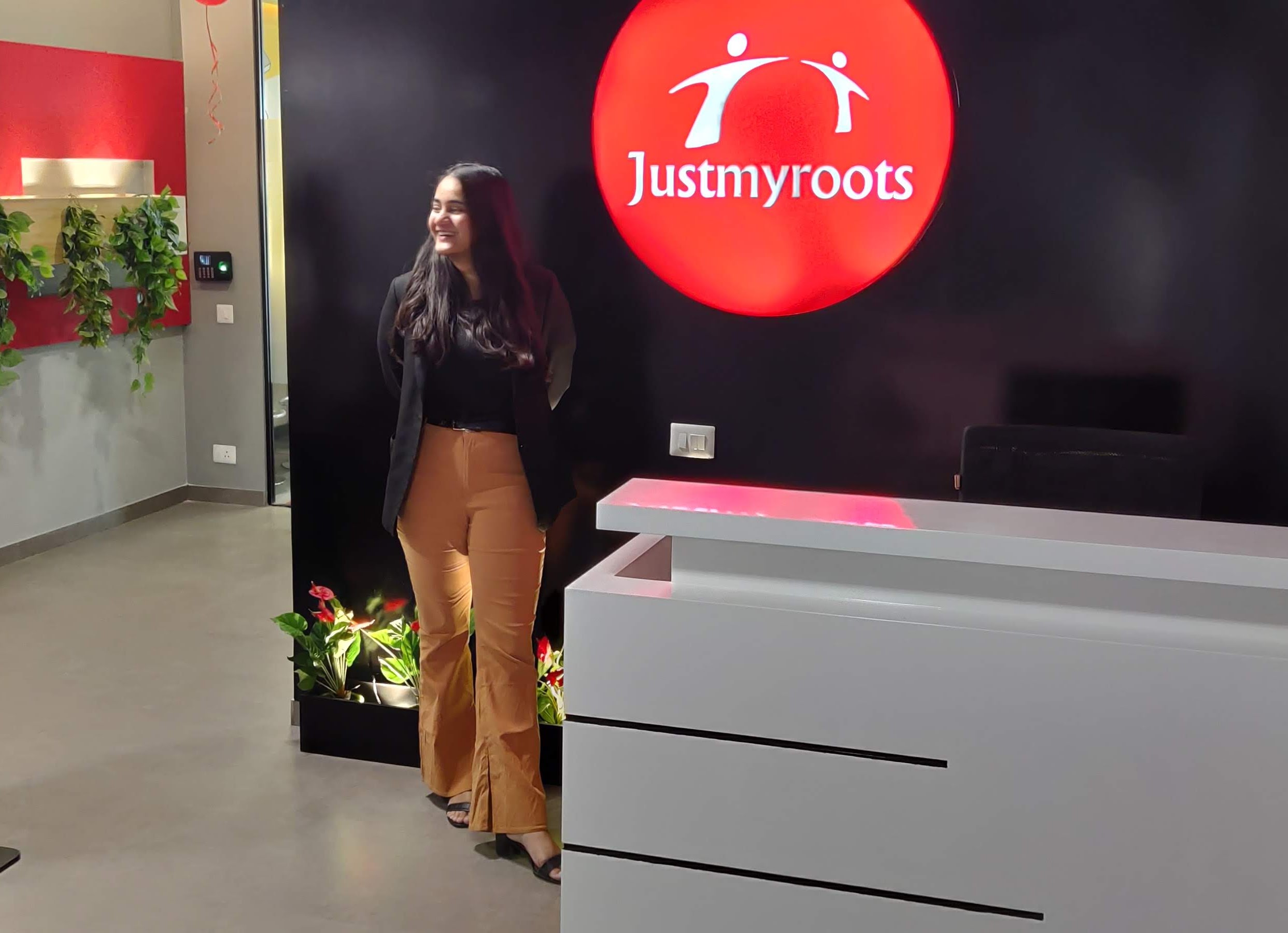
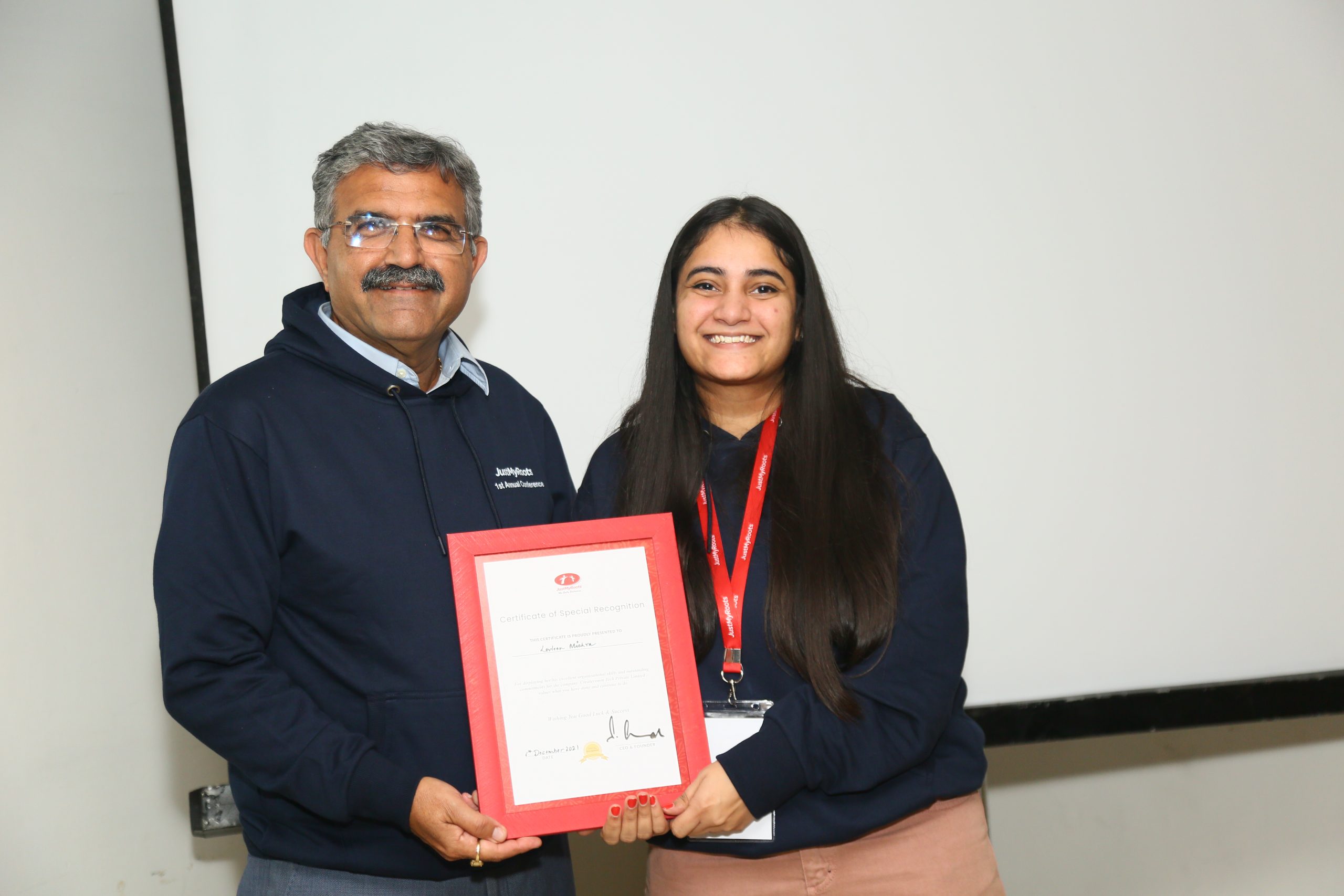
  • In conversation with Lovleen Mishra, Manager-Legal at JustMyRoots, an intercity food delivery company, sharing her experience of taking up diverse roles in the Legal field.

    In conversation with Lovleen Mishra, Manager-Legal at JustMyRoots, an intercity food delivery company, sharing her experience of taking up diverse roles in the Legal field.

    This interview has been published by Sonali ParasharOjuswi Sahay and the SuperLawyer Team


    To start at the beginning, was studying law a pre-decided career path for you? What was your motivation behind growing within the legal field?

    I wanted to be many things, but a lawyer was never one of them. I stumbled upon the idea of studying law in a casual “if not this then what?” conversation with a classmate, did a crash course on law immediately after my high school graduation (not that it was of much help), and the rest is history. During law school and in my professional career I have realised that being a lawyer is not just about the law. You have to be a meticulous writer, a conversationalist and most importantly you should know how to read between the lines. 90% of being a lawyer probably is understanding what people need from you and with time you can learn and grow into the remaining 10%. I reckon this is what interested me the most, the 90% and motivation came naturally with it. 

    You started your journey with litigation and had an experience of practice at the Supreme Court of India, where you litigated on matters related to film and media. How would you describe this experience of yours?

    It was exhilarating, to say the least. It had the excitement and eagerness of the first job and the anxiety of everything else that was my first as well. Litigation like any other thing comes with its own pros and cons. I was given the chance to learn from the best and since we had a lot of film and media matters, there were a lot of movie screenings in our chambers where we had the petitions opened in front of us and we formed our arguments. Most of the film and media petitions are usually filed a week before the movie’s premiere, so all we have is one week. There are sleepless nights and hours and hours of research which go into creating a brief. These matters are stressful for both, the client, and the advocate since the hearing takes place a day or two before the premiere and what we have at stake is years of hard work of hundreds of crew members and the money that went into making the film. In this job every day I thought through the perspective of the other party and my time management skills enhanced drastically while working here.
    Working for Sapphire and Sage on MSME, Arbitration and Energy Laws matters while heading the firm’s MSME and Energy Laws Teams, what motivated you to change your path this way, and how did this change treat you?

    Though I had been in various arbitration proceedings before, when I started working for S&S, I was given my first independent matter of MSME Arbitration. I knew the bare minimum about MSMEs so honestly, it was not I who specifically went for this change, but an opportunity presented itself and I took it and with that matter, my journey started in the field of MSME. As for the Energy Laws; I graduated with Energy Law Hons. from UPES, Dehradun. During the first wave of COVID, our partner at the firm suggested that we start exploring the solar energy industry. So, we started working with industry professionals and subject matter experts; hosted webinars and wrote handbooks on both MSME and Energy Laws. During my time with S&S, I not only worked on the above matters but explored Aviation, Real Estate, and Criminal and Corporate Laws. I remember the Partner in our firm used to check our drafts with a pencil in his hand and everybody would gather around and compare to see who had got the least slashes on their drafts. It was here where I honed my drafting skills and with each document, the number of slashes decreased. 
    You are currently working for JustMyRoots in the capacity of Manager-Legal. Tell us a bit about the organisation and your role in it?

    JustMyRoots is an intercity food delivery company. As the description suggests, it is a platform through which one can send perishable food products from one city to another. JustMyRoots has developed a special food packaging which keeps the food fresh for 24-36 hours by maintaining the temperature between 5-8 degrees Celsius and keeping the moisture intact. The work here is exciting and challenging at the same time. Every day we try to be better than yesterday and with that, we work on things we have never explored before. I currently head the legal department here and majorly work alongside the other departments in contract drafting and vetting, negotiations, advisory, compliances, investments, new projects, and strategy. Since we are a small company; apart from the law, I delved and worked in every single department of the Company and with that, I grew here more in the past year than I did in my entirety of law school and career. I have been fortunate to be a part of every new project. Each day is a new opportunity, and the learning curve has always gone up.  

    Your organisation JustMyRoots is a unique build in itself. What aspirations of growth do you hold for it in the future?

    It is, isn’t it? I was elated to see that something like this actually exists. We are present and operational in 30 cities in India; I hope this number increases exponentially and with that, every single person in the world can taste their nostalgia. 
    What are some of the highlights about each sector you’ve worked in, which you believe could be a guiding factor for upcoming Law graduates?

    Let me give you a quick black and white rundown. Film and Media are fast-paced and come with very high risks. In my opinion, MSME matters take comparatively less time to get resolved but the number of appeals is very high. Documentation in Energy Laws is very exhaustive, and you’d be surprised to see the requirements of water in the Solar PV Plants. If you are an in-house counsel, you must know everything about everything (at least the matters which concern your company). But I want the upcoming graduates to know that everything comes with its flaws and maybe some of the flaws are acceptable to you while some are not and that is okay. It is okay to not have a plan or to know everything about the profession you are in. It is okay if the cons of a sector are too much for you to take or if you are stuck at a place without the means to choose something else. I want them to know that not everyone’s career starts at the same age, at the same time, and in the same manner so if you see someone succeeding at 20 or 25, don’t think any less of yourself. It is also okay if you are having doubts about your choices, I have seen people who chose an entirely different career path for themselves after law and are content with their lives. There is no time limit to be whoever you want to be and do whatever you want to do. But I hope that you have the courage to change, make mistakes, and work towards the things that excite you. 
    How has the shift from litigation to Law firms to your current role of Manager – Legal been for you? Do you plan to explore litigation again in the future?

    From an organisational perspective; I have been rather lucky to have the support from my colleagues to make the transition seamless. On the other hand, the shift changed my way of looking at legal issues. I do not think that I will be exploring litigation again in the future. I thoroughly enjoyed my work while being there but over time I have realised that it wasn’t really my calling. That being said, it is my perspective today and it might change a few years down the road.

    Finally, being a woman in Law, what advice do you have for upcoming aspirants, especially the females in the field?

    As I mentioned earlier, there are no rules to this thing. The only advice I can give to the upcoming aspirants is to be the change they want to see in the world and to never give up on their dreams. The rest will follow. We have miles to go before we sleep!


    Get in touch with Lovleen Mishra –

  • Shobhit Agrawal, Legal Manager, Mahindra World City, on being an avid negotiator, his experience thus far, and the secret to his professional accomplishments

    Shobhit Agrawal, Legal Manager, Mahindra World City, on being an avid negotiator, his experience thus far, and the secret to his professional accomplishments

    Shobhit Agrawal graduated from Gujarat National Law University, batch of 2011. Being an avid participant of negotiation competitions, Shobhit has represented his university at various national and international platforms. During his time as an undergraduate, he has interned with Wadia Ghandy & Co., Paras Kuhad & Associates and Economic Laws Practice firm. After his successful stint as Associate, Corporate Affairs at Porsche, Shobhit is currently Manager of Legal Affairs at Mahindra World City. His role entails drafting, vetting, reviewing, summarizing contracts, tenders, agreements, work orders, financial agreements, Memorandum of Understanding (MOUs), lease deeds, letter of intent, sale deeds, non-disclosure agreements and various other agreements.

    In this interview we talk to him about:

    • Representing his university at numerous international competitions
    • Preferring negotiation competitions to moot court arguments
    • His experience as Legal Manager

    How would you like to introduce yourself? Tell us a bit about your co-curricular interests during college life.

    I am an introvert. But owing to the nature of my profession, there has been a change. However, I continue to remain the same person at the core. During my college days, since it was a five year course, the first year went unnoticed as I took a bit of time to get myself accustomed to the demands of the college. But in my second year I made it a point to do something good for myself as an intellectual. I wrote an essay for the very first time in my life for Manupatra in its Essay Writing Competition and got 4th prize at a National Level which boosted my confidence and then there was no looking back. There were critics who said it was merely a stroke of luck, but it was this criticism that pushed me harder.


    Please share your experience at Gujarat National Law University, Gandhinagar. Why do you prefer negotiation competitions to moot court competitions?

    Ours was the third batch of the college and was therefore in a very nascent stage, so things were developing slowly and steadily. In my college there were some social pressures which made mooting necessary. So initially I participated keeping this core philosophy in my mind & also since it was mandatory, but I realized very soon that it’s not the correct approach so I changed my thinking. I failed at my first two attempts, but eventually succeeded on my third. I was then viewed as a promising candidate, but after participating in a National Moot and getting the best researcher award and third best mooter, I realised that it is not that interesting. The verdict depends completely upon the judge or the presiding officer and you cannot be yourself when you present your case. So I tried for a negotiation competition which is more lively and spontaneous and tests your capability to the highest degree. I got to know about the Negotiation Competition, applied for the same, got assistance from my senior and mentor and cleared various rounds as a team nationally and internationally.

    That success triggered a new path and boosted my confidence. It was a constant effort and choice which I made over moot court–which I continue to have great appreciation for–but I still feel that the amount of poise, charm, enthusiasm which is there in a negotiation or arbitration is not often seen in a moot court. It’s my personal opinion and I love arbitration, negotiation more than the moot court.


    ­­­­­­­­

    What motivated you to pursue law?

    Well, I am from a science background and was about to join a premier engineering college in Bangalore thanks to good rank in AIEEE. But at that time, I also gave law universities exams and luckily got selected. So there were two options to choose between and I chose law as I felt like it would help me engage with society is a more insightful manner. I come from a family of engineers, so I was also tempted to venture into something new.


    Tell us about the significance of pursuing diploma courses.

    It is indeed important to increase your knowledge and for professionals, it is imperative to be updated as in your professional life. You don’t get enough time so these diploma courses give you an insight about the nuances of law and give you an extra mileage and bite over others. It helps groom your personality and also adds value to your CV.

    What are the skills one must acquire to become a legal consultant or a legal manager?

    It’s a common question which is asked and I have a very simple view on this. For any profession, the one most imperative attribute to have is honesty. If you are honest to your work and are dedicated towards the organization you are in, you will definitely come out victorious. To be a manager, the most important thing is to understand the psyche of your team and to make them comfortable. So, it’s important to have a caring attitude towards your team and have a mixed blend of flexibility and firmness. It is alright even if you are no very well versed with the technicalities. Knowledge will definitely come in provided you have opened the window so basically. You just need to keep an open mind and manage your team well. A healthy mind and a pat on someone’s back can do great wonders. So it’s basically an affable attribute which you need to carry with yourself and try to give your team the respect which they truly deserve and then 90 out of 100 times, it will fall in your way.


    What is the secret to your professional accomplishments?

    (Shobhit has received the “Rising Star” trophy from the top management at Mahindra and received various “Champ of the Month” awards)

    Well, it’s basically some hard work, meeting deadlines and tying up loose ends which had helped. It’s a proven fact that when you try hard honestly and give your best, the management also looks at it positively and gives appreciation which can form as a monthly Champ Certificate or a “Rising Star” trophy. The simple mantra is that you either perform or perish. Performance will only come when you do the work sincerely and diligently without making a fuss of situations or excuses.

    What was your experience like as an Associate at Shreyans Group?  

    As an associate with Shreyans group, it was completely a different feel all together as it was my first job, there was a lot to learn and a lot to do. As it was a core company in the automotive sector, my work varied from resolving disputes regarding consumers, custom matters etc. But in Mahindra, I was aware of the sector and its rich values so I tried constantly to be a part of the family in a more subtle manner and I assume I  achieved it too. At Shreyans, I had the luxury of doing work on customs, meeting influential and renowned people as organization dealt with cars like Porsche, Ferrari, Lomborghini etc. But in Mahindra it was a different story all together due to different stream and the area. Here it’s more of drafting agreements, discussions on company policies, lease deeds, labour matters, land matters, company matters etc. and has its own challenge. But I need to be honest that the amount of love and respect which I have received at Mahindra was not the same in my first job. Maybe because I was new and still trying hard to understand the requirements of the job.


    Could you educate our readers about the significance of learning to draft in law schools and writing research papers?

    It’s an important exercise and one has to devote time to it. It is a key skill wherever you go, whether you join a law firm, work as an in-house, NGO or join academics. Writing research papers is more of an art, I would say, as it’s not just cut and copy but its more about understanding the subject matter and interpreting it in your own way, while also checking for plagiarism. Understanding the subject matter as a whole is the key and once it’s there, other things do take their own course naturally.


    Tell us about the experience of representing the country at various international competitions.

    (Shobhit was part of the delegation from the Prime Minister’s office which represented India at the International Negotiable Forum as a team member and the youngest coach in Copenhagen, Denmark)

     It was a moment of great pride. It is exciting, but one must also tread with great caution. It was the competition of a lifetime and I need to mention here that I got the support of all with whom I have interacted. Initially, as I mentioned earlier, people thought that was a fluke but when we again went and did spectacular work, it was answered and the air was cleared. I need to thank my team members who supported me unconditionally. It’s an experience I will cherish till eternity.


    Please give our readers some tips regarding picking the right courses, interning at the right places and activities to undertake to build their CV?

    Let me answer this part by part:

    About picking the right courses – There will be a lot of conflicting advice and opinions from various quarters. Focus on your strengths, interests and made an informed decision.

    Interning at the right places – Before you aspire to work for the higher courts, start with the lower courts. Starting at the grassroots level gives you a hands-on understanding of the law and how justice is dispensed. Lower courts will teach you the basics, which you can later use to your benefit at higher levels of the judiciary, or at law firms.

    Activities to build CV – First and foremost, academics is very important. Focus on research papers, moot courts, negotiations (if you have an interest), attend conferences, seminars and learn. The more you learn the better it will be.

    Keep working hard and never give up. Law is a noble vocation as one gets to serve society. Never deter from giving it your best and you shall succeed.


    Lastly, what would be your message to our readers who are mainly young lawyers and law students who wish to build a career in negotiations?

    Regrets are the worst. Whatever you do, give it your best and be honest to yourself. Negotiation is challenging, tricky but interesting. Focus on discussions by which you can increase your listening ability, be a patient listener, try to understand the psyche of a person, try to get hold of his mental state, try to understand his query, his problems and then device a win-win situation which caters to both parties’ needs and aspirations.

    In law colleges, you get various opportunities to do negotiations, arbitrations at an internship level, attend conferences where you can be in a panel discussion, attend seminars, be in policy making body as lawyer etc. These are some random ways you can get hold of the system and its core demands. It’s more about understanding the individual and once the meeting of minds is there, more chances are in your favour.


  • Ojasvita Srivastava, Senior Manager – Legal, Reliance Communications, on LL.M from QMUL, writing journals, and Project Abhimanyu

    Ojasvita Srivastava, Senior Manager – Legal, Reliance Communications, on LL.M from QMUL, writing journals, and Project Abhimanyu

    Ojasvita Srivastava graduated from V. M. Salgaocar College of Law, Goa University (2005-2010). She is a qualified lawyer and an experienced in-house counsel with experience in litigation, arbitration and corporate compliance. She is presently a Senior Manager in the Legal department at Reliance Communications where she deals with Telecom Litigation.

    She pursued an LL.M in Commercial and Corporate Law at the Centre for Commercial Law Studies, Queen Mary University of London, where she served as the Communication and Media Coordinator of her specialisation- Commercial and Corporate Law.

    Ojasvita was also the Co-Founder and Chief Editor of the ‘The Sophists’, Queen Mary Law and Business Journal, which publishes articles on Law, Business and Politics. She contributes articles on Indian economy and legal developments to this journal. She also edits and contributes articles to the monthly Postgraduate Newsletter of the Centre for Commercial Law Studies, London.

    In this interview she talks to us about:

    • Challenges associated with being an in-house counsel.
    • Project Abhimanyu – providing free guidance to law students who do not come from a law background.
    • Services provided under the project “Abhimanyu”.
    • Skills and qualities that helped her achieving the current position.


    How would you like to introduce yourself to our readers?

    I work as a Senior Manager in the Legal and Regulatory Department at Reliance Communications in New Delhi. I handle cases related to telecom, broadcasting and infrastructure disputes before the Supreme Court, various High Courts, the Telecom Tribunal (TDSAT) and various arbitrators, while occasionally getting involved in M&A work and contract vetting. I have a keen interest in litigation and have previously practiced before the Supreme Court, the Delhi High Court, and various District courts in Delhi.


    What made you choose the legal profession as your career option?

    Pursuing law as a career was a last minute decision. I was a student of the Science stream till class XII. Like the rest of my class, I too wrote the AIEEE and did well. I had a state ranking of 37 in Engineering and 7 in Architecture. However, I disliked Chemistry and didn’t want to read a word of it ever again in my life. As I was trying to figure out what to do with my career, I met my mentor, Adv. Vilas P. Thali. He is the former Additional Advocate General of Goa and is a specialist in election laws. After meeting him I was inspired to pursue law. I wrote the entrance exam for V. M. Salgaocar College of Law on 14th June, 2005 and joined his office as an intern on 15th June, 2005. I interned there for more than 3 years spending close to 6 hours a day in his office and visiting courts, meeting clients as well as attending sessions of briefing senior counsels (even though I was just a 12th pass student). I topped the entrance exam at my college and continued to perform well. As a result, I was awarded the merit scholarship throughout my LLB course and paid nothing in tuition fee! Although the joy of saving money was more than offset; thanks to my LLM at Queen Mary, University at London.

    As I am a first generation lawyer, my family was not in favour of me pursuing law as a career. However, I convinced them otherwise and became the only girl in my entire batch at school to join law.


    What were your objectives and plans in the preliminary years of law school?

    Right from the first year, I had a deep interest in litigation and I had a clear mind that I wanted to make a career in this field. Therefore, in my initial years at law school, I aimed at participating in as many moot courts as possible and gave every moot court my best. I won the best lady advocate at a national level moot court competition and the best memorial award at an international moot court, while doing fairly well in all moot courts that I participated in. My mooting experience not only helped me hone my research and oratory skills but more importantly helped me develop a keen attention to detail, which is absolutely essential to win any case.

    Besides this, I interned throughout the first three years of the course; part time when the college was in session and full time during vacations. As my college timings were from noon to half past five in the evening, I could easily dedicate three hours in the morning and in the evening. During the morning sessions, I usually attended proceedings at the Panaji bench of the Bombay High Court or the District Court, where I gained practical experience in court skills and procedure. Evenings were usually dedicated to practising legal research, drafting and attending client meetings. Often students learn these essential skills only after passing out of law school. So I am very grateful to my mentor for hand holding me and making sure that I learnt these skills while still at college.


    What are the challenges associated with being an in-house counsel? How do you handle them?

    There are in-house counsels specialising in various areas of legal practice. I will only talk about the challenges faced by in-house counsels working in the dispute resolution field.

    As an in-house counsel specialising in dispute resolution, the volume of work is more though the in-depth involvement in legal research is limited. Also, one is involved right from the pre-litigation stage of litigation-avoidance correspondence till the execution of the decree, including serving notices, drafting, vetting and settling petitions, briefing senior counsels, attending arguments and then following up for the execution of decrees. During this process, one also needs to keep the management of the company informed about the on-going proceedings almost like the eyes and ears of the management in the court (AKA Sanjay from the Mahabharata).

    The challenge revolves around balancing the volume of work. As an in-house counsel, I have been assigned more than 65 cases. My colleagues, who are senior to me, handle even more cases than me. Thus the responsibility is to keep a tab of all your cases in all the courts across the country and to make sure that the interests of the company are effectively secured. Further, as an in-house counsel, one also needs to understand the technicalities of a case well enough to be able to explain them as her own case. Thus I, for example, have to understand complex science revolving around telecom engineering to be able to explain it to the external counsels on behalf of the company.


    Tell us something about “Project Abhimanyu”.

    ‘Project Abhimanyu’ is a pro bono and voluntary initiative that I recently started. It aims at increasing access to career opportunities in the legal industry by providing free guidance and career counselling to law students who do not come from a law background.

    It endeavours to increase awareness about career options available in the legal profession to students. It works assiduously with students from colleges that do not have a fully functional placement cell and also assists and contributes to the existing services available at academic and professional institutions that are working towards guiding students. It does so by sharing knowledge and seeking guidance from highly trained and experienced professionals in the legal industry who are willing to voluntarily mentor students in their free time. In the long run, Project Abhimanyu will work towards enriching the talent pool available to the legal profession.


    Why have you named it Project ‘Abhimanyu’?

    Abhimanyu was Arjun’s son from the Mahabharata. On the 13th day of the Mahabharata war, he successfully intercepted the Chakravyuh formation created by the Kaurava army, and saved the Pandavas from imminent defeat. What is particularly interesting about this episode though is that Abhimanyu obtained this knowledge of penetrating a Charavyuh formation as a foetus in his mother’s womb. Thus Abhimanyu was born with the knowledge of how to penetrate a Chakravyuh.

    The legal industry is like a Chakravyuh, complex and vast. It would be Project Abhimanyu’s endeavour that, just like Abhimanyu, law students graduating from various colleges must learn to successfully navigate the legal industry. They should be able to make informed career decisions and achieve success proportionate to their calibre and hard work; and they should never get left behind because of a lack of guidance.


    Why inspired you to start this initiative?

    To answer this question, I would first like to give a little context. I graduated in law from V. M. Salgaocar College of Law, Goa in 2010 and later acquired an LLM in Commercial and Corporate Law from Queen Mary, University of London in 2014. In the intermittent period, I worked at a multinational French Pharma company in Mumbai and later practised at the Supreme Court, Delhi High Court and District courts in Delhi, while simultaneously writing the civil services examination. In 2013, I appeared for the interview round of the civil services examination; however, I missed by a narrow margin and thereafter decided to continue my career in law.

    All along this journey, I had little guidance in terms of how to go about making my career in law. As a result, my career grew more in a trial and error fashion. Thankfully, I have reached a comfortable place now, and therefore I want to help other students who are in a similar position.

    Law is a difficult profession not only because it is a complex industry but also because it requires one to really slog to climb up. That said, it becomes all the more difficult when you are a first generation lawyer. The idea behind Project Abhimanyu is to guide first generation law students so that they get a better shot at making a smooth transition from being a law student to becoming a lawyer. Over the past few years, I have been guiding students studying in various colleges in Delhi, Noida, Lucknow, Pune, Bhubaneswar, Cuttack, Patna, Mumbai and Goa. But there are still a lot of students who need guidance and this is what got me motivated to start this platform to reach out to more students across the country.


    How difficult was it for you to connect and convince different lawyers to register on this project?

    It wasn’t difficult at all. Everyone I approached has been very receptive and appreciative of Project Abhimanyu. We have the GCs of MNCs, law firm partners and highly successful litigators on board as Mentors at Project Abhimanyu. In fact, most Mentors at Project Abhimanyu had already been guiding and mentoring students. Project Abhimanyu is only providing them a platform to reach out to more students from across the country. I am very grateful to everyone who has joined this initiative and is sparing time from their busy schedules to help the future generation of lawyers.


    What kind of services do you provide under this project?

    Students can write in to ask any query related to the legal career. These could be about improving their CV, internship applications, job applications, career guidance, civil services examination, higher education abroad, CA/CS courses, working in-house or any other information related to law. They simply need to drop an email to project.abhimanyu@gmail.com and they would be assigned to a mentor who would answer their queries.


    Where do you see this project five years from now?

    In five years, I want Project Abhimanyu to be a self–sustained, fully automated system. We are working towards building a network of lawyers specialising in different areas of law who are voluntarily willing to guide students. Eventually I want Project Abhimanyu to develop into a platform where any law student from any corner of the country could just go to our website, choose a Mentor in a particular field of law from an entire range of specialists and write a message that would directly be received by the Mentor and answered by her/ him. We are also working towards compiling and publishing the advice given by the Mentors for the benefit of other students. I want the advice to be free and fair and therefore, Project Abhimanyu shall always remain a pro bono, voluntary and a not-for-profit organisation.


    What skills and qualities do you think have helped you achieve your current position?

    I think hard work, attention to detail and a passion for reading are essential qualities for anyone aspiring to make a career in litigation. Besides that, the training I received from my mentor and the guidance of my teachers has helped me tremendously. I will be failing in my duty if I forget to mention the complete liberty and unflinching support given to me by mother in shaping my career.


    What would be your advice to our readers?

    An ex-President at Reliance, whom I respect like a father, once passed a remark that struck the very core of my conscience. He told me that ‘your profession (the legal profession) is rather feudal’. What he was inferring was that it is easier for people from a law background to excel in this industry.

    Project Abhimanyu is trying to break free from this notion about the legal industry in India. I would advise every student reading this article to take full benefit of Project Abhimanyu. It is an opportunity for everyone to get a fair shot at law and to make informed career decisions. I would also request every legal professional reading this article to join Project Abhimanyu and help the future generation of lawyers in our country become more productive and efficient.