Tag: Maritime

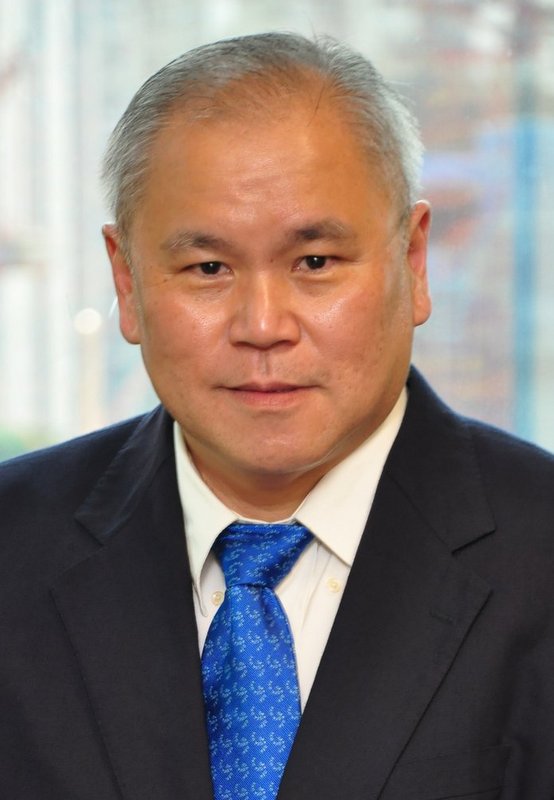
  • “I would rather believe that we can be energized by our daily routine, by the challenge of difficult cases, or by victories of small wins or overturning of a case on appeal”- Philip Teoh, International Lawyer and Arbitrator

    “I would rather believe that we can be energized by our daily routine, by the challenge of difficult cases, or by victories of small wins or overturning of a case on appeal”- Philip Teoh, International Lawyer and Arbitrator

    This interview has been published by Priyanka Karwa and The SuperLawyer Team
    Can you share your journey and what inspired you to pursue a career in law, specifically specializing in Maritime & Admiralty, International Law, and other related fields?

    When I started my law studies, I was interested in exploring the role of law as a foundation of business dealings, especially international business. 

    I was intrigued to discover the area of shipping was the connecting factor in these areas. Unlike some perceptions, the area of shipping was not small in scope. It encompassed international trade as traders used ships to transport their goods, international finance as banks financed these transactions, and insurers insure these shipments. I later found out there was Wet and Dry Shipping, Corporate or Transactional Shipping and Maritime Arbitration as well.

    That was the launch pad for my interest in shipping. With that interest, I took shipping and shipping-related subjects in law school. I was fortunate to be able to study at the National University of Singapore where I was taught and inspired by great teachers.

    Professor EP Ellinger was a powerhouse in Banking and International Finance, Professor FMB Reynolds who hailed from Oxford taught Agency and Shipping subjects and the most brilliant teacher was the late Professor Tan Yock Lin who taught Conflicts of law, he was a brilliant legal mind who made difficult concepts in Conflicts easily understandable. I did well in school and constantly called upon what I studied in my cases. I do encourage law students to concentrate well on their studies because these are invaluable foundations for practice.

    With over 33 years of experience, you have vast expertise in both contentious and non-contentious areas of law. How did you navigate and develop such a diverse skill set throughout your legal career?

    I saw law as a technical field, that cases and principles are building blocks to craft agreements, transactions and eventually. In litigation, I soon discovered that strategy and effective advocacy win cases, the more cases we handle we develop muscle memories which we can call upon in advocacy.

    Soon I was able to see that each witness can present a treasure trove of evidence to cross-examine. I also learnt to adapt; as much as we can prepare for a case, the circumstances of a trial or a judge’s questions and directions may force us to abandon our prepared script to adopt a better and different strategy.

    I started in litigation. After a few years into practice, I wanted to have both a transactional as well as a disputes practice and I am happy to say I handle both contentious and non-contentious areas.

    Some of the notable transactional work in which I was involved was various ship sale and purchase as well as ship financing cases. When MISC the Malaysian Carrier wanted to go into the energy business, it bought Newbuildings from Japanese Yards, these were the Puteri Vessels that kickstarted the business and MISC is not a major LNG carrier. I was the Syndicated Lenders’ local lawyer.

    I was also involved in several due diligence of Shipping Companies, Joint Ventures and reorganization of the Shipping Companies Malaysian assets and companies. When the Genting Group sold its luxury yacht Tranquility to a US buyer I acted for the buyer.

    Being recognized by Chambers and Legal 500, among others, for your expertise in Maritime Law, what do you believe sets you apart in this field, and how do you approach resolving matters to the satisfaction of your clients?

    In legal practice, it is not an effort if we enjoy our work and I do. Every case presents a challenge and a new learning opportunity. I do not believe that I possess any qualities different from other lawyers, apart from that I enjoy what I do.

    Some talk of finding one’s purpose in what we do, I don’t agree. I think purpose can change. I would rather believe that we can be energized by our daily routine, by the challenge of difficult cases, or by victories of small wins or overturning of a case on appeal. We need these to sustain us because law is a very involved and demanding profession.

    In addition to your legal practice, you’re also a Practising Arbitrator empanelled with various international panels. How does your role as an arbitrator complement your work as a lawyer, and what unique perspectives do you bring to dispute resolution?

    Arbitration and litigation are contentious legal practices. The skills of a litigator are important skills for arbitration too, whether one sits as an Arbitrator or as Counsel in Arbitration.

    You’ve been involved in notable cases, including arguing the inaugural reported decision of the Malaysian Admiralty Court. Could you share insights into the challenges and rewards of handling such significant cases in the maritime industry?

    Difficult cases challenge me. That forces me to figure out how to best strategize the handling of the case, the conduct of the litigation. There will always be an approach we can adopt which can make complex cases managable or make them simple. We need to develop muscle memory for this. Along the way the bonus is when the cases we argue establish law, a principle not established before. I have had a few of these.

    Your extensive contribution to legal literature, including authoring key practitioner texts, speaks to your commitment to legal scholarship. How has academic writing and research influenced your understanding of the law and your approach to legal practice?

    Some 2 decades ago I found a dearth of Shipping Texts in Malaysia. I convinced LexisNexis (then Malayan Law Journal) to introduce these in Malaysia and eventually, I wrote the original editions of Halsbury’s Malaysian titles in Shipping and related subjects. I was particularly happy to write the Volume on Conflict of Laws; Conflict of Laws issues often crop up in Shipping and International Arbitration.

    I also authored the Annotated Merchant Shipping Laws, Forms and Precedents on Shipping which contain transactional agreements. I was later invited by Sweet and Maxwell to write the Chapter on Carriage of Goods by Sea which contains precedent pleadings used in litigation and arbitration.

    The writing ensures that I have a good grasp of the law, and this is invaluable when I handle cases. Funnily I have faced opponents in Court citing my writing unknowingly.

    Having practiced in both Singapore and Malaysia, what are the unique challenges and opportunities you’ve encountered in each jurisdiction, especially in the context of maritime law?

    I started my practice in Singapore before returning to Malaysia. I was very happy when Malaysia established the Admiralty Court in 2010 and I was able to argue the inaugural reported case of the Court in the case of The Istana VI. Since then, I regularly handle cases in the Court amongst others prosecuting ship arrests or challenging them. 

    The laws applied by the Singapore Courts are not much different and I believe that both the Singapore and Malaysian Shipping Bar have good lawyers. The Singapore ecosystem however is more varied with a healthy variety of international firms including many specializing in maritime law.

    As an Adjunct Lecturer in BAC Malaysia’s law school, what advice do you give to law students looking to specialize in maritime law or pursue a career similar to yours?

    Be interested in what is taught. Not many universities have maritime law as a subject at the LLB level. Curiosity, Initiative and Hard Work are most important.

    It is good to have a specialization in mind, but maritime law can be acquired after graduation. It is important that the young lawyer enters a firm that handles the area. The on-the-job training is much more important.

    I have trained many young lawyers in this field, and they picked up the areas well. Tan Sri Nallini Malaysia’s first Admiralty Judge never did Shipping cases when she was a practitioner and Her Ladyship had done much to establish jurisprudence in the area. She is easily amongst Malaysia’s top judges.

    In your experience, how important is it for legal professionals to stay updated on evolving legal landscapes, especially in areas like maritime law, and what strategies do you employ to stay abreast of industry developments?

    Keeping up to date is crucial. I find that LinkedIn is a great tool to do that because the lawyers do post and share useful content. I do post from time to time too. Reading outside of the law widely is also important. 

    Lastly, considering your wealth of experience, what advice would you like to share with recent law graduates who are entering the field today, particularly those interested in maritime and admiralty law?

    Be curious about learning. Read widely. Seize opportunities when they appear, do not neglect the training experience, it is an invaluable time, not to be squandered. Get onto complex cases early even if the role is a minor one. Your friends and family will be your invaluable support through challenging times.

    Get in touch with Philip Teoh-

  • I believe that publicity for a lawyer should be achieved through client satisfaction and maintaining high level of ethical and professional standards in the chosen field- Hari Narayan, Partner & Maritime Lawyer at United Maritime Law Chambers

    I believe that publicity for a lawyer should be achieved through client satisfaction and maintaining high level of ethical and professional standards in the chosen field- Hari Narayan, Partner & Maritime Lawyer at United Maritime Law Chambers

    This interview has been published by Priyanka Karwa and The SuperLawyer Team

    Sir, can you tell us a little about your background and how you first became interested in law?

    Coming from a legal background, it was my natural instinct to get attracted to the legal profession and follow in the footsteps paved by my father and grandfather. I still remember my school days when my father used to take me to the court and let me watch the proceedings even though I never understood what transpired there. But it was still a thrilling experience for me to watch live actions in the courtroom which was entirely different from what was shown in movies. From my younger times, I was fascinated by the amazing world of law and had a strong determination to become a lawyer. Though my dream was to become a barrister I ended up being an advocate.

    What inspired you to specialize in maritime and shipping law specifically?

    During my initial days in the profession as a junior advocate, I had occasions to deal with matters relating to maritime and shipping law, including cargo claims and ship detention. But I never had a sound knowledge of this subject. The legal profession being a knowledge-based industry, I felt that it was necessary for anyone aspiring to specialise in any branch of law to acquire considerable knowledge on the subject. Shipping being an international branch of law it was all the more necessary to be familiar with International conventions which govern the field. India being a maritime nation and government promoting port sector and allied infrastructure development it is just a matter of time that maritime activities will flourish and as a consequence commercial disputes could emerge. That apart, only very few firms in India handle maritime disputes on an exclusive basis.  It was in this background that I felt the need to set up a boutique firm handling maritime-related issues. 

    Can you walk us through some of the most interesting cases you’ve worked on throughout your career?

    Shipping-related issues are always interesting considering the element of adventure involved in maritime. During ancient days, the shipping industry was considered suitable for those who are bold and brave and ready to face the perils of the sea. I had occasions to conduct maritime cases on a pan india basis involving huge stakes and also cases relating to piracy, salvage and general average which are not very common in India. One such case which went all the way to Supreme Court was related to the detention and arrest of crew onboard a foreign flag vessel suspecting possession of arms onboard. In fact, the vessel was involved in anti-piracy operations and as part of its engagement to provide security for merchant vessels transiting through high-risk areas, it used to deploy armed guards. On the premise that possession of arms without license is illegal under the Arms Act in India, the entire crew onboard the vessel was arrested most of whom are foreign nationals. The crew were forced to remain in India for a few years until the court set them free of all allegations. I also had occasion to appear before foreign seated arbitral tribunals in disputes relating to Charter party, new constructions, salvage etc. I was also fortunate to be nominated as  arbitrator under LMAA terms on a couple of occasions.

    You’ve spoken at numerous international events and served as a faculty member at several universities. What motivates you to pursue these opportunities outside of your practice?

    I always believe that if sharing your experiences and knowledge even if in a small way could benefit others then that is the best way to reciprocate what the legal industry has given you. That apart, interacting with people from different parts of the world will give us new ideas and also provide with new opportunities, for further advancement of career. It is often said that being a lawyer, you are part of a learning process almost every day and therefore through knowledge sharing sessions you also gain valuable insights into new developments in the field of law. 

    Can you share any particular challenges or obstacles you faced while building your law firm, UMLC?

    Though we were able to develop shipping practise within India in considerably short period of time, it was not an easy task to make the presence of the firm felt in the international arena. However, with constant efforts including attending international conferences and building a global network especially in key jurisdictions the firm was able to get over the initial struggles during the formative stage. When foreign firms are able to publicise their core strengths and achievements through advertisements and websites, we still have restrictions to follow the same in India. Thus atleast in maritime sector it doesn’t provide a level playing field thus putting Indian firms to much disadvantage. Having said that I believe that publicity for a lawyer should be achieved through client satisfaction and maintaining high level of ethical and  professional standards in the chosen field. 

    What do you think sets UMLC apart from other law firms specializing in admiralty law?

    Apart from regular cargo claims and ship arrests, our core area of specialisation lies in charter party disputes which eventually lead to maritime arbitrations seated in foreign jurisdictions. Doing LLM in maritime law from Southampton University has indeed helped me in connecting with key people in the industry especially those working in clubs and shipping law firms abroad. This has tremendously helped us in handling legal matters in India as well as in foreign jurisdictions with lot of ease and comfort.

    As someone who has been in the legal field for over 25 years, what advice would you offer to recent law graduates who are just starting out?

    The only advice I could give to young potential lawyers is that there are no shortcuts to success and the only way to achieve the same is through hard work, dedication and perseverance. One should never compromise on ethics and must follow the best practices in the industry. Take up every opportunity you get as a learning experience and never stop learning. 

    Get in touch with Hari Narayan –

  • Prantika Sengupta, Legal Executive, Coastal Marine, on Maritime Law, studying in Singapore and working pro-bono

    Prantika Sengupta, Legal Executive, Coastal Marine, on Maritime Law, studying in Singapore and working pro-bono

    Prantika Sengupta is a graduate from Symbiosis Law School, batch of 2011. She then went on to pursue her Master’s degree in Maritime Law from the National University of Singapore, with a focus on Admiralty Law, Carriage of Goods by Sea, Conflict of Laws, International Commercial Arbitration, Maritime Law, International Regulation of Shipping,  Maritime Insurance, Charterparties, Contemporary Indian Legal System and Comparative Tort Reform. Since then, she has served as Legal Officer at Global Law Alliance LLC, and is currently Legal Executive at Coastal Marine Pte. Ltd.

    In this interview she speaks to us about:

    • Being a first generation lawyer
    • The difference between universities in India and universities abroad
    • The importance of pro-bono work


    Tell us something about your school and college days.

    I graduated from La Martiniere for Girls, Kolkata which is one of the most prestigious schools in Kolkata. Being from La Martiniere, there was always a huge pressure to excel. However, I wasn’t the most motivated or competitive kid around. I was the happy-go-lucky kind and took life as it came. My grades weren’t the best and neither did I make any effort to participate in school activities. I would be considered as the average kid, who sometimes got into trouble for talking in class. The best part of school was that I made some great friends and most of them inspired me to do well in various ways. By the time I was graduating from school, I did pretty well in my ISC exams and I became more motivated and focused, ready and excited to study law.

    Any Symbiosis Law School student will tell you that college days were pure fun. The first few months were the honeymoon phase with new friends, new environment, new culture, new curriculum and a new approach to life. Only after the initial six months does one realize that it’s not all fun and games, as you suddenly hit the wall called semester exams. Unsurprisingly, I did poorly. It really stressed me out. I thought I was finished and no law firm would offer me a job. However, my dad who is from IIT told me that it was not a big deal and that I could get where I want to in life if I worked hard. After that, I started putting in diligent hours into my studies and maintained consistently decent results. I tried my best to attend lectures diligently at 7:30am and was never part of the TNG list. Surprisingly, I became that person whose notes were distributed amongst batch mates before exams. Rest of the time, it was a joyride through college days.


    What motivated you to pursue law?

    I took up law for an amalgamation of several disjointed and funny reasons. For most of us, when you graduate from school, it’s impossible to know what you really want to do. For me, I knew what I didn’t want to do. I was always very poor in math and science, so there was no way I would pursue a career in anything related to these two subjects. At the same time, I was greatly influenced by one of my school teachers who perceived life in a unique way and somehow I was inspired (maybe even in a naive way) to work towards the greater good and well-being of society. So my option was to study law and pursue a career in human rights. Moreover, given that my father, who has a huge influence in my life preferred that I pursue a professional career, law seemed to be the best-suited option. Also, I am notorious in my family for being the argumentative kind so even my family agreed that law seemed to be the most apt option for me. So I happily pursued it and managed to secure a seat in Symbiosis Law School.


    How do you think law school has shaped your personality?

    Honestly, we are too young during our first three years in law school. It’s only from the fourth or fifth year that one realizes that the party is almost over and we will be out of our protected bubble soon, thrown in the real world. Everybody starts realizing the importance of securing a good job. Some of us decide to pursue a career at a law firm for the big bucks, some decide to join some serious litigation practice with a minimal stipend and then there is a bunch of us who believe in human rights related work. So yes, I do think law school plays a role in shaping one’s career but it’s not the law school or the professor’s advice that makes the difference. It is you who has to pick the right legal line which interests you. It is more of a self-awareness that comes from interning and interacting with peers.


    How important is it to engage in extracurricular activities?

    (Prantika has been very active in extracurricular activities while in college. She won first prize in the Symbiosis International University Intra-university Sports Meet, she represented the swimming team of Symbiosis Law School Pune, was a participant and fund-raiser for Help Age India activities, nominated member of Student Council of Symbiosis Law School, Pune, student coordinator of Placement Cell, Symbiosis Law School, Pune. Apart from this she has participated in a number of debates, stage-plays, elocution and recitation competitions)

    I was too shy to moot which in retrospect was a bad idea. Mooting is crucial. It helps the young lawyers form an idea of how to prepare arguments and submissions for hearings. Isn’t that the most important quality of a lawyer? I strongly advice every young lawyer out there to moot as much as is possible.

    I was involved instead in a lot of extra-curricular activities such as swimming for the Symbiosis Law School team, working for the Placement cell, Student Council, working for the annual fest and also participating in other college fests. Being actively involved in college events and activities helps one develop their personality and makes one more outgoing. In a way, the exposure helps in building ones confidence level and self-esteem, teaches you to accept and work on long term commitments and most importantly makes your CV look good. As they say, “All work and no play makes Jack a dull boy”.

    Tell us about your internship experience.

    (Prantika has interned at firms dealing with financial and commercial law, as well as marine law, both India and abroad. Prantika has interned at Global Law Alliance LLC Singapore, Hill Dickinson LLP Singapore and Bose & Mitra & Co. among various internships she did.

    Initially I did the usual Amarchand – Barucha internship in the corporate sector. I interned at Amarchand, Kolkata, at the end of my first semester. That time, the Amarchand office had just been set up in Kolkata. There was plenty of work and I was lucky as an intern to get quite a few assignments, which were mainly research work. The topics for research seemed like Greek to me and basically I didn’t understand anything then. But over my internship period, I learnt new things and sharpened my research skills because the young associates and senior associates brimming with life, experience and enthusiasm took the time to teach me the fundamentals. I went back to interning at Amarchand in my third year again because my first experience was very good.

    I interned every time during semester breaks because I enjoyed the learning experience. I interned at various other places but another memorable experience was at Bharucha and Partners in Mumbai during my third year. Initially they slotted me in the corporate department. I didn’t enjoy the corporate work at all because I found it dry, researching on boring topics related to banks and company law. So I transferred to the litigation department and that was when I realised that my calling was definitely not corporate law. I was lucky to have done some amazing work there.

    I enjoy reading and writing, so drafting legal submissions and long letters seemed more challenging. I was also intrigued with maritime law which is not a subject offered in the course work in law schools. So I interned at Bose & Mitra, which was a great experience. The maritime laws and admiralty practice is a different ball game altogether. My internship at Bose & Mitra made me realise that I wanted some more experience in the maritime industry. That is why I opted to study Maritime Law as my specialization for my Masters’ degree.

    Once I was in NUS, Singapore I continued to intern during semester breaks instead of going back home. Since I was already pursuing maritime law, it was only appropriate to pursue an internship in maritime law. Interning at an international renowned law firm like Hill Dickinson gave me the much needed exposure in terms of the kind of practical work involved in the shipping industry. Hill Dickinson has a huge client base of the most renowned shipping companies. Thus, dealing with various shipping matters was a great experience.

    The turning point was my internship at Global Law Alliance LLC-Litigation Department in Singapore where I eventually secured full time employment as a Legal Officer. I was given lots of independence to deal with matters on my own and was basically thrown into the deep end to swim through and manage work. Given that it is a litigation firm, I had to learn the Singapore Civil Procedure on my own to understand and manage the work.


    Can you take us through the application procedure to law firms in Singapore?

    I have been one of the lucky few who managed to secure a job right after completing LLM from NUS with no prior work experience. There is no special or different way of applying for jobs in Singapore. My advice for those interested to work here would be to apply if they (a)are settled in Singapore or (b)have pursued an LLM degree from Singapore. From my experience it seems that the recruiters usually prefer to hire only those who are residing in Singapore. Why I suggest pursuing LLM degree from Singapore is because one can intern during their semester breaks and gain some Singapore experience that can be added on to their CV. However, it is not usually easy for a non-Singaporean to secure a job in Singapore because of government policies that encourage employers to hire a Singaporean first.


    Can you describe your experience studying in Singapore?

    My experience as an LLM student at NUS has been tough, challenging and exhilarating. It was nothing like my LLB days at Symbiosis. The course work was hardcore, difficult and mature. The classes were three hours each in the form of seminars and interactive sessions, not like teaching a chapter a day. The best part of the curriculum was that the professors interacted with the students (both LLB and LLM) as adults accepting their points of view. The professors were approachable at any time of the day and the general vibe of the law campus was more educational. The students were competitive which was both a positive and a negative quality. The exams held, during my time, were 24 hours take home exams where the question paper would be released online. The questions were scenario based and it was up to the student to tackle the problem and give their answer in the form of a solution to the question within 24 hours. For me, this sort of question pattern was a new experience all together and surprisingly I did well because I had the liberty to tackle the question problem in my own way.


    How do you think are universities abroad different from those back home?

    Like I mentioned earlier, the vibe in NUS was always studious. The focus was always on studies and extra-curricular activities first and then entertainment. It is not like the students were always studying but they definitely spent more time in the library than the canteen. This is unlike a scenario in Symbiosis at least where students are usually found chilling with their cup of tea at NCC canteen. But at the end of the day, a Symbiosis student and an NUS student will do well and go ahead in life. While the course work is probably similar, the method of teaching is different. But then again, I don’t believe in comparing both the systems because ultimately those graduating from Indian universities are doing just fine.


    What other than Maritime Law is your area of expertise?

    I am thankful to Global Law Alliance LLC for giving me the opportunity to practice different fields of law. Medical negligence cases were one field I dealt with extensively. After dealing with so many types of medical negligence cases, I think this is one upcoming subject and very interesting. Law students may consider exploring the option of pursuing a career in this field. Besides Medical negligence, I dealt with lots of insurance work and workman’s compensation act. Dealing with migrant worker’s work injury cases was a real eye opener.

    Now I am back to corporate law mainly drafting and reviewing the various contracts such as Bareboat Charter Agreements, Sale and Purchase Agreements, Non-Disclosure Agreements, Protocol of Technical Acceptance, Reservation Agreements, Commission Agreements, Shipbuilding Contracts Joint Ventures, Collaboration Agreements (and many more).


    How must one go about choosing their university to pursue their Master’s degree?

    If you wish to pursue not just an LLM degree but also a career in that foreign country, it is important that you choose a country for your LLM wisely. The factors that one needs to take into consideration are the (a) country of choice for LLM (b) the LLM subject (c) ranking of the University in the country of choice (d) option of securing a job in that country of choice. For example, if one wants to be in the U.S. then it is important that you do your research on the NY Bar, the universities that are good in the coursework which you want to pursue, and whether there are placement options. Even if the University doesn’t offer placement options, at least you can pursue internships and get a fair understanding of the places you can apply to.


    How would you describe your volunteering experience at TWC2?

    I cannot begin to stress on the importance of young lawyers taking up some pro-bono work that is close to your heart. Even in my busy schedule, I have taken out some time to volunteer at TWC2 in Singapore. TWC2 works on a number of different fronts, ranging from engaging with policy makers to frontline assistance for migrant workers in need. I volunteer in providing social work assistance and advocacy to the migrant workers in need of some help and advice. I provide answers to workers who are in need of advice and prefer face-to-face meetings as they are mostly not aware of their legal rights. Like me there are other volunteers who can help explain to them what recourse they have given their situation.

    It was during the time I represented insurance companies in claims of migrant workers for work injury cases the I was made aware of their plight. Earlier I considered these migrant workers only as plaintiff or knew their name by file numbers. But since I have been interacting with them, I realised how tough life can be and serving these helpless migrant workers or even making 1% difference in their lives, makes me feel a lot more accomplished.


    How important is pro-bono work?

    Pro-bono work can provide early opportunities for substantial, meaningful and direct interaction with your clients and provides young litigators the opportunity to develop skills through experiences that would not be available to them from paid work and gives independence and allows you to think of the solution independently. And most importantly, it provides you with self-satisfaction that you have done something meaningful and made a difference in some one’s life, isn’t that the main job of a lawyer?


    How do professional body memberships help lawyers?

    (Prantika is a member of West Bengal Bar Council India and Singapore Institute of Arbitrators)

    Being a member of various professional bodies helps in networking and often these places hold seminars and conferences on a burning and live legal issue. Attending those seminars and conferences helps one stay unto date with the latest that is going on in the legal fraternity.


    Can you tell us about your experience at Coastal Marine Pte. Ltd.?

    Since Global Law Alliance was my first job right after internship with them, Global Law will always have a special place in my heart. That is the place where I learnt to be a professional, learnt how to handle clients, draft legal papers and basically learnt to become a lawyer. The firm’s directors treated me as their child who they moulded into an argumentative confident lawyer. Then with their blessings, I moved on to being an In-house lawyer because the working hours of an in-house lawyer are better than a law firm lawyer (so I have been told).

    My experience at Coastal Marine since has been an experience where I am learning new things each day. It is a team of four lawyers and we basically do everything under the sun for the company-be it drafting of crucial legal contracts and agreements or simple letters to parties. The highlight of this job is that I get to travel on work. The travelling schedule is very heavy and I usually have to travel every two months to different countries in South East Asia to negotiate contracts with potential partners/buyers or sellers. I am presently giving this interview from Mexico. There is a lot of independence given to you to work.

    I have also always been extremely lucky to have great colleagues who are helpful with no politics involved. My colleagues are also my dear friends.

    Prantika with the team at Coastal Marine


    How do you manage to strike the work-life balance?

    The key to have a work-life balance is to know how to manage your own time. In my initial career years, I had no control over my time and I was basically always in office trying to get my to do list done and by the time I would be back home late night, I wouldn’t have the energy to get my house chores done and laundry kept piling up. But after a point, once you reach a certain level in your job and have more control on your files, it’s easier to get things in control and have a good work life balance.


    Any final word of advice to our young readers?

    To all the young lawyers, don’t fret! This is your time. Enjoy law school while it lasts because these five years will be the best five years of your life before life hits you. Everything falls in place so chill if you don’t secure that perfect grade or that perfect pre-placement offer, or in fact the perfect job, Things will eventually work out the way you want them to. Don’t be impatient. Time management is the key to success and once you have that in control you will be sorted. If you follow these rules then your life as a lawyer will be sorted. (All this free advice comes from personal experience.)


  • Rahul Miranda, Masters candidate, Swansea University, on pursuing Maritime Law, niche legal fields and plans for the future

    Rahul Miranda, Masters candidate, Swansea University, on pursuing Maritime Law, niche legal fields and plans for the future

    Rahul Miranda is a graduate in law from SLS, Pune, batch of 2014. Since then he has worked with Senior Advocate V.J. Mathew in Cochin for a year before securing a judicial clerkship at the High Court of Delhi. He is currently a masters candidate at Swansea University with a focus on maritime law, marine insurance and energy laws

    In this interview, we speak to Raul about:

    • Pursuing a legal avenue as niche as maritime law
    • His curriculum at Swansea and his decision to go there
    • Being a judicial clerk at the High Court of Delhi


    You were excellent at academics while simultaneously being an avid and successful mooter during your time at SLS, Pune.  How did you manage your time and prioritize effectively?

    Learning to manage time and prioritize your tasks is an essential skill for any lawyer. My absolute favourite thing about SLS, Pune is how well they prepare you for the real world in this regard. Numerous opportunities are made available but never pressed upon you. It was completely up to you to decide on the load you wanted to take on. You could either easily breeze through with minimal effort or be so heavily yoked that you’d kill for Hermione’s time-turner.

    I managed to find a balance fairly quickly during my time there and thoroughly enjoyed being able to switch between my academic commitments and co-curricular interests.


    You spent a semester on exchange at Queens University in Kingston. What was your experience like? What were the challenges and opportunities that you faced in making the transition between the two academic environments?

    My Semester at Queen’s was the best! Under the auspices of the Ontario-India Exchange Program, I got to take a full course load of upper year JD courses at Queen’s University and was even required to sit through the exams and compete with the home students for a GPA. The quantum of reading and research that was expected was immense and the professors demanded a comprehensive understanding of the course material. As an exchange student who just wanted to travel and take in the new experiences, this was an extremely daunting prospect. I did manage to get through relatively unscathed though and I even managed to squeeze in quite a bit of travel.

    An exchange program is something I highly recommend to anyone who has an opportunity to be in one. Apart from the obvious opportunity for professional and personal growth, it gives you a fresh perspective and teaches you to look at an issue from several angles – an essential skill for any successful lawyer.


    Given that maritime law is a niche area of practice, we would like to know how you developed an interest in the subject and have come to choose it as your core area of practice.

    Shipping is the lynchpin of international trade and brings together the eternal triangle of producers, manufacturers and markets. As the most cost-effective way to move goods and raw materials around the world, shipping accounts for over 90% of the world’s trade. Considering its obvious importance to a developing country like India, I believe the field has a lot of potential for growth and wanted to contribute to this. The government recognizes this potential and is promoting investment in this sector through initiatives such as the Maritime India Summit which was held in Mumbai last April.

    As a law student I was intrigued by the several unique challenges and opportunities that this field offered. I took up an internship at Bose & Mitra & Co. and my time there under, the able guidance of the managing partner, Mr. Majumdar, and the rest of his fantastic team truly fanned the flames and got me hooked to this area of practice.

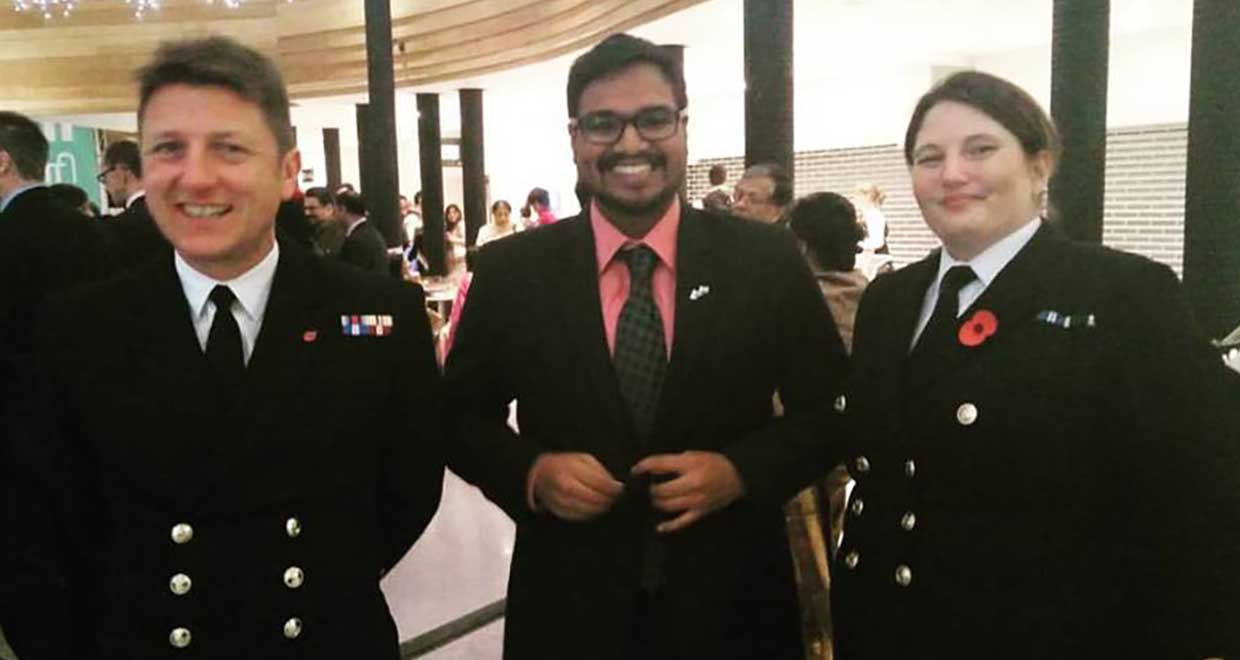
    With the crew of the Royal Navy


    How did you secure your first job as an Associate at V. J. Mathew & Co.? What was your experience working there like?

    I applied for an internship there and was assigned with some very interesting assignments. I was impressed by the quantum of maritime law work that the firm handled and the professional manner in which they functioned. At the end of the internship, I was offered a position and grabbed the opportunity with both hands.

    My time at the firm was a period of immense learning and it was a baptism of fire of sorts. Being a boutique firm, I had the opportunity to work closely with the partners on most cases and was made to feel like a valuable part of the team. I am very grateful to Senior Advocate V. J. Mathew for playing the role of a mentor and for trusting me to argue important cases before the Kerala High Court so early in my career. He is also a strong advocate for positive reform in the maritime industry and often got me involved in his research preparation for a big conference or an important paper.

    Being a judicial clerk at the High Court of Delhi, what have been your tasks and key learning experiences?

    I had always wanted to do a judicial clerkship and so when I got the opportunity to work with Hon’ble Mr. Justice Najmi Waziri I was overjoyed. For those of you not familiar with the concept, a clerkship involves working closely with a judge and attempting to ease their workload by helping with case briefs or research propositions.

    In my case, this basically meant trying to learn as much as I could while being as little of a nuisance as possible. And I say this only half jokingly as it’s truly incredible how adept Justice Waziri was at identifying crucial points in the case and I was often out of my depth when trying to brief Sir on a case or while sharing a point of research with him. What the experience did give me was an opportunity to observe from close quarters what it takes to be successful in this field and the level of commitment, hard-work and professionalism that it requires. Justice Waziri is truly a role-model for me and I’m immensely grateful for the opportunity to have been able to learn from him.

    Rahul Miranda with Hon’ble Mr. Justice Najmi Waziri


    You are currently pursuing a master’s degree in International Maritime Law from Swansea University. How did you decide on the university and why were you keen on getting a masters degree?

    The peculiar nature of ships and the shipping industry means that the law governing it also has several peculiarities. In order to fully understand these intricacies in the law I felt that it was necessary to study the subject in depth. Furthermore, a Masters in Law is obviously a lot more than just the degree and offers the opportunity to meet like-minded people from around the world and to participate in conferences and networking events which bring with it a plethora of opportunities.

    For this reason, picking the right university to pursue your course from is vital. I was accepted into several programs but finally decided on Swansea University based on the almost singular focus of their program on commercial maritime law, the reputation of their professors within maritime circles and its very strong alumni network. It’s probably also wise to factor in fees, scholarship opportunities and cost of living while picking a course.


    What are your career plans after this?

    To be honest, I haven’t really thought too much about this yet. I’m looking for an assignment which will challenge me and give me a chance to apply all that I have learnt during my course. I’m going to have to work very closely with the career services office at the university over the next semester to explore my options and find the perfect fit.


    Do you feel that adequate exposure is given to students in niche areas of law such as maritime law? What would be your advice to students who are inclined towards a career in the field?

    While I was at law school there wasn’t really any exposure to this field of law. Over the last couple of years, however, I have noticed that several law schools are conducting symposiums, conferences and even moot court competitions dedicated to issues involving maritime regulations. I have been invited to speak at these conferences and judge these competitions a few times and remember being impressed by the quality and quantity of participation. If students are interested in this field they should definitely check for these events and participate in them as they offer a good opportunity to get a feel for this area of law and also to network within the field. Applying for internships with firms that deal with maritime matters is obviously another way forward.  I wish them the best of luck and will be happy to help them with any further queries they might have.


  • Pradeep Jain, Managing Partner, Singhania & Co., Mumbai, on all about managing a full service firm

    Pradeep Jain, Managing Partner, Singhania & Co., Mumbai, on all about managing a full service firm

    Pradeep Jain qualified in law from Devi Ahilya Vishwavidyalaya in 2000. Thereafter, he joined Singhania & Co. in 2002 and was soon rewarded with partnership in 2004 for his excellent work in the Corporate Practice & Maritime Laws. He has played pivotal role in a number of big joint ventures and corporate takeovers. He is also regularly engaged by the Institute of Company Secretaries of India, New Delhi, to deliver lectures on various subjects related to law.

    Pradeep frequently advises clients on matters relating to the development and control regulations, policy and regulatory matters, compliances relating to Securities Exchange Board of India, Reserve Bank of India, Insurance Regulatory & Development Authority and Foreign Investment Promotion Board. He regularly advises vessel owners, charterers and P&I clubs on various maritime laws. Pradeep also represents his clients in international arbitrations under the Singapore International Arbitration Centre, Singapore Chamber of Maritime Arbitration and London Maritime Arbitrators Association. He is vastly renowned for his acumen in liasoning with the Foreign Investors Promotion Board (FIPB)/ Secretariat for Industrial Assistance (SIA) in the matters related to Transfer of Shares from Resident to Non-resident, foreign technical collaboration, liasoning with the Securities Exchange Board of India (SEBI) filing various form or Report in the matters related to Takeover, Mutual Fund, Assets Management Companies, Trusteeship, Custodian, Foreign Institutional Investors etc.

    In this interview Pradeep talks to us about:

    • His experiences working with Singhania & Co.
    • The importance of a mentor in a junior lawyer’s life, and important traits any law aspirant should cultivate
    • Networking and the legal profession, and
    • His valuable advice to all the young lawyers/students/aspirants out there.


    How would you like to introduce yourself to our readers?

    A lawyer by profession, I am the Managing Partner of the Mumbai office of Singhania & Co. I come from a family of businessmen; however, my fondness for academics led me to gathering multiple degrees in the fields of science, mathematics and law and finally pursue a career as a lawyer. I joined Singhania & Co. in the year 2002, and actively worked under the tutelage of Mr. D.C Singhania, the Founder of Singhania & Co. and a veteran lawyer widely recognised for his dexterity in the areas of litigation and arbitration. Thereafter, in a short span of 2 years I was promoted to Partnership and there has been no looking back ever since.


    Going back to your graduation days are there any anecdotes you would like to share?

    It was a very interesting journey. You would be surprised to know that I never wanted to be a lawyer, but my Mom was convinced I would be a litigating lawyer, as I would always grab opportunities to show case my oratory skills, and of course pick up arguments.

    I loved studying mathematics and science and wanted to pursue a course related to these subjects. So my first effort was to appear for medical examinations and be a doctor. Unfortunately, I couldn’t sit for the exams due to personal exigencies. Thereafter, I decided to not waste a year and ended up pursuing a degree in mathematics and went on to pursue my Masters in it.

    I didn’t want to stop studying so I undertook the company secretary course during which my mentor Mr. Sunil Jain, advised me to explore law as a profession.

    I took his advice and I have loved every moment of this profession!


    How do you recall the first few years after qualifying in law?

    I have always felt that I have been fortunate and lucky in a lot of scenarios in life. I have been lucky to get picked first, or noticed in a group, and this is what happened with me in Singhania.

    The first few years of my career were nothing short of absolute delight.

    My partner, Mr. Sameer Rastogi, whom I was assisting in the initial days of my career at Singhania in 2002, liked my research skills and ideas of solutions to client issues and legal opinions drafted by me. He ensured that I was a part of important client mandates. He never failed to mention my name in other offices which helped me work and interact with different offices of the Firm and definitely aided my quick promotion to Partnership in 2004.

    Everyday brought in new avenues to learn and grow. Luckily, I was part of a firm that pushes lawyers to get out of their comfort zone and handle matters with independence. We were not treated as “Associates” working for a monthly compensation; we were instead treated as active, thinking and performing individual professionals who have the capability of servicing clients with minimal supervision.


    Please tell us about the relevance of a mentor as a young lawyer, how did you find your mentor?

    Having a mentor in the formative years of your career is definitely important. When we enter a new professional field, especially the legal industry, we have certain ideas about the profession in our head, and it is easy to face disappointment if we do not have a guide to help us understand the profession. Mentoring helps individuals understand the practical aspects of law and provides necessary guidance to assist individuals in making rational career decisions.

    At the cost of repetition, I would say I was fortunate to have Mr. D. C Singhania as my mentor. I was extremely surprised at the humility of one of the most sought after lawyers in India and his down to earth personality. Besides honing my legal acumen, he has helped me understand the importance of the nobility of our profession. He encouraged each and every lawyer including interns to express their opinions on matters and be independent in handling matters. If you trace the history of our Firm, you will know that through his mentoring he has instilled the confidence in many lawyers who are now running their own firms or are successfully handling Partnership positions.

    I never thought that I would end up as a Managing Partner of a firm, however, as mentioned before, it was through the guidance of my mentor that I learned about my capabilities and my true potential as a lawyer. I was guided to take initiative and encouraged to shoulder both legal and managerial responsibilities leading me to where I am today.

    Even today, Singhania & Co. actively encourages all young lawyers to aim at being independent and self-sufficient. Our Firm follows an active policy of mentoring freshers and interns into confident professionals who possess the capability of sourcing and servicing their own clients.


    What role does academics play in the legal profession? Given that maritime law requires a lot of reading, how has it been in your case?

    It goes without saying that an affinity to read and keep yourself updated is mandatory in our profession. A student who is academically bright showcases this ability and therefore has a better chance in terms of placements.

    Having said that, academics is one of the many ingredients that make a good lawyer. One needs to be interesting enough for clients to notice you and that involves having great people skills. Being persuasive, having a flair for writing, ability to network and socialise professionally are some of the other key components that will give young lawyers an edge over the others.

    A popular lawyer is usually a person who is blunt, bold and can mesmerise the court or audience with his words.

    To have such qualities you must have knowledge of history, philosophy along with knowledge of statutes. The more you read more confident you are to interact with your clients and fellow professionals.

    I always tell students, juniors that when you are younger, you will get time to read. So please learn as much as possible because as you grow, no matter how much you are earning, you will not get time to read.


    You are noted as one of the leading maritime lawyers in India. Very few students focus on maritime laws during their formative years. Could you tell us more about maritime practice in India?

    Hahaha (blushing).

    Shipping laws require extensive reading and research. Moreover practice of maritime law is not restricted to one country and in most of maritime arbitrations we deal with, English laws are applicable and one must be aware of the laws, rulings and authorities to be fully prepared for arbitrations.


    Founded in 1969, Singhania & Co., has been one of the very few law firms to have maintained a steady practice for all these years. Tell us more about the firm and its heritage.

    Singhania & Co. as mentioned earlier was founded by Mr. D.C Singhania in 1969. Mr. D.C Singhania is a highly respected lawyer with over four decades of experience.

    He was very well aware of the industry and its potential. He also recognized the importance of treating the profession as a service and keep the clients interest at paramount. He always emphasized on delivering good service to the Client.

    Mr. D.C Singhania, was innovative in his approach and avoided a lot of stereotype functioning of firms back then. While the popular trend was to be recognized for practicing in a particular court, he went on to successfully argue in various forums and didn’t restrict himself just to the High Court or Supreme Court.

    This is also why world best lawyers associations like “Lex Mundi” and “Terralex” felt announced Singhania & Co as first Indian member law firm.

    Over the years our Firm has been in involved in various noted arbitrations such as Western Company of North America v ONGC, and Alsthom v Railway Board of India amongst others. Our Firm has represented over 1000 international client organizations with their matters in India or abroad including fortune 500 comp

    Currently, Singhania & Co. operates out of 10 offices including an office in London. In India we have offices in New Delhi, Mumbai, Hyderabad, Indore, Bangalore, Kolkata, Chennai, Ahmadabad

    The breadth of our practice includes Admiralty, Anti-Dumping, Aviation, Arbitration & Dispute Resolution, Banking, Securities and Financial Services, Corporate &; Commercial, Infrastructure, Intellectual Property, Joint Venture & Technology, Litigation, Mergers & Acquisitions, Technology Transfer, Project Financing, Capital Market, Private Equity and Fund, Securitization & Structured Finance and Taxation laws.


    Please tell us about your journey at Singhania & Co.?

    My journey in Singhania is as dramatic as my entry.

    Interestingly, I had to go the ICSI regional office and I ended up at the office of Singhania & Co. Once the seniors spoke to me and heard about my profile, they decided to take an interview and I was hired!

    Since then, it has been a wonderful journey. I have learned a lot about the profession and I guess I am still learning!


    We are very curious to find out how do you find time for yourself despite heading busy offices in Mumbai and Indore? What would be your tips to the young lawyers on time management?

    Haha. My friends never find me reading and my clients never see me executing works except on meetings. In fact I don’t take up my role as a Managing Partner as work.

    I like doing it and I treat it as fun and I end up having fun. I love the energy and rush involved in solving legal issues and that is why I never feel tired. I believe that if you enjoy your work and don’t take work as a task and then you will see that you are full of positive thoughts and energy.

    It is very simple. If we can sincerely work (with minimal or no distractions like calls/facebook/whatsapp etc.) for at least 8 hours a day, we can accomplish a lot more than we imagine. Being busy is dependent on how sincerely you manage your 24 hours. As a junior, my job was to be well equipped with my research and ensure that all deadlines are met. I therefore dedicated my time in office towards working and/or reading up in case I was free. That way, I would always have time for myself when I was back home. My role as a managing partner requires me to delegate and ensure that the work gets done. I also shoulder the responsibility to keep my clients and my team happy. I dedicate my time in office towards the same and still find time to pursue my interests.


    We have seen that many law students are faced with tough choice between attending classed and pursuing internships. What, according to you, should be the correct balance between academics and practical exposure?

    I would suggest students to take time out from their courses to intern as much as possible, as it provides a lot of practical experience and knowledge about the legal industry which cannot be learnt through books but at the same time they should not make life too serious and try to find ways to maximize once output in lesser time.


    Due to developments in technology and advancement of social media, networking and connecting across globe has become much easier. How have these developments affected the legal profession and the way in which lawyers have been working so far?

    Absolutely! Much has changed in terms of technology and for the better!

    It is much easier to network now than it was 15 years ago. It is easier to interact with a lawyer/firm you intend to work with even before you have met the Firm. It is much simpler to verify details about a particular firm/person now than it was a few years ago. That is how much technology has evolved.

    Networking sites allow lawyers to not just network but also freely exchange and share knowledge and insights on various laws and its impact.

    If used wisely, it is a very strong tool for a lawyer and can help us make our noble profession nobler but it has some draw back as well which should be fixed. I see young generations spend a lot of time distracting themselves on social media which eventually decreases their productivity and also sometimes explains unnecessary longer working hours!


    Finally, any word of advice for all the young and aspiring lawyers?

    Be bold, blunt and honest. Pursue power through your hard work, knowledge and never forget your responsibilities towards society.

    Self-evaluation helps you become a better professional and to excel when pitted against both contemporaries and seniors!

    Life is not a race but definitely a marathon so invest in yourself and in knowledge and not money in your early years.

  • Roshni Manuel, Associate, Veritae Legal, on studying in Nottingham, maritime law, and plans for the future

    Roshni Manuel, Associate, Veritae Legal, on studying in Nottingham, maritime law, and plans for the future

    Roshni Manuel graduated in law from ILS Law College, Pune, in 2010. She then went on to pursue her Master’s degree from the University of Nottingham, specializing in Maritime Law. She is currently Retainer Associate-Corporate, at Veritae Legal, where her role and responsibilities include General Corporate Practice, Trademark Registrations, and Corporate Agreements.

    In this interview, we speak to her about:

    • Maritime Law as a career and its scope.
    • Life at ILS and University of Nottingham.
    • Important requirements for application to a university in UK.


    Given that most of our readers are law students and lawyers, how would you introduce yourself to them?

    I am only a beginner in this big arena with just a year’s experience. I am thankful to the whole team for choosing to take my interview. And I’d like to introduce myself as an aspirant of law.


    What motivated you to pursue law?

    I was always interested in the humanities and hence, law. Another explanation would be, I wanted to be on the other side of the crowd who knows exactly how policies in this country are drafted and what its legal implications are. I must say I have not reached that level of analysing law and policy but I do keep a track of it whenever I get time.


    roshni-manuelHow about your college life at ILS—do you miss it?

    Life at ILS, Pune was very colourful and competitive like any top 10 law schools. My college has got a very heritage look and it is a very peaceful place with acres of timbre and wild birds. So, whenever I think of my college all I think of is the peaceful Campus, my friends and dear professors and of course, the famous library. Something about grad school is you wont miss it until you pass out; it could be because at some point you may think five years is a little too much to tolerate;  I never thought I will miss it so much until I joined LL.M. at Notts.


    What kind of internships did you do while in law school that helped you in shaping your career choices later?

    In my case it was my first internship which helped me choose my stream of interest. It was in a Maritime Law Firm at my hometown. I have tried my hands in different areas of law but I find Maritime a very interesting and a suitable field for my caliber.
    I guess rather than going for the popular one or the one with better scope, one should always choose the field which matches their caliber and interest.


    What made you go for higher studies so early in your career?

    I planned for LL.M. when I was in 4th year law. I don’t have a specific explanation for taking it up early but at some point during ILS days i thought i should be more focused on my field of interest and that could be one reason for opting LL.M soon after graduation.


    How did you develop an interest in a field as niche as maritime law?

    I hail from a port city, Cochin, and my parents are also in the shipping industry but not lawyers. Them being in the same industry surely opened the gates but I think it was my first internship which planted the interest for the subject in me.


    Why University of Nottingham? What other universities did you apply to?

    As you know I was keen on Maritime law since my time as an undergraduate and hence applied only to universities which had maritime law as a specialized field. Other universities I applied to include University of Southampton, Swansea, and UCL. I chose Nottingham for its ranking and for the faculty, especially Prof. Bennett (Marine Insurance maestro).


    Would you tell our readers about the application procedure and other requirements?

    Firstly you should be sure about the subject to specialize; you must make your own list of universities and should never take advice from any education abroad consultancy in this matter. Every university has different criteria for selection. I have applied to only UK universities so the procedure below is just for UK

    1. IELTS score above 7
    2. Aggregate marks should be 60% or more
    3. 2 references
    4. Statement of Purpose

    Visa requirements keep changing so please check the UK consulate website for details.


    Tell us something about your LL.M. years.

    I would say LL.M. abroad widened my perspective. It is totally different when it comes to studies there. I found their method of teaching very interesting. It is basically seminars; the student is expected to prepare for every seminar and participate in the discussion. I was part of the LL.M society and Indian Society. I got the opportunity to organize events and interact with well established lawyers. Apart from the regular activities, if you are lucky, by using the university contacts you could snatch a summer internship in Europe as well.


    Currently, you are member of Maritime Law Association of India. Tell us something about your role over there.

    The partners of the firm United Maritime Law Chambers are part of the governing council. And me as their associate got the opportunity to interact with aspirants in maritime field, judges and International Lawyers. And I did get an opportunity to publish one of my articles.


    You work as an Associate with United Maritime Law Chambers. What kind of work are you involved in over there?

    I am entrusted with maritime case research, case follow-ups, drafting, contract review, marine insurance matters, etc. and occasional corporate work for shipping companies.


    How is Maritime law different from other areas of law?

    Maritime law includes norms of national law, referring to various branches (civil, administrative, criminal, etc.) and norms of international public and private law. Commercial maritime law which includes carriage contracts is basically law of contracts and the maritime aspect in it makes it different.


    What would be your advice to students interested in Maritime law?

    You should be studying subjects like Maritime law, Carriage of goods by sea, law of the sea, International sale of goods, Marine insurance and should have a very strong base in law of Contracts. It is a very interesting and popular field. The opportunities are many if you are really keen; like shipping companies, law firms, P & I clubs, etc.


    Last but not the least, your advice to future lawyers and current law students?

    Dream high and make as many contacts as you can. Make merry with your classmates as those connections will help you in future and would be something you can trust and rely on.